We've ranked the best consumer behavior books using expert recommendations, sales data, and millions of reader ratings. At Shortform, we know books. Our book guides are the best in the world. Learn why.
Influence, the classic book on persuasion, explains the psychology of why people say "yes"—and how to apply these understandings. Dr. Robert Cialdini is the seminal expert in the rapidly expanding field of influence and persuasion. His thirty-five years of rigorous, evidence-based research along with a three-year program of study on what moves people to change behavior has resulted in this highly acclaimed book.
You'll learn the six universal principles, how to use them to become a skilled persuader—and how to defend yourself against them. Perfect for people in all walks of life, the principles of Influence will move you toward profound personal change and act as a driving force for your success.
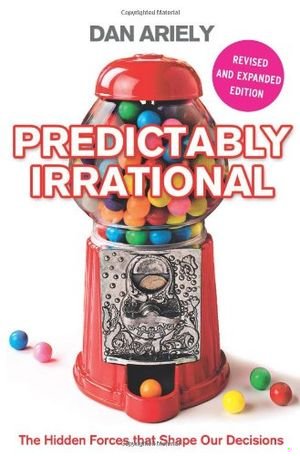
Why do our headaches persist after taking a one-cent aspirin but disappear when we take a 50-cent aspirin?
Why does recalling the Ten Commandments reduce our tendency to lie, even when we couldn't possibly be caught?
Why do we splurge on a lavish meal but cut coupons to save twenty-five cents on a can of soup?
Why do we go back for second helpings at the unlimited buffet, even when our stomachs are already full?
And how did we ever start spending $4.15 on a cup of coffee when, just a few years ago, we used to pay less than a dollar?
When it comes to making decisions in our lives, we think we're in control. We think we're making smart, rational choices. But are we?
In a series of illuminating, often surprising experiments, MIT behavioral economist Dan Ariely refutes the common assumption that we behave in fundamentally rational ways. Blending everyday experience with groundbreaking research, Ariely explains how expectations, emotions, social norms, and other invisible, seemingly illogical forces skew our reasoning abilities.
Not only do we make astonishingly simple mistakes every day, but we make the same "types" of mistakes, Ariely discovers. We consistently overpay, underestimate, and procrastinate. We fail to understand the profound effects of our emotions on what we want, and we overvalue what we already own. Yet these misguided behaviors are neither random nor senseless. They're systematic and predictable--making us "predictably" irrational.
From drinking coffee to losing weight, from buying a car to choosing a romantic partner, Ariely explains how to break through these systematic patterns of thought to make better decisions. "Predictably Irrational" will change the way we interact with the world--one small decision at a time.
…
Recommended by Max Levchin, Vinod Khosla, Vinod Khosla, and 22 others.
Max Levchin
Co-founder/PayPal, CEO/Affirm, Investor
Max Levchin recommended this book as an answer to "What business books would you advise young entrepreneurs read?" [source]
Andra Zaharia
'While I was thinking of the best books to add to this short list, I realized that not even half of them are directly related to digital marketing. This is because I believe that the best marketers are people who understand human nature deeply and aim to bring out the best in it. Call me naive, but that’s how I see it. If I were to want to pursue a career in marketing, I’d read … Predictably Irrational. [source]
Chris Goward
Here are some of the books that have been very impactful for me, or taught me a new way of thinking: … Predictably Irrational. [source]
Cover unavailable
3
Nudge: Improving Decisions About Health, Wealth, and Happiness
Every day, we make decisions on topics ranging from personal investments to schools for our children to the meals we eat to the causes we champion. Unfortunately, we often choose poorly. The reason, the authors explain, is that, being human, we all are susceptible to various biases that can lead us to blunder. Our mistakes make us poorer and less healthy; we often make bad decisions involving education, personal finance, health care, mortgages and credit cards, the family, and even the planet itself.
Thaler and Sunstein invite us to enter an alternative world, one that takes our humanness as a given. They show that by knowing how people think, we can design choice environments that make it easier for people to choose what is best for themselves, their families, and their society. Using colorful examples from the most important aspects of life, Thaler and Sunstein demonstrate how thoughtful “choice architecture” can be established to nudge us in beneficial directions without restricting freedom of choice. Nudge offers a unique new take—from neither the left nor the right—on many hot-button issues, for individuals and governments alike. This is one of the most engaging and provocative books to come along in many years.
Nudge is a very important book. One of the reasons Nudge is so important is because it’s taking these ideas and applying them to the policy domain. Here are the mistakes we make. Here are the ways marketers are trying to influence us. Here’s the way we might be able to fight back. If policymakers understood these principles, what could they do? The other important thing about the book is that it describes, in detail, small interventions. It’s basically a book about cheap persuasion. [source]
This might feel like a weird book to include, but I think it presents another side of strategy that is too often forgotten. It’s not always about bold actors and strategic thrusts. Sometimes strategy is about subtle influence. Sometimes it is framing and small tweaks that change behavior. We can have big aims, but get there with little moves. This book has excellent examples of that kind of thinking and how it is changing politics, government and business. My favorite example is about the bumblebee that they started putting on urinals–which drastically reduced the amount of spray and spillage because it changed where men aimed when they peed. It’s not exactly the coolest strategy but it solved a problem. So we can learn from it. [source]
Major New York Times bestseller Winner of the National Academy of Sciences Best Book Award in 2012 Selected by the New York Times Book Review as one of the best books of 2011 A Globe and Mail Best Books of the Year 2011 Title One of The Economist's 2011 Books of the Year One of The Wall Street Journal's Best Nonfiction Books of the Year 2011 2013 Presidential Medal of Freedom Recipient
In the international bestseller, Thinking, Fast and Slow, Daniel Kahneman, the renowned psychologist and winner of the Nobel Prize in Economics, takes us on a groundbreaking tour of the mind and explains the two systems that drive the way we think. System 1 is fast, intuitive, and emotional; System 2 is slower, more deliberative, and more logical. The impact of overconfidence on corporate strategies, the difficulties of predicting what will make us happy in the future, the profound effect of cognitive biases on everything from playing the stock market to planning our next vacation—each of these can be understood only by knowing how the two systems shape our judgments and decisions. Engaging the reader in a lively conversation about how we think, Kahneman reveals where we can and cannot trust our intuitions and how we can tap into the benefits of slow thinking. He offers practical and enlightening insights into how choices are made in both our business and our personal lives—and how we can use different techniques to guard against the mental glitches that often get us into trouble. Winner of the National Academy of Sciences Best Book Award and the Los Angeles Times Book Prize and selected by The New York Times Book Review as one of the ten best books of 2011, Thinking, Fast and Slow is destined to be a classic.
A few months ago, Mr. Obama read “Thinking, Fast and Slow,” by Daniel Kahneman, about how people make decisions — quick, instinctive thinking versus slower, contemplative deliberation. For Mr. Obama, a deliberator in an instinctive business, this may be as instructive as any political science text. [source]
Captivating dive into human decision making, marred by inclusion of several/many? psychology studies that fail to replicate. Will stand as a cautionary tale? [source]
New York Times bestseller and named Best Marketing Book of 2014 by the American Marketing Association
What makes things popular? Why do people talk about certain products and ideas more than others? Why are some stories and rumors more infectious? And what makes online content go viral?
If you said advertising, think again. People don't listen to advertisements, they listen to their peers. But why do people talk about certain products and ideas more than others? Why are some stories and rumors more infectious? And what makes online content go viral?
Wharton marketing professor Jonah Berger has spent the last decade answering these questions. He's studied why New York Times articles make the paper's own Most E-mailed List, why products get word of mouth, and how social influence shapes everything from the cars we buy to the clothes we wear to the names we give our children. In this book, Berger reveals the secret science behind word-of-mouth and social transmission. Discover how six basic principles drive all sorts of things to become contagious, from consumer products and policy initiatives to workplace rumors and YouTube videos.
Contagious combines groundbreaking research with powerful stories. Learn how a luxury steakhouse found popularity through the lowly cheese-steak, why anti-drug commercials might have actually increased drug use, and why more than 200 million consumers shared a video about one of the seemingly most boring products there is: a blender. If you've wondered why certain stories get shared, e-mails get forwarded, or videos go viral, Contagious explains why, and shows how to leverage these concepts to craft contagious content. This book provides a set of specific, actionable techniques for helping information spread - for designing messages, advertisements, and information that people will share. Whether you're a manager at a big company, a small business owner trying to boost awareness, a politician running for office, or a health official trying to get the word out, Contagious will show you how to make your product or idea catch on.
…
Recommended by Vinod Khosla, Vinod Khosla, Andrew Medal, and 10 others.
Andrew Medal
The world is #CONTAGIOUS ☢️☢️☢️ • • My dog and I love this book. I read to him when he wants to learn about marketing techniques. The last time I read this book was in 2013. If you want a read that dissects how and… https://t.co/6v0ckSnSQe [source]
Ee Ling Lim
Contagious by Jonah Berger is another interesting one for those trying to figure out how to market their business. In Contagious, Jonah identifies what makes some things go viral, and narrowed it down to 6 principles STEPPS: Social currency (content that makes people look good when they talk about it), Triggers (top of mind topics), Emotion (content that we care about, especially high arousal ones like anger, awe, excitement and humor), Public, Practical and Stories. [source]
Erik Cheong
Explains why certain products and ideas become popular while others fail. It reveals the secret science behind word-of-mouth and social transmission. Discover how six basic principles drive all sorts of things to become contagious, from consumer products and policy initiatives to workplace rumors and YouTube videos. [source]
Cover unavailable
6
Made to Stick: Why Some Ideas Survive and Others Die
NEW YORK TIMES BESTSELLER - The instant classic about why some ideas thrive, why others die, and how to improve your idea's chances--essential reading in the "fake news" era.
Mark Twain once observed, "A lie can get halfway around the world before the truth can even get its boots on." His observation rings true: Urban legends, conspiracy theories, and bogus news stories circulate effortlessly. Meanwhile, people with important ideas--entrepreneurs, teachers, politicians, and journalists--struggle to make them "stick."
In Made to Stick, Chip and Dan Heath reveal the anatomy of ideas that stick and explain ways to make ideas stickier, such as applying the human scale principle, using the Velcro Theory of Memory, and creating curiosity gaps. Along the way, we discover that sticky messages of all kinds--from the infamous "kidney theft ring" hoax to a coach's lessons on sportsmanship to a vision for a new product at Sony--draw their power from the same six traits.
Made to Stick will transform the way you communicate. It's a fast-paced tour of success stories (and failures): the Nobel Prize-winning scientist who drank a glass of bacteria to prove a point about stomach ulcers; the charities who make use of the Mother Teresa Effect; the elementary-school teacher whose simulation actually prevented racial prejudice.
Provocative, eye-opening, and often surprisingly funny, Made to Stick shows us the vital principles of winning ideas--and tells us how we can apply these rules to making our own messages stick.
@conorgil My all-time favorite example of research communication is The Selfish Gene. Astonishingly effective at explaining deep research ideas/findings to a lay reader. A book with great advice: https://t.co/QD1sM2o0z6 (It isn't specific to research but still super valuable.) [source]
Bill Liao
The Book "Made to Stick" combined with "The Poetics" by Aristotle really helped me to see the power of telling great stories with surprises in them and every time I meet a start-up I can always make a contribution to their pitch. [source]
Cristian-Dragos Baciu
I highly recommend all the books written by the Heath brothers, especially Made to Stick: Why Some Ideas Survive And Others Die. This one's a must-read for marketers. The reason I enjoyed their work so much is because they offer real-life stories and insights that makes it so much easier for the reader to imprint that information in his mind [source]
Cover unavailable
7
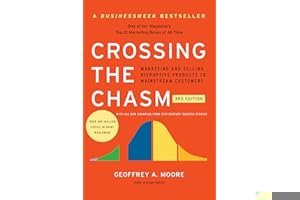
Crossing the Chasm: Marketing and Selling Disruptive Products to Mainstream Customers
The bible for bringing cutting-edge products to larger markets--now revised and updated with new insights into the realities of high-tech marketing
In Crossing the Chasm, Geoffrey A. Moore shows that in the Technology Adoption Life Cycle--which begins with innovators and moves to early adopters, early majority, late majority, and laggards--there is a vast chasm between the early adopters and the early majority. While early adopters are willing to sacrifice for the advantage of being first, the early majority waits until they know that the technology actually offers improvements in productivity. The challenge for innovators and marketers is to narrow this chasm and ultimately accelerate adoption across every segment.
This third edition brings Moore's classic work up to date with dozens of new examples of successes and failures, new strategies for marketing in the digital world, and Moore's most current insights and findings. He also includes two new appendices, the first connecting the ideas in Crossing the Chasm to work subsequently published in his Inside the Tornado, and the second presenting his recent groundbreaking work for technology adoption models for high-tech consumer markets.
…
Recommended by Andrew Chen, Drew Houston, Ev Williams, and 28 others.
Drew Houston
CEO/Dropbox
It’s about how do technology products make their way from early adopters t the mainstream. [source]
Ron Conway
Bestselling guide that created a new game plan for marketing in high-tech industries. [source]
This is a key component in my Purple Cow thinking, but with a twist. I'm not as worried about the chasm as I am about the desire of marketers to go for the big middle. [source]
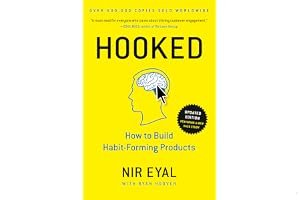
How do successful companies create products people can’t put down?
Why do some products capture widespread attention while others flop? What makes us engage with certain products out of sheer habit? Is there a pattern underlying how technologies hook us? Nir Eyal answers these questions (and many more) by explaining the Hook Model—a four-step process embedded into the products of many successful companies to subtly encourage customer behavior. Through consecutive “hook cycles,” these products reach their ultimate goal of bringing users back again and again without depending on costly advertising or aggressive messaging.
Hooked is based on Eyal’s years of research, consulting, and practical experience. He wrote the book he wished had been available to him as a start-up founder—not abstract theory, but a how-to guide for building better products. Hooked is written for product managers, designers, marketers, start-up founders, and anyone who seeks to understand how products influence our behavior.
Eyal provides readers with:
• Practical insights to create user habits that stick. • Actionable steps for building products people love.
• Fascinating examples from the iPhone to Twitter, Pinterest to the Bible App, and many other habit-forming products.
…
Recommended by Andrew Chen, Nir Eyal, Ken Norton, and 41 others.
Matt Mullenweg
Founder & CEO/Automattic
Hooked gives you the blueprint for the next generation of products. Read Hooked or the company that replaces you will. [source]
Boris Veldhuijzen van Zanten
The book everyone in Silicon Valley is talking about. [source]
Chandini Jain
One of the five books Chandini would you recommend to young people interested in her career path. [source]
Cover unavailable
9
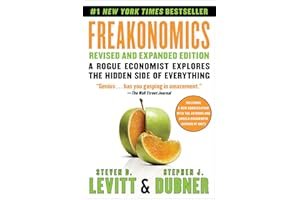
Freakonomics: A Rogue Economist Explores the Hidden Side of Everything
Which is more dangerous, a gun or a swimming pool? What do schoolteachers and sumo wrestlers have in common? Why do drug dealers still live with their moms? How much do parents really matter? What kind of impact did Roe v. Wade have on violent crime? Freakonomics will literally redefine the way we view the modern world.
These may not sound like typical questions for an economist to ask. But Steven D. Levitt is not a typical economist. He is a much heralded scholar who studies the stuff and riddles of everyday life -- from cheating and crime to sports and child rearing -- and whose conclusions regularly turn the conventional wisdom on its head. He usually begins with a mountain of data and a simple, unasked question. Some of these questions concern life-and-death issues; others have an admittedly freakish quality. Thus the new field of study contained in this book: freakonomics.
Through forceful storytelling and wry insight, Levitt and co-author Stephen J. Dubner show that economics is, at root, the study of incentives -- how people get what they want, or need, especially when other people want or need the same thing. In Freakonomics, they set out to explore the hidden side of ... well, everything. The inner workings of a crack gang. The truth about real-estate agents. The myths of campaign finance. The telltale marks of a cheating schoolteacher. The secrets of the Ku Klux Klan.
What unites all these stories is a belief that the modern world, despite a surfeit of obfuscation, complication, and downright deceit, is not impenetrable, is not unknowable, and -- if the right questions are asked -- is even more intriguing than we think. All it takes is a new way of looking. Steven Levitt, through devilishly clever and clear-eyed thinking, shows how to see through all the clutter.
Freakonomics establishes this unconventional premise: If morality represents how we would like the world to work, then economics represents how it actually does work. It is true that readers of this book will be armed with enough riddles and stories to last a thousand cocktail parties. But Freakonomics can provide more than that. It will literally redefine the way we view the modern world. (front flap)
…
Recommended by Malcolm Gladwell, Daymond John, Ev Williams, and 12 others.
A young woman walks into a laboratory. Over the past two years, she has transformed almost every aspect of her life. She has quit smoking, run a marathon, and been promoted at work. The patterns inside her brain, neurologists discover, have fundamentally changed.
Marketers at Procter & Gamble study videos of people making their beds. They are desperately trying to figure out how to sell a new product called Febreze, on track to be one of the biggest flops in company history. Suddenly, one of them detects a nearly imperceptible pattern—and with a slight shift in advertising, Febreze goes on to earn a billion dollars a year.
An untested CEO takes over one of the largest companies in America. His first order of business is attacking a single pattern among his employees—how they approach worker safety—and soon the firm, Alcoa, becomes the top performer in the Dow Jones.
What do all these people have in common? They achieved success by focusing on the patterns that shape every aspect of our lives.
They succeeded by transforming habits.
In The Power of Habit, award-winning New York Times business reporter Charles Duhigg takes us to the thrilling edge of scientific discoveries that explain why habits exist and how they can be changed. With penetrating intelligence and an ability to distill vast amounts of information into engrossing narratives, Duhigg brings to life a whole new understanding of human nature and its potential for transformation.
Along the way we learn why some people and companies struggle to change, despite years of trying, while others seem to remake themselves overnight. We visit laboratories where neuroscientists explore how habits work and where, exactly, they reside in our brains. We discover how the right habits were crucial to the success of Olympic swimmer Michael Phelps, Starbucks CEO Howard Schultz, and civil-rights hero Martin Luther King, Jr. We go inside Procter & Gamble, Target superstores, Rick Warren’s Saddleback Church, NFL locker rooms, and the nation’s largest hospitals and see how implementing so-called keystone habits can earn billions and mean the difference between failure and success, life and death.
At its core, The Power of Habit contains an exhilarating argument: The key to exercising regularly, losing weight, raising exceptional children, becoming more productive, building revolutionary companies and social movements, and achieving success is understanding how habits work.
Habits aren’t destiny. As Charles Duhigg shows, by harnessing this new science, we can transform our businesses, our communities, and our lives.
…
Recommended by Naval Ravikant, Blake Irving, Alden Mills, and 15 others.
I also recently finished The Power of Habit, or close to finish as I get. That one was interesting, not because of its content necessarily, but because it’s good for me to always keep on top of mind how powerful my habits are. … I think learning how to break habits is a very important meta-skill that can serve you better in life than almost anything else. Although you can read tons of books on it, the reality is you’re never going to learn how to break bad habits until you just break them. [source]
Blake Irving
CEO/GoDaddy
You know, there's a book called The Power of Habit by Charles Duhigg. Simple read book about just how to build positive habits that can be I think I what I'd call you know whether in your personal life or whether in your business life to help you build you know, have a loop that can build your success and that's one I mean there are so many great books out there. [source]
Alden Mills
More recent books that have had a significant impact on me are The Power of Habit and The Diamond Cutter. Both represent different forces for me – the former helps me tactically with making incremental improvements in my life. [source]
Drawing on cutting-edge neuroscience and psychology and displaying all of the brilliance that made The Tipping Point a classic, Blink changes the way you'll understand every decision you make. Never again will you think about thinking the same way.
Malcolm Gladwell redefined how we understand the world around us. Now, in Blink, he revolutionizes the way we understand the world within. Blink is a book about how we think without thinking, about choices that seem to be made in an instant - in the blink of an eye - that actually aren't as simple as they seem. Why are some people brilliant decision makers, while others are consistently inept? Why do some people follow their instincts and win, while others end up stumbling into error? How do our brains really work - in the office, in the classroom, in the kitchen, and in the bedroom? And why are the best decisions often those that are impossible to explain to others?
In Blink we meet the psychologist who has learned to predict whether a marriage will last, based on a few minutes of observing a couple; the tennis coach who knows when a player will double-fault before the racket even makes contact with the ball; the antiquities experts who recognize a fake at a glance. Here, too, are great failures of "blink": the election of Warren Harding; "New Coke"; and the shooting of Amadou Diallo by police. Blink reveals that great decision makers aren't those who process the most information or spend the most time deliberating, but those who have perfected the art of "thin-slicing" - filtering the very few factors that matter from an overwhelming number of variables.
…
Recommended by Ev Williams, Mike Shinoda, Marillyn Hewson, and 4 others.
Mike Shinoda
I know most of the guys in the band read this book. [source]
Marillyn Hewson
CEO/Lockheed Martin
CEO Marilyn Hewson recommends this book because it helped her to trust her instincts in business. [source]
Antonio Eram
When asked to name some books that had a big impact on him, Antonio mentioned Blink: The Power of Thinking Without Thinking by Malcolm Gladwell. [source]
Cover unavailable
12
The 22 Immutable Laws of Marketing: Violate Them at Your Own Risk
World-renowned marketing consultants and bestselling authors Al Ries and Jack Trout reveal 22 laws of marketing, with hundreds of examples that illustrate their success, in this innovative and sensible guide to marketing. Each law is described in detail and backed up by numerous examples of what worked and what didn't in the international marketplace.
Question: What books would you recommend to young people interested in your career path? Answer: Purple Cow by Seth Godin End of Jobs by Taylor Pearson Rework by Jason Fried & DHH Trust Me I’m Lying by Ryan Holiday The Complacent Class by Tyler Cowen The 22 Immutable Laws of Marketing by Al Ries and Jack Trout Losing My Virginity by Richard Branson [source]
Question: What five books would you recommend to young people interested in your career path & why? Answer: I know this is sounds self-serving but I’d recommended both of my books, the soon to be released, “Niche Down: How to Become Legendary by Being Different” and Harper Collins’ “instant classic,” “Play Bigger: How Pirates, Dreamers and Innovators Create and Dominate Markets” In addition: The Effective Executive, by Peter Drucker The E-Myth, by Michael Gerber Radical Candor: Be a Kickass Boss Without Losing Your Humanity by Kim Scott Back from the Dead, by Bill Walton The 22 Immutable Laws of Marketing, by Al Ries and Jack Trout [source]
Cover unavailable
13
Purple Cow, New Edition: Transform Your Business by Being Remarkable--Includes new bonus chapter
You're either a Purple Cow or you're not. You're either remarkable or invisible. Make your choice.
What do Starbucks and JetBlue and KrispyKreme and Apple and DutchBoy and Kensington and Zespri and Hard Candy have that you don't? How do they continue to confound critics and achieve spectacular growth, leaving behind former tried-and true brands to gasp their last?
Face it, the checklist of tired 'P's marketers have used for decades to get their product noticed -Pricing, Promotion, Publicity, to name a few-aren't working anymore. There's an exceptionally important 'P' that has to be added to the list. It's Purple Cow.
Cows, after you've seen one, or two, or ten, are boring. A Purple Cow, though...now that would be something. Purple Cow describes something phenomenal, something counterintuitive and exciting and flat out unbelievable. Every day, consumers come face to face with a lot of boring stuff-a lot of brown cows-but you can bet they won't forget a Purple Cow. And it's not a marketing function that you can slap on to your product or service. Purple Cow is inherent. It's built right in, or it's not there. Period.
In Purple Cow, Seth Godin urges you to put a Purple Cow into everything you build, and everything you do, to create something truly noticeable. It's a manifesto for marketers who want to help create products that are worth marketing in the first place.
…
Recommended by Joe Gebbia, Vinod Khosla, Vinod Khosla, and 21 others.
Joe Gebbia
Co-founder/Airbnb
Make something that’s distinct enough that people want to talk about it. [source]
Marvin Liao
Partner/500 Startups
My list would be (besides the ones I mentioned in answer to the previous question) both business & Fiction/Sci-Fi and ones I personally found helpful to myself. The business books explain just exactly how business, work & investing are in reality & how to think properly & differentiate yourself. On the non-business side, a mix of History & classic fiction to understand people, philosophy to make sense of life and Science fiction to picture what the future could be like (not always utopian). [source]
A few months ago, I was drinking a Noah’s Mill whiskey (cute) with my good buddy Brian Balfour and talking about life... During the conversation, we got on the topic of books that changed our lives. I want to share them with you. I judge a book's success if a year later I'm still using at least 1 thing from the book. [source]
Cover unavailable
14
This Is Marketing: You Can't Be Seen Until You Learn to See
Real marketing isn't about racking up clicks and tweets; it's about connection, empathy, and making a difference.
Over the past quarter century, Seth Godin has taught and inspired millions of entrepreneurs, marketers, leaders, and fans from all walks of life, via his blog, online courses, lectures, and bestselling books. He is the inventor of countless ideas and phrases that have made their way into mainstream business language, from Permission Marketing to Purple Cow to Tribes to The Dip.
Now, for the first time, Godin offers the core of his marketing wisdom in one accessible, timeless package. At the heart of his approach is a big idea: Great marketers don't use consumers to solve their company's problem; they use marketing to solve other people's problems. They don't just make noise; they make the world better. Truly powerful marketing is grounded in empathy, generosity, and emotional labor.
This book teaches you how to identify your smallest viable audience; draw on the right signals and signs to position your offering; build trust and permission with your target market; speak to the narratives your audience tells themselves about status, affiliation, and dominance; spot opportunities to create and release tension; and give people the tools to achieve their goals.
It's time for marketers to stop lying, spamming, and feeling guilty about their work. It's time to stop confusing social media metrics with true connections. It's time to stop wasting money on stolen attention that won't pay off in the long run. THIS IS MARKETING offers a better approach that will still apply for decades to come, no matter how the tactics of marketing continue to evolve.
…
Recommended by Seth Godin, Aaron Watson, and Deke Bridges.
Nobody had written the definitive book of the post-advertising age. It needed to be able to explain everything from Airbnb to Trump to the success of Instagram. If there’s going to be a coherent, unified theory of marketing, it will not only explain what we see, but give us the tools to create our own change in the world. [source]
Aaron Watson
This book is my favorite thing he has produced. Unlike most non-fiction books, This Is Marketing does a good job of not going on too long or belaboring the point. Seth deliver succinct actionable insights, some of which I’ve already implemented with the Piper and Going Deep brands. [source]
Deke Bridges
Up late re-reading some of this book again. Seth Godin's book THIS IS MARKETING is so much more than branding, marketing, advertising, and growth. It really makes you think about how to review life. Fantastic book... all his works make your brain click. Got my copy at @Powells. https://t.co/46hSB0Fhv3 [source]
Cover unavailable
15
Blue Ocean Strategy: How To Create Uncontested Market Space And Make The Competition Irrelevant
Winning by not competing! This international best seller upends traditional thinking with principles and tools to make the competition irrelevant. In an audiobook that challenges everything you thought you knew, W. Chan Kim and Renee Mauborgne assert that tomorrow's leading companies will succeed, not by battling their rivals for market share in the bloody "red ocean" of a shrinking profit pool, but by creating "blue oceans" of untapped new market spaces ripe for growth.
Based on a study of 150 strategic moves, spanning more than 100 years and 30 industries, they provide a systematic approach that every company can use to render rivals obsolete and unleash new demand:
Reconstruct market boundaries Focus on the big picture Reach beyond existing demand Get the strategic sequence right Overcome organizational hurdles Build execution into strategy
Recommended by Daymond John, Steve Blank, Danielle Morrill, and 13 others.
Daymond John
Founder/FUBU
There are the normal ones that everybody loves. There would be "Rich Dad Poor Dad," "Who Moved My Cheese?;" I love all the Dale Carnegie books; "The One Minute Manager." I love newer ones like "Blue Ocean Strategy" and all the "Freaknomics" books. [source]
I don’t remember who originally told me to read Blue Ocean Strategy but I’m glad they did because this simple recommendation would substantially shape the course of my life and my career. [source]
Ayush Kumar
One doesn't necessarily need to take from others to fill their glass & you can always build a successful business in any industry. [source]
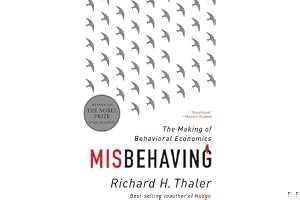
Nobel laureate Richard H. Thaler has spent his career studying the radical notion that the central agents in the economy are humans—predictable, error-prone individuals. Misbehaving is his arresting, frequently hilarious account of the struggle to bring an academic discipline back down to earth—and change the way we think about economics, ourselves, and our world.
Traditional economics assumes rational actors. Early in his research, Thaler realized these Spock-like automatons were nothing like real people. Whether buying a clock radio, selling basketball tickets, or applying for a mortgage, we all succumb to biases and make decisions that deviate from the standards of rationality assumed by economists. In other words, we misbehave. More importantly, our misbehavior has serious consequences. Dismissed at first by economists as an amusing sideshow, the study of human miscalculations and their effects on markets now drives efforts to make better decisions in our lives, our businesses, and our governments.
Coupling recent discoveries in human psychology with a practical understanding of incentives and market behavior, Thaler enlightens readers about how to make smarter decisions in an increasingly mystifying world. He reveals how behavioral economic analysis opens up new ways to look at everything from household finance to assigning faculty offices in a new building, to TV game shows, the NFL draft, and businesses like Uber.
Laced with antic stories of Thaler’s spirited battles with the bastions of traditional economic thinking, Misbehaving is a singular look into profound human foibles. When economics meets psychology, the implications for individuals, managers, and policy makers are both profound and entertaining.
…
Cover unavailable
17
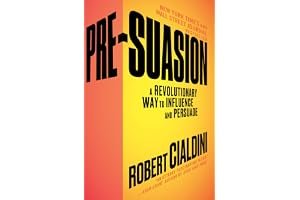
Pre-Suasion: A Revolutionary Way to Influence and Persuade
The author of the legendary bestseller Influence, social psychologist Robert Cialdini shines a light on effective persuasion and reveals that the secret doesn’t lie in the message itself, but in the key moment before that message is delivered.
What separates effective communicators from truly successful persuaders? Using the same combination of rigorous scientific research and accessibility that made his Influence an iconic bestseller, Robert Cialdini explains how to capitalize on the essential window of time before you deliver an important message. This “privileged moment for change” prepares people to be receptive to a message before they experience it. Optimal persuasion is achieved only through optimal pre-suasion. In other words, to change “minds” a pre-suader must also change “states of mind.”
His first solo work in over thirty years, Cialdini’s Pre-Suasion draws on his extensive experience as the most cited social psychologist of our time and explains the techniques a person should implement to become a master persuader. Altering a listener’s attitudes, beliefs, or experiences isn’t necessary, says Cialdini—all that’s required is for a communicator to redirect the audience’s focus of attention before a relevant action.
From studies on advertising imagery to treating opiate addiction, from the annual letters of Berkshire Hathaway to the annals of history, Cialdini draws on an array of studies and narratives to outline the specific techniques you can use on online marketing campaigns and even effective wartime propaganda. He illustrates how the artful diversion of attention leads to successful pre-suasion and gets your targeted audience primed and ready to say, “Yes.”
I just finished reading Pre-Suasion, or I should say I just finished skimming Pre-Suasion by Robert Cialdini. I don’t think I needed to read the entire book to get the point, but it was still good to read what I did. [source]
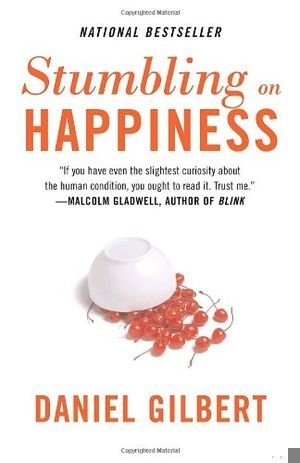
• Why are lovers quicker to forgive their partners for infidelity than for leaving dirty dishes in the sink? • Why will sighted people pay more to avoid going blind than blind people will pay to regain their sight? • Why do dining companions insist on ordering different meals instead of getting what they really want? • Why do pigeons seem to have such excellent aim; why can’t we remember one song while listening to another; and why does the line at the grocery store always slow down the moment we join it? In this brilliant, witty, and accessible book, renowned Harvard psychologist Daniel Gilbert describes the foibles of imagination and illusions of foresight that cause each of us to misconceive our tomorrows and misestimate our satisfactions. Vividly bringing to life the latest scientific research in psychology, cognitive neuroscience, philosophy, and behavioral economics, Gilbert reveals what scientists have discovered about the uniquely human ability to imagine the future, and about our capacity to predict how much we will like it when we get there. With penetrating insight and sparkling prose, Gilbert explains why we seem to know so little about the hearts and minds of the people we are about to become.
…
Recommended by Ev Williams, Jonathan Haidt, Chelsea Frank, and 6 others.
He’s one of the funniest people, certainly in psychology – he’s just endlessly witty, and reading it is like strapping yourself into a roller coaster. [source]
Chelsea Frank
I read everything with an open mind, often challenging myself by choosing books with an odd perspective or religious/spiritual views. These books do not reflect my personal feelings but are books that helped shape my perspective on life, love, and happiness. [source]
My recommendation is to do little tests. Try a few months of living the life you think you want, but leave yourself an exit plan, being open to the big chance that you might not like it after actually trying it... The best book about this subject is Stumbling on Happiness by Daniel Gilbert. His recommendation is to talk to a few people wo are currently where you think you want to be and ask them for the pros and cons. Then trust their opinion since they're right in it, not just remembering or imagining. [source]
Cover unavailable
19
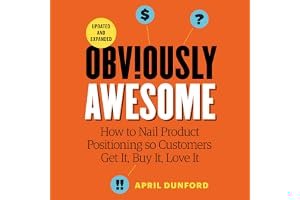
Obviously Awesome: How to Nail Product Positioning so Customers Get It, Buy It, Love It
Recommended by Elissa Shevinsky, Pete Meyers, and Saadia Muzaffar.
Elissa Shevinsky
@datarade @hnshah @NickAppDev @aprildunford April Dunsford’s book on product positioning is excellent. https://t.co/6Az2aaPpwK [source]
Pete Meyers
A lot of great food for thought in @aprildunford's book -- if you're trying to position a new product/service or pivot and re-position for a new market, definitely check it out -- https://t.co/xvwJffduA8 [source]
Saadia Muzaffar
April's amazing book drops mid-May and if you're smart about business and how to find a solid foothold in the market for your ideas/products /services you'll buy it: https://t.co/ByTREUcWdk [source]
Cover unavailable
20
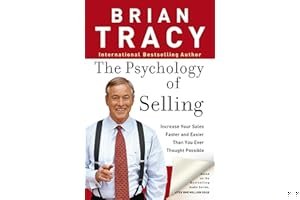
The Psychology of Selling: Increase Your Sales Faster and Easier Than You Ever Thought Possible
Brian Tracy, one of the top professional speakers and sales trainers in the world today, found that his most important breakthrough in selling was the discovery that it is the "Psychology of Selling" that is more important than the techniques and methods of selling.
Tracy's classic audio program, The Psychology of Selling, is the best-selling sales training program in history and is now available in expanded and updated book format for the first time. Salespeople will learn: "the inner game of selling" how to eliminate the fear of rejection how to build unshakeable self-confidence
Salespeople, says Tracy, must learn to control their thoughts, feelings, and actions to make themselves more effective.
…
Recommended by Geoffrey James.
Cover unavailable
21
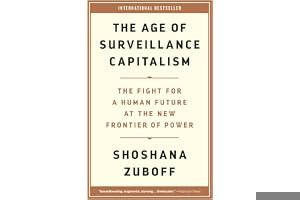
The Age of Surveillance Capitalism: The Fight for a Human Future at the New Frontier of Power
The challenges to humanity posed by the digital future, the first detailed examination of the unprecedented form of power called "surveillance capitalism," and the quest by powerful corporations to predict and control our behavior.
In this masterwork of original thinking and research, Shoshana Zuboff provides startling insights into the phenomenon that she has named surveillance capitalism. The stakes could not be higher: a global architecture of behavior modification threatens human nature in the twenty-first century just as industrial capitalism disfigured the natural world in the twentieth.
Zuboff vividly brings to life the consequences as surveillance capitalism advances from Silicon Valley into every economic sector. Vast wealth and power are accumulated in ominous new "behavioral futures markets," where predictions about our behavior are bought and sold, and the production of goods and services is subordinated to a new "means of behavioral modification."
The threat has shifted from a totalitarian Big Brother state to a ubiquitous digital architecture: a "Big Other" operating in the interests of surveillance capital. Here is the crucible of an unprecedented form of power marked by extreme concentrations of knowledge and free from democratic oversight. Zuboff's comprehensive and moving analysis lays bare the threats to twenty-first century society: a controlled "hive" of total connection that seduces with promises of total certainty for maximum profit--at the expense of democracy, freedom, and our human future.
With little resistance from law or society, surveillance capitalism is on the verge of dominating the social order and shaping the digital future--if we let it.
Table of contents
INTRODUCTION 1. Home or exile in the digital future
I. THE FOUNDATIONS OF SURVEILLANCE CAPITALISM 2. August 9, 2011: Setting the stage for Surveillance Capitalism 3. The discovery of behavioral surplus 4. The moat around the castle 5. The elaboration of Surveillance Capitalism: Kidnap, corner, compete 6. Hijacked: The division of learning in society
II. THE ADVANCE OF SURVEILLANCE CAPITALISM 7. The reality business 8. Rendition: From experience to data 9. Rendition from the depths 10. Make them dance 11. The right to the future tense
III. INSTRUMENTARIAN POWER FOR A THIRD MODERNITY 12. Two species of power 13. Big Other and the rise of instrumentarian power 14. A utopia of certainty 15, The instrumentarian collective 16. Of life in the hive 17. The right to sanctuary
CONCLUSION 18. A coup from above
Acknowledgements About the author Detailed table of contents Notes Index
…
Recommended by Clive Lewis Mp, Dilip Cherian, John Tasioulas, and 3 others.
Clive Lewis Mp
Cant make the brilliant event below? Havent had a chance to read @shoshanazuboff groundbreaking book, ‘Surveillance Capitalism’? Then listen to this brilliant interview with the author as she explains the terrifying scale&ambition of Facebook/Google et al https://t.co/DCtNlFbmE0 https://t.co/ZX0YpW5pOo [source]
Dilip Cherian
Brave New World? Thanks @shoshanazuboff for that amazing book. It's compulsory reading for those trying to make sense of our world now. https://t.co/5nBJWoLS9p [source]
John Tasioulas
2019... Best book: Shoshana Zuboff, “The Age of Surveillance Capitalism: The Fight for a Human Future at the New Frontier of Power” Best political commentary: @HelenHet20 Best film @jokermovie Best restaurant: @farangLDN & @Trullo_LDN (London); Shinoki (Melbourne) [source]
Cover unavailable
22
Indistractable: How to Control Your Attention and Choose Your Life
You sit down at your desk to work on an important project, but a notification on your phone interrupts your morning. Later, as you're about to get back to work, a colleague taps you on the shoulder to chat. At home, screens get in the way of quality time with your family. Another day goes by, and once again, your most important personal and professional goals are put on hold.
What would be possible if you followed through on your best intentions? What could you accomplish if you could stay focused and overcome distractions? What if you had the power to become "indistractable"?
International best-selling author, former Stanford lecturer, and behavioral design expert, Nir Eyal, wrote Silicon Valley's handbook for making technology habit-forming. Five years after publishing Hooked, Eyal reveals distraction's Achilles' heel in his groundbreaking new book.
In Indistractable, Eyal reveals the hidden psychology driving us to distraction. He describes why solving the problem is not as simple as swearing off our devices: Abstinence is impractical and often makes us want more.
Eyal lays bare the secret of finally doing what you say you will do with a four-step, research-backed model. Indistractable reveals the key to getting the best out of technology, without letting it get the best of us.
Inside, Eyal overturns conventional wisdom and reveals:
Why distraction at work is a symptom of a dysfunctional company culture - and how to fix it What really drives human behavior and why "time management is pain management" Why your relationships (and your sex life) depend on you becoming indistractable How to raise indistractable children in an increasingly distracting world Empowering and optimistic, Indistractable provides practical, novel techniques to control your time and attention - helping you live the life you really want.
Indistractable is the most practical and realistic approach to balancing technology with well-being. A must-read for anyone with a smartphone. [source]
Cover unavailable
23
Hacking Growth: How Today's Fastest-Growing Companies Drive Breakout Success
The definitive playbook by the pioneers of Growth Hacking, one of the hottest business methodologies in Silicon Valley and beyond.
It seems hard to believe today, but there was a time when Airbnb was the best-kept secret of travel hackers and couch surfers, Pinterest was a niche web site frequented only by bakers and crafters, LinkedIn was an exclusive network for C-suite executives and top-level recruiters, Facebook was MySpace's sorry step-brother, and Uber was a scrappy upstart that didn't stand a chance against the Goliath that was New York City Yellow Cabs.
So how did these companies grow from these humble beginnings into the powerhouses they are today? Contrary to popular belief, they didn't explode to massive worldwide popularity simply by building a great product then crossing their fingers and hoping it would catch on. There was a studied, carefully implemented methodology behind these companies' extraordinary rise. That methodology is called Growth Hacking, and it's practitioners include not just today's hottest start-ups, but also companies like IBM, Walmart, and Microsoft as well as the millions of entrepreneurs, marketers, managers and executives who make up the community of GrowthHackers.com.
Think of the Growth Hacking methodology as doing for market-share growth what Lean Start-Up did for product development, and Scrum did for productivity. It involves cross-functional teams and rapid-tempo testing and iteration that focuses customers attaining them, retaining them, engaging them, and motivating them to come back and buy more. An accessible and practical toolkit that teams and companies in all industries can use to increase their customer base and market share, this book walks readers through the process of creating and executing their own custom-made growth hacking strategy. It is a must read for any marketer, entrepreneur, innovator or manger looking to replace wasteful big bets and "spaghetti-on-the-wall" approaches with more consistent, replicable, cost-effective, and data-driven results.
…
Recommended by Nir Eyal, Eric Ries, Annabell Satterfield, and 6 others.
Nir Eyal
Author/Hooked
It used to be that designers and engineers were responsible for developing new products, data teams were responsible for number-crunching reports, and marketers were responsible for acquiring and monetizing as many customers as possible. But today’s companies can’t afford to be slowed down by organizational silos. Here, growth-hacking pioneers Ellis and Brown show how to break down those traditional barriers and marry powerful data analysis, technical know-how, and marketing savvy to quickly devise and test ways to fuel breakout growth. [source]
In an increasingly erratic business landscape where new competition can emerge overnight, customers’ loyalties can shift unexpectedly, and markets are constantly being disrupted, finding growth solutions fast is crucial for survival. Hacking Growth provides a compelling answer to this urgent need for speed, offering companies a methodology for finding and optimizing new strategies to increase their market share and quickly. [source]
Annabell Satterfield
Hacking Growth is the definitive guide to building authentic, sustainable, compounding growth for your company. If you want to know how proven growth practitioners at fast-growing companies do what they do-- pick up this book. [source]
The foremost authority on innovation and growth presents a path-breaking book every company needs to transform innovation from a game of chance to one in which they develop products and services customers not only want to buy, but are willing to pay premium prices for.
How do companies know how to grow? How can they create products that they are sure customers want to buy? Can innovation be more than a game of hit and miss? Harvard Business School professor Clayton Christensen has the answer. A generation ago, Christensen revolutionized business with his groundbreaking theory of disruptive innovation. Now, he goes further, offering powerful new insights.
After years of research, Christensen has come to one critical conclusion: our long held maxim—that understanding the customer is the crux of innovation—is wrong. Customers don’t buy products or services; they "hire" them to do a job. Understanding customers does not drive innovation success, he argues. Understanding customer jobs does. The "Jobs to Be Done" approach can be seen in some of the world’s most respected companies and fast-growing startups, including Amazon, Intuit, Uber, Airbnb, and Chobani yogurt, to name just a few. But this book is not about celebrating these successes—it’s about predicting new ones.
Christensen contends that by understanding what causes customers to "hire" a product or service, any business can improve its innovation track record, creating products that customers not only want to hire, but that they’ll pay premium prices to bring into their lives. Jobs theory offers new hope for growth to companies frustrated by their hit and miss efforts.
This book carefully lays down Christensen’s provocative framework, providing a comprehensive explanation of the theory and why it is predictive, how to use it in the real world—and, most importantly, how not to squander the insights it provides.
…
Recommended by Ken Norton, Amir Salihefendic, and Chris Oliver.
Chris Oliver
As for my favorite business book, I'd probably say Competing Against Luck. It talks about the "Jobs to be Done" mindset when you're thinking about why your customers buy your product. I found that it puts you in the right mindset to understand the perspective of your customers so you can serve them better. It's surprisingly hard to understand the reasons why people buy things and this book helps you look at it from a much better angle. [source]
Cover unavailable
25
Exactly What to Say: The Magic Words for Influence and Impact
Often the decision between a customer choosing you over someone like you is your ability to know exactly what to say, when to say it, and how to make it count. Phil M. Jones has trained more than two million people across five continents and over fifty countries in the lost art of spoken communication. In Exactly What to Say, he delivers the tactics you need to get more of what you want.
Best-selling author and multiple award-winner Phil M. Jones is highly regarded as one of the world's leading sales trainers. He has trained more than two million people across five continents and fifty-six countries and coached some of the biggest global brands in the lost art of spoken communication. In 2013 he won the British Excellence in Sales and Marketing Award for Sales Trainer of the Year, the youngest-ever recipient of that honor. He has also written a series of best-selling books and developed a number of online training courses that have enrolled tens of thousands of members around the world. Phil divides his time between London and New York.
…
Cover unavailable
26
Unreasonable Hospitality: The Remarkable Power of Giving People More Than They Expect
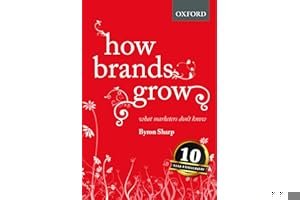
This book provides evidence-based answers to the key questions asked by marketers every day. Tackling issues such as how brands grow, how advertising really works, what price promotions really do & how loyalty programs really affect loyalty.
Cover unavailable
28
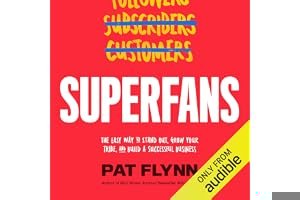
Superfans: The Easy Way to Stand Out, Grow Your Tribe, and Build a Successful Business
It's easy to just look at the numbers. How many likes? How many purchases? How many email subscribers?
But as entrepreneurs, we have to remember that there are people behind all that data. People who are looking to us to be a leader, to give advice, and to care. In this dog-eat-dog world, these are the people who are looking for someone who they can trust, and who they know have their best interests in mind.
These are the people, if you connect with them in the right way, who will become Superfans.
Followers may "like" an Instagram post. Customers may buy a product. But "Superfans" will be your biggest supporters. They will promote you and your products because they know you have made a difference in their lives. They will tell their friends. They will send you encouraging emails.
Whether you're a shy YouTuber just starting out, or the leader of a Fortune 500 company, your superfans are out there waiting for you to connect with them.
You don't need to change the entire world to build a successful business; you just need to change someone's world.
People don't become superfans the moment they find you. They become superfans because of the magical moments you create for them over time.
…
Recommended by Amy Porterfield, Chris Ducker, Chris Guillebeau, and 2 others.
Amy Porterfield
Superfans should be required reading for anyone wanting to build an authentic business that lasts forever. [source]
Chris Ducker
Have you pre-ordered your copy of @PatFlynn's new book, "Superfans" yet?! If not, jump on before August 13th and he'll throw in the AudioBook version for free, too! It's a GREAT read, y'all. Pre-order here: https://t.co/6B2Jb5qjYq https://t.co/gQlzkGBfcy [source]
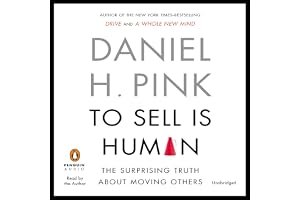
From the bestselling author of Drive and A Whole New Mind comes a surprising--and surprisingly useful--new book that explores the power of selling in our lives.
According to the U.S. Bureau of Labor Statistics, one in nine Americans works in sales. Every day more than fifteen million people earn their keep by persuading someone else to make a purchase.
But dig deeper and a startling truth emerges:
Yes, one in nine Americans works in sales. But sodo the other eight.
Whether we’re employees pitching colleagues on a new idea, entrepreneurs enticing funders to invest, or parents and teachers cajoling children to study, we spend our days trying to move others. Like it or not, we’re all in sales now.
To Sell Is Human offers a fresh look at the art and science of selling. As he did in Drive and A Whole New Mind, Daniel H. Pink draws on a rich trove of social science for his counterintuitive insights. He reveals the new ABCs of moving others (it's no longer "Always Be Closing"), explains why extraverts don't make the best salespeople, and shows how giving people an "off-ramp" for their actions can matter more than actually changing their minds.
Along the way, Pink describes the six successors to the elevator pitch, the three rules for understanding another's perspective, the five frames that can make your message clearer and more persuasive, and much more. The result is a perceptive and practical book--one that will change how you see the world and transform what you do at work, at school, and at home.
…
Recommended by Cat Williams-Treloar, Jeffrey Shaw, and Ola Olusoga.
Cat Williams-Treloar
Daniel Pink "To Sell is Human" - describes selling as a way to move and serve people along the journey. It's packed full of examples, science and experiments in an easily digestible form. [source]
Jeffrey Shaw
I’m asked all the time what books I suggest. These are the best of the best. Links to each book are here https://t.co/pJXWOeZtBu #marketing #entrepreneur https://t.co/1wCkqQw8GX [source]
Ola Olusoga
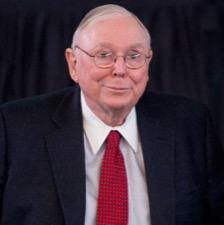
Like Charlie Munger once said: “I’ve long believed that a certain system - which almost any intelligent person can learn - works way better than the systems most people use to understand the world. What you need is a latticework of mental models in your head. And, with that system, things gradually fit together in a way that enhances cognition. Just as multiple factors shape every system, multiple mental models from a variety of disciplines are necessary to understand that system". You can read this book to start building a "latticework of mental models in your head". [source]
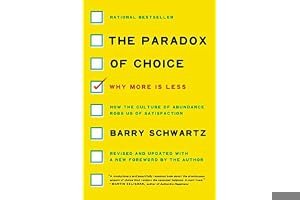
About the Book: The Paradox of Choice. In the spirit of Alvin Tofflers Future Shock, a social critique of our obsession with choice, and how it contributes to anxiety, dissatisfaction and regret. Whether we're buying a pair of jeans, ordering a cup of coffee, selecting a long-distance carrier, applying to college, choosing a doctor, or setting up a 401K, everyday decisions have become increasingly complex due to the overwhelming abundance of choice with which we are presented. In The Paradox of Choice, Barry Schwartz explains why too much of a good thing has proven detrimental to our psychological and emotional well-being. In accessible, engaging, and anecdotal prose, Schwartz explains how a culture that thrives on the availability of constantly evolving options can also foster profound dissatisfaction and self-blame in individuals, which can lead to a paralysis in decision making and, in some cases, depression. With the latest studies on how we make choices in our personal and professional lives, Schwartz offers practical advice on how to focus on the right choices, and how to derive greater satisfaction from choices that we do make. About the Author: Barry Schwartz Barry Schwartz is the Dorwin Cartwright Professor of Social Theory and Social Action at Swarthmore College. He is the author of several books, including The Battle for Human Nature: Science, Morality and Modern Life and The Costs of Living: How Market Freedom Erodes the Best Things in Life. His articles have appeared in many of the leading journals in his field, including the American Psychologist. He lives in Philadelphia, PA.
A few months ago, I was drinking a Noah’s Mill whiskey (cute) with my good buddy Brian Balfour and talking about life... During the conversation, we got on the topic of books that changed our lives. I want to share them with you. I judge a book's success if a year later I'm still using at least 1 thing from the book. [source]
Cover unavailable
31
Oversubscribed: How To Get People Lining Up To Do Business With You
When Guerrilla Marketing was first published in 1983, Jay Levinson revolutionized marketing strategies for the small-business owner with his take-no-prisoners approach to finding clients. Based on hundreds of solid ideas that really work, Levinson’s philosophy has given birth to a new way of learning about market share and how to gain it. In this completely updated and expanded fourth edition, Levinson offers a new arsenal of weaponry for small-business success including
* strategies for marketing on the Internet (explaining when and precisely how to use it)
* tips for using new technology, such as podcasting and automated marketing
* programs for targeting prospects and cultivating repeat and referral business
* management lessons in the age of telecommuting and freelance employees
Guerrilla Marketing is the entrepreneur’s marketing bible -- and the book every small-business owner should have on his or her shelf.
…
Recommended by Drew Houston, Bogdana Butnar, Pat Walls, and 1 others.
Drew Houston
CEO/Dropbox
About how do you get attention and users for your product if you have no money? The tactic of putting a video on Hacker News or creating a viral video, that was a seed that was planted by reading this book. [source]
Bogdana Butnar
I thought I might put my money where my mouth is. I keep whining that young people are not in touch with some essential books on advertising that have helped me shape the way I practise my trade today, but I never did anything about it. So I am starting here the ultimate books to read list. I will add to it as I get suggestions and as more good books get written. [source]
Pat Walls
One of the best marketing books out there, and looking back - it was way before it's time. [source]
Cover unavailable
33
Why We Buy: The Science of Shopping
Paco Underhill
4.3
Is there a method to our madness when it comes to shopping? Hailed by the San Francisco Chronicle as "a Sherlock Holmes for retailers," author and research company CEO Paco Underhill answers with a definitive "yes" in this witty, eye-opening report on our ever-evolving consumer culture. Why We Buy is based on hard data gleaned from thousands of hours of field research–in shopping malls, department stores, and supermarkets across America. With his team of sleuths tracking our every move, Paco Underhill lays bare the struggle among merchants, marketers, and increasingly knowledgeable consumers for control.
…
Cover unavailable
34
Wanting: The Power of Mimetic Desire in Everyday Life
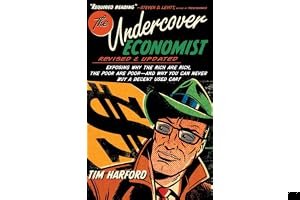
An economist's version of The Way Things Work, this engaging volume is part field guide to economics and part expose of the economic principles lurking behind daily events, explaining everything from traffic jams to high coffee prices. The Undercover Economist is for anyone who's wondered why the gap between rich and poor nations is so great, or why they can't seem to find a decent second-hand car, or how to outwit Starbucks. This book offers the hidden story behind these and other questions, as economist Tim Harford ranges from Africa, Asia, Europe, and of course the United States to reveal how supermarkets, airlines, and coffee chains--to name just a few--are vacuuming money from our wallets. Harford punctures the myths surrounding some of today's biggest controversies, including the high cost of health-care; he reveals why certain environmental laws can put a smile on a landlord's face; and he explains why some industries can have high profits for innocent reasons, while in other industries something sinister is going on. Covering an array of economic concepts including scarce resources, market power, efficiency, price gouging, market failure, inside information, and game theory, Harford sheds light on how these forces shape our day-to-day lives, often without our knowing it. Showing us the world through the eyes of an economist, Tim Harford reveals that everyday events are intricate games of negotiations, contests of strength, and battles of wits. Written with a light touch and sly wit, The Undercover Economist turns "the dismal science" into a true delight.
…
Recommended by Fabrice Grinda and Ola Olusoga.
Fabrice Grinda
I have lots of books to recommend, but they are not related to my career path. The only one that is remotely related is Peter Thiel’s Zero to One. That said here are books I would recommend. [source]
Ola Olusoga
Like Charlie Munger once said: “I’ve long believed that a certain system - which almost any intelligent person can learn - works way better than the systems most people use to understand the world. What you need is a latticework of mental models in your head. And, with that system, things gradually fit together in a way that enhances cognition. Just as multiple factors shape every system, multiple mental models from a variety of disciplines are necessary to understand that system". You can read this book to start building a "latticework of mental models in your head". [source]
Cover unavailable
36
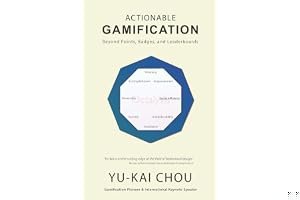
Actionable Gamification: Beyond Points, Badges and Leaderboards
The new era of Gamification and Human-Focused Design optimizes for motivation and engagement over traditional Function-Focused Design. Within the industry, studies on game mechanics and behavioral psychology have become proliferate. However, few people understand how to merge the two fields into experience designs that reliably increases business metrics and generates a return on investment. Gamification Pioneer Yu-kai Chou takes reader on a journey to learn his twelve years of obsessive research in creating the Octalysis Framework, and how to apply the framework to create engaging and successful experiences in their product, workplace, marketing, and personal lives.
…
Recommended by Xi-Wei Yeo.
Xi-Wei Yeo
If you’re into gamification, like myself and my team, I highly, highly recommend Reality is Broken, by Jane McGonigal, Actionable Gamification by Yu-Kai Chou, and Gamify: How Gamification Motivates People to do Extraordinary Things, by Brian Birke. Jane McGonigal is essentially the Martha Stewart of gamification (sans prison sentence), and Yu-Kai Chou is doing great things in the field, pioneering great frameworks like the Octalysis. Can’t wait to get more of their books. [source]
Cover unavailable
37
Play Bigger: How Pirates, Dreamers, and Innovators Create and Dominate Markets
Al Ramadan, Dave Peterson, Christopher Lochhead, Kevin Maney
The founders of a respected Silicon Valley advisory firm study legendary category-creating companies and reveal a groundbreaking discipline called category design.
Winning today isn’t about beating the competition at the old game. It’s about inventing a whole new game—defining a new market category, developing it, and dominating it over time. You can’t build a legendary company without building a legendary category. If you think that having the best product is all it takes to win, you’re going to lose.
In this farsighted, pioneering guide, the founders of Silicon Valley advisory firm Play Bigger rely on data analysis and interviews to understand the inner workings of “category kings”— companies such as Amazon, Salesforce, Uber and IKEA that give us new ways of living, thinking or doing business, often solving problems we didn’t know we had.
In Play Bigger, the authors assemble their findings to introduce the new discipline of category design. By applying category design, companies can create new demand where none existed, conditioning customers’ brains so they change their expectations and buying habits. While this discipline defines the tech industry, it applies to every kind of industry and even to personal careers.
Crossing The Chasm revolutionized how we think about new products in an existing market. The Innovator’s Dilemma taught us about disrupting an aging market. Now, Play Bigger is transforming business once again, showing us how to create the market itself.
Question: What five books would you recommend to young people interested in your career path & why? Answer: I know this is sounds self-serving but I’d recommended both of my books, the soon to be released, “Niche Down: How to Become Legendary by Being Different” and Harper Collins’ “instant classic,” “Play Bigger: How Pirates, Dreamers and Innovators Create and Dominate Markets” In addition: The Effective Executive, by Peter Drucker The E-Myth, by Michael Gerber Radical Candor: Be a Kickass Boss Without Losing Your Humanity by Kim Scott Back from the Dead, by Bill Walton The 22 Immutable Laws of Marketing, by Al Ries and Jack Trout [source]
Glen Allsopp
As we're ending 2019, a shoutout to the best book I read this year: Play Bigger by @lochhead, @kmaney and co. Bought the Kindle version after the audiobook it's that good. Speaking of audio, cool to get a mention on the @authorityhacker podcast today: https://t.co/hg99T1OKxh https://t.co/BTE6fj2hWT [source]
Mikhail Dubov
A few books had affected how I run the company … Play Bigger. [source]
Cover unavailable
38
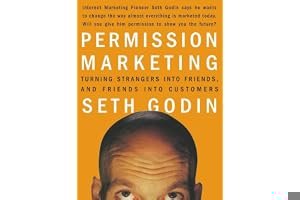
Permission Marketing: Turning Strangers Into Friends And Friends Into Customers
The man Business Week calls "the ultimate entrepreneur for the Information Age" explains "Permission Marketing"—the groundbreaking concept that enables marketers to shape their message so that consumers will willingly accept it.
Whether it is the TV commercial that breaks into our favorite program, or the telemarketing phone call that disrupts a family dinner, traditional advertising is based on the hope of snatching our attention away from whatever we are doing. Seth Godin calls this Interruption Marketing, and, as companies are discovering, it no longer works.
Instead of annoying potential customers by interrupting their most coveted commodity—time—Permission Marketing offers consumers incentives to accept advertising voluntarily. Now this Internet pioneer introduces a fundamentally different way of thinking about advertising products and services. By reaching out only to those individuals who have signaled an interest in learning more about a product, Permission Marketing enables companies to develop long-term relationships with customers, create trust, build brand awareness -- and greatly improve the chances of making a sale.
…
Recommended by Steve Blank, Noah Kagan, Foti Panagio, and 1 others.
A few months ago, I was drinking a Noah’s Mill whiskey (cute) with my good buddy Brian Balfour and talking about life... During the conversation, we got on the topic of books that changed our lives. I want to share them with you. I judge a book's success if a year later I'm still using at least 1 thing from the book. [source]
Foti Panagio
Honestly, it’s not really as simple as following a career path, at least not anymore. I’d recommend instead reading books on innovation and leadership because that can give you the confidence you need to blaze your own trail and to take your career as it comes. I’d suggest that a good background reading list would include … Permission Marketing by Seth Godin [source]
Cover unavailable
39
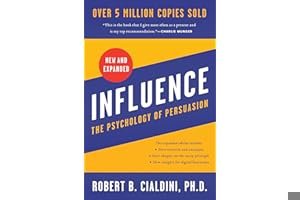
Influence, New and Expanded: The Psychology of Persuasion
Robert B. Cialdini
4.2
Cover unavailable
40
Methods of Persuasion: How to Use Psychology to Influence Human Behavior
Nick Kolenda
4.2
Best known for his viral video, "Chat Roulette Mind Reading," Nick Kolenda is finally revealing some of the psychological secrets behind his so-called "mind reading" feats.
Using principles from cognitive psychology, Nick has developed ways to subconsciously influence people's thoughts, and his "mind reading" demonstrations have been seen by over a million people across the globe.
Methods of Persuasion reveals that fascinating secret for the first time, and it explains how you can use those principles to subconsciously influence people's thoughts in your own life. Drawing on cutting-edge research in psychology and neuroscience, the entire book culminates a powerful 7-step persuasion process that follows the acronym, METHODS: Step 1: Mold Their Perception Step 2: Elicit Congruent Attitudes Step 3: Trigger Social Pressure Step 4: Habituate Your Message Step 5: Optimize Your Message Step 6: Drive Their Momentum Step 7: Sustain Their Compliance This book teaches you the psychology behind each step, and it explains how you can use METHODS to influence people's thoughts, emotions, and behavior in nearly any situation.
…
Cover unavailable
41
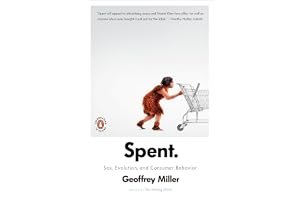
Spent: Sex, Evolution, and Consumer Behavior
Geoffrey Miller
4.2
Why do we buy? Why are so many of our consumer choices simply a waste of time, energy, and money? How does advertising really work? And why are pregnant women more racist than the rest of us?
In this brilliantly original, provocative and witty book, Geoffrey Miller - acclaimed author of The Mating Mind - uses evolutionary psychology to explain the phenomenon of modern brand-driven consumerism. Traversing the murky terrains of marketing, advertising, brands, media, genetics, neuroscience and the latest advances in evolutionary biology to explore human behavior, Spent argues that many of our product choices are driven by the desire not to feel good, but to look good, by displaying our evolutionary fitness to those around us.
At once a searing critique of the excesses of twenty-first-century consumerism and a masterful new take on understanding how the mind works, Spent is a radical, timely and original book.
…
Recommended by Marvin Liao and Keith Rabois.
Marvin Liao
Partner/500 Startups
My list would be (besides the ones I mentioned in answer to the previous question) both business & Fiction/Sci-Fi and ones I personally found helpful to myself. The business books explain just exactly how business, work & investing are in reality & how to think properly & differentiate yourself. On the non-business side, a mix of History & classic fiction to understand people, philosophy to make sense of life and Science fiction to picture what the future could be like (not always utopian). [source]
Cover unavailable
42
Ninja Selling: Subtle Skills. Big Results.
Larry Kendall
4.2
2018 Axiom Business Book Award Winner, Gold Medal
Stop Selling! Start Solving!
In Ninja Selling, author Larry Kendall transforms the way readers think about selling. He points out the problems with traditional selling methods and instead offers a science-based selling system that gives predictable results regardless of personality type. Ninja Selling teaches readers how to shift their approach from chasing clients to attracting clients. Readers will learn how to stop selling and start solving by asking the right questions and listening to their clients.
Ninja Selling is an invaluable step-by-step guide that shows readers how to be more effective in their sales careers and increase their income-per-hour, so that they can lead full lives. Ninja Selling is both a sales platform and a path to personal mastery and life purpose. Followers of the Ninja Selling system say it not only improved their business and their client relationships; it also improved the quality of their lives.
…
Cover unavailable
43
Judgment Under Uncertainty: Heuristics and Biases
Daniel Kahneman
4.2
The thirty-five chapters in this book describe various judgmental heuristics and the biases they produce, not only in laboratory experiments but in important social, medical, and political situations as well. Individual chapters discuss the representativeness and availability heuristics, problems in judging covariation and control, overconfidence, multistage inference, social perception, medical diagnosis, risk perception, and methods for correcting and improving judgments under uncertainty. About half of the chapters are edited versions of classic articles; the remaining chapters are newly written for this book. Most review multiple studies or entire subareas of research and application rather than describing single experimental studies. This book will be useful to a wide range of students and researchers, as well as to decision makers seeking to gain insight into their judgments and to improve them.
…
Recommended by Adam Robinson, Adam Robinson, and Jonah Lehrer.
Adam Robinson
This study should be taught at every business school in the country. [source]
Adam Robinson
This study should be taught at every business school in the country. [source]
Jonah Lehrer
This is one of the most influential books in modern economics. [source]
Cover unavailable
44
Narrative Economics: How Stories Go Viral and Drive Major Economic Events
From Nobel Prize-winning economist and New York Times bestselling author Robert Shiller, a groundbreaking account of how stories help drive economic events--and why financial panics can spread like epidemic viruses
In a world in which internet troll farms attempt to influence foreign elections, can we afford to ignore the power of viral stories to affect economies? In this groundbreaking book, Nobel Prize-winning economist and New York Times bestselling author Robert Shiller offers a new way to think about the economy and economic change. Using a rich array of historical examples and data, Shiller argues that studying popular stories that affect individual and collective economic behavior--what he calls narrative economics--has the potential to vastly improve our ability to predict, prepare for, and lessen the damage of financial crises, recessions, depressions, and other major economic events.
Spread through the public in the form of popular stories, ideas can go viral and move markets--whether it's the belief that tech stocks can only go up, that housing prices never fall, or that some firms are too big to fail. Whether true or false, stories like these--transmitted by word of mouth, by the news media, and increasingly by social media--drive the economy by driving our decisions about how and where to invest, how much to spend and save, and more. But despite the obvious importance of such stories, most economists have paid little attention to them. Narrative Economics sets out to change that by laying the foundation for a way of understanding how stories help propel economic events that have had led to war, mass unemployment, and increased inequality.
The stories people tell--about economic confidence or panic, housing booms, the American dream, or Bitcoin--affect economic outcomes. Narrative Economics explains how we can begin to take these stories seriously. It may be Robert Shiller's most important book to date.
…
Recommended by Nick Gillespie.
Nick Gillespie
Must-read of today: @AllisonSchrager reviews @RobertJShiller's "Narrative Economics" at @reason, an important book abt how the stories we tell about ourselves can heavily influence or even create reality. https://t.co/xWjrDfV8BN https://t.co/J0XtHyIYuA [source]
Cover unavailable
45
Yes!: 50 Scientifically Proven Ways to Be Persuasive
Noah J. Goldstein Ph.D., Steve J. Martin, Robert Cialdini Ph.D.
4.1
Small changes can make a big difference in your powers of persuasion.
What one word can you start using today to increase your persuasiveness by more than fifty percent? Which item of stationery can dramatically increase people's responses to your requests? How can you win over your rivals by inconveniencing them? Why does knowing that so many dentists are named Dennis improve your persuasive prowess?
Every day we face the challenge of persuading others to do what we want. But what makes people say yes to our requests? Persuasion is not only an art, it is also a science, and researchers who study it have uncovered a series of hidden rules for moving people in your direction. Based on more than sixty years of research into the psychology of persuasion, Yes! reveals fifty simple but remarkably effective strategies that will make you much more persuasive at work and in your personal life, too.
Cowritten by the world's most quoted expert on influence, Professor Robert Cialdini, Yes! presents dozens of surprising discoveries from the science of persuasion in short, enjoyable, and insightful chapters that you can apply immediately to become a more effective persuader. Why did a sign pointing out the problem of vandalism in the Petrified Forest National Park actually increase the theft of pieces of petrified wood? Why did sales of jam multiply tenfold when consumers were offered many fewer flavors? Why did people prefer a Mercedes immediately after giving reasons why they prefer a BMW? What simple message on cards left in hotel rooms greatly increased the number of people who behaved in environmentally friendly ways?
Often counterintuitive, the findings presented in Yes! will steer you away from common pitfalls while empowering you with little-known but proven wisdom.
Whether you are in advertising, marketing, management, or sales, or just curious about how to be more influential in everyday life, Yes! shows how making small, scientifically proven changes to your approach can have a dramatic effect on your persuasive powers.
Buyology: Truth and Lies About Why We Buy and the New Science of Desire
Martin Lindstrom
4.1
How much do we know about why we buy? What truly influences our decisions in today’s message-cluttered world? An eye-grabbing advertisement, a catchy slogan, an infectious jingle? Or do our buying decisions take place below the surface, so deep within our subconscious minds, we’re barely aware of them?
In BUYOLOGY, Lindstrom presents the astonishing findings from his groundbreaking, three-year, seven-million-dollar neuromarketing study, a cutting-edge experiment that peered inside the brains of 2,000 volunteers from all around the world as they encountered various ads, logos, commercials, brands, and products. His startling results shatter much of what we have long believed about what seduces our interest and drives us to buy. Among his finding:
Gruesome health warnings on cigarette packages not only fail to discourage smoking, they actually make smokers want to light up.
Despite government bans, subliminal advertising still surrounds us – from bars to highway billboards to supermarket shelves.
"Cool” brands, like iPods trigger our mating instincts.
Other senses – smell, touch, and sound - are so powerful, they physically arouse us when we see a product.
Sex doesn't sell. In many cases,people in skimpy clothing and suggestive poses not only fail to persuade us to buy products - they often turn us away .
Companies routinetly copy fromthe world ofreligion and create rituals – like drinking a Corona with a lime – to capture our hard-earned dollars.
Filled with entertaining inside stories about how we respond to such well-known brands as Marlboro, Nokia, Calvin Klein, Ford, and American Idol, BUYOLOGY is a fascinating and shocking journey into the mind of today’s consumer that will captivate anyone who’s been seduced – or turned off – by marketers’ relentless attempts to win our loyalty, our money, and our minds. Includes a foreword by Paco Underhill.
…
Cover unavailable
47
Exactly What to Say: For Real Estate Agents
Phil M Jones
4.1
Cover unavailable
48
Consumer Behavior
Wayne D. Hoyer, Deborah J. MacInnis, et al.
4.1
The popular CONSUMER BEHAVIOR, 7E draws key concepts from marketing, psychology, sociology, and anthropology to present a strong foundation and highly practical focus on real-world applications for today's global business environment. With this new edition, you examine the latest research and current business practices with extensive coverage of social media influences, increased consumer power, and emerging neuroscience findings. You also study controversies in consumer decision-making involving money, goals, emotions, charity, health, materialism, and sustainability. This edition increases its emphasis on social responsibility and ethics in marketing, scrutinizing both the dark side and constructive possibilities. With even more real-world examples and thought-provoking application exercises, including new chapter-opening examples and closing cases, CONSUMER BEHAVIOR, 7E provides a thorough, yet enjoyable guide that enables you to master the skills you need.
…
Cover unavailable
49
A psicologia financeira: lições atemporais sobre fortuna, ganância e felicidade
Morgan Housel
4.1
Cover unavailable
50
Generation AI: Why Generation Alpha and the Age Of AI Will Change Everything
Matt Britton
4.1
Cover unavailable
51
The Wisdom of Crowds: Why the Many Are Smarter Than the Few and How Collective Wisdom Shapes Business, Economies, Societies and Nations
James Surowiecki
4.1
""No one in this world, so far as I know, has ever lost money by underestimating the intelligence of the great masses of the plain people." --H. L. Mencken" H. L. Mencken was wrong. In this endlessly fascinating book, "New Yorker" columnist James Surowiecki explores a deceptively simple idea that has profound implications: large groups of people are "smarter" than an elite few, no matter how brilliant--better at solving problems, fostering innovation, coming to wise decisions, even predicting the future. This seemingly counterintuitive notion has endless and major ramifications for how businesses operate, how knowledge is advanced, how economies are (or should be) organized and how we live our daily lives. With seemingly boundless erudition and in delightfully clear prose, Surowiecki ranges across fields as diverse as popular culture, psychology, ant biology, economic behaviorism, artificial intelligence, military history and political theory to show just how this principle operates in the real world. Despite the sophistication of his arguments, Surowiecki presents them in a wonderfully entertaining manner. The examples he uses are all down-to-earth, surprising, and fun to ponder. Why is the line in which you're standing always the longest? Why is it that you can buy a screw anywhere in the world and it will fit a bolt bought ten-thousand miles away? Why is network television so awful? If you had to meet someone in Paris on a specific day but had no way of contacting them, when and where would you meet? Why are there traffic jams? What's the best way to win money on a game show? Why, when you walk into a convenience store at 2:00 A.M. to buy a quart of orange juice, is it there waiting for you? What do Hollywood mafia movies have to teach us about why corporations exist? "The Wisdom of Crowds" is a brilliant but accessible biography of an idea, one with important lessons for how we live our lives, select our leaders, conduct our business, and think about our world.
@Mbiginji If you like that type you might enjoy The Wisdom of Crowds - James Surowiecki and Homo Deus by Yuval Harari. Recommend also Winners Takes All by Anand Giridharadas. Different kind of book but important read. [source]
Nadia Al Sheikh
Although we tend to elect leaders that we believe know better and follow them hoping for a better future, better life & a safer life. Surprisingly in many cases the wisdom of the crowd has proven to be more accurate than most of our smartest leaders. The message for me is to learn to listen to the people and to learn from them assuming you know nothing with that you will learn a lot! [source]
Cover unavailable
52
Consumer Behavior and Culture: Consequences for Global Marketing and Advertising
Marieke de Mooij
4.1
Marieke de Mooij's new edition of Consumer Behavior and Culture continues to explore how cultural influences can affect consumer behavior. The author uses her own model of consumer behavior to try and answer the fundamental questions about consumption - what people buy, why they buy it and how they buy.
This edition has been updated to include:
An insight into the different roles of the internet and the growing influence of social media An exploration of the various psychological and sociological aspects of human behavior, such as concept of self, personality, group influence, motivation, emotion, perception and information processing Updated examples throughout, including millennials as consumers and how the language of consumption can differ across cultures
…
Cover unavailable
53
Scientific Advertising
Claude Hopkins
4.1
Scientific Advertising is an important work on advertising from the early 20th century and is still used today by those learning the basics and more advanced parts of the advertising field. The author of Scientific Advertising, Claude C. Hopkins, is well known as the father of modern advertising techniques, and this book has been widely used by students of advertising and marketing. This book covers many important aspects of advertising including how advertising laws are established, mail order advertising, headlines, psychology, strategy, budgeting, and more advanced subjects like negative advertising and how to test an advertising campaign.
…
Recommended by Dean Roller, Elton Mayfield, and Ola Olusoga.
Dean Roller
Read a classic book like Claude Hopkins Scientific Advertising book and Influence by Dr. Robert Cialdini. Understanding fundamental principles to how humans operate is always a great starting point to focus on. It is easy to forgot tried and test examples when the next "new thing" comes along. [source]
Elton Mayfield
ATTENTION is the most important asset that you must capture and capitalize on in marketing. Discover how you can grab attention by reading a 97-year-old marketing book, that’s more relevant than ever: https://t.co/ELRjB0md4y [source]
Ola Olusoga
Like Charlie Munger once said: “I’ve long believed that a certain system - which almost any intelligent person can learn - works way better than the systems most people use to understand the world. What you need is a latticework of mental models in your head. And, with that system, things gradually fit together in a way that enhances cognition. Just as multiple factors shape every system, multiple mental models from a variety of disciplines are necessary to understand that system". You can read this book to start building a "latticework of mental models in your head". [source]
Cover unavailable
54
Day Trading Attention: How to Actually Build Brand and Sales in the New Social Media World
Gary Vaynerchuk
4.1
Cover unavailable
55
Consumer Behaviour and Material Culture in Britain, 1660-1760
Lorna Weatherill
4.1
This is a detailed study of the material lives of the middle classes in the pre-industrial era, a period which saw considerable growth in consumption. Lorna Weatherill has brought her highly important survey up-to-date in the light of new research. She provides a new introduction and bibliography, taking account of the latest academic writing and methodological advances, including computing, and offers further conclusions about her work and its place in current literature. Three main types of documentation are used to construct the overall picture: diaries, household accounts, and probate inventories. In investigating these sources she interprets the social meaning of material goods; and then goes on to relate this evidence to the social structures of Britain by wealth, status and locality. Breaking new ground in focusing on households and the use of probate inventories, Weatherill has provided a book which gives both a general account of the domestic environment of the period, and a scholarly analysis of the data on consumption patterns.
…
Cover unavailable
56
The 800 Blueprint: How to Fix Your Credit & Play the Game Like the Rich
Anthony Daniels
4.1
It doesn't matter if you only want to buy a house, get some money to start a business or get your personal finances on track, THE 800 BLUEPRINT gives up bankable information and unleashes industry secrets that can help anyone go from bad credit to borrowing 6 figures or more within 12 months. This book is a must read as it contains some of the most impactful information on personal credit and credit card funding available today. The author lays out a easy to follow guideline to get negative items deleted, maximize borrowing potential and add another level of financial literacy that can be easily understood. *Sample dispute documents included.* It is easier and faster to borrow a million dollars than it is to earn it, so why would you not want to fix your credit and get in the game?
…
Cover unavailable
57
Branded Not Blanded: KickCharge™ Your Home Service Brand
Dan Antonelli
4.1
Cover unavailable
58
Email Marketing Excellence: Building Profitable Campaigns in a Digital World
K. Connors
4.1
Cover unavailable
59
Go Big or Go Home: 5 Ways to Create a Customer Experience That Will Close the Deal
Diana Kander
4.1
Cover unavailable
60
Behind The Click: How to Use the Hidden Psychological Forces That Shape Online Behavior to Craft Digital Journeys That Delight, Engage, and Convert
R Jon MacDonald
4.1
Cover unavailable
61
Never Lose a Customer Again: Turn Any Sale Into Lifelong Loyalty in 100 Days
Joey Coleman
4.1
Award-winning speaker and business consultant Joey Coleman teaches audiences and companies all over the world how to turn a one-time purchaser into a lifelong customer.
Coleman's theory of building customer loyalty isn't about focusing on marketing or closing the sale: It's about the First 100 Days(R) after the sale and the interactions the customer experiences.
While new customers experience joy, euphoria, and excitement, these feelings quickly shift to fear, doubt, and uncertainty as buyer's remorse sets in. Across all industries, somewhere between 20%-70% of newly acquired customers will stop doing business with a company with the first 100 days of being a new customer because they feel neglected in the early stages of customer onboarding.
In Never Lose a Customer Again, Coleman offers a philosophy and methodology for dramatically increasing customer retention and as a result, the bottom line. He identifies eight distinct emotional phases customers go through in the 100 days following a purchase. From an impulse buy at Starbucks to the thoughtful purchase of a first house, all customers have the potential to experience the eight phases of the customer journey. If you can understand and anticipate the customers' emotions, you can apply a myriad of tools and techniques -- in-person, email, phone, mail, video, and presents -- to cement a long and valuable relationship.
Coleman's system is presented through research and case studies showing how best-in-class companies create remarkable customer experiences at each step in the customer lifecycle.
In the "Acclimate" stage, customers need you to hold their hand and over-explain how to use your product or service. They're often too embarrassed to admit they're confused. Take a cue from Canadian software company PolicyMedical and their challenge of getting non-technical users to undergo a complex installation and implementation process. They turned a series of project spreadsheets and installation manuals into a beautiful puzzle customers could assemble after completing each milestone.
In the "Adopt" stage, customers should be welcomed to the highest tier of tribal membership with both public and private recognitions. For instance, Sephora's VIB Rogue member welcome gift provides a metallic membership card (private recognition) and a members-only shade of lipstick (for public display).
In the final stage, "Advocate," loyal customers and raving fans are primed to provide powerful referrals. That's how elite entrepreneurial event MastermindTalks continues to sell-out their conference year after year - with zero dollars spent on marketing. By surprising their loyal fans with amazing referral bonuses (an all-expenses paid safari?!) they guarantee their community will keep providing perfect referrals.
Drawing on nearly two decades of consulting and keynoting, Coleman provides strategies and systems to increase customer loyalty. Applicable to companies in any industry and of any size (whether measured in employee count, revenue, or total number of customers), implementing his methods regularly leads to an increase in profits of 25-100%.
Working with well-known clients like Hyatt Hotels, Zappos, and NASA, as well as mom-and-pop shops and solo entrepreneurs around the world, Coleman's customer retention system has produced incredible results in dozens of industries.
His approach to creating remarkable customer experiences requires minimal financial investment and will be fun for owners, employees, and teams to implement. This book is required reading for business owners, CEOs, and managers - as well as sales and marketing teams, account managers, and customer service representatives looking for easy to implement action steps that result in lasting change, increased profits, and lifelong customer retention.
…
Cover unavailable
62
Don't Just Brand There, Do Something: A Blueprint for Financial Brands that Stand Up, Stand Out, and Stand the Test of Time
Martha Bartlett Piland
4.0
Cover unavailable
63
Consumers' Purchase Intentions and Their Behavior
Vicki Morwitz
4.0
Consumers' Purchase Intentions and Their Behavior reviews the relevant literature on purchase intentions in marketing, and more generally on the intentions-behavior relationship in social psychology, since purchase intentions are a particular form of the more general construct of intentions. Starting with the importance of purchase intentions to marketing managers, the author then focuses on reviewing the literature that provides an understanding of how strong is the relationship between purchase intentions and purchasing, what factors influence the strength of the relationship between purchase intentions and purchasing, and how a marketing manager should best use purchase intentions to forecast future sales.
…
Cover unavailable
64
Like: The Button That Changed the World
Bob Goodson, Martin Reeves, Joel Richards, and Ascent Audio
4.0
Cover unavailable
65
The Human Element: Overcoming the Resistance That Awaits New Ideas
Loran Nordgren
4.0
Cover unavailable
66
As armas da persuasão: Como influenciar e não se deixar influenciar [How to Influence and Not Be Influenced]
Robert B. Cialdini
4.0
Cover unavailable
67
Outcomes Over Output: Why customer behavior is the key metric for business success
JoshSeide
4.0
Cover unavailable
68
Laws of UX: Design Principles for Persuasive and Ethical Products
Jon Yablonski
4.0
Every designer today should learn the fundamentals of psychology. Instead of forcing users to conform to a product design or experience, designers need to learn how users behave and interact with various digital interfaces.
This guide provides some key principles from psychology to help you design more intuitive, human-centered products and experiences. Humans have an underlying blueprint for how we perceive and process the world around us, and through simple lessons in psychology, this guide will help you define this blueprint.
…
Cover unavailable
69
Truth and Persuasion: In the Digital Revolution
Ronald Chapman II
4.0
Cover unavailable
70
From Impressed to Obsessed: 12 Principles for Turning Customers and Employees into Lifelong Fans
Jon Picoult
4.0
Cover unavailable
71
Selling Beauty: Cosmetics, Commerce, and French Society, 1750–1830 (The Johns Hopkins University Studies in Historical and Political Science Book 127)
Morag Martin
4.0
Cover unavailable
72
Seeding Innovation: The Path to Profit and Purpose in the 21st Century
Robyn O'Brien
4.0
Cover unavailable
73
How We Decide
Jonah Lehrer
4.0
The first book to use the unexpected discoveries of neuroscience to help us make the best decisions.
Since Plato, philosophers have described the decision-making process as either rational or emotional: we carefully deliberate, or we “blink” and go with our gut. But as scientists break open the mind’s black box with the latest tools of neuroscience, they’re discovering that this is not how the mind works. Our best decisions are a finely tuned blend of both feeling and reason—and the precise mix depends on the situation. When buying a house, for example, it’s best to let our unconscious mull over the many variables. But when we’re picking a stock, intuition often leads us astray. The trick is to determine when to use the different parts of the brain, and to do this, we need to think harder (and smarter) about how we think.
Jonah Lehrer arms us with the tools we need, drawing on cutting-edge research as well as the real-world experiences of a wide range of “deciders”—from airplane pilots and hedge fund investors to serial killers and poker players.
Lehrer shows how people are taking advantage of the new science to make better television shows, win more football games, and improve military intelligence. His goal is to answer two questions that are of interest to just about anyone, from CEOs to firefighters: How does the human mind make decisions? And how can we make those decisions better?
Good Services: Decoding the Mystery of What Makes a Good Service
Louise Downe
4.0
Cover unavailable
75
THE ULTIMATE REFERRAL MACHINE: TURN EVERY CUSTOMER INTO A CASH-FLOWING, LEAD-GENERATING MACHINE
Joshua W. Clark and Joshua Clark
4.0
Cover unavailable
76
Methods of Pricing: 100+ Tactics That Boost Sales in Retail, SaaS, & Ecommerce
Nick Kolenda
4.0
Cover unavailable
77
Nudge: The Final Edition
Richard H. Thaler
4.0
Cover unavailable
78
Ramping Your Brand: How to Ride the Killer CPG Growth Curve
James F Richardson
4.0
Cover unavailable
79
The Culture Code: An Ingenious Way to Understand Why People Around the World Buy and Live as They Do
Clotaire Rapaille
4.0
Why are people around the world so very different? What makes us live, buy, even love as we do? The answers are in the codes.
In The Culture Code, internationally revered cultural anthropologist and marketing expert Clotaire Rapaille reveals for the first time the techniques he has used to improve profitability and practices for dozens of Fortune 100 companies. His groundbreaking revelations shed light not just on business but on the way every human being acts and lives around the world.
Rapaille’s breakthrough notion is that we acquire a silent system of Codes as we grow up within our culture. These Codes—the Culture Code—are what make us American, or German, or French, and they invisibly shape how we behave in our personal lives, even when we are completely unaware of our motives. What’s more, we can learn to crack the Codes that guide our actions and achieve new understanding of why we do the things we do.
Rapaille has used the Culture Code to help Chrysler build the PT Cruiser—the most successful American car launch in recent memory. He has used it to help Procter & Gamble design its advertising campaign for Folger’s coffee – one of the longest-lasting and most successful campaigns in the annals of advertising. He has used it to help companies as diverse as GE, AT&T, Boeing, Honda, Kellogg, and L’Oréal improve their bottom line at home and overseas. And now, in The Culture Code, he uses it to reveal why Americans act distinctly like Americans, and what makes us different from the world around us.
In The Culture Code, Dr. Rapaille decodes two dozen of our most fundamental archetypes—ranging from sex to money to health to America itself—to give us “a new set of glasses” with which to view our actions and motivations. Why are we so often disillusioned by love? Why is fat a solution rather than a problem? Why do we reject the notion of perfection? Why is fast food in our lives to stay? The answers are in the Codes.
Understanding the Codes gives us unprecedented freedom over our lives. It lets us do business in dramatically new ways. And it finally explains why people around the world really are different, and reveals the hidden clues to understanding us all.
…
Cover unavailable
80
Gap Selling: Getting the Customer to Yes: How Problem-Centric Selling Increases Sales by Changing Everything You Know About Relationships, Overcoming Objections, Closing and Price
Keenan
4.0
Cover unavailable
81
Ridiculously Easy to Do Business With: A practical guide to giving customers what they want--when and how they want it
David Avrin
4.0
Cover unavailable
82
Critical Thinking in Consumer Behavior: Cases and Experiential Exercises
Judy F. Graham
4.0
This concise paperback includes thirty-five cases and activities, each reviewed by a respected practitioner in the field, focusing specifically on consumer behavior concepts and illustrating how they're applied in the real world. The Importance of Customer Centricity; Customer Perception; Customer Learning and Memory; Customer Motivation and Personality; Segmenting, Targeting, and Positioning; Reference Group Influence and Diffusion of Innovation; Customer Attitudes; Marketing Communication and Attitude Change; Customer Decision Making; Qualitative and Interpretive Consumer Research; Cultural and Subcultural Influences Critical Thinking in Consumer Behavior: Cases and Experiential Exercises can be used as a standalone text or as a supplement to a consumer behavior textbook.
…
Cover unavailable
83
Mindmasters: The Data-Driven Science of Predicting and Changing Human Behavior
Sandra Matz
4.0
Cover unavailable
84
Consumer Behaviour
Isabelle Szmigin and Maria Piacentini
4.0
In this highly practical and engaging textbook, Szmigin and Piacentini provide the most holistic consideration of consumer behaviour available, demonstrating how seminal theories and cutting-edge research have an impact on today's marketing professionals.
The latest behavioral, psychological, and sociological approaches are presented alongside emerging techniques, such as the analysis of big data, integrating digital experiences, and the continuing importance of conscious consumption. Theory is set firmly in context for students through extended cases and extensive use of international examples, including interactive advertising on Snapchat, social media marketing by Maybelline in China, and culturally reflective advertising by IKEA and McCain.
This second edition reflects the most current research in consumer behavior and contains substantially increased coverage of digital consumption and online consumer behaviour, including social media research, online group buying, and attitudes to online privacy. New coverage of sustainability and ethical issues in consumer behavior, including deceptive packaging, Fairtrade, and ethically-conscious fashion at H&M, has been woven throughout the text.
Central to the book is the recognition of how businesses and governments use knowledge of these theories and techniques in marketing and business decision making. Each chapter includes a "Practitioner Insight" from a professional working in marketing, advertising, government or a charity.
Each chapter also includes "Consumer Insights" features with topics including the concept of hygge in Denmark, repositioning Lucozade in the UK, and branding in emerging markets. These features bring together the themes discussed and encourage students to engage with the material on a practical level.
The authors acknowledge consumer behaviour as a research discipline. To reflect this, the "Research Insights" features, around half of which are brand new for this edition, include links to seminal and contemporary papers and present students with the opportunity to take their learning further.
The accompanying online resources provide superior ready-to-use support for both students and lecturers. These include practitioner videos, class exercises, web exercises, learning activities, suggestions for essay topics, an instructor's manual, links to journal articles, and PowerPoint slides.
…
Cover unavailable
85
The $12 Million Stuffed Shark: The Curious Economics of Contemporary Art
Don Thompson
4.0
Why would a smart New York investment banker pay $12 million for the decaying, stuffed carcass of a shark? By what alchemy does Jackson Pollock’s drip painting No. 5, 1948 sell for $140 million?
Intriguing and entertaining, The $12 Million Stuffed Shark is a Freakonomics approach to the economics and psychology of the contemporary art world. Why were record prices achieved at auction for works by 131 contemporary artists in 2006 alone, with astonishing new heights reached in 2007? Don Thompson explores the money, lust, and self-aggrandizement of the art world in an attempt to determine what makes a particular work valuable while others are ignored.
This book is the first to look at the economics and the marketing strategies that enable the modern art market to generate such astronomical prices. Drawing on interviews with both past and present executives of auction houses and art dealerships, artists, and the buyers who move the market, Thompson launches the reader on a journey of discovery through the peculiar world of modern art. Surprising, passionate, gossipy, revelatory, The $12 Million Stuffed Shark reveals a great deal that even experienced auction purchasers do not know.
…
Recommended by Georgina Adam.
Georgina Adam
There’s more demand for contemporary art—no doubt about it. And that encourages more supply in the marketplace. However, in his book, Don Thompson points out that most contemporary art will not be resalable at any price. [source]
Cover unavailable
86
ISE Consumer Behavior: Building Marketing Strategy
David Mothersbaugh and Delbert Hawkins
4.0
Cover unavailable
87
The Complete Tightwad Gazette
Amy Dacyczyn
4.0
At last--the long-awaited complete compendium of tightwad tips for fabulous frugal living!
In a newsletter published from May 1990 to December 1996 as well as in three enormously successful books, Amy Dacyczyn established herself as the expert of economy. Now The Complete Tightwad Gazette brings together all of her best ideas and thriftiest thinking into one volume, along with new articles never published before in book format. Dacyczyn describes this collection as "the book I wish I'd had when I began my adult life." Packed with humor, creativity, and insight, The Complete Tightwad Gazette includes hundreds of tips and topics, such as:
Travel for tightwads¸ How to transform old blue jeans into potholders and quilts¸ Ten painless ways to save $100 this year¸ Picture-framing for pennies¸ A comparison of painting versus re-siding your house¸ Halloween costumes from scrounged materials¸ Thrifty window treatments¸ Ways to dry up dry-cleaning costs¸ Inexpensive gifts¸ Creative fundraisers for kids¸ Slashing your electric bill¸ Frugal fix-its¸ Cutting the cost of college¸ Moving for less¸ Saving on groceries¸ Gift-wrapping for tightwads¸ Furniture-fusion fundamentals¸ Cheap breakfast cereals¸ Avoiding credit card debt¸ Using items you were about to throw away (milk jugs, plastic meat trays, and more!)¸ Recipes galore, from penny-pinching pizza to toaster pastries¸ And much much more . . .
…
Cover unavailable
88
The Art of Choosing
Sheena Iyengar
4.0
Every day we make choices. Coke or Pepsi? Save or spend? Stay or go?
Whether mundane or life-altering, these choices define us and shape our lives. Sheena Iyengar asks the difficult questions about how and why we choose: Is the desire for choice innate or bound by culture? Why do we sometimes choose against our best interests? How much control do we really have over what we choose? Sheena Iyengar's award-winning research reveals that the answers are surprising and profound. In our world of shifting political and cultural forces, technological revolution, and interconnected commerce, our decisions have far-reaching consequences. Use THE ART OF CHOOSING as your companion and guide for the many challenges ahead.
…
Cover unavailable
89
The Effortless Experience: Conquering the New Battleground for Customer Loyalty
Matthew; Toman Dixon
4.0
A new breakthrough idea about how to win customer loyalty from Matthew Dixon, the bestselling author of The Challenger Sale
Everyone knows that the best way to create customer loyalty is with service so good, so over the top, that it surprises and delights. But what if everyone is wrong?
In their acclaimed bestseller The Challenger Sale, Matthew Dixon and his colleagues at CEB busted longstanding myths about sales. Now they've turned to a new vital business subject - customer loyalty - with a book that turns conventional wisdom on its head.
Companies devote untold time and resources trying to dazzle customers. Yet CEB's careful research proves that is wildly overrated: loyalty has a lot more to do with how well companies deliver on their basic promises than on how dazzling the service experience might be. Forget bells and whistles and just solve your customer's problems.
The Effortless Experience lays out the four pillars of a low-effort customer experience, with robust data, insights and profiles. Here are tools and templates you can start applying right away to improve service, reduce costs, and ultimately generate the elusive loyalty that the 'dazzle factor' fails to deliver.
The rewards are there for the taking, and the pathway to achieving them is now clearly marked.
'A business detective story, in which cherished truths are systematically investigated-and frequently debunked' -Dan Heath, coauthor of Decisive, Switch, and Made to Stick
Matt Dixon is Executive Director of the Sales & Service Practice at CEB. He is a frequent contributor to the Harvard Business Review, and his previous book, The Challenger Sale, was a Wall Street Journal bestseller
Nick Toman is Senior Director of Research for CEB's Sales & Services Practice and is a frequent contributor to the Harvard Business Review.
Rick DeLisi is Senior Director of Advisory Services for CEB's Sales & Service Practice and a noted public speaker and facilitator.
…
Recommended by Shep Hyken.
Cover unavailable
90
The Forever Transaction: How to Build a Subscription Model So Compelling, Your Customers Will Never Want to Leave
Robbie Kellman Baxter
4.0
Moving to a Subscription Business Model Can Be Hugely Lucrative--But Also Quite Risky. Bestselling Author Robbie Baxter Offers a Step-by-Step Blueprint to Improve Your Odds of Success
Everyone wants to build a business based on the long-term relationship with the customer, but few businesses know exactly how to do it. In The Forever Transaction, Robbie Kellman Baxter tells you how to make the vision a reality. Whether you call it membership, subscription, or true customer-centricity, The Forever Transaction is the handbook you need for making it happen.
Inside, you'll receive not just the inspiration, but also the tools and insight you need to take action in your own business, no matter what industry you're in. Baxter has unparalleled breadth of knowledge, working with a huge range of organizations in charting their strategies to 'forever' relationships. Here she identifies and shares her experiences, along with actionable steps for success.
Yes, starting a subscription business is inherently risky, especially if you're an established company built on a transactional model. It requires transformation in every area of your business. But more and more companies are realizing that the potential rewards outweigh potential downfalls. Perhaps yours is one of them. And as long as you know the lay of the land starting out, you can make the right decision for you and go on to achieve long term success.
The Forever Transaction reveals how companies like Under Armour, Microsoft, and Netflix have managed to build a growing customer base of loyal subscribers--and keep them coming back. It takes you through every step of the process--from initial start-up to new product testing to scaling the operation for long-term growth and sustainability to revamping your culture so that everyone works together to optimize customer lifetime value. It covers all the essentials like subscription pricing, Software-as-a-Service, digital community engagement, and freemium incentives as a way to turn casual browsers into cash-paying superusers.
The Forever Transaction also features first-hand insights into subscription superstars like Amazon, eBay, and Target. Most importantly, it shows you how to build lasting relationships with your customers that are the very foundation of business success--today, tomorrow, and forever.
…
Cover unavailable
91
Secrets of Question-Based Selling: How the Most Powerful Tool in Business Can Double Your Sales Results (Top Selling Books to Increase Profit, Money Books for Growth)
Freese
4.0
Cover unavailable
92
CX-PRO - Beyond the Basics: Advanced Insights for Customer Experience Professionals
Karl Sharicz
4.0
Cover unavailable
93
R.E.D. Marketing: The Three Ingredients of Leading Brands
Greg Creed and Ken Muench
4.0
Cover unavailable
94
The JOLT Effect: How High Performers Overcome Customer Indecision
Matthew Dixon
4.0
Cover unavailable
95
Decoded: The Science Behind Why We Buy
Phil P. Barden
4.0
In this groundbreaking book Phil Barden reveals what decision science explains about people's purchase behaviour, and specifically demonstrates its value to marketing.
He shares the latest research on the motivations behind consumers' choices and what happens in the human brain as buyers make their decisions. He deciphers the 'secret codes' of products, services and brands to explain why people buy them. And finally he shows how to apply this knowledge in day to day marketing to great effect by dramatically improving key factors such as relevance, differentiation and credibility.
Shows how the latest insights from the fields of Behavioural Economics, psychology and neuro-economics explain why we buy what we buy Offers a pragmatic framework and guidelines for day-to-day marketing practice on how to employ this knowledge for more effective brand management - from strategy to implementation and NPD. The first book to apply Daniel Kahneman's Nobel Prize-winning work to marketing and advertising Packed with case studies, this is a must-read for marketers, advertising professionals, web designers, R&D managers, industrial designers, graphic designers in fact anyone whose role or interest focuses on the 'why' behind consumer behaviour. Foreword by Rory Sutherland, Executive Creative Director and Vice-Chairman, OgilvyOne London and Vice-Chairman, Ogilvy Group UK Full colour throughout
…
Cover unavailable
96
The Pricing Roadmap: How to Design B2B SaaS Pricing Models That Your Customers Will Love
Ulrik Lehrskov-Schmidt
4.0
Cover unavailable
97
Using Behavioral Science in Marketing: Drive Customer Action and Loyalty by Prompting Instinctive Responses
Nancy Harhut
4.0
Cover unavailable
98
Onboarding Matters: How Successful Companies Transform New Customers Into Loyal Champions
Donna Weber
4.0
Cover unavailable
99
Emotional Design: Why We Love (or Hate) Everyday Things
Don Norman
4.0
Did you ever wonder why cheap wine tastes better in fancy glasses? Why sales of Macintosh computers soared when Apple introduced the colorful iMac? New research on emotion and cognition has shown that attractive things really do work better, a fact fans of Don Norman's classic The Design of Everyday Things cannot afford to ignore.In recent years, the design community has focused on making products easier to use. But as Norman amply demonstrates in this fascinating and important new book, design experts have vastly underestimated the role of emotion on our experience of everyday objects.Emotional Design analyzes the profound influence of this deceptively simple idea, from our willingness to spend thousands of dollars on Gucci bags and Rolex watches to the impact of emotion on the everyday objects of tomorrow. In the future, will inanimate objects respond to human emotions? Is it possible to create emotional robots?Norman addresses these provocative questions--drawing on a wealth of examples and the latest scientific insights--in this bold exploration of the objects in our everyday world.


 1
1