Want to know what books Bill Gates recommends? We've researched interviews, social media posts, podcasts, and articles to build a comprehensive list of Bill Gates' favorite book recommendations of all time. At Shortform, we know books. Our book guides are the best in the world. Learn why.
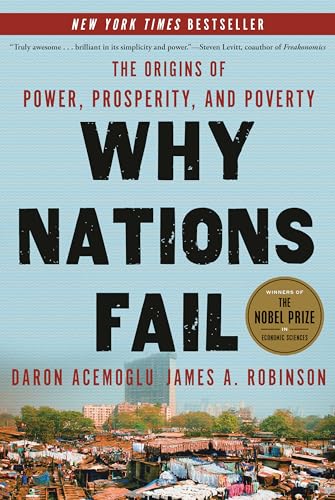
Major New York Times bestseller Winner of the National Academy of Sciences Best Book Award in 2012 Selected by the New York Times Book Review as one of the best books of 2011 A Globe and Mail Best Books of the Year 2011 Title One of The Economist's 2011 Books of the Year One of The Wall Street Journal's Best Nonfiction Books of the Year 2011 2013 Presidential Medal of Freedom Recipient
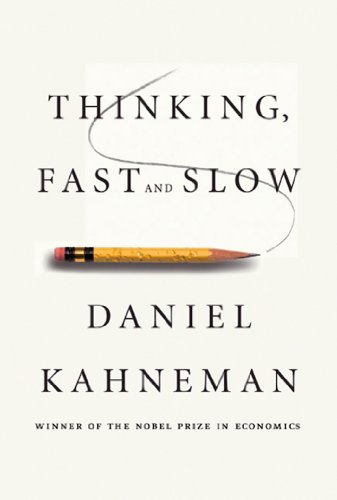
In the international bestseller, Thinking, Fast and Slow, Daniel Kahneman, the renowned psychologist and winner of the Nobel Prize in Economics, takes us on a groundbreaking tour of the mind and explains the two systems that drive the way we think. System 1 is fast, intuitive, and emotional; System 2 is slower, more deliberative, and more logical. The impact of overconfidence on corporate strategies, the difficulties of predicting what will make us happy in the future, the profound effect of cognitive biases on everything from playing the stock market to planning our next vacation—each of these can be understood only by knowing how the two systems shape our judgments and decisions. Engaging the reader in a lively conversation about how we think, Kahneman reveals where we can and cannot trust our intuitions and how we can tap into the benefits of slow thinking. He offers practical and enlightening insights into how choices are made in both our business and our personal lives—and how we can use different techniques to guard against the mental glitches that often get us into trouble. Winner of the National Academy of Sciences Best Book Award and the Los Angeles Times Book Prize and selected by The New York Times Book Review as one of the ten best books of 2011, Thinking, Fast and Slow is destined to be a classic.
A few months ago, Mr. Obama read “Thinking, Fast and Slow,” by Daniel Kahneman, about how people make decisions — quick, instinctive thinking versus slower, contemplative deliberation. For Mr. Obama, a deliberator in an instinctive business, this may be as instructive as any political science text. [source]
Captivating dive into human decision making, marred by inclusion of several/many? psychology studies that fail to replicate. Will stand as a cautionary tale? [source]
Cover unavailable
2
Team of Rivals: The Political Genius of Abraham Lincoln
Doris Kearns Goodwin
4.5
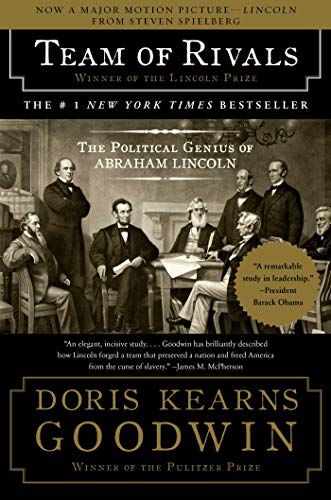
Acclaimed historian Doris Kearns Goodwin illuminates Lincoln's political genius in this highly original work, as the one-term congressman and prairie lawyer rises from obscurity to prevail over three gifted rivals of national reputation to become president.
On May 18, 1860, William H. Seward, Salmon P. Chase, Edward Bates, and Abraham Lincoln waited in their hometowns for the results from the Republican National Convention in Chicago. When Lincoln emerged as the victor, his rivals were dismayed and angry.
Throughout the turbulent 1850s, each had energetically sought the presidency as the conflict over slavery was leading inexorably to secession and civil war. That Lincoln succeeded, Goodwin demonstrates, was the result of a character that had been forged by experiences that raised him above his more privileged and accomplished rivals. He won because he possessed an extraordinary ability to put himself in the place of other men, to experience what they were feeling, to understand their motives and desires.
It was this capacity that enabled Lincoln as president to bring his disgruntled opponents together, create the most unusual cabinet in history, and marshal their talents to the task of preserving the Union and winning the war.
We view the long, horrifying struggle from the vantage of the White House as Lincoln copes with incompetent generals, hostile congressmen, and his raucous cabinet. He overcomes these obstacles by winning the respect of his former competitors, and in the case of Seward, finds a loyal and crucial friend to see him through. --front flap
The Oval office can be a lonely place, so reading about your forefather’s experience could only help. “The biographies have been useful, because I do think that there’s a tendency, understandable, to think that whatever’s going on right now is uniquely disastrous or amazing or difficult,” said President Obama in an interview. [source]
I loved Team of Rivals, and Leadership really built on the things I had taken away from that book. Moving from basketball to building a company, I needed to learn new and different leadership skills, and Goodwin outlines the different skill-sets of Lincoln, both Roosevelts, and Lyndon Johnson, accessibly. [source]
Cover unavailable
3
Enlightenment Now: The Case for Reason, Science, Humanism, and Progress
If you think the world is coming to an end, think again: people are living longer, healthier, freer, and happier lives, and while our problems are formidable, the solutions lie in the Enlightenment ideal of using reason and science.
Is the world really falling apart? Is the ideal of progress obsolete? In this elegant assessment of the human condition in the third millennium, cognitive scientist and public intellectual Steven Pinker urges us to step back from the gory headlines and prophecies of doom, which play to our psychological biases. Instead, follow the data: In seventy-five jaw-dropping graphs, Pinker shows that life, health, prosperity, safety, peace, knowledge, and happiness are on the rise, not just in the West, but worldwide. This progress is not the result of some cosmic force. It is a gift of the Enlightenment: the conviction that reason and science can enhance human flourishing.
Far from being a naïve hope, the Enlightenment, we now know, has worked. But more than ever, it needs a vigorous defense. The Enlightenment project swims against currents of human nature–tribalism, authoritarianism, demonization, magical thinking–which demagogues are all too willing to exploit. Many commentators, committed to political, religious, or romantic ideologies, fight a rearguard action against it. The result is a corrosive fatalism and a willingness to wreck the precious institutions of liberal democracy and global cooperation.
With intellectual depth and literary flair, Enlightenment Now makes the case for reason, science, and humanism: the ideals we need to confront our problems and continue our progress.
Pinker is at his best when he analyzes historic trends and uses data to put the past into context. I was already familiar with a lot of the information he shares—especially about health and energy—but he understands each subject so deeply that he’s able to articulate his case in a way that feels fresh and new. I love how he’s willing to dive deep into primary data sources and pull out unexpected signs of progress. I tend to point to things like dramatic reductions in poverty and childhood deaths, because I think they’re such a good measure of how we’re doing as a society. Pinker covers those areas, but he also looks at more obscure topics. Here are five of my favorite facts from the book that show how the world is improving: 1. You’re 37 times less likely to be killed by a bolt of lightning than you were at the turn of the century—and that’s not because there are fewer thunderstorms today. It’s because we have better weather prediction capabilities, improved safety education, and more people living in cities. 2. Time spent doing laundry fell from 11.5 hours a week in 1920 to an hour and a half in 2014. This might sound trivial in the grand scheme of progress. But the rise of the washing machine has improved quality of life by freeing up time for people—mostly women—to enjoy other pursuits. That time represents nearly half a day every week that could be used for everything from binge-watching Ozark or reading a book to starting a new business. 3. You’re way less likely to die on the job. Every year, 5,000 people die from occupational accidents in the U.S. But in 1929—when our population was less than two-fifths the size it is today—20,000 people died on the job. People back then viewed deadly workplace accidents as part of the cost of doing business. Today, we know better, and we’ve engineered ways to build things without putting nearly as many lives at risk. 4. The global average IQ score is rising by about 3 IQ points every decade. Kids’ brains are developing more fully thanks to improved nutrition and a cleaner environment. Pinker also credits more analytical thinking in and out of the classroom. Think about how many symbols you interpret every time you check your phone’s home screen or look at a subway map. Our world today encourages abstract thought from a young age, and it’s making us smarter. 5. War is illegal. This idea seems obvious. But before the creation of the United Nations in 1945, no institution had the power to stop countries from going to war with each other. Although there have been some exceptions, the threat of international sanctions and intervention has proven to be an effective deterrent to wars between nations. [source]
Tara Westover was 17 the first time she set foot in a classroom. Born to survivalists in the mountains of Idaho, she prepared for the end of the world by stockpiling home-canned peaches and sleeping with her "head-for-the-hills bag". In the summer she stewed herbs for her mother, a midwife and healer, and in the winter she salvaged in her father's junkyard.
Her father forbade hospitals, so Tara never saw a doctor or nurse. Gashes and concussions, even burns from explosions, were all treated at home with herbalism. The family was so isolated from mainstream society that there was no one to ensure the children received an education and no one to intervene when one of Tara's older brothers became violent.
Then, lacking any formal education, Tara began to educate herself. She taught herself enough mathematics and grammar to be admitted to Brigham Young University, where she studied history, learning for the first time about important world events like the Holocaust and the civil rights movement. Her quest for knowledge transformed her, taking her over oceans and across continents, to Harvard and to Cambridge. Only then would she wonder if she'd traveled too far, if there was still a way home.
Educated is an account of the struggle for self-invention. It is a tale of fierce family loyalty and of the grief that comes with severing the closest of ties. With the acute insight that distinguishes all great writers, Westover has crafted a universal coming-of-age story that gets to the heart of what an education is and what it offers: the perspective to see one's life through new eyes and the will to change it.
Tara never went to school or visited a doctor until she left home at 17. I never thought I’d relate to a story about growing up in a Mormon survivalist household, but she’s such a good writer that she got me to reflect on my own life while reading about her extreme childhood. Melinda and I loved this memoir of a young woman whose thirst for learning was so strong that she ended up getting a Ph.D. from Cambridge University. [source]
As 2018 draws to a close, I’m continuing a favorite tradition of mine and sharing my year-end lists. It gives me a moment to pause and reflect on the year through the books I found most thought-provoking, inspiring, or just plain loved. It also gives me a chance to highlight talented authors – some who are household names and others who you may not have heard of before. Here’s my best of 2018 list. [source]
If you read or listen to only one book this summer, this is it. Bloody brilliant! Every word, every sentence. Rarely do I go through a book with such a rollecoaster of emotion, from love to hate. Thank you for sharing @tarawestover #Educated https://t.co/GqLaqlcWMp [source]
Cover unavailable
5
Why We Sleep: Unlocking the Power of Sleep and Dreams
“Why We Sleep is an important and fascinating book…Walker taught me a lot about this basic activity that every person on Earth needs. I suspect his book will do the same for you.” —Bill Gates
A New York Times bestseller and international sensation, this “stimulating and important book” (Financial Times) is a fascinating dive into the purpose and power of slumber.
With two appearances on CBS This Morning and Fresh Air's most popular interview of 2017, Matthew Walker has made abundantly clear that sleep is one of the most important but least understood aspects of our life. Until very recently, science had no answer to the question of why we sleep, or what good it served, or why we suffer such devastating health consequences when it is absent. Compared to the other basic drives in life—eating, drinking, and reproducing—the purpose of sleep remains more elusive.
Within the brain, sleep enriches a diversity of functions, including our ability to learn, memorize, and make logical decisions. It recalibrates our emotions, restocks our immune system, fine-tunes our metabolism, and regulates our appetite. Dreaming creates a virtual reality space in which the brain melds past and present knowledge, inspiring creativity.
In this “compelling and utterly convincing” (The Sunday Times) book, preeminent neuroscientist and sleep expert Matthew Walker provides a revolutionary exploration of sleep, examining how it affects every aspect of our physical and mental well-being. Charting the most cutting-edge scientific breakthroughs, and marshalling his decades of research and clinical practice, Walker explains how we can harness sleep to improve learning, mood and energy levels, regulate hormones, prevent cancer, Alzheimer’s and diabetes, slow the effects of aging, and increase longevity. He also provides actionable steps towards getting a better night’s sleep every night.
Clear-eyed, fascinating, and accessible, Why We Sleep is a crucial and illuminating book. Written with the precision of Atul Gawande, Andrew Solomon, and Sherwin Nuland, it is “recommended for night-table reading in the most pragmatic sense” (TheNew York Times Book Review).
…
Recommended by Bill Gates, Brad Feld, Alexis Ohanian Sr., and 11 others.
Explains how neglecting sleep undercuts your creativity, problem solving, decision-making, learning, memory, heart health, brain health, mental health, emotional well-being, immune system, and even your life span. [source]
Brad Feld
Co-Founder/Foundry Group
Several friends, who know I both love to sleep and am intrigued with how sleep works, recommended that I read Why We Sleep: Unlocking the Power of Sleep and Dreams. It was excellent. While my self-assessment of my sleep habits are very positive, I learned a few things. More importantly, I now have a much better understanding of the “Why” surrounding sleep, especially around sleep’s importance to a healthy and long life. [source]
Alexis Ohanian Sr.
Agree! Best book I've read this year. Wasted so many hours just proving to myself I'd be the last one up working at @reddit and for what??? Stupid. Diminishing marginal returns after enough hours without sleep. https://t.co/cT7fDNBF3A [source]
Cover unavailable
6
Business Adventures: Twelve Classic Tales from the World of Wall Street
"Business Adventures remains the best business book I've ever read." --Bill Gates, The Wall Street Journal
What do the $350 million Ford Motor Company disaster known as the Edsel, the fast and incredible rise of Xerox, and the unbelievable scandals at General Electric and Texas Gulf Sulphur have in common? Each is an example of how an iconic company was defined by a particular moment of fame or notoriety; these notable and fascinating accounts are as relevant today to understanding the intricacies of corporate life as they were when the events happened.
Stories about Wall Street are infused with drama and adventure and reveal the machinations and volatile nature of the world of finance. Longtime New Yorker contributor John Brooks's insightful reportage is so full of personality and critical detail that whether he is looking at the astounding market crash of 1962, the collapse of a well-known brokerage firm, or the bold attempt by American bankers to save the British pound, one gets the sense that history repeats itself.
Five additional stories on equally fascinating subjects round out this wonderful collection that will both entertain and inform readers . . . Business Adventures is truly financial journalism at its liveliest and best.
Brooks’s work is a great reminder that the rules for running a strong business and creating value haven’t changed. For one thing, there’s an essential human factor in every business endeavor. It doesn’t matter if you have a perfect product, production plan, and marketing pitch; you’ll still need the right people to lead and implement those plans. [source]
In 1991, Bill Gates asked Buffett for his favorite book. In reply, Buffett sent the Microsoft founder his personal copy of Business Adventures, a collection of New Yorker stories by John Brooks. [source]
In this 1960s classic, Brooks, a longtime New Yorker contributor, tells the stories of 12 notable companies and how they navigated the trials and tribulations of corporate life in America back in the day. [source]
Cover unavailable
7
The Better Angels of Our Nature: Why Violence Has Declined
Steven Pinker
4.3
Believe it or not, today we may be living in the most peaceful moment in our species' existence. In his gripping and controversial new work, New York Times bestselling author Steven Pinker shows that despite the ceaseless news about war, crime, and terrorism, violence has actually been in decline over long stretches of history. Exploding myths about humankind's inherent violence and the curse of modernity, this ambitious book continues Pinker's exploration of the essence of human nature, mixing psychology and history to provide a remarkable picture of an increasingly enlightened world.
Yong succeeds in his intention to give us a 'grander view of life' and does so without falling prey to grand, unifying explanations that are far too simplistic. He presents our inner ecosystems in all their wondrous messiness and complexity. And he offers realistic optimism that our growing knowledge of the human microbiome will lead to great new opportunities for enhancing our health. [source]
My second book of the year is The Better Angels of Our Nature by Steven Pinker. It's a timely book about how and why violence has steadily decreased throughout our history, and how we can continue this trend. Recent events might make it seem like violence and terrorism are more common than ever, so it's worth understanding that all violence -- even terrorism -- is actually decreasing over time. If we understand how we are achieving this, we can continue our path towards peace. A few people I trust have told me this is the best book they've ever read. It's a long book, so I plan on taking a month to read it rather than two weeks. I'll add a third book in two weeks that will be a shorter read to complement this. If you want to follow along with the books I'm reading and participate in conversations with the authors, you can like the page A Year of Books. [source]
"Mukherjee wrote this book for a lay audience, because he knows that the new genome technologies are at the cusp of affecting us all in profound ways," Gates wrote. Mukherjee is what Gates calls a "quadruple threat." He's a practicing physician, teacher, researcher, and author. [source]
Amit Paranjape
@vikramsathaye @DrSidMukherjee @kiranshaw Great book. [source]
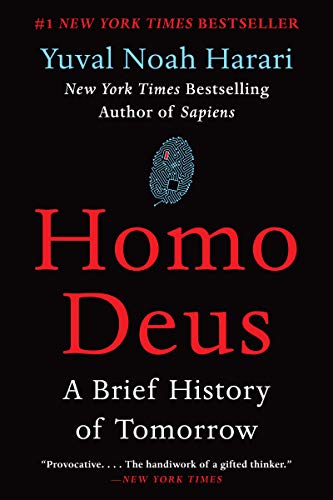
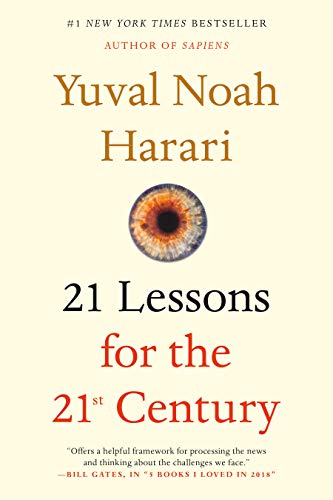
Yuval Noah Harari, author of the critically-acclaimed New York Times bestseller and international phenomenon Sapiens, returns with an equally original, compelling, and provocative book, turning his focus toward humanity’s future, and our quest to upgrade humans into gods.
Over the past century humankind has managed to do the impossible and rein in famine, plague, and war. This may seem hard to accept, but, as Harari explains in his trademark style—thorough, yet riveting—famine, plague and war have been transformed from incomprehensible and uncontrollable forces of nature into manageable challenges. For the first time ever, more people die from eating too much than from eating too little; more people die from old age than from infectious diseases; and more people commit suicide than are killed by soldiers, terrorists and criminals put together. The average American is a thousand times more likely to die from binging at McDonalds than from being blown up by Al Qaeda.
What then will replace famine, plague, and war at the top of the human agenda? As the self-made gods of planet earth, what destinies will we set ourselves, and which quests will we undertake? Homo Deus explores the projects, dreams and nightmares that will shape the twenty-first century—from overcoming death to creating artificial life. It asks the fundamental questions: Where do we go from here? And how will we protect this fragile world from our own destructive powers? This is the next stage of evolution. This is Homo Deus.
With the same insight and clarity that made Sapiens an international hit and a New York Times bestseller, Harari maps out our future.
Harari’s new book is as challenging and readable as Sapiens. Rather than looking back, as Sapiens does, it looks to the future. I don’t agree with everything the author has to say, but he has written a thoughtful look at what may be in store for humanity. [source]
I certainly wouldn’t consider myself a big reader of paleontology or anthropology – not good words for us dyslexics! – but I enjoy learning about how society has unfolded and history has developed in an exciting, easy to read way. The sequel, Homo Deus: A Brief History of Tomorrow, is a fascinating look into the future too. While these aren’t traditional business or leadership books, they are all about people – and learning how to work with, live with, interact with people and get the best out of them is what leadership is all about. [source]
Not that I agree with all of it, but it is still mind-bending speculation about our future as a follow-up to a previous favorite, Sapiens. It’s directionally right. [source]
Ray Dalio, one of the world’s most successful investors and entrepreneurs, shares the unconventional principles that he’s developed, refined, and used over the past forty years to create unique results in both life and business—and which any person or organization can adopt to help achieve their goals.
In 1975, Ray Dalio founded an investment firm, Bridgewater Associates, out of his two-bedroom apartment in New York City. Forty years later, Bridgewater has made more money for its clients than any other hedge fund in history and grown into the fifth most important private company in the United States, according to Fortune magazine. Dalio himself has been named to Time magazine’s list of the 100 most influential people in the world. Along the way, Dalio discovered a set of unique principles that have led to Bridgewater’s exceptionally effective culture, which he describes as “an idea meritocracy that strives to achieve meaningful work and meaningful relationships through radical transparency.” It is these principles, and not anything special about Dalio—who grew up an ordinary kid in a middle-class Long Island neighborhood—that he believes are the reason behind his success.
In Principles, Dalio shares what he’s learned over the course of his remarkable career. He argues that life, management, economics, and investing can all be systemized into rules and understood like machines. The book’s hundreds of practical lessons, which are built around his cornerstones of “radical truth” and “radical transparency,” include Dalio laying out the most effective ways for individuals and organizations to make decisions, approach challenges, and build strong teams. He also describes the innovative tools the firm uses to bring an idea meritocracy to life, such as creating “baseball cards” for all employees that distill their strengths and weaknesses, and employing computerized decision-making systems to make believability-weighted decisions. While the book brims with novel ideas for organizations and institutions, Principles also offers a clear, straightforward approach to decision-making that Dalio believes anyone can apply, no matter what they’re seeking to achieve.
Here is a rare opportunity to gain proven advice unlike anything you’ll find in the conventional business press.
I found it to be truly extraordinary. Every page is full of so many principles of distinction and insights—and I love how Ray incorporates his history and his life in such an elegant way. [source]
Cover unavailable
11
Bad Blood: Secrets and Lies in a Silicon Valley Startup
The full inside story of the breathtaking rise and shocking collapse of a multibillion-dollar startup, by the prize-winning journalist who first broke the story and pursued it to the end in the face of pressure and threats from the CEO and her lawyers.
In 2014, Theranos founder and CEO Elizabeth Holmes was widely seen as the female Steve Jobs: a brilliant Stanford dropout whose startup "unicorn" promised to revolutionize the medical industry with a machine that would make blood tests significantly faster and easier. Backed by investors such as Larry Ellison and Tim Draper, Theranos sold shares in a fundraising round that valued the company at $9 billion, putting Holmes's worth at an estimated $4.7 billion. There was just one problem: The technology didn't work.
For years, Holmes had been misleading investors, FDA officials, and her own employees. When Carreyrou, working at The Wall Street Journal, got a tip from a former Theranos employee and started asking questions, both Carreyrou and the Journal were threatened with lawsuits. Undaunted, the newspaper ran the first of dozens of Theranos articles in late 2015. By early 2017, the company's value was zero and Holmes faced potential legal action from the government and her investors. Here is the riveting story of the biggest corporate fraud since Enron, a disturbing cautionary tale set amid the bold promises and gold-rush frenzy of Silicon Valley.
A bunch of my friends recommended this one to me. Carreyrou gives you the definitive insider’s look at the rise and fall of Theranos. The story is even crazier than I expected, and I found myself unable to put it down once I started. This book has everything: elaborate scams, corporate intrigue, magazine cover stories, ruined family relationships, and the demise of a company once valued at nearly $10 billion. [source]
Finished “bad blood” on the Theranos scandal. Wow. Just wow. It’s a must read for everyone in tech and startups. Just 1-click buy it :) Amazing how far charisma and social proof got them. Here’s the NYT review of the book https://t.co/PyMGxfoG2R [source]
Brad Feld
Co-Founder/Foundry Group
Every entrepreneur and VC should read this book. John Carreyrou has done something important here. Maybe this book will finally put a nail in the phrase “fake it till you make it”, but I doubt it. The amount of lying, disingenuousness, blatant and unjustified self-promotion, and downright deceit that exists in entrepreneurship right now is at a local maximum. This always happens when entrepreneurship gets trendy. Carreyrou just wrote a long warning for entrepreneurs and VCs. [source]
At the age of thirty-six, on the verge of completing a decade’s worth of training as a neurosurgeon, Paul Kalanithi was diagnosed with stage IV lung cancer. One day he was a doctor treating the dying, and the next he was a patient struggling to live. And just like that, the future he and his wife had imagined evaporated. When Breath Becomes Air chronicles Kalanithi’s transformation from a naïve medical student “possessed,” as he wrote, “by the question of what, given that all organisms die, makes a virtuous and meaningful life” into a neurosurgeon at Stanford working in the brain, the most critical place for human identity, and finally into a patient and new father confronting his own mortality.
What makes life worth living in the face of death? What do you do when the future, no longer a ladder toward your goals in life, flattens out into a perpetual present? What does it mean to have a child, to nurture a new life as another fades away? These are some of the questions Kalanithi wrestles with in this profoundly moving, exquisitely observed memoir.
I don’t know how Kalanithi found the physical strength to write this book while he was so debilitated by the disease and then potent chemotherapy. But I’m so glad he did. He spent his whole brief life searching for meaning in one way or another -- through books, writing, medicine, surgery, and science. I’m grateful that, by reading this book, I got to witness a small part of that journey. I just wish the journey hadn’t been cut so short [source]
Despite its popularity, When Breath Becomes Air is actually underrated. It’s make-you-cry good. [source]
Bethany S. Mandel
More Shabbat reading recommendations: This book was breathtaking and such a powerful advertisement for the joy of parenthood. https://t.co/V8BH97eiL9 [source]
Cover unavailable
13
The Moment of Lift: How Empowering Women Changes the World
Melinda Gates
4.5
A debut from Forbes' third most powerful woman in the world, Melinda Gates, a timely and necessary call to action for women's empowerment.
For the last twenty years, Melinda Gates has been on a mission. Her goal, as co-chair of the Bill & Melinda Gates Foundation, has been to find solutions for people with the most urgent needs, wherever they live. Throughout this journey, one thing has become increasingly clear to her: If you want to lift a society up, invest in women.
In this candid and inspiring book, Gates traces her awakening to the link between women's empowerment and the health of societies. She shows some of the tremendous opportunities that exist right now to “turbo-charge" change. And she provides simple and effective ways each one of us can make a difference.
Convinced that all women should be free to decide whether and when to have children, Gates took her first step onto the global stage to make a stand for family planning. That step launched her into further efforts: to ensure women everywhere have access to every kind of job; to encourage men around the globe to share equally in the burdens of household work; to advocate for paid family leave for everyone; to eliminate gender bias in all its forms.
Throughout, Gates introduces us to her heroes in the movement towards equality, offers startling data, shares moving conversations she's had with women from all over the world—and shows how we can all get involved.
A personal statement of passionate conviction, this book tells of Gates' journey from a partner working behind the scenes to one of the world's foremost advocates for women, driven by the belief that no one should be excluded, all lives have equal value, and gender equity is the lever that lifts everything.
I would say this even if I weren’t married to the author: The Moment of Lift is a terrific read. Melinda opens up about her personal journey from private citizen to public advocate. You see how she pushed our foundation to focus more on women’s empowerment. She shares insights about our marriage, the path we took to become equals in our work, and how she has helped me grow as a father and husband. But to me, what is really impressive about the book is the way Melinda combines her mastery of data with her ability to tell powerful stories about individual women she has met. In an especially memorable passage about how she handles seeing people in desperate circumstances, she writes: “All of us have to let our hearts break; it’s the price of being present to someone who is suffering.” Your heart will break more than once when you read this book. But more often, you will be enlightened and inspired. [source]
In her book, Melinda tells the stories of the inspiring people she’s met through her work all over the world, digs into the data, and powerfully illustrates issues that need our attention―from child marriage to gender inequity in the workplace. [source]
In her instructive and inspiring book #TheMomentOfLift, @melindagates explains why effective "delivery systems" are key to achieving massive impact, and what the secret is to creating them. https://t.co/UBOXhZxFp8 https://t.co/eHeNHurocx [source]
In this candid and riveting memoir, for the first time ever, Nike founder and CEO Phil Knight shares the inside story of the company’s early days as an intrepid start-up and its evolution into one of the world’s most iconic, game-changing, and profitable brands.
In 1962, fresh out of business school, Phil Knight borrowed $50 from his father and created a company with a simple mission: import high-quality, low-cost athletic shoes from Japan. Selling the shoes from the trunk of his lime green Plymouth Valiant, Knight grossed $8,000 his first year. Today, Nike’s annual sales top $30 billion. In an age of startups, Nike is the ne plus ultra of all startups, and the swoosh has become a revolutionary, globe-spanning icon, one of the most ubiquitous and recognizable symbols in the world today.
But Knight, the man behind the swoosh, has always remained a mystery. Now, for the first time, in a memoir that is candid, humble, gutsy, and wry, he tells his story, beginning with his crossroads moment. At 24, after backpacking around the world, he decided to take the unconventional path, to start his own business—a business that would be dynamic, different.
Knight details the many risks and daunting setbacks that stood between him and his dream—along with his early triumphs. Above all, he recalls the formative relationships with his first partners and employees, a ragtag group of misfits and seekers who became a tight-knit band of brothers. Together, harnessing the transcendent power of a shared mission, and a deep belief in the spirit of sport, they built a brand that changed everything.
This memoir, by the co-founder of Nike, is a refreshingly honest reminder of what the path to business success really looks like: messy, precarious, and riddled with mistakes. I’ve met Knight a few times over the years. He’s super nice, but he’s also quiet and difficult to get to know. Here Knight opens up in a way few CEOs are willing to do. I don’t think Knight sets out to teach the reader anything. Instead, he accomplishes something better. He tells his story as honestly as he can. It’s an amazing tale. [source]
I've known Phil Knight since I was a kid, but I didn't really know him until I opened this beautiful, startling, intimate book. And the same goes for Nike. I've worn the gear with pride, but I didn't realize the remarkable saga of innovation and survival and triumph that stood behind every swoosh. Candid, funny, suspenseful, literary - this is a memoir for people who love sport, but above all it's a memoir for people who love memoirs. [source]
Cover unavailable
15
I Contain Multitudes: The Microbes Within Us and a Grander View of Life
Every animal, whether human, squid, or wasp, is home to millions of bacteria and other microbes. Many people think of microbes as germs to be eradicated, but those that live with us—the microbiome—build our bodies, protect our health, shape our identities, and grant us incredible abilities. In this astonishing book, Ed Yong takes us on a grand tour through our microbial partners, and introduces us to the scientists on the front lines of discovery.
Yong, whose humor is as evident as his erudition, prompts us to look at ourselves and our animal companions in a new light—less as individuals and more as the interconnected, interdependent multitudes we assuredly are. The microbes in our bodies are part of our immune systems and protect us from disease. Those in cows and termites digest the plants they eat. In the deep oceans, mysterious creatures without mouths or guts depend on microbes for all their energy. Bacteria provide squids with invisibility cloaks, help beetles to bring down forests, and allow worms to cause diseases that afflict millions of people.
I Contain Multitudes is the story of these extraordinary partnerships, between the creatures we are familiar with and those we are not. It reveals how we humans are disrupting these partnerships and how we might manipulate them for our own good. It will change both our view of nature and our sense of where we belong in it.
To explain the mystery of how life evolved on Earth, Nick Lane explores the deep link between energy and genes.
The Earth teems with life: in its oceans, forests, skies and cities. Yet there’s a black hole at the heart of biology. We do not know why complex life is the way it is, or, for that matter, how life first began. In The Vital Question, award-winning author and biochemist Nick Lane radically reframes evolutionary history, putting forward a solution to conundrums that have puzzled generations of scientists.
For two and a half billion years, from the very origins of life, single-celled organisms such as bacteria evolved without changing their basic form. Then, on just one occasion in four billion years, they made the jump to complexity. All complex life, from mushrooms to man, shares puzzling features, such as sex, which are unknown in bacteria. How and why did this radical transformation happen?
The answer, Lane argues, lies in energy: all life on Earth lives off a voltage with the strength of a lightning bolt. Building on the pillars of evolutionary theory, Lane’s hypothesis draws on cutting-edge research into the link between energy and cell biology, in order to deliver a compelling account of evolution from the very origins of life to the emergence of multicellular organisms, while offering deep insights into our own lives and deaths.
Both rigorous and enchanting, The Vital Question provides a solution to life’s vital question: why are we as we are, and indeed, why are we here at all?
Nick is one of those original thinkers who makes you say: More people should know about this guy's work. He is trying to right a scientific wrong by getting people to fully appreciate the role that energy plays in all living things. Even if the details of Nick's work turn out to be wrong, I suspect his focus on energy will be seen as an important contribution to our understanding of where we come from. [source]
Cover unavailable
17
Being Nixon: A Man Divided
Evan Thomas
4.4
Evan Thomas delivers the best single-volume biography of Richard Nixon to date, a radical, unique portrait of a complicated figure who was both determinedly optimistic and tragically flawed. The New York Times bestselling author of Ike’s Bluff and Sea of Thunder, Thomas brings new life to one of American history’s most infamous, paradoxical, and enigmatic politicians, dispensing with myths to achieve an intimate and nuanced look at the actual man.
What drove a painfully shy outcast in elite Washington society—a man so self-conscious he refused to make eye contact during meetings—to pursue power and public office? How did a president so attuned to the American political id that he won reelection in a historic landslide lack the self-awareness to recognize the gaping character flaws that would drive him from office and forever taint his legacy?
In Being Nixon, Evan Thomas peels away the layers of the complex, confounding figure who became America’s thirty-seventh president. The son of devout Quakers, Richard Nixon (not unlike his rival John F. Kennedy) grew up in the shadow of an older, favored brother and thrived on conflict and opposition. Through high school and college, in the navy and in politics, he was constantly leading crusades and fighting off enemies real and imagined. As maudlin as he was Machiavellian, Nixon possessed the plainspoken eloquence to reduce American television audiences to tears with his career-saving “Checkers” speech; meanwhile, his darker half hatched schemes designed to take down his political foes, earning him the notorious nickname “Tricky Dick.”
Drawing on a wide range of historical accounts, Thomas reveals the contradictions of a leader whose vision and foresight led him to achieve détente with the Soviet Union and reestablish relations with communist China, but whose underhanded political tactics tainted his reputation long before the Watergate scandal. One of the principal architects of the modern Republican Party and its “silent majority” of disaffected whites and conservative ex-Dixiecrats, Nixon was also deemed a liberal in some quarters for his efforts to desegregate Southern schools, create the Environmental Protection Agency, and end the draft.
A deeply insightful character study as well as a brilliant political biography, Being Nixon offers a surprising look at a man capable of great bravery and extraordinary deviousness—a balanced portrait of a president too often reduced to caricature.
Praise for Being Nixon
“A biography of eloquence and breadth . . . No single volume about Nixon’s long and interesting life could be so comprehensive.”—Chicago Tribune
“Terrifically engaging . . . a fair, insightful and highly entertaining portrait.”—The Wall Street Journal
“Thomas has a fine eye for the telling quote and the funny vignette, and his style is eminently readable.”—The New York Times Book Review
“Thomas proves an amiable and fair-minded tour guide.”—The Boston Globe
“A measured, concise, and important American biography.”—Michael Beschloss, author of Presidential Courage
I was a little surprised to learn what a bad manager Nixon was. Although it doesn’t compare to his other failings, Nixon’s management style offers some good reminders of how not to run a team. He avoided conflict at all costs. His staff frequently left meetings with diametrically opposed views on what he had just asked them to do. Or he would be crystal-clear about what he wanted, while actually expecting his staff to ignore his demands. His team wisely blew off his repeated orders to break into the Brookings Institution, a Washington think tank, and steal a document that might be damaging to him. [source]
What was it really like to be Richard Nixon? Evan Thomas tackles this fascinating question by peeling back the layers of a man driven by a poignant mix of optimism and fear. The result is both insightful history and an astonishingly compelling psychological portrait of an anxious introvert who struggled to be a transformative statesman. [source]
One of the best books I’ve ever read about a politician. It’s worth reading whatever country you live in and whatever your political beliefs are. [source]
Cover unavailable
18
Stress Test: Reflections on Financial Crises
Timothy F. Geithner
4.2
From the former Treasury Secretary, the definitive account of the unprecedented effort to save the U.S. economy from collapse in the wake of the worst global financial crisis since the Great Depression
On January 26, 2009, during the depth of the financial crisis and having just completed five years as President of the Federal Reserve Bank of New York, Timothy F. Geithner was sworn in by President Barack Obama as the seventy-fifth Secretary of the Treasury of the United States. Now, in a strikingly candid, riveting, and historically illuminating memoir, Geithner takes readers behind the scenes during the darkestmoments of the crisis. Swift, decisive, and creative action was required to avert a second Great Depression, but policy makers faced a fog of uncertainty, with no good options and the risk of catastrophic outcomes.
Stress Test: Reflections on Financial Crises takes us inside the room, explaining in accessible and forthright terms the hard choices and politically unpalatable decisions that Geithner and others in the Obama administration made during the crisis and recovery. He discusses the most controversial moments of his tenures at the Federal Reserve Bank of New York and at the Treasury, including the harrowing weekend Lehman Brothers went bankrupt; the searing crucible of the AIG bonuses controversy; the development of his widely criticized but ultimately successful plan in early 2009 to end the crisis; the bracing fight for the most sweeping financial reforms in seventy years; and the lingering aftershocks of the crisis, including high unemployment, the fiscal battles, and Europe’s repeated flirtations with the economic abyss.
Geithner also shares his personal and professional recollections of key players such as President Obama, Ben Bernanke, Hank Paulson, and Larry Summers, among others, and examines the tensions between politics and policy that have come to dominate discussions of the U.S. economy. An insider’s account of how the Obama administration saved the economy but lost the American people, Stress Test reveals a side of Timothy Geithner that only few have seen.
The central irony of Stress Test is that a guy who was accused of being a lousy communicator as U.S. Treasury Secretary has penned a book that is such a good read. Geithner paints a compelling human portrait of what it was like to be fighting a global financial meltdown while at the same time fighting critics inside and outside the Administration as well as his own severe guilt over his near-total absence from his family. The politics of fighting financial crises will always be ugly. But it helps if the public knows a little more about the subject—what’s at stake, what the options are, what has worked in similar situations—so that the loud talkers resonate a bit less and the knowledgeable ones a bit more. If Stress Test continues to attract lay readers, it could make at least a modest difference the next time around. [source]
Buffett says that the former secretary of the U.S. Treasury's book about the financial crisis is a must-read for any manager. [source]
Cover unavailable
19
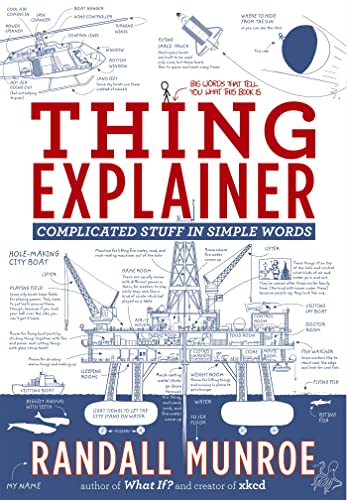
Thing Explainer: Complicated Stuff in Simple Words
Randall Munroe
4.2
In Thing Explainer: Complicated Stuff in Simple Words, things are explained in the style of Up Goer Five, using only drawings and a vocabulary of the 1,000 (or "ten hundred") most common words. Explore computer buildings (datacenters), the flat rocks we live on (tectonic plates), the things you use to steer a plane (airliner cockpit controls), and the little bags of water you're made of (cells).
Thing Explainer is filled with cool basic knowledge about how the world works. If one of Munroe’s drawings inspires you to go learn more about a subject—including a few extra terms—then he will have done his job. He has written a wonderful guide for curious minds. [source]
It’s about how to explain things using the simplest terms you possibly can, using only the top 1,000 words in the English language. It’s just ingenious. So many people will try and sound clever by using lots of fancy words, but this is exact opposite. It is being clever by using the most straightforward language you possibly can, without sacrificing accuracy. It’s beautifully drawn and beautifully written, and it makes me smile a lot. [source]
Now updated with new research — the book that has changed millions of lives.
After decades of research, world-renowned Stanford University psychologist Carol S. Dweck, Ph.D., discovered a simple but groundbreaking idea: the power of mindset. In this brilliant book, she shows how success in school, work, sports, the arts, and almost every area of human endeavor can be dramatically influenced by how we think about our talents and abilities. People with a fixed mindset — those who believe that abilities are fixed — are less likely to flourish than those with a growth mindset — those who believe that abilities can be developed. Mindset reveals how great parents, teachers, managers, and athletes can put this idea to use to foster outstanding accomplishment.
In this edition, Dweck offers new insights into her now famous and broadly embraced concept. She introduces a phenomenon she calls false growth mindset and guides people toward adopting a deeper, truer growth mindset. She also expands the mindset concept beyond the individual, applying it to the cultures of groups and organizations. With the right mindset, you can motivate those you lead, teach, and love — to transform their lives and your own.
One of the reasons I loved Mindset is because it’s solutions-oriented. In the book’s final chapter, Dweck describes the workshop she and her colleagues have developed to shift students from a fixed to a growth mindset. These workshops demonstrate that ‘just learning about the growth mindset can cause a big shift in the way people think about themselves and their lives. [source]
Without exaggeration, I’ve never met a CEO who didn’t have Mindset on their bookshelf. It resonates with people who have become successful because the belief that your abilities can grow is foundational to their achievements. [source]
Cover unavailable
21
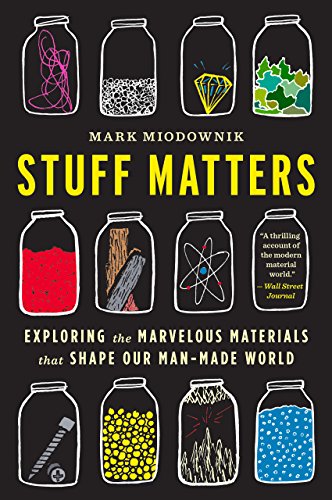
Stuff Matters: Exploring the Marvelous Materials That Shape Our Man-Made World
Mark Miodownik
4.2
A New York Times Bestseller
An eye-opening adventure deep inside the everyday materials that surround us, packed with surprising stories and fascinating science
Why is glass see-through? What makes elastic stretchy? Why does a paper clip bend? Why does any material look and behave the way it does? These are the sorts of questions that Mark Miodownik is constantly asking himself. A globally-renowned materials scientist, Miodownik has spent his life exploring objects as ordinary as an envelope and as unexpected as concrete cloth, uncovering the fascinating secrets that hold together our physical world.
In Stuff Matters, Miodownik entertainingly examines the materials he encounters in a typical morning, from the steel in his razor and the graphite in his pencil to the foam in his sneakers and the concrete in a nearby skyscraper. He offers a compendium of the most astounding histories and marvelous scientific breakthroughs in the material world, including:
The imprisoned alchemist who saved himself from execution by creating the first European porcelain. The hidden gem of the Milky Way, a planet five times the size of Earth, made entirely of diamond. Graphene, the thinnest, strongest, stiffest material in existence—only a single atom thick—that could be used to make entire buildings sensitive to touch. From the teacup to the jet engine, the silicon chip to the paper clip, the plastic in our appliances to the elastic in our underpants, our lives are overflowing with materials. Full of enthralling tales of the miracles of engineering that permeate our lives, Stuff Matters will make you see stuff in a whole new way.
Mark Miodownik’s personal and professional obsession, as he explains in his book Stuff Matters, is basic materials we often take for granted such as paper, glass, concrete, and steel -- as well as new super-materials that will change our world in the decades ahead. I’m pleased to report that he is a witty, smart writer who has a great talent for imparting his love of this subject. As a result, Stuff Matters is a fun, accessible read. [source]
Cover unavailable
22
Blueprint: The Evolutionary Origins of a Good Society
Nicholas A. Christakis MD PhD
4.2
For too long, scientists have focused on the dark side of our biological heritage: our capacity for aggression, cruelty, prejudice, and self-interest. But natural selection has given us a suite of beneficial social features, including our capacity for love, friendship, cooperation, and learning. Beneath all of our inventions -- our tools, farms, machines, cities, nations -- we carry with us innate proclivities to make a good society.
In Blueprint, Nicholas A. Christakis introduces the compelling idea that our genes affect not only our bodies and behaviors, but also the ways in which we make societies, ones that are surprisingly similar worldwide.
With many vivid examples -- including diverse historical and contemporary cultures, communities formed in the wake of shipwrecks, commune dwellers seeking utopia, online groups thrown together by design or involving artificially intelligent bots, and even the tender and complex social arrangements of elephants and dolphins that so resemble our own -- Christakis shows that, despite a human history replete with violence, we cannot escape our social blueprint for goodness.
In a world of increasing political and economic polarization, it's tempting to ignore the positive role of our evolutionary past. But by exploring the ancient roots of goodness in civilization, Blueprint shows that our genes have shaped societies for our welfare and that, in a feedback loop stretching back many thousands of years, societies are still shaping our genes today.
Are our similarities powerful enough to overcome our differences? “Blueprint” is an optimistic (and terrific) book that explores why humans have evolved to work together and cooperate. https://t.co/mQz07WvFgm [source]
Tribalism is all around us, but it does not have to be. After all, we are all human. In lively and engaging prose, Christakis shows what is possible, and what we must do. [source]
A remarkable achievement! Christakis explains, in the most lucid and accessible way imaginable, how our genetic and cultural heritages are deeply intertwined. The story of human nature is no fairy tale, but it nevertheless reveals our potential, and our proclivity, for good. [source]
Cover unavailable
23
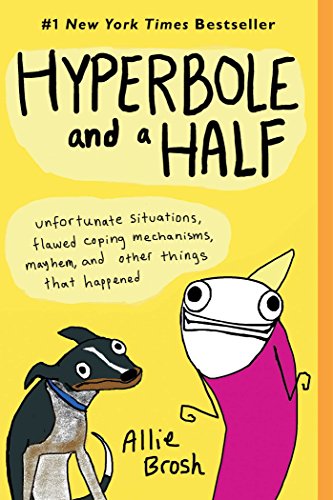
Hyperbole and a Half: Unfortunate Situations, Flawed Coping Mechanisms, Mayhem, and Other Things That Happened
Allie Brosh
4.4
This is a book I wrote. Because I wrote it, I had to figure out what to put on the back cover to explain what it is. I tried to write a long, third-person summary that would imply how great the book is and also sound vaguely authoritative--like maybe someone who isn’t me wrote it--but I soon discovered that I’m not sneaky enough to pull it off convincingly. So I decided to just make a list of things that are in the book:
Pictures Words Stories about things that happened to me Stories about things that happened to other people because of me Eight billion dollars* Stories about dogs The secret to eternal happiness*
*These are lies. Perhaps I have underestimated my sneakiness!
While she self-deprecatingly depicts herself in words and art as an odd outsider, we can all relate to her struggles. Rather than laughing at her, you laugh with her. It is no hyperbole to say I love her approach -- looking, listening, and describing with the observational skills of a scientist, the creativity of an artist, and the wit of a comedian. [source]
Cover unavailable
24
The Works of Theodore Roosevelt
Theodore Roosevelt, F. V. Greene
4.7
This work has been selected by scholars as being culturally important, and is part of the knowledge base of civilization as we know it. This work was reproduced from the original artifact, and remains as true to the original work as possible. Therefore, you will see the original copyright references, library stamps (as most of these works have been housed in our most important libraries around the world), and other notations in the work.
This work is in the public domain in the United States of America, and possibly other nations. Within the United States, you may freely copy and distribute this work, as no entity (individual or corporate) has a copyright on the body of the work.
As a reproduction of a historical artifact, this work may contain missing or blurred pages, poor pictures, errant marks, etc. Scholars believe, and we concur, that this work is important enough to be preserved, reproduced, and made generally available to the public. We appreciate your support of the preservation process, and thank you for being an important part of keeping this knowledge alive and relevant.
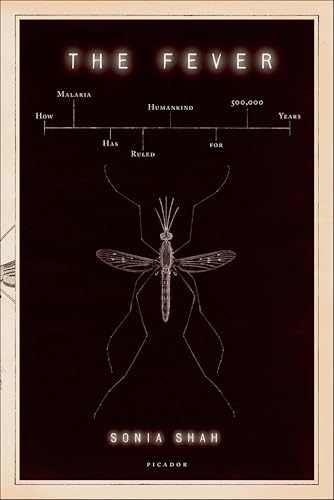
The Fever: How Malaria Has Ruled Humankind for 500,000 Years
Sonia Shah
4.2
In recent years, malaria has emerged as a cause célèbre for voguish philanthropists. Bill Gates, Bono, and Laura Bush are only a few of the personalities who have lent their names — and opened their pocketbooks — in hopes of curing the disease. Still, in a time when every emergent disease inspires waves of panic, why aren’t we doing more to eradicate one of our oldest foes? And how does a parasitic disease that we’ve known how to prevent for more than a century still infect 500 million people every year, killing nearly one million of them?
In The Fever, the journalist Sonia Shah sets out to answer these questions, delivering a timely, inquisitive chronicle of the illness and its influence on human lives. Through the centuries, she finds, we’ve invested our hopes in a panoply of drugs and technologies, and invariably those hopes have been dashed. From the settling of the New World to the construction of the Panama Canal, through wars and the advances of the Industrial Revolution, Shah tracks malaria’s jagged ascent and the tragedies in its wake, revealing a parasite every bit as persistent as the insects that carry it. With distinguished prose and original reporting from Panama, Malawi, Cameroon, India, and elsewhere, The Fever captures the curiously fascinating, devastating history of this long-standing thorn in the side of humanity.
…
Recommended by Bill Gates and Sue Desmondhellmann.
If you want to read just one book about malaria, The Fever is probably the best choice. Author Sonia Shah doesn’t overwhelm you with data and analytics, but she does cover the whole history of the disease, which—as the title suggests—goes back further than you might think. The book was published in 2010, so it’s not totally up to date (most notably, we’ve made progress with rolling out bed nets since then). But it’s a great overview of malaria, its impact, and the solutions to it. [source]
Sue Desmondhellmann
Here’s one for your #SummerReadingList 📚: #TheFever by @soniashah is a terrific book that puts #malaria work into historic context- one of my favorite genres of writing. 🤓 https://t.co/uB6coVU5sf [source]
Cover unavailable
26
House on Fire: The Fight to Eradicate Smallpox
William H. Foege
4.4
A story of courage and risk-taking, House on Fire tells how smallpox, a disease that killed, blinded, and scarred millions over centuries of human history, was completely eradicated in a spectacular triumph of medicine and public health. Part autobiography, part mystery, the story is told by a man who was one of the architects of a radical vaccination scheme that became a key strategy in ending the horrible disease when it was finally contained in India.
In House on Fire, William H. Foege describes his own experiences in public health and details the remarkable program that involved people from countries around the world in pursuit of a single objective—eliminating smallpox forever. Rich with the details of everyday life, as well as a few adventures, House on Fire gives an intimate sense of what it is like to work on the ground in some of the world’s most impoverished countries—and tells what it is like to contribute to programs that really do change the world.
This book gives you a great view from the front lines of that battle. [source]
Thomas Frieden
House on Fire is a fantastic book about the fight to eradicate smallpox. Before becoming director, Foege led the efforts to eradicate smallpox in India and Africa and came up with a key innovation that led to eradication. As one of the staff at the CDC said of this book, “Even though we know how it comes out, it’s still a page-turner”. It’s so exciting. [source]
Cover unavailable
27
Eradication: Ridding the World of Diseases Forever?
Nancy Leys Stepan
4.1
How shall we improve human health? One answer is: by eradication. The Gates Foundation announced in 2007 that their goal is malaria eradication; another of their priorities is polio eradication. Eradication means the complete elimination of a disease through deliberate human intervention. It stands for an absolute in public health.
This book by the award-winning historian of medicine Nancy Leys Stepan is an accessible, beautifully written, and deeply researched examination of one of the most controversial issues in public health today. The eradication of disease might seem like an absolute good. But critics of eradication argue that the huge resources needed to achieve eradication could be better allocated toward developing primary health services and general improvement in health.
This book aims to look at the benefits and drawbacks of single-minded efforts to rid the world of particular diseases, one at a time. The sweep of the book is impressive, from the origins of the idea of complete eradication in the early twentieth century until the present-day campaigns against polio, Guinea worm disease, and now malaria. The author places eradication's story in its many contexts, from imperialism, changing notions of public health, the history of medicine and its technologies, the development of international health agencies such as the World Health Organization, and the impact of the Cold War on the shift of attention to disease in developing countries.
At the center of this narrative is Dr. Fred Lowe Soper (1893-1977), a U.S.-trained doctor who became the arch-eradicationist of his time. His campaigns to eradicate hookworm disease, yaws, yellow fever, malaria, and smallpox are treated in compelling detail, as are the roles of international health agencies such as the Rockefeller Foundation and the World Health Organization.
Throughout the book Stepan draws attention to the way that the ideal of eradication has repeatedly arisen, phoenix-like, from its setbacks. In a powerful conclusion, she uses the example of the current campaign to eradicate Guinea worm disease to argue that, today, under the right circumstances, eradication and primary health care need not be in conflict, as they were in the past, but can form mutually reinforcing policies to improve the health and well-being of populations, especially the poorest and most disease-burdened populations of the world.
Finally, a word of warning: Eradication is written in a very academic style, and it may be a challenge for non-experts to get to Stepan’s valuable arguments. It’s worth the effort, though, because you come away from it with a clearer sense of what the world has learned about getting rid of diseases and how we can use that to guide the effort to save even more lives. [source]
Cover unavailable
28
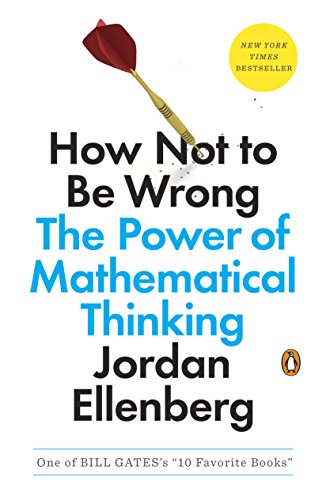
How Not to Be Wrong: The Power of Mathematical Thinking
Jordan Ellenberg
4.2
The Freakonomics of math—a math-world superstar unveils the hidden beauty and logic of the world and puts its power in our hands
The math we learn in school can seem like a dull set of rules, laid down by the ancients and not to be questioned. In How Not to Be Wrong, Jordan Ellenberg shows us how terribly limiting this view is: Math isn’t confined to abstract incidents that never occur in real life, but rather touches everything we do—the whole world is shot through with it.
Math allows us to see the hidden structures underneath the messy and chaotic surface of our world. It’s a science of not being wrong, hammered out by centuries of hard work and argument. Armed with the tools of mathematics, we can see through to the true meaning of information we take for granted: How early should you get to the airport? What does “public opinion” really represent? Why do tall parents have shorter children? Who really won Florida in 2000? And how likely are you, really, to develop cancer?
How Not to Be Wrong presents the surprising revelations behind all of these questions and many more, using the mathematician’s method of analyzing life and exposing the hard-won insights of the academic community to the layman—minus the jargon. Ellenberg chases mathematical threads through a vast range of time and space, from the everyday to the cosmic, encountering, among other things, baseball, Reaganomics, daring lottery schemes, Voltaire, the replicability crisis in psychology, Italian Renaissance painting, artificial languages, the development of non-Euclidean geometry, the coming obesity apocalypse, Antonin Scalia’s views on crime and punishment, the psychology of slime molds, what Facebook can and can’t figure out about you, and the existence of God.
Ellenberg pulls from history as well as from the latest theoretical developments to provide those not trained in math with the knowledge they need. Math, as Ellenberg says, is “an atomic-powered prosthesis that you attach to your common sense, vastly multiplying its reach and strength.” With the tools of mathematics in hand, you can understand the world in a deeper, more meaningful way. How Not to Be Wrong will show you how.
…
Recommended by Bill Gates, Auston Bunsen, and Nick Ganju.
The writing is funny, smooth, and accessible -- not what you might expect from a book about math. What Ellenberg has written is ultimately a love letter to math. If the stories he tells add up to a larger lesson, it’s that 'to do mathematics is to be, at once, touched by fire and bound by reason' -- and that there are ways in which we’re all doing math, all the time. [source]
Auston Bunsen
I’ve got a few, one book that really impacted me early on as someone coming from a middle-class family was “Rich dad, Poor dad”. Since then I’ve read many books but one that really stands out is “How not to be wrong” by Jordan Ellenberg which really reignited my appetite & appreciation for math. [source]
Nick Ganju
Written for an audience of people who have historically been intimidated by math … and introduces things in a very simple way, and then works up to more complex concepts. [source]
Cover unavailable
29
Interventions: A Life in War and Peace
Kofi Annan, Nader Mousavizadeh
4.2
Interventions: A Life in War and Peace is the story of Annan’s remarkable time at the center of the world stage. After forty years of service at the United Nations, Annan shares here his unique experiences during the terrorist attacks of September 11; the American invasions of Iraq and Afghanistan; the war between Israel, Hizbollah, and Lebanon; the brutal conflicts of Somalia, Rwanda, and Bosnia; and the geopolitical transformations following the end of the Cold War. With eloquence and unprecedented candor, Interventions finally reveals Annan’s unique role and unparalleled perspective on decades of global politics.
It was helpful to learn about the other side of Annan’s work at the UN -- peacekeeping issues and the work of the Security Council. It is clearly very challenging work. One day, the Secretary-General has to be an impartial arbiter of disputes among member states. The next, he has to challenge member countries he believes are not acting in the interest of world peace. Surviving in that position for 10 years says a lot about Annan’s diplomatic skills. [source]
Cover unavailable
30
The Grid: Electrical Infrastructure for a New Era
Gretchen Bakke
4.0
America’s electrical grid, an engineering triumph of the twentieth century, is turning out to be a poor fit for the present. It’s not just that the grid has grown old and is now in dire need of basic repair. Today, as we invest great hope in new energy sources--solar, wind, and other alternatives--the grid is what stands most firmly in the way of a brighter energy future. If we hope to realize this future, we need to re-imagine the grid according to twenty-first-century values. It’s a project which forces visionaries to work with bureaucrats, legislators with storm-flattened communities, moneymen with hippies, and the left with the right. And though it might not yet be obvious, this revolution is already well under way.
Cultural anthropologist Gretchen Bakke unveils the many facets of America's energy infrastructure, its most dynamic moments and its most stable ones, and its essential role in personal and national life. The grid, she argues, is an essentially American artifact, one which developed with us: a product of bold expansion, the occasional foolhardy vision, some genius technologies, and constant improvisation. Most of all, her focus is on how Americans are changing the grid right now, sometimes with gumption and big dreams and sometimes with legislation or the brandishing of guns.
The Grid tells--entertainingly, perceptively--the story of what has been called “the largest machine in the world”: its fascinating history, its problematic present, and its potential role in a brighter, cleaner future.
Over the last half-billion years, there have been five mass extinctions, when the diversity of life on earth suddenly and dramatically contracted. Scientists around the world are currently monitoring the sixth extinction, predicted to be the most devastating extinction event since the asteroid impact that wiped out the dinosaurs. This time around, the cataclysm is us.
In prose that is at once frank, entertaining, and deeply informed, The New Yorker writer Elizabeth Kolbert tells us why and how human beings have altered life on the planet in a way no species has before. Interweaving research in half a dozen disciplines, descriptions of the fascinating species that have already been lost, and the history of extinction as a concept, Kolbert provides a moving and comprehensive account of the disappearances occurring before our very eyes. She shows that the sixth extinction is likely to be mankind's most lasting legacy, compelling us to rethink the fundamental question of what it means to be human.
The Sixth Extinction: An Unnatural History, by Elizabeth Kolbert. Climate change is a big problem—one of the biggest we’ll face this century—but it’s not the only environmental concern on the horizon. Humans are putting down massive amounts of pavement, moving species around the planet, over-fishing and acidifying the oceans, changing the chemical composition of rivers, and more. Natural scientists posit that there have been five extinction events in the Earth’s history (think of the asteroid that wiped out the dinosaurs), and Kolbert makes a compelling case that human activity is leading to the sixth. Unlike a lot of people who write about the environment, Kolbert doesn’t resort to hype. She just lays out the facts and wraps them in memorable anecdotes. It’s a sobering but engaging and informative read. [source]
The president also released a list of his summer favorites back in 2015: All That Is, James Salter The Sixth Extinction, Elizabeth Kolbert The Lowland, Jhumpa Lahiri Between the World and Me, Ta-Nehisi Coates Washington: A Life, Ron Chernow All the Light We Cannot See, Anthony Doerr [source]
"In his autobiography, Walmart's founder expounds on the principles of discount retailing and discusses his core values of frugality and a bias for action — a willingness to try a lot of things and make many mistakes. Bezos included both in Amazon's corporate values," Brad Stone writes. [source]
Cover unavailable
32
The Bully Pulpit: Theodore Roosevelt, William Howard Taft, and the Golden Age of Journalism
Doris Kearns Goodwin
4.3
Doris Kearns Goodwin, winner of the Pulitzer Prize and author of Team of Rivals, captures the Progressive Era through the story of the broken friendship between Theodore Roosevelt and William Howard Taft, culminating in their running against one another for president in 1912.
I’m especially interested in the central question that Doris Kearns Goodwin raises in The Bully Pulpit. How does social change happen? Can it be driven by a single inspirational leader, or do other factors have to lay the groundwork first? Sometimes a single leader can make a big difference: In the field of global health, Jim Grant almost single-handedly created a global constituency for children, sparking a movement to double vaccination rates and save millions of lives. But Roosevelt’s case was different. Although he tried to push through a number of political reforms earlier in his career, he wasn’t really successful until journalists at McClure’s and other publications had rallied public support for change. [source]
Cover unavailable
33
The Man Who Fed the World
Hesser Hesser
4.2
Dr. Norman Borlaug, one of the world's greatest heroes, is the most highly-decorated individual of our time. He is credited with saving over a billion prople from starvation. Dr. Borlaug is only one of five people in history to win the Nobel Peace Prize, the Presidential Medal of Freedom and the Congressional Gold Medal. In addition, Dr. Borlaug received the Padma Vibhushan, the higest civilian award the government of India can present to a non-citizen. The Man Who Fed the World has won three nation book of the year awards: USA Booknews best Biography of the Year. The American Farm Bureau for Agriculture Best Book of the Year award, and Florida Publishers Association Best Book Award.
Norm Borlaug is one of my heroes—and Leon Hesser’s biography is a fascinating account of Borlaug’s life and accomplishments. This is a story of genius, self-sacrifice, and determination. Borlaug was a remarkable scientist and humanitarian whose work in agriculture is rightfully credited with saving the lives of over a billion people. [source]
Cover unavailable
34
Epic Measures: One Doctor. Seven Billion Patients.
Jeremy N. Smith
4.3
Moneyball meets medicine in this remarkable chronicle of one of the greatest scientific quests of our time—the groundbreaking program to answer the most essential question for humanity: how do we live and die?—and the visionary mastermind behind it.
Medical doctor and economist Christopher Murray began the Global Burden of Disease studies to gain a truer understanding of how we live and how we die. While it is one of the largest scientific projects ever attempted—as breathtaking as the first moon landing or the Human Genome Project—the questions it answers are meaningful for every one of us: What are the world’s health problems? Who do they hurt? How much? Where? Why?
Murray argues that the ideal existence isn’t simply the longest but the one lived well and with the least illness. Until we can accurately measure how people live and die, we cannot understand what makes us sick or do much to improve it. Challenging the accepted wisdom of the WHO and the UN, the charismatic and controversial health maverick has made enemies—and some influential friends, including Bill Gates who gave Murray a $100 million grant.
In Epic Measures, journalist Jeremy N. Smith offers an intimate look at Murray and his groundbreaking work. From ranking countries’ healthcare systems (the U.S. is 37th) to unearthing the shocking reality that world governments are funding developing countries at only 30% of the potential maximum efficiency when it comes to health, Epic Measures introduces a visionary leader whose unwavering determination to improve global health standards has already changed the way the world addresses issues of health and wellness, sets policy, and distributes funding.
It’s a highly readable account for anyone who wants to know more about Chris Murray’s work and why it matters. As Smith says, it is ‘the story of a huge independent effort, years in preparation, to do nothing less than chart everything that threatens the health of everyone on Earth, and make that information publicly available to doctors, health officials, political leaders, and private citizens everywhere. [source]
Cover unavailable
35
String Theory: David Foster Wallace on Tennis
David Foster Wallace
4.4
An instant classic of American sportswriting—the tennis essays of David Foster Wallace, “the best mind of his generation” (A. O. Scott) and “the best tennis-writer of all time” (New York Times) Both a onetime "near-great junior tennis player" and a lifelong connoisseur of the finer points of the game, David Foster Wallace wrote about tennis with the authority of an insider, the showmanship of a literary pyrotechnician, and disarming admiration of an irrepressible fan. Including his masterful profiles of Roger Federer and Tracy Austin, String Theory gathers Wallace's five famous essays on tennis, pieces that have been hailed by sportswriters and literary critics alike as some of the greatest and most innovative magazine writing in recent memory. Whiting Award-winning journalist John Jeremiah Sullivan provides an introduction.
A fun bathroom book to read. The writing is really great. [source]
Cover unavailable
36
The Rosie Project (Don Tillman, #1)
Graeme Simsion
4.3
An international sensation, this hilarious, feel-good novel is narrated by an oddly charming and socially challenged genetics professor on an unusual quest: to find out if he is capable of true love.
Don Tillman, professor of genetics, has never been on a second date. He is a man who can count all his friends on the fingers of one hand, whose lifelong difficulty with social rituals has convinced him that he is simply not wired for romance. So when an acquaintance informs him that he would make a “wonderful” husband, his first reaction is shock. Yet he must concede to the statistical probability that there is someone for everyone, and he embarks upon The Wife Project. In the orderly, evidence-based manner with which he approaches all things, Don sets out to find the perfect partner. She will be punctual and logical—most definitely not a barmaid, a smoker, a drinker, or a late-arriver.
Yet Rosie Jarman is all these things. She is also beguiling, fiery, intelligent—and on a quest of her own. She is looking for her biological father, a search that a certain DNA expert might be able to help her with. Don's Wife Project takes a back burner to the Father Project and an unlikely relationship blooms, forcing the scientifically minded geneticist to confront the spontaneous whirlwind that is Rosie—and the realization that love is not always what looks good on paper.
The Rosie Project is a moving and hilarious novel for anyone who has ever tenaciously gone after life or love in the face of overwhelming challenges.
Anyone who occasionally gets overly logical will identify with the hero, a genetics professor with Asperger’s Syndrome who goes looking for a wife. (Melinda thought I would appreciate the parts where he’s a little too obsessed with optimizing his schedule. She was right.) It’s an extraordinarily clever, funny, and moving book about being comfortable with who you are and what you’re good at. I’m sending copies to several friends and hope to re-read it later this year. This is one of the most profound novels I’ve read in a long time. [source]
“I wrote this book not sure I could follow the road to character, but I wanted at least to know what the road looks like and how other people have trodden it.”—David Brooks
With the wisdom, humor, curiosity, and sharp insights that have brought millions of readers to his New York Times column and his previous bestsellers, David Brooks has consistently illuminated our daily lives in surprising and original ways. In The Social Animal, he explored the neuroscience of human connection and how we can flourish together. Now, in The Road to Character, he focuses on the deeper values that should inform our lives. Responding to what he calls the culture of the Big Me, which emphasizes external success, Brooks challenges us, and himself, to rebalance the scales between our “résumé virtues”—achieving wealth, fame, and status—and our “eulogy virtues,” those that exist at the core of our being: kindness, bravery, honesty, or faithfulness, focusing on what kind of relationships we have formed.
Looking to some of the world’s greatest thinkers and inspiring leaders, Brooks explores how, through internal struggle and a sense of their own limitations, they have built a strong inner character. Labor activist Frances Perkins understood the need to suppress parts of herself so that she could be an instrument in a larger cause. Dwight Eisenhower organized his life not around impulsive self-expression but considered self-restraint. Dorothy Day, a devout Catholic convert and champion of the poor, learned as a young woman the vocabulary of simplicity and surrender. Civil rights pioneers A. Philip Randolph and Bayard Rustin learned reticence and the logic of self-discipline, the need to distrust oneself even while waging a noble crusade.
Blending psychology, politics, spirituality, and confessional, The Road to Character provides an opportunity for us to rethink our priorities, and strive to build rich inner lives marked by humility and moral depth.
“Joy,” David Brooks writes, “is a byproduct experienced by people who are aiming for something else. But it comes.”
The insightful New York Times columnist examines the contrasting values that motivate all of us. He argues that American society does a good job of cultivating the “résumé virtues” (the traits that lead to external success) but not our “eulogy virtues” (the traits that lead to internal peace of mind). Brooks profiles various historical figures who were paragons of character. I thought his portrait of World War II General George Marshall was especially enlightening. Even if the distinction between the two types of virtues is not always crystal clear, The Road to Character gave me a lot to think about. It is a thought-provoking look at what it means to live life well. [source]
Beyond provoking valuable self-reflection and introspection, it sparked a wonderful discussion with my two daughters about why building inner character is just as important as building a career. In fact, the two go hand in hand—the moral compass of our lives must also be the moral compass of our livelihoods. [source]
Cover unavailable
38
It’s Better Than It Looks: Reasons for Optimism in an Age of Fear
Gregg Easterbrook
4.1
Is civilization teetering on the edge of a cliff? Or are we just climbing higher than ever? Most people who read the news would tell you that 2017 is one of the worst years in recent memory. We're facing a series of deeply troubling, even existential problems: fascism, terrorism, environmental collapse, racial and economic inequality, and more. Yet this narrative misses something important: by almost every meaningful measure, the modern world is better than it ever has been. In the United States, disease, crime, discrimination, and most forms of pollution are in long-term decline, while longevity and education keep rising and economic indicators are better than in any past generation. Worldwide, malnutrition and extreme poverty are at historic lows, and the risk of dying by war or violence is the lowest in human history. It's not a coincidence that we're confused--our perspectives on the world are blurred by the rise of social media, the machinations of politicians, and our own biases. Meanwhile, political reforms like the Clean Air Act and technological innovations like the hybridization of wheat have saved huge numbers of lives. In that optimistic spirit, Easterbrook offers specific policy reforms to address climate change, inequality, and other problems, and reminds us that there is real hope in conquering such challenges. In an age of discord and fear-mongering, It's Better Than It Looks will profoundly change your perspective on who we are, where we're headed, and what we're capable of.
Being an optimist doesn't mean you get complacent. It means you constantly look for ways to make the world better. This is a great conversation with @EasterbrookG about his new book, “It’s Better Than It Looks.” https://t.co/ou4UdXuqnU [source]
Cover unavailable
39
Seveneves
Neal Stephenson
4.0
What would happen if the world were ending?
A catastrophic event renders the earth a ticking time bomb. In a feverish race against the inevitable, nations around the globe band together to devise an ambitious plan to ensure the survival of humanity far beyond our atmosphere, in outer space.
But the complexities and unpredictability of human nature coupled with unforeseen challenges and dangers threaten the intrepid pioneers, until only a handful of survivors remain...
Five thousand years later, their progeny -- seven distinct races now three billion strong -- embark on yet another audacious journey into the unknown ... to an alien world utterly transformed by cataclysm and time: Earth.
Seveneves reminded me of all the things I love about science fiction. It is a great novel to get lost in, learn from, and think about. More than anything else, it has me thinking I should get back to reading sci-fi again. [source]
Just like us, the president enjoys a good beach read while relaxing in the sun. In 2016, he released his list of summer vacation books: Barbarian Days: A Surfing Life, William Finnegan H Is for Hawk, Helen Macdonald The Girl on the Train, Paula Hawkins Seveneves, Neal Stephenson The Underground Railroad, Colson Whitehead [source]
The Power to Compete: An Economist and an Entrepreneur on Revitalizing Japan in the Global Economy
Hiroshi Mikitani, Ryoichi Mikitani
3.7
"If you're as interested in Japan as I am, I think you'll find that The Power to Compete is a smart and thought-provoking look at the future of a fascinating country." - Bill Gates, "5 Books to Read This Summer"
Father and son - entrepreneur and economist - search for Japan's economic cureThe Power to Compete tackles the issues central to the prosperity of Japan - and the world - in search of a cure for the "Japan Disease." As founder and CEO of Rakuten, one of the world's largest Internet companies, author Hiroshi Mikitani brings an entrepreneur's perspective to bear on the country's economic stagnation. Through a freewheeling and candid conversation with his economist father, Ryoichi Mikitani, the two examine the issues facing Japan, and explore possible roadmaps to revitalization. How can Japan overhaul its economy, education system, immigration, public infrastructure, and hold its own with China? Their ideas include applying business techniques like Key Performance Indicators to fix the economy, using information technology to cut government bureaucracy, and increasing the number of foreign firms with a head office in Japan. Readers gain rare insight into Japan's future, from both academic and practical perspectives on the inside.
Mikitani argues that Japan's tendency to shun international frameworks and hide from global realities is the root of the problem, while Mikitani Sr.'s background as an international economist puts the issue in perspective for a well-rounded look at today's Japan.
Examine the causes of Japan's endless economic stagnation Discover the current efforts underway to enhance Japan's competitiveness Learn how free market "Abenomics" affected Japan's economy long-term See Japan's issues from the perspective of an entrepreneur and an economist Japan's malaise is seated in a number of economic, business, political, and cultural issues, and this book doesn't shy away from hot topics. More than a discussion of economics, this book is a conversation between father and son as they work through opposing perspectives to help their country find The Power to Compete.
The book is a quick read at just over 200 pages. Although I don’t agree with everything in Hiroshi’s program, I think he has a number of good ideas. He talks about bringing more women into the workforce and encouraging more people to learn and use English. And I would love to see Japanese companies become more innovative -- not just because it will make them more competitive, but because the whole world benefits from great ideas and technologies, whoever invents them. [source]
Cover unavailable
41
The Myth of the Strong Leader: Political Leadership in the Modern Age
Archie Brown
3.8
From one of the world’s preeminent political historians, a magisterial study of political leadership around the world from the advent of parliamentary democracy to the age of Obama
This year’s fierce election battle prompted me to pick up this 2014 book, by an Oxford University scholar who has studied political leadership—good, bad, and ugly—for more than 50 years. Brown shows that the leaders who make the biggest contributions to history and humanity generally are not the ones we perceive to be “strong leaders.” Instead, they tend to be the ones who collaborate, delegate, and negotiate—and recognize that no one person can or should have all the answers. Brown could not have predicted how resonant his book would become in 2016. [source]
Cover unavailable
42
Infections and Inequalities: The Modern Plagues
Paul Farmer
4.3
Paul Farmer has battled AIDS in rural Haiti and deadly strains of drug-resistant tuberculosis in the slums of Peru. A physician-anthropologist with more than fifteen years in the field, Farmer writes from the front lines of the war against these modern plagues and shows why, even more than those of history, they target the poor. This "peculiarly modern inequality" that permeates AIDS, TB, malaria, and typhoid in the modern world, and that feeds emerging (or re-emerging) infectious diseases such as Ebola and cholera, is laid bare in Farmer's harrowing stories of sickness and suffering. Challenging the accepted methodologies of epidemiology and international health, he points out that most current explanatory strategies, from "cost-effectiveness" to patient "noncompliance," inevitably lead to blaming the victims. In reality, larger forces, global as well as local, determine why some people are sick and others are shielded from risk. Yet this moving account is far from a hopeless inventory of insoluble problems. Farmer writes of what can be done in the face of seemingly overwhelming odds, by physicians determined to treat those in need. "Infections and Inequalities" weds meticulous scholarship with a passion for solutions--remedies for the plagues of the poor and the social maladies that have sustained them.
In this book he really opens your eyes to the vast differences between the health of the rich and the health of the poor. [source]
Cover unavailable
43
Should We Eat Meat?: Evolution and Consequences of Modern Carnivory
Vaclav Smil
3.7
This book is a wide-ranging and interdisciplinary examination and critique of meat consumption by humans, throughout history and around the world. Setting the scene with a chapter on meat's role in human evolution and its growing influence during the development of agricultural practices, the book goes on to examine modern production systems, their costs, efficiencies and outputs. The major global trends of meat consumption are described: what part does meat play in changing modern diets in countries around the world? The heart of the book addresses the consequences of the "massive carnivory" of western diets, looking at the energy costs of meat and the huge impacts of meat production on land, water and the atmosphere. Health impacts are also covered, both positive and negative. In conclusion, the author looks forward at his vision of "rational meat eating," where environmental and health impacts are curbed, animals are treated more humanely, and alternative sources of protein are promoted. Eating Meat is not an ideological tract against carnivorousness but rather a careful evaluation of meat's roles in human diets and the environmental and health consequences of its production and consumption. It will be of interest to a wide readership including professionals and academics in food and agricultural production, human health and nutrition, environmental science and regulatory and policy making bodies around the world.
I can’t think of anyone better equipped to present a clear-eyed analysis of this subject than Vaclav Smil. I have written several times before about how much I admire Smil’s work. When he tackles a subject, he doesn’t look at just one piece of it. He examines every angle. Even if I don’t agree with all of his conclusions, I always learn a lot from reading him. [source]
Cover unavailable
44
Sustainable Materials with Both Eyes Open: Future Buildings, Vehicles, Products and Equipment - Made Efficiently and Made with Less New Material (Without the Hot Air)
Julian M. Allwood and Jonathan M. Cullen
4.1
Winner of: ALA Outstanding Academic Title This evidence-based survey presents a holistic vision of options for a sustainable future by going beyond efficient and clean production to the inclusion of material efficiency and the reduction of demand. Beginning with an all-encompassing examination of the uses of the five most important materials—steel, aluminum, cement, plastic, and paper—this exploration delves into the entire lifecycle of these materials, from smelting and goods manufacture to final recycling. Through evidence drawn from this analysis and real-world commercial enterprises, the study submits creative solutions for achieving manufacturing efficiencies and the same functionality or services using less material, and identifies potential economic outcomes from these scenarios.
A black swan is a highly improbable event with three principal characteristics: It is unpredictable; it carries a massive impact; and, after the fact, we concoct an explanation that makes it appear less random, and more predictable, than it was.
The astonishing success of Google was a black swan; so was 9/11. For Nassim Nicholas Taleb, black swans underlie almost everything about our world, from the rise of religions to events in our own personal lives.
Why do we not acknowledge the phenomenon of black swans until after they occur? Part of the answer, according to Taleb, is that humans are hardwired to learn specifics when they should be focused on generalities.
We concentrate on things we already know and time and time again fail to take into consideration what we don’t know. We are, therefore, unable to truly estimate opportunities, too vulnerable to the impulse to simplify, narrate, and categorize, and not open enough to rewarding those who can imagine the “impossible.”
For years, Taleb has studied how we fool ourselves into thinking we know more than we actually do. We restrict our thinking to the irrelevant and inconsequential, while large events continue to surprise us and shape our world. Now, in this revelatory book, Taleb explains everything we know about what we don’t know. He offers surprisingly simple tricks for dealing with black swans and benefiting from them.
Elegant, startling, and universal in its applications The Black Swan will change the way you look at the world. Taleb is a vastly entertaining writer, with wit, irreverence, and unusual stories to tell. He has a polymathic command of subjects ranging from cognitive science to business to probability theory.
The Black Swan is a landmark book – itself a black swan.
The book also contains a 4-page glossary; 19 pages of notes; and, a 28-page bibliography in addition to an index.
From the book "The Everything Store: and the Age of Amazon" “The scholar argues that people are wired to see patterns in chaos while remaining blind to unpredictable events, with massive consequences. Experimentation and empiricism trumps the easy and obvious narrative,” Stone writes. [source]
And throw in “The Black Swan” and “Fooled by Randomness”. “Fragile” means if you hit something might break. “Resilient” means if you hit something, it will stay the same. On my podcast Nassim discusses “Antifragility” – building a system, even on that works for you on a personal level, where you if you harm your self in some way it becomes stronger. That podcast changed my life He discusses Antifragility throughout history, up to our current economic situation, and even in our personal situations. [source]
Cover unavailable
46
Winners Take All: The Elite Charade of Changing the World
Anand Giridharadas
4.3
The New York Times bestselling, groundbreaking investigation of how the global elite's efforts to "change the world" preserve the status quo and obscure their role in causing the problems they later seek to solve. An essential read for understanding some of the egregious abuses of power that dominate today's news.
Anand Giridharadas takes us into the inner sanctums of a new gilded age, where the rich and powerful fight for equality and justice any way they can--except ways that threaten the social order and their position atop it. They rebrand themselves as saviors of the poor; they lavishly reward "thought leaders" who redefine "change" in ways that preserve the status quo; and they constantly seek to do more good, but never less harm.
Giridharadas asks hard questions: Why, for example, should our gravest problems be solved by the unelected upper crust instead of the public institutions it erodes by lobbying and dodging taxes? His groundbreaking investigation has already forced a great, sorely needed reckoning among the world's wealthiest and those they hover above, and it points toward an answer: Rather than rely on scraps from the winners, we must take on the grueling democratic work of building more robust, egalitarian institutions and truly changing the world--a call to action for elites and everyday citizens alike.
…
Recommended by Bill Gates, Tim O'Reilly, Darren Walker, and 4 others.
In Anand’s thought-provoking book his fresh perspective on solving complex societal problems is admirable. I appreciate his commitment and dedication to spreading social justice. [source]
Tim O'Reilly
Founder/O'Reilly Media
Anand is a deeply insightful thinker, whose view of justice tempered with mercy needs to be widely shared. His forthcoming book is brilliant and important. https://t.co/QIcy3bEZMS [source]
In Sapiens, he explored our past. In Homo Deus, he looked to our future. Now, one of the most innovative thinkers on the planet turns to the present to make sense of today's most pressing issues.
How do computers and robots change the meaning of being human? How do we deal with the epidemic of fake news? Are nations and religions still relevant? What should we teach our children?
Yuval Noah Harari's21 Lessons for the 21st Century is a probing and visionary investigation into today's most urgent issues as we move into the uncharted territory of the future. As technology advances faster than our understanding of it, hacking becomes a tactic of war, and the world feels more polarized than ever, Harari addresses the challenge of navigating life in the face of constant and disorienting change and raises the important questions we need to ask ourselves in order to survive.
In twenty-one accessible chapters that are both provocative and profound, Harari builds on the ideas explored in his previous books, untangling political, technological, social, and existential issues and offering advice on how to prepare for a very different future from the world we now live in: How can we retain freedom of choice when Big Data is watching us? What will the future workforce look like, and how should we ready ourselves for it? How should we deal with the threat of terrorism? Why is liberal democracy in crisis?
Harari's unique ability to make sense of where we have come from and where we are going has captured the imaginations of millions of readers. Here he invites us to consider values, meaning, and personal engagement in a world full of noise and uncertainty. When we are deluged with irrelevant information, clarity is power. Presenting complex contemporary challenges clearly and accessibly, 21 Lessons for the 21st Century is essential reading.
…
Recommended by Bill Gates, Brajesh Kumar Singh, Eh Bee Family, and 2 others.
Harari is such a stimulating writer that even when I disagreed, I wanted to keep reading and thinking. All three of his books wrestle with some version of the same question: What will give our lives meaning in the decades and centuries ahead? So far, human history has been driven by a desire to live longer, healthier, happier lives. If science is eventually able to give that dream to most people, and large numbers of people no longer need to work in order to feed and clothe everyone, what reason will we have to get up in the morning? It’s no criticism to say that Harari hasn’t produced a satisfying answer yet. Neither has anyone else. So I hope he turns more fully to this question in the future. In the meantime, he has teed up a crucial global conversation about how to take on the problems of the 21st century. [source]
Brajesh Kumar Singh
Harari, currently, the world's best historian and future analyst, is a gay! He is a Jew and writes his books in Hebrew! Got universal acclaim for his first book Sapiens, followed by Homo Deus and now the latest, 21 lessons for the 21st century! Salute to this genius, keep it up! https://t.co/s7R6oEbwiN [source]
Eh Bee Family
@harari_yuval This book is amazing. After every chapter...I pause...then freak out...then gather myself and keep reading. [source]
Cover unavailable
48
Guns, Germs and Steel: The Fates of Human Societies
Explaining what William McNeill called The Rise of the West has become the central problem in the study of global history. In Guns, Germs, and Steel Jared Diamond presents the biologist's answer: geography, demography, and ecological happenstance. Diamond evenhandedly reviews human history on every continent since the Ice Age at a rate that emphasizes only the broadest movements of peoples and ideas. Yet his survey is binocular: one eye has the rather distant vision of the evolutionary biologist, while the other eye--and his heart--belongs to the people of New Guinea, where he has done field work for more than 30 years.
Fascinating.... Lays a foundation for understanding human history. [source]
Daniel Ek
A brilliant Pulitzer Prize-winning book about how the modern world was formed, analyzing how societies developed differently on different continents. [source]
I’m a fan of books that challenge our assumptions, and Diamond offers us a new and remarkably simple way of looking at our world. Learning to challenge existing assumptions is core to effective leadership for it trains us to keep an open mind. [source]
Cover unavailable
49
Tools and Weapons: The Promise and the Peril of the Digital Age
Brad Smith, Carol Ann Browne, Bill Gates
4.2
With a foreword by Bill Gates
From Microsoft's President and one of the tech industry's wisest thinkers, a frank and thoughtful reckoning with how to balance enormous promise and existential risk as the digitization of everything accelerates.
Microsoft President Brad Smith operates by a simple core belief: when your technology changes the world, you bear a responsibility to help address the world you have helped create. This might seem uncontroversial, but it flies in the face of a tech sector long obsessed with rapid growth and sometimes on disruption as an end in itself. Now, though, we have reached an inflection point: Silicon Valley has moved fast and it has broken things. A new understanding has emerged that companies that create technology must accept greater responsibility for the future. And governments will need to regulate technology by moving faster and catching up with the pace of innovation that is impacting our communities and changing the world.
In Tools and Weapons, Brad Smith takes us into the cockpit of one of the world's largest and most powerful tech companies as it finds itself in the middle of some of the thorniest emerging issues of our time. These are challenges that come with no preexisting playbook, including privacy, cybercrime and cyberwar, social media, the moral conundrums of AI, big tech's relationship to inequality and the challenges for democracy, far and near. While in no way a self-glorifying "Microsoft memoir," the book opens up the curtain remarkably wide onto some of the company's most crucial recent decision points, as it strives to protect the hopes technology offers against the very real threats it also presents. Every tool can be a weapon in the wrong person's hands, and companies are being challenged in entirely new ways to embrace the totality of their responsibilities. We have moved from a world in which Silicon Valley could take no prisoners to one in which tech companies and governments must work together to address the challenges and adapt to the changes technology has unleashed. There are huge ramifications to be thought through, and Brad Smith provides a marvelous and urgently necessary contribution to that effort.
In the new book "Tools and Weapons," Microsoft president @BradSmi and @CarolAnnBrowne bring some of tech's current key issues to life through interesting stories from inside Microsoft and from history. An important and enjoyable read: https://t.co/KW4Dj12dgw [source]
This is a colorful and insightful insiders’ view of how technology is both empowering us and threatening us. From privacy to cyberattacks, this timely book is a useful guide for how to navigate the digital future. [source]
In this stunning new book, Malcolm Gladwell takes us on an intellectual journey through the world of "outliers"--the best and the brightest, the most famous and the most successful. He asks the question: what makes high-achievers different?
His answer is that we pay too much attention to what successful people are like, and too little attention to where they are from: that is, their culture, their family, their generation, and the idiosyncratic experiences of their upbringing. Along the way he explains the secrets of software billionaires, what it takes to be a great soccer player, why Asians are good at math, and what made the Beatles the greatest rock band.
Gladwell is not the first person to come up with the 10,000 hour rule. Nor is he the first person to document what it takes to become the best in the world at something. But his stories are so great as he explains these deep concepts. How did the Beatles become the best? Why are professional hockey players born in January, February and March? And so on. [source]
Alex Circei
Question: What five books would you recommend to young people interested in your career path & why? Answer: Screw It, Let's Do It: Lessons In Life by Richard Branson Outliers: The Story of Success by Malcolm Gladwell Start With Why: How Great Leaders Inspire Everyone To Take Action by Simon Sinek The Hard Thing About Hard Things: Building a Business When There Are No Easy Answers by Ben Horowitz Rich Dad Poor Dad: What the Rich Teach Their Kids About Money That the Poor and Middle Class Do Not! by Robert T. Kiyosaki [source]
Cover unavailable
51
SuperFreakonomics: Global Cooling, Patriotic Prostitutes And Why Suicide Bombers Should Buy Life Insurance
Steven D. Levitt
4.2
The New York Times best-selling Freakonomics was a worldwide sensation, selling over four million copies in thirty-five languages and changing the way we look at the world. Now, Steven D. Levitt and Stephen J. Dubner return with SuperFreakonomics, and fans and newcomers alike will find that the freakquel is even bolder, funnier, and more surprising than the first.
Four years in the making, SuperFreakonomics asks not only the tough questions, but the unexpected ones: What's more dangerous, driving drunk or walking drunk? Why is chemotherapy prescribed so often if it's so ineffective? Can a sex change boost your salary?
SuperFreakonomics challenges the way we think all over again, exploring the hidden side of everything with such questions as:
How is a street prostitute like a department-store Santa? Why are doctors so bad at washing their hands? How much good do car seats do? What's the best way to catch a terrorist? Did TV cause a rise in crime? What do hurricanes, heart attacks, and highway deaths have in common? Are people hard-wired for altruism or selfishness? Can eating kangaroo save the planet? Which adds more value: a pimp or a Realtor?
Levitt and Dubner mix smart thinking and great storytelling like no one else, whether investigating a solution to global warming or explaining why the price of oral sex has fallen so drastically. By examining how people respond to incentives, they show the world for what it really is – good, bad, ugly, and, in the final analysis, super freaky.
Freakonomics has been imitated many times over – but only now, with SuperFreakonomics, has it met its match.
I recommend this book to anyone who reads nonfiction. It is very well written and full of great insights. [source]
Fabrice Grinda
I have lots of books to recommend, but they are not related to my career path. The only one that is remotely related is Peter Thiel’s Zero to One. That said here are books I would recommend. [source]
Keith Slotter
These two gentlemen wrote the first book several years ago and SuperFreakonomics just came out. The books are very interesting on crime theory. Their theories are controversial. For example, they link a decrease in crime to the legalisation of abortion. In a nutshell they say that abortion stopped a whole new generation of criminals from being born. And that is because they say abortion is most prominent among the lowest class people. That is, of course, not a politically correct statement to make, but when you go through their numbers and what they have done, sadly there rings a strong sound of truth in their argument. So, I would encourage anyone with an open mind to read these books and give it some thought. Read 4 The Cell by John Miller, Michael Stone, and Chris Mitchell Read [source]
Cover unavailable
52
Why Don't Students Like School?: A Cognitive Scientist Answers Questions About How the Mind Works and What It Means for the Classroom
Daniel T. Willingham
4.3
Kids are naturally curious, but when it comes to school it seems like their minds are turned off. Why is it that they can remember the smallest details from their favorite television program, yet miss the most obvious questions on their history test?
Cognitive scientist Dan Willingham has focused his acclaimed research on the biological and cognitive basis of learning and has a deep understanding of the daily challenges faced by classroom teachers. this book will help teachers improve their practice by explaining how they and their students think and learn—revealing the importance of story, emotion, memory, context, and routine in building knowledge and creating lasting learning experiences.
In this breakthrough book, Willingham has distilled his knowledge of cognitive science into a set of nine principles that are easy to understand and have clear applications for the classroom. Some of examples of his surprising findings are:
“Learning styles” don't exist The processes by which different children think and learn are more similar than different.
Intelligence is malleable Intelligence contributes to school performance and children do differ, but intelligence can be increased through sustained hard work.
You cannot develop “thinking skills” in the absence of facts We encourage students to think critically, not just memorize facts. However thinking skills depend on factual knowledge for their operation.
Why Don't Students Like School is a basic primer for every teacher who wants to know how their brains and their students’ brains work and how that knowledge can help them hone their teaching skills.
From the author of the bestselling biographies of Benjamin Franklin and Albert Einstein, this is the exclusive, New York Times bestselling biography of Apple co-founder Steve Jobs.
Based on more than forty interviews with Jobs conducted over two years—as well as interviews with more than a hundred family members, friends, adversaries, competitors, and colleagues—Walter Isaacson has written a riveting story of the roller-coaster life and searingly intense personality of a creative entrepreneur whose passion for perfection and ferocious drive revolutionized six industries: personal computers, animated movies, music, phones, tablet computing, and digital publishing.
At a time when America is seeking ways to sustain its innovative edge, and when societies around the world are trying to build digital-age economies, Jobs stands as the ultimate icon of inventiveness and applied imagination. He knew that the best way to create value in the twenty-first century was to connect creativity with technology. He built a company where leaps of the imagination were combined with remarkable feats of engineering.
Although Jobs cooperated with this book, he asked for no control over what was written nor even the right to read it before it was published. He put nothing off-limits. He encouraged the people he knew to speak honestly. And Jobs speaks candidly, sometimes brutally so, about the people he worked with and competed against. His friends, foes, and colleagues provide an unvarnished view of the passions, perfectionism, obsessions, artistry, devilry, and compulsion for control that shaped his approach to business and the innovative products that resulted.
Driven by demons, Jobs could drive those around him to fury and despair. But his personality and products were interrelated, just as Apple’s hardware and software tended to be, as if part of an integrated system. His tale is instructive and cautionary, filled with lessons about innovation, character, leadership, and values.
For Chesky, a source may come in the form of a biography of a business hero such as Steve Jobs or Walt Disney. His primary book source on management technique is Andy Grove’s High Output Management. [source]
Cover unavailable
54
Abundance: The Future Is Better Than You Think
Peter H. Diamandis
4.3
Providing abundance is humanity’s grandest challenge—this is a book about how we rise to meet it.
We will soon be able to meet and exceed the basic needs of every man, woman and child on the planet. Abundance for all is within our grasp. This bold, contrarian view, backed up by exhaustive research, introduces our near-term future, where exponentially growing technologies and three other powerful forces are conspiring to better the lives of billions. An antidote to pessimism by tech entrepreneur turned philanthropist, Peter H. Diamandis and award-winning science writer Steven Kotler.
Since the dawn of humanity, a privileged few have lived in stark contrast to the hardscrabble majority. Conventional wisdom says this gap cannot be closed. But it is closing—fast. The authors document how four forces—exponential technologies, the DIY innovator, the Technophilanthropist, and the Rising Billion—are conspiring to solve our biggest problems. Abundance establishes hard targets for change and lays out a strategic roadmap for governments, industry and entrepreneurs, giving us plenty of reason for optimism.
Examining human need by category—water, food, energy, healthcare, education, freedom—Diamandis and Kotler introduce dozens of innovators making great strides in each area: Larry Page, Steven Hawking, Dean Kamen, Daniel Kahneman, Elon Musk, Bill Joy, Stewart Brand, Jeff Skoll, Ray Kurzweil, Ratan Tata, Craig Venter, among many, many others.
Today is World Book Day, a wonderful opportunity to address this #ChallengeRichard sent in by Mike Gonzalez of New Jersey: Make a list of your top 65 books to read in a lifetime. [source]
The authors of Abundance go so far as to claim that "technology has the potential to significantly raise the basic standards of living for every man, woman, and child on the planet." Before you disagree, read the book. They make a fascinating argument, and make me happier than ever that I ditched my dream of being a doctor to enter the unpredictable world of IT. We live in exciting times. [source]
Cover unavailable
55
The Rise and Fall of American Growth: The U.S. Standard of Living Since the Civil War
Robert J. Gordon
4.3
How America's high standard of living came to be and why future growth is under threat
In the century after the Civil War, an economic revolution improved the American standard of living in ways previously unimaginable. Electric lighting, indoor plumbing, motor vehicles, air travel, and television transformed households and workplaces. But has that era of unprecedented growth come to an end? Weaving together a vivid narrative, historical anecdotes, and economic analysis, The Rise and Fall of American Growth challenges the view that economic growth will continue unabated, and demonstrates that the life-altering scale of innovations between 1870 and 1970 cannot be repeated. Gordon contends that the nation's productivity growth will be further held back by the headwinds of rising inequality, stagnating education, an aging population, and the rising debt of college students and the federal government, and that we must find new solutions. A critical voice in the most pressing debates of our time, The Rise and Fall of American Growth is at once a tribute to a century of radical change and a harbinger of tougher times to come.
I did find his historical analysis, which makes up the bulk of the book, utterly fascinating. [source]
Brad Feld
Co-Founder/Foundry Group
The Rise and Fall of American Growth: The U.S. Standard of Living since the Civil War: This book was a grind, but it had a lot of good stuff in it. It’s only 784 pages so it took more than a day to read it. If you are trying to understand what is going on in the current American economy, and why the future will not look like the past, this is a good place to start. [source]
Covering everything from the combustion engine to the flush toilet—and judging recent breakthroughs with a skeptical eye—this work of economic history “concludes that innovation is the ultimate source of dramatic improvements in the human condition,” says Nadella. [source]
Cover unavailable
56
Life 3.0: Being Human in the Age of Artificial Intelligence
How will Artificial Intelligence affect crime, war, justice, jobs, society and our very sense of being human? The rise of AI has the potential to transform our future more than any other technology--and there's nobody better qualified or situated to explore that future than Max Tegmark, an MIT professor who's helped mainstream research on how to keep AI beneficial.
How can we grow our prosperity through automation without leaving people lacking income or purpose? What career advice should we give today's kids? How can we make future AI systems more robust, so that they do what we want without crashing, malfunctioning or getting hacked? Should we fear an arms race in lethal autonomous weapons? Will machines eventually outsmart us at all tasks, replacing humans on the job market and perhaps altogether? Will AI help life flourish like never before or give us more power than we can handle?
What sort of future do you want? This book empowers you to join what may be the most important conversation of our time. It doesn't shy away from the full range of viewpoints or from the most controversial issues--from superintelligence to meaning, consciousness and the ultimate physical limits on life in the cosmos.
As 2018 draws to a close, I’m continuing a favorite tradition of mine and sharing my year-end lists. It gives me a moment to pause and reflect on the year through the books I found most thought-provoking, inspiring, or just plain loved. It also gives me a chance to highlight talented authors – some who are household names and others who you may not have heard of before. Here’s my best of 2018 list. [source]
The New York Times bestselling author of Better and Complications reveals the surprising power of the ordinary checklist
We live in a world of great and increasing complexity, where even the most expert professionals struggle to master the tasks they face. Longer training, ever more advanced technologies‚neither seems to prevent grievous errors. But in a hopeful turn, acclaimed surgeon and writer Atul Gawande finds a remedy in the humblest and simplest of techniques: the checklist.
First introduced decades ago by the U.S. Air Force, checklists have enabled pilots to fly aircraft of mind-boggling sophistication. Now innovative checklists are being adopted in hospitals around the world, helping doctors and nurses respond to everything from flu epidemics to avalanches. Even in the immensely complex world of surgery, a simple ninety-second variant has cut the rate of fatalities by more than a third.
In riveting stories, Gawande takes us from Austria, where an emergency checklist saved a drowning victim who had spent half an hour underwater, to Michigan, where a cleanliness checklist in intensive care units virtually eliminated a type of deadly hospital infection. He explains how checklists actually work to prompt striking and immediate improvements. And he follows the checklist revolution into fields well beyond medicine, from homeland security to investment banking, skyscraper construction, and businesses of all kinds.
An intellectual adventure in which lives are lost and saved and one simple idea makes a tremendous difference, The Checklist Manifesto is essential reading for anyone working to get things right.
Atul is really talking about how absolutely powerful checklists are, and I think he makes a very creative point: that checklist are not just some static, boring thing. They actually allow you to do excellent work and free up your brain by not having to keep remembering what you need to do when. That then allows your brain to be a lot more creative about whatever it is you’re doing. [source]
recommends this book because he knows that top notch execution is essential to business. [source]
Cover unavailable
58
The Moon is a Harsh Mistress
Robert A. Heinlein
4.3
In 2075, the Moon is no longer a penal colony. But it is still a prison...
Life isn't easy for the political dissidents and convicts who live in the scattered colonies that make up lunar civilisation. Everything is regulated strictly, efficiently and cheaply by a central supercomputer, HOLMES IV.
When humble technician Mannie O'Kelly-Davis discovers that HOLMES IV has quietly achieved consciousness (and developed a sense of humour), the choice is clear: either report the problem to the authorities... or become friends.
And perhaps overthrow the government while they're at it.
The Moon is a Harsh Mistress has been called Robert A. Heinlein's crowning achievement. His best-known novels include Starship Troopers, Mistress and Stranger in a Strange Land.
Robert A Heinlein is, quite seriously, the creator of modern science fiction, in the way that Jane Austen is the creator of the modern novel. [source]
Cover unavailable
59
Einstein: His Life and Universe
Walter Isaacson
4.4
Einstein was a rebel and nonconformist from boyhood days, and these character traits drove both his life and his science. In this narrative, Walter Isaacson explains how his mind worked and the mysteries of the universe that he discovered.
I didn't read actually very many general business books, but I like biographies and autobiographies, I think those are pretty helpful. Actually, a lot of them aren't really business. … I also feel it’s worth reading books on scientists and engineers. [source]
Ed Zschau
Ed Zschau recommended this book on the podcast "The Tim Ferriss Show". [source]
Cover unavailable
60
Blitzscaling: The Lightning-Fast Path to Building Massively Valuable Companies
LinkedIn co-founder, legendary investor and author of the NYT Bestseller The Start-up of You reveals the secret to starting and scaling massively valuable companies.
For most of the world, the terms "Silicon Valley" and "startup" are synonymous. Indeed, Silicon Valley is home to a disproportionate number of companies that have grown from garage startups into global giants. But what is the secret to these startups' extraordinary success? Contrary to the popular narrative, it's not their superhuman founders or savvy venture capitalists. Rather, it's that they have learned how to Blitzscale. Blitzscaling is a specific set of practices for igniting and managing dizzying growth; an accelerated path to the stage in a startup's life-cycle where the most value is created. It prioritizes speed over efficiency in an environment of uncertainty, and allows a company to go from "startup" to "scaleup" at a furious pace that captures the market. Drawing on their experiences scaling startups into billion-dollar businesses, Hoffman and Yeh offer a framework for blitzscaling that can be replicated in any region or industry. Readers will learn how to design business models that support lightning-fast growth, navigate necessary shifts in strategy at each level of scale, and weather the management challenges that arise as their company grows.
The case studies you’re about to explore and the tools you’re about to gain have never been more relevant. This is an ideal moment to be reading this book. [source]
The secret of Silicon Valley is that it keeps updating the playbook. Each new success - from Google to Facebook to Airbnb and Uber - develops new techniques for world-transforming products. Blitzscaling paints the picture, with key case studies, of what it really takes to build a market-leading company. If you want to learn how to manage growth amid the controlled chaos that has become the new normal for startups and legacy businesses alike, read this book. [source]
Sheryl Sandberg
COO/Facebook
Blitzscaling shows how companies can build value for customers and shareholders in the digital age. A compelling inside view of how the new economy is being built and is transforming global business. [source]
Cover unavailable
61
Poor Charlie's Almanack: The Wit and Wisdom of Charles T. Munger
From 1733 to 1758, Ben Franklin dispensed useful and timeless advice through Poor Richard's Almanack. Among the virtues extolled were thrift, duty, hard work, and simplicity. Subsequently, two centuries went by during which Ben's thoughts on these subjects were regarded as the last word. Then Charlie Munger stepped forth. [source]
Daniel Ek
I’ve been enjoying Charlie Munger’s speeches online for years; this is the ultimate collection of the best of them. [source]
Cover unavailable
62
Measure What Matters: How Google, Bono, and the Gates Foundation Rock the World with OKRs
Legendary venture capitalist John Doerr reveals how the goal-setting system of Objectives and Key Results (OKRs) has helped tech giants from Intel to Google achieve explosive growth--and how it can help any organization thrive.
In the fall of 1999, John Doerr met with the founders of a start-up whom he'd just given $12.5 million, the biggest investment of his career. Larry Page and Sergey Brin had amazing technology, entrepreneurial energy, and sky-high ambitions, but no real business plan. For Google to change the world (or even to survive), Page and Brin had to learn how to make tough choices on priorities while keeping their team on track. They'd have to know when to pull the plug on losing propositions, to fail fast. And they needed timely, relevant data to track their progress -- to measure what mattered.
Doerr taught them about a proven approach to operating excellence: Objectives and Key Results. He had first discovered OKRs in the 1970s as an engineer at Intel, where the legendary Andy Grove ("the greatest manager of his or any era") drove the best-run company Doerr had ever seen. Later, as a venture capitalist, Doerr shared Grove's brainchild with more than fifty companies. Wherever the process was faithfully practiced, it worked.
In this goal-setting system, objectives define what we seek to achieve; key results are how those top-priority goals will be attained with specific, measurable actions within a set time frame. Everyone's goals, from entry level to CEO, are transparent to the entire organization.
The benefits are profound. OKRs surface an organization's most important work. They focus effort and foster coordination. They keep employees on track. They link objectives across silos to unify and strengthen the entire company. Along the way, OKRs enhance workplace satisfaction and boost retention.
In Measure What Matters, Doerr shares a broad range of first-person, behind-the-scenes case studies, with narrators including Bono and Bill Gates, to demonstrate the focus, agility, and explosive growth that OKRs have spurred at so many great organizations. This book will help a new generation of leaders capture the same magic.
John explains how OKRs Objectives and Key Results work and shows how you can apply them in all sorts of situations. I’d recommend John’s book for anyone interested in becoming a better manager (and I’d say that even if I hadn’t been interviewed for a super-nice chapter about the Gates Foundation). [source]
Whether you're a seasoned CEO or a first-time entrepreneur, you'll find valuable lessons, tools, and inspiration in the pages of Measure What Matters. I'm glad John invested the time to share these ideas with the world. [source]
In this indispensable book, the most important venture capitalist of our era reveals a key to business innovation and success. This crisp and colorful book combines fascinating case studies with insightful personal stories to show how OKRs can add magic to organizations of any size. [source]
Cover unavailable
63
The Headspace Guide to Meditation & Mindfulness
Andy Puddicombe
4.3
This program was previously published as Get Some Headspace: How Mindfulness Can Change Your Life in Ten Minutes a Day.
Quiet the mind, feel less stressed and less tired, and achieve a new level of calm and fulfillment in just ten minutes a day.
Andy Puddicombe, a former Buddhist monk, the Voice of Headspace, and the UK's foremost mindfulness expert, is on a mission: to get people to take 10 minutes out of their day to sit in the here and now.
Like his readers and students, Andy began his own meditation practice as a normal, busy person with everyday concerns, and he has since designed a program of mindfulness and guided meditation that fits neatly into a jam-packed daily routine - proving that just 10 minutes a day can make a world of difference.
Accessible and portable, The Headspace Guide to Meditation and Mindfulness offers simple but powerful meditation techniques that positively impact every area of physical and mental health: from productivity and focus, to stress and anxiety relief, sleep, weight-loss, personal relationships...the benefits are limitless. The result? More headspace, less stress. Andy brings this ancient practice into the modern world, tailor made for the most time starved among us.
Switch off after work Fall asleep at night Feel less anxious, sad, or angry Control your cravings Find a healthy weight
I’m sure 25-year-old me would scoff at this one, but Melinda and I have gotten really into meditation lately. The book starts with Puddicombe’s personal journey from a university student to a Buddhist monk and then becomes an entertaining explainer on how to meditate. If you’re thinking about trying mindfulness, this is the perfect introduction. [source]
Alexandra Stroe
I am trying to bring some daily habits into my life, such as meditation, that would help me stay balanced and present in everyday moments. One of the books that helped me understand more about the practice of meditation is The Headspace Guide to Meditation and Mindfulness by Andy Puddicombe. After reading this book, I understood that meditation does not have to be some sacred, difficult practice that lasts for hours on end. It’s enough to dedicate 10 minutes a day in order to relax and get at ease with my thoughts and emotions. [source]
@Property531 Best way to start is to simply do - Try one of the following app courses @wakingup @Headspace @10percent They are all good choices. If you want to read a book https://t.co/yEwmKHTUUL is decent as well. [source]
Cover unavailable
64
Poor Economics: A Radical Rethinking of the Way to Fight Global Poverty
Winner of the 2011 Financial Times/Goldman Sachs Best Business Book of the Year Award
Billions of government dollars, and thousands of charitable organizations and NGOs, are dedicated to helping the world's poor. But much of their work is based on assumptions that are untested generalizations at best, harmful misperceptions at worst.
Abhijit Banerjee and Esther Duflo have pioneered the use of randomized control trials in development economics. Work based on these principles, supervised by the Poverty Action Lab, is being carried out in dozens of countries. Drawing on this and their 15 years of research from Chile to India, Kenya to Indonesia, they have identified wholly new aspects of the behavior of poor people, their needs, and the way that aid or financial investment can affect their lives. Their work defies certain presumptions: that microfinance is a cure-all, that schooling equals learning, that poverty at the level of 99 cents a day is just a more extreme version of the experience any of us have when our income falls uncomfortably low.
This important book illuminates how the poor live, and offers all of us an opportunity to think of a world beyond poverty.
Does a great job of bringing alive the complexities of poor people’s lives. [source]
Harini Calamur
@ask0704 Read his book. I don't agree with some of the things he says. But, it is a great read on understanding poverty [source]
Cover unavailable
65
Open
Andre Agassi
4.5
From Andre Agassi, one of the most beloved athletes in history and one of the most gifted men ever to step onto a tennis court, a beautiful, haunting autobiography.
Agassi’s incredibly rigorous training begins when he is just a child. By the age of thirteen, he is banished to a Florida tennis camp that feels like a prison camp. Lonely, scared, a ninth-grade dropout, he rebels in ways that will soon make him a 1980s icon. He dyes his hair, pierces his ears, dresses like a punk rocker. By the time he turns pro at sixteen, his new look promises to change tennis forever, as does his lightning-fast return.
And yet, despite his raw talent, he struggles early on. We feel his confusion as he loses to the world’s best, his greater confusion as he starts to win. After stumbling in three Grand Slam finals, Agassi shocks the world, and himself, by capturing the 1992 Wimbledon. Overnight he becomes a fan favorite and a media target.
Agassi brings a near-photographic memory to every pivotal match and every relationship. Never before has the inner game of tennis and the outer game of fame been so precisely limned. Alongside vivid portraits of rivals from several generations—Jimmy Connors, Pete Sampras, Roger Federer—Agassi gives unstinting accounts of his brief time with Barbra Streisand and his doomed marriage to Brooke Shields. He reveals a shattering loss of confidence. And he recounts his spectacular resurrection, a comeback climaxing with his epic run at the 1999 French Open and his march to become the oldest man ever ranked number one.
In clear, taut prose, Agassi evokes his loyal brother, his wise coach, his gentle trainer, all the people who help him regain his balance and find love at last with Stefanie Graf. Inspired by her quiet strength, he fights through crippling pain from a deteriorating spine to remain a dangerous opponent in the twenty-first and final year of his career. Entering his last tournament in 2006, he’s hailed for completing a stunning metamorphosis, from nonconformist to elder statesman, from dropout to education advocate. And still he’s not done. At a U.S. Open for the ages, he makes a courageous last stand, then delivers one of the most stirring farewells ever heard in a sporting arena.
With its breakneck tempo and raw candor, Open will be read and cherished for years. A treat for ardent fans, it will also captivate readers who know nothing about tennis. Like Agassi’s game, it sets a new standard for grace, style, speed, and power.
…
Recommended by Bill Gates, Dave Elitch, Debanjan Chakrabarti, and 8 others.
I think Open is one of the best sport autobiographies I have ever read. [source]
Cover unavailable
66
The Rational Optimist: How Prosperity Evolves
Matt Ridley
4.2
Life is getting better—and at an accelerating rate. Food availability, income, and life span are up; disease, child mortality, and violence are down — all across the globe. Though the world is far from perfect, necessities and luxuries alike are getting cheaper; population growth is slowing; Africa is following Asia out of poverty; the Internet, the mobile phone, and container shipping are enriching people’s lives as never before. The pessimists who dominate public discourse insist that we will soon reach a turning point and things will start to get worse. But they have been saying this for two hundred years.
Yet Matt Ridley does more than describe how things are getting better. He explains why. Prosperity comes from everybody working for everybody else. The habit of exchange and specialization—which started more than 100,000 years ago—has created a collective brain that sets human living standards on a rising trend. The mutual dependence, trust, and sharing that result are causes for hope, not despair.
This bold book covers the entire sweep of human history, from the Stone Age to the Internet, from the stagnation of the Ming empire to the invention of the steam engine, from the population explosion to the likely consequences of climate change. It ends with a confident assertion that thanks to the ceaseless capacity of the human race for innovative change, and despite inevitable disasters along the way, the twenty-first century will see both human prosperity and natural biodiversity enhanced. Acute, refreshing, and revelatory, The Rational Optimist will change your way of thinking about the world for the better.
My next book for A Year of Books is The Rational Optimist by Matt Ridley. Two of the books I've read this year -- The Better Angels of Our Nature: and Why Nations Fail -- have explored how social and economic progress work together to make the world better. The Better Angels argues for that the two feed off each other, whereas Why Nations Fail argues that social and political progress ultimately controls the economic progress a society makes. This next book argues the opposite -- that economic progress is the greater force is pushing society forward. I'm interested to see which idea resonates more after exploring both frameworks. This is also the second one of Ridley's books I've read this year. Here's a photo from a few weeks back of me reading his book Genome with my dog Beast. [source]
Sparkling explanation of how the economy evolves, producing the glorious cornucopia of goods and services available all around us. How to feel good about the future even in dark times. [source]
Cover unavailable
67
The World Is Flat: A Brief History of the Twenty-first Century
One mark of a great book is that it makes you see things in a new way, and Mr Friedman certainly succeeds in that goal," the Nobel laureate Joseph E. Stiglitz wrote in the New York Times reviewing The World is Flat in 2005. In this new edition, Thomas L. Friedman includes fresh stories and insights to help us understand the flattening of the world. Weaving new information into his overall thesis, and answering the questions he has been most frequently asked by parents and readers, this third edition also includes two new chapters - on how to be a political activist and social entrepreneur in a flat world; and on the more troubling question of how to manage our reputations and privacy in a world where we are all becoming publishers and public figures.
The World is Flat 3.0 is an essential update on globalization, its opportunities for individual empowerment, its achievements at lifting millions out of poverty, and its drawbacks - environmental, social, and political, powerfully illuminated by the Pulitzer Prize-winning author of The Lexus and the Olive Tree.
CEO recommends this book (along with The Intelligent Investor) in his suggestion to JP Morgan summer interns. [source]
Erik Rostad
I read this book in 2003 or 2004. I was out of college and working in my first job. Friedman convincingly showed that the world was rapidly changing and that I would soon be competing for jobs with people from around the world. I decided to go to graduate school as a direct result of being convinced of his argument in this book. What's interesting is that I don't think these two books would have the same impact on me now than they did at the time I read them. Certain books are meant for certain seasons of life. Also, the Friedman one is probably quite outdated by now. In other words, these wouldn't necessarily be the books I recommend to people now, but they shaped the direction of my life. [source]
Cover unavailable
68
Factfulness: Ten Reasons We're Wrong About the World – and Why Things Are Better Than You Think
Factfulness: The stress-reducing habit of only carrying opinions for which you have strong supporting facts.
When asked simple questions about global trends—what percentage of the world’s population live in poverty; why the world’s population is increasing; how many girls finish school—we systematically get the answers wrong. So wrong that a chimpanzee choosing answers at random will consistently outguess teachers, journalists, Nobel laureates, and investment bankers.
In Factfulness, Professor of International Health and global TED phenomenon Hans Rosling, together with his two long-time collaborators, Anna and Ola, offers a radical new explanation of why this happens. They reveal the ten instincts that distort our perspective—from our tendency to divide the world into two camps (usually some version of us and them) to the way we consume media (where fear rules) to how we perceive progress (believing that most things are getting worse).
Our problem is that we don’t know what we don’t know, and even our guesses are informed by unconscious and predictable biases.
It turns out that the world, for all its imperfections, is in a much better state than we might think. That doesn’t mean there aren’t real concerns. But when we worry about everything all the time instead of embracing a worldview based on facts, we can lose our ability to focus on the things that threaten us most.
Inspiring and revelatory, filled with lively anecdotes and moving stories, Factfulness is an urgent and essential book that will change the way you see the world and empower you to respond to the crises and opportunities of the future.
This was a breakthrough to me. The framework Hans enunciates is one that took me decades of working in global development to create for myself, and I could have never expressed it in such a clear way. I’m going to try to use this model moving forward. [source]
As 2018 draws to a close, I’m continuing a favorite tradition of mine and sharing my year-end lists. It gives me a moment to pause and reflect on the year through the books I found most thought-provoking, inspiring, or just plain loved. It also gives me a chance to highlight talented authors – some who are household names and others who you may not have heard of before. Here’s my best of 2018 list. [source]
Aidan Connolly
I would suggest Hans Rosling’s Factfulness on the real world of statistics. [source]
Cover unavailable
69
Why Nations Fail: The Origins of Power, Prosperity, and Poverty
Brilliant and engagingly written, Why Nations Fail answers the question that has stumped the experts for centuries: Why are some nations rich and others poor, divided by wealth and poverty, health and sickness, food and famine?
Is it culture, the weather, geography? Perhaps ignorance of what the right policies are?
Simply, no. None of these factors is either definitive or destiny. Otherwise, how to explain why Botswana has become one of the fastest growing countries in the world, while other African nations, such as Zimbabwe, the Congo, and Sierra Leone, are mired in poverty and violence?
Daron Acemoglu and James Robinson conclusively show that it is man-made political and economic institutions that underlie economic success (or lack of it). Korea, to take just one of their fascinating examples, is a remarkably homogeneous nation, yet the people of North Korea are among the poorest on earth while their brothers and sisters in South Korea are among the richest. The south forged a society that created incentives, rewarded innovation, and allowed everyone to participate in economic opportunities. The economic success thus spurred was sustained because the government became accountable and responsive to citizens and the great mass of people. Sadly, the people of the north have endured decades of famine, political repression, and very different economic institutions—with no end in sight. The differences between the Koreas is due to the politics that created these completely different institutional trajectories.
Based on fifteen years of original research Acemoglu and Robinson marshall extraordinary historical evidence from the Roman Empire, the Mayan city-states, medieval Venice, the Soviet Union, Latin America, England, Europe, the United States, and Africa to build a new theory of political economy with great relevance for the big questions of today, including:
- China has built an authoritarian growth machine. Will it continue to grow at such high speed and overwhelm the West? - Are America’s best days behind it? Are we moving from a virtuous circle in which efforts by elites to aggrandize power are resisted to a vicious one that enriches and empowers a small minority? - What is the most effective way to help move billions of people from the rut of poverty to prosperity? More philanthropy from the wealthy nations of the West? Or learning the hard-won lessons of Acemoglu and Robinson’s breakthrough ideas on the interplay between inclusive political and economic institutions?
Why Nations Fail will change the way you look at—and understand—the world.
"I read two books that raise big, interesting questions about social change and technological progress. I’m planning to write longer reviews of each of these books, but let me flag them for you now. One is Why Nations Fail: The Origins of Power, Prosperity, and Poverty by Daron Acemoglu and James A. Robinson.The topic of this book is why some countries have prospered and created great living conditions for their citizens while others have not. This is an important topic, which I care a lot about. The book makes an appealing argument that economic development depends on political institutions that protect individual rights. It is well written and very easy to read with lots of interesting historical stories about different countries. But it is a major disappointment. Its analysis is vague and simplistic. I’ll explain more in a longer review." [source]
My next book for A Year of Books is Why Nations Fail by Daron Acemoğlu and James A. Robinson. This book explores the different kinds of social institutions and incentives that nations have applied to encourage prosperity, economic development and elimination of poverty. This is a good complement to our last book, Portfolios of the Poor, which focused on how people live in poverty. This one discusses why poverty exists and how to reduce it. [source]
In terms of understanding this top inequality, I mentioned the possibility that it might be about politics. How should we think about politics? What are the levers of politics? For that we need a conceptual framework and that’s what this book tries to provide. It’s co-authored with my long-term collaborator and friend Jim Robinson – and it’s not about US or UK or Canadian inequality. It runs through several thousand years of history, and tries to explain how societies work and why, often, they fail to generate prosperity for their citizens. It’s a very political story. [source]
Cover unavailable
70
On Immunity: An Inoculation
Eula Biss
4.1
Upon becoming a new mother, Eula Biss addresses a chronic condition of fear--fear of the government, the medical establishment, and what is in your child's air, food, mattress, medicine, and vaccines. She finds that you cannot immunize your child, or yourself, from the world.
In this bold, fascinating book, Biss investigates the metaphors and myths surrounding our conception of immunity and its implications for the individual and the social body. As she hears more and more fears about vaccines, Biss researches what they mean for her own child, her immediate community, America, and the world, both historically and in the present moment. She extends a conversation with other mothers to meditations on Voltaire's Candide, Bram Stoker's Dracula, Rachel Carson's Silent Spring, Susan Sontag's AIDS and Its Metaphors, and beyond.
On Immunity is a moving account of how we are all interconnected-our bodies and our fates.
The eloquent essayist Eula Biss uses the tools of literary analysis, philosophy, and science to examine the speedy, inaccurate rumors about childhood vaccines that have proliferated among well-meaning American parents. Biss took up this topic not for academic reasons but because of her new role as a mom. This beautifully written book would be a great gift for any new parent. [source]
Cover unavailable
71
Energy: A Beginner's Guide
Vaclav Smil
4.2
With one famous equation, E=mc2, Einstein proved all matter can be described as energy. It is everywhere and it is everything. In this newly updated and engaging introduction, renowned scientist Vaclav Smil explores energy in all its facets – from the inner workings of the human body to what we eat, the car we drive and the race for more efficient and eco-friendly fuels.
Energy: A Beginner's Guidehighlights the importance of energy in both past and present societies, by shedding light on the science behind global warming and efforts to prevent it, and by revealing how our daily decisions affect energy consumption. Whether you're looking for dinner table conversation or to further your own understanding, this book will amaze and inform, uncovering the truths and exposing the myths behind one of the most important concepts in our universe.
This book is about physical rather than social sciences. It explores important topics around how energy works, how our production and use might evolve, and how this affects climate change. [source]
Cover unavailable
72
Too Big to Fail: The Inside Story of How Wall Street and Washington Fought to Save the Financial System from Crisis — and Themselves
Andrew Ross Sorkin
4.4
Andrew Ross Sorkin delivers the first true behind-the-scenes, moment-by-moment account of how the greatest financial crisis since the Great Depression developed into a global tsunami. From inside the corner office at Lehman Brothers to secret meetings in South Korea, and the corridors of Washington, Too Big to Fail is the definitive story of the most powerful men and women in finance and politics grappling with success and failure, ego and greed, and, ultimately, the fate of the world’s economy.
“We’ve got to get some foam down on the runway!” a sleepless Timothy Geithner, the then-president of the Federal Reserve of New York, would tell Henry M. Paulson, the Treasury secretary, about the catastrophic crash the world’s financial system would experience.
Through unprecedented access to the players involved, Too Big to Fail re-creates all the drama and turmoil, revealing neverdisclosed details and elucidating how decisions made on Wall Street over the past decade sowed the seeds of the debacle. This true story is not just a look at banks that were “too big to fail,” it is a real-life thriller with a cast of bold-faced names who themselves thought they were too big to fail.
…
Recommended by Bill Gates, Max Levchin, John Lanchester, and 1 others.
Max Levchin recommended this book as an answer to "What business books would you advise young entrepreneurs read?" [source]
John Lanchester
This is a minute-by-minute account of how the whole financial system nearly went over the brink in 2008, and the astonishing sense of tension and danger involved. [source]
Based on thousands of pages from Leonardo's astonishing notebooks and new discoveries about his life and work, Walter Isaacson weaves a narrative that connects his art to his science. He shows how Leonardo's genius was based on skills we can improve in ourselves, such as passionate curiosity, careful observation, and an imagination so playful that it flirted with fantasy. He produced the two most famous paintings in history, The Last Supper and the Mona Lisa. But in his own mind, he was just as much a man of science and technology. With a passion that sometimes became obsessive, he pursued innovative studies of anatomy, fossils, birds, the heart, flying machines, botany, geology, and weaponry. His ability to stand at the crossroads of the humanities and the sciences, made iconic by his drawing of Vitruvian Man, made him history's most creative genius
I think Leonardo was one of the most fascinating people ever. Although today he’s best known as a painter, Leonardo had an absurdly wide range of interests, from human anatomy to the theater. Isaacson does the best job I’ve seen of pulling together the different strands of Leonardo’s life and explaining what made him so exceptional. A worthy follow-up to Isaacson’s great biographies of Albert Einstein and Steve Jobs. [source]
Microsoft CEO has plunged into what must be an advance copy of Leonardo da Vinci by Walter Isaacson, who has written biographies of Steve Jobs, Albert Einstein and Ben Franklin. Isaacson’s biography is based on the Renaissance master’s personal notebooks, so you know we’re going to be taken into the creative mind of the genius. [source]
Trevor Noah’s unlikely path from apartheid South Africa to the desk of The Daily Show began with a criminal act: his birth. Trevor was born to a white Swiss father and a black Xhosa mother at a time when such a union was punishable by five years in prison. Living proof of his parents’ indiscretion, Trevor was kept mostly indoors for the earliest years of his life, bound by the extreme and often absurd measures his mother took to hide him from a government that could, at any moment, steal him away. Finally liberated by the end of South Africa’s tyrannical white rule, Trevor and his mother set forth on a grand adventure, living openly and freely and embracing the opportunities won by a centuries-long struggle.
…
Recommended by Bill Gates, Heather Zynczak, Irina Nica, and 3 others.
As a longtime fan of The Daily Show, I loved reading this memoir about how its host honed his outsider approach to comedy over a lifetime of never quite fitting in. Born to a black South African mother and a white Swiss father in apartheid South Africa, he entered the world as a biracial child in a country where mixed race relationships were forbidden. Much of Noah’s story of growing up in South Africa is tragic. Yet, as anyone who watches his nightly monologues knows, his moving stories will often leave you laughing. [source]
Heather Zynczak
So excited for our latest speaker announcement for #PSLIVE19! Trevor Noah! I am a huge @TheDailyShow fan! And his book -Born a Crime -and life story are amazing. Can't wait! Join us! https://t.co/N6ykJq7TOy https://t.co/r0dIx5RFVI [source]
Irina Nica
I also pay attention to any book recommendations my friends post on Facebook. I started reading Trevor Noah’s Born a Crime after I saw Radu Marcusu, CEO of Upswing, recommending it. He swore by it that is was funny -- and it was! Until the last chapter. I remember listening to the audiobook on a train and crying my eyes out. So yeah. That happened. [source]
100,000 years ago, at least six human species inhabited the earth. Today there is just one. Us. Homo sapiens.
How did our species succeed in the battle for dominance? Why did our foraging ancestors come together to create cities and kingdoms? How did we come to believe in gods, nations and human rights; to trust money, books and laws; and to be enslaved by bureaucracy, timetables and consumerism? And what will our world be like in the millennia to come?
In Sapiens, Dr Yuval Noah Harari spans the whole of human history, from the very first humans to walk the earth to the radical – and sometimes devastating – breakthroughs of the Cognitive, Agricultural and Scientific Revolutions. Drawing on insights from biology, anthropology, paleontology and economics, he explores how the currents of history have shaped our human societies, the animals and plants around us, and even our personalities. Have we become happier as history has unfolded? Can we ever free our behaviour from the heritage of our ancestors? And what, if anything, can we do to influence the course of the centuries to come?
Bold, wide-ranging and provocative, Sapiens challenges everything we thought we knew about being human: our thoughts, our actions, our power ... and our future.
Both Melinda and I read this one, and it has sparked lots of great conversations at our dinner table. Harari takes on a daunting challenge: to tell the entire history of the human race in just 400 pages. He also writes about our species today and how artificial intelligence, genetic engineering, and other technologies will change us in the future. Although I found things to disagree with—especially Harari’s claim that humans were better off before we started farming—I would recommend Sapiens to anyone who’s interested in the history and future of our species. [source]
Identity: The Demand for Dignity and the Politics of Resentment
Francis Fukuyama
4.1
The New York Times bestselling author of The Origins of Political Order offers a provocative examination of modern identity politics: its origins, its effects, and what it means for domestic and international affairs of state
In 2014, Francis Fukuyama wrote that American institutions were in decay, as the state was progressively captured by powerful interest groups. Two years later, his predictions were borne out by the rise to power of a series of political outsiders whose economic nationalism and authoritarian tendencies threatened to destabilize the entire international order. These populist nationalists seek direct charismatic connection to "the people," who are usually defined in narrow identity terms that offer an irresistible call to an in-group and exclude large parts of the population as a whole.
Demand for recognition of one's identity is a master concept that unifies much of what is going on in world politics today. The universal recognition on which liberal democracy is based has been increasingly challenged by narrower forms of recognition based on nation, religion, sect, race, ethnicity, or gender, which have resulted in anti-immigrant populism, the upsurge of politicized Islam, the fractious "identity liberalism" of college campuses, and the emergence of white nationalism. Populist nationalism, said to be rooted in economic motivation, actually springs from the demand for recognition and therefore cannot simply be satisfied by economic means. The demand for identity cannot be transcended; we must begin to shape identity in a way that supports rather than undermines democracy.
Identity is an urgent and necessary book--a sharp warning that unless we forge a universal understanding of human dignity, we will doom ourselves to continuing conflict.
An epic true-tale of hubris and greed from two Pulitzer-finalist Wall Street Journal reporters, Billion Dollar Whale reveals how a young social climber pulled off one of the biggest financial heists in history--right under the nose of the global financial industry--exposing the shocking secret nexus of elite wealth, banking, Hollywood, and politics.
The dust had yet to settle on the global financial crisis in 2009 when an unlikely Wharton grad was setting in motion a fraud of unprecedented gall and magnitude--one that would come to symbolize the next great threat to the global financial system.
Billion Dollar Whale will become a classic, harrowing parable about the financial world in the twenty-first century.
This book on the 1MDB scandal was great, hard to put down. Low sophistication + huge brazenness is a powerful fraud combo. https://t.co/nYpIJffcb5 [source]
Cover unavailable
78
Upheaval: Turning Points for Nations in Crisis
Jared Diamond
4.1
In his international bestsellers Guns, Germs and Steel and Collapse, Jared Diamond transformed our understanding of what makes civilizations rise and fall. Now, in his third book in this monumental trilogy, he reveals how successful nations recover from crises while adopting selective changes -- a coping mechanism more commonly associated with individuals recovering from personal crises.
Diamond compares how six countries have survived recent upheavals -- ranging from the forced opening of Japan by U.S. Commodore Perry's fleet, to the Soviet Union's attack on Finland, to a murderous coup or countercoup in Chile and Indonesia, to the transformations of Germany and Australia after World War Two. Because Diamond has lived and spoken the language in five of these six countries, he can present gut-wrenching histories experienced firsthand. These nations coped, to varying degrees, through mechanisms such as acknowledgment of responsibility, painfully honest self-appraisal, and learning from models of other nations. Looking to the future, Diamond examines whether the United States, Japan, and the whole world are successfully coping with the grave crises they currently face. Can we learn from lessons of the past?
Adding a psychological dimension to the in-depth history, geography, biology, and anthropology that mark all of Diamond's books, Upheaval reveals factors influencing how both whole nations and individual people can respond to big challenges. The result is a book epic in scope, but also his most personal book yet.
I’m a big fan of everything Jared has written, and his latest is no exception. The book explores how societies react during moments of crisis. He uses a series of fascinating case studies to show how nations managed existential challenges like civil war, foreign threats, and general malaise. It sounds a bit depressing, but I finished the book even more optimistic about our ability to solve problems than I started. [source]
Jared Diamond does it again: another rich, original, and fascinating chapter in the human saga, this one on how societies have extricated themselves from wicked crises-with vital lessons for our difficult times. [source]
A riveting and illuminating tour of how nations deal with crises -- which might hopefully help humanity as a whole deal with our present global crisis. [source]
Cover unavailable
79
What If? Serious Scientific Answers to Absurd Hypothetical Questions
Randall Munroe
4.4
Randall Munroe left NASA in 2005 to start up his hugely popular site XKCD 'a web comic of romance, sarcasm, math and language' which offers a witty take on the world of science and geeks. It now has 600,000 to a million page hits daily. Every now and then, Munroe would get emails asking him to arbitrate a science debate. 'My friend and I were arguing about what would happen if a bullet got struck by lightning, and we agreed that you should resolve it . . . ' He liked these questions so much that he started up What If.
If your cells suddenly lost the power to divide, how long would you survive?
How dangerous is it, really, to be in a swimming pool in a thunderstorm?
If we hooked turbines to people exercising in gyms, how much power could we produce?
What if everyone only had one soulmate?
When (if ever) did the sun go down on the British empire?
How fast can you hit a speed bump while driving and live?
What would happen if the moon went away?
In pursuit of answers, Munroe runs computer simulations, pores over stacks of declassified military research memos, solves differential equations, and consults with nuclear reactor operators. His responses are masterpieces of clarity and hilarity, studded with memorable cartoons and infographics. They often predict the complete annihilation of humankind, or at least a really big explosion. Far more than a book for geeks, WHAT IF: Serious Scientific Answers to Absurd Hypothetical Questions explains the laws of science in operation in a way that every intelligent reader will enjoy and feel much the smarter for having read.
…
Recommended by Bill Gates, Astro Teller, Fabrice Grinda, and 1 others.
The subtitle of the book is “Serious Scientific Answers to Absurd Hypothetical Questions,” and that’s exactly what it is. People write Munroe with questions that range over all fields of science: physics, chemistry, biology. Questions like, “From what height would you need to drop a steak for it to be cooked when it hit the ground?” (The answer, it turns out, is “high enough that it would disintegrate before it hit the ground.”) Munroe’s explanations are funny, but the science underpinning his answers is very accurate. It’s an entertaining read, and you’ll also learn a bit about things like ballistics, DNA, the oceans, the atmosphere, and lightning along the way. [source]
Astro Teller
The kids are obsessed with this. They can quote it from memory. They’ve learned probably more science from this book than they have from their science class in the last two years. [source]
Fabrice Grinda
I have lots of books to recommend, but they are not related to my career path. The only one that is remotely related is Peter Thiel’s Zero to One. That said here are books I would recommend. [source]
Cover unavailable
80
Sustainable Energy - Without the Hot Air
David MacKay
4.5
Addressing the sustainable energy crisis in an objective manner, this enlightening book analyzes the relevant numbers and organizes a plan for change on both a personal level and an international scale—for Europe, the Untied States, and the world. In case study format, this informative reference answers questions surrounding nuclear energy, the potential of sustainable fossil fuels, and the possibilities of sharing renewable power with foreign countries. While underlining the difficulty of minimizing consumption, the tone remains positive as it debunks misinformation and clearly explains the calculations of expenditure per person to encourage people to make individual changes that will benefit the world at large.
…
Recommended by Bill Gates, Chris Goodall, John Shepherd, and 2 others.
If someone wants an overall view of how energy gets used, where it comes from, and the challenges in switching to new sources, this is the book to read. [source]
Chris Goodall
What the late David MacKay did was give us a rigorous understanding of the way that we use and generate energy. [source]
John Shepherd
MacKay does very simple, back-of-the-envelope sums, as to how much energy could we get from bio-fuels, how much energy could we get from wind power, how much land would it take? [source]

Cover unavailable
81
These Truths: A History of the United States
Jill Lepore
4.5
In the most ambitious one-volume American history in decades, award-winning historian and New Yorker writer Jill Lepore offers a magisterial account of the origins and rise of a divided nation, an urgently needed reckoning with the beauty and tragedy of American history.
Written in elegiac prose, Lepore’s groundbreaking investigation places truth itself—a devotion to facts, proof, and evidence—at the center of the nation’s history. The American experiment rests on three ideas—"these truths," Jefferson called them—political equality, natural rights, and the sovereignty of the people. And it rests, too, on a fearless dedication to inquiry, Lepore argues, because self-government depends on it. But has the nation, and democracy itself, delivered on that promise?
These Truths tells this uniquely American story, beginning in 1492, asking whether the course of events over more than five centuries has proven the nation’s truths, or belied them. To answer that question, Lepore traces the intertwined histories of American politics, law, journalism, and technology, from the colonial town meeting to the nineteenth-century party machine, from talk radio to twenty-first-century Internet polls, from Magna Carta to the Patriot Act, from the printing press to Facebook News.
Along the way, Lepore’s sovereign chronicle is filled with arresting sketches of both well-known and lesser-known Americans, from a parade of presidents and a rogues’ gallery of political mischief makers to the intrepid leaders of protest movements, including Frederick Douglass, the famed abolitionist orator; William Jennings Bryan, the three-time presidential candidate and ultimately tragic populist; Pauli Murray, the visionary civil rights strategist; and Phyllis Schlafly, the uncredited architect of modern conservatism.
Americans are descended from slaves and slave owners, from conquerors and the conquered, from immigrants and from people who have fought to end immigration. "A nation born in contradiction will fight forever over the meaning of its history," Lepore writes, but engaging in that struggle by studying the past is part of the work of citizenship. "The past is an inheritance, a gift and a burden," These Truths observes. "It can’t be shirked. There’s nothing for it but to get to know it."
The most honest account of the American story I’ve ever read, and one of the most beautifully written. [source]
Roman Mars
Jill LePore’s book These Truths is brilliant, but I highly recommend the audiobook that she narrates with such verve and personality. I really love it. [source]
In Evicted, Princeton sociologist and MacArthur "Genius" Matthew Desmond follows eight families in Milwaukee as they struggle to keep a roof over their heads. Evicted transforms our understanding of poverty and economic exploitation while providing fresh ideas for solving one of 21st-century America's most devastating problems. Its unforgettable scenes of hope and loss remind us of the centrality of home, without which nothing else is possible.
If you want a good understanding of how the issues that cause poverty are intertwined, you should read this book about the eviction crisis in Milwaukee. Desmond has written a brilliant portrait of Americans living in poverty. He gave me a better sense of what it is like to be poor in this country than anything else I have read. [source]
Nadella is using this season to learn more in a variety of subjects. By the looks of it, he is interested in, among other things, virtual reality, the refugee crisis, and housing for the urban poor. [source]
Surprising insights into the lives of people who were evicted. I make a lot of assumptions about these people. Turns out I was wrong WHY they get evicted. [source]
As told by Microsoft CEO Satya Nadella, Hit Refresh is the story of corporate change and reinvention as well as the story of Nadella’s personal journey, one that is taking place today inside a storied technology company, and one that is coming in all of our lives as intelligent machines become more ambient and more ubiquitous. It’s about how people, organizations and societies can and must hit refresh—transform—in their persistent quest for new energy, new ideas, relevance and renewal. At the core, it’s about us humans and our unique qualities, like empathy, which will become ever more valuable in a world where the torrent of technology will disrupt like never before. As much a humanist as a technologist, Nadella defines his mission and that of the company he leads as empowering every person and every organization on the planet to achieve more.
With every new technology, there are challenges. How do we help people whose jobs are replaced by AI agents and robots? Will users trust their AI agent with all their information? If an agent could advise you on your work style, would you want it to? That is what makes books like Hit Refresh so valuable. Satya has charted a course for making the most of the opportunities created by technology while also facing up to the hard questions. And he offers his own fascinating personal story, more literary quotations than you might expect, and even a few lessons from his beloved game of cricket. [source]
Aviers Lim
I would recommend biographies of Elon Musk and Satya Nadella. [source]
What are the grand dynamics that drive the accumulation and distribution of capital? Questions about the long-term evolution of inequality, the concentration of wealth, and the prospects for economic growth lie at the heart of political economy. But satisfactory answers have been hard to find for lack of adequate data and clear guiding theories. In Capital in the Twenty-First Century, Thomas Piketty analyzes a unique collection of data from twenty countries, ranging as far back as the eighteenth century, to uncover key economic and social patterns. His findings will transform debate and set the agenda for the next generation of thought about wealth and inequality.
Piketty shows that modern economic growth and the diffusion of knowledge have allowed us to avoid inequalities on the apocalyptic scale predicted by Karl Marx. But we have not modified the deep structures of capital and inequality as much as we thought in the optimistic decades following World War II. The main driver of inequality—the tendency of returns on capital to exceed the rate of economic growth—today threatens to generate extreme inequalities that stir discontent and undermine democratic values. But economic trends are not acts of God. Political action has curbed dangerous inequalities in the past, Piketty says, and may do so again.
A work of extraordinary ambition, originality, and rigor, Capital in the Twenty-First Century reorients our understanding of economic history and confronts us with sobering lessons for today.
Capital sparked a fantastic global discussion this year about inequality. Piketty kindly spent an hour discussing his work with me before I finished my review. As I told him, although I have concerns about some of his secondary points and policy prescriptions, I agree with his most important conclusions: inequality is a growing problem and that governments should play a role in reducing it. I admire his work and hope it draws in more smart people to study the causes of, and cures for, inequality. [source]
This is the book that was catapulted by its conclusion: r > g. That the rate of return on capital is greater than the growth rate of the economy. Which means that capital, and the people who own it, will end up with a larger and larger share of all wealth and income in the economy as time goes on. It’s a dense dive into the historical data on wealth, income, and economic growth from the optic of inequality. It’s fascinating to realize just how little economic growth there was before the industrial revolution (<0.1% at times). Centuries would pass where societies got almost no more productive, and thus saw no per-capita growth. In the past few decades, we’ve moved closer to the historical norm. Real growth through productivity improvements is down a lot since that former golden period, most western societies aren’t growing their population as rapidly as they were, and thus hereditary wealth and privileges are coming back as prime determinants of inequality. Despite the dense approach, the book isn’t in anyway unapproachable. It’s well told and easily read. And it’s about as timely as it gets. Highly recommend it so far. [source]
Piketty explains the economic crisis that we face in ways that also explain the political crisis. He does this by talking about the rise of what he calls ‘patrimonial capital’: wealth arising from inheritance, rent, and interest payments which greatly outweighs any wealth arising from hard work and enterprise. [source]
Cover unavailable
85
Collapse: How Societies Choose to Fail or Succeed
Jared Diamond
4.2
In Jared Diamond’s follow-up to the Pulitzer-Prize winning Guns, Germs and Steel, the author explores how climate change, the population explosion and political discord create the conditions for the collapse of civilization
Environmental damage, climate change, globalization, rapid population growth, and unwise political choices were all factors in the demise of societies around the world, but some found solutions and persisted. As in Guns, Germs, and Steel, Diamond traces the fundamental pattern of catastrophe, and weaves an all-encompassing global thesis through a series of fascinating historical-cultural narratives. Collapse moves from the Polynesian cultures on Easter Island to the flourishing American civilizations of the Anasazi and the Maya and finally to the doomed Viking colony on Greenland. Similar problems face us today and have already brought disaster to Rwanda and Haiti, even as China and Australia are trying to cope in innovative ways. Despite our own society’s apparently inexhaustible wealth and unrivaled political power, ominous warning signs have begun to emerge even in ecologically robust areas like Montana.
Brilliant, illuminating, and immensely absorbing, Collapse is destined to take its place as one of the essential books of our time, raising the urgent question: How can our world best avoid committing ecological suicide?
…
Recommended by Bill Gates, Daniel Headrick, David Pilling, and 3 others.
I found this to be an interesting follow-up to the excellent Guns, Germs, and Steel. It examines the downfall of some of history's greatest civilizations. [source]
Daniel Headrick
I found Jared Diamond’s book Collapse more valuable in influencing my own thinking, because it shows the importance of culture in determining how humans deal with environmental threats. …….The author investigates the successes and failures of a number of civilisations which had reached a crisis point, and looks at why some succeeded and others hadn’t. [source]
David Pilling
This is a warning that societies can do this. We, as a human society, could do this if we’re not careful. If we stretch the earth beyond its planetary limits, we could ruin the soil, we could ruin the ocean, we could ruin the air, and we could drain the ocean of fish. He sees evidence all around that we’re doing precisely that. He sees a limit to technology to solve our problems. [source]
Cover unavailable
86
Moonwalking with Einstein: The Art and Science of Remembering Everything
The blockbuster phenomenon that charts an amazing journey of the mind while revolutionizing our concept of memory
An instant bestseller that is poised to become a classic, Moonwalking with Einstein recounts Joshua Foer's yearlong quest to improve his memory under the tutelage of top "mental athletes." He draws on cutting-edge research, a surprising cultural history of remembering, and venerable tricks of the mentalist's trade to transform our understanding of human memory. From the United States Memory Championship to deep within the author's own mind, this is an electrifying work of journalism that reminds us that, in every way that matters, we are the sum of our memories.
Of the five books I finished over vacation, the one that impressed me the most – and that is probably of broadest interest – is Moonwalking with Einstein: The Art and Science of Remembering Everything, by science writer Joshua Foer. This is an absolutely phenomenal book that looks at memory and techniques for dramatically improving memory. Foer actually mastered these techniques, which led him to the finals of the U.S. Memory Championship. His book gives fascinating insights into how the mind works. [source]
It has changed my life and made me embarrass myself much less when meeting someone twice. [source]
Deborah Blum
This book focuses not so much on the scientists but more on the consequence and meaning of memory for the rest of us. Within the framework of a memory championship, Foer looks at this almost obsessive interest in learning, how to remember everything. He asks the really interesting philosophical question, which is, are we defined by what we remember? [source]
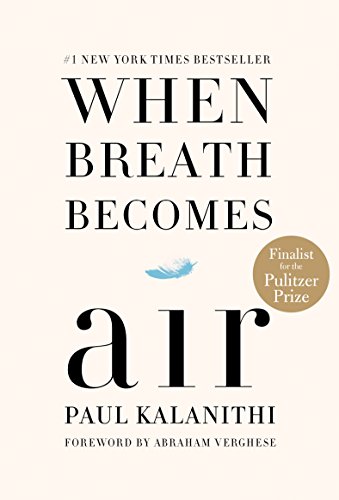
Cover unavailable
87
The Future of Capitalism: Facing the New Anxieties
Paul Collier
4.1
Bill Gates's Five Books for Summer Reading 2019
From world-renowned economist Paul Collier, a candid diagnosis of the failures of capitalism and a pragmatic and realistic vision for how we can repair it.
Deep new rifts are tearing apart the fabric of the United States and other Western societies: thriving cities versus rural counties, the highly skilled elite versus the less educated, wealthy versus developing countries. As these divides deepen, we have lost the sense of ethical obligation to others that was crucial to the rise of post-war social democracy. So far these rifts have been answered only by the revivalist ideologies of populism and socialism, leading to the seismic upheavals of Trump, Brexit, and the return of the far-right in Germany. We have heard many critiques of capitalism but no one has laid out a realistic way to fix it, until now.
In a passionate and polemical book, celebrated economist Paul Collier outlines brilliantly original and ethical ways of healing these rifts—economic, social and cultural—with the cool head of pragmatism, rather than the fervor of ideological revivalism. He reveals how he has personally lived across these three divides, moving from working-class Sheffield to hyper-competitive Oxford, and working between Britain and Africa, and acknowledges some of the failings of his profession.
Drawing on his own solutions as well as ideas from some of the world’s most distinguished social scientists, he shows us how to save capitalism from itself—and free ourselves from the intellectual baggage of the twentieth century.
Collier’s latest book is a thought-provoking look at a topic that’s top of mind for a lot of people right now. Although I don’t agree with him about everything—I think his analysis of the problem is better than his proposed solutions—his background as a development economist gives him a smart perspective on where capitalism is headed. [source]

Trevor Ncube
"Our values, intertwined with practical reasoning, combine the heart and the head. POPULISM offers the headless heart; IDEOLOGY offers the heartless head." This book is a serious mind bender. Fascinating. #twitterbookclub https://t.co/TGdzOr9KXQ [source]
Cover unavailable
88
The Magic of Reality: How We Know What's Really True
Richard Dawkins
4.2
An elegant, text-only paperback edition of the New York Times bestseller that’s been hailed as the definitive authority on…everything.
Richard Dawkins, bestselling author and the world’s most celebrated evolutionary biologist, has spent his career elucidating the many wonders of science. Here, he takes a broader approach and uses his unrivaled explanatory powers to illuminate the ways in which the world really works. Filled with clever thought experiments and jaw-dropping facts, The Magic of Reality explains a stunningly wide range of natural phenomena: How old is the universe? Why do the continents look like disconnected pieces of a jigsaw puzzle? What causes tsunamis? Why are there so many kinds of plants and animals? Who was the first man, or woman? Starting with the magical, mythical explanations for the wonders of nature, Dawkins reveals the exhilarating scientific truths behind these occurrences. This is a page-turning detective story that not only mines all the sciences for its clues but primes the reader to think like a scientist as well.
…
Recommended by Bill Gates and Vote Dem For The Planet.
Dawkins, an evolutionary biologist at Oxford, has a gift for making science enjoyable. This book is as accessible as the TV series Cosmos is for younger audiences—and as relevant for older audiences. It’s an engaging, well-illustrated science textbook offering compelling answers to big questions, like “how did the universe form?” and “what causes earthquakes?” It’s also a plea for readers of all ages to approach mysteries with rigor and curiosity. Dawkins’s antagonistic (and, to me, overzealous) view of religion has earned him a lot of angry critics, but I consider him to be one of the great scientific writer/explainers of all time. [source]
Vote Dem For The Planet
@EJDuboisL7444 @realDonaldTrump It’s a great book, like all Dawkins’ books. [source]
Cover unavailable
89
The Sympathizer
Viet Thanh Nguyen
4.1
It is April 1975, and Saigon is in chaos. At his villa, a general of the South Vietnamese army is drinking whiskey and, with the help of his trusted captain, drawing up a list of those who will be given passage aboard the last flights out of the country. The general and his compatriots start a new life in Los Angeles, unaware that one among their number, the captain, is secretly observing and reporting on the group to a higher-up in the Viet Cong. The Sympathizer is the story of this captain: a man brought up by an absent French father and a poor Vietnamese mother, a man who went to university in America, but returned to Vietnam to fight for the Communist cause. A gripping spy novel, an astute exploration of extreme politics, and a moving love story, The Sympathizer explores a life between two worlds and examines the legacy of the Vietnam War in literature, film, and the wars we fight today.
…
Recommended by Bill Gates, Andrew Liveris, Michigan Students, and 1 others.
Most of the books I’ve read and movies I’ve seen about the Vietnam War focused on the American perspective. Nguyen’s award-winning novel offers much-needed insight into what it was like to be Vietnamese and caught between both sides. Despite how dark it is, The Sympathizer is a gripping story about a double agent and the trouble he gets himself into. [source]
Andrew Liveris
CEO/Dow Chemical Company
Dow Chemical Company chairman and CEO Liveris will take this time to get away from heavier reading and enjoy some of the most highly acclaimed novels of the past year. [source]
Michigan Students
The Sympathizer by @viet_t_nguyen is another one of my favorite books. With influences from Ralph Ellison’s Invisible Man, Nguyen tells a story not often heard by U.S. audiences in popular culture: the Vietnamese side of the Vietnam War. https://t.co/UzARPON6lL [source]
Cover unavailable
90
Life Is What You Make It: Find Your Own Path to Fulfillment
Peter Buffett
4.1
From composer, musician, and philanthropist Peter Buffett comes a warm, wise, and inspirational book that asks, Which will you choose: the path of least resistance or the path of potentially greatest satisfaction?
You may think that with a last name like his, Buffett has enjoyed a life of endless privilege. But the son of billionaire investor Warren Buffett says that the only real inheritance handed down from his parents was a philosophy: Forge your own path in life. It is a creed that has allowed him to follow his own passions, establish his own identity, and reap his own successes.
In Life Is WhatYou Make It, Buffett expounds on the strong set of values given to him by his trusting and broadminded mother, his industrious and talented father, and the many life teachers he has met along the way.
Today’s society, Buffett posits, has begun to replace a work ethic, relishing what you do, with a wealth ethic, honoring the payoff instead of the process. We confuse privilege with material accumulation, character with external validation. Yet, by focusing more on substance and less on reward, we can open doors of opportunity and strive toward a greater sense of fulfillment. In clear and concise terms, Buffett reveals a great truth: Life is random, neither fair nor unfair.
From there it becomes easy to recognize the equal dignity and value of every human life—our circumstances may vary but our essences do not. We see that our journey in life rarely follows a straight line but is often met with false starts, crises, and blunders. How we push through and persevere in these challenging moments is where we begin to create the life of our dreams—from discovering our vocations to living out our bliss to giving back to others.
Personal and revealing, instructive and intuitive, Life Is What You Make It is about transcending your circumstances, taking up the reins of your destiny, and living your life to the fullest.
With home-spun, heart-felt wisdom, Peter Buffett ponders how to make a meaningful life, while making a living. LIFE IS WHAT YOU MAKE IT is thought-provoking, worthwhile reading. [source]

Cover unavailable
91
The Price of Inequality: How Today's Divided Society Endangers Our Future
Joseph E. Stiglitz
4.3
A forceful argument against America's vicious circle of growing inequality by the Nobel Prize–winning economist.
America currently has the most inequality, and the least equality of opportunity, among the advanced countries. While market forces play a role in this stark picture, politics has shaped those market forces. In this best-selling book, Nobel Prize–winning economist Joseph E. Stiglitz exposes the efforts of well-heeled interests to compound their wealth in ways that have stifled true, dynamic capitalism. Along the way he examines the effect of inequality on our economy, our democracy, and our system of justice. Stiglitz explains how inequality affects and is affected by every aspect of national policy, and with characteristic insight he offers a vision for a more just and prosperous future, supported by a concrete program to achieve that vision.
…
Recommended by Bill Gates and Francisco Bethencourt.
I have mixed feelings about The Price of Inequality: How Today’s Divided Society Endangers Our Future by Joseph E. Stiglitz. Stiglitz’s contributions are important in that he really does a good job of articulating the issues of inequality and the economic factors that underlie it. He raises important questions about whether it’s getting harder for people in the U.S. to move up the economic ladder. He makes a pretty rational case for keeping things like the estate tax and for increasing taxes as part of how you close the budget deficit. On these ideas, I found a lot of common ground with Stiglitz. But he seems to think that government is totally benign, and he is very skeptical of the private sector. The private sector’s obligations and its relative contributions to the economy are an interesting topic for discussion. But Stiglitz seems to demonize the category as a whole. I wonder if many of his policy solutions would make things worse by incentivizing business to put even more money and effort into currying favor with Washington. [source]
Francisco Bethencourt
I’m working now on a history of inequality, because while I was working on racism I was bumping into this issue all the time. It is indeed a political problem. [source]
Cover unavailable
92
Buffett: The Making of an American Capitalist
Roger Lowenstein
4.4
Starting from scratch, simply by picking stocks and companies for investment, Warren Buffett amassed one of the epochal fortunes of the 20th century -- an astounding net worth of $10 billion and counting. That awesome record has made him a cult figure.
This illuminating biography reveals a man whose conscientiousness, integrity, and good humor exist alongside an odd emotional isolation. Buffett also masterfully traces his life: his enormously successful partnership; his early, inspired investments in American Express and Geico; his companionship and investment with Katharine Graham of the Washington Post; his role in the Capital Cities purchase of ABC; his unique relationship with his wife and mistress; and his rescue of the scandal-ridden Salomon Brothers.
Other books have been written about Warren Buffett and his investment strategy, but until Warren writes his own book, this is the one to read. [source]
Cover unavailable
93
From the Ground Up: A Journey to Reimagine the Promise of America
Howard Schultz
4.1
NEW YORK TIMES BESTSELLER - From the longtime CEO and chairman of Starbucks, a bold, dramatic work about the new responsibilities that leaders, businesses, and citizens share in American society today--as viewed through the intimate lens of one man's life and work.
What do we owe one another? How do we channel our drive, ingenuity, even our pain, into something more meaningful than individual success? And what is our duty in the places where we live, work, and play?
These questions are at the heart of the American journey. They are also ones that Howard Schultz has grappled with personally since growing up in the Brooklyn housing projects and while building Starbucks from eleven stores into one of the world's most iconic brands.
In From the Ground Up, Schultz looks for answers in two interwoven narratives. One story shows how his conflicted boyhood--including experiences he has never before revealed--motivated Schultz to become the first in his family to graduate from college, then to build the kind of company his father, a working-class laborer, never had a chance to work for: a business that tries to balance profit and human dignity.
A parallel story offers a behind-the-scenes look at Schultz's unconventional efforts to challenge old notions about the role of business in society. From health insurance and free college tuition for part-time baristas to controversial initiatives about race and refugees, Schultz and his team tackled societal issues with the same creativity and rigor they applied to changing how the world consumes coffee.
Throughout the book, Schultz introduces a cross-section of Americans transforming common struggles into shared successes. In these pages, lost youth find first jobs, aspiring college students overcome the yoke of debt, post-9/11 warriors replace lost limbs with indomitable spirit, former coal miners and opioid addicts pave fresh paths, entrepreneurs jump-start dreams, and better angels emerge from all corners of the country.
From the Ground Up is part candid memoir, part uplifting blueprint of mutual responsibility, and part proof that ordinary people can do extraordinary things. At its heart, it's an optimistic, inspiring account of what happens when we stand up, speak out, and come together for purposes bigger than ourselves. Here is a new vision of what can be when we try our best to lead lives through the lens of humanity.
"Howard Schultz's story is a clear reminder that success is not achieved through individual determination alone, but through partnership and community. Howard's commitment to both have helped him build one of the world's most recognized brands. It will be exciting to see what he accomplishes next."--Bill Gates
Howard Schultz’s story is a clear reminder that success is not achieved through individual determination alone, but through partnership and community. Howard’s commitment to both have helped him build one of the world’s most recognized brands. It will be exciting to see what he accomplishes next. [source]
From the Ground Up will resonate with anyone who knows what it’s like to overcome adversity. Howard Schultz’s dream to make the world more fair and welcoming for everyone is truly a breath of fresh air. [source]
Before becoming the CEO who grew Starbucks into an international powerhouse, Howard Schultz grew up in the Brooklyn housing projects and became the first person in his family to go to college. He intersperses his personal journey with his vision for building socially responsible companies and communities. [source]
Cover unavailable
94
Nine Pints: A Journey Through the Money, Medicine, and Mysteries of Blood
Rose George
3.9
An eye-opening exploration of blood, the lifegiving substance with the power of taboo, the value of diamonds, and the promise of breakthrough science
Blood carries life, yet the sight of it makes people faint. It is a waste product and a commodity pricier than oil. It can save lives and transmit deadly infections. Each one of us has roughly nine pints of it, yet many don’t even know their own blood type. And for all its ubiquity, the few tablespoons of blood discharged by 800 million women are still regarded as taboo; menstruation is perhaps the single most demonized biological event.
Rose George, author of The Big Necessity, is renowned for her intrepid work on topics that are invisible but vitally important. In Nine Pints, she takes us from ancient practices of bloodletting to modern “hemovigilance” teams that track blood-borne diseases. She introduces Janet Vaughan, who set up the world’s first system of mass blood donation during the Blitz, and Arunachalam Muruganantham, known as “Menstrual Man” for his work on sanitary pads for developing countries. She probes the lucrative business of plasma transfusions, in which the U.S. is known as the “OPEC of plasma.” And she looks to the future, as researchers seek to bring synthetic blood to a hospital near you.
Spanning science and politics, stories and global epidemics, Nine Pints reveals our life's blood in an entirely new light.
If you get grossed out by blood, this one probably isn’t for you. But if you’re like me and find it fascinating, you’ll enjoy this book by a British journalist with an especially personal connection to the subject. I’m a big fan of books that go deep on one specific topic, so Nine Pints (the title refers to the volume of blood in the average adult) was right up my alley. It’s filled with super-interesting facts that will leave you with a new appreciation for blood. [source]

Cover unavailable
95
Principles for Success
Ray Dalio
4.4
An entertaining, illustrated adaptation of Ray Dalio’s Principles, the #1 New York Times bestseller that has sold more than two million copies worldwide.
Principles for Success distills Ray Dalio’s 600-page bestseller, Principles: Life & Work, down to an easy-to-read and entertaining format that’s accessible to readers of all ages. It contains the key elements of the unconventional principles that helped Dalio become one of the world’s most successful people—and that have now been read and shared by millions worldwide—including how to set goals, learn from mistakes, and collaborate with others to produce exceptional results. Whether you’re already a fan of the ideas in Principles or are discovering them for the first time, this illustrated guide will help you achieve success in having the life that you want to have.
I found Principles to be truly extraordinary. [source]
Cover unavailable
96
How To: Absurd Scientific Advice for Common Real-World Problems
Randall Munroe
4.5
The world's most entertaining and useless self-help guide, from the brilliant mind behind the wildly popular webcomic xkcd and the #1 New York Times bestsellers What If? and Thing Explainer
For any task you might want to do, there's a right way, a wrong way, and a way so monumentally complex, excessive, and inadvisable that no one would ever try it. How To is a guide to the third kind of approach. It's full of highly impractical advice for everything from landing a plane to digging a hole.
Bestselling author and cartoonist Randall Munroe explains how to predict the weather by analyzing the pixels of your Facebook photos. He teaches you how to tell if you're a baby boomer or a 90's kid by measuring the radioactivity of your teeth. He offers tips for taking a selfie with a telescope, crossing a river by boiling it, and powering your house by destroying the fabric of space-time. And if you want to get rid of the book once you're done with it, he walks you through your options for proper disposal, including dissolving it in the ocean, converting it to a vapor, using tectonic plates to subduct it into the Earth's mantle, or launching it into the Sun.
By exploring the most complicated ways to do simple tasks, Munroe doesn't just make things difficult for himself and his readers. As he did so brilliantly in What If?, Munroe invites us to explore the most absurd reaches of the possible. Full of clever infographics and amusing illustrations, How To is a delightfully mind-bending way to better understand the science and technology underlying the things we do every day.
Brilliant... a wonderful guide for curious minds. [source]
Cover unavailable
97
Presidents of War: The Epic Story, from 1807 to Modern Times
Michael Beschloss
4.4
From a preeminent presidential historian comes a groundbreaking and often surprising narrative of America’s wartime chief executives
It sometimes seems, in retrospect, as if America has been almost continuously at war. Ten years in the research and writing, Presidents of War is a fresh, magisterial, intimate look at a procession of American leaders as they took the nation into conflict and mobilized their country for victory. It brings us into the room as they make the most difficult decisions that face any President, at times sending hundreds of thousands of American men and women to their deaths.
From James Madison and the War of 1812 to recent times, we see them struggling with Congress, the courts, the press, their own advisors and antiwar protesters; seeking comfort from their spouses, families and friends; and dropping to their knees in prayer. We come to understand how these Presidents were able to withstand the pressures of war—both physically and emotionally—or were broken by them.
Beschloss’s interviews with surviving participants in the drama and his discoveries in original letters, diaries, once-classified national security documents, and other sources help him to tell this story in a way it has not been told before. Presidents of War combines the sense of being there with the overarching context of two centuries of American history. This important book shows how far we have traveled from the time of our Founders, who tried to constrain presidential power, to our modern day, when a single leader has the potential to launch nuclear weapons that can destroy much of the human race.
My interest in all aspects of the Vietnam War is the main reason I decided to pick up this book. By the time I finished it, I learned a lot not only about Vietnam but about the eight other major conflicts the U.S. entered between the turn of the 19th century and the 1970s. Beschloss’s broad scope lets you draw important cross-cutting lessons about presidential leadership. [source]
Tom Hanks
Actor, author
Once again, Beschloss captures our Presidents in terms both historic and human, showing that whoever holds the office will fearlessly—or fearfully—impact our world. [source]
Cover unavailable
98
An American Marriage
Tayari Jones
4.2
Newlyweds Celestial and Roy are the embodiment of both the American Dream and the New South. He is a young executive, and she is an artist on the brink of an exciting career. But as they settle into the routine of their life together, they are ripped apart by circumstances neither could have imagined. Roy is arrested and sentenced to twelve years for a crime Celestial knows he didn’t commit. Though fiercely independent, Celestial finds herself bereft and unmoored, taking comfort in Andre, her childhood friend, and best man at their wedding. As Roy’s time in prison passes, she is unable to hold on to the love that has been her center. After five years, Roy’s conviction is suddenly overturned, and he returns to Atlanta ready to resume their life together.
As 2018 draws to a close, I’m continuing a favorite tradition of mine and sharing my year-end lists. It gives me a moment to pause and reflect on the year through the books I found most thought-provoking, inspiring, or just plain loved. It also gives me a chance to highlight talented authors – some who are household names and others who you may not have heard of before. Here’s my best of 2018 list. [source]
Cover unavailable
99
Army of None: Autonomous Weapons and the Future of War
Paul Scharre
4.1
The era of autonomous weapons has arrived. Today around the globe, at least thirty nations have weapons that can search for and destroy enemy targets all on their own. Paul Scharre, a leading expert in next-generation warfare, describes these and other high tech weapons systems—from Israel’s Harpy drone to the American submarine-hunting robot ship Sea Hunter—and examines the legal and ethical issues surrounding their use. “A smart primer to what’s to come in warfare” (Bruce Schneier), Army of None engages military history, global policy, and cutting-edge science to explore the implications of giving weapons the freedom to make life and death decisions. A former soldier himself, Scharre argues that we must embrace technology where it can make war more precise and humane, but when the choice is life or death, there is no replacement for the human heart.
Autonomous weapons aren’t exactly top of mind for most around the holidays, but this thought-provoking look at A.I. in warfare is hard to put down. It’s an immensely complicated topic, but Scharre offers clear explanations and presents both the pros and cons of machine-driven warfare. His fluency with the subject should come as no surprise: he’s a veteran who helped draft the U.S. government’s policy on autonomous weapons. [source]
Cover unavailable
100
Origin Story: A Big History of Everything
David Christian
4.2
A 2018 GoodReads Choice Award Nominee in the History & Biography category
A captivating history of the universe -- from before the dawn of time through the far reaches of the distant future.
Most historians study the smallest slivers of time, emphasizing specific dates, individuals, and documents. But what would it look like to study the whole of history, from the big bang through the present day -- and even into the remote future? How would looking at the full span of time change the way we perceive the universe, the earth, and our very existence?
These were the questions David Christian set out to answer when he created the field of "Big History," the most exciting new approach to understanding where we have been, where we are, and where we are going. In Origin Story, Christian takes readers on a wild ride through the entire 13.8 billion years we've come to know as "history." By focusing on defining events (thresholds), major trends, and profound questions about our origins, Christian exposes the hidden threads that tie everything together -- from the creation of the planet to the advent of agriculture, nuclear war, and beyond.
With stunning insights into the origin of the universe, the beginning of life, the emergence of humans, and what the future might bring, Origin Story boldly reframes our place in the cosmos.
…
Recommended by Bill Gates, Corneliu Bodea, Jason Kottke, and 1 others.
David created my favorite course of all time, Big History. It tells the story of the universe from the big bang to today’s complex societies, weaving together insights and evidence from various disciplines into a single narrative. If you haven’t taken Big History yet, Origin Story is a great introduction. If you have, it’s a great refresher. Either way, the book will leave you with a greater appreciation of humanity’s place in the universe. [source]
Corneliu Bodea
One of the books that had the biggest impact on me and my career. The explanation about how complexity is related to entropy and the cost behind it gave me a “wow” moment of understanding. Also, if we don’t understand the world we live in we will make no impact and progress. [source]
Jason Kottke
This is a book based on Christian’s Big History concept, a story that weaves everything from quarks to water to dinosaurs to humans fighting entropy through greater energy & resource usage into one long history of the universe. [source]
Cover unavailable
101
Lincoln in the Bardo
George Saunders
3.7
#1 NEW YORK TIMES BESTSELLER - WINNER OF THE MAN BOOKER PRIZE
The long-awaited first novel from the author of Tenth of December a moving and original father-son story featuring none other than Abraham Lincoln, as well as an unforgettable cast of supporting characters, living and dead, historical and invented
Named One of the Ten Best Books of the Year by The Washington Post, USA Today, and Maureen Corrigan, NPR - One of Time's Ten Best Novels of the Year - A New York Times Notable Book February 1862. The Civil War is less than one year old. The fighting has begun in earnest, and the nation has begun to realize it is in for a long, bloody struggle. Meanwhile, President Lincoln's beloved eleven-year-old son, Willie, lies upstairs in the White House, gravely ill. In a matter of days, despite predictions of a recovery, Willie dies and is laid to rest in a Georgetown cemetery. "My poor boy, he was too good for this earth," the president says at the time. "God has called him home." Newspapers report that a grief-stricken Lincoln returns, alone, to the crypt several times to hold his boy's body.
From that seed of historical truth, George Saunders spins an unforgettable story of familial love and loss that breaks free of its realistic, historical framework into a supernatural realm both hilarious and terrifying. Willie Lincoln finds himself in a strange purgatory where ghosts mingle, gripe, commiserate, quarrel, and enact bizarre acts of penance. Within this transitional state--called, in the Tibetan tradition, the bardo--a monumental struggle erupts over young Willie's soul. Lincoln in the Bardo is an astonishing feat of imagination and a bold step forward from one of the most important and influential writers of his generation. Formally daring, generous in spirit, deeply concerned with matters of the heart, it is a testament to fiction's ability to speak honestly and powerfully to the things that really matter to us. Saunders has invented a thrilling new form that deploys a kaleidoscopic, theatrical panorama of voices to ask a timeless, profound question: How do we live and love when we know that everything we love must end?
"A luminous feat of generosity and humanism."--Colson Whitehead, TheNew York Times Book Review
I thought I knew everything I needed to know about Abraham Lincoln, but this novel made me rethink parts of his life. It blends historical facts from the Civil War with fantastical elements—it’s basically a long conversation among 166 ghosts, including Lincoln’s deceased son. I got new insight into the way Lincoln must have been crushed by the weight of both grief and responsibility. This is one of those fascinating, ambiguous books you’ll want to discuss with a friend when you’re done. [source]
Cover unavailable
102
Everything Happens for a Reason: And Other Lies I've Loved
Kate Bowler
4.1
NEW YORK TIMES BESTSELLER - "A meditation on sense-making when there's no sense to be made, on letting go when we can't hold on, and on being unafraid even when we're terrified."--Lucy Kalanithi
"Belongs on the shelf alongside other terrific books about this difficult subject, like Paul Kalanithi's When Breath Becomes Air and Atul Gawande's Being Mortal."--Bill Gates
NAMED ONE OF THE BEST BOOKS OF THE YEAR BY REAL SIMPLE
Kate Bowler is a professor at Duke Divinity School with a modest Christian upbringing, but she specializes in the study of the prosperity gospel, a creed that sees fortune as a blessing from God and misfortune as a mark of God's disapproval. At thirty-five, everything in her life seems to point toward "blessing." She is thriving in her job, married to her high school sweetheart, and loves life with her newborn son.
Then she is diagnosed with stage IV colon cancer.
The prospect of her own mortality forces Kate to realize that she has been tacitly subscribing to the prosperity gospel, living with the conviction that she can control the shape of her life with "a surge of determination." Even as this type of Christianity celebrates the American can-do spirit, it implies that if you "can't do" and succumb to illness or misfortune, you are a failure. Kate is very sick, and no amount of positive thinking will shrink her tumors. What does it mean to die, she wonders, in a society that insists everything happens for a reason? Kate is stripped of this certainty only to discover that without it, life is hard but beautiful in a way it never has been before.
Frank and funny, dark and wise, Kate Bowler pulls the reader deeply into her life in an account she populates affectionately with a colorful, often hilarious retinue of friends, mega-church preachers, relatives, and doctors. Everything Happens for a Reason tells her story, offering up her irreverent, hard-won observations on dying and the ways it has taught her to live.
Praise for Everything Happens for a Reason
"I fell hard and fast for Kate Bowler. Her writing is naked, elegant, and gripping--she's like a Christian Joan Didion. I left Kate's story feeling more present, more grateful, and a hell of a lot less alone. And what else is art for?"--Glennon Doyle, #1 New York Times bestselling author of Love Warrior and president of Together Rising
When Bowler, a professor at Duke Divinity School, is diagnosed with stage IV colon cancer, she sets out to understand why it happened. Is it a test of her character? The result is a heartbreaking, surprisingly funny memoir about faith and coming to grips with your own mortality. [source]
Cover unavailable
103
A Champion's Mind: Lessons from a Life in Tennis
Pete Sampras
3.9
Pete Sampras is arguably the greatest tennis player ever, a man whose hard-nosed work ethic led to an unprecedented number one world ranking for 286 weeks, and whose prodigious talent made possible a record-setting fourteen Grand Slam titles. While his more vocal rivals sometimes grabbed the headlines, Pete always preferred to let his racket do the talking.
Until now.
In A Champion’s Mind, the tennis great who so often exhibited visible discomfort with letting people “inside his head” finally opens up. An athletic prodigy, Pete resolved from his earliest playing days never to let anything get in the way of his love for the game. But while this single-minded determination led to tennis domination, success didn’t come without a price. The constant pressure of competing on the world’s biggest stage—in the unblinking eye of a media machine hungry for more than mere athletic greatness—took its toll.
Here for the first time Pete speaks freely about what it was like to possess what he calls “the Gift.” He writes about the personal trials he faced—including the death of a longtime coach and confidant—and the struggles he gutted his way through while being seemingly on top of the world. Among the book’s most riveting scenes are an early devastating loss to Stefan Edberg that led Pete to make a monastic commitment to delivering on his natural talent; a grueling, four-hour-plus match against Alex Corretja during which Pete became seriously ill; fierce on-court battles with rival and friend Andre Agassi; and the triumphant last match of Pete’s career at the finals of the 2002 U.S. Open.
In A Champion’s Mind, one of the most revered, successful, and intensely private players in the history of tennis offers an intimate look at the life of an elite athlete.
I don’t just read business biographies. I’m a huge tennis fan, so I’ve read a lot of tennis biographies: John McEnroe, Pete Sampras, Andre Agassi, Scott Draper, Rod Laver. There’s so many I’ve read over the years, Jimmy Connors, great, I love it because I love reading the “behind the scenes” stories, the more “soap opera” aspect of tennis, I guess it’s a little bit like my soap opera sometimes. [source]
Cover unavailable
104
The Path Between the Seas: The Creation of the Panama Canal, 1870-1914
David McCullough
4.3
On December 31, 1999, after nearly a century of rule, the United States officially ceded ownership of the Panama Canal to the nation of Panama. That nation did not exist when, in the mid-19th century, Europeans first began to explore the possibilities of creating a link between the Atlantic and Pacific oceans through the narrow but mountainous isthmus; Panama was then a remote and overlooked part of Colombia.
All that changed, writes David McCullough in his magisterial history of the Canal, in 1848, when prospectors struck gold in California. A wave of fortune seekers descended on Panama from Europe and the eastern United States, seeking quick passage on California-bound ships in the Pacific, and the Panama Railroad, built to serve that traffic, was soon the highest-priced stock listed on the New York Exchange.
To build a 51-mile-long ship canal to replace that railroad seemed an easy matter to some investors. But, as McCullough notes, the construction project came to involve the efforts of thousands of workers from many nations over four decades; eventually those workers, laboring in oppressive heat in a vast malarial swamp, removed enough soil and rock to build a pyramid a mile high. In the early years, they toiled under the direction of French entrepreneur Ferdinand de Lesseps, who went bankrupt while pursuing his dream of extending France's empire in the Americas.
The United States then entered the picture, with President Theodore Roosevelt orchestrating the purchase of the canal—but not before helping foment a revolution that removed Panama from Colombian rule and placed it squarely in the American camp.
Historian David McCullough wrote one of the most factually accurate and detailed books about the construction of the Panama Canal. Why would such a book interest a leader? Because it shows how a great thing was achieved, and what it took to take the project from the paper and make it a reality. Great things are never simple and easy to achieve. It takes creativity. Mistakes happen and losses are sustained. You have to rethink your strategy. You need a B, C or even a D plan. You do whatever it takes to make it happen. This is a valuable lesson for any leader and entrepreneur. [source]
Cover unavailable
105
The Catcher in the Rye
J. D. Salinger
4.0
The hero-narrator of The Catcher in the Rye is an ancient child of sixteen, a native New Yorker named Holden Caulfield. Through circumstances that tend to preclude adult, secondhand description, he leaves his prep school in Pennsylvania and goes underground in New York City for three days. The boy himself is at once too simple and too complex for us to make any final comment about him or his story. Perhaps the safest thing we can say about Holden is that he was born in the world not just strongly attracted to beauty but, almost, hopelessly impaled on it. There are many voices in this novel: children's voices, adult voices, underground voices-but Holden's voice is the most eloquent of all. Transcending his own vernacular, yet remaining marvelously faithful to it, he issues a perfectly articulated cry of mixed pain and pleasure. However, like most lovers and clowns and poets of the higher orders, he keeps most of the pain to, and for, himself. The pleasure he gives away, or sets aside, with all his heart. It is there for the reader who can handle it to keep.
J.D. Salinger's classic novel of teenage angst and rebellion was first published in 1951. The novel was included on Time's 2005 list of the 100 best English-language novels written since 1923. It was named by Modern Library and its readers as one of the 100 best English-language novels of the 20th century. It has been frequently challenged in the court for its liberal use of profanity and portrayal of sexuality and in the 1950's and 60's it was the novel that every teenage boy wants to read.
It was such a relief from the other books I was reading at the time, which all had a quality of homework to them. [source]
Audrey Russo
So many novels; Lord of the Flies, Great Gatsby, Great Expectations; all the Nancy Drew books; Catcher in the Rye, Books written by Zora Neale Hurston; Pat Conroy – all because of the view about different people who endure despite adversity while kindling the hearts of the human spirit. [source]
Cover unavailable
106
Brain Rules: 12 Principles for Surviving and Thriving at Work, Home, and School
Most of us have no idea what’s really going on inside our heads. Yet brain scientists have uncovered details every business leader, parent, and teacher should know—like the need for physical activity to get your brain working its best.
How do we learn? What exactly do sleep and stress do to our brains? Why is multi-tasking a myth? Why is it so easy to forget—and so important to repeat new knowledge? Is it true that men and women have different brains?
In Brain Rules, Dr. John Medina, a molecular biologist, shares his lifelong interest in how the brain sciences might influence the way we teach our children and the way we work. In each chapter, he describes a brain rule—what scientists know for sure about how our brains work—and then offers transformative ideas for our daily lives.
Medina’s fascinating stories and infectious sense of humor breathe life into brain science. You’ll learn why Michael Jordan was no good at baseball. You’ll peer over a surgeon’s shoulder as he proves that most of us have a Jennifer Aniston neuron. You’ll meet a boy who has an amazing memory for music but can’t tie his own shoes.
You will discover how:
Every brain is wired differently Exercise improves cognition We are designed to never stop learning and exploring Memories are volatile Sleep is powerfully linked with the ability to learn Vision trumps all of the other senses Stress changes the way we learn
In the end, you’ll understand how your brain really works—and how to get the most out of it.
Discusses how to keep your brain healthy. [source]
Dmitry Dragilev
There’s a book called Brain Rules, also a great book, by John Medina, sort of like how your brain works. [source]
Cover unavailable
107
A Gentleman in Moscow
Amor Towles
4.5
The mega-bestseller with more than 1.5 million readers that is soon to be a major television series
He can't leave his hotel. You won't want to.
From the New York Times bestselling author of Rules of Civility--a transporting novel about a man who is ordered to spend the rest of his life inside a luxury hotel.
In 1922, Count Alexander Rostov is deemed an unrepentant aristocrat by a Bolshevik tribunal, and is sentenced to house arrest in the Metropol, a grand hotel across the street from the Kremlin. Rostov, an indomitable man of erudition and wit, has never worked a day in his life, and must now live in an attic room while some of the most tumultuous decades in Russian history are unfolding outside the hotel's doors. Unexpectedly, his reduced circumstances provide him entry into a much larger world of emotional discovery.
Brimming with humor, a glittering cast of characters, and one beautifully rendered scene after another, this singular novel casts a spell as it relates the count's endeavor to gain a deeper understanding of what it means to be a man of purpose.
It seems like everyone I know has read this book. I finally joined the club after my brother-in-law sent me a copy, and I’m glad I did. Towles’s novel about a count sentenced to life under house arrest in a Moscow hotel is fun, clever, and surprisingly upbeat. Even if you don’t enjoy reading about Russia as much as I do (I’ve read every book by Dostoyevsky), A Gentleman in Moscow is an amazing story that anyone can enjoy. [source]
Henry Medine
I promote range and diversity. Thus, I recommend readers to expose themselves to as many different topics as possible. I usually have 2-4 books I refer back to at any given time. They range in topics from management, art, spirituality and philosophy. Trying to get the engineering thing going but don't much of a mind for science. [source]
Cover unavailable
108
Energy and Civilization: A History
Vaclav Smil
4.3
A comprehensive account of how energy has shaped society throughout history, from pre-agricultural foraging societies through today's fossil fuel-driven civilization.
I wait for new Smil books the way some people wait for the next 'Star Wars' movie. In his latest book, Energy and Civilization: A History, he goes deep and broad to explain how innovations in humans' ability to turn energy into heat, light, and motion have been a driving force behind our cultural and economic progress over the past 10,000 years. --Bill Gates, Gates Notes, Best Books of the Year
Energy is the only universal currency; it is necessary for getting anything done. The conversion of energy on Earth ranges from terra-forming forces of plate tectonics to cumulative erosive effects of raindrops. Life on Earth depends on the photosynthetic conversion of solar energy into plant biomass. Humans have come to rely on many more energy flows--ranging from fossil fuels to photovoltaic generation of electricity--for their civilized existence. In this monumental history, Vaclav Smil provides a comprehensive account of how energy has shaped society, from pre-agricultural foraging societies through today's fossil fuel-driven civilization.
Humans are the only species that can systematically harness energies outside their bodies, using the power of their intellect and an enormous variety of artifacts--from the simplest tools to internal combustion engines and nuclear reactors. The epochal transition to fossil fuels affected everything: agriculture, industry, transportation, weapons, communication, economics, urbanization, quality of life, politics, and the environment. Smil describes humanity's energy eras in panoramic and interdisciplinary fashion, offering readers a magisterial overview. This book is an extensively updated and expanded version of Smil's Energy in World History (1994). Smil has incorporated an enormous amount of new material, reflecting the dramatic developments in energy studies over the last two decades and his own research over that time.
Smil is one of my favorite authors, and this is his masterpiece. He lays out how our need for energy has shaped human history—from the era of donkey-powered mills to today’s quest for renewable energy. It’s not the easiest book to read, but at the end you’ll feel smarter and better informed about how energy innovation alters the course of civilizations. [source]
Chris Goodall
There isn’t a page you don’t learn something from. [source]
Cover unavailable
109
The Best We Could Do
Thi Bui
4.5
An intimate and poignant graphic novel portraying one family’s journey from war-torn Vietnam from debut author Thi Bui.
This beautifully illustrated and emotional story is an evocative memoir about the search for a better future and a longing for the past. Exploring the anguish of immigration and the lasting effects that displacement has on a child and her family, Bui documents the story of her family’s daring escape after the fall of South Vietnam in the 1970s, and the difficulties they faced building new lives for themselves.
At the heart of Bui’s story is a universal struggle: While adjusting to life as a first-time mother, she ultimately discovers what it means to be a parent—the endless sacrifices, the unnoticed gestures, and the depths of unspoken love. Despite how impossible it seems to take on the simultaneous roles of both parent and child, Bui pushes through. With haunting, poetic writing and breathtaking art, she examines the strength of family, the importance of identity, and the meaning of home.
In what Pulitzer Prize–winning novelist Viet Thanh Nguyen calls “a book to break your heart and heal it,” The Best We Could Do brings to life Thi Bui’s journey of understanding, and provides inspiration to all of those who search for a better future while longing for a simpler past.
This gorgeous graphic novel is a deeply personal memoir that explores what it means to be a parent and a refugee. The author’s family fled Vietnam in 1978. After giving birth to her own child, she decides to learn more about her parents’ experiences growing up in a country torn apart by foreign occupiers. [source]
Cover unavailable
110
The Post-American World
Fareed Zakaria
4.1
"This is not a book about the decline of America, but rather about the rise of everyone else." So begins Fareed Zakaria's important new work on the era we are now entering.
Following on the success of his best-selling The Future of Freedom, Zakaria describes with equal prescience a world in which the United States will no longer dominate the global economy, orchestrate geopolitics, or overwhelm cultures. He sees the "rise of the rest"—the growth of countries like China, India, Brazil, Russia, and many others—as the great story of our time, and one that will reshape the world.
The tallest buildings, biggest dams, largest-selling movies, and most advanced cell phones are all being built outside the United States. This economic growth is producing political confidence, national pride, and potentially international problems. How should the United States understand and thrive in this rapidly changing international climate? What does it mean to live in a truly global era? Zakaria answers these questions with his customary lucidity, insight, and imagination.
Fact or fiction, the president knows that reading keeps the mind sharp. He also delved into these non-fiction reads: Age of Ambition: Chasing Fortune, Evan Osnos Thinking, Fast and Slow, Daniel Kahneman Moral Man And Immoral Society, Reinhold Niebuhr A Kind And Just Parent, William Ayers The Post-American World, Fareed Zakaria Lessons in Disaster, Gordon Goldstein Sapiens: A Brief History of Humankind, Yuval Noah Harari The Fire Next Time, James Baldwin Andy Grove: The Life and Times of an American, Richard S Tedlow Behind the Beautiful Forevers: Life, Death, and Hope in a Mumbai Undercity, Katherine Boo [source]
David Marquand
Zakaria is Indian by origin and he went to America in his youth. He is now a very prominent journalist in America. His thesis is that America, while still being a superpower, has got to contend with the rise of other countries. It can no longer call the shots in the new world that is developing. This is not a new thesis, but he puts it forward very powerfully and very well. He also looks at the question of whether America can continue to succeed in a world where other countries are catching up in terms of markets and economic progress. Because other countries are rising, America is falling relatively. [source]
Cover unavailable
111
Hot, Flat, and Crowded: Why We Need a Green Revolution – and How It Can Renew America
Thomas L. Friedman
4.0
In this brilliant, essential book, Pulitzer Prize-winning author Thomas L. Friedman speaks to America's urgent need for national renewal and explains how a green revolution can bring about both a sustainable environment and a sustainable America.
Friedman explains how global warming, rapidly growing populations, and the expansion of the world’s middle class through globalization have produced a dangerously unstable planet--one that is "hot, flat, and crowded." In this Release 2.0 edition, he also shows how the very habits that led us to ravage the natural world led to the meltdown of the financial markets and the Great Recession. The challenge of a sustainable way of life presents the United States with an opportunity not only to rebuild its economy, but to lead the world in radically innovating toward cleaner energy. And it could inspire Americans to something we haven't seen in a long time--nation-building in America--by summoning the intelligence, creativity, and concern for the common good that are our greatest national resources.
Hot, Flat, and Crowded is classic Thomas L. Friedman: fearless, incisive, forward-looking, and rich in surprising common sense about the challenge--and the promise--of the future.
He may have the country’s finest experts at his fingertips, but it still doesn’t hurt to read up on environmental and economic issues. [source]
Jonathon Porritt
Thomas Friedman is an American commentator and a bit of a business guru. This book is lively, beautifully written, full of personal anecdotes. I should say that Friedman used to piss me off more than most other writers because he never talked about resources, climate change, population growth – these were invisible issues for him. Then, a few years ago, something changed and he started to address all this. [source]
Cover unavailable
112
The Great Gatsby
F. Scott Fitzgerald
4.1
A young man, newly rich, tries to recapture the past and win back his former love, despite the fact that she has married.
Melinda and I really like this book. When we were first dating, she had a green light that she would turn on when her office was empty and it made sense for me to come over. [source]
When he got to high school, the president said, his tastes changed and he learned to enjoy classics like “Of Mice and Men” and “The Great Gatsby.” [source]
Marvin Liao
Partner/500 Startups
For Non-Business, I'd have to say Dune (Herbert), Emergency (Strauss), The Great Gatsby (Fitzgerald) or Flint (L'Amour). I re-read these books every year because they are just so well written & great stories that I get new perspective & details every time I read them. [source]
Cover unavailable
113
A Full Life: Reflections at Ninety
Jimmy Carter
4.1
In his major New York Times bestseller, Jimmy Carter looks back from ninety years of age and “reveals private thoughts and recollections over a fascinating career as businessman, politician, evangelist, and humanitarian” (Booklist).
At ninety, Jimmy Carter reflects on his public and private life with a frankness that is disarming. He adds detail and emotion about his youth in rural Georgia that he described in his magnificent An Hour Before Daylight. He writes about racism and the isolation of the Carters. He describes the brutality of the hazing regimen at Annapolis, and how he nearly lost his life twice serving on submarines and his amazing interview with Admiral Rickover. He describes the profound influence his mother had on him, and how he admired his father even though he didn’t emulate him. He admits that he decided to quit the Navy and later enter politics without consulting his wife, Rosalynn, and how appalled he is in retrospect.
In his “warm and detailed memoir” (Los Angeles Times), Carter tells what he is proud of and what he might do differently. He discusses his regret at losing his re-election, but how he and Rosalynn pushed on and made a new life and second and third rewarding careers. He is frank about the presidents who have succeeded him, world leaders, and his passions for the causes he cares most about, particularly the condition of women and the deprived people of the developing world.
“Always warm and human…even inspirational” (Buffalo News), A Full Life is a wise and moving look back from this remarkable man. Jimmy Carter has lived one of our great American lives—from rural obscurity to world fame, universal respect, and contentment. A Full Life is an extraordinary read from a “force to be reckoned with” (Christian Science Monitor).
Even though the former President has already written more than two dozen books, he somehow managed to save some great anecdotes for this quick, condensed tour of his fascinating life. I loved reading about Carter’s improbable rise to the world’s highest office. The book will help you understand how growing up in rural Georgia in a house without running water, electricity, or insulation shaped—for better and for worse—his time in the White House. Although most of the stories come from previous decades, A Full Life feels timely in an era when the public’s confidence in national political figures and institutions is low. [source]
Today is World Book Day, a wonderful opportunity to address this #ChallengeRichard sent in by Mike Gonzalez of New Jersey: Make a list of your top 65 books to read in a lifetime. [source]
Cover unavailable
114
Mountains Beyond Mountains: The Quest of Dr. Paul Farmer, a Man Who Would Cure the World
This powerful and inspiring book shows how one person can make a difference, as Kidder tells the true story of a gifted man who is in love with the world and has set out to do all he can to cure it.
Tracy Kidder is a winner of the Pulitzer Prize and the author of the bestsellers The Soul of a New Machine, House, Among Schoolchildren, and Home Town. He has been described by the Baltimore Sun as the "master of the non-fiction narrative." This powerful and inspiring new book shows how one person can make a difference, as Kidder tells the true story of a gifted man who is in love with the world and has set out to do all he can to cure it.
At the center of Mountains Beyond Mountains stands Paul Farmer. Doctor, Harvard professor, renowned infectious-disease specialist, anthropologist, the recipient of a MacArthur "genius" grant, world-class Robin Hood, Farmer was brought up in a bus and on a boat, and in medical school found his life’s calling: to diagnose and cure infectious diseases and to bring the lifesaving tools of modern medicine to those who need them most. This magnificent book shows how radical change can be fostered in situations that seem insurmountable, and it also shows how a meaningful life can be created, as Farmer—brilliant, charismatic, charming, both a leader in international health and a doctor who finds time to make house calls in Boston and the mountains of Haiti—blasts through convention to get results.
Mountains Beyond Mountains takes us from Harvard to Haiti, Peru, Cuba, and Russia as Farmer changes minds and practices through his dedication to the philosophy that "the only real nation is humanity"—a philosophy that is embodied in the small public charity he founded, Partners in Health. He enlists the help of the Gates Foundation, George Soros, the U.N.’s World Health Organization, and others in his quest to cure the world. At the heart of this book is the example of a life based on hope, and on an understanding of the truth of the Haitian proverb "Beyond mountains there are mountains": as you solve one problem, another problem presents itself, and so you go on and try to solve that one too.
"Mountains Beyond Mountains unfolds with the force of a gathering revelation," says Annie Dillard, and Jonathan Harr says, "[Farmer] wants to change the world. Certainly this luminous and powerful book will change the way you see it."
Today is World Book Day, a wonderful opportunity to address this #ChallengeRichard sent in by Mike Gonzalez of New Jersey: Make a list of your top 65 books to read in a lifetime. [source]
Cecile Richards
Everyone has to read this book. I guess I just picked it for anyone who hasn’t read it and if you’re a progressive and you’re trying to figure out what to do with your life. Tracy Kidder is a great writer so that doesn’t hurt, but Paul Farmer’s story, the story of one person who decides they want to change the world, is so compelling. I think even for the most cynical, hard-bitten progressive you can’t help but read this book and feel inspired. So it’s a lot of levels. [source]
Cover unavailable
115
Becoming Steve Jobs: The Evolution of a Reckless Upstart into a Visionary Leader
Brent Schlender
4.4
#1 New York Times Bestseller There have been many books—on a large and small scale—about Steve Jobs, one of the most famous CEOs in history. But this book is different from all the others.
Becoming Steve Jobs takes on and breaks down the existing myth and stereotypes about Steve Jobs. The conventional, one-dimensional view of Jobs is that he was half-genius, half-jerk from youth, an irascible and selfish leader who slighted friends and family alike. Becoming Steve Jobs answers the central question about the life and career of the Apple cofounder and CEO: How did a young man so reckless and arrogant that he was exiled from the company he founded become the most effective visionary business leader of our time, ultimately transforming the daily life of billions of people?
Drawing on incredible and sometimes exclusive access, Schlender and Tetzeli tell a different story of a real human being who wrestled with his failings and learned to maximize his strengths over time. Their rich, compelling narrative is filled with stories never told before from the people who knew Jobs best, and who decided to open up to the authors, including his family, former inner circle executives, and top people at Apple, Pixar and Disney, most notably Tim Cook, Jony Ive, Eddy Cue, Ed Catmull, John Lasseter, Robert Iger and many others. In addition, Brent knew Jobs personally for 25 years and draws upon his many interviews with him, on and off the record, in writing the book. He and Rick humanize the man and explain, rather than simply describe, his behavior. Along the way, the book provides rich context about the technology revolution we all have lived through, and the ways in which Jobs changed our world.
Schlender and Tetzeli make clear that Jobs's astounding success at Apple was far more complicated than simply picking the right products: he became more patient, he learned to trust his inner circle, and discovered the importance of growing the company incrementally rather than only shooting for dazzling game-changing products.
A rich and revealing account that will change the way we view Jobs, Becoming Steve Jobs shows us how one of the most colorful and compelling figures of our times was able to combine his unchanging, relentless passion with a more mature management style to create one of the most valuable and beloved companies on the planet.
Gives a fresh perspective on Steve Jobs’ journey from inspiring but immature entrepreneur into an inspired and mature company-builder. [source]
Cover unavailable
116
Believe Me: A Memoir of Love, Death, and Jazz Chickens
Eddie Izzard
4.2
Critically acclaimed, award-winning British comedian and actor Eddie Izzard details his childhood, his first performances on the streets of London, his ascent to worldwide success on stage and screen, and his comedy shows which have won over audiences around the world.
Over the course of a thirty-year career, Eddie Izzard has proven himself to be a creative chameleon, inhabiting the stage and film and television screen with an unbelievable fervor. Born in Yemen, and raised in Ireland, Wales and post-war England, he lost his mother at the age of six. In his teens, he dropped out of university and took to the streets of London as part of a two-man escape act; when his partner went on vacation, Izzard kept busy by inventing a one-man act, and thus a career was ignited. As a stand-up comedian, Izzard has captivated audiences with his surreal, stream-of-consciousness comedy--lines such as "Cake or Death?" "Death Star Canteen," and "Do You Have a Flag?" have the status of great rock lyrics. As a self-proclaimed "Executive Transvestite," Izzard broke the mold performing in full make-up and heels, and has become as famous for his advocacy for LGBT rights as he has for his art. In Believe Me, he recounts the dizzying rise he made from street busking to London's West End, to Wembley Stadium and New York's Madison Square Garden.
Still performing more than 100 shows a year--thus far in a record-breaking twenty-eight countries worldwide--Izzard is arguably one of today's top Kings of Comedy. With his brand of keenly intelligent humor, that ranges from world history to pop culture, politics and philosophy, he has built an extraordinary fan base that transcends age, gender, and race. Writing with the same candor and razor-sharp insight evident in his comedy, he reflects on a childhood marked by unutterable loss, sexuality and coming out, as well as a life in show business, politics, and philanthropy. Honest and generous, Izzard's Believe Me is an inspired account of a very singular life thus far.
…
Recommended by Bill Gates, Gabriel Coarna, and Raluca Radu.
Izzard’s personal story is fascinating: he survived a difficult childhood and worked relentlessly to overcome his lack of natural talent and become an international star. If you’re a huge fan of him like I am, you’ll love this book. His written voice is very similar to his stage voice, and I found myself laughing out loud several times while reading it. [source]
Gabriel Coarna
I've just started Eddie Izzard's "Believe Me". This is one of those books I'm reading just-because, so I'm not *expecting* to gain anything from it. I only expect things from books I read because I'm studying/researching a particular subject. The reason why I'm reading this book is because I'm very, very fond of Eddie Izzard the comic and Eddie Izzard the actor. Hopefully, this book is a glimpse into Eddie Izzard the human. [source]
Raluca Radu
It is funny cause I am currently reading the books of Woody Allen - he is my favorite movie director and screenwriter of all times and I had no idea he wrote books. I am expecting to laugh a lot and reading his books (just like watching his movies) feels a lot like a very interesting and ironic conversation. I am in quite a stressful period - we are preparing GPeC SUMMIT November 14-15 - so a bit of good old Woody is just what I needed. And at the same time I read the new book of Eddie Izzard. So, yes, a funny time in my reading life. [source]
Cover unavailable
117
Behind the Beautiful Forevers: Life, Death, and Hope in a Mumbai Undercity
From Pulitzer Prize-winner Katherine Boo, a landmark work of narrative nonfiction that tells the dramatic and sometimes heartbreaking story of families striving toward a better life in one of the twenty-first century's great, unequal cities.
In this brilliantly written, fast-paced book, based on three years of uncompromising reporting, a bewildering age of global change and inequality is made human.
Annawadi is a makeshift settlement in the shadow of luxury hotels near the Mumbai airport, and as India starts to prosper, Annawadians are electric with hope. Abdul, a reflective and enterprising Muslim teenager, sees "a fortune beyond counting" in the recyclable garbage that richer people throw away. Asha, a woman of formidable wit and deep scars from a childhood in rural poverty, has identified an alternate route to the middle class: political corruption. With a little luck, her sensitive, beautiful daughter - Annawadi's "most-everything girl" - will soon become its first female college graduate. And even the poorest Annawadians, like Kalu, a fifteen-year-old scrap-metal thief, believe themselves inching closer to the good lives and good times they call "the full enjoy."
But then Abdul the garbage sorter is falsely accused in a shocking tragedy; terror and a global recession rock the city; and suppressed tensions over religion, caste, sex, power and economic envy turn brutal. As the tenderest individual hopes intersect with the greatest global truths, the true contours of a competitive age are revealed. And so, too, are the imaginations and courage of the people of Annawadi.
With intelligence, humor, and deep insight into what connects human beings to one another in an era of tumultuous change, Behind the Beautiful Forevers carries the reader headlong into one of the twenty-first century's hidden worlds, and into the lives of people impossible to forget.
Katherine Boo spent three years getting to know the people of Annawadi, a slum of about 3,000 people on the edge of a sewage-filled lake in India’s largest city. Her book is a poignant reminder of how much more work needs to be done to address the inequities in the world. But it’s also an uplifting story of people striving to make a life for themselves, sacrificing for their families, and in their own way, being innovative and entrepreneurial in creating a vibrant local economy. [source]
Fact or fiction, the president knows that reading keeps the mind sharp. He also delved into these non-fiction reads [source]
Adam Minter
Vivid scenes of walking down Mumbai’s Airport Road, lined by shacks and trash pickers, and behind them are walls, and behind them are the finest five star hotels in India. [source]
Cover unavailable
118
The Rosie Effect (Don Tillman, #2)
Graeme Simsion
3.9
Don Tillman and Rosie Jarman are back. The Wife Project is complete, and Don and Rosie are happily married and living in New York. But they're about to face a new challenge because - surprise - Rosie is pregnant.
Don sets about learning the protocols of becoming a father, but his unusual research style gets him into trouble with the law. Fortunately his best friend Gene is on hand to offer advice: he's left Claudia and moved in with Don and Rosie.
As Don tries to schedule time for pregnancy research, getting Gene and Claudia to reconcile, servicing the industrial refrigeration unit that occupies half his apartment, helping Dave the Baseball Fan save his business, and staying on the right side of Lydia the social worker, he almost misses the biggest problem of all: he might lose Rosie when she needs him the most.
The hilarious follow-up to The Rosie Project, one of the best novels I’ve read in ages. There’s no sophomore slump here. Simsion brings back some of the best characters and gags from the first novel while also bringing in enough new elements to keep it fresh. It’s a funny novel that also made me think about relationships: what makes them work and how we have to keep investing time and energy to make them better. A sweet, entertaining, and thought-provoking book. [source]
Cover unavailable
119
The Most Powerful Idea in the World: A Story of Steam, Industry, and Invention
William Rosen
4.2
Hardly a week passes without some high-profile court case that features intellectual property at its center. But how did the belief that one could own an idea come about? And how did that belief change the way humankind lives and works?
William Rosen, author of Justinian's Flea, seeks to answer these questions and more with The Most Powerful Idea in the World. A lively and passionate study of the engineering and scientific breakthroughs that led to the steam engine, this book argues that the very notion of intellectual property drove not only the invention of the steam engine but also the entire Industrial Revolution: history’s first sustained era of economic improvement. To do so, Rosen conjures up an eccentric cast of characters, including the legal philosophers who enabled most the inventive society in millennia, and the scientists and inventors—Thomas Newcomen, Robert Boyle, and James Watt—who helped to create and perfect the steam engine over the centuries. With wit and wide-ranging curiosity, Rosen explores the power of creativity, capital, and collaboration in the brilliant engineering of the steam engine and how this power source, which fueled factories, ships, and railroads, changed human history.
Deeply informative and never dull, Rosen's account of one of the most important inventions made by humans is a rollicking ride through history, with careful scholarship and fast-paced prose in equal measure.
I just finished reading The Most Powerful Idea in the World: A Story of Steam, Industry and Invention by William Rosen. It focuses on the Industrial Revolution basically from the Newcomen atmospheric engine in 1712 to the Stephen Rocket Locomotive in 1850. It does a great job of explaining how thousands of innovations were driven during this period by many elements coming together: increased literacy, patents, societies, scientist/tinkerers, the cotton industry, trade/shipping, measurement, etc. It is a great book although its helps to have an interest in how steam engines actually work since it chronicles how they changed over time in some depth. This book is very worthwhile, and I’ll have more to say about it also in a longer review. [source]
Cover unavailable
120
A Nation of Wusses: How America's Leaders Lost the Guts to Make Us Great
Ed Rendell
3.8
Governor Ed Rendell explains why America's leaders rarely call for sacrifice for the greater good--to avoid making any sacrifices themselves!
Rendell has seen job security become the primary consideration of any person with power in America--their own job security! Most politicians and bureaucrats can see no further ahead than the next election, sometimes no further than the next press conference. Americans are rarely afraid of sacrifice and hard work when they mean building a better future, but when was the last time you heard of a leader of anything making a sacrifice for the greater good? The people can only win when they make it clear to the powers that be that making the right choices, even the hard ones, is the key to winning the next election.
Explains in rollicking stories ranging from the profane to the profound that most hard choices are only "hard" because the polls conflict with your principles. Ed Rendell rose to the top of Philadelphia, then Pennsylvania, then national politics, by doing what he thought was right, and there were plenty of times that looked like it would be his downfall as well.
This book revisits the high points of Ed Rendell's career and current landscape to define the political fights his peers seem just as afraid of winning as losing.
Rendell is a former head of the Democratic National Committee, a current MSNBC Senior Political Analyst, and a Partner at Ballard Spahr LLP
One of the shorter, fun books I read this summer is A Nation of Wusses: How America’s Leaders Lost the Guts to Make Us Great. It’s by Ed Rendell, who was district attorney, mayor of Philadelphia and then two-term governor of Pennsylvania. If you’ve heard him speak or seen him on TV, you know he’s a colorful and outspoken observer of political life in the U.S. No surprise, then, that this book is colorful too,with lots of great stories. His theme is that leaders shouldn’t just tell people what they want to hear. But because politics has become so intensely partisan, too often our political leaders seem to be afraid to tell us the truth and to actually lead us in making the hard choices we need to face up to, on issues like education reform and the federal deficit. As a mayor and governor, Rendell faced up to some very messed-up budget situations and made some smart trade-offs. I thought his point of view was really refreshing. He makes a good point about how politics has changed in ways that make it harder for leaders to emerge and to truly lead. [source]
Cover unavailable
121
Harvesting the Biosphere: What We Have Taken from Nature
Vaclav Smil
3.8
An interdisciplinary and quantitative account of human claims on the biosphere's stores of living matter, from prehistoric hunting to modern energy production.
The biosphere--the Earth's thin layer of life--dates from nearly four billion years ago, when the first simple organisms appeared. Many species have exerted enormous influence on the biosphere's character and productivity, but none has transformed the Earth in so many ways and on such a scale as Homo sapiens. In Harvesting the Biosphere, Vaclav Smil offers an interdisciplinary and quantitative account of human claims on the biosphere's stores of living matter, from prehistory to the present day. Smil examines all harvests--from prehistoric man's hunting of megafauna to modern crop production--and all uses of harvested biomass, including energy, food, and raw materials. Without harvesting of the biomass, Smil points out, there would be no story of human evolution and advancing civilization; but at the same time, the increasing extent and intensity of present-day biomass harvests are changing the very foundations of civilization's well-being.
In his detailed and comprehensive account, Smil presents the best possible quantifications of past and current global losses in order to assess the evolution and extent of biomass harvests. Drawing on the latest work in disciplines ranging from anthropology to environmental science, Smil offers a valuable long-term, planet-wide perspective on human-caused environmental change.
There is no author whose books I look forward to more than Vaclav Smil. Here he gives as clear and as numeric a picture as is possible of how humans have altered the biosphere. The book is a bit dry and I had to look up a number of terms that were unfamiliar to me, but it tells a critical story if you care about the impact we’re having on the planet. [source]
Cover unavailable
122
The Quest: Energy, Security, and the Remaking of the Modern World
Daniel Yergin
4.4
This long-awaited successor to Daniel Yergin's Pulitzer Prize–winning The Prize provides an essential, overarching narrative of global energy, the principal engine of geopolitical and economic change
Renowned energy authority Daniel Yergin continues the riveting story begun in his Pulitzer Prize–winning book, The Prize, in this gripping account of the quest for the energy the world needs—and the power and riches that come with it. A master storyteller as well as one of the world's great experts, Yergin proves that energy is truly the engine of global political and economic change as well as central to the battle over climate change. From the jammed streets of Beijing, the shores of the Caspian Sea, and the conflicts in the Mideast to Capitol Hill and Silicon Valley, Yergin takes us inside the decisions and choices that are shaping our future. Without understanding these realities of energy we will surrender our place at the helm of history. Yergin shows how the drama of oil—the struggle for access to it, the battle for control, the insecurity of supply, the consequences of its use, its impact on the global economy, and the geopolitics that dominate it—will continue to shape our world. He tells the inside stories—of the oil market, the rise of the “petro-state,” the race to control the resources of the former Soviet empire, and the massive corporate mergers that transformed the oil landscape. He takes on the toughest questions: Will we run out of oil? Are China and the United States destined to conflict over oil? Yergin also reveals the surprising and turbulent history of nuclear and coal power, electricity, and natural gas. He investigates the “rebirth of renewables”—biofuels and wind—as well as solar energy, which venture capitalists are betting will be the next big thing for meeting the needs of a growing world economy. Understanding this greening landscape and its future role are crucial to answering energy's largest questions. Yergin brings climate change into unique perspective by offering an original and unprecedented history of how the issue went from concerning a handful of scientists, terrified of a new Ice Age, to one of the most vital issues of our times. The Quest presents an extraordinary range of characters and dramatic stories that illustrate the principles that will shape a robust and flexible energy security system for the decades to come. It is an extraordinary achievement from an author who is truly one of our nation's great resources.
Another great book I read recently was The Quest, by Daniel Yergin. For anyone interested in the dynamics shaping our energy future and all of the innovation around energy, it’s a fantastic book. In addition to my review of his book, I’ve also posted a response from the author to the follow-up questions I had about the important topics covered in his book. [source]
Cover unavailable
123
Awakening Joy: 10 Steps That Will Put You on the Road to Real Happiness
James Baraz, Shoshana Alexander
4.4
Joy is not for just the lucky few–it’s a choice anyone can make. In this groundbreaking book, based on his popular course, James Baraz helps you discover a path to the happiness that’s right in front of you, offering a step-by-step program that will reorient your mind away from dissatisfaction and distraction and toward the contentment and delight that is abundantly available in our everyday lives.
You can decide to be happy. For years, James Baraz’s online Awakening Joy course has offered participants from around the world the benefits of this simple but profoundly radical proposition. Grounded in simple Buddhist principles but accessible to people of all faiths–or no faith at all–this concept provides the jumping-off point for a transformational journey toward a richer, more meaningful, more positive outlook on life. Now readers everywhere can follow the same ten steps Baraz teaches to his program participants. In this practical down-to-earth guide, you will learn how to
• make happiness a habit by inclining your mind toward states that lead to well-being • find joy even during difficult times and avoid the pitfalls that prevent you from achieving the contentment you seek • cultivate effective practices for sustaining joyfulness, such as reclaiming your natural sense of wonder and finding joy in the midst of everyday experiences
Each chapter of Awakening Joy consists of one step in Baraz’s ten-step program and includes engaging exercises and practical advice to make happiness your natural default setting. For everyone from the cynic despondent over life’s many sorrows to the harried commuter raging at freeway traffic, this book offers up a simple yet powerful message of hope grounded in the realization that joy already exists inside every one of us. Like a precious child, it only needs to be recognized, embraced, and nurtured in order to grow to its full potential.
Praise "I've personally taken the Awakening Joy program and can say this unequivocally: It's fabulous and it works! This book, filled with moving stories and rich teachings, will give you wonderful tools to experience true happiness and well-being. It's a gem!"— Marci Shimoff, New York Times bestselling author of Happy for No Reason
"Opening to joy takes courage and intention. This book will inspire you to discover genuine happiness, and show you how. Drawing on perennial wisdom and accessible meditative practices, James and Shoshana offer teachings that can awaken your love of life."— Tara Brach, author of Radical Acceptance
"Awakening Joy is an important guide to transforming our everyday experience into genuine happiness. James and Shoshana's insight, kindness, and clear and practical language make this a direct, pragmatic and valuable manual for a better life."—Sharon Salzberg, author of Lovingkindness: The Revolutionary Art of Happiness
"In this beautiful and heartwarming book, James Baraz and Shoshana Alexander take us on a journey that truly awakens joy. There are stories that bring tears to our eyes and practices that transform our lives. Thisis a loving, wise, and compassionate testament to what is possible for each one of us. Highly recommended."—Joseph Goldstein, author of A Heart Full of Peace
"I'm so happy that James Baraz's Awakening Joy class is now available in book form. His class has been helpful to thousands of people. I plan to give it to all my clients who are struggling with creating a life of meaning and happiness. Joyfulness is our birthright. This book shows you how to reclaim it."—M.J. Ryan, author of AdaptAbility
"This is a life-changing book that not only teaches practical, useful strategies for increasing your awareness, but also illuminates choices about how you can lead your emotional life." —Paul Ekman, Ph.D., Professor Emeritus, University of California, San Francisco, co-author of Emotional Awareness and author of Emotions Revealed
"To awaken joy in oneself and others is one of life's great skills, a skill taught by sages across the centuries, and now distilled in this book."—Roger Walsh M.D., Ph.D., University of California Medical School, author of Essential Spirituality: The Seven Central Practices
"This book is an inspiring gift that will open your heart to the presence of love and joy in everyday life."—Frances Vaughan, Ph.D., psychologist, author of Shadows of the Sacred "Every page of this wonderful book has something that inspires faith or confidence: a new story, a memorable quote, an exercise that invites participation....From beginning to end, it is a joy to read."—Sylvia Boorstein, author of Happiness Is An Inside Job: Practicing for a Joyful Life
"This book should be read by every person who cares about making this a better world. It can enhance the joys of working to develop a wiser and more compassionate society, and help make us both happier and more effective in challenging times."—Daniel Ellsberg, author of Secrets: A Memoir of Vietnam and the Pentagon Papers
"This is an important book—and a great read! With its unique mix of story, philosophy, and practice we can explore our needs, free ourselves from the bonds of suffering, and innovate new ways of being that will last our lifetimes. And, because James has woven himself and his characteristic smile throughout the book, we can have a lot of fun in the process."—Rick Foster, co-author of How We Choose to Be Happy
"Faith, hope, and love have long been considered the essential virtues of the religious life. James Baraz has done us all a great service by elevating joy to its rightful place alongside the trinity of sacred emotions. What a gift is it, to be surprised by joy, and to awaken, in the midst of a difficult world, the impulse to rejoice."—Patricia E. de Jong, Senior Minister, First Congregational Church of Berkeley
"Awakening Joy is an inspirational and practical resource which helps us identify where we are or are not experiencing joy in our lives. This original book addresses the primary obstacles or beliefs that hinder our access to joy, and includes timeless practices and ways in which we can expand, cultivate, express, and experience more joy in our lives and within our own nature. Well-written, informative, and a significant contribution to everyone's well-being."—Angeles Arrien, Ph.D., cultural anthropologist, and author of award-winning Second Half of Life: Opening to the Eight Gates of Wisdom
"In our pursuit of happiness, this moving book should be a dog eared, worn out companion....As you work through this elegant material, you will find yourself laughing a little longer, dancing a little more, and awakening to the beauty of what lies inside you and in those nearby."—Dacher Keltner, Professor of Psychology, UC Berkeley, and author, Born To Be Good: The Science of a Meaningful Life
"I have been deeply touched and inspired by James Baraz's accessible, practical wisdom. His genuine caring for people and enthusiasm for life generously pour forth and permeate everything that he teaches--now in the pages of this book."—Rabbi Margie Jacobs, Institute for Jewish Spirituality
"Awakening Joy is a wise treasure house of valuable information, anecdotes, potent quotes, and creative suggestions to step into one's power and live life to the max. This book is a rich, inspiring resource I'm excited to share with my yoga students."—Gabriel Halpern, founder and director of the Yoga Circle [Chicago]
Much more upbeat is Awakening Joy: 10 Steps That Will Put You on the Road to Real Happiness, by James Baraz and Shoshana Alexander. I don’t read a lot of self-help or inspirational books, but even if you never read anything in this genre, this book is one you should try. It’s about enjoying your life, consciously picking the things that make life more enjoyable and purposefully thinking about them. It shows how to think about spirituality and purpose in your life. Baraz teaches a very popular course and has an online lecture series on this. Melinda and I actually went to one of his seminars. He’s a very nice guy, and Awakening Joy is very good. [source]
Cover unavailable
124
Academically Adrift: Limited Learning on College Campuses
Richard Arum, Josipa Roksa
3.7
In spite of soaring tuition costs, more and more students go to college every year. A bachelor’s degree is now required for entry into a growing number of professions. And some parents begin planning for the expense of sending their kids to college when they’re born. Almost everyone strives to go, but almost no one asks the fundamental question posed by Academically Adrift: are undergraduates really learning anything once they get there?
For a large proportion of students, Richard Arum and Josipa Roksa’s answer to that question is a definitive no. Their extensive research draws on survey responses, transcript data, and, for the first time, the state-of-the-art Collegiate Learning Assessment, a standardized test administered to students in their first semester and then again at the end of their second year. According to their analysis of more than 2,300 undergraduates at twenty-four institutions, 45 percent of these students demonstrate no significant improvement in a range of skills—including critical thinking, complex reasoning, and writing—during their first two years of college. As troubling as their findings are, Arum and Roksa argue that for many faculty and administrators they will come as no surprise—instead, they are the expected result of a student body distracted by socializing or working and an institutional culture that puts undergraduate learning close to the bottom of the priority list. Academically Adrift holds sobering lessons for students, faculty, administrators, policy makers, and parents—all of whom are implicated in promoting or at least ignoring contemporary campus culture. Higher education faces crises on a number of fronts, but Arum and Roksa’s report that colleges are failing at their most basic mission will demand the attention of us all.
The most troubling reading I did on vacation was Academically Adrift: Limited Learning on College Campuses, by two sociologists, Richard Arum and Josipa Roksa, who examine the evidence on what college students actually learn. I was surprised how little data there is on this important question. Even more disturbing, the data cited by the authors indicates that students may not learn very much. In their first two years of college, many U.S. college students advance very little in important skills like critical thinking, complex reasoning and writing. I was really surprised to read that. The data shows that students today spend much less time actually studying, and they take less rigorous courses, most of which don’t require them to do much writing, for example. And yet even so, many students do not complete their degrees. Graduation rates from U.S. colleges are much lower than in many other countries. What’s going on in higher educationis a topic I care a lot about, and I basically agree with the authors’ findings that we have a real problem. I plan to take a deeper dive into this topic with a full review of Academically Adrift, which I’ll post in a few weeks. [source]
Cover unavailable
125
The Art of Being Unreasonable: Lessons in Unconventional Thinking
Eli Broad, Michael R. Bloomberg
3.6
Unorthodox success principles from a billionaire entrepreneur and philanthropist Eli Broad's embrace of "unreasonable thinking" has helped him build two Fortune 500 companies, amass personal billions, and use his wealth to create a new approach to philanthropy. He has helped to fund scientific research institutes, K-12 education reform, and some of the world's greatest contemporary art museums. By contrast, "reasonable" people come up with all the reasons something new and different can't be done, because, after all, no one else has done it that way. This book shares the "unreasonable" principles—from negotiating to risk-taking, from investing to hiring—that have made Eli Broad such a success.
Broad helped to create the Frank Gehry-designed Walt Disney Concert Hall, the Museum of Contemporary Art, the Broad Contemporary Art Museum at the Los Angeles County Museum of Art, and The Broad, a new museum being built in downtown Los Angeles His investing approach to philanthropy has led to the creation of scientific and medical research centers in the fields of genomic medicine and stem cell research At his alma mater, Michigan State University, he endowed a full-time M.B.A. program, and he and his wife have funded a new contemporary art museum on campus to serve the broader region Eli Broad is the founder of two Fortune 500 companies: KB Home and SunAmerica If you're stuck doing what reasonable people do—and not getting anywhere—let Eli Broad show you how to be unreasonable, and see how far your next endeavor can go.
Eli Broad is definitely not a wuss. I enjoyed his succinct memoir, The Art of Being Unreasonable: Lessons in Unconventional Thinking. Broad has had huge success in business, as the leader of KB Home and then SunAmerica. Now retired, he’s become an important philanthropist in areas including education,which is how I’ve gotten to know him. He attributes a lot of his success to his willingness to defy convention. For example, he admits he’s an impatient guy who hates for people to waste his time, so he won’t go to any event for more than three hours. He believes you may have to be “unreasonable” sometimes to accomplish your goals. He’s certainly accomplished a lot. [source]
Cover unavailable
126
Making the Modern World: Materials and Dematerialization
Vaclav Smil
4.0
How much further should the affluent world push its material consumption? Does relative dematerialization lead to absolute decline in demand for materials? These and many other questions are discussed and answered in Making the Modern World: Materials and Dematerialization.
Over the course of time, the modern world has become dependent on unprecedented flows of materials. Now even the most efficient production processes and the highest practical rates of recycling may not be enough to result in dematerialization rates that would be high enough to negate the rising demand for materials generated by continuing population growth and rising standards of living. This book explores the costs of this dependence and the potential for substantial dematerialization of modern economies.
Making the Modern World: Materials and Dematerialization considers the principal materials used throughout history, from wood and stone, through to metals, alloys, plastics and silicon, describing their extraction and production as well as their dominant applications. The evolving productivities of material extraction, processing, synthesis, finishing and distribution, and the energy costs and environmental impact of rising material consumption are examined in detail. The book concludes with an outlook for the future, discussing the prospects for dematerialization and potential constrains on materials.
This interdisciplinary text provides useful perspectives for readers with backgrounds including resource economics, environmental studies, energy analysis, mineral geology, industrial organization, manufacturing and material science.
One of Smil’s books makes my list of favorites pretty much every year. This time it’s his look at the world’s use of materials, from silicon to wood to plastic and cement. If anyone tries to tell you we’re using fewer materials, send him this book. With his usual skepticism and his love of data, Smil shows how our ability to make things with less material—say, soda cans that need less aluminum—makes them cheaper, which actually encourages more production. We’re using more stuff than ever. [source]
Cover unavailable
127
How Asia Works
Joe Studwell
4.4
“Pithy, well-written and intellectually vigorous . . . Studwell’s thesis is bold, his arguments persuasive, and his style pugnacious. It adds up to a highly readable and important book.” —Financial Times
In the 1980s and 1990s many in the West came to believe in the myth of an East-Asian economic miracle, with countries seen as not just development prodigies but as a unified bloc, culturally and economically similar, and inexorably on the rise. In How Asia Works, Joe Studwell distills extensive research into the economics of nine countries—Japan, South Korea, Taiwan, Indonesia, Malaysia, Thailand, the Philippines, Vietnam, and China—into an accessible, readable narrative that debunks Western misconceptions, shows what really happened in Asia and why, and for once makes clear why some countries have boomed while others have languished. Impressive in scope, How Asia Works is essential reading for anyone interested in a region that will shape the future of the world.
Studwell produces compelling answers to two of the greatest questions in development economics: How did countries like Japan, Taiwan, South Korea, and China achieve sustained, high growth? And why have so few other countries managed to do so? His answers come in the form of a simple—and yet hard to execute—formula: (1) create conditions for small farmers to thrive, (2) use the proceeds from agricultural surpluses to build a manufacturing base focused on exports, and (3) nurture both these sectors with financial institutions closely controlled by the government. The agriculture section of the book was particularly insightful. It provided ample food for thought for me as well as the whole Agriculture team at our foundation. And it left us thinking about whether parts of the Asian model can apply in Africa. [source]
Cover unavailable
128
The Bet: Paul Ehrlich, Julian Simon, and Our Gamble over Earth's Future
Paul Sabin
4.1
In 1980, the iconoclastic economist Julian Simon challenged celebrity biologist Paul Ehrlich to a bet. This book shows how the fight between Ehrlich and Simon - between environmental fears and free-market confidence - helped create the gulf separating environmentalists and their critics today.
Sabin chronicles the public debate about whether the world is headed for an environmental catastrophe. He centers the story on Paul Ehrlich and Julian Simon, who wagered $1,000 on whether human welfare would improve or get worse over time. Without ridiculing either proponent, Sabin shows how their extreme views contributed to the polarized debate over climate change and other issues that continues today. [source]
Cover unavailable
129
Why Does College Cost So Much?
Robert B. Archibald, David H. Feldman
4.0
Much of what is written about colleges and universities ties rapidly rising tuition to dysfunctional behavior in the academy. Common targets of dysfunction include prestige games among universities, gold plated amenities, and bloated administration. This book offers a different view. To explain rising college cost, the authors place the higher education industry firmly within the larger economic history of the United States. The trajectory of college cost is similar to cost behavior in many other industries, and this is no coincidence. Higher education is a personal service that relies on highly educated labor. A technological trio of broad economic forces has come together in the last thirty years to cause higher education costs, and costs in many other industries, to rise much more rapidly than the inflation rate. The main culprit is economic growth itself.
This finding does not mean that all is well in American higher education. A college education has become less reachable to a broad swathe of the American public at the same time that the market demand for highly educated people has soared. This affordability problem has deep roots. The authors explore how cost pressure, the changing wage structure of the US economy, and the complexity of financial aid policy combine to reduce access to higher education below what we need in the 21st century labor market.
This book is a call to calm the rhetoric of blame and to instead find policies that will increase access to higher education while preserving the quality of our colleges and universities.
The title is a question that seems to get more attention every year. The authors are good about not pointing fingers but instead talking about how America’s labor market affects the cost of college. My view is that as long as there’s a scarcity of college graduates, a college degree will be quite valuable. So people will pay more to get one. And if they will pay more, then colleges and universities—whose labor is provided mostly by people who paid a lot for their own degrees—can ask for more. Until you get an excess supply of graduates, then you don’t really get any price competition. [source]
Cover unavailable
130
Poor Numbers: How We Are Misled by African Development Statistics and What to Do about It
Morten Jerven
4.2
One of the most urgent challenges in African economic development is to devise a strategy for improving statistical capacity. Reliable statistics, including estimates of economic growth rates and per-capita income, are basic to the operation of governments in developing countries and vital to nongovernmental organizations and other entities that provide financial aid to them. Rich countries and international financial institutions such as the World Bank allocate their development resources on the basis of such data. The paucity of accurate statistics is not merely a technical problem; it has a massive impact on the welfare of citizens in developing countries.
Where do these statistics originate? How accurate are they? Poor Numbers is the first analysis of the production and use of African economic development statistics. Morten Jerven's research shows how the statistical capacities of sub-Saharan African economies have fallen into disarray. The numbers substantially misstate the actual state of affairs. As a result, scarce resources are misapplied. Development policy does not deliver the benefits expected. Policymakers' attempts to improve the lot of the citizenry are frustrated. Donors have no accurate sense of the impact of the aid they supply. Jerven's findings from sub-Saharan Africa have far-reaching implications for aid and development policy. As Jerven notes, the current catchphrase in the development community is "evidence-based policy," and scholars are applying increasingly sophisticated econometric methods-but no statistical techniques can substitute for partial and unreliable data.
Jerven, an economist, spent four years digging into how African nations get their statistics and the challenges they face in turning them into GDP estimates. He makes a strong case that a lot of GDP measurements we thought were accurate are far from it. But as I argue in my longer review, that doesn’t mean we know nothing about what works in development. [source]
Cover unavailable
131
The World Until Yesterday: What Can We Learn from Traditional Societies?
Jared Diamond
4.0
The bestselling author of Collapse and Guns, Germs and Steel surveys the history of human societies to answer the question: What can we learn from traditional societies that can make the world a better place for all of us?
Most of us take for granted the features of our modern society, from air travel and telecommunications to literacy and obesity. Yet for nearly all of its six million years of existence, human society had none of these things. While the gulf that divides us from our primitive ancestors may seem unbridgeably wide, we can glimpse much of our former lifestyle in those largely traditional societies still or recently in existence. Societies like those of the New Guinea Highlanders remind us that it was only yesterday—in evolutionary time—when everything changed and that we moderns still possess bodies and social practices often better adapted to traditional than to modern conditions.The World Until Yesterday provides a mesmerizing firsthand picture of the human past as it had been for millions of years—a past that has mostly vanished—and considers what the differences between that past and our present mean for our lives today.
This is Jared Diamond’s most personal book to date, as he draws extensively from his decades of field work in the Pacific islands, as well as evidence from Inuit, Amazonian Indians, Kalahari San people, and others. Diamond doesn’t romanticize traditional societies—after all, we are shocked by some of their practices—but he finds that their solutions to universal human problems such as child rearing, elder care, dispute resolution, risk, and physical fitness have much to teach us. Provocative, enlightening, and entertaining, The World Until Yesterday is an essential and fascinating read.
It’s not as good as Diamond’s Guns, Germs, and Steel. But then, few books are. Diamond finds fascinating anecdotes about what life is like for hunter-gatherers and asks which ones might apply to our modern lifestyles. He doesn’t make some grand pronouncement or romanticize tribal life. He just wants to find the best practices and share them. [source]
Cover unavailable
132
Energy Myths and Realities: Bringing Science to the Energy Policy Debate
Vaclav Smil
3.8
There are many misconceptions about the future of global energy often presented as fact by the media, politicians, business leaders, activists, and even scientists--wasting time and money and hampering the development of progressive energy policies. Energy Myths and Realities: Bringing Science to the Energy Policy Debate debunks the most common fallacies to make way for a constructive, scientific approach to the global energy challenge. When will the world run out of oil? Should nuclear energy be adopted on a larger scale? Are ethanol and wind power viable sources of energy for the future? Vaclav Smil advises the public to be wary of exaggerated claims and impossible promises. The global energy transition will be prolonged and expensive--and hinges on the development of an extensive new infrastructure. Established technologies and traditional energy sources are persistent and adaptable enough to see the world through that transition. Energy Myths and Realities brings a scientific perspective to an issue often dominated by groundless assertions, unfounded claims, and uncritical thinking. Before we can create sound energy policies for the future, we must renounce the popular myths that cloud our judgment and impede true progress.
Vaclav Smil is probably my favorite living author. If you care about energy issues, I recommend this volume, though its unvarnished look at the realities of energy use and infrastructure may be disconcerting to anyone who thinks solving our energy problems will be easy. Smil provides a rational framework for evaluating energy promises and important lessons to keep in mind if we’re to avert the looming climate crisis. [source]
Cover unavailable
133
Getting Better: Why Global Development Is Succeeding--And How We Can Improve the World Even More
Charles Kenny
3.9
As the income gap between developed and developing nations grows, so grows the cacophony of voices claiming that the quest to find a simple recipe for economic growth has failed. Getting Better, in sharp contrast, reports the good news about global progress. Economist Charles Kenny argues against development naysayers by pointing to the evidence of widespread improvements in health, education, peace, liberty--and even happiness.Kenny shows how the spread of cheap technologies, such as vaccines and bed nets, and ideas, such as political rights, has transformed the world. He also shows that by understanding this transformation, we can make the world an even better place to live.
That's not to say that life is grand for everyone, or that we don't have a long way to go. But improvements have spread far, and, according to Kenny, they can spread even further.
I know from personal experience that stepping into the public square to announce that foreign aid is important and effective can be lonely work. Charles Kenny’s elegant book on the impact of aid carefully documents how the quality of life—even in the world’s poorest countries—has improved dramatically over the past several decades. With reams of solid data to support his case, he argues that governments and aid agencies have played an important role in this progress. [source]
Cover unavailable
134
Reinventing American Health Care: How the Affordable Care Act will Improve our Terribly Complex, Blatantly Unjust, Outrageously Expensive, Grossly Inefficient, Error Prone System
Ezekiel J. Emanuel
4.2
The definitive story of American health care today—its causes, consequences, and confusions
In March 2010, the Affordable Care Act was signed into law. It was the most extensive reform of America's health care system since at least the creation of Medicare in 1965, and maybe ever. The ACA was controversial and highly political, and the law faced legal challenges reaching all the way to the Supreme Court; it even precipitated a government shutdown. It was a signature piece of legislation for President Obama's first term, and also a ball and chain for his second.
Ezekiel J. Emanuel, a professor of medical ethics and health policy at the University of Pennsylvania who also served as a special adviser to the White House on health care reform, has written a brilliant diagnostic explanation of why health care in America has become such a divisive social issue, how money and medicine have their own—quite distinct—American story, and why reform has bedeviled presidents of the left and right for more than one hundred years. Emanuel also explains exactly how the ACA reforms are reshaping the health care system now. He forecasts the future, identifying six mega trends in health that will determine the market for health care to 2020 and beyond. His predictions are bold, provocative, and uniquely well-informed. Health care—one of America's largest employment sectors, with an economy the size of the GDP of France—has never had a more comprehensive or authoritative interpreter.
Reinventing American Health Care: How the Affordable Care Act Will Improve Our Terribly Complex, Blatantly Unjust, Outrageously Expensive, Grossly Inefficient, Error Prone System, by Ezekiel J. Emanuel. One of the architects of the Affordable Care Act (a.k.a. Obamacare) makes the case for why the U.S. health care system needed reform and how Obamacare sets out to fix the problems. Although he was deeply involved in its creation, Emanuel is good about making it clear when he’s educating you about the history of health care and when he’s advocating for his ideas. He calls out a few things he disagreed with in Obamacare, like the creation of a separate health-insurance exchange for small businesses. And unlike a lot of experts, he’s willing to make predictions about how health care will change in the coming years. Some day we’ll be able to look back and see whether he was right. The facts and history that Emanuel lays out would be useful to anyone involved in the debate over health care, no matter what their point of view is. [source]
Cover unavailable
135
Tap Dancing to Work: Warren Buffett on Practically Everything, 1966-2013
Carol J. Loomis
4.2
Warren Buffett built Berkshire Hathaway into something remarkable— and Fortune journalist Carol Loomis had a front-row seat for it all. When Carol Loomis first mentioned a little-known Omaha hedge fund manager in a 1966 Fortune article, she didn’t dream that Warren Buffett would one day be considered the world’s greatest investor—nor that she and Buffett would quickly become close personal friends. As Buffett’s fortune and reputation grew over time, Loomis used her unique insight into Buffett’s thinking to chronicle his work for Fortune, writing and proposing scores of stories that tracked his many accomplishments—and also his occasional mistakes. Now Loomis has collected and updated the best Buffett articles Fortune published between 1966 and 2012, including thirteen cover stories and a dozen pieces authored by Buffett himself. Loomis has provided commentary about each major article that supplies context and her own informed point of view. Readers will gain fresh insights into Buffett’s investment strategies and his thinking on management, philanthropy, public policy, and even parenting. Some of the highlights include: The 1966 A. W. Jones story in which Fortune first mentioned Buffett. The first piece Buffett wrote for the magazine, 1977’s “How Inf lation Swindles the Equity Investor.” Andrew Tobias’s 1983 article “Letters from Chairman Buffett,” the first review of his Berkshire Hathaway shareholder letters. Buffett’s stunningly prescient 2003 piece about derivatives, “Avoiding a Mega-Catastrophe.” His unconventional thoughts on inheritance and philanthropy, including his intention to leave his kids “enough money so they would feel they could do anything, but not so much that they could do nothing.” Bill Gates’s 1996 article describing his early impressions of Buffett as they struck up their close friendship. Scores of Buffett books have been written, but none can claim this work’s combination of trust between two friends, the writer’s deep understanding of Buffett’s world, and a very long-term perspective.
I already posted a full review of Tap Dancing to Work, a collection of writings about Warren Buffett put together by his friend Carol J. Loomis. I can’t resist an opportunity to recommend this book again. It's very, very good. The pieces go back more than 40 years some of them, and it’s very interesting to see how Warren framed things years ago and how he’s dealt with certain challenges since. You get to see how consistent Warren’s framework has been, how he has always looked at the world in terms of integrity and financial valuation. There are some speeches in here that offer great insights into how Warren evaluates stock markets over time and how to assess the margin of safety available in investments at any point in time. I thought the book was super good. [source]
Cover unavailable
136
The Signal and the Noise: Why So Many Predictions Fail - But Some Don't
One of Wall Street Journal's Best Ten Works of Nonfiction in 2012
New York Times Bestseller
"Not so different in spirit from the way public intellectuals like John Kenneth Galbraith once shaped discussions of economic policy and public figures like Walter Cronkite helped sway opinion on the Vietnam War…could turn out to be one of the more momentous books of the decade." -New York Times Book Review
"Nate Silver's The Signal and the Noise is The Soul of a New Machine for the 21st century." -Rachel Maddow, author of Drift
"A serious treatise about the craft of prediction-without academic mathematics-cheerily aimed at lay readers. Silver's coverage is polymathic, ranging from poker and earthquakes to climate change and terrorism." -New York Review of Books
Nate Silver built an innovative system for predicting baseball performance, predicted the 2008 election within a hair's breadth, and became a national sensation as a blogger-all by the time he was thirty. He solidified his standing as the nation's foremost political forecaster with his near perfect prediction of the 2012 election. Silver is the founder and editor in chief of FiveThirtyEight.com.
Drawing on his own groundbreaking work, Silver examines the world of prediction, investigating how we can distinguish a true signal from a universe of noisy data. Most predictions fail, often at great cost to society, because most of us have a poor understanding of probability and uncertainty. Both experts and laypeople mistake more confident predictions for more accurate ones. But overconfidence is often the reason for failure. If our appreciation of uncertainty improves, our predictions can get better too. This is the "prediction paradox": The more humility we have about our ability to make predictions, the more successful we can be in planning for the future.
In keeping with his own aim to seek truth from data, Silver visits the most successful forecasters in a range of areas, from hurricanes to baseball, from the poker table to the stock market, from Capitol Hill to the NBA. He explains and evaluates how these forecasters think and what bonds they share. What lies behind their success? Are they good-or just lucky? What patterns have they unraveled? And are their forecasts really right? He explores unanticipated commonalities and exposes unexpected juxtapositions. And sometimes, it is not so much how good a prediction is in an absolute sense that matters but how good it is relative to the competition. In other cases, prediction is still a very rudimentary-and dangerous-science.
Silver observes that the most accurate forecasters tend to have a superior command of probability, and they tend to be both humble and hardworking. They distinguish the predictable from the unpredictable, and they notice a thousand little details that lead them closer to the truth. Because of their appreciation of probability, they can distinguish the signal from the noise.
With everything from the health of the global economy to our ability to fight terrorism dependent on the quality of our predictions, Nate Silver's insights are an essential read.
Anyone interested in politics may be attracted to Nate Silver’s The Signal and the Noise: Why So Many Predictions Fail—but Some Don't. Silver is the New York Times columnist who got a lot of attention last fall for predicting—accurately, as it turned out–the results of the U.S. presidential election. This book actually came out before the election, though, and it’s about predictions in many domains besides politics. Silver knows a lot about baseball, and I especially liked his explanation of hold’em poker. A few pages – where he talks about how early computers supposedly made everything less efficient—are utter nonsense. I wish he had gone into more depth on some things, like why it is that voters are increasingly polarized. I liked the book, though I wish he’d gone deeper on a number of topics. [source]
Cover unavailable
137
Hillbilly Elegy: A Memoir of a Family and Culture in Crisis
From a former marine and Yale Law School graduate, a powerful account of growing up in a poor Rust Belt town that offers a broader, probing look at the struggles of America’s white working class
Hillbilly Elegy is a passionate and personal analysis of a culture in crisis—that of white working-class Americans. The decline of this group, a demographic of our country that has been slowly disintegrating over forty years, has been reported on with growing frequency and alarm, but has never before been written about as searingly from the inside. J. D. Vance tells the true story of what a social, regional, and class decline feels like when you were born with it hung around your neck.
The Vance family story begins hopefully in postwar America. J. D.’s grandparents were “dirt poor and in love,” and moved north from Kentucky’s Appalachia region to Ohio in the hopes of escaping the dreadful poverty around them. They raised a middle-class family, and eventually their grandchild (the author) would graduate from Yale Law School, a conventional marker of their success in achieving generational upward mobility.
But as the family saga of Hillbilly Elegy plays out, we learn that this is only the short, superficial version. Vance’s grandparents, aunt, uncle, sister, and, most of all, his mother, struggled profoundly with the demands of their new middle-class life, and were never able to fully escape the legacy of abuse, alcoholism, poverty, and trauma so characteristic of their part of America. Vance piercingly shows how he himself still carries around the demons of their chaotic family history.
A deeply moving memoir with its share of humor and vividly colorful figures, Hillbilly Elegy is the story of how upward mobility really feels. And it is an urgent and troubling meditation on the loss of the American dream for a large segment of this country.
The disadvantaged world of poor white Appalachia described in this terrific, heartbreaking book is one that I know only vicariously. Vance was raised largely by his loving but volatile grandparents, who stepped in after his father abandoned him and his mother showed little interest in parenting her son. Against all odds, he survived his chaotic, impoverished childhood only to land at Yale Law School. While the book offers insights into some of the complex cultural and family issues behind poverty, the real magic lies in the story itself and Vance’s bravery in telling it. [source]
A very well-written book. … The whole thing is a critique of individual decisions. [source]
Cover unavailable
138
Sustainable Materials Without the Hot Air: Making Buildings, Vehicles and Products Efficiently and with Less New Material
Julian M. Allwood, Jonathan M. Cullen
4.0
Part of the hugely popular Without the Hot Air series, this book is accessibly written from an engineering perspective on a wide range of materials
Presenting a vision of change for how future generations can still use steel, cement, plastics, etcetera, but with less impact on the environment, this book is a wake-up call first, and then a solutions manual. By providing an evidence-based vision of change, the book can play a significant role in influencing our future. Written for designers; engineers; operations, technical, and business managers; traders; and government and NGO officials associated with business, climate, energy, environment, waste, trade and financing. It is relevant to a wide range of industries, including energy, construction, consulting, manufacturing, transport, and architecture, but will also appeal to those who love popular science. This second edition is updated with the latest developments in both science and industry.
I was surprised to learn how many opportunities there are to reduce overall use of materials. For example, although I knew about basic recycling efforts like collecting aluminum cans at the office, I hadn’t realized how much reuse is possible at an industrial level. The authors argue that when a product -- say, a building or car -- is discarded, the materials in it are often still usable. (Reusing is much better than recycling, because recycling takes yet more energy.) If you throw out your old refrigerator, the steel is probably still in good condition. So is the steel in old buildings, as long as there hasn’t been a fire or earthquake. It could be reused, if you could take it apart easily and get it to someone who wanted that shape. [source]
Cover unavailable
139
Where Good Ideas Come from: The Natural History of Innovation
The printing press, the pencil, the flush toilet, the battery--these are all great ideas. But where do they come from? What kind of environment breeds them? What sparks the flash of brilliance? How do we generate the breakthrough technologies that push forward our lives, our society, our culture? Steven Johnson's answers are revelatory as he identifies the seven key patterns behind genuine innovation, and traces them across time and disciplines. From Darwin and Freud to the halls of Google and Apple, Johnson investigates the innovation hubs throughout modern time and pulls out the approaches and commonalities that seem to appear at moments of originality.
Quite good at giving examples of how you create environments that can encourage good ideas. [source]
Tony Hsieh
CEO/Zappos.com
Author Steven Johnson argues in his 2010 book that innovation comes from the collision of ideas. This can happen when an individual working in isolation builds off years of existing knowledge to fuel his insights, or it can happen much more quickly when several creative types bounce ideas off each other in a community like Silicon Valley. This theory is one of the reasons why Hsieh decided to invest $350 million of his own money in 2010 into the Downtown Project, which is building a community of entrepreneurs in Zappos' neighborhood. [source]
Also add to this: “How We Got to Now” by Steven Johnson. Basically: don’t believe the myth of the lonely genius. Ideas come from a confluence of history, “the adjacent possible” specific geographic locations, etc. The connections Johnson makes are brilliant. For instance, The Gutenberg Press (which, in itself, was invented because of improvements in sewing looms), made everyone realize they had bad vision. So the science of lenses was created. So microscopes were eventually created. So germs were eventually discovered. So modern medical science was discovered. And so on. Johnson is a thinker and a linker and tells a good story. [source]
Cover unavailable
140
The Grid: A Journey Through the Heart of Our Electrified World
I chose this one because we depend on electricity for just about everything we do, and yet most of us have absolutely no idea of how this stuff gets to us, or what it is, for that matter. Philip Schewe, the author, refers to it as ‘bottled lightning’. He quotes the National Academy of Engineering saying that the grid is the greatest engineering achievement of the 20th century, and also the largest industrial investment in history. That gives you an idea of the scale of the thing. And yet, it’s invisible. It’s something we take for granted and know nothing about. As part of my research I visited a power station, and it was very interesting. It was like going back in time, revisiting the steam age. [source]
Cover unavailable
141
The Feynman Lectures on Physics
Richard P. Feynman
4.7
The legendary introduction to physics from the subject's greatest teacher "The whole thing was basically an experiment," Richard Feynman said late in his career, looking back on the origins of his lectures. The experiment turned out to be hugely successful, spawning a book that has remained a definitive introduction to physics for decades. Ranging from the most basic principles of Newtonian physics through such formidable theories as general relativity and quantum mechanics, Feynman's lectures stand as a monument of clear exposition and deep insight. Now, we are reintroducing the printed books to the trade, fully corrected, for the first time ever, and in collaboration with Caltech. Timeless and collectible, the lectures are essential reading, not just for students of physics but for anyone seeking an introduction to the field from the inimitable Feynman.
You don't have to take a course to learn physics. If you're hardcore, read the Feynman book and do the problems. [source]
David Bainbridge
I think that he is one of the most intelligent people to live in the 20th century. Yet at the same time, surprisingly, he is an amazingly good teacher. This is quite an unusual combination. [source]
Cover unavailable
142
The Bottom Billion: Why the Poorest Countries Are Failing and What Can Be Done About It
In the universally acclaimed and award-winning The Bottom Billion, Paul Collier reveals that fifty failed states--home to the poorest one billion people on Earth--pose the central challenge of the developing world in the twenty-first century. The book shines much-needed light on this group of small nations, largely unnoticed by the industrialized West, that are dropping further and further behind the majority of the world's people, often falling into an absolute decline in living standards. A struggle rages within each of these nations between reformers and corrupt leaders--and the corrupt are winning. Collier analyzes the causes of failure, pointing to a set of traps that ensnare these countries, including civil war, a dependence on the extraction and export of natural resources, and bad governance. Standard solutions do not work, he writes; aid is often ineffective, and globalization can actually make matters worse, driving development to more stable nations. What the bottom billion need, Collier argues, is a bold new plan supported by the Group of Eight industrialized nations. If failed states are ever to be helped, the G8 will have to adopt preferential trade policies, new laws against corruption, new international charters, and even conduct carefully calibrated military interventions. Collier has spent a lifetime working to end global poverty. In The Bottom Billion, he offers real hope for solving one of the great humanitarian crises facing the world today.
There’s been a tendency for people looking at global poverty to either emphasise the extraordinary difficulty in making a difference or to make it seem almost too easy. What I really liked about The Bottom Billion is that he acknowledges how difficult it can be to end poverty, but also offers some important ideas about how one can actually make a difference. [source]
Cover unavailable
143
Deng Xiaoping and the Transformation of China
Ezra F. Vogel
4.5
No one in the twentieth century had a greater impact on world history than Deng Xiaoping. And no scholar is better qualified than Ezra Vogel to disentangle the contradictions embodied in the life and legacy of China's boldest strategist--the pragmatic, disciplined force behind China's radical economic, technological, and social transformation.
This is the best and most comprehensive book I know, certainly in English, on the Deng Xiaoping era. Deng’s importance will only grow with the passage of time. I think he will emerge as a truly historic figure – less dramatic than Mao, but with more lasting impact if China remains on this course. There was a need for a really serious and readable study of him, and this is a big door-stopping book but a pleasure to read. The author has an eye for anecdote, and I am surprised at how much is known about private conversations at the top of the Communist party. My assumption had been that this was a secret society that didn’t keep records, and we wouldn’t have any clue. [source]
Cover unavailable
144
The End of Poverty
Jeffrey Sachs
4.0
The landmark exploration of economic prosperity and how the world can escape from extreme poverty for the world's poorest citizens, from one of the world's most renowned economists
Hailed by Timeas one of the world's hundred most influential people, Jeffrey D. Sachs is renowned for his work around the globe advising economies in crisis. Now a classic of its genre, The End of Poverty distills more than thirty years of experience to offer a uniquely informed vision of the steps that can transform impoverished countries into prosperous ones. Marrying vivid storytelling with rigorous analysis, Sachs lays out a clear conceptual map of the world economy. Explaining his own work in Bolivia, Russia, India, China, and Africa, he offers an integrated set of solutions to the interwoven economic, political, environmental, and social problems that challenge the world's poorest countries.
Ten years after its initial publication, The End of Poverty remains an indispensible and influential work. In this 10th anniversary edition, Sachs presents an extensive new foreword assessing the progress of the past decade, the work that remains to be done, and how each of us can help. He also looks ahead across the next fifteen years to 2030, the United Nations' target date for ending extreme poverty, offering new insights and recommendations.
Jeffrey Sachs gives a fascinating and very basic new way of looking at development. Essentially, we all benefit when the poorest people are better off. [source]
The book is an attempt to put forward this proposition that we have in our hands now the means to end extreme poverty within our generation. [source]
Cover unavailable
145
This Time Is Different: Eight Centuries of Financial Folly
Carmen Reinhart
4.0
Throughout history, rich and poor countries alike have been lending, borrowing, crashing--and recovering--their way through an extraordinary range of financial crises. Each time, the experts have chimed, "this time is different"--claiming that the old rules of valuation no longer apply and that the new situation bears little similarity to past disasters. With this breakthrough study, leading economists Carmen Reinhart and Kenneth Rogoff definitively prove them wrong. Covering sixty-six countries across five continents, This Time Is Different presents a comprehensive look at the varieties of financial crises, and guides us through eight astonishing centuries of government defaults, banking panics, and inflationary spikes--from medieval currency debasements to today's subprime catastrophe. Carmen Reinhart and Kenneth Rogoff, leading economists whose work has been influential in the policy debate concerning the current financial crisis, provocatively argue that financial combustions are universal rites of passage for emerging and established market nations. The authors draw important lessons from history to show us how much--or how little--we have learned.
Using clear, sharp analysis and comprehensive data, Reinhart and Rogoff document that financial fallouts occur in clusters and strike with surprisingly consistent frequency, duration, and ferocity. They examine the patterns of currency crashes, high and hyperinflation, and government defaults on international and domestic debts--as well as the cycles in housing and equity prices, capital flows, unemployment, and government revenues around these crises. While countries do weather their financial storms, Reinhart and Rogoff prove that short memories make it all too easy for crises to recur.
An important book that will affect policy discussions for a long time to come, This Time Is Different exposes centuries of financial missteps.
They…took an enormous amount of time to put together datasets that allow us to look back eight centuries and ask, quantitatively, whether there are any common denominators to financial crises. And the not-surprising answer is, ‘Yes, absolutely.’ [source]
Charles Morris
The great thing that Rogoff and Reinhart have done is they’ve assembled this huge database. They’ve gone back 800 years and you can see roughly what’s been going on with government borrowing and lending over that time. [source]
Cover unavailable
146
The Hunger Games (The Hunger Games, #1)
Suzanne Collins
4.5
WINNING MEANS FAME AND FORTUNE. LOSING MEANS CERTAIN DEATH. THE HUNGER GAMES HAVE BEGUN. . . .
In the ruins of a place once known as North America lies the nation of Panem, a shining Capitol surrounded by twelve outlying districts. The Capitol is harsh and cruel and keeps the districts in line by forcing them all to send one boy and once girl between the ages of twelve and eighteen to participate in the annual Hunger Games, a fight to the death on live TV.
Sixteen-year-old Katniss Everdeen regards it as a death sentence when she steps forward to take her sister's place in the Games. But Katniss has been close to dead before—and survival, for her, is second nature. Without really meaning to, she becomes a contender. But if she is to win, she will have to start making choices that weight survival against humanity and life against love.
A brutal, exciting, action-based sci-fi novel. Hugely popular and excellent fun. [source]
Cover unavailable
147
The Limits To Growth: the thirty year update
Donella H. Meadows
4.4
Incorporating the thinking on sustainability, ecological footprinting and limits, this book presents future overshoot scenarios and makes an urgent case for a rapid readjustment of the global economy toward a sustainable path. It is suitable for those concerned with our common future.
Recommended by Bill Gates, Andrew Curry, Jerry McNerney, and 2 others.
This is such a depressing book. This is The Limits to Growth: The Thirty Year Update. A lot of people, what they remember about The Limits to Growth is it was published in 1971 and was completely lambasted by economists, technologists, lots and lots of people. What it has sitting underneath it is a model of the world, a model of the world economy, which links population, food, industrial production, pollution, a few other things, it’s quite a complicated systems-dynamics model. Obviously it’s only a model, it’s a picture of the world, it isn’t the world itself. But what it said was that if our behaviour as a society didn’t change, we would end up with industrial collapse in the mid-2020s and a population collapse in the mid-2030s. [source]
Jonathon Porritt
This is a report produced in 1972, but it’s still as current now as it was then and is still available today. It was commissioned by the Club of Rome and produced by Massachusetts Institute of Technology. What they did was simply to look at projections for world population, industrialisation, pollution, food production and resource depletion and draw up models of what would happen to the earth in those areas. [source]
Cover unavailable
148
Energy at the Crossroads: Global Perspectives and Uncertainties
Vaclav Smil
4.2
An objective, comprehensive, and accessible examination of today's most crucial problem: preserving the environment in the face of society's insatiable demand for energy.
In Energy at the Crossroads, Vaclav Smil considers the twenty-first century's crucial question: how to reconcile the modern world's unceasing demand for energy with the absolute necessity to preserve the integrity of the biosphere. With this book he offers a comprehensive, accessible guide to today's complex energy issues--how to think clearly and logically about what is possible and what is desirable in our energy future.
After a century of unprecedented production growth, technical innovation, and expanded consumption, the world faces a number of critical energy challenges arising from unequal resource distribution, changing demand patterns, and environmental limitations. The fundamental message of Energy at the Crossroads is that our dependence on fossil fuels must be reduced not because of any imminent resource shortages but because the widespread burning of oil, coal, and natural gas damages the biosphere and presents increasing economic and security problems as the world relies on more expensive supplies and Middle Eastern crude oil.
Smil begins with an overview of the twentieth century's long-term trends and achievements in energy production. He then discusses energy prices, the real cost of energy, and energy linkages--the effect energy issues have on the economy, on quality of life, on the environment, and in wartime. He discusses the pitfalls of forecasting, giving many examples of failed predictions and showing that unexpected events can disprove complex models. And he examines the pros and cons not only of fossil fuels but also of alternative fuels such as hydroenergy, biomass energy, wind power, and solar power. Finally, he considers the future, focusing on what really matters, what works, what is realistic, and which outcomes are most desirable.
Provides a basic grounding in the mathematics of energy – where we get our energy from and the momentum of the global energy system. [source]
Cover unavailable
149
The Prize: The Epic Quest for Oil, Money, and Power
Daniel Yergin
4.6
The Prize recounts the panoramic history of oil -- and the struggle for wealth and power that has always surrounded oil. This struggle has shaken the world economy, dictated the outcome of wars, and transformed the destiny of men and nations.
The Prize is as much a history of the twentieth century as of the oil industry itself. The canvas of history is enormous -- from the drilling of the first well in Pennsylvania through two great world wars to the Iraqi invasion of Kuwait and Operation Desert Storm.
Alternate Cover Edition ISBN 1439107955 (ISBN13: 9781439107959)
The Emperor of All Maladies is a magnificent, profoundly humane “biography” of cancer—from its first documented appearances thousands of years ago through the epic battles in the twentieth century to cure, control, and conquer it to a radical new understanding of its essence.
Physician, researcher, and award-winning science writer, Siddhartha Mukherjee examines cancer with a cellular biologist’s precision, a historian’s perspective, and a biographer’s passion. The result is an astonishingly lucid and eloquent chronicle of a disease humans have lived with—and perished from—for more than five thousand years.
The story of cancer is a story of human ingenuity, resilience, and perseverance, but also of hubris, paternalism, and misperception. Mukherjee recounts centuries of discoveries, setbacks, victories, and deaths, told through the eyes of his predecessors and peers, training their wits against an infinitely resourceful adversary that, just three decades ago, was thought to be easily vanquished in an all-out “war against cancer.”
The book reads like a literary thriller with cancer as the protagonist. From the Persian Queen Atossa, whose Greek slave cut off her malignant breast, to the nineteenth-century recipients of primitive radiation and chemotherapy to Mukherjee’s own leukemia patient, Carla, The Emperor of All Maladies is about the people who have soldiered through fiercely demanding regimens in order to survive—and to increase our understanding of this iconic disease.
Riveting, urgent, and surprising, The Emperor of All Maladies provides a fascinating glimpse into the future of cancer treatments. It is an illuminating book that provides hope and clarity to those seeking to demystify cancer.
…
Recommended by Bill Gates and Timothy J. Jorgensen.
I loved this brilliant book about cancer. [source]
Timothy J. Jorgensen
A tremendous amount of cancer biology comes through in that book through the eyes of the victims and the people up close and personal. [source]
Cover unavailable
151
A Separate Peace
John Knowles
3.9
An American classic and great bestseller for over thirty years, A Separate Peace is timeless in its description of adolescence during a period when the entire country was losing its innocence to the second world war.
Set at a boys boarding school in New England during the early years of World War II, A Separate Peace is a harrowing and luminous parable of the dark side of adolescence. Gene is a lonely, introverted intellectual. Phineas is a handsome, taunting, daredevil athlete. What happens between the two friends one summer, like the war itself, banishes the innocence of these boys and their world.
A bestseller for more than thirty years, A Separate Peace is John Knowles crowning achievement and an undisputed American classic.
What I really love about it is that it’s one of the very few novels that I read as a kid that deal with that really intense kind of friendship between boys, a kind of presexual love story that grows up at boarding schools when there are no women around. I became very affected by it because of the subtlety of the psychological portrait of the two. [source]
Cover unavailable
152
Polio: An American Story
David M. Oshinsky
4.3
Here David Oshinsky tells the gripping story of the polio terror and of the intense effort to find a cure, from the March of Dimes to the discovery of the Salk and Sabin vaccines--and beyond. Drawing on newly available papers of Jonas Salk, Albert Sabin and other key players, Oshinsky paints a suspenseful portrait of the race for the cure, weaving a dramatic tale centered on the furious rivalry between Salk and Sabin. He also tells the story of Isabel Morgan, perhaps the most talented of all polio researchers, who might have beaten Salk to the prize if she had not retired to raise a family.
Oshinsky offers an insightful look at the National Foundation for Infantile Paralysis, which was founded in the 1930s by FDR and Basil O'Connor, it revolutionized fundraising and the perception of disease in America. Oshinsky also shows how the polio experience revolutionized the way in which the government licensed and tested new drugs before allowing them on the market, and the way in which the legal system dealt with manufacturers' liability for unsafe products. Finally, and perhaps most tellingly, Oshinsky reveals that polio was never the raging epidemic portrayed by the media, but in truth a relatively uncommon disease. But in baby-booming America--increasingly suburban, family-oriented, and hygiene-obsessed--the specter of polio, like the specter of the atomic bomb, soon became a cloud of terror over daily life.
Both a gripping scientific suspense story and a provocative social and cultural history, Polio opens a fresh window onto postwar America.
Influenced the decision that Melinda and I made to make polio eradication the top priority of the foundation, as well as my own personal priority. [source]
Seth Mnookin
What I find so impressive about this book is that Oshinsky really does cover the whole history of a disease but does so in a way that you never feel you’re getting a CliffsNotes version. It’s a pretty unwieldy topic: you could write an entire book just about the year the polio vaccine was rolled out, or what happened since then, or you could write a book, as Paul Offit did, just about the Cutter incident. All the way through Polio you feel like you are getting all the details you would want or need. To combine that much information in a way that was not only accessible and exciting and readable but also scientifically rigorous was a real, real accomplishment. [source]
Cover unavailable
153
Vaccine: The Controversial Story of Medicine's Greatest Lifesaver
Arthur Allen
4.0
Vaccine juxtaposes the stories of brilliant scientists with the industry's struggle to produce safe, effective, and profitable vaccines. It focuses on the role of military and medical authority in the introduction of vaccines and looks at why some parents have resisted this authority. Political and social intrigue have often accompanied vaccination—from the divisive introduction of smallpox inoculation in colonial Boston to the 9,000 lawsuits recently filed by parents convinced that vaccines caused their children's autism. With narrative grace and investigative journalism, Arthur Allen reveals a history illuminated by hope and shrouded by controversy, and he sheds new light on changing notions of health, risk, and the common good.
Arthur is a wonderful writer. He covers the huge sweep of the story — he goes back to variolation and Edward Jenner and then takes it all the way through the development of vaccines, the nationalization of vaccine programmes, various social pressures, up to some of the more recent controversies. From my experience I know that when I’m trying to synthesize a huge amount of information, it becomes harder and harder to think about the writing itself — as opposed to just spitting everything out. But he does it in a way that at least I, as a reader, never felt it was just a document dump. For me, it had that page-turning quality all the way through, one because it is life-and-death in a lot of cases, but also because he was able to frame all of the individual stories in a way that was gripping. At each step along the way, I wanted to find out what happened next — even when, in most cases, I knew the answer. I know that polio has been eliminated in the United States. I know the story of Edward Jenner. One thing Arthur illustrates is how in almost every good thriller, the mystery isn’t what the ending is going to be, it’s how you get there. He’s able to build the mystery of how we got to each step along the way really nicely. [source]
Cover unavailable
154
The Great Escape: Health, Wealth, and the Origins of Inequality
Angus Deaton
4.1
A Nobel Prize-winning economist tells the remarkable story of how the world has grown healthier, wealthier, but also more unequal over the past two and half centuries
The world is a better place than it used to be. People are healthier, wealthier, and live longer. Yet the escapes from destitution by so many has left gaping inequalities between people and nations. In The Great Escape, Nobel Prize-winning economist Angus Deaton--one of the foremost experts on economic development and on poverty--tells the remarkable story of how, beginning 250 years ago, some parts of the world experienced sustained progress, opening up gaps and setting the stage for today's disproportionately unequal world. Deaton takes an in-depth look at the historical and ongoing patterns behind the health and wealth of nations, and addresses what needs to be done to help those left behind.
Deaton describes vast innovations and wrenching setbacks: the successes of antibiotics, pest control, vaccinations, and clean water on the one hand, and disastrous famines and the HIV/AIDS epidemic on the other. He examines the United States, a nation that has prospered but is today experiencing slower growth and increasing inequality. He also considers how economic growth in India and China has improved the lives of more than a billion people. Deaton argues that international aid has been ineffective and even harmful. He suggests alternative efforts--including reforming incentives to drug companies and lifting trade restrictions--that will allow the developing world to bring about its own Great Escape.
Demonstrating how changes in health and living standards have transformed our lives, The Great Escape is a powerful guide to addressing the well-being of all nations.
If you want to learn about why human welfare overall has gone up so much over time, you should read this book. [source]
David Pilling
There are two strands to this book. Funnily enough, it has some overlap with the Hans Rosling book Factfulness because The Great Escape is actually the escape from poverty. The title comes from the movie of the same name, where some people escape from a German prisoner of war camp. His question is: is that good? They are now better off than the poor buggers left behind. So, with the inequality that they’ve created between them and the people who are still in the prisoner of war camp, is that good or is that bad? He’s saying that it’s good, basically, because they’ve escaped, and that’s much better than everyone still being in jail. And maybe that can lead to other people escaping. So, it’s really about how human progress works. He’s saying that we have to accept and tolerate and expect a certain amount of inequality because that’s just how societies progress and escape the past. [source]
Cover unavailable
155
The Making of a Tropical Disease: A Short History of Malaria
Randall M. Packard
4.2
Malaria sickens hundreds of millions of people—and kills one to three million—each year. Despite massive efforts to eradicate the disease, it remains a major public health problem in poorer tropical regions. But malaria has not always been concentrated in tropical areas. How did other regions control malaria and why does the disease still flourish in some parts of the globe?
From Russia to Bengal to Palm Beach, Randall Packard’s far-ranging narrative traces the natural and social forces that help malaria spread and make it deadly. He finds that war, land development, crumbling health systems, and globalization—coupled with climate change and changes in the distribution and flow of water—create conditions in which malaria's carrier mosquitoes thrive. The combination of these forces, Packard contends, makes the tropical regions today a perfect home for the disease.
Authoritative, fascinating, and eye-opening, this short history of malaria concludes with policy recommendations for improving control strategies and saving lives.
…
Recommended by Bill Gates and Christian W. McMillen.
This book is far and away the best introduction for anybody seeking to understand malaria’s importance in world history. [source]
Cover unavailable
156
13 Things That Don't Make Sense: The Most Baffling Scientific Mysteries of Our Time
Michael Brooks
4.1
Science starts to get interesting when things don’t make sense.
Science’s best-kept secret is this: Even today, there are experimental results and reliable data that the most brilliant scientists can neither explain nor dismiss. In the past, similar “anomalies” have revolutionized our world, like in the sixteenth century, when a set of celestial anomalies led Copernicus to realize that the Earth goes around the sun and not the reverse, and in the 1770s, when two chemists discovered oxygen because of experimental results that defied all the theories of the day. And so, if history is any precedent, we should look to today’s inexplicable results to forecast the future of science. In 13 Things That Don’t Make Sense, Michael Brooks heads to the scientific frontier to meet thirteen modern-day anomalies and discover tomorrow’s breakthroughs.
13 Things opens at the twenty-third Solvay physics conference, where the scientists present are ready to throw up their hands over an anomaly: is it possible that the universe, rather than slowly drifting apart as the physics of the big bang had once predicted, is actually expanding at an ever-faster speed? From Solvay and the mysteries of the universe, Brooks travels to a basement in Turin to subject himself to repeated shocks in a test of the placebo response. No study has ever been able to definitively show how the placebo effect works, so why has it become a pillar of medical science? Moreover, is 96 percent of the universe missing? Is a 1977 signal from outer space a transmission from an alien civilization? Might giant viruses explain how life began? Why are some NASA satellites speeding up as they get farther from the sun—and what does that mean for the laws of physics?
Spanning disciplines from biology to cosmology, chemistry to psychology to physics, Brooks thrillingly captures the excitement, messiness, and controversy of the battle over where science is headed. “In science,” he writes, “being stuck can be a sign that you are about to make a great leap forward. The things that don’t make sense are, in some ways, the only things that matter.”
Designed to promote conversation about how to educate students for a rapidly changing, innovation-based world, this comprehensive and illuminating book from international education expert Vivien Stewart focuses on understanding what the world's best school systems are doing right for the purpose of identifying what U.S. schools at the national, state, and local level might do differently and better.
Looks at five countries—Singapore, Canada, Finland, China, and Australia—where students are doing significantly better on global assessments than students in the U.S. [source]
Cover unavailable
158
Beyond Smoke and Mirrors: Mexican Immigration in an Era of Economic Integration: Mexican Immigration in an Era of Economic Integration
Douglas S. Massey, Jorge Durand, Nolan J. Malone
4.3
"Beyond Smoke and Mirrors shows how U.S. immigration policies enacted between 1986 and 1996 - largely for symbolic domestic political purposes - harm the interests of Mexico, the United States, and the people who migrate between them. The costs have been high. The book documents how the massive expansion of border enforcement has wasted billions of dollars and hundreds of lives, yet has not deterred increasing numbers of undocumented immigrants from heading north. The authors also uncover how the new policies unleashed a host of unintended consequences: a shift away from seasonal, circular migration toward permanent settlement; the creation of a black market for Mexican labor; the transformation of Mexican immigration from a regional phenomenon into a broad social movement touching every region of the country, and even the lowering of wages for legal U.S. residents. What had been a relatively open and benign labor process before 1986 was transformed into an exploitative underground system of labor coercion, one that lowered wages and working conditions of undocumented migrants, legal immigrants, and American citizens alike." Beyond Smoke and Mirrors offers specific proposals for repairing the damage. Rather than denying the reality of labor migration, the authors recommend regularizing it and working to manage it so as to promote economic development in Mexico, minimize costs and disruptions for the United States, and maximize benefits for all concerned. This book provides an essential "user's manual" for readers seeking a historical, theoretical, and substantive understanding of how U.S. Policy on Mexican immigration evolved to its current dysfunctional state, as well as how it might be fixed.
Beyond the Crash: Overcoming the First Crisis of Globalization
Gordon Brown
3.8
Former British Prime Minister and Chancellor of the Exchequer Gordon Brown believes the international financial crisis can be reversed, but that the world's leaders must work together if we are to avoid a decade of lost jobs and low growth. Brown speaks both as someone who was in the room driving discussions that led to some crucial decisions, and as an expert renowned for his financial acumen. No one who had Brown's access has written about the crisis yet, and no one has written so convincingly about what the global community must do next in order to climb out of this abyss. As he sees it, the crisis was brought on not simply by technical failings, but by ethical failings too. He argues that markets need morals, and suggests that the only way to truly ensure that the world economy does not flounder again is to institute a banking constitution and a global growth plan.--From publisher description.
When it was first published to rave reviews in 2007, Big History quickly became one of the foundational texts for a paradigm-shifting new movement: the understanding of world history from a radically expansive, interdisciplinary perspective. Praised as a “lucidly [written] vast historical mosaic” (Publishers Weekly), Big History interweaves disparate fields of knowledge—biology, geology, and anthropology—to offer an all-encompassing account of history on Earth. Brown’s narrative flows seamlessly from the birth of the universe to life on a planet inhabited by billions of people, a mind altering account of the fate of the Earth and of our role in this ongoing story.
Since its publication, Brown’s book has been translated into nine languages and the “big history” concept has flourished: Bill Gates is funding the development of a related big history high school curriculum; an international scholarly organization has been formed to promote teaching and research in big history; and a TED talk by historian David Christian—who lauded Brown for drawing together “the stories of the universe, the earth, and humanity . . . with intelligence, simplicity, and great elegance”—has gone viral. This new edition of Brown’s seminal work is sure to find an even greater audience today, as we must increasingly grapple with accelerating rates of change and, ultimately, the legacy we will bequeath to future generations.
In his startling and singular new short story collection, David Foster Wallace nudges at the boundaries of fiction with inimitable wit and seductive intelligence. Venturing inside minds and landscapes that are at once recognisable and utterly strange, these stories reaffirm Wallace's reputation as one of his generation's pre-eminent talents, expanding our ides and pleasures fiction can afford.
Among the stories are 'The Depressed Person', a dazzling and blackly humorous portrayal of a woman's mental state; 'Adult World', which reveals a woman's agonised consideration of her confusing sexual relationship with her husband; and 'Brief Interviews with Hideous Men', a dark, hilarious series of portraits of men whose fear of women renders them grotesque. Wallace's stories present a world where the bizarre and the banal are interwoven and where hideous men appear in many different guises. Thought-provoking and playful, this collection confirms David Foster Wallace as one of the most imaginative young writers around. Wallace delights in leftfield observation, mining the ironic, the surprising and the illuminating from every situation. His new collection will delight his growing number of fans, and provide a perfect introduction for new readers.
Broken Genius: The Rise and Fall of William Shockley, Creator of the Electronic Age
Joel N. Shurkin
3.8
When William Shockley invented the transistor, the world was changed forever and he was awarded the Nobel Prize. But today Shockley is often remembered only for his incendiary campaigning about race, intelligence, and genetics. His dubious research led him to donate to the Nobel Prize sperm bank and preach his inflammatory ideas widely, making shocking pronouncements on the uselessness of remedial education and the sterilization of individuals with IQs below 100. Ultimately his crusade destroyed his reputation and saw him vilified on national television, yet he died proclaiming his work on race as his greatest accomplishment. Now, Pulitzer Prize-winning journalist Joel N. Shurkin offers the first biography of this contradictory and controversial man. With unique access to the private Shockley archives, Shurkin gives an unflinching account of how such promise ended in such ignominy.
Capitalism Without Capital: The Rise of the Intangible Economy
Jonathan Haskel, Stian Westlake
4.0
Early in the twenty-first century, a quiet revolution occurred. For the first time, the major developed economies began to invest more in intangible assets, like design, branding, and software, than in tangible assets, like machinery, buildings, and computers. For all sorts of businesses, the ability to deploy assets that one can neither see nor touch is increasingly the main source of long-term success. But this is not just a familiar story of the so-called new economy. Capitalism without Capital shows that the growing importance of intangible assets has also played a role in some of the larger economic changes of the past decade, including the growth in economic inequality and the stagnation of productivity. Jonathan Haskel and Stian Westlake explore the unusual economic characteristics of intangible investment and discuss how an economy rich in intangibles is fundamentally different from one based on tangibles. Capitalism without Capital concludes by outlining how managers, investors, and policymakers can exploit the characteristics of an intangible age to grow their businesses, portfolios, and economies.
Explains how things we can’t touch are reshaping the economy. [source]
Cover unavailable
164
Change.edu: Rebooting for the New Talent Economy
Andrew S Rosen
3.7
It’s no wonder American higher education is facing a crisis.
While low-income students can’t find a spot in their local community colleges for lack of funding, public four-year universities are spending staggering sums on luxurious residence halls, ever-bigger football stadiums, and obscure research institutes. We have cosseted our most advantaged students even as we deny access to the working adults who urgently need higher education to advance their careers and our economy. In Change.edu: Rebooting for the new talent economy Andrew S. Rosen clearly and entertainingly details how far the American higher education system has strayed from the goals of access, quality, affordability, and accountability that should characterize our system, and offers a prescription to restore American educational pre-eminence.
To change, our system will have to end its reflexive opposition to anything new and different. Rosen describes how each new wave of innovation and expansion of educational access— starting with the founding of Harvard in 1636, and continuing with the advent of land-grant colleges in the 19th century, community colleges in the 20th century and private sector colleges over the last two decades—has been met with misunderstanding and ridicule. When colleges like the University of California, Cornell and Purdue were founded, they were scorned as “pretenders to the title of university” – language that tracks later criticisms of community colleges and most recently for-profit colleges.
Avoiding that condescension is just one of the reasons colleges have come under the sway of “Harvard Envy” – schools that were founded to expand access feel an inexorable tug to become more prestigious and exclusive. Even worse, the competition for the best students has led universities to turn themselves into full-fledged resorts; they’ve built climbing walls, French bistros and 20-person hot-tubs to entice students to their campuses.
How can America address an incentive system in higher education that is mismatched to the challenges of the years ahead? In Change.edu, Rosen outlines “seven certainties” of education in the coming 25 years, and presents an imperative for how our system must prepare for the coming changes. He proposes a new “playbook” for dealing with the change ahead, one that will enable American higher education to regain its global primacy and be a catalyst for economic growth in the 21st century.
Builds a persuasive case that many non-traditional students, such as working adults, parents and those at risk of dropping out, are not well served by traditional institutions. [source]
Cover unavailable
165
Class Warfare: Inside the Fight to Fix America's Schools
Steven Brill
3.9
In a reporting tour de force that made national headlines and The New York Times bestseller list, award-winning journalist Steven Brill takes an uncompromising look at the adults who are fighting over America’s failure to educate its children—and points the way to reversing that failure.
In a reporting tour de force, award-winning journalist Steven Brill takes an uncompromising look at the adults who are fighting over America’s failure to educate its children—and points the way to reversing that failure.
Brill not only takes us inside their roller-coaster battles, he also concludes with a surprising prescription for what it will take from both sides to put the American dream back in America’s schools.
Shows just how difficult it is going to be to improve education. [source]
Cover unavailable
166
Creating the Twentieth Century: Technical Innovations of 1867-1914 and Their Lasting Impact
Vaclav Smil
4.3
The period between 1867 and 1914 remains the greatest watershed in human history since the emergence of settled agricultural societies: the time when an expansive civilization based on synergy of fuels, science, and technical innovation was born. At its beginnings in the 1870s were dynamite, the telephone, photographic film, and the first light bulbs. Its peak decade - the astonishing 1880s - brought electricity - generating plants, electric motors, steam turbines, the gramophone, cars, aluminum production, air-filled rubber tires, and prestressed concrete. And its post-1900 period saw the first airplanes, tractors, radio signals and plastics, neon lights and assembly line production. This book is a systematic interdisciplinary account of the history of this outpouring of European and American intellect and of its truly epochal consequences. It takes a close look at four fundamental classes of these epoch-making innovations: formation, diffusion, and standardization of electric systems; invention and rapid adoption of internal combustion engines; the unprecedented pace of new chemical syntheses and material substitutions; and the birth of a new information age. These chapters are followed by an evaluation of the lasting impact these advances had on the 20th century, that is, the creation of high-energy societies engaged in mass production aimed at improving standards of living.
Jim Gaffigan never imagined he would have his own kids.
Though he grew up in a large Irish-Catholic family, Jim was satisfied with the nomadic, nocturnal life of a standup comedian, and was content to be "that weird uncle who lives in an apartment by himself in New York that everyone in the family speculates about." But all that changed when he married and found out his wife, Jeannie "is someone who gets pregnant looking at babies."
Five kids later, the comedian whose riffs on everything from Hot Pockets to Jesus have scored millions of hits on YouTube, started to tweet about the mistakes and victories of his life as a dad. Those tweets struck such a chord that he soon passed the million followers mark. But it turns out 140 characters are not enough to express all the joys and horrors of life with five kids, so hes' now sharing it all in Dad Is Fat.
From new parents to empty nesters to Jim's twenty-something fans, everyone will recognize their own families in these hilarious takes on everything from cousins ("celebrities for little kids") to growing up in a big family ("I always assumed my father had six children so he could have a sufficient lawn crew") to changing diapers in the middle of the night ("like The Hurt Locker but much more dangerous") to bedtime (aka "Negotiating with Terrorists").
Dad is Fat is sharply observed, explosively funny, and a cry for help from a man who has realized he and his wife are outnumbered in their own home.
"Will have an enthusiastic audience among historians of medicine who are familiar, for the most part, only with later twentieth-century efforts to combat polio." --Allan M. Brandt, University of North Carolina Dirt and Disease is a social, cultural, and medical history of the polio epidemic in the United States. Naomi Rogers focuses on the early years from 1900 to 1920, and continues the story to the present. She explores how scientists, physicians, patients, and their families explained the appearance and spread of polio and how they tried to cope with it. Rogers frames this study of polio within a set of larger questions about health and disease in twentieth-century American culture. In the early decades of this century, scientists sought to understand the nature of polio. They found that it was caused by a virus, and that it could often be diagnosed by analyzing spinal fluid. Although scientific information about polio was understood and accepted, it was not always definitive. This knowledge coexisted with traditional notions about disease and medicine. Polio struck wealthy and middle-class children as well as the poor. But experts and public health officials nonetheless blamed polio on a filthy urban environment, bad hygiene, and poverty. This allowed them to hold slum-dwelling immigrants responsible, and to believe that sanitary education and quarantines could lessen the spread of the disease. Even when experts acknowledged that polio struck the middle-class and native-born as well as immigrants, they tried to explain this away by blaming the fly for the spread of polio. Flies could land indiscriminately on the rich and the poor. In the 1930s, President Franklin Delano Roosevelt helped to recast the image of polio and to remove its stigma. No one could ignore the cross-spread of the disease. By the 1950s, the public was looking to science for prevention and therapy. But Rogers reminds us that the recent history of polio was more than the history of successful vaccines. She points to competing therapies, research tangents, and people who died from early vaccine trials. Naomi Rogers is an assistant professor of history at the University of Alabama.
Educational Economics: Where Do School Funds Go? examines education finance from the school's vantage point, explaining how the varied funding streams can prevent schools from delivering academic services that mesh with their stated priorities. As government budgets shrink, linking expenditures to student outcomes will be imperative. Educational Economics offers concrete prescriptions for reform.
For a basic understanding of where education money comes from and how it gets spent. [source]
Cover unavailable
170
Energies: An Illustrated Guide to the Biosphere and Civilization
Vaclav Smil
4.1
Energy is the only universal currency. One of its many forms must be transformed into another in order for stars to shine, planets to rotate, living things to grow, and civilizations to evolve. Recognition of this universality was one of the great achievements of nineteenth-century science, yet even today there is little literature that tries to view the world broadly through the prism of energy.In this highly original book, ecologist Vaclav Smil takes the principle of universality seriously, presenting a comprehensive and integrated survey of all the forms of energy that shape our world, from the sun to the human body, from bread to microchips. Written in a scientifically sophisticated yet accessible style, Energies consists of eighty-two short essays organized under six headings: Sun and Earth, Plants and Animals, People and Food, Preindustrial Societies, Fossil-Fueled Civilization, and Motion and Information. Each essay explains the science of the energy form as well as its implications for the functioning of the universe, life, or human society. Cross-links and summary diagrams allow easy comparisons among the various levels and flows of energy.
Energy Transitions: Global and National Perspectives
Vaclav Smil
4.3
Based on the best international and national statistical sources, the second edition of Energy Transitions: Global and National Perspectives supplies an in-depth evaluation of how economies and nations around the world are striving to move away from traditional energy sources, the unfolding decarbonization process, and problems with intermittent energies and national transition plans. It supplies readers with a clear introduction to the basic properties of energy systems and key concepts of their appraisal, puts energy transition patterns in long-term historical perspective, and looks at the energy transition in eight of the world's leading economies. The last chapters focus on the advances in the decarbonization of the global energy supply and consider how the energy transition will continue in the coming decades.
This fully updated and substantially expanded edition addresses the many new developments affecting energy supply, such as the recent expansion of hydraulic fracturing, oil price fluctuations, the Fukushima nuclear power plant catastrophe, advances in solar and wind generation, adoption of combined cycle gas turbines, and increased availability of electric cars. The coverage highlights the differences in the pace of transitions in various countries, thereby providing a complete and accurate picture of the current state of energy development in different parts of the world. The book serves as an invaluable resource for students as well as for anyone interested in a realistic appraisal of the current state of energy transitions in various nations and regions and the likely future development of the global energy supply.
Explains the energy transitions that have driven social, economic and technological change worldwide over time. [source]
Cover unavailable
172
Enriching the Earth: Fritz Haber, Carl Bosch, and the Transformation of World Food Production
Vaclav Smil
4.2
Dr. Smil is the world's authority on nitrogenous fertilizer.
The industrial synthesis of ammonia from nitrogen and hydrogen has been of greater fundamental importance to the modern world than the invention of the airplane, nuclear energy, space flight, or television. The expansion of the world's population from 1.6 billion people in 1900 to today's six billion would not have been possible without the synthesis of ammonia.
In Enriching the Earth, Vaclav Smil begins with a discussion of nitrogen's unique status in the biosphere, its role in crop production, and traditional means of supplying the nutrient. He then looks at various attempts to expand natural nitrogen flows through mineral and synthetic fertilizers. The core of the book is a detailed narrative of the discovery of ammonia synthesis by Fritz Haber--a discovery scientists had sought for over one hundred years--and its commercialization by Carl Bosch and the chemical company BASF. Smil also examines the emergence of the large-scale nitrogen fertilizer industry and analyzes the extent of global dependence on the Haber-Bosch process and its biospheric consequences. Finally, it looks at the role of nitrogen in civilization and, in a sad coda, describes the lives of Fritz Haber and Carl Bosch after the discovery of ammonia synthesis.
For the Love of Physics: From the End of the Rainbow to the Edge of Time - A Journey Through the Wonders of Physics
Walter Lewin, Warren Goldstein
4.4
“YOU HAVE CHANGED MY LIFE” is a common refrain in the emails Walter Lewin receives daily from fans who have been enthralled by his world-famous video lectures about the wonders of physics. “I walk with a new spring in my step and I look at life through physics-colored eyes,” wrote one such fan. When Lewin’s lectures were made available online, he became an instant YouTube celebrity, and The New York Times declared, “Walter Lewin delivers his lectures with the panache of Julia Child bringing French cooking to amateurs and the zany theatricality of YouTube’s greatest hits.” For more than thirty years as a beloved professor at the Massachusetts Institute of Technology, Lewin honed his singular craft of making physics not only accessible but truly fun, whether putting his head in the path of a wrecking ball, supercharging himself with three hundred thousand volts of electricity, or demonstrating why the sky is blue and why clouds are white. Now, as Carl Sagan did for astronomy and Brian Green did for cosmology, Lewin takes readers on a marvelous journey in For the Love of Physics, opening our eyes as never before to the amazing beauty and power with which physics can reveal the hidden workings of the world all around us. “I introduce people to their own world,” writes Lewin, “the world they live in and are familiar with but don’t approach like a physicist—yet.” Could it be true that we are shorter standing up than lying down? Why can we snorkel no deeper than about one foot below the surface? Why are the colors of a rainbow always in the same order, and would it be possible to put our hand out and touch one? Whether introducing why the air smells so fresh after a lightning storm, why we briefly lose (and gain) weight when we ride in an elevator, or what the big bang would have sounded like had anyone existed to hear it, Lewin never ceases to surprise and delight with the extraordinary ability of physics to answer even the most elusive questions. Recounting his own exciting discoveries as a pioneer in the field of X-ray astronomy—arriving at MIT right at the start of an astonishing revolution in astronomy—he also brings to life the power of physics to reach into the vastness of space and unveil exotic uncharted territories, from the marvels of a supernova explosion in the Large Magellanic Cloud to the unseeable depths of black holes. “For me,” Lewin writes, “physics is a way of seeing—the spectacular and the mundane, the immense and the minute—as a beautiful, thrillingly interwoven whole.” His wonderfully inventive and vivid ways of introducing us to the revelations of physics impart to us a new appreciation of the remarkable beauty and intricate harmonies of the forces that govern our lives.
Helps you appreciate that physics is pretty basic stuff. [source]
Cover unavailable
174
Frank Stewart's Bridge Club
Frank Stewart
4.5
A collection of hands that take the reader through a year at the author's (fictional) bridge club. The characters make all the common errors, so the author manages to instruct while he entertains. For fans of Stewart's enormously popular syndicated bridge column, in which these characters appear regularly.
A decade ago, Thomas J. Tierney left Bain & Company to cofound The Bridgespan Group, a nonprofit focused on helping donors and nonprofit leaders to develop and execute strategies to accelerate social change. In Give Smart, Tierney pools his hands-on knowledge with Duke professor Joel L. Fleishman's expertise to create a much-needed primer for philanthropists and the nonprofit organizations they support. Drawing from personal experiences, research spanning twentieth- and twenty-first-century philanthropy, contemporary interviews, and Bridgespan's extensive field work, Give Smart presents the definitive guide to engaged philanthropy.
Global Catastrophes and Trends: The Next Fifty Years
Vaclav Smil
4.2
Fundamental change occurs most often in one of two ways: as a "fatal discontinuity," a sudden catastrophic event that is potentially world changing, or as a persistent, gradual trend. Global catastrophes include volcanic eruptions, viral pandemics, wars, and large-scale terrorist attacks; trends are demographic, environmental, economic, and political shifts that unfold over time. In this provocative book, scientist Vaclav Smil takes a wide-ranging, interdisciplinary look at the catastrophes and trends the next fifty years may bring. This is not a book of forecasts or scenarios but one that reminds us to pay attention to, and plan for, the consequences of apparently unpredictable events and the ultimate direction of long-term trends.
Smil first looks at rare but cataclysmic events, both natural and human-produced, then at trends of global importance: the transition from fossil fuels to other energy sources; demographic and political shifts in Europe, Japan, Russia, China, the United States, and Islamic nations; the battle for global primacy; and growing economic and social inequality. He also considers environmental change—in some ways an amalgam of sudden discontinuities and gradual change—and assesses the often misunderstood complexities of global warming.
Global Catastrophes and Trends does not come down on the side of either doom-and-gloom scenarios or techno-euphoria. Instead, relying on long-term historical perspectives and a distaste for the rigid compartmentalization of knowledge, Smil argues that understanding change will help us reverse negative trends and minimize the risk of catastrophe.
This book addresses the health of the whole world. Many simplifications were required for it to fit into a single textbook for students wanting to: 1) get an understanding of how the health of the world's population has changed over time; 2) learn about the main determinants for health; 3) how health can be measured and what the main idicators are for health and illness; 4)learn about what is causing illness, disability and death for large numbers of poeple; 5) to be acquainted with models and structures for health care around the world. The book is written from a public health perspective and shows the close link between health and social realities, money and the environment.
John Houghton explores the scientific basis of global warming and the likely impacts of climate change on human society in this comprehensive guide to the subject. He then addresses the action that could be taken by governments, industry and individuals to mitigate the effects of global warming. Previous Edition Hb (1997): 0-521-62089-9 Previous Edition Pb (1997): 0-521-62932-2
Health Care Will Not Reform Itself: A User's Guide to Refocusing and Reforming American Health Care
George C. Halvorson
4.3
Health care reform is within our reach. According to George Halvorson, CEO of the nation's largest private health care plan, only by improving the intent, quality, and reach of services will we achieve a health system that is economically feasible into the future.
This year, Americans will spend 2.5 trillion for health services that are poorly coordinated, inconsistent, and most typically focused on the belated care of chronic conditions. What we have to show for that expenditure is a nation that continues to become more obese, less healthy, and more depressed.
In Health Care Will Not Reform Itself, Kaiser Permanente CEO George Halvorson proves beyond a doubt that the tragically inconsistent care that currently defines the state of U.S. health services is irresponsible, irrational, but more importantly, fixable. With detail that might shock you, he shows why the nonsystem we now use is failing. Then, applying the same sensible leadership that makes Kaiser the most progressive health care organization in the world, he answers President Obama's mandate for reform with a profound incentive-based, system-supported, goal-focused, care-improvement plan.
Halvorson draws from respected studies, including his own, and the examples of successful systems across the world to show that while good health care is expensive, it is nowhere near as costly as bad health care. To immediately curb care costs and bring us in line with President Obama's projected parameters, he recommends that we:
Take a preventive approach to the chronic conditions that account for the lion's share of medical costs Coordinate patient care through a full commitment to information technology Increase the pool of contributors by mandating universal insurance Rearrange priorities by making health maintenance profitable Convene a national committee to "figure out the right thing" and "make it easy to do"
While this book offers sage advice to policy makers, it is also written to educate the 260 million stakeholders and invite their participation in the debate that is now shaping. What makes this plan so easy to understand and so compelling is that it never strays from a profound truth: that the best health system is one that actually focuses on good health for everyone.
All royalties from the sale of this book go to Oakland Community Voices: Healthcare for the Underserved
How to Spend $50 Billion to Make the World a Better Place
Bjørn Lomborg
3.4
Edited by Bjrn Lomborg, this abridged version of the highly acclaimed Global Crises, Global Solutions provides a serious yet accessible springboard for debate and discussion on the world's most serious problems, and what we can do to solve them. In a world fraught with problems and challenges, we need to gauge how to achieve the greatest good with our money. This unique book provides a rich set of dialogs examining ten of the most serious challenges facing the world today: climate change, the spread of communicable diseases, conflicts and arms proliferation, access to education, financial instability, governance and corruption, malnutrition and hunger, migration, sanitation and access to clean water, and subsidies and trade barriers. Each problem is introduced by a world-renowned expert who defines the scale of the issue and examines a range of policy options.
In FED We Trust: Ben Bernanke's War on the Great Panic
David Wessel
4.1
“Whatever it takes”
That was Federal Reserve Chairman Ben Bernanke’s vow as the worst financial panic in more than fifty years gripped the world and he struggled to avoid the once unthinkable: a repeat of the Great Depression. Brilliant but temperamentally cautious, Bernanke researched and wrote about the causes of the Depression during his career as an academic. Then when thrust into a role as one of the most important people in the world, he was compelled to boldness by circumstances he never anticipated.
The president of the United States can respond instantly to a missile attack with America’s military might, but he cannot respond to a financial crisis with real money unless Congress acts. The Fed chairman can. Bernanke did. Under his leadership the Fed spearheaded the biggest government intervention in more than half a century and effectively became the fourth branch of government, with no direct accountability to the nation’s voters.
Believing that the economic catastrophe of the 1930s was largely the fault of a sluggish and wrongheaded Federal Reserve, Bernanke was determined not to repeat that epic mistake. In this penetrating look inside the most powerful economic institution in the world, David Wessel illuminates its opaque and undemocratic inner workings, while revealing how the Bernanke Fed led the desperate effort to prevent the world’s financial engine from grinding to a halt.
In piecing together the fullest, most authoritative, and alarming picture yet of this decisive moment in our nation’s history, In Fed We Trust answers the most critical questions. Among them:
• What did Bernanke and his team at the Fed know–and what took them by surprise? Which of their actions stretched–or even ripped through–the Fed’s legal authority? Which chilling numbers and indicators made them feel they had no choice?
• What were they thinking at pivotal moments during the race to sell Bear Stearns, the unsuccessful quest to save Lehman Brothers, and the virtual nationalization of AIG, Fannie Mae, and Freddie Mac? What were they saying to one another when, as Bernanke put it to Wessel: “We came very close to Depression 2.0”?
• How well did Bernanke, former treasury secretary Hank Paulson, and then New York Fed president Tim Geithner perform under intense pressure?
• How did the crisis prompt a reappraisal of the once-impregnable reputation of Alan Greenspan?
In Fed We Trust is a breathtaking and singularly perceptive look at a historic episode in American and global economic history.
If someone wants to understand what happened during what they call the 'Great Panic,' this is one of the books they should be read. [source]
Cover unavailable
182
Jim Grant: UNICEF Visionary
United Nations
4.8
Jim Grant was a visionary leader on a global scale. As Executive Director of UNICEF, the United Nations Children's Fund, from 1980 to 1995, he launched a worldwide child survival and development revolution. The practical result was that by 1995, 25 million children were alive who would otherwise have died. Millions more were living with better health and nutrition. The eight stories in this volume, each one written by a close colleague of Jim Grant, celebrate this achievement. They also draw out the lessons on Grant's vision and leadership - lessons relevant in many other contexts.
The amazing story of Jim Grant, whose influence in making vaccines widely available in the developing world is credited with saving the lives of 25 million children. [source]
Cover unavailable
183
Liberating Learning: Technology, Politics, and the Future of American Education
Terry M. Moe, John E. Chubb
3.3
Praise for Liberating Learning
"Moe and Chubb have delivered a truly stunning book, rich with the prospect of how technology is already revolutionizing learning in communities from Midland, Pennsylvania to Gurgaon, India. At the same time, this is a sobering telling of the realpolitik of education, a battle in which the status quo is well defended. But most of all, this book is a call to action, a call to unleash the power of technological innovation to create an education system worthy of our aspirations and our childrens' dreams." --Ted Mitchell, CEO of the New Schools Venture Fund
"As long as we continue to educate students without regard for the way the real world works, we will continue to limit their choices. In Liberating Learning, Terry Moe and John Chubb push us to ask the questions we should be asking, to have the hard conversations about how far technology can go to advance student achievement in this country." --Michelle Rhee, Chancellor of Education for the Washington, D.C. schools
"A brilliant analysis of how technology is destined to transform America's schools for the better: not simply by generating new ways of learning, but also--and surprisingly--by unleashing forces that weaken its political opponents and open up the political process to educational change. A provocative, entirely novel vision of the future of American education." --Rick Hanushek, the Paul and Jean Hanna Senior Fellow at the Hoover Institution, Stanford University
"Terry Moe and John Chubb, two long-time, astute observers of educational reform, see technology as the way to reverse decades of failed efforts. Technology will facilitate significantly more individualized student learning--and perhaps most importantly, technology will make it harder and harder for the entrenched adult interests to block the reforms that are right for our kids. This is a provocative, informative and, ultimately, optimistic read, something we badly need in public education." --Joel Klein, Chancellor of the New York City schools
Looks at current efforts to use technology for online learning and to measure achievement. [source]
Cover unavailable
184
Modernist Cuisine: The Art and Science of Cooking
Nathan Myhrvold, Chris Young, Maxime Bilet
4.7
Cutting-edge techniques used by the world's best chefs "The most important book in the culinary arts since Escoffier." — Tim Zagat A revolution is underway in the art of cooking. Just as French Impressionists upended centuries of tradition, Modernist cuisine has in recent years blown through the boundaries of the culinary arts. Borrowing techniques from the laboratory, pioneering chefs at world-renowned restaurants such as elBulli, The Fat Duck, Alinea, and wd~50 have incorporated a deeper understanding of science and advances in cooking technology into their culinary art. The authors and their 20-person team at The Cooking Lab—scientists, inventors, and accomplished cooks in their own right—have achieved astounding new flavors and textures by using tools such as water baths, homogenizers, and centrifuges, and ingredients such as hydrocolloids, emulsifiers, and enzymes. Modernist Cuisine is a work destined to reinvent cooking. How do you make an omelet light and tender on the outside, but rich and creamy inside? Or French fries with a light and fluffy interior and a delicate, crisp crust that doesn't go soggy? Imagine being able to encase a mussel in a gelled sphere of its own sweet and briny juice. Or to create a silky-smooth pistachio cream made from nothing more than the nuts themselves. Modernist Cuisine offers step-by-step, illustrated instructions, as well as clear explanations of how these techniques work. Through thousands of original photographs and diagrams, the lavishly illustrated books make the science and technology of the culinary arts clear and engaging. Stunning new photographic techniques take the reader inside the food to see cooking in action all the way from microscopic meat fibers to an entire Weber grill in cross-section. You will view cooking—and eating—in a whole new light. A sampling of what you'll discover: Why plunging food in ice water doesn't stop the cooking process When boiling cooks faster than steaming Why raising the grill doesn't lower the heat Why baking is mostly a drying process Why deep-fried food tastes best and browns better when the oil is older How modern cooking techniques can achieve ideal results without the perfect timing or good luck that traditional methods demand Many invaluable features include: Insights into the surprising science behind traditional food preparation methods such as grilling, smoking, and stir-frying The most comprehensive guide yet published on cooking sous vide, including the best options for water baths, packaging materials, and sealing equipment; cooking strategies; and troubleshooting tips More than 250 pages on meat and seafood and 144 pages on fruits, vegetables, and grains, including dozens of parametric recipes and step-by-step techniques Extensive chapters explaining how to achieve amazing results by using modern thickeners, gels, emulsions, and foams, including example recipes and many formulas Some 300 pages of new recipes for plated dishes suitable for service at top-tier restaurants, plus recipes adapted from master chefs including Grant Achatz, Ferran Adrià, Heston Blumenthal, David Chang, Wylie Dufresne, David Kinch, and many others Volume 1: History and FundamentalsVolume 2: Techniques and EquipmentVolume 3: Animals and PlantsVolume 4: Ingredients and PreparationsVolume 5: Plated-Dish RecipesVolume 6: Kitchen Manual with example recipes and extensive reference tables, printed on washable paper
Money Well Spent: A Strategic Plan for Smart Philanthropy
Paul Brest, Hal Harvey
4.1
Philanthropy is a booming business, with hundreds of billions of dollars committed to the social sector each year. Money Well Spent, an award-winning guide on how to structure philanthropy so that it really makes a difference, offers a comprehensive and crucial resource for individual donors, foundations, non-profits, and scholars who focus on and teach others about this realm.
Behind every successful grant is a smart strategy. Paul Brest and Hal Harvey draw on the experiences of hundreds of foundations and non-profits to explain how to deliver on every dollar. They present the essential tools to help readers create and test effective plans for achieving demonstrable results. Brest and Harvey tackle thorny issues, such as how to choose among different forms of funding, how to measure progress, and when to abandon a project that isn't working.
The second edition accounts for a decade of progress: a rise in impact investing, the advent of pay-for-success programs, the maturation of impact evaluation, and the emergence of a new generation of mega-donors. Today, the notion of results-driven philanthropy is more important than ever. With this book, the social sector has the techniques it needs to deliver on that idea with impact.
Hunger is a daily reality for a billion people. More than six decades after the technological discoveries that led to the Green Revolution aimed at ending world hunger, regular food shortages, malnutrition, and poverty still plague vast swaths of the world. And with increasing food prices, climate change, resource inequality, and an ever-increasing global population, the future holds further challenges.In One Billion Hungry, Sir Gordon Conway, one of the world's foremost experts on global food needs, explains the many interrelated issues critical to our global food supply from the science of agricultural advances to the politics of food security. He expands the discussion begun in his influential The Doubly Green Revolution: Food for All in the Twenty-First Century, emphasizing the essential combination of increased food production, environmental stability, and poverty reduction necessary to end endemic hunger on our planet. Conway addresses a series of urgent questions about global hunger: - How we will feed a growing global population in the face of a wide range of adverse factors, including climate change? - What contributions can the social and natural sciences make in finding solutions?- And how can we engage both government and the private sector to apply these solutions and achieve significant impact in the lives of the poor?Conway succeeds in sharing his informed optimism about our collective ability to address these fundamental challenges if we use technology paired with sustainable practices and strategic planning.Beginning with a definition of hunger and how it is calculated, and moving through issues topically both detailed and comprehensive, each chapter focuses on specific challenges and solutions, ranging in scope from the farmer's daily life to the global movement of food, money, and ideas. Drawing on the latest scientific research and the results of projects around the world, Conway addresses the concepts and realities of our global food needs: the legacy of the Green Revolution; the impact of market forces on food availability; the promise and perils of genetically modified foods; agricultural innovation in regard to crops, livestock, pest control, soil, and water; and the need to both adapt to and slow the rate of climate change. One Billion Hungry will be welcomed by all readers seeking a multifaceted understanding of our global food supply, food security, international agricultural development, and sustainability.
Provides a roadmap for eliminating hunger in the world. [source]
Cover unavailable
187
Prime Movers of Globalization: The History and Impact of Diesel Engines and Gas Turbines
Vaclav Smil
4.1
The many books on globalization published over the past few years range from claims that the world is flat to an unlikely rehabilitation of Genghis Khan as a pioneer of global commerce. Missing from these accounts is a consideration of the technologies behind the creation of the globalized economy. What makes it possible for us to move billions of tons of raw materials and manufactured goods from continent to continent? Why are we able to fly almost anywhere on the planet within twenty-four hours? In "Prime Movers of Globalization," Vaclav Smil offers a history of two key technical developments that have driven globalization: the high-compression non-sparking internal combustion engines invented by Rudolf Diesel in the 1890s and the gas turbines designed by Frank Whittle and Hans-Joachim Pabst von Ohain in the 1930s. The massive diesel engines that power cargo ships and the gas turbines that propel jet engines, Smil argues, are more important to the global economy than any corporate structure or international trade agreement. Smil compares the efficiency and scale of these two technologies to prime movers of the past, including the sail and the steam engine. The lengthy processes of development, commercialization, and diffusion that the diesel engine and the gas turbine went through, he argues, provide perfect examples of gradual technical advances that receive little attention but have resulted in epochal shifts in global affairs and the global economy.
An entire book about the development and impact of gas turbines and diesel engines. [source]
Cover unavailable
188
Priorities in Health: Disease Control Priorities Companion Volume
Dean T. Jamison, Joel G. Breman, Anthony R. Measham, George Alleyne, Mariam Claeson, David B. Evans, Prabhat Jha, Anne Mills, Philip Musgrove
4.5
This companion guide to 'Disease Control Priorities in Developing Countries, 2nd edition' speeds the diffusion of life-saving knowledge by distilling the contents of the larger volume into an easily read format. Policy makers, practitioners, academics, and other interested readers will get an overview of the messages and analysis in 'Disease Control Priorities in Developing Countries, 2nd edition'; be alerted to the scope of major diseases; learn strategies to improve policies and choices to implement cost-effective interventions; and locate chapters of immediate interest.
Reinventing Fire: Bold Business Solutions for the New Energy Era
Amory Lovins, Rocky Mountain Institute, Marvin Odum, John W. Rowe
4.3
Imagine fuel without fear. No climate change. No oil spills, no dead coalminers, no dirty air, no devastated lands, no lost wildlife. No energy poverty. No oil-fed wars, tyrannies, or terrorists. No leaking nuclear wastes or spreading nuclear weapons. Nothing to run out. Nothing to cut off. Nothing to worry about. Just energy abundance, benign and affordable, for all, forever.
That richer, fairer, cooler, safer world is possible, practical, even profitable-because saving and replacing fossil fuels now works better and costs no more than buying and burning them. iReinventing Fire/i shows how business-motivated by profit, supported by civil society, sped by smart policy-can get the US completely off oil and coal by 2050, and later beyond natural gas as well.
Authored by a world leader on energy and innovation, the book maps a robust path for integrating real, here-and-now, comprehensive energy solutions in four industries-transportation, buildings, electricity, and manufacturing-melding radically efficient energy use with reliable, secure, renewable energy supplies. Popular in tone and rooted in applied hope, "Reinventing Fire" shows how smart businesses are creating a potent, global, market-driven, and explosively growing movement to defossilize fuels. It points readers to trillions in savings over the next 40 years, and trillions more in new business opportunities.
Whether you care most about national security, or jobs and competitive advantage, or climate and environment, this major contribution by world leaders in energy innovation offers startling innovations will support your values, inspire your support, and transform your sense of possibility.
Pragmatic citizens today are more interested in outcomes than motives. "Reinventing Fire" answers this trans-ideological call. Whether you care most about national security, or jobs and competitive advantage, or climate and environment, its startling innovations will support your values, inspire your support, and transform your sense of possibility.
Science Business: The Promise, the Reality, and the Future of Biotech
Gary P. Pisano
3.9
Why has the biotechnology industry failed to perform up to expectations—despite all its promise? In Science Business, Gary P. Pisano answers this question by providing an incisive critique of the industry. Pisano not only reveals the underlying causes of biotech's problems; he offers the most sophisticated analysis yet on how the industry works. And he provides clear prescriptions for companies, investors, and policy makers seeking ways to improve the industry's performance. According to Pisano, the biotech industry's problems stem from its special character as a science-based business. This character poses three unique business challenges: how to finance highly risky investments under profound uncertainty and long time horizons for R&D, how to learn rapidly enough to keep pace with advances in drug science knowledge, and how to integrate capabilities across a broad spectrum of scientific and technological knowledge bases.The key to fixing the industry? Business models, organisational structures, and financing arrangements that place greater emphasis on integration and long-term learning over shorter—term 'monetisation' of intellectual property. Pisano maintains that all industry players—biotech firms, investors, universities, pharmaceutical companies, government regulators—can play a role in righting the industry. The payoff? Valuable improvements in health care, and a shinier future for human well-being.
Showing Up for Life: Thoughts on the Gifts of a Lifetime
Bill Gates Sr., Mary Ann Mackin, Bill Gates
4.1
A heartfelt, deeply personal book, Showing Up for Life shines a bright light on the values and principles that Bill Gates Sr. has learned over a lifetime of “showing up”—lessons that he learned growing up during the Great Depression, and that he instilled in his children and continues to practice on the world stage as the co-chair of the Bill & Melinda Gates Foundation.
Through the course of several dozen narratives arranged in roughly chronological fashion, Gates introduces the people and experiences that influenced his thinking and guided his moral compass. Among them: the scoutmaster who taught him about teamwork and self reliance; and his famous son, Trey, whose curiosity and passion for computers and software led him to ultimately co-found Microsoft. Through revealing stories of his daughters, Kristi and Libby; his late wife, Mary, and his current wife, Mimi; and his work with Nelson Mandela and Jimmy Carter, among others, he discusses the importance of hard work, getting along, honoring a confidence, speaking out, and much more.
Showing Up for Life translates one man’s experiences over fourscore years of living into an inspiring road map for readers everywhere.
As Bill Gates Sr. puts it:
I’m 83 years old. Representing the Bill & Melinda Gates Foundation and everyone who is a part of it has given me the opportunity to see more of the world and its rich possibilities than most people ever do. I never imagined that I’d be working this late in life, or enjoying it so much.
The classic spy thriller about corruption in the CIA that inspired the hit film and TV show: "A master of intrigue" (John Grisham).
Sandwiches are a part of Ronald Malcolm's every day, but one just saved his life. On the day that gunmen pay a visit to the American Literary Historical Society, he's out at lunch. The society is actually a backwater of the Central Intelligence Agency, where Malcolm and a few other bookworms comb mystery novels for clues that might unlock real life diplomatic questions. One of his colleagues has learned something he wasn't meant to know. A sinister conspiracy has penetrated the CIA, and the gunmen are its representatives. They massacre the office, and only learn later of Malcolm--a loose end that needs to be dealt with.
Malcolm--codename Condor--calls his handlers at the agency, hoping for a safe haven, instead drawing another attempt on his life. With no one left to trust he goes on the run. But like it or not, Malcolm is the only person who can root out the corruption at the highest levels of the CIA.
This "chilling novel of top security gone berserk" earned James Grady his reputation as a Grand Master of the spy thriller, inspiring legions of imitators as well as the classic Sydney Pollack film Three Days of the Condor and the new TV series Condor featuring Max Irons, Mira Sorvino, and Brendan Fraser (Library Journal).
Smallpox: The Death of a Disease: The Inside Story of Eradicating a Worldwide Killer
D. A. Henderson, Richard Preston
4.1
For more than 3000 years, hundreds of millions of people have died or been left permanently scarred or blind by the relentless, incurable disease called smallpox. In 1967, Dr. D.A. Henderson became director of a worldwide campaign to eliminate this disease from the face of the earth.
This spellbinding book is Dr. Henderson’s personal story of how he led the World Health Organization’s campaign to eradicate smallpox—the only disease in history to have been deliberately eliminated. Some have called this feat "the greatest scientific and humanitarian achievement of the past century."
In a lively, engrossing narrative, Dr. Henderson makes it clear that the gargantuan international effort involved more than straightforward mass vaccination. He and his staff had to cope with civil wars, floods, impassable roads, and refugees as well as formidable bureaucratic and cultural obstacles, shortages of local health personnel and meager budgets. Countries across the world joined in the effort; the United States and the Soviet Union worked together through the darkest cold war days; and professionals from more than 70 nations served as WHO field staff. On October 26, 1976, the last case of smallpox occurred. The disease that annually had killed two million people or more had been vanquished–and in just over ten years.
The story did not end there. Dr. Henderson recounts in vivid detail the continuing struggle over whether to destroy the remaining virus in the two laboratories still that held it. Then came the startling discovery that the Soviet Union had been experimenting with smallpox virus as a biological weapon and producing it in large quantities. The threat of its possible use by a rogue nation or a terrorist has had to be taken seriously and Dr. Henderson has been a central figure in plans for coping with it.
New methods for mass smallpox vaccination were so successful that he sought to expand the program of smallpox immunization to include polio, measles, whooping cough, diphtheria, and tetanus vaccines. That program now reaches more than four out of five children in the world and is eradicating poliomyelitis.
This unique book is to be treasured—a personal and true story that proves that through cooperation and perseverance the most daunting of obstacles can be overcome.
Stretching the School Dollar: How Schools and Districts Can Save Money While Serving Students Best
Frederick M. Hess, Eric Osberg
4.0
Simultaneous pressures to reduce costs and increase student achievement have never been greater than they are today. Not only is cost-cutting essential in this era of tightened resources, argue Hess and Osberg, but eliminating inefficient spending is critical for freeing up resources to drive school reform.
Stretching the School Dollar book brings together a dynamic group of authors—scholars, consultants, journalists, and entrepreneurs—who offer fresh insights into an issue no school or district can afford to ignore.
Stretching the School Dollar is a volume in the Educational Innovations series.
Argues that schools can and must improve dramatically without additional resources – even, despite budget cuts. [source]
Cover unavailable
196
That Used to Be Us: How America Fell Behind in the World It Invented and How We Can Come Back
Thomas L. Friedman
4.1
A New York Times Book Review Editors' Choice A Los Angeles Times Best Book of 2011
In That Used to Be Us, Thomas L. Friedman and Michael Mandelbaum analyze the four major challenges we face as a country---globalization, the revolution in information technology, chronic deficits, and our pattern of energy consumption---and spell out what we need to do now to preserve American power in the world. The end of the Cold War blinded the nation to the need to address these issues seriously, and China's educational successes, industrial might, and technological prowess in many ways remind us of a time when "that used to be us." But Friedman and Mandelbaum show how America's history, when properly understood, offers a five-part formula for prosperity that will enable us to cope successfully with the challenges we face. That Used to Be Us is both a searching exploration of the American condition today and a rousing manifesto for American renewal.
I mostly agree with their message that the answers to America’s economic challenges are to be found in its past. [source]
Cover unavailable
197
The Cat's Table
Michael Ondaatje
3.8
In the early 1950s, an eleven-year-old boy in Colombo boards a ship bound for England. At mealtimes he is seated at the “cat’s table”—as far from the Captain’s Table as can be—with a ragtag group of “insignificant” adults and two other boys, Cassius and Ramadhin. As the ship crosses the Indian Ocean, the boys tumble from one adventure to another, bursting all over the place like freed mercury. But there are other diversions as well: they are first exposed to the magical worlds of jazz, women, and literature by their eccentric fellow travelers, and together they spy on a shackled prisoner, his crime and fate a galvanizing mystery that will haunt them forever. By turns poignant and electrifying, The Cat’s Table is a spellbinding story about the magical, often forbidden, discoveries of childhood, and a lifelong journey that begins unexpectedly with a spectacular sea voyage.
The City That Became Safe: New York's Lessons for Urban Crime and Its Control
Franklin E. Zimring
3.7
The forty-percent drop in crime that occurred across the U.S. from 1991 to 2000 remains largely an unsolved mystery. Even more puzzling is the eighty-percent drop over nineteen years in New York City. Twice as long and twice as large, it is the largest crime decline on record.
In The City That Became Safe, Franklin E. Zimring seeks out the New York difference through a comprehensive investigation into the city's falling crime rates. The usual understanding is that aggressive police created a zero-tolerance law enforcement regime that drove crime rates down. Is this political sound bite true-are the official statistics generated by the police accurate? Though zero-tolerance policing and quality-of-life were never a consistent part of the NYPD's strategy, Zimring shows the numbers are correct and argues that some combination of more cops, new tactics, and new management can take some credit for the decline. That the police can make a difference at all in preventing crime overturns decades of conventional wisdom from criminologists, but Zimring also points out what most experts have missed: the New York experience challenges the basic assumptions driving American crime- and drug-control policies.
New York has shown that crime rates can be greatly reduced without increasing prison populations. New York teaches that targeted harm reduction strategies can drastically cut down on drug related violence even if illegal drug use remains high. And New York has proven that epidemic levels of violent crime are not hard-wired into the populations or cultures of urban America. This careful and penetrating analysis of how the nation's largest city became safe rewrites the playbook on crime and its control for all big cities.
From Pulitzer Prize winner Amanda Bennett comes a moving, eye-opening, and beautifully written memoir—a love story of two unusual people, their complex marriage and deep devotion, and finally, Bennett’s quest to save her husband’s life.
When Wall Street Journal reporter Amanda Bennett meets the eccentric, infuriating, yet somehow irresistible Terence Bryan Foley while on assignment in China, the last thing she expects is to marry him. They are so different—classic and bohemian, bow ties and batik, quirky and sensible. But Terence is persistent. “You are going to be somebody,” he tells her. “You’re going to need somebody to take care of you.” Though initially as combative as their courtship, their marriage brings with it stormy passion, deep love and respect, two beloved children, and a life together over two decades. Then comes illness, and the fight to win a longer life for Terence.
The Cost of Hope chronicles the extraordinary measures Amanda and Terence take to preserve not only Terence’s life but also the life of their family. After his death, Bennett uses her skills as a veteran investigative reporter to determine the cost of their mission of hope. What she discovers raises important questions many people face, and vital issues about the intricacies of America’s healthcare system.
Rich in humor, insight, and candor, The Cost of Hope is an unforgettable memoir, an inspiring personal story that sheds light on one of the most important turning points in life.
Amanda’s story is personal, filled with moments of anguish, grief and love but she also tries to draw attention to what she discovers is a flawed health care system. [source]
Cover unavailable
200
The Earth's Biosphere: Evolution, Dynamics, and Change
Vaclav Smil
4.0
In this text, Vaclav Smil tells the story of the Earth's biosphere from its origins to its near- and long-term future. He explains the workings of its parts and what is known about their interactions. With essay-like flair, he examines the biosphere's physics, chemistry, biology, geology, oceanography, energy, climatology, and ecology, as well as the changes caused by human activity. He provides both the basics of the story and surprising asides illustrating critical but often neglected aspects of biospheric complexity.
You don't have to take a course to learn physics. If you're hardcore, read the Feynman book and do the problems. [source]
Cover unavailable
202
The Foundation: A Great American Secret; How Private Wealth is Changing the World
Joel L. Fleishman
4.0
Private foundations have been the dynamo of social change since their invention at the beginning of the last century. Yet just over 10 percent of the public knows they even exist; and for those who are aware of them, as well as even those who seek grants from them, their internal workings remain a complete mystery. Joel Fleishman knows the sector like few others, and in this groundbreaking book he explains both the history of foundations—with their fledgling beginnings in the era of the robber barons seeking social respectability—through to the present day. This book shows how, why foundations matters, and how the future of foundations can provide a vital spur to the engine of the American, and the world's, economy—if they are properly established and run.
The Hair Of The Dog: And Other Scientific Surprises
Karl Sabbagh
3.4
Whilst shedding light on many scientific conundrums, Karl Sabbagh shows that seemingly trivial queries or assumptions lead to a deeper understanding of how science works.
Just before dawn on a Sunday morning, three teenage boys go surfing. While driving home exhausted, the boys are involved in a fatal car accident on a deserted road. Two of the boys are wearing seat belts; one goes through the windshield. The doctors declare him brain-dead shortly after arriving at the hospital, but his heart is still beating.
The Heart takes place over the twenty-four hours surrounding the resulting heart transplant, as life is taken from a young man and given to a woman close to death. In gorgeous, ruminative prose, it examines the deepest feelings of everyone involved as they navigate decisions of life and death.
As stylistically audacious as it is emotionally explosive, The Heart mesmerized readers in France, where it has been hailed as the breakthrough work of a new literary star. With the precision of a surgeon and the language of a poet, de Kerangal has made a major contribution to both medicine and literature with an epic tale of grief, hope, and survival.
Melinda thought I would love this book. She was right. [source]
Cover unavailable
205
The Idealist: Jeffrey Sachs and the Quest to End Poverty
Nina Munk
4.2
A powerful portrayal of Jeffrey Sachs's ambitious quest to end global poverty
"The poor you will always have with you," to cite the Gospel of Matthew 26:11. Jeffrey Sachs—celebrated economist, special advisor to the Secretary General of the United Nations, and author of the influential bestseller The End of Poverty—disagrees. In his view, poverty is a problem that can be solved. With single-minded determination he has attempted to put into practice his theories about ending extreme poverty, to prove that the world's most destitute people can be lifted onto "the ladder of development."
In 2006, Sachs launched the Millennium Villages Project, a daring five-year experiment designed to test his theories in Africa. The first Millennium village was in Sauri, a remote cluster of farming communities in western Kenya. The initial results were encouraging. With his first taste of success, and backed by one hundred twenty million dollars from George Soros and other likeminded donors, Sachs rolled out a dozen model villages in ten sub-Saharan countries. Once his approach was validated it would be scaled up across the entire continent. At least that was the idea.
For the past six years, Nina Munk has reported deeply on the Millennium Villages Project, accompanying Sachs on his official trips to Africa and listening in on conversations with heads-of-state, humanitarian organizations, rival economists, and development experts. She has immersed herself in the lives of people in two Millennium villages: Ruhiira, in southwest Uganda, and Dertu, in the arid borderland between Kenya and Somalia. Accepting the hospitality of camel herders and small-hold farmers, and witnessing their struggle to survive, Munk came to understand the real-life issues that challenge Sachs's formula for ending global poverty.
THE IDEALIST is the profound and moving story of what happens when the abstract theories of a brilliant, driven man meet the reality of human life.
I’ve told everyone at our foundation that I think it is worth taking the time to read this book. [source]
Cover unavailable
206
The Man Who Stayed Behind
Sidney Rittenberg, Amanda Bennett
4.5
The Man Who Stayed Behind is the remarkable account of Sidney Rittenberg, an American who was sent to China by the U.S. military in the 1940s. A student activist and labor organizer who was fluent in Chinese, Rittenberg became caught up in the turbulence that engulfed China and remained there until the late 1970s. Even with access to China’s highest leaders as an American communist, however, he was twice imprisoned for a total of sixteen years. Both a memoir and a documentary history of the Chinese revolution from 1949 through the Cultural Revolution, The Man Who Stayed Behind provides a human perspective on China’s efforts to build a new society. Critical of both his own mistakes and those of the Communist leadership, Rittenberg nevertheless gives an even-handed account of a country that is now free of internal war for the first time in a hundred years.
The New Science of Strong Materials: Or Why You Don't Fall Through the Floor
J. E. Gordon, Philip Ball
4.4
J. E. Gordon's classic introduction to the properties of materials used in engineering answers some fascinating and fundamental questions about how the structural world around us works. Gordon focuses on so-called strong materials--such as metals, wood, ceramics, glass, and bone--explaining in engaging and accessible terms the unique physical and chemical basis for their inherent structural qualities. He also shows how an in-depth understanding of these materials' intrinsic strengths--and weaknesses--guides our engineering choices, allowing us to build the structures that support our society. This work is an enduring example of first-rate scientific communication. Philip Ball's introduction describes Gordon's career and the impact of his innovations in materials research, while also discussing how the field has evolved since Gordon wrote this enduring example of first-rate scientific communication.
A recapitulation of the history of materials told in an interesting and approachable way. [source]
Cover unavailable
208
The Perfect Weapon: War, Sabotage, and Fear in the Cyber Age
David E. Sanger
4.5
From the premiere New York Times Washington correspondent, a stunning and incisive look into how cyberwarfare is influencing elections, threatening national security, and bringing us to the brink of global war.
Behind the Russian cyberattacks that may have thrown the 2016 election; behind the Sony hack; behind mysterious power outages around the world and the disappearance of thousands of personnel records from poorly guarded government servers are the traces of a new and powerful weapon, one that has the potential to remake global conflict like nothing since the invention of the atomic bomb. THE PERFECT WEAPON is the riveting story of how, in less than a decade, cyberwarfare displaced terrorism and nuclear attacks as the greatest threat to American national security.
Cheap to acquire, difficult to defend against, and designed to shield their user's identities so as to complicate retaliation, these weapons are capable of an unprecedented range of offensive tactics; they can take us just short of war, allowing for everything from disruption to theft to the cause of widespread damage of essential infrastructure systems. And the vulnerability of those systems has created a related but equally urgent conflict: American companies like Apple and Cisco must claim allegiance to no government in the name of selling secure products around the globe yet the US intelligence agencies want the help of such companies in defending against future cyberattacks.
Reported and written with unprecedented access by New York Times chief Washington correspondent and bestselling author David Sanger, THE PERFECT WEAPON takes readers inside war rooms and boardrooms, into the secret cyberdens of American and Chinese military, to give the deep-background story of the increasingly pitched battle between nations, their governments, their cyberwarriors, and their corporations.
The Titan II ICBM (intercontinental ballistic missile) program was developed by the United States military to bolster the size, strength, and speed of the nation's strategic weapons arsenal in the 1950s and 1960s. Each missile carried a single warhead -- the largest in U.S. inventory -- used liquid fuel propellants, and was stored and launched from hardened underground silos. The missiles were deployed at basing facilities in Arkansas, Arizona, and Kansas and remained in active service for over twenty years. Since military deactivation in the early 1980s, the Titan II has served as a reliable satellite launch vehicle.This is the richly detailed story of the Titan II missile and the men and women who developed and operated the system. David K. Stumpf uses a wide range of sources, drawing upon interviews with and memoirs by engineers and airmen as well as recently declassified government documents and other public materials. Over 170 drawings and photographs, most of which have never been published, enhance the narrative. The three major accidents of the program are described in detail for the first time using authoritative sources.
Titan Il will be welcomed by librarians for its prodigious reference detail, by technology history professionals and laymen, and by the many civilian and Air Force personnel who were involved in the program -- a deterrent weapons system that proved to be successful in defending America from nuclear attack.
Tomorrow's Table: Organic Farming, Genetics, and the Future of Food
Pamela C. Ronald, Raoul W. Adamchak
4.0
"Tomorrow's Table" argues that a judicious blend of two important strands of agriculture--genetic engineering and organic farming--is key to helping feed the world's growing population in an ecologically balanced manner. Pamela Ronald, a geneticist, and her husband, Raoul Adamchak, an organic farmer, take the reader inside their lives for roughly a year, allowing us to look over their shoulders so that we can see what geneticists and organic farmers actually do. Readers see the problems that farmers face, trying to provide larger yields without resorting to expensive or environmentally hazardous chemicals--a problem that will loom larger and larger as the century progresses--and they learn how organic farmers and geneticists address these problems. The book is for consumers, farmers, and policy decision makers who want to make food choices and policy that will support ecologically responsible farming practices, and for anyone who wants accurate information about organic farming, genetic engineering, and their potential impacts on human health and the environment.
The first edition was published in hardcover in 2008 and in paperback in 2009. This second edition reflects the many and varied changes the fields of farming and genetic engineering have seen since 2009. It includes a new preface and three new chapters-one on politics and food-related protests such as the Marin county anti-vaccine movement and the subsequent outbreak of whooping cough, one on farming and food security, and one containing various recipes. Existing chapters on the tools of genetic engineering, organic vs. conventional foods, the tools of organic agriculture, and food labeling and legislature have all been updated.
For anyone who wants to learn about the science of seeds and the challenges faced by farmers. [source]
Cover unavailable
211
Tropical Infectious Diseases: Principles, Pathogens and Practice (Expert Consult - Online and Print)
Richard L. Guerrant, David H. Walker, Peter F. Weller
5.0
Tropical Infectious Diseases: Principles, Pathogens and Practice, by Drs. Richard L. Guerrant, David H. Walker, and Peter F. Weller, delivers the expert, encyclopedic guidance you need to overcome the toughest clinical challenges in diagnosing and treating diseases caused by infectious agents from tropical regions. Sweeping updates to this 3rd edition include vaccines, SARS, hepatitis A-E, Crimean-Congo hemorrhagic fever virus, tick-borne encephalitis and Omsk hemorrhagic fever, human papilloma virus, and mucormycosis. New full-color images throughout allow you to more accurately view the clinical manifestations of each disease and better visualize the life cycles of infectious agents. And, full-text online access at www.expertconsult.com enables you to perform quick searches and rapidly locate and download images. Definitive, state-of-the-art coverage of pathophysiology as well as clinical management makes this the reference you'll want to consult - online and in print - whenever you are confronted with tropical infections, whether familiar or unfamiliar
THE INSTANT #1 BESTSELLER IS NOW AVAILABLE IN PAPERBACK!
FEATURED ON 60 MINUTES and FRESH AIR
"So surprising and moving and true that I became completely unstrung." - The New York Times
Named a best book of the year by: TheNew York Times, NPR, TIME, Wall Street Journal, Boston Globe, Entertainment Weekly, Southern Living, Publishers Weekly, BookPage, A.V. Club, Bustle, BuzzFeed, Vulture, and many more!
JOHN GREEN, the acclaimed author of Looking for Alaska and The Fault in Our Stars, returns with a story of shattering, unflinching clarity in this brilliant novel of love, resilience, and the power of lifelong friendship.
Aza Holmes never intended to pursuethe disappearance of fugitive billionaire Russell Pickett, but there's a hundred-thousand-dollar reward at stake and her Best and Most Fearless Friend, Daisy, is eager to investigate. So together, they navigate the short distance and broad divides that separate them from Pickett's son Davis.
Aza is trying. She is trying to be a good daughter, a good friend, a good student, and maybe even a good detective, while also living within the ever-tightening spiral of her own thoughts.
My family loved reading this book together. [source]
Cover unavailable
213
Unlocking Energy Innovation: How America Can Build a Low-Cost, Low-Carbon Energy System
Richard K. Lester, David M. Hart
3.3
Experts outline a plan to overhaul the U.S. energy innovation system for accelerated, large-scale adoption of reliable, low-cost, low-carbon energy technologies.
Energy innovation offers us our best chance to solve the three urgent and interrelated problems of climate change, worldwide insecurity over energy supplies, and rapidly growing energy demand. But if we are to achieve a timely transition to reliable, low-cost, low-carbon energy, the U.S. energy innovation system must be radically overhauled.
Unlocking Energy Innovation outlines an up-to-the-minute plan for remaking America's energy innovation system by tapping the country's entrepreneurial strengths and regional diversity in both the public and private spheres. "Business as usual" will not fill the energy innovation gap. Only the kind of systemic, transformative changes to our energy innovation system described in this provocative book will help us avert the most dire scenarios and achieve a sustainable and secure energy future.
Unlocking the Gates: How and Why Leading Universities Are Opening Up Access to Their Courses
Taylor Walsh, William G. Bowen
3.5
Over the past decade, a small revolution has taken place at some of the world's leading universities, as they have started to provide free access to undergraduate course materials--including syllabi, assignments, and lectures--to anyone with an Internet connection. Yale offers high-quality audio and video recordings of a careful selection of popular lectures, MIT supplies digital materials for nearly all of its courses, Carnegie Mellon boasts a purpose-built interactive learning environment, and some of the most selective universities in India have created a vast body of online content in order to reach more of the country's exploding student population. Although they don't offer online credit or degrees, efforts like these are beginning to open up elite institutions--and may foreshadow significant changes in the way all universities approach teaching and learning. Unlocking the Gates is one of the first books to examine this important development.
Drawing on a wide range of sources, including extensive interviews with university leaders, Taylor Walsh traces the evolution of these online courseware projects and considers the impact they may have, both inside elite universities and beyond. As economic constraints and concerns over access demand more efficient and creative teaching models, these early initiatives may lead to more substantial innovations in how education is delivered and consumed--even at the best institutions. Unlocking the Gates tells an important story about this form of online learning--and what it might mean for the future of higher education.
Value-Added Measures in Education: What Every Educator Needs to Know
Douglas N. Harris, Randi Weingarten
3.7
In Value-Added Measures in Education, economist and education researcher Douglas N. Harris takes on one of the most hotly debated topics in education. Drawing on his extensive work with schools and districts, he sets out to help educators and policy makers understand this innovative approach to assessment.
Written in straightforward language and illustrated with actual student achievement data, this essential volume shows how value-added measurement can help schools make better use of their data and discusses the strengths and limitations of this approach.
An investigation of the America-Rome analogy that goes deeper than the facile comparisons made on talk shows and in glossy magazine articles.
America's post-Cold War strategic dominance and its pre-recession affluence inspired pundits to make celebratory comparisons to ancient Rome at its most powerful. Now, with America no longer perceived as invulnerable, engaged in protracted fighting in Iraq and Afghanistan, and suffering the worst economic downturn since the Great Depression, comparisons are to the bloated, decadent, ineffectual later Empire. In Why America Is Not a New Rome, Vaclav Smil looks at these comparisons in detail, going deeper than the facile analogy-making of talk shows and glossy magazine articles. He finds profound differences.
Smil, a scientist and a lifelong student of Roman history, focuses on several fundamental concerns: the very meaning of empire; the actual extent and nature of Roman and American power; the role of knowledge and innovation; and demographic and economic basics--population dynamics, illness, death, wealth, and misery. America is not a latter-day Rome, Smil finds, and we need to understand this in order to look ahead without the burden of counterproductive analogies. Superficial similarities do not imply long-term political, demographic, or economic outcomes identical to Rome's.
Points out why comparisons of the US with the decline of the Roman Empire fall short. [source]
Cover unavailable
218
Work Hard. Be Nice.: How Two Inspired Teachers Created the Most Promising Schools in America
Jay Mathews
3.9
When Mike Feinberg and Dave Levin signed up for Teach for America right after college and found themselves utter failures in the classroom, they vowed to remake themselves into superior educators. They did that—and more. In their early twenties, by sheer force of talent and determination never to take no for an answer, they created a wildly successful fifth-grade experience that would grow into the Knowledge Is Power Program (KIPP), which today includes sixty-six schools in nineteen states and the District of Columbia.
KIPP schools incorporate what Feinberg and Levin learned from America's best, most charismatic teachers: lessons need to be lively; school days need to be longer (the KIPP day is nine and a half hours); the completion of homework has to be sacrosanct (KIPP teachers are available by telephone day and night). Chants, songs, and slogans such as "Work hard, be nice" energize the program. Illuminating the ups and downs of the KIPP founders and their students, Mathews gives us something quite rare: a hopeful book about education.
Gives a great sense of how hard it was to get KIPP going and how intense the focus on good teaching is. [source]
Cover unavailable
219
World on the Edge: How to Prevent Environmental and Economic Collapse
Lester R. Brown
4.2
We are in a race between political and natural tipping points. Can we close coal-fired power plants fast enough to save the Greenland ice sheet and avoid catastrophic sea level rise? Can we raise water productivity fast enough to halt the depletion of aquifers and avoid water-driven food shortages? Can we cope with peak water and peak oil at the same time? These are some of the issues Lester R. Brown skillfully distills in World on the Edge. Bringing decades of research and analysis into play, he provides the responses needed to reclaim our future.
Randall Munroe describes xkcd as a webcomic of romance, sarcasm, math, and language. While it's practically required reading in the geek community, xkcd fans are as varied as the comic's subject matter. This book creates laughs from science jokes on one page to relationship humor on another.
xkcd: volume 0 is the first book from the immensely popular webcomic with a passionate readership (just Google "xkcd meetup").
The artist selected personal and fan favorites from his first 600 comics. It was lovingly assembled from high-resolution original scans of the comics (the mouseover text is discreetly included), and features a lot of doodles, notes, and puzzles in the margins.
The book is published by Breadpig, which donates all of the publisher profits from this book to Room to Read for promoting literacy in the developing world.
This is one of two Randall Munroe books I’ve read, and it is (by design) the funnier of the pair. [source]
Cover unavailable
221
Prepared: What Kids Need for a Fulfilled Life
Diane Tavenner
4.2
Diane Tavenner, founder of Summit Public Schools, offers a blueprint for a better way to educate our children, based on the revolutionary lessons, insights and methodology she and her faculty developed over 15 years at their famously successful charter schools in California and Washington, which she is now introducing to public school systems across the country that Summitt is partnering with to transform education and better prepare our children to lead fulfilled and successful lives.
Diane Tavenner founded the first Summit charter school in 2003, developing and perfecting a personalized, project-based curriculum that puts students in charge of their own learning. The school developed a personalized learning plan for every student. They engaged the students by engaging them in interdisciplinary, real-world projects, rather than passively learning and memorizing in a classroom environment. They created mentorship groups, where students would talk through their goals and help each other solve problems, as well as meet one on one with their mentor, weekly. By internalizing a sense of purpose, self-direction, self-sufficiency, collaboration, students learn the cognitive and life skills needed to navigate the next phases of their lives. Virtually 100% of Summit's original 400 students went on to attend four year colleges. In the years that followed, Summit opened 10 more charter schools in California and Washington, to similar success, and national recognition.
Today, Tavenner, and Summit Public Schools, are partnering with 400 public schools, across 40 states, and over 3500 teachers and 80,000 students, to bring the Summit Learning Program and teaching practices to school systems everywhere. With generous support from Priscilla Chan and Mark Zuckerberg's nonprofit organization, which calls Summit "the future of education," and over one hundred million dollars in contributions from the Gates Foundation, Summit is revolutionizing how our children are educated.
Offers amazing tips on preparing kids for college, a career, and life. [source]
Cover unavailable
222
Growth: From Microorganisms to Megacities
Vaclav Smil
4.1
A systematic investigation of growth in nature and society, from tiny organisms to the trajectories of empires and civilizations.
Growth has been both an unspoken and an explicit aim of our individual and collective striving. It governs the lives of microorganisms and galaxies; it shapes the capabilities of our extraordinarily large brains and the fortunes of our economies. Growth is manifested in annual increments of continental crust, a rising gross domestic product, a child's growth chart, the spread of cancerous cells. In this magisterial book, Vaclav Smil offers systematic investigation of growth in nature and society, from tiny organisms to the trajectories of empires and civilizations.
Smil takes readers from bacterial invasions through animal metabolisms to megacities and the global economy. He begins with organisms whose mature sizes range from microscopic to enormous, looking at disease-causing microbes, the cultivation of staple crops, and human growth from infancy to adulthood. He examines the growth of energy conversions and man-made objects that enable economic activities--developments that have been essential to civilization. Finally, he looks at growth in complex systems, beginning with the growth of human populations and proceeding to the growth of cities. He considers the challenges of tracing the growth of empires and civilizations, explaining that we can chart the growth of organisms across individual and evolutionary time, but that the progress of societies and economies, not so linear, encompasses both decline and renewal. The trajectory of modern civilization, driven by competing imperatives of material growth and biospheric limits, Smil tells us, remains uncertain.