Want to know what books Nassim Nicholas Taleb recommends? We've researched interviews, social media posts, podcasts, and articles to build a comprehensive list of Nassim Nicholas Taleb's favorite book recommendations of all time. At Shortform, we know books. Our book guides are the best in the world. Learn why.
Cover unavailable
1
Zero to One: Notes on Startups, or How to Build the Future
If you want to build a better future, you must believe in secrets.
The great secret of our time is that there are still uncharted frontiers to explore and new inventions to create. In Zero to One, legendary entrepreneur and investor Peter Thiel shows how we can find singular ways to create those new things.
Thiel begins with the contrarian premise that we live in an age of technological stagnation, even if we’re too distracted by shiny mobile devices to notice. Information technology has improved rapidly, but there is no reason why progress should be limited to computers or Silicon Valley. Progress can be achieved in any industry or area of business. It comes from the most important skill that every leader must master: learning to think for yourself.
Doing what someone else already knows how to do takes the world from 1 to n, adding more of something familiar. But when you do something new, you go from 0 to 1. The next Bill Gates will not build an operating system. The next Larry Page or Sergey Brin won’t make a search engine. Tomorrow’s champions will not win by competing ruthlessly in today’s marketplace. They will escape competition altogether, because their businesses will be unique.
Zero to One presents at once an optimistic view of the future of progress in America and a new way of thinking about innovation: it starts by learning to ask the questions that lead you to find value in unexpected places.
This book delivers completely new and refreshing ideas on how to create value in the world. [source]
Cover unavailable
2
Mathematics: Its Content, Methods and Meaning
A. D. Aleksandrov, A. N. Kolmogorov, M. A. Lavrent’ev
4.5
". . . Nothing less than a major contribution to the scientific culture of this world." — The New York Times Book Review This major survey of mathematics, featuring the work of 18 outstanding Russian mathematicians and including material on both elementary and advanced levels, encompasses 20 prime subject areas in mathematics in terms of their simple origins and their subsequent sophisticated developement. As Professor Morris Kline of New York University noted, "This unique work presents the amazing panorama of mathematics proper. It is the best answer in print to what mathematics contains both on the elementary and advanced levels." Beginning with an overview and analysis of mathematics, the first of three major divisions of the book progresses to an exploration of analytic geometry, algebra, and ordinary differential equations. The second part introduces partial differential equations, along with theories of curves and surfaces, the calculus of variations, and functions of a complex variable. It furthur examines prime numbers, the theory of probability, approximations, and the role of computers in mathematics. The theory of functions of a real variable opens the final section, followed by discussions of linear algebra and nonEuclidian geometry, topology, functional analysis, and groups and other algebraic systems. Thorough, coherent explanations of each topic are further augumented by numerous illustrative figures, and every chapter concludes with a suggested reading list. Formerly issued as a three-volume set, this mathematical masterpiece is now available in a convenient and modestly priced one-volume edition, perfect for study or reference. "This is a masterful English translation of a stupendous and formidable mathematical masterpiece . . ." — Social Science
There is something admirable about the school of the Russians: they are thinkers doing math, with remarkable clarity, minimal formalism, and total absence of unnecessary pedantry one finds in more modern texts (in the post Bourbaki era). This is of course surprising as one would have expected the exact opposite from the products of the communist era. Mathematicians should be using this book as a model for their own composition. You can read it and reread it. Professors should assign this in addition to modern texts, as readers can get intutions, something alas absent from modern texts. [source]
Cover unavailable
3
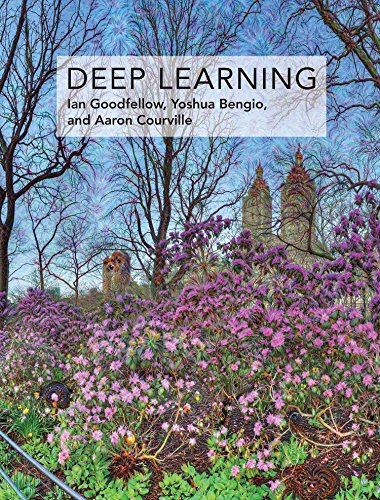
Deep Learning
Ian Goodfellow, Yoshua Bengio, et al.
4.4
An introduction to a broad range of topics in deep learning, covering mathematical and conceptual background, deep learning techniques used in industry, and research perspectives.
Deep learning is a form of machine learning that enables computers to learn from experience and understand the world in terms of a hierarchy of concepts. Because the computer gathers knowledge from experience, there is no need for a human computer operator to formally specify all the knowledge that the computer needs. The hierarchy of concepts allows the computer to learn complicated concepts by building them out of simpler ones; a graph of these hierarchies would be many layers deep. This book introduces a broad range of topics in deep learning.
The text offers mathematical and conceptual background, covering relevant concepts in linear algebra, probability theory and information theory, numerical computation, and machine learning. It describes deep learning techniques used by practitioners in industry, including deep feedforward networks, regularization, optimization algorithms, convolutional networks, sequence modeling, and practical methodology; and it surveys such applications as natural language processing, speech recognition, computer vision, online recommendation systems, bioinformatics, and videogames. Finally, the book offers research perspectives, covering such theoretical topics as linear factor models, autoencoders, representation learning, structured probabilistic models, Monte Carlo methods, the partition function, approximate inference, and deep generative models.
Deep Learning can be used by undergraduate or graduate students planning careers in either industry or research, and by software engineers who want to begin using deep learning in their products or platforms. A website offers supplementary material for both readers and instructors.
Very clear exposition, does the math without getting lost in the details. Although many of the concepts of the introductory first 100 pages can be found elsewhere, they are presented with remarkable cut-to-the-chase clarity. [source]
Elon Musk and Facebook AI chief Yann LeCun have praised this textbook on one of software’s most promising frontiers. After its publication, Microsoft signed up coauthor Bengio, a pioneer in machine learning, as an adviser [source]
Cover unavailable
4
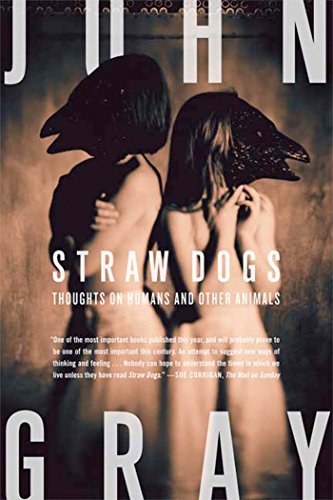
Straw Dogs: Thoughts on Humans and Other Animals
JOHN GRAY
4.0
A radical work of philosophy, which sets out to challenge our most cherished assumptions about what it means to be human. From Plato to Christianity, from the Enlightenment to Nietzsche and Marx, the Western tradition has been based on arrogant and erroneous beliefs about human beings and their place in the world. Philosophies such as liberalism and Marxism think of humankind as a species whose destiny is to transcend natural limits and conquer the Earth. Even in the present day, despite Darwin's discoveries, nearly all schools of thought take as their starting point the belief that humans are radically different from other animals.
@mikeindustries Read this excellent opposing view (of pinker generally and his previous book specifically) by John Gray (english philosopher, author of the fantastic "straw dogs, thoughts on humans and other animals") https://t.co/9TpPeKhyD7 [source]
Mark Lynas
What I like about the book is the anti-humanism. The rejection of this idea we all have, that humanity is at the centre of the cosmos, which is a post-Christian thing. John Gray is an unreconstructed pessimist, particularly on environmental issues. [source]
Cover unavailable
5
Alchemy: The Surprising Power of Ideas That Don't Make Sense
The legendary advertising guru—Ogilvy UK’s vice chairman—and star of three massively popular TED Talks, blends the science of human behavior with his vast experience in the art of persuasion in this incomparable book that decodes successful branding and marketing in the vein of Freakonomics, Thinking Fast and Slow, and The Power of Habit.
When Rory Sutherland was a trainee working on a direct mail campaign at the famed advertising firm OgilvyOne, he noticed that very small changes in design often had immense effects on the number of consumer responses. Yet no one he worked with knew why. Sutherland began taking stock of each effective yet nebulous trick—”the thing which has no name”—he discovered. As he rose in the advertising industry, he began to understand why these things had no name: no one was interested in quantifying them, cataloguing them, or really investigating them. So, he did it himself.
Like classic behavioral economists Daniel Kahneman and Richard Thaler, Sutherland peels away hidden, often irrational human behaviors that explain how the world around us functions. In How to Be an Alchemist he examines why certain ads work and the broader truths they tell us about who we are. Why do people prefer stripy toothpaste, and how might that help us design retirement plans that young people would actually buy? Why do we think orange juice is healthy, and how does the same principle guide our feelings about nuclear reactors? Why do budget airlines advertise services they don’t offer—and what might insurance companies learn from them about keeping healthcare costs low?
Filled with startling and profound conclusions, Sutherland’s journey through the world of advertising and its surprising lessons for human behavior is insightful, brilliant, eye-opening, and irresistibly fun.
4 hours dinner conversation with @rorysutherland and Rohan @Silva in a Pakistani restaurant in London (2 bottles of wine, but no Negroni). You must buy two copies of Rory's book, in case one is stolen, lost, damaged (by the rain), or self-destructs. https://t.co/Xa5WFOGCNt [source]
Geoffrey Miller
Agree. This is a great book by @rorysutherland that will shake up how you think about lots of things. Try it, and you'll realize you're nowhere near as epistemically humble as you should be. https://t.co/8U1iAxji8Z [source]
Graeme Dixon
@rorysutherland your book ”Alchemy: The surprising power of ideas that don't make sense” is superb. Really useful for what we do and why some don't get it. Silly questions are so powerful. Book of the year so far for me. Thank you. https://t.co/BjoGz9C7dt [source]
Cover unavailable
6
Seeking Wisdom: From Darwin To Munger
Peter Bevelin
4.3
Peter Bevelin begins his fascinating book with Confucius' great wisdom: "A man who has committed a mistake and doesn't correct it, is committing another mistake." Seeking Wisdom is the result of Bevelin's learning about attaining wisdom. His quest for wisdom originated partly from making mistakes himself and observing those of others but also from the philosophy of super-investor and Berkshire Hathaway Vice Chairman Charles Munger. A man whose simplicity and clarity of thought was unequal to anything Bevelin had seen.
In addition to naturalist Charles Darwin and Munger, Bevelin cites an encyclopedic range of thinkers: from first-century BCE Roman poet Publius Terentius to Mark Twainfrom Albert Einstein to Richard Feynmanfrom 16th Century French essayist Michel de Montaigne to Berkshire Hathaway Chairman Warren Buffett. In the book, he describes ideas and research findings from many different fields.
This book is for those who love the constant search for knowledge. It is in the spirit of Charles Munger, who says, "All I want to know is where I'm going to die so I'll never go there." There are roads that lead to unhappiness. An understanding of how and why we can "die" should help us avoid them. We can't eliminate mistakes, but we can prevent those that can really hurt us.
Using exemplars of clear thinking and attained wisdom, Bevelin focuses on how our thoughts are influenced, why we make misjudgments and tools to improve our thinking. Bevelin tackles such eternal questions as: Why do we behave like we do? What do we want out of life? What interferes with our goals?
Read and study this wonderful multidisciplinary exploration of wisdom. It may change the way you think and act in business and in life.
A wonderful book on wisdom and decision-making written by a wise decision-maker. This is the kind of book you read first, then leave by your bedside and re-read a bit every day, so you can slowly soak up the wisdom. It is sort of Montaigne but applied to business, with a great investigation of the psychological dimension of decision-making. I like the book for many reasons --the main one is that it was written by a practitioner who knows what he wants, not by an academic. Enjoy it. [source]
A great overview of the lessons of Charlie Munger (partner of Warren Buffett) - and his approach to checklists of multi-disciplinary models to guide clear thinking. [source]
Cover unavailable
7
Free The Animal: Lose Weight & Fat With The Paleo Diet
The Science of Conjecture: Evidence and Probability Before Pascal
James Franklin
4.4
How did we make reliable predictions before Pascal and Fermat's discovery of the mathematics of probability in 1654? What methods in law, science, commerce, philosophy, and logic helped us to get at the truth in cases where certainty was not attainable? In The Science of Conjecture, James Franklin examines how judges, witch inquisitors, and juries evaluated evidence; how scientists weighed reasons for and against scientific theories; and how merchants counted shipwrecks to determine insurance rates.
The Science of Conjecture provides a history of rational methods of dealing with uncertainty and explores the coming to consciousness of the human understanding of risk.
As a practitioner of probability, I've had to read many books on the subject. Most are linear combinations of other books and ideas rehashed without real understanding that the idea of probability harks back to the Greek pisteuo (credibility) and pithanon that led to probabile in latin and pervaded classical thought. Almost all of these writers made the mistake to think that the ancients were not into probability. And most books such as "Against the Gods" are not even wrong about the notion of probability: odds on coin flips are a mere footnote. Same with current experiments with psychology of probability. If the ancients were not into computable probabilities, it was not because of theology, but because they were not into highly standardized games. They dealt with complex decisions, not merely simplified and purified probability. And they were very sophisticated at it. The author is both a mathematician and a philosopher, not a philosopher who took a calculus class hence has a shallow idea of combinatorics and feels dominated by the subject, something that plagues the subject of the philosophy of probability. This book stands above, way above the rest: I've never seen a deeper exposition of the subject, as this text covers, in addition to the mathematical bases, the true philosophical origin of the notion of probability. Finally, Franklin covers matters related to ethics and contract law, such as the works of the medieval thinker Pierre de Jean Olivi, that very few people discuss today. [source]
Cover unavailable
9
Mean Genes: From Sex To Money To Food: Taming Our Primal Instincts
Terry Burnham and Jay Phelan
4.1
Short, sassy, and bold, Mean Genes uses a Darwinian lens to examine the issues that most deeply affect our lives: body image, money, addiction, violence, and the endless search for happiness, love, and fidelity. But Burnham and Phelan don't simply describe the connections between our genes and our behavior; they also outline steps that we can take to tame our primal instincts and so improve the quality of our lives.Why do we want (and do) so many things that are bad for us? We vow to lose those extra five pounds, put more money in the bank, and mend neglected relationships, but our attempts often end in failure. Mean Genes reveals that struggles for self-improvement are, in fact, battles against our own genes--genes that helped our cavewoman and caveman ancestors flourish but that are selfish and out of place in the modern world. Why do we like junk food more than fruit? Why is the road to romance so rocky? Why is happiness so elusive? What drives us into debt? An investigation into the biological nature of temptation and the struggle for control, Mean Genes answers these and other fundamental questions about human nature while giving us an edge to lead more satisfying lives.
I read the book once when it came out. Since then I've had the chance to reread it a few times, discovering more and more layers as my interests take me in new directions(for instance the discussion on the happiness treadmill goes to the core of the current discussions in the economics of happiness). I now carry a copy on my trips as I can kill time in airports by perusing random sections. The book is so readable as to perhaps set a standard. Yet it is complete in the sense that it covers more of the evolutionary thinking than meets the eye. I didn't realize it until I went to the site … and got into the more technical research material. Reread it. [source]
Cover unavailable
10
Bull by the Horns: Fighting to Save Main Street from Wall Street and Wall Street from Itself
Sheila Bair
4.2
Bull By The Horns: Fighting To Save Main Street From Wall Street, by Bair, Sheila
I don't have time for a full review for now; all I have to say is that we have the account of a person who says it the way it was, revealing the types of truths that don't fit the New York Times and others pawns. When history is written, this will be used, not the spin by the bankers' slaves and soldiers (Geithner, Rubin et al.) Bravo Sheila! [source]
Cover unavailable
11
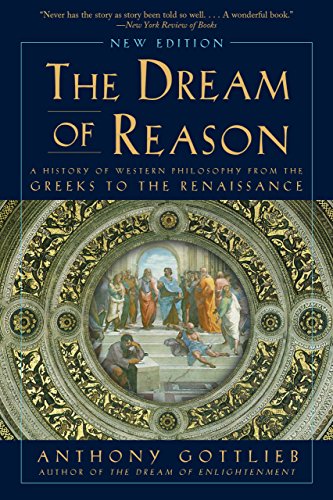
The Dream of Reason: A History of Western Philosophy from the Greeks to the Renaissance
Anthony Gottlieb
4.2
Already a classic, this landmark study of early Western thought now appears in a new edition with expanded coverage of the Middle Ages. This landmark study of Western thought takes a fresh look at the writings of the great thinkers of classic philosophy and questions many pieces of conventional wisdom. The book invites comparison with Bertrand Russell's monumental History of Western Philosophy, "but Gottlieb's book is less idiosyncratic and based on more recent scholarship" (Colin McGinn, Los Angeles Times). A New York Times Notable Book, a Los Angeles Times Best Book, and a Times Literary Supplement Best Book of 2001.
I could not put it down. It hit me at some point that I was at the intersection of readability and scholarship. Clearly the value of this book lies beyond its readability: Gottlieb is both a philosopher and a journalist (in the good sense), not a journalist who writes about philosophy. He investigates and provides a fresh look at the material: For instance what we bemoan as the flaws of Aristotelianism during the scholastic period came 2000 years after his work. Aristotle had an empirical bent --his followers are the ones to blame. I liked his constant questioning of the labels put on philosophers and philosophies by the second hand readers. Clearly he missed a few authors who deserve real coverage like Algazali, but I take what I can get. The only other readable history of philosophy is Russell's. This one was less hurriedly put together. Someone should bug the author to hurry with the sequel on Locke, Hume, etc. [source]
Cover unavailable
12
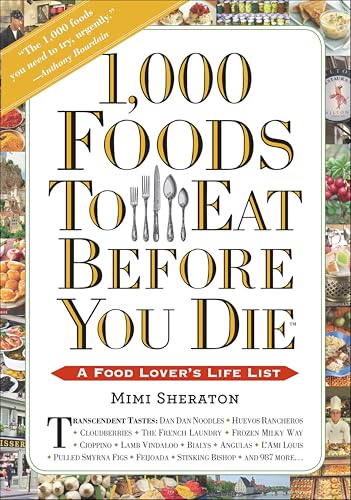
1,000 Foods To Eat Before You Die: A Food Lover's Life List
Mimi Sheraton
4.1
The ultimate gift for the food lover. In the same way that 1,000 Places to See Before You Die reinvented the travel book, 1,000 Foods to Eat Before You Die is a joyous, informative, dazzling, mouthwatering life list of the world’s best food. The long-awaited new book in the phenomenal 1,000 . . . Before You Die series, it’s the marriage of an irresistible subject with the perfect writer, Mimi Sheraton—award-winning cookbook author, grande dame of food journalism, and former restaurant critic for The New York Times.
1,000 Foods fully delivers on the promise of its title, selecting from the best cuisines around the world (French, Italian, Chinese, of course, but also Senegalese, Lebanese, Mongolian, Peruvian, and many more)—the tastes, ingredients, dishes, and restaurants that every reader should experience and dream about, whether it’s dinner at Chicago’s Alinea or the perfect empanada. In more than 1,000 pages and over 550 full-color photographs, it celebrates haute and snack, comforting and exotic, hyper-local and the universally enjoyed: a Tuscan plate of Fritto Misto. Saffron Buns for breakfast in downtown Stockholm. Bird’s Nest Soup. A frozen Milky Way. Black truffles from Le Périgord.
Mimi Sheraton is highly opinionated, and has a gift for supporting her recommendations with smart, sensuous descriptions—you can almost taste what she’s tasted. You’ll want to eat your way through the book (after searching first for what you have already tried, and comparing notes). Then, following the romance, the practical: where to taste the dish or find the ingredient, and where to go for the best recipes, websites included.
If one is to name the single most knowledgeable person about food on planet Earth, it would be Mimi Sheraton. She is also --by far-- the most experienced food critic in an area where experience matters the most, a field in which the expert is the expert. She has an insatiable curiosity, does her homework, visits countries, argues with locals, tries all manner of restaurants, and is never fooled by hot air or pseudosophistication. I have seen it with my own eyes. Over the past 34 years i watched her in action, particularly when after my graduation, I would go order for her in restaurants so the food would get to the table before the waiters recognized her. She did not use her priviledge as a food critic to get the better quality food and service than the rest of the people --a testament of both ethics and curiosity. As I said she is the real thing; this book is the real book. [source]
Cover unavailable
13
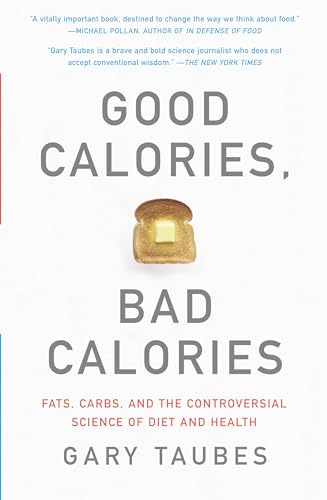
Good Calories, Bad Calories
Gary Taubes
4.3
Challenging the Conventional Wisdom on Diet, Weight, and Disease
In this groundbreaking book, the result of seven years of research in every science connected with the impact of nutrition on health, award-winning science writer Gary Taubes shows us that almost everything we believe about the nature of a healthy diet is wrong.
For decades we have been taught that fat is bad for us, carbohydrates better, and that the key to a healthy weight is eating less and exercising more. Yet with more and more people acting on this advice, we have seen unprecedented epidemics of obesity and diabetes. Taubes argues persuasively that the problem lies in refined carbohydrates (white flour, sugar, easily digested starches) and sugars–via their dramatic and longterm effects on insulin, the hormone that regulates fat accumulation–and that the key to good health is the kind of calories we take in, not the number. There are good calories, and bad ones.
Good Calories These are from foods without easily digestible carbohydrates and sugars. These foods can be eaten without restraint. Meat, fish, fowl, cheese, eggs, butter, and non-starchy vegetables.
Bad Calories These are from foods that stimulate excessive insulin secretion and so make us fat and increase our risk of chronic disease—all refined and easily digestible carbohydrates and sugars. The key is not how much vitamins and minerals they contain, but how quickly they are digested. (So apple juice or even green vegetable juices are not necessarily any healthier than soda.) Bread and other baked goods, potatoes, yams, rice, pasta, cereal grains, corn, sugar (sucrose and high fructose corn syrup), ice cream, candy, soft drinks, fruit juices, bananas and other tropical fruits, and beer.
Taubes traces how the common assumption that carbohydrates are fattening was abandoned in the 1960s when fat and cholesterol were blamed for heart disease and then –wrongly–were seen as the causes of a host of other maladies, including cancer. He shows us how these unproven hypotheses were emphatically embraced by authorities in nutrition, public health, and clinical medicine, in spite of how well-conceived clinical trials have consistently refuted them. He also documents the dietary trials of carbohydrate-restriction, which consistently show that the fewer carbohydrates we consume, the leaner we will be.
With precise references to the most significant existing clinical studies, he convinces us that there is no compelling scientific evidence demonstrating that saturated fat and cholesterol cause heart disease, that salt causes high blood pressure, and that fiber is a necessary part of a healthy diet. Based on the evidence that does exist, he leads us to conclude that the only healthy way to lose weight and remain lean is to eat fewer carbohydrates or to change the type of the carbohydrates we do eat, and, for some of us, perhaps to eat virtually none at all.
The 11 Critical Conclusions of Good Calories, Bad Calories:
1. Dietary fat, whether saturated or not, does not cause heart disease. 2. Carbohydrates do, because of their effect on the hormone insulin. The more easily-digestible and refined the carbohydrates and the more fructose they contain, the greater the effect on our health, weight, and well-being. 3. Sugars—sucrose (table sugar) and high fructose corn syrup specifically—are particularly harmful. The glucose in these sugars raises insulin levels; the fructose they contain overloads the liver. 4. Refined carbohydrates, starches, and sugars are also the most likely dietary causes of cancer, Alzheimer’s Disease, and the other common chronic diseases of modern times. 5. Obesity is a disorder of excess fat accumulation, not overeating and not sedentary behavior. 6. Consuming excess calories does not cause us to grow fatter any more than it causes a child to grow taller. 7. Exercise does not make us lose excess fat; it makes us hungry. 8. We get fat because of an imbalance—a disequilibrium—in the hormonal regulation of fat tissue and fat metabolism. More fat is stored in the fat tissue than is mobilized and used for fuel. We become leaner when the hormonal regulation of the fat tissue reverses this imbalance. 9. Insulin is the primary regulator of fat storage. When insulin levels are elevated, we stockpile calories as fat. When insulin levels fall, we release fat from our fat tissue and burn it for fuel. 10. By stimulating insulin secretion, carbohydrates make us fat and ultimately cause obesity. By driving fat accumulation, carbohydrates also increase hunger and decrease the amount of energy we expend in metabolism and physical activity. 11. The fewer carbohydrates we eat, the leaner we will be.
Good Calories, Bad Calories is a tour de force of scientific investigation–certain to redefine the ongoing debate about the foods we eat and their effects on our health.
Gary Taubes is a true empiricist. I can't believe people hold on to the Platonicity of the thermodynamic theory of diet (calorie in = calorie out). Read it twice, once for the diet, once a a rich document in the history of science. [source]
Zooko Wilcox
When it came out ten years ago, it was the definitive study of the history and science of human nutrition in the 20th century. [source]
Cover unavailable
14
Mapping the Mind
Rita Carter
4.4
Today a brain scan reveals our thoughts, moods, and memories as clearly as an X-ray reveals our bones. We can actually observe a person's brain registering a joke or experiencing a painful memory. Drawing on the latest imaging technology and the expertise of distinguished scientists, Rita Carter explores the geography of the human brain. Her writing is clear, accessible, witty, and the book's 150 illustrations—most in color—present an illustrated guide to that wondrous, coconut-sized, wrinkled gray mass we carry inside our heads.
Mapping the Mind charts the way human behavior and culture have been molded by the landscape of the brain. Carter shows how our personalities reflect the biological mechanisms underlying thought and emotion and how behavioral eccentricities may be traced to abnormalities in an individual brain. Obsessions and compulsions seem to be caused by a stuck neural switch in a region that monitors the environment for danger. Addictions stem from dysfunction in the brain's reward system. Even the sense of religious experience has been linked to activity in a certain brain region. The differences between men and women's brains, the question of a "gay brain," and conditions such as dyslexia, autism, and mania are also explored.
Looking inside the brain, writes Carter, we see that actions follow from our perceptions, which are due to brain activity dictated by a neuronal structure formed from the interplay between our genes and the environment. Without sidestepping the question of free will, Carter suggests that future generations will use our increasing knowledge of the brain to "enhance those mental qualities that give sweetness and meaning to our lives, and to eradicate those that are destructive."
I started my interest in neurobiology in December 1998 after reading a discussion by Rita Carter in the FT showing that rational behavior under uncertainty and rational decision making can come from a defect in the amygdala. Since then I've had five years of reading more technical material (Gazzaniga et al is perhaps the most complete reference on cognitive neuroscience) and thought that I transcended this book. But it was not so. I picked up this book again last weekend and was both astonished at a) the ease of reading , b) the clarity of the text and c) the breadth of the approach! I was looking for a refresher as I am trying to capture a general idea of the functioning of that black box and found exactly what I needed without the excess burden of prominent textbooks. Very pedagogical. I read here and there comments by neuroscientists dissing the book over small details perhaps invisible even to experts. I just realize that Carter should keep updating it, as it is invaluable in my suitcase when I travel! I do not conceal my suspicion of "science writers" and journalists more trained in communicating than understanding and usually shallow babblers but Carter is an exception. Perhaps the science of the mind requires breadth of knowledge that she has. She is a thinker in her own right not just a "medical journalist". [source]
Cover unavailable
15
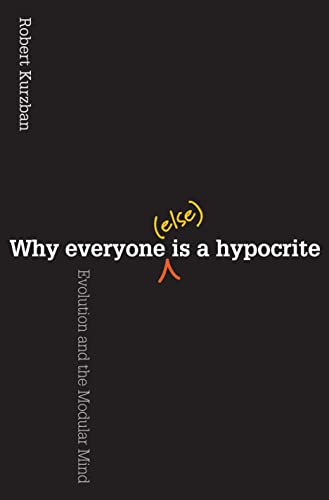
Why Everyone (Else) Is a Hypocrite: Evolution and the Modular Mind
Robert Kurzban
4.1
We're all hypocrites. Why? Hypocrisy is the natural state of the human mind.
Robert Kurzban shows us that the key to understanding our behavioral inconsistencies lies in understanding the mind's design. The human mind consists of many specialized units designed by the process of evolution by natural selection. While these modules sometimes work together seamlessly, they don't always, resulting in impossibly contradictory beliefs, vacillations between patience and impulsiveness, violations of our supposed moral principles, and overinflated views of ourselves.
This modular, evolutionary psychological view of the mind undermines deeply held intuitions about ourselves, as well as a range of scientific theories that require a "self" with consistent beliefs and preferences. Modularity suggests that there is no "I." Instead, each of us is a contentious "we"--a collection of discrete but interacting systems whose constant conflicts shape our interactions with one another and our experience of the world.
In clear language, full of wit and rich in examples, Kurzban explains the roots and implications of our inconsistent minds, and why it is perfectly natural to believe that everyone else is a hypocrite.
Idea Makers: Personal Perspectives on the Lives & Ideas of Some Notable People
Stephen Wolfram
3.9
This book of thoroughly engaging essays from one of today's most prodigious innovators provides a uniquely personal perspective on the lives and achievements of a selection of intriguing figures from the history of science and technology. Weaving together his immersive interest in people and history with insights gathered from his own experiences, Stephen Wolfram gives an ennobling look at some of the individuals whose ideas and creations have helped shape our world today. Contents includes biographical sketches of: Richard Feynman Kurt Godel Alan Turing John von Neumann George Boole Ada Lovelace Gottfried Leibniz Benoit Mandelbrot Steve Jobs Marvin Minsky Russell Towle Bertrand Russell Alfred Whitehead Richard Crandall Srinivasa Ramanujan Solomon Golomb
The general public is usually supplied by books on mathematical scientists written by "science communicators" and other outside observers--the worst by far being the academic historians of science. Their books are like reviews of comparative squid ink recipes written by anorexics, or descriptions of the Loire Valley by visually impaired travel writers. They are well written, which masks the BS. The descriptions focus on "interesting" traits of the personalities; scientists are discussed as if they were partaking of spectator sports. This fellow "was the best...", this fellow "was the first to...", "Einstein made a big blunder", etc. This book, "Idea Makers", is written from an insider. It is the real thing on several accounts. Primo, Wolfram deserves to be in the book as an "idea maker", in his own right. Secondo, Wolfram is the developer of a new way to do (useful) mathematics, an entirely new method, which allows us to tinker with mathematics, something that is an anathema to purists. Thus he depicts Ramanujan, not with the usual mathematical prism of the theorem crowds, but as someone who, starting with intuitions, does experiments till a mathematical identity feels right. As an eyewitness, I spent almost all my career in quant finance and probability toying with Mathematica (Stephen Wolfram's invention), and saw it accumulate special functions and tools. Mathematica allowed me to be a car mechanic who looked under the hood; such experience makes us look at the pompous theoretician as a cook would a nerdy chemist. The book is about this refreshing perspective: theorems were to Ramanujan a thing used by European mathematicians to convince other European mathematicians. Terso, Wolfram is fair. He shows a fair --even adulatory-- portrait of Mandelbrot, in spite of attacks by the latter. Indeed, if Mandelbrot hated someone, the person has to be good and threatening. Otherwise he would not bother mentioning him. Finally, many of the people involved are actually known either personally (Feynman, Mandelbrot, Minsky), or like Boole, Ramanujan, Godel, and Lebnitz, "connect" to the author. [source]
Cover unavailable
17
The Secret of Fatima: A Father Kevin Thrall Thriller
Masterly! This is the page turner par excellence; every new page brings some surprise and it was impossible for me to put the book down. I even read some of it during elevator rides, not being able to resist. And truly sophisticated: Nobody but Peter Tanous would have imagined to cross James Bond with a Catholic priest.” [source]
Cover unavailable
18
The Hour Between Dog and Wolf: Risk Taking, Gut Feelings and the Biology of Boom and Bust
John Coates
4.2
A successful Wall Street trader turned Cambridge neuroscientist reveals the biology of boom and bust and how risk taking transforms our body chemistry, driving us to extremes of euphoria and risky behavior or stress and depression
The laws of financial boom and bust, it turns out, have more than a little to do with male hormones. In a series of groundbreaking experiments, Dr. John Coates identified a feedback loop between testosterone and success that dramatically lowers the fear of risk in men, especially younger men—significantly, the fear of risk is not reduced in women. Similarly, intense failure leads to a rise in levels of cortisol, the antitestosterone hormone that lowers the appetite for risk across an entire spectrum of decisions.
Coates had set out to prove what was already a strong intuition from his previous life: Before he became a world-class neuroscientist, Coates ran a derivatives desk in New York. As a successful trader on Wall Street, "the hour between dog and wolf" was the moment traders transformed-they would become revved up, exuberant risk takers, when flying high, or tentative, risk-averse creatures, when cowering from their losses. Coates understood instinctively that these dispositions were driven by body chemistry-and then he proved it.
The Hour Between Dog and Wolf expands on Coates's own research to offer lessons from the entire exploding new field-the biology of risk. Risk concentrates the mind-and the body-like nothing else, altering our physiology in ways that have profound and lasting effects. What's more, biology shifts investors' risk preferences across the business cycle and can precipitate great change in the marketplace.
Though Coates's research concentrates on traders, his conclusions shed light on all types of high-pressure decision making-from the sports field to the battlefield. The Hour Between Dog and Wolf leaves us with a powerful recognition: To handle risk in a "highly evolved" way isn't a matter of mind over body; it's a matter of mind and body working together. We all have it in us to be transformed from dog into wolf; the only question is whether we can understand the causes and the consequences.
I read this book after completing my exposition of overcompensation, how a stressor or a random event causes an increase in strength, in excess of what is needed, like a redundancy. I was also looking for evidence of convex reaction to stressor, or the effect of a mathematical property called Jensen's inequality in domains and found it exposed here (in other words, why a combination low dose (most of the time) and high dose (rarely) beats medium dose all the time. The authors presents the evidence for the phenomenon in the following: 1) acute stressors cum recovery beat both absence of stressors and chronic ones (this includes thermal variations); 2) stressors make one stronger (post traumatic growth); 3) risk management is mediated by the deep structures in us, not rational decision-making; 4) winning causes an increase in strength (the latter are more complicated effects of convexity/Jensen's Inequality). Great book. I ignored the connection to financial markets while reading it. But I learned that when under stress, one should seek the familiar. Bravo! [source]
Cover unavailable
19
The Doctrine of Deification in the Greek Patristic Tradition
Norman Russell
4.7
Deification in the Greek patristic tradition was the fulfillment of the destiny for which humanity was created - not merely salvation from sin but entry into the fullness of the divine life of the Trinity. This book, the first on the subject for over sixty years, traces the history of deification from its birth as a second-century metaphor with biblical roots to its maturity as a doctrine central to the spiritual life of the Byzantine Church. Drawing attention to the richness and diversity of the patristic approaches from Irenaeus to Maximus the Confessor, Norman Russell offers a full discussion of the background and context of the doctrine, at the same time highlighting its distinctively Christian character.
I initially bought this book as I was curious about the differences between Eastern & Western traditions, particularly with the notion of theosis --the deification of man. This book goes far deeper, and covers pre-Christian practices (like Stoic thoughts, the deifications of Kings, Roman Emperors, that of private citizens who committed symbolic acts --such as Antinous, Hadrian's obsession, who drowned to "save" mankind and other sotirologies). The book was initially Russell's doctoral thesis, which, as far as I can guess from the dates, had to have been completed when he was in late middle age. But he made it very readable, free of the theophilosophical jargon of similar texts. He still has quotes in the original language and it is a true piece of scholarship. [source]
Cover unavailable
20
Consciousness: A Very Short Introduction
Susan Blackmore
4.1
Consciousness, "the last great mystery for science," remains a hot topic. How can a physical brain create our experience of the world? What creates our identity? Do we really have free will? Could consciousness itself be an illusion?
Exciting new developments in brain science are continuing the debates on these issues, and the field has now expanded to include biologists, neuroscientists, psychologists, and philosophers. This controversial book clarifies the potentially confusing arguments, and the major theories, whilst also outlining the amazing pace of discoveries in neuroscience. Covering areas such as the construction of self in the brain, mechanisms of attention, the neural correlates of consciousness, and the physiology of altered states of consciousness, Susan Blackmore highlights our latest findings.
ABOUT THE SERIES: The Very Short Introductions series from Oxford University Press contains hundreds of titles in almost every subject area. These pocket-sized books are the perfect way to get ahead in a new subject quickly. Our expert authors combine facts, analysis, perspective, new ideas, and enthusiasm to make interesting and challenging topics highly readable.
Plato and a Platypus Walk Into a Bar: Understanding Philosophy Through Jokes
Thomas Cathcart, Daniel Klein
4.1
Here's a lively, hilarious, not-so-reverent crash course through the great philosophical traditions, schools, concepts, and thinkers. Its Philosophy 101 for everyone who knows not to take all this heavy stuff too seriously. Some of the Big Ideas are Existentialism (what do Hegel and Bette Midler have in common?), Philosophy of Language (how to express what its like being stranded on a desert island with Halle Berry), Feminist Philosophy (why, in the end, a man is always a man), and much more. Finallyit all makes sense!
I read Plato and the Platypus by Umberto Eco, which I found brilliant and was sucked into buying this book thinking it was about the same problem of categories. But Philosophy this is not, or if it is, it is not deep enough to give satisfaction. This is like a brief drink in an airplane lounge with someone funny, smart, witty, but not too funny. So I would give it my lowest rating: 4 stars (as an author I can't give below that --I just would not review). Would I buy it again? Perhaps, but only for a plane ride. It left me very very hungry for both jokes and philosophy. [source]
About the Book: The Paradox of Choice. In the spirit of Alvin Tofflers Future Shock, a social critique of our obsession with choice, and how it contributes to anxiety, dissatisfaction and regret. Whether we're buying a pair of jeans, ordering a cup of coffee, selecting a long-distance carrier, applying to college, choosing a doctor, or setting up a 401K, everyday decisions have become increasingly complex due to the overwhelming abundance of choice with which we are presented. In The Paradox of Choice, Barry Schwartz explains why too much of a good thing has proven detrimental to our psychological and emotional well-being. In accessible, engaging, and anecdotal prose, Schwartz explains how a culture that thrives on the availability of constantly evolving options can also foster profound dissatisfaction and self-blame in individuals, which can lead to a paralysis in decision making and, in some cases, depression. With the latest studies on how we make choices in our personal and professional lives, Schwartz offers practical advice on how to focus on the right choices, and how to derive greater satisfaction from choices that we do make. About the Author: Barry Schwartz Barry Schwartz is the Dorwin Cartwright Professor of Social Theory and Social Action at Swarthmore College. He is the author of several books, including The Battle for Human Nature: Science, Morality and Modern Life and The Costs of Living: How Market Freedom Erodes the Best Things in Life. His articles have appeared in many of the leading journals in his field, including the American Psychologist. He lives in Philadelphia, PA.
A few months ago, I was drinking a Noah’s Mill whiskey (cute) with my good buddy Brian Balfour and talking about life... During the conversation, we got on the topic of books that changed our lives. I want to share them with you. I judge a book's success if a year later I'm still using at least 1 thing from the book. [source]
Cover unavailable
23
Financial Derivatives: Pricing, Applications, and Mathematics
Jamil Baz, George Chacko
4.2
Combining their corporate and academic experiences, Jamil Baz and George Chacko offer financial analysts a complete, succinct account of the principles of financial derivatives pricing. Readers with a basic knowledge of finance, calculus, probability and statistics will learn about the most powerful tools in applied finance: equity derivatives, interest rate markets, and the mathematics of pricing. Baz and Chacko apply concepts such as volatility and time, and generic pricing to the valuation of conventional and more specialized cases. Other topics include: *Interest rate markets, government and corporate bonds, swaps, caps, and swaptions *Factor models and term structure consistent models *Mathematical allocation decisions such as mean-reverting processes and jump processes *Stochastic calculus and related tools such as Kilmogorov equations, martingales techniques, stocastic control and partial differential equations Meant for financial analysts and graduate students in finance and economics, Financial Derivatives begins with basic economic principles of risk and builds up various pricing and hedging techniques from those principles. Baz and Chacko simplify the mathematical presentation, and balance theory and real analysis, making it a more accessible and practical manual. Jamil Baz holds an M.S. in Management from MIT and a Ph.D. in Business Economics from Harvard University. He is a Managing Director at Deutsche Bank in London. George Chacko has a B.S. from MIT in electrical engineering and a Ph.D. in Business Economics from Harvard University. He is an Associate Professor of Business Administration at Harvard Business School. Both authors have worked extensively for financial services firms in the private sector. They have published in leading academic journals including the Review of Financial Studies and the Journal of Financial Economics as well as practitioner journals such as the Journal of Fixed Income and the Journal of Applied Corporate Finance.
One of the author, Baz, gave me a copy of this book when it came out and it went to sleep in my library as I was not in a finance mood. I forgot about it until this week as I was stuck on a problem related to risk-neutral pricing and the Girsanov theorem concerning changes in probability measure. I looked at every passage on the the subject until I hit on it. Then I realized that I should have read it before: it is a condensed, but extremely deep , and complete exposition of the subject of theoretical finance. No financial book has the clarity of this text. Other quant books do not have such notions as "pricing kernel" and economic theoretical matters. I would recommend it as a necessary piece of the "quant" toolkit. Every quant should have it as a background tool as the usual quant literature is standalone and devoid of these concepts. [source]
Cover unavailable
24
Bull!: A History of the Boom, 1982-1999: What Drove the Breakneck Market--And What Every Investor Needs to Know about Financial Cycles
Maggie Mahar
4.2
In Bull!, Maggie Mahar tells the sweeping tale of the Great Bull Market of 1982-1999, a legendary run-up that pulled the entire nation into its gravitational field.
Mahar lays out the origins of the boom and takes the reader behind the scenes, on Wall Street, on Main Street, and in Washington, letting him see the story through the eyes of the fund managers, market gurus, analysts, politicians, business journalists, and 401(k) investors who, together, helped create the longest-running bull market in U.S. history. Some were touts; others were true believers. On the sidelines, a Greek Chorus of seasoned professionals tried, vainly, to describe the emperor's new clothes.
Filled with colorful portraits of many of the central figures of the boom years -- Alan Greenspan, Henry Blodget, James Cramer, Abby Joseph Cohen -- Bull! draws together a complex cast of characters, illuminating the web of relationships that kept the market aloft.
More than a financial history, Bull! is a lively, often witty social history of the stock market that became a part of popular culture. It is also the tale of individual investors, which chronicles the intimate stories of ordinary people -- housewives and college professors, salesmen and waitresses -- who got caught up in the excitement and then watched their life savings drain away.
How did it happen that the very real risks of investing in stocks were forgotten? Mahar explodes the myth of "stocks for the long run," explaining how the market's promoters crunched the numbers to create the illusion that if an investor stays in the casino just a little longer, he is guaranteed to come out a winner. Casting Warren Buffett in a new light, she explains how a value investor is, in the end, a long-term market timer who understands that success depends on how much you pay when you get into the market -- and when you get out. By putting the bull market of 1982-1999 in a larger historical context, she shows how, over time, longtime bull markets beget longtime bear markets.
The future defies prediction, but the history of financial markets makes one thing clear: markets always revert to a mean. Taken as a single story, Bull! is both an illuminating history and a cautionary tale about investing. Analyzing the economic and psychological forces that drive financial cycles, Mahar shows how an extraordinary influx of cash and credit, combined with the obsessive attention of a new financial media, created a cult of equities. Challenging the notion that stocks always outperform all other investments, she reveals why many of Wall Street's most experienced investors believe that the 21st-century investor needs to throw out the old rule book and make a new beginning as he plans for his financial future.
No investor should keep his or her money in the stock market without first reading this book.
Maggie Mahar had the courage to take a look at what was behind all of this religious belief in markets. Clearly I do not understand how she was able to work as a journalist when she has the attitude and mindset of a truth-seeker. I spent some time looking at the difference between her book and Lowenstein's: not even possible to start comparing. One needs to be a trader to value her work. Read this book now; wait a while then read it again. [source]
Cover unavailable
25
The Tyranny of Experts: Economists, Dictators, and the Forgotten Rights of the Poor
William Easterly
4.2
Over the last century, global poverty has largely been viewed as a technical problem that merely requires the right "expert” solutions. Yet all too often, experts recommend solutions that fix immediate problems without addressing the systemic political factors that created them in the first place. Further, they produce an accidental collusion with "benevolent autocrats,” leaving dictators with yet more power to violate the rights of the poor.
In The Tyranny of Experts, economist William Easterly, bestselling author of The White Man’s Burden, traces the history of the fight against global poverty, showing not only how these tactics have trampled the individual freedom of the world’s poor, but how in doing so have suppressed a vital debate about an alternative approach to solving poverty: freedom. Presenting a wealth of cutting-edge economic research, Easterly argues that only a new model of development—one predicated on respect for the individual rights of people in developing countries, that understands that unchecked state power is the problem and not the solution —will be capable of ending global poverty once and for all.
The fact that top-down development methods are great on paper but have not produced benefits ("so far") is a point Easterly has made before, heavily influencing yours truly in the formation his own argument against naive interventionism and the collection of "humanitarians" fulfilling their personal growth and shielding themselves from their conscience... This is more powerful: the West has been putting development ahead of moral issues, patronizingly setting aside the right of the people to decide their own fate, including whether they want these "improvements", hence compounding failure and turning much of development into an agenda that benefits the careers (and angst) of "humanitarians", imperial policies, and, not least, local autocrats *without* any moral contribution. Talking about a sucker problem. *** To put it in an aphorism, they didn't ask the people if they would rather get respect and no aid rather than aid and no respect. [source]
Cover unavailable
26
The Tartar Steppe
Dino Buzzati, Stuart C. Hood
4.4
Idealistic young officer Giovanni Drogo is full of determination to serve his country well. But when he arrives at a bleak border station in the Tartar desert, where he is to take a short assignment at Fort Bastiani, he finds the castle manned by veteran soldiers who have grown old without seeing a trace of the enemy. As his length of service stretches from months into years, he continues to wait patiently for the enemy to advance across the desert, for one great and glorious battle . . . Written in 1938 as the world waited for war, and internationally acclaimed since its publication, The Tartar Steppe is a provocative and frightening tale of hope, longing and the terrible sorcery of dreams and desires.
This book is all about Italians stationed on a remote Eurasian frontier. Of course they never were, but The Tartar Steppe is a metaphor for devoting your life to a higher good, for wanting to do public service and to make a difference. And you essentially give up everything. The main character, Giovanni Drogo, gives up his fiancée, his mother and his friends to wait for the Tartars who never come. There is this horrible fort where he lives, this daily grind and no sense of normal life. His life is wasted. [source]
Cover unavailable
27
Modelling Extremal Events: for Insurance and Finance (Stochastic Modelling and Applied Probability)
Paul Embrechts, Claudia Klüppelberg, Thomas Mikosch
4.5
Contains graphs and diagrams, used to illustrate shapes of distributions. This book shows real data examples in various ways.
The mathematics of extreme events, or the remote parts of the probability distributions, is a discipline on its own, more important than any other with respect to risk and decisions since some domains are dominated by the extremes: for the class of subexponential (and of course for the subclass of power laws) the tails ARE the story. Now this book is the bible for the field. It has been diligently updated. It is complete, in the sense that there is nothing of relevance that is not mentioned, treated, or referred to in the text. My business is hidden risk which starts where this book stops, and I need the most complete text for that. In spite of the momentous importance of the field, there is a very small number of mathematicians who deal with tail events; of these there is a smaller group who go both inside and outside the "Cramer conditions" (intuitively, thin-tailed or exponential decline). It is also a book that grows on you. I would have given it a 5 stars when I started using it; today I give it 6 stars, and certainly 7 next year. I am buying a second copy for the office. If I had to go on a desert island with 2 probability books, I would take Feller's two volumes (written >40 years ago) and this one. One housecleaning detail: buy the hardcover, not the paperback as the ink quality is weaker for the latter. [source]
I found this copy last week at Waterstone in London . It made me feel the plane ride was very short! I should have bought a couple. This is a great book for a refresher in analytical philosophy: pleasant, clear. Great training for people who tend to forget elementary relationships. I did not know that JAP was a logician. Go buy this book! The only competition is "Think" by Blackburn (rather boring). [source]
Cover unavailable
29
The Statistical Mechanics of Financial Markets (Theoretical and Mathematical Physics)
Johannes Voit
4.2
This highly praised introductory treatment describes the parallels between statistical physics and finance - both those established in the 100-year long interaction between these disciplines, as well as new research results on financial markets. The random-walk technique, well known in physics, is also the basic model in finance, upon which are built, for example, the Black-Scholes theory of option pricing and hedging, plus methods of portfolio optimization. Here the underlying assumptions are assessed critically. Using empirical financial data and analogies to physical models such as fluid flows, turbulence, or superdiffusion, the book develops a more accurate description of financial markets based on random walks. With this approach, novel methods for derivative pricing and risk management can be formulated. Computer simulations of interacting-agent models provide insight into the mechanisms underlying unconventional price dynamics. It is shown that stock exchange crashes can be modelled in ways analogous to phase transitions and earthquakes, and sometimes have even been predicted successfully. This third edition of "The Statistical Mechanics of Financial Markets" especially stands apart from other treatments because it offers new chapters containing a practitioner's treatment of two important current topics in banking: the basic notions and tools of risk management and capital requirements for financial institutions, including an overview of the new Basel II capital framework which may well set the risk management standards in scores of countries for years to come.
Very useful book, particularly in what concerns alternative L-Stable distributions. True, not too versed in financial theory but I'd rather see the author erring on the side of more physics than mathematical economics. As an author I don't ask much from books, just to deliver what they indend. This one does. Clear historical description of Einstein/Bachelier. Hopefully one day we will call derivatives pricing the Bachelier valuation. The book in short provides an excellent perspective on the statistical approach to asset price dynamics. Very clear and to the point. [source]
Cover unavailable
30
A Guide to Econometrics,
Peter Kennedy
4.4
A Guide to Econometrics has established itself as the first-choice text for teachers and students throughout the world. It provides an overview of the subject and an intuitive feel for its concepts and techniques without the notation and technical detail that necessarily characterize an econometrics textbook. The fourth edition updates the contents and references thoughout, while retaining the basic structure and flavor of earlier editions. New material has been added on several topics, such as bootstrapping, count data, duration models, generalized method of moments, instrumental variable estimation, linear structural relations, Monte Carlo studies, neural nets, time series analysis, and VARs. A new appendix and a new type of exercise underline the importance of the sampling distribution concept.
The best intuition builder in both statitics and econometrics. I have been reading the various editions throught my career. Please, keep updating it, Peter Kennedy! [source]
Cover unavailable
31
The Discovery of France: A Historical Geography from the Revolution to the First World War
Graham Robb
4.1
While Gustave Eiffel was changing the skyline of Paris, large parts of France were still terra incognita. Even in the age of railways and newspapers, France was a land of ancient tribal divisions, prehistoric communication networks, and pre-Christian beliefs. French itself was a minority language.Graham Robb describes that unknown world in arresting narrative detail. He recounts the epic journeys of mapmakers, scientists, soldiers, administrators, and intrepid tourists, of itinerant workers, pilgrims, and herdsmen with their millions of migratory domestic animals. We learn how France was explored, charted, and colonized, and how the imperial influence of Paris was gradually extended throughout a kingdom of isolated towns and villages.The Discovery of France explains how the modern nation came to be and how poorly understood that nation still is today. Above all, it shows how much of France—past and present—remains to be discovered.
This book has wonderful qualities that I am certain will be picked up by other reviewers. But I would like to add the following. This is the most profound examination of how nationality is enforced on a group of people, with the internal colonization process and the stamping out of idiosyncratic traits. As someone suspicious of government and state control, I was wondering how France did so well in spite of having a big government. This book gave me the answer: it took a long time for the government and the "nation" to penetrate the depth of deep France, "la France profonde". It was not until recently that French was spoken by the majority of the citizens. Schools taught French but it was just like Greek or Latin: people forgot it right after they finished their (short) school life. For a long time France's villages were unreachable. A great book, a great investigation. [source]
Cover unavailable
32
Statistical Models
David A. Freedman
4.0
This lively and engaging textbook explains the things you have to know in order to read empirical papers in the social and health sciences, as well as the techniques you need to build statistical models of your own. The author, David A. Freedman, explains the basic ideas of association and regression, and takes you through the current models that link these ideas to causality. The focus is on applications of linear models, including generalized least squares and two-stage least squares, with probits and logits for binary variables. The bootstrap is developed as a technique for estimating bias and computing standard errors. Careful attention is paid to the principles of statistical inference. There is background material on study design, bivariate regression, and matrix algebra. To develop technique, there are computer labs with sample computer programs. The book is rich in exercises, most with answers. Target audiences include advanced undergraduates and beginning graduate students in statistics, as well as students and professionals in the social and health sciences. The discussion in the book is organized around published studies, as are many of the exercises. Relevant journal articles are reprinted at the back of the book. Freedman makes a thorough appraisal of the statistical methods in these papers and in a variety of other examples. He illustrates the principles of modeling, and the pitfalls. The discussion shows you how to think about the critical issues including the connection (or lack of it) between the statistical models and the real phenomena. Features of the book: authoritative guidance from a well-known author with wide experience in teaching, research, and consulting careful analysis of statistical issues in substantive applications no-nonsense, direct style versatile structure, enabling the text to be used as a text in a course, or read on its own text that has been thoroughly class-tested at Berkeley background material on regression and matrix algebra plenty of exercises, most with solutions extra material for instructors, including data sets and code for lab projects (available from Cambridge University Press) many new exercises and examples reorganized, restructured, and revised chapters to aid teaching and understanding"
I spent my life focusing on the errors of statistics and how they sometimes fail us in real life, because of the misinterpretation of what the techniques can do for you. This book is outstanding in the following two aspects: 1) It is of immense clarity, embedding everything in real situations, 2) It uses the real-life situation to critique the statistical model and show you the limit of statistic. For instance, he shows a few anecdotes here and there to illustrate how correlation between two variables might not mean anything causal, or how asymptotic properties may not be relevant in real life. This is the first statistics book I've seen that cares about presenting statistics as a tool to GET TO THE TRUTH. Please buy it. [source]
Cover unavailable
33
Thinking and Deciding
Jonathan Baron
4.2
Thinking and Deciding has established itself as a required text and important reference work for students and scholars of human cognition and rationality. In this, the third edition, Jonathan Baron delves further into many of the key questions addressed in the previous editions. Baron has also revised or expanded his treatment of topics such as risk, utilitarianism, Baye's theorem, and moral thinking.
People vote with their wallet --particularly when they do it a second time, when they REpurchase. Those who believe in the "revelation of preferences" should note that there are books one buys again when a copy is lost --particularly when they are read cover to cover. I am buying another copy of this book as mine was lost or misplaced. That should speak volumes. [source]
Cover unavailable
34
The Opposing Shore
Julien Gracq, Richard Howard
3.9
The great maritime state of Orsenna has long been lulled by settled peace and prosperity. It is three hundred years since it was actively at war with its traditional enemy two days' sail across the water, the savage land of Farghestan - a slumbering but by no means extinct volcano. The narrator of this story, Aldo, a world-weary young aristocrat, is posted to the coast of Syrtes, where the Admiralty keeps the seas constantly patrolled to defend the demarcation between the two powers still officially at war. His duties are to be the eyes and ears of the Signory, to report back any rumours of interest to the State. Goaded, however, by his mistress, Vanessa Aldobrandi, he takes a patrol boat across the boundary to within cannon-shot of the Farghestani coastal batteries. The age-old undeclared truce is no more than a boil ripe to be lanced.
Until I read this book, Buzzati's "Il deserto dei tartari" was my favorite novel, perhaps my only novel, the only one I cared to keep re-reading through life. This is, remarkably a very similar story about the antichamber of anticipation (rather than "the antichamber of hope" as I called Buzzati's book), but written in a much finer language, by a real writer (Buzzati was a journalist, which made his prose more functional) ; the style is lapidary with remarkable precision; it has texture, wealth of details, and creates a mesmerizing atmosphere. Once you enter it, you are stuck there. I kept telling myself while reading it: "this is the book". It suddenly replaced the "deserto". A few caveats/comments. First, I read it in the original French Le Rivage des Syrtes (French Edition), not in this English translation, but I doubt that the translator can mess up such a fine style and the imagery. Second, the blurb says Gracq received the Goncourt prize for it. Julien Gracq REFUSED the Goncourt, he despised the Parisian literary circles and by 1951 decided to stay in the margin. He stuck to his publisher José Corti rather than switch to the fancy Gallimard after his success (as Proust did) (or other publishing houses for the fakes and the selfpromoters). Third, this book came out a few years after Buzzati's "deserto", but before Buzzati was translated into French. I wonder if Gracq had heard of the "deserto"; the coincidence is too strong to be ignored. [source]
Cover unavailable
35
Montaigne: Complete Essays
Michel de Montaigne
4.4
Catalog of a private collection of mostly post-archaic Chinese jade carvings, including many very fine animals and human figures.
I’ve given quite a lot of copies of this book to people down the years. [source]
Cover unavailable
36
Confessions of a Philosopher:: A Personal Journey Through Western Philosphy from Plato to Popper
Bryan Magee
4.3
Bryan Magee tells the story of his own discovery of philosophy, and makes it not only come alive but seem intensely relevant. He describes the fundamentals as questions about the nature of reality, encountered in the course of living, not as difficulties in understanding the writings of the philosophers.
This is not a polularization /adult-education style presentation. Magee sees things form the inside; it is his own formation of philosophical ideas & techniques that we witness. Magee was close enough to Popper to present us with his ideas first-hand (nobody reads Popper; people read about him). He also debunks a few idiotic myths about Wittgenstein as an atomist (Magee read W and realized that people read commentary on him rarely the original). Magee writes with the remarkable clarity of the English philosophers/thinkers. [source]

Cover unavailable
37
The (Mis)Behaviour of Markets: A Fractal View of Risk, Ruin and Reward
Benoit Mandelbrot, Richard L. Hudson
4.3
From the world-famous inventor of fractal geometry, a revolutionary new theory that turns on its head our understanding of how markets work. Fractal geometry is the mathematics of roughness: how to reduce the outline of a jagged leaf, a rocky coastline or static in a computer connection to a few simple mathematical properties - to make the complex simple. With his fractal tools, Benoit Mandelbrot has got to the bottom of how financial markets really work. He finds they have a shifting sense of time, a unique dimension and a wild kind of behaviour that makes them volatile, dangerous - and also beautiful. In Mandelbrot's fractal models, the complex gyrations of IBM's stock price, the FTSE 100, cotton trading and exchange rates can be reduced to straightforward formulae that yield a much more accurate description of the risks involved.
What Mandelbrot realised early on, at the start of the 1960s, was that the kind of assumptions about statistics that everyone was making were wrong. [source]
Cover unavailable
38
The Status Syndrome: How Social Standing Affects Our Health and Longevity
Michael Marmot
4.2
Based on decades of his own research, a pioneering epidemiologist reveals the surprising factors behind who lives longer and why
You probably didn't realize that when you graduated from college you increased your lifespan, or that your co-worker who has a master's degree is more likely to live a longer and healthier life. Seemingly small social differences in education, job title, income, even the size of your house or apartment have a profound impact on your health. For years we have focused merely on how advances in technology and genetics can extend our lives and cure disease. But as Sir Michael Marmot argues, we are looking at the issue backwards. Social inequalities are not a footnote to the real causes of ill health in industrialized countries; they are the cause. The psychological experience of inequality, Marmot shows, has a profound effect on our lives. And while this may be alarming, it also suggests a ray of hope. If we can understand these social inequalities, we can also mitigate their effects. In this groundbreaking book, Marmot, an internationally renowned epidemiologist, marshals evidence from around the world and from nearly thirty years of his research to demonstrate that how much control you have over your life and the opportunities you have for full social participation are crucial for health, well-being, and longevity. Just as Bowling Alone changed the way we think about community in America, The Status Syndrome will change the way we think about our society and how we live our lives.
You are a hot shot in a company, though not the boss. You are paid extremely well, but, again you have plenty of bosses above you (say the partners of an investment firm). Is it better than deriving a modest income being your own boss? The counterintuive answer is NO. You will live longer in the second situation, even controlling for diet, lifestyle, and genetic predispositions. Marmot spent years poring over data; he left no stone unturned and is well read in the general literature on human nature. This idea of people living longer when they exert control over their lives has not spread yet. That people lead longer lives when they trust their neighbors and feel part of a community is far reaching. Just think of the implications on social justice etc. Also think that everything you learn on human preferences and well-being in both economics and medicine is either incomplete (medicine) or bogus (economics). The book is well written, humorous at times, and rigorous --it reads like a well-translated scientific paper. But it feels that it is just the introduction to a topic. Please, write the continuation. [source]
Cover unavailable
39
Why Stock Markets Crash: Critical Events in Complex Financial Systems
Didier Sornette
4.0
The scientific study of complex systems has transformed a wide range of disciplines in recent years, enabling researchers in both the natural and social sciences to model and predict phenomena as diverse as earthquakes, global warming, demographic patterns, financial crises, and the failure of materials. In this book, Didier Sornette boldly applies his varied experience in these areas to propose a simple, powerful, and general theory of how, why, and when stock markets crash. Most attempts to explain market failures seek to pinpoint triggering mechanisms that occur hours, days, or weeks before the collapse. Sornette proposes a radically different view: the underlying cause can be sought months and even years before the abrupt, catastrophic event in the build-up of cooperative speculation, which often translates into an accelerating rise of the market price, otherwise known as a "bubble." Anchoring his sophisticated, step-by-step analysis in leading-edge physical and statistical modeling techniques, he unearths remarkable insights and some predictions--among them, that the "end of the growth era" will occur around 2050. Sornette probes major historical precedents, from the decades-long "tulip mania" in the Netherlands that wilted suddenly in 1637 to the South Sea Bubble that ended with the first huge market crash in England in 1720, to the Great Crash of October 1929 and Black Monday in 1987, to cite just a few. He concludes that most explanations other than cooperative self-organization fail to account for the subtle bubbles by which the markets lay the groundwork for catastrophe. Any investor or investment professional who seeks a genuine understanding of looming financial disasters should read this book. Physicists, geologists, biologists, economists, and others will welcome "Why Stock Markets Crash" as a highly original "scientific tale," as Sornette aptly puts it, of the exciting and sometimes fearsome--but no longer quite so unfathomable--world of stock markets.
I think of this book as the gold standard of what ideas from mathematics and physics can do. [source]
Cover unavailable
40
Social Cognition
Ziva Kunda
4.1
Ziva Kunda provides a comprehensive and accessible survey of research and theory about social cognition at a level appropriate for undergraduate and graduate students, as well as researchers in the field.
How do we make sense of other people and of ourselves? What do we know about the people we encounter in our daily lives and about the situations in which we encounter them, and how do we use this knowledge in our attempt to understand, predict, or recall their behavior? Are our social judgments fully determined by our social knowledge, or are they also influenced by our feelings and desires?
Social cognition researchers look at how we make sense of other people and of ourselves. In this book Ziva Kunda provides a comprehensive and accessible survey of research and theory about social cognition at a level appropriate for undergraduate and graduate students, as well as researchers in the field.
The first part of the book reviews basic processes in social cognition, including the representation of social concepts, rules of inference, memory, "hot" cognition driven by motivation or affect, and automatic processing. The second part reviews three basic topics in social cognition: group stereotypes, knowledge of other individuals, and the self. A final chapter revisits many of these issues from a cross-cultural perspective.
The Kelly Capital Growth Investment Criterion: Theory and Practice
Leonard C. MacLean, Edward O. Thorp, et al.
4.0
This volume provides the definitive treatment of fortune's formula or the Kelly capital growth criterion as it is often called. The strategy is to maximize long run wealth of the investor by maximizing the period by period expected utility of wealth with a logarithmic utility function. Mathematical theorems show that only the log utility function maximizes asymptotic long run wealth and minimizes the expected time to arbitrary large goals. In general, the strategy is risky in the short term but as the number of bets increase, the Kelly bettor's wealth tends to be much larger than those with essentially different strategies. So most of the time, the Kelly bettor will have much more wealth than these other bettors but the Kelly strategy can lead to considerable losses a small percent of the time. There are ways to reduce this risk at the cost of lower expected final wealth using fractional Kelly strategies that blend the Kelly suggested wager with cash. The various classic reprinted papers and the new ones written specifically for this volume cover various aspects of the theory and practice of dynamic investing. Good and bad properties are discussed, as are fixed-mix and volatility induced growth strategies. The relationships with utility theory and the use of these ideas by great investors are featured.Contents: "The Early Ideas and Contributions: "Introduction to the Early Ideas and ContributionsExposition of a New Theory on the Measurement of Risk (translated by Louise Sommer) "(D Bernoulli)"A New Interpretation of Information Rate "(J R Kelly, Jr)"Criteria for Choice among Risky Ventures "(H A Latané)"Optimal Gambling Systems for Favorable Games "(L Breiman)"Optimal Gambling Systems for Favorable Games "(E O Thorp)"Portfolio Choice and the Kelly Criterion "(E O Thorp)"Optimal Investment and Consumption Strategies under Risk for a Class of Utility Functions "(N H Hakansson)"On Optimal Myopic Portfolio Policies, with and without Serial Correlation of Yields "(N H Hakansson)"Evidence on the “Growth-Optimum-Model” "(R Roll)""Classic Papers and Theories: "Introduction to the Classic Papers and TheoriesCompetitive Optimality of Logarithmic Investment "(R M Bell and T M Cover)"A Bound on the Financial Value of Information "(A R Barron and T M Cover)"Asymptotic Optimality and Asymptotic Equipartition Properties of Log-Optimum Investment "(P H Algoet and T M Cover)"Universal Portfolios "(T M Cover)"The Cost of Achieving the Best Portfolio in Hindsight "(E Ordentlich and T M Cover)"Optimal Strategies for Repeated Games "(M Finkelstein and R Whitley)"The Effect of Errors in Means, Variances and Co-Variances on Optimal Portfolio Choice "(V K Chopra and W T Ziemba)"Time to Wealth Goals in Capital Accumulation "(L C MacLean, W T Ziemba, and Y Li)"Survival and Evolutionary Stability of Rule the Kelly "(I V Evstigneev, T Hens, and K R Schenk-Hoppé)"Application of the Kelly Criterion to Ornstein-Uhlenbeck Processes "(Y Lv and B K Meister)""The Relationship of Kelly Optimization to Asset Allocation: "Introduction to the Relationship of Kelly Optimization to Asset AllocationSurvival and Growth with a Liability: Optimal Portfolio Strategies in Continuous Time "(S Browne)"Growth versus Security in Dynamic Investment Analysis "(L C MacLean, W T Ziemba, and G Blazenko)"Capital Growth with Security "(L C MacLean, R Sanegre, Y Zhao, and W T Ziemba)"
There are two methods to consider in a risky strategy. 1) The first is to know all parameters about the future and engage in optimized portfolio construction, a lunacy unless one has a god-like knowledge of the future. Let us call it Markowitz-style. In order to implement a full Markowitz- style optimization, one needs to know the entire joint probability distribution of all assets for the entire future, plus the exact utility function for wealth at all future times. And without errors! (I have shown that estimation errors make the system explode.) 2) Kelly's method (or, rather, Kelly-Thorpe), developed around the same period, which requires no joint distribution or utility function. It is very robust. In practice one needs to estimate the ratio of expected profit to worst- case return-- dynamically adjusted to avoid ruin. In the case of barbell transformations, the worst case is guaranteed (leave 80% or so of your money in reserves). And model error is much, much milder under Kelly criterion. So, assuming one has the edge (as a sole central piece of information), engage in a dynamic strategy of variable betting, getting more conservative after losses ("cut your losses") and more aggressive "with the house's money". The entire focus is the avoidance of gambler's ruin. The first strategy was only embraced by academic financial economists --empty suits without skin in the game -- because you can make an academic career writing BS papers with method 1 much better than with method 2. On the other hand EVERY SURVIVING speculator uses explicitly or implicitly method 2 (evidence: Ray Dalio, Paul Tudor Jones, Renaissance, even Goldman Sachs!) For the first method, think of LTCM and the banking failure. Let me repeat. Method 2 is much, much, much more scientific in the true sense of the word, that is rigorous and applicable. Method 1 is good for "job market papers" . Now this book presents all the major papers for the second line of thinking. It is almost exhaustive; many great thinkers in Information theory and probability (Ed Thorpe, Leo Breiman, T M Cover, Bill Ziemba) are represented... even the original paper by Bernouilli. Buy 2 copies, just in case you lose one. This book has more meat than any other book in decision theory, economics, finance, etc... [source]
Cover unavailable
42
Theoreme Vivant
Cédric Villani, Malcolm DeBevoise
4.0
In 2010, French mathematician Cédric Villani received the Fields Medal, the most coveted prize in mathematics, in recognition of a proof which he devised with his close collaborator Clément Mouhot to explain one of the most surprising theories in classical physics. Birth of aTheorem is Villani’s own account of the years leading up to the award. It invites readers inside the mind of a great mathematician as he wrestles with the most important work of his career.But you don’t have to understand nonlinear Landau damping to love Birth of aTheorem. It doesn’t simplify or overexplain; rather, it invites readers into collaboration. Villani’s diaries, emails, and musings enmesh you in the process of discovery. You join him in unproductive lulls and late-night breakthroughs. You’re privy to the dining-hall conversations at the world’s greatest research institutions. Villani shares his favorite songs, his love of manga, and the imaginative stories he tells his children. In mathematics, as in any creative work, it is the thinker’s whole life that propels discovery—and with Birth of aTheorem, Cédric Villani welcomes you into his.
This book takes us through the formulation of the theorems in "On Landau damping" by Clément Mouhot and Cédric Villani. Villani is playful in real life, his research is playful, and the book is playful. This is a gem for a singular reason. One sees exactly how Villani (or a pure mathematician) goes from abstract to abstract without ever exiting the world of pure and symbolic mathematics, even though the subject concerns a very concrete real-world topic. I kept waiting for him to use simulations or even plots to see how the equations worked. But he did not ... he and Mouhot had recourse to outside help (a student or an assistant) for the graphs and he camly noted that they "looked" great. Later in the book he relied on others to do the numerical work... as an afterthought. Most physicists, quants, and applied mathematicians would have played with a computer to get the intuition; Villani just worked with mathematical objects, abstract mathematical objects, and very abstract at that. And this is a big deal for the subject because it belongs to a certain class of problems that do not have analytic solutions, usually requiring numerical approaches. Landau damping is about something many people are indirectly familiar with. Some history: Fokker–Planck equation, itself the Kolmogorov forward equation, is used commonly as the law of motion of particles (hence diffusions in finance). We quants use it in the main partial stochastic differential equation. In plasma physics it is related to the Boltzman equation, which, by using mean-interraction in place of every interration (mean-field), leads to the Vlasov equation. Landau damping is (sort of) about how things don't blow up because of some exponential decay. Proving it outside the linear version remained elusive. Villani and Mouhot set to prove it. They eventually do. One note. I read it in the English translation (because I was in a hurry to get the book), but noticed an oddity that may confuse the reader. "Calcul" in French does not mean "calculation" (in the sense of numerical calculation) but "derivation", so the reader might be confused about calculations thinking they were numerical when Villani stayed at the abstract/symbolic level. I would have read the book in one sitting. It grips you like a detective novel. PS- Some UK BS operator, the type of journalist with an attempt at some PhD in something related to physics who thinks he knows it all and is the representative of the general public trashed the book in the Spectator. Ignore him: the fellow is clueless. Look at reviews by PRACTICING quants and mathematicians. I do not think there is another book like this one. [source]
Cover unavailable
43
The Wisdom Paradox: How Your Mind Can Grow Stronger As Your Brain Grows Older
If you like the thinker's prose, the so-called "romantic science",a style attributed to the Russian neuroscientist A. R. Luria,which consists in publishing original research in literary form, you would love this book. Clearly intellectual scientists are vanishing under the weight of the commoditization of the discipline. But once in a while someone emerges to reverse such setbacks. Goldberg, who was the great Luria's student and collaborator, is even more colorful and fun to read than the master. He is egocentric, abrasive, opinionated, and colorful. He is also disdainful of the conventional beliefs in neurosciences --for instance he is suspicious of the assignment of specific functions, such as language, to anatomical regions. He is also skeptical of the journalistic "triune" brain. His theory is that the hemispheric specialization is principally along pattern matching and information processing lines:the left side stores patterns, while the right one processes novel tasks. It is convincing to see that children suffer more from a right brain injury, while adults have the opposite effect. There is a little bit of open plugging of Goldberg's for-profit institute;he would have gotten better results by being subtle. A fre minor points. I did not understand why Goldberg discusses "modularity", of which he is critical, as if it were the same thing in both neurobiology and in cognitive science. In neurobiology, modularity implies regional localization, while cognitive scientists (Marr, Fodor, etc.) make no such assumption: for them it is entirely functional and they would be in great agreement with Goldberg. Also I did not understand why he attributes the language instinct to Pinker, not Chomsky, and why he makes snide remarks about behavioral scientists like Kahneman and Tversky. But these are very minor details that do not weaken the message (I still gave the book 5 stars). I am now spoiled; I need more essays by opinionated, original,and intellectual, contemporary scientists. [source]
Cover unavailable
44
A Few Lessons from Sherlock Holmes
Peter Bevelin
3.6
A Few Lessons from Sherlock Holmes is a book for those who want to improve their thinking. It is a practical and enjoyable book that tells in a short-easy-to-read way about what we all can learn from Sherlock Holmes. Peter Bevelin has distilled Arthur Conan Doyle's Sherlock Holmes into bite-sized principles and key quotes. This book will appeal to both Sherlock fans as well as those who want to think better. It contains useful and timeless methods and questions applicable to a variety of important issues in life and business. We could all benefit from 'A few lessons from Sherlock Holmes'.
We Sherlock Holmes fans, readers, and secret imitators need a map. Here it is. Peter Bevelin is one of the wisest people on the planet. He went through the books and pulled out sections from Conan Doyle's stories that are relevant to us moderns, a guide to both wisdom and Sherlock Holmes. It makes you both wiser and eager to reread Sherlock Holmes. [source]
Cover unavailable
45
Kant and the Platypus: Essays
Umberto Eco and Alastair McEwen
3.8
How do we know that a cat is a cat? Why do we agree on calling the beast a cat? Interesting questions, but an even more intriguing question lies at the heart of all modern philosophy-how much of our perception of things depends on our cognitive ability and how much on linguistic resources? At this point semiotics becomes inextricably linked to epistemology, or cognition. In these essays, Umberto Eco explores in depth such subjects as perception, the relationship between language and experience, and iconism that he only touched on in A Theory of Semiotics. Forgoing a formal, systematic treatment, Eco engages in a series of explorations based on common sense, from which flow an abundance of illustrative fables, often with animals as protagonists. Among the characters, a position of prominence is reserved for the platypus, which appears to have been created specifically to "put the cat among the pigeons" as far as many theories of knowledge are concerned. In Kant and the Platypus, Eco shares with us a wealth of ideas at once philosophical and amusing.
I read the review of Simon Blackburn trashing the book: Eco made a few mistakes concerning the two dogmas of empiricism (he confused Davidson's work with Quine's first dogma). So I am sure many readers hesitated after a review by such a rigorous big gun thinker as Blackburn. When I started reading the book I was taken aback by the combination of depth and the vividness of the style. Eco is sprightly and alive, something that cannot be said of many philosophers dealing with the subject of categories. The notion of categories is not trivial: you need a simple conditional prior to identify an object; it is a simple mathematical fact. You need to know what a table is to see it in the background separated from its surroundings. You need to know what a face is so when it rotates you know it is still the same face. Computers have had a hard time with such pattern recognition. A PRIOR category is a necessity. This was Kant's intuition (the so-called "rationalism"). This is also the field of semiotics as initially conceived. Eco took it to greater levels with his notion of what I would call in scientific language a compression, a "simplifation". This leads to the major problem we face today: what if the act of compressing is arbitrary? Not just very deep but it is a breath of fresh air to see such a philosophical discussion nondull, nondry, alive! [source]
Cover unavailable
46
Elements of Information Theory
Thomas M. Cover and Joy A. Thomas
4.2
The latest edition of this classic is updated with new problem sets and material
The Second Edition of this fundamental textbook maintains the book's tradition of clear, thought-provoking instruction. Readers are provided once again with an instructive mix of mathematics, physics, statistics, and information theory.
All the essential topics in information theory are covered in detail, including entropy, data compression, channel capacity, rate distortion, network information theory, and hypothesis testing. The authors provide readers with a solid understanding of the underlying theory and applications. Problem sets and a telegraphic summary at the end of each chapter further assist readers. The historical notes that follow each chapter recap the main points.
The Second Edition features: • Chapters reorganized to improve teaching • 200 new problems • New material on source coding, portfolio theory, and feedback capacity • Updated references
Now current and enhanced, the Second Edition of Elements of Information Theory remains the ideal textbook for upper-level undergraduate and graduate courses in electrical engineering, statistics, and telecommunications.
Folks frequently ask “What are the books that changed your life?” If I tell them, they are usually radically disappointed. I find that curious. I just cleared out of an office, and these are 4 shelves of spines of books that mattered enough to me to bring home. So here they are. [source]
Cover unavailable
47
Critical Phenomena In Natural Sciences: Chaos, Fractals, Selforganization And Disorder: Concepts And Tools (Springer Series In Synergetics)
Didier Sornette
4.6
Concepts, methods and techniques of statistical physics have become valuable tools in understanding and modeling the large variability and risks of phenomena. This is the first book written by a well-known expert that provides a modern up-to-date introduction for readers outside statistical physics. It puts emphasis on a clear understanding of concepts and methods and provides the tools that can be of immediate use in applications. The material will be of great interest for researchers and engineers as well as for post-docs in geophysics and meteorology.
This volume presents topics in probability theory covered during a first-year graduate course given at the Courant Institute of Mathematical Sciences, USA. The necessary background material in measure theory is developed, including the standard topics, such as extension theorem, construction of measures, integration, product spaces, Radon-Nikodym theorem, and conditional expectation.
I know which books I value when I end up buying a second copy after losing the first one. This book gives a complete overview of the basis of probability theory with some grounding in measure theory, and presents the main proofs. It is remarkable because of its concision and completeness: visibly prof Varadhan lectured from these notes and kept improving on them until we got this gem. There is not a single sentence too many, yet nothing is missing. For those who don't know who he is, Varadhan stands as one of the greatest probabilists of all time. Learning probability from him is like learning from Aristotle. Varadhan has two other similar volumes one covering stochastic processes the other into the theory of large deviations (though older than this current text). The book on Stochastic Processes should be paired with this one. [source]
Cover unavailable
49
Invariances: The Structure of the Objective World
Robert Nozick
4.1
Contemporary scientific advances have placed many traditional philosophical concepts under great stress. In this book, the philosopher Robert Nozick rethinks and transforms the concepts of truth, objectivity, necessity, contingency, consciousness, and ethics. Using an original method, he presents philosophical theories that take account of scientific advances in physics, evolutionary biology, economics, and cognitive neuroscience, and casts current cultural controversies (such as whether all truth is relative and whether ethics is objective) in a wholly new light. Throughout, the book is open to, and engages in, the exploration of alternative philosophical possibilities.
Philosophy has been under severe challenge from science, literally eating up its provinces: philosophy of mind went to neuroscience; philosophy of language to Artificial Intelligence and Computer Science,etc. This book shows that there is a need for someone to just specialize in the TRUTH, its scructure, its accessibility, its INVARIANCE. Aside from the purely philosophical answers that scientists were grappling with, the book is like a manual for a new regimen in philosophy. It reviews everything from epistemology to the logic of contingency, with insights here and there about such topics as the observer biases (about computing probabilities when our existence has been linked to a particular realization of the process). I am not a philosopher but a probabilist; I found that this book just spoke to me. It certainly rid me of my prejudice against modern philosophers. [source]
Cover unavailable
50
Explaining Social Behavior
Jon Elster
4.1
In this new edition of his critically acclaimed book, Jon Elster examines the nature of social behavior, proposing choice as the central concept of the social sciences. Extensively revised throughout, the book offers an overview of key explanatory mechanisms, drawing on many case studies and experiments to explore the nature of explanation in the social sciences; an analysis of the mental states - beliefs, desires, and emotions - that are precursors to action; a systematic comparison of rational-choice models of behavior with alternative accounts, and a review of mechanisms of social interaction ranging from strategic behavior to collective decision making. A wholly new chapter includes an exploration of classical moralists and Proust in charting mental mechanisms operating 'behind the back' of the agent, and a new conclusion points to the pitfalls and fallacies in current ways of doing social science, proposing guidelines for more modest and more robust procedures.
I read this book twice. The first time, I thought that it was excellent, the best compendium of ideas of social science by arguably the best thinker in the field. I took copious notes, etc. I agreed with its patchwork-style approach to rational decision making. I knew that it had huge insights applicable to my refusal of general theories they don't work, rather limit ourselves to nuts and bolts they work. Then I started reading it again, as the book tends to locate itself by my bedside and sneaks itself in my suitcase when I go on a trip. It is as if the book wanted me to read it. It is what literature does to you when it is at its best. So I realized why: it had another layer of depth --and the author distilled ideas from the works of Proust, La Rochefoucault, Tocqueville, Montaigne, people with the kind of insights that extend beyond the ideas, and that makes you feel that a reductionist academic treatment of the subject will necessary distort it & somehow Elster managed to combine Montaigne and Kahneman-Tversky. So as an anti-Platonist I finally found a rigorous treatment of human nature that is not Platonistic --not academic (in the bad sense of the word). [source]
Cover unavailable
51
Happy Accidents: Serendipity in Modern Medical Breakthroughs
Controlled experiment can easily show absence of design in medical research: you compare the results of top-down directed research to randomly generated discoveries. Well, the U.S. government provides us with the perfect experiment for that: the National Cancer Institute that came out of the Nixon "war on cancer" in the early 1970s. "Despite the Herculean effort and enormous expense, only a few drugs for the treatment of cancer were found through NCI's centrally directed, targeted program. Over a twenty-year period of screening more than 144,000 plant extracts, representing about 15,000 species, not a single plant-based anticancer drug reached approved status. This failure stands in stark contrast to the discovery in the late 1950s of a major group of plant-derived cancer drugs, the Vinca Alcaloids -a discovery that came about by chance, not through directed research." From Happy Accidents: Serendipity in Modern Medical Breakthroughs, by Morton Meyers, a book that just came out. It is a MUST read. Please go buy it. Read it twice, not once. Although the author does not take my drastic "stochastic tinkering" approach, he provides all kind of empirical evidence for the role of design. He does not directly discuss the narrative fallacy(q.v.) and the retrospective distortion (q.v.) but he certainly allows us to rewrite the history of medicine. We did not realize that cures for cancer had been coming from other brands of research. You search for noncancer drugs and find something you were not looking for (and vice versa). But the interesting constant: a- The discoverer is almost always treated like an idiot by his colleagues. Meyers describes the vicious side effect of "peer reviewing". b- Often people see the result but cannot connect the dots (researchers are autistic in their own way). c- The members of the guild gives the researcher a hard time for not coming from their union. Pasteur was a chemist not a doctor/biologist. The establishment kept asking him "where is your M.D., monsieur". Luckily Pasteur had too much confidence to be deterred. d- Many of the results are initially discovered by an academic researchers who neglects the consequences because it is not his job --he has a script to follow. Or he cannot connect the dots because he is a nerd. Meyers uses Darwin as the ultimate model: the independent gentleman scholar who does not need anyone and can follow a lead when he sees it. e- It seems to me that discoverers are nonnerds. Now it is depressing to see the works of the late Roy Porter, a man with remarkable curiosity and a refined intellect, who wrote many charming books on the history of medicine. Does the narrative fallacy cancels everything he did? I hope not. We urgently need to rewrite the history of medicine without the ex post explanations. Meyers started the process: he provides data for modern medicine since, say, Pasteur. I am more interested in the genesis of the field before the Galenic nerdification. [source]
Cover unavailable
52
Pagans and Christians
Robin Lane Fox
4.0
Fox recreates the period from the 2nd to the 4th century, when the Olympians lost their dominion & Christianity, with Constantine's conversion, triumphed in the Mediterranean world. List of Maps Preface Pagans & Christians Pagans & their cities Pagan cults Seeing the gods Language of the gods The spread of Christianity Living like angels Visions & prophecy Persecution & martyrdom Bishops & authority Sinners & saints Constantine & the church From pagan to Christian Notes Index
We tend not to think of Christianity as being an expression of Roman civilisation but in so many ways it is, even though it radically transformed the empire. Robin Lane Fox’s book is the best modern account that I can think of which will give people the sense of how this remarkable revolution took place. [source]
Cover unavailable
53
No Bull: My Life in and Out of Markets
Michael Steinhardt
3.8
When the official history of twentieth-century Wall Street is written, it will certainly contain more than a few pages on Michael Steinhardt. One of the most successful money managers in the history of "The Street," Steinhardt far outshone his peers by achieving an average annual return of over thirty percent-significantly greater than that of every market benchmark. During his almost thirty-year tenure as a hedge fund manager, he amassed vast wealth for his investors and himself. One dollar invested with Steinhardt Partners L.P., his flagship hedge fund, at its inception in 1967 would have been worth $462 when he retired from active money management in 1995. No Bull offers an account of some of the investment strategies that drove Michael Steinhardt's historic success as a hedge fund manager including a focus on his skills as an industry analyst and consummate stock picker. He also reveals how his uncanny talent for knowing when to trade against the prevailing market trend-a talent that was not always appreciated by several erstwhile high-profile clients-resulted in many of his greatest successes. Here he provides detailed accounts of some of his most sensational coups-including his momentous decision, in 1981, to stake everything on bonds-and his equally sensational failures, such as his disastrous foray into global macro-trading in the mid-1990s.
At the same time, No Bull is the rags-to-riches story of a boy from Bensonhurst and his rise from the streets of Brooklyn to the heights of Wall Street. In a thoroughly engaging narrative, Steinhardt relates the early influences that shaped his attitudes toward life and success, as well as the beginning of his love affair with stock investing. Further, he chronicles his dawning awareness of the need for a purpose in life beyond the acquisition of wealth and how it led to his decision to retire and redirect his energies. We learn about his experiences as the chairman of the Democratic Leadership Council for nearly a decade, as well as his innovative thinking and ambitious projects to strengthen the Jewish community.
The inspiring true story of a Wall Street genius and world-class philanthropist, No Bull is an unforgettable read for finance professionals and students of human nature alike. Michael Steinhardt is one of the most successful money managers in the history of Wall Street. He is also widely known for his philanthropic activities, particularly in the Jewish community-most notably as cofounder with Charles Bronfman of birthright israel, a program whose mission is to provide a free educational opportunity for every young Jewish person of the Diaspora to visit Israel.
As a speculator I learned to take the best from books and ideas without arguments (many readers seem to be training to be shallow critics)--good insights are hard to come by. One does not find these in the writings of a journalist. There are some things personal to the author that might be uninteresting to some, but I take the package. The man is one of the greatest traders in history. There are a few jewels in there. The man did it. I'd rather listen to him than read better written but hollow prose from some journalist-writer. [source]
Cover unavailable
54
The Blank Swan: The End of Probability
Elie Ayache
3.2
"Elie Ayache is the only person to present arguments about The Black Swan and rare events that I had not thought about. He does what philosophical inquiry has always done: to go the extra mile and look at the world in a deeply philosophical way." Nassim Nicholas Taleb, PhD, author of The Black Swan, Distinguished Professor, New York University Polytechnic Institute & Principal, Universa Investments.
"Elie Ayache has uniquely straddled the down-to-earth world of money and complex financial derivatives and the abstract world of the mind and philosophy. Insightful and insane in equal measures, this book is not an easy read. I wouldn't recommend this for holiday reading on the beach but perhaps for while sitting in front of a log fire with a large Scotch, or probably several. Paul Wilmott, author of Frequently Asked Questions in Quantitative Finance
October 19th 1987 was a day of huge change for the global finance industry. On this day the stock market crashed, the Nobel Prize winning Black-Scholes formula failed and volatility smiles were born, and on this day Elie Ayache began his career, on the trading floor of the French Futures and Options Exchange.
Experts everywhere sought to find a model for this event, and ways to simulate it in order to avoid a recurrence in the future, but the one thing that struck Elie that day was the belief that what actually happened on 19th October 1987 is simply non reproducible outside 19th October 1987 - you cannot reduce it to a chain of causes and effects, or even to a random generator, that can then be reproduced or represented in a theoretical framework.
The Blank Swan is Elie's highly original treatise on the financial markets - presenting a totally revolutionary rethinking of derivative pricing and technology. It is not a diatribe against Nassim Taleb's The Black Swan, but criticises the whole background or framework of predictable and unpredictable events - white and black swans alike -, i.e. the very category of prediction.
In this revolutionary book, Elie redefines the components of the technology needed to price and trade derivatives. Most importantly, and drawing on a long tradition of philosophy of the event from Henri Bergson to Gilles Deleuze, to Alain Badiou, and on a recent brand of philosophy of contingency, embodied by the speculative materialism of Quentin Meillassoux, Elie redefines the market itself against the common perceptions of orthodox financial theory, general equilibrium theory and the sociology of finance.
This book will change the way that we think about derivatives and approach the market. If anything, derivatives should be renamed contingent claims, where contingency is now absolute and no longer derivative, and the market is just its medium. The book also establishes the missing link between quantitative modelling (no longer dependent on probability theory but on a novel brand of mathematics which Elie calls the mathematics of price) and the reality of the market."
I am relieved to finally find a book that deals with Black Swan Events in a new way. Ayache brings a reverse-probabilistic perspective: instead of considering that a price is the result of probabilistically derived expectation, he reverses the issues and investigates these artificial constructs as "probabilities" and "expectations" as secondary, derived, fictitious concepts that we bring about to explain prices, decisions, and other things. This, of course, is just the beginning, so one has to be understanding about the speculative aspect of the effort --so view this as a gutsy look at the "end of probability" and how we will need to envision the world once we get rid of this artificial, antiquated tool. I am also glad to see that those of us trained in the trading of options can have views original enough to influence the philosophy of probability and the philosophical understanding of contingency. [source]
Cover unavailable
55
The New Financial Order: Risk in the 21st Century
Robert J. Shiller
4.0
In his best-selling "Irrational Exuberance," Robert Shiller cautioned that society's obsession with the stock market was fueling the volatility that has since made a roller coaster of the financial system. Less noted was Shiller's admonition that our infatuation with the stock market distracts us from more durable economic prospects. These lie in the hidden potential of real assets, such as income from our livelihoods and homes. But these ''ordinary riches, '' so fundamental to our well-being, are increasingly exposed to the pervasive risks of a rapidly changing global economy. This compelling and important new book presents a fresh vision for hedging risk and securing our economic future. Shiller describes six fundamental ideas for using modern information technology and advanced financial theory to temper basic risks that have been ignored by risk management institutions--risks to the value of our jobs and our homes, to the vitality of our communities, and to the very stability of national economies. Informed by a comprehensive risk information database, this new financial order would include global markets for trading risks and exploiting myriad new financial opportunities, from inequality insurance to intergenerational social security. Just as developments in insuring risks to life, health, and catastrophe have given us a quality of life unimaginable a century ago, so Shiller's plan for securing crucial assets promises to substantially enrich our condition. Once again providing an enormous service, Shiller gives us a powerful means to convert our ordinary riches into a level of economic security, equity, and growth never before seen. And once again, what Robert Shiller says should be read and heeded by anyone with a stake in the economy.
In this pioneering work Jacques Le Goff examines both the creation of the medieval universities in the great cities of the European High Middle Ages, and the linked origins of the intellectuals – the first Europeans since the Classic Age to owe their livelihoods to their teaching and accumulation of knowledge. The author′s argument is that the intellectuals, Abelard most typically, were a new category of person (neither monk nor knight) with a new method (scholastic dialectic) and a new objective (knowledge for its own sake). For the first time in Spain, France, England and Germany the luxury of thinking and learning ceased to be the limited preserve of the higher echelons of the Church and the Court. The effect, the author shows, was to bring about an irreversible shift in European culture. This intellectual history of medieval Europe (translated from the revised French edition of 1984) will be widely welcomed by students and scholars of the Middle Ages throughout the English–speaking world.
Excellent, be it only for the presentation of the difference between the pompous scholastic thinker laboring in the academy and the other nonacademic humanist laboring in the the "luxe calme et volupte" of his study. Another of the attributes is the readability of the work Le Goff is a gifted writer. [source]
Cover unavailable
57
The Sunday Philosophy Club
Alexander McCall Smith
3.5
Introducing Isabel Dalhousie.
The Sunday Philosophy Club marks new territory - but from familiar moral ground - from the author of The No. 1 Ladies' Detective Agency. With Isabel Dalhousie, Alexander McCall Smith introduces a new and waspish female sleuth to tackle murder, mayhem - and the mysteries of life.
If your interests are limited to mystery books, nothing else, this book is not for you. I initially bought this book because of the title, thinking that we would have a female version of Her Professor Dr Dr (Hon.) Moritz-Maria von Igenfeld, the Pninish uberscholar philologist who wrote the seminal Portugese Irregular Verbs ("after which there was nothing left to discuss about the subject, Nothing."). I was curious to see how he would present a female version of such scholar. He did not. Nor was it a detective story, although there is an element of suspense. This book is about Applied Ethics, a subject about which the author seems to know a bit. It also makes you feel like leading a quite thinking life in Edinburgh. I don't want to spoil the story but I felt that I was reading a detective story until I realized what it was... [source]
Cover unavailable
58
Probability, Random Variables, and Stochastic Processes
How Nature Works: The Science of Self-Organized Criticality
Per Bak
4.2
and acknowledgments Self-organized criticality is a new way of viewing nature. The basic picture is one where nature is perpetually out of balance, but organized in a poised state-the critical state-where anything can happen within well-defined statistical laws. The aim of the science of self-organized criticality is to yield insight into the fundamental question of why nature is complex, not simple, as the laws of physics imply. Self-organized criticality explains some ubiquitous patterns existing in nature that we view as complex. Fractal structure and catastrophic events are among those regularities. Applications range from the study of pulsars and black holes to earthquakes and the evolution of life. One intriguing conse- quence of the theory is that catastrophes can occur for no reason whatsoever. Mass extinctions may take place without any external triggering mechanism such as a volcanic eruption or a meteorite hitting the earth (although the the- ory of course cannot rule out that this has in fact occurred). xu How Nature Works Since we first proposed the idea in 1987, more than 2, ooo papers have been written on self-organized criticality, making ours the most cited paper in physics during that period. How Nature Works is the first book to deal with the subject. The basic idea is simple, and most of the mathematical models that have been used in the implementation of the theory are not complicated.
This book is a great attempt at finding some universality based on systems in a "critical" state, with departures from such state taking place in a manner that follows power laws. The sandpile is a great baby model for that. Some people are critical of Bak's approach, some even suggesting that we may not get power laws in these "sandpile" effects, but something less scalable in the tails. The point is :so what? The man has vision. I looked at the reviews of this book. Clearly a few narrow-minded scientists do not seem to like it (many did not like Per Bak's ego). But the book is remarkably intuitive and the presentation is so clear that he takes you by the hand. It is even entertaining. If you are looking to find flaws in his argument his pedagogy allows it (it is immediately obvious to us who dabble with simulations of these processes that you need an infinite sandpile to get a pure power law). Another problem. I have been ordering the book on Amazon for ages. Copernicus books does not respond to emails. I got my copy at the NYU library. Bak passed away 2 years ago and nobody seems to be pushing for his interest and that of us his readers (for used books to sell for 99 implies some demand). This convinces me NEVER to publish with Springer. [source]
Cover unavailable
60
Models.Behaving.Badly.: Why Confusing Illusion with Reality Can Lead to Disaster, on Wall Street and in Life
Emanuel Derman
3.7
Emanuel Derman was a quantitative analyst (Quant) at Goldman Sachs, one of the financial engineers whose mathematical models usurped traders' intuition on Wall Street. The reliance traders put on such quantitative analysis was catastrophic for the economy, setting off the series of financial crises that began to erupt in 2007 with the mortgage crisis and from which we're still recovering. Here Derman looks at why people--bankers in particular--still put so much faith in these models, and why it's a terrible mistake to do so.
Though financial models imitate the style of physics by using the language of mathematics, ultimately they deal with human beings. Their similarity confuses the fundamental difference between the aims and possible achievements of the phsyics world and that of the financial world. When we make a model involving human beings, we are trying to force the ugly stepsister's foot into Cinderella's pretty glass slipper. It doesn't fit without cutting off some of the essential parts. Physicists and economists have been too enthusiastic to recognize the limits of their equations in the sphere of human behavior--which of course is what economics is all about.
Models.Behaving.Badly. includes a personal account Derman's childhood encounter with failed models--the utopia of the kibbutz, his experience as a physicist on Wall Street, and a look at the models quants generated: the benefits they brought and the problems they caused. Derman takes a close look at what a model is, and then he highlights the differences between the success of modeling in physics and its relative failure in economics. Describing the collapse of the subprime mortgage CDO market in 2007, Derman urges us to stop relying on these models where possible, and offers suggestions for mending these models where they might still do some good. This is a fascinating, lyrical, and very human look behind the curtain at the intersection between mathematics and human nature.
Here is what I wrote in my endorsement: Emanuel Derman has written my kind of a book, an elegant combination of memoir, confession, and essay on ethics, philosophy of science and professional practice. He convincingly establishes the difference between model and theory and shows why attempts to model financial markets can never be genuinely scientific. It vindicates those of us who hold that financial modeling is neither practical nor scientific. Exceedingly readable. From the remarks here, people seem to be blaming Derman for not having written the type of books they usually read... They are blaming him for being original! This is very philistinic. This book is a personal essay; if you don't like it, don't read it, there is no need to blame the author for not delivering your regular science reporting. Why don't you go blame Montaigne for discussing his personal habits in the middle of a meditation on war inspired by Plutarch? [source]
Cover unavailable
61
Information: The New Language of Science
Hans Christian von Baeyer
4.2
Confronting us at every turn, flowing from every imaginable source, information defines our era--and yet what we don't know about it could--and does--fill a book. In this indispensable volume, a primer for the information age, Hans Christian von Baeyer presents a clear description of what information is, how concepts of its measurement, meaning, and transmission evolved, and what its ever-expanding presence portends for the future.
Information is poised to replace matter as the primary stuff of the universe, von Baeyer suggests; it will provide a new basic framework for describing and predicting reality in the twenty-first century. Despite its revolutionary premise, von Baeyer's book is written simply in a straightforward fashion, offering a wonderfully accessible introduction to classical and quantum information. Enlivened with anecdotes from the lives of philosophers, mathematicians, and scientists who have contributed significantly to the field, Information conducts readers from questions of subjectivity inherent in classical information to the blurring of distinctions between computers and what they measure or store in our quantum age. A great advance in our efforts to define and describe the nature of information, the book also marks an important step forward in our ability to exploit information--and, ultimately, to transform the nature of our relationship with the physical universe.
If you want an introduction to information theory, and, in a way, probability theory from the real front door, this is it. A clearly written book, very intuititive, explains things, such as the Monty Hall problem in a few lines. I will make it a prerequite before more technical great books, such as Cover and Thompson. [source]
Cover unavailable
62
The Mind Doesn't Work That Way: The Scope and Limits of Computational Psychology
Jerry A. Fodor
3.8
In this engaging book, Jerry Fodor argues against the widely held view that mental processes are largely computations, that the architecture of cognition is massively modular, and that the explanation of our innate mental structure is basically Darwinian. Although Fodor has praised the computational theory of mind as the best theory of cognition that we have got, he considers it to be only a fragment of the truth. In fact, he claims, cognitive scientists do not really know much yet about how the mind works (the book's title refers to Steve Pinker's How the Mind Works).
Fodor's primary aim is to explore the relationship among computational and modular theories of mind, nativism, and evolutionary psychology. Along the way, he explains how Chomsky's version of nativism differs from that of the widely received New Synthesis approach. He concludes that although we have no grounds to suppose that most of the mind is modular, we have no idea how nonmodular cognition could work. Thus, according to Fodor, cognitive science has hardly gotten started.
This critique of the computational theory of mind and the pan-adaptionist tradition is clearly so honest that it goes after the ideas promoted by Fodor's own 1983 watershed book "The Modularity of Mind". In brief the essay is an attack on massive modularity by saying that there are things after all that escape the programming (encapsulation and opacity are key: how can we talk about something OPAQUE? We know nothing about a few critical things...). Granted the book is horribly written (that is Fodor's charm after all) but his argumentation is so ferocious that he ends up loud & clear. The man is critical of his own ideas, and of the current in thought that he he helped create --one may use Fodor-1 against Fodor-2. Perhaps persons I hold in highest respect are those who go after their own ideas! Bravo Fodor. Even if I do not agree I can't help admiring the man. [source]
Cover unavailable
63
A History of the Mind
Nicholas Humphrey
4.0
How does the water of the brain yield the wine of conscious experience? What's the link between bodily activity & our inner feeling of what it’s like to be ourselves? The problem of qualia—the so-called 'hard problem' of consciousness—has intrigued philosophers for generations & remains the greatest challenge to contemporary science. This path-breaking book examines the issues in the light of evolutionary history & proposes a solution different from any previously offered. He suggests that instead of focusing on 2nd-order mental faculties, or 'thoughts about thoughts', we need to look at the raw sensations themselves which are central to all conscious states. He takes the reader on an exhilarating journey thru little-known areas of biology, psychology & philosophy, to discover the origins of all forms of self-awareness in the primitive pain/pleasure responses of our distant ancestors. Packed with psychological information & ingenious speculation, A History of the Mind not only recasts the debate about the nature of conscious experience but provides fascinating insights into many other topics along the way. Already a classic, this book is as informatively entertaining as it's profound.--Back cover (edited)
Part memoir, part study, The Making of a Philosopher is the self–portrait of a deeply intelligent mind as it develops over a life on both sides of the Atlantic.
The Making of a Philosopher follows Colin McGinn from his early years in England reading Descartes and Anselm, to his years in the states, first in Los Angeles, then New York. McGinn presents a contemporary academic take on the great philosophical figures of the twentieth century, including Bertrand Russell, Jean–Paul Sartre, and Noam Chomsky, alongside stories of the teachers who informed his ideas and often became friends and mentors, especially the colorful A.J. Ayer at Oxford. McGinn's prose is always elegant and probing; students of contemporary philosophy and the general reader alike will absorb every page.
This is a great book but I felt something cold inside of me while reading it. I don't know if it is cultural (the modern English philosopher's fear of displaying passion) but I had the feeling to talk to a plumber who developed expertise in abstract concepts and their relationships just as if they were small plumbing problems fitting together under a generalized plumbing theory. Perhaps philosophy needs to be treated like that, just like engineering --but not for me. At least I give myself the illusion of doing something more...literary. Colin McGINN teaches us that we need nevertheless to master the art of clarity of both thought and exposition. He write with perfect clarity: a clear, unburdened, unaffected, UnFrench UnGerman philosophical prose. The book has a presentation of the Kripke idea of naming as necessity of such clarity that I felt actually smart reading it. Other than that there is the feeling of drabness in part of the book of the type I got once at a conference in an industrial city West of London. [source]
Cover unavailable
65
Body by Science: A Research-Based Program for Strength Training, Body Building, and Complete Fitness in 12 Minutes a Week
John Little
4.3
Building muscle has never been faster or easier than with this revolutionary once-a-week training program
In Body By Science, bodybuilding powerhouse John Little teams up with fitness medicine expert Dr. Doug McGuff to present a scientifically proven formula for maximizing muscle development in just 12 minutes a week. Backed by rigorous research, the authors prescribe a weekly high-intensity program for increasing strength, revving metabolism, and building muscle for a total fitness experience.
I feel guilty for not having posted a review earlier: I owe a lot to this book. I figured out the value of intensity training and maximizing recovery. I use the ideas but with minor modifications (my own personal workout is entirely based on free weights and barbells, but I incur --and accept --a risk of injury). I have been applying the ideas for more than three years. Just get over the inhibitions (and illusions of control) and accept the idea of training less. Gratitude. [source]
Rob Leathern
@MikeIsaac Get this book. 12 mins a week... love it; it’s not the end-all but I’ve found these approaches better than regular gym https://t.co/s8KRF8luKs [source]
Cover unavailable
66
Ficciones
Jorge Luis Borges, John Sturrock
4.4
Jorge Luis Borges was one of those very rare creators who changed the face of an art form—in his case, the short story. His work has been paid the ultimate honor of being appropriated and imitated by innumerable writers on every continent of the world. The seventeen brief masterpieces of FICCIONES explode the boundaries of genre, offering up labyrinthine libraries, a fictional encyclopedia entry that spawns an entire world, a review of a nonexistent writer’s attempt to re-create Don Quixote word for word, a man with the disabling inability to forget anything he has ever experienced, and other metaphysical puzzles. But the true measure of Borges’s greatness lies in the fact that his fictions—elaborately paradoxical, postmodern, and intellectually delicious as they are—managed to return the short story to the realm of the fabulous and the uncanny from which, as parable and fairy tale, it originally came.
This is something very hard to find, almost by definition: a literary writer who thinks in abstract terms (the only other such author I've read is Stanislaw Lem). These are philosophical thought experiments in their purest form, yet somehow magically delivered in a playful literary athmosphere. Borges is a mathematical philosopher, first and last. Ignore the "Latin American" categorization and the nonsense about his background and personal life: one should resist embedding him in a socio-cultural framework; he is as universal as they come. It is good to read a short story once in a while to see how literature and philosophy can be saved by the parable. [source]
Kate Marvel
I don’t think there will ever be a better writer on uncertainty and science than Borges [source]
There is a transnational quality to Borges’s writing. [source]
Cover unavailable
67
The Formula: The Universal Laws of Success
Albert-László Barabási
4.3
In this pioneering examination of the scientific principles behind success, a leading researcher reveals the surprising ways in which we can turn achievement into success.
Too often, accomplishment does not equate to success. We did the work but didn't get the promotion; we played hard but weren't recognized; we had the idea but didn't get the credit. We've always been told that talent and a strong work ethic are the key to getting ahead, but in today's world these efforts rarely translate into tangible results. Recognizing this disconnect, Laszlo Barabasi, one of the world's leading experts on the science of networks, uncovers what success really is: a collective phenomenon based on the thoughts and praise of those around you.
In The Formula, Barabasi highlights the vital importance of community respect and appreciation when connecting performance to recognition--the elusive link between performance and success. By leveraging the power of big data and historic case studies, Barabasi reveals the unspoken rules behind who truly gets ahead and why, and outlines the twelve laws that govern this phenomenon and how we can use them to our own advantage.
Unveiling the scientific principles that drive success, this trailblazing book offers a new understanding of the very foundation of how people excel in today's society.
This is not just an important but an imperative project: to approach the problem of randomness and success using the state of the art scientific arsenal we have. Barabasi is the person. [source]
Vinod Khosla
Co-Founder/Sun Microsystem
This book transforms how our success-obsessed society approaches their professional careers and long-term goals. [source]
Cover unavailable
68
Consciousness: An Introduction
Susan Blackmore
4.2
Is there a theory that explains the essence of consciousness? Or is consciousness itself just an illusion? The "last great mystery of science," consciousness was excluded from serious research for most of the last century but is now a rapidly expanding area of study for students of psychology, philosophy, and neuroscience. Recently the topic has also captured growing popular interest. This groundbreaking book is the first volume to bring together all the major theories of consciousness studies--from those rooted in traditional Western philosophy to those coming out of neuroscience, quantum theory, and Eastern philosophy. Broadly interdisciplinary, Consciousness: AnIntroduction is divided into nine sections that examine such topics as how subjective experiences arise from objective brain processes, the basic neuroscience and neuropathology of consciousness, altered states of consciousness, mystical experiences and dreams, and the effects of drugs and meditation. It also discusses the nature of self, the possibility of artificial consciousness in robots, and the question of whether or not animals are conscious. Enhanced by numerous illustrations and profiles of important researchers, the book also includes self-assessment questions, further reading suggestions, and practical exercises that help bring the subject to life.
I am glad to find a complete book dealing with all aspects of consciousness in CLEARLY written format, with graphs and tables to facilitate comprehension. The book covers everything I had seen before from Artificial Intelligence to Philosophy to Neurology to Evolutionary Biology. Say one wants to get an idea of Dan Dennett's theory of consciousness (without having to get through Dennett's circuitous, unfocused and evasive prose) or Searle's Chinese room argument or Turing's test or Chalmer's position or Churchland's neurophilosophy or a presentation of research on the neural correlates of consciousness...Everything I could think about is there. [source]
Cover unavailable
69
Probability, Random Variables and Stochastic Processes with Errata Sheet
Athanasios Papoulis, S. Unnikrishna Pillai
4.1
Intended for a senior/graduate level course in probability, this title is useful for students in electrical engineering, math, and physics departments. It aims to develop the subject of probability theory and stochastic processes as a deductive discipline and to illustrate the theory with basic applications of engineering interest.
When readers and students ask to me for a useable book for nonmathematicians to get into probability (or a probabilistic approach to statistics), before embarking into deeper problems, I suggest this book by the Late A. Papoulis. I even recommend it to mathematicians as their training often tends to make them spend too much time on limit theorems and very little on the actual "plumbing". The treatment has no measure theory, cuts to the chase, and can be used as a desk reference. If you want measure theory, go spend some time reading Billingsley. A deep understanding of measure theory is not necessary for scientific and engineering applications; it is not necessary for those who do not want to work on theorems and technical proofs. I've notice a few complaints in the comments section by people who felt frustrated by the treatment: do not pay attention to them. Ignore them. It the subject itself that is difficult, not this book. The book, in fact, is admirable and comprehensive given the current state of the art. I am using this book as a benchmark while writing my own, but more advanced, textbook (on errors in use of statistical models). Anything derived and presented in Papoulis, I can skip. And when students ask me what they need as pre-requisite to attend my class or read my book, my answer is: Papoulis if you are a scientist, Varadhan if you are more abstract. [source]
Cover unavailable
70
Modern Aramaic Assyrinan/Syriac: Swadaya-english / Turyo-english / English-swadaya-turoy: Dicitonary and Phrasebook
There is no way we Levantines can learn the language of our ancestors in an organic way except via nerds insisting on 1) grammar, 2) writing in one of the unwieldy Syriac scripts that one cannot even read on a computer screen without dowloading strange fonts. But Aramaic is still spoken, let us take advantage of it, and figure out how to say "I want to eat mjaddara" rather than memorize poetry by some dead author. Aramaic isn't a dead language and it is the shame Levantines study Arabic instead of our own heritage. This book in the Latin alphabet makes both Swadaya and Turoyo alive and easy to read, with all manner of real-world expressions. One can use it to supplement scholarly studies, or just to figure out how modern people speak our ancient language. There are Arabic influences, but the distance between the spoken language and, say, Bar Hebraeus is quite narrow. I would suggest the authors expand the dictionary. It would be the only one in the latin script. Most excellent, except for very few and small mistakes. "Debo" in Turoyo is not wolf, but bear. [source]
Cover unavailable
71
Perilous Interventions: The Security Council and the Politics of Chaos
Hardeep Singh Puri
4.4
It was an exclusive lunch at a high-end Manhattan restaurant on 7 March 2011. UN Secretary-General Ban Ki-moon and his A-team were present. It soon became clear that the main item on the menu was Libya, where it was alleged that the forces of Muammar Gaddafi were advancing on the rebel stronghold of Benghazi to crush all opposition. Over an $80 per head lunch, a small group of the world's most important diplomats from countries represented on the Security Council discussed the possibility of the use of force. As things turned out, the Council's authorization came only ten days later, and all hell broke loose. Hardeep Singh Puri, India's envoy to the UN at the time, now reveals the Council's whimsical decision making and the ill-thought-out itch to intervene on the part of some of its permanent members. Perilous Interventions shows how some recent instances of the use of force - not just in Libya but also in Syria, Yemen and Crimea, as well as India's misadventure in Sri Lanka in the 1980s - have gone disastrously wrong.
This is an outstanding book on the side effects of interventionism, written in extremely elegant prose and with maximal clarity. It documents how people find arguments couched in moralistic terms to intervene in complex systems they don't understand. These interventions trigger endless chains of unintended consequences --consequences for the victims, but none for the interventionistas, allowing them to repeat the mistake again and again. Puri, as an insider, outlines the principles and legal mechanisms, then runs through the events of the past few years since the Iraq invasion; each one of his chapters are models of concision, presenting the story of Ukraine, Syria, Lybia, and Yemen, among others, as standalone briefings to the uninitiated. It was high time that somebody in international affairs has approached the problem of "iatrogenics", i.e. harm done by the healer. This book should be mandatory reading to every student and practitioner of foreign affairs. [source]
Cover unavailable
72
Rational Decisions
Ken Binmore
3.8
It is widely held that Bayesian decision theory is the final word on how a rational person should make decisions. However, Leonard Savage--the inventor of Bayesian decision theory--argued that it would be ridiculous to use his theory outside the kind of small world in which it is always possible to "look before you leap." If taken seriously, this view makes Bayesian decision theory inappropriate for the large worlds of scientific discovery and macroeconomic enterprise. When is it correct to use Bayesian decision theory--and when does it need to be modified? Using a minimum of mathematics, Rational Decisions clearly explains the foundations of Bayesian decision theory and shows why Savage restricted the theory's application to small worlds.
The book is a wide-ranging exploration of standard theories of choice and belief under risk and uncertainty. Ken Binmore discusses the various philosophical attitudes related to the nature of probability and offers resolutions to paradoxes believed to hinder further progress. In arguing that the Bayesian approach to knowledge is inadequate in a large world, Binmore proposes an extension to Bayesian decision theory--allowing the idea of a mixed strategy in game theory to be expanded to a larger set of what Binmore refers to as "muddled" strategies.
Written by one of the world's leading game theorists, Rational Decisions is the touchstone for anyone needing a concise, accessible, and expert view on Bayesian decision making.
This is a must read as it presents a comprehensive set of the principles and axioms behind neo-classical economics. Binmore is a mathematician, hence everything is mapped properly, clearly, and thoroughly. I spent several days in a seminar with Binmore and was surprised to discover, from his arguments, that much of the criticism against the foundations of decision theory are strawman. For the theory doesn't say what people think it says. It may have some problems (such as knowledge of probability and understanding of future payoffs) but not the problems discussed in the behavioral and heterodox literature that appear to be violated by people in their experiments. Binmore writes the following gem: "Nor does the theory Revealed Preferences insist that people are selfish, as its critics mischievously maintain. It has no difficulty in modeling the kind of saintly folk who would sell the shirt off their back rather than see a baby cry". Binmore doesn't say it explicitly, but hints that even the highly influential critiques of Amartya Sen in "Rational Fools" and elsewhere appear to be a bit strawmannish. The book is short and dense enough to be a reference. [source]
Cover unavailable
73
The Elements of Statistical Learning: Data Mining, Inference, and Prediction
Trevor Hastie, Robert Tibshirani, Jerome Friedman
4.5
During the past decade there has been an explosion in computation and information technology. With it have come vast amounts of data in a variety of fields such as medicine, biology, finance, and marketing. The challenge of understanding these data has led to the development of new tools in the field of statistics, and spawned new areas such as data mining, machine learning, and bioinformatics. Many of these tools have common underpinnings but are often expressed with different terminology. This book describes the important ideas in these areas in a common conceptual framework. While the approach is statistical, the emphasis is on concepts rather than mathematics. Many examples are given, with a liberal use of color graphics. It is a valuable resource for statisticians and anyone interested in data mining in science or industry. The book's coverage is broad, from supervised learning (prediction) to unsupervised learning. The many topics include neural networks, support vector machines, classification trees and boosting---the first comprehensive treatment of this topic in any book.
This major new edition features many topics not covered in the original, including graphical models, random forests, ensemble methods, least angle regression & path algorithms for the lasso, non-negative matrix factorization, and spectral clustering. There is also a chapter on methods for ``wide'' data (p bigger than n), including multiple testing and false discovery rates.
Trevor Hastie, Robert Tibshirani, and Jerome Friedman are professors of statistics at Stanford University. They are prominent researchers in this area: Hastie and Tibshirani developed generalized additive models and wrote a popular book of that title. Hastie co-developed much of the statistical modeling software and environment in R/S-PLUS and invented principal curves and surfaces. Tibshirani proposed the lasso and is co-author of the very successful An Introduction to the Bootstrap. Friedman is the co-inventor of many data-mining tools including CART, MARS, projection pursuit and gradient boosting.
Very comprehensive, sufficiently technical to get most of the plumbing behind machine learning. Very useful as a reference book (actually, there is no other complete reference book). The authors are the real thing (Tibshirani is the one behind the LASSO regularization technique). Uses some mathematical statistics without the burdens of measure theory and avoids the obvious but complicated proofs. I own two copies of this edition, one for the office, one for my house, and the authors generously provide the PDF for travelers like me. [source]
Cover unavailable
74
Who We Are and How We Got Here: Ancient DNA and the New Science of the Human Past
David Reich
4.3
A groundbreaking book about how technological advances in genomics and the extraction of ancient DNA have profoundly changed our understanding of human prehistory while resolving many long-standing controversies.
Massive technological innovations now allow scientists to extract and analyze ancient DNA as never before, and it has become clear--in part from David Reich's own contributions to the field--that genomics is as important a means of understanding the human past as archeology, linguistics, and the written word. Now, in The New Science of the Human Past, Reich describes with unprecedented clarity just how the human genome provides not only all the information that a fertilized human egg needs to develop but also contains within it the history of our species. He delineates how the Genomic Revolution and ancient DNA are transforming our understanding of our own lineage as modern humans; how genomics deconstructs the idea that there are no biologically meaningful differences among human populations (though without adherence to pernicious racist hierarchies); and how DNA studies reveal the deep history of human inequality--among different populations, between the sexes, and among individuals within a population.
I will write a longer review, but this is a monument, not just a book. And the beginning of a new cultural program. On a scale of 0 to 100, paternity tests count as 99.99 and written/oral history should count for .01. Apply that to populations. That’s plain statistics/probability. We are seeing science in action: information theory displaces BS, the handwaving just so stories we got from historians. [source]