We've ranked the best psychology books using expert recommendations, sales data, and millions of reader ratings. At Shortform, we know books. Our book guides are the best in the world. Learn why.
Man's Search for Meaning has riveted generations of readers with its descriptions of life in Nazi death camps and its lessons for spiritual survival. Between 1942 and 1945 psychiatrist Viktor Frankl labored in four different camps, including Auschwitz, while his parents, brother, and pregnant wife perished. Based on his own experience and the stories of his many patients, Frankl argues that we cannot avoid suffering but we can choose how to cope with it, find meaning in it, and move forward with renewed purpose. Frankl's theory—known as logotherapy, from the Greek word logos ("meaning")—holds that our primary drive in life is not pleasure, as Freud maintained, but the discovery and pursuit of what we personally find meaningful. In the decades since its first publication in 1959, Man's Search for Meaning has become a classic, with more than twelve million copies in print around the world. A 1991 Library of Congress survey that asked readers to name a "book that made a difference in your life" found Man's Search for Meaning among the ten most influential books in America. At once a memoir, a meditation, a treatise, and a history, it continues to inspire us all to find significance in the very act of living. (back cover)
…
Recommended by Tony Robbins, Dustin Moskovitz, Ev Williams, and 60 others.
Another book that I’ve read dozens of times. It taught me that if you change the meaning, you change everything. Meaning equals emotion, and emotion equals life. [source]
Dustin Moskovitz
Co-founder/Facebook and Asana
Dustin Moskovitz recommended this book on Twitter. [source]
I read it while spending ten days in the ICU of Bellevue hospital trying to reattach my finger from a ring avulsion accident in my kitchen. It talks about the meaning of life, and I believe you come out a better person from reading it. [source]
Major New York Times bestseller Winner of the National Academy of Sciences Best Book Award in 2012 Selected by the New York Times Book Review as one of the best books of 2011 A Globe and Mail Best Books of the Year 2011 Title One of The Economist's 2011 Books of the Year One of The Wall Street Journal's Best Nonfiction Books of the Year 2011 2013 Presidential Medal of Freedom Recipient
In the international bestseller, Thinking, Fast and Slow, Daniel Kahneman, the renowned psychologist and winner of the Nobel Prize in Economics, takes us on a groundbreaking tour of the mind and explains the two systems that drive the way we think. System 1 is fast, intuitive, and emotional; System 2 is slower, more deliberative, and more logical. The impact of overconfidence on corporate strategies, the difficulties of predicting what will make us happy in the future, the profound effect of cognitive biases on everything from playing the stock market to planning our next vacation—each of these can be understood only by knowing how the two systems shape our judgments and decisions. Engaging the reader in a lively conversation about how we think, Kahneman reveals where we can and cannot trust our intuitions and how we can tap into the benefits of slow thinking. He offers practical and enlightening insights into how choices are made in both our business and our personal lives—and how we can use different techniques to guard against the mental glitches that often get us into trouble. Winner of the National Academy of Sciences Best Book Award and the Los Angeles Times Book Prize and selected by The New York Times Book Review as one of the ten best books of 2011, Thinking, Fast and Slow is destined to be a classic.
A few months ago, Mr. Obama read “Thinking, Fast and Slow,” by Daniel Kahneman, about how people make decisions — quick, instinctive thinking versus slower, contemplative deliberation. For Mr. Obama, a deliberator in an instinctive business, this may be as instructive as any political science text. [source]
Captivating dive into human decision making, marred by inclusion of several/many? psychology studies that fail to replicate. Will stand as a cautionary tale? [source]
Cover unavailable
3
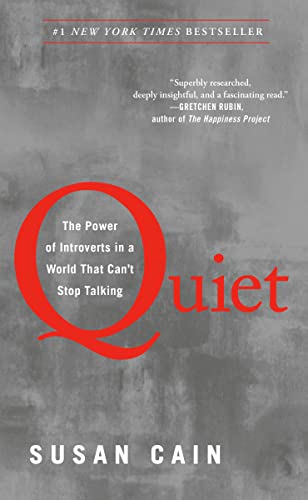
Quiet: The Power of Introverts in a World That Can't Stop Talking
At least one-third of the people we know are introverts. They are the ones who prefer listening to speaking; who innovate and create but dislike self-promotion; who favor working on their own over working in teams. It is to introverts—Rosa Parks, Chopin, Dr. Seuss, Steve Wozniak—that we owe many of the great contributions to society.
In Quiet, Susan Cain argues that we dramatically undervalue introverts and shows how much we lose in doing so. She charts the rise of the Extrovert Ideal throughout the twentieth century and explores how deeply it has come to permeate our culture. She also introduces us to successful introverts—from a witty, high-octane public speaker who recharges in solitude after his talks, to a record-breaking salesman who quietly taps into the power of questions. Passionately argued, superbly researched, and filled with indelible stories of real people, Quiet has the power to permanently change how we see introverts and, equally important, how they see themselves.
Now with Extra Libris material, including a reader’s guide and bonus content.
Leaders needn’t be the loudest. Leadership is not about theater. It’s not about dominance. It is about putting the lives of others before any other priority. In Quiet, Cain affirms to a good many of us who are introverts by nature that we needn’t try to be extroverts if we want to lead. Simply being ourselves is more important — and more effective. [source]
Danielle Morrill
Co-founder/Mattermark
Anyway, maybe you’re like me and figuring this out for yourself. It’s a good book for introverts and for those who love them [source]
Probably half the world is introverts. Maybe more. It’s not an easy life to live. I sometimes have that feeling in a room full of people, “uh-oh. I just shut down. I can’t talk anymore and there’s a lock on my mouth and this crowd threw away the key.” Do you ever get that feeling? Please? I hope you do. Let’s try to lock eyes at the party. “Quiet” shows the reader how to unlock the secret powers that probably half the world needs to unlock. [source]
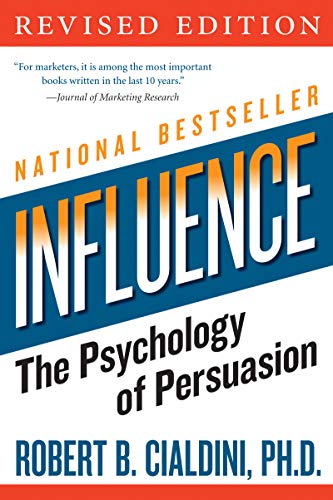
Influence, the classic book on persuasion, explains the psychology of why people say "yes"—and how to apply these understandings. Dr. Robert Cialdini is the seminal expert in the rapidly expanding field of influence and persuasion. His thirty-five years of rigorous, evidence-based research along with a three-year program of study on what moves people to change behavior has resulted in this highly acclaimed book.
You'll learn the six universal principles, how to use them to become a skilled persuader—and how to defend yourself against them. Perfect for people in all walks of life, the principles of Influence will move you toward profound personal change and act as a driving force for your success.
You can go after the job you want—and get it! You can take the job you have—and improve it! You can take any situation—and make it work for you!
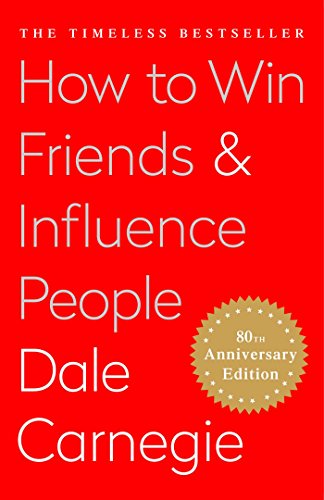
Dale Carnegie’s rock-solid, time-tested advice has carried countless people up the ladder of success in their business and personal lives. One of the most groundbreaking and timeless bestsellers of all time, How to Win Friends & Influence People will teach you:
-Six ways to make people like you -Twelve ways to win people to your way of thinking -Nine ways to change people without arousing resentment
And much more! Achieve your maximum potential—a must-read for the twenty-first century with more than 15 million copies sold!
…
Recommended by Dave Ramsey, Daymond John, Dustin Moskovitz, and 58 others.
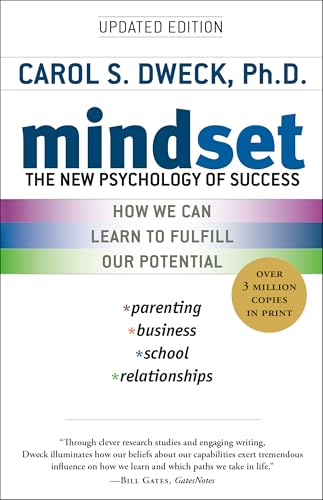
Now updated with new research — the book that has changed millions of lives.
After decades of research, world-renowned Stanford University psychologist Carol S. Dweck, Ph.D., discovered a simple but groundbreaking idea: the power of mindset. In this brilliant book, she shows how success in school, work, sports, the arts, and almost every area of human endeavor can be dramatically influenced by how we think about our talents and abilities. People with a fixed mindset — those who believe that abilities are fixed — are less likely to flourish than those with a growth mindset — those who believe that abilities can be developed. Mindset reveals how great parents, teachers, managers, and athletes can put this idea to use to foster outstanding accomplishment.
In this edition, Dweck offers new insights into her now famous and broadly embraced concept. She introduces a phenomenon she calls false growth mindset and guides people toward adopting a deeper, truer growth mindset. She also expands the mindset concept beyond the individual, applying it to the cultures of groups and organizations. With the right mindset, you can motivate those you lead, teach, and love — to transform their lives and your own.
One of the reasons I loved Mindset is because it’s solutions-oriented. In the book’s final chapter, Dweck describes the workshop she and her colleagues have developed to shift students from a fixed to a growth mindset. These workshops demonstrate that ‘just learning about the growth mindset can cause a big shift in the way people think about themselves and their lives. [source]
Without exaggeration, I’ve never met a CEO who didn’t have Mindset on their bookshelf. It resonates with people who have become successful because the belief that your abilities can grow is foundational to their achievements. [source]
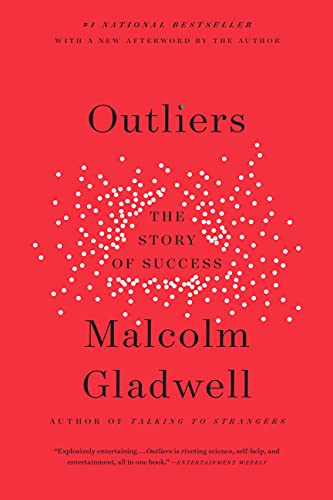
In this stunning new book, Malcolm Gladwell takes us on an intellectual journey through the world of "outliers"--the best and the brightest, the most famous and the most successful. He asks the question: what makes high-achievers different?
His answer is that we pay too much attention to what successful people are like, and too little attention to where they are from: that is, their culture, their family, their generation, and the idiosyncratic experiences of their upbringing. Along the way he explains the secrets of software billionaires, what it takes to be a great soccer player, why Asians are good at math, and what made the Beatles the greatest rock band.
Gladwell is not the first person to come up with the 10,000 hour rule. Nor is he the first person to document what it takes to become the best in the world at something. But his stories are so great as he explains these deep concepts. How did the Beatles become the best? Why are professional hockey players born in January, February and March? And so on. [source]
Alex Circei
Question: What five books would you recommend to young people interested in your career path & why? Answer: Screw It, Let's Do It: Lessons In Life by Richard Branson Outliers: The Story of Success by Malcolm Gladwell Start With Why: How Great Leaders Inspire Everyone To Take Action by Simon Sinek The Hard Thing About Hard Things: Building a Business When There Are No Easy Answers by Ben Horowitz Rich Dad Poor Dad: What the Rich Teach Their Kids About Money That the Poor and Middle Class Do Not! by Robert T. Kiyosaki [source]
Cover unavailable
8
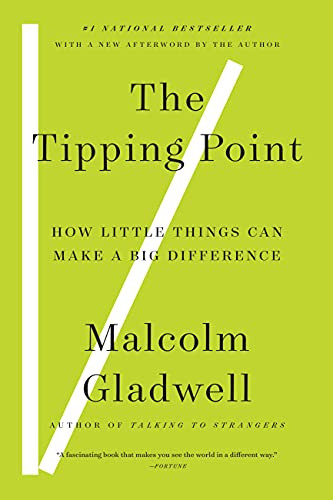
The Tipping Point: How Little Things Can Make a Big Difference
The tipping point is that magic moment when an idea, trend, or social behavior crosses a threshold, tips, and spreads like wildfire. Just as a single sick person can start an epidemic of the flu, so too can a small but precisely targeted push cause a fashion trend, the popularity of a new product, or a drop in the crime rate. This widely acclaimed bestseller, in which Malcolm Gladwell explores and brilliantly illuminates the tipping point phenomenon, is already changing the way people throughout the world think about selling products and disseminating ideas.
Gladwell introduces us to the particular personality types who are natural pollinators of new ideas and trends, the people who create the phenomenon of word of mouth. He analyzes fashion trends, smoking, children's television, direct mail, and the early days of the American Revolution for clues about making ideas infectious, and visits a religious commune, a successful high-tech company, and one of the world's greatest salesmen to show how to start and sustain social epidemics.
Bunch of really good information in here on how to make ideas go viral. This could be good to apply to any kind of products or ideas you may have. Definitely, check out The Tipping Point, which is one of my favorites. [source]
Malcolm Gladwell's breakthrough insight was to focus on the micro-relationships between individuals, which helped organizations realize that it's not about the big ads and the huge charity balls... it's about setting the stage for the buzz to start. [source]
Andy Stern
I think that when we talk about making change, it is much more about macro change, like in policy. This book reminds you that at times when you're building big movements, or trying to elect significant decision-makers in politics, sometimes it's the little things that make a difference. Ever since the book was written, we've become very used to the idea of things going viral unexpectedly and then having massive impact. The Tipping Point, to me, is really an appreciation that very small things can rearrange thinking in ways – like infectious diseases – that have huge implications. While we're always searching for the big policy changes – and we think we have to do that in very traditional ways of building coalitions against constituencies, movements and the media – sometimes it's the little things that actually tip the situation. Like the story of a person and their unique set of circumstances that really captures an issue about health care or housing. So it's trying to remember, while you're thinking about the grand and the glorious, that thinking about the small things can equally bring about change. [source]
Cover unavailable
9
The Power of Habit: Why We Do What We Do in Life and Business
A young woman walks into a laboratory. Over the past two years, she has transformed almost every aspect of her life. She has quit smoking, run a marathon, and been promoted at work. The patterns inside her brain, neurologists discover, have fundamentally changed.
Marketers at Procter & Gamble study videos of people making their beds. They are desperately trying to figure out how to sell a new product called Febreze, on track to be one of the biggest flops in company history. Suddenly, one of them detects a nearly imperceptible pattern—and with a slight shift in advertising, Febreze goes on to earn a billion dollars a year.
An untested CEO takes over one of the largest companies in America. His first order of business is attacking a single pattern among his employees—how they approach worker safety—and soon the firm, Alcoa, becomes the top performer in the Dow Jones.
What do all these people have in common? They achieved success by focusing on the patterns that shape every aspect of our lives.
They succeeded by transforming habits.
In The Power of Habit, award-winning New York Times business reporter Charles Duhigg takes us to the thrilling edge of scientific discoveries that explain why habits exist and how they can be changed. With penetrating intelligence and an ability to distill vast amounts of information into engrossing narratives, Duhigg brings to life a whole new understanding of human nature and its potential for transformation.
Along the way we learn why some people and companies struggle to change, despite years of trying, while others seem to remake themselves overnight. We visit laboratories where neuroscientists explore how habits work and where, exactly, they reside in our brains. We discover how the right habits were crucial to the success of Olympic swimmer Michael Phelps, Starbucks CEO Howard Schultz, and civil-rights hero Martin Luther King, Jr. We go inside Procter & Gamble, Target superstores, Rick Warren’s Saddleback Church, NFL locker rooms, and the nation’s largest hospitals and see how implementing so-called keystone habits can earn billions and mean the difference between failure and success, life and death.
At its core, The Power of Habit contains an exhilarating argument: The key to exercising regularly, losing weight, raising exceptional children, becoming more productive, building revolutionary companies and social movements, and achieving success is understanding how habits work.
Habits aren’t destiny. As Charles Duhigg shows, by harnessing this new science, we can transform our businesses, our communities, and our lives.
…
Recommended by Naval Ravikant, Blake Irving, Alden Mills, and 15 others.
I also recently finished The Power of Habit, or close to finish as I get. That one was interesting, not because of its content necessarily, but because it’s good for me to always keep on top of mind how powerful my habits are. … I think learning how to break habits is a very important meta-skill that can serve you better in life than almost anything else. Although you can read tons of books on it, the reality is you’re never going to learn how to break bad habits until you just break them. [source]
Blake Irving
CEO/GoDaddy
You know, there's a book called The Power of Habit by Charles Duhigg. Simple read book about just how to build positive habits that can be I think I what I'd call you know whether in your personal life or whether in your business life to help you build you know, have a loop that can build your success and that's one I mean there are so many great books out there. [source]
Alden Mills
More recent books that have had a significant impact on me are The Power of Habit and The Diamond Cutter. Both represent different forces for me – the former helps me tactically with making incremental improvements in my life. [source]
Drawing on cutting-edge neuroscience and psychology and displaying all of the brilliance that made The Tipping Point a classic, Blink changes the way you'll understand every decision you make. Never again will you think about thinking the same way.
Malcolm Gladwell redefined how we understand the world around us. Now, in Blink, he revolutionizes the way we understand the world within. Blink is a book about how we think without thinking, about choices that seem to be made in an instant - in the blink of an eye - that actually aren't as simple as they seem. Why are some people brilliant decision makers, while others are consistently inept? Why do some people follow their instincts and win, while others end up stumbling into error? How do our brains really work - in the office, in the classroom, in the kitchen, and in the bedroom? And why are the best decisions often those that are impossible to explain to others?
In Blink we meet the psychologist who has learned to predict whether a marriage will last, based on a few minutes of observing a couple; the tennis coach who knows when a player will double-fault before the racket even makes contact with the ball; the antiquities experts who recognize a fake at a glance. Here, too, are great failures of "blink": the election of Warren Harding; "New Coke"; and the shooting of Amadou Diallo by police. Blink reveals that great decision makers aren't those who process the most information or spend the most time deliberating, but those who have perfected the art of "thin-slicing" - filtering the very few factors that matter from an overwhelming number of variables.
…
Recommended by Ev Williams, Mike Shinoda, Marillyn Hewson, and 4 others.
Mike Shinoda
I know most of the guys in the band read this book. [source]
Marillyn Hewson
CEO/Lockheed Martin
CEO Marilyn Hewson recommends this book because it helped her to trust her instincts in business. [source]
Antonio Eram
When asked to name some books that had a big impact on him, Antonio mentioned Blink: The Power of Thinking Without Thinking by Malcolm Gladwell. [source]
Cover unavailable
11
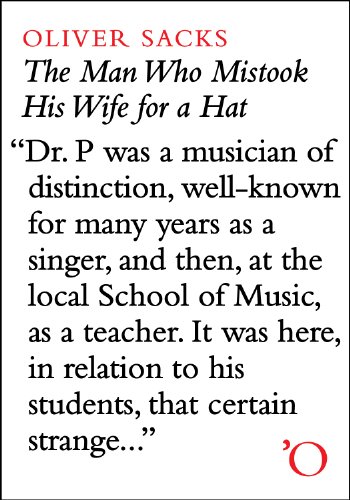
The Man Who Mistook His Wife for a Hat and Other Clinical Tales
If a man has lost a leg or an eye, he knows he has lost a leg or an eye; but if he has lost a self—himself—he cannot know it, because he is no longer there to know it. Dr. Oliver Sacks recounts the stories of patients struggling to adapt to often bizarre worlds of neurological disorder. Here are people who can no longer recognize everyday objects or those they love; who are stricken with violent tics or shout involuntary obscenities; who have been dismissed as autistic or retarded, yet are gifted with uncanny artistic or mathematical talents. If inconceivably strange, these brilliant tales illuminate what it means to be human.
…
Recommended by Bradley Voytek, Suzanne O'Sullivan, and Tanya Byron.
Bradley Voytek
I can’t imagine one day waking up and not knowing who my wife is, or seeing my wife and thinking that she was replaced by some sort of clone or robot. But that could happen to any of us. [source]
Suzanne O'Sullivan
I didn’t choose neurology because of it but the way Oliver Sacks writes about neurology is very compelling. [source]
Tanya Byron
This is a seminal book that anyone who wants to work in mental health should read. It is a charming and gentle and also an honest exposé of what can happen to us when our mental health is compromised for whatever reason. [source]
Cover unavailable
12
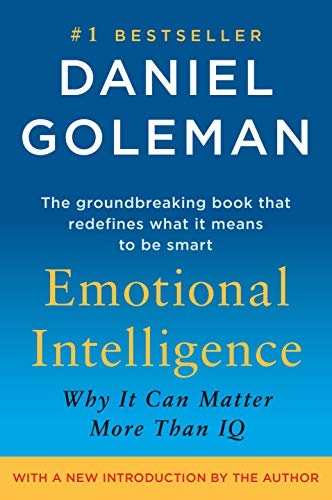
Emotional Intelligence: Why It Can Matter More Than IQ
Everyone knows that high IQ is no guarantee of success, happiness, or virtue, but until Emotional Intelligence, we could only guess why. Daniel Goleman's brilliant report from the frontiers of psychology and neuroscience offers startling new insight into our "two minds"—the rational and the emotional—and how they together shape our destiny.
Through vivid examples, Goleman delineates the five crucial skills of emotional intelligence, and shows how they determine our success in relationships, work, and even our physical well-being. What emerges is an entirely new way to talk about being smart.
The best news is that "emotional literacy" is not fixed early in life. Every parent, every teacher, every business leader, and everyone interested in a more civil society, has a stake in this compelling vision of human possibility.
From the Trade Paperback edition.
…
Recommended by Drew Houston, Drew Huston, Magda Marcu, and 4 others.
Drew Houston
CEO/Dropbox
It’s nonfiction, but it spelled out something that I just didn’t know you could kind of break down in a logical way. And, suddenly, I had this understanding about the world that I didn’t have before. [source]
Magda Marcu
One of the most eye opening for me was “Emotional Intelligence: Why It Can Matter More Than IQ” as it offered a different perspective on leadership, and how empathy can make you a more successful leader. Every person has some degree of empathy and through this book you understand how to apply it more intently. [source]
Robert Kelsey
Yes, that’s the key revelation. But another key element, which was quite revelatory for me when I read it, is about the impact of fear on your brain. The impact of fear as a physiological response was well known when he wrote the book, but what was less well known was the idea of fear as a neurological response. He pointed to research showing what happens to the brain when fear is triggered, and it’s very damaging. There’s a part of the brain called the amygdala, which is part of the limbic system, and deals with emotions such as fear and distress. Its main purpose is to alert you to danger and it sends an emergency signal. All those physiological responses you have are basically the body’s response to that emergency signal. That’s what people experience when they experience fear, but it’s not just the fear of a dog barking at you or someone attacking you, it’s fear based on a fear conditioning. These are moments when something happens to you that induces fear or distress, and can include fear of failure or fear of being upset, and the same response occurs. [source]
Cover unavailable
13
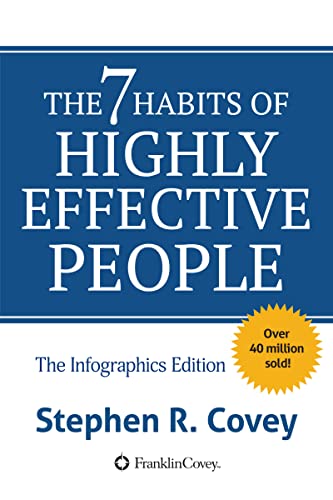
The 7 Habits of Highly Effective People: Powerful Lessons in Personal Change
When Stephen Covey first released The Seven Habits of Highly Effective People, the book became an instant rage because people suddenly got up and took notice that their lives were headed off in the wrong direction; and more than that, they realized that there were so many simple things they could do in order to navigate their life correctly. This book was wonderful education for people, education in how to live life effectively and get closer to the ideal of being a ‘success’ in life.
But not everyone understands Stephen Covey’s model fully well, or maybe there are some people who haven’t read it yet. This is definitely true because we still see so much failure all around us. Now, I am not saying that by using Covey’s model, or anyone else’s model for that matter, you can become a sure-shot success, but at least we should have seen many more successes around us already judging by the number of copies the book has sold! So, where is the shortcoming?
There are two main problems here, and we are talking only about the people who have read the book already. The first problem is that most people are too lazy to implement the ideals of Stephen Covey in their lives. They consider his masterpiece of a book as a mere coffee-table book or a book that you use for light reading when you are traveling and then forget all about it. They do not realize that this book contains life-changing information. Or, they take the information and do not make the effort to actually utilize it so that it becomes knowledge for them.
The second problem is that a lot of people have a myopic view of Covey’s ideals. These are people who are impressed by the book already. If you ask them what the seven habits are, they can rattle them off end to end, but then they miss the larger picture. They do not understand that Covey was trying to tell more than he wrote in words. There are hidden implications in this book, yes, and a lot of people have just failed to see through them.
That is what we are trying to do. We are trying to show you how Covey’s book, or rather, his model, was a complete model in itself. There was nothing amiss about it. If you implement it, there should be no aspect of your life that should go untouched. The only thing is that you have to understand these ideals and try to implement them in your life.
But, before we barge into that area, it is extremely important to understand what these ideals are. What was the model that was propounded by Stephen Covey in his mega-famous book? We shall begin by trying to understand his model first, and then interpret it in such a way that it pertains to every aspect of our life
Dave Ramsey recommended this book on his website. [source]
Dustin Moskovitz
Co-founder/Facebook and Asana
I was surprised at how familiar the topics felt. [source]
Joe Martin
@benmorris @audible_com @Gladwell I enjoy the quiet on the way home, but on the way to work I am listening to the 7 habits book by Stephen Coveru, a fave of mine [source]
Cover unavailable
14
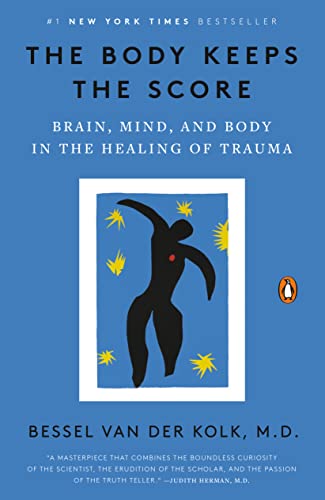
The Body Keeps the Score: Brain, Mind, and Body in the Healing of Trauma
“Packed with science and human stories, the book is an intense read. . . . The struggle and resilience of [van der Kolk’s] patients is very moving.” —New Scientist
A pioneering researcher transforms our understanding of trauma and offers a bold new paradigm for healing
Trauma is a fact of life. Veterans and their families deal with the painful aftermath of combat; one in five Americans has been molested; one in four grew up with alcoholics; one in three couples have engaged in physical violence. Dr. Bessel van der Kolk, one of the world’s foremost experts on trauma, has spent over three decades working with survivors. In The Body Keeps the Score, he uses recent scientific advances to show how trauma literally reshapes both body and brain, compromising sufferers’ capacities for pleasure, engagement, self-control, and trust. He explores innovative treatments—from neurofeedback and meditation to sports, drama, and yoga—that offer new paths to recovery by activating the brain’s natural neuroplasticity. Based on Dr. van der Kolk’s own research and that of other leading specialists, The Body Keeps the Score exposes the tremendous power of our relationships both to hurt and to heal—and offers new hope for reclaiming lives.
…
Recommended by Matthew Green.
Matthew Green
Reading The Body Keeps the Score was a eureka moment for me. [source]
Cover unavailable
15
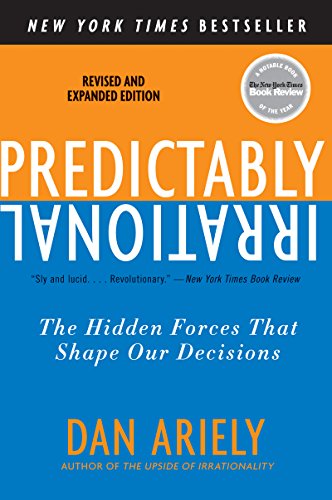
Predictably Irrational: The Hidden Forces That Shape Our Decisions
Why do our headaches persist after taking a one-cent aspirin but disappear when we take a 50-cent aspirin?
Why does recalling the Ten Commandments reduce our tendency to lie, even when we couldn't possibly be caught?
Why do we splurge on a lavish meal but cut coupons to save twenty-five cents on a can of soup?
Why do we go back for second helpings at the unlimited buffet, even when our stomachs are already full?
And how did we ever start spending $4.15 on a cup of coffee when, just a few years ago, we used to pay less than a dollar?
When it comes to making decisions in our lives, we think we're in control. We think we're making smart, rational choices. But are we?
In a series of illuminating, often surprising experiments, MIT behavioral economist Dan Ariely refutes the common assumption that we behave in fundamentally rational ways. Blending everyday experience with groundbreaking research, Ariely explains how expectations, emotions, social norms, and other invisible, seemingly illogical forces skew our reasoning abilities.
Not only do we make astonishingly simple mistakes every day, but we make the same "types" of mistakes, Ariely discovers. We consistently overpay, underestimate, and procrastinate. We fail to understand the profound effects of our emotions on what we want, and we overvalue what we already own. Yet these misguided behaviors are neither random nor senseless. They're systematic and predictable--making us "predictably" irrational.
From drinking coffee to losing weight, from buying a car to choosing a romantic partner, Ariely explains how to break through these systematic patterns of thought to make better decisions. "Predictably Irrational" will change the way we interact with the world--one small decision at a time.
…
Recommended by Max Levchin, Vinod Khosla, Vinod Khosla, and 22 others.
Max Levchin
Co-founder/PayPal, CEO/Affirm, Investor
Max Levchin recommended this book as an answer to "What business books would you advise young entrepreneurs read?" [source]
Andra Zaharia
'While I was thinking of the best books to add to this short list, I realized that not even half of them are directly related to digital marketing. This is because I believe that the best marketers are people who understand human nature deeply and aim to bring out the best in it. Call me naive, but that’s how I see it. If I were to want to pursue a career in marketing, I’d read … Predictably Irrational. [source]
Chris Goward
Here are some of the books that have been very impactful for me, or taught me a new way of thinking: … Predictably Irrational. [source]
Cover unavailable
16
Nudge: Improving Decisions About Health, Wealth, and Happiness
Every day, we make decisions on topics ranging from personal investments to schools for our children to the meals we eat to the causes we champion. Unfortunately, we often choose poorly. The reason, the authors explain, is that, being human, we all are susceptible to various biases that can lead us to blunder. Our mistakes make us poorer and less healthy; we often make bad decisions involving education, personal finance, health care, mortgages and credit cards, the family, and even the planet itself.
Thaler and Sunstein invite us to enter an alternative world, one that takes our humanness as a given. They show that by knowing how people think, we can design choice environments that make it easier for people to choose what is best for themselves, their families, and their society. Using colorful examples from the most important aspects of life, Thaler and Sunstein demonstrate how thoughtful “choice architecture” can be established to nudge us in beneficial directions without restricting freedom of choice. Nudge offers a unique new take—from neither the left nor the right—on many hot-button issues, for individuals and governments alike. This is one of the most engaging and provocative books to come along in many years.
Nudge is a very important book. One of the reasons Nudge is so important is because it’s taking these ideas and applying them to the policy domain. Here are the mistakes we make. Here are the ways marketers are trying to influence us. Here’s the way we might be able to fight back. If policymakers understood these principles, what could they do? The other important thing about the book is that it describes, in detail, small interventions. It’s basically a book about cheap persuasion. [source]
This might feel like a weird book to include, but I think it presents another side of strategy that is too often forgotten. It’s not always about bold actors and strategic thrusts. Sometimes strategy is about subtle influence. Sometimes it is framing and small tweaks that change behavior. We can have big aims, but get there with little moves. This book has excellent examples of that kind of thinking and how it is changing politics, government and business. My favorite example is about the bumblebee that they started putting on urinals–which drastically reduced the amount of spray and spillage because it changed where men aimed when they peed. It’s not exactly the coolest strategy but it solved a problem. So we can learn from it. [source]
Cover unavailable
17
The Subtle Art of Not Giving a F*ck: A Counterintuitive Approach to Living a Good Life
In this generation-defining self-help guide, a superstar blogger cuts through the crap to show us how to stop trying to be "positive" all the time so that we can truly become better, happier people.
For decades, we’ve been told that positive thinking is the key to a happy, rich life. "Fk positivity," Mark Manson says. "Let’s be honest, shit is fked and we have to live with it." In his wildly popular Internet blog, Manson doesn’t sugarcoat or equivocate. He tells it like it is—a dose of raw, refreshing, honest truth that is sorely lacking today. The Subtle Art of Not Giving a Fk is his antidote to the coddling, let’s-all-feel-good mindset that has infected American society and spoiled a generation, rewarding them with gold medals just for showing up.
Manson makes the argument, backed both by academic research and well-timed poop jokes, that improving our lives hinges not on our ability to turn lemons into lemonade, but on learning to stomach lemons better. Human beings are flawed and limited—"not everybody can be extraordinary, there are winners and losers in society, and some of it is not fair or your fault." Manson advises us to get to know our limitations and accept them. Once we embrace our fears, faults, and uncertainties, once we stop running and avoiding and start confronting painful truths, we can begin to find the courage, perseverance, honesty, responsibility, curiosity, and forgiveness we seek.
There are only so many things we can give a fk about so we need to figure out which ones really matter, Manson makes clear. While money is nice, caring about what you do with your life is better, because true wealth is about experience. A much-needed grab-you-by-the-shoulders-and-look-you-in-the-eye moment of real-talk, filled with entertaining stories and profane, ruthless humor, The Subtle Art of Not Giving a F**k is a refreshing slap for a generation to help them lead contented, grounded lives.
…
Recommended by Ryan Holiday, Alex Blackwell, Aunty Ada, and 21 others.
What does everyone in the modern world need to know? Renowned psychologist Jordan B. Peterson's answer to this most difficult of questions uniquely combines the hard-won truths of ancient tradition with the stunning revelations of cutting-edge scientific research.
Humorous, surprising, and informative, Dr. Peterson tells us why skateboarding boys and girls must be left alone, what terrible fate awaits those who criticize too easily, and why you should always pet a cat when you meet one on the street.
What does the nervous system of the lowly lobster have to tell us about standing up straight (with our shoulders back) and about success in life? Why did ancient Egyptians worship the capacity to pay careful attention as the highest of gods? What dreadful paths do people tread when they become resentful, arrogant, and vengeful? Dr. Peterson journeys broadly, discussing discipline, freedom, adventure, and responsibility, distilling the world's wisdom into 12 practical and profound rules for life. 12 Rules for Life shatters the modern commonplaces of science, faith, and human nature while transforming and ennobling the mind and spirit of its listeners.
A bracing disassembly and reconstruction of a theory of individual progress in the modern world. Fascinating compare and contrast with The Courage To Be Disliked. [source]
Just look at the table of contents: Rule 1: Stand up straight with your shoulders back Rule 2: Treat yourself like someone you are responsible for helping Rule 3: Make friends with people who want the best for you Rule 4: Compare yourself to who you were yesterday, not to who someone else is today Rule 5: Do not let your children do anything that makes you dislike them Rule 6: Set your house in perfect order before you criticise the world Rule 7: Pursue what is meaningful (not what is expedient) Rule 8: Tell the truth – or, at least, don’t lie Rule 9: Assume the person you are listening to might know something you don’t Rule 10: Be precise in your speech Rule 11: Do not bother children when they are skateboarding Rule 12: Pet a cat when you encounter one on the street Read this book. [source]
Andrew Price
@stewheckenberg @jordanbpeterson Thanks mate. I almost wish the book was published under a different author so more people would give it a chance. It’s really one of the best “how to fix your life” books around. [source]
The personal memoir of a manic depressive and an authority on the subject describes the onset of the illness during her teenage years and her determined journey through the realm of available treatments.
Recommended by Jonathan Glover and Tanya Byron.
Jonathan Glover
Kay Redfield Jamison is a psychologist who has co-authored the major psychiatric textbook on manic depression. It authoritatively covers every aspect of the science, from genetics to pharmacology, and also has chapters on the links with creativity and on what the illness feels like. The chapters on the subjective experience are enriched with vivid quotations from patients. In her autobiography, An Unquiet Mind, Kay Jamison came out as not only an expert on the illness but also someone who has it. The power of her book comes from her understanding it both scientifically and from the inside. [source]
Tanya Byron
This is a divine book. A patient of mine who suffers with a bipolar illness, an absolutely inspiring young genius, recommended it to me. So I read it, and then we discussed it in a lot of our sessions together. [source]
Cover unavailable
20
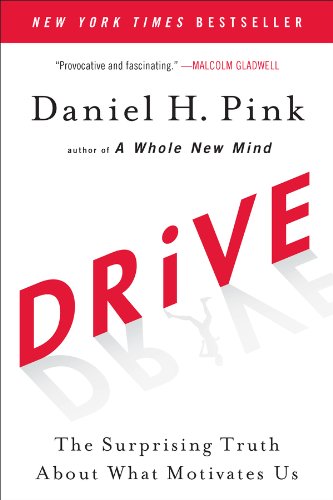
Drive: The Surprising Truth About What Motivates Us
The New York Times bestseller that gives readers a paradigm-shattering new way to think about motivation
Most people believe that the best way to motivate is with rewards like money—the carrot-and-stick approach. That's a mistake, says Daniel H. Pink (author of To Sell Is Human: The Surprising Truth About Motivating Others). In this provocative and persuasive new book, he asserts that the secret to high performance and satisfaction-at work, at school, and at home—is the deeply human need to direct our own lives, to learn and create new things, and to do better by ourselves and our world.
Drawing on four decades of scientific research on human motivation, Pink exposes the mismatch between what science knows and what business does—and how that affects every aspect of life. He examines the three elements of true motivation—autonomy, mastery, and purpose-and offers smart and surprising techniques for putting these into action in a unique book that will change how we think and transform how we live.
…
Recommended by Tobi Lütke, Bogdan Lucaciu, David Brudo, and 5 others.
Tobi Lütke
Founder & CEO/Shopify
Tobi Lütke recommended this book in an interview in "The Globe and Mail." [source]
Bogdan Lucaciu
Spoiler: it’s autonomy, mastery, and purpose. [source]
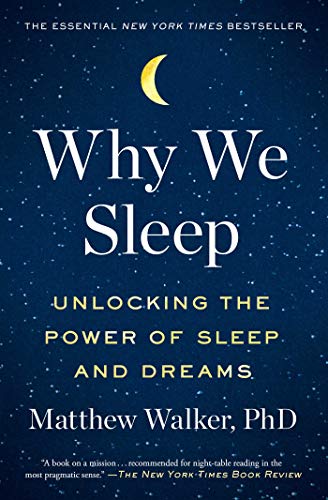
“Why We Sleep is an important and fascinating book…Walker taught me a lot about this basic activity that every person on Earth needs. I suspect his book will do the same for you.” —Bill Gates
A New York Times bestseller and international sensation, this “stimulating and important book” (Financial Times) is a fascinating dive into the purpose and power of slumber.
With two appearances on CBS This Morning and Fresh Air's most popular interview of 2017, Matthew Walker has made abundantly clear that sleep is one of the most important but least understood aspects of our life. Until very recently, science had no answer to the question of why we sleep, or what good it served, or why we suffer such devastating health consequences when it is absent. Compared to the other basic drives in life—eating, drinking, and reproducing—the purpose of sleep remains more elusive.
Within the brain, sleep enriches a diversity of functions, including our ability to learn, memorize, and make logical decisions. It recalibrates our emotions, restocks our immune system, fine-tunes our metabolism, and regulates our appetite. Dreaming creates a virtual reality space in which the brain melds past and present knowledge, inspiring creativity.
In this “compelling and utterly convincing” (The Sunday Times) book, preeminent neuroscientist and sleep expert Matthew Walker provides a revolutionary exploration of sleep, examining how it affects every aspect of our physical and mental well-being. Charting the most cutting-edge scientific breakthroughs, and marshalling his decades of research and clinical practice, Walker explains how we can harness sleep to improve learning, mood and energy levels, regulate hormones, prevent cancer, Alzheimer’s and diabetes, slow the effects of aging, and increase longevity. He also provides actionable steps towards getting a better night’s sleep every night.
Clear-eyed, fascinating, and accessible, Why We Sleep is a crucial and illuminating book. Written with the precision of Atul Gawande, Andrew Solomon, and Sherwin Nuland, it is “recommended for night-table reading in the most pragmatic sense” (TheNew York Times Book Review).
…
Recommended by Bill Gates, Brad Feld, Alexis Ohanian Sr., and 11 others.
Explains how neglecting sleep undercuts your creativity, problem solving, decision-making, learning, memory, heart health, brain health, mental health, emotional well-being, immune system, and even your life span. [source]
Brad Feld
Co-Founder/Foundry Group
Several friends, who know I both love to sleep and am intrigued with how sleep works, recommended that I read Why We Sleep: Unlocking the Power of Sleep and Dreams. It was excellent. While my self-assessment of my sleep habits are very positive, I learned a few things. More importantly, I now have a much better understanding of the “Why” surrounding sleep, especially around sleep’s importance to a healthy and long life. [source]
Alexis Ohanian Sr.
Agree! Best book I've read this year. Wasted so many hours just proving to myself I'd be the last one up working at @reddit and for what??? Stupid. Diminishing marginal returns after enough hours without sleep. https://t.co/cT7fDNBF3A [source]
Psychologist Mihaly Csikszentmihalyi's famous investigations of "optimal experience" have revealed that what makes an experience genuinely satisfying is a state of consciousness called flow. During flow, people typically experience deep enjoyment, creativity, and a total involvement with life. In this new edition of his groundbreaking classic work, Csikszentmihalyi demonstrates the ways this positive state can be controlled, not just left to chance. Flow: The Psychology of Optimal Experience teaches how, by ordering the information that enters our consciousness, we can discover true happiness and greatly improve the quality of our lives.
While re-reading Mihaly Csikszentmihalyi’s wonderful book Flow: The Psychology of Optimal Experience, I came across this passage on working crossword puzzles. I think he could just as well be talking about making blackout poems: "There is much to be said in favor of this popular pastime, which in its best form resembles the ancient riddle contests. It is inexpensive and portable, its challenges can be finely graduated so that both novices and experts can enjoy it, and its solution produces a sense of pleasing order that gives one a satisfying feeling of accomplishment. It provides opportunities to experience a mild state of flow to many people who are stranded in airport lounges, who travel on commuter trains, or who are simply whiling away Sunday mornings." [source]
Tom Chatfield
The notion of flow is the idea that there is a state that is characterised by complete immersion in an activity, by a constant response to stimuli, and a perfect match between your ability and the challenge in front of you. [source]
Cover unavailable
23
The Happiness Hypothesis: Finding Modern Truth in Ancient Wisdom
In his widely praised book, award-winning psychologist Jonathan Haidt examines the world’s philosophical wisdom through the lens of psychological science, showing how a deeper understanding of enduring maxims-like Do unto others as you would have others do unto you, or What doesn’t kill you makes you stronger-can enrich and even transform our lives.
Recommended by Eric Schmidt, Tony Hsieh, Chelsea Frank, and 4 others.
Chelsea Frank
I read everything with an open mind, often challenging myself by choosing books with an odd perspective or religious/spiritual views. These books do not reflect my personal feelings but are books that helped shape my perspective on life, love, and happiness. [source]
He argues that most of our moral decisions are that kind of an instant reaction. It’s like aesthetics: when we see a scene we know instantly if it’s beautiful or not. [source]
Emrys Westacott
Haidt has a formula for happiness: Genetics + conditions + choices. This is a formula for a realistic approach to trying to achieve the good life. [source]
In this must-read book for anyone striving to succeed, pioneering psychologist Angela Duckworth shows parents, educators, students, and business people both seasoned and new that the secret to outstanding achievement is not talent but a focused persistence called grit.
Why do some people succeed and others fail? Sharing new insights from her landmark research on grit, Angela Duckworth explains why talent is hardly a guarantor of success. Rather, other factors can be even more crucial such as identifying our passions and following through on our commitments.
Drawing on her own powerful story as the daughter of a scientist who frequently bemoaned her lack of smarts, Duckworth describes her winding path through teaching, business consulting, and neuroscience, which led to the hypothesis that what really drives success is not genius, but a special blend of passion and long-term perseverance. As a professor at the University of Pennsylvania, Duckworth created her own character lab and set out to test her theory.
Here, she takes readers into the field to visit teachers working in some of the toughest schools, cadets struggling through their first days at West Point, and young finalists in the National Spelling Bee. She also mines fascinating insights from history and shows what can be gleaned from modern experiments in peak performance. Finally, she shares what she's learned from interviewing dozens of high achievers; from JP Morgan CEO Jamie Dimon to the cartoon editor of The New Yorker to Seattle Seahawks Coach Pete Carroll.
Winningly personal, insightful, and even life-changing, Grit is a book about what goes through your head when you fall down, and how that not talent or luck makes all the difference.
…
Recommended by Albert Wenger, Anu Hariharan, Benjamin Spall, and 11 others.
Benjamin Spall
Question: What five books would you recommend to youngsters interested in your professional path? … Grit by Angela Duckworth [source]
Bogdan Lucaciu
Grit: The Power of Passion and Perseverance - it was frustrating to read: “Where was this book 20 years ago!?” [source]
Stephen Lew
When asked what books he would recommend to youngsters interested in his professional path, Stephen mentioned Grit. [source]

This amoral, cunning, ruthless, and instructive book synthesizes the philosophies of Machiavelli, Sun Tzu, and Carl Von Clausewitz with the historical legacies of statesmen, warriors, seducers, and con men throughout the ages.
These are the books I recommend people to listen to on @applebooks. [source]
Marvin Liao
Partner/500 Startups
My list would be (besides the ones I mentioned in answer to the previous question) both business & Fiction/Sci-Fi and ones I personally found helpful to myself. The business books explain just exactly how business, work & investing are in reality & how to think properly & differentiate yourself. On the non-business side, a mix of History & classic fiction to understand people, philosophy to make sense of life and Science fiction to picture what the future could be like (not always utopian). [source]
There is no living writer (or person) who has been more influential to me than Robert Greene. I met him when I was 19 years old and he’s shaped me as a person, as a writer, as a thinker. You MUST read his books. His work on power and strategy are critical for anyone trying to accomplish anything. In life, power is force we are constantly bumping up against. People have power of over us, we seek power ourselves that we might be free enough and influential enough to accomplish our goals—so we must understand where power comes from, how it works and how to get it. But pure power is meaningless. It must be joined to mastery and purpose. So read his book Mastery so that you can figure your life’s task and how to dedicate yourself to it. [source]
Cover unavailable
26
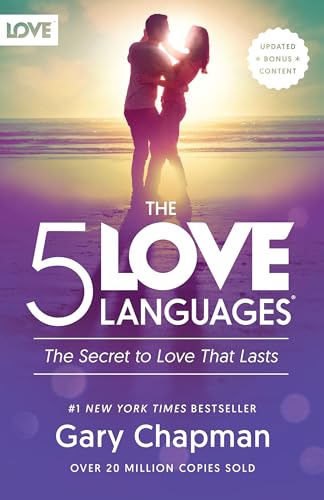
The 5 Love Languages: The Secret to Love that Lasts
Couples who understand each other's love language hold a priceless advantage in the quest for love that lasts a lifetime -- they know how to effectively and consistently make each other feel truly and deeply loved. That gift never fades away.
Recommended by Dustin Moskovitz, James Altucher, Kaci Lambe Kai, and 1 others.
Dustin Moskovitz
Co-founder/Facebook and Asana
Dustin Moskovitz recommended this book on Twitter. [source]

Kaci Lambe Kai
The Five Love Languages by Gary Chapman impacted how I interpret and receive love. Not just romantically, but in my friendships and business relationships. I had several personal and professional relationships that improved when I could appreciate that their "love language" was different than mine. I could at least see their efforts as an attempt at showing me love and kindness, even if it wasn't how I best receive or give love. This is pivotal. And if you can separate out the idea of it being for romantic partners only, I'd say this is critical reading for leaders. Not everyone is motivated and feels appreciation by a raise. Sometimes, public recognition of kind words or an act of kindness will feel better than anything else you can do. [source]
Pedro Cortés
The books that had the biggest impact are the ones that are controversial and challenge people's beliefs around work, relationships, life, and money most of them were things I already thought about (that's how I found them or decided to read them) but just by putting it in an actionable and structured way it made me think 100x more clearly about my goals and beliefs. Such examples could be the 4hww, Rich Dad Poor Dad, F.U. Money, The Five Love Languages, So good they can't ignore, Predictably Irrational and Ego is the Enemy are the ones who stand out the most. [source]
Cover unavailable
27
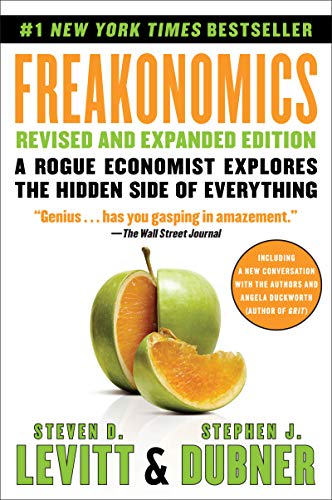
Freakonomics: A Rogue Economist Explores the Hidden Side of Everything
Which is more dangerous, a gun or a swimming pool? What do schoolteachers and sumo wrestlers have in common? Why do drug dealers still live with their moms? How much do parents really matter? What kind of impact did Roe v. Wade have on violent crime? Freakonomics will literally redefine the way we view the modern world.
These may not sound like typical questions for an economist to ask. But Steven D. Levitt is not a typical economist. He is a much heralded scholar who studies the stuff and riddles of everyday life -- from cheating and crime to sports and child rearing -- and whose conclusions regularly turn the conventional wisdom on its head. He usually begins with a mountain of data and a simple, unasked question. Some of these questions concern life-and-death issues; others have an admittedly freakish quality. Thus the new field of study contained in this book: freakonomics.
Through forceful storytelling and wry insight, Levitt and co-author Stephen J. Dubner show that economics is, at root, the study of incentives -- how people get what they want, or need, especially when other people want or need the same thing. In Freakonomics, they set out to explore the hidden side of ... well, everything. The inner workings of a crack gang. The truth about real-estate agents. The myths of campaign finance. The telltale marks of a cheating schoolteacher. The secrets of the Ku Klux Klan.
What unites all these stories is a belief that the modern world, despite a surfeit of obfuscation, complication, and downright deceit, is not impenetrable, is not unknowable, and -- if the right questions are asked -- is even more intriguing than we think. All it takes is a new way of looking. Steven Levitt, through devilishly clever and clear-eyed thinking, shows how to see through all the clutter.
Freakonomics establishes this unconventional premise: If morality represents how we would like the world to work, then economics represents how it actually does work. It is true that readers of this book will be armed with enough riddles and stories to last a thousand cocktail parties. But Freakonomics can provide more than that. It will literally redefine the way we view the modern world. (front flap)
…
Recommended by Malcolm Gladwell, Daymond John, Ev Williams, and 12 others.
James Altucher recommended this book on the podcast "The Tim Ferriss Show". [source]
Cover unavailable
28
The Psychopath Test: A Journey Through the Madness Industry
Jon Ronson
4.3
In this madcap journey, a bestselling journalist investigates psychopaths and the industry of doctors, scientists, and everyone else who studies them.
The Psychopath Test is a fascinating journey through the minds of madness. Jon Ronson's exploration of a potential hoax being played on the world's top neurologists takes him, unexpectedly, into the heart of the madness industry. An influential psychologist who is convinced that many important CEOs and politicians are, in fact, psychopaths teaches Ronson how to spot these high-flying individuals by looking out for little telltale verbal and nonverbal clues. And so Ronson, armed with his new psychopath-spotting abilities, enters the corridors of power. He spends time with a death-squad leader institutionalized for mortgage fraud in Coxsackie, New York; a legendary CEO whose psychopathy has been speculated about in the press; and a patient in an asylum for the criminally insane who insists he's sane and certainly not a psychopath.
Ronson not only solves the mystery of the hoax but also discovers, disturbingly, that sometimes the personalities at the helm of the madness industry are, with their drives and obsessions, as mad in their own way as those they study. And that relatively ordinary people are, more and more, defined by their maddest edges.
…
Recommended by Memo Akten.
Memo Akten
@therourke you may very well be a pyschopath!, it doesn't mean you'll be an axe wielding homicidal maniac :) (I think I might be a bit pyschopath, dunno. My AE is a bit of a yoyo. At times I might feel more for a fly in a spiderweb than a person). V interesting book: https://t.co/QRAJAZPhDY [source]

Cover unavailable
29
The Righteous Mind: Why Good People Are Divided by Politics and Religion
Why can’t our political leaders work together as threats loom and problems mount? Why do people so readily assume the worst about the motives of their fellow citizens? In The Righteous Mind, social psychologist Jonathan Haidt explores the origins of our divisions and points the way forward to mutual understanding.
His starting point is moral intuition—the nearly instantaneous perceptions we all have about other people and the things they do. These intuitions feel like self-evident truths, making us righteously certain that those who see things differently are wrong. Haidt shows us how these intuitions differ across cultures, including the cultures of the political left and right. He blends his own research findings with those of anthropologists, historians, and other psychologists to draw a map of the moral domain. He then examines the origins of morality, overturning the view that evolution made us fundamentally selfish creatures. But rather than arguing that we are innately altruistic, he makes a more subtle claim—that we are fundamentally groupish. It is our groupishness, he explains, that leads to our greatest joys, our religious divisions, and our political affiliations. In a stunning final chapter on ideology and civility, Haidt shows what each side is right about, and why we need the insights of liberals, conservatives, and libertarians to flourish as a nation.
…
Recommended by A.J. Jacobs, Akin Oyebode, Andrew M. Mwenda, and 3 others.
A.J. Jacobs
All about trying to figure out the gap between the red and blue states – Republican and Democrat – and it’s really interesting. [source]
Akin Oyebode
@eggheader @OnemuVictor1 @JonHaidt Abeg order two. I read Righteous Mind which he also wrote, and that was a very fascinating book. [source]
Andrew M. Mwenda
The best work on this is a book by Jonathan Haidt “The Righteous Mind: Why good People are Divided by Religion and Politics.” He argues that human beings have deeply entrenched moral intuitions which guide their assessment of reality. Facts matter very little if at all. [source]
Cover unavailable
30
David and Goliath: Underdogs, Misfits, and the Art of Battling Giants
In his #1 bestselling books The Tipping Point, Blink, and Outliers, Malcolm Gladwell has explored the ways we understand and change our world. Now he looks at the complex and surprising ways the weak can defeat the strong, the small can match up against the giant, and how our goals (often culturally determined) can make a huge difference in our ultimate sense of success. Drawing upon examples from the world of business, sports, culture, cutting-edge psychology, and an array of unforgettable characters around the world, David and Goliath is in many ways the most practical and provocative book Malcolm Gladwell has ever written.
…
Recommended by Andrew Chen, Cat Williams-Treloar, Catalina Penciu, and 3 others.
Cat Williams-Treloar
The books that I've talked the most about with friends and colleagues over the years are the Malcolm Gladwell series of novels. Glorious stories that mix science, behaviours and insight. You can't go wrong with the "The Tipping Point", "Outliers", "Blink" or "David & Goliath". [source]
Catalina Penciu
Business-wise, my goal for this year is to improve my collection and my mindset, but my favorite so far has been David and Goliath by Malcolm Gladwell. [source]
Robert Katai
Buy Malcolm Gladwell’s book “David and Goliath” and read the interesting stories about how the Davids of that moments have defeated the Goliaths. [source]
Cover unavailable
31
Atomic Habits: An Easy & Proven Way to Build Good Habits & Break Bad Ones
No matter your goals, Atomic Habits offers a proven framework for improving--every day. James Clear, one of the world's leading experts on habit formation, reveals practical strategies that will teach you exactly how to form good habits, break bad ones, and master the tiny behaviors that lead to remarkable results.
If you're having trouble changing your habits, the problem isn't you. The problem is your system. Bad habits repeat themselves again and again not because you don't want to change, but because you have the wrong system for change. You do not rise to the level of your goals. You fall to the level of your systems. Here, you'll get a proven system that can take you to new heights.
Clear is known for his ability to distill complex topics into simple behaviors that can be easily applied to daily life and work. Here, he draws on the most proven ideas from biology, psychology, and neuroscience to create an easy-to-understand guide for making good habits inevitable and bad habits impossible. Along the way, readers will be inspired and entertained with true stories from Olympic gold medalists, award-winning artists, business leaders, life-saving physicians, and star comedians who have used the science of small habits to master their craft and vault to the top of their field.
Learn how to: * make time for new habits (even when life gets crazy); * overcome a lack of motivation and willpower; * design your environment to make success easier; * get back on track when you fall off course; ...and much more.
Atomic Habits will reshape the way you think about progress and success, and give you the tools and strategies you need to transform your habits--whether you are a team looking to win a championship, an organization hoping to redefine an industry, or simply an individual who wishes to quit smoking, lose weight, reduce stress, or achieve any other goal.
I recently read an advance copy of James Clear’s new book, Atomic Habits. His thesis is that small but carefully selected habits can, over time, create massively positive results — not just in terms of what you accomplish, but also in terms of the type of person you become. James’s exposition rings true with what’ve I learned hanging around interesting people and high achievers. I recommend you give this book a closer look. [source]
A lot of people email me asking about habits - how to form good ones, how to break bad ones, how to stop doing the dumb shit we always do. I've got a friend named James Clear. He's an accomplished author and business owner and is kind of a "habit guru." He's probably forgotten more habits research than I've ever brought myself to look at. He just launched his first book. It's called Atomic Habits and it's probably the most practical and complete guide I've ever seen about habit formation and habit change. Do check it out. And then email him and tell him that I have luscious and beautiful hair and he doesn't. Then stick out your tongue and go, "Nyah, nyanya, nyah, nyah." [source]
NEW YORK TIMES BESTSELLER - The instant classic about why some ideas thrive, why others die, and how to improve your idea's chances--essential reading in the "fake news" era.
Mark Twain once observed, "A lie can get halfway around the world before the truth can even get its boots on." His observation rings true: Urban legends, conspiracy theories, and bogus news stories circulate effortlessly. Meanwhile, people with important ideas--entrepreneurs, teachers, politicians, and journalists--struggle to make them "stick."
In Made to Stick, Chip and Dan Heath reveal the anatomy of ideas that stick and explain ways to make ideas stickier, such as applying the human scale principle, using the Velcro Theory of Memory, and creating curiosity gaps. Along the way, we discover that sticky messages of all kinds--from the infamous "kidney theft ring" hoax to a coach's lessons on sportsmanship to a vision for a new product at Sony--draw their power from the same six traits.
Made to Stick will transform the way you communicate. It's a fast-paced tour of success stories (and failures): the Nobel Prize-winning scientist who drank a glass of bacteria to prove a point about stomach ulcers; the charities who make use of the Mother Teresa Effect; the elementary-school teacher whose simulation actually prevented racial prejudice.
Provocative, eye-opening, and often surprisingly funny, Made to Stick shows us the vital principles of winning ideas--and tells us how we can apply these rules to making our own messages stick.
@conorgil My all-time favorite example of research communication is The Selfish Gene. Astonishingly effective at explaining deep research ideas/findings to a lay reader. A book with great advice: https://t.co/QD1sM2o0z6 (It isn't specific to research but still super valuable.) [source]
Bill Liao
The Book "Made to Stick" combined with "The Poetics" by Aristotle really helped me to see the power of telling great stories with surprises in them and every time I meet a start-up I can always make a contribution to their pitch. [source]
Cristian-Dragos Baciu
I highly recommend all the books written by the Heath brothers, especially Made to Stick: Why Some Ideas Survive And Others Die. This one's a must-read for marketers. The reason I enjoyed their work so much is because they offer real-life stories and insights that makes it so much easier for the reader to imprint that information in his mind [source]
Cover unavailable
33
Factfulness: Ten Reasons We're Wrong About the World – and Why Things Are Better Than You Think
Factfulness: The stress-reducing habit of only carrying opinions for which you have strong supporting facts.
When asked simple questions about global trends—what percentage of the world’s population live in poverty; why the world’s population is increasing; how many girls finish school—we systematically get the answers wrong. So wrong that a chimpanzee choosing answers at random will consistently outguess teachers, journalists, Nobel laureates, and investment bankers.
In Factfulness, Professor of International Health and global TED phenomenon Hans Rosling, together with his two long-time collaborators, Anna and Ola, offers a radical new explanation of why this happens. They reveal the ten instincts that distort our perspective—from our tendency to divide the world into two camps (usually some version of us and them) to the way we consume media (where fear rules) to how we perceive progress (believing that most things are getting worse).
Our problem is that we don’t know what we don’t know, and even our guesses are informed by unconscious and predictable biases.
It turns out that the world, for all its imperfections, is in a much better state than we might think. That doesn’t mean there aren’t real concerns. But when we worry about everything all the time instead of embracing a worldview based on facts, we can lose our ability to focus on the things that threaten us most.
Inspiring and revelatory, filled with lively anecdotes and moving stories, Factfulness is an urgent and essential book that will change the way you see the world and empower you to respond to the crises and opportunities of the future.
As 2018 draws to a close, I’m continuing a favorite tradition of mine and sharing my year-end lists. It gives me a moment to pause and reflect on the year through the books I found most thought-provoking, inspiring, or just plain loved. It also gives me a chance to highlight talented authors – some who are household names and others who you may not have heard of before. Here’s my best of 2018 list. [source]
This was a breakthrough to me. The framework Hans enunciates is one that took me decades of working in global development to create for myself, and I could have never expressed it in such a clear way. I’m going to try to use this model moving forward. [source]
Aidan Connolly
I would suggest Hans Rosling’s Factfulness on the real world of statistics. [source]
• Why are lovers quicker to forgive their partners for infidelity than for leaving dirty dishes in the sink? • Why will sighted people pay more to avoid going blind than blind people will pay to regain their sight? • Why do dining companions insist on ordering different meals instead of getting what they really want? • Why do pigeons seem to have such excellent aim; why can’t we remember one song while listening to another; and why does the line at the grocery store always slow down the moment we join it? In this brilliant, witty, and accessible book, renowned Harvard psychologist Daniel Gilbert describes the foibles of imagination and illusions of foresight that cause each of us to misconceive our tomorrows and misestimate our satisfactions. Vividly bringing to life the latest scientific research in psychology, cognitive neuroscience, philosophy, and behavioral economics, Gilbert reveals what scientists have discovered about the uniquely human ability to imagine the future, and about our capacity to predict how much we will like it when we get there. With penetrating insight and sparkling prose, Gilbert explains why we seem to know so little about the hearts and minds of the people we are about to become.
…
Recommended by Ev Williams, Jonathan Haidt, Chelsea Frank, and 6 others.
He’s one of the funniest people, certainly in psychology – he’s just endlessly witty, and reading it is like strapping yourself into a roller coaster. [source]
Chelsea Frank
I read everything with an open mind, often challenging myself by choosing books with an odd perspective or religious/spiritual views. These books do not reflect my personal feelings but are books that helped shape my perspective on life, love, and happiness. [source]
My recommendation is to do little tests. Try a few months of living the life you think you want, but leave yourself an exit plan, being open to the big chance that you might not like it after actually trying it... The best book about this subject is Stumbling on Happiness by Daniel Gilbert. His recommendation is to talk to a few people wo are currently where you think you want to be and ask them for the pros and cons. Then trust their opinion since they're right in it, not just remembering or imagining. [source]
Cover unavailable
35
Memories, Dreams, Reflections
C.G. Jung
4.3
In the spring of 1957, when he was eighty-one years old, C. G. Jung undertook the telling of his life story. At regular intervals he had conversations with his colleague and friend Aniela Jaffé, and collaborated with her in the preparation of the text based on these talks. On occasion, he was moved to write entire chapters of the book in his own hand, and he continued to work on the final stages of the manuscript until shortly before his death on June 6, 1961.
…
Recommended by Arianna Huffington and Richard Cohen.
Arianna Huffington
Founder/The Huffington Post
A great guide to how important dreams are as a gateway to our own intuition and wisdom. [source]
Richard Cohen
One of the things he writes about wonderfully well is how important the sun is to us in our conscious and our unconscious lives. [source]
Cover unavailable
36
The Interpretation of Dreams
Sigmund Freud
4.2
What are the most common dreams and why do we have them? What does a dream about death mean? What do dreams of swimming, failing, or flying symbolize?First published by Sigmund Freud in 1899, The Interpretation of Dreams considers why we dream and what it means in the larger picture of our psychological lives. Delving into theories of manifest and latent dream content, the special language of dreams, dreams as wish fulfillments, the significance of childhood experiences, and much more, Freud, widely considered the “father of psychoanalysis,” thoroughly and thoughtfully examines dream psychology. Encompassing dozens of case histories and detailed analyses of actual dreams, this landmark text presents Freud’s legendary work as a tool for comprehending our sleeping experiences.
Renowned for translating Freud’s German writings into English, James Strachey—with the assistance of Anna Freud—first published this edition in 1953. Incorporating all textual alterations made by Freud over a period of thirty years, it remains the most complete translation of the work in print.
Completely redesigned and available for the first time in trade paperback
…
Cover unavailable
37
Man and His Symbols
Carl G. Jung
4.2
Man and His Symbols owes its existence to one of Jung's own dreams. The great psychologist dreamed that his work was understood by a wide public, rather than just by psychiatrists, and therefore he agreed to write and edit this fascinating book. Here, Jung examines the full world of the unconscious, whose language he believed to be the symbols constantly revealed in dreams. Convinced that dreams offer practical advice, sent from the unconscious to the conscious self, Jung felt that self-understanding would lead to a full and productive life. Thus, the reader will gain new insights into himself from this thoughtful volume, which also illustrates symbols throughout history. Completed just before his death by Jung and his associates, it is clearly addressed to the general reader.
…
Cover unavailable
38
Behave: The Biology of Humans at Our Best and Worst
"It's no exaggeration to say that Behave is one of the best nonfiction books I've ever read." --David P. Barash, The Wall Street Journal
"It has my vote for science book of the year." --Parul Sehgal, The New York Times
"Hands-down one of the best books I've read in years. I loved it." --Dina Temple-Raston, TheWashington Post Named a Best Book of the Year by The Washington Post and The Wall Street Journal
From the celebrated neurobiologist and primatologist, a landmark, genre-defining examination of human behavior, both good and bad, and an answer to the question: Why do we do the things we do?
Sapolsky's storytelling concept is delightful but it also has a powerful intrinsic logic: he starts by looking at the factors that bear on a person's reaction in the precise moment a behavior occurs, and then hops back in time from there, in stages, ultimately ending up at the deep history of our species and its evolutionary legacy.
And so the first category of explanation is the neurobiological one. A behavior occurs--whether an example of humans at our best, worst, or somewhere in between. What went on in a person's brain a second before the behavior happened? Then Sapolsky pulls out to a slightly larger field of vision, a little earlier in time: What sight, sound, or smell caused the nervous system to produce that behavior? And then, what hormones acted hours to days earlier to change how responsive that individual is to the stimuli that triggered the nervous system? By now he has increased our field of vision so that we are thinking about neurobiology and the sensory world of our environment and endocrinology in trying to explain what happened.
Sapolsky keeps going: How was that behavior influenced by structural changes in the nervous system over the preceding months, by that person's adolescence, childhood, fetal life, and then back to his or her genetic makeup? Finally, he expands the view to encompass factors larger than one individual. How did culture shape that individual's group, what ecological factors millennia old formed that culture? And on and on, back to evolutionary factors millions of years old.
The result is one of the most dazzling tours d'horizon of the science of human behavior ever attempted, a majestic synthesis that harvests cutting-edge research across a range of disciplines to provide a subtle and nuanced perspective on why we ultimately do the things we do...for good and for ill. Sapolsky builds on this understanding to wrestle with some of our deepest and thorniest questions relating to tribalism and xenophobia, hierarchy and competition, morality and free will, and war and peace. Wise, humane, often very funny, Behave is a towering achievement, powerfully humanizing, and downright heroic in its own right.
An award-winning memoir and instant New York Times bestseller that goes far beyond its riveting medical mystery, Brain on Fire is the powerful account of one woman’s struggle to recapture her identity.
When twenty-four-year-old Susannah Cahalan woke up alone in a hospital room, strapped to her bed and unable to move or speak, she had no memory of how she’d gotten there. Days earlier, she had been on the threshold of a new, adult life: at the beginning of her first serious relationship and a promising career at a major New York newspaper. Now she was labeled violent, psychotic, a flight risk. What happened?
In a swift and breathtaking narrative, Cahalan tells the astonishing true story of her descent into madness, her family’s inspiring faith in her, and the lifesaving diagnosis that nearly didn’t happen.
…
Recommended by Jessica Flitter and Joann Corleyschwarzkopf.
Jessica Flitter
The readability for me is probably the key element for students—and maybe for teachers as well—because it’s a book that you really can’t put down. If that’s what we need to make students readers, then I’m all for it. [source]

Joann Corleyschwarzkopf
Need a fun boost for your team? Want to jump-start great problem-solving? >Book a 1-hour #creativethinking, virtual experience & get a complimentary pdf copy - Brain on Fire: Unleashing Your Creative Superpowers! for each attendee #teambuilding Info here: https://t.co/j6hOxMJrNH https://t.co/b9hAxV90Mf [source]
The first popular work to combine the spiritual and psychological insights of modern psychoanalysis with the archetypes of world mythology, the book creates a roadmap for navigating the frustrating path of contemporary life. Examining heroic myths in the light of modern psychology, it considers not only the patterns and stages of mythology but also its relevance to our lives today--and to the life of any person seeking a fully realized existence.
Myth, according to Campbell, is the projection of a culture's dreams onto a large screen; Campbell's book, like Star Wars, the film it helped inspire, is an exploration of the big-picture moments from the stage that is our world. It is a must-have resource for both experienced students of mythology and the explorer just beginning to approach myth as a source of knowledge.
The book I’d give every graduating senior in college or high school would be … Joseph Campbell’s 'Hero of a Thousand Faces'. It's little bit dense but it’s so rich, so it’s a good one. [source]
Joseph Campbell was the first person to really open my eyes to the compassionate side of life, or of thought... Campbell was the guy who really kind of put it all together for me, and not in a way I could put my finger on... It made you just glad to be alive, realizing how vast this world is, and how similar and how different we are. [source]
Catherine Plano
Was mind blowing, it really helped me put into perspective, that there are cycles and rhythms, and I now call them initiations, when you are faced with fear we are never too sure of our potential unless we know how to fail, what did we learn from it and what are we going to do differently the next time. There is a lesson in everything we experience, as long as we slow down enough to reflect. The other thing in the hero's journey is that even when you say 'yes' to a project, it really doesn't mean that you are going to succeed at it, but if you go into a project with an open mind and embrace that you are here to learn, the journey itself is rewarding, not always the outcome and when we really look at our failures, they weren't real failures after all, but a stepping stone onto something greater. [source]
Cover unavailable
41
The Black Swan: The Impact of the Highly Improbable
A black swan is a highly improbable event with three principal characteristics: It is unpredictable; it carries a massive impact; and, after the fact, we concoct an explanation that makes it appear less random, and more predictable, than it was.
The astonishing success of Google was a black swan; so was 9/11. For Nassim Nicholas Taleb, black swans underlie almost everything about our world, from the rise of religions to events in our own personal lives.
Why do we not acknowledge the phenomenon of black swans until after they occur? Part of the answer, according to Taleb, is that humans are hardwired to learn specifics when they should be focused on generalities.
We concentrate on things we already know and time and time again fail to take into consideration what we don’t know. We are, therefore, unable to truly estimate opportunities, too vulnerable to the impulse to simplify, narrate, and categorize, and not open enough to rewarding those who can imagine the “impossible.”
For years, Taleb has studied how we fool ourselves into thinking we know more than we actually do. We restrict our thinking to the irrelevant and inconsequential, while large events continue to surprise us and shape our world. Now, in this revelatory book, Taleb explains everything we know about what we don’t know. He offers surprisingly simple tricks for dealing with black swans and benefiting from them.
Elegant, startling, and universal in its applications The Black Swan will change the way you look at the world. Taleb is a vastly entertaining writer, with wit, irreverence, and unusual stories to tell. He has a polymathic command of subjects ranging from cognitive science to business to probability theory.
The Black Swan is a landmark book – itself a black swan.
The book also contains a 4-page glossary; 19 pages of notes; and, a 28-page bibliography in addition to an index.
From the book "The Everything Store: and the Age of Amazon" “The scholar argues that people are wired to see patterns in chaos while remaining blind to unpredictable events, with massive consequences. Experimentation and empiricism trumps the easy and obvious narrative,” Stone writes. [source]
And throw in “The Black Swan” and “Fooled by Randomness”. “Fragile” means if you hit something might break. “Resilient” means if you hit something, it will stay the same. On my podcast Nassim discusses “Antifragility” – building a system, even on that works for you on a personal level, where you if you harm your self in some way it becomes stronger. That podcast changed my life He discusses Antifragility throughout history, up to our current economic situation, and even in our personal situations. [source]
Cover unavailable
42
Talking to Strangers: What We Should Know about the People We Don't Know
Malcolm Gladwell, host of the podcast Revisionist History and author of the #1 New York Times bestseller Outliers, offers a powerful examination of our interactions with strangers -- and why they often go wrong.
How did Fidel Castro fool the CIA for a generation? Why did Neville Chamberlain think he could trust Adolf Hitler? Why are campus sexual assaults on the rise? Do television sitcoms teach us something about the way we relate to each other that isn't true?
While tackling these questions, Malcolm Gladwell was not solely writing a book for the page. He was also producing for the ear. In the audiobook version of Talking to Strangers, you'll hear the voices of people he interviewed--scientists, criminologists, military psychologists. Court transcripts are brought to life with re-enactments. You actually hear the contentious arrest of Sandra Bland by the side of the road in Texas. As Gladwell revisits the deceptions of Bernie Madoff, the trial of Amanda Knox, and the suicide of Sylvia Plath, you hear directly from many of the players in these real-life tragedies. There's even a theme song - Janelle Monae's "Hell You Talmbout."
Something is very wrong, Gladwell argues, with the tools and strategies we use to make sense of people we don't know. And because we don't know how to talk to strangers, we are inviting conflict and misunderstanding in ways that have a profound effect on our lives and our world.
I'll put here what I emailed Malcolm when I finished the book: "Just finished your new book in one sitting yesterday. So good. You are at the height of your powers and remain an inspiration to all of us trying to master an un-masterable profession." It's a little less practical or self-improvement oriented than his previous books, but far more thought provoking. [source]
Nilofer Merchant
An interesting analysis/ essay re Gladwell’s latest book —> https://t.co/5Ey1maNRyI [source]
A former international hostage negotiator for the FBI offers a new, field-tested approach to high-stakes negotiations—whether in the boardroom or at home.
After a stint policing the rough streets of Kansas City, Missouri, Chris Voss joined the FBI, where his career as a hostage negotiator brought him face-to-face with a range of criminals, including bank robbers and terrorists. Reaching the pinnacle of his profession, he became the FBI’s lead international kidnapping negotiator. Never Split the Difference takes you inside the world of high-stakes negotiations and into Voss’s head, revealing the skills that helped him and his colleagues to succeed where it mattered most: saving lives. In this practical guide, he shares the nine effective principles—counter-intuitive tactics and strategies—you too can use to become more persuasive in both your professional and personal life.
Life is a series of negotiations you should be prepared for: buying a car; negotiating a salary; buying a home; renegotiating rent; deliberating with your partner. Taking emotional intelligence and intuition to the next level, Never Split the Difference gives you the competitive edge in any discussion.
Emphasizes the importance of emotional intelligence without sacrificing deal-making power. From the pen of a former hostage negotiator—someone who couldn’t take no for an answer—which makes it fascinating reading. But it’s also eminently practical. In these pages, you will find the techniques for getting the deal you want. [source]
This book blew my mind. It’s a riveting read, full of instantly actionable advice—not just for high-stakes negotiations, but also for handling everyday conflicts at work and at home. [source]
Cover unavailable
44
The Power of Now: A Guide to Spiritual Enlightenment
Eckhart Tolle is emerging as one of today's most inspiring teachers. In The Power of Now, a #1 national bestseller, the author describes his transition from despair to self-realization soon after his 29th birthday. Tolle took another ten years to understand this transformation, during which time he evolved a philosophy that has parallels in Buddhism, relaxation techniques, and meditation theory but is also eminently practical. In The Power of Now he shows readers how to recognize themselves as the creators of their own pain, and how to have a pain-free existence by living fully in the present. Accessing the deepest self, the true self, can be learned, he says, by freeing ourselves from the conflicting, unreasonable demands of the mind and living present, fully, and intensely, in the Now.
…
Recommended by Bill Liao, Catherine Plano, Darrah Brustein, and 7 others.
Bill Liao
The human world occurs in language so best get good at it! [source]
Catherine Plano
The one that really resonates with me and still to this day is The Power of NOW from Eckhart Tolle because as an entrepreneur we get so caught up in the future that we fail to be 'present'. The reality of it all when you really think about it - the present is all we have that is real, it requires no effort, nor time. I practice this daily, if I feel uncomfortable then I know I am trying too hard and not being present but when I am being present it is easier to think about what I have to do right now, because now is all that matters. [source]
Darrah Brustein
Others include The Power Of Now which is powerful reminder that all we have is the present and helps give you meaningful ways to live in it, not in the past or the future. [source]
Cover unavailable
45
Daring Greatly: How the Courage to Be Vulnerable Transforms the Way We Live, Love, Parent, and Lead
Researcher and thought leader Dr. Brené Brown offers a powerful new vision that encourages us to dare greatly: to embrace vulnerability and imperfection, to live wholeheartedly, and to courageously engage in our lives.
“It is not the critic who counts; not the man who points out how the strong man stumbles, or where the doer of deeds could have done them better. The credit belongs to the man who is actually in the arena, whose face is marred by dust and sweat and blood; who strives valiantly; . . . who at best knows in the end the triumph of high achievement, and who at worst, if he fails, at least fails while daring greatly.” —Theodore Roosevelt
Every day we experience the uncertainty, risks, and emotional exposure that define what it means to be vulnerable, or to dare greatly. Whether the arena is a new relationship, an important meeting, our creative process, or a difficult family conversation, we must find the courage to walk into vulnerability and engage with our whole hearts.
In Daring Greatly, Dr. Brown challenges everything we think we know about vulnerability. Based on twelve years of research, she argues that vulnerability is not weakness, but rather our clearest path to courage, engagement, and meaningful connection. The book that Dr. Brown’s many fans have been waiting for, Daring Greatly will spark a new spirit of truth—and trust—in our organizations, families, schools, and communities.
…
Recommended by AnneMarie Schindler, Chase Jarvis, and Chelsea Frank.
AnneMarie Schindler
I suggest these books because they really open up 'how' you think about life and in turn work, success/challenges/setbacks, and in general, yourself. I believe that the more you can understand yourself and broaden your approach to work, the easier it will be to find work that energizes you. Finally, I'm a team player at heart, and love working with others to achieve a huge goal so a portion of these deal with team composition and performance too. [source]
Chase Jarvis
Chase Jarvis recommended this book on the podcast "The Tim Ferriss Show". [source]
Chelsea Frank
I read everything with an open mind, often challenging myself by choosing books with an odd perspective or religious/spiritual views. These books do not reflect my personal feelings but are books that helped shape my perspective on life, love, and happiness. [source]
Cover unavailable
46
Deep Work: Rules for Focused Success in a Distracted World
One of the most valuable skills in our economy is becoming increasingly rare. If you master this skill, you'll achieve extraordinary results.
Deep work is the ability to focus without distraction on a cognitively demanding task. It's a skill that allows you to quickly master complicated information and produce better results in less time. Deep work will make you better at what you do and provide the sense of true fulfillment that comes from craftsmanship. In short, deep work is like a super power in our increasingly competitive twenty-first century economy. And yet, most people have lost the ability to go deep-spending their days instead in a frantic blur of e-mail and social media, not even realizing there's a better way.
In Deep Work, author and professor Cal Newport flips the narrative on impact in a connected age. Instead of arguing distraction is bad, he instead celebrates the power of its opposite. Dividing this book into two parts, he first makes the case that in almost any profession, cultivating a deep work ethic will produce massive benefits. He then presents a rigorous training regimen, presented as a series of four "rules," for transforming your mind and habits to support this skill.
A mix of cultural criticism and actionable advice, Deep Work takes the reader on a journey through memorable stories-from Carl Jung building a stone tower in the woods to focus his mind, to a social media pioneer buying a round-trip business class ticket to Tokyo to write a book free from distraction in the air-and no-nonsense advice, such as the claim that most serious professionals should quit social media and that you should practice being bored. Deep Work is an indispensable guide to anyone seeking focused success in a distracted world.
As automation and outsourcing reshape the workplace, what new skill do we need? The ability to do deep work. Cal Newport's exciting new book is an introduction and guide to the kind of intense concentration in a distraction-free environment that results in fast, powerful learning and performance. Think of it as calisthenics for your mind-and start your exercise program today. [source]
Marvin Liao
Partner/500 Startups
The Joy of Not Working (Zelinkski), Flash Foresight (Burrus), The Art of Worldly Wisdom (Gracian), Sapiens (Yuval), The End of Jobs (Pearson), Deep Work (Newport), Sovereign Individual (Davidson), The Fourth Economy (Davison) & The Monk & the Riddle (Komisar). Every single one of these books completely changed how I looked at everything in the world & literally pushed my life in a new direction. They were Paradigm Shifting as they say. (hate that word but it really was a Paradigm Shift for me). [source]
I've been a fan of Cal for a long time. His book So Good They Can't Ignore You is one of my favorites, but it's his new book that's probably had the biggest and most immediate impact on me. For those of you who enjoyed Tyler Cowen's Average is Over, you already know how important the ability to focus, be creative, and think at a high level is going to be in the future. This is a book that explains how to cultivate and protect that skill--the ability to do deep work. One thing I've already started doing since reading this book is recording the number of hours of deep work I do each day in my morning journal. It's a way of keeping a running tally and monitoring if I begin to get distracted or slow my pace. Anyway, great book! [source]
Cover unavailable
47
The Four Agreements: A Practical Guide to Personal Freedom
In The Four Agreements, don Miguel Ruiz reveals the source of self-limiting beliefs that rob us of joy and create needless suffering. Based on ancient Toltec wisdom, the Four Agreements offer a powerful code of conduct that can rapidly transform our lives to a new experience of freedom, true happiness, and love. The Four Agreements are: Be Impeccable With Your Word, Don't Take Anything Personally, Don't Make Assumptions, Always Do Your Best.
Question: What are the books that had a major influence on you? Or simply the ones you like the most. : Tao te Ching, score takes care of itself, between the world and me, the four agreements, the old man and the sea...I love reading! [source]
Karlie Kloss
I just think it’s got a lot of great principles and ideas. [source]
The fiftieth Anniversary Edition of the groundbreaking international bestseller that has shown millions of readers how to achieve rich, productive lives by developing their hidden capacities for love
Most people are unable to love on the only level that truly matters: love that is compounded of maturity, self-knowledge, and courage. As with every art, love demands practice and concentration, as well as genuine insight and understanding.
In his classic work, The Art of Loving, renowned psychoanalyst and social philosopher Erich Fromm explores love in all its aspects—not only romantic love, steeped in false conceptions and lofty expectations, but also brotherly love, erotic love, self-love, the love of God, and the love of parents for their children.
The Better Angels of Our Nature: Why Violence Has Declined
Steven Pinker
4.2
Believe it or not, today we may be living in the most peaceful moment in our species' existence. In his gripping and controversial new work, New York Times bestselling author Steven Pinker shows that despite the ceaseless news about war, crime, and terrorism, violence has actually been in decline over long stretches of history. Exploding myths about humankind's inherent violence and the curse of modernity, this ambitious book continues Pinker's exploration of the essence of human nature, mixing psychology and history to provide a remarkable picture of an increasingly enlightened world.
Yong succeeds in his intention to give us a 'grander view of life' and does so without falling prey to grand, unifying explanations that are far too simplistic. He presents our inner ecosystems in all their wondrous messiness and complexity. And he offers realistic optimism that our growing knowledge of the human microbiome will lead to great new opportunities for enhancing our health. [source]
My second book of the year is The Better Angels of Our Nature by Steven Pinker. It's a timely book about how and why violence has steadily decreased throughout our history, and how we can continue this trend. Recent events might make it seem like violence and terrorism are more common than ever, so it's worth understanding that all violence -- even terrorism -- is actually decreasing over time. If we understand how we are achieving this, we can continue our path towards peace. A few people I trust have told me this is the best book they've ever read. It's a long book, so I plan on taking a month to read it rather than two weeks. I'll add a third book in two weeks that will be a shorter read to complement this. If you want to follow along with the books I'm reading and participate in conversations with the authors, you can like the page A Year of Books. [source]
Who Moved My Cheese? is a simple parable that reveals profound truths. It is an amusing and enlightening story of four characters who live in a "Maze" and look for "Cheese" to nourish them and make them happy.
Two are mice named Sniff and Scurry. And two are "Littlepeople"—beings the size of mice who look and act a lot like people. Their names are Hem and Haw.
"Cheese" is a metaphor for what you want to have in life—whether it is a good job, a loving relationship, money, a possession, health, or spiritual peace of mind.
And the "Maze" is where you look for what you want—the organization you work in, or the family or community you live in.
In the story, the characters are faced with unexpected change. Eventually, one of them deals with it successfully, and writes what he has learned from his experience on the Maze walls.
When you come to see "The Handwriting on the Wall," you can discover for yourself how to deal with change, so that you can enjoy less stress and more success (however you define it) in your work and in your life.
Written for all ages, the story takes less than an hour to read, but its unique insights can last a lifetime.
…
Recommended by Dave Ramsey, Daymond John, Darren Chua, and 5 others.
Dave Ramsey recommended this book on his website. [source]
Daymond John
Founder/FUBU
Daymond John said this is one of his most-recommended books. [source]
Darren Chua
When asked what books he'd recommend to young people interested in the same career path, mentioned Who Moved My Cheese. [source]
Cover unavailable
51
Civilization and Its Discontents
Sigmund Freud
4.2
It stands as a brilliant summary of the views on culture from a psychoanalytic perspective that he had been developing since the turn of the century. It is both witness and tribute to the late theory of mind—the so-called structural theory, with its stress on aggression, indeed the death drive, as the pitiless adversary of eros.
Civilization and Its Discontents is one of the last of Freud's books, written in the decade before his death and first published in German in 1929. In it he states his views on the broad question of man's place in the world, a place Freud defines in terms of ceaseless conflict between the individual's quest for freedom and society's demand for conformity.
Freud's theme is that what works for civilization doesn't necessarily work for man. Man, by nature aggressive and egotistical, seeks self-satisfaction. But culture inhibits his instinctual drives. The result is a pervasive and familiar guilt.
Of the various English translations of Freud's major works to appear in his lifetime, only one was authorized by Freud himself: The Standard Edition of the Complete Psychological Works of Sigmund Freud under the general editorship of James Strachey.
Freud approved the overall editorial plan, specific renderings of key words and phrases, and the addition of valuable notes, from bibliographical and explanatory. Many of the translations were done by Strachey himself; the rest were prepared under his supervision. The result was to place the Standard Edition in a position of unquestioned supremacy over all other existing versions.
Civilisation, as Freud understands it, begins with the restraint of violence… which means that the civilisational condition is one of discontent. [source]
David Bell
A dispassionate view of the cost of civilisation to the individual. [source]
A rough synopsis of the book is that love is a social construct designed to prevent us from murdering each other, at the expense of creating profound neurosis, so definitely a bold choice for a second date. https://t.co/pEnlgR6aiL [source]
Cover unavailable
52
The Road Less Traveled: A New Psychology of Love, Traditional Values and Spiritual Growth
The Road Less Traveled: A New Psychology of Love, Traditional Values and Spiritual Growth 316 pp. "Psychotherapy is all things to all people in this mega-selling pop-psychology watershed, which features a new introduction by the author in this 25th anniversary edition. His agenda in this tome, which was first published in 1978 but didn't become a bestseller until 1983, is to reconcile the psychoanalytic tradition with the conflicting cultural currents roiling the 70s. In the spirit of Me-Decade individualism and libertinism, he celebrates self-actualization as life's highest purpose and flirts with the notions of open marriage and therapeutic sex between patient and analyst. But because he is attuned to the nascent conservative backlash against the therapeutic worldview, Peck also cites Gospel passages, recruits psychotherapy to the cause of traditional religion (he even convinces a patient to sign up for divinity school) and insists that problems must be overcome through suffering, discipline and hard work (with a therapist.) Often departing from the cerebral and rationalistic bent of Freudian discourse for a mystical, Jungian tone more compatible with New Age spirituality, Peck writes of psychotherapy as an exercise in "love" and "spiritual growth," asserts that "our unconscious is God" and affirms his belief in miracles, reincarnation and telepathy. Peck's synthesis of such clashing elements (he even throws in a little thermodynamics) is held together by a warm and lucid discussion of psychiatric principles and moving accounts of his own patients' struggles and breakthroughs. Harmonizing psychoanalysis and spirituality, Christ and Buddha, Calvinist work ethic and interminable talking cures, this book is a touchstone of our contemporary religio-therapeutic culture." -- Publishers WeeklyKeywords: MIND & BODY PSYCHOLOGY SOCIOLOGY RELIGION
…
Recommended by John C. Maxwell, Iulian Stanciu, and 1 others.
Iulian Stanciu
It helps you take a deeper look and understand why certain things happen in your life. It's an introduction to psychology. It helps you divide a person, just like you would do with a mathematical equation. [source]
Cover unavailable
53
Give and Take: A Revolutionary Approach to Success
Give and Take highlights what effective networking, collaboration, influence, negotiation, and leadership skills have in common.
For generations, we have focused on the individual drivers of success: passion, hard work, talent, and luck. But today, success is increasingly dependent on how we interact with others. It turns out that at work, most people operate as either takers, matchers, or givers. Whereas takers strive to get as much as possible from others and matchers aim to trade evenly, givers are the rare breed of people who contribute to others without expecting anything in return.
Using his own pioneering research as Wharton's youngest tenured professor, Grant shows that these styles have a surprising impact on success. Although some givers get exploited and burn out, the rest achieve extraordinary results across a wide range of industries. Combining cutting-edge evidence with captivating stories, this landmark book shows how one of America's best networkers developed his connections, why the creative genius behind one of the most popular shows in television history toiled for years in anonymity, how a basketball executive responsible for multiple draft busts transformed his franchise into a winner, and how we could have anticipated Enron's demise four years before the company collapsed - without ever looking at a single number.
Praised by bestselling authors such as Dan Pink, Tony Hsieh, Dan Ariely, Susan Cain, Dan Gilbert, Gretchen Rubin, Bob Sutton, David Allen, Robert Cialdini, and Seth Godin-as well as senior leaders from Google, McKinsey, Merck, Estee Lauder, Nike, and NASA - Give and Take highlights what effective networking, collaboration, influence, negotiation, and leadership skills have in common. This landmark book opens up an approach to success that has the power to transform not just individuals and groups, but entire organizations and communities.
Once upon a time Martians and Venusians met, fell in love, and had happy relationships together because they respected and accepted their differences. Then they came to Earth and amnesia set in: they forgot they were from different planets.
Based on years of successful counseling of couples and individuals, Men Are from Mars, Women Are from Venus has helped millions of couples transform their relationships. Now viewed as a modern classic, this phenomenal book has helped men and women realize how different they really are and how to communicate their needs in such a way that conflict doesn't arise and intimacy is given every chance to grow!!!!
…
Cover unavailable
55
The Lucifer Effect: Understanding How Good People Turn Evil
Renowned social psychologist and creator of the "Stanford Prison Experiment," Philip Zimbardo explores the mechanisms that make good people do bad things, how moral people can be seduced into acting immorally, and what this says about the line separating good from evil.
The Lucifer Effect explains how—and the myriad reasons why—we are all susceptible to the lure of “the dark side.” Drawing on examples from history as well as his own trailblazing research, Zimbardo details how situational forces and group dynamics can work in concert to make monsters out of decent men and women.
Here, for the first time and in detail, Zimbardo tells the full story of the Stanford Prison Experiment, the landmark study in which a group of college-student volunteers was randomly divided into “guards” and “inmates” and then placed in a mock prison environment. Within a week, the study was abandoned, as ordinary college students were transformed into either brutal, sadistic guards or emotionally broken prisoners.
By illuminating the psychological causes behind such disturbing metamorphoses, Zimbardo enables us to better understand a variety of harrowing phenomena, from corporate malfeasance to organized genocide to how once upstanding American soldiers came to abuse and torture Iraqi detainees in Abu Ghraib. He replaces the long-held notion of the “bad apple” with that of the “bad barrel”—the idea that the social setting and the system contaminate the individual, rather than the other way around.
New York Times best-selling author and professor Brené Brown offers a powerful and inspiring book that explores how to cultivate the courage, compassion, and connection to embrace your imperfections and to recognize that you are enough.
Each day we face a barrage of images and messages from society and the media telling us who, what, and how we should be. We are led to believe that if we could only look perfect and lead perfect lives, we'd no longer feel inadequate. So most of us perform, please, and perfect, all the while thinking, What if I can't keep all of these balls in the air? Why isn't everyone else working harder and living up to my expectations? What will people think if I fail or give up? When can I stop proving myself?In The Gifts of Imperfection, Bren頂rown, PhD, a leading expert on shame, authenticity and belonging, shares what she's learned from a decade of research on the power of Wholehearted Living--a way of engaging with the world from a place of worthiness.In her ten guideposts, Brown engages our minds, hearts, and spirits as she explores how we can cultivate the courage, compassion, and connection to wake up in the morning and think, No matter what gets done and how much is left undone, I am enough, and to go to bed at night thinking, Yes, I am sometimes afraid, but I am also brave. And, yes, I am imperfect and vulnerable, but that doesn't change the truth that I am worthy of love and belonging.
…
Cover unavailable
57
Moonwalking with Einstein: The Art and Science of Remembering Everything
The blockbuster phenomenon that charts an amazing journey of the mind while revolutionizing our concept of memory
An instant bestseller that is poised to become a classic, Moonwalking with Einstein recounts Joshua Foer's yearlong quest to improve his memory under the tutelage of top "mental athletes." He draws on cutting-edge research, a surprising cultural history of remembering, and venerable tricks of the mentalist's trade to transform our understanding of human memory. From the United States Memory Championship to deep within the author's own mind, this is an electrifying work of journalism that reminds us that, in every way that matters, we are the sum of our memories.
Of the five books I finished over vacation, the one that impressed me the most – and that is probably of broadest interest – is Moonwalking with Einstein: The Art and Science of Remembering Everything, by science writer Joshua Foer. This is an absolutely phenomenal book that looks at memory and techniques for dramatically improving memory. Foer actually mastered these techniques, which led him to the finals of the U.S. Memory Championship. His book gives fascinating insights into how the mind works. [source]
It has changed my life and made me embarrass myself much less when meeting someone twice. [source]
Deborah Blum
This book focuses not so much on the scientists but more on the consequence and meaning of memory for the rest of us. Within the framework of a memory championship, Foer looks at this almost obsessive interest in learning, how to remember everything. He asks the really interesting philosophical question, which is, are we defined by what we remember? [source]
Cover unavailable
58
Maybe You Should Talk to Someone: A Therapist, Her Therapist, and Our Lives Revealed
One day, Lori Gottlieb is a therapist who helps patients in her Los Angeles practice. The next, a crisis causes her world to come crashing down. Enter Wendell, the quirky but seasoned therapist in whose office she suddenly lands. With his balding head, cardigan, and khakis, he seems to have come straight from Therapist Central Casting. Yet he will turn out to be anything but.
As Gottlieb explores the inner chambers of her patients' lives -- a self-absorbed Hollywood producer, a young newlywed diagnosed with a terminal illness, a senior citizen threatening to end her life on her birthday if nothing gets better, and a twenty-something who can't stop hooking up with the wrong guys -- she finds that the questions they are struggling with are the very ones she is now bringing to Wendell.
…
Recommended by Arianna Huffington, Andrea Barber, Chris Abraham, and 2 others.
Arianna Huffington
Founder/The Huffington Post
This is a daring, delightful, and transformative book. Lori Gottlieb takes us inside the most intimate of encounters as both clinician and patient and leaves us with a surprisingly fresh understanding of ourselves, one another, and the human condition. Her willingness to expose her own blind spots along with her patients’ shows us firsthand that we aren’t alone in our struggles and that maybe we should talk more about them! Maybe You Should Talk to Someone is funny, hopeful, wise, and engrossing—all at the same time. [source]
Andrea Barber
My new favorite book 😍😍 @LoriGottlieb1 https://t.co/7iQsEH7sDa [source]
Chris Abraham
I would like to introduce Zandria and Lori because Zan just read Lori's amazing new book this month, Maybe You Should Talk to Someone; and, since I adore you both, you should be friends. https://t.co/lwQJSJHQxb [source]
Cover unavailable
59
The Bell Jar
Sylvia Plath
4.1
Sylvia Plath's shocking, realistic, and intensely emotional novel about a woman falling into the grip of insanity.
Esther Greenwood is brilliant, beautiful, enormously talented, and successful, but slowly going under—maybe for the last time. In her acclaimed and enduring masterwork, Sylvia Plath brilliantly draws the reader into Esther's breakdown with such intensity that her insanity becomes palpably real, even rational—as accessible an experience as going to the movies. A deep penetration into the darkest and most harrowing corners of the human psyche, The Bell Jar is an extraordinary accomplishment and a haunting American classic.
…
Recommended by Bryony Gordon, The CEO Library Community (through anonymous form), and Tim Kendall.
As a teenage girl, you have to read The Bell Jar. It’s a rite of passage. [source]
The CEO Library Community (through anonymous form)
One of the best 3 books I've read in 2019 [source]
Tim Kendall
Despite its subject matter, The Bell Jar is often a very funny novel. Perhaps we miss it because the pall of Plath’s biography descends across the whole work and reputation. But The Bell Jar is viciously funny. There are people still alive today who won’t talk about it because they were so badly hurt by Plath’s portrayal of them. [source]
"Emotional Intelligence 2.0 succinctly explains how to deal with emotions creatively and employ our intelligence in a beneficial way." --THE DALAI LAMA
For the first time ever in a book, TalentSmart's revolutionary program helps people identify their EQ skills, build these skills into strengths, and enjoy consistent performance in the pursuit of important life objectives. The book contains proven strategies from a decade-long effort to accurately measure and increase emotional intelligence. Trusted by upper-echelon leaders inside companies worldwide, these strategies will enable you to capitalize on the skills responsible for 58% of performance in all types of jobs.
Includes a passcode for online access to the world's bestselling emotional intelligence test, the Emotional Intelligence Appraisal®, which will show you where your EQ stands today and what you can do to begin maximizing it immediately.
Rooted in sound research involving more than 500,000 responses, this new edition of the test will:
--Pinpoint which of the book's 66 emotional intelligence strategies will increase your EQ the most.
--Reveal the specific behaviors responsible for your EQ scores.
--Allow you to test yourself a second time to measure how much your EQ has increased from your efforts.
The book's smooth narrative style turns rigorous research into memorable stories and practical strategies that anyone can use to his or her advantage.
With 90% of top performers high in EQ, and EQ twice as important as IQ in getting where you want to go in life, who can afford to ignore it?
What people are saying about it:
"Emotional Intelligence 2.0 is a fast read with compelling anecdotes and good context in which to understand and improve your score." --Newsweek
"Surveys of 500,000 people on the role of emotions in daily life have enabled the authors to hone EQ assessment to a 28-question online survey that can be completed in seven minutes." --The Washington Post
"Read worthy strategies for improving emotional intelligence skills make this our how-to book of the week. It's nice to know that average IQ doesn't limit a person to average performance. And who can resist an online quiz with instant feedback?" --Newsday
"Gives abundant, practical findings and insights with emphasis on how to develop EQ. Research shows convincingly that EQ is more important than IQ." --Stephen R. Covey, author, The 7 Habits of Highly Effective People
"This book can drastically change the way you think about success...read it twice." --Patrick Lencioni, author, The Five Dysfunctions of a Team
"At last a book that gives how to's rather than just what to's. We need no more convincing that emotional intelligence is at the core of life success. What we need are practical ways of improving it. Bradberry and Greaves brilliant new book is a godsend. It will change your life." --Joseph Grenny, New York Times bestselling coauthor of Crucial Conversations
"Emotional intelligence is an extremely important skill for personal and professional success. This book is excellent and the learning included in the free online test is cutting-edge. I strongly recommend it." --Ken Blanchard, bestselling business book author of all time; coauthor The One Minute Manager®
"I distributed the book to my entire team. We found it very helpful in our dealings with each other and our internal customers. With all the new buzzwords over the past few years, the heart and soul of a company's culture is how they support and promote emotional intelligence. Those with foresight see that emotional intelligence will separate the good companies from the great ones. This book is a wonderful tool for a grass roots approach. If your desire is to be a truly resonate leader that people will trust and follow, this is an opportunity that cannot only change your professional career, but also your personal relationships." --Regina Sacha, vice president, human resources, FedEx Custom Critical
"In the fast lane of business life today, people spend more time on computer keyboards, blackberries and conference calls than they do in face-to-face communication. We're expected to piece together broken conversations, cryptic voicemails, and abbreviated text messages to figure out how to proceed. In this increasingly complex web, emotional intelligence is more important than ever before. This book is filled with invaluable insights and information that no one can afford to ignore." --Rajeev Peshawaria, executive director, Goldman Sachs International
Gives abundant, practical findings and insights with emphasis on how to develop EQ. Research shows convincingly that EQ is more important than IQ. [source]
Deke Bridges
Current read... fascinating IQ vs EQ. Worthy book. #books #education #growth #LifeLessons @LeadersBest https://t.co/j0fjFstOWb [source]
Cover unavailable
61
The Blank Slate: The Modern Denial of Human Nature
Steven Pinker
4.1
“In a work of outstanding clarity and sheer brilliance Steven Pinker banishes forever fears that a biological understanding of human nature threatens humane values.” —Helena Cronin, author of The Ant and The Peacock
“A mind blowing, mind openingexpos. Pinker's profoundly positive arguments for the compatibility of biology and humanism are unrivalled for their scope and depth and should be mandatory, if disquieting, reading.” —Patricia Goldman-Rakic, past president of the Society for Neuroscience
In The Blank Slate, Steven Pinker explores the idea of human nature and its moral, emotional, and political colorings. He shows how many intellectuals have denied the existence of human nature by embracing three linked dogmas: the Blank Slate (the mind has no innate traits), the Noble Savage (people are born good and corrupted by society), and the Ghost in the Machine (each of us has a soul that makes choices free from biology). Each dogma carries a moral burden, so their defenders have engaged in desperate tactics to discredit the scientists who are now challenging them.
Pinker injects calm and rationality into these debates by showing that equality, progress, responsibility, and purpose have nothing to fear from discoveries about a rich human nature. He disarms even the most menacing threats with clear thinking, common sense, and pertinent facts from science and history.
Despite its popularity among intellectuals during much of the twentieth century, he argues, the doctrine of the Blank Slate may have done more harm than good. It denies our common humanity and our individual preferences, replaces hardheaded analyses of social problems with feel-good slogans, and distorts our understanding of government, violence, parenting, and the arts.
Pinker shows that an acknowledgement of human nature that is grounded in science and common sense, far from being dangerous, can complement insights about the human condition made by millennia of artists and philosophers. All this is done in the style that earned his previous books many prizes and worldwide acclaim: wit, lucidity, and insight into matters great and small.
An argument against the old view that there is no such thing as human nature, that we’re all culturally determined. He brings together a ton of evidence that that’s wrong. [source]
Cover unavailable
62
The Brain that Changes Itself: Stories of Personal Triumph from the Frontiers of Brain Science
An astonishing new science called neuroplasticity is overthrowing the centuries-old notion that the human brain is immutable. Psychiatrist and psychoanalyst, Norman Doidge, M.D., traveled the country to meet both the brilliant scientists championing neuroplasticity and the people whose lives they’ve transformed - people whose mental limitations or brain damage were seen as unalterable. We see a woman born with half a brain that rewired itself to work as a whole, blind people who learn to see, learning disorders cured, IQs raised, aging brains rejuvenated, stroke patients learning to speak, children with cerebral palsy learning to move with more grace, depression and anxiety disorders successfully treated, and lifelong character traits changed. Using these marvelous stories to probe mysteries of the body, emotion, love, sex, culture, and education, Dr. Doidge has written an immensely moving, inspiring book that will permanently alter the way we look at our brains, human nature, and human potential.
For me it was exciting to read this book because while my research shows a growth mindset is really good for you, this book shows that a growth mindset also has a strong basis in modern neuroscience. It illustrates, though fascinating case histories and descriptions of recent research, the amazing power of the brain to change and even to reorganise itself with practice and experience. [source]
Bogdana Butnar
I don't have favourite books. I equate a favourite something with wanting to do it over and over again and I've never wanted to read a book too many times. I have favourite authors and I have books that changed me in significant ways because they moved me or taught me something or changed my view of the world. So, here's some of those books... [source]
I think the book that I really, really enjoy was, "The Brain That Changes Itself." It's all about neuroplasticity, you'd really love that book. [source]
Cover unavailable
63
Love's Executioner and Other Tales of Psychotherapy
Irvin D. Yalom
4.1
The collection of ten absorbing tales by master psychotherapist Irvin D. Yalom uncovers the mysteries, frustrations, pathos, and humor at the heart of the therapeutic encounter. In recounting his patients' dilemmas, Yalom not only gives us a rare and enthralling glimpse into their personal desires and motivations but also tells us his own story as he struggles to reconcile his all-too human responses with his sensibility as a psychiatrist. Not since Freud has an author done so much to clarify what goes on between a psychotherapist and a patient.
…
Recommended by Stephen Lew.
Stephen Lew
When asked what books he would recommend to youngsters interested in his professional path, Stephen mentioned Love's executioner and other tales of psychotherapy. [source]
Cover unavailable
64
The Willpower Instinct: How Self-Control Works, Why It Matters, and What You Can Do to Get More of It
The first book to explain the new science of self-control and how it can be harnessed to improve our health, happiness, and productivity.
After years of watching her students struggling with their choices, health psychologist Kelly McGonigal, Ph.D., realized that much of what people believe about willpower is actually sabotaging their success. Committed to sharing what the scientific community already knew about self-control, McGonigal created a course called "The Science of Willpower" for Stanford University's Continuing Studies Program. The course was an instant hit and spawned the hugely successful Psychology Today blog with the same name.
Informed by the latest research and combining cutting-edge insights from psychology, economics, neuroscience, and medicine, McGonigal's book explains exactly what willpower is, how it works, and why it matters. Readers will learn:
Willpower is a mind-body response, not a virtue. It is a biological function that can be improved through mindfulness, exercise, nutrition, and sleep. People who have better control of their attention, emotions, and actions are healthier, happier, have more satisfying relationships, and make more money. Willpower is not an unlimited resource. Too much self-control can actually be bad for your health. Temptation and stress hijack the brain's systems of self-control, and that the brain can be trained for greater willpower.
In the groundbreaking tradition of Getting Things Done, The Willpower Instinct combines life-changing prescriptive advice and complementary exercises to help readers with goals ranging from a healthier life to more patient parenting, from greater productivity at work to finally finishing the basement.
…
Cover unavailable
65
The Boy Who Was Raised as a Dog: And Other Stories from a Child Psychiatrist's Notebook
A renowned psychiatrist reveals how trauma affects children--and outlines the path to recoveryHow does trauma affect a child's mind--and how can that mind recover? In the classic The Boy Who Was Raised as a Dog, Dr. Perry explains what happens to the brains of children exposed to extreme stress and shares their lessons of courage, humanity, and hope. Only when we understand the science of the mind and the power of love and nurturing, can we hope to heal the spirit of even the most wounded child.
…
Cover unavailable
66
Modern Man in Search of a Soul
Carl Jung
4.1
A provocative and enlightening look at spiritual unease and its contribution to the void in modern civilization
Considered by many to be one of the most important books in the field of psychology, Modern Man in Search of a Soul is a comprehensive introduction to the thought of Carl Gustav Jung. In this book, Jung examines some of the most contested and crucial areas in the field of analytical psychology, including dream analysis, the primitive unconscious, and the relationship between psychology and religion. Additionally, Jung looks at the differences between his theories and those of Sigmund Freud, providing a valuable basis for anyone interested in the fundamentals of psychoanalysis.
Also see: Alternate Cover Editions for this ISBN [ACE] ACE #1
This book chronicles the unforgettable account of one of the most severe child abuse cases in California history. It is the story of Dave Pelzer, who was brutally beaten and starved by his emotionally unstable, alcoholic mother: a mother who played tortuous, unpredictable games—games that left him nearly dead. He had to learn how to play his mother's games in order to survive because she no longer considered him a son, but a slave; and no longer a boy, but an "it." Dave's bed was an old army cot in the basement, and his clothes were torn and raunchy. When his mother allowed him the luxury of food, it was nothing more than spoiled scraps that even the dogs refused to eat. The outside world knew nothing of his living nightmare. He had nothing or no one to turn to, but his dreams kept him alive—dreams of someone taking care of him, loving him and calling him their son.
…
Cover unavailable
68
What Every Body is Saying: An Ex-FBI Agent's Guide to Speed-Reading People
Read this book and send your nonverbal intelligence soaring. Joe Navarro, a former FBI counterintelligence officer and a recognized expert on nonverbal behavior, explains how to "speed-read" people: decode sentiments and behaviors, avoid hidden pitfalls, and look for deceptive behaviors. You'll also learn how your body language can influence what your boss, family, friends, and strangers think of you. You will discover:
The ancient survival instincts that drive body language Why the face is the least likely place to gauge a person's true feelings What thumbs, feet, and eyelids reveal about moods and motives The most powerful behaviors that reveal our confidence and true sentiments Simple nonverbals that instantly establish trust Simple nonverbals that instantly communicate authority Filled with examples from Navarro's professional experience, this definitive book offers a powerful new way to navigate your world.
You Are Not So Smart: Why You Have Too Many Friends on Facebook, Why Your Memory Is Mostly Fiction, and 46 Other Ways You're Deluding Yourself
David McRaney
4.1
An entertaining illumination of the stupid beliefs that make us feel wise.
Whether you’re deciding which smart phone to purchase or which politician to believe, you think you are a rational being whose every decision is based on cool, detached logic, but here’s the truth: You are not so smart. You’re just as deluded as the rest of us--but that’s okay, because being deluded is part of being human.
Growing out of David McRaney’s popular blog, You Are Not So Smart reveals that every decision we make, every thought we contemplate, and every emotion we feel comes with a story we tell ourselves to explain them, but often these stories aren’t true. Each short chapter--covering topics such as Learned Helplessness, Selling Out, and the Illusion of Transparency--is like a psychology course with all the boring parts taken out.
Bringing together popular science and psychology with humor and wit, You Are Not So Smart is a celebration of our irrational, thoroughly human behavior.
…
Recommended by Jessica Flitter.
Jessica Flitter
Honestly, almost every major topic that we cover in an introductory social psychology chapter is covered in the book. It makes psychology real: this isn’t something that theoretically exists in the classroom. It exists every single day. That’s why I love this book. [source]
Cover unavailable
70
Girl, Interrupted
Susanna Kaysen
4.1
In 1967, after a session with a psychiatrist she'd never seen before, eighteen-year-old Susanna Kaysen was put in a taxi and sent to McLean Hospital. She spent most of the next two years on the ward for teenage girls in a psychiatric hospital as renowned for its famous clientele--Sylvia Plath, Robert Lowell, James Taylor, and Ray Charles--as for its progressive methods of treating those who could afford its sanctuary.
Kaysen's memoir encompasses horror and razor-edged perception while providing vivid portraits of her fellow patients and their keepers. It is a brilliant evocation of a "parallel universe" set within the kaleidoscopically shifting landscape of the late sixties. Girl, Interrupted is a clear-sighted, unflinching documnet that gives lasting and specific dimension to our definitions of sane and insane, mental illness and recovery.
…
Recommended by Rae Earl.
Rae Earl
In this book and in her use of language she explores how the brain tumbles [source]
Why is change so difficult and frightening? How do you create change when you have few resources and no title or authority to back you up? Chip and Dan Heath, the best-selling authors of Made to Stick, are back with a ground-breaking book that addresses one of the greatest challenges of our personal and professional lives — how to change things when change is hard.
In their follow-up book to the critically acclaimed international bestseller Made to Stick, Chip and Dan Heath talk about how difficult change is in our companies, our careers, and our lives, why change is so hard, and how we can overcome our resistance and make change happen. The Heaths liken the human mind to two distinct entities — the animal mind, or what psychologist Jonathan Haidt calls the elephant, and the logical brain, which Haidt describes as the rider. The elephant is instinctive; it acts on emotion. It likes gorging on Oreos and sleeping in. And it loves routines — doing things the same old way, every day.
The rider is the planner and thinker. The rider obsesses about the future. He or she wants to stop eating junk food and stop hitting the snooze button. But it’s hard, because when the rider and elephant disagree on where to go, the rider usually loses. And that describes the essential tension between our primitive emotional brain and our high intellect, and helps to explain why changing how we behave is so difficult. The secret to making a switch is understanding this odd couple relationship. Direct the Rider. Motivate the Elephant. Shape the Path.
Throughout Switch, Chip and Dan Heath illustrate and explain situations in which sweeping change was adopted, from a university researcher who ended the cycle of child abuse in a group of families, to an entrepreneur who turned his skeptical employees into customer service zealots and saved his company.
In the tradition of Made to Stick, Blink, and Outliers, Switch is filled with engaging and entertaining stories of how companies and individuals have brought about and sustained significant change. An indispensable guide to making change happen, it is certain to become a classic.
…
Recommended by Africa Mentor, Richard H Thaler, Satya Patel, and 2 others.
Africa Mentor
6 fine summer reads | London Business School London Business School Review A good book is the best travel companion – wherever you are. By the pool or on your commute, be transported with these titles chos... https://t.co/Wo9NYOrwqG via @theafricamentor #entrepreneur #africabiz [source]
Tudor Mihailescu
First thing first, finance people need to be decent communicators, ideally awesome communicators. There is an art in building a case or in delivering a presentation and we need to treat this step as seriously as we have treated the other steps. I do believe this is a top priority for an aspiring or practicing CFO - There are plenty of books on this topic, I would recommend the works of Chip and Dan Health like Switch and Made to Stick [source]
Cover unavailable
72
How to Change Your Mind: What the New Science of Psychedelics Teaches Us About Consciousness, Dying, Addiction, Depression, and Transcendence
Could psychedelic drugs change our worldview? One of America's most admired writers takes us on a mind-altering journey to the frontiers of human consciousness
When LSD was first discovered in the 1940s, it seemed to researchers, scientists and doctors as if the world might be on the cusp of psychological revolution. It promised to shed light on the deep mysteries of consciousness, as well as offer relief to addicts and the mentally ill. But in the 1960s, with the vicious backlash against the counter-culture, all further research was banned. In recent years, however, work has quietly begun again on the amazing potential of LSD, psilocybin and DMT. Could these drugs in fact improve the lives of many people? Diving deep into this extraordinary world and putting himself forward as a guinea-pig, Michael Pollan has written a remarkable history of psychedelics and a compelling portrait of the new generation of scientists fascinated by the implications of these drugs. How to Change Your Mind is a report from what could very well be the future of human consciousness.
Michael Pollan masterfully guides us through the highs, lows, and highs again of psychedelic drugs. How to Change Your mind chronicles how it’s been a longer and stranger trip than most any of us knew. [source]
Changed my mind, or at least some of the ideas held in my mind. [source]
Andrew Weil
Michael Pollan assembles a great deal of information here on the history, science, and effects of psychedelics. I found his frank recounting of his recent experiences with LSD, psilocybin, and toad venom most revealing. They appear to have softened his materialistic views and opened him to the possibilities of higher consciousness. He did, indeed, change his mind. [source]
Cover unavailable
73
One Flew Over the Cuckoo's Nest
Ken Kesey, John C. Reilly, et al
4.1
Tyrannical Nurse Ratched rules her ward in an Oregon State mental hospital with a strict and unbending routine, unopposed by her patients, who remain cowed by mind-numbing medication and the threat of electric shock therapy. But her regime is disrupted by the arrival of McMurphy – the swaggering, fun-loving trickster with a devilish grin who resolves to oppose her rules on behalf of his fellow inmates. His struggle is seen through the eyes of Chief Bromden, a seemingly mute half-Indian patient who understands McMurphy's heroic attempt to do battle with the powers that keep them imprisoned. Ken Kesey's extraordinary first novel is an exuberant, ribald and devastatingly honest portrayal of the boundaries between sanity and madness.
In Originals the author addresses the challenge of improving the world from the perspective of becoming original: choosing to champion novel ideas and values that go against the grain, battle conformity, and buck outdated traditions. How can we originate new ideas, policies, and practices without risking it all?
Using surprising studies and stories spanning business, politics, sports, and entertainment, Grant explores how to recognize a good idea, speak up without getting silenced, build a coalition of allies, choose the right time to act, and manage fear and doubt; how parents and teachers can nurture originality in children; and how leaders can build cultures that welcome dissent. Learn from an entrepreneur who pitches his start-ups by highlighting the reasons not to invest, a woman at Apple who challenged Steve Jobs from three levels below, an analyst who overturned the rule of secrecy at the CIA, a billionaire financial wizard who fires employees for failing to criticize him, and a TV executive who didn’t even work in comedy but saved Seinfeld from the cutting-room floor. The payoff is a set of groundbreaking insights about rejecting conformity and improving the status quo.
…
Recommended by Richard Branson, Arianna Huffington, Tony Hsieh, and 6 others.
Today is World Book Day, a wonderful opportunity to address this #ChallengeRichard sent in by Mike Gonzalez of New Jersey: Make a list of your top 65 books to read in a lifetime. [source]
Arianna Huffington
Founder/The Huffington Post
A fascinating, eye-opening read that will help you not just recognize your own unique gifts, but find the strength to challenge conventional wisdom to bring them to life. [source]
Tony Hsieh
CEO/Zappos.com
It's always interesting just to learn different perspectives, but to be careful of not trying to just say, 'Oh this book is the Bible, and we should copy that,' … Instead, I want us t0 take the parts that make sense for Zappos and try to incorporate them." [source]
Cover unavailable
75
The Curious Incident of the Dog in the Night-Time
Mark Haddon
4.1
Christopher John Francis Boone knows all the countries of the world and their capitals and every prime number up to 7,057. He relates well to animals but has no understanding of human emotions. He cannot stand to be touched. And he detests the color yellow.
Although gifted with a superbly logical brain, for fifteen-year-old Christopher everyday interactions and admonishments have little meaning. He lives on patterns, rules, and a diagram kept in his pocket. Then one day, a neighbor's dog, Wellington, is killed and his carefully constructive universe is threatened. Christopher sets out to solve the murder in the style of his favourite (logical) detective, Sherlock Holmes. What follows makes for a novel that is funny, poignant and fascinating in its portrayal of a person whose curse and blessing are a mind that perceives the world entirely literally.
…
Recommended by Ev Williams, Robert Muchamore, Simon Baron-Cohen, and 1 others.
Robert Muchamore
Mark Haddon wrote a spy series for eight- or nine-year-olds and then he suddenly comes out with this rather brilliant novel. Is it an adult book? Is it a kids’ book? So many people can read it and approach it. [source]
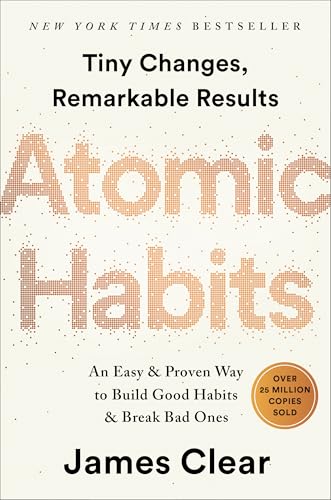
Simon Baron-Cohen
In fiction the writer has some licence to deviate from what is real – it’s a work of art, ultimately, for people’s interest and enjoyment, but I think that the character is very recognisable of many people with Asperger syndrome. I think the author has done a very good job. [source]
Vanessa Keng
I've always loved fiction - mainly crime and legal thrillers, but there's something wonderful about reading a completely different style of writing from what I'm used to. I found myself absorbed in the narrative of guilt and love in The Kite Runner, and The Curious Incident told me a story from a completely different perspective. [source]
Cover unavailable
76
The Highly Sensitive Person: How to Thrive When the World Overwhelms You
Do you have a keen imagination and vivid dreams? Is time alone each day as essential to you as food and water? Are you "too shy" or "too sensitive" according to others? Do noise and confusion quickly overwhelm you? If your answers are yes, you may be a Highly Sensitive Person (HSP).
Most of us feel overstimulated every once in a while, but for the HSP, it's a way of life. In this groundbreaking book, Dr. Elaine Aron, a clinical psychologist, workshop leader, and an HSP herself, shows you how to identify this trait in yourself and make the most of it in everyday situations. Drawing on her many years of research and hundreds of interviews, she shows how you can better understand yourself and your trait to create a fuller, richer life.
…
Recommended by Graham Duncan.
Graham Duncan
Graham Duncan recommended this book on the podcast "The Tim Ferriss Show". [source]
Cover unavailable
77
The Gift of Fear: Survival Signals That Protect Us from Violence
Gavin De Becker
4.1
True fear is a gift. Unwarranted fear is a curse. Learn how to tell the difference.
A date won't take "no" for an answer. The new nanny gives a mother an uneasy feeling. A stranger in a deserted parking lot offers unsolicited help. The threat of violence surrounds us every day. But we can protect ourselves, by learning to trust—and act on—our gut instincts.
In this empowering book, Gavin de Becker, the man Oprah Winfrey calls the nation's leading expert on violent behavior, shows you how to spot even subtle signs of danger—before it's too late. Shattering the myth that most violent acts are unpredictable, de Becker, whose clients include top Hollywood stars and government agencies, offers specific ways to protect yourself and those you love, including how to act when approached by a stranger, when you should fear someone close to you, what to do if you are being stalked, how to uncover the source of anonymous threats or phone calls, the biggest mistake you can make with a threatening person, and more. Learn to spot the danger signals others miss. It might just save your life.
The Gift of Fear by Gavin de Becker shares a bunch of anecdotes from violent attacks, how the victims often knew per instinct that something wasn’t right, but suppressed that instinct for fear of seeming rude or silly or whatever. He also presents a bunch of analytical frameworks for evaluating threats, stalkers, and other menaces. But it’s not a dry textbook. Gavin had a violent upbringing and brings a lot of personal anecdotes and perspectives to bear as well. [source]
Nicholas C. Zakas
If I had a daughter, girlfriend, or wife, I’d highly recommend this book to them. https://t.co/rwuAY7cIXw Less useful for men unless you have reason to fear assassination, but an interesting read nonetheless. [source]
We think we’re relating to other people–but actually we’re all playing games.
Forty years ago, Games People Play revolutionized our understanding of what really goes on during our most basic social interactions. More than five million copies later, Dr. Eric Berne’s classic is as astonishing–and revealing–as it was on the day it was first published. This anniversary edition features a new introduction by Dr. James R. Allen, president of the International Transactional Analysis Association, and Kurt Vonnegut’s brilliant Life magazine review from 1965. We play games all the time–sexual games, marital games, power games with our bosses, and competitive games with our friends. Detailing status contests like “Martini” (I know a better way), to lethal couples combat like “If It Weren’t For You” and “Uproar,” to flirtation favorites like “The Stocking Game” and “Let’s You and Him Fight,” Dr. Berne exposes the secret ploys and unconscious maneuvers that rule our intimate lives. Explosive when it first appeared, Games People Play is now widely recognized as the most original and influential popular psychology book of our time. It’s as powerful and eye-opening as ever.
Most athletes are not born with any natural advantage.
Three world-class chess players were sisters, whose success was planned by their parents before they were even born.
Anders Ericsson has spent thirty years studying The Special Ones, the geniuses, sports stars and musical prodigies. And his remarkable finding, revealed in Peak, is that their special abilities are acquired through training. The innate ‘gift’ of talent is a myth. Exceptional individuals are born with just one unique ability, shared by us all – the ability to develop our brains and bodies through our own efforts.
Anders Ericsson’s research was the inspiration for the popular ‘10,000-hour rule’ but, he tells us, this rule is only the beginning of the story. It’s not just the hours that are important but how you use them. We all have the seeds of excellence within us – it’s merely a question of how to make them grow. With a bit of guidance, you’ll be amazed at what the average person can achieve.
The astonishing stories in Peak prove that potential is what you make it.
This book is a breakthrough, a lyrical, powerful, science-based narrative that actually shows us how to get better (much better) at the things we care about. [source]
Sergey Sapelnyk
PEAK by Anders Ericsson phenomenally explains how experts develop their skills. The author makes a profound claim: you can get significantly better at almost anything. This includes your job, a specific skill, or a hobby. From a career perspective, in most instances, the only barrier to personal development and success is effective effort. This book isn’t specific to a career, however it’s highly applicable to any career. The idea of this book is a meaningful one, since it suggests that many goals are achievable and doable. The key differentiator between someone who achieves these goals or does not, is the amount of calculated effort that’s exerted on this task. I think this book will reinforce to young people that nearly any career path is feasible given that a focused effort is made. Aiming to consistently practice and work on your craft, is a very fundamental mindset to personal growth. [source]
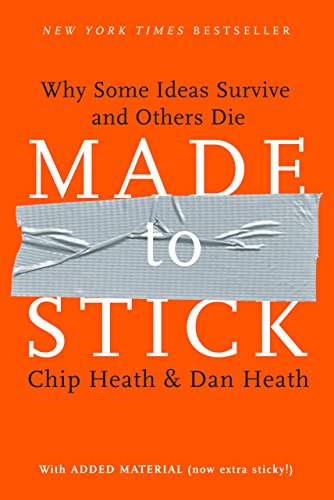
Cover unavailable
80
On Becoming a Person: A Therapist's View of Psychotherapy
Carl Rogers and Peter D. Kramer M.D.
4.0
The late Carl Rogers, founder of the humanistic psychology movement, revolutionized psychotherapy with his concept of "client-centered therapy." His influence has spanned decades, but that influence has become so much a part of mainstream psychology that the ingenious nature of his work has almost been forgotten. A new introduction by Peter Kramer sheds light on the significance of Dr. Rogers's work today. New discoveries in the field of psychopharmacology, especially that of the antidepressant Prozac, have spawned a quick-fix drug revolution that has obscured the psychotherapeutic relationship. As the pendulum slowly swings back toward an appreciation of the therapeutic encounter, Dr. Rogers's "client-centered therapy" becomes particularly timely and important.
…
Cover unavailable
81
The Sociopath Next Door
Martha Stout
4.0
Who is the devil you know?
Is it your lying, cheating ex-husband? Your sadistic high school gym teacher? Your boss who loves to humiliate people in meetings? The colleague who stole your idea and passed it off as her own?
In the pages of The Sociopath Next Door, you will realize that your ex was not just misunderstood. He’s a sociopath. And your boss, teacher, and colleague? They may be sociopaths too.
We are accustomed to think of sociopaths as violent criminals, but in The Sociopath Next Door, Harvard psychologist Martha Stout reveals that a shocking 4 percent of ordinary people—one in twenty-five—has an often undetected mental disorder, the chief symptom of which is that that person possesses no conscience. He or she has no ability whatsoever to feel shame, guilt, or remorse. One in twenty-five everyday Americans, therefore, is secretly a sociopath. They could be your colleague, your neighbor, even family. And they can do literally anything at all and feel absolutely no guilt.
How do we recognize the remorseless? One of their chief characteristics is a kind of glow or charisma that makes sociopaths more charming or interesting than the other people around them. They’re more spontaneous, more intense, more complex, or even sexier than everyone else, making them tricky to identify and leaving us easily seduced. Fundamentally, sociopaths are different because they cannot love. Sociopaths learn early on to show sham emotion, but underneath they are indifferent to others’ suffering. They live to dominate and thrill to win.
The fact is, we all almost certainly know at least one or more sociopaths already. Part of the urgency in reading The Sociopath Next Door is the moment when we suddenly recognize that someone we know—someone we worked for, or were involved with, or voted for—is a sociopath. But what do we do with that knowledge? To arm us against the sociopath, Dr. Stout teaches us to question authority, suspect flattery, and beware the pity play. Above all, she writes, when a sociopath is beckoning, do not join the game.
It is the ruthless versus the rest of us, and The Sociopath Next Door will show you how to recognize and defeat the devil you know.
…
Cover unavailable
82
Musicophilia: Tales of Music and the Brain
Oliver Sacks
4.0
With the same trademark compassion and erudition he brought to The Man Who Mistook His Wife for a Hat, Oliver Sacks explores the place music occupies in the brain and how it affects the human condition. In Musicophilia, he shows us a variety of what he calls “musical misalignments.” Among them: a man struck by lightning who suddenly desires to become a pianist at the age of forty-two; an entire group of children with Williams syndrome, who are hypermusical from birth; people with “amusia,” to whom a symphony sounds like the clattering of pots and pans; and a man whose memory spans only seven seconds-for everything but music. Illuminating, inspiring, and utterly unforgettable, Musicophilia is Oliver Sacks’ latest masterpiece.
…
Recommended by Aniela Gregorek and Justin Boreta.
Aniela Gregorek
I gained a deeper understanding of how music affects our moods and our brains. [source]
Justin Boreta
Justin Boreta said this is one of his most-recommended books. [source]
Cover unavailable
83
Phantoms in the Brain: Probing the Mysteries of the Human Mind
V. S. Ramachandran, Sandra Blakeslee, et al.
4.0
Neuroscientist V.S. Ramachandran is internationally renowned for uncovering answers to the deep and quirky questions of human nature that few scientists have dared to address. His bold insights about the brain are matched only by the stunning simplicity of his experiments -- using such low-tech tools as cotton swabs, glasses of water and dime-store mirrors. In Phantoms in the Brain, Dr. Ramachandran recounts how his work with patients who have bizarre neurological disorders has shed new light on the deep architecture of the brain, and what these findings tell us about who we are, how we construct our body image, why we laugh or become depressed, why we may believe in God, how we make decisions, deceive ourselves and dream, perhaps even why we're so clever at philosophy, music and art. Some of his most notable cases:
A woman paralyzed on the left side of her body who believes she is lifting a tray of drinks with both hands offers a unique opportunity to test Freud's theory of denial. A man who insists he is talking with God challenges us to ask: Could we be "wired" for religious experience? A woman who hallucinates cartoon characters illustrates how, in a sense, we are all hallucinating, all the time. Dr. Ramachandran's inspired medical detective work pushes the boundaries of medicine's last great frontier -- the human mind -- yielding new and provocative insights into the "big questions" about consciousness and the self.
…
Recommended by Lewis Wolpert.
Lewis Wolpert
It’s really about how people who have some physical injury to their brain can have fantasies that bear no relationship to reality whatsoever. [source]
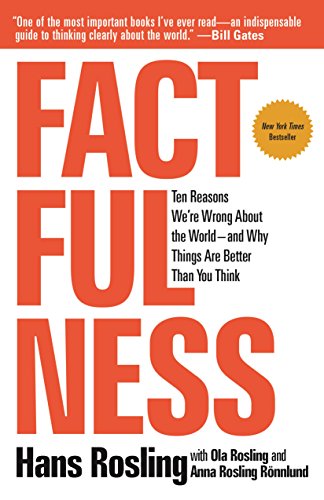
Cover unavailable
84
The Undoing Project: A Friendship That Changed Our Minds
Forty years ago, Israeli psychologists Daniel Kahneman and Amos Tversky wrote a series of breathtakingly original papers that invented the field of behavioral economics. One of the greatest partnerships in the history of science, Kahneman and Tversky’s extraordinary friendship incited a revolution in Big Data studies, advanced evidence-based medicine, led to a new approach to government regulation, and made much of Michael Lewis’s own work possible. In The Undoing Project, Lewis shows how their Nobel Prize–winning theory of the mind altered our perception of reality.
Here are some of my favorite reads from 2017. Lots of friends and colleagues send me book suggestions and it's impossible to squeeze them all in. I continue to be super curious about how digital and tech are enabling people to transform our lives but I try to read a good mix of books that apply to a variety of areas and stretch my thinking more broadly. [source]
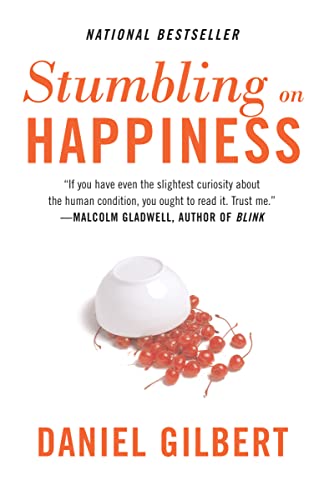
Michael Lewis is just a great storyteller, and tell a story in this he does. It’s about two Israeli psychologists, their collaboration on the irrationality of the human mind, and the milestones they set with concepts like loss-aversion, endowment effect, and other common quirks that the assumption of rationality doesn’t account for. It’s a bit long-winded, but if you like Lewis’ style, you probably won’t mind it. The scientific recaps could have happened in a book 1/10th the length, but then you’d miss out on the character portrayals of these two fascinating scientists. [source]
Francisco Perez Mackenna
This summer, Mackenna is learning more about the birth of behavioral economics, the psychology of white collar crime, and the restoration of American cities as locations of economic growth. [source]
Cover unavailable
85
When Nietzsche Wept
Irvin D. Yalom
4.0
In 19th-century Vienna, a drama of love, fate, and will is played out amid the intellectual ferment that defined the era.
Josef Breuer, one of the founding fathers of psychoanalysis, is at the height of his career. Friedrich Nietzsche, Europe's greatest philosopher, is on the brink of suicidal despair, unable to find a cure for the headaches and other ailments that plague him. When he agrees to treat Nietzsche with his experimental "talking cure", Breuer never expects that he, too, will find solace in their sessions. Only through facing his own inner demons can the gifted healer begin to help his patient.
In When Nietzsche Wept, Irvin Yalom blends fact and fiction, atmosphere and suspense to unfold an unforgettable story about the redemptive power of friendship.
…
Recommended by Alexandra Stroe, Mark Pellegrino, Sid Lowe, and 1 others.
Alexandra Stroe
One of my favorite non-business books is When Nietzsche Wept by Irvin D. Yalom. His books combine psychotherapy, philosophy and science fiction and they address issues like death, growing old, love and the meaning of life in a very honest way. Many of his books give you an insight into the conversations between the psychotherapist and his patients and the interaction between them is always human and sincere. The therapist makes mistakes, sometimes says the wrong thing and this makes the story exciting and extremely real. [source]
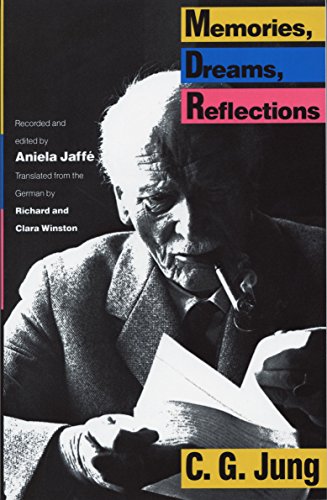
Mark Pellegrino
@TeresaRJ3 He was a bundle of contradictions... read: When Nietzsche Wept. Great book. [source]
Sid Lowe
This is a thing of beauty. @45footballCom has an astonishing collection of football singles. And now 900 or so sleeves are in a brilliant book. Here come some lovely ones... https://t.co/H1xTZj58Ec [source]
Cover unavailable
86
The Language Instinct: How the Mind Creates Language
The classic book on the development of human language by the world’s leading expert on language and the mind.
In this classic, the world's expert on language and mind lucidly explains everything you always wanted to know about language: how it works, how children learn it, how it changes, how the brain computes it, and how it evolved. With deft use of examples of humor and wordplay, Steven Pinker weaves our vast knowledge of language into a compelling story: language is a human instinct, wired into our brains by evolution. The Language Instinct received the William James Book Prize from the American Psychological Association and the Public Interest Award from the Linguistics Society of America. This edition includes an update on advances in the science of language since The Language Instinct was first published.
…
Recommended by Lane Greene and Simon Baron-Cohen.
Lane Greene
There are two achievements in this book. One is to smuggle Linguistics 101 into a popular book, which is just fantastic. The other is his own argument about the nature of language, and the title says it all. [source]
Simon Baron-Cohen
It’s a really wonderful example of what you can do: take research into something as fundamental to human nature as language and make it accessible to a wide audience. [source]
Cover unavailable
87
The Gift of Therapy: An Open Letter to a New Generation of Therapists and Their Patients
Irvin Yalom
4.0
Cover unavailable
88
The Drama of the Gifted Child: The Search for the True Self
Alice Miller
4.0
The bestselling book on childhood trauma and the enduring effects of repressed anger and pain
Why are many of the most successful people plagued by feelings of emptiness and alienation? This wise and profound book has provided millions of readers with an answer--and has helped them to apply it to their own lives.
Far too many of us had to learn as children to hide our own feelings, needs, and memories skillfully in order to meet our parents' expectations and win their "love." Alice Miller writes, "When I used the word 'gifted' in the title, I had in mind neither children who receive high grades in school nor children talented in a special way. I simply meant all of us who have survived an abusive childhood thanks to an ability to adapt even to unspeakable cruelty by becoming numb.... Without this 'gift' offered us by nature, we would not have survived." But merely surviving is not enough. The Drama of the Gifted Child helps us to reclaim our life by discovering our own crucial needs and our own truth.
All about the fact that stuff happens to us as children, negative things happen. Then, we adapt to those things by taking on certain defensive ways of being. And then, we live the rest of our lives from those defensive modes. [source]
Cover unavailable
89
Mistakes Were Made (But Not by Me): Why We Justify Foolish Beliefs, Bad Decisions, and Hurtful Acts
Why do people dodge responsibility when things fall apart? Why the parade of public figures unable to own up when they screw up? Why the endless marital quarrels over who is right? Why can we see hypocrisy in others but not in ourselves? Are we all liars? Or do we really believe the stories we tell?
Renowned social psychologists Carol Tavris and Elliot Aronson take a compelling look into how the brain is wired for self-justification. When we make mistakes, we must calm the cognitive dissonance that jars our feelings of self-worth. And so we create fictions that absolve us of responsibility, restoring our belief that we are smart, moral, and right -- a belief that often keeps us on a course that is dumb, immoral, and wrong.
Backed by years of research and delivered in lively, energetic prose, Mistakes Were Made (But Not by Me) offers a fascinating explanation of self-deception -- how it works, the harm it can cause, and how we can overcome it.
A book about cognitive dissonance that looks at common weaknesses and biases in human thinking. Peter wants to ensure he goes through life without being too sure of himeself, and this book helps him to recalibrate. [source]
Cognitive Dissonance is one of the most powerful and delusionary forces in the world. [source]
David Kramaley
When asked what books he would recommend to youngsters interested in his professional path, David mentioned Mistakes Were Made (But Not by Me). [source]
About the Book: The Paradox of Choice. In the spirit of Alvin Tofflers Future Shock, a social critique of our obsession with choice, and how it contributes to anxiety, dissatisfaction and regret. Whether we're buying a pair of jeans, ordering a cup of coffee, selecting a long-distance carrier, applying to college, choosing a doctor, or setting up a 401K, everyday decisions have become increasingly complex due to the overwhelming abundance of choice with which we are presented. In The Paradox of Choice, Barry Schwartz explains why too much of a good thing has proven detrimental to our psychological and emotional well-being. In accessible, engaging, and anecdotal prose, Schwartz explains how a culture that thrives on the availability of constantly evolving options can also foster profound dissatisfaction and self-blame in individuals, which can lead to a paralysis in decision making and, in some cases, depression. With the latest studies on how we make choices in our personal and professional lives, Schwartz offers practical advice on how to focus on the right choices, and how to derive greater satisfaction from choices that we do make. About the Author: Barry Schwartz Barry Schwartz is the Dorwin Cartwright Professor of Social Theory and Social Action at Swarthmore College. He is the author of several books, including The Battle for Human Nature: Science, Morality and Modern Life and The Costs of Living: How Market Freedom Erodes the Best Things in Life. His articles have appeared in many of the leading journals in his field, including the American Psychologist. He lives in Philadelphia, PA.
A few months ago, I was drinking a Noah’s Mill whiskey (cute) with my good buddy Brian Balfour and talking about life... During the conversation, we got on the topic of books that changed our lives. I want to share them with you. I judge a book's success if a year later I'm still using at least 1 thing from the book. [source]
Cover unavailable
91
How the Mind Works
Steven Pinker
4.0
In this extraordinary bestseller, Steven Pinker, one of the world's leading cognitive scientists, does for the rest of the mind what he did for language in his 1994 book, The Language Instinct. He explains what the mind is, how it evolved, and how it allows us to see, think, feel, laugh, interact, enjoy the arts, and ponder the mysteries of life. And he does it with the wit that prompted Mark Ridley to write in the New York Times Book Review, "No other science writer makes me laugh so much. . . . [Pinker] deserves the superlatives that are lavished on him." The arguments in the book are as bold as its title. Pinker rehabilitates some unfashionable ideas, such as that the mind is a computer and that human nature was shaped by natural selection, and challenges fashionable ones, such as that passionate emotions are irrational, that parents socialize their children, and that nature is good and modern society corrupting. Winner of the Los Angeles Times Book Prize A New York Times Notable Book of the Year and Publishers Weekly Best Book of 1997 Featured in Time magazine, the New York Times Magazine, The New Yorker, Nature, Science, Lingua Franca, and Science Times Front-page reviews in the Washington Post Book World, the Boston Globe Book Section, and the San Diego Union Book Review
…
Recommended by Dan Kaminsky.
Dan Kaminsky
@DanielMiessler @balajis How The Mind Works being the formative book of my intellectual career makes this particularly interesting. I don’t always agree with Pinker but that’s not a requirement. [source]
Cover unavailable
92
Incognito: The Secret Lives of the Brain
David Eagleman
4.0
If the conscious mind—the part you consider you—accounts for only a tiny fraction of the brain’s function, what is all the rest doing? This is the question that David Eagleman—renowned neuroscientist and acclaimed author of Sum—answers in a book as accessible and entertaining as it is deeply informed by startling, up-to-the-minute research.
At a conference I recently attended, David talked about his work. It's all anyone discussed for the next two days. This book will help you understand the meat/electricity/chemicals you're carrying around inside your head better than you ever have before. [source]
Louis Grenier
“Incognito: The Secret Lives of the Brain” and “Predictably Irrational” are 2 very good books on psychology that I think you should read. [source]
Cover unavailable
93
The Archetypes and the Collective Unconscious (Collected Works 9i)
C. G. Jung
4.0
Essays which state the fundamentals of Jung's psychological system: "On the Psychology of the Unconscious" and "The Relations Between the Ego and the Unconscious," with their original versions in an appendix.
Cover unavailable
94
Darkness Visible: A Memoir of Madness
William Styron
4.0
A work of great personal courage and a literary tour de force, this bestseller is Styron's true account of his descent into a crippling and almost suicidal depression. Styron is perhaps the first writer to convey the full terror of depression's psychic landscape, as well as the illuminating path to recovery.
Recommended by David Biro, Johanna Reiss, and Lewis Wolpert.
David Biro
Styron rightly talks of the ferocious inwardness of pain and the aching solitude of pain. These feelings occur in all types of chronic pain, whether psychological or physical. [source]
Johanna Reiss
He is just about to kill himself when he listens to Brahms’s Alto Rhapsody. The voice of the alto makes him realize that his mother used to sing that piece to him when he was small. [source]
Lewis Wolpert
There’s a joke about depression that if you describe it you haven’t had one. But the difficulty in describing depression is exactly why Styron’s Darkness Visible is such a masterpiece. It’s not a novel. It’s about his own depression, and it’s extraordinary – one of the best. [source]
Cover unavailable
95
How We Decide
Jonah Lehrer
4.0
The first book to use the unexpected discoveries of neuroscience to help us make the best decisions.
Since Plato, philosophers have described the decision-making process as either rational or emotional: we carefully deliberate, or we “blink” and go with our gut. But as scientists break open the mind’s black box with the latest tools of neuroscience, they’re discovering that this is not how the mind works. Our best decisions are a finely tuned blend of both feeling and reason—and the precise mix depends on the situation. When buying a house, for example, it’s best to let our unconscious mull over the many variables. But when we’re picking a stock, intuition often leads us astray. The trick is to determine when to use the different parts of the brain, and to do this, we need to think harder (and smarter) about how we think.
Jonah Lehrer arms us with the tools we need, drawing on cutting-edge research as well as the real-world experiences of a wide range of “deciders”—from airplane pilots and hedge fund investors to serial killers and poker players.
Lehrer shows how people are taking advantage of the new science to make better television shows, win more football games, and improve military intelligence. His goal is to answer two questions that are of interest to just about anyone, from CEOs to firefighters: How does the human mind make decisions? And how can we make those decisions better?
The Secret’s 10th Anniversary Edition includes a new foreword by Rhonda Byrne, and 10 of the most life-changing insights she’s had over the last 10 years of practicing and living The Secret every day. The 10 insights alone will accelerate your understanding and mastery of the law of attraction.
Recommended by Ntwana Kasi. and Woman In Purpose.
Ntwana Kasi.
@Sibongubuhle_N Don't you have pdf of it i love this book [source]
The Moral Animal: Why We Are the Way We Are: The New Science of Evolutionary Psychology
Robert Wright
4.0
Are men literally born to cheat? Does monogamy actually serve women's interests? These are among the questions that have made The Moral Animal one of the most provocative science books in recent years. Wright unveils the genetic strategies behind everything from our sexual preferences to our office politics--as well as their implications for our moral codes and public policies. Illustrations.
This is probably the definitive beginner text on evolutionary psychology and one of the easiest to get into. It’s a little depressing at first, realizing how ruthless many of our so called “good” feelings are. But then you realize that truth is better than ignorance, and you emerge seeing the world as it truly is for the first time. [source]
Cover unavailable
98
The Upside of Irrationality: The Unexpected Benefits of Defying Logic at Work and at Home
Dan Ariely
4.0
The provocative follow-up to the New York Times bestseller Predictably Irrational
Why can large bonuses make CEOs less productive? How can confusing directions actually help us? Why is revenge so important to us? Why is there such a big difference between what we think will make us happy and what really makes us happy?
In his groundbreaking book Predictably Irrational, social scientist Dan Ariely revealed the multiple biases that lead us into making unwise decisions. Now, in The Upside of Irrationality, he exposes the surprising negative and positive effects irrationality can have on our lives. Focusing on our behaviors at work and in relationships, he offers new insights and eye-opening truths about what really motivates us on the job, how one unwise action can become a long-term habit, how we learn to love the ones we're with, and more.
Drawing on the same experimental methods that made Predictably Irrational one of the most talked-about bestsellers of the past few years, Ariely uses data from his own original and entertaining experiments to draw arresting conclusions about how—and why—we behave the way we do. From our office attitudes, to our romantic relationships, to our search for purpose in life, Ariely explains how to break through our negative patterns of thought and behavior to make better decisions. The Upside of Irrationality will change the way we see ourselves at work and at home—and cast our irrational behaviors in a more nuanced light.
…
Recommended by Fabrice Grinda, Rand Fishkin, and 1 others.
Fabrice Grinda
I have lots of books to recommend, but they are not related to my career path. The only one that is remotely related is Peter Thiel’s Zero to One. That said here are books I would recommend. [source]
Another excellent book from Ariely, with a lot of new research and a personal take that helps keep the text moving. [source]
Cover unavailable
99
Sybil: The Classic True Story of a Woman Possessed by Sixteen Personalities
Flora Rheta Schreiber
4.0
Here is the unbelievable yet true story of Sybil Dorsett, a survivor of terrible childhood abuse who as an adult was a victim of sudden and mysterious blackouts. What happened during those blackouts has made Sybil's experience one of the most famous psychological cases in the world.
Cover unavailable
100
Women Who Run With the Wolves: Myths and Stories of the Wild Woman Archetype
Clarissa Pinkola Estés
4.0
Within every woman there is a wild and natural creature, a powerful force, filled with good instincts, passionate creativity, and ageless knowing. Her name is Wild Woman, but she is an endangered species. Clarissa Pinkola Estes, Ph.D., Jungian analyst and cantadora storyteller shows how women's vitality can be restored through what she calls "psychic archeological digs" into the ruins of the female unconsious. Using multicultural myths, fairy tales, folk tales, and stories, Dr. Estes helps women reconnect with the healthy, instinctual, visionary attributes of the Wild Woman archetype.
Dr. Estes has created a new lexicon for describing the female psyche. Fertile and life-giving, it is a psychology of women in the truest sense, a knowing of the soul.
I’m reading more books at the same time. Guilty. Some of them are Tools of Titans - Tim Ferriss, My Berlin Child – Anne Wiazemsky, Women who Run with the Wolves - Clarissa Pinkola Estés. Tim is full of lessons to learn, remember & implement, I’ll see what the rest of the books will unfold. [source]