 1
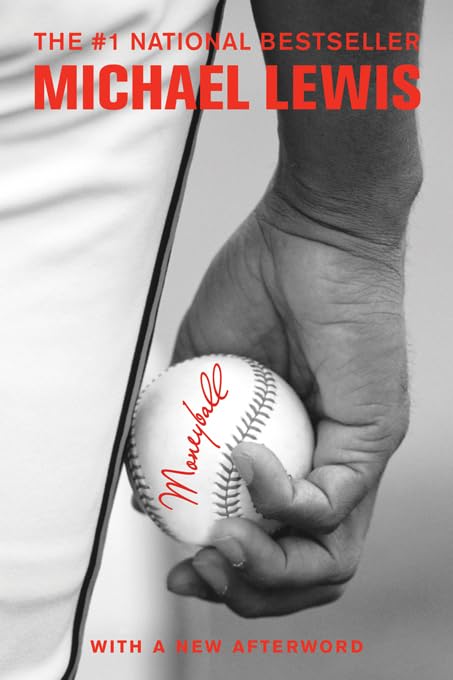
1Moneyball: The Art of Winning an Unfair Game
Moneyball is a quest for something as elusive as the Holy Grail, something that money apparently can't buy: the secret of success in baseball. The logical places to look would be the front offices of major league teams and the dugouts, perhaps even in the minds of the players themselves. Michael Lewis mines all these possibilities - his intimate and original portraits of big league ballplayers are alone worth the price of admission - but the real jackpot is a cache of numbers - numbers! - collected over the years by a strange brotherhood of amateur baseball enthusiasts: software engineers, statisticians, Wall Street analysts, layers, and physics professors.
What these geek numbers show - no, prove - is that the traditional yardsticks of success for players and teams are fatally flawed. Even the box score misleads us by ignoring the crucial importance of the humble base on balls. The information has been around for years, and nobody inside Major League Baseball paid it any mind. And then came Billy Beane, general manager of the Oakland Athletics.
Billy paid attention to those numbers - with the second-lowest payroll in baseball at his disposal, he had to - and this book records his astonishing experiment in finding and fielding a team that nobody else wanted. Moneyball is a roller coaster ride: before the 2002 season opens, Oakland must relinquish its three most prominent (and expensive) players, is written off by just about everyone, and comes roaring back to challenge the American League record for consecutive wins.
In a narrative full of fabulous characters and brilliant excursions into the unexpected, Lewis shows us how and why the new baseball knowledge works. He also sets up a sly and hilarious morality tale: Big Money, like Goliath, is always supposed to win... how can we not cheer for David?
What these geek numbers show - no, prove - is that the traditional yardsticks of success for players and teams are fatally flawed. Even the box score misleads us by ignoring the crucial importance of the humble base on balls. The information has been around for years, and nobody inside Major League Baseball paid it any mind. And then came Billy Beane, general manager of the Oakland Athletics.
Billy paid attention to those numbers - with the second-lowest payroll in baseball at his disposal, he had to - and this book records his astonishing experiment in finding and fielding a team that nobody else wanted. Moneyball is a roller coaster ride: before the 2002 season opens, Oakland must relinquish its three most prominent (and expensive) players, is written off by just about everyone, and comes roaring back to challenge the American League record for consecutive wins.
In a narrative full of fabulous characters and brilliant excursions into the unexpected, Lewis shows us how and why the new baseball knowledge works. He also sets up a sly and hilarious morality tale: Big Money, like Goliath, is always supposed to win... how can we not cheer for David?



You would think that the relationship between training and skill would be utterly obvious in sports, but apparently it isn’t. [source]

Daniel Hamermesh
What the book is really about is a guy who is using some econometrics to predict which players will do better in advancing wins, which is a remarkable use of economic thinking. [source]

David Papineau
It’s a parable of the disinclination of people in general to base their practices on evidence, a parable for evidence-based policy in general. [source]