Love Your Job: The 4 Rules That Might Surprise You

Love Your Job: The 4 Rules That Might Surprise You

Do you love your job? Have you been looking for this love in all the wrong places? Cal Newport offers four rules for loving your job that he learned through his own experience and research. He found that, contrary to popular opinion, the key isn’t in following your passion. Rather, the key lies in developing skills that you can cash in for the job you want. Keep reading to learn how to love your job.

Esther Perel: Violent Sexual Fantasies Are Normal

Esther Perel: Violent Sexual Fantasies Are Normal

Is it common to fantasize about violent sex? What do violent sexual fantasies tell us about ourselves? Sexual fantasies are a natural, healthy part of adult sexuality. And it’s not actually uncommon to fantasize about sexual aggression. Yet, we feel like there’s something wrong with us for coming up with (and enjoying) these scenarios.  Here is what aggressive sexual fantasies tell us about ourselves, according to couples therapist Esther Perel.

The Need for Viewpoint Diversity in Colleges

The Need for Viewpoint Diversity in Colleges

In what ways are colleges straying away from viewpoint diversity? Why are opposing viewpoints important for a stimulating, college environment? In The Coddling of the American Mind, Jonathan Haidt and Greg Lukianoff believe that left-leaning professors are far outnumbering conservative professors which is leading to an environment that is less tolerant of viewpoint diversity. They share examples of individuals who have been driven out due to their ideologies. Keep reading for Jonathan Haidt and Greg Lukianoff’s take on the growing lack of viewpoint diversity in colleges.

William Henry Seward: Survivor of an Assassination Plot

William Henry Seward: Survivor of an Assassination Plot

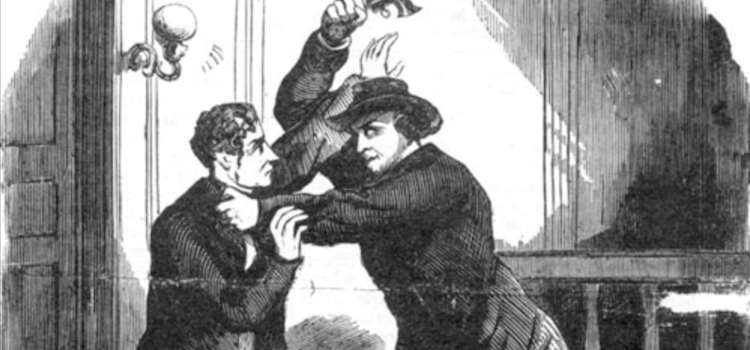
How did the plan to kill William Henry Seward tie in with the Lincoln assassination? What happened to Seward and his attacker? In addition to killing Lincoln, John Wilkes Booth wanted to assassinate Vice President Andrew Johnson and Secretary of State William Henry Seward. He hoped that killing several key government officials would rally Confederate sympathizers and veterans to renew their fight. Read more to learn what happened to Seward on the night that Lincoln was assassinated.

How to Be Your Authentic Self: Brené Brown’s Practices

How to Be Your Authentic Self: Brené Brown’s Practices

Do you want to know how to be your authentic self? Are you being held back by other people’s expectations, your own perfectionism, or your distrust of your intuition? Brené Brown’s first five practices for wholehearted living focus on how to be your authentic self. She discusses the importance of saying “no,” the dangers of perfectionism, the fear that some people feel when things are going too well, and more. Continue reading for Brené Brown’s first five practices for wholehearted living.

How to Interpret Feedback: Drop Your Ego

How to Interpret Feedback: Drop Your Ego

Are you sensitive to feedback? What do you think is behind your reaction? According to communication experts Douglas Stone and Sheila Heen, how we think about and interpret feedback has a lot to do with the stories we tell ourselves. If the feedback challenges their story, people tend to become defensive or reject the insight. In this article, we’ll discuss why some people find it difficult to receive feedback, and how to interpret feedback more objectively.

Naked Economics: Undressing the Dismal Science

Naked Economics: Undressing the Dismal Science

What is Charles Wheelan’s Naked Economics about? What are the key takeaways? In Naked Economics, bestselling author Charles Wheelan strips away the complexity from some of the most powerful theories in economics, allowing readers with little or no background in the subject to understand many of the field’s most fundamental concepts. He skips over the more technical, mathematics-based aspects of the discipline and concentrates instead on the logical pieces of how and why people behave in certain ways, how markets function, and how governments can design incentive systems that encourage healthy economies. Below is a brief overview of the key

Ryan Holiday: How to Let Go of Ego

The 25 Cognitive Biases: The Kruger Effect

What exactly is an ego? How does having an inflated ego distort your perception of yourself and others? According to Ryan Holiday, the author of Ego Is the Enemy, ego is an unhealthy belief in one’s own importance that distorts our perception of the world so that we see ourselves as central figures and see everyone else as either subservient or oppositional. Further, he argues that seeing the world this way causes a host of adverse consequences such as difficulty accomplishing things (because ego causes us to overestimate our abilities) and connecting with people. In this article, we’ll discuss Holiday’s advice

Healthy Nuts and Seeds You Should Include in Your Diet

Healthy Nuts and Seeds You Should Include in Your Diet

What are the main nutrients contained in nuts and seeds? Why do nutritionists recommend eating them despite their high-calorie content? What health benefits do they provide? Nuts and seeds are both nutritional powerhouses chock full of healthy fats, protein, and fiber. Many studies have shown nuts and seeds have some remarkable health properties such as the reduced risk of heart disease, lowering of blood pressure, and prevention of cancer proliferation. In their book How Not to Die, Gene Stone and Michael Greger hail healthy nuts and seeds for their disease-fighting benefits. Here are the key recommendations.

Why Are Young People So Sensitive These Days?

Why Are Young People So Sensitive These Days?

Why do the authors of The Coddling of the American Mind think that young people today are too fragile and sensitive? What five solutions do the authors provide to the situation? In their book The Coddling of the American Mind, authors Jonathan Haidt and Greg Lukianoff ponder the question of why people are so sensitive and fragile these days. They came up with five major factors: political polarization, social media, safety parenting, bureaucratization on college campuses, and the evolving social justice norms. Keep reading to learn how the authors think these five factors are making young people today more fragile.