Humble Yourself Before God: How to Practice Humility

Humble Yourself Before God: How to Practice Humility

Why should you humble yourself before God? Why is humility so important? Rampant in 21st-century consumer culture, self-importance is the idea that you’re awesome, and even more: that fixating on your own awesomeness is a great thing. To combat this, it’s important to humble yourself before God. Humility involves having a proper estimation of yourself through recognizing that God is awesome and that your calling on earth is to serve other people. Keep reading to find out how to humble yourself before God—and why you should.

The Role of Extrinsic Rewards in Motivation

The Role of Extrinsic Rewards in Motivation

What role do rewards play in motivation? Have you ever done something purely for fun, then started getting paid for it? How did getting paid change how you felt about the work, and how motivated you were? According to Daniel H. Pink, the author of Drive, rewards—specifically, extrinsic rewards—are only effective when the job is low-skill, routine and, monotone. However, when the job requires creativity and intelligence, extrinsic rewards actually diminish motivation and performance. In this article, you’ll learn about the psychology behind rewards and motivation. Specifically, we’ll discuss why extrinsic rewards are ineffective in motivating performance in the long-term.

Memory Hooks: The Blue-Eyes Brown-Eyes Exercise

Memory Hooks: The Blue-Eyes Brown-Eyes Exercise

What was the blue-eyes brown-eyes exercise? What can it teach us about memory hooks? School teacher Jane Elliott’s blue-eyes brown-eyes exercise in 1968 taught her students about discrimination. That lesson is still powerful to this day. It also teaches us how to use memory hooks to create a message that sticks with people. Read more to learn about memory hooks and the blue-eyes brown-eyes exercise.

How to Stay True to Your Organizational Purpose

How to Find Your Major Definite Purpose in Life

What is organizational purpose? Do you feel like you often lose sight of your purpose as change gets in the way? Organizational purpose is the grand vision of an organization that pulls its different functions together. Although most businesses will have a purpose, many struggle to stay true to it as circumstances get in the way. There are five techniques to stay true to your and your organization’s orienting purpose as you navigate change.

Frances Perkins: A Biography of Self-Sacrifice

Frances Perkins: A Biography of Self-Sacrifice

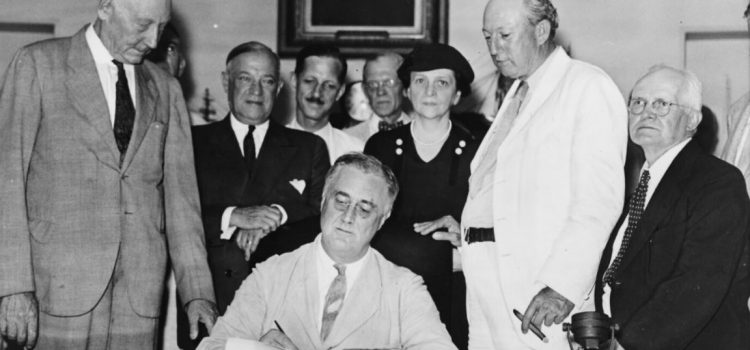
Who was Frances Perkins? In what ways did Perkins assist in making the New Deal? In his book The Road to Character, David Brooks talks about several historical figures who acted selflessly to benefit the greater good. The first person Brooks outlines is Frances Perkins, the woman behind the New Deal. Here is a brief overview of Frances Perkins’s biography, as written by David Brooks.

The Psychology of Confidence: Where It Stems From

The Psychology of Confidence: Where It Stems From

What are some things you feel confident about? What do you think gives you that confidence? Where does confidence stem from in general? According to Katty Kay and Claire Shipman, the authors of The Confidence Code, real confidence stems from mastery. You can only be truly confident about your ability to do something because you have the hard evidence for it—you’ve worked hard and pushed through the difficulties to master it. In this article, you’ll learn about the psychology of confidence: what confidence is, why it’s important, and how women seem predisposed to have less of it than men.

The Purpose Driven Life Study Guide

The Purpose Driven Life Study Guide

Have you read The Purpose Driven Life? Have you successfully applied the concepts to your life? Pastor Rick Warren wrote The Purpose Driven Life to help you find your purposes and learn how to fulfill them. We’ve put together several exercises to help you apply the principles in the book. These can be done individually or with a group. Keep reading for these practical exercises.

Why Outside Ideas Are Critical for Dramatic Change

Why Outside Ideas Are Critical for Dramatic Change

Is your organization in dire need of a change but you don’t know where to start? How can looking to outside sources help expand your options? In the fable Our Iceberg Is Melting, the penguins realize that their iceberg will not survive the winter but they can’t come up with solutions on how to fix it. Only when a seagull pays them a visit do they realize that their best course of action is to leave the iceberg altogether, something they never considered. Here is why outside ideas are crucial when it comes to making big changes.

Tax-Advantaged Accounts: What You Need to Know

Tax-Advantaged Accounts: What You Need to Know

What are tax-advantaged accounts? What kind of financial assets should you use a tax-advantaged account for? Tax-advantaged accounts are tax-deferred or tax-exempt. You should use these accounts, such as IRAs and 401(k)s, for holding tax-inefficient assets (e.g. bond funds that generate taxable interest, actively managed stock funds, CDs, and REITs). They pay interest and non-qualified dividends and produce capital gains distributions. Below, we’ll take a look at the basic types of tax-advantaged accounts and their key characteristics.

Beta Risk: How Systemic Risk Yields High Returns

Beta Risk: How Systemic Risk Yields High Returns

What is a beta risk? What is the difference between systematic vs unsystematic risk? Does this particular kind of risk involve higher premiums? The key characteristic of systematic risk, better known as “beta risk” is that it cannot be diversified away by having a diverse portfolio. And researchers found that because it can’t be diversified away, beta risk is the only kind of risk that pays a “risk premium”—that is, a higher return for the higher risk. Keep reading for more about beta risk, and whether it actually leads to a higher premium.