We've ranked the best human physiology books using expert recommendations, sales data, and millions of reader ratings. At Shortform, we know books. Our book guides are the best in the world. Learn why.
Man's Search for Meaning has riveted generations of readers with its descriptions of life in Nazi death camps and its lessons for spiritual survival. Between 1942 and 1945 psychiatrist Viktor Frankl labored in four different camps, including Auschwitz, while his parents, brother, and pregnant wife perished. Based on his own experience and the stories of his many patients, Frankl argues that we cannot avoid suffering but we can choose how to cope with it, find meaning in it, and move forward with renewed purpose. Frankl's theory—known as logotherapy, from the Greek word logos ("meaning")—holds that our primary drive in life is not pleasure, as Freud maintained, but the discovery and pursuit of what we personally find meaningful. In the decades since its first publication in 1959, Man's Search for Meaning has become a classic, with more than twelve million copies in print around the world. A 1991 Library of Congress survey that asked readers to name a "book that made a difference in your life" found Man's Search for Meaning among the ten most influential books in America. At once a memoir, a meditation, a treatise, and a history, it continues to inspire us all to find significance in the very act of living. (back cover)
…
Recommended by Tony Robbins, Dustin Moskovitz, Ev Williams, and 60 others.
Another book that I’ve read dozens of times. It taught me that if you change the meaning, you change everything. Meaning equals emotion, and emotion equals life. [source]
Dustin Moskovitz
Co-founder/Facebook and Asana
Dustin Moskovitz recommended this book on Twitter. [source]
I read it while spending ten days in the ICU of Bellevue hospital trying to reattach my finger from a ring avulsion accident in my kitchen. It talks about the meaning of life, and I believe you come out a better person from reading it. [source]
Major New York Times bestseller Winner of the National Academy of Sciences Best Book Award in 2012 Selected by the New York Times Book Review as one of the best books of 2011 A Globe and Mail Best Books of the Year 2011 Title One of The Economist's 2011 Books of the Year One of The Wall Street Journal's Best Nonfiction Books of the Year 2011 2013 Presidential Medal of Freedom Recipient
In the international bestseller, Thinking, Fast and Slow, Daniel Kahneman, the renowned psychologist and winner of the Nobel Prize in Economics, takes us on a groundbreaking tour of the mind and explains the two systems that drive the way we think. System 1 is fast, intuitive, and emotional; System 2 is slower, more deliberative, and more logical. The impact of overconfidence on corporate strategies, the difficulties of predicting what will make us happy in the future, the profound effect of cognitive biases on everything from playing the stock market to planning our next vacation—each of these can be understood only by knowing how the two systems shape our judgments and decisions. Engaging the reader in a lively conversation about how we think, Kahneman reveals where we can and cannot trust our intuitions and how we can tap into the benefits of slow thinking. He offers practical and enlightening insights into how choices are made in both our business and our personal lives—and how we can use different techniques to guard against the mental glitches that often get us into trouble. Winner of the National Academy of Sciences Best Book Award and the Los Angeles Times Book Prize and selected by The New York Times Book Review as one of the ten best books of 2011, Thinking, Fast and Slow is destined to be a classic.
A few months ago, Mr. Obama read “Thinking, Fast and Slow,” by Daniel Kahneman, about how people make decisions — quick, instinctive thinking versus slower, contemplative deliberation. For Mr. Obama, a deliberator in an instinctive business, this may be as instructive as any political science text. [source]
Captivating dive into human decision making, marred by inclusion of several/many? psychology studies that fail to replicate. Will stand as a cautionary tale? [source]
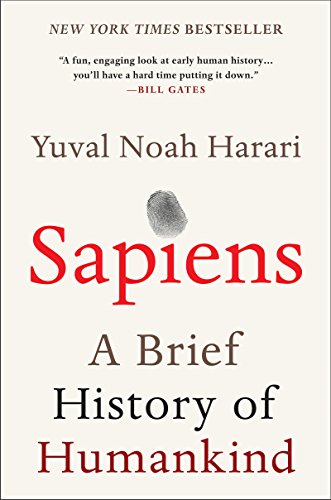
100,000 years ago, at least six human species inhabited the earth. Today there is just one. Us. Homo sapiens.
How did our species succeed in the battle for dominance? Why did our foraging ancestors come together to create cities and kingdoms? How did we come to believe in gods, nations and human rights; to trust money, books and laws; and to be enslaved by bureaucracy, timetables and consumerism? And what will our world be like in the millennia to come?
In Sapiens, Dr Yuval Noah Harari spans the whole of human history, from the very first humans to walk the earth to the radical – and sometimes devastating – breakthroughs of the Cognitive, Agricultural and Scientific Revolutions. Drawing on insights from biology, anthropology, paleontology and economics, he explores how the currents of history have shaped our human societies, the animals and plants around us, and even our personalities. Have we become happier as history has unfolded? Can we ever free our behaviour from the heritage of our ancestors? And what, if anything, can we do to influence the course of the centuries to come?
Bold, wide-ranging and provocative, Sapiens challenges everything we thought we knew about being human: our thoughts, our actions, our power ... and our future.
Both Melinda and I read this one, and it has sparked lots of great conversations at our dinner table. Harari takes on a daunting challenge: to tell the entire history of the human race in just 400 pages. He also writes about our species today and how artificial intelligence, genetic engineering, and other technologies will change us in the future. Although I found things to disagree with—especially Harari’s claim that humans were better off before we started farming—I would recommend Sapiens to anyone who’s interested in the history and future of our species. [source]
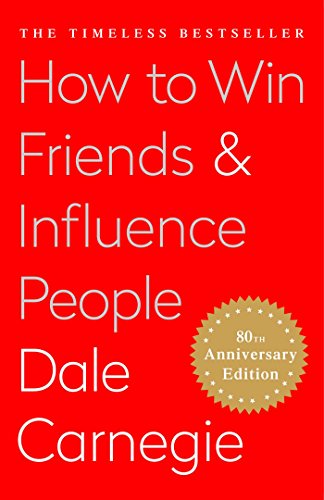
You can go after the job you want—and get it! You can take the job you have—and improve it! You can take any situation—and make it work for you!
Dale Carnegie’s rock-solid, time-tested advice has carried countless people up the ladder of success in their business and personal lives. One of the most groundbreaking and timeless bestsellers of all time, How to Win Friends & Influence People will teach you:
-Six ways to make people like you -Twelve ways to win people to your way of thinking -Nine ways to change people without arousing resentment
And much more! Achieve your maximum potential—a must-read for the twenty-first century with more than 15 million copies sold!
…
Recommended by Dave Ramsey, Daymond John, Dustin Moskovitz, and 58 others.
When Stephen Covey first released The Seven Habits of Highly Effective People, the book became an instant rage because people suddenly got up and took notice that their lives were headed off in the wrong direction; and more than that, they realized that there were so many simple things they could do in order to navigate their life correctly. This book was wonderful education for people, education in how to live life effectively and get closer to the ideal of being a ‘success’ in life.
But not everyone understands Stephen Covey’s model fully well, or maybe there are some people who haven’t read it yet. This is definitely true because we still see so much failure all around us. Now, I am not saying that by using Covey’s model, or anyone else’s model for that matter, you can become a sure-shot success, but at least we should have seen many more successes around us already judging by the number of copies the book has sold! So, where is the shortcoming?
There are two main problems here, and we are talking only about the people who have read the book already. The first problem is that most people are too lazy to implement the ideals of Stephen Covey in their lives. They consider his masterpiece of a book as a mere coffee-table book or a book that you use for light reading when you are traveling and then forget all about it. They do not realize that this book contains life-changing information. Or, they take the information and do not make the effort to actually utilize it so that it becomes knowledge for them.
The second problem is that a lot of people have a myopic view of Covey’s ideals. These are people who are impressed by the book already. If you ask them what the seven habits are, they can rattle them off end to end, but then they miss the larger picture. They do not understand that Covey was trying to tell more than he wrote in words. There are hidden implications in this book, yes, and a lot of people have just failed to see through them.
That is what we are trying to do. We are trying to show you how Covey’s book, or rather, his model, was a complete model in itself. There was nothing amiss about it. If you implement it, there should be no aspect of your life that should go untouched. The only thing is that you have to understand these ideals and try to implement them in your life.
But, before we barge into that area, it is extremely important to understand what these ideals are. What was the model that was propounded by Stephen Covey in his mega-famous book? We shall begin by trying to understand his model first, and then interpret it in such a way that it pertains to every aspect of our life
Dave Ramsey recommended this book on his website. [source]
Dustin Moskovitz
Co-founder/Facebook and Asana
I was surprised at how familiar the topics felt. [source]
Joe Martin
@benmorris @audible_com @Gladwell I enjoy the quiet on the way home, but on the way to work I am listening to the 7 habits book by Stephen Coveru, a fave of mine [source]
Now updated with new research — the book that has changed millions of lives.
After decades of research, world-renowned Stanford University psychologist Carol S. Dweck, Ph.D., discovered a simple but groundbreaking idea: the power of mindset. In this brilliant book, she shows how success in school, work, sports, the arts, and almost every area of human endeavor can be dramatically influenced by how we think about our talents and abilities. People with a fixed mindset — those who believe that abilities are fixed — are less likely to flourish than those with a growth mindset — those who believe that abilities can be developed. Mindset reveals how great parents, teachers, managers, and athletes can put this idea to use to foster outstanding accomplishment.
In this edition, Dweck offers new insights into her now famous and broadly embraced concept. She introduces a phenomenon she calls false growth mindset and guides people toward adopting a deeper, truer growth mindset. She also expands the mindset concept beyond the individual, applying it to the cultures of groups and organizations. With the right mindset, you can motivate those you lead, teach, and love — to transform their lives and your own.
One of the reasons I loved Mindset is because it’s solutions-oriented. In the book’s final chapter, Dweck describes the workshop she and her colleagues have developed to shift students from a fixed to a growth mindset. These workshops demonstrate that ‘just learning about the growth mindset can cause a big shift in the way people think about themselves and their lives. [source]
Without exaggeration, I’ve never met a CEO who didn’t have Mindset on their bookshelf. It resonates with people who have become successful because the belief that your abilities can grow is foundational to their achievements. [source]
Cover unavailable
7
The Tipping Point: How Little Things Can Make a Big Difference
The tipping point is that magic moment when an idea, trend, or social behavior crosses a threshold, tips, and spreads like wildfire. Just as a single sick person can start an epidemic of the flu, so too can a small but precisely targeted push cause a fashion trend, the popularity of a new product, or a drop in the crime rate. This widely acclaimed bestseller, in which Malcolm Gladwell explores and brilliantly illuminates the tipping point phenomenon, is already changing the way people throughout the world think about selling products and disseminating ideas.
Gladwell introduces us to the particular personality types who are natural pollinators of new ideas and trends, the people who create the phenomenon of word of mouth. He analyzes fashion trends, smoking, children's television, direct mail, and the early days of the American Revolution for clues about making ideas infectious, and visits a religious commune, a successful high-tech company, and one of the world's greatest salesmen to show how to start and sustain social epidemics.
Bunch of really good information in here on how to make ideas go viral. This could be good to apply to any kind of products or ideas you may have. Definitely, check out The Tipping Point, which is one of my favorites. [source]
Malcolm Gladwell's breakthrough insight was to focus on the micro-relationships between individuals, which helped organizations realize that it's not about the big ads and the huge charity balls... it's about setting the stage for the buzz to start. [source]
Andy Stern
I think that when we talk about making change, it is much more about macro change, like in policy. This book reminds you that at times when you're building big movements, or trying to elect significant decision-makers in politics, sometimes it's the little things that make a difference. Ever since the book was written, we've become very used to the idea of things going viral unexpectedly and then having massive impact. The Tipping Point, to me, is really an appreciation that very small things can rearrange thinking in ways – like infectious diseases – that have huge implications. While we're always searching for the big policy changes – and we think we have to do that in very traditional ways of building coalitions against constituencies, movements and the media – sometimes it's the little things that actually tip the situation. Like the story of a person and their unique set of circumstances that really captures an issue about health care or housing. So it's trying to remember, while you're thinking about the grand and the glorious, that thinking about the small things can equally bring about change. [source]
In this stunning new book, Malcolm Gladwell takes us on an intellectual journey through the world of "outliers"--the best and the brightest, the most famous and the most successful. He asks the question: what makes high-achievers different?
His answer is that we pay too much attention to what successful people are like, and too little attention to where they are from: that is, their culture, their family, their generation, and the idiosyncratic experiences of their upbringing. Along the way he explains the secrets of software billionaires, what it takes to be a great soccer player, why Asians are good at math, and what made the Beatles the greatest rock band.
Gladwell is not the first person to come up with the 10,000 hour rule. Nor is he the first person to document what it takes to become the best in the world at something. But his stories are so great as he explains these deep concepts. How did the Beatles become the best? Why are professional hockey players born in January, February and March? And so on. [source]
Alex Circei
Question: What five books would you recommend to young people interested in your career path & why? Answer: Screw It, Let's Do It: Lessons In Life by Richard Branson Outliers: The Story of Success by Malcolm Gladwell Start With Why: How Great Leaders Inspire Everyone To Take Action by Simon Sinek The Hard Thing About Hard Things: Building a Business When There Are No Easy Answers by Ben Horowitz Rich Dad Poor Dad: What the Rich Teach Their Kids About Money That the Poor and Middle Class Do Not! by Robert T. Kiyosaki [source]
Cover unavailable
9
Why We Sleep: Unlocking the Power of Sleep and Dreams
“Why We Sleep is an important and fascinating book…Walker taught me a lot about this basic activity that every person on Earth needs. I suspect his book will do the same for you.” —Bill Gates
A New York Times bestseller and international sensation, this “stimulating and important book” (Financial Times) is a fascinating dive into the purpose and power of slumber.
With two appearances on CBS This Morning and Fresh Air's most popular interview of 2017, Matthew Walker has made abundantly clear that sleep is one of the most important but least understood aspects of our life. Until very recently, science had no answer to the question of why we sleep, or what good it served, or why we suffer such devastating health consequences when it is absent. Compared to the other basic drives in life—eating, drinking, and reproducing—the purpose of sleep remains more elusive.
Within the brain, sleep enriches a diversity of functions, including our ability to learn, memorize, and make logical decisions. It recalibrates our emotions, restocks our immune system, fine-tunes our metabolism, and regulates our appetite. Dreaming creates a virtual reality space in which the brain melds past and present knowledge, inspiring creativity.
In this “compelling and utterly convincing” (The Sunday Times) book, preeminent neuroscientist and sleep expert Matthew Walker provides a revolutionary exploration of sleep, examining how it affects every aspect of our physical and mental well-being. Charting the most cutting-edge scientific breakthroughs, and marshalling his decades of research and clinical practice, Walker explains how we can harness sleep to improve learning, mood and energy levels, regulate hormones, prevent cancer, Alzheimer’s and diabetes, slow the effects of aging, and increase longevity. He also provides actionable steps towards getting a better night’s sleep every night.
Clear-eyed, fascinating, and accessible, Why We Sleep is a crucial and illuminating book. Written with the precision of Atul Gawande, Andrew Solomon, and Sherwin Nuland, it is “recommended for night-table reading in the most pragmatic sense” (TheNew York Times Book Review).
…
Recommended by Bill Gates, Brad Feld, Alexis Ohanian Sr., and 11 others.
Explains how neglecting sleep undercuts your creativity, problem solving, decision-making, learning, memory, heart health, brain health, mental health, emotional well-being, immune system, and even your life span. [source]
Brad Feld
Co-Founder/Foundry Group
Several friends, who know I both love to sleep and am intrigued with how sleep works, recommended that I read Why We Sleep: Unlocking the Power of Sleep and Dreams. It was excellent. While my self-assessment of my sleep habits are very positive, I learned a few things. More importantly, I now have a much better understanding of the “Why” surrounding sleep, especially around sleep’s importance to a healthy and long life. [source]
Alexis Ohanian Sr.
Agree! Best book I've read this year. Wasted so many hours just proving to myself I'd be the last one up working at @reddit and for what??? Stupid. Diminishing marginal returns after enough hours without sleep. https://t.co/cT7fDNBF3A [source]
Cover unavailable
10
Nudge: Improving Decisions About Health, Wealth, and Happiness
Every day, we make decisions on topics ranging from personal investments to schools for our children to the meals we eat to the causes we champion. Unfortunately, we often choose poorly. The reason, the authors explain, is that, being human, we all are susceptible to various biases that can lead us to blunder. Our mistakes make us poorer and less healthy; we often make bad decisions involving education, personal finance, health care, mortgages and credit cards, the family, and even the planet itself.
Thaler and Sunstein invite us to enter an alternative world, one that takes our humanness as a given. They show that by knowing how people think, we can design choice environments that make it easier for people to choose what is best for themselves, their families, and their society. Using colorful examples from the most important aspects of life, Thaler and Sunstein demonstrate how thoughtful “choice architecture” can be established to nudge us in beneficial directions without restricting freedom of choice. Nudge offers a unique new take—from neither the left nor the right—on many hot-button issues, for individuals and governments alike. This is one of the most engaging and provocative books to come along in many years.
Nudge is a very important book. One of the reasons Nudge is so important is because it’s taking these ideas and applying them to the policy domain. Here are the mistakes we make. Here are the ways marketers are trying to influence us. Here’s the way we might be able to fight back. If policymakers understood these principles, what could they do? The other important thing about the book is that it describes, in detail, small interventions. It’s basically a book about cheap persuasion. [source]
This might feel like a weird book to include, but I think it presents another side of strategy that is too often forgotten. It’s not always about bold actors and strategic thrusts. Sometimes strategy is about subtle influence. Sometimes it is framing and small tweaks that change behavior. We can have big aims, but get there with little moves. This book has excellent examples of that kind of thinking and how it is changing politics, government and business. My favorite example is about the bumblebee that they started putting on urinals–which drastically reduced the amount of spray and spillage because it changed where men aimed when they peed. It’s not exactly the coolest strategy but it solved a problem. So we can learn from it. [source]
This amoral, cunning, ruthless, and instructive book synthesizes the philosophies of Machiavelli, Sun Tzu, and Carl Von Clausewitz with the historical legacies of statesmen, warriors, seducers, and con men throughout the ages.
These are the books I recommend people to listen to on @applebooks. [source]
Marvin Liao
Partner/500 Startups
My list would be (besides the ones I mentioned in answer to the previous question) both business & Fiction/Sci-Fi and ones I personally found helpful to myself. The business books explain just exactly how business, work & investing are in reality & how to think properly & differentiate yourself. On the non-business side, a mix of History & classic fiction to understand people, philosophy to make sense of life and Science fiction to picture what the future could be like (not always utopian). [source]
There is no living writer (or person) who has been more influential to me than Robert Greene. I met him when I was 19 years old and he’s shaped me as a person, as a writer, as a thinker. You MUST read his books. His work on power and strategy are critical for anyone trying to accomplish anything. In life, power is force we are constantly bumping up against. People have power of over us, we seek power ourselves that we might be free enough and influential enough to accomplish our goals—so we must understand where power comes from, how it works and how to get it. But pure power is meaningless. It must be joined to mastery and purpose. So read his book Mastery so that you can figure your life’s task and how to dedicate yourself to it. [source]
Cover unavailable
12
Quiet: The Power of Introverts in a World That Can't Stop Talking
At least one-third of the people we know are introverts. They are the ones who prefer listening to speaking; who innovate and create but dislike self-promotion; who favor working on their own over working in teams. It is to introverts—Rosa Parks, Chopin, Dr. Seuss, Steve Wozniak—that we owe many of the great contributions to society.
In Quiet, Susan Cain argues that we dramatically undervalue introverts and shows how much we lose in doing so. She charts the rise of the Extrovert Ideal throughout the twentieth century and explores how deeply it has come to permeate our culture. She also introduces us to successful introverts—from a witty, high-octane public speaker who recharges in solitude after his talks, to a record-breaking salesman who quietly taps into the power of questions. Passionately argued, superbly researched, and filled with indelible stories of real people, Quiet has the power to permanently change how we see introverts and, equally important, how they see themselves.
Now with Extra Libris material, including a reader’s guide and bonus content.
Leaders needn’t be the loudest. Leadership is not about theater. It’s not about dominance. It is about putting the lives of others before any other priority. In Quiet, Cain affirms to a good many of us who are introverts by nature that we needn’t try to be extroverts if we want to lead. Simply being ourselves is more important — and more effective. [source]
Danielle Morrill
Co-founder/Mattermark
Anyway, maybe you’re like me and figuring this out for yourself. It’s a good book for introverts and for those who love them [source]
Probably half the world is introverts. Maybe more. It’s not an easy life to live. I sometimes have that feeling in a room full of people, “uh-oh. I just shut down. I can’t talk anymore and there’s a lock on my mouth and this crowd threw away the key.” Do you ever get that feeling? Please? I hope you do. Let’s try to lock eyes at the party. “Quiet” shows the reader how to unlock the secret powers that probably half the world needs to unlock. [source]
For more than two thousand years, The Art of War has stood as a cornerstone of Chinese culture-a lucid epigrammatic text that reveals as much about human psychology, politics, and economics as it does about battlefield strategy. The influence of Sun-tzu's text has grown tremendously in the West in recent years, with military leaders, politicians, and corporate executives alike finding valuable insight in these ancient words. In his crisp, accessible new translation, scholar John Minford brings this seminal work to life for modern readers.
Minford opens with a lively, learned introduction in which he explores the life and times of Sun-tzu, looks at The Art of War in the context of the turbulent Warring States period, and discusses how best to read and understand the work today. There follows Minford's translation of the core text itself in two different formats-first, the unadorned thirteen chapters of the original work and then the same text reprinted with extensive running commentary by classical Chinese scholars as well as Minford himself. The result is an opportunity for Western readers to experience Sun-tzu's work in all its intensity as it applies to many aspects of our lives.
Which books should be read by every single intelligent person on planet? … The Art of War (Sun Tsu) to learn that the act of killing fellow humans can be raised to an art. If you read all of the above works you will glean profound insight into most of what has driven the history of the western world. [source]
Cover unavailable
14
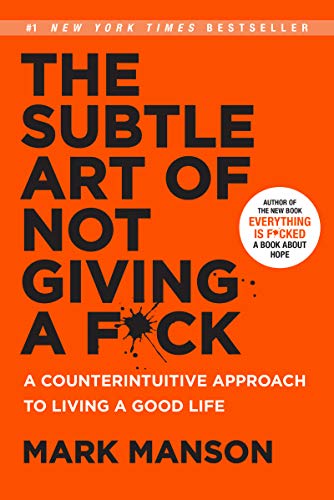
The Subtle Art of Not Giving a F*ck: A Counterintuitive Approach to Living a Good Life
In this generation-defining self-help guide, a superstar blogger cuts through the crap to show us how to stop trying to be "positive" all the time so that we can truly become better, happier people.
For decades, we’ve been told that positive thinking is the key to a happy, rich life. "Fk positivity," Mark Manson says. "Let’s be honest, shit is fked and we have to live with it." In his wildly popular Internet blog, Manson doesn’t sugarcoat or equivocate. He tells it like it is—a dose of raw, refreshing, honest truth that is sorely lacking today. The Subtle Art of Not Giving a Fk is his antidote to the coddling, let’s-all-feel-good mindset that has infected American society and spoiled a generation, rewarding them with gold medals just for showing up.
Manson makes the argument, backed both by academic research and well-timed poop jokes, that improving our lives hinges not on our ability to turn lemons into lemonade, but on learning to stomach lemons better. Human beings are flawed and limited—"not everybody can be extraordinary, there are winners and losers in society, and some of it is not fair or your fault." Manson advises us to get to know our limitations and accept them. Once we embrace our fears, faults, and uncertainties, once we stop running and avoiding and start confronting painful truths, we can begin to find the courage, perseverance, honesty, responsibility, curiosity, and forgiveness we seek.
There are only so many things we can give a fk about so we need to figure out which ones really matter, Manson makes clear. While money is nice, caring about what you do with your life is better, because true wealth is about experience. A much-needed grab-you-by-the-shoulders-and-look-you-in-the-eye moment of real-talk, filled with entertaining stories and profane, ruthless humor, The Subtle Art of Not Giving a F**k is a refreshing slap for a generation to help them lead contented, grounded lives.
…
Recommended by Ryan Holiday, Alex Blackwell, Aunty Ada, and 21 others.
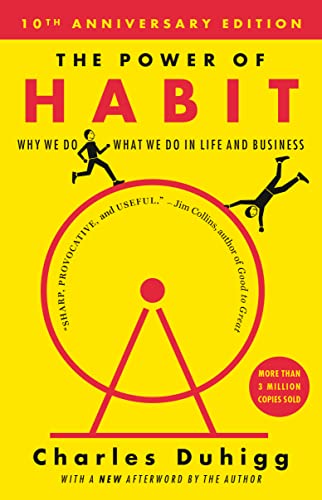
A young woman walks into a laboratory. Over the past two years, she has transformed almost every aspect of her life. She has quit smoking, run a marathon, and been promoted at work. The patterns inside her brain, neurologists discover, have fundamentally changed.
Marketers at Procter & Gamble study videos of people making their beds. They are desperately trying to figure out how to sell a new product called Febreze, on track to be one of the biggest flops in company history. Suddenly, one of them detects a nearly imperceptible pattern—and with a slight shift in advertising, Febreze goes on to earn a billion dollars a year.
An untested CEO takes over one of the largest companies in America. His first order of business is attacking a single pattern among his employees—how they approach worker safety—and soon the firm, Alcoa, becomes the top performer in the Dow Jones.
What do all these people have in common? They achieved success by focusing on the patterns that shape every aspect of our lives.
They succeeded by transforming habits.
In The Power of Habit, award-winning New York Times business reporter Charles Duhigg takes us to the thrilling edge of scientific discoveries that explain why habits exist and how they can be changed. With penetrating intelligence and an ability to distill vast amounts of information into engrossing narratives, Duhigg brings to life a whole new understanding of human nature and its potential for transformation.
Along the way we learn why some people and companies struggle to change, despite years of trying, while others seem to remake themselves overnight. We visit laboratories where neuroscientists explore how habits work and where, exactly, they reside in our brains. We discover how the right habits were crucial to the success of Olympic swimmer Michael Phelps, Starbucks CEO Howard Schultz, and civil-rights hero Martin Luther King, Jr. We go inside Procter & Gamble, Target superstores, Rick Warren’s Saddleback Church, NFL locker rooms, and the nation’s largest hospitals and see how implementing so-called keystone habits can earn billions and mean the difference between failure and success, life and death.
At its core, The Power of Habit contains an exhilarating argument: The key to exercising regularly, losing weight, raising exceptional children, becoming more productive, building revolutionary companies and social movements, and achieving success is understanding how habits work.
Habits aren’t destiny. As Charles Duhigg shows, by harnessing this new science, we can transform our businesses, our communities, and our lives.
…
Recommended by Naval Ravikant, Blake Irving, Alden Mills, and 15 others.
I also recently finished The Power of Habit, or close to finish as I get. That one was interesting, not because of its content necessarily, but because it’s good for me to always keep on top of mind how powerful my habits are. … I think learning how to break habits is a very important meta-skill that can serve you better in life than almost anything else. Although you can read tons of books on it, the reality is you’re never going to learn how to break bad habits until you just break them. [source]
Blake Irving
CEO/GoDaddy
You know, there's a book called The Power of Habit by Charles Duhigg. Simple read book about just how to build positive habits that can be I think I what I'd call you know whether in your personal life or whether in your business life to help you build you know, have a loop that can build your success and that's one I mean there are so many great books out there. [source]
Alden Mills
More recent books that have had a significant impact on me are The Power of Habit and The Diamond Cutter. Both represent different forces for me – the former helps me tactically with making incremental improvements in my life. [source]
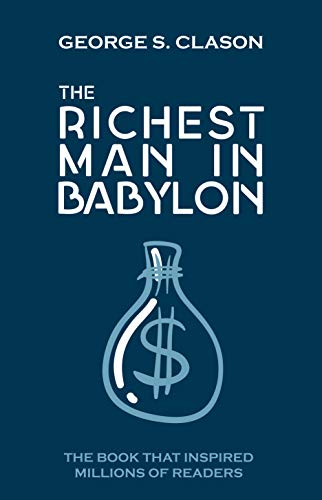
This hardcover edition is cleanly formatted for easy reading. 12 point Garamond, 1.25 spacing. The Richest Man in Babylon is a timeless classic, revealing the secrets to making money and keeping it. This inspirational book is hailed as the greatest of books on finances. It unveils the secrets to wealth, providing priceless suggestions, advice, unforgettable parables, financial problem-solving tools, and invaluable information which will get you on your way to riches. The book to read for all who want financial success.
…
Recommended by Daymond John, Aisha Yesufu, DJ Vlad, and 6 others.
Daymond John
Founder/FUBU
Daymond John said this is one of his most-recommended books. [source]
Aisha Yesufu
@seundavidpaul 👏👏👏👏👏 This is a great book [source]
This is a 1920s classic version of How To Get Rich. The ancestor of all the pale imitations, like Rich Dad/Poor Dad, that came since. And while I scoffed at plenty of the allegories from ancient Babylon that presents the lessons, it was still a neat package. And at least ancient Babylon is a more interesting backdrop for teaching lessons about money than some suburban house flipper. I ended up liking it more at the end than I did at the beginning. It’s also a really interesting tie-in with that debt history book. [source]
Cover unavailable
17
Start with Why: How Great Leaders Inspire Everyone to Take Action
Why are some people and organizations more innovative, more influential, and more profitable than others? Why do some command greater loyalty from customers and employees alike? Even among the successful, why are so few able to repeat their success over and over?
People like Martin Luther King Jr., Steve Jobs, and the Wright Brothers might have little in common, but they all started with why. It was their natural ability to start with why that enabled them to inspire those around them and to achieve remarkable things.
In studying the leaders who've had the greatest influence in the world, Simon Sinek discovered that they all think, act, and communicate in the exact same way—and it's the complete opposite of what everyone else does. Sinek calls this powerful idea The Golden Circle, and it provides a framework upon which organizations can be built, movements can be lead, and people can be inspired. And it all starts with WHY.
Any organization can explain what it does; some can explain how they do it; but very few can clearly articulate why. WHY is not money or profit—those are always results. WHY does your organization exist? WHY does it do the things it does? WHY do customers really buy from one company or another? WHY are people loyal to some leaders, but not others?
Starting with WHY works in big business and small business, in the nonprofit world and in politics. Those who start with WHY never manipulate, they inspire. And the people who follow them don't do so because they have to; they follow because they want to.
Drawing on a wide range of real-life stories, Sinek weaves together a clear vision of what it truly takes to lead and inspire. This book is for anyone who wants to inspire others or who wants to find someone to inspire them.
Today is World Book Day, a wonderful opportunity to address this #ChallengeRichard sent in by Mike Gonzalez of New Jersey: Make a list of your top 65 books to read in a lifetime. [source]
The basis of this book is so important to anyone looking to increase their influence, profits or impact. People won't truly buy into a product, service, movement, or idea until they understand the WHY behind it. When you start with the why, everything else falls into place. This book is so impactful, I consider it required reading. [source]
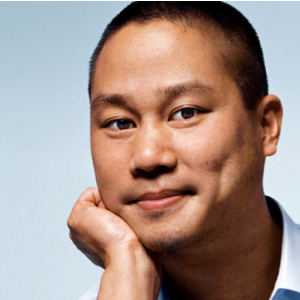
Tony Hsieh
CEO/Zappos.com
Over the years he’s recommended well over 20 business books — including his own, the 2010 bestseller Delivering Happiness and you can always find what he’s currently reading atop his cluttered desk. Start with Why is amogst those titles. [source]
Cover unavailable
18
The Happiness Hypothesis: Finding Modern Truth in Ancient Wisdom
In his widely praised book, award-winning psychologist Jonathan Haidt examines the world’s philosophical wisdom through the lens of psychological science, showing how a deeper understanding of enduring maxims-like Do unto others as you would have others do unto you, or What doesn’t kill you makes you stronger-can enrich and even transform our lives.
Recommended by Eric Schmidt, Tony Hsieh, Chelsea Frank, and 4 others.
Chelsea Frank
I read everything with an open mind, often challenging myself by choosing books with an odd perspective or religious/spiritual views. These books do not reflect my personal feelings but are books that helped shape my perspective on life, love, and happiness. [source]
He argues that most of our moral decisions are that kind of an instant reaction. It’s like aesthetics: when we see a scene we know instantly if it’s beautiful or not. [source]
Emrys Westacott
Haidt has a formula for happiness: Genetics + conditions + choices. This is a formula for a realistic approach to trying to achieve the good life. [source]
In this must-read book for anyone striving to succeed, pioneering psychologist Angela Duckworth shows parents, educators, students, and business people both seasoned and new that the secret to outstanding achievement is not talent but a focused persistence called grit.
Why do some people succeed and others fail? Sharing new insights from her landmark research on grit, Angela Duckworth explains why talent is hardly a guarantor of success. Rather, other factors can be even more crucial such as identifying our passions and following through on our commitments.
Drawing on her own powerful story as the daughter of a scientist who frequently bemoaned her lack of smarts, Duckworth describes her winding path through teaching, business consulting, and neuroscience, which led to the hypothesis that what really drives success is not genius, but a special blend of passion and long-term perseverance. As a professor at the University of Pennsylvania, Duckworth created her own character lab and set out to test her theory.
Here, she takes readers into the field to visit teachers working in some of the toughest schools, cadets struggling through their first days at West Point, and young finalists in the National Spelling Bee. She also mines fascinating insights from history and shows what can be gleaned from modern experiments in peak performance. Finally, she shares what she's learned from interviewing dozens of high achievers; from JP Morgan CEO Jamie Dimon to the cartoon editor of The New Yorker to Seattle Seahawks Coach Pete Carroll.
Winningly personal, insightful, and even life-changing, Grit is a book about what goes through your head when you fall down, and how that not talent or luck makes all the difference.
…
Recommended by Albert Wenger, Anu Hariharan, Benjamin Spall, and 11 others.
Benjamin Spall
Question: What five books would you recommend to youngsters interested in your professional path? … Grit by Angela Duckworth [source]
Bogdan Lucaciu
Grit: The Power of Passion and Perseverance - it was frustrating to read: “Where was this book 20 years ago!?” [source]
Stephen Lew
When asked what books he would recommend to youngsters interested in his professional path, Stephen mentioned Grit. [source]

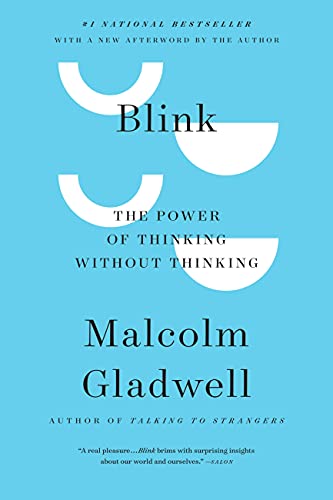
Drawing on cutting-edge neuroscience and psychology and displaying all of the brilliance that made The Tipping Point a classic, Blink changes the way you'll understand every decision you make. Never again will you think about thinking the same way.
Malcolm Gladwell redefined how we understand the world around us. Now, in Blink, he revolutionizes the way we understand the world within. Blink is a book about how we think without thinking, about choices that seem to be made in an instant - in the blink of an eye - that actually aren't as simple as they seem. Why are some people brilliant decision makers, while others are consistently inept? Why do some people follow their instincts and win, while others end up stumbling into error? How do our brains really work - in the office, in the classroom, in the kitchen, and in the bedroom? And why are the best decisions often those that are impossible to explain to others?
In Blink we meet the psychologist who has learned to predict whether a marriage will last, based on a few minutes of observing a couple; the tennis coach who knows when a player will double-fault before the racket even makes contact with the ball; the antiquities experts who recognize a fake at a glance. Here, too, are great failures of "blink": the election of Warren Harding; "New Coke"; and the shooting of Amadou Diallo by police. Blink reveals that great decision makers aren't those who process the most information or spend the most time deliberating, but those who have perfected the art of "thin-slicing" - filtering the very few factors that matter from an overwhelming number of variables.
…
Recommended by Ev Williams, Mike Shinoda, Marillyn Hewson, and 4 others.
Mike Shinoda
I know most of the guys in the band read this book. [source]
Marillyn Hewson
CEO/Lockheed Martin
CEO Marilyn Hewson recommends this book because it helped her to trust her instincts in business. [source]

Antonio Eram
When asked to name some books that had a big impact on him, Antonio mentioned Blink: The Power of Thinking Without Thinking by Malcolm Gladwell. [source]
Cover unavailable
21
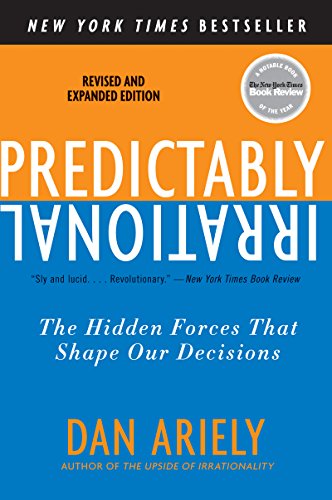
Predictably Irrational: The Hidden Forces That Shape Our Decisions
Why do our headaches persist after taking a one-cent aspirin but disappear when we take a 50-cent aspirin?
Why does recalling the Ten Commandments reduce our tendency to lie, even when we couldn't possibly be caught?
Why do we splurge on a lavish meal but cut coupons to save twenty-five cents on a can of soup?
Why do we go back for second helpings at the unlimited buffet, even when our stomachs are already full?
And how did we ever start spending $4.15 on a cup of coffee when, just a few years ago, we used to pay less than a dollar?
When it comes to making decisions in our lives, we think we're in control. We think we're making smart, rational choices. But are we?
In a series of illuminating, often surprising experiments, MIT behavioral economist Dan Ariely refutes the common assumption that we behave in fundamentally rational ways. Blending everyday experience with groundbreaking research, Ariely explains how expectations, emotions, social norms, and other invisible, seemingly illogical forces skew our reasoning abilities.
Not only do we make astonishingly simple mistakes every day, but we make the same "types" of mistakes, Ariely discovers. We consistently overpay, underestimate, and procrastinate. We fail to understand the profound effects of our emotions on what we want, and we overvalue what we already own. Yet these misguided behaviors are neither random nor senseless. They're systematic and predictable--making us "predictably" irrational.
From drinking coffee to losing weight, from buying a car to choosing a romantic partner, Ariely explains how to break through these systematic patterns of thought to make better decisions. "Predictably Irrational" will change the way we interact with the world--one small decision at a time.
…
Recommended by Max Levchin, Vinod Khosla, Vinod Khosla, and 22 others.
Max Levchin
Co-founder/PayPal, CEO/Affirm, Investor
Max Levchin recommended this book as an answer to "What business books would you advise young entrepreneurs read?" [source]
Andra Zaharia
'While I was thinking of the best books to add to this short list, I realized that not even half of them are directly related to digital marketing. This is because I believe that the best marketers are people who understand human nature deeply and aim to bring out the best in it. Call me naive, but that’s how I see it. If I were to want to pursue a career in marketing, I’d read … Predictably Irrational. [source]
Chris Goward
Here are some of the books that have been very impactful for me, or taught me a new way of thinking: … Predictably Irrational. [source]
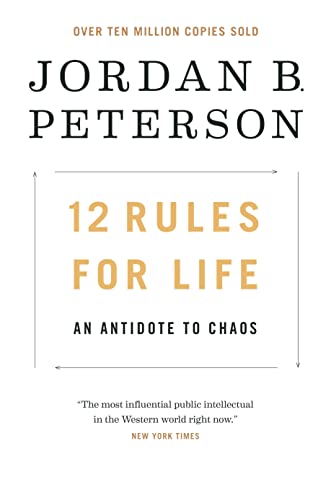
What does everyone in the modern world need to know? Renowned psychologist Jordan B. Peterson's answer to this most difficult of questions uniquely combines the hard-won truths of ancient tradition with the stunning revelations of cutting-edge scientific research.
Humorous, surprising, and informative, Dr. Peterson tells us why skateboarding boys and girls must be left alone, what terrible fate awaits those who criticize too easily, and why you should always pet a cat when you meet one on the street.
What does the nervous system of the lowly lobster have to tell us about standing up straight (with our shoulders back) and about success in life? Why did ancient Egyptians worship the capacity to pay careful attention as the highest of gods? What dreadful paths do people tread when they become resentful, arrogant, and vengeful? Dr. Peterson journeys broadly, discussing discipline, freedom, adventure, and responsibility, distilling the world's wisdom into 12 practical and profound rules for life. 12 Rules for Life shatters the modern commonplaces of science, faith, and human nature while transforming and ennobling the mind and spirit of its listeners.
A bracing disassembly and reconstruction of a theory of individual progress in the modern world. Fascinating compare and contrast with The Courage To Be Disliked. [source]
Just look at the table of contents: Rule 1: Stand up straight with your shoulders back Rule 2: Treat yourself like someone you are responsible for helping Rule 3: Make friends with people who want the best for you Rule 4: Compare yourself to who you were yesterday, not to who someone else is today Rule 5: Do not let your children do anything that makes you dislike them Rule 6: Set your house in perfect order before you criticise the world Rule 7: Pursue what is meaningful (not what is expedient) Rule 8: Tell the truth – or, at least, don’t lie Rule 9: Assume the person you are listening to might know something you don’t Rule 10: Be precise in your speech Rule 11: Do not bother children when they are skateboarding Rule 12: Pet a cat when you encounter one on the street Read this book. [source]
Andrew Price
@stewheckenberg @jordanbpeterson Thanks mate. I almost wish the book was published under a different author so more people would give it a chance. It’s really one of the best “how to fix your life” books around. [source]
Cover unavailable
23
Drive: The Surprising Truth About What Motivates Us
The New York Times bestseller that gives readers a paradigm-shattering new way to think about motivation
Most people believe that the best way to motivate is with rewards like money—the carrot-and-stick approach. That's a mistake, says Daniel H. Pink (author of To Sell Is Human: The Surprising Truth About Motivating Others). In this provocative and persuasive new book, he asserts that the secret to high performance and satisfaction-at work, at school, and at home—is the deeply human need to direct our own lives, to learn and create new things, and to do better by ourselves and our world.
Drawing on four decades of scientific research on human motivation, Pink exposes the mismatch between what science knows and what business does—and how that affects every aspect of life. He examines the three elements of true motivation—autonomy, mastery, and purpose-and offers smart and surprising techniques for putting these into action in a unique book that will change how we think and transform how we live.
…
Recommended by Tobi Lütke, Bogdan Lucaciu, David Brudo, and 5 others.
Tobi Lütke
Founder & CEO/Shopify
Tobi Lütke recommended this book in an interview in "The Globe and Mail." [source]
Bogdan Lucaciu
Spoiler: it’s autonomy, mastery, and purpose. [source]
The key text on problem-solving negotiation-updated and revised
Getting to Yes has helped millions of people learn a better way to negotiate. One of the primary business texts of the modern era, it is based on the work of the Harvard Negotiation Project, a group that deals with all levels of negotiation and conflict resolution.
Getting to Yes offers a proven, step-by-step strategy for coming to mutually acceptable agreements in every sort of conflict. Thoroughly updated and revised, it offers readers a straight- forward, universally applicable method for negotiating personal and professional disputes without getting angry-or getting taken.
…
Recommended by Charles T. Munger, Drew Houston, Dustin Moskovitz, and 8 others.
An essential book that unlocks the secrets of highly successful groups and provides readers with a toolkit for building a cohesive, innovative culture, from the New York Times bestselling author of The Talent Code
If you want to understand how successful groups work—the signals they transmit, the language they speak, the cues that foster creativity—you won’t find a more essential guide than The Culture Code.
So here are my three must read books. I've been reading a lot of great books like: Outsmart Your Instincts, The Culture Code, and Antonio Damasio’s The Strange Order, and sometimes when you read a lot of nonfiction it’s very enriching, sometimes you need a novel. I really believe you should take a minute and read something beautiful. Listen, listen to Lolita by Nabokov. But also listen to Blood Meridian by Cormac McCarthy and listen to Richard Poe narrate that. Those are two of the greatest feats of the english language that I can think of. Then there’s Fortress of Solitude, an amazing book, Extremely Loud and Incredibly Close, these are great novels. Cold Mountain is a beautiful novel, Snow Falling On Cedars, I mean they’ve been around for a while. But goddamnit, get those under your belt. Those are the novels I think you should read. You know Love In The Time Of Cholera it just makes you ache. Kind of like a Hemingway thing, where Hemingway “ahh!”, it’s the same thing, you know. So I don’t know, I’m a fan of all those books. Those are my 3 slash 20 books. [source]
Graham Duncan
The author looks at a bunch of different cultures. Pixar, Navy SEALs, etc... And he’s looking for patterns among what makes people disproportionately effective as a culture. [source]
Cover unavailable
26
Talking to Strangers: What We Should Know about the People We Don't Know
Malcolm Gladwell, host of the podcast Revisionist History and author of the #1 New York Times bestseller Outliers, offers a powerful examination of our interactions with strangers -- and why they often go wrong.
How did Fidel Castro fool the CIA for a generation? Why did Neville Chamberlain think he could trust Adolf Hitler? Why are campus sexual assaults on the rise? Do television sitcoms teach us something about the way we relate to each other that isn't true?
While tackling these questions, Malcolm Gladwell was not solely writing a book for the page. He was also producing for the ear. In the audiobook version of Talking to Strangers, you'll hear the voices of people he interviewed--scientists, criminologists, military psychologists. Court transcripts are brought to life with re-enactments. You actually hear the contentious arrest of Sandra Bland by the side of the road in Texas. As Gladwell revisits the deceptions of Bernie Madoff, the trial of Amanda Knox, and the suicide of Sylvia Plath, you hear directly from many of the players in these real-life tragedies. There's even a theme song - Janelle Monae's "Hell You Talmbout."
Something is very wrong, Gladwell argues, with the tools and strategies we use to make sense of people we don't know. And because we don't know how to talk to strangers, we are inviting conflict and misunderstanding in ways that have a profound effect on our lives and our world.
I'll put here what I emailed Malcolm when I finished the book: "Just finished your new book in one sitting yesterday. So good. You are at the height of your powers and remain an inspiration to all of us trying to master an un-masterable profession." It's a little less practical or self-improvement oriented than his previous books, but far more thought provoking. [source]
Nilofer Merchant
An interesting analysis/ essay re Gladwell’s latest book —> https://t.co/5Ey1maNRyI [source]
As in the Obstacle is the way, Ryan holiday delivers practical and inspiring philosophy, this time exploring a powerful concept that runs back centuries, across borders and schools of thought: Ego. Ego is our biggest enemy. Early in our careers, it can prevent us from learning and developing our talents. When we taste success, ego can blind us to our own faults, alienate us from others and lead to our downfall. In failure, ego is devastating and makes recovery all the more difficult. It is only by identifying our ego, speaking to its desires and systematically disarming it that we can create our best work. Organised into bite-sized observations featuring characters and narratives that illustrate themes and life lessons designed to resonate, uplift and inspire, Ego is the Enemy shows how you can be humble in your aspirations, gracious in your success and resilient in your failures. It is an inspiring and timely reminder that humility and confidence are still our greatest friends when confronting the challenges of a culture which tends to fan the flames of ego and encourage the cult of personality at all costs.
This is one of my favorite authors on the planet @ryanholiday one of his many books is titled “Ego Is The Enemy.” So if you want more from him on the subject of ego than what’s in this 60 second clip that’s the book… https://t.co/0QDe9V69KV [source]
Inspiring yet practical... teaches us how to manage and tame this beast within us so that we can focus on what really matters - producing the best work possible. [source]
Marvin Liao
Partner/500 Startups
My list would be (besides the ones I mentioned in answer to the previous question) both business & Fiction/Sci-Fi and ones I personally found helpful to myself. The business books explain just exactly how business, work & investing are in reality & how to think properly & differentiate yourself. On the non-business side, a mix of History & classic fiction to understand people, philosophy to make sense of life and Science fiction to picture what the future could be like (not always utopian). [source]
Cover unavailable
28
David and Goliath: Underdogs, Misfits, and the Art of Battling Giants
In his #1 bestselling books The Tipping Point, Blink, and Outliers, Malcolm Gladwell has explored the ways we understand and change our world. Now he looks at the complex and surprising ways the weak can defeat the strong, the small can match up against the giant, and how our goals (often culturally determined) can make a huge difference in our ultimate sense of success. Drawing upon examples from the world of business, sports, culture, cutting-edge psychology, and an array of unforgettable characters around the world, David and Goliath is in many ways the most practical and provocative book Malcolm Gladwell has ever written.
…
Recommended by Andrew Chen, Cat Williams-Treloar, Catalina Penciu, and 3 others.
Cat Williams-Treloar
The books that I've talked the most about with friends and colleagues over the years are the Malcolm Gladwell series of novels. Glorious stories that mix science, behaviours and insight. You can't go wrong with the "The Tipping Point", "Outliers", "Blink" or "David & Goliath". [source]
Catalina Penciu
Business-wise, my goal for this year is to improve my collection and my mindset, but my favorite so far has been David and Goliath by Malcolm Gladwell. [source]
Robert Katai
Buy Malcolm Gladwell’s book “David and Goliath” and read the interesting stories about how the Davids of that moments have defeated the Goliaths. [source]
Cover unavailable
29
A Thousand Splendid Suns
Khaled Hosseini
4.3
A Thousand Splendid Suns is a breathtaking story set against the volatile events of Afghanistan's last thirty years—from the Soviet invasion to the reign of the Taliban to post-Taliban rebuilding—that puts the violence, fear, hope, and faith of this country in intimate, human terms. It is a tale of two generations of characters brought jarringly together by the tragic sweep of war, where personal lives—the struggle to survive, raise a family, find happiness—are inextricable from the history playing out around them.
Propelled by the same storytelling instinct that made The Kite Runner a beloved classic, A Thousand Splendid Suns is at once a remarkable chronicle of three decades of Afghan history and a deeply moving account of family and friendship. It is a striking, heart-wrenching novel of an unforgiving time, an unlikely friendship, and an indestructible love—a stunning accomplishment. --front flap
I would encourage people to read it because it gives you a sense of Afghanistan’s incredible history and the role women have played within that history [source]
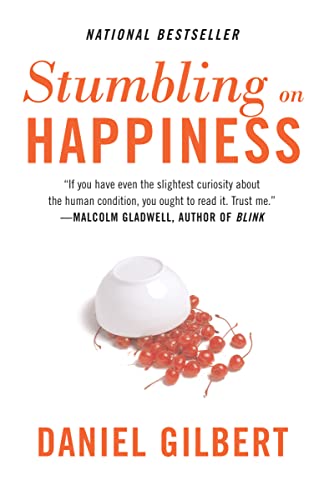
• Why are lovers quicker to forgive their partners for infidelity than for leaving dirty dishes in the sink? • Why will sighted people pay more to avoid going blind than blind people will pay to regain their sight? • Why do dining companions insist on ordering different meals instead of getting what they really want? • Why do pigeons seem to have such excellent aim; why can’t we remember one song while listening to another; and why does the line at the grocery store always slow down the moment we join it? In this brilliant, witty, and accessible book, renowned Harvard psychologist Daniel Gilbert describes the foibles of imagination and illusions of foresight that cause each of us to misconceive our tomorrows and misestimate our satisfactions. Vividly bringing to life the latest scientific research in psychology, cognitive neuroscience, philosophy, and behavioral economics, Gilbert reveals what scientists have discovered about the uniquely human ability to imagine the future, and about our capacity to predict how much we will like it when we get there. With penetrating insight and sparkling prose, Gilbert explains why we seem to know so little about the hearts and minds of the people we are about to become.
…
Recommended by Ev Williams, Jonathan Haidt, Chelsea Frank, and 6 others.
He’s one of the funniest people, certainly in psychology – he’s just endlessly witty, and reading it is like strapping yourself into a roller coaster. [source]
Chelsea Frank
I read everything with an open mind, often challenging myself by choosing books with an odd perspective or religious/spiritual views. These books do not reflect my personal feelings but are books that helped shape my perspective on life, love, and happiness. [source]
My recommendation is to do little tests. Try a few months of living the life you think you want, but leave yourself an exit plan, being open to the big chance that you might not like it after actually trying it... The best book about this subject is Stumbling on Happiness by Daniel Gilbert. His recommendation is to talk to a few people wo are currently where you think you want to be and ask them for the pros and cons. Then trust their opinion since they're right in it, not just remembering or imagining. [source]
Cover unavailable
31
Tao Te Ching: By Lao Tzu - Illustrated
Lao Tse
4.2
A lucid translation of the well-known Taoist classic by a leading scholar-now in a Shambhala Pocket Library edition. Written more than two thousand years ago, the Tao Teh Ching, or -The Classic of the Way and Its Virtue, - is one of the true classics of the world of spiritual literature. Traditionally attributed to the legendary -Old Master, - Lao Tzu, the Tao Teh Ching teaches that the qualities of the enlightened sage or ideal ruler are identical with those of the perfected individual. Today, Lao Tzu's words are as useful in mastering the arts of leadership in business and politics as they are in developing a sense of balance and harmony in everyday life. To follow the Tao or Way of all things and realize their true nature is to embody humility, spontaneity, and generosity. John C. H. Wu has done a remarkable job of rendering this subtle text into English while retaining the freshness and depth of the original. A jurist and scholar, Dr. Wu was a recognized authority on Taoism and the translator of several Taoist and Zen texts and of Chinese poetry. This book is part of the Shambhala Pocket Library series. The Shambhala Pocket Library is a collection of short, portable teachings from notable figures across religious traditions and classic texts. The covers in this series are rendered by Colorado artist Robert Spellman. The books in this collection distill the wisdom and heart of the work Shambhala Publications has published over 50 years into a compact format that is collectible, reader-friendly, and applicable to everyday life.
Q: What are the books that had a major influence on you? Or simply the ones you like the most. : Tao te Ching, score takes care of itself, between the world and me, the four agreements, the old man and the sea...I love reading! [source]
According to a Yibada interview with Chen Wei, who wrote Ma’s 2014 authorized biography, the Alibaba founder and executive chairman always carries the Tao Te Ching, the foundational text of Taoist philosophy, religion and ethics composed by Lao Tzu in the sixth century B.C. [source]
In the philosophy side, I’ve been rereading the Tao Te Ching. [source]
Cover unavailable
32
The Brothers Karamazov
Fyodor Dostoevsky
4.2
The Brothers Karamasov is a murder mystery, a courtroom drama, and an exploration of erotic rivalry in a series of triangular love affairs involving the “wicked and sentimental” Fyodor Pavlovich Karamazov and his three sons―the impulsive and sensual Dmitri; the coldly rational Ivan; and the healthy, red-cheeked young novice Alyosha. Through the gripping events of their story, Dostoevsky portrays the whole of Russian life, is social and spiritual striving, in what was both the golden age and a tragic turning point in Russian culture.
This award-winning translation by Richard Pevear and Larissa Volokhonsky remains true to the verbal inventiveness of Dostoevsky’s prose, preserving the multiple voices, the humor, and the surprising modernity of the original. It is an achievement worthy of Dostoevsky’s last and greatest novel.
…
Recommended by Randall Stephenson, Adam Townsend, Christian B Miller, and 3 others.
@FinchmanWill @jposhaughnessy @Cernovich @mcclay_roman My son's favorite book of all time [source]
Christian B Miller
A host of deep philosophical questions are at work in the book: about, say, the existence of God, the nature of morality without God, and the role of free will. [source]
From the bestselling author of The Black Swan and one of the foremost philosophers of our time, Nassim Nicholas Taleb, a book on how some systems actually benefit from disorder.
In The Black Swan Taleb outlined a problem; in Antifragile he offers a definitive solution: how to gain from disorder and chaos while being protected from fragilities and adverse events. For what he calls the "antifragile" is one step beyond robust, as it benefits from adversity, uncertainty and stressors, just as human bones get stronger when subjected to stress and tension.
Taleb stands uncertainty on its head, making it desirable, and proposing that things be built in an antifragile manner. Extremely ambitious and multidisciplinary, Antifragile provides a blueprint for how to behave-and thrive-in a world we don't understand and which is too uncertain for us to even try to understand. He who is not antifragile will perish. Why is the city state better than the nation state, why is debt bad for you, and why is almost everything modern bound to fail? The book covers innovation, health, biology, medicine, life decisions, politics, foreign policy, urban planning, war, personal finance, and economic systems. Throughout, the voice and recipes of the ancient wisdom from Phoenician, Roman, Greek, and Medieval sources are heard loud and clear.
You ask about success. To be successful you have to avoid being “fragile” – the idea that if something hurts you, you let collapse completely. You also have to avoid simply being resilient. Bouncing back is not enough. Antifragile is when something tries to hurt you and you come back stronger. That is real life business. That is real life success. Nassim focuses on the economy. But when I read the book I kept asking myself, “how can I apply this to the areas of my life where I feel most fragile?” [source]
Marvin Liao
Partner/500 Startups
My list would be (besides the ones I mentioned in answer to the previous question) both business & Fiction/Sci-Fi and ones I personally found helpful to myself. The business books explain just exactly how business, work & investing are in reality & how to think properly & differentiate yourself. On the non-business side, a mix of History & classic fiction to understand people, philosophy to make sense of life and Science fiction to picture what the future could be like (not always utopian). [source]
Vlad Tenev
The general concept is applicable to many fields beyond biology, for instance finance, economics and monetary policy. [source]
Cover unavailable
34
Crime and Punishment: A Russian Realistic Novel
Fyodor Dostoyevsky
4.2
This work has been selected by scholars as being culturally important, and is part of the knowledge base of civilization as we know it. This work was reproduced from the original artifact, and remains as true to the original work as possible. Therefore, you will see the original copyright references, library stamps (as most of these works have been housed in our most important libraries around the world), and other notations in the work.This work is in the public domain in the United States of America, and possibly other nations. Within the United States, you may freely copy and distribute this work, as no entity (individual or corporate) has a copyright on the body of the work.As a reproduction of a historical artifact, this work may contain missing or blurred pages, poor pictures, errant marks, etc. Scholars believe, and we concur, that this work is important enough to be preserved, reproduced, and made generally available to the public. We appreciate your support of the preservation process, and thank you for being an important part of keeping this knowledge alive and relevant.
Imagine a world where your phone is too big for your hand, where your doctor prescribes a drug that is wrong for your body, where in a car accident you are 47% more likely to be seriously injured, where every week the countless hours of work you do are not recognised or valued. If any of this sounds familiar, chances are that you're a woman.
Invisible Women shows us how, in a world largely built for and by men, we are systematically ignoring half the population. It exposes the gender data gap – a gap in our knowledge that is at the root of perpetual, systemic discrimination against women, and that has created a pervasive but invisible bias with a profound effect on women’s lives.
Award-winning campaigner and writer Caroline Criado Perez brings together for the first time an impressive range of case studies, stories and new research from across the world that illustrate the hidden ways in which women are forgotten, and the impact this has on their health and well-being. From government policy and medical research, to technology, workplaces, urban planning and the media, Invisible Women reveals the biased data that excludes women. In making the case for change, this powerful and provocative book will make you see the world anew.
…
Recommended by Adam Wagner, Asher Wolf, Caitlin Moran, and 9 others.
Adam Wagner
@CCriadoPerez @MumsnetTowers I love this - the book, Poppy, the mug - it's so well composed! [source]
Asher Wolf
Tell me your best thing today. Mine was an amazing book and greeting card arrived in the post from the wonderful @MmeEmmeline https://t.co/GpEs2lg037 [source]
Caitlin Moran
@CCriadoPerez mate, I bow in admiration. it's an AMAZING, game-changing book. [source]
Cover unavailable
36
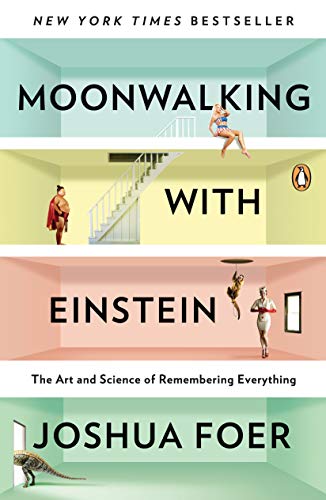
Moonwalking with Einstein: The Art and Science of Remembering Everything
The blockbuster phenomenon that charts an amazing journey of the mind while revolutionizing our concept of memory
An instant bestseller that is poised to become a classic, Moonwalking with Einstein recounts Joshua Foer's yearlong quest to improve his memory under the tutelage of top "mental athletes." He draws on cutting-edge research, a surprising cultural history of remembering, and venerable tricks of the mentalist's trade to transform our understanding of human memory. From the United States Memory Championship to deep within the author's own mind, this is an electrifying work of journalism that reminds us that, in every way that matters, we are the sum of our memories.
Of the five books I finished over vacation, the one that impressed me the most – and that is probably of broadest interest – is Moonwalking with Einstein: The Art and Science of Remembering Everything, by science writer Joshua Foer. This is an absolutely phenomenal book that looks at memory and techniques for dramatically improving memory. Foer actually mastered these techniques, which led him to the finals of the U.S. Memory Championship. His book gives fascinating insights into how the mind works. [source]
It has changed my life and made me embarrass myself much less when meeting someone twice. [source]
Deborah Blum
This book focuses not so much on the scientists but more on the consequence and meaning of memory for the rest of us. Within the framework of a memory championship, Foer looks at this almost obsessive interest in learning, how to remember everything. He asks the really interesting philosophical question, which is, are we defined by what we remember? [source]
Cover unavailable
37
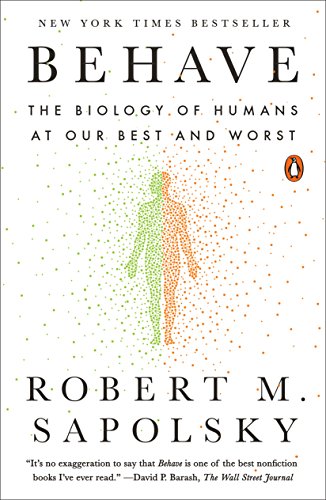
Behave: The Biology of Humans at Our Best and Worst
"It's no exaggeration to say that Behave is one of the best nonfiction books I've ever read." --David P. Barash, The Wall Street Journal
"It has my vote for science book of the year." --Parul Sehgal, The New York Times
"Hands-down one of the best books I've read in years. I loved it." --Dina Temple-Raston, TheWashington Post Named a Best Book of the Year by The Washington Post and The Wall Street Journal
From the celebrated neurobiologist and primatologist, a landmark, genre-defining examination of human behavior, both good and bad, and an answer to the question: Why do we do the things we do?
Sapolsky's storytelling concept is delightful but it also has a powerful intrinsic logic: he starts by looking at the factors that bear on a person's reaction in the precise moment a behavior occurs, and then hops back in time from there, in stages, ultimately ending up at the deep history of our species and its evolutionary legacy.
And so the first category of explanation is the neurobiological one. A behavior occurs--whether an example of humans at our best, worst, or somewhere in between. What went on in a person's brain a second before the behavior happened? Then Sapolsky pulls out to a slightly larger field of vision, a little earlier in time: What sight, sound, or smell caused the nervous system to produce that behavior? And then, what hormones acted hours to days earlier to change how responsive that individual is to the stimuli that triggered the nervous system? By now he has increased our field of vision so that we are thinking about neurobiology and the sensory world of our environment and endocrinology in trying to explain what happened.
Sapolsky keeps going: How was that behavior influenced by structural changes in the nervous system over the preceding months, by that person's adolescence, childhood, fetal life, and then back to his or her genetic makeup? Finally, he expands the view to encompass factors larger than one individual. How did culture shape that individual's group, what ecological factors millennia old formed that culture? And on and on, back to evolutionary factors millions of years old.
The result is one of the most dazzling tours d'horizon of the science of human behavior ever attempted, a majestic synthesis that harvests cutting-edge research across a range of disciplines to provide a subtle and nuanced perspective on why we ultimately do the things we do...for good and for ill. Sapolsky builds on this understanding to wrestle with some of our deepest and thorniest questions relating to tribalism and xenophobia, hierarchy and competition, morality and free will, and war and peace. Wise, humane, often very funny, Behave is a towering achievement, powerfully humanizing, and downright heroic in its own right.
What's the most effective path to success in any domain? It's not what you think. Plenty of experts argue that anyone who wants to develop a skill, play an instrument, or lead their field should start early, focus intensely, and rack up as many hours of deliberate practice as possible. If you dabble or delay, you'll never catch up to the people who got a head start. But a closer look at research on the world's top performers, from professional athletes to Nobel laureates, shows that early specialization is the exception, not the rule.
David Epstein examined the world's most successful athletes, artists, musicians, inventors, forecasters and scientists. He discovered that in most fields--especially those that are complex and unpredictable--generalists, not specialists, are primed to excel. Generalists often find their path late, and they juggle many interests rather than focusing on one. They're also more creative, more agile, and able to make connections their more specialized peers can't see.
Provocative, rigorous, and engrossing, Range makes a compelling case for actively cultivating inefficiency. Failing a test is the best way to learn. Frequent quitters end up with the most fulfilling careers. The most impactful inventors cross domains rather than deepening their knowledge in a single area. As experts silo themselves further while computers master more of the skills once reserved for highly focused humans, people who think broadly and embrace diverse experiences and perspectives will increasingly thrive.
For reasons I cannot explain, David Epstein manages to make me thoroughly enjoy the experience of being told that everything I thought about something was wrong. I loved Range. [source]
This book looks at how an emphasis on specialization can actually hamper our ability to really excel at something. It aligns with what I try to do when I am coaching, in my stories, and what we’re doing with Mamba Sports Academy — create all-around athletes who can think critically and make assessments in real time to enhance their play rather than rely only on a narrow set of skills. [source]
Susan Cain
Author
It’s a joy to spend hours in the company of a writer as gifted as David Epstein. And the joy is all the greater when that writer shares so much crucial and revelatory information about performance, success, and education. [source]
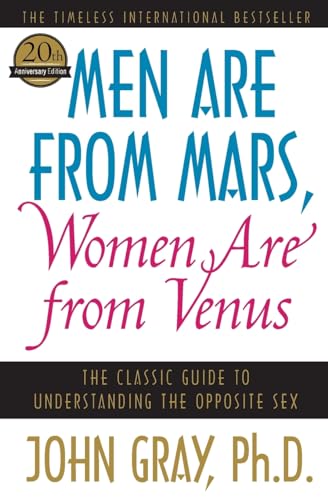
Once upon a time Martians and Venusians met, fell in love, and had happy relationships together because they respected and accepted their differences. Then they came to Earth and amnesia set in: they forgot they were from different planets.
Based on years of successful counseling of couples and individuals, Men Are from Mars, Women Are from Venus has helped millions of couples transform their relationships. Now viewed as a modern classic, this phenomenal book has helped men and women realize how different they really are and how to communicate their needs in such a way that conflict doesn't arise and intimacy is given every chance to grow!!!!
…
Cover unavailable
40
Anna Karenina
Leo Tolstoy
4.2
Tolstoy's epic novel of love, destiny and self-destruction, in a gorgeous new clothbound edition from Penguin Classics. Anna Karenina seems to have everything - beauty, wealth, popularity and an adored son. But she feels that her life is empty until the moment she encounters the impetuous officer Count Vronsky. Their subsequent affair scandalizes society and family alike and soon brings jealously and bitterness in its wake. Contrasting with this tale of love and self-destruction is the vividly observed story of Levin, a man striving to find contentment and a meaning to his life - and also a self-portrait of Tolstoy himself. This acclaimed modern translation by Richard Pevear and Larissa Volokhonsky won the PEN/ Book of the Month Club Translation Prize in 2001. Their translation is accompanied in this edition by an introduction by Richard Pevear and a preface by John Bayley. "The new and brilliantly witty translation by Richard Pevear and Larissa Volokhonsky is a must". (Lisa Appignanesi, Independent, Books of the Year). "Pevear and Volokhonsky are at once scrupulous translators and vivid stylists of English, and their superb rendering allows us, as perhaps never before, to grasp the palpability of Tolstoy's "characters, acts, situations"". (James Wood, New Yorker).
…
Recommended by Chelsea Handler, Marvin Liao, Audrey Russo, and 5 others.
I don't know if I have to expound on why I love this book, but everyone should read this author, and this was the first one of his works I read. So, it's like a first boyfriend. Or my first Cabbage Patch Kid. [source]
Marvin Liao
Partner/500 Startups
My list would be (besides the ones I mentioned in answer to the previous question) both business & Fiction/Sci-Fi and ones I personally found helpful to myself. The business books explain just exactly how business, work & investing are in reality & how to think properly & differentiate yourself. On the non-business side, a mix of History & classic fiction to understand people, philosophy to make sense of life and Science fiction to picture what the future could be like (not always utopian). [source]
Audrey Russo
Question: What books would you recommend to young people interested in your career path? Answer: Anything by Peter Senge. The Hard Thing About Hard Things – Ben Horowitz Once you are Lucky, Twice you are good – Sara Lacey Revolutionary Wealth – Alvin Toffler Black Swan – Taleb Reset: My Fight for Inclusion and Lasting Change, by Ellen Pao. Creative Class – Richard Florida Creativity Inc. by Ed Catmull & Amy Wallace Liar’s Poker by Michael Lewis American Government 101: From the Continental Congress to the Iowa Caucus, Everything You Need to Know About US Politics – Kathleen Spears The Tao of Pooh by Benjamin Hoff. Anna Karenina by Leo Tolstoy. Any book by Herman Hesse The Art of War by Sun Tzu. [source]
In his sensational international bestseller, the preeminent scientist and outspoken atheist Richard Dawkins delivers a hard-hitting, impassioned, but humorous, rebuttal of religious belief. With rigor and wit, Dawkins eviscerates the arguments for religion and demonstrates the supreme improbability of the existence of a supreme being. He makes a compelling case that faith is not just irrational but potentially deadly. In a preface written for the paperback edition, Dawkins responds to some of the controversies the book has incited. This brilliantly argued, provocative book challenges all of us to examine our belifs, no matter what beliefs we hold.
…
Recommended by Brian Armstrong, Antonio Eram, Susan Jacoby, and 1 others.
Antonio Eram
This book was recommended by Antonio when asked for titles he would recommend to young people interested in his career path. [source]
Susan Jacoby
Richard Dawkins is very funny. One of the reasons for reading The God Delusion is that it will disabuse you of the idea – which is a common stereotype of atheists – that they are utterly humourless. You hear this over and over again. I’m often invited to college campuses to give lectures, and often they’re religious schools – not fundamentalist schools, but colleges of a historically religious type. And very often I will hear: “Oh I expected you to be small and dark-haired and wear glasses!” The image of the atheist woman is kind of like what the image of the feminist used to be, someone too ugly to get a man. But part of it is also humorlessness. People will often say to me, “Oh you’re so funny.” “Well, yeah!” [source]
Vote Dem For The Planet
@KimBledsoe14 @Goodbye_Jesus @Ian313f There were a lot of rebels and drifters in those days against the repressive regime. They had followers. Have you read “The God Delusion”? Great book. [source]
In this book, Robert Greene demonstrates that the ultimate form of power is mastery itself. By analyzing the lives of such past masters as Charles Darwin, Benjamin Franklin, Albert Einstein, and Leonard da Vinci, as well as by interviewing nine contemporary masters, including tech guru Paul Graham and animal rights advocate Temple Grandin, Greene debunks our culture’s many myths about genius and distills the wisdom of the ages to reveal the secret to greatness. With this seminal text as a guide, readers will learn how to unlock the passion within and become masters.
What better way to learn about success then the minute paths taken by 100s or 1000s of successful people.It feels like Robert takes everyone in history and dissects the exact moments and decisions that led to their great success. [source]
There is no living writer (or person) who has been more influential to me than Robert Greene. I met him when I was 19 years old and he’s shaped me as a person, as a writer, as a thinker. You MUST read his books. His work on power and strategy are critical for anyone trying to accomplish anything. In life, power is force we are constantly bumping up against. People have power of over us, we seek power ourselves that we might be free enough and influential enough to accomplish our goals—so we must understand where power comes from, how it works and how to get it. But pure power is meaningless. It must be joined to mastery and purpose. So read his book Mastery so that you can figure your life’s task and how to dedicate yourself to it. [source]
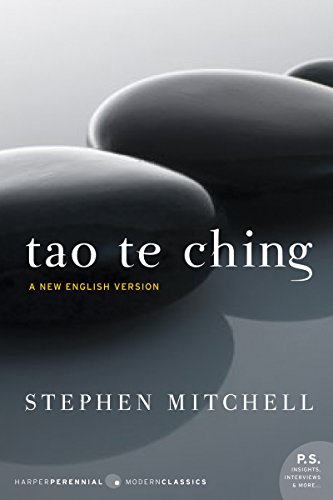
Boban Dedovic
Question: What books had the biggest impact on you? Perhaps changed the way you see things or dramatically changed your career path. Answer: Here are some others books that are important to me. Zero to One by Peter Thiel (on startups) Mastery by Robert Greene (life and career path study) Good to Great by Jim Collins (on growing a great company) Getting to Yes by Roger Fisher (negotiation) [source]
Why is change so difficult and frightening? How do you create change when you have few resources and no title or authority to back you up? Chip and Dan Heath, the best-selling authors of Made to Stick, are back with a ground-breaking book that addresses one of the greatest challenges of our personal and professional lives — how to change things when change is hard.
In their follow-up book to the critically acclaimed international bestseller Made to Stick, Chip and Dan Heath talk about how difficult change is in our companies, our careers, and our lives, why change is so hard, and how we can overcome our resistance and make change happen. The Heaths liken the human mind to two distinct entities — the animal mind, or what psychologist Jonathan Haidt calls the elephant, and the logical brain, which Haidt describes as the rider. The elephant is instinctive; it acts on emotion. It likes gorging on Oreos and sleeping in. And it loves routines — doing things the same old way, every day.
The rider is the planner and thinker. The rider obsesses about the future. He or she wants to stop eating junk food and stop hitting the snooze button. But it’s hard, because when the rider and elephant disagree on where to go, the rider usually loses. And that describes the essential tension between our primitive emotional brain and our high intellect, and helps to explain why changing how we behave is so difficult. The secret to making a switch is understanding this odd couple relationship. Direct the Rider. Motivate the Elephant. Shape the Path.
Throughout Switch, Chip and Dan Heath illustrate and explain situations in which sweeping change was adopted, from a university researcher who ended the cycle of child abuse in a group of families, to an entrepreneur who turned his skeptical employees into customer service zealots and saved his company.
In the tradition of Made to Stick, Blink, and Outliers, Switch is filled with engaging and entertaining stories of how companies and individuals have brought about and sustained significant change. An indispensable guide to making change happen, it is certain to become a classic.
…
Recommended by Africa Mentor, Richard H Thaler, Satya Patel, and 2 others.
Africa Mentor
6 fine summer reads | London Business School London Business School Review A good book is the best travel companion – wherever you are. By the pool or on your commute, be transported with these titles chos... https://t.co/Wo9NYOrwqG via @theafricamentor #entrepreneur #africabiz [source]
Tudor Mihailescu
First thing first, finance people need to be decent communicators, ideally awesome communicators. There is an art in building a case or in delivering a presentation and we need to treat this step as seriously as we have treated the other steps. I do believe this is a top priority for an aspiring or practicing CFO - There are plenty of books on this topic, I would recommend the works of Chip and Dan Health like Switch and Made to Stick [source]
Cover unavailable
44
The Courage to Be Disliked: The Japanese Phenomenon That Shows You How to Change Your Life and Achieve Real Happiness
The Life-Changing Magic of Tidying Up for the mind, The Courage to Be Disliked is the Japanese phenomenon that shows you how to free yourself from the shackles of past experiences and others’ expectations to achieve real happiness.
The Courage to Be Disliked, already an enormous bestseller in Asia with more than 3.5 million copies sold, demonstrates how to unlock the power within yourself to be the person you truly want to be.
Using the theories of Alfred Adler, one of the three giants of twentieth century psychology, this book follows an illuminating conversation between a philosopher and a young man. The philosopher explains to his pupil how each of us is able to determine our own life, free from the shackles of past experiences, doubts, and the expectations of others. It’s a way of thinking that is deeply liberating, allowing us to develop the courage to change, and to ignore the limitations that we and those around us have placed on ourselves. The result is a book that is both highly accessible and profound in its importance. Millions have already read and benefitted from its wisdom.
This is a truly special book in the vein of Marie Kondo’s The Life-Changing Magic of Tidying Up but for the mind. Those ready to embrace the insights and liberation promised by The Courage to Be Disliked will come to a deeper understanding of themselves and others, and find the inspiration to take the reins of their own life.
Had to take my time reading this one. AMAZING READ. Not that I didn't have the courage to be disliked it's actually one of my specialities but the reasoning why it's ok to be disliked and the understanding behind people disliking you and why you shouldn't give a sh*t is incredible. I highly recommend this one!!!! [source]
Smash hit in Japan, and easy to see why. Adlerian psychology meets Stoic philosophy in Socratic dialogue. Compelling from front to back. Highly recommend. [source]
Ryan Hoover
It's like this book was written just for me. I came away with so many 'aha!' moments that have helped me better understand myself. [source]
New York Times bestseller and named Best Marketing Book of 2014 by the American Marketing Association
What makes things popular? Why do people talk about certain products and ideas more than others? Why are some stories and rumors more infectious? And what makes online content go viral?
If you said advertising, think again. People don't listen to advertisements, they listen to their peers. But why do people talk about certain products and ideas more than others? Why are some stories and rumors more infectious? And what makes online content go viral?
Wharton marketing professor Jonah Berger has spent the last decade answering these questions. He's studied why New York Times articles make the paper's own Most E-mailed List, why products get word of mouth, and how social influence shapes everything from the cars we buy to the clothes we wear to the names we give our children. In this book, Berger reveals the secret science behind word-of-mouth and social transmission. Discover how six basic principles drive all sorts of things to become contagious, from consumer products and policy initiatives to workplace rumors and YouTube videos.
Contagious combines groundbreaking research with powerful stories. Learn how a luxury steakhouse found popularity through the lowly cheese-steak, why anti-drug commercials might have actually increased drug use, and why more than 200 million consumers shared a video about one of the seemingly most boring products there is: a blender. If you've wondered why certain stories get shared, e-mails get forwarded, or videos go viral, Contagious explains why, and shows how to leverage these concepts to craft contagious content. This book provides a set of specific, actionable techniques for helping information spread - for designing messages, advertisements, and information that people will share. Whether you're a manager at a big company, a small business owner trying to boost awareness, a politician running for office, or a health official trying to get the word out, Contagious will show you how to make your product or idea catch on.
…
Recommended by Vinod Khosla, Vinod Khosla, Andrew Medal, and 10 others.
Andrew Medal
The world is #CONTAGIOUS ☢️☢️☢️ • • My dog and I love this book. I read to him when he wants to learn about marketing techniques. The last time I read this book was in 2013. If you want a read that dissects how and… https://t.co/6v0ckSnSQe [source]
Ee Ling Lim
Contagious by Jonah Berger is another interesting one for those trying to figure out how to market their business. In Contagious, Jonah identifies what makes some things go viral, and narrowed it down to 6 principles STEPPS: Social currency (content that makes people look good when they talk about it), Triggers (top of mind topics), Emotion (content that we care about, especially high arousal ones like anger, awe, excitement and humor), Public, Practical and Stories. [source]
Erik Cheong
Explains why certain products and ideas become popular while others fail. It reveals the secret science behind word-of-mouth and social transmission. Discover how six basic principles drive all sorts of things to become contagious, from consumer products and policy initiatives to workplace rumors and YouTube videos. [source]
Robert Greene is a master guide for millions of readers, distilling ancient wisdom and philosophy into essential texts for seekers of power, understanding and mastery. Now he turns to the most important subject of all - understanding people's drives and motivations, even when they are unconscious of them themselves. We are social animals. Our very lives depend on our relationships with people. Knowing why people do what they do is the most important tool we can possess, without which our other talents can only take us so far. Drawing from the ideas and examples of Pericles, Queen Elizabeth I, Martin Luther King Jr, and many others, Greene teaches us how to detach ourselves from our own emotions and master self-control, how to develop the empathy that leads to insight, how to look behind people's masks, and how to resist conformity to develop your singular sense of purpose. Whether at work, in relationships, or in shaping the world around you, The Laws of Human Nature offers brilliant tactics for success, self-improvement, and self-defence.
Robert has been writing this book since Mastery came out in 2013 and it shows - it's a spectacular masterwork that builds atop all his other books. Robert's book have always been an unvarnished look at how the world really works, for better and for worse. What I like about this book is that it pushes us to question our own biases, our own assumptions, irrationalities and tendencies. It's almost as if we believe other people have a 'human nature' but we don't - we're logical, fair, motivated by higher purposes always. Of course this is silly. Lots of good stuff here for anyone in a position of leadership, who works with an audience or studies human behavior. [source]
Ayush Kumar
People are the ROI, people are the asset, everything is people and one needs to understand people. [source]
Cover unavailable
47
How to Stop Worrying and Start Living
Dale Carnegie
4.2
The book 'How to stop worrying & start living' suggest many ways to conquer worry and lead a wonderful life.
The book mentions fundamental facts to know about worry and magic formula for solving worry-some situations.
Psychologists & Doctors' view:
Worry can make even the most stolid person ill.
Worry may cause nervous breakdown.
Worry can even cause tooth decay
Worry is one of the factors for High Blood Pressure.
Worry makes you tense and nervous and affect the nerves of your stomach.
The book suggests basic techniques in analysing worry, step by step, in order to cope up with them.
A very interesting feature of the book is 'How to eliminate 50% of your business worries'.
The book offers 7 ways to cultivate a mental attitude that will bring you peace and happiness. Also, the golden rule for conquering worry, keeping your energy & spirits high.
The book consists of some True Stories which will help the readers in conquering worry to lead you to success in life.
The book is full of similar incidences and narrations which will make our readers to understand the situation in an easy way and lead a happy life. A must read book for everyone.
There was a moment where I was on a quest for self-discovery. I felt lost and wasn't sure if I was who I was because I made the decision to be me, or if my identity was programmed by culture, society and setting. Because of that, I started reading self-help books to reconstruct identity and mold who I wanted to be. This book helped me. [source]
Psychologist Mihaly Csikszentmihalyi's famous investigations of "optimal experience" have revealed that what makes an experience genuinely satisfying is a state of consciousness called flow. During flow, people typically experience deep enjoyment, creativity, and a total involvement with life. In this new edition of his groundbreaking classic work, Csikszentmihalyi demonstrates the ways this positive state can be controlled, not just left to chance. Flow: The Psychology of Optimal Experience teaches how, by ordering the information that enters our consciousness, we can discover true happiness and greatly improve the quality of our lives.
While re-reading Mihaly Csikszentmihalyi’s wonderful book Flow: The Psychology of Optimal Experience, I came across this passage on working crossword puzzles. I think he could just as well be talking about making blackout poems: "There is much to be said in favor of this popular pastime, which in its best form resembles the ancient riddle contests. It is inexpensive and portable, its challenges can be finely graduated so that both novices and experts can enjoy it, and its solution produces a sense of pleasing order that gives one a satisfying feeling of accomplishment. It provides opportunities to experience a mild state of flow to many people who are stranded in airport lounges, who travel on commuter trains, or who are simply whiling away Sunday mornings." [source]
Tom Chatfield
The notion of flow is the idea that there is a state that is characterised by complete immersion in an activity, by a constant response to stimuli, and a perfect match between your ability and the challenge in front of you. [source]
Cover unavailable
49
SuperFreakonomics: Global Cooling, Patriotic Prostitutes And Why Suicide Bombers Should Buy Life Insurance
Steven D. Levitt
4.1
The New York Times best-selling Freakonomics was a worldwide sensation, selling over four million copies in thirty-five languages and changing the way we look at the world. Now, Steven D. Levitt and Stephen J. Dubner return with SuperFreakonomics, and fans and newcomers alike will find that the freakquel is even bolder, funnier, and more surprising than the first.
Four years in the making, SuperFreakonomics asks not only the tough questions, but the unexpected ones: What's more dangerous, driving drunk or walking drunk? Why is chemotherapy prescribed so often if it's so ineffective? Can a sex change boost your salary?
SuperFreakonomics challenges the way we think all over again, exploring the hidden side of everything with such questions as:
How is a street prostitute like a department-store Santa? Why are doctors so bad at washing their hands? How much good do car seats do? What's the best way to catch a terrorist? Did TV cause a rise in crime? What do hurricanes, heart attacks, and highway deaths have in common? Are people hard-wired for altruism or selfishness? Can eating kangaroo save the planet? Which adds more value: a pimp or a Realtor?
Levitt and Dubner mix smart thinking and great storytelling like no one else, whether investigating a solution to global warming or explaining why the price of oral sex has fallen so drastically. By examining how people respond to incentives, they show the world for what it really is – good, bad, ugly, and, in the final analysis, super freaky.
Freakonomics has been imitated many times over – but only now, with SuperFreakonomics, has it met its match.
I recommend this book to anyone who reads nonfiction. It is very well written and full of great insights. [source]
Fabrice Grinda
I have lots of books to recommend, but they are not related to my career path. The only one that is remotely related is Peter Thiel’s Zero to One. That said here are books I would recommend. [source]
Keith Slotter
These two gentlemen wrote the first book several years ago and SuperFreakonomics just came out. The books are very interesting on crime theory. Their theories are controversial. For example, they link a decrease in crime to the legalisation of abortion. In a nutshell they say that abortion stopped a whole new generation of criminals from being born. And that is because they say abortion is most prominent among the lowest class people. That is, of course, not a politically correct statement to make, but when you go through their numbers and what they have done, sadly there rings a strong sound of truth in their argument. So, I would encourage anyone with an open mind to read these books and give it some thought. Read 4 The Cell by John Miller, Michael Stone, and Chris Mitchell Read [source]
Cover unavailable
50
How to Change Your Mind: What the New Science of Psychedelics Teaches Us About Consciousness, Dying, Addiction, Depression, and Transcendence
Could psychedelic drugs change our worldview? One of America's most admired writers takes us on a mind-altering journey to the frontiers of human consciousness
When LSD was first discovered in the 1940s, it seemed to researchers, scientists and doctors as if the world might be on the cusp of psychological revolution. It promised to shed light on the deep mysteries of consciousness, as well as offer relief to addicts and the mentally ill. But in the 1960s, with the vicious backlash against the counter-culture, all further research was banned. In recent years, however, work has quietly begun again on the amazing potential of LSD, psilocybin and DMT. Could these drugs in fact improve the lives of many people? Diving deep into this extraordinary world and putting himself forward as a guinea-pig, Michael Pollan has written a remarkable history of psychedelics and a compelling portrait of the new generation of scientists fascinated by the implications of these drugs. How to Change Your Mind is a report from what could very well be the future of human consciousness.
Michael Pollan masterfully guides us through the highs, lows, and highs again of psychedelic drugs. How to Change Your mind chronicles how it’s been a longer and stranger trip than most any of us knew. [source]
Changed my mind, or at least some of the ideas held in my mind. [source]
Andrew Weil
Michael Pollan assembles a great deal of information here on the history, science, and effects of psychedelics. I found his frank recounting of his recent experiences with LSD, psilocybin, and toad venom most revealing. They appear to have softened his materialistic views and opened him to the possibilities of higher consciousness. He did, indeed, change his mind. [source]
Cover unavailable
51
The Success Principles: How to Get from Where You Are to Where You Want to Be
Jack Canfield, cocreator of the phenomenal bestselling Chicken Soup for the Soul® series, turns to the principles he's studied, taught, and lived for more than 30 years in this practical and inspiring guide that will help any aspiring person get from where they are to where they want to be.
The Success Principlesâ„¢ will teach you how to increase your confidence, tackle daily challenges, live with passion and purpose, and realize all your ambitions. Not merely a collection of good ideas, this book spells out the 64 timeless principles used by successful men and women throughout history. Taken together and practiced every day, these principles will transform your life beyond your wildest dreams!
Filled with memorable and inspiring stories of CEOs, world-class athletes, celebrities, and everyday people, The Success Principlesâ„¢ will give you the proven blueprint you need to achieve any goal you desire.
…
Recommended by Randy Murray, Shaen Yeo, and 1 others.
Randy Murray
"One of the most powerful ways to learn anything is to teach it to others." @JackCanfield in his very helpful book The Success Principles. [source]
Shaen Yeo
The Success Principles by Jack Canfield. Distilling the principles into bite sized pieces showed me that anyone could succeed. It wasn't that people got lucky or that success is only for the deserving few, but that we could all share a piece of the pie, if we believed in it and took action. [source]
Cover unavailable
52
Sex at Dawn: The Prehistoric Origins of Modern Sexuality
“Sex at Dawn challenges conventional wisdom about sex in a big way. By examining the prehistoric origins of human sexual behavior the authors are able to expose the fallacies and weaknesses of standard theories proposed by most experts. This is a provocative, entertaining, and pioneering book. I learned a lot from it and recommend it highly.” — Andrew Weil, M.D.
“Sex at Dawn irrefutably shows that what is obvious—that human beings, both male and female, are lustful—is true, and has always been so…. The more dubious its evidentiary basis and lack of connection with current reality, the more ardently the scientific inevitability of monogamy is maintained—even as it falls away around us.” — Stanton Peele, Ph.D.
A controversial, idea-driven book that challenges everything you (think you) know about sex, monogamy, marriage, and family. In the words of Steve Taylor (The Fall, Waking From Sleep), Sex at Dawn is “a wonderfully provocative and well-written book which completely re-evaluates human sexual behavior and gets to the root of many of our social and psychological ills.”
A few months ago, I was drinking a Noah’s Mill whiskey (cute) with my good buddy Brian Balfour and talking about life... During the conversation, we got on the topic of books that changed our lives. I want to share them with you. I judge a book's success if a year later I'm still using at least 1 thing from the book. [source]
Esther Perel recommended this book as an answer to "What are some resources for couples who want to explore having a more “monogamish” relationship?" [source]
Cover unavailable
53
Unlimited Power: The New Science of Personal Achievement
Tony Robbins
4.1
Recommended by Tony Robbins, Bryan Choo, Cristina Riesen, and 3 others.
Bryan Choo
I read Anthony Robbins' Unlimited Power when I was a teenager. My favourite section was the meta-programs which people use to perceive the world. It helped me understand myself and people better. For example, some people are matchers, others are mismatchers. It's not good to be an extreme of either and I was an extreme mismatcher disagreeing with people all the time just because my brain was wired to spot differences first rather than sameness. So I fixed that aspect and stopped unnecessarily breaking rapport with people. [source]
Cristina Riesen
First, a word on career paths. In time, I realised that career paths are like one-way streets. Magic happens in unexplored territories. Plus life is how you choose to live every moment, every day. So today, rather than building a career, I prefer to make lateral moves in life, working with great people and being part of ambitious projects impacting the world. There are a few books that got me here: … Tony Robbins "Unlimited Power: The New Science of Personal Achievement". [source]
Dominic D'Agostino
I liked it so much, I bought it and I gave it to all my lifting buddies. [source]
Cover unavailable
54
Devils
Fyodor Dostoyevsky
4.1
Devils, also known in English as The Possessed and The Demons, was first published in 1871-2. The third of Dostoevsky's five major novels, it is at once a powerful political tract and a profound study of atheism, depicting the disarray which follows the appearance of a band of modish radicals in a small provincial town. Dostoevsky compares infectious radicalism to the devils that drove the Gadarene swine over the precipice in his vision of a society possessed by demonic creatures that produce devastating delusions of rationality. Dostoevsky weaves suicide, rape, and a multiplicity of scandals into a compelling story of political evil, yet he is at his most humorous in Devils: the novel is full of buffoonery and a grotesque comedy.
This new translation also includes the chapter `Stavrogin's Confession', which was initially considered to be too shocking to print. In this edition it appears where the author originally intended it.
You can’t retell the book, but it’s about Russia and what’s coming out of it. It’s the chaos of politics and morals and religion at the end of the imperial period, reflected in this mystical Russian national character. It sounds silly to speak of, but there is a certain mystical quality to the Russian soul. [source]
Ari Iaccarino
I’m currently reading The Devils by Dostoevsky, and I expect to glean absolutely nothing from it but the pleasure of disconnecting from any other literature that requires me to learn a skill for the company. The overburdening characters and plethora of words for something that could otherwise be said in an instant is a type of therapeutic brain massage in an environment where saying as little as possible with maximum effect is the plow that tills the soil in startup atmosphere. [source]
Introducing one of the most famous characters in literature, Jean Valjean—the noble peasant imprisoned for stealing a loaf of bread—Les Misérables ranks among the greatest novels of all time. In it, Victor Hugo takes readers deep into the Parisian underworld, immerses them in a battle between good and evil, and carries them to the barricades during the uprising of 1832 with a breathtaking realism that is unsurpassed in modern prose. Within his dramatic story are themes that capture the intellect and the emotions: crime and punishment, the relentless persecution of Valjean by Inspector Javert, the desperation of the prostitute Fantine, the amorality of the rogue Thénardier, and the universal desire to escape the prisons of our own minds. Les Misérables gave Victor Hugo a canvas upon which he portrayed his criticism of the French political and judicial systems, but the portrait that resulted is larger than life, epic in scope—an extravagant spectacle that dazzles the senses even as it touches the heart.
…
Recommended by Christian B Miller and David Bellos.
Christian B Miller
Vividly illustrates two ideas about character. The first is that our characters can change over time, the second is that role models can be powerful sources of character change. [source]
David Bellos
Because it’s so huge and so capacious and contains so many different stories and takes on the world, you can make anything out of Les Misérables. [source]
Cover unavailable
56
Darkness Visible: A Memoir of Madness
William Styron
4.1
A work of great personal courage and a literary tour de force, this bestseller is Styron's true account of his descent into a crippling and almost suicidal depression. Styron is perhaps the first writer to convey the full terror of depression's psychic landscape, as well as the illuminating path to recovery.
Recommended by David Biro, Johanna Reiss, and Lewis Wolpert.
David Biro
Styron rightly talks of the ferocious inwardness of pain and the aching solitude of pain. These feelings occur in all types of chronic pain, whether psychological or physical. [source]
Johanna Reiss
He is just about to kill himself when he listens to Brahms’s Alto Rhapsody. The voice of the alto makes him realize that his mother used to sing that piece to him when he was small. [source]
Lewis Wolpert
There’s a joke about depression that if you describe it you haven’t had one. But the difficulty in describing depression is exactly why Styron’s Darkness Visible is such a masterpiece. It’s not a novel. It’s about his own depression, and it’s extraordinary – one of the best. [source]
Cover unavailable
57
Why Does He Do That?: Inside the Minds of Angry and Controlling Men
Lundy Bancroft - a counselor who specializes in working with abusive men - uses his knowledge about how abusers think to help women recognize when they are being controlled or devalued, and to find ways to get free of an abusive relationship.
He says he loves you. So...why does he do that? You've asked yourself this question again and again. Now you have the chance to see inside the minds of angry and controlling men--and change your life. In Why Does He Do That? you will learn about:
The early warning signs of abuse - The nature of abusive thinking - Myths about abusers - Ten abusive personality types - The role of drugs and alcohol - What you can fix, and what you can't - And how to get out of an abusive relationship safely Prevention Programs, Harvard School of Public Health
…
Cover unavailable
58
The Disaster Artist: My Life Inside The Room, the Greatest Bad Movie Ever Made
Greg Sestero, Tom Bissell
4.1
New York Times bestseller—now a major motion picture directed by and starring James Franco!
From the actor who somehow lived through it all, a “sharply detailed…funny book about a cinematic comedy of errors” (The New York Times): the making of the cult film phenomenon The Room.
In 2003, an independent film called The Room—starring and written, produced, and directed by a mysteriously wealthy social misfit named Tommy Wiseau—made its disastrous debut in Los Angeles. Described by one reviewer as “like getting stabbed in the head,” the $6 million film earned a grand total of $1,800 at the box office and closed after two weeks. Years later, it’s an international cult phenomenon, whose legions of fans attend screenings featuring costumes, audience rituals, merchandising, and thousands of plastic spoons.
Hailed by The Huffington Post as “possibly the most important piece of literature ever printed,” The Disaster Artist is the hilarious, behind-the-scenes story of a deliciously awful cinematic phenomenon as well as the story of an odd and inspiring Hollywood friendship. Actor Greg Sestero, Tommy’s costar and longtime best friend, recounts the film’s bizarre journey to infamy, unraveling mysteries for fans (like, who is Steven? And what’s with that hospital on Guerrero Street?)—as well as the most important question: how the hell did a movie this awful ever get made? But more than just a riotously funny story about cinematic hubris, “The Disaster Artist is one of the most honest books about friendship I’ve read in years” (Los Angeles Times).
I’ve been watching The Room for years, and I first read Bissell on the subject in Magic Hours. This was a total behind-the-scenes trip, and it is no surprise to me that the movie based on it has gotten great reviews. (I still haven’t seen it.) [source]
Cover unavailable
59
The Power of Vulnerability: Teachings of Authenticity, Connections and Courage
Is vulnerability the same as weakness? “In our culture,” teaches Dr. Brené Brown, “we associate vulnerability with emotions we want to avoid such as fear, shame, and uncertainty. Yet we too often lose sight of the fact that vulnerability is also the birthplace of joy, belonging, creativity, authenticity, and love.” On The Power of Vulnerability, Dr. Brown offers an invitation and a promise - that when we dare to drop the armor that protects us from feeling vulnerable, we open ourselves to the experiences that bring purpose and meaning to our lives. Here she dispels the cultural myth that vulnerability is weakness and reveals that it is, in truth, our most accurate measure of courage. “The Power of Vulnerability is a very personal project for me,” Brené explains. “This is the first place that all of my work comes together. This audio course draws from all three of my books - it’s the culmination of everything I’ve learned over the past twelve years. I'm very excited to weave it all into a truly comprehensive form that shows what these findings and insights can mean in our lives.”
Guidance and Insights for Wholehearted Living
Over the past twelve years, Dr. Brené Brown has interviewed hundreds of people as part of an ongoing study of vulnerability. “The research shows that we try to ward disappointment with a shield of cynicism, disarm shame by numbing ourselves against joy, and circumvent grief by shutting off our willingness to love,” explains Dr. Brown. When we become aware of these patterns, she teaches, we begin to become conscious of how much we sacrifice in the name of self-defense -and how much richer our lives become when we open ourselves to vulnerability. “In my research,” Dr. Brown says, “the word I use to describe people who can live from a place of vulnerability is wholehearted.” Being wholehearted is a practice—one that we can choose to cultivate through empathy, gratitude, and awareness of our vulnerability armor. Join this engaging and heartfelt teacher on The Power of Vulnerability as she offers profound insights on leaning into the full spectrum of emotions—so we can show up, let ourselves be seen, and truly be all in.
HIGHLIGHTS
Cultivating shame resilience—the key to developing a sense of worth and belonging. Vulnerability as the origin point for innovation, adaptability, accountability, and visionary leadership. Our emotional armory - how we use perfectionism, numbing, and other tactics to avoid feeling vulnerable. The myths of vulnerability - common misconceptions about weakness, trust, and self-sufficiency. Discovering your vulnerability armor - recognizing what makes us shut down, and how we can change. The 10 guideposts of wholehearted living - essential skills for becoming fully engaged in life. Six hours of stories, warm humor, and transformative insights for living a life of courage, authenticity, and compassion from Dr. Brené Brown.
…
Recommended by Chelsea Frank.
Chelsea Frank
I read everything with an open mind, often challenging myself by choosing books with an odd perspective or religious/spiritual views. These books do not reflect my personal feelings but are books that helped shape my perspective on life, love, and happiness. [source]

Cover unavailable
60
Flowers for Algernon
Daniel Keyes
4.1
The story of a mentally disabled man whose experimental quest for intelligence mirrors that of Algernon, an extraordinary lab mouse. In diary entries, Charlie tells how a brain operation increases his IQ and changes his life. As the experimental procedure takes effect, Charlie's intelligence expands until it surpasses that of the doctors who engineered his metamorphosis. The experiment seems to be a scientific breakthrough of paramount importance--until Algernon begins his sudden, unexpected deterioration. Will the same happen to Charlie?
…
Recommended by Irina Botnari.
Irina Botnari
It’s pretty hard to pick only one favorite book because as we get wiser (to be read: get older ☺) our interests change and so do our books, but it’ll stick to the plan. The highlight of this year for me was Flowers for Algernon by Daniel Keyes. The idea behind is heartbreaking and completely brilliant, being in the same time so perfect and so horribly disturbing. [source]
Cover unavailable
61
Where Good Ideas Come from: The Natural History of Innovation
The printing press, the pencil, the flush toilet, the battery--these are all great ideas. But where do they come from? What kind of environment breeds them? What sparks the flash of brilliance? How do we generate the breakthrough technologies that push forward our lives, our society, our culture? Steven Johnson's answers are revelatory as he identifies the seven key patterns behind genuine innovation, and traces them across time and disciplines. From Darwin and Freud to the halls of Google and Apple, Johnson investigates the innovation hubs throughout modern time and pulls out the approaches and commonalities that seem to appear at moments of originality.
Quite good at giving examples of how you create environments that can encourage good ideas. [source]
Tony Hsieh
CEO/Zappos.com
Author Steven Johnson argues in his 2010 book that innovation comes from the collision of ideas. This can happen when an individual working in isolation builds off years of existing knowledge to fuel his insights, or it can happen much more quickly when several creative types bounce ideas off each other in a community like Silicon Valley. This theory is one of the reasons why Hsieh decided to invest $350 million of his own money in 2010 into the Downtown Project, which is building a community of entrepreneurs in Zappos' neighborhood. [source]
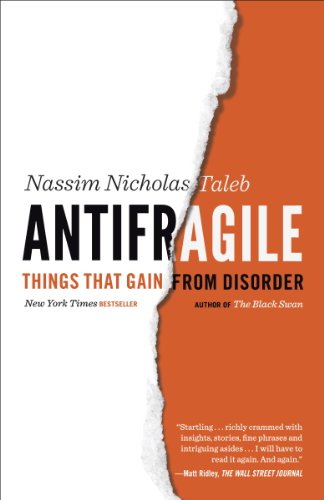
Also add to this: “How We Got to Now” by Steven Johnson. Basically: don’t believe the myth of the lonely genius. Ideas come from a confluence of history, “the adjacent possible” specific geographic locations, etc. The connections Johnson makes are brilliant. For instance, The Gutenberg Press (which, in itself, was invented because of improvements in sewing looms), made everyone realize they had bad vision. So the science of lenses was created. So microscopes were eventually created. So germs were eventually discovered. So modern medical science was discovered. And so on. Johnson is a thinker and a linker and tells a good story. [source]

Cover unavailable
62
Attached: The New Science of Adult Attachment and How It Can Help You find and Keep love
We rely on science to tell us everything from what to eat to when and how long to exercise, but what about relationships? Is there a scientific explanation for why some people seem to navigate relationships effortlessly, while others struggle? According to psychiatrist and neuroscientist Dr. Amir Levine and Rachel Heller, the answer is a resounding "yes."In Attached, Levine and Heller reveal how an understanding of adult attachment-the most advanced relationship science in existence today-can help us find and sustain love. Pioneered by psychologist John Bowlby in the 1950s, the field of attachment posits that each of us behaves in relationships in one of three distinct ways:
Anxious people are often preoccupied with their relationships and tend to worry about their partner's ability to love them back Avoidant people equate intimacy with a loss of independence and constantly try to minimize closeness. Secure people feel comfortable with intimacy and are usually warm and loving.
In this book Levine and Heller guide readers in determining what attachment style they and their mate (or potential mate) follow, offering a road map for building stronger, more fulfilling connections with the people they love.
…
Cover unavailable
63
The Anatomy Coloring Book
Wynn Kapit and Lawrence M. Elson
4.1
Why use this coloring book? For more than 35 years, The Anatomy Coloring Book has been the #1 best-selling human anatomy coloring book! A useful tool for anyone with an interest in learning anatomical structures, this concisely written text features precise, extraordinary hand-drawn figures that were crafted especially for easy coloring and interactive study. Organized according to body systems, each of the 162 two-page spreads featured in this book includes an ingenious color-key system where anatomical terminology is linked to detailed illustrations of the structures of the body. When you color to learn with The Anatomy Coloring Book, you make visual associations with key terminology, and assimilate information while engaging in kinesthetic learning. Studying anatomy is made easy and fun! The Fourth Edition features user-friendly two-page spreads with enlarged art, clearer, more concise text descriptions, and new boldface headings that make this classic coloring book accessible to a wider range of learners.
…
Cover unavailable
64
Mindsight: The New Science of Personal Transformation
Daniel Siegel
4.1
From a pioneer in the field of mental health comes a groundbreaking book on the healing power of "mindsight," the potent skill that is the basis for both emotional and social intelligence. Mindsight allows you to make positive changes in your brain-and in your life.
- Is there a memory that torments you, or an irrational fear you can' t shake? - Do you sometimes become unreasonably angry or upset and find it hard to calm down? - Do you ever wonder why you can't stop behaving the way you do, no matter how hard you try? - Are you and your child (or parent, partner, or boss) locked in a seemingly inevitable pattern of conflict?
What if you could escape traps like these and live a fuller, richer, happier life? This isn't mere speculation but the result of twenty-five years of careful hands-on clinical work by Daniel J. Siegel, M.D. A Harvard-trained physician, Dr. Siegel is one of the revolutionary global innovators in the integration of brain science into the practice of psychotherapy. Using case histories from his practice, he shows how, by following the proper steps, nearly everyone can learn how to focus their attention on the internal world of the mind in a way that will literally change the wiring and architecture of their brain.
Through his synthesis of a broad range of scientific research with applications to everyday life, Dr. Siegel has developed novel approaches that have helped hundreds of patients heal themselves from painful events in the past and liberate themselves from obstacles blocking their happiness in the present. And now he has written the first book that will help all of us understand the potential we have to create our own lives. Showing us mindsight in action, Dr. Siegel describes
- a sixteen-year-old boy with bipolar disorder who uses meditation and other techniques instead of drugs to calm the emotional storms that made him suicidal - a woman paralyzed by anxiety, who uses mindsight to discover, in an unconscious memory of a childhood accident, the source of her dread - a physician-the author himself-who pays attention to his intuition, which he experiences as a "vague, uneasy feeling in my belly, a gnawing restlessness in my heart and my gut," and tracks down a patient who could have gone deaf because of an inaccurately written prescription for an ear infection - a twelve-year-old girl with OCD who learns a meditation that is "like watching myself from outside myself" and, using a form of internal dialogue, is able to stop the compulsive behaviors that have been tormenting her
These and many other extraordinary stories illustrate how mindsight can help us master our emotions, heal our relationships, and reach our fullest potential.
A book as inspiring as it is informative, as practical as it is profound, Mindsight offers exciting new proof that we aren't hardwired to behave in certain ways, but instead have the ability to harness the power of our minds to resculpt the neural pathways of our brains in ways that will be life-transforming.
…
Recommended by Kara Nortman.
Kara Nortman
@patrick_oshag @JohnCGreer @zackkanter Mindsight by @DrDanSiegel - Great book on board and executive team management w/o intending to be Meant to be a summary of broad range of research on brain science + best ways to impact your brain (for better outcomes) in the moment https://t.co/sMH9rfO0Ba [source]
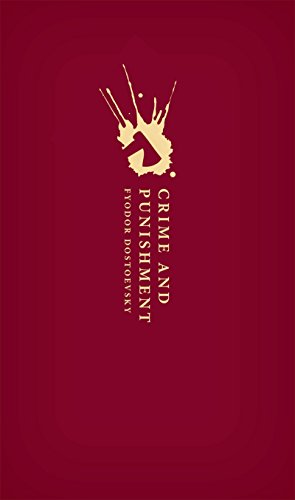
The season's most talked-about all-purpose personal strategy guide and philosophical compendium," said Newsweek of Robert Greene's bold, elegant, and ingenious manual of modern manipulation, The 48 Laws of Power. Now Greene has once again mined history and literature to distill the essence of seduction, the most highly refined mode of influence, the ultimate power trip.
The Art of Seduction is a masterful synthesis of the work of thinkers such as Freud, Ovid, Kierkegaard, and Einstein, as well as the achievements of the greatest seducers throughout history. From Cleopatra to John F. Kennedy, from Andy Warhol to Josephine Bonaparte, The Art of Seduction gets to the heart of the character of the seducer and his or her tactics, triumphs and failures. The seducer's many faces include: the Siren, the Rake, the Ideal Lover, the Dandy, the Natural, the Coquette, the Charmer, and the Charismatic. Twenty-four maneuvers will guide readers through the seduction process, providing cunning, amoral instructions for and analysis of this fascinating, all-pervasive form of power. Just as beautifully packaged and every bit as essential as The 48 Laws of Power, The Art of Seduction is an indispensable primer of persuasion and offers the best lessons on how to take what you want from whomever you want or how to prevent yourself from being taken.
…
Cover unavailable
66
Option B: Facing Adversity, Building Resilience, and Finding Joy
Sandberg
4.1
From Facebook's COO and Wharton's top-rated professor, the #1 New York Times best-selling authors of Lean In and Originals: a powerful, inspiring, and practical book about building resilience and moving forward after life's inevitable setbacks.
After the sudden death of her husband, Sheryl Sandberg felt certain that she and her children would never feel pure joy again. "I was in 'the void, '" she writes, "a vast emptiness that fills your heart and lungs and restricts your ability to think or even breathe." Her friend Adam Grant, a psychologist at Wharton, told her there are concrete steps people can take to recover and rebound from life-shattering experiences. We are not born with a fixed amount of resilience. It is a muscle that everyone can build. Option B combines Sheryl's personal insights with Adam's eye-opening research on finding strength in the face of adversity. Beginning with the gut-wrenching moment when she finds her husband, Dave Goldberg, collapsed on a gym floor, Sheryl opens up her heart--and her journal--to describe the acute grief and isolation she felt in the wake of his death. But Option B goes beyond Sheryl's loss to explore how a broad range of people have overcome hardships including illness, job loss, sexual assault, natural disasters, and the violence of war. Their stories reveal the capacity of the human spirit to persevere . . . and to rediscover joy. Resilience comes from deep within us and from support outside us. Even after the most devastating events, it is possible to grow by finding deeper meaning and gaining greater appreciation in our lives. Option B illuminates how to help others in crisis, develop compassion for ourselves, raise strong children, and create resilient families, communities, and workplaces. Many of these lessons can be applied to everyday struggles, allowing us to brave whatever lies ahead. Two weeks after losing her husband, Sheryl was preparing for a father-child activity. "I want Dave," she cried. Her friend replied, "Option A is not available," and then promised to help her make the most of Option B. We all live some form of Option B. This book will help us all make the most of it.
…
Recommended by Katie Couric and Ee Ling Lim.
Katie Couric
I felt it was really brave of Sheryl Sandberg to write. [source]

Ee Ling Lim
This book is about resilience, and I only wish there was such a book when I was younger. I was 18 when my dad passed away and it was something that I didn't talk about because I was so afraid of opening the floodgates. It hit me hard, the day my daughter commented that I didn't seem to miss my dad - because I never talked about him. [source]
Cover unavailable
67
The Human Body Coloring Book: The Ultimate Anatomy Study Guide
DK
4.1
An essential workbook that will appeal to all students of anatomy, "The Human Body Coloring Book" takes an interactive approach to human anatomy that will help users learn, understand, and revisit the subject with ease.
Drawing on an unparalleled library of state-of-the-art specialist anatomical illustrations, "The Human Body Coloring Book" is structured system by system for ease of use, with comprehensive coverage of the human body from cell to system.
"The Human Body Coloring Book" is a unique study aid that provides students with an innovative approach to learning, while the opportunity to self-test maximizes the ability to recall knowledge.
…
Cover unavailable
68
The Center Cannot Hold: My Journey Through Madness
Elyn Saks
4.1
Elyn Saks is a success by any measure: she's an endowed professor at the prestigious University of Southern California Gould School of Law. She has managed to achieve this in spite of being diagnosed as schizophrenic and given a "grave" prognosis—and suffering the effects of her illness throughout her life.
Saks was only eight, and living an otherwise idyllic childhood in sunny 1960s Miami, when her first symptoms appeared in the form of obsessions and night terrors. But it was not until she reached Oxford University as a Marshall Scholar that her first full-blown episode, complete with voices in her head and terrifying suicidal fantasies, forced her into a psychiatric hospital.
Saks would later attend Yale Law School where one night, during her first term, she had a breakdown that left her singing on the roof of the law school library at midnight. She was taken to the emergency room, force-fed antipsychotic medication, and tied hand-and-foot to the cold metal of a hospital bed. She spent the next five months in a psychiatric ward.
So began Saks's long war with her own internal demons and the equally powerful forces of stigma. Today she is a chaired professor of law who researches and writes about the rights of the mentally ill. She is married to a wonderful man.
In The Center Cannot Hold, Elyn Saks discusses frankly and movingly the paranoia, the inability to tell imaginary fears from real ones, and the voices in her head insisting she do terrible things, as well as the many obstacles she overcame to become the woman she is today. It is destined to become a classic in the genre.
…
Cover unavailable
69
Wait But Why Year One: We finally figured out how to put a blog onto an e-reader
Tim Urba
4.1
Since we started Wait But Why in 2013, we've received a bunch of requests from readers to get the blog onto their e-reader. This was easy for them to say—they weren't the ones who would have to figure out how to put a blog on an e-reader. Not an easy task for people with no skills. The good news is, with some grit and determination, we finally figured out how to hire someone to do it for us. So here it is—Year One of Wait But Why, perfect for reading on the go, when you're offline, or as a gift for someone you know will love the blog.
…
Cover unavailable
70
Psychopath Free: Recovering from Emotionally Abusive Relationships with Narcissists, Sociopaths, and Other Toxic People
Jackson MacKenzie
4.0
Have you ever been in a relationship with a psychopath? Chances are, even if you did, you would never know it. Psychopaths are cunning charmers and master manipulators, to the point where you start to accept the most extreme behaviors as normal… Even if it hurts you. All around us, every single day, human beings devoid of empathy are wreaking havoc and destroying lives in the coldest, most heartless ways imaginable. In constant pursuit of money, sex, influence, or simple entertainment, psychopaths will do whatever it takes to gain power over others. They hide behind a veil of normalcy, arranging their friends and partners like pawns in a game of chess.
Using false praise and flattery to get what they want, they can lure any unsuspecting target into a relationship. Once hooked, their charming promises spin into mind games and psychological torture. Victims are left devastated and confused, unable to recognize—or even put into words—the nightmare that just took place.
This significantly expanded edition of Psychopath Free contains new chapters, updated content, and real survivor experiences. Written from the heart, it is the first guide for survivors written by a survivor, offering hope for healing and thriving after psychopathic abuse. Say goodbye to the chaos, self-doubt, and victimization. You are free.
…
Cover unavailable
71
Judgment Under Uncertainty: Heuristics and Biases
Daniel Kahneman
4.0
The thirty-five chapters in this book describe various judgmental heuristics and the biases they produce, not only in laboratory experiments but in important social, medical, and political situations as well. Individual chapters discuss the representativeness and availability heuristics, problems in judging covariation and control, overconfidence, multistage inference, social perception, medical diagnosis, risk perception, and methods for correcting and improving judgments under uncertainty. About half of the chapters are edited versions of classic articles; the remaining chapters are newly written for this book. Most review multiple studies or entire subareas of research and application rather than describing single experimental studies. This book will be useful to a wide range of students and researchers, as well as to decision makers seeking to gain insight into their judgments and to improve them.
…
Recommended by Adam Robinson, Adam Robinson, and Jonah Lehrer.
Adam Robinson
This study should be taught at every business school in the country. [source]
Adam Robinson
This study should be taught at every business school in the country. [source]
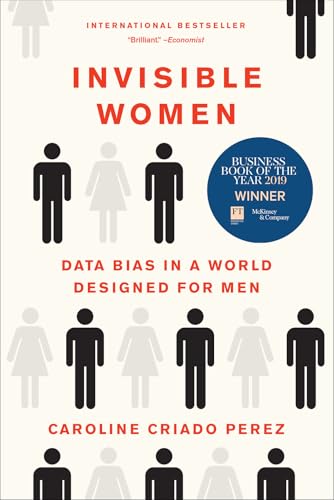
Jonah Lehrer
This is one of the most influential books in modern economics. [source]
Cover unavailable
72
Unfu*k Yourself: Get Out of Your Head and into Your Life
Joining the ranks of The Life-Changing Magic of Not Giving a F*ck, The Subtle Art of Not Giving a F*ck, You Are a Badas*, and F*ck Feelings comes this refreshing, BS-free, self-empowerment guide that offers an honest, no-nonsense, tough-love approach to help you move past self-imposed limitations.
Are you tired of feeling fu*ked up? If you are, Gary John Bishop has the answer. In this straightforward handbook, he gives you the tools and advice you need to demolish the slag weighing you down and become the truly unfu*ked version of yourself. ''Wake up to the miracle you are,'' he directs. ''Here's what you've forgotten: You're a fu*king miracle of being.'' It isn't other people that are standing in your way, it isn't even your circumstances that are blocking your ability to thrive, it's yourself and the negative self-talk you keep telling yourself.
In Unfu*k Yourself, Bishop leads you through a series of seven assertions:
I am willing. I am wired to win. I got this. I embrace the uncertainty. I am not my thoughts; I am what I do. I am relentless. I expect nothing and accept everything.
Lead the life you were meant to have—Unfu*k Yourself.
…
Recommended by Barnacules Nerdgasm.
Barnacules Nerdgasm
This book was recommended to me by @RealJennJ originally and she has recommended some other amazing books also I'll share with you later. I never thought a book could have as positive of an impact on me as this one did. But it's like medicine, you need to revisit it over and over [source]
Cover unavailable
73
The Dangerous Case of Donald Trump: 27 Psychiatrists and Mental Health Experts Assess a President
Bandy X. Lee
4.0
The New York Times bestseller! More than two dozen psychiatrists and psychologists offer their consensus view that Trump's mental state presents a clear and present danger to our nation and individual well-being.
This is not normal.
Since the start of Donald Trump’s presidential run, one question has quietly but urgently permeated the observations of concerned citizens: What is wrong with him? Constrained by the American Psychiatric Association’s “Goldwater rule,” which inhibits mental health professionals from diagnosing public figures they have not personally examined, many of those qualified to answer this question have shied away from discussing the issue at all. The public has thus been left to wonder whether he is mad, bad, or both.
In THE DANGEROUS CASE OF DONALD TRUMP, twenty-seven psychiatrists, psychologists, and other mental health experts argue that, in Mr. Trump’s case, their moral and civic “duty to warn” America supersedes professional neutrality. They then explore Trump’s symptoms and potentially relevant diagnoses to find a complex, if also dangerously mad, man.
Philip Zimbardo and Rosemary Sword, for instance, explain Trump’s impulsivity in terms of “unbridled and extreme present hedonism.” Craig Malkin writes on pathological narcissism and politics as a lethal mix. Gail Sheehy, on a lack of trust that exceeds paranoia. Lance Dodes, on sociopathy. Robert Jay Lifton, on the “malignant normality” that can set in everyday life if psychiatrists do not speak up.
His madness is catching, too. From the trauma people have experienced under the Trump administration to the cult-like characteristics of his followers, he has created unprecedented mental health consequences across our nation and beyond.
It’s not all in our heads. It’s in his.
"There will not be a book published this fall more urgent, important, or controversial than The Dangerous Case of Donald Trump...profound, illuminating and discomforting" —Bill Moyers
…
Recommended by Tony Schwartz.
Tony Schwartz
This is a book of essays, mostly by psychiatrists. The majority of books about Trump focus on his actions. This is a book about why he does what he does. It presents a range of interpretations about what Trump’s underlying personality disorder is, but there is consensus that he suffers from one. [source]
Cover unavailable
74
Lost Connections: Uncovering the Real Causes of Depression – and the Unexpected Solutions
From the New York Times bestselling author of Chasing the Scream: The First and Last Days of the War on Drugs, a startling challenge to our thinking about depression and anxiety.
Award-winning journalist Johann Hari suffered from depression since he was a child and started taking antidepressants when he was a teenager. He was told—like his entire generation—that his problem was caused by a chemical imbalance in his brain. As an adult, trained in the social sciences, he began to investigate this question—and he learned that almost everything we have been told about depression and anxiety is wrong.
Across the world, Hari discovered social scientists who were uncovering the real causes—and they are mostly not in our brains, but in the way we live today. Hari’s journey took him from the people living in the tunnels beneath Las Vegas, to an Amish community in Indiana, to an uprising in Berlin—all showing in vivid and dramatic detail these new insights. They lead to solutions radically different from the ones we have been offered up until now.
Just as Chasing the Scream transformed the global debate about addiction, with over twenty million views for his TED talk and the animation based on it, Lost Connections will lead us to a very different debate about depression and anxiety—one that shows how, together, we can end this epidemic.
…
Cover unavailable
75
Human Physiology
Stuart Fox and Krista Rompolski
4.0
Used books do not come with access code.
Cover unavailable
76
The Idiot
Fyodor Dostoevsky, Richard Pevear, et al.
4.0
Returning to Russia from a sanitarium in Switzerland, the Christ-like epileptic Prince Myshkin finds himself enmeshed in a tangle of love, torn between two women—the notorious kept woman Nastasya and the pure Aglaia—both involved, in turn, with the corrupt, money-hungry Ganya. In the end, Myshkin’s honesty, goodness, and integrity are shown to be unequal to the moral emptiness of those around him.
Loved this book, had to read it twice! Dostoevsky is recognized as one of the most accomplished writers + philosophers ever. What appeals to me most in The Idiot is how deep and consistent Dostoevsky gets with his protagonist character, Prince Lev Nokolayevich Myshkin. Myshkin is constantly put through challenging moments where he is lied to, manipulated, stolen from but remains compassionate through it all. The stubborn consistency of Myshkin's compassionate character opened my mind to what it means to building strong character, to remaining constantly good when everything around you is chaotic. [source]
The Idiot by Fyodor Dostoevsky https://t.co/cInEojC9OO, a book from my great books list https://t.co/AxBNX3QpMb [source]
Cover unavailable
77
The Upward Spiral: Using Neuroscience to Reverse the Course of Depression, One Small Change at a Time
Alex Korb PhD and Daniel J. Siegel MD
4.0
Depression can feel like a downward spiral, pulling you down into a vortex of sadness, fatigue, and apathy. Based in the latest research in neuroscience, this audiobook offers dozens of little things you can do every day to rewire your brain and create an upward spiral towards a happier, healthier life.
Depression doesn't happen all at once. It starts gradually and builds momentum over time. If you go through a difficult experience, you may stop taking care of yourself. You may stop exercising and eating healthy, which will end up making you feel even worse as time goes on. You are caught in a downward spiral, but you may feel too tired, too overwhelmed, and too scared to try and pull yourself back up. The good news is that just one small step can be a step in the right direction.
In The Upward Spiral, neuroscientist Alex Korb demystifies the neurological processes in the brain that cause depression and offers effective ways to get better "one little step at a time". In the book, you'll discover that there isn't "one big solution" that will solve your depression. Instead, there are dozens of small, practical things you can do to alleviate your symptoms and start healing. Some are as simple as relaxing certain muscles to reduce feelings of anxiety, while others involve making small efforts toward more positive social interactions. Small steps in the right direction can have profound effects giving you the power to literally "reshape" your brain.
Like most people, you probably didn't wake up one day and find yourself completely depressed. Instead, it probably happened over time, as a series of reactions to difficult situations and negative thinking. But if you are ready to reverse the trajectory of your depression and find lasting happiness, this book will show you how.
…
Cover unavailable
78
Night Falls Fast: Understanding Suicide
Kay Redfield Jamison
4.0
From the author of the best-selling memoir An Unquiet Mind, comes the first major book in a quarter century on suicide, and its terrible pull on the young in particular. Night Falls Fast is tragically timely: suicide has become one of the most common killers of Americans between the ages of fifteen and forty-five.
An internationally acknowledged authority on depressive illnesses, Dr. Jamison has also known suicide firsthand: after years of struggling with manic-depression, she tried at age twenty-eight to kill herself. Weaving together a historical and scientific exploration of the subject with personal essays on individual suicides, she brings not only her remarkable compassion and literary skill but also all of her knowledge and research to bear on this devastating problem. This is a book that helps us to understand the suicidal mind, to recognize and come to the aid of those at risk, and to comprehend the profound effects on those left behind. It is critical reading for parents, educators, and anyone wanting to understand this tragic epidemic.
…
Recommended by Johanna Reiss.
Johanna Reiss
This is really more like a textbook, but it says some important things. [source]
Cover unavailable
79
Why We Love Dogs, Eat Pigs, and Wear Cows: An Introduction to Carnism
Melanie Joy PhD, John Robbins
4.0
In this paperback edition is a foreword by activist and author John Robbins and a reader's group study guide. This ground-breaking work, voted one of the top ten books of 2010 by "VegNews" Magazine, offers an absorbing look at why and how humans can so wholeheartedly devote ourselves to certain animals and then allow others to suffer needlessly, especially those slaughtered for our consumption.
Social psychologist Melanie Joy explores the many ways we numb ourselves and disconnect from our natural empathy for farmed animals. She coins the term "carnism" to describe the belief system that has conditioned us to eat certain animals and not others.
In "Why We Love Dogs, Eat Pigs, and Wear Cows" Joy investigates factory farming, exposing how cruelly the animals are treated, the hazards that meatpacking workers face, and the environmental impact of raising 10 billion animals for food each year. Controversial and challenging, this book will change the way you think about food forever.
I love this twist on the best books list. @ConstanceGrady asked us not what our best book of the 2010s was, but what were the books that stuck with us the most, personally. https://t.co/ylK2Uq1jgi [source]
Cover unavailable
80
Unlocking Your Authentic Self: Overcoming impostor syndrome, enhancing self-confidence, and banishing self-doubt
Jennifer L Hunt
4.0
Do you beat yourself up for even simple mistakes? Does criticism stick with you for months, or even years? Do you secretly wonder when you will finally be exposed?...that people will discover you aren't as good as they thought you were? In Unlocking Your Authentic Self, physician leader and executive coach Jennifer Hunt teaches you practical and easily applied tools. The book offers realistic skills to overcome impostor syndrome and live your best possible life. Start your journey now and learn to: - Disarm your cruel inner critic and still strive for growth - Replace negative thought loops with 3 positive reframing tools - Let go of unhealthy perfectionism and crush procrastination - Find the pearls of truth in criticism without sacrificing self-confidence What if a single book could give you a powerful new lens--to see yourself, your potential, and your gifts? Well, this is it. This book is your personal Rx for spiritual, emotional, and professional growth.
…
Cover unavailable
81
Human Body Activity Book for Kids: Hands-on Fun for Grades K-3
Ph.D., Katie Stokes, M.Ed.,
4.0
Cover unavailable
82
Meditations on Violence: A Comparison of Martial Arts Training & Real World Violence
Rory Miller
4.0
Experienced martial artist and veteran correction officer Sgt. Rory Miller distills what he has learned from jailhouse brawls, tactical operations and ambushes to explore the differences between martial arts and the subject martial arts were designed to deal with: Violence. Sgt. Miller introduces the myths, metaphors and expectations that most martial artists have about what they will ultimately learn in their dojo. This is then compared with the complexity of the reality of violence. Complexity is one of the recurring themes throughout this work. Section Two examines how to think critically about violence, how to evaluate sources of knowledge and clearly explains the concepts of strategy and tactics. Sections Three and Four focus on the dynamics of violence itself and the predators who perpetuate it. Drawing on hundreds of encounters and thousands of hours spent with criminals Sgt. Miller explains the types of violence; how, where, when and why it develops; the effects of adrenaline; how criminals think, and even the effects of drugs and altered states of consciousness in a fight. Section Five centers on training for violence, and adapting your present training methods to that reality. It discusses the pros and cons of modern and ancient martial arts training and gives a unique insight into early Japanese kata as a military training method. Section Six is all about how to make self-defense work. Miller examines how to look at defense in a broader context, and how to overcome some of your own subconscious resistance to meeting violence with violence. The last section deals with the aftermath--the cost of surviving sudden violence or violent environments, how it can change you for good or bad. It gives advice for supervisors and even for instructors on how to help a student/survivor. You'll even learn a bit about enlightenment.
…
Recommended by Kaci Lambe Kai.
Kaci Lambe Kai
I'm an avid martial artist and I'm currently training to become a Krav Maga instructor. I take this work very seriously and this is part of my studies in the world of self defense. [source]
Cover unavailable
83
Subliminal: How Your Unconscious Mind Rules Your Behavior
Leonard Mlodinow
4.0
Leonard Mlodinow, the best-selling author of The Drunkard’s Walk and coauthor of The Grand Design (with Stephen Hawking), gives us a startling and eye-opening examination of how the unconscious mind shapes our experience of the world and how, for instance, we often misperceive our relationships with family, friends, and business associates, misunderstand the reasons for our investment decisions, and misremember important events.
Your preference in politicians, the amount you tip your waiter—all judgments and perceptions reflect the workings of our mind on two levels: the conscious, of which we are aware, and the unconscious, which is hidden from us. The latter has long been the subject of speculation, but over the past two decades researchers have developed remarkable new tools for probing the hidden, or subliminal, workings of the mind. The result of this explosion of research is a new science of the unconscious and a sea change in our understanding of how the subliminal mind affects the way we live.
Employing his trademark wit and lucid, accessible explanations of the most obscure scientific subjects, Leonard Mlodinow takes us on a tour of this research, unraveling the complexities of the subliminal self and increasing our understanding of how the human mind works and how we interact with friends, strangers, spouses, and coworkers. In the process he changes our view of ourselves and the world around us.
…
Cover unavailable
84
The Grace Year
Kim Liggett
4.0
No one speaks of the grace year. It’s forbidden.
In Garner County, girls are told they have the power to lure grown men from their beds, to drive women mad with jealousy. They believe their very skin emits a powerful aphrodisiac, the potent essence of youth, of a girl on the edge of womanhood. That’s why they’re banished for their sixteenth year, to release their magic into the wild so they can return purified and ready for marriage. But not all of them will make it home alive.
Sixteen-year-old Tierney James dreams of a better life—a society that doesn’t pit friend against friend or woman against woman, but as her own grace year draws near, she quickly realizes that it’s not just the brutal elements they must fear. It’s not even the poachers in the woods, men who are waiting for a chance to grab one of the girls in order to make a fortune on the black market. Their greatest threat may very well be each other.
With sharp prose and gritty realism, The Grace Year examines the complex and sometimes twisted relationships between girls, the women they eventually become, and the difficult decisions they make in-between.
…
Cover unavailable
85
Should I Stay or Should I Go?: Surviving a Relationship with a Narcissist
Ramani Durvasula PhD
4.0
Cover unavailable
86
Awakenings
Oliver Sacks
4.0
Awakenings--which inspired the major motion picture--is the remarkable story of a group of patients who contracted sleeping-sickness during the great epidemic just after World War I. Frozen for decades in a trance-like state, these men and women were given up as hopeless until 1969, when Dr. Oliver Sacks gave them the then-new drug L-DOPA, which had an astonishing, explosive, "awakening" effect. Dr. Sacks recounts the moving case histories of his patients, their lives, and the extraordinary transformations which went with their reintroduction to a changed world.
I must have first read this book in the early eighties, and found it – like a lot of Sacks’s writing – absolutely fascinating. Not just because of the philosophical and scientific perspectives that he is involved in, but because of his involuntary self-characterisation. I used some of Sacks’s modes and mannerisms quite shamelessly as one of the sources for my character Zack Busner, who is a repeat presence in my fictions. So in a way the seeds of Umbrella were planted here, many years ago. [source]
Cover unavailable
87
Facing Violence: Preparing for the Unexpected
Rory Miller
4.0
Survival Favors the Prepared Mind--Robert Crowley
This book stands alone as an introduction to the context of self-defense. There are seven elements that must be addressed to bring self-defense training to something approaching 'complete.' Any training that dismisses any of these areas leaves you vulnerable.
1. Legal and ethical implications. A student learning self-defense must learn force law. Otherwise it is possible to train to go to prison. Side by side with the legal rules, every student must explore his or her own ethical limitations. Most do not really know where this ethical line lies within them. 2. Violence dynamics. Self-defense must teach how attacks happen. Students must be able to recognize an attack before it happens and know what kind they are facing. 3. Avoidance. Students need to learn and practice not fighting. Learning includes escape and evasion, verbal de-escalation, and also pure-not-be there avoidance. 4. Counter-ambush. If the student didn't see the precursors or couldn't successfully avoid the encounter he or she will need a handful of actions trained to reflex level for a sudden violent attack. 5. Breaking the freeze. Freezing is almost universal in a sudden attack. Students must learn to recognize a freeze and break out of one. 6. The fight itself. Most martial arts and self-defense instructors concentrate their time right here. What is taught just needs to be in line with how violence happens in the world. 7. The aftermath. There are potential legal, psychological, and medical effects of engaging in violence no matter how justified. Advanced preparation is critical. Any teacher or student of self-defense, anyone interested in self-defense, and any person who desires a deeper understanding of violence needs to read this book.
We strongly recommend this book to anybody wishing to learn self-defense, or understand how to stay safe should violence rear it's ugly head
…
Cover unavailable
88
Anatomy and Physiology Coloring Workbook: A Complete Study Guide
Elaine N. Marieb and Simone Brito
4.0
For courses in 1- and 2-semester Anatomy & PhysiologySimplify your Study of Anatomy & Physiology. Combining a wide range and variety of engaging coloring activities, exercises, and self-assessments into an all-in-one Study Guide, the Anatomy and Physiology Coloring Workbook helps you simplify your study of A&P. Featuring contributions from new co-author Simone Brito, the 12th edition of this best-selling guide continues to reinforce the fundamentals of anatomy and physiology through a variety of unique, interactive activities. You now benefit from new crossword puzzles in each chapter, along with dozens of strengthened and expanded exercises, illustrations, and over 100 coloring exercises. Additional self-assessments, "At The Clinic" short answer questions, and unique "Incredible Journey" visualization exercises, further reinforce basic concepts that are relevant to health care careers.
…
Cover unavailable
89
Everyday Mindfulness for OCD: Tips, Tricks, and Skills for Living Joyfully
Jon Hershfield MFT, Shala Nicely LPC, C. Alec Pollard PhD
4.0
“The most empowering OCD book I have ever read.” —Reid Wilson, PhD, author of Stopping the Noise in Your Head
Don’t just survive—thrive. In Everyday Mindfulness for OCD, two experts in obsessive-compulsive disorder (OCD) offer a blend of mindfulness, humor, and self-compassion to help you stop dwelling on what’s wrong and start enhancing what’s right—leading to a more joyful life.
If you’ve been diagnosed with OCD, you already understand how your obsessive thoughts, compulsive behavior, and need for rituals can interfere with everyday life. Maybe you’ve already undergone therapy or are in the midst of working with a therapist. It’s important for you to know that life doesn’t end with an OCD diagnosis. In fact, it’s possible to not only live with the disorder, but also live joyfully. This practical and accessible guide will show you how.
In Everyday Mindfulness for OCD, you’ll discover how you can stay one step ahead of your OCD. You’ll learn about the world of mindfulness, and how living in the present moment non-judgmentally is so important when you have OCD. You’ll also explore the concept of self-compassion—what it is, what it isn’t, how to use it, and why people with OCD benefit from it. Finally, you’ll discover daily games, tips, and tricks for outsmarting your OCD, meditations and mindfulness exercises, and much, much more.
Living with OCD is challenging—but it doesn’t have to define you. If you’re tired of focusing on how “hard” living with OCD is and are looking for fun ways to make the most of your unique self, this book will be a breath of fresh air.
…
Cover unavailable
90
The Psychopath Test: A Journey Through the Madness Industry
Jon Ronson
4.0
In this madcap journey, a bestselling journalist investigates psychopaths and the industry of doctors, scientists, and everyone else who studies them.
The Psychopath Test is a fascinating journey through the minds of madness. Jon Ronson's exploration of a potential hoax being played on the world's top neurologists takes him, unexpectedly, into the heart of the madness industry. An influential psychologist who is convinced that many important CEOs and politicians are, in fact, psychopaths teaches Ronson how to spot these high-flying individuals by looking out for little telltale verbal and nonverbal clues. And so Ronson, armed with his new psychopath-spotting abilities, enters the corridors of power. He spends time with a death-squad leader institutionalized for mortgage fraud in Coxsackie, New York; a legendary CEO whose psychopathy has been speculated about in the press; and a patient in an asylum for the criminally insane who insists he's sane and certainly not a psychopath.
Ronson not only solves the mystery of the hoax but also discovers, disturbingly, that sometimes the personalities at the helm of the madness industry are, with their drives and obsessions, as mad in their own way as those they study. And that relatively ordinary people are, more and more, defined by their maddest edges.
…
Recommended by Memo Akten.
Memo Akten
@therourke you may very well be a pyschopath!, it doesn't mean you'll be an axe wielding homicidal maniac :) (I think I might be a bit pyschopath, dunno. My AE is a bit of a yoyo. At times I might feel more for a fly in a spiderweb than a person). V interesting book: https://t.co/QRAJAZPhDY [source]
Cover unavailable
91
Conflict Communication (ConCom)
Rory Miller
4.0
Conflict happens everywhere: at work, with friends and family, among strangers, and certainly in violence. Why did your boss ignore a suggestion that could save millions of dollars? Why do you have the same argument again and again with your spouse? When someone insults you, why do you get angry? Why do bad guys beat up the weak?
You have three brains.
Lizard brain (survival) Monkey brain (emotion / social status) Human brain (reason) Each "brain" has a different priority and evolved to deal with different kinds of conflict. They work using different scripts and have a very clear seniority system.
Conflict Communication(ConCom) presents a functional taxonomy to see, understand, and manipulate the roots of life's conflicts. You will have the background, the principles, and a collection of tricks to manage and ideally avoid dangerous conflicts.
No going back. After reading this book, you can never go back. Even if you reject everything in the program, even if you refuse to admit how often your monkey brain has controlled your life, escalations toward conflict will never again be invisible to you.
As the fortune cookie says, "Your life is about to change."
…
Cover unavailable
92
Inner Excellence: Train Your Mind for Extraordinary Performance and the Best Possible Life
JIM MURPHY
4.0
Want More Joy and Confidence?
Discover the life guide that has developed world champions, empowered athletes to become world #1, and most importantly, transformed their hearts and minds. This step-by-step training manual from one of the world's top mental skills coaches will teach you how the mindset of some of the best performers and leaders on the planet allowed them to have freedom and confidence when so much was out of their control.
Whether you’re an athlete or entrepreneur, single mother or father of five, you’ll find exercises, techniques and tools in this book that will improve every area of your life. Your life will take on new meaning as you move beyond the pursuit of happiness to a life of purpose and fulfillment. Jim Murphy's complete program of proven mental techniques is based on the powerful principles of love, wisdom, and courage, that came from over six years of full-time research and writing (after his masters degree in Coaching Science).
“I read the first version of Inner Excellence six times. I recommend all my clients read it.” – Matt Killen, PGA Tour coach to Justin Thomas, Tiger Woods and many others
INNER EXCELLENCE WILL SHOW YOU HOW TO:
DEVELOP SELF-MASTERY—and let go of what you can’t control OVERCOME ANXIETY—and build powerful mental habits REMOVE MENTAL BLOCKS—and get out of your own way TRAIN YOUR SUBCONSCIOUS MIND—and release limiting beliefs
As professional baseball player in the Chicago Cubs organization, Jim’s sense of worth and identity revolved around his performance. He was obsessed with fame but also afraid of failure, and that fear in his heart made him struggle under the pressure to perform. When he started coaching professional and Olympic athletes, he saw the same pattern over and over again: athletes had lost their joy and passion for life as the fear of failure engulfed their lives.
This book will share with you how some of the best athletes in the world have learned Inner Excellence, how it propelled them to extraordinary performance even when they were filled with doubt and uncertainty, and how you can excel in the same way in your life. The insights and exercises within will help you achieve higher levels of performance than you ever thought possible—and bring incredible peace and confidence.
“Inner Excellence changed how I see the world, how I think, and how I play golf.” - Vaughn Taylor, three-time PGA Tour winner
Jim Murphy is a Performance Coach (mental skills) to some of the best athletes and leaders in the world. The majority of his clients achieved the best year of their career their first year working with Jim (or their best year in the previous five years)
…
Cover unavailable
93
Atlas of Human Anatomy
Frank H. Netter MD
4.0
The only anatomy atlas illustrated by physicians, Atlas of Human Anatomy, 7th edition, brings you world-renowned, exquisitely clear views of the human body with a clinical perspective. In addition to the famous work of Dr. Frank Netter, you'll also find nearly 100 paintings by Dr. Carlos A. G. Machado, one of today's foremost medical illustrators. Together, these two uniquely talented physician-artists highlight the most clinically relevant views of the human body. In addition, more than 50 carefully selected radiologic images help bridge illustrated anatomy to living anatomy as seen in everyday practice.
…
Cover unavailable
94
Anatomy Coloring Book
Stephanie McCann and Eric Wise
4.0
Coloring the body and its systems is the most effective way to study the structure and functions of human anatomy. Kaplan's Anatomy Coloring Book provides realistic drawings, clear descriptions, and must-know terms for an easy way to learn anatomy.
Anatomy Coloring Book features detailed illustrations of the body's anatomical systems in a spacious page design with no back-to-back images--goodbye, bleed-through! Plus, Color Guides on every 2-page spread offer instructions for best coloring results so you can get the most out of your study. The Best Review More than 450 detailed, realistic medical illustrations, including microscopic views of cells and tissues Exclusive perforated, flashcard-format illustrations of 96 muscle structures to color and study on-the-go Clear descriptive overview on the page opposite each illustration, with key learning terms in boldface Self-quizzing for each illustration, with convenient same-page answer keys Full coverage of the major body systems, plus physiological information on cells, tissues, muscles, and development Expert GuidanceWe invented test prep—Kaplan (www.kaptest.com) has been helping students for almost 80 years. Our proven strategies have helped legions of students achieve their dreams.
…
Cover unavailable
95
The Trial
Franz Kafka, Breon Mitchell
4.0
Written in 1914 but not published until 1925, a year after Kafka's death, The Trial is one of the most important novels of the twentieth century: the terrifying tale of Josef K., a respectable bank officer who is suddenly and inexplicably arrested and must defend himself against a charge about which he can get no information. Whether read as an existential tale, a parable, or a prophecy of the excesses of modern bureaucracy wedded to the madness of totalitarianism, Kafka's nightmare has resonated with chilling truth for generations of readers. This new edition is based upon the work of an international team of experts who have restored the text, the sequence of chapters, and their division to create a version that is as close as possible to the way the author left it.
In his brilliant translation, Breon Mitchell masterfully reproduces the distinctive poetics of Kafka's prose, revealing a novel as full of energy and power as when it was first written.
It’s a fascinating writing style with a 3rd party observer that’s treated as an extension of the protagonists own sentiments and mind. It’s also just exquisitely written. And the concept of being on trial for charges unknown by a vast, impersonal, yet petty, bureaucracy pulls from a timeless well of societal anxieties. So far, so very good. About half way through. [source]
Michael Peel
I read this before going to Nigeria but moving there made me think about it a lot. The idea that the system always wins. [source]
Cover unavailable
96
Your Erroneous Zones: Step-by-Step Advice for Escaping the Trap of Negative Thinking and Taking Control of Your Life
THE RECORD-BREAKING, #1 NEW YORK TIMES BESTSELLER – OVER 35 MILLION COPIES SOLD
The first book by Wayne Dyer, author of the multimillion-copy bestseller Pulling Your Own Strings and national bestsellers There’s a Spiritual Solution to Every Problem and Wisdom of the Ages, a positive and practical guide to breaking free from the trap of negative thinking and enjoying life to the fullest.
If you're plagued by guilt or worry and find yourself unwittingly falling into the same old self-destructive patterns, then you have "erroneous zones" – whole facets of your approach to life that act as barriers to your success and happiness.
Perhaps you believe that you have no control over your feelings and reactions – Dyer shows how you can take charge of yourself and manage how much you will let difficult times and people affect you. Or maybe you spend more time worrying what others think than working on what you want and need – Dyer points the way to true self-reliance. From self-image problems to over-dependence on others, Dyer gives you the tools you need to break free from negative thinking and enjoy life to the fullest.
…
Recommended by Madalina Uceanu.
Madalina Uceanu
The second category of books would be related to self awareness and keeping a positive approach to life generally, which I think makes a lot of difference in the way you create your professional path as well. Here you can either go more on the NLP approach and watch Tony Robbins interventions, or more towards the spiritual path, maybe at a later stage and read Wayne Dyer's books. [source]
Cover unavailable
97
Heuristics and Biases: The Psychology of Intuitive Judgment
Thomas Gilovich, Dale Griffin, Daniel Kahneman
4.0
Judgment pervades human experience. Do I have a strong enough case to go to trial? Will the Fed change interest rates? Can I trust this person? This book examines how people answer such questions. How do people cope with the complexities of the world economy, the uncertain behavior of friends and adversaries, or their own changing tastes and personalities? When are people's judgments prone to bias, and what is responsible for their biases? This book compiles psychologists' best attempts to answer these important questions.
This is another really good set of essays in a rapidly growing branch of intellectual enquiry called behavioural economics where they look at the irrationalities in the way that humans behave. I thought this was brilliant. One essay in particular on irrational optimism caught my eye. It’s the idea that individuals who have slightly inflated expectations of their own abilities tend to persevere longer and perform better. [source]
Cover unavailable
98
Violence: A Writer's Guide
Rory Miller and Steve Perr
4.0
This is not about writing technique. It is an introduction to the world of violence. To the parts that people don’t understand. The parts that books and movies get wrong. Not just the mechanics, but how people who live in a violent world think and feel about what they do and what they see done.
Cover unavailable
99
Many Thorns, Yet Still Roses: Breaking the Silence with Our Story of Sibling Group Adoption
Jessie Gallaher
4.0
When it comes to adoption transitions, only few have dared to share the whole truth. Jessie is of the few.
When Jessie and Jordan open their hearts and home to children in need, their lives are instantly changed in more ways than they could have imagined. Jessie gives you a front row seat from which you will experience the overwhelming lows and heartwarming highs of their first year as a foster and adoptive family. No topic is taboo, for she tells it all. From her struggles to maintain faith, her worries over not being enough, her fears in the moments where everything seems to be falling apart, and her devastation in finding that there is always a nextobstacle, she is breaking the silence. She paints detailed pictures of the most complicated situations, where many will wonder, "Why would anyone sign up for that?"
And the answer is simple. There is hope and beauty in the ugliest of circumstances. God's plan is bigger than each of us. The phrase "Things could be worse," really means "There is a rose amongst the thorns."
…
Cover unavailable
100
Wishman
Frank Shankwitz
4.0
The story drops into Frank's sad and difficult childhood - a childhood that was not his, but the byproduct of his mother’s whims. Constantly on the move and frequently hungry and homeless, doing without was the norm. Along his journey, glimmers of kindness from strangers were extended from communities he landed in - a meal or shelter when there was neither in sight. Each of these moments of generosity laid the path for Frank to walk and to choose a life of giving - to his country and then his community. His choices eventually led to several brushes with death and a chance meeting with a dying child - all of which answered a question we all face. Why am I here?
About the Author:
Frank continues to carry the torch of giving back, traveling the world speaking about philanthropy and social responsibility, "Everyone Can Be A Hero". He resides in Prescott, Arizona with the love of his life, Kitty.