Ezra Klein portrait

Ezra Klein's Top Book Recommendations

Want to know what books Ezra Klein recommends? We've researched interviews, social media posts, podcasts, and articles to build a comprehensive list of Ezra Klein's favorite book recommendations of all time. At Shortform, we know books. Our book guides are the best in the world. Learn why.

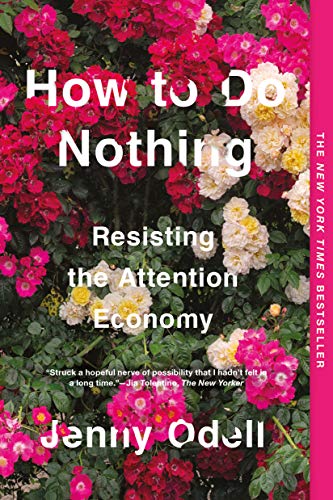
How to Do Nothing: Resisting the Attention Economy book cover1

How to Do Nothing: Resisting the Attention Economy

Jenny Odell

4.0
This thrilling critique of the forces vying for our attention re-defines what we think of as productivity, shows us a new way to connect with our environment and reveals all that we’ve been too distracted to see about our selves and our world.

When the technologies we use every day collapse our experiences into 24/7 availability, platforms for personal branding, and products to be monetized, nothin
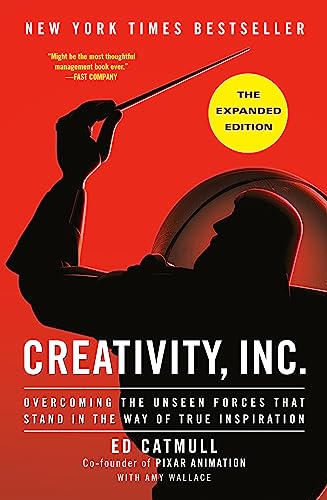
Creativity, Inc.: Overcoming the Unseen Forces That Stand in the Way of True Inspiration book cover2

Creativity, Inc.: Overcoming the Unseen Forces That Stand in the Way of True Inspiration

Ed Catmull

4.5
“What does it mean to manage well?”
From Ed Catmull, co-founder (with Steve Jobs and John Lasseter) of Pixar Animation Studios, comes an incisive book about creativity in business—sure to appeal to readers of Daniel Pink, Tom Peters, and Chip and Dan Heath. Creativity, Inc. is a book for managers who want to lead their employees to new heights, a manual for anyone who strives for originality, and t
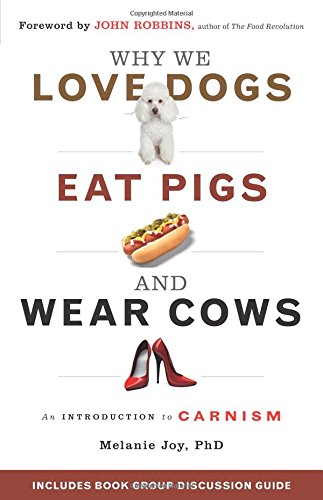
Why We Love Dogs, Eat Pigs, and Wear Cows: An Introduction to Carnism book cover3

Why We Love Dogs, Eat Pigs, and Wear Cows: An Introduction to Carnism

Melanie Joy PhD, John Robbins

4.3

In this paperback edition is a foreword by activist and author John Robbins and a reader's group study guide. This ground-breaking work, voted one of the top ten books of 2010 by "VegNews" Magazine, offers an absorbing look at why and how humans can so wholeheartedly devote ourselves to certain animals and then allow others to suffer needlessly, especially those slaughtered for our consumption.

Soc

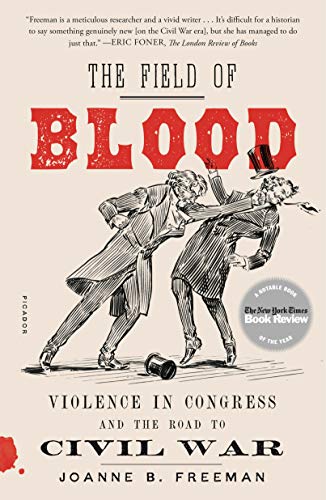
The Field of Blood: Violence in Congress and the Road to Civil War book cover4

The Field of Blood: Violence in Congress and the Road to Civil War

Joanne B. Freeman

4.3
In The Field of Blood, the historian Joanne B. Freeman offers a new and dramatically rendered portrait of American politics in its rowdiest years. Drawing on an extraordinary range of sources, she shows that today's hyperpolarized environment cannot compare with the turbulent atmosphere of the decades before the Civil War, when the U.S. Congress itself was rife with conflict. Legislative sessions
This Is How You Lose the Time War book cover5

This Is How You Lose the Time War

Amal El-Mohtar, Max Gladstone

4.1
Two time-traveling agents from warring futures, working their way through the past, begin to exchange letters—and fall in love in this thrilling and romantic book from award-winning authors Amal-El Mohtar and Max Gladstone.

Among the ashes of a dying world, an agent of the Commandant finds a letter. It reads: Burn before reading.

Thus begins an unlikely correspondence between two rival agents hellb
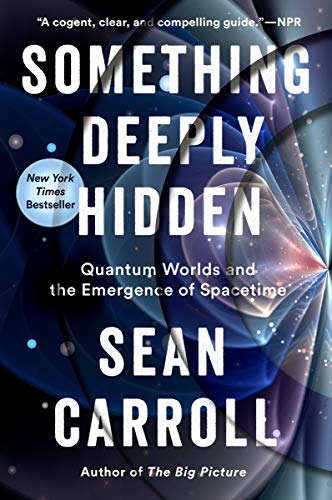
Something Deeply Hidden: Quantum Worlds and the Emergence of Spacetime book cover6

Something Deeply Hidden: Quantum Worlds and the Emergence of Spacetime

Sean Carroll

4.4
As you read these words, copies of you are being created.

Sean Carroll, theoretical physicist and one of this world’s most celebrated writers on science, rewrites the history of 20th century physics. Already hailed as a masterpiece, Something Deeply Hidden shows for the first time that facing up to the essential puzzle of quantum mechanics utterly transforms how we think about space and time. His r
7

Asymmetric Politics: Ideological Republicans and Group Interest Democrats

Matt Grossmann and David A. Hopkins

4.2
Why do Republican politicians promise to rein in government, only to face repeated rebellions from Republican voters and media critics for betraying their principles? Why do Democratic politicians propose an array of different policies to match the diversity of their supporters, only to become mired in stark demographic divisions over issue priorities? In short, why do the two parties act so diffe
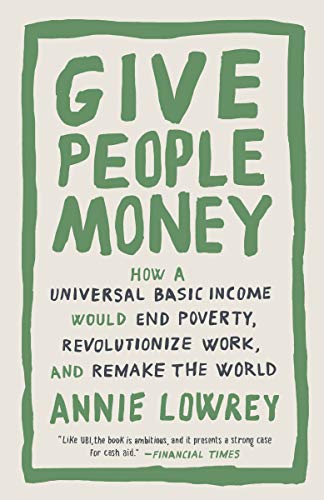
Give People Money: How a Universal Basic Income Would End Poverty, Revolutionize Work, and Remake the World book cover8

Give People Money: How a Universal Basic Income Would End Poverty, Revolutionize Work, and Remake the World

Annie Lowrey

4.1
A brilliantly reported, global look at universal basic income--a stipend given to every citizen--and why it might be necessary for our age of rising inequality, persistent poverty, and dazzling technology

Imagine if every month the government deposited $1,000 into your checking account, with nothing expected in return. It sounds crazy, but it has become one of the most influential and hotly debat
9

What It Takes: The Way to the White House

Richard Ben Cramer

4.3
10

Beyond Ideology: Politics, Principles, and Partisanship in the U. S. Senate

Frances E. Lee

4.6

The congressional agenda, Frances Lee contends, includes many issues about which liberals and conservatives generally agree. Even over these matters, though, Democratic and Republican senators tend to fight with each other. What explains this discord? Beyond Ideology argues that many partisan battles are rooted in competition for power rather than disagreement over the rightful role of governmen

11

On Deaf Ears: The Limits of the Bully Pulpit

George C. Edwards III

4.0
In this book, George Edwards analyzes the results of hundreds of public opinion polls from recent presidencies to assess the success of these efforts. Surprisingly, he finds that presidents typically are not able to change public opinion, even great, communicators usually fail to obtain the public's support for their high-priority initiatives. According to Edwards, the bully pulpit has proven infe
12

Overreach: Leadership in the Obama Presidency

George C. Edwards III

3.9
When Barack Obama became president, many Americans embraced him as a transformational leader who would fundamentally change the politics and policy of the country. Yet, two years into his administration, the public resisted his calls for support and Congress was deadlocked over many of his major policy proposals. How could this capable new president have difficulty attaining his goals? Did he lack
13

Predicting the Presidency: The Potential of Persuasive Leadership

George C. Edwards III

4.0
Millions of Americans--including many experienced politicians--viewed Barack Obama through a prism of high expectations, based on a belief in the power of presidential persuasion. Yet many who were inspired by candidate Obama were disappointed in what he was able to accomplish once in the White House. They could not understand why he often was unable to leverage his position and political skills t
14

The Gamble: Choice and Chance in the 2012 Presidential Election - Updated Edition

John Sides, Lynn Vavreck

3.9
A unique moneyball look at the 2012 U.S. presidential contest between Barack Obama and Mitt Romney

Game changer. We heard it so many times during the 2012 U.S. presidential election. But what actually made a difference in the contest--and what was just hype? In this groundbreaking book, John Sides and Lynn Vavreck tell the dramatic story of the election--with a big difference. Using an unusual mone
15

The Polarized Presidency of George W. Bush

George C Edwards III and Desmond King

3.8
This collection examines the foreign and domestic policies of President George W Bush's administration. The analysis begins with an account of how highly polarized--in terms of public opinion and electoral patterns--this presidency has proved to be. This is followed by chapters on the use of unilateral executive powers and pre-rogative powers. Because the policy choices of the Bush presidency have
16

Why the Electoral College Is Bad for America

George C. Edwards III, Neal R. Peirce

4.1
Americans currently choose their president through the electoral college, an extraordinarily complex mechanism that may elect a candidate who does not receive the most votes. In this provocative book, George Edwards III argues that—contrary to what supporters of the electoral college claim—there is no real justification for a system that might violate majority rule.

Drawing on systematic data, Edw