Want to know what books Neil deGrasse Tyson recommends? We've researched interviews, social media posts, podcasts, and articles to build a comprehensive list of Neil deGrasse Tyson's favorite book recommendations of all time. At Shortform, we know books. Our book guides are the best in the world. Learn why.
In his book, Smith fervently extolled the simple yet enlightened notion that individuals are fully capable of setting and regulating prices for their own goods and services. He argued passionately in favor of free trade, yet stood up for the little guy. The Wealth of Nations provided the first--and still the most eloquent--integrated description of the workings of a market economy.
Which books should be read by every single intelligent person on planet? … The Wealth of Nations (Smith) to learn that capitalism is an economy of greed, a force of nature unto itself. If you read all of the above works you will glean profound insight into most of what has driven the history of the western world. [source]
Obama, unsurprisingly, appears to be more drawn to stories sympathetic to the working classes than is McCain. Obama cites John Steinbeck’s “In Dubious Battle,” about a labor dispute; Robert Caro’s “Power Broker,” about Robert Moses; and Studs Terkel’s “Working.” But he also includes Adam Smith’s “Wealth of Nations” and “Theory of Moral Sentiments” on his list. [source]
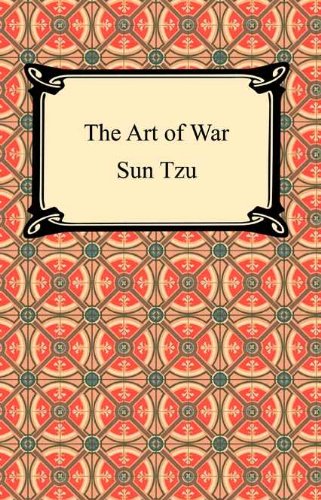
For more than two thousand years, The Art of War has stood as a cornerstone of Chinese culture-a lucid epigrammatic text that reveals as much about human psychology, politics, and economics as it does about battlefield strategy. The influence of Sun-tzu's text has grown tremendously in the West in recent years, with military leaders, politicians, and corporate executives alike finding valuable insight in these ancient words. In his crisp, accessible new translation, scholar John Minford brings this seminal work to life for modern readers.
Minford opens with a lively, learned introduction in which he explores the life and times of Sun-tzu, looks at The Art of War in the context of the turbulent Warring States period, and discusses how best to read and understand the work today. There follows Minford's translation of the core text itself in two different formats-first, the unadorned thirteen chapters of the original work and then the same text reprinted with extensive running commentary by classical Chinese scholars as well as Minford himself. The result is an opportunity for Western readers to experience Sun-tzu's work in all its intensity as it applies to many aspects of our lives.
Which books should be read by every single intelligent person on planet? … The Art of War (Sun Tsu) to learn that the act of killing fellow humans can be raised to an art. If you read all of the above works you will glean profound insight into most of what has driven the history of the western world. [source]
After meeting Mark Zuckerberg, Evan Spiegel immediately bought every Snapchat employee a copy of 'The Art Of War'. [source]
Cover unavailable
3
Gulliver's Travels
Jonathan Swift
3.8
For the last 250 years people everywhere have enjoyed reading about Lemuel Gulliver's travels in the strange countries of Lilliput and Brobdingnag. The people of these countries, with all their curiously human failings, come to life in Martin Aitchison's vivid illustrations. Here is a story to make you laugh - but to make you think, too.
Which books should be read by every single intelligent person on planet? … Gulliver's Travels (Swift) to learn, among other satirical lessons, that most of the time humans are Yahoos. If you read all of the above works you will glean profound insight into most of what has driven the history of the western world. [source]
In the first place, it is very funny. We read it first as an adventure story, when we were kids, without understanding the political context in Europe or the philosophical context. Then when we read it again as adults we realise that Swift is having a good deal of fun here. Just the religious allegory with the Big-enders and the Little-enders and the idea of people who live for ever. And don’t they just turn out to be the kind of people who live for ever today? They show every sign of Alzheimer’s. [source]
Cover unavailable
4
The Age of Reason
Thomas Paine
4.4
The Age of Reason represents the results of years of study and reflection by Thomas Paine on the place of religion in society.
Paine wrote: "Of all the tyrannies that affect mankind, tyranny in religion is the worst; every other species of tyranny is limited to the world we live in; but this attempts to stride beyond the grave, and seeks to pursue us into eternity."
The cool rationale of Paine's The Age of Reason influenced religious thinking throughout the world; and its pervasieve influence continues to the present day.
Which books should be read by every single intelligent person on planet? … The Age of Reason (Paine) to learn how the power of rational thought is the primary source of freedom in the world. If you read all of the above works you will glean profound insight into most of what has driven the history of the western world. [source]
Susan Jacoby
Simply put, this book excoriates the idea that any religious book was written by God. They were all written by man, and while many of them have excellent principles, they are principles that any man can discern through his own reason. You don’t have to have all these supernatural events. He specifically mentions the Hebrew Bible, the Christian Bible and the Koran – the big three. These sacred books were written by man, and they can only be understood in terms of the period of history in which they were written. That’s all The Age of Reason is about, but it lost Paine all his positive fame. He was one of the most famous people in America because of his writing, which galvanized the colonists during the Revolutionary War. He lost all of that as a result of writing The Age of Reason, and he does die alone. No church cemetery will allow him to be buried there. The only religion he ever really admired were the Quakers and even the Quaker cemetery in New Rochelle New York wouldn’t let him be buried there. The Age of Reason ought to be uncontroversial today, but it’s not in America, simply because there are these 25% of Americans who believe that the Bible is literally true and that it was written by God. That’s the strange thing. The Age of Reason was on the Catholic Church’s index forever when there was an index, but I don’t think anybody would think much of it today in Europe. The idea that the Bible wasn’t something written by God is something that’s accepted by the vast majority of Christians. [source]
Cover unavailable
5
The Origin of Species by Means of Natural Selection: Or, the Preservation of Favored Races in the Struggle for Life
Charles Darwin
4.2
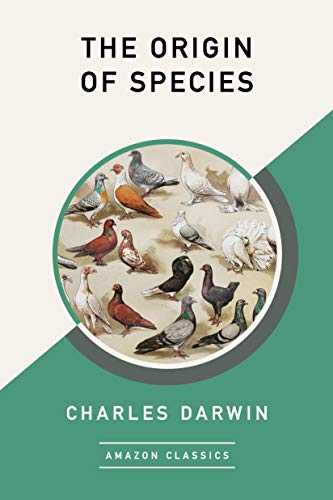
Darwin's theory of natural selection issued a profound challenge to orthodox thought and belief: no being or species has been specifically created; all are locked into a pitiless struggle for existence, with extinction looming for those not fitted for the task.
Yet The Origin of Species (1859) is also a humane and inspirational vision of ecological interrelatedness, revealing the complex mutual interdependencies between animal and plant life, climate and physical environment, and—by implication—within the human world.
Written for the general reader, in a style which combines the rigour of science with the subtlety of literature, The Origin of Species remains one of the founding documents of the modern age.
Which books should be read by every single intelligent person on planet? … On the Origin of Species (Darwin) to learn of our kinship with all other life on Earth. If you read all of the above works you will glean profound insight into most of what has driven the history of the western world. [source]
It is one of the most important books written, and I always urge people to read it. [source]
Adam Maloof
For me (and many others) this book forms the foundation for modern biology. It is all about humans’ concept of themselves. [source]
Cover unavailable
6
The System of the World (The Baroque Cycle, #3)
Neal Stephenson
4.4
The System of the World, the third and concluding volume of Neal Stephenson's shelf-bending Baroque Cycle (Quicksilver and The Confusion), brings the epic historical saga to its thrilling - and truly awe-inspiring - conclusion.
Set in the early 18th century and featuring a diverse cast of characters that includes alchemists, philosophers, mathematicians, spies, thieves, pirates, and royalty, The System of the World follows Daniel Waterhouse, an unassuming philosopher and confidant to some of the most brilliant minds of the age, as he returns to England to try and repair the rift between geniuses Sir Isaac Newton and Gottfried Wilhelm Leibniz. After reluctantly leaving his family in Boston, Waterhouse arrives in England and is almost killed by a mysterious Infernal Device. Having been away from the war-decimated country for two decades, Waterhouse quickly learns that although many things have changed, there is still violent revolution simmering just beneath the surface of seemingly civilized society. With Queen Anne deathly ill and Tories and Whigs jostling for political supremacy, Waterhouse and Newton vow to figure out who is trying to kill certain scientists and decipher the riddle behind the legend of King Solomon's gold, a mythical hoard of precious metal with miraculous properties.
Arguably one of the most ambitious -- and most researched -- stories ever written, Stephenson's Baroque Cycle is set in one of the most turbulent and exciting times in human history. Filled with wild adventure, political intrigue, social upheaval, civilization-changing discoveries, cabalistic mysticism, and even a little romance, this massive saga is worth its weight in (Solomon's) gold. Paul Goat Allen
Which books should be read by every single intelligent person on planet? … The System of the World (Newton) to learn that the universe is a knowable place. If you read all of the above works you will glean profound insight into most of what has driven the history of the western world. [source]
Cover unavailable
7
The Prince
Nicollo Machiavelli, Tim Parks
4.1
Niccolo Machiavelli's "The Prince" is intended to be a treatise on ruling and is considered by many to be a classic of political science. In the book Machiavelli offers many bits of practical advice on how to rule and even though the book was written in the early 16th century its ideas are still very relevant today. Where "The Prince" differs from other political literature before it is in its separation of the lofty idealism of morality and ethics from the practical demands of governing. It is this very aspect of Machiavelli's work that has made his name synonymous with an almost immoral opportunism and his book a timeless classic.
Which books should be read by every single intelligent person on planet? … The Prince (Machiavelli) to learn that people not in power will do all they can to acquire it, and people in power will do all they can to keep it. If you read all of the above works you will glean profound insight into most of what has driven the history of the western world. [source]
Eric Ripert
A fascinating study and still wholly relevant. [source]
Of course, this is a must read. Machiavelli is one of those figures and writers who is tragically overrated and underrated at the same time. Unfortunately that means that many people who read him miss the point and other people avoid him and miss out altogether. Take Machiavelli slow, and really read him. Also understand the man behind the book–not just as a masterful writer but a man who withstood heinous torture and exile with barely a whimper. Machiavelli is a glimpse into a time when power was literal and out for public viewing–when he talks about making an example of someone, he doesn’t mean calling them out, he means putting their head on a pike. Don’t let that scare you because we’re not as far from that world as we’d like to think. Deny that at your own peril. [source]


 1
1