Clear Communication in the Workplace: Think Out Loud

Clear Communication in the Workplace: Think Out Loud

How can you achieve clear communication in the workplace? What is the “think out loud” method? Thinking out loud goes against Navy training and culture, which says that, when reporting something up the chain of command, you should say as little as possible. Submarine captain David Marquet threw out this tradition and instituted the “think out loud” method of clear communication in the workplace. It allowed him to keep quiet and let his team do their jobs. Read more to learn about this method of achieving clear communication in the workplace and how it worked for Marquet.

Moral Development in Children: 2 Theories to Consider

Moral Development in Children: 2 Theories to Consider

What factors contribute to moral development in children? How do kids learn what’s right and what’s wrong? Two schools of thought exist. One view asserts that moral development in children is self-driven—that kids figure it out on their own, through reason. Another perspective is that children learn morality through their society, which accounts for different moral codes in different parts of the world. Read on to learn more about these two theories regarding moral development in children.

The Difference Between Left and Right: Yin/Yang Politics

The Difference Between Left and Right: Yin/Yang Politics

What’s the difference between left and right politics in America? How are the perspectives and values different? Jonathan Haidt answers these questions in his book The Righteous Mind. He discusses the difference between left and right ideologies from the perspective of moral psychology. He argues that liberals and conservatives have different narratives about the country, and he explains why liberals have a hard time understanding conservatives. Read more to learn about the difference between left and right.

The Assassination of Lincoln: Precipitating Events

The Assassination of Lincoln: Precipitating Events

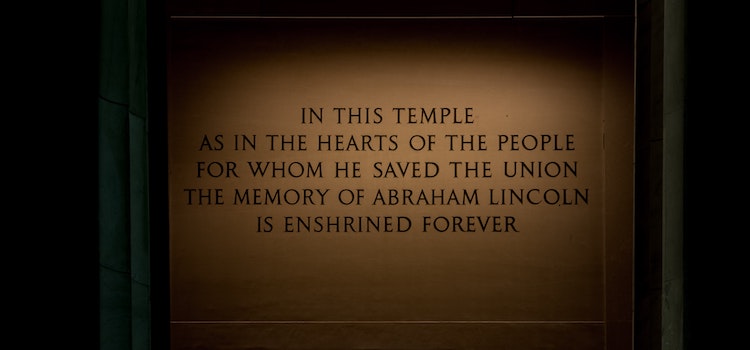
What led up to the assassination of Lincoln? What was the political environment? What was going on in the minds of the assassins? The assassination of Lincoln occurred in April 1865. The previous year, John Wilkes Booth had planned to kidnap the president, but the plot failed. By the spring of 1865, Booth was determined to kill the president. Several key events deepened Booth’s dismay and his obsession with this deadly plan. Read more to learn about the months, weeks, and days leading up to the assassination of Lincoln.

Career Capital: What You Need to Get a Job You Love

Career Capital: What You Need to Get a Job You Love

How much career capital do you have? How can it lead to career happiness? Desirable jobs are scarce and prized. You can “buy” such jobs by using career capital, which is made up of scarce and prized skills. In other words, developing valuable skills is the best way to get a job you love. A focus on skill development—”the craftsperson mindset”—is the first step in building up career capital. Keep reading to learn about career capital.

Transparency in the Workplace: Embrace the Auditors

Transparency in the Workplace: Embrace the Auditors

How can you leverage transparency in the workplace to strengthen your organization? What if you created an atmosphere of embracing outside oversight? It can be tempting to handle organizational problems in house and keep them out of the view of auditors. David Marquet chose not to go that route. Instead, he embraced the inspectors, which necessitated transparency in the workplace. In this case, the workplace was a submarine. Read more to learn how transparency in the workplace can move your organization forward.

Reason and Emotion: How Do They Influence Morality?

Reason and Emotion: How Do They Influence Morality?

How is morality determined by reason and emotion? Which force is stronger when it comes to ethics? Some argue that morality is governed by reason. Others insist that morality is governed by emotion. In The Righteous Mind, social psychologist Jonathan Haidt discusses the argument, showing how philosophers and psychologists point to reason and emotion as driving forces behind our moral choices. He believes that one argument is stronger, and he offers insight into how we can leverage this to persuade others. Read more to learn how reason and emotion come into play when it comes to our sense of right

Debunking the New Atheists: Religion Is Not a Virus

Debunking the New Atheists: Religion Is Not a Virus

What do the New Atheists believe about religion? Are they right? In The Righteous Mind, social psychologist Jonathan Haidt argues that the New Atheists get it wrong when it comes to religion. Their claim that religion is a virus is at odds with the benefits that religion provides to society. Read on to learn how Haidt believes the New Atheists are wrong about religion.

The Harm Principle: Does It Apply Outside of the West?

The Harm Principle: Does It Apply Outside of the West?

Does the harm principle of ethics have universal merit? What is the principle’s counterargument? The harm principle, introduced by John Stuart Mill in 1859, states that the only way that anyone should exercise power in a civilized society is to prevent harm. This is the basis for ethics in the secular West. However, taking the rest of the world into consideration opens up a different perspective. This is put forth by Jonathan Haidt in his book The Righteous Mind. Read more to learn about differing views regarding the harm principle.

The 6 Moral Foundations: Beyond the Harm Principle

The 6 Moral Foundations: Beyond the Harm Principle

What are the six moral foundations? How can our view of morality expand in order to understand others better? Everyone is accustomed to a certain moral framework, and it can be hard to accept that another morality is moral or even possible. Also, people respond to the six moral foundations in different ways. These factors contribute to the difficulty we have in understanding each other. Gaining insight into how moral foundations work can help us empathize with others. Read more to learn about the six moral foundations.