Trusting Your Gut Feeling: Helpful or Irrational?

Trusting Your Gut Feeling: Helpful or Irrational?

Is it a good idea to trust your gut feeling? Is making decisions based on a “feeling” irrational? Can your gut feeling lead you wrong? Both Brené Brown and Malcolm Gladwell seem to think that trusting your gut feeling is a powerful process and allows us to make quick and intuitive decisions. However, Gladwell does point out some flaws with this type of snap decision-making. Keep reading to learn what Brené Brown and Malcolm Gladwell have to say about trusting your gut feeling

A Growth Mindset: Think and Change

A Growth Mindset: Think and Change

What are the two types of mindset? What’s the role of mindset in behavior change? There are two primary types of mindset: a fixed mindset and a growth mindset. If you have a fixed mindset, you believe that you’re wired a certain way and can’t change. If you have a growth mindset, you believe you can grow if you put in the effort. You’re far more likely to change when you believe that you can. Here’s how having a growth mindset can help you make behavior change a reality.

How to Solve a Fermi Estimation Problem

How to Solve a Fermi Estimation Problem

What’s a Fermi estimation problem? What kinds of information does the Fermi problem probe for? A Fermi problem is a problem that involves making a justified estimation about quantities, degrees, probabilities, or variances. Fermi problems are solved by breaking down seemingly impossible questions into smaller and smaller questions. The idea is that eventually, you’ll be able to separate questions that are truly unknown from questions for which you can at least make an educated guess. Below is an example of a Fermi problem.

The Rule of 100: Creating Discounts and Deals

The Rule of 100: Creating Discounts and Deals

What is the rule of 100? How can you make a discount seem like a better deal to customers? The rule of 100 states that if a product’s original price is under $100, a percentage-based discount—for instance, 30% off—will appear more attractive to customers. Likewise, if a product’s original price is above $100, a numerical discount—for example, $50 off—will impress customers more. If you apply this rule when creating your discount, you can maximize its attractiveness and increase the likelihood that it’ll be shared.   Find out how you can use the rule of 100 to improve your discounts.

Spaced Practice Method: Level Up Your Learning Game

Spaced Practice Method: Level Up Your Learning Game

What is spaced practice? How does spaced practice compare to cramming (learning a large amount of information in a very short period of time)? Which technique is more effective and why? Spaced practice is a study technique that involves multiple short study sessions spaced out over time. Spaced practice develops your “underlying habit strength,” which prepares you to use that knowledge when you need it. It may feel less productive than cramming initially because you’ve forgotten some of the material and it feels like you don’t have a grasp of it—but that extra effort is precisely what makes the method

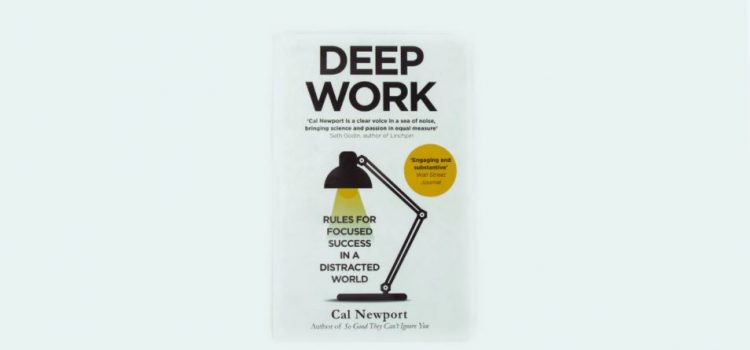
Deep Work: Review and Background (Cal Newport)

Deep Work: Review and Background (Cal Newport)

Thinking about reading Deep Work by Cal Newport but want to know more about the book first? How was the book received when it came out? Do Newport’s methods work? Cal Newport’s book Deep Work teaches rules that readers can use to optimize their days and become more productive. His method is to split your day into chunks of time and to learn to focus on a single task at a time. This Deep Work review takes a look at the book’s context, background, and critical reception

You Are Not Special: Letting Go of the Entitlement Trap

You Are Not Special: Letting Go of the Entitlement Trap

Why do so many people today fall into the entitlement trap? And Why is entitlement such a big problem? The entitlement trap takes two forms: you feel like you’re entitled to be happy all the time, or you think you’re special or different in some way. The truth is: it’s impossible to feel good all the time, and most of your problems are not unique or exceptional. Keep reading to learn why you are not special, and that’s okay.

Jordan Belfort: The 4 Steps for Straight Line Selling

Jordan Belfort: The 4 Steps for Straight Line Selling

What is the Straight Line selling method? How does it compare to the traditional, seven-step methodology? In his book Way of the Wolf, Jordan Belfort teaches the fours steps for Straight Line selling: 1) take control in the first four seconds, 2) build rapport, 3) gather information, and 4) presenting. Belfort recommends looping the conversation to determine what factors are holding the prospect back, then presenting again while addressing those concerns. Continue reading for full instructions on Belfort’s four steps for Straight Line selling.

How to Read a Book: Review and Background

How to Read a Book: Review and Background

Are you thinking of reading How to Read a Book but want to know more about it first? In what context was it written and how was it received? How to Read a Book was written by Mortimer Adler and Charles Van Doren in 1940. It was one of the first books to teach the art of reading for comprehension rather than speed, and so it became an immediate bestseller. However, it may not still live up to its name in the modern day. Continue reading for our How to Read a Book review.