The Time Machine’s End-of-the-World Scenario Is a Warning

An image of a solar eclipse in the sky.

In The Time Machine, how does the world end? Why does it end? What lessons can we draw from the story? In The Time Machine, a Victorian scientist builds a machine that can travel through time. He journeys into the future, where humanity has evolved into two distinct (and conflicting) species. He then goes even further into the future and sees the end of the world. Read on to learn about The Time Machine’s end-of-the-world scenario, when human civilization has collapsed.

Voluntary Poverty: Thoreau’s Simplicity in Action at Walden Pond

A log cabin by a lake in the woods.

What’s voluntary poverty? What was Henry David Thoreau’s attitude toward poverty and charity? Henry David Thoreau’s simplicity is a major theme of Walden. During the time he lived in the modest cabin in the woods, he practiced voluntary poverty—stripping down his life to the bare necessities to fit the lifestyle he chose. Continue reading to learn about Thoreau’s practice of voluntary poverty and a bit about his attitude toward people who lived in poverty.

The Expansion and Consolidation of British Power in India

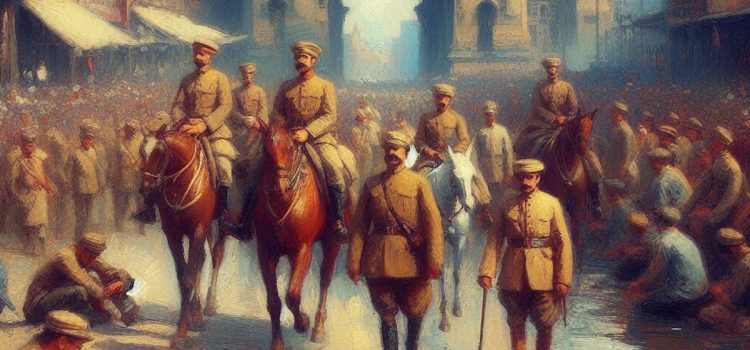
British soldiers marching into India with thousands of people as part of the expansion and consolidation of British power in India.

How did India come under British governance? What role did the East India Company play? When and how did the Indian people cast off colonial rule? In The Anarchy, historian William Dalrymple explains the expansion and consolidation of British power in India. He does this by tracing the ascent of the East India Company from a modest group of merchants to the imperialist superpower. Keep reading to learn the background of British colonial rule in India.

25 Business Model Questions Every Entrepreneur Must Answer

25 Business Model Questions Every Entrepreneur Must Answer

What should you consider when creating a business model? How should you evaluate and test a new model? A business model defines how a company creates, delivers, and captures economic value. Drawing from concepts in the books Business Model Generation and Running Lean, we’ve created six exercises containing several business model questions that will help you devise a model that fits your vision. Continue reading for these exercises you can do with your team.

44 Questions to Ask About Company Growth: Keep Scaling Up

44 Questions to Ask About Company Growth: Keep Scaling Up

Has your business stalled out on the path toward your vision? What have you failed to consider? What questions do you need to answer? If you’re a business leader, you’re concerned about your company’s growth—regardless of the phase of growth it’s in. We’ve put together 13 exercises containing a total of 44 questions to ask about company growth that are based on concepts in Built to Last, The E-Myth Revisited, Traction, and Zero to One. Read on for these practical exercises you can do on your own or with your managers.

The Time Machine Ending: Two Flowers & a Missing Time Traveller

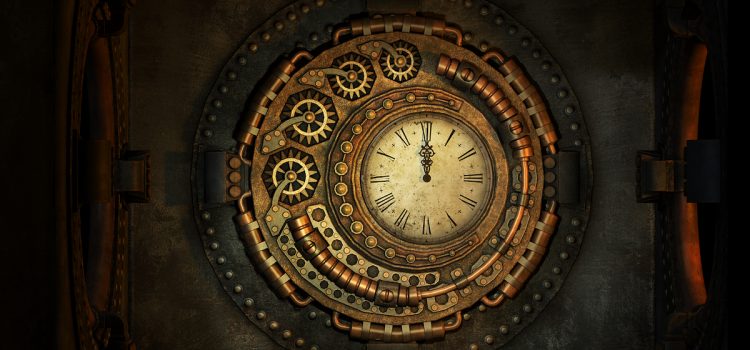
A steampunk clock for a time machine.

How does The Time Machine end? Is the ending the same in the 1960 movie adaptation? H.G. Wells’s The Time Machine begins with a scientist showing off a time machine he invented. He travels to the future, where humanity has evolved into two species. He goes even further and sees the end of the world. He returns home to tell his friends what he’s seen, but that’s not the very end of the story. Keep reading to learn about The Time Machine’s ending.

2 Breathing Exercises for Beginners (+ 1 Exercise to Level Up)

2 Breathing Exercises for Beginners (+ 1 Exercise to Level Up)

Do you breath properly? Do you enjoy the benefits of proper breathwork? Breathing is central to our lives, but most people pay no attention to it. With these exercises, you’ll evaluate your breathing, practice basic carbon dioxide training, and learn a relatively advanced exercise that can take you to the next level of breathwork. Read on for two breathing exercises for beginners and one that will help you level up and enjoy further benefits.

8 Boundaries Exercises for Groups: Find Freedom in Drawing a Line

8 Boundaries Exercises for Groups: Find Freedom in Drawing a Line

Do you tend to be a doormat? Do you make sacrifices you shouldn’t? Do you let people in where they don’t belong? When we’re not skilled in setting and enforcing boundaries, we’re more vulnerable to unhealthy relationships, mixed-up priorities, and burnout. We’ve put together several boundaries exercises for groups based on concepts from Henry Cloud, Nedra Glover Tawwab, Rachel Hollis, and others. Keep reading to get started on these exercises that can help you move toward a more peaceful, balanced life.

Why Did Thoreau Go to the Woods? 4 Ways Walden Drew Him In

A path through a forest with the sun beaming through.

Why did Thoreau go to the woods? Did he follow—or fight—his intuition about getting away from it all? A major subject of Henry David Thoreau’s Walden is the philosophical reasons he decided to move to the woods. He explains that he wanted to live a simpler life, connect with nature, spend time in solitude, and carve out his own path. Read more to learn about the four ideas that motivated Thoreau to move out of Concord and into a tiny cabin on Walden Pond.

5 Body Language Exercises: Practice Reading & Giving Cues

5 Body Language Exercises: Practice Reading & Giving Cues

Have you ever wished you could tell what someone was really thinking? How skilled are you at reading people’s emotions? What do you communicate with your body? Body language is a huge but often missed aspect of communication. We’ve put together five body language exercises that will help you explore how you communicate with your body, practice giving and reading cues, and learn to use body language to establish presence in stressful or uncertain situations. Continue reading for these practical exercises you can use on your own or in a group setting.