On War by Carl von Clausewitz: Book Overview

book review

How is it possible that defenders are responsible for most wars? Why is it a logical contradiction for military concerns to influence political policy? And why shouldn’t soldiers sleep in tents? Carl von Clausewitz answers all these questions and more in his treatise On War. While it was originally published in 1832, Clausewitz’s philosophical underpinnings of war are arguably still relevant in the modern day. Below is a brief overview of the key themes and takeaways from On War by Carl von Clausewitz.

What Makes a Good Mother? Only You Can Decide

What Makes a Good Mother? Only You Can Decide

What are the qualities of a good mom? How much does society decide what makes a good mother? Untamed author Glennon Doyle realized that she had been participating in cultural practices and belief systems that did not reflect what she believed true about herself and the world. When asked what makes a good mother, Doyle argues that understanding and being true to your values matters most. Read on to learn a new perspective on what makes a good mother according to Doyle’s realization that women are held “captive” by social conditioning.

What’s an Open Economic System?

What’s an Open Economic System?

Is the economy an open or a closed system? Why does traditional economics treat the economy as a closed system? According to Kate Raworth, traditional economics has a closed-system model for the economy, which operates simply as a series of “inflows” and “outflows” of money, closed off from everything else. This model puts the economy in isolation and treats it as a machine, governed by a simple and predictable set of inputs and outputs. In an open economic system, on the other hand, the economy is embedded within the environment and the planet itself. Here’s why the economy is an

Theodore Roosevelt’s Leadership: Bias Towards Action

Theodore Roosevelt’s Leadership: Bias Towards Action

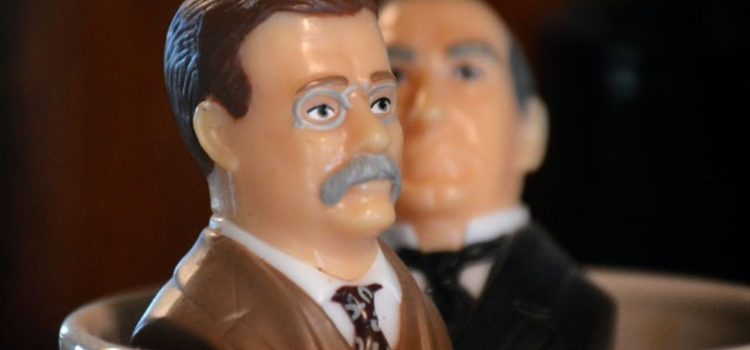
What was the greatest accomplishment of Theodore Roosevelt? How did a family tragedy help Theodore Roosevelt end a coal strike that threatened the lives of thousands? Teddy Roosevelt, who led the country from 1901 to 1909, was instrumental during the coal strike of 1902, when coal miners and mine owners faced off in a months-long strike that threatened to plunge the nation into crisis. According to historian Doris Kearns Goodwin, Roosevelt’s decision to intervene during this strike is evidence of courage and a bias towards action—both of which he developed after experiencing his own personal crisis. Here’s how a personal

How to Save Money for College: Mutual Funds & More

How to Save Money for College: Mutual Funds & More

Do you have a plan to pay for your child’s education? What option is best? Paying for your child’s education likely will require advance planning and many years of investment. In The Wealthy Barber, David Chilton recommends having a mutual fund for this purpose. He discusses the advantages and the timing for when to redeem the funds. Read more for advice on how to save money for college.

The Assumption of Rational Behavior in Economics

The Assumption of Rational Behavior in Economics

What is rational behavior in economics? How accurate is this assumption that humans are inherently rational agents seeking to maximize their economic utility at the expense of everything else? In economics, human beings are seen as largely rational agents. The rational economic man cares only about increasing his material wealth and will always follow incentives to do so. According to Kate Raworth, this portrait of humankind is grossly inaccurate. In her book Doughnut Economics, she calls into question the power of extrinsic incentives in driving human behavior. Here’s why the assumption of rational behavior is ultimately flawed.

Why Independent Thinkers Can’t Be Taken by the Devil

Why Independent Thinkers Can’t Be Taken by the Devil

What kind of person does the devil target in particular? Who’s in a better position to resist the devil’s influence? If you aren’t in control of your own life, the devil is happy to assume that control for you. That’s the view of Napoleon Hill. In his book Outwitting the Devil, he discusses how independent thinkers can resist the devil far more easily than passive people who just drift through life without minds of their own. Read more to learn what independent thinkers are like and how this makes them stronger.

How to Live Within Your Means: 6 Tips for Saving

How to Live Within Your Means: 6 Tips for Saving

Do you spend more than you make? How much credit card debt do you carry? Do you have an emergency fund? A great way to save money is to live within your means. David Chilton, the author of The Wealthy Barber, says that living within your means doesn’t have to mean careful budgeting. If you implement big-picture financial planning, day-to-day spending choices like whether you buy coffee or order take-out don’t matter too much. Keep reading for advice on how to live within your means.

How to Look at the Bigger Picture: A Novel Approach

How to Look at the Bigger Picture: A Novel Approach

As you go through life, how clearly are you seeing things? Are you seeing them in their true and full context? You’ll stand the best chance of success if you have an accurate view of the world. Unfortunately, because each of us has a limited perspective, sometimes it’s hard to see the big picture—and easy to misinterpret some situations as a result. The Great Mental Models Volume 3 argues that understanding distributions—a model drawn from mathematics—can help us see the big picture more clearly. The basic idea is that, by thinking statistically, you’ll have a clearer context for the things