100 Best Political Theory Books of All Time

We've ranked the best political theory books using expert recommendations, sales data, and millions of reader ratings. At Shortform, we know books. Our book guides are the best in the world. Learn why.

The Prince book cover1

The Prince

Nicollo Machiavelli, Tim Parks

5.0
Niccolo Machiavelli's "The Prince" is intended to be a treatise on ruling and is considered by many to be a classic of political science. In the book Machiavelli offers many bits of practical advice on how to rule and even though the book was written in the early 16th century its ideas are still very relevant today. Where "The Prince" differs from other political literature before it is in its sep
The Republic: The Influential Classic book cover2

The Republic: The Influential Classic

Plato

4.9
The newest deluxe edition in the bestselling Capstone Classics Series This ancient classic has had a make-over. In recent years these Capstone Classic deluxe editions have caught the book buying public's imagination. The volumes of international bestsellers such as Think and Grow Rich and The Art of War have quickly become the market leaders. Now Plato's best known work, one of the most intellectu
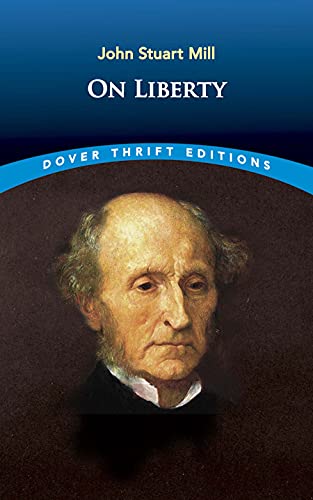
On Liberty book cover3

On Liberty

John Stuart Mill

4.8
Alternate cover edition of ISBN 9780140432077

Published in 1859, John Stuart Mill's On Liberty presented one of the most eloquent defenses of individual freedom in nineteenth-century social and political philosophy and is today perhaps the most widely-read liberal argument in support of the value of liberty. Mill's passionate advocacy of spontaneity, individuality, and diversity, along with his con
Leviathan book cover4

Leviathan

Thomas Hobbes

4.8
'The life of man, solitary, poore, nasty, brutish, and short'

Written during the chaos of the English Civil War, Thomas Hobbes' Leviathan asks how, in a world of violence and horror, can we stop ourselves from descending into anarchy? Hobbes' case for a 'common-wealth' under a powerful sovereign - or 'Leviathan' - to enforce security and the rule of law, shocked his contemporaries, and his book was
The Communist Manifesto book cover5

The Communist Manifesto

Karl Marx and Friedrich Engels

4.7
"A spectre is haunting Europe," Karl Marx and Frederic Engels wrote in 1848, "the spectre of Communism." This new edition of The Communist Manifesto, commemorating the 150th anniversary of its publication, includes an introduction by renowned historian Eric Hobsbawm which reminds us of the document's continued relevance. Marx and Engels's critique of capitalism and its deleterious effect on all as
The Art of War book cover6
For more than two thousand years, The Art of War has stood as a cornerstone of Chinese culture-a lucid epigrammatic text that reveals as much about human psychology, politics, and economics as it does about battlefield strategy. The influence of Sun-tzu's text has grown tremendously in the West in recent years, with military leaders, politicians, and corporate executives alike finding valuable ins
Democracy in America book cover7

Democracy in America

Alexis de Tocqueville, Isaac Kramnick, Gerald Bevan

4.7
Democracy in America has had the singular honor of being even to this day the work that political commentators of every stripe refer to when they seek to draw large conclusions about the society of the USA. Alexis de Tocqueville, a young French aristocrat, came to the young nation to investigate the functioning of American democracy & the social, political & economic life of its citizens, publishi
A Theory of Justice book cover8

A Theory of Justice

John Rawls

4.7
An alternative cover edition for this ISBN can be found here.

Since it appeared in 1971, John Rawls’s A Theory of Justice has become a classic. The author has now revised the original edition to clear up a number of difficulties he and others have found in the original book.

Rawls aims to express an essential part of the common core of the democratic tradition—justice as fairness—and to provide an a
The Federalist Papers book cover9

The Federalist Papers

Alexander Hamilton

4.7
Hailed by Thomas Jefferson as “the best commentary on the principles of government which was ever written", The Federalist Papers is a collection of eighty-five essays published by Founding Fathers Alexander Hamilton, James Madison, and John Jay from 1787 to 1788, as a means to persuade the public to ratify the Constitution of the United States.

With nearly two-thirds of the essays written by Hamil
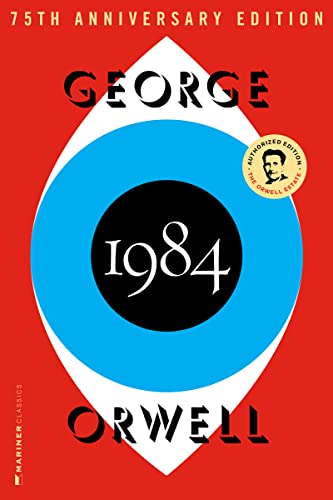
1984 book cover10

1984

George Orwell

4.6
A PBS Great American Read Top 100 Pick

With extraordinary relevance and renewed popularity, George Orwell’s 1984 takes on new life in this hardcover edition.

“Orwell saw, to his credit, that the act of falsifying reality is only secondarily a way of changing perceptions. It is, above all, a way of asserting power.”—The New Yorker

In 1984, London is a grim city in the totalitarian state of Oceania
The Social Contract book cover11

The Social Contract

Jean-Jacques Rousseau

4.6
"Man is born free; and everywhere he is in chains."

These are the famous opening words of a treatise that has not ceased to stir vigorous debate since its first publication in 1762. Rejecting the view that anyone has a natural right to wield authority over others, Rousseau argues instead for a pact, or ‘social contract’, that should exist between all the citizens of a state and that should be the s
Animal Farm book cover12

Animal Farm

George Orwell and Christopher Hitchens

4.6
Animal Farm is one of the most famous warnings ever written. Orwell's immortal satire - 'against Stalin' as he wrote to his French translator - can be read on many levels. With its piercing clarity and deceptively simple style it is no surprise that this novel is required reading for schoolchildren and politicians alike. This fable of the steadfast horses Boxer and Clover, the opportunistic pigs S
The Origins of Totalitarianism book cover13

The Origins of Totalitarianism

Hannah Arendt, Nadia May, et al

4.6
Hannah Arendt's definitive work on totalitarianism and an essential component of any study of twentieth-century political history

The Origins of Totalitarianism begins with the rise of anti-Semitism in central and western Europe in the 1800s and continues with an examination of European colonial imperialism from 1884 to the outbreak of World War I. Arendt explores the institutions and operations of
Politics book cover14

Politics

Aristotle and Benjamin Jowett

4.5
What is the relationship of the individual to the state? What is the ideal state, and how can it bring about the most desirable life for its citizens? What sort of education should it provide? What is the purpose of amassing wealth? These are some of the questions Aristotle attempts to answer in one of the most intellectually stimulating works.
Both heavily influenced by and critical of Plato's Rep
The Road to Serfdom: Text and Documents--The Definitive Edition book cover15

The Road to Serfdom: Text and Documents--The Definitive Edition

F. A. Hayek

4.5
An unimpeachable classic work in political philosophy, intellectual and cultural history, and economics, The Road to Serfdom has inspired and infuriated politicians, scholars, and general readers for half a century. Originally published in 1944—when Eleanor Roosevelt supported the efforts of Stalin, and Albert Einstein subscribed lock, stock, and barrel to the socialist program—The Road to Serfdom
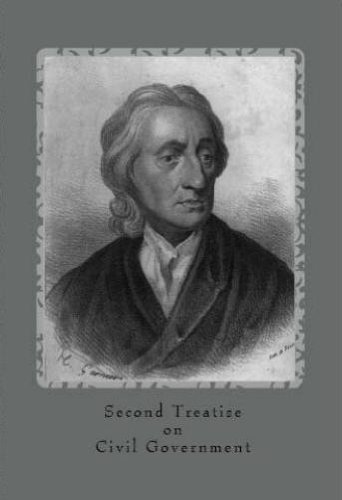
Second Treatise of Government book cover16

Second Treatise of Government

John Locke and C. B. Macpherson

4.5
The Second Treatise is one of the most important political treatises ever written and one of the most far-reaching in its influence.
In his provocative 15-page introduction to this edition, the late eminent political theorist C. B. Macpherson examines Locke's arguments for limited, conditional government, private property and right of revolution and suggests reasons for the appeal of these argumen
The 48 Laws of Power book cover17

The 48 Laws of Power

Robert Greene

4.5
This amoral, cunning, ruthless, and instructive book synthesizes the philosophies of Machiavelli, Sun Tzu, and Carl Von Clausewitz with the historical legacies of statesmen, warriors, seducers, and con men throughout the ages.
Two Treatises of Government book cover18

Two Treatises of Government

John Locke

4.5
The Origins of Political Order: From Prehuman Times to the French Revolution book cover19

The Origins of Political Order: From Prehuman Times to the French Revolution

Francis Fukuyama

4.4
Virtually all human societies were once organized tribally, yet over time most developed new political institutions which included a central state that could keep the peace and uniform laws that applied to all citizens. Some went on to create governments that were accountable to their constituents. We take these institutions for granted, but they are absent or are unable to perform in many of toda
The Wealth of Nations book cover20

The Wealth of Nations

Adam Smith

4.4
In his book, Smith fervently extolled the simple yet enlightened notion that individuals are fully capable of setting and regulating prices for their own goods and services. He argued passionately in favor of free trade, yet stood up for the little guy. The Wealth of Nations provided the first--and still the most eloquent--integrated description of the workings of a market economy.
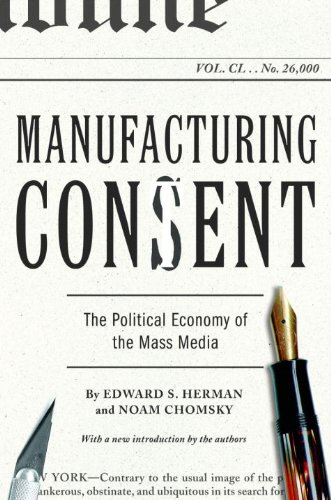
Manufacturing Consent: The Political Economy of the Mass Media book cover21

Manufacturing Consent: The Political Economy of the Mass Media

Edward S. Herman

4.4
In this pathbreaking work, Edward S. Herman and Noam Chomsky show that, contrary to the usual image of the news media as cantankerous, obstinate, and ubiquitous in their search for truth and defense of justice, in their actual practice they defend the economic, social, and political agendas of the privileged groups that dominate domestic society, the state, and the global order.

Based on a series o
The Human Condition book cover22

The Human Condition

Hannah Arendt, Margaret Canovan

4.4
A work of striking originality bursting with unexpected insights, The Human Condition is a in many respects more relevant now than when it first appeared in 1958. In her study of the state of modern humanity, Hannah Arendt considers humankind from the perspective of the actions of which it is capable. The problems Arendt identified then--diminishing human agency and political freedom; the paradox
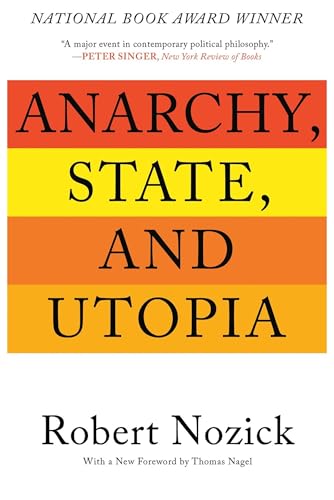
Anarchy, State, and Utopia book cover23

Anarchy, State, and Utopia

Robert Nozick

4.4
In this brilliant and widely acclaimed book, Robert Nozick challenges the most commonly held political and social positions of our age—liberal, socialist, and conservative.
It won the 1975 U.S. National Book Award in category Philosophy and Religion, has been translated into 11 languages, and was named one of the "100 most influential books since the war" (1945–1995) by the U.K. Times Literary Supp
24

The Wretched of the Earth

Frantz Fanon

4.4
A distinguished psychiatrist from Martinique who took part in the Algerian Nationalist Movement, Frantz Fanon was one of the most important theorists of revolutionary struggle, colonialism, and racial difference in history. Fanon's masterwork is a classic alongside Edward Said's Orientalism or The Autobiography of Malcolm X, and it is now available in a new translation that updates its language fo
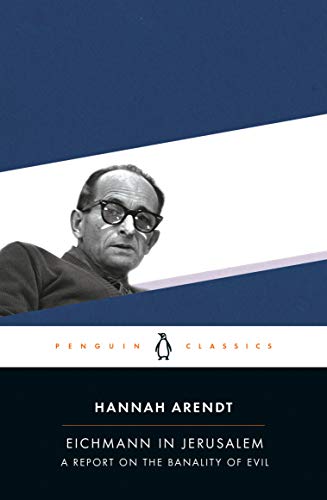
Eichmann in Jerusalem: A Report on the Banality of Evil book cover25

Eichmann in Jerusalem: A Report on the Banality of Evil

Hannah Arendt

4.4
Originally appearing as a series of articles in The New Yorker, Hannah Arendt’s authoritative and stunning report on the trial of Nazi leader Adolf Eichmann sparked a flurry of debate upon its publication. This revised edition includes material that came to light after the trial, as well as Arendt’s postscript directly addressing the controversy that arose over her account. A major journalistic tr
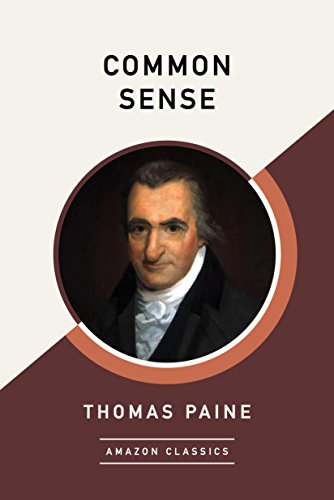
Common Sense book cover26

Common Sense

Thomas Paine

4.4
Throughout history, some books have changed the world. They have transformed the way we see ourselves—and each other. They have inspired debate, dissent, war and revolution. They have enlightened, outraged, provoked and comforted. They have enriched lives—and destroyed them.

Published anonymously in 1776, six months before the Declaration of Independence, Thomas Paine’s Common Sense was a radical a
Imagined Communities: Reflections on the Origin and Spread of Nationalism (Revised Edition) book cover27

Imagined Communities: Reflections on the Origin and Spread of Nationalism (Revised Edition)

Benedict Anderson

4.3
What makes people love and die for nations, as well as hate and kill in their name? While many studies have been written on nationalist political movements, the sense of nationality--the personal and cultural feeling of belonging to a nation--has not received proportionate attention. In this widely acclaimed work, Benedict Anderson examines the creation and global spread of the 'imagined communiti
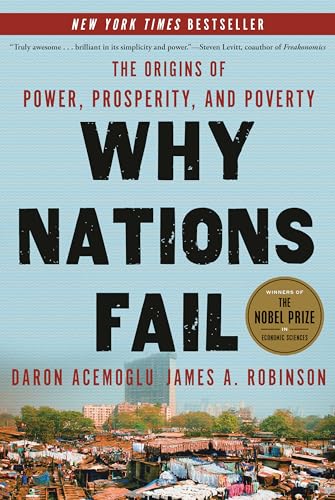
Why Nations Fail: The Origins of Power, Prosperity, and Poverty book cover28

Why Nations Fail: The Origins of Power, Prosperity, and Poverty

Daron Acemoglu

4.3
Brilliant and engagingly written, Why Nations Fail answers the question that has stumped the experts for centuries: Why are some nations rich and others poor, divided by wealth and poverty, health and sickness, food and famine?

Is it culture, the weather, geography? Perhaps ignorance of what the right policies are?

Simply, no. None of these factors is either definitive or destiny. Otherwise, how t
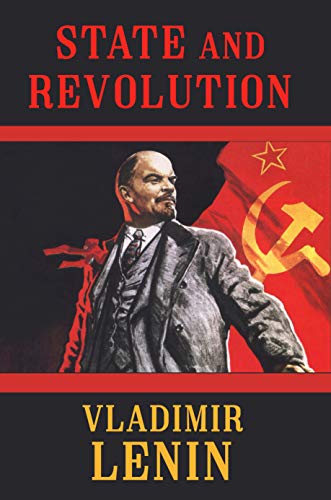
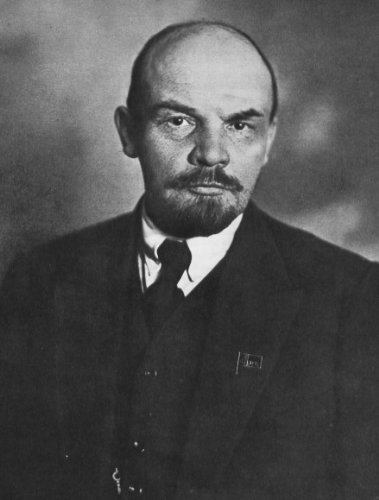
State and Revolution book cover29

State and Revolution

V I Lenin

4.3
2011 Reprint of 1932 Edition. Full facsimile of the original edition, not reproduced with Optical Recognition Software. "State and Revolution" (1917) describes the role of the State in society, the necessity of proletarian revolution, and the theoretic inadequacies of social democracy in achieving revolution. It describes the inherent nature of the State as a tool for class oppression, a creation
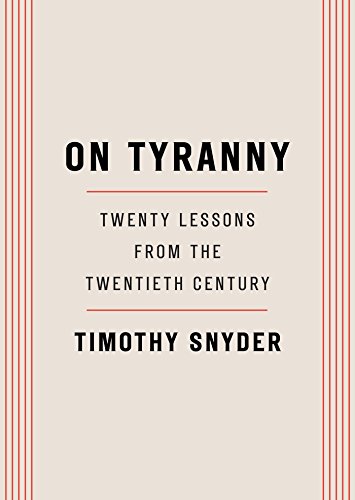
On Tyranny: Twenty Lessons from the Twentieth Century book cover30

On Tyranny: Twenty Lessons from the Twentieth Century

Timothy Snyder

4.3
A historian of fascism offers a guide for surviving and resisting America’s turn towards authoritarianism.

On November 9th, millions of Americans woke up to the impossible: the election of Donald Trump as president. Against all predictions, one of the most-disliked presidential candidates in history had swept the electoral college, elevating a man with open contempt for democratic norms and institu
Capital, Vol. 1: A Critical Analysis of Capitalist Production book cover31

Capital, Vol. 1: A Critical Analysis of Capitalist Production

Karl Marx

4.3
Capital, one of Marx's major and most influential works, was the product of thirty years close study of the capitalist mode of production in England, the most advanced industrial society of his day. This new translation of Volume One, the only volume to be completed and edited by Marx himself, avoids some of the mistakes that have marred earlier versions and seeks to do justice to the literary qua
Utopia book cover32

Utopia

Thomas More, Paul Turner

4.3
Utopia (Libellus vere aureus, nec minus salutaris quam festivus, de optimo rei publicae statu deque nova insula Utopia) is a satirical work of fiction and political philosophy by Thomas More (1478–1535) published in 1516 in Latin. The book is a frame narrative primarily depicting a fictional island society as described by the character Raphael Hythloday who lived there some years, who describes an
33

The Concept of the Political

Carl Schmitt, George Schwab

4.3
In this, his most influential work, legal theorist and political philosopher Carl Schmitt argues that liberalism's basis in individual rights cannot provide a reasonable justification for sacrificing oneself for the state. This edition of the 1932 work includes the translator's introduction (by George Schwab) which highlights Schmitt's intellectual journey through the turbulent period of German hi
On Revolution book cover34

On Revolution

Hannah Arendt, Jonathan Schell

4.3
Tracing the gradual evolution of revolutions, Arendt predicts the changing relationship between war and revolution and the crucial role such combustive movements will play in the future of international relations. She looks at the principles which underlie all revolutions, starting with the first great examples in America and France, and showing how both the theory and practice of revolution have
Capitalist Realism: Is There No Alternative? book cover35

Capitalist Realism: Is There No Alternative?

Mark Fisher

4.3
After 1989, capitalism has successfully presented itself as the only realistic political-economic system - a situation that the bank crisis of 2008, far from ending, actually compounded. The book analyses the development and principal features of this capitalist realism as a lived ideological framework. Using examples from politics, films, fiction, work and education, it argues that capitalist rea
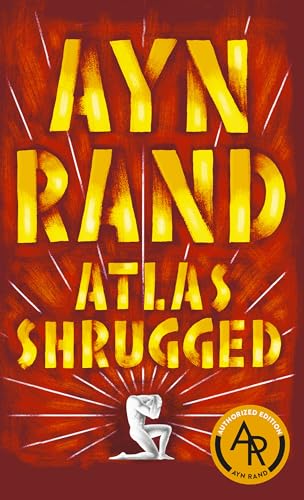
Atlas Shrugged book cover36

Atlas Shrugged

Ayn Rand

4.3
This is the story of a man who said that he would stop the motor of the world and did. Was he a destroyer or the greatest of liberators?

Why did he have to fight his battle, not against his enemies, but against those who needed him most, and his hardest battle against the woman he loved? What is the world’s motor — and the motive power of every man? You will know the answer to these questions when
The Marx-Engels Reader book cover37

The Marx-Engels Reader

Karl Marx, Friedrich Engels, Robert C. Tucker

4.3
This revised and enlarged edition of the leading anthology provides the essential writings of Marx and Engels--those works necessary for an introduction to Marxist thought and ideology.
The Nicomachean Ethics book cover38

The Nicomachean Ethics

Aristotle

4.3
‘One swallow does not make a summer; neither does one day. Similarly neither can one day, or a brief space of time, make a man blessed and happy’

In the Nicomachean Ethics, Aristotle sets out to examine the nature of happiness. He argues that happiness consists in ‘activity of the soul in accordance with virtue’, for example with moral virtues, such as courage, generosity and justice, and intellect
The Shock Doctrine: The Rise of Disaster Capitalism book cover39

The Shock Doctrine: The Rise of Disaster Capitalism

Naomi Klein

4.3
In her ground-breaking reporting from Iraq, Naomi Klein exposed how the trauma of invasion was being exploited to remake the country in the interest of foreign corporations. She called it "disaster capitalism." Covering Sri Lanka in the wake of the tsunami, and New Orleans post-Katrina, she witnessed something remarkably similar. People still reeling from catastrophe were being hit again, this tim
Discipline and Punish: The Birth of the Prison book cover40

Discipline and Punish: The Birth of the Prison

Michel Foucault, Alan Sheridan

4.3
Librarian note: an alternate cover for this edition can be found here.

In this brilliant work, the most influential philosopher since Sartre suggests that such vaunted reforms as the abolition of torture and the emergence of the modern penitentiary have merely shifted the focus of punishment from the prisoner’s body to his soul.
Meditations book cover41

Meditations

Marcus Aurelius

4.3
One measure, perhaps, of a book's worth, is its intergenerational pliancy: do new readers acquire it and interpret it afresh down through the ages? The Meditations of Marcus Aurelius, translated and introduced by Gregory Hays, by that standard, is very worthwhile, indeed. Hays suggests that its most recent incarnation--as a self-help book--is not only valid, but may be close to the author's intent
Rights of Man (Chump Change Edition) book cover42

Rights of Man (Chump Change Edition)

Thomas Paine

4.3
REPELS PESTS & RODENTS BY LATEST ULTRASONIC TECHNOLOGY: our ultrasonic pest control uses low fequency sound waves to repel away mice, cockroaches, rodents, spiders, ants and rats from your home. None are immune to the sound and all will leave after 3 weeks of use.
Capitalism and Freedom book cover43

Capitalism and Freedom

Milton Friedman

4.3
Selected by the Times Literary Supplement as one of the "hundred most influential books since the war"

How can we benefit from the promise of government while avoiding the threat it poses to individual freedom? In this classic book, Milton Friedman provides the definitive statement of his immensely influential economic philosophy—one in which competitive capitalism serves as both a device for achie
Reflections on the Revolution in France book cover44

Reflections on the Revolution in France

Edmund Burke, L. G. Mitchell

4.3
This new and up-to-date edition of a book that has been central to political philosophy, history, and revolutionary thought for two hundred years offers readers a dire warning of the consequences that follow the mismanagement of change. Written for a generation presented with challenges of terrible proportions--the Industrial, American, and French Revolutions, to name the most obvious--Burke's Ref
Political Order and Political Decay: From the Industrial Revolution to the Globalization of Democracy book cover45

Political Order and Political Decay: From the Industrial Revolution to the Globalization of Democracy

Francis Fukuyama

4.3
The second volume of the bestselling landmark work on the history of the modern state

Writing in The Wall Street Journal, David Gress called Francis Fukuyama's Origins of Political Order "magisterial in its learning and admirably immodest in its ambition." In The New York Times Book Review, Michael Lind described the book as "a major achievement by one of the leading public intellectuals of our tim
The Righteous Mind: Why Good People Are Divided by Politics and Religion book cover46

The Righteous Mind: Why Good People Are Divided by Politics and Religion

Jonathan Haidt

4.3
Why can’t our political leaders work together as threats loom and problems mount? Why do people so readily assume the worst about the motives of their fellow citizens? In The Righteous Mind, social psychologist Jonathan Haidt explores the origins of our divisions and points the way forward to mutual understanding.

His starting point is moral intuition—the nearly instantaneous perceptions we all ha
Brave New World book cover47

Brave New World

Aldous Huxley

4.2
Now reissued in a gorgeous hardcover edition: "one of the most prophetic dystopian works of the 20th century" (Wall Street Journal) must be read and understood by anyone concerned with preserving the human spirit in the face of our "brave new world." Huxley's masterpiece has become a bestseller once again after the American election.

Aldous Huxley's profoundly important classic of world literature,
48

Political Theology: Four Chapters on the Concept of Sovereignty

Carl Schmitt, George Schwab, Tracy B. Strong

4.2
Written in the intense political and intellectual tumult of the early years of the Weimar Republic, Political Theology develops the distinctive theory of sovereignty that made Carl Schmitt one of the most significant and controversial political theorists of the twentieth century.

Focusing on the relationships among political leadership, the norms of the legal order, and the state of political emer
The Conquest of Bread book cover49

The Conquest of Bread

Peter Kropotkin

4.2

The fourth in AK Press’ Working Classics series, The Conquest of Bread is Peter Kropotkin’s most extensive study of human needs and his outline of the most rational and equi-table means of satisfying them. A combination of detailed historical analysis and far-reaching utopian vision, this is a step-by-step guide to social revolution: the concrete means of achieving it, and the world that humanity’
A Brief History of Neoliberalism book cover50

A Brief History of Neoliberalism

David Harvey

4.2
Neoliberalism - the doctrine that market exchange is an ethic in itself, capable of acting as a guide for all human action - has become dominant in both thought and practice throughout much of the world since 1970 or so. Writing for a wide audience, David Harvey, author of The New Imperialism and The Condition of Postmodernity, here tells the political-economic story of where neoliberalization cam
The Society of the Spectacle book cover51

The Society of the Spectacle

Guy Debord, Donald Nicholson-Smith

4.2

Few works of political and cultural theory have been as enduringly provocative as Guy Debord's The Society of the Spectacle. From its publication amid the social upheavals of the 1960s up to the present, the volatile theses of this book have decisively transformed debates on the shape of modernity, capitalism and everyday life in the late twentieth century. Now finally available in a superb Englis

The Law book cover52

The Law

Frederic Bastiat and Tony Darnell

4.2
How is it that the law enforcer itself does not have to keep the law? How is it that the law permits the state to lawfully engage in actions which, if undertaken by individuals, would land them in jail? These are among the most intriguing issues in political and economic philosophy. More specifically, the problem of law that itself violates law is an insurmountable conundrum of all statist philoso
The Discourses book cover53

The Discourses

Niccolo Machiavelli

4.2
"It is not the well-being of individuals that makes cities great, but the well-being of the community"

Few figures in intellectual history have proved as notorious and ambiguous as Niccolò Machiavelli. But while his treatise The Prince made his name synonymous with autocratic ruthlessness and cynical manipulation, The Discourses (c.1517) shows a radically different outlook on the world of politics.
Between Past and Future book cover54

Between Past and Future

Hannah Arendt, Jerome Kohn

4.2
Arendt’s penetrating observations of the modern world, based on a profound knowledge of the past, constitute a major contribution to political philosophy. In this book she describes the perplexing crises which modern society faces as a result of the loss of meaning of the traditional key words of politics: justice, reason, responsibility, virtue, and glory. Through a series of eight exercises, she
Orientalism book cover55

Orientalism

Edward Said

4.2
More than three decades after its first publication, Edward Said's groundbreaking critique of the West's historical, cultural, and political perceptions of the East has become a modern classic.

In this wide-ranging, intellectually vigorous study, Said traces the origins of "orientalism" to the centuries-long period during which Europe dominated the Middle and Near East and, from its position of pow
The Constitution of Liberty book cover56

The Constitution of Liberty

Friedrich A. von Hayek

4.2
"One of the great political works of our time, . . . the twentieth-century successor to John Stuart Mill's essay, 'On Liberty.'"—Henry Hazlitt, Newsweek

"A reflective, often biting, commentary on the nature of our society and its dominant thought by one who is passionately opposed to the coercion of human beings by the arbitrary will of others, who puts liberty above welfare and is sanguine that gr
57

The Spirit of the Laws

Charles-Louis de Secondat baron de La Brède et de Montesquieu

4.2
The Spirit of the Laws is, without question, one of the central texts in the history of 18th-century thought, yet there has been no complete scholarly English language edition since 1750.

This lucid translation renders Montesquieu's problematic text newly accessible to a fresh generation of students, helping them to understand why Montesquieu was such an important figure in the early Enlightenment
Political Liberalism book cover58

Political Liberalism

John Rawls

4.2
This book continues and revises the ideas of justice as fairness that John Rawls presented in "A Theory of Justice" but changes its philosophical interpretation in a fundamental way. That previous work assumed what Rawls calls a "well-ordered society," one that is stable and relatively homogenous in its basic moral beliefs and in which there is broad agreement about what constitutes the good life.
Discourse on the Origin of Inequality book cover59

Discourse on the Origin of Inequality

Jean-Jacques Rousseau

4.2
If humans are benevolent by nature, how do societies become corrupt? And how do governments founded upon the defense of individual rights degenerate into tyranny? These are the questions addressed by Jean-Jacques Rousseau's Discourse on the Origin of Inequality, a strikingly original inquiry into much-explored issues of 18th-century (and subsequent) philosophy: human nature and the best form of go
Imperialism, the Highest Stage of Capitalism (Bundled with Vladimir Ilyich Lenin Library) book cover60

Imperialism, the Highest Stage of Capitalism (Bundled with Vladimir Ilyich Lenin Library)

Vladimir Ilich Lenin

4.2
This collection has an active table of contents for readers to access each chapter of each of the following books in the library:

1) Imperialism, the Highest Stage of Capitalism
2) The April Theses: The Tasks of the Proletariat in the Present Revolution
3) Materialism and Empirio-Criticism
4) The State and Revolution
5) WHAT IS TO BE DONE?

The above works details the complete aspects that Lenin contrib
The True Believer: Thoughts on the Nature of Mass Movements book cover61

The True Believer: Thoughts on the Nature of Mass Movements

Eric Hoffer

4.1
A stevedore on the San Francisco docks in the 1940s, Eric Hoffer wrote philosophical treatises in his spare time while living in the railroad yards. The True Believer -- the first and most famous of his books -- was made into a bestseller when President Eisenhower cited it during one of the earliest television press conferences.Completely relevant and essential for understanding the world today, T
On Anarchism book cover62

On Anarchism

Noam Chomsky, Barry Pateman

4.1
We all know what Noam Chomsky is against. His scathing analysis of everything that’s wrong with our society reaches more and more people every day. His brilliant critiques of—among other things—capitalism, imperialism, domestic repression and government propaganda have become mini-publishing industries unto themselves. But, in this flood of publishing and republishing, very little ever gets said a
Seeing Like a State: How Certain Schemes to Improve the Human Condition Have Failed book cover63

Seeing Like a State: How Certain Schemes to Improve the Human Condition Have Failed

James C. Scott

4.1
Compulsory ujamaa villages in Tanzania, collectivization in Russia, Le Corbusier's urban planning theory realized in Brasilia, the Great Leap Forward in China, agricultural modernization in the Tropics - the 20th century has been racked by grand utopian schemes that have inadvertently brought death and disruption to millions. Why do well-intentioned plans for improving the human condition go tragi
The Clash of Civilizations and the Remaking of World Order book cover64

The Clash of Civilizations and the Remaking of World Order

Samuel P. Huntington

4.1
"Sam Huntington, one of the West's most eminent political scientists, presents a challenging framework for understanding the realities of global politics in the next century. The Clash of Civilizations and the Remaking of World Order is one of the most important books to have emerged since the end of the Cold War." --HENRY A. KISSINGER

Based on the author's seminal article in Foreign Affairs, Samue
History of the Peloponnesian War book cover65

History of the Peloponnesian War

R. Warner Thucydides,M. I. Finley

4.1
Written four hundred years before the birth of Christ, this detailed contemporary account of the long life-and-death struggle between Athens and Sparta stands an excellent chance of fulfilling its author's ambitious claim. Thucydides himself (c.460-400 BC) was an Athenian and achieved the rank of general in the earlier stages of the war. He applied thereafter a passion for accuracy and a contempt
Selections from the Prison Notebooks book cover66

Selections from the Prison Notebooks

Antonio Gramsci, Quintin Hoare, Geoffrey Nowell Smith

4.1
An extensive anthology, including his most important writings while in prison on philosophy, history, Communist Party formation, the intellectuals, and other subjects.
Capital in the Twenty-First Century book cover67

Capital in the Twenty-First Century

Thomas Piketty

4.1
What are the grand dynamics that drive the accumulation and distribution of capital? Questions about the long-term evolution of inequality, the concentration of wealth, and the prospects for economic growth lie at the heart of political economy. But satisfactory answers have been hard to find for lack of adequate data and clear guiding theories. In Capital in the Twenty-First Century, Thomas Piket
The Protestant Ethic and the Spirit of Capitalism book cover68

The Protestant Ethic and the Spirit of Capitalism

Max Weber, Talcott Parsons, R.H. Tawney

4.1
The Protestant ethic — a moral code stressing hard work, rigorous self-discipline, and the organization of one's life in the service of God — was made famous by sociologist and political economist Max Weber. In this brilliant study (his best-known and most controversial), he opposes the Marxist concept of dialectical materialism and its view that change takes place through "the struggle of opposit
On Liberty and Other Essays book cover69

On Liberty and Other Essays

John Stuart Mill and John Gray

4.1
Collected here in a single volume for the first time are John Stuart Mill's On Liberty, Utilitarianism, Considerations on Representative Government, and The Subjection of Women. These essays show Mill applying his liberal utilitarian philosophy to a range of issues that remain vital today--the nature of ethics, the scope and limits of individual liberty, the merits of and costs of democratic gover
Anarchism and Other Essays book cover70

Anarchism and Other Essays

Emma Goldman

4.1
In the eighteen-nineties and for years thereafter, America reverberated with the name of the "notorious Anarchist," feminist, revolutionist and agitator, Emma Goldman. A Russian Jewish immigrant at the age of 17, she moved by her own efforts from seamstress in a clothing factory to internationally known radical lecturer, writer, editor and friend of the oppressed. This book is a collection of her
Liberty: Incorporating Four Essays on Liberty book cover71

Liberty: Incorporating Four Essays on Liberty

Isaiah Berlin, Henry Hardy

4.1
Liberty is a revised and expanded edition of the book that Isaiah Berlin regarded as his most important--Four Essays on Liberty, a standard text of liberalism, constantly in demand and constantly discussed since it was first published in 1969. Writing in Harper's, Irving Howe described it as "an exhilarating performance--this, one tells oneself, is what the life of the mind can be."
Berlin's edito
Civilization and Its Discontents book cover72

Civilization and Its Discontents

Sigmund Freud

4.1
It stands as a brilliant summary of the views on culture from a psychoanalytic perspective that he had been developing since the turn of the century. It is both witness and tribute to the late theory of mind—the so-called structural theory, with its stress on aggression, indeed the death drive, as the pitiless adversary of eros.

Civilization and Its Discontents is one of the last of Freud's books,
Walden book cover73

Walden

Henry David Thoreau

4.1
At Walden Pond, Henry David Thoreau reflected on simpler living in the natural world. By removing himself from the distractions of materialism, Thoreau hoped to not only improve his spiritual life but also gain a better understanding of society through solitary introspection.

In Walden, Thoreau condenses his two-year, two-month, two-day stay into a single year, using the four seasons to symbolize h
Understanding Power: The Indispensable Chomsky book cover74

Understanding Power: The Indispensable Chomsky

Noam Chomsky, John Schoeffel, R. Mitchell

4.1
A major new collection from "arguably the most important intellectual alive" (The New York Times). Noam Chomsky is universally accepted as one of the preeminent public intellectuals of the modern era. Over the past thirty years, broadly diverse audiences have gathered to attend his sold-out lectures. Now, in Understanding Power, Peter Mitchell and John Schoeffel have assembled the best of Chomsky'
The Anti-Federalist Papers and the Constitutional Convention Debates book cover75

The Anti-Federalist Papers and the Constitutional Convention Debates

Ralph Ketcham

4.1
City of God book cover76

City of God

Augustine of Hippo, Henry Bettenson

4.1
No book except the Bible itself had a greater influence on the Middle Ages than Augustine's City of God. And since medieval Europe was the cradle of modern Western society, this work is vital for understanding our world and how it came into being.
A Vindication of the Rights of Woman book cover77

A Vindication of the Rights of Woman

Mary Wollstonecraft, Miriam Brody

4.1
Writing in an age when the call for the rights of man had brought revolution to America and France, Mary Wollstonecraft produced her own declaration of female independence in 1792. Passionate and forthright, A Vindication of the Rights of Woman attacked the prevailing view of docile, decorative femininity, and instead laid out the principles of emancipation: an equal education for girls and boys,
The Constitution of the United States of America book cover78

The Constitution of the United States of America

Founding Fathers

4.1
The landmark legal document of the United States, the U.S. Constitution comprises the primary law of the Federal Government. Signed by the members of the Constitutional Convention in Philadelphia on September 17, 1787, the Constitution outlines the powers and responsibilities of the three chief branches of the Federal Government, as well as the basic rights of the citizens of the United States. Th
Capitalism, Socialism and Democracy book cover79

Capitalism, Socialism and Democracy

Joseph Schumpeter

4.1
Capitalism, Socialism and Democracy remains one of the greatest works of social theory written this century. When it first appeared the New English Weekly predicted that 'for the next five to ten years it will cetainly remain a work with which no one who professes any degree of information on sociology or economics can afford to be unacquainted.' Fifty years on, this prediction seems a little unde
One-Dimensional Man: Studies in the Ideology of Advanced Industrial Society book cover80

One-Dimensional Man: Studies in the Ideology of Advanced Industrial Society

Herbert Marcuse, Douglas Kellner

4.1
Originally published in 1964, One-Dimensional Man quickly became one of the most important texts in the ensuing decade of radical political change. This second edition, newly introduced by Marcuse scholar Douglas Kellner, presents Marcuse's best-selling work to another generation of readers in the context of contemporary events.
Development as Freedom book cover81

Development as Freedom

Amartya Sen

4.1
By the winner of the 1998 Nobel Prize in Economics, an essential and paradigm-altering framework for understanding economic development—for both rich and poor—in the twenty-first century.

Freedom, Sen argues, is both the end and most efficient means of sustaining economic life and the key to securing the general welfare of the world's entire population. Releasing the idea of individual freedom fro
Black Skin, White Masks book cover82

Black Skin, White Masks

Frantz Fanon

4.1
Few modern voices have had as profound an impact on the black identity and critical race theory as Frantz Fanon, and Black Skin, White Masks represents some of his most important work. Fanon’s masterwork is now available in a new translation that updates its language for a new generation of readers.

A major influence on civil rights, anti-colonial, and black consciousness movements around the worl
Rules for Radicals: A Practical Primer for Realistic Radicals book cover83

Rules for Radicals: A Practical Primer for Realistic Radicals

Saul David Alinsky

4.1

First published in 1971, Rules for Radicals is Saul Alinsky's impassioned counsel to young radicals on how to effect constructive social change and know “the difference between being a realistic radical and being a rhetorical one.” Written in the midst of radical political developments whose direction Alinsky was one of the first to question, this volume exhibits his style at its best. Like Thomas

On War book cover84

On War

Carl von Clausewitz

4.1
Carl von Clausewitz's On War has been called, "not simply the greatest, but the only truly great book on war." It is an extraordinary attempt to construct an all-embracing theory of how war works. Its coherence and ambition are unmatched by other military literature. On War is full of sharp observation, biting irony, and memorable phrases, the most famous being, "War is a continuation of politics
Socialism: Utopian and Scientific book cover85

Socialism: Utopian and Scientific

Friedrich Engels

4.1
Socialism, Utopian and Scientific needs no preface. It ranks with the Communist Manifesto as one of the indispensable books for any one desiring to understand the modern socialist movement. It has been translated into every language where capitalism prevails, and its circulation is more rapid than ever before.
The Great Transformation: The Political and Economic Origins of Our Time book cover86

The Great Transformation: The Political and Economic Origins of Our Time

Karl Polanyi

4.1
In this classic work of economic history and social theory, Karl Polanyi analyzes the economic and social changes brought about by the "great transformation" of the Industrial Revolution. His analysis explains not only the deficiencies of the self-regulating market, but the potentially dire social consequences of untempered market capitalism. New introductory material reveals the renewed importanc
87

Crises of the Republic: Lying in Politics, Civil Disobedience, On Violence, and Thoughts on Politics and Revolution

Hannah Arendt

4.0
A collection of studies in which Arendt, from the standpoint of a political philosopher, views the crises of the 1960s and early 1970s as challenges to the american form of government.
Reform or Revolution book cover88

Reform or Revolution

Rosa Luxemburg

4.0
Why capitalism cannot overcome its internal contradictions and the working class cannot "reform" away exploitation and economic crises.
Are Prisons Obsolete? book cover89

Are Prisons Obsolete?

Angela Y. Davis

4.0
With her characteristic brilliance, grace and radical audacity, Angela Y. Davis has put the case for the latest abolition movement in American life: the abolition of the prison. As she quite correctly notes, American life is replete with abolition movements, and when they were engaged in these struggles, their chances of success seemed almost unthinkable. For generations of Americans, the abolitio
Why Liberalism Failed book cover90

Why Liberalism Failed

Patrick J. Deneen

4.0
Has liberalism failed because it has succeeded? Of the three dominant ideologies of the twentieth century—fascism, communism, and liberalism—only the last remains. This has created a peculiar situation in which liberalism’s proponents tend to forget that it is an ideology and not the natural end-state of human political evolution. As Patrick Deneen argues in this provocative book, liberalism is bu
The Trial and Death of Socrates (Euthyphro, Apology, Crito, Phaedo (death scene only)) book cover91

The Trial and Death of Socrates (Euthyphro, Apology, Crito, Phaedo (death scene only))

Plato

4.0
Chronicling the life and death of the father of western philosophy, and charting his influence on the most influential ancient Greek philosophers, Plato's The Last Days of Socrates is translated from the Greek by Hugh Tredennick, revised with an introduction and notes by Harold Tarrant in Penguin Classics.

The trial and condemnation of Socrates on charges of heresy and corrupting young minds is a d
The End of History and the Last Man book cover92

The End of History and the Last Man

Francis Fukuyama

4.0
Ever since its first publication in 1992, The End of History and the Last Man has provoked controversy and debate. Francis Fukuyama's prescient analysis of religious fundamentalism, politics, scientific progress, ethical codes, and war is as essential for a world fighting fundamentalist terrorists as it was for the end of the Cold War. Now updated with a new afterword, The End of History and the L
Hegemony or Survival: America's Quest for Global Dominance book cover93

Hegemony or Survival: America's Quest for Global Dominance

Noam Chomsky

4.0
An immediate national bestseller, Hegemony or Survival demonstrates how, for more than half a century the United States has been pursuing a grand imperial strategy with the aim of staking out the globe. Our leaders have shown themselves willing-as in the Cuban missile crisis-to follow the dream of dominance no matter how high the risks. World-renowned intellectual Noam Chomsky investigates how we
The Idea of Justice book cover94

The Idea of Justice

Amartya Sen

4.0
Social justice: an ideal, forever beyond our grasp; or one of many practical possibilities? More than a matter of intellectual discourse, the idea of justice plays a real role in how--and how well--people live. And in this book the distinguished scholar Amartya Sen offers a powerful critique of the theory of social justice that, in its grip on social and political thinking, has long left practical
The Great Political Theories, Vol. 1: A Comprehensive Selection of the Crucial Ideas in Political Philosophy from the Greeks to the Enlightenment book cover95

The Great Political Theories, Vol. 1: A Comprehensive Selection of the Crucial Ideas in Political Philosophy from the Greeks to the Enlightenment

M Curtis and Michael Curtis

4.0

The philosophy of politics


As an introduction to political theory and science, this collection of writings by the great philosophers will be of close interest to general readers. It also forms a basic textbook for students of government and political theory. Such fundamental concepts as Democracy, the Rule of Law, Justice, Natural Rights, Sovereignty, Citizenship, Power, the State, Revolution, Libe

Five Dialogues: Euthyphro, Apology, Crito, Meno, Phaedo book cover96

Five Dialogues: Euthyphro, Apology, Crito, Meno, Phaedo

Plato, John M. Cooper, et al.

4.0
The second edition of Five Dialogues presents G. M. A. Grube's distinguished translations, as revised by John Cooper for Plato, Complete Works (Hacket, 1997). Cooper has also contributed a number of new or expanded footnotes and updated Suggestions for Further Reading.
Utilitarianism book cover97

Utilitarianism

John Stuart Mill and George Sher

4.0
This expanded edition of John Stuart Mill's Utilitarianism includes the text of his 1868 speech to the British House of Commons defending the use of capital punishment in cases of aggravated murder. The speech is significant both because its topic remains timely and because its arguments illustrate the applicability of the principle of utility to questions of large-scale social policy.
The Ancien Régime and the Revolution book cover98

The Ancien Régime and the Revolution

Alexis de Tocqueville, Gerald Bevan

4.0
The Ancien Régime and the Revolution is a powerful comparison of revolutionary France and the despotic rule it toppled. Alexis de Tocqueville (1805–59) is an objective commentator of both periods – providing a merciless critique of the ancien régime, with its venality, oppression and inequality, yet acknowledging the reforms introduced under Louis XVI, and claiming that the post-Revolution state w
The Birth of Biopolitics: Lectures at the Collège de France, 1978-1979 book cover99

The Birth of Biopolitics: Lectures at the Collège de France, 1978-1979

Michel Foucault, Michel Senellart, Arnold I. Davidson, Alessandro Fontana, Francois Ewald, Graham Burchell

4.0
Michel Foucault's lectures at the Collège de France in 1979, The Birth of Biopolitics, pursue and develop further the themes of his lectures from the previous year, Security, Territory, Population. Having shown how Eighteenth century political economy marks the birth of a new governmental rationality – seeking maximum effectiveness by governing less and in accordance with the naturalness of the ph
The Declaration of Independence and The Constitution of the United States book cover100

The Declaration of Independence and The Constitution of the United States

Pauline Maier

4.0
The Declaration of Independence was the promise of a representative government; the Constitution was the fulfillment of that promise.

On July 4, 1776, the Second Continental Congress issued a unanimous declaration: the thirteen North American colonies would be the thirteen United States of America, free and independent of Great Britain. Drafted by Thomas Jefferson, the Declaration set forth the ter