 1
1The Nicomachean Ethics
‘One swallow does not make a summer; neither does one day. Similarly neither can one day, or a brief space of time, make a man blessed and happy’
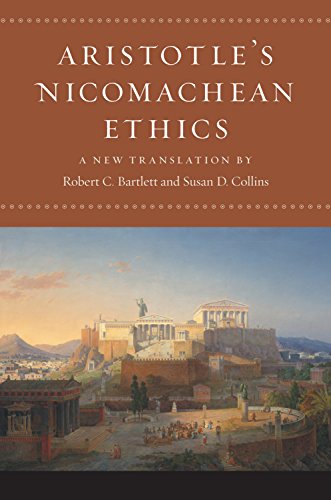
In the Nicomachean Ethics, Aristotle sets out to examine the nature of happiness. He argues that happiness consists in ‘activity of the soul in accordance with virtue’, for example with moral virtues, such as courage, generosity and justice, and intellectual virtues, such as knowledge, wisdom and insight. The Ethics also discusses the nature of practical reasoning, the value and the objects of pleasure, the different forms of friendship, and the relationship between individual virtue, society and the State. Aristotle’s work has had a profound and lasting influence on all subsequent Western thought about ethical matters.
J. A. K. Thomson’s translation has been revised by Hugh Tredennick, and is accompanied by a new introduction by Jonathan Barnes. This edition also includes an updated list for further reading and a new chronology of Aristotle’s life and works.
Previously published as Ethics
In the Nicomachean Ethics, Aristotle sets out to examine the nature of happiness. He argues that happiness consists in ‘activity of the soul in accordance with virtue’, for example with moral virtues, such as courage, generosity and justice, and intellectual virtues, such as knowledge, wisdom and insight. The Ethics also discusses the nature of practical reasoning, the value and the objects of pleasure, the different forms of friendship, and the relationship between individual virtue, society and the State. Aristotle’s work has had a profound and lasting influence on all subsequent Western thought about ethical matters.
J. A. K. Thomson’s translation has been revised by Hugh Tredennick, and is accompanied by a new introduction by Jonathan Barnes. This edition also includes an updated list for further reading and a new chronology of Aristotle’s life and works.
Previously published as Ethics

He said the great question is how we should live well, so that we live a good life, and he came up with a very positive response – what distinguishes us from the rest of the world is our possession of reason [source]

Ryan Holiday
Author
Aristotle’s Nicomachean Ethics was something I reread and cannot recommend highly enough. [source]

Christian B Miller
According to Aristotle, it is hard to become virtuous, and hard to become vicious too. The character of most people is somewhere in the middle. [source]