Before the Manhattan Project: J. Robert Oppenheimer’s Early Life

Before the Manhattan Project: J. Robert Oppenheimer’s Early Life

Why did J. Robert Oppenheimer almost get kicked out of Cambridge? Was he a communist? How did the attack on Pearl Harbor change his focus and, ultimately, his life? Biographers Kai Bird and Martin Sherwin aren’t content to talk only about J. Robert Oppenheimer’s work on the Manhattan Project. They also discuss his struggles with mental illness in his youth, his education and career launch, and his political activism that led to allegations of Communist Party membership. Keep reading to learn about Oppenheimer’s early life, including the preface to his involvement in the development of the atom bomb.

The 2 Crucial Principles of Business Management

The 2 Crucial Principles of Business Management

What are the two essential principles of business management? What’s the importance of candor and differentiation in the workplace? Whether you’re running your own company or trying to climb the corporate ladder, learning basic principles will help you become a better leader. Jack Welch’s book Winning has two big-picture principles for running a successful company: candor and differentiation. Let’s look at these two principles and how you can apply them to your business strategy.

The God Equation: The Quest for a Theory of Everything

The God Equation: The Quest for a Theory of Everything

Is there a theory of everything? How close are we to finding it? For centuries, scientists have sought a single theory that would provide one equation from which we can derive a complete understanding of the universe. In The God Equation: The Quest for a Theory of Everything, Michio Kaku suggests an approach that might be the path to uniting all the laws of nature. Continue reading for an overview of this mind-bending book.

The Myth of Sisyphus by Albert Camus: Book Overview

The Myth of Sisyphus by Albert Camus: Book Overview
What’s Albert Camus’s philosophy? Why does he think that life is worth living—despite its absurdity? In his 1942 essay The Myth of Sisyphus, Albert Camus describes his philosophy of the absurd. In spite of life’s absurdity, he believes that we should continue to live and try to derive as much fulfillment as we can from our brief existence. Continue reading for an overview of this classic work.

The History of Electromagnetic Theory: A Step Toward Unification

The History of Electromagnetic Theory: A Step Toward Unification

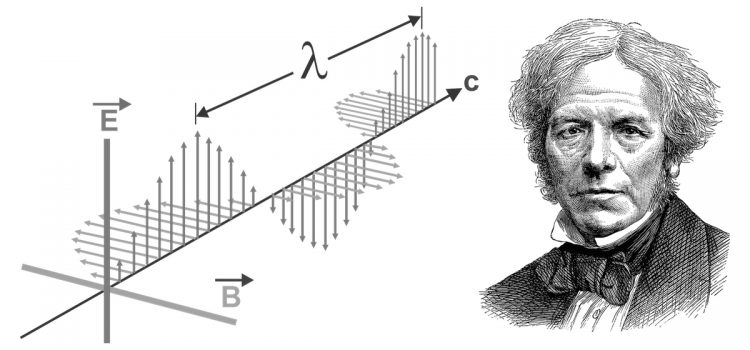
How did James Clerk Maxwell build upon the work of Michael Faraday? How do astronomers today benefit from scientific work done in the middle of the 19th century? Since the birth of classical physics, the greatest advancements in knowledge have come from bringing together different fields of study. Even the early steps in physics—such as an unexpected unity among electricity, magnetism, and light—united what were thought at the time to be wildly different areas of study. Theoretical physicist Michio Kaku discusses the history of electromagnetic theory in his book The God Equation. Take a look.

The Second Half of Life: 2 Ways to Keep Thriving as You Age

The Second Half of Life: 2 Ways to Keep Thriving as You Age

Are you over 35? Have you successfully transitioned into the last half of your life, or are you prepared to do so? In From Strength to Strength, management expert Arthur Brooks explains how and why you lose your job skills as you get older. Then, he provides solutions. He shows how you can find a job that suits your changing brain and achieve a meaningful life instead of fruitlessly chasing success in your former field. Keep reading for Brooks’s strategies as well as an exercise that will help you prepare now for the transition to the second half of life.

Dostoyevsky & Kierkegaard: Absurdism Is a Bridge Too Far

Dostoyevsky & Kierkegaard: Absurdism Is a Bridge Too Far

Why don’t all existentialist philosophers embrace absurdism? What do they advocate instead? Existentialist philosopher Albert Camus contends that life is absurd. But, according to his fellow existentialists Fyodor Dostoyevsky and Søren Kierkegaard, absurdism should be rejected; there’s a better way to face life. Keep reading to learn Camus’s argument, the counterarguments by other philosophers, and Camus’s rebuttals.

What Causes Social Inequality? How Status Plays a Role

What Causes Social Inequality? How Status Plays a Role

What causes social inequality? How does status cause inequality? When a group playing a status game feels threatened by another group, it feels justified in demonizing its enemies and destroying lives to protect its status. The result is deep-rooted inequality where minorities suffer while an elite class thrives. Let’s dive into what causes social inequality, according to The Status Game by Will Storr.

J. Robert Oppenheimer on Japan: From Pearl Harbor to Nagasaki

J. Robert Oppenheimer on Japan: From Pearl Harbor to Nagasaki

Did J. Robert Oppenheimer support the use of the atomic bomb? Did he ever change his mind? In American Prometheus, Kai Bird and Martin Sherwin provide a comprehensive biography of J. Robert Oppenheimer, best known for developing the atomic bomb that wrought destruction on Japan in World War II. They discuss his arguments for the permissibility of bombing Japan and his attitude afterward. Keep reading to learn about the views of J. Robert Oppenheimer on Japan’s fate in the war.