How to Organize Contacts & Improve Relationships as a Result

How to Organize Contacts & Improve Relationships as a Result

How effectively do you keep track of all the people in your life? Do you ever lose phone numbers or forget important birthdays? In his book The Organized Mind, neuroscientist Daniel J. Levitin discusses how to externalize and sort information and objects. He explains how can you use the power of externalization and organization to improve your relationships. Keep reading to learn why modern relationships can overwhelm us and how to organize contacts in a way that takes that pressure off.

How to Cultivate Stillness of the Mind

How to Cultivate Stillness of the Mind

Are your thoughts always racing out of control? Do you find it difficult to calm your mind so you can focus and think straight?  Many people are overwhelmed by mental noise such as racing thoughts and irrational worries. This wastes a lot of mental energy but adds no value to your life. To regain peace, you need to learn to direct your mental energy in a more intentional way.  With this in mind, here are some tips on how to cultivate stillness of the mind so you can think clearly and rationally.

Focusing on Others: Empathy, Social Intuition, & Body Language

Focusing on Others: Empathy, Social Intuition, & Body Language

Are there different kinds of empathy? What is social intuition? How important is attention when it comes to social interactions? In Focus, Daniel Goleman discusses various directions of attention. One way we can direct our attention is toward others. According to Goleman, an effective focus on others builds several life skills: empathy, social intuition, and the ability to read body language. Keep reading to learn how focusing on others can help you develop these skills.

Why Is Misinformation Bad & How Can You Stop It?

Why Is Misinformation Bad & How Can You Stop It?

Why is misinformation bad? What are the consequences of spreading bad information? How can you stop it? Misinformation and disinformation are everywhere, leading to inaccurate beliefs and distorted worldviews. However, refuting these forms of false information can be extremely difficult. Read on to learn why misinformation is not only bad, but at times dangerous, and how you can stop it from spreading.

Patience and Perseverance: The Most Overlooked Virtues

Patience and Perseverance: The Most Overlooked Virtues

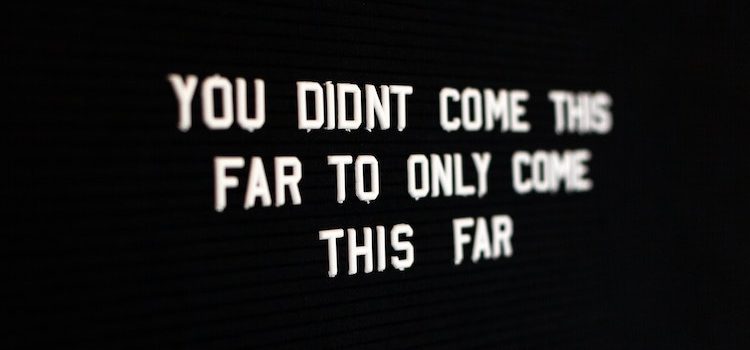
What are the keys to success in life? Is it possible to become successful overnight?  To thrive in any aspect of your life, you must develop two virtues: patience and perseverance. Without these qualities, you’ll never achieve ambitious goals or reach your full potential. However, modern society is so enamored with fast results that people buy into the idea of overnight success, which is nothing but an illusion.  Here’s why patience and perseverance are the keys to success. 

How to Stand Out at Work: 4 Tips From Seth Godin

How to Practice Contrarian Thinking (Charlie Munger)

Want to know how to stand out at work in any job? What advice do leadership experts offer? According to entrepreneur and leadership expert Seth Godin, if you want to stand out at work, you must adopt a “linchpin” mindset. In his book Linchpin, he offers tips to help you stand out from your colleagues, based on the linchpin mindset. Keep reading to learn how to stand out at work, according to Godin’s four tips.

Learned Nonuse: The Side-Effect of Injured Limbs

Learned Nonuse: The Side-Effect of Injured Limbs

What is learned nonuse in psychology? What are some ways learned nonuse can be corrected? Learned nonuse is a behavioral phenomenon whereby the use of an affected extremity is suppressed due to previous failed attempts to use it. In other words, the individual learns not to use the weak limb—although it’s perfectly functional—because it’s easier to use the healthy limb. Keep reading to learn about learned nonuse, why it happens, and ways to correct it.

Darwinian Evolution vs. Intelligent Design: Clashing Concepts

Darwinian Evolution vs. Intelligent Design: Clashing Concepts

How did Darwinian theory come to the fore? How is Intelligent Design different from creationism? In A Short History of Nearly Everything, Bill Bryson offers up an accessible guide to our cosmological, geological, and biological history. He discusses the theory that Charles Darwin honed and popularized, which is best understood in the context of the competing hypothesis of Intelligent Design. Keep reading for a brief discussion of Darwinian evolution vs. Intelligent Design.

Why You Should Believe in Something Bigger Than Yourself

Why You Should Believe in Something Bigger Than Yourself

Do you believe in something bigger than yourself? How does belief in a higher power contribute to your psychological well-being? Studies have shown that those who believe in some kind of a higher power tend to be happier and less depressed and anxious than those who don’t. When you believe in a higher power—whether divine or secular—it gives you a feeling of control and a sense that life is inherently meaningful. Here’s why we need to believe in something greater than ourselves, according to Ryan Holiday.