Why Is Procrastination Bad? Exploring the Top 3 Reasons
A man sitting in front of a giant clock, wondering why procrastination is bad

Why is procrastination bad? How does procrastination affect your physical health? Timothy A. Pychyl contends it’s important to be aware of the specific ways your procrastination habit works against you. After all, procrastination keeps you from putting your limited time to the best possible use, and this can have a cascade of consequences. Below, we’ll consider three ways that procrastination can sabotage you.

Somewhere Between Certainty and Doubt: Where Beliefs Lie

a young man in a suit with a thoughtful expression looking up at question marks in the sky illustrates certainty and doubt

What’s the role of certainty and doubt in your life? How do these opposing forces shape your beliefs and decisions? In her book Being Wrong, Kathryn Schulz explores the continuum between certainty and doubt. She argues that we often default to certainty more than we know. She provides helpful insights into the necessity and dangers of our core beliefs. Read on to understand how certainty and doubt serve us in our daily lives.

Key Differences Between Democracy and Dictatorship

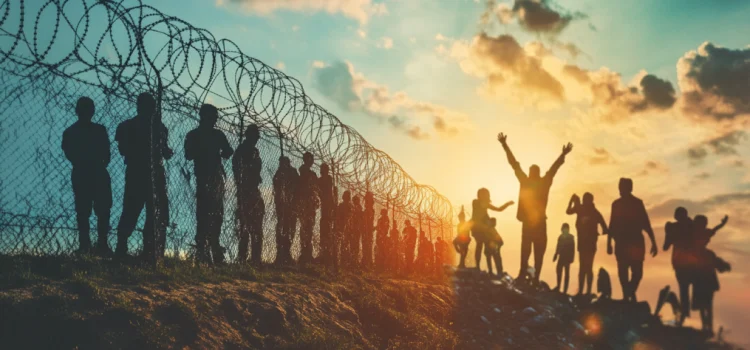
people behind a wire fence on the left and free people on the right depict the differences between democracy and dictatorship

How are democracies and dictatorships different? How is the size of their power base related to the way different leaders operate? In The Dictator’s Handbook, Bruce Bueno de Mesquita and Alastair Smith say the primary goal of all leaders is to get power and keep it. This is true in all political systems; the differences between democracy and dictatorship can be seen in how power is gained and who holds leaders accountable. Keep reading to understand these crucial distinctions and to gain a deeper grasp on why democracy is a superior system.

What Is Self-Leadership? The 3 Ways to Lead Yourself

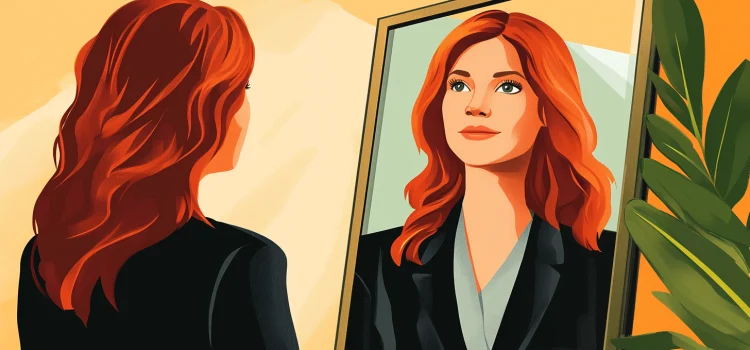
A woman embracing self-leadership and looking confidently at herself in the mirror

What is self-leadership? How can you lead yourself to greatness? The one thing you can control is yourself, Clay Scroggins says. This is the most essential kind of leadership to embrace, as you’ll always have authority over your own behavior, regardless of your position in an organization. Below, we’ll explore a few types of self-leadership you should embrace.

2 Ways Democracy and Economic Inequality Are Connected

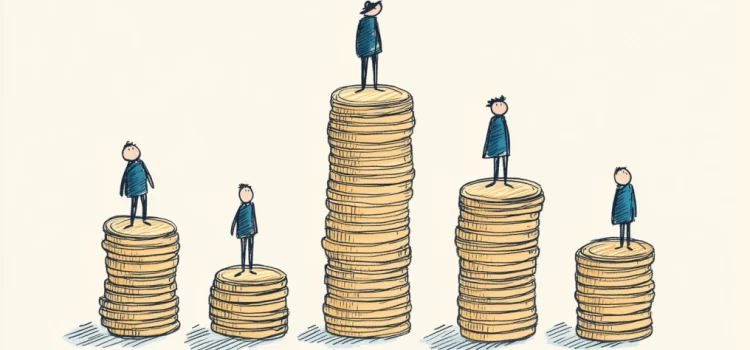
people standing on stacks of coins of different heights illustrate the link between democracy and economic inequality

Is economic inequality eroding the foundations of democracy? How does the widening wealth gap affect our social fabric? Democracy and economic inequality are increasingly intertwined in modern society. We draw insights from a philosopher and an economist to understand the complex relationship between these two factors, examining how growing social divisions and reduced social mobility can threaten democratic systems. Continue reading for perspectives on this crucial issue shaping our world today.

Customer Experience at Starbucks: 3 Areas That Stand Out

Employees serving people as part of the customer experience at Starbucks

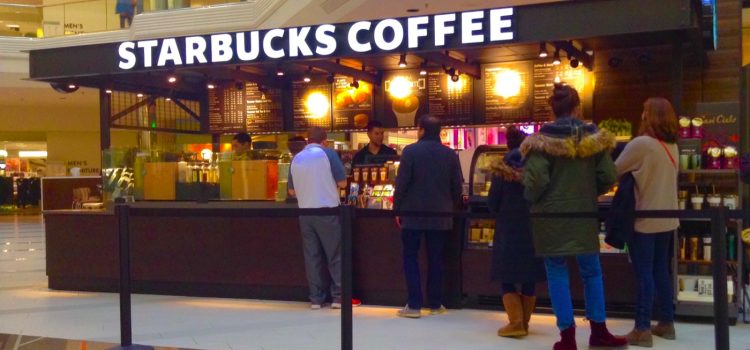
Why do people love Starbucks so much? What’s the customer experience at Starbucks like? When Starbucks was in desperate need of a new business model, one of Howard Schultz’s areas of focus was customer service. Schultz made changes in three key areas: improved communication with customers, polished store design and operations, and renewed social and environmental commitments. Let’s explore each of those areas now.

3 Reasons Why We Procrastinate (+ How to Stop)

A person texting with their laptop open and papers next to them, showing one of the reasons why we procrastinate

Why is it so easy for people to procrastinate? What productive habits can we build to overcome procrastination? Procrastination is frustrating because we know what it is and we can see how it hurts us, but we keep doing it anyway. In Solving the Procrastination Puzzle, Timothy A. Pychyl explores three forces behind procrastination: our desire for rewarding experiences, our trouble making realistic plans, and our lack of preparedness for obstacles and challenges. Let’s look at the reasons why we procrastinate, and what we can do to stop them.