The Legacy of the United States Caste System

The Legacy of the United States Caste System

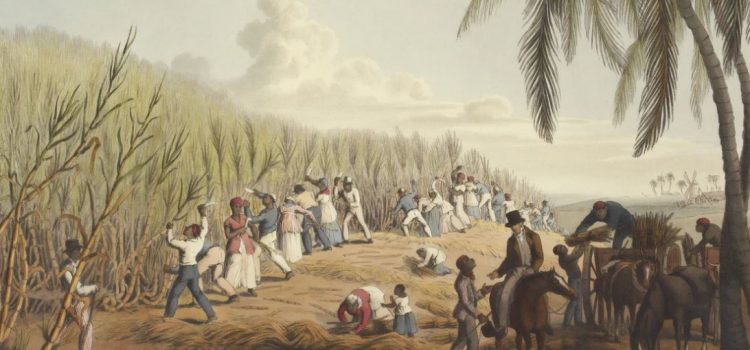
Is there still a caste system in the United States? What lasting effects did the caste system of the early United States have? Despite the fact that slavery was abolished in the 1800s, there are still many lasting effects of the racial caste system in the United States. Many Southerners still cling to Confederate symbols and consider the Old South a “Lost Cause,” healthcare has fallen behind because of racial agendas, and Confederate statues are still spread all over the country. In this article, we’ll discuss the ways the caste system has left a lasting impact on the United States.

How Peach and Coconut Cultures Approach Disclosure

How Peach and Coconut Cultures Approach Disclosure

What is the difference between a “peach” and a “coconut” culture? How do peach and coconut cultures approach personal disclosure? The peach/coconut model describes how different cultures indicate the depth of their relationship. People from peach cultures seem friendly on the outside but difficult to know on the inside. In contrast, people from coconut cultures may seem cold and unapproachable on the outside, but once you get to know them, you can build a deep, personal relationship with them really fast. Keep reading to learn more about peach and coconut cultures, according to cultural communication expert Erin Meyer.

Understanding Leadership in Egalitarian Cultures

How to Embrace Vulnerability in Leadership

What is an egalitarian culture? How does egalitarianism manifest in leadership? In an egalitarian culture, the power distance is low. In other words, everybody is equal​​—even in the workplace. Members of egalitarian cultures are also more likely to act on their own and ask for forgiveness instead of permission. Keep reading to learn about the key characteristics of egalitarian cultures and how they develop.

Erin Meyer: Monochronic and Polychronic Cultures

Erin Meyer: Monochronic and Polychronic Cultures

How does time perception differ across cultures? What are the two types of cultural time perception? Time isn’t a fixed item—it is a concept, and each culture conceptualizes time differently. In her book The Culture Map, cultural expert Erin Meyer divides the methods of perceiving time into two overarching types: linear-time (aka monochronic) and flexible-time (aka polychronic). In this article, we’ll explain the difference between monochronic and polychronic cultures and present some strategies you can use when working with people who perceive time differently than you do.

Charlie Munger: How to Practice Contrarian Thinking

How to Practice Contrarian Thinking (Charlie Munger)

What is contrarian thinking? How do you practice divergent thinking? Contrarian thinking involves challenging the prevailing consensus on any particular issue to arrive at an independent point of view. Thinking for yourself can help generate new ideas that are more correct than the public consensus. You practice divergent thinking by inverting the prevailing view on an issue to see it from a different perspective.   Read on to discover how to practice contrarian thinking.

The History of the Caste System in America

The History of the Caste System in America

How did the caste system in America come to be? What influence did slavery have on the forming of the American caste system? The American caste system started back in the 1600s when Blacks were taken as slaves due to their non-Christianity. What started as a religious hierarchy quickly turned into a racial caste system. Keep reading to learn all about the development of the American caste system.

The Key Characteristics of Hierarchical Cultures

The Key Characteristics of Hierarchical Cultures

What is a hierarchical culture? How do hierarchical cultures approach leadership? In a hierarchical culture, the power distance is high. In other words, your rank matters. In some hierarchical cultures (notably, Asian), respect is a two-way street. It is not just the subordinate’s duty to obey. Rather, the boss is responsible for the success and well-being of his employees. He is often viewed as a paternalistic figure. Keep reading to learn about the key characteristics of hierarchical cultures and how they develop.

Inauthentic Behavior: Why Are People so Fake?

6 Ways to Recognize Fake Empathy in the Workplace

Do you consider yourself an authentic person? How does modern culture encourage inauthentic behavior? Your environment (social circle and media) is constantly trying to shape you into something that you should be. The underlying message is that you should be, do, or have more to be “good enough.” If you’re sensitive to these opinions and focus more on satisfying the expectations of others than you do on figuring out what you need to feel inner fulfillment—this external focus inhibits you from acting authentically.  In this article, we’ll take a look at the two ways modern culture encourages inauthentic behavior: 1)

What Is Casteism?—Explained With Examples

What Is Casteism?—Explained With Examples

What is casteism? How do caste systems contribute to social injustice? Casteism is a practice of maintaining a hierarchical social order where an inherent characteristic is used as a tool to designate people’s rank in society. Historically, powerful groups have used religion, ethnicity, or skin color to stratify societies. In this article, we’ll explore the notion of casteism and how it works on three real-world examples: America, India, and Nazi Germany.

Erin Meyer: Understanding Cross-Cultural Differences

Erin Meyer: Understanding Cross-Cultural Differences

How do the world’s cultures differ in terms of communication? How have these differences come about? On a communication spectrum, cultures can be classified into high-context (where people communicate and interpret messages at face value) and low-context (where you have to read between the lines to get the message). According to Erin Meyer, a culture’s communication style is shaped by its language and history. In this article, we’ll look at the two factors that underlie cross-cultural differences in communication: language and history.