Russell Brunson’s 10x Secrets: 3 Tips for One-to-Many Selling

Russell Brunson’s 10x Secrets: 3 Tips for One-to-Many Selling

What false beliefs do customers often hold? What’s the best way to address their concerns? When you sell to a large audience, how should you adjust your presentation? Selling to a big crowd is not the same as selling to an individual or small group. Russell Brunson shares tips on adjusting your techniques in a way that leverages the differences associated with a large audience. Continue reading to learn Russell Brunson’s “10x secrets.”

Narrative-Based Economic Forecasting Methods (Robert Shiller)

Narrative-Based Economic Forecasting Methods (Robert Shiller)

What if economists collaborated with psychologists and sociologists? How could they benefit from spending more time on social media? In Narrative Economics, Robert J. Shiller argues that human beliefs and actions, rather than numbers and statistics, ultimately drive economic outcomes. From this perspective, he suggests that we adopt new approaches that broaden our understanding of economic events and help us make better predictions. Read more to learn about Shiller’s proposed narrative-based economic forecasting methods.

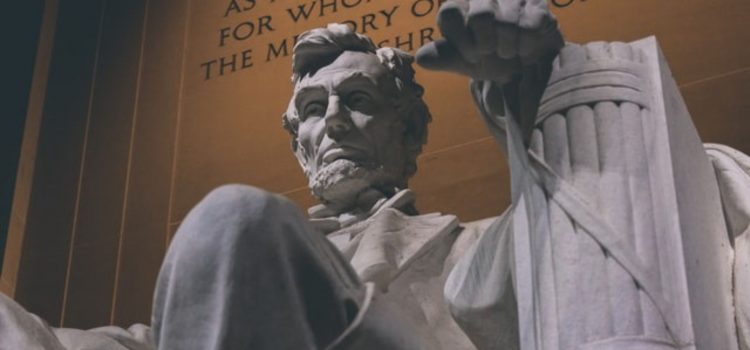
Abraham Lincoln’s Stance on Slavery & Its Historical Context

Abraham Lincoln’s Stance on Slavery & Its Historical Context

What’s the difference between abolition and emancipation? Why didn’t Abraham Lincoln support a federal mandate to free slaves? In And There Was Light, historian and biographer Jon Meacham discusses Abraham Lincoln’s stance on slavery. He explains where Lincoln’s beliefs came from and the actions he took in an effort to end the practice in the United States. Read more to learn about the Great Emancipator’s views and actions in relation to slavery.

Sam Bankman-Fried’s Personality: A Lifelong Social Outcast

Sam Bankman-Fried’s Personality: A Lifelong Social Outcast

How many childhood friends did Sam Bankman-Fried have? On what rare occasion did he wear a suit? In his recent biography Going Infinite, Michael Lewis provides a rare glimpse into the inner workings of Sam Bankman-Fried’s life. Lewis writes about the time before Bankman-Fried became a crypto mogul, explaining why he spent his life as a social outcast. Read more to understand Sam Bankman-Fried’s personality.

How to Choose a Target Market: Tips From Russell Brunson

How to Find Your Target Audience and Competitors

Why is marketing easier when you understand basic human needs? How much do you know about the ability and desire of potential customers to spend money on your product? Russell Brunson made his name selling online marketing tools specializing in sales funnels. He contends that to successfully launch a business, you must start by solidly identifying your market. Until you know whom you’re aiming at, you can’t effectively come up with details for your offer. Keep reading to get Brunson’s advice on how to choose a target market for your product.

4 Economic Narratives We Can’t Shake (+ How They Work)

4 Economic Narratives We Can’t Shake (+ How They Work)

What are the consequences of the “American dream” narrative? What’s the truth about the gold standard? Economist Robert J. Shiller writes that narratives are extraordinarily powerful because they help us make sense of the world. By organizing random events and observations into stories with clear narrative arcs, we come to understand our world, how it came to be, and our place within it.  Keep reading to understand how narratives work and to learn about four recurring economic narratives.

Lincoln and Johnson: A Conflict of Visions (Jon Meacham)

Lincoln and Johnson: A Conflict of Visions (Jon Meacham)

Why did Abraham Lincoln choose Andrew Johnson as his running mate? Did Johnson carry on Lincoln’s work? Historian and biographer Jon Meacham writes about the life and leadership of Abraham Lincoln in his book And There Was Light. He also discusses the drastic change of course in the presidency and nation after Lincoln’s assassination. Read more to learn about Lincoln and Johnson, according to Meacham.

Sam Bankman-Fried: Effective Altruism as a Path to Utilitarianism

Sam Bankman-Fried: Effective Altruism as a Path to Utilitarianism

What’s effective altruism? Why did Sam Bankman-Fried adopt this philosophy? According to biographer Michael Lewis, Sam Bankman-Fried’s effective altruism is rooted in another philosophy that he learned from his parents. Lewis writes about Bankman-Fried’s adoption of this concept and its particular path of “earning to give.” Keep reading to learn about Sam Bankman-Fried’s effective altruism beliefs and practices.

Lost Cause Ideology: A Romanticized History of the Civil War?

Lost Cause Ideology: A Romanticized History of the Civil War?

How did some Confederates view the Union’s victory? How did they hope to keep their cause alive and secure some victory after all? According to historian Jon Meacham, after the Civil War, some of the vanquished Confederates developed an idealized view of their cause. Meacham argues that at least some aspects of this “Lost Cause” ideology persist even today. Continue reading to learn about this perspective on Civil War history.

Sam Bankman-Fried at Jane Street: Success—but Not Enough

Sam Bankman-Fried at Jane Street: Success—but Not Enough

How did Sam Bankman-Fried get a job with Jane Street Capital? Why didn’t he stay with the firm longer? Sam Bankman-Fried left MIT for Wall Street, taking a job with Jane Street Capital. In Going Infinite, Michael Lewis discusses Bankman-Fried’s hiring and success with the firm and reveals why the young trader didn’t stay there for the long haul. Continue reading to learn why, for Sam Bankman-Fried, Jane Street wasn’t enough.