The Harm Principle: Does It Apply Outside of the West?

The Harm Principle: Does It Apply Outside of the West?

Does the harm principle of ethics have universal merit? What is the principle’s counterargument? The harm principle, introduced by John Stuart Mill in 1859, states that the only way that anyone should exercise power in a civilized society is to prevent harm. This is the basis for ethics in the secular West. However, taking the rest of the world into consideration opens up a different perspective. This is put forth by Jonathan Haidt in his book The Righteous Mind. Read more to learn about differing views regarding the harm principle.

The 6 Moral Foundations: Beyond the Harm Principle

The 6 Moral Foundations: Beyond the Harm Principle

What are the six moral foundations? How can our view of morality expand in order to understand others better? Everyone is accustomed to a certain moral framework, and it can be hard to accept that another morality is moral or even possible. Also, people respond to the six moral foundations in different ways. These factors contribute to the difficulty we have in understanding each other. Gaining insight into how moral foundations work can help us empathize with others. Read more to learn about the six moral foundations.

Following Your Passion Isn’t the Path to Happiness

Following Your Passion Isn’t the Path to Happiness

Does following your passion lead to joy in your work? What does the research say? Cal Newport shares the evidence against the “passion hypothesis”—the idea that you can find a job you like by first figuring out what you’re passionate about, and then looking for a job that allows you to use this passion. According to scientific research, surveys, and interviews, following your passion shouldn’t be your focus if your goal is to find a job you love. Read more to learn why following your passion is not the way to find happiness at work.

Chasing Lincoln’s Killer: Catching John Wilkes Booth

Chasing Lincoln’s Killer: Catching John Wilkes Booth

What does the book Chasing Lincoln’s Killer reveal about the hunt for John Wilkes Booth and the other assassins? Who were these killers? What ultimately happened to them? Chasing Lincoln’s Killer is a book by historian James L. Swanson. The account is drawn from archival materials of the assassination of Abraham Lincoln on April 14, 1865, and the hunt for John Wilkes Booth and his co-conspirators. Read more to get a snapshot of Chasing Lincoln’s Killer.

The Karmic Law: Liberal/Conservative Divide

The Karmic Law: Liberal/Conservative Divide

How do liberals and conservatives view karmic law? How does karma fit in with our values of liberty and fairness? In his book The Righteous Mind, social psychologist Jonathan Haidt discusses how karmic law is part of the philosophy behind the Tea Party movement. This is because karma is entwined with our ideas of fairness and liberty. He explains how liberals and conservatives prioritize these values differently. Read more to learn how karmic law relates to our ideas of liberty and fairness.

Why Skills Trump Passion: 3 Stories That Explain

Why Skills Trump Passion: 3 Stories That Explain

Have you heard that ability matters more than passion when it comes to finding work you love? Do you know why skills trump passion? Cal Newport believes that it’s easier for highly skilled people to write their own tickets when it comes to job choice, ultimately allowing them to do work they love. He shares three stories that illustrate why skills trump passion. One story is his own. Read more to learn why skills trump passion.

Why Different Societies Have Different Moral Codes

Why Different Societies Have Different Moral Codes

Why do different societies have different moral codes? Why is a certain behavior “good“ here—but “bad“ over there? Jonathan Haidt, in his book The Righteous Mind, argues that morality is culture-dependent—that different societies have different moral codes. Studying people in Philadelphia and Brazil, he found that even groups within societies have different moralities from one another. Read more to learn why different societies have different moral codes.

The Role of Morality in the Political Divide

The Role of Morality in the Political Divide

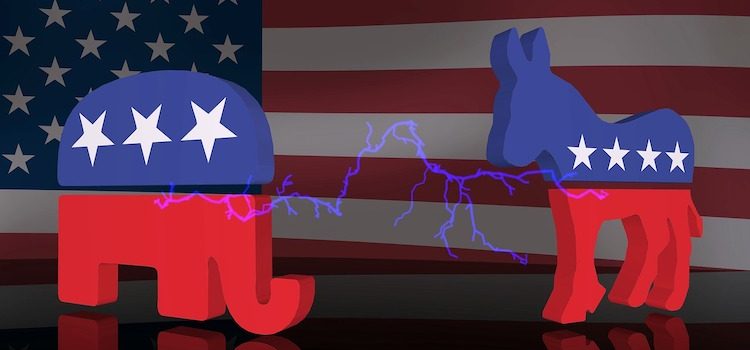
What are the underlying reasons for the political divide in America? How could we understand each other better? Jonathan Haidt’s moral foundations theory can help us answer these questions. In The Righteous Mind, Haidt explains how moral foundations work in the context of politics in the U.S. This application provides insight into today’s political divide. Read more to learn how different moral foundations contribute to the political divide.

Empathy and Morality: What Is the Connection?

Empathy and Morality: What Is the Connection?

What is the connection between empathy and morality? Do the moral philosophies of Bentham and Kant go far enough? In his book The Righteous Mind, social psychologist Jonathan Haidt asserts that popular Western theories about morality fail to fully grasp the connection between empathy and morality. He points to the moral philosophies of Jeremy Bentham and Immanuel Kant in particular. Read more to learn about the treatment of empathy and morality in Western philosophy.