Are We Still Evolving? Yes—Perhaps Faster Than Ever

Are We Still Evolving? Yes—Perhaps Faster Than Ever

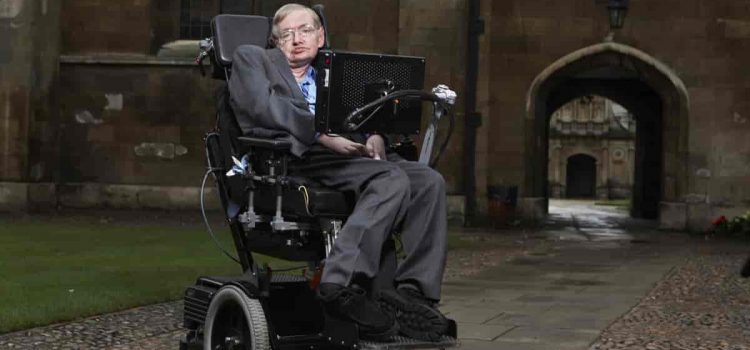
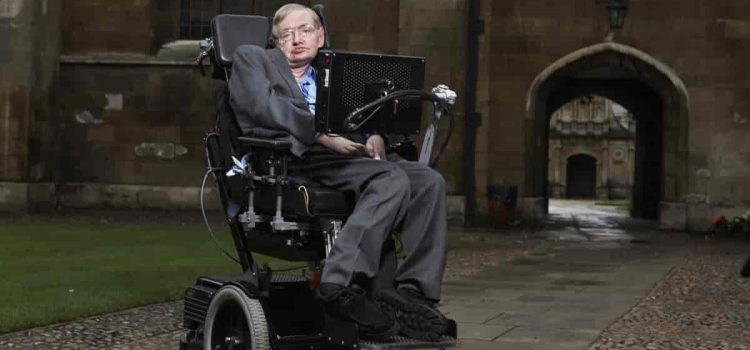
Are we still evolving as humans? Why did Stephen Hawking predict that human evolution will soon accelerate? Before he passed away, Stephen Hawking wrote that he believed humans were going to soon enter a new stage of evolution. Hawking believed that humans will move past the slow, Darwinian evolution phase and will speed up their evolution through genetic engineering. We may even become superhumans one day. Here’s what Hawking had to say about the future of evolution.

What Is the Most Important Sense? (Why It’s Vision)

What Is the Most Important Sense? (Why It’s Vision)

Do you know what sense you use the most? Why is vision the most important sense? Dr. John Medina argues that vision is the most important human sense because it takes up half the brain to process visual information. Vision also dominates the other four senses because it shapes how you see the world. Here’s Medina’s explanation for what the most important sense is, and why it’s vision.

How Human Curiosity Aids in Childhood Development

How Human Curiosity Aids in Childhood Development
Why are babies so curious? Do you think human curiosity has helped you learn and mature? Human curiosity, also known as epistemic curiosity, is about seeking and gaining knowledge. In his book, Brain Rules, Dr. John Medina explains human curiosity as the innate human desire that is with you since birth—it even imitates the steps in the scientific method. Here’s how human curiosity is developed through the early stages of life.

Stephen Hawking: Evolution Explained

Strands of DNA

How did humans come into existence on Earth? Why do monotheistic religions challenge Stephen Hawking’s evolution theory? In his book Brief Answers to the Big Questions, Stephen Hawking gives a brief overview of how humans got here. He begins his timeline in the present day and goes back to the singularity that created time. Here’s Stephen Hawking’s evolution timeline—and why many religions disagree with him.

Stephen Hawking: AI Might Become a Threat to Us

Stephen Hawking: AI Might Become a Threat to Us

Why does Stephen Hawking consider artificial intelligence to be a form of life? How can humanity avoid a disaster like the one in I, Robot? According to Stephen Hawking, AI fulfills the two requirements to be considered living. Hawking warns that artificial intelligence may even become conscious one day, and if it does, it better be on the side of humanity rather than against it. Here’s more of what Hawking had to say about AI.

Are There Differences in Male and Female Brains? Yes

How to Build a Latticework of Mental Models

Do sex and gender affect the way we think? Is there evidence of differences in male and female brain structures? While most of the cognitive differences between male and female brains are shaped by social expectations, there are some differences that molecular biologist Dr. John Medina suspects have a profound impact on behavior. Medina posits that the male and female brains react differently to a number of situations. Here are the physical and psychological differences in male and female brains.

Top Quotes From Brief Answers to the Big Questions

Top Quotes From Brief Answers to the Big Questions

What are the top quotes from Brief Answers to the Big Questions? What did Hawking have to say about some of humanity’s biggest questions? In Brief Answers to the Big Questions, prominent astrophysicist Stephen Hawking discusses science, philosophy, human destiny, and how they relate to each other. Writing at the end of his career, Hawking offers his readers some final words of wisdom on the issues he considers most important. Below are the top Brief Answers to the Big Questions quotes—with explanations.

How to Write About Science and Technology

How to Write About Science and Technology

Do you write about science and technology? How can you make your writing sound less robotic? When people write about science and technology, they tend to lack humanity, making the piece too boring and matter-of-fact. To make your technical writing more interesting, focus on humanity first and incorporate facts and statistics only if they add to the story. Here’s how to make your technical writing more interesting.