The Economics Behind Exchange Rates—Explained

The Economics Behind Exchange Rates—Explained

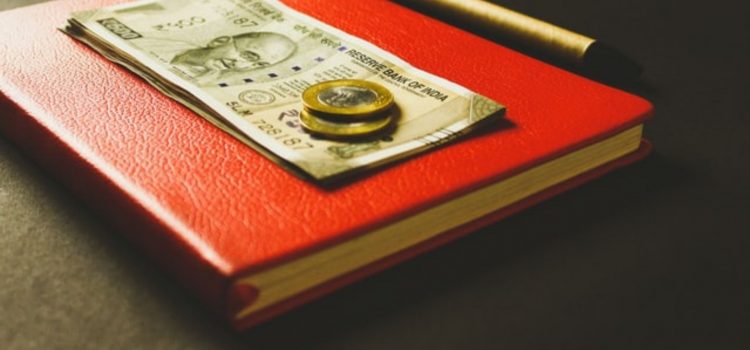
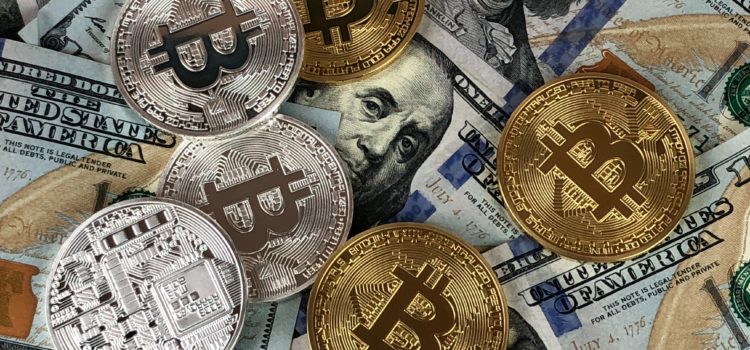
What exactly is an exchange rate? How do countries determine their exchange rates? In simple terms, the exchange rate is the price at which you can purchase one currency using another currency. There are several ways that a country can determine the value of its currency and its exchange rate. Learn about the economics of exchange rates, explained in simple terms. We’ll discuss the gold standard way of determining the exchange rates, and the difference between floating and fixed exchange rates.

Beginner Economics: How Do Currencies Work?

Guaranteed Basic Income: Creating A Better Tomorrow

How do currencies work? How do economists determine the value of a country’s currency? A physical piece of currency is just a piece of paper or a coin, but it represents an amount of purchasing power that can be used for goods and services. To evaluate a currency’s purchasing power, economists determine how many goods and services it can purchase from a hypothetical “basket of goods” that includes a broad range of things for sale in any given country.  In this article, we’ll examine currencies and how the international market uses them to function.

How the Health of an Economy Is Measured

How the Health of an Economy Is Measured

What reflects the health of an economy? What markers do economists use to measure the strength of a country’s economy? Sometimes, an economy functions well: It grows at a healthy rate that allows many people to earn a good living. But sometimes, it suffers a period of stagnation or contraction, when people find it harder to survive or to thrive within the market. There are several markers of economic health including GDP (gross domestic product), unemployment rates, Gini coefficient, etc. In this article, we’ll explore how economists measure the health of an economy, what causes an economy to fall into

What Is the Role of Government in an Economy?
What Is the Role of Government in an Economy?

What is the role of government in an economy? Would economies function better if left to their own devices? A government makes a capitalist market possible. Though people, including many politicians, sometimes speculate about how much better the market could operate if there were little or no government around, the truth is, countries without strong governments have almost non-existent markets in which it’s difficult to conduct even simple transactions. In this article, we’ll explore the different ways a government can facilitate a functioning market economy. We’ll also explore the ways it can destroy one: Government intervention in the economy isn’t

College Is a Business: Students Are Just Customers

College Is a Business: Students Are Just Customers

How did colleges start running like businesses rather than educational institutions? What impact has this had on the students? These days, colleges are run more like big businesses than educational institutions. This is because education is so profitable that the administrators started looking at students as customers and valuable assets that need to be catered to or they’ll lose money. Keep reading to learn why college is a business and students are merely customers.

Asymmetric Information in Economics: Explained

Asymmetric Information in Economics: Explained

What do economists mean when they talk about “asymmetric information”? What role does the asymmetricity of information about products/services play in the functioning of an economy? In economics, asymmetric information refers to the situation where one party has more information about the product/service than the other. Information, and who has access to it, have an outsized influence on how smoothly an economy runs. A free flow of information allows for easy and smart transactions. In this article, we’ll explain asymmetric information and discuss its implications for individuals, firms, and economic policy.

The Role of Human Capital in Economic Development

The Role of Human Capital in Economic Development

What exactly is human capital? What is the role of human capital in economic development? Human capital is the sum of what makes an individual valuable and marketable (e.g. intelligence, athletic ability, education, and work experience, etc). Economies with higher levels of human capital are stronger than those with lower levels for a number of reasons: 1) it increases wealth; 2) it controls population growth, 3) it drives productivity, and 4) it explains inequality. We’ll explore each of these below. 

Naked Economics: Undressing the Dismal Science

Naked Economics: Undressing the Dismal Science

What is Charles Wheelan’s Naked Economics about? What are the key takeaways? In Naked Economics, bestselling author Charles Wheelan strips away the complexity from some of the most powerful theories in economics, allowing readers with little or no background in the subject to understand many of the field’s most fundamental concepts. He skips over the more technical, mathematics-based aspects of the discipline and concentrates instead on the logical pieces of how and why people behave in certain ways, how markets function, and how governments can design incentive systems that encourage healthy economies. Below is a brief overview of the key

The Richest Man in Babylon: 7 Cures for a Lean Purse

The Richest Man in Babylon: 7 Cures for a Lean Purse

What are the “7 Cures for a Lean Purse”? How did Arkad—the richest man in Babylon—come up with his wealth principles? The 7 Cures of a Lean Purse are the financial principles of Arkad, a fictional character in the Babylonian parables titled The Richest Man in Babylon. Arkad, who began his wealth journey as a poor scribe, came up with these principles when his friends approached him for advice on how to grow wealth. Here is a quick synopsis of Arkad’s wealth principles.