We've ranked the best marketing books using expert recommendations, sales data, and millions of reader ratings. At Shortform, we know books. Our book guides are the best in the world. Learn why.
Influence, the classic book on persuasion, explains the psychology of why people say "yes"—and how to apply these understandings. Dr. Robert Cialdini is the seminal expert in the rapidly expanding field of influence and persuasion. His thirty-five years of rigorous, evidence-based research along with a three-year program of study on what moves people to change behavior has resulted in this highly acclaimed book.
You'll learn the six universal principles, how to use them to become a skilled persuader—and how to defend yourself against them. Perfect for people in all walks of life, the principles of Influence will move you toward profound personal change and act as a driving force for your success.
New York Times bestseller and named Best Marketing Book of 2014 by the American Marketing Association
What makes things popular? Why do people talk about certain products and ideas more than others? Why are some stories and rumors more infectious? And what makes online content go viral?
If you said advertising, think again. People don't listen to advertisements, they listen to their peers. But why do people talk about certain products and ideas more than others? Why are some stories and rumors more infectious? And what makes online content go viral?
Wharton marketing professor Jonah Berger has spent the last decade answering these questions. He's studied why New York Times articles make the paper's own Most E-mailed List, why products get word of mouth, and how social influence shapes everything from the cars we buy to the clothes we wear to the names we give our children. In this book, Berger reveals the secret science behind word-of-mouth and social transmission. Discover how six basic principles drive all sorts of things to become contagious, from consumer products and policy initiatives to workplace rumors and YouTube videos.
Contagious combines groundbreaking research with powerful stories. Learn how a luxury steakhouse found popularity through the lowly cheese-steak, why anti-drug commercials might have actually increased drug use, and why more than 200 million consumers shared a video about one of the seemingly most boring products there is: a blender. If you've wondered why certain stories get shared, e-mails get forwarded, or videos go viral, Contagious explains why, and shows how to leverage these concepts to craft contagious content. This book provides a set of specific, actionable techniques for helping information spread - for designing messages, advertisements, and information that people will share. Whether you're a manager at a big company, a small business owner trying to boost awareness, a politician running for office, or a health official trying to get the word out, Contagious will show you how to make your product or idea catch on.
…
Recommended by Vinod Khosla, Vinod Khosla, Andrew Medal, and 10 others.
Andrew Medal
The world is #CONTAGIOUS ☢️☢️☢️ • • My dog and I love this book. I read to him when he wants to learn about marketing techniques. The last time I read this book was in 2013. If you want a read that dissects how and… https://t.co/6v0ckSnSQe [source]
Ee Ling Lim
Contagious by Jonah Berger is another interesting one for those trying to figure out how to market their business. In Contagious, Jonah identifies what makes some things go viral, and narrowed it down to 6 principles STEPPS: Social currency (content that makes people look good when they talk about it), Triggers (top of mind topics), Emotion (content that we care about, especially high arousal ones like anger, awe, excitement and humor), Public, Practical and Stories. [source]
Erik Cheong
Explains why certain products and ideas become popular while others fail. It reveals the secret science behind word-of-mouth and social transmission. Discover how six basic principles drive all sorts of things to become contagious, from consumer products and policy initiatives to workplace rumors and YouTube videos. [source]
Cover unavailable
3
The 22 Immutable Laws of Marketing: Violate Them at Your Own Risk
World-renowned marketing consultants and bestselling authors Al Ries and Jack Trout reveal 22 laws of marketing, with hundreds of examples that illustrate their success, in this innovative and sensible guide to marketing. Each law is described in detail and backed up by numerous examples of what worked and what didn't in the international marketplace.
Question: What books would you recommend to young people interested in your career path? Answer: Purple Cow by Seth Godin End of Jobs by Taylor Pearson Rework by Jason Fried & DHH Trust Me I’m Lying by Ryan Holiday The Complacent Class by Tyler Cowen The 22 Immutable Laws of Marketing by Al Ries and Jack Trout Losing My Virginity by Richard Branson [source]
Question: What five books would you recommend to young people interested in your career path & why? Answer: I know this is sounds self-serving but I’d recommended both of my books, the soon to be released, “Niche Down: How to Become Legendary by Being Different” and Harper Collins’ “instant classic,” “Play Bigger: How Pirates, Dreamers and Innovators Create and Dominate Markets” In addition: The Effective Executive, by Peter Drucker The E-Myth, by Michael Gerber Radical Candor: Be a Kickass Boss Without Losing Your Humanity by Kim Scott Back from the Dead, by Bill Walton The 22 Immutable Laws of Marketing, by Al Ries and Jack Trout [source]
Cover unavailable
4
The Tipping Point: How Little Things Can Make a Big Difference
The tipping point is that magic moment when an idea, trend, or social behavior crosses a threshold, tips, and spreads like wildfire. Just as a single sick person can start an epidemic of the flu, so too can a small but precisely targeted push cause a fashion trend, the popularity of a new product, or a drop in the crime rate. This widely acclaimed bestseller, in which Malcolm Gladwell explores and brilliantly illuminates the tipping point phenomenon, is already changing the way people throughout the world think about selling products and disseminating ideas.
Gladwell introduces us to the particular personality types who are natural pollinators of new ideas and trends, the people who create the phenomenon of word of mouth. He analyzes fashion trends, smoking, children's television, direct mail, and the early days of the American Revolution for clues about making ideas infectious, and visits a religious commune, a successful high-tech company, and one of the world's greatest salesmen to show how to start and sustain social epidemics.
Bunch of really good information in here on how to make ideas go viral. This could be good to apply to any kind of products or ideas you may have. Definitely, check out The Tipping Point, which is one of my favorites. [source]
Malcolm Gladwell's breakthrough insight was to focus on the micro-relationships between individuals, which helped organizations realize that it's not about the big ads and the huge charity balls... it's about setting the stage for the buzz to start. [source]
Andy Stern
I think that when we talk about making change, it is much more about macro change, like in policy. This book reminds you that at times when you're building big movements, or trying to elect significant decision-makers in politics, sometimes it's the little things that make a difference. Ever since the book was written, we've become very used to the idea of things going viral unexpectedly and then having massive impact. The Tipping Point, to me, is really an appreciation that very small things can rearrange thinking in ways – like infectious diseases – that have huge implications. While we're always searching for the big policy changes – and we think we have to do that in very traditional ways of building coalitions against constituencies, movements and the media – sometimes it's the little things that actually tip the situation. Like the story of a person and their unique set of circumstances that really captures an issue about health care or housing. So it's trying to remember, while you're thinking about the grand and the glorious, that thinking about the small things can equally bring about change. [source]
Cover unavailable
5
Made to Stick: Why Some Ideas Survive and Others Die
NEW YORK TIMES BESTSELLER - The instant classic about why some ideas thrive, why others die, and how to improve your idea's chances--essential reading in the "fake news" era.
Mark Twain once observed, "A lie can get halfway around the world before the truth can even get its boots on." His observation rings true: Urban legends, conspiracy theories, and bogus news stories circulate effortlessly. Meanwhile, people with important ideas--entrepreneurs, teachers, politicians, and journalists--struggle to make them "stick."
In Made to Stick, Chip and Dan Heath reveal the anatomy of ideas that stick and explain ways to make ideas stickier, such as applying the human scale principle, using the Velcro Theory of Memory, and creating curiosity gaps. Along the way, we discover that sticky messages of all kinds--from the infamous "kidney theft ring" hoax to a coach's lessons on sportsmanship to a vision for a new product at Sony--draw their power from the same six traits.
Made to Stick will transform the way you communicate. It's a fast-paced tour of success stories (and failures): the Nobel Prize-winning scientist who drank a glass of bacteria to prove a point about stomach ulcers; the charities who make use of the Mother Teresa Effect; the elementary-school teacher whose simulation actually prevented racial prejudice.
Provocative, eye-opening, and often surprisingly funny, Made to Stick shows us the vital principles of winning ideas--and tells us how we can apply these rules to making our own messages stick.
@conorgil My all-time favorite example of research communication is The Selfish Gene. Astonishingly effective at explaining deep research ideas/findings to a lay reader. A book with great advice: https://t.co/QD1sM2o0z6 (It isn't specific to research but still super valuable.) [source]
Bill Liao
The Book "Made to Stick" combined with "The Poetics" by Aristotle really helped me to see the power of telling great stories with surprises in them and every time I meet a start-up I can always make a contribution to their pitch. [source]
Cristian-Dragos Baciu
I highly recommend all the books written by the Heath brothers, especially Made to Stick: Why Some Ideas Survive And Others Die. This one's a must-read for marketers. The reason I enjoyed their work so much is because they offer real-life stories and insights that makes it so much easier for the reader to imprint that information in his mind [source]
Cover unavailable
6
Purple Cow, New Edition: Transform Your Business by Being Remarkable--Includes new bonus chapter
You're either a Purple Cow or you're not. You're either remarkable or invisible. Make your choice.
What do Starbucks and JetBlue and KrispyKreme and Apple and DutchBoy and Kensington and Zespri and Hard Candy have that you don't? How do they continue to confound critics and achieve spectacular growth, leaving behind former tried-and true brands to gasp their last?
Face it, the checklist of tired 'P's marketers have used for decades to get their product noticed -Pricing, Promotion, Publicity, to name a few-aren't working anymore. There's an exceptionally important 'P' that has to be added to the list. It's Purple Cow.
Cows, after you've seen one, or two, or ten, are boring. A Purple Cow, though...now that would be something. Purple Cow describes something phenomenal, something counterintuitive and exciting and flat out unbelievable. Every day, consumers come face to face with a lot of boring stuff-a lot of brown cows-but you can bet they won't forget a Purple Cow. And it's not a marketing function that you can slap on to your product or service. Purple Cow is inherent. It's built right in, or it's not there. Period.
In Purple Cow, Seth Godin urges you to put a Purple Cow into everything you build, and everything you do, to create something truly noticeable. It's a manifesto for marketers who want to help create products that are worth marketing in the first place.
…
Recommended by Joe Gebbia, Vinod Khosla, Vinod Khosla, and 21 others.
Joe Gebbia
Co-founder/Airbnb
Make something that’s distinct enough that people want to talk about it. [source]
Marvin Liao
Partner/500 Startups
My list would be (besides the ones I mentioned in answer to the previous question) both business & Fiction/Sci-Fi and ones I personally found helpful to myself. The business books explain just exactly how business, work & investing are in reality & how to think properly & differentiate yourself. On the non-business side, a mix of History & classic fiction to understand people, philosophy to make sense of life and Science fiction to picture what the future could be like (not always utopian). [source]
A few months ago, I was drinking a Noah’s Mill whiskey (cute) with my good buddy Brian Balfour and talking about life... During the conversation, we got on the topic of books that changed our lives. I want to share them with you. I judge a book's success if a year later I'm still using at least 1 thing from the book. [source]
Cover unavailable
7
All Marketers Are Liars: The Underground Classic That Explains How Marketing Really Works - and Why Authenticity Is the Best Marketing of All
Seth Godin’s three essential questions for every marketer: “What’s your story?” “Will the people who need to hear this story believe it?” “Is it true?” All marketers tell stories. And if they do it right, we believe them. We believe that wine tastes better in a $20 glass than a $1 glass. We believe that an $80,000 Porsche is vastly superior to a $36,000 Volkswagen that’s virtually the same car. We believe that $125 sneakers make our feet feel better—and look cooler—than a $25 brand. And believing it makes it true.
As Seth Godin showed in this controversial book, great marketers don’t talk about features or even benefits. Instead, they tell a story—a story we want to believe, whether it’s factual or not. In a world where most people have an infinite number of choices and no time to make them, every organization is a marketer, and all marketing is about telling stories.
Marketers succeed when they tell us a story that fits our worldview, a story that we intuitively embrace and then share with our friends. Think of the Dyson vacuum cleaner, or Fiji water, or the iPod.
But beware: If your stories are inauthentic, you cross the line from fib to fraud. Marketers fail when they are selfish and scurrilous, when they abuse the tools of their trade and make the world worse. That’s a lesson learned the hard way by telemarketers, cigarette companies, and sleazy politicians.
But for the rest of us, it’s time to embrace the power of the story. As Godin writes, “Stories make it easier to understand the world. Stories are the only way we know to spread an idea. Marketers didn’t invent storytelling. They just perfected it.”
…
Recommended by Joe Gebbia, Steve Blank, Alan Webber, and 1 others.
Joe Gebbia
Co-founder/Airbnb
I remember something that the author says in there which I never forgot, which is to make something people want to talk about. [source]
Alan Webber
Founder/Fast Company
If Seth Godin didn't exist we'd need to invent him. [source]
Cover unavailable
8
Crossing the Chasm: Marketing and Selling Disruptive Products to Mainstream Customers
The bible for bringing cutting-edge products to larger markets--now revised and updated with new insights into the realities of high-tech marketing
In Crossing the Chasm, Geoffrey A. Moore shows that in the Technology Adoption Life Cycle--which begins with innovators and moves to early adopters, early majority, late majority, and laggards--there is a vast chasm between the early adopters and the early majority. While early adopters are willing to sacrifice for the advantage of being first, the early majority waits until they know that the technology actually offers improvements in productivity. The challenge for innovators and marketers is to narrow this chasm and ultimately accelerate adoption across every segment.
This third edition brings Moore's classic work up to date with dozens of new examples of successes and failures, new strategies for marketing in the digital world, and Moore's most current insights and findings. He also includes two new appendices, the first connecting the ideas in Crossing the Chasm to work subsequently published in his Inside the Tornado, and the second presenting his recent groundbreaking work for technology adoption models for high-tech consumer markets.
…
Recommended by Andrew Chen, Drew Houston, Ev Williams, and 28 others.
Drew Houston
CEO/Dropbox
It’s about how do technology products make their way from early adopters t the mainstream. [source]
Ron Conway
Bestselling guide that created a new game plan for marketing in high-tech industries. [source]
This is a key component in my Purple Cow thinking, but with a twist. I'm not as worried about the chasm as I am about the desire of marketers to go for the big middle. [source]
A dynamic new cover heralds the reissue of this bestselling business classic, which Spencer Johnson, M.D., co-author of The One Minute Manager praised as "One of the most important communication books I've ever read. I recommend it highly!"
Recommended by Ev Williams, Tim O'Reilly, Ken Norton, and 7 others.
Tim O'Reilly
Founder/O'Reilly Media
Positioning, and The 22 Immutable Laws of Marketing by Al Ries and Jack Trout. Anyone who wants to start a business with impact needs to read these books. [source]
Marvin Liao
Partner/500 Startups
My list would be (besides the ones I mentioned in answer to the previous question) both business & Fiction/Sci-Fi and ones I personally found helpful to myself. The business books explain just exactly how business, work & investing are in reality & how to think properly & differentiate yourself. On the non-business side, a mix of History & classic fiction to understand people, philosophy to make sense of life and Science fiction to picture what the future could be like (not always utopian). [source]
This book is built around the brilliant insight that your prospect doesn't care nearly as much about what you do as you do, and thus you must boil down your offering into a unique slot that repositions the competition. [source]
Drawing on cutting-edge neuroscience and psychology and displaying all of the brilliance that made The Tipping Point a classic, Blink changes the way you'll understand every decision you make. Never again will you think about thinking the same way.
Malcolm Gladwell redefined how we understand the world around us. Now, in Blink, he revolutionizes the way we understand the world within. Blink is a book about how we think without thinking, about choices that seem to be made in an instant - in the blink of an eye - that actually aren't as simple as they seem. Why are some people brilliant decision makers, while others are consistently inept? Why do some people follow their instincts and win, while others end up stumbling into error? How do our brains really work - in the office, in the classroom, in the kitchen, and in the bedroom? And why are the best decisions often those that are impossible to explain to others?
In Blink we meet the psychologist who has learned to predict whether a marriage will last, based on a few minutes of observing a couple; the tennis coach who knows when a player will double-fault before the racket even makes contact with the ball; the antiquities experts who recognize a fake at a glance. Here, too, are great failures of "blink": the election of Warren Harding; "New Coke"; and the shooting of Amadou Diallo by police. Blink reveals that great decision makers aren't those who process the most information or spend the most time deliberating, but those who have perfected the art of "thin-slicing" - filtering the very few factors that matter from an overwhelming number of variables.
…
Recommended by Ev Williams, Mike Shinoda, Marillyn Hewson, and 4 others.
Mike Shinoda
I know most of the guys in the band read this book. [source]
Marillyn Hewson
CEO/Lockheed Martin
CEO Marilyn Hewson recommends this book because it helped her to trust her instincts in business. [source]
Antonio Eram
When asked to name some books that had a big impact on him, Antonio mentioned Blink: The Power of Thinking Without Thinking by Malcolm Gladwell. [source]
Cover unavailable
11
Permission Marketing: Turning Strangers Into Friends And Friends Into Customers
The man Business Week calls "the ultimate entrepreneur for the Information Age" explains "Permission Marketing"—the groundbreaking concept that enables marketers to shape their message so that consumers will willingly accept it.
Whether it is the TV commercial that breaks into our favorite program, or the telemarketing phone call that disrupts a family dinner, traditional advertising is based on the hope of snatching our attention away from whatever we are doing. Seth Godin calls this Interruption Marketing, and, as companies are discovering, it no longer works.
Instead of annoying potential customers by interrupting their most coveted commodity—time—Permission Marketing offers consumers incentives to accept advertising voluntarily. Now this Internet pioneer introduces a fundamentally different way of thinking about advertising products and services. By reaching out only to those individuals who have signaled an interest in learning more about a product, Permission Marketing enables companies to develop long-term relationships with customers, create trust, build brand awareness -- and greatly improve the chances of making a sale.
…
Recommended by Steve Blank, Noah Kagan, Foti Panagio, and 1 others.
A few months ago, I was drinking a Noah’s Mill whiskey (cute) with my good buddy Brian Balfour and talking about life... During the conversation, we got on the topic of books that changed our lives. I want to share them with you. I judge a book's success if a year later I'm still using at least 1 thing from the book. [source]
Foti Panagio
Honestly, it’s not really as simple as following a career path, at least not anymore. I’d recommend instead reading books on innovation and leadership because that can give you the confidence you need to blaze your own trail and to take your career as it comes. I’d suggest that a good background reading list would include … Permission Marketing by Seth Godin [source]
Cover unavailable
12
This Is Marketing: You Can't Be Seen Until You Learn to See
Real marketing isn't about racking up clicks and tweets; it's about connection, empathy, and making a difference.
Over the past quarter century, Seth Godin has taught and inspired millions of entrepreneurs, marketers, leaders, and fans from all walks of life, via his blog, online courses, lectures, and bestselling books. He is the inventor of countless ideas and phrases that have made their way into mainstream business language, from Permission Marketing to Purple Cow to Tribes to The Dip.
Now, for the first time, Godin offers the core of his marketing wisdom in one accessible, timeless package. At the heart of his approach is a big idea: Great marketers don't use consumers to solve their company's problem; they use marketing to solve other people's problems. They don't just make noise; they make the world better. Truly powerful marketing is grounded in empathy, generosity, and emotional labor.
This book teaches you how to identify your smallest viable audience; draw on the right signals and signs to position your offering; build trust and permission with your target market; speak to the narratives your audience tells themselves about status, affiliation, and dominance; spot opportunities to create and release tension; and give people the tools to achieve their goals.
It's time for marketers to stop lying, spamming, and feeling guilty about their work. It's time to stop confusing social media metrics with true connections. It's time to stop wasting money on stolen attention that won't pay off in the long run. THIS IS MARKETING offers a better approach that will still apply for decades to come, no matter how the tactics of marketing continue to evolve.
…
Recommended by Seth Godin, Aaron Watson, and Deke Bridges.
Nobody had written the definitive book of the post-advertising age. It needed to be able to explain everything from Airbnb to Trump to the success of Instagram. If there’s going to be a coherent, unified theory of marketing, it will not only explain what we see, but give us the tools to create our own change in the world. [source]
Aaron Watson
This book is my favorite thing he has produced. Unlike most non-fiction books, This Is Marketing does a good job of not going on too long or belaboring the point. Seth deliver succinct actionable insights, some of which I’ve already implemented with the Piper and Going Deep brands. [source]
Deke Bridges
Up late re-reading some of this book again. Seth Godin's book THIS IS MARKETING is so much more than branding, marketing, advertising, and growth. It really makes you think about how to review life. Fantastic book... all his works make your brain click. Got my copy at @Powells. https://t.co/46hSB0Fhv3 [source]
Cover unavailable
13
Building a StoryBrand: Clarify Your Message So Customers Will Listen
New York Times bestselling author Donald Miller uses the seven universal elements of powerful stories to teach readers how to dramatically improve how they connect with customers and grow their businesses.
Donald Miller’s StoryBrand process is a proven solution to the struggle business leaders face when talking about their businesses. This revolutionary method for connecting with customers provides readers with the ultimate competitive advantage, revealing the secret for helping their customers understand the compelling benefits of using their products, ideas, or services. Building a StoryBrand does this by teaching readers the seven universal story points all humans respond to; the real reason customers make purchases; how to simplify a brand message so people understand it; and how to create the most effective messaging for websites, brochures, and social media. Whether you are the marketing director of a multibillion dollar company, the owner of a small business, a politician running for office, or the lead singer of a rock band, Building a StoryBrand will forever transform the way you talk about who you are, what you do, and the unique value you bring to your customers.
…
Recommended by Dave Ramsey, Nick Loper, Sa El, and 1 others.
Dave Ramsey recommended this book on his website. [source]
Nick Loper
I just finished Building a StoryBrand, and need to fill in the worksheets and re-think my homepage as a result. That's the mark of a good business book — homework! [source]
Sa El
This book is all about telling the story of your business to your customers to that they know exactly what you offer and how to make them the hero in the journey. If you want to build a smart site, with a strong call to action, this book is essential. [source]
Cover unavailable
14
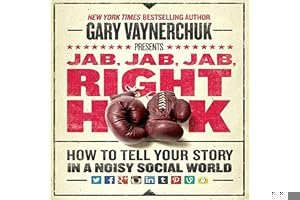
Jab, Jab, Jab, Right Hook: How to Tell Your Story in a Noisy Social World
The New York Times bestselling author and social media expert returns with hard-won advice on how to connect with customers and beat the competition by mastering social media marketing
When managers and marketers outline their social media strategies, they often plan for the "right hook"-their next highly anticipated sale or campaign that's going to put the competition out for the count. Even companies committed to jabbing-patiently engaging with customers to build the relationships so crucial to successful social media campaigns-still yearn to land the powerful, bruising swing that will knock out their opponent or their customer's resistance in one tooth-spritzing, killer blow. Right hooks, after all, convert traffic to sales. They easily show results and ROI. Except when they don't.
In the same passionate, street-wise style readers have come to expect, Gary Vaynerchuk is on a mission to improve marketers' right hooks by changing the way they fight to make their customers happy, and ultimately to compete. Thanks to the massive change and proliferation in social media platforms in the last four years, the winning combination of jabs and right hooks is different now. Communication is still key, but context matters more than ever. It's not just about developing high-quality content, but developing high-quality content perfectly adapted to specific social media platforms and mobile devices-content tailor-made for Facebook, YouTube, Instagram, Pinterest, Twitter, and Tumblr. A mash-up of the best elements of Crush It! and The Thank You Economy with a 2013 spin, here is a blueprint to social media marketing strategies that really works.
…
Recommended by Daymond John, Marvin Liao, Aaron Agius, and 35 others.
Marvin Liao
Partner/500 Startups
My list would be (besides the ones I mentioned in answer to the previous question) both business & Fiction/Sci-Fi and ones I personally found helpful to myself. The business books explain just exactly how business, work & investing are in reality & how to think properly & differentiate yourself. On the non-business side, a mix of History & classic fiction to understand people, philosophy to make sense of life and Science fiction to picture what the future could be like (not always utopian). [source]
Alex Circei
Question: What five books would you recommend to young people interested in your career path & why? Answer: Screw It, Let's Do It: Lessons In Life by Richard Branson Outliers: The Story of Success by Malcolm Gladwell Start With Why: How Great Leaders Inspire Everyone To Take Action by Simon Sinek The Hard Thing About Hard Things: Building a Business When There Are No Easy Answers by Ben Horowitz Rich Dad Poor Dad: What the Rich Teach Their Kids About Money That the Poor and Middle Class Do Not! by Robert T. Kiyosaki [source]
Auston Bunsen
I’ve got a few, one book that really impacted me early on as someone coming from a middle-class family was “Rich dad, Poor dad”. [source]
Cover unavailable
15
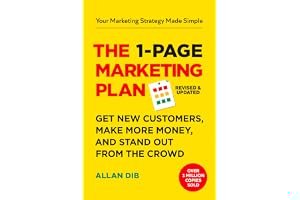
The 1-Page Marketing Plan: Get New Customers, Make More Money, And Stand out From The Crowd
To build a successful business, you need to stop doing random acts of marketing and start following a reliable plan for rapid business growth. Traditionally, creating a marketing plan has been a difficult and time-consuming process, which is why it often doesn't get done.
In The 1-Page Marketing Plan, serial entrepreneur and rebellious marketer Allan Dib reveals a marketing implementation breakthrough that makes creating a marketing plan simple and fast. It's literally a single page, divided up into nine squares. With it you'll be able to map out your own sophisticated marketing plan and go from zero to marketing hero.
Whether you're just starting out or are an experienced entrepreneur, The 1-Page Marketing Plan is the easiest and fastest way to create a marketing plan that will propel your business growth.
In this groundbreaking new book you'll discover: • How to get new customers, clients, or patients and how make more profit from existing ones. • Why “big business” style marketing could kill your business and strategies that actually work for small and medium-sized businesses. • How to close sales without being pushy, needy, or obnoxious while turning the tables and having prospects begging you to take their money. • A simple step-by-step process for creating your own personalized marketing plan that is literally one page. Simply follow along and fill in each of the nine squares that make up your own 1-Page Marketing Plan. • How to annihilate competitors and make yourself the only logical choice. • How to get amazing results on a small budget using the secrets of direct response marketing. • How to charge high prices for your products and services and have customers actually thank you for it.
A candid and indispensable primer on all aspects of advertising from the man Time has called "the most sought after wizard in the business". 223 photos.
I thought I might put my money where my mouth is. I keep whining that young people are not in touch with some essential books on advertising that have helped me shape the way I practise my trade today, but I never did anything about it. So I am starting here the ultimate books to read list. I will add to it as I get suggestions and as more good books get written. [source]
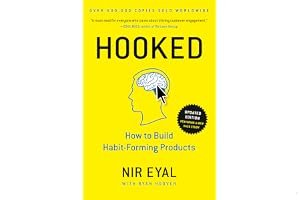
How do successful companies create products people can’t put down?
Why do some products capture widespread attention while others flop? What makes us engage with certain products out of sheer habit? Is there a pattern underlying how technologies hook us? Nir Eyal answers these questions (and many more) by explaining the Hook Model—a four-step process embedded into the products of many successful companies to subtly encourage customer behavior. Through consecutive “hook cycles,” these products reach their ultimate goal of bringing users back again and again without depending on costly advertising or aggressive messaging.
Hooked is based on Eyal’s years of research, consulting, and practical experience. He wrote the book he wished had been available to him as a start-up founder—not abstract theory, but a how-to guide for building better products. Hooked is written for product managers, designers, marketers, start-up founders, and anyone who seeks to understand how products influence our behavior.
Eyal provides readers with:
• Practical insights to create user habits that stick. • Actionable steps for building products people love.
• Fascinating examples from the iPhone to Twitter, Pinterest to the Bible App, and many other habit-forming products.
…
Recommended by Andrew Chen, Nir Eyal, Ken Norton, and 41 others.
Matt Mullenweg
Founder & CEO/Automattic
Hooked gives you the blueprint for the next generation of products. Read Hooked or the company that replaces you will. [source]
Boris Veldhuijzen van Zanten
The book everyone in Silicon Valley is talking about. [source]
Chandini Jain
One of the five books Chandini would you recommend to young people interested in her career path. [source]
Cover unavailable
18
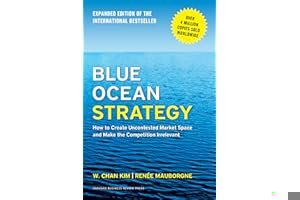
Blue Ocean Strategy: How To Create Uncontested Market Space And Make The Competition Irrelevant
Winning by not competing! This international best seller upends traditional thinking with principles and tools to make the competition irrelevant. In an audiobook that challenges everything you thought you knew, W. Chan Kim and Renee Mauborgne assert that tomorrow's leading companies will succeed, not by battling their rivals for market share in the bloody "red ocean" of a shrinking profit pool, but by creating "blue oceans" of untapped new market spaces ripe for growth.
Based on a study of 150 strategic moves, spanning more than 100 years and 30 industries, they provide a systematic approach that every company can use to render rivals obsolete and unleash new demand:
Reconstruct market boundaries Focus on the big picture Reach beyond existing demand Get the strategic sequence right Overcome organizational hurdles Build execution into strategy
Recommended by Daymond John, Steve Blank, Danielle Morrill, and 13 others.
Daymond John
Founder/FUBU
There are the normal ones that everybody loves. There would be "Rich Dad Poor Dad," "Who Moved My Cheese?;" I love all the Dale Carnegie books; "The One Minute Manager." I love newer ones like "Blue Ocean Strategy" and all the "Freaknomics" books. [source]
I don’t remember who originally told me to read Blue Ocean Strategy but I’m glad they did because this simple recommendation would substantially shape the course of my life and my career. [source]
Ayush Kumar
One doesn't necessarily need to take from others to fill their glass & you can always build a successful business in any industry. [source]
Cover unavailable
19
Predictably Irrational: The Hidden Forces That Shape Our Decisions
Why do our headaches persist after taking a one-cent aspirin but disappear when we take a 50-cent aspirin?
Why does recalling the Ten Commandments reduce our tendency to lie, even when we couldn't possibly be caught?
Why do we splurge on a lavish meal but cut coupons to save twenty-five cents on a can of soup?
Why do we go back for second helpings at the unlimited buffet, even when our stomachs are already full?
And how did we ever start spending $4.15 on a cup of coffee when, just a few years ago, we used to pay less than a dollar?
When it comes to making decisions in our lives, we think we're in control. We think we're making smart, rational choices. But are we?
In a series of illuminating, often surprising experiments, MIT behavioral economist Dan Ariely refutes the common assumption that we behave in fundamentally rational ways. Blending everyday experience with groundbreaking research, Ariely explains how expectations, emotions, social norms, and other invisible, seemingly illogical forces skew our reasoning abilities.
Not only do we make astonishingly simple mistakes every day, but we make the same "types" of mistakes, Ariely discovers. We consistently overpay, underestimate, and procrastinate. We fail to understand the profound effects of our emotions on what we want, and we overvalue what we already own. Yet these misguided behaviors are neither random nor senseless. They're systematic and predictable--making us "predictably" irrational.
From drinking coffee to losing weight, from buying a car to choosing a romantic partner, Ariely explains how to break through these systematic patterns of thought to make better decisions. "Predictably Irrational" will change the way we interact with the world--one small decision at a time.
…
Recommended by Max Levchin, Vinod Khosla, Vinod Khosla, and 22 others.
Max Levchin
Co-founder/PayPal, CEO/Affirm, Investor
Max Levchin recommended this book as an answer to "What business books would you advise young entrepreneurs read?" [source]
Andra Zaharia
'While I was thinking of the best books to add to this short list, I realized that not even half of them are directly related to digital marketing. This is because I believe that the best marketers are people who understand human nature deeply and aim to bring out the best in it. Call me naive, but that’s how I see it. If I were to want to pursue a career in marketing, I’d read … Predictably Irrational. [source]
Chris Goward
Here are some of the books that have been very impactful for me, or taught me a new way of thinking: … Predictably Irrational. [source]
A tribe is any group of people, large or small, who are connected to one another, a leader, and an idea. For millions of years, humans have been seeking out tribes, be they religious, ethnic, economic, political, or even musical (think of the Deadheads). It's our nature.
Now the Internet has eliminated the barriers of geography, cost, and time. All those blogs and social networking sites are helping existing tribes get bigger. But more important, they're enabling countless new tribes to be born—groups of ten or ten thousand or ten million who care about their iPhones, or a political campaign, or a new way to fight global warming. And so the key question: Who is going to lead us?
The Web can do amazing things, but it can't provide leadership. That still has to come from individuals—people just like you who have passion about something. The explosion in tribes means that anyone who wants to make a difference now has the tools at her fingertips.
If you think leadership is for other people, think again—leaders come in surprising packages. Consider Joel Spolsky and his international tribe of scary-smart software engineers. Or Gary Vaynerhuck, a wine expert with a devoted following of enthusiasts. Chris Sharma leads a tribe of rock climbers up impossible cliff faces, while Mich Mathews, a VP at Microsoft, runs her internal tribe of marketers from her cube in Seattle. All they have in common is the desire to change things, the ability to connect a tribe, and the willingness to lead.
If you ignore this opportunity, you risk turning into a "sheepwalker"—someone who fights to protect the status quo at all costs, never asking if obedience is doing you (or your organization) any good. Sheepwalkers don't do very well these days.
Tribes will make you think (really think) about the opportunities in leading your fellow employees, customers, investors, believers, hobbyists, or readers. . . . It's not easy, but it's easier than you think.
…
Recommended by Andrew Youderian, Bogdana Butnar, Michael Herrmann, and 2 others.
Andrew Youderian
The book "Tribes" by Seth Godin has been helpful as I've learned and studied how to best lead a Community. [source]
Bogdana Butnar
I thought I might put my money where my mouth is. I keep whining that young people are not in touch with some essential books on advertising that have helped me shape the way I practise my trade today, but I never did anything about it. So I am starting here the ultimate books to read list. I will add to it as I get suggestions and as more good books get written. [source]
Michael Herrmann
Another good book for today. The author argues that every product/service appeals to a "Tribe" of like-minded people. As businesspeople it's important we understand their dynamics. [source]
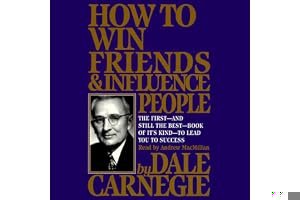
You can go after the job you want—and get it! You can take the job you have—and improve it! You can take any situation—and make it work for you!
Dale Carnegie’s rock-solid, time-tested advice has carried countless people up the ladder of success in their business and personal lives. One of the most groundbreaking and timeless bestsellers of all time, How to Win Friends & Influence People will teach you:
-Six ways to make people like you -Twelve ways to win people to your way of thinking -Nine ways to change people without arousing resentment
And much more! Achieve your maximum potential—a must-read for the twenty-first century with more than 15 million copies sold!
…
Recommended by Dave Ramsey, Daymond John, Dustin Moskovitz, and 58 others.
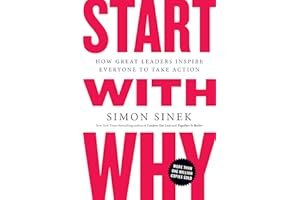
Why are some people and organizations more innovative, more influential, and more profitable than others? Why do some command greater loyalty from customers and employees alike? Even among the successful, why are so few able to repeat their success over and over?
People like Martin Luther King Jr., Steve Jobs, and the Wright Brothers might have little in common, but they all started with why. It was their natural ability to start with why that enabled them to inspire those around them and to achieve remarkable things.
In studying the leaders who've had the greatest influence in the world, Simon Sinek discovered that they all think, act, and communicate in the exact same way—and it's the complete opposite of what everyone else does. Sinek calls this powerful idea The Golden Circle, and it provides a framework upon which organizations can be built, movements can be lead, and people can be inspired. And it all starts with WHY.
Any organization can explain what it does; some can explain how they do it; but very few can clearly articulate why. WHY is not money or profit—those are always results. WHY does your organization exist? WHY does it do the things it does? WHY do customers really buy from one company or another? WHY are people loyal to some leaders, but not others?
Starting with WHY works in big business and small business, in the nonprofit world and in politics. Those who start with WHY never manipulate, they inspire. And the people who follow them don't do so because they have to; they follow because they want to.
Drawing on a wide range of real-life stories, Sinek weaves together a clear vision of what it truly takes to lead and inspire. This book is for anyone who wants to inspire others or who wants to find someone to inspire them.
Today is World Book Day, a wonderful opportunity to address this #ChallengeRichard sent in by Mike Gonzalez of New Jersey: Make a list of your top 65 books to read in a lifetime. [source]
The basis of this book is so important to anyone looking to increase their influence, profits or impact. People won't truly buy into a product, service, movement, or idea until they understand the WHY behind it. When you start with the why, everything else falls into place. This book is so impactful, I consider it required reading. [source]
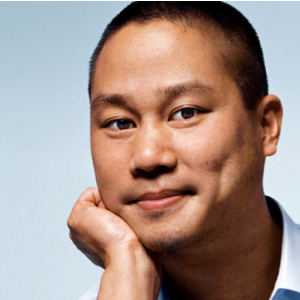
Tony Hsieh
CEO/Zappos.com
Over the years he’s recommended well over 20 business books — including his own, the 2010 bestseller Delivering Happiness and you can always find what he’s currently reading atop his cluttered desk. Start with Why is amogst those titles. [source]
Major New York Times bestseller Winner of the National Academy of Sciences Best Book Award in 2012 Selected by the New York Times Book Review as one of the best books of 2011 A Globe and Mail Best Books of the Year 2011 Title One of The Economist's 2011 Books of the Year One of The Wall Street Journal's Best Nonfiction Books of the Year 2011 2013 Presidential Medal of Freedom Recipient
In the international bestseller, Thinking, Fast and Slow, Daniel Kahneman, the renowned psychologist and winner of the Nobel Prize in Economics, takes us on a groundbreaking tour of the mind and explains the two systems that drive the way we think. System 1 is fast, intuitive, and emotional; System 2 is slower, more deliberative, and more logical. The impact of overconfidence on corporate strategies, the difficulties of predicting what will make us happy in the future, the profound effect of cognitive biases on everything from playing the stock market to planning our next vacation—each of these can be understood only by knowing how the two systems shape our judgments and decisions. Engaging the reader in a lively conversation about how we think, Kahneman reveals where we can and cannot trust our intuitions and how we can tap into the benefits of slow thinking. He offers practical and enlightening insights into how choices are made in both our business and our personal lives—and how we can use different techniques to guard against the mental glitches that often get us into trouble. Winner of the National Academy of Sciences Best Book Award and the Los Angeles Times Book Prize and selected by The New York Times Book Review as one of the ten best books of 2011, Thinking, Fast and Slow is destined to be a classic.
A few months ago, Mr. Obama read “Thinking, Fast and Slow,” by Daniel Kahneman, about how people make decisions — quick, instinctive thinking versus slower, contemplative deliberation. For Mr. Obama, a deliberator in an instinctive business, this may be as instructive as any political science text. [source]
Captivating dive into human decision making, marred by inclusion of several/many? psychology studies that fail to replicate. Will stand as a cautionary tale? [source]
Cover unavailable
24
Guerrilla Marketing: Easy and Inexpensive Strategies for Making Big Profits from Your Small Business
When Guerrilla Marketing was first published in 1983, Jay Levinson revolutionized marketing strategies for the small-business owner with his take-no-prisoners approach to finding clients. Based on hundreds of solid ideas that really work, Levinson’s philosophy has given birth to a new way of learning about market share and how to gain it. In this completely updated and expanded fourth edition, Levinson offers a new arsenal of weaponry for small-business success including
* strategies for marketing on the Internet (explaining when and precisely how to use it)
* tips for using new technology, such as podcasting and automated marketing
* programs for targeting prospects and cultivating repeat and referral business
* management lessons in the age of telecommuting and freelance employees
Guerrilla Marketing is the entrepreneur’s marketing bible -- and the book every small-business owner should have on his or her shelf.
…
Recommended by Drew Houston, Bogdana Butnar, Pat Walls, and 1 others.
Drew Houston
CEO/Dropbox
About how do you get attention and users for your product if you have no money? The tactic of putting a video on Hacker News or creating a viral video, that was a seed that was planted by reading this book. [source]
Bogdana Butnar
I thought I might put my money where my mouth is. I keep whining that young people are not in touch with some essential books on advertising that have helped me shape the way I practise my trade today, but I never did anything about it. So I am starting here the ultimate books to read list. I will add to it as I get suggestions and as more good books get written. [source]
Pat Walls
One of the best marketing books out there, and looking back - it was way before it's time. [source]
"This is what the future of work (and the world) looks like. Actually, it's already happening around you." — Tony Hsieh, CEO, Zappos.com
In bestsellers such as Purple Cow and Tribes, Seth Godin taught readers how to make remarkable products and spread powerful ideas. But this book is about you—your choices, your future, and your potential to make a huge difference in whatever field you choose.
There used to be two teams in every workplace: management and labor. Now there's a third team: the linchpins. These people figure out what to do when there's no rule book. They delight and challenge their customers and peers. They love their work, pour their best selves into it, and turn each day into a kind of art.
Linchpins are the essential building blocks of great organizations. They may not be famous but they're indispensable. And in today's world, they get the best jobs and the most freedom.
As Godin writes, "Every day I meet people who have so much to give but have been bullied enough or frightened enough to hold it back. It's time to stop complying with the system and draw your own map. You have brilliance in you, your contribution is essential, and the art you create is precious. Only you can do it, and you must."
…
Recommended by Andra Zaharia, Ann Handley, Armina Sirbu, and 6 others.
Andra Zaharia
While I was thinking of the best books to add to this short list, I realized that not even half of them are directly related to digital marketing. This is because I believe that the best marketers are people who understand human nature deeply and aim to bring out the best in it. Call me naive, but that’s how I see it. If I were to want to pursue a career in marketing, I’d read anything by Seth Godin (Linchpin in particular). [source]
Armina Sirbu
My favorite book is Linchpin by Seth Godin. I think it's business, but it can very well be non-business as well because it's so much about life. I re-read fragments from time to time to get a jump-start when I need it. [source]
Bernard Tan
Now that I look at the books listed, they seem to carry an existential theme. I guess I like to understand humanity and human behaviour ultimately to better understand myself. I find reading a means to connect with people who may have lived before my time, or in a distant country, that I may never have had the chance to connect with in real life. As three-dimensional humans, we are all made up of so many faces and emotional layers that we find it hard to dissect them all, and when we find writers who can explain these thought processes in a way that’s tangible and digestible, there’s this incredibly comforting eureka moment of feeling understood. [source]
Cover unavailable
26
The Lean Startup: How Today's Entrepreneurs Use Continuous Innovation to Create Radically Successful Businesses
Most startups fail. But many of those failures are preventable. The Lean Startup is a new approach being adopted across the globe, changing the way companies are built and new products are launched.
Eric Ries defines a startup as an organization dedicated to creating something new under conditions of extreme uncertainty. This is just as true for one person in a garage or a group of seasoned professionals in a Fortune 500 boardroom. What they have in common is a mission to penetrate that fog of uncertainty to discover a successful path to a sustainable business.
The Lean Startup approach fosters companies that are both more capital efficient and that leverage human creativity more effectively. Inspired by lessons from lean manufacturing, it relies on "validated learning," rapid scientific experimentation, as well as a number of counter-intuitive practices that shorten product development cycles, measure actual progress without resorting to vanity metrics, and learn what customers really want. It enables a company to shift directions with agility, altering plans inch by inch, minute by minute.
Rather than wasting time creating elaborate business plans, The Lean Startup offers entrepreneurs - in companies of all sizes - a way to test their vision continuously, to adapt and adjust before it's too late. Ries provides a scientific approach to creating and managing successful startups in a age when companies need to innovate more than ever.
At Asana, we've been lucky to benefit from the author's advice firsthand; this book will enable him to help many more entrepreneurs answer the tough questions about their business. [source]
Cover unavailable
27
Growth Hacker Marketing: A Primer on the Future of PR, Marketing, and Advertising
Ryan Holiday
4.4
A Primer on the Future of PR, Marketing and Advertising
A new generation of megabrands like Facebook, Dropbox, Airbnb, and Twitter haven’t spent a dime on traditional marketing. No press releases, no TV commercials, no billboards. Instead, they rely on a new strategy—growth hacking—to reach many more people despite modest marketing budgets. Growth hackers have thrown out the old playbook and replaced it with tools that are testable, trackable, and scalable. They believe that products and businesses should be modified repeatedly until they’re primed to generate explosive reactions. Bestselling author Ryan Holiday, the acclaimed marketing guru for American Apparel and many bestselling authors and multiplatinum musicians, explains the new rules and provides valuable examples and case studies for aspiring growth hackers. Whether you work for a tiny start-up or a Fortune 500 giant, if you’re responsible for building awareness and buzz for a product or service, this is your road map.
Holiday is part Machiavelli, part Ogilvy, and all results... This whiz kid is the secret weapon you've never heard of. [source]
Alex Korchinski
FInally, a crystallization and explanation of growth hacking in easy-to-understand terms-and better, real strategies and tactics for application. [source]
Cover unavailable
28
Crush It!: Why Now Is the Time to Cash In on Your Passion
Do you have a hobby you wish you could indulge in all day? An obsession that keeps you up at night? Now is the perfect time to take that passion and make a living doing what you love. In Crush It! Why NOW Is the Time to Cash In on Your Passion, Gary Vaynerchuk shows you how to use the power of the Internet to turn your real interests into real businesses. Gary spent years building his family business from a local wine shop into a national industry leader. Then one day he turned on a video camera, and by using the secrets revealed here, transformed his entire life and earning potential by building his personal brand. By the end of this book, readers will have learned how to harness the power of the Internet to make their entrepreneurial dreams come true. Step by step, Crush It! is the ultimate driver’s manual for modern business.
…
Recommended by Eric Schmidt, Tony Hsieh, Ryan Hoover, and 8 others.
Tony Hsieh
CEO/Zappos.com
Gary Vaynerchuk is one of those entrepreneurs who has discovered the secret to combining passion with business. He is always an inspiration and always entertaining. You owe it to yourself to read this book! [source]
For anyone interested in my career path, I’d recommend books in various genres. On a real practical level, I’d certainly recommend reading any and all plant/mushroom/tree/ecology/nature books you can acquire. It’s even more helpful to read the books that pertain specifically to your ecosystem and bioregion. Additionally, I’d also recommend reading a plethora of business and marketing books — both old and new alike. Think And Grow Rich by Napoleon Hill, Crush It! by Gary Vaynerchuk, Influence: The Psychology of Persuasion by Robert Cialdini, and anything by Seth Godin would be my top recommendations. And of course, every book I mentioned in the previous answers are strongly recommended as well. [source]
From the author of the bestselling biographies of Benjamin Franklin and Albert Einstein, this is the exclusive, New York Times bestselling biography of Apple co-founder Steve Jobs.
Based on more than forty interviews with Jobs conducted over two years—as well as interviews with more than a hundred family members, friends, adversaries, competitors, and colleagues—Walter Isaacson has written a riveting story of the roller-coaster life and searingly intense personality of a creative entrepreneur whose passion for perfection and ferocious drive revolutionized six industries: personal computers, animated movies, music, phones, tablet computing, and digital publishing.
At a time when America is seeking ways to sustain its innovative edge, and when societies around the world are trying to build digital-age economies, Jobs stands as the ultimate icon of inventiveness and applied imagination. He knew that the best way to create value in the twenty-first century was to connect creativity with technology. He built a company where leaps of the imagination were combined with remarkable feats of engineering.
Although Jobs cooperated with this book, he asked for no control over what was written nor even the right to read it before it was published. He put nothing off-limits. He encouraged the people he knew to speak honestly. And Jobs speaks candidly, sometimes brutally so, about the people he worked with and competed against. His friends, foes, and colleagues provide an unvarnished view of the passions, perfectionism, obsessions, artistry, devilry, and compulsion for control that shaped his approach to business and the innovative products that resulted.
Driven by demons, Jobs could drive those around him to fury and despair. But his personality and products were interrelated, just as Apple’s hardware and software tended to be, as if part of an integrated system. His tale is instructive and cautionary, filled with lessons about innovation, character, leadership, and values.
For Chesky, a source may come in the form of a biography of a business hero such as Steve Jobs or Walt Disney. His primary book source on management technique is Andy Grove’s High Output Management. [source]
This book provides evidence-based answers to the key questions asked by marketers every day. Tackling issues such as how brands grow, how advertising really works, what price promotions really do & how loyalty programs really affect loyalty.
Cover unavailable
31
Zero to One: Notes on Startups, or How to Build the Future
If you want to build a better future, you must believe in secrets.
The great secret of our time is that there are still uncharted frontiers to explore and new inventions to create. In Zero to One, legendary entrepreneur and investor Peter Thiel shows how we can find singular ways to create those new things.
Thiel begins with the contrarian premise that we live in an age of technological stagnation, even if we’re too distracted by shiny mobile devices to notice. Information technology has improved rapidly, but there is no reason why progress should be limited to computers or Silicon Valley. Progress can be achieved in any industry or area of business. It comes from the most important skill that every leader must master: learning to think for yourself.
Doing what someone else already knows how to do takes the world from 1 to n, adding more of something familiar. But when you do something new, you go from 0 to 1. The next Bill Gates will not build an operating system. The next Larry Page or Sergey Brin won’t make a search engine. Tomorrow’s champions will not win by competing ruthlessly in today’s marketplace. They will escape competition altogether, because their businesses will be unique.
Zero to One presents at once an optimistic view of the future of progress in America and a new way of thinking about innovation: it starts by learning to ask the questions that lead you to find value in unexpected places.
If you are currently struggling with getting traffic to your website, or converting that traffic when it shows up, you may think you ve got a traffic or conversion problem. In Russell Brunson's experience, after working with thousands of businesses, he has found that s rarely the case. Low traffic and weak conversion numbers are just symptoms of a much greater problem, a problem that s a little harder to see (that s the bad news), but a lot easier to fix (that s the good news). DotComSecrets will give you the marketing funnels and the sales scripts you need to be able to turn on a flood of new leads into your business."
…
Recommended by Alvin Lindsay and 1 others.
Alvin Lindsay
CEO of ClickFunnels GIVES away his best 7 funnels! he just paid for your book (where do you want it shipped?) https://t.co/meFLMLNrb0 😃 https://t.co/97R3MPo3yd [source]
Cover unavailable
33
Trust Me, I'm Lying: Confessions of a Media Manipulator
Ryan Holiday
4.3
You've seen it all before. A malicious online rumor costs a company millions. A political sideshow derails the national news cycle and destroys a candidate. Some product or celebrity zooms from total obscurity to viral sensation. What you don't know is that someone is responsible for all this. Usually, someone like me.
I'm a media manipulator. In a world where blogs control and distort the news, my job is to control blogs--as much as any one person can. In today's culture...
1) Blogs like "Gawker," "Buzzfeed" and the "Huffington Post" drive the media agenda.
2) Bloggers are slaves to money, technology, and deadlines.
3) Manipulators wield these levers to shape everything you read, see and watch--online and off.
Why am I giving away these secrets? Because I'm tired of a world where blogs take indirect bribes, marketers help write the news, reckless journalists spread lies, and no one is accountable for any of it. I'm pulling back the curtain because I don't want anyone else to get blindsided.
I'm going to explain exactly how the media "really" works. What you choose to do with this information is up to you.
…
Recommended by Timothy Ferriss, Dov Charney, Tucker Max, and 12 others.
Ryan is part Machiavelli, part Ogilvy, and all results. From American Apparel to the quiet campaigns he's run but not taken credit for, this whiz kid is the secret weapon you've never heard of. [source]
Dov Charney
Founder/American Apparel
Behind my reputation as a marketing genius there is Ryan Holiday, whom I consult often and who has done more for my business than just about anyone. [source]
Tucker Max
Author/I Hope They Serve Beer in Hell
The strategies Ryan created to exploit blogs drove sales of millions of my books and made me an internationally known name. The reason I am standing here while other celebrities were destroyed or became parodies of themselves is because of his insider knowledge. [source]
Cover unavailable
34
The New Rules of Marketing and PR: How to Use Social Media, Online Video, Mobile Applications, Blogs, Newsjacking, and Viral Marketing to Reach Buyers Directly
David Meerman Scott
4.3
The international bestseller--now in a new edition When it comes to marketing, anything goes in the Digital Age, right? Well, not quite. While marketing and public relations tactics do seem to change overnight, every smart businessperson knows that it takes a lot more than the 'next big thing.'
The New Rules of Marketing & PR is an international bestseller with more than 375,000 copies sold in twenty-nine languages. In the latest edition of this pioneering guide to the future of marketing, you'll get a step-by-step action plan for leveraging the power of the latest approaches to generating attention for your idea or your business. You'll learn how get the right information to the right people at the right time--at a fraction of the cost of traditional advertising.
The Internet continues to change the way people communicate and interact with each other, and if you're struggling to keep up with what's trending in social media, online videos, apps, blogs, or more, your product or service is bound to get lost in the ether. In The New Rules of Marketing & PR, you'll get access to the tried-and-true rules that will keep you ahead of the curve when using the latest and greatest digital spaces to their fullest PR, marketing, and customer-communications potential. Keeping in mind that your audience is savvy and crunched for time, this essential guide shows you how to cut through the online clutter to ensure that your message gets seen and heard.
Serves as the ideal resource for entrepreneurs, business owners, marketers, PR professionals, and non-profit managers Offers a wealth of compelling case studies and real-world examples Includes information on new platforms including Facebook Live and Snapchat Shows both small and large organizations how to best use Web-based communication Finally, everything you need to speak directly to your audience and establish a personal link with those who make your business work is in one place.
…
Recommended by Ann Handley and Kyrylo Taranenko.
Kyrylo Taranenko
Make sure to pick up the revised edition. For my generation, most advice is pretty obvious (blogs are Social Media too - oh I didn’t know that already :D), but there are some interesting cases and thoughts on going viral. [source]
Cover unavailable
35
To Sell Is Human: The Surprising Truth About Moving Others
From the bestselling author of Drive and A Whole New Mind comes a surprising--and surprisingly useful--new book that explores the power of selling in our lives.
According to the U.S. Bureau of Labor Statistics, one in nine Americans works in sales. Every day more than fifteen million people earn their keep by persuading someone else to make a purchase.
But dig deeper and a startling truth emerges:
Yes, one in nine Americans works in sales. But sodo the other eight.
Whether we’re employees pitching colleagues on a new idea, entrepreneurs enticing funders to invest, or parents and teachers cajoling children to study, we spend our days trying to move others. Like it or not, we’re all in sales now.
To Sell Is Human offers a fresh look at the art and science of selling. As he did in Drive and A Whole New Mind, Daniel H. Pink draws on a rich trove of social science for his counterintuitive insights. He reveals the new ABCs of moving others (it's no longer "Always Be Closing"), explains why extraverts don't make the best salespeople, and shows how giving people an "off-ramp" for their actions can matter more than actually changing their minds.
Along the way, Pink describes the six successors to the elevator pitch, the three rules for understanding another's perspective, the five frames that can make your message clearer and more persuasive, and much more. The result is a perceptive and practical book--one that will change how you see the world and transform what you do at work, at school, and at home.
…
Recommended by Cat Williams-Treloar, Jeffrey Shaw, and Ola Olusoga.
Cat Williams-Treloar
Daniel Pink "To Sell is Human" - describes selling as a way to move and serve people along the journey. It's packed full of examples, science and experiments in an easily digestible form. [source]
Jeffrey Shaw
I’m asked all the time what books I suggest. These are the best of the best. Links to each book are here https://t.co/pJXWOeZtBu #marketing #entrepreneur https://t.co/1wCkqQw8GX [source]
Ola Olusoga
Like Charlie Munger once said: “I’ve long believed that a certain system - which almost any intelligent person can learn - works way better than the systems most people use to understand the world. What you need is a latticework of mental models in your head. And, with that system, things gradually fit together in a way that enhances cognition. Just as multiple factors shape every system, multiple mental models from a variety of disciplines are necessary to understand that system". You can read this book to start building a "latticework of mental models in your head". [source]
Cover unavailable
36
Good to Great: Why Some Companies Make the Leap... and Others Don't
To find the keys to greatness, Collins's 21-person research team read and coded 6,000 articles, generated more than 2,000 pages of interview transcripts and created 384 megabytes of computer data in a five-year project. The findings will surprise many readers and, quite frankly, upset others.
The Challenge Built to Last, the defining management study of the nineties, showed how great companies triumph over time and how long-term sustained performance can be engineered into the DNA of an enterprise from the very beginning.
But what about the company that is not born with great DNA? How can good companies, mediocre companies, even bad companies achieve enduring greatness?
The Study For years, this question preyed on the mind of Jim Collins. Are there companies that defy gravity and convert long-term mediocrity or worse into long-term superiority? And if so, what are the universal distinguishing characteristics that cause a company to go from good to great?
The Standards Using tough benchmarks, Collins and his research team identified a set of elite companies that made the leap to great results and sustained those results for at least fifteen years. How great? After the leap, the good-to-great companies generated cumulative stock returns that beat the general stock market by an average of seven times in fifteen years, better than twice the results delivered by a composite index of the world's greatest companies, including Coca-Cola, Intel, General Electric, and Merck.
The Comparisons The research team contrasted the good-to-great companies with a carefully selected set of comparison companies that failed to make the leap from good to great. What was different? Why did one set of companies become truly great performers while the other set remained only good?
The Findings The findings of the Good to Great study will surprise many readers and shed light on virtually every area of management strategy and practice. The findings include: Level 5 Leaders: The research team was shocked to discover the type of leadership required to achieve greatness.
The Hedgehog Concept (Simplicity within the Three Circles): To go from good to great requires transcending the curse of competence.
A Culture of Discipline: When you combine a culture of discipline with an ethic of entrepreneurship, you get the magical alchemy of great results. Technology Accelerators: Good-to-great companies think differently about the role of technology.
The Flywheel and the Doom Loop: Those who launch radical change programs and wrenching restructurings will almost certainly fail to make the leap.
"Collins briefed Amazon executives on his seminal management book before its publication. Companies must confront the brutal facts of their business, find out what they are uniquely good at, and master their fly wheel, in which each part of the business reinforces and accelerates the other parts," Stone writes. [source]
Every day, we make decisions on topics ranging from personal investments to schools for our children to the meals we eat to the causes we champion. Unfortunately, we often choose poorly. The reason, the authors explain, is that, being human, we all are susceptible to various biases that can lead us to blunder. Our mistakes make us poorer and less healthy; we often make bad decisions involving education, personal finance, health care, mortgages and credit cards, the family, and even the planet itself.
Thaler and Sunstein invite us to enter an alternative world, one that takes our humanness as a given. They show that by knowing how people think, we can design choice environments that make it easier for people to choose what is best for themselves, their families, and their society. Using colorful examples from the most important aspects of life, Thaler and Sunstein demonstrate how thoughtful “choice architecture” can be established to nudge us in beneficial directions without restricting freedom of choice. Nudge offers a unique new take—from neither the left nor the right—on many hot-button issues, for individuals and governments alike. This is one of the most engaging and provocative books to come along in many years.
Nudge is a very important book. One of the reasons Nudge is so important is because it’s taking these ideas and applying them to the policy domain. Here are the mistakes we make. Here are the ways marketers are trying to influence us. Here’s the way we might be able to fight back. If policymakers understood these principles, what could they do? The other important thing about the book is that it describes, in detail, small interventions. It’s basically a book about cheap persuasion. [source]
This might feel like a weird book to include, but I think it presents another side of strategy that is too often forgotten. It’s not always about bold actors and strategic thrusts. Sometimes strategy is about subtle influence. Sometimes it is framing and small tweaks that change behavior. We can have big aims, but get there with little moves. This book has excellent examples of that kind of thinking and how it is changing politics, government and business. My favorite example is about the bumblebee that they started putting on urinals–which drastically reduced the amount of spray and spillage because it changed where men aimed when they peed. It’s not exactly the coolest strategy but it solved a problem. So we can learn from it. [source]
Cover unavailable
38
Buyology: Truth and Lies About Why We Buy and the New Science of Desire
Martin Lindstrom
4.3
How much do we know about why we buy? What truly influences our decisions in today’s message-cluttered world? An eye-grabbing advertisement, a catchy slogan, an infectious jingle? Or do our buying decisions take place below the surface, so deep within our subconscious minds, we’re barely aware of them?
In BUYOLOGY, Lindstrom presents the astonishing findings from his groundbreaking, three-year, seven-million-dollar neuromarketing study, a cutting-edge experiment that peered inside the brains of 2,000 volunteers from all around the world as they encountered various ads, logos, commercials, brands, and products. His startling results shatter much of what we have long believed about what seduces our interest and drives us to buy. Among his finding:
Gruesome health warnings on cigarette packages not only fail to discourage smoking, they actually make smokers want to light up.
Despite government bans, subliminal advertising still surrounds us – from bars to highway billboards to supermarket shelves.
"Cool” brands, like iPods trigger our mating instincts.
Other senses – smell, touch, and sound - are so powerful, they physically arouse us when we see a product.
Sex doesn't sell. In many cases,people in skimpy clothing and suggestive poses not only fail to persuade us to buy products - they often turn us away .
Companies routinetly copy fromthe world ofreligion and create rituals – like drinking a Corona with a lime – to capture our hard-earned dollars.
Filled with entertaining inside stories about how we respond to such well-known brands as Marlboro, Nokia, Calvin Klein, Ford, and American Idol, BUYOLOGY is a fascinating and shocking journey into the mind of today’s consumer that will captivate anyone who’s been seduced – or turned off – by marketers’ relentless attempts to win our loyalty, our money, and our minds. Includes a foreword by Paco Underhill.
This is not a book just for copywriters and other advertising experts but a book for every business owner, marketing expert or anyone who needs to increase sales.
The reason why is because it deals with how to channel the forces in the marketplace which control sales.
Put simply, Gene's book addresses the universal problem of all copywriting: How to write a headline — and an ad that follows it — that will open up a whole new market.
In this stunning new book, Malcolm Gladwell takes us on an intellectual journey through the world of "outliers"--the best and the brightest, the most famous and the most successful. He asks the question: what makes high-achievers different?
His answer is that we pay too much attention to what successful people are like, and too little attention to where they are from: that is, their culture, their family, their generation, and the idiosyncratic experiences of their upbringing. Along the way he explains the secrets of software billionaires, what it takes to be a great soccer player, why Asians are good at math, and what made the Beatles the greatest rock band.
Gladwell is not the first person to come up with the 10,000 hour rule. Nor is he the first person to document what it takes to become the best in the world at something. But his stories are so great as he explains these deep concepts. How did the Beatles become the best? Why are professional hockey players born in January, February and March? And so on. [source]
Alex Circei
Question: What five books would you recommend to young people interested in your career path & why? Answer: Screw It, Let's Do It: Lessons In Life by Richard Branson Outliers: The Story of Success by Malcolm Gladwell Start With Why: How Great Leaders Inspire Everyone To Take Action by Simon Sinek The Hard Thing About Hard Things: Building a Business When There Are No Easy Answers by Ben Horowitz Rich Dad Poor Dad: What the Rich Teach Their Kids About Money That the Poor and Middle Class Do Not! by Robert T. Kiyosaki [source]
Cover unavailable
41
Hacking Growth: How Today's Fastest-Growing Companies Drive Breakout Success
The definitive playbook by the pioneers of Growth Hacking, one of the hottest business methodologies in Silicon Valley and beyond.
It seems hard to believe today, but there was a time when Airbnb was the best-kept secret of travel hackers and couch surfers, Pinterest was a niche web site frequented only by bakers and crafters, LinkedIn was an exclusive network for C-suite executives and top-level recruiters, Facebook was MySpace's sorry step-brother, and Uber was a scrappy upstart that didn't stand a chance against the Goliath that was New York City Yellow Cabs.
So how did these companies grow from these humble beginnings into the powerhouses they are today? Contrary to popular belief, they didn't explode to massive worldwide popularity simply by building a great product then crossing their fingers and hoping it would catch on. There was a studied, carefully implemented methodology behind these companies' extraordinary rise. That methodology is called Growth Hacking, and it's practitioners include not just today's hottest start-ups, but also companies like IBM, Walmart, and Microsoft as well as the millions of entrepreneurs, marketers, managers and executives who make up the community of GrowthHackers.com.
Think of the Growth Hacking methodology as doing for market-share growth what Lean Start-Up did for product development, and Scrum did for productivity. It involves cross-functional teams and rapid-tempo testing and iteration that focuses customers attaining them, retaining them, engaging them, and motivating them to come back and buy more. An accessible and practical toolkit that teams and companies in all industries can use to increase their customer base and market share, this book walks readers through the process of creating and executing their own custom-made growth hacking strategy. It is a must read for any marketer, entrepreneur, innovator or manger looking to replace wasteful big bets and "spaghetti-on-the-wall" approaches with more consistent, replicable, cost-effective, and data-driven results.
…
Recommended by Nir Eyal, Eric Ries, Annabell Satterfield, and 6 others.
Nir Eyal
Author/Hooked
It used to be that designers and engineers were responsible for developing new products, data teams were responsible for number-crunching reports, and marketers were responsible for acquiring and monetizing as many customers as possible. But today’s companies can’t afford to be slowed down by organizational silos. Here, growth-hacking pioneers Ellis and Brown show how to break down those traditional barriers and marry powerful data analysis, technical know-how, and marketing savvy to quickly devise and test ways to fuel breakout growth. [source]
In an increasingly erratic business landscape where new competition can emerge overnight, customers’ loyalties can shift unexpectedly, and markets are constantly being disrupted, finding growth solutions fast is crucial for survival. Hacking Growth provides a compelling answer to this urgent need for speed, offering companies a methodology for finding and optimizing new strategies to increase their market share and quickly. [source]
Annabell Satterfield
Hacking Growth is the definitive guide to building authentic, sustainable, compounding growth for your company. If you want to know how proven growth practitioners at fast-growing companies do what they do-- pick up this book. [source]
Cover unavailable
42
Selling the Invisible: A Field Guide to Modern Marketing
Harry Beckwith
4.2
A treasury of hundreds of quick, practical, and easy-to-read strategies - few are more than a page long - Selling the Invisible will open your eyes to new ideas in this crucial branch of marketing including why focus groups, value-price positioning, discount pricing, and being the best usually fail; the critical emotion that most influences your prospects - and how to deal with it; the vital role of vividness, focus, "anchors, " and stereotypes; the importance of Halo, Cocktail Party, and Lake Wobegon Effects; marketing lessons from black holes, grocery lists, the Hearsay Rule, and the fame of Pikes Peak; dozens of proven yet consistently over-looked ideas for research, presentations, publicity, advertising, and client retention...and much more.
…
Recommended by Brian Burkhart, Drew McLellan, and Shep Hyken.
Brian Burkhart
I love this book. Everyone is a salesperson in some regard. You may not have a product to sell, but you certainly have yourself, your ideas, and your value to sell. Convincing people you, your principles, and your thoughts matter is a never-ending project. In Beckwith’s book—which is about selling services versus widgets—this theory definitely holds up. He also offers up a few profound thoughts on how people are wired. [source]
Drew McLellan
Question: What five books would you recommend to young people interested in your career path & why? Answer: Radical Leap by Steve Farber Becoming a Category of One by Joe Calloway Selling the Invisible by Harry Beckwith Killing Marketing by Joe Pulizzi and Robert Rose Waiting for your Cat to Bark by Bryan and Jeffrey Eisenberg The Power of Moments by Chip and Dan Heath [source]
Cover unavailable
43
The Power of Habit: Why We Do What We Do in Life and Business
A young woman walks into a laboratory. Over the past two years, she has transformed almost every aspect of her life. She has quit smoking, run a marathon, and been promoted at work. The patterns inside her brain, neurologists discover, have fundamentally changed.
Marketers at Procter & Gamble study videos of people making their beds. They are desperately trying to figure out how to sell a new product called Febreze, on track to be one of the biggest flops in company history. Suddenly, one of them detects a nearly imperceptible pattern—and with a slight shift in advertising, Febreze goes on to earn a billion dollars a year.
An untested CEO takes over one of the largest companies in America. His first order of business is attacking a single pattern among his employees—how they approach worker safety—and soon the firm, Alcoa, becomes the top performer in the Dow Jones.
What do all these people have in common? They achieved success by focusing on the patterns that shape every aspect of our lives.
They succeeded by transforming habits.
In The Power of Habit, award-winning New York Times business reporter Charles Duhigg takes us to the thrilling edge of scientific discoveries that explain why habits exist and how they can be changed. With penetrating intelligence and an ability to distill vast amounts of information into engrossing narratives, Duhigg brings to life a whole new understanding of human nature and its potential for transformation.
Along the way we learn why some people and companies struggle to change, despite years of trying, while others seem to remake themselves overnight. We visit laboratories where neuroscientists explore how habits work and where, exactly, they reside in our brains. We discover how the right habits were crucial to the success of Olympic swimmer Michael Phelps, Starbucks CEO Howard Schultz, and civil-rights hero Martin Luther King, Jr. We go inside Procter & Gamble, Target superstores, Rick Warren’s Saddleback Church, NFL locker rooms, and the nation’s largest hospitals and see how implementing so-called keystone habits can earn billions and mean the difference between failure and success, life and death.
At its core, The Power of Habit contains an exhilarating argument: The key to exercising regularly, losing weight, raising exceptional children, becoming more productive, building revolutionary companies and social movements, and achieving success is understanding how habits work.
Habits aren’t destiny. As Charles Duhigg shows, by harnessing this new science, we can transform our businesses, our communities, and our lives.
…
Recommended by Naval Ravikant, Blake Irving, Alden Mills, and 15 others.
I also recently finished The Power of Habit, or close to finish as I get. That one was interesting, not because of its content necessarily, but because it’s good for me to always keep on top of mind how powerful my habits are. … I think learning how to break habits is a very important meta-skill that can serve you better in life than almost anything else. Although you can read tons of books on it, the reality is you’re never going to learn how to break bad habits until you just break them. [source]
Blake Irving
CEO/GoDaddy
You know, there's a book called The Power of Habit by Charles Duhigg. Simple read book about just how to build positive habits that can be I think I what I'd call you know whether in your personal life or whether in your business life to help you build you know, have a loop that can build your success and that's one I mean there are so many great books out there. [source]
Alden Mills
More recent books that have had a significant impact on me are The Power of Habit and The Diamond Cutter. Both represent different forces for me – the former helps me tactically with making incremental improvements in my life. [source]
In this candid and riveting memoir, for the first time ever, Nike founder and CEO Phil Knight shares the inside story of the company’s early days as an intrepid start-up and its evolution into one of the world’s most iconic, game-changing, and profitable brands.
In 1962, fresh out of business school, Phil Knight borrowed $50 from his father and created a company with a simple mission: import high-quality, low-cost athletic shoes from Japan. Selling the shoes from the trunk of his lime green Plymouth Valiant, Knight grossed $8,000 his first year. Today, Nike’s annual sales top $30 billion. In an age of startups, Nike is the ne plus ultra of all startups, and the swoosh has become a revolutionary, globe-spanning icon, one of the most ubiquitous and recognizable symbols in the world today.
But Knight, the man behind the swoosh, has always remained a mystery. Now, for the first time, in a memoir that is candid, humble, gutsy, and wry, he tells his story, beginning with his crossroads moment. At 24, after backpacking around the world, he decided to take the unconventional path, to start his own business—a business that would be dynamic, different.
Knight details the many risks and daunting setbacks that stood between him and his dream—along with his early triumphs. Above all, he recalls the formative relationships with his first partners and employees, a ragtag group of misfits and seekers who became a tight-knit band of brothers. Together, harnessing the transcendent power of a shared mission, and a deep belief in the spirit of sport, they built a brand that changed everything.
This memoir, by the co-founder of Nike, is a refreshingly honest reminder of what the path to business success really looks like: messy, precarious, and riddled with mistakes. I’ve met Knight a few times over the years. He’s super nice, but he’s also quiet and difficult to get to know. Here Knight opens up in a way few CEOs are willing to do. I don’t think Knight sets out to teach the reader anything. Instead, he accomplishes something better. He tells his story as honestly as he can. It’s an amazing tale. [source]
I've known Phil Knight since I was a kid, but I didn't really know him until I opened this beautiful, startling, intimate book. And the same goes for Nike. I've worn the gear with pride, but I didn't realize the remarkable saga of innovation and survival and triumph that stood behind every swoosh. Candid, funny, suspenseful, literary - this is a memoir for people who love sport, but above all it's a memoir for people who love memoirs. [source]
Cover unavailable
45
Marketing Management
Philip Kotler and Kevin Lane Keller
4.2
This is the 12th edition of 'Marketing Management' which preserves the strengths of previous editions while introducing new material and structure to further enhance learning.
Cover unavailable
46
Pre-Suasion: A Revolutionary Way to Influence and Persuade
The author of the legendary bestseller Influence, social psychologist Robert Cialdini shines a light on effective persuasion and reveals that the secret doesn’t lie in the message itself, but in the key moment before that message is delivered.
What separates effective communicators from truly successful persuaders? Using the same combination of rigorous scientific research and accessibility that made his Influence an iconic bestseller, Robert Cialdini explains how to capitalize on the essential window of time before you deliver an important message. This “privileged moment for change” prepares people to be receptive to a message before they experience it. Optimal persuasion is achieved only through optimal pre-suasion. In other words, to change “minds” a pre-suader must also change “states of mind.”
His first solo work in over thirty years, Cialdini’s Pre-Suasion draws on his extensive experience as the most cited social psychologist of our time and explains the techniques a person should implement to become a master persuader. Altering a listener’s attitudes, beliefs, or experiences isn’t necessary, says Cialdini—all that’s required is for a communicator to redirect the audience’s focus of attention before a relevant action.
From studies on advertising imagery to treating opiate addiction, from the annual letters of Berkshire Hathaway to the annals of history, Cialdini draws on an array of studies and narratives to outline the specific techniques you can use on online marketing campaigns and even effective wartime propaganda. He illustrates how the artful diversion of attention leads to successful pre-suasion and gets your targeted audience primed and ready to say, “Yes.”
I just finished reading Pre-Suasion, or I should say I just finished skimming Pre-Suasion by Robert Cialdini. I don’t think I needed to read the entire book to get the point, but it was still good to read what I did. [source]
Cover unavailable
47
Ca$hvertising: How to Use More Than 100 Secrets of Ad-Agency Psychology to Make BIG MONEY Selling Anything to Anyone
Barely one in a hundred businesspeople knows these facts about creating powerful advertising. Do You?
FACT! Sixty percent of people read only headlines. Your headline must stop them or your advertising will likely fail. FACT! Captions under photos get 200 percent greater readership than non-headline copy. FACT! Ads with sale prices draw 20 percent more attention. FACT! Half-page ads pull about 70 percent of full-page ads; quarter-page ads pull about 50 percent of full-page ads. FACT! Four-color ads are up to 45 percent more effective than black and white.
New York's biggest ad agencies use dozens of these little-known secrets every day to influence people to buy. And now--thanks to Cashvertising--you can, too. And it won't matter one bit whether you're a corporate giant or a mom-and-pop pizza shop. These techniques are based on human psychology. They work no matter where you're located, no matter what kind of product or service you sell, and no matter where you advertise. In fact, most don't cost a penny to use.
Like a wild roller-coaster ride through the streets of Madison Avenue, Cashvertising teaches you the tips, tricks, and strategies that New York's top gun copywriters and designers use to persuade people to buy like crazy. No matter what you sell--or how you sell it, this practical, fast-paced book will teach you:
How to create powerful ads, brochures, sales letters, Websites, and more
How to make people believe what you say
"Sneaky" ways to persuade people to respond
Effective tricks for writing "magnetic" headlines
What mistakes to avoid...at all costs!
What you should always/never do in your ads
Expert formulas, guidance, tips and strategies
…
Recommended by Roger Dawson.
Roger Dawson
Cashvertising is a virtual blueprint for persuading the consumer mind. It's fast, fun, and a must-read for businesses in all industries. [source]
Cover unavailable
48
Scientific Advertising
Claude Hopkins
4.2
Scientific Advertising is an important work on advertising from the early 20th century and is still used today by those learning the basics and more advanced parts of the advertising field. The author of Scientific Advertising, Claude C. Hopkins, is well known as the father of modern advertising techniques, and this book has been widely used by students of advertising and marketing. This book covers many important aspects of advertising including how advertising laws are established, mail order advertising, headlines, psychology, strategy, budgeting, and more advanced subjects like negative advertising and how to test an advertising campaign.
…
Recommended by Dean Roller, Elton Mayfield, and Ola Olusoga.
Dean Roller
Read a classic book like Claude Hopkins Scientific Advertising book and Influence by Dr. Robert Cialdini. Understanding fundamental principles to how humans operate is always a great starting point to focus on. It is easy to forgot tried and test examples when the next "new thing" comes along. [source]
Elton Mayfield
ATTENTION is the most important asset that you must capture and capitalize on in marketing. Discover how you can grab attention by reading a 97-year-old marketing book, that’s more relevant than ever: https://t.co/ELRjB0md4y [source]
Ola Olusoga
Like Charlie Munger once said: “I’ve long believed that a certain system - which almost any intelligent person can learn - works way better than the systems most people use to understand the world. What you need is a latticework of mental models in your head. And, with that system, things gradually fit together in a way that enhances cognition. Just as multiple factors shape every system, multiple mental models from a variety of disciplines are necessary to understand that system". You can read this book to start building a "latticework of mental models in your head". [source]
Cover unavailable
49
The 4-Hour Workweek: Escape 9-5, Live Anywhere, and Join the New Rich
More than 100 pages of new, cutting-edge content. Forget the old concept of retirement and the rest of the deferred-life plan there is no need to wait and every reason not to, especially in unpredictable economic times. Whether your dream is escaping the rat race, experiencing high-end world travel, earning a monthly five-figure income with zero management, or just living more and working less, The 4-Hour Workweek is the blueprint. This step-by-step guide to luxury lifestyle design teaches: How Tim went from $40,000 per year and 80 hours per week to $40,000 per month and 4 hours per week. How to outsource your life to overseas virtual assistants for $5 per hour and do whatever you want How blue-chip escape artists travel the world without quitting their jobs How to eliminate 50% of your work in 48 hours using the principles of a forgotten Italian economist How to trade a long-haul career for short work bursts and frequent mini-retirements The new expanded edition of Tim Ferriss The 4-Hour Workweek includes: More than 50 practical tips and case studies from readers (including families) who have doubled income, overcome common sticking points, and reinvented themselves using the original book as a starting point Real-world templates you can copy for eliminating e-mail, negotiating with bosses and clients, or getting a private chef for less than $8 a meal How Lifestyle Design principles can be suited to unpredictable economic times The latest tools and tricks, as well as high-tech shortcuts, for living like a diplomat or millionaire without being either"
Eric Weinstein recommended this book on Twitter. [source]
Tim Draper
Founder/Draper Fisher Jurvetson
With this kind of time management and focus on the important things in life, people should be able to get 15 times as much done in a normal work week. [source]
It's about time this book was written. It is a long-overdue manifesto for the mobile lifestyle, and Tim Ferriss is the ideal ambassador. This will be huge. [source]
Cover unavailable
50
The Long Tail: Why the Future of Business Is Selling Less of More
Chris Anderson
4.2
We think Chris Anderson is onto something big with 'The Long Tail', a groundbreaking look at a well-known feature of statistical distribution and its potential to revolutionize business. 'Wired' magazine editor Anderson expands his influential 2004 article into a comprehensive exploration of this phenomenon -- which, simply stated, holds that products with low demand or sales volume can collectively comprise a market that exceeds the bestsellers. Catering to the tastes and expectations of consumers increasingly disenchanted with the same old thing, these new "niches" provide limitless opportunity for savvy companies. Fresh, insightful, and surprisingly accessible, 'The Long Tail' explains how to tap into the new economics of abundance.
…
Recommended by Ev Williams, Jack Ma, Bogdana Butnar, and 2 others.
Bogdana Butnar
I don't have favourite books. I equate a favourite something with wanting to do it over and over again and I've never wanted to read a book too many times. I have favourite authors and I have books that changed me in significant ways because they moved me or taught me something or changed my view of the world. So, here's some of those books... [source]
Michael Herrmann
Very fitting for the internet today. We see niches form inside niches and as entrepreneurs it's important to be aware (and make use) of that fact. [source]
Zhang Ruimin
In a 2009 interview with Knowledge@Wharton, he explained how Anderson's ideas were helping Haier transition from traditional manufacturer to information-based service provider. [source]
Cover unavailable
51
Confessions of an Advertising Man
David Ogilvy
4.2
A new edition of the timeless business classic featured on Mad Men—as fresh and relevant now as the day it was written
"We admire people who work hard, who are objective and thorough. We detest office politicians, toadies, bullies, and pompous asses. We abhor ruthlessness. The way up our ladder is open to everybody. In promoting people to top jobs, we are influenced as much by their character as anything else." —David Ogilvy
David Ogilvy was considered the "father of advertising" and a creative genius by many of the biggest global brands. First published in 1963, this seminal book revolutionized the world of advertising and became a bible for the 1960s ad generation. It also became an international bestseller, translated into 14 languages. Fizzing with Ogilvy's pioneering ideas and inspirational philosophy, it covers not only advertising, but also people management, corporate ethics, and office politics, and forms an essential blueprint for good practice in business.
…
Recommended by Bogdana Butnar, Ola Olusoga, Robert Katai, and 3 others.
Bogdana Butnar
I thought I might put my money where my mouth is. I keep whining that young people are not in touch with some essential books on advertising that have helped me shape the way I practise my trade today, but I never did anything about it. So I am starting here the ultimate books to read list. I will add to it as I get suggestions and as more good books get written. [source]
Ola Olusoga
For business, I've read Influence by Robert Cialdini 3 times, and Traction by Gabriel Weinberg twice, so if number of times read indicates favor, then those are it. There are a whole bunch of others, like The Personal MBA by Josh Kaufman, Confession of an Advertising Man by David Ogilvy, The 4 Hour Work Week by Tim Ferriss, and Running Lean by Ash Maurya, that I've also enjoyed and recommend to people. [source]
Robert Katai
Another book that I read on a trip when I was visiting my girlfriend (who is now my wife) is David Ogilvy’s book “Confessions of an advertising man”. It’s a simple book that must be in every marketer’s or ad person's library. [source]
Cover unavailable
52
The Innovator's Dilemma: When New Technologies Cause Great Firms to Fail
The bestselling classic on disruptive innovation, renowned author Clayton M. Christensen.
His work is cited by the world’s best-known thought leaders, from Steve Jobs to Malcolm Gladwell. In this classic bestseller—now updated with a fresh new package—innovation expert Clayton Christensen shows how even the most outstanding companies can do everything right—yet still lose market leadership. Read this international bestseller to avoid a similar fate.
Clay Christensen—who authored the award-winning Harvard Business Review article “How Will You Measure Your Life?”—explains why most companies miss out on new waves of innovation. No matter the industry, he says a successful company with established products WILL get pushed aside unless managers know how and when to abandon traditional business practices. Offering both successes and failures from leading companies as a guide, The Innovator’s Dilemma gives you a set of rules for capitalizing on the phenomenon of disruptive innovation.
Sharp, cogent, provocative, and one of the most influential business books of all time—The Innovator’s Dilemma is the book no manager or entrepreneur should be without. Add this newly released edition to your library.
Brad Stone's new book, The Everything Store, describes how Bezos developed this strategy after reading another book called The Innovator's Dilemma by Harvard professor Clayton Christensen. [source]
It's important that we make this transformation, because of what Clayton Christensen calls "the innovator's dilemma," where people who invent something are usually the last ones to see past it, and we certainly don't want to be left behind. [source]
Drew Houston
CEO/Dropbox
About how businesses get disrupted, and a lot of those themes are why startups can succeed and thrive even when there are big competitors who you would think would just wipe ’em out. [source]
Cover unavailable
53
Perennial Seller: The Art of Making and Marketing Work That Lasts
Bestselling author and marketing strategist Ryan Holiday reveals to creatives of all stripes--authors, entrepreneurs, musicians, filmmakers, fine artists--how a classic work is made and marketed. In Hollywood, a movie is given a single weekend to succeed before being written off. In Silicon Valley, a startup is a failure if it doesn't go viral or rake in venture capital from the start. In publishing, a book that took years to write is given less than three months to sink or swim. These brutally shortsighted attitudes have choked the world with instructions for engineering a flash-in-the-pan and littered the media landscape with fads and flops. Meanwhile, the greats, the stalwarts, the household names, are those who focus on a singularly different, possibly heretical, idea: that their work can and should last. For instance, Zildjian has been one of the premier makers of cymbals since its founding in 1623--and shows no signs of quitting. Iron Maiden has filled stadiums for forty years, moving some 85 million albums without the help of radio or television. Robert Greene's first book, The 48 Laws of Power, didn't hit the bestseller lists until over a decade after it was first released, and since then has sold more than 1 million copies worldwide. These works Ryan Holiday calls Perennial Sellers. They exist in every creative industry--timeless, dependable resources and unsung moneymakers, paying like blue chip annuities. Like gold or land, they increase in value over time, outlasting and outreaching any competition. And they're not flukes or lucky breaks--they were built to last from the outset. Holiday shows readers how to make and market their own classic work. Featuring interviews with some of the world's greatest creatives, and grounded in a deep study of the classics in every genre, this exciting new book empowers readers with a foundational set of innovative principles. Whether you have a book or a business, a song or the next great screenplay, this book reveals the recipe for perennial success.
…
Recommended by James Altucher, David Zuckerman, Gunhee Park, and 5 others.
I said this about Ryan Holiday's last book, but I'll say this now about this book. This is his best book. This will be a perennial seller. Everything in here is so true and it is a guide to creativity in the real world. [source]
David Zuckerman
As a showrunner or any kind of artist, you have to know when to stick to your guns and trust your gut, when and whom to ask for help, and how to define and lean into your brand. This book gets to the core of each of those elements in an attempt to help creatives be successful for a long time. [source]
Gunhee Park
I just finished up Stranger in a Strange Land, and am also reading Churchill, A Life and The Perennial Seller. I can’t really pinpoint what I expect to gain from any books I read, but am hoping to gain perspective and some valuable lesson that I can take away from each book. What that is exactly is different for every book. [source]
Most business books give you the same old advice: Write a business plan, study the competition, seek investors, yadda yadda. If you're looking for a book like that, put this one back on the shelf.
Rework shows you a better, faster, easier way to succeed in business. Read it and you'll know why plans are actually harmful, why you don't need outside investors, and why you're better off ignoring the competition. The truth is, you need less than you think. You don't need to be a workaholic. You don't need to staff up. You don't need to waste time on paperwork or meetings. You don't even need an office. Those are all just excuses.
What you really need to do is stop talking and start working. This book shows you the way. You'll learn how to be more productive, how to get exposure without breaking the bank, and tons more counterintuitive ideas that will inspire and provoke you.
With its straightforward language and easy-is-better approach, Rework is the perfect playbook for anyone who’s ever dreamed of doing it on their own. Hardcore entrepreneurs, small-business owners, people stuck in day jobs they hate, victims of "downsizing," and artists who don’t want to starve anymore will all find valuable guidance in these pages.
Unperturbed by conventional wisdom, the authors start fresh and rewrite the rules of business. Their approach turns out to be as successful as it is counter-intuitive. [source]
If given a choice between investing in someone who has read Rework or has an MBA, I'm investing in Rework every time. This is a must read for every entrepreneur. [source]
Tony Hsieh
CEO/Zappos.com
The wisdom in these pages is edgy yet simple, straightforward, and proven. Read this book multiple times to help give you the courage you need to get out there and make something great. [source]
Cover unavailable
55
Everybody Writes: Your Go-To Guide to Creating Ridiculously Good Content
Ann Handley
4.2
"Everybody Writes" is a go-to guide to attracting and retaining customers through stellar online communication, because in our content-driven world, every one of us is, in fact, a writer.
In "Everybody Writes", top marketing veteran Ann Handley gives expert guidance and insight into the process and strategy of content creation, production and publishing, with actionable how-to advice designed to get results.
These lessons and rules apply across all of your online assets — like web pages, home page, landing pages, blogs, email, marketing offers, and on Facebook, Twitter, LinkedIn, and other social media. Ann deconstructs the strategy and delivers a practical approach to create ridiculously compelling and competent content. It's designed to be the go-to guide for anyone creating or publishing any kind of online content — whether you're a big brand or you're small and solo.
…
Recommended by Brian Clark, David Meerman Scott, Lee Odden, and 1 others.
Brian Clark
The alternate click-bait title of Ann’s great new book could have been 73 Ways to Improve Your Writing and Conquer the World! …and it would have been an understatement. We’re all publishers now, and the better writers connect, persuade, and win. Be one of them with this book. [source]
David Meerman Scott
Throw the others away because this is the only guide you need to elevate your content to the level of awesomeness! With wisdom and an infective wittiness, Ann shows you how to take your writing from awkward or awful to electric or elegant. She’s your favorite teacher, cracking you up while her tough love gets you to do the work to improve. Even though I’ve written 10 books, I still learned a great deal in these pages and now I’m eager to flex my newfound content creation muscles. [source]
Cover unavailable
56
Delivering Happiness: A Path to Profits, Passion, and Purpose
You want to learn about the path that we took at Zappos to get to over $1 billion in gross merchandise sales in less than ten years. You want to learn about the path I took that eventually led me to Zappos, and the lessons I learned along the way. You want to learn from all the mistakes we made at Zappos over the years so that your business can avoid making some of the same ones. You want to figure out the right balance of profits, passion, and purpose in business and in life. You want to build a long-term, enduring business and brand. You want to create a stronger company culture, which will make your employees and coworkers happier and create more employee engagement, leading to higher productivity. You want to deliver a better customer experience, which will make your customers happier and create more customer loyalty, leading to increased profits. You want to build something special. You want to find inspiration and happiness in work and in life. You ran out of firewood for your fireplace. This book makes an excellent fire-starter.
…
Recommended by Ev Williams, Chip Conley, Adam Johnston, and 15 others.
Chip Conley
The author is a wise guy. Sincerely. He’s one of the wisest and most thoughtful business leaders of the modern age. [source]
Adam Johnston
Inspiring case study into building brand and customer service. [source]
Chelsea Frank
I read everything with an open mind, often challenging myself by choosing books with an odd perspective or religious/spiritual views. These books do not reflect my personal feelings but are books that helped shape my perspective on life, love, and happiness. [source]
Cover unavailable
57
Pitch Anything: An Innovative Method for Presenting, Persuading, and Winning the Deal
When it comes to delivering a pitch, Oren Klaff has unparalleled credentials. Over the past 13 years, he has used his one-of-a- kind method to raise more than $400 million--and now, for the first time, he describes his formula to help you deliver a winning pitch in any business situation.
Whether you're selling ideas to investors, pitching a client for new business, or even negotiating for a higher salary, "Pitch Anything "will transform the way you position your ideas.
According to Klaff, creating and presenting a great pitch isn't an art--it's a simple science. Applying the latest findings in the field of neuroeconomics, while sharing eye-opening stories of his method in action, Klaff describes how the brain makes decisions and responds to pitches. With this information, you'll remain in complete control of every stage of the pitch process.
"Pitch Anything" introduces the exclusive STRONG method of pitching, which can be put to use immediately:
Setting the Frame
Telling the Story
Revealing the Intrigue
Offering the Prize
Nailing the Hookpoint
Getting a Decision
One truly great pitch can improve your career, make you a lot of money--and even change your life. Success is dependent on the method you use, not how hard you try. "Better method, more money," Klaff says. "Much better method, much more money." Klaff is the best in the business because his method is much better than anyone else's. And now it's yours.
Apply the tactics and strategies outlined in "Pitch Anything" to engage and persuade your audience--and you'll have more funding and support than you ever thought possible.
…
Recommended by Alice Kemper, Jeff Gibbard, Michael Herrmann, and 1 others.
Jeff Gibbard
This book single-handedly changed my life. BY learning the principles of "Frame Control" I have had much greater success in sales, public speaking, and in managing my team. [source]
Michael Herrmann
Great book on pitching, and more generally, sales. Funny too. Has some ideas very reminiscent of Thinking Fast and Slow. [source]
Cover unavailable
58
Traction: How Any Startup Can Achieve Explosive Customer Growth
Gabriel Weinberg, Justin Mares
4.2
Two successful startup founders offer a comprehensive overview of the various ways startups can achieve strong, sustainable growth, and a guide to choosing the ones that will make the differencce.
Why do so many startups fail? According to entrepreneurs Gabriel Weinberg and Justin Mares, most failed startups don’t get off the ground not because of a bad product, but because they don’t have enough customers. They make the fatal mistake of putting all their effort into perfecting their product at the cost of reaching out to potential users. Instead, they should be putting half their resources into getting traction.
TRACTION is the essential guide for any startup looking to stay ahead of the curve and start building a user base early in the game. The book offers no one-size-fits-all solution: every startup is unique, so no single method is guaranteed to generate traction. Instead, the authors identify nineteen different traction channels from viral marketing to trade shows, offer insights on how to exploit each one to its fullest potential, and provide a framework to test various channels and identify the best one for any startup.
Drawing on advice from more than 40 successful startup founders and marketers, from Wikipedia’s Jimmy Wales to American Apparel’s Ryan Holiday, TRACTION is a comprehensive textbook for marketing your way to growth.
…
Recommended by Nir Eyal, Cory Zue, Dave Child, and 13 others.
Cory Zue
The business book I find myself recommending the most often is Traction, which is an excellent practical and high-level take on strategies for getting traction for your products. I found it particularly helpful because it prevents a framework and strategies you can actually execute and follow yourself instead of just pontificating about ideas. [source]
Dave Child
Recently, I've been reading Traction by Gabriel Weinberg. Readable.io has been growing well, and we've been exploring new marketing avenues and ideas. Traction is a really useful book to read in that regard - it explores a variety of different approaches to marketing, each paired with some direct experiences from someone who has achieved success with that approach. We're a small team, with limited resources, and the approach of Traction is working well for us so far. Seeing ideas explored and balanced with some real-world experiences is a nice way to get yourself to think about marketing possibilities, and less dry than some of the other books I've tried. [source]
Gunhee Park
This book lays out a framework to help any startup brainstorm ways to gain more customer traction. [source]
Cover unavailable
59
The E-Myth Revisited: Why Most Small Businesses Don't Work and What to Do About It
E-Myth \ 'e-,'mith\ n 1: the entrepreneurial myth: the myth that most people who start small businesses are entrepreneurs 2: the fatal assumption that an individual who understands the technical work of a business can successfully run a business that does that technical work
Voted #1 business book by Inc. 500 CEOs.
An instant classic, this revised and updated edition of the phenomenal bestseller dispels the myths about starting your own business. Small business consultant and author Michael E. Gerber, with sharp insight gained from years of experience, points out how common assumptions, expectations, and even technical expertise can get in the way of running a successful business.
Gerber walks you through the steps in the life of a business—from entrepreneurial infancy through adolescent growing pains to the mature entrepreneurial perspective: the guiding light of all businesses that succeed—and shows how to apply the lessons of franchising to any business, whether or not it is a franchise. Most importantly, Gerber draws the vital, often overlooked distinction between working on your business and working in your business.
The E-Myth Revisited will help you grow your business in a productive, assured way.
After reading The E-Myth Revisited by Michael Gerber and The 80/20 Principle by Richard Koch, I decided that extreme questions were the forcing function I needed. [source]
Brian Scudamore
Founder & CEO/1-800-GOT-JUNK?
The book that’s had the biggest impact on me is The E-Myth by Michael Gerber (I even wrote about it in my own book). I read it front to back, then reread it right away. Gerber takes you through every step of a running a business from start to finish, and shows you what you need to make it successful. I read it when I was looking to take 1-800-GOT-JUNK? to the next level, and I had an epiphany: people don’t fail, systems do. Reading his book got me to take a good, hard look at my business and focus on developing our systems and hiring happy people. His book is one of the reasons we were able to sell out of 1-800-GOT-JUNK? franchises and scale that success into three other home-service companies, WOW 1 DAY PAINTING, You Move Me, and Shack Shine under the O2E Brands banner. [source]
Cover unavailable
60
Don't Make Me Think, Revisited: A Common Sense Approach to Web Usability
Steve Krug
4.2
Since Don’t Make Me Think was first published in 2000, over 400,000 Web designers and developers have relied on Steve Krug’s guide to help them understand the principles of intuitive navigation and information design.
In this 3rd edition, Steve returns with fresh perspective to reexamine the principles that made Don’t Make Me Think a classic-–with updated examples and a new chapter on mobile usability. And it’s still short, profusely illustrated…and best of all–fun to read.
If you’ve read it before, you’ll rediscover what made Don’t Make Me Think so essential to Web designers and developers around the world. If you’ve never read it, you’ll see why so many people have said it should be required reading for anyone working on Web sites.
…
Recommended by Brian Armstrong, Jeff Atwood, Ken Norton, and 13 others.
Anoop Anthony
Krug was teaching usability two decades ago when UX wasn't a buzzword, and the WWW was still in its nascent stages. (The first edition of this book was published in 2000!) I cut my teeth on Don't make me think back when I first started out in the industry. It is now in its third edition and still relevant — it offers compelling insights into building great user experiences into websites and applications. [source]
Auston Bunsen
I’m actually a self-taught programmer, so these books have really helped me with practical skills that I could put to use & yield results. The return on investment for these kinds of books is off the charts for me! [source]
Chris Goward
Here are some of the books that have been very impactful for me, or taught me a new way of thinking: … Don't Make Me Think. [source]
A few months ago, I was drinking a Noah’s Mill whiskey (cute) with my good buddy Brian Balfour and talking about life... During the conversation, we got on the topic of books that changed our lives. I want to share them with you. I judge a book's success if a year later I'm still using at least 1 thing from the book. [source]
Ola Olusoga
Like Charlie Munger once said: “I’ve long believed that a certain system - which almost any intelligent person can learn - works way better than the systems most people use to understand the world. What you need is a latticework of mental models in your head. And, with that system, things gradually fit together in a way that enhances cognition. Just as multiple factors shape every system, multiple mental models from a variety of disciplines are necessary to understand that system". You can read this book to start building a "latticework of mental models in your head". [source]
Yaro Starak
I’ve just been wrapping up a book by Chet Holmes “The Ultimate Sales Machine”. He was a really well known and very respected sales and marketing guy, especially for sales and sales is not my strong point so the book, on some levels, has been a reminder of what is important in sales. [source]
Cover unavailable
62
Epic Content Marketing: How to Tell a Different Story, Break Through the Clutter, and Win More Customers by Marketing Less
Joe Pulizzi
4.1
One of FORTUNE Magazine's Top 5 Business Book Must-Reads How do you cut through the noise, commotion, and bad information that is right now cluttering up your customers' digital space?
EPIC CONTENT MARKETING
One of the world's leading experts on content marketing, Joe Pulizzi explains how to attract prospects and customers by creating information and content they actually want to engage with. No longer can we interrupt our customers with mediocre content and sales messages they don't care about.
Epic Content Marketing takes you step-by-step through the process of developing stories that inform and entertain and compel customers to act--without actually telling them to. Epic content, distributed to the right person at the right time, is the way to truly capture the hearts and minds of customers. It's how to position your business as a trusted expert in its industry. It's what customers share and talk about.
Once we hook customers with epic content, they reward us by sending our sales through the roof.
Epic Content Marketing provides everything you need to:
Determine what your content niche should be to attract and retain customers Discover and develop your content marketing mission statement Set up a process for creating and curating epic content Learn how to leverage social and e-mail channels to create--and grow--your audience Measure the performance of your content--and increase your content marketing budget With in-depth case studies of how John Deere, LEGO, Coca-Cola, and other leading corporations are using content to drive epic sales, this groundbreaking guide gives you all the tools to start creating and disseminating content that leads directly to greater profits and growth.
Whether you're the CMO of a Fortune 500, a digital marketer, or an entrepreneur, Epic Content Marketing gives you the tools you need to vanquish the competition. Start your epic journey now!
PRAISE FOR EPIC CONTENT MARKETING
"From the man who invented content marketing. Listen to this guy. He really understands the new world of marketing. The concepts in Epic Content Marketing are usable all over the world--instantly usable and useful for any business." -- Don Schultz, the "father of integrated marketing," Professor Emeritus at Northwestern University's Medill School of Journalism, and author of 13 books
"Joe Pulizzi's ideas are so consistently . . . well, epic (!) that they really don't need any endorsement by anyone. But here's mine anyway: You don't need MORE content. You need the right kind of content, strategically applied. For those organizations struggling to create a content marketing program that drives results, Joe delivers. Again." -- Ann Handley, coauthor of Content Rules and Chief Content Officer, MarketingProfs
"As Joe shows us in his wonderful Epic Content Marketing, you must unlearn interrupting people with your nonsense. Instead, publish the valuable content they want to consume and are eager to share." -- David Meerman Scott, marketing strategist and bestselling author of The New Rules of Marketing and PR
"This is a brilliant canter through the rapid and ever-changing world of content marketing. Joe has managed to capture the right blend of art and science as he plots the major trends impacting all marketers right now." -- Jonathan Mildenhall, VP, Global Advertising Strategy and Creative Excellence, Coca-Cola Company
"You could say that Joe Pulizzi wrote the book on content marketing, but now it's more than just a saying. It's what you're holding in your hands. If you truly want to be successful at content marketing, Pulizzi is one of the few who can show you the way." -- Mitch Joel, President, Twist Image, and author of Six Pixels of Separation and CTRL ALT Delete
"Joe Pulizzi may know more about content marketing than any person alive. He proves it in these pages." -- Jay Baer, New York Times bestselling author of Youtility: Why Smart Marketing is About Help Not Hype
"The future of successful brand building, and especially the art of solidifying the emotional connection between people and brands, will require expertise in Content Marketing. Epic Content Marketing gives all the details practitioners need without overcomplicating." -- Professor JoAnn Sciarrino, Knight Chair, Digital Advertising and Marketing, UNC Chapel Hill
"Joe Pulizzi is the godfather of our burgeoning profession of Content Marketing. He lays out the objectives, principles, and core strategies of our field in a way that's easy-to-understand, inspiring, and entertaining. If your company doesn't yet realize that it's a media company, with all the challenges and advantages that implies, you're missing the most powerful way to connect with your customers." -- Julie Fleischer, Director, Media & Consumer Engagement, Kraft Foods
…
Recommended by Jonathan Mildenhall, David Meerman Scott, Lee Odden, and 2 others.
Jonathan Mildenhall
VP of Global Advertising Strategy/Coca Cola
This is a brilliant canter through the rapid and ever changing world of content marketing. [source]
David Meerman Scott
As Joe shows us in his wonderful Epic Content Marketing, you must unlearn interrupting people with your nonsense. Instead, publish the valuable content they want to consume and are eager to share. [source]
Raluca Radu
In terms of business, some of the must-read books I would mention are Hooked by Nir Eyal, Web Analytics: An Hour A Day by Avinash Kaushik, Call To Action and Always Be Testing by Bryan Eisenberg, Epic Content Marketing by Joe Pulizzi, How To Build Websites That Sell by Peep Laja, Content Chemistry by Andy Crestodina. [source]
Cover unavailable
63
SPIN Selling: Situation Problem Implication Need-payoff
The international bestseller that revolutionized high-end selling!
Written by Neil Rackham, former president and founder of Huthwaite corporation, SPIN Selling is essential reading for anyone involved in selling or managing a sales force. Unquestionably the best-documented account of sales success ever collected and the result of the Huthwaite corporation's massive 12-year, $1-million dollar research into effective sales performance, this groundbreaking resource details the revolutionary SPIN (Situation, Problem, Implication, Need-payoff) strategy.
In SPIN Selling, Rackham, who has advised leading companies such as IBM and Honeywell delivers the first book to specifically examine selling high-value product and services. By following the simple, practical, and easy-to-apply techniques of SPIN, readers will be able to dramatically increase their sales volume from major accounts. Rackham answers key questions such as "What makes success in major sales" and "Why do techniques like closing work in small sales but fail in larger ones?"
You will learn why traditional sales methods which were developed for small consumer sales, just won't work for large sales and why conventional selling methods are doomed to fail in major sales. Packed with real-world examples, illuminating graphics, and informative case studies - and backed by hard research data - SPIN Selling is the million-dollar key to understanding and producing record-breaking high-end sales performance.
…
Recommended by Mark Roberge, Geoffrey James, Michael Herrmann, and 3 others.
Mark Roberge
CRO/HubSpot
The other book on selling is an oldie but goldie, never goes away: SPIN Selling, by Neil Rackham. It's the one when a founder is trying to learn how to sell, belly to belly, I tell them to check out Spin Selling. [source]
Yes, it was sometime earlier this year. I read a book SPIN Selling by Neil Rackham. Chapter four has invaluable insights and instructions how to do sales calls and improve the probability that you make a sale. This year, I had to change my role at ProteusThemes, as I have thoroughly explained in my other interview. I learned in the SPIN Selling book how to structure both the user interviews and the sales calls in a way that people like to participate and eventually buy from you because you show that you care about them and their business. Everything became easier since. [source]
If you want to learn more about copywriting, you need to read “Nobody Wants to Read Your Shit”. Also, “The Boron Letters” – Fantastic resource, absolutely amazing. [source]
Here’s a few books I recommend (in this order) on learning how to write effective copy: The Boron Letters by Gary Halbert; Advertising Secrets of the Written Word by Joseph Sugerman; Kickass Writing Secrets of a Marketing Rebel by John Carlton. [source]
Cover unavailable
65
The Ultimate Sales Letter: Attract New Customers. Boost Your Sales
In the age of e-mail and instant communication, great sales copy is indispensable to closing a deal. But too many sales letters end up in the junk file or the wastebasket. In this new edition of his top-selling book, author Dan Kennedy explains why some sales letters work and most don't. And he shows how to write copy that any business can use.
Among other things, he provides:
Completely updated text and examples Great headline formulas New exercises to spark creativity The best way to use graphics
Kennedy is the most successful, highly paid direct-response copywriter in the country. In this book, he shares his step-by-step formula so everyone can write letters that will nail the sale.
…
Recommended by Cristian-Dragos Baciu.
Cristian-Dragos Baciu
I'd just go with something that's a bit of a more light read, like Dan Kennedy's Ultimate Sales Letter, or Joe Sugarman's The Adweek Copywriting Handbook. Either one of these will give you a solid building block that you can then expand upon with the more advanced courses, like Breakthrough Advertising, or Clayton Makepeace's Ultimate Desktop Copycoach. [source]
Cover unavailable
66
Principles of Marketing
Philip Kotler and Gary Armstrong
4.1
The 11th edition of this text continues to build on four major marketing themes: building and managing profitable customer relationships, building and managing strong brands to create brand equity, harnessing new marketing technologies in the digital age, and marketing in a socially responsible way around the globe.
Cover unavailable
67
Creativity, Inc.: Overcoming the Unseen Forces That Stand in the Way of True Inspiration
“What does it mean to manage well?” From Ed Catmull, co-founder (with Steve Jobs and John Lasseter) of Pixar Animation Studios, comes an incisive book about creativity in business—sure to appeal to readers of Daniel Pink, Tom Peters, and Chip and Dan Heath. Creativity, Inc. is a book for managers who want to lead their employees to new heights, a manual for anyone who strives for originality, and the first-ever, all-access trip into the nerve center of Pixar Animation—into the meetings, postmortems, and “Braintrust” sessions where some of the most successful films in history are made. It is, at heart, a book about how to build a creative culture—but it is also, as Pixar co-founder and president Ed Catmull writes, “an expression of the ideas that I believe make the best in us possible.” For nearly twenty years, Pixar has dominated the world of animation, producing such beloved films as the Toy Story trilogy, Monsters, Inc., Finding Nemo, The Incredibles, Up, and WALL-E, which have gone on to set box-office records and garner thirty Academy Awards. The joyousness of the storytelling, the inventive plots, the emotional authenticity: In some ways, Pixar movies are an object lesson in what creativity really is. Here, in this book, Catmull reveals the ideals and techniques that have made Pixar so widely admired—and so profitable.
As a young man, Ed Catmull had a dream: to make the first computer-animated movie. He nurtured that dream as a Ph.D. student at the University of Utah, where many computer science pioneers got their start, and then forged a partnership with George Lucas that led, indirectly, to his founding Pixar with Steve Jobs and John Lasseter in 1986. Nine years later, Toy Story was released, changing animation forever. The essential ingredient in that movie’s success—and in the thirteen movies that followed—was the unique environment that Catmull and his colleagues built at Pixar, based on philosophies that protect the creative process and defy convention, such as:
• Give a good idea to a mediocre team, and they will screw it up. But give a mediocre idea to a great team, and they will either fix it or come up with something better. • If you don’t strive to uncover what is unseen and understand its nature, you will be ill prepared to lead. • It’s not the manager’s job to prevent risks. It’s the manager’s job to make it safe for others to take them. • The cost of preventing errors is often far greater than the cost of fixing them. • A company’s communication structure should not mirror its organizational structure. Everybody should be able to talk to anybody. • Do not assume that general agreement will lead to change—it takes substantial energy to move a group, even when all are on board.
This book is written by the founder of Pixar and is about his experience building a culture that fosters creativity. His theory is that people are fundamentally creative, but many forces stand in the way of people being able to do their best work. I love reading first-hand accounts about how people build great companies like Pixar and nurture innovation and creativity. This should be inspiring to anyone looking to do the same, and hopefully there will be lessons we can apply to connecting the world! [source]
No matter your circumstances, storytelling and creativity are two 'meta-skills' that can take your business and life to the next level. Ed is a master. [source]
Which is more dangerous, a gun or a swimming pool? What do schoolteachers and sumo wrestlers have in common? Why do drug dealers still live with their moms? How much do parents really matter? What kind of impact did Roe v. Wade have on violent crime? Freakonomics will literally redefine the way we view the modern world.
These may not sound like typical questions for an economist to ask. But Steven D. Levitt is not a typical economist. He is a much heralded scholar who studies the stuff and riddles of everyday life -- from cheating and crime to sports and child rearing -- and whose conclusions regularly turn the conventional wisdom on its head. He usually begins with a mountain of data and a simple, unasked question. Some of these questions concern life-and-death issues; others have an admittedly freakish quality. Thus the new field of study contained in this book: freakonomics.
Through forceful storytelling and wry insight, Levitt and co-author Stephen J. Dubner show that economics is, at root, the study of incentives -- how people get what they want, or need, especially when other people want or need the same thing. In Freakonomics, they set out to explore the hidden side of ... well, everything. The inner workings of a crack gang. The truth about real-estate agents. The myths of campaign finance. The telltale marks of a cheating schoolteacher. The secrets of the Ku Klux Klan.
What unites all these stories is a belief that the modern world, despite a surfeit of obfuscation, complication, and downright deceit, is not impenetrable, is not unknowable, and -- if the right questions are asked -- is even more intriguing than we think. All it takes is a new way of looking. Steven Levitt, through devilishly clever and clear-eyed thinking, shows how to see through all the clutter.
Freakonomics establishes this unconventional premise: If morality represents how we would like the world to work, then economics represents how it actually does work. It is true that readers of this book will be armed with enough riddles and stories to last a thousand cocktail parties. But Freakonomics can provide more than that. It will literally redefine the way we view the modern world. (front flap)
…
Recommended by Malcolm Gladwell, Daymond John, Ev Williams, and 12 others.
James Altucher recommended this book on the podcast "The Tim Ferriss Show". [source]
Cover unavailable
69
80/20 Sales and Marketing: The Definitive Guide to Working Less and Making More
Perry Marshall
4.1
Guided by famed marketing consultant and best-selling author Perry Marshall, sales and marketing professionals save 80 percent of their time and money by zeroing in on the right 20 percent of their market — then apply 80/202 and 80/203 to gain 10X, even 100X the success. With a powerful 80/20 software tool (online, included with the book), sellers and marketers uncover how to slash time-wasters; advertise to hyper-responsive buyers and avoid tire-kickers; gain coveted positions on search engines; differentiate themselves from competitors and gain esteem in their marketplace. With the included tools they’ll see exactly how much money they’re leaving on the table, and how to put it back in their pockets. Sellers will identify untapped markets, high-profit opportunities and incremental improvements, gaining time and greater profit potential. Supported by online tools from Marshall, including The 80/20 Power Curve, a tool that helps you see invisible money, and a Marketing DNA Test, a personal assessment that zeroes in on one’s natural selling assets, this timeless guide promises to change the game for seasoned and novice marketers and sellers.
…
Recommended by Ola Olusoga.
Ola Olusoga
Like Charlie Munger once said: “I’ve long believed that a certain system - which almost any intelligent person can learn - works way better than the systems most people use to understand the world. What you need is a latticework of mental models in your head. And, with that system, things gradually fit together in a way that enhances cognition. Just as multiple factors shape every system, multiple mental models from a variety of disciplines are necessary to understand that system". You can read this book to start building a "latticework of mental models in your head". [source]
Cover unavailable
70
The Psychology of Selling: Increase Your Sales Faster and Easier Than You Ever Thought Possible
Brian Tracy, one of the top professional speakers and sales trainers in the world today, found that his most important breakthrough in selling was the discovery that it is the "Psychology of Selling" that is more important than the techniques and methods of selling.
Tracy's classic audio program, The Psychology of Selling, is the best-selling sales training program in history and is now available in expanded and updated book format for the first time. Salespeople will learn: "the inner game of selling" how to eliminate the fear of rejection how to build unshakeable self-confidence
Salespeople, says Tracy, must learn to control their thoughts, feelings, and actions to make themselves more effective.
…
Recommended by Geoffrey James.
Cover unavailable
71
Show Your Work! 10 Ways to Show Your Creativity and Get Discovered: 10 Ways to Share Your Creativity and Get Discovered
In his New York Times bestseller Steal Like an Artist, Austin Kleon showed readers how to unlock their creativity by stealing from the community of other movers and shakers. Now, in an even more forward-thinking and necessary book, he shows how to take that critical next step on a creative journey getting known. Show Your Work! is about why generosity trumps genius. It s about getting findable, about using the network instead of wasting time networking. It s not self-promotion, it s self-discovery let others into your process, then let them steal from you. Filled with illustrations, quotes, stories, and examples, Show Your Work! offers ten transformative rules for being open, generous, brave, productive. In chapters such as You Don t Have to Be a Genius; Share Something Small Every Day; and Stick Around, Kleon creates a user s manual for embracing the communal nature of creativity what he calls the ecology of talent. From broader life lessons about work (you can t find your voice if you don t use it) to the etiquette of sharing and the dangers of oversharing to the practicalities of Internet life (build a good domain name; give credit when credit is due), it s an inspiring manifesto for succeeding as any kind of artist or entrepreneur in the digital age."
…
Recommended by Ryan Holiday, Armina Sirbu, Benjamin Spall, and 5 others.
Part of ambition is modeling yourself after those you’d like to be like. Austin’s philosophy of ruthlessly stealing and remixing the greats might sound appalling at first but it is actually the essence of art. You learn by stealing, you become creative by stealing, you push yourself to be better by working with these materials. Austin is a fantastic artist, but most importantly he communicates the essence of writing and creating art better than anyone else I can think of. It is a manifesto for any young, creative person looking to make his mark. Pair up with Show Your Work which is also excellent. [source]
Armina Sirbu
Show your work - by Austin Kleon - is magical and I feel like reading it slowly, like enjoying a cappuccino. I need to let each "mini-chapter" sink in and take my time to also apply what I am reading there because it's "spot on" for my current projects. [source]
Benjamin Spall
Question: What five books would you recommend to youngsters interested in your professional path? Show Your Work! by Austin Kleon, … [source]
Cover unavailable
72
Business Model Generation: A Handbook for Visionaries, Game Changers, and Challengers
Business Model Generation is a handbook for visionaries, game changers, and challengers striving to defy outmoded business models and design tomorrow's enterprises. If your organization needs to adapt to harsh new realities, but you don't yet have a strategy that will get you out in front of your competitors, you need Business Model Generation. Co-created by 470 -Business Model Canvas- practitioners from 45 countries, the book features a beautiful, highly visual, 4-color design that takes powerful strategic ideas and tools, and makes them easy to implement in your organization. It explains the most common Business Model patterns, based on concepts from leading business thinkers, and helps you reinterpret them for your own context. You will learn how to systematically understand, design, and implement a game-changing business model--or analyze and renovate an old one. Along the way, you'll understand at a much deeper level your customers, distribution channels, partners, revenue streams, costs, and your core value proposition.
Business Model Generation features practical innovation techniques used today by leading consultants and companies worldwide, including 3M, Ericsson, Capgemini, Deloitte, and others. Designed for doers, it is for those ready to abandon outmoded thinking and embrace new models of value creation: for executives, consultants, entrepreneurs, and leaders of all organizations. If you're ready to change the rules, you belong to -the business model generation!-
…
Recommended by Nir Eyal, Steve Blank, Alexandra Stroe, and 3 others.
Alexandra Stroe
I'd recommend The Lean Startup by Eric Ries, Business Model Generation by Alexander Osterwalder and Yves Pigneur and Zero to One by Peter Thiel when they are in the starting phase of a business that needs to validate its business model. [source]
Ashley Hathaway
I could probably name a dozen books here, but I’ll point out The Business Model Generation and Value Prop Design from Strategyzer. I steal from these constantly and are engrained in my work process. These books put into practice really taught me how to think. As soon as I saw that everything should have a foundation of empathy, what good user-testing looks like, how to test and iterate it changed everything. After that any problem could be solved. It wasn’t solving one big monolithic problem. It was going through a process. [source]
Kaci Lambe Kai
This was a great book, because it opened up the idea of what a business model is supposed to be vs what it can be. It doesn't have to be a stuffy, boring document. [source]
Cover unavailable
73
Crushing It!: How Great Entrepreneurs Build Their Business and Influence-and How You Can, Too
Gary Vaynerchuk
4.1
Recommended by Casey Neistat, Carolina Millan, and Dave Isbitski.
so much congrats to my friend @garyvee on the release of his new book. out now! do yourself a favor a pick up a copy [source]
Carolina Millan
Crushing It! by @garyvee is one of my favorite books. So inspiring! 🎊 This book offers new lessons and inspiration drawn from the experiences of dozens of influencers and entrepreneurs who rejected the predictable corporate path in favor of pursuing their dreams. 🏆🎟 https://t.co/Ww5Hmuja8m [source]
Dave Isbitski
Thanks @garyvee on the new Crushing It! book. Really helping me focus on some of the brand building I've built past decade. So much I've done wrong, there is lots of insight here. I love how much of the book is others personal journeys. https://t.co/ub4lrIPF0V [source]
Cover unavailable
74
Drive: The Surprising Truth About What Motivates Us
The New York Times bestseller that gives readers a paradigm-shattering new way to think about motivation
Most people believe that the best way to motivate is with rewards like money—the carrot-and-stick approach. That's a mistake, says Daniel H. Pink (author of To Sell Is Human: The Surprising Truth About Motivating Others). In this provocative and persuasive new book, he asserts that the secret to high performance and satisfaction-at work, at school, and at home—is the deeply human need to direct our own lives, to learn and create new things, and to do better by ourselves and our world.
Drawing on four decades of scientific research on human motivation, Pink exposes the mismatch between what science knows and what business does—and how that affects every aspect of life. He examines the three elements of true motivation—autonomy, mastery, and purpose-and offers smart and surprising techniques for putting these into action in a unique book that will change how we think and transform how we live.
…
Recommended by Tobi Lütke, Bogdan Lucaciu, David Brudo, and 5 others.
Tobi Lütke
Founder & CEO/Shopify
Tobi Lütke recommended this book in an interview in "The Globe and Mail." [source]
Bogdan Lucaciu
Spoiler: it’s autonomy, mastery, and purpose. [source]
Written in a fast-paced thriller style, 'The Goal' contains a serious message for all managers in industry and explains the ideas which underline the Theory of Constraints developed by the author.
Recommended by Jeff Bezos, Danielle Morrill, Kevin Systrom, and 4 others.
Encourages companies to identify the biggest constraints in their operations and then structure their organizations to get the most out of those constraints. [source]
Kevin Systrom
About basically manufacturing and supply chain management. It sounds really boring, but I promise you it’s really good. [source]
Chris Goward
Here are some of the books that have been very impactful for me, or taught me a new way of thinking: … The Goal. [source]
Cover unavailable
76
The Brand Gap
Marty Neumeier
4.1
THE BRAND GAP is the first book to present a unified theory of brand-building. Whereas most books on branding are weighted toward either a strategic or creative approach, this book shows how both ways of thinking can unite to produce a "charismatic brand"--a brand that customers feel is essential to their lives. In an entertaining two-hour read you'll learn:
- the new definition of brand - the five essential disciplines of brand-building - how branding is changing the dynamics of competition - the three most powerful questions to ask about any brand - why collaboration is the key to brand-building - how design determines a customer's experience - how to test brand concepts quickly and cheaply - the importance of managing brands from the inside - 220-word brand glossary
From the back cover: Not since McLuhan's THE MEDIUM IS THE MESSAGE has a book compressed so many ideas into so few pages. Using the visual language of the boardroom, Neumeier presents the first unified theory of branding--a set of five disciplines to help companies bridge the gap between brand strategy and customer experience. Those with a grasp of branding will be inspired by the new perspectives they find here, and those who would like to understand it better will suddenly "get it." This deceptively simple book offers everyone in the company access to "the most powerful business tool since the spreadsheet."
…
Recommended by Andy Budd and Robert Jones.
Robert Jones
It’s got a nice, informal definition of what a brand is…It’s very readable. [source]
Cover unavailable
77
Why We Buy: The Science of Shopping
Paco Underhill
4.1
Is there a method to our madness when it comes to shopping? Hailed by the San Francisco Chronicle as "a Sherlock Holmes for retailers," author and research company CEO Paco Underhill answers with a definitive "yes" in this witty, eye-opening report on our ever-evolving consumer culture. Why We Buy is based on hard data gleaned from thousands of hours of field research–in shopping malls, department stores, and supermarkets across America. With his team of sleuths tracking our every move, Paco Underhill lays bare the struggle among merchants, marketers, and increasingly knowledgeable consumers for control.
…
Cover unavailable
78
Unleashing the Ideavirus
Seth Godin, Malcolm Gladwell
4.1
Counter to traditional marketing wisdom which tries to count, measure and manipulate the spread of information, bestselling author Seth Godin argues that the information can spread most effectively from customer to customer, rather than from business to customer. Godin calls this powerful customer-to-customer dialogue the ideavirus and cheerfully eggs markets on to create an environment where their ideas can replicate and spread. In lively detail, Godin looks at ways companies such as Napster, Hotmail, GeoCites and even Volkswagen, have successfully launched ideavirus. Godin provides all the ingredients so anyone can start their own ideavirus epidemic. He identifies key factors to show how any business, large or small, can use ideavirus marketing. Now all businesses can succeed in a world that just doesn't want to hear anymore from traditional marketers. Who but Godin could teach consumers the importance of powerful sneezers, hives, velocity, a clear vector, and a smooth, friction-free transmission? Readers will learn much more, including • Why ideas matter. • Seven easy an ideavirus can help you • How to dramatically increase the chances your ideavirus will spread • The importan
…
Recommended by Steve Blank and Bogdana Butnar.
Bogdana Butnar
I thought I might put my money where my mouth is. I keep whining that young people are not in touch with some essential books on advertising that have helped me shape the way I practise my trade today, but I never did anything about it. So I am starting here the ultimate books to read list. I will add to it as I get suggestions and as more good books get written. [source]
Cover unavailable
79
The Outsiders: Eight Unconventional CEOs and Their Radically Rational Blueprint for Success
”It is impossible to produce superior performance unless you do something different.” — John Templeton
What makes a successful CEO? Most people call to mind a familiar definition: a seasoned manager with deep industry expertise. Others might point to the qualities of today’s so-called celebrity CEOs—charisma, virtuoso communication skills, and a confident management style. But what really matters when you run an organization? What is the hallmark of exceptional CEO performance? Quite simply, it is the returns for the shareholders of that company over the long term.
In this refreshing, counterintuitive book, author Will Thorndike brings to bear the analytical wisdom of a successful career in investing, closely evaluating the performance of companies and their leaders. You will meet eight individualistic CEOs whose firms’ average returns outperformed the S&P 500 by a factor of twenty—in other words, an investment of $10,000 with each of these CEOs, on average, would have been worth over $1.5 million twenty-five years later. You may not know all their names, but you will recognize their companies: General Cinema, Ralston Purina, The Washington Post Company, Berkshire Hathaway, General Dynamics, Capital Cities Broadcasting, TCI, and Teledyne. In The Outsiders, you’ll learn the traits and methods—striking for their consistency and relentless rationality—that helped these unique leaders achieve such exceptional performance.
Humble, unassuming, and often frugal, these "outsiders” shunned Wall Street and the press, and shied away from the hottest new management trends. Instead, they shared specific traits that put them and the companies they led on winning trajectories: a laser-sharp focus on per share value as opposed to earnings or sales growth; an exceptional talent for allocating capital and human resources; and the belief that cash flow, not reported earnings, determines a company’s long-term value.
Drawing on years of research and experience, Thorndike tells eye-opening stories, extracting lessons and revealing a compelling alternative model for anyone interested in leading a company or investing in one—and reaping extraordinary returns.
In his 2012 shareholder letter, Buffett praises The Outsiders as "an outstanding book about CEOs who excelled at capital allocation." Berkshire Hathaway plays a major role in the book. One chapter is on director Tom Murphy, who Buffett says is "overall the best business manager I've ever met." [source]
Thorndike explores the importance of thoughtful capital allocation through the stories of eight successful CEOs. A good read for any business leader but especially those willing to chart their own course [source]
Austen Allred
This is the best book on being a CEO I’ve ever read https://t.co/snoEVOqJGk https://t.co/GUsZNlnlpn [source]
Master the fundamentals, hone your business instincts, and save a fortune in tuition.
The consensus is clear: MBA programs are a waste of time and money. Even the elite schools offer outdated assembly-line educations about profit-and-loss statements and PowerPoint presentations. After two years poring over sanitized case studies, students are shuffled off into middle management to find out how business really works.
Josh Kaufman has made a business out of distilling the core principles of business and delivering them quickly and concisely to people at all stages of their careers. His blog has introduced hundreds of thousands of readers to the best business books and most powerful business concepts of all time. In The Personal MBA, he shares the essentials of sales, marketing, negotiation, strategy, and much more.
True leaders aren't made by business schools-they make themselves, seeking out the knowledge, skills, and experiences they need to succeed. Read this book and in one week you will learn the principles it takes most people a lifetime to master.
…
Recommended by Brian Burkhart, Ola Olusoga, and 1 others.
Brian Burkhart
It’s jam-packed with little digestible bites of wisdom—from finance to marketing to organizational development. It’s the guru bible of business. [source]
Ola Olusoga
For business, I've read Influence by Robert Cialdini 3 times, and Traction by Gabriel Weinberg twice, so if number of times read indicates favor, then those are it. There are a whole bunch of others, like The Personal MBA by Josh Kaufman, Confession of an Advertising Man by David Ogilvy, The 4 Hour Work Week by Tim Ferriss, and Running Lean by Ash Maurya, that I've also enjoyed and recommend to people. [source]
Cover unavailable
81
Getting Everything You Can Out of All You've Got: 21 Ways You Can Out-Think, Out-Perform, and Out-Earn the Competition
Jay Abraham
4.1
Jay Abraham, a trusted advisor to many top corporations,brings together more than two hundred brilliant business-career ideas in this, his first major book. Abraham reveals numerous new profit and personal advancement opportunities "hidden in plain sight" in and around every business organization today. He also demonstrates how all of us can maximize our careers and our incomes by applying fresh ways of looking at our many options in the vast new opportunity society that's around us.
This personal and practical career book is destined to become a new business classic--an idea-fille guide to multiply everyone's growth potential in the prosperous new century ahead.
Lots of great examples of businesses growing their existing revenue. [source]
Cover unavailable
82
The 22 Immutable Laws of Branding: How to Build a Product or Service Into a World-Class Brand
Laura Ries, Al Ries
4.0
The only way to stand out in today's -- and tomorrow's -- cluttered marketplace is to build your product or service into a brand. Think Nike, Starbuck's, Xerox, and Kleenex, and you're thinking brands in the biggest and most lucrative sense. In The 22 Immutable Laws of Branding, marketing guru Al Ries, together with Laura Ries, has put together the authoritative work on brands and branding -- organized in a short, pithy book that can be read and digested in as brief a time as an airplane ride.
…
Recommended by Tim O'Reilly and Bogdana Butnar.
Tim O'Reilly
Founder/O'Reilly Media
Positioning, and The 22 Immutable Laws of Marketing by Al Ries and Jack Trout. Anyone who wants to start a business with impact needs to read these books. [source]
Bogdana Butnar
I thought I might put my money where my mouth is. I keep whining that young people are not in touch with some essential books on advertising that have helped me shape the way I practise my trade today, but I never did anything about it. So I am starting here the ultimate books to read list. I will add to it as I get suggestions and as more good books get written. [source]
Cover unavailable
83
Built to Last: Successful Habits of Visionary Companies
"This is not a book about charismatic visionary leaders. It is not about visionary product concepts or visionary products or visionary market insights. Nor is it about just having a corporate vision. This is a book about something far more important, enduring, and substantial. This is a book about visionary companies." So write Jim Collins and Jerry Porras in this groundbreaking book that shatters myths, provides new insights, and gives practical guidance to those who would like to build landmark companies that stand the test of time.
Drawing upon a six-year research project at the Stanford University Graduate School of Business, Collins and Porras took eighteen truly exceptional and long-lasting companies -- they have an average age of nearly one hundred years and have outperformed the general stock market by a factor of fifteen since 1926 -- and studied each company in direct comparison to one of its top competitors. They examined the companies from their very beginnings to the present day -- as start-ups, as midsize companies, and as large corporations. Throughout, the authors asked: "What makes the truly exceptional companies different from other companies?"
What separates General Electric, 3M, Merck, Wal-Mart, Hewlett-Packard, Walt Disney, and Philip Morris from their rivals? How, for example, did Procter & Gamble, which began life substantially behind rival Colgate, eventually prevail as the premier institution in its industry? How was Motorola able to move from a humble battery repair business into integrated circuits and cellular communications, while Zenith never became dominant in anything other than TVs? How did Boeing unseat McDonnell Douglas as the world's best commercial aircraft company -- what did Boeing have that McDonnell Douglas lacked?
By answering such questions, Collins and Porras go beyond the incessant barrage of management buzzwords and fads of the day to discover timeless qualities that have consistently distinguished out-standing companies. They also provide inspiration to all executives and entrepreneurs by destroying the false but widely accepted idea that only charismatic visionary leaders can build visionary companies.
Filled with hundreds of specific examples and organized into a coherent framework of practical concepts that can be applied by managers and entrepreneurs at all levels, Built to Last provides a master blueprint for building organizations that will prosper long into the twenty-first century and beyond.
…
Recommended by Jeff Bezos, Drew Huston, Ev Williams, and 13 others.
recommends this book because it shows how to create a long lasting company. [source]
Tim O'Reilly
Founder/O'Reilly Media
Built to Last, by James Collins and Jerry Porras. The idea here is that great companies aren't afraid to have strong values. In fact, their cult-like values are what make them stand out from the norm. [source]
Alden Mills
Built to Last focused my daydreaming mind into what it takes to build truly great companies. [source]
Cover unavailable
84
Fanatical Prospecting: The Ultimate Guide to Opening Sales Conversations and Filling the Pipeline by Leveraging Social Selling, Telephone, Email, Text, and Cold Calling
Ditch the failed sales tactics, fill your pipeline, and crush your number
Fanatical Prospecting gives salespeople, sales leaders, entrepreneurs, and executives a practical, eye-opening guide that clearly explains the why and how behind the most important activity in sales and business development--prospecting.
The brutal fact is the number one reason for failure in sales is an empty pipe and the root cause of an empty pipeline is the failure to consistently prospect. By ignoring the muscle of prospecting, many otherwise competent salespeople and sales organizations consistently underperform.
Step by step, Jeb Blount outlines his innovative approach to prospecting that works for real people, in the real world, with real prospects.
Learn how to keep the pipeline full of qualified opportunities and avoid debilitating sales slumps by leveraging a balanced prospecting methodology across multiple prospecting channels.
This book reveals the secrets, techniques, and tips of top earners. You'll learn:
Why the 30-Day Rule is critical for keeping the pipeline full Why understanding the Law of Replacement is the key to avoiding sales slumps How to leverage the Law of Familiarity to reduce prospecting friction and avoid rejection The 5 C's of Social Selling and how to use them to get prospects to call you How to use the simple 5 Step Telephone Framework to get more appointments fast How to double call backs with a powerful voice mail technique How to leverage the powerful 4 Step Email Prospecting Framework to create emails that compel prospects to respond How to get text working for you with the 7 Step Text Message Prospecting Framework And there is so much more! Fanatical Prospecting is filled with the high-powered strategies, techniques, and tools you need to fill your pipeline with high quality opportunities.
In the most comprehensive book ever written about sales prospecting, Jeb Blount reveals the real secret to improving sales productivity and growing your income fast. You'll gain the power to blow through resistance and objections, gain more appointments, start more sales conversations, and close more sales.
Break free from the fear and frustration that is holding you and your team back from effective and consistent prospecting. It's time to get off the feast or famine sales roller-coaster for good!
…
Recommended by Mike Weinberg, The CEO Library Community (through anonymous form), and Trish Bertuzzi.
The CEO Library Community (through anonymous form)
One of the best 3 books I've read in 2019 [source]
Cover unavailable
85
Platform: Get Noticed in a Noisy World
Michael Hyatt
4.0
As the former chairman and CEO of Thomas Nelson Publishers, author Michael Hyatt gained insight on the importance of combining compelling products with a meaningful platform. Now, with nearly three hundred thousand followers on Twitter, his large and growing platform serves as the foundation for his own successful writing, speaking, and business coaching practice. In this straightforward how-to, he offers down-to-earth guidance on crafting an effective and meaningful online platform to help readers extend their influence, monetize it, and build a sustainable career.Social media technologies have provided unprecedented opportunities for getting noticed and earning money in an increasingly noisy world. Platform goes behind the scenes into the world of social media success. You’ll discover what bestselling authors, public speakers, entrepreneurs, musicians, and other creatives are doing differently to gain contacts, connections, and followers and win customers in today’s crowded marketplace. With proven strategies, easy-to-replicate formulas, and practical tips, this book makes it easier, less expensive, and more possible than ever to stand out from the crowd and launch a business.
…
Recommended by Jeff Bullas.
Cover unavailable
86
Duct Tape Marketing Revised and Updated: The World's Most Practical Small Business Marketing Guide
John Jantsch
4.0
As a renowned marketing guru and small business coach, John Jantsch has become a leading advisor on how to build and grow a thriving business. In his trusted book for small businesses, he challenges readers to craft a marketing strategy that is as reliable as the go-to household item we all know, love, and turn to in a pinch: duct tape. Duct Tape Marketing shows readers how to develop and execute a marketing plan that yields more revenue and ensures the longevity of small businesses. Taking a strategic, systemic approach to marketing rather than being constantly won over to a “marketing idea of the week” helps small business leaders establish a solid--“sticky”--foundation of trust with their customers that only grows stronger with the application of more and more metaphorical tape. You’ll learn how to turn your marketing efforts into a lead generation machine and move far beyond your week-to-week strategizing to create long-term plans for your business’s continual growth. Plus, the revised and updated edition of this industry-leading book includes all new tools, rules, and tactics that respond to the ways social media and digital developments have shifted and evolved the marketing landscape. Let's face it: as a small business owner, you are really in the business of marketing. This practical, actionable guide includes fresh ideas that stick where you put them--and stand the test of time.
The Greatest Salesman in the World is a bestseller by Og Mandino. His books have sold over 50 million copies. Published in '68, reissued in '83 by Bantam, it's a guide to a philosophy of salesmanship, telling the story of Hafid, a poor camel boy who achieves a life of abundance. A cloth edition was published by Buccaneer Books in 6/93. It takes ten months to read the book. His instructions are to read Scroll I (Ch. 8) three times a day for 30 days. After completing Scroll I continue to II (Ch. 9) & so forth thru X (Ch. 17). The Ten Scrolls are: Scroll I - Commitment Scroll II - Love Scroll III - Persistence Scroll IV - Miracle Scroll V - Time Scroll VI - Emotion Scroll VII - Laughter Scroll VIII - Value Scroll IX - Action Scroll X - Guidance His primary message is to "do it now". In the marking of Scroll IX, "I will act now" appears 18 times. While his messages have Xian undertones, it's still a message of repetitive actions to build good habits.
…
Recommended by Adam Haritan, Geoffrey James, Mark Hunter, and 3 others.
The Greatest Salesman In The World by Og Mandino is my pick for favorite book in the business field. Unlike most business books, The Greatest Salesman In The World is presented in parable form. Additionally, this book contains timeless passages and lessons that are meant to be read— both silently and aloud — on a daily basis, multiple times per day. It’s not difficult to see what major effects a book presented in this format can have on one’s life. [source]
Cover unavailable
88
The Everything Store: Jeff Bezos and the Age of Amazon
The definitive story of Amazon.com, one of the most successful companies in the world, and of its driven, brilliant founder, Jeff Bezos.
Amazon.com started off delivering books through the mail. But its visionary founder, Jeff Bezos, wasn't content with being a bookseller. He wanted Amazon to become the everything store, offering limitless selection and seductive convenience at disruptively low prices. To do so, he developed a corporate culture of relentless ambition and secrecy that's never been cracked. Until now. Brad Stone enjoyed unprecedented access to current and former Amazon employees and Bezos family members, giving readers the first in-depth, fly-on-the-wall account of life at Amazon. Compared to tech's other elite innovators--Jobs, Gates, Zuckerberg--Bezos is a private man. But he stands out for his restless pursuit of new markets, leading Amazon into risky new ventures like the Kindle and cloud computing, and transforming retail in the same way Henry Ford revolutionized manufacturing.
The Everything Store will be the revealing, definitive biography of the company that placed one of the first and largest bets on the Internet and forever changed the way we shop and read.
…
Recommended by Doug McMillon, Aaron Watson, Alan Pierce, and 10 others.
I read and give this book because you need to understand what you’re up against. [source]
Aaron Watson
Amazon is going to rule the world unless governments decide to break them up. It just makes sense to understand the most powerful company on the planet. Also, there is a (small) chance that Amazon sets up HQ2 in my hometown (Pittsburgh). [source]
Alan Pierce
This was an amazing glimpse into one of the most disruptive companies in history as well as the past and future trajectory of e-commerce and retail. It is also a testament to unwavering self-belief. The thing that impressed me the most is that Jeff Bezos intentionally built an entire department dedicated to making his primary business obsolete which allowed him to take the lead in the next development, e-books. His foresight is extraordinary and he is an inspirational big thinker. [source]
Cover unavailable
89
Steal Like an Artist: 10 Things Nobody Told You About Being Creative
You don’t need to be a genius, you just need to be yourself. That’s the message from Austin Kleon, a young writer and artist who knows that creativity is everywhere, creativity is for everyone. A manifesto for the digital age, Steal Like an Artist is a guide whose positive message, graphic look and illustrations, exercises, and examples will put readers directly in touch with their artistic side.
Part of ambition is modeling yourself after those you’d like to be like. Austin’s philosophy of ruthlessly stealing and remixing the greats might sound appalling at first but it is actually the essence of art. You learn by stealing, you become creative by stealing, you push yourself to be better by working with these materials. Austin is a fantastic artist, but most importantly he communicates the essence of writing and creating art better than anyone else I can think of. It is a manifesto for any young, creative person looking to make his mark. Pair up with Show Your Work which is also excellent. [source]
Breezy and fun and yes, scary. Scary because it calls your bluff. [source]
Andra Zaharia
While I was thinking of the best books to add to this short list, I realized that not even half of them are directly related to digital marketing. This is because I believe that the best marketers are people who understand human nature deeply and aim to bring out the best in it. Call me naive, but that’s how I see it. If I were to want to pursue a career in marketing, I’d read … Steal Like An Artist. [source]
Cover unavailable
90
Tested Advertising Methods
Caples, Hahn
4.0
The fifth edition of this work on how to create successful advertising features new coverage on small businesses with limited revenues, non-profit advertising, as well as techniques of headlines, illustrations and layouts. There is also new information useful to smaller businesses.
Recommended by Ola Olusoga.
Ola Olusoga
Like Charlie Munger once said: “I’ve long believed that a certain system - which almost any intelligent person can learn - works way better than the systems most people use to understand the world. What you need is a latticework of mental models in your head. And, with that system, things gradually fit together in a way that enhances cognition. Just as multiple factors shape every system, multiple mental models from a variety of disciplines are necessary to understand that system". You can read this book to start building a "latticework of mental models in your head". [source]
Why is change so difficult and frightening? How do you create change when you have few resources and no title or authority to back you up? Chip and Dan Heath, the best-selling authors of Made to Stick, are back with a ground-breaking book that addresses one of the greatest challenges of our personal and professional lives — how to change things when change is hard.
In their follow-up book to the critically acclaimed international bestseller Made to Stick, Chip and Dan Heath talk about how difficult change is in our companies, our careers, and our lives, why change is so hard, and how we can overcome our resistance and make change happen. The Heaths liken the human mind to two distinct entities — the animal mind, or what psychologist Jonathan Haidt calls the elephant, and the logical brain, which Haidt describes as the rider. The elephant is instinctive; it acts on emotion. It likes gorging on Oreos and sleeping in. And it loves routines — doing things the same old way, every day.
The rider is the planner and thinker. The rider obsesses about the future. He or she wants to stop eating junk food and stop hitting the snooze button. But it’s hard, because when the rider and elephant disagree on where to go, the rider usually loses. And that describes the essential tension between our primitive emotional brain and our high intellect, and helps to explain why changing how we behave is so difficult. The secret to making a switch is understanding this odd couple relationship. Direct the Rider. Motivate the Elephant. Shape the Path.
Throughout Switch, Chip and Dan Heath illustrate and explain situations in which sweeping change was adopted, from a university researcher who ended the cycle of child abuse in a group of families, to an entrepreneur who turned his skeptical employees into customer service zealots and saved his company.
In the tradition of Made to Stick, Blink, and Outliers, Switch is filled with engaging and entertaining stories of how companies and individuals have brought about and sustained significant change. An indispensable guide to making change happen, it is certain to become a classic.
…
Recommended by Africa Mentor, Richard H Thaler, Satya Patel, and 2 others.
Africa Mentor
6 fine summer reads | London Business School London Business School Review A good book is the best travel companion – wherever you are. By the pool or on your commute, be transported with these titles chos... https://t.co/Wo9NYOrwqG via @theafricamentor #entrepreneur #africabiz [source]
Tudor Mihailescu
First thing first, finance people need to be decent communicators, ideally awesome communicators. There is an art in building a case or in delivering a presentation and we need to treat this step as seriously as we have treated the other steps. I do believe this is a top priority for an aspiring or practicing CFO - There are plenty of books on this topic, I would recommend the works of Chip and Dan Health like Switch and Made to Stick [source]
Cover unavailable
92
Youtility: Why Smart Marketing Is about Help Not Hype
Jay Baer
4.0
The difference between helping and selling is just two letters
If you're wondering how to make your products seem more exciting online, you're asking the wrong question. You're not competing for attention only against other similar products. You're competing against your customers' friends and family and viral videos and cute puppies. To win attention these days you must ask a different question: "How can we help?"
Jay Baer's Youtility offers a new approach that cuts through the clutter: marketing that is truly, inherently useful. If you sell something, you make a customer today, but if you genuinely help someone, you create a customer for life.
…
Recommended by Gary Vaynerchuk, Jeff Gibbard, Neal Schaffer, and 1 others.
Jeff Gibbard
One of the five books Jeff recommends to young people interested in his career path. [source]
Cover unavailable
93
Inbound Marketing: Get Found Using Google, Social Media, and Blogs, Revised and Updated
Brian Halligan
4.0
Attract, engage, and delight customers online"Inbound Marketing: Get Found Using Google, Social Media, and Blogs" is a comprehensive guide to increasing online visibility and engagement. Written by top marketing and startup bloggers, the book contains the latest information about customer behavior and preferred digital experiences. From the latest insights on lead nurturing and visual marketing to advice on producing remarkable content by building tools, readers will gain the information they need to transform their marketing online.
With outbound marketing methods becoming less effective, the time to embrace inbound marketing is now. Cold calling, e-mail blasts, and direct mail are turning consumers off to an ever-greater extent, so consumers are increasingly doing research online to choose companies and products that meet their needs. "Inbound Marketing" recognizes these behavioral changes as opportunities, and explains how marketers can make the most of this shift online. This not only addresses turning strangers into website visitors, but explains how best to convert those visitors to leads, and to nurture those leads to the point of becoming delighted customers.
Gain the insight that can increase marketing value with topics like: Inbound marketing - strategy, reputation, and tracking progressVisibility - getting found, and why content mattersConverting customers - turning prospects into leads and leads into customersBetter decisions - picking people, agencies, and campaigns
The book also contains essential tools and resources that help build an effective marketing strategy, and tips for organizations of all sizes looking to build a reputation. When consumer behaviors change, marketing must change with them. "Inbound Marketing: Get Found Using Google, Social Media, and Blogs" is a complete guide to attracting, engaging, and delighting customers online.
…
Recommended by Ionut Danifeld and Irina Nica.
Ionut Danifeld
If you want to find a niche and adapt to the marketing, one of my favorite techniques is Inbound Marketing. Great book to understand what's inbound marketing and how you can use effectively this technique for your business or clients. [source]
Irina Nica
Inbound Marketing by Brian Halligan and Dharmesh Shah - if you’re working in B2B or you’re working on your own SaaS product, you have to learn the basics of Inbound Marketing. I do admit that the concept of “inbound marketing” is evolving and you should also follow marketing blogs to make sure you’re up to date with the latest practices in SEO, Facebook Marketing, etc. However, if you’re just getting started, this book will definitely give you a foundation to build on. [source]
Cover unavailable
94
Hey, Whipple, Squeeze This: The Classic Guide to Creating Great Ads
Luke Sullivan, Edward Boches
4.0
The classic guide to creating great advertising now covers all media: Digital, Social, and TraditionalHey Whipple, Squeeze This has helped generations of young creatives make their mark in the field. From starting out and getting work, to building successful campaigns, you gain a real-world perspective on what it means to be great in a fast-moving, sometimes harsh industry. You'll learn how to tell brand stories and create brand experiences online and in traditional media outlets, and you'll learn more about the value of authenticity, simplicity, storytelling, and conflict.
Advertising is in the midst of a massive upheaval, and while creativity is still king, it's not nearly enough. This book is an essential resource for advertising professionals who need up-to-date digital skills to reach the modern consumer.
Turn great ideas into successful campaigns Work effectively in all media channels Avoid the kill shots that will sink any campaign Protect your work Succeed without selling out Today's consumer has seen it all, and they're less likely than ever to even notice your masterpiece of art and copy, let alone internalize it. Your job is to craft a piece that rises out of the noise to make an impact. Hey Whipple, Squeeze This provides the knowledge to create impressive, compelling work.
…
Recommended by Bogdana Butnar and Irina Nica.
Bogdana Butnar
I thought I might put my money where my mouth is. I keep whining that young people are not in touch with some essential books on advertising that have helped me shape the way I practise my trade today, but I never did anything about it. So I am starting here the ultimate books to read list. I will add to it as I get suggestions and as more good books get written. [source]
Irina Nica
This book taught me how to think when I write. It also taught me how to be the voice of a product (or a person) in writing and, ultimately, how to build my own voice. [source]
Cover unavailable
95
Inspired: How to Create Tech Products Customers Love
The basic premise of Inspired is that the best tech companies create products in a manner very different from how most companies create products. The goal of the book is to share the techniques of the best companies. This book is aimed primarily at Product Managers working on technology-powered products. That includes the hundreds of "tech companies" like Google, Facebook, Amazon, Twitter and the like, as well as the thousands of companies moving to leverage technology (financial companies, media companies, retailers, manufacturers, nearly every industry). Inspired covers companies from early stage start-ups to large, established companies. The products might be consumer products or devices, business services for small businesses to enterprises, internal tools, and developer platforms.
Inspired is secondarily aimed at the designers, engineers, user researchers and data scientists that work closely with the product managers on product teams at these same companies.
Gary Vaynerchuk, the New York Times bestselling author and creator of Wine Library TV, is back with a bold and expansive look at the evolution of today's marketplace, revealing the essential factors defining and driving successful relationships between businesses and consumers. In this groundbreaking follow-up to the bestselling Crush It!, Vaynerchuk—one of Bloomberg Businessweek’s “20 People Every Entrepreneur Should Follow”—looks beyond a numbers-based analysis to explore the value of social interactions in building our economy.
…
Cover unavailable
97
No Logo
Naomi Klein
4.0
With a new Afterword to the 2002 edition, No Logo employs journalistic savvy and personal testament to detail the insidious practices and far-reaching effects of corporate marketing—and the powerful potential of a growing activist sect that will surely alter the course of the 21st century. First published before the World Trade Organization protests in Seattle, this is an infuriating, inspiring, and altogether pioneering work of cultural criticism that investigates money, marketing, and the anti-corporate movement.
As global corporations compete for the hearts and wallets of consumers who not only buy their products but willingly advertise them from head to toe—witness today's schoolbooks, superstores, sporting arenas, and brand-name synergy—a new generation has begun to battle consumerism with its own best weapons. In this provocative, well-written study, a front-line report on that battle, we learn how the Nike swoosh has changed from an athletic status-symbol to a metaphor for sweatshop labor, how teenaged McDonald's workers are risking their jobs to join the Teamsters, and how "culture jammers" utilize spray paint, computer-hacking acumen, and anti-propagandist wordplay to undercut the slogans and meanings of billboard ads (as in "Joe Chemo" for "Joe Camel").
No Logo will challenge and enlighten students of sociology, economics, popular culture, international affairs, and marketing.
"This book is not another account of the power of the select group of corporate Goliaths that have gathered to form our de facto global government. Rather, it is an attempt to analyze and document the forces opposing corporate rule, and to lay out the particular set of cultural and economic conditions that made the emergence of that opposition inevitable." —Naomi Klein, from her Introduction
…
Recommended by Bogdana Butnar and David Lammy.
Bogdana Butnar
I thought I might put my money where my mouth is. I keep whining that young people are not in touch with some essential books on advertising that have helped me shape the way I practise my trade today, but I never did anything about it. So I am starting here the ultimate books to read list. I will add to it as I get suggestions and as more good books get written. [source]
David Lammy
This is another modern classic worth revisiting. It charts how brands have become tangled up with identity – how they stopped being markers of quality and became symbols of identity and markers of status. Logos have moved from the inside label to being splashed all over products. Having a coffee in Starbucks is an experience not a product. What you wear helps signal your worth. [source]
Cover unavailable
98
The Dip: A Little Book That Teaches You When to Quit (and When to Stick)
Seth Godin
4.0
A New York Times, USA Today, and Wall Street Journal bestseller
In this iconic bestseller, popular business blogger and bestselling author Seth Godin proves that winners are really just the best quitters. Godin shows that winners quit fast, quit often, and quit without guilt--until they commit to beating the right Dip.
Every new project (or job, or hobby, or company) starts out fun...then gets really hard, and not much fun at all. You might be in a Dip--a temporary setback that will get better if you keep pushing. But maybe it's really a Cul-de-Sac--a total dead end. What really sets superstars apart is the ability to tell the two apart.
Winners seek out the Dip. They realize that the bigger the barrier, the bigger the reward for getting past it. If you can beat the Dip to be the best, you'll earn profits, glory, and long-term security. Whether you're an intern or a CEO, this fun little book will help you figure out if you're in a Dip that's worthy of your time, effort, and talents. The old saying is wrong--winners do quit, and quitters do win.
In this iconic bestseller, popular business blogger and bestselling author Seth Godin proves that winners are really just the best quitters. Godin shows that winners quit fast, quit often, and quit without guilt—until they commit to beating the right Dip. Every new project (or job, or hobby, or company) starts out fun…then gets really hard, and not much fun at all. You might be in a Dip—a temporary setback that will get better if you keep pushing. But maybe it’s really a Cul-de-Sac—a total dead end. What really sets superstars apart is the ability to tell the two apart. Winners seek out the Dip. They realize that the bigger the barrier, the bigger the reward for getting past it. If you can beat the Dip to be the best, you’ll earn profits, glory, and long-term security. Whether you’re an intern or a CEO, this fun little book will help you figure out if you’re in a Dip that’s worthy of your time, effort, and talents. The old saying is wrong—winners do quit, and quitters do win. [source]
Foti Panagio
My favourite business book at the moment is The Dip by Seth Godin because it has some great advice on when to stick with something and when to quit. I’m currently working on a new venture called GrowthMentor.io and The Dip gave me the ammunition I needed to follow my gut and to stick with the project even when I felt like shelving it and moving on to something else. … When I was reading The Dip, I could almost superimpose what Godin was saying directly on top of my own work. Without The Dip, I might have bailed on the project or switched my attention somewhere else. [source]
Michael Herrmann
Very motivating for sticking through hard times. [source]
Cover unavailable
99
Obviously Awesome: How to Nail Product Positioning so Customers Get It, Buy It, Love It
Recommended by Elissa Shevinsky, Pete Meyers, and Saadia Muzaffar.
Elissa Shevinsky
@datarade @hnshah @NickAppDev @aprildunford April Dunsford’s book on product positioning is excellent. https://t.co/6Az2aaPpwK [source]
Pete Meyers
A lot of great food for thought in @aprildunford's book -- if you're trying to position a new product/service or pivot and re-position for a new market, definitely check it out -- https://t.co/xvwJffduA8 [source]
Saadia Muzaffar
April's amazing book drops mid-May and if you're smart about business and how to find a solid foothold in the market for your ideas/products /services you'll buy it: https://t.co/ByTREUcWdk [source]
Cover unavailable
100
Yes!: 50 Scientifically Proven Ways to Be Persuasive
Noah J. Goldstein Ph.D., Steve J. Martin, Robert Cialdini Ph.D.
4.0
Small changes can make a big difference in your powers of persuasion.
What one word can you start using today to increase your persuasiveness by more than fifty percent? Which item of stationery can dramatically increase people's responses to your requests? How can you win over your rivals by inconveniencing them? Why does knowing that so many dentists are named Dennis improve your persuasive prowess?
Every day we face the challenge of persuading others to do what we want. But what makes people say yes to our requests? Persuasion is not only an art, it is also a science, and researchers who study it have uncovered a series of hidden rules for moving people in your direction. Based on more than sixty years of research into the psychology of persuasion, Yes! reveals fifty simple but remarkably effective strategies that will make you much more persuasive at work and in your personal life, too.
Cowritten by the world's most quoted expert on influence, Professor Robert Cialdini, Yes! presents dozens of surprising discoveries from the science of persuasion in short, enjoyable, and insightful chapters that you can apply immediately to become a more effective persuader. Why did a sign pointing out the problem of vandalism in the Petrified Forest National Park actually increase the theft of pieces of petrified wood? Why did sales of jam multiply tenfold when consumers were offered many fewer flavors? Why did people prefer a Mercedes immediately after giving reasons why they prefer a BMW? What simple message on cards left in hotel rooms greatly increased the number of people who behaved in environmentally friendly ways?
Often counterintuitive, the findings presented in Yes! will steer you away from common pitfalls while empowering you with little-known but proven wisdom.
Whether you are in advertising, marketing, management, or sales, or just curious about how to be more influential in everyday life, Yes! shows how making small, scientifically proven changes to your approach can have a dramatic effect on your persuasive powers.


 1
1