Want to know what books Jim Collins recommends? We've researched interviews, social media posts, podcasts, and articles to build a comprehensive list of Jim Collins' favorite book recommendations of all time. At Shortform, we know books. Our book guides are the best in the world. Learn why.
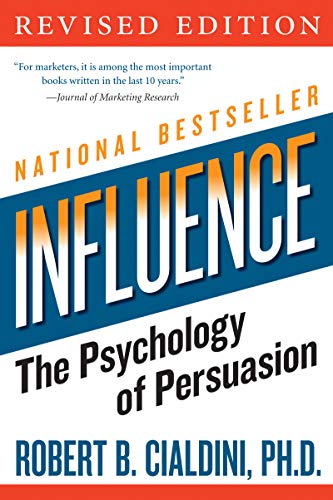
Influence, the classic book on persuasion, explains the psychology of why people say "yes"—and how to apply these understandings. Dr. Robert Cialdini is the seminal expert in the rapidly expanding field of influence and persuasion. His thirty-five years of rigorous, evidence-based research along with a three-year program of study on what moves people to change behavior has resulted in this highly acclaimed book.
You'll learn the six universal principles, how to use them to become a skilled persuader—and how to defend yourself against them. Perfect for people in all walks of life, the principles of Influence will move you toward profound personal change and act as a driving force for your success.

It covers a range of ways in which we end up doing things, and how we don’t understand why we’re doing them. [source]

Max Levchin
Co-founder/PayPal, CEO/Affirm, Investor
Max Levchin recommended this book as an answer to "What business books would you advise young entrepreneurs read?" [source]
Cover unavailable
2
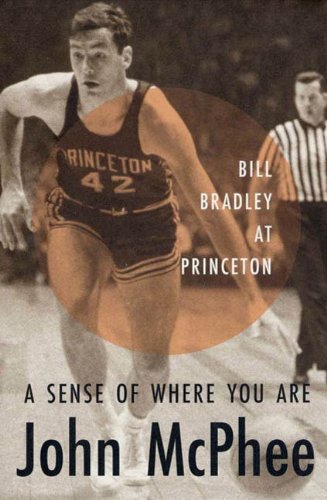
A Sense of Where You Are: Bill Bradley at Princeton
John McPhee
4.2
When John McPhee met Bill Bradley, both were at the beginning of their careers. A Sense of Where You Are, McPhee's first book, is about Bradley when he was the best basketball player Princeton had ever seen. McPhee delineates for the reader the training and techniques that made Bradley the extraordinary athlete he was, and this part of the book is a blueprint of superlative basketball. But athletic prowess alone would not explain Bradley's magnetism, which is in the quality of the man himself—his self-discipline, his rationality, and his sense of responsibility. Here is a portrait of Bradley as he was in college, before his time with the New York Knicks and his election to the U.S. Senate—a story that suggests the abundant beginnings of his professional careers in sport and politics.
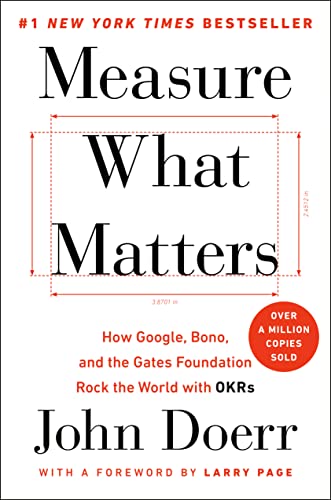
Legendary venture capitalist John Doerr reveals how the goal-setting system of Objectives and Key Results (OKRs) has helped tech giants from Intel to Google achieve explosive growth--and how it can help any organization thrive.
In the fall of 1999, John Doerr met with the founders of a start-up whom he'd just given $12.5 million, the biggest investment of his career. Larry Page and Sergey Brin had amazing technology, entrepreneurial energy, and sky-high ambitions, but no real business plan. For Google to change the world (or even to survive), Page and Brin had to learn how to make tough choices on priorities while keeping their team on track. They'd have to know when to pull the plug on losing propositions, to fail fast. And they needed timely, relevant data to track their progress -- to measure what mattered.
Doerr taught them about a proven approach to operating excellence: Objectives and Key Results. He had first discovered OKRs in the 1970s as an engineer at Intel, where the legendary Andy Grove ("the greatest manager of his or any era") drove the best-run company Doerr had ever seen. Later, as a venture capitalist, Doerr shared Grove's brainchild with more than fifty companies. Wherever the process was faithfully practiced, it worked.
In this goal-setting system, objectives define what we seek to achieve; key results are how those top-priority goals will be attained with specific, measurable actions within a set time frame. Everyone's goals, from entry level to CEO, are transparent to the entire organization.
The benefits are profound. OKRs surface an organization's most important work. They focus effort and foster coordination. They keep employees on track. They link objectives across silos to unify and strengthen the entire company. Along the way, OKRs enhance workplace satisfaction and boost retention.
In Measure What Matters, Doerr shares a broad range of first-person, behind-the-scenes case studies, with narrators including Bono and Bill Gates, to demonstrate the focus, agility, and explosive growth that OKRs have spurred at so many great organizations. This book will help a new generation of leaders capture the same magic.
Measure What Matters deserves to be fully embraced by every person responsible for performance, in any walk of life. John Doerr makes Andy Grove a mentor to us all. If every team, leader, and individual applied OKRs with rigor and imagination, all sectors of society could see an exponential increase in productivity and innovation. [source]
John explains how OKRs Objectives and Key Results work and shows how you can apply them in all sorts of situations. I’d recommend John’s book for anyone interested in becoming a better manager (and I’d say that even if I hadn’t been interviewed for a super-nice chapter about the Gates Foundation). [source]
Whether you're a seasoned CEO or a first-time entrepreneur, you'll find valuable lessons, tools, and inspiration in the pages of Measure What Matters. I'm glad John invested the time to share these ideas with the world. [source]
Cover unavailable
4
How to Listen to Great Music: A Guide to Its History, Culture, and Heart
Robert Greenberg
4.4
From one of the most trusted names in continuing education-the knowledge you need to unlock "the most abstract and sublime of all the arts."
Whether you're listening in a concert hall or on your iPod, concert music has the power to move you. The right knowledge can deepen the ability of this music to edify, enlighten, and stir the soul. In How to Listen to Great Music, Professor Robert Greenberg, a composer and music historian, presents a comprehensive, accessible guide to how music has mirrored Western history, that will transform the experience of listening for novice and long-time listeners alike. You will learn how to listen for key elements in different genres of music - from madrigals to minuets and from sonatas to symphonies-along with the enthralling history of great music from ancient Greece to the 20th century. You'll get answers to such questions as Why was Beethoven so important? How did the Enlightenment change music? And what's so great about opera anyway? How to Listen to Great Music will let you finally hear what you've been missing.
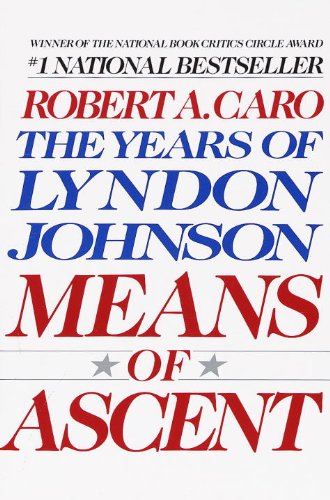
With this, the second volume of The Years of Lyndon Johnson, Robert Caro enters into the central narrative of his magisterial biography - one of the richest, most intensive and revealing examinations ever undertaken of an American President.
Here we have Johnson's service in the Second World War and the foundation of his long-concealed fortunes- as well as the facts behind the myths he created about them. But the explosive heart of the book is Caro's revelation of the true story of the fiercely contested 1948 senatorial election, for 40 years shrouded in rumor, which Johnson had either to win or face certain political death, and which he did win - by 'the 87 votes that changed history'.
Caro allows us to witness a momentous turning point in American politics: the tragic last stand of the old politics versus the new - the politics of issue versus the politics of image, mass manipulation, money and electronic dazzle.
I’m always fascinated by people from humble beginnings in our country who rise up to do great things, whether that’s Lyndon Johnson or Bill Clinton or Barack Obama or even Jesse Jackson. It’s almost a common trope that you have kids who grow up in very humble, hard backgrounds, who in our country can rise to become tremendous champions. [source]
Cover unavailable
6
Love and War (North and South, #2)
John Jakes
4.4
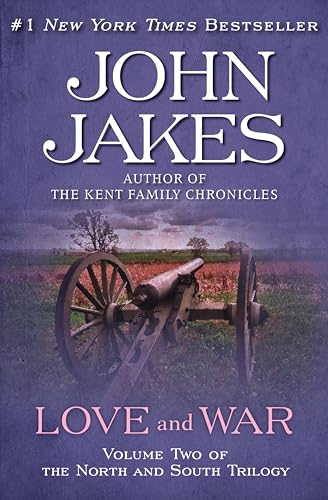
The Hazards and the Mains -- the first fatal shot fired at Fort Sumter divided them irrevocably with loyalties more powerful than family ties. The young would clash on the bloody battlefields of Bull Run and Fredericksburg, while in intrigue-ridden Washington and Richmond strong-willed men and beautiful women would defend their principles with their lives...or satisfy illicit cravings with schemes that could destroy friends and enemies alike.
This surging drama is the second part of the trilogy that includes NORTH AND SOUTH and HEAVEN AND HELL
The definitive, Nobel Prize–winning history of World War II, universally acknowledged as a magnificent historical reconstruction and an enduring work of literature
From Britain's darkest and finest hour to the great alliance and ultimate victory, the Second World War remains the most pivotal event of the twentieth century. Winston Churchill was not only the war's greatest leader, he was the free world's singularly eloquent voice of defiance in the face of Nazi tyranny, and it's that voice that animates this six-volume history. Remarkable both for its sweep and for its sense of personal involvement, it begins with The Gathering Storm; moves on to Their Finest Hour, The Grand Alliance, The Hinge of Fate, and Closing the Ring; and concludes with Triumph and Tragedy.
"More dramatic than fiction...THE GUNS OF AUGUST is a magnificent narrative--beautifully organized, elegantly phrased, skillfully paced and sustained....The product of painstaking and sophisticated research." CHICAGO TRIBUNE Historian and Pulitzer Prize-winning author Barbara Tuchman has brought to life again the people and events that led up to Worl War I. With attention to fascinating detail, and an intense knowledge of her subject and its characters, Ms. Tuchman reveals, for the first time, just how the war started, why, and why it could have been stopped but wasn't. A classic historical survey of a time and a people we all need to know more about, THE GUNS OF AUGUST will not be forgotten.
So beautifully written. But more importantly, for me, she was writing about battles and military stuff and things that you don’t imagine that sometimes a woman might be so adept at. [source]
Erik Martin
This book started my obsession with WWI, illustrating how drastically the world went from interrelated monarchies and cavalry charges to chemical warfare between modern nation states. If you want to see what disruption looks like, there's no greater period in human history. [source]
Matt Calkins
The best way to understand how the world resolves its conflicts and its tensions is by looking at how a conflict that has been studied thoroughly, like World War I, unfolded and resolved. Business is like this too. If anyone were to ever get to the heart of Coke vs. Pepsi, they would see a parade of mistakes in the same way World War I looks in retrospect—so many ways you could have done better. [source]
Cover unavailable
9
Chimpanzee Politics: Power and Sex Among Apes
F. B. M. De Waal, Frans De Waal
4.5
The great apes, like humans, can recognize themselves in mirrors. They communicate by sound and gesture, form bands along what can only be called political lines, and sometimes engage in what is very clearly organized warfare. (Less frequently, too, they practice cannibalism.) In Chimpanzee Politics Frans de Waal, a longtime student of simian behavior, analyzes the behavior of a captive tribe of chimpanzees, comparing its actions with those of ape societies in the wild. What he finds is often not pleasant: chimps seem capable of astonishing deviousness and savagery, which has obvious implications for the behavior their human cousins sometimes exhibit.
It completely changed my view of chimpanzees and Homo sapiens alike. Probably the most funny science book I have ever read. A must-read for politicians of all species! [source]
Cover unavailable
10
The plague
Albert Camus, Stuart Gilbert
4.2
A gripping tale of human unrelieved horror, of survival and resilience, and of the ways in which humankind confronts death, The Plague is at once a masterfully crafted novel, eloquently understated and epic in scope, and a parable of ageless moral resonance, profoundly relevant to our times. In Oran, a coastal town in North Africa, the plague begins as a series of portents, unheeded by the people. It gradually becomes a omnipresent reality, obliterating all traces of the past and driving its victims to almost unearthly extremes of suffering, madness, and compassion.
…
Recommended by Jim Collins, Arthur Ammann, Jenny Davidson, and 1 others.
Arthur Ammann
It’s an amazing book, considering Camus probably never personally experienced a plague. In his novel, Camus captured everything that we were dealing with in the Aids epidemic without Aids existing at that time. Without his knowing what the consequences of the HIV plague were going to be, he seems to have gotten all the actors in there and the myriad of things that you wrestle with. [source]
Jenny Davidson
Albert Camus’s The Plague probably remains the best-known novel on the topic of epidemic disease. It tells the story of those involved in an epidemic in a North African setting. It is very interested in the details about how quarantines are enforced and the role not just of the government, but of individuals who band together into groups to manage the epidemic. [source]
Stephen Breyer
He talks about the plague. Well, the plague is that part of a human being which can be very evil. That germ, he says at the end, never dies, it simply goes into remission. It lurks. It lurks in the cupboards, it lurks in the hallways, it lurks in the filing cabinets. [source]
Cover unavailable
11
The Panda's Thumb: More Reflections in Natural History
Stephen Jay Gould
4.3
With sales of well over one million copies in North America alone, the commercial success of Gould's books now matches their critical acclaim. The Panda's Thumb will introduce a new generation of readers to this unique writer, who has taken the art of the scientific essay to new heights.
Were dinosaurs really dumber than lizards? Why, after all, are roughly the same number of men and women born into the world? What led the famous Dr. Down to his theory of mongolism, and its racist residue? What do the panda's magical "thumb" and the sea turtle's perilous migration tell us about imperfections that prove the evolutionary rule? The wonders and mysteries of evolutionary biology are elegantly explored in these and other essays by the celebrated natural history writer Stephen Jay Gould.
Sheryl Sandberg’s Lean In is a massive cultural phenomenon and its title has become an instant catchphrase for empowering women. The book soared to the top of bestseller lists internationally, igniting global conversations about women and ambition. Sandberg packed theatres, dominated opinion pages, appeared on every major television show and on the cover of Time magazine, and sparked ferocious debate about women and leadership. Ask most women whether they have the right to equality at work and the answer will be a resounding yes, but ask the same women whether they'd feel confident asking for a raise, a promotion, or equal pay, and some reticence creeps in. The statistics, although an improvement on previous decades, are certainly not in women's favour – of 197 heads of state, only twenty-two are women. Women hold just 20 percent of seats in parliaments globally, and in the world of big business, a meagre eighteen of the Fortune 500 CEOs are women. In Lean In, Sheryl Sandberg – Facebook COO and one of Fortune magazine's Most Powerful Women in Business – draws on her own experience of working in some of the world's most successful businesses and looks at what women can do to help themselves, and make the small changes in their life that can effect change on a more universal scale.
Sheryl Sandberg has done a tremendous service with this work. It offers a vital and sharp message, for women and men. We need great leaders in key seats spread throughout all sectors of society, and we simply cannot afford to lose 50 percent of the smartest, most capable people from competing for those seats. Provocative, practical, and inspired! [source]
For the past five years, I've sat at a desk next to Sheryl and I've learned something from her almost every day. She has a remarkable intelligence that can cut through complex processes and find solutions to the hardest problems. Lean In combines Sheryl's ability to synthesize information with her understanding of how to get the best out of people. The book is smart and honest and funny. Her words will help all readers - especially men - to become better and more effective leaders. [source]
Honest and brave... The new manifesto for women in the workplace. [source]
Cover unavailable
13
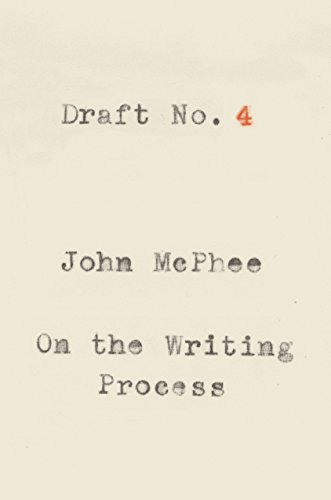
Draft No. 4: On the Writing Process
John McPhee
4.3
The long-awaited guide to writing long-form nonfiction by the legendary author and teacher
Draft No. 4 is an elucidation of the writer's craft by a master practitioner. In a series of playful but expertly wrought essays, John McPhee shares insights he's gathered over his career and refined during his long-running course at Princeton University, where he has launched some of the most esteemed writers of several generations. McPhee offers a definitive guide to the crucial decisions regarding structure, diction, and tone that shape nonfiction pieces, and presents extracts from some of his best-loved work, subjecting them to wry scrutiny. The result is a vivid depiction of the writing process, from reporting to drafting to revising and revising, and revising.
More than a compendium of advice, Draft No. 4 is enriched by personal detail and charming reflections on the life of a writer. McPhee describes his enduring relationships with The New Yorker and Farrar, Straus and Giroux, and recalls his early years at Time magazine. Enlivened by his keen sense of writing as a way of being in the world, Draft No. 4 is the long-awaited master class given by America's most renowned writing instructor.
Describes to all of us who struggle with words the struggle of writing. [source]
Catalina Penciu
My current obsession is John McPhee. He's a creative nonfiction wizard, and as soon as I got my hands on Draft No. 4, where he explains quite vividly how he chooses the structure of his stories, I was hooked. He even mentions creating an entire article based on a spiral-like diagram structure, before even starting to actually write the piece. [source]
Cover unavailable
14
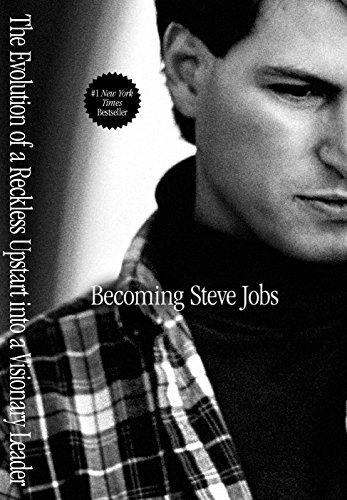
Becoming Steve Jobs: The Evolution of a Reckless Upstart into a Visionary Leader
Brent Schlender
4.4
#1 New York Times Bestseller There have been many books—on a large and small scale—about Steve Jobs, one of the most famous CEOs in history. But this book is different from all the others.
Becoming Steve Jobs takes on and breaks down the existing myth and stereotypes about Steve Jobs. The conventional, one-dimensional view of Jobs is that he was half-genius, half-jerk from youth, an irascible and selfish leader who slighted friends and family alike. Becoming Steve Jobs answers the central question about the life and career of the Apple cofounder and CEO: How did a young man so reckless and arrogant that he was exiled from the company he founded become the most effective visionary business leader of our time, ultimately transforming the daily life of billions of people?
Drawing on incredible and sometimes exclusive access, Schlender and Tetzeli tell a different story of a real human being who wrestled with his failings and learned to maximize his strengths over time. Their rich, compelling narrative is filled with stories never told before from the people who knew Jobs best, and who decided to open up to the authors, including his family, former inner circle executives, and top people at Apple, Pixar and Disney, most notably Tim Cook, Jony Ive, Eddy Cue, Ed Catmull, John Lasseter, Robert Iger and many others. In addition, Brent knew Jobs personally for 25 years and draws upon his many interviews with him, on and off the record, in writing the book. He and Rick humanize the man and explain, rather than simply describe, his behavior. Along the way, the book provides rich context about the technology revolution we all have lived through, and the ways in which Jobs changed our world.
Schlender and Tetzeli make clear that Jobs's astounding success at Apple was far more complicated than simply picking the right products: he became more patient, he learned to trust his inner circle, and discovered the importance of growing the company incrementally rather than only shooting for dazzling game-changing products.
A rich and revealing account that will change the way we view Jobs, Becoming Steve Jobs shows us how one of the most colorful and compelling figures of our times was able to combine his unchanging, relentless passion with a more mature management style to create one of the most valuable and beloved companies on the planet.