We've ranked the best graduate school books using expert recommendations, sales data, and millions of reader ratings. At Shortform, we know books. Our book guides are the best in the world. Learn why.
Man's Search for Meaning has riveted generations of readers with its descriptions of life in Nazi death camps and its lessons for spiritual survival. Between 1942 and 1945 psychiatrist Viktor Frankl labored in four different camps, including Auschwitz, while his parents, brother, and pregnant wife perished. Based on his own experience and the stories of his many patients, Frankl argues that we cannot avoid suffering but we can choose how to cope with it, find meaning in it, and move forward with renewed purpose. Frankl's theory—known as logotherapy, from the Greek word logos ("meaning")—holds that our primary drive in life is not pleasure, as Freud maintained, but the discovery and pursuit of what we personally find meaningful. In the decades since its first publication in 1959, Man's Search for Meaning has become a classic, with more than twelve million copies in print around the world. A 1991 Library of Congress survey that asked readers to name a "book that made a difference in your life" found Man's Search for Meaning among the ten most influential books in America. At once a memoir, a meditation, a treatise, and a history, it continues to inspire us all to find significance in the very act of living. (back cover)
…
Recommended by Tony Robbins, Dustin Moskovitz, Ev Williams, and 60 others.
Another book that I’ve read dozens of times. It taught me that if you change the meaning, you change everything. Meaning equals emotion, and emotion equals life. [source]
Dustin Moskovitz
Co-founder/Facebook and Asana
Dustin Moskovitz recommended this book on Twitter. [source]
I read it while spending ten days in the ICU of Bellevue hospital trying to reattach my finger from a ring avulsion accident in my kitchen. It talks about the meaning of life, and I believe you come out a better person from reading it. [source]
Major New York Times bestseller Winner of the National Academy of Sciences Best Book Award in 2012 Selected by the New York Times Book Review as one of the best books of 2011 A Globe and Mail Best Books of the Year 2011 Title One of The Economist's 2011 Books of the Year One of The Wall Street Journal's Best Nonfiction Books of the Year 2011 2013 Presidential Medal of Freedom Recipient
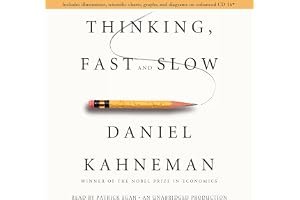
In the international bestseller, Thinking, Fast and Slow, Daniel Kahneman, the renowned psychologist and winner of the Nobel Prize in Economics, takes us on a groundbreaking tour of the mind and explains the two systems that drive the way we think. System 1 is fast, intuitive, and emotional; System 2 is slower, more deliberative, and more logical. The impact of overconfidence on corporate strategies, the difficulties of predicting what will make us happy in the future, the profound effect of cognitive biases on everything from playing the stock market to planning our next vacation—each of these can be understood only by knowing how the two systems shape our judgments and decisions. Engaging the reader in a lively conversation about how we think, Kahneman reveals where we can and cannot trust our intuitions and how we can tap into the benefits of slow thinking. He offers practical and enlightening insights into how choices are made in both our business and our personal lives—and how we can use different techniques to guard against the mental glitches that often get us into trouble. Winner of the National Academy of Sciences Best Book Award and the Los Angeles Times Book Prize and selected by The New York Times Book Review as one of the ten best books of 2011, Thinking, Fast and Slow is destined to be a classic.
A few months ago, Mr. Obama read “Thinking, Fast and Slow,” by Daniel Kahneman, about how people make decisions — quick, instinctive thinking versus slower, contemplative deliberation. For Mr. Obama, a deliberator in an instinctive business, this may be as instructive as any political science text. [source]
Captivating dive into human decision making, marred by inclusion of several/many? psychology studies that fail to replicate. Will stand as a cautionary tale? [source]
Bestselling author Sherman Alexie tells the story of Junior, a budding cartoonist growing up on the Spokane Indian Reservation, with a foreword from Jaqueline Woodson. Determined to take his future into his own hands, Junior leaves his troubled school on the rez to attend an all-white farm town high school where the only other Indian is the school mascot.
Heartbreaking, funny, and beautifully written, The Absolutely True Diary of a Part-Time Indian, which is based on the author's own experiences, coupled with poignant drawings by Ellen Forney that reflect the character's art, chronicles the contemporary adolescence of one Native American boy as he attempts to break away from the life he was destined to live.
With a forward by Markus Zusak, interviews with Sherman Alexie and Ellen Forney, and four-color interior art throughout, this edition is perfect for fans and collectors alike.
Empathy is at the core of my beliefs, and this is one of the best books I’ve ever read that fosters empathetic thinking. It’s also a great reminder of how hard it is to accomplish anything when your life circumstances and surroundings negatively contribute to progress and a great reminder to stay humble. [source]
Cover unavailable
4
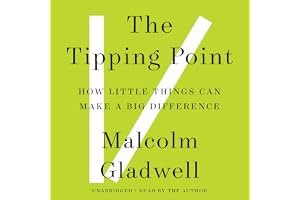
The Tipping Point: How Little Things Can Make a Big Difference
The tipping point is that magic moment when an idea, trend, or social behavior crosses a threshold, tips, and spreads like wildfire. Just as a single sick person can start an epidemic of the flu, so too can a small but precisely targeted push cause a fashion trend, the popularity of a new product, or a drop in the crime rate. This widely acclaimed bestseller, in which Malcolm Gladwell explores and brilliantly illuminates the tipping point phenomenon, is already changing the way people throughout the world think about selling products and disseminating ideas.
Gladwell introduces us to the particular personality types who are natural pollinators of new ideas and trends, the people who create the phenomenon of word of mouth. He analyzes fashion trends, smoking, children's television, direct mail, and the early days of the American Revolution for clues about making ideas infectious, and visits a religious commune, a successful high-tech company, and one of the world's greatest salesmen to show how to start and sustain social epidemics.
Bunch of really good information in here on how to make ideas go viral. This could be good to apply to any kind of products or ideas you may have. Definitely, check out The Tipping Point, which is one of my favorites. [source]
Malcolm Gladwell's breakthrough insight was to focus on the micro-relationships between individuals, which helped organizations realize that it's not about the big ads and the huge charity balls... it's about setting the stage for the buzz to start. [source]
Andy Stern
I think that when we talk about making change, it is much more about macro change, like in policy. This book reminds you that at times when you're building big movements, or trying to elect significant decision-makers in politics, sometimes it's the little things that make a difference. Ever since the book was written, we've become very used to the idea of things going viral unexpectedly and then having massive impact. The Tipping Point, to me, is really an appreciation that very small things can rearrange thinking in ways – like infectious diseases – that have huge implications. While we're always searching for the big policy changes – and we think we have to do that in very traditional ways of building coalitions against constituencies, movements and the media – sometimes it's the little things that actually tip the situation. Like the story of a person and their unique set of circumstances that really captures an issue about health care or housing. So it's trying to remember, while you're thinking about the grand and the glorious, that thinking about the small things can equally bring about change. [source]
Cover unavailable
5
Jane Eyre
Charlotte Brontë
4.5
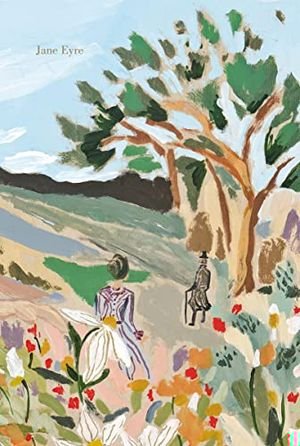
Orphaned as a child, Jane has felt an outcast her whole young life. Her courage is tested once again when she arrives at Thornfield Hall, where she has been hired by the brooding, proud Edward Rochester to care for his ward Adèle. Jane finds herself drawn to his troubled yet kind spirit. She falls in love. Hard.
But there is a terrifying secret inside the gloomy, forbidding Thornfield Hall. Is Rochester hiding from Jane? Will Jane be left heartbroken and exiled once again?
…
Recommended by Audrey Penn, John Sutherland, Lucy Atkins, and 2 others.
Audrey Penn
My next one is Jane Eyre. She was orphaned and sent to a very rich aunt, who had her own very selfish children. Jane Eyre was not the perfect child and she was sent to live in a girls’ school. She made one friend, but unfortunately the little girl died, so she had to toughen up. She grew up there and learned everything she needed to know about teaching. She was a very good artist, she played a little piano, she learned French. When she got older she became the governess for a little French girl who was the ward of a man who lived in a manor. They fell in love, but it turned out that he had a wife, who was insane and lived in the attic. So Jane Eyre ran away and found out she had an uncle who had left her a great deal of money. But she couldn’t get the man out of her mind, so she went back. She found out that after she left, the man’s wife had set the place on fire. The wife had died in the fire, and it had blinded him. They were still very much in love and they married. And they lived happily ever after. [source]
John Sutherland
There is an interesting debate … that the real heroine of Jane Eyre is not the plain little governess but the mad woman in the attic, Bertha Mason [source]
I think Charlotte Brontë’s most accomplished book is Villette. It’s probably a better book, it’s tighter and more sophisticated in some ways. But there’s something about Jane Eyre that is just deeply emotionally compelling for me. [source]
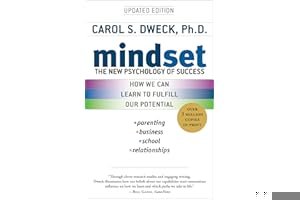
Now updated with new research — the book that has changed millions of lives.
After decades of research, world-renowned Stanford University psychologist Carol S. Dweck, Ph.D., discovered a simple but groundbreaking idea: the power of mindset. In this brilliant book, she shows how success in school, work, sports, the arts, and almost every area of human endeavor can be dramatically influenced by how we think about our talents and abilities. People with a fixed mindset — those who believe that abilities are fixed — are less likely to flourish than those with a growth mindset — those who believe that abilities can be developed. Mindset reveals how great parents, teachers, managers, and athletes can put this idea to use to foster outstanding accomplishment.
In this edition, Dweck offers new insights into her now famous and broadly embraced concept. She introduces a phenomenon she calls false growth mindset and guides people toward adopting a deeper, truer growth mindset. She also expands the mindset concept beyond the individual, applying it to the cultures of groups and organizations. With the right mindset, you can motivate those you lead, teach, and love — to transform their lives and your own.
One of the reasons I loved Mindset is because it’s solutions-oriented. In the book’s final chapter, Dweck describes the workshop she and her colleagues have developed to shift students from a fixed to a growth mindset. These workshops demonstrate that ‘just learning about the growth mindset can cause a big shift in the way people think about themselves and their lives. [source]
Without exaggeration, I’ve never met a CEO who didn’t have Mindset on their bookshelf. It resonates with people who have become successful because the belief that your abilities can grow is foundational to their achievements. [source]
Cover unavailable
7
Between the World and Me
Ta-Nehisi Coates
4.5
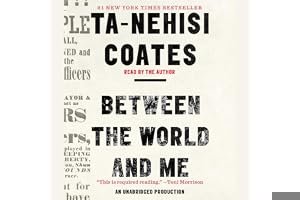
#1 NEW YORK TIMES BESTSELLER [[ LONGLISTED FOR THE NATIONAL BOOK AWARD [[ Hailed by Toni Morrison as "required reading," a bold and personal literary exploration of America's racial history by "the single best writer on the subject of race in the United States" (The New York Observer)
"This is your country, this is your world, this is your body, and you must find some way to live within the all of it."
In a profound work that pivots from the biggest questions about American history and ideals to the most intimate concerns of a father for his son, Ta-Nehisi Coates offers a powerful new framework for understanding our nation's history and current crisis. Americans have built an empire on the idea of "race," a falsehood that damages us all but falls most heavily on the bodies of black women and menbodies exploited through slavery and segregation, and, today, threatened, locked up, and murdered out of all proportion. What is it like to inhabit a black body and find a way to live within it? And how can we all honestly reckon with this fraught history and free ourselves from its burden?
Between the World and Me is Ta-Nehisi Coates's attempt to answer these questions in a letter to his adolescent son. Coates shares with his sonand readersthe story of his awakening to the truth about his place in the world through a series of revelatory experiences, from Howard University to Civil War battlefields, from the South Side of Chicago to Paris, from his childhood home to the living rooms of mothers whose children's lives were taken as American plunder. Beautifully woven from personal narrative, reimagined history, and fresh, emotionally charged reportage, Between the World and Me clearly illuminates the past, bracingly confronts our present, and offers a transcendent vision for a way forward.
The president also released a list of his summer favorites back in 2015: All That Is, James Salter The Sixth Extinction, Elizabeth Kolbert The Lowland, Jhumpa Lahiri Between the World and Me, Ta-Nehisi Coates Washington: A Life, Ron Chernow All the Light We Cannot See, Anthony Doerr [source]
Q: What are the books that had a major influence on you? Or simply the ones you like the most. : Tao te Ching, score takes care of itself, between the world and me, the four agreements, the old man and the sea...I love reading! [source]
Here are some of my favorite reads from 2017. Lots of friends and colleagues send me book suggestions and it's impossible to squeeze them all in. I continue to be super curious about how digital and tech are enabling people to transform our lives but I try to read a good mix of books that apply to a variety of areas and stretch my thinking more broadly. [source]
Cover unavailable
8
Getting to Yes: Negotiating Agreement Without Giving in
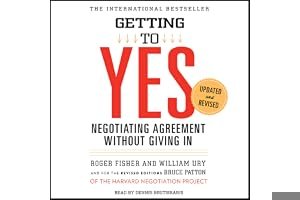
The key text on problem-solving negotiation-updated and revised
Getting to Yes has helped millions of people learn a better way to negotiate. One of the primary business texts of the modern era, it is based on the work of the Harvard Negotiation Project, a group that deals with all levels of negotiation and conflict resolution.
Getting to Yes offers a proven, step-by-step strategy for coming to mutually acceptable agreements in every sort of conflict. Thoroughly updated and revised, it offers readers a straight- forward, universally applicable method for negotiating personal and professional disputes without getting angry-or getting taken.
…
Recommended by Charles T. Munger, Drew Houston, Dustin Moskovitz, and 8 others.
recommends this title in the book "Poor Charlie's Almanack: The Wit and Wisdom of Charles T. Munger". [source]
Drew Houston
CEO/Dropbox
About principled negotiation, and I still think about and apply a lot of those concepts today. [source]
Dustin Moskovitz
Co-founder/Facebook and Asana
Dustin Moskovitz recommended this book on Twitter. [source]
Cover unavailable
9
The Hunger Games (The Hunger Games, #1)
Suzanne Collins
4.4
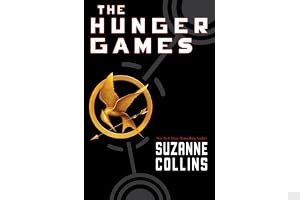
WINNING MEANS FAME AND FORTUNE. LOSING MEANS CERTAIN DEATH. THE HUNGER GAMES HAVE BEGUN. . . .
In the ruins of a place once known as North America lies the nation of Panem, a shining Capitol surrounded by twelve outlying districts. The Capitol is harsh and cruel and keeps the districts in line by forcing them all to send one boy and once girl between the ages of twelve and eighteen to participate in the annual Hunger Games, a fight to the death on live TV.
Sixteen-year-old Katniss Everdeen regards it as a death sentence when she steps forward to take her sister's place in the Games. But Katniss has been close to dead before—and survival, for her, is second nature. Without really meaning to, she becomes a contender. But if she is to win, she will have to start making choices that weight survival against humanity and life against love.
A brutal, exciting, action-based sci-fi novel. Hugely popular and excellent fun. [source]
Cover unavailable
10
The Handmaid's Tale
Margaret Atwood
4.4
Before The Testaments, there was The Handmaid’s Tale: an instant classic and eerily prescient cultural phenomenon, from “the patron saint of feminist dystopian fiction” (New York Times).
The Handmaid’s Tale is a novel of such power that the reader will be unable to forget its images and its forecast. Set in the near future, it describes life in what was once the United States and is now called the Republic of Gilead, a monotheocracy that has reacted to social unrest and a sharply declining birthrate by reverting to, and going beyond, the repressive intolerance of the original Puritans. The regime takes the Book of Genesis absolutely at its word, with bizarre consequences for the women and men in its population.
The story is told through the eyes of Offred, one of the unfortunate Handmaids under the new social order. In condensed but eloquent prose, by turns cool-eyed, tender, despairing, passionate, and wry, she reveals to us the dark corners behind the establishment’s calm facade, as certain tendencies now in existence are carried to their logical conclusions. The Handmaid’s Tale is funny, unexpected, horrifying, and altogether convincing. It is at once scathing satire, dire warning, and a tour de force. It is Margaret Atwood at her best.
"Jarvious Cotton's great-great-grandfather could not vote as a slave. His great-grandfather was beaten to death by the Klu Klux Klan for attempting to vote. His grandfather was prevented from voting by Klan intimidation; his father was barred by poll taxes and literacy tests. Today, Cotton cannot vote because he, like many black men in the United States, has been labeled a felon and is currently on parole."
As the United States celebrates the nation's "triumph over race" with the election of Barack Obama, the majority of young black men in major American cities are locked behind bars or have been labeled felons for life. Although Jim Crow laws have been wiped off the books, an astounding percentage of the African American community remains trapped in a subordinate status--much like their grandparents before them.
In this incisive critique, former litigator-turned-legal-scholar Michelle Alexander provocatively argues that we have not ended racial caste in America: we have simply redesigned it. Alexander shows that, by targeting black men and decimating communities of color, the U.S. criminal justice system functions as a contemporary system of racial control, even as it formally adheres to the principle of color blindness. The New Jim Crow challenges the civil rights community--and all of us--to place mass incarceration at the forefront of a new movement for racial justice in America.
I read The New Jim Crow, a study of how the U.S. justice system disproportionately criminalizes and jails blacks and Latinos. Making our criminal justice system fairer and more effective is a huge challenge for our country. I’m going to keep learning about this topic, but some things are already clear: We can’t jail our way to a just society, and our current system isn’t working (adapted with permission from Facebook’s A Year of Books project). [source]
Peter Temin
The new Jim Crow that Michelle Alexander is talking about is mass incarceration. [source]
Cover unavailable
12
Frankenstein
Mary Shelley
4.4
Mary Shelley began writing Frankenstein when she was only eighteen. At once a Gothic thriller, a passionate romance, and a cautionary tale about the dangers of science, Frankenstein tells the story of committed science student Victor Frankenstein. Obsessed with discovering the cause of generation and life and bestowing animation upon lifeless matter, Frankenstein assembles a human being from stolen body parts but; upon bringing it to life, he recoils in horror at the creature's hideousness. Tormented by isolation and loneliness, the once-innocent creature turns to evil and unleashes a campaign of murderous revenge against his creator, Frankenstein.
Frankenstein, an instant bestseller and an important ancestor of both the horror and science fiction genres, not only tells a terrifying story, but also raises profound, disturbing questions about the very nature of life and the place of humankind within the cosmos: What does it mean to be human? What responsibilities do we have to each other? How far can we go in tampering with Nature? In our age, filled with news of organ donation genetic engineering, and bio-terrorism, these questions are more relevant than ever.
…
Recommended by Michael Arrington, Adam Roberts, Adam Roberts, and 5 others.
Michael Arrington
Founder/TechCrunch
Shelley wrote this book as a teenager, and most of us read it in high school. Often credited as the first science fiction novel. You can read just about any political viewpoint you want into the book, and there are strong undertones that technology isn’t all good. But what I get out of it is the creativeness that can come with solitude, and how new technology can be misunderstood, even perhaps by the creator (see Twitter). Key thing to remember: Frankenstein is the name of the scientist/creator, not the Monster. Everybody forgets that. [source]
Adam Roberts
Brian Aldiss has famously argued that science fiction starts with Mary Shelley’s novel, and many people have agreed with him. [source]
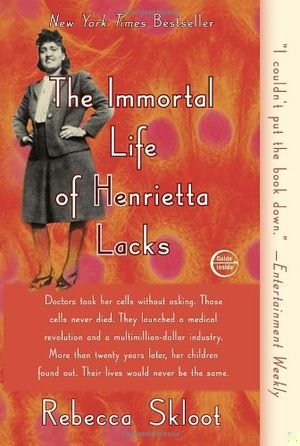
Her name was Henrietta Lacks, but scientists know her as HeLa. She was a poor Southern tobacco farmer who worked the same land as her slave ancestors, yet her cells—taken without her knowledge—became one of the most important tools in medicine. The first “immortal” human cells grown in culture, they are still alive today, though she has been dead for more than sixty years. If you could pile all HeLa cells ever grown onto a scale, they’d weigh more than 50 million metric tons—as much as a hundred Empire State Buildings. HeLa cells were vital for developing the polio vaccine; uncovered secrets of cancer, viruses, and the atom bomb’s effects; helped lead to important advances like in vitro fertilization, cloning, and gene mapping; and have been bought and sold by the billions.
Yet Henrietta Lacks remains virtually unknown, buried in an unmarked grave.
Now Rebecca Skloot takes us on an extraordinary journey, from the “colored” ward of Johns Hopkins Hospital in the 1950s to stark white laboratories with freezers full of HeLa cells; from Henrietta’s small, dying hometown of Clover, Virginia — a land of wooden slave quarters, faith healings, and voodoo — to East Baltimore today, where her children and grandchildren live and struggle with the legacy of her cells.
Henrietta’s family did not learn of her “immortality” until more than twenty years after her death, when scientists investigating HeLa began using her husband and children in research without informed consent. And though the cells had launched a multimillion-dollar industry that sells human biological materials, her family never saw any of the profits. As Rebecca Skloot so brilliantly shows, the story of the Lacks family — past and present — is inextricably connected to the dark history of experimentation on African Americans, the birth of bioethics, and the legal battles over whether we control the stuff we are made of.
Over the decade it took to uncover this story, Rebecca became enmeshed in the lives of the Lacks family—especially Henrietta’s daughter Deborah, who was devastated to learn about her mother’s cells. She was consumed with questions: Had scientists cloned her mother? Did it hurt her when researchers infected her cells with viruses and shot them into space? What happened to her sister, Elsie, who died in a mental institution at the age of fifteen? And if her mother was so important to medicine, why couldn’t her children afford health insurance?
Intimate in feeling, astonishing in scope, and impossible to put down, The Immortal Life of Henrietta Lacks captures the beauty and drama of scientific discovery, as well as its human consequences.
Yes. This is a fascinating book on so many different levels. It is really compelling as the story of the author trying to uncover the history of the woman from whom all these cells came. [source]
Cover unavailable
14
Beloved
Toni Morrison
4.3
Staring unflinchingly into the abyss of slavery, this spellbinding novel transforms history into a story as powerful as Exodus and as intimate as a lullaby.
Sethe was born a slave and escaped to Ohio, but eighteen years later she is still not free. She has too many memories of Sweet Home, the beautiful farm where so many hideous things happened. Her new home is haunted by the ghost of her baby, who died nameless and whose tombstone is engraved with a single word: Beloved.
Filled with bitter poetry and suspense as taut as a rope, Beloved is a towering achievement by Nobel Prize laureate Toni Morrison.
…
Recommended by Bianca Belair, Esi Edugyan, and Farah Jasmine Griffin.
Bianca Belair
@ylc130 I went to the library when I was in the 3rd grade and read Beloved... I remember being so confused and my Mama having to explain it to me... I later read it as an adult and it hit me completely different. GREAT BOOK! [source]
Esi Edugyan
I was shocked by the blunt force of its subject matter and its exquisitely torqued prose. It remains one of my most adored novels. [source]
Farah Jasmine Griffin
Beloved was Morrison’s fifth novel. It’s a gripping story, inspired by a famous abolitionist case, the true story of a woman who runs away from slavery with her children, but when the slave catchers catch up with her, she kills one of her own and tries to kill the others, rather than returning them to slavery. [source]
Cover unavailable
15
Dracula
Bram Stoker
4.3
“Welcome to my house. Come freely. Go safely; and leave something of the happiness you bring.”
Recommended by Andrei Codrescu, Becky Cloonan, Claire Jarvis, and 1 others.
Andrei Codrescu
Vampirism is a growth industry. Dracula is bigger than Jesus now. [source]
Becky Cloonan
@Noise_Raptor Oh, thank you so much! This book was such a delight, and such a challenge! Dracula is one of my favorites- funny enough I'd jump at the chance to do this again XD [source]
Claire Jarvis
Dracula is very explicit. That’s what’s so surprising about it. [source]
Cover unavailable
16
Mrs. Dalloway
Virginia Woolf
4.3
In this vivid portrait of one day in a woman's life, Clarissa Dalloway is preoccupied with the last-minute details of party preparation while in her mind she is much more than a perfect society hostess. As she readies her house, she is flooded with far-away remembrances. And, met with the realities of the present, Clarissa reexamines the choices she has made, hesitantly looking ahead to growing old. Undeniably triumphant, this is the inspired novelistic outline of human consciousness.
…
Recommended by Charles Fernyhough and Maria Sveland.
Charles Fernyhough
Woolf is interested in the intersections between minds. She’s trying to show how minds bleed into each other. [source]
Maria Sveland
It’s one of the saddest books I’ve ever read. I could really identify with Clarissa, this empty, poor person who is going out to find some flowers for a party. At the same moment, we are following her out into the beautiful morning as the story starts. It’s clear very soon that Clarissa is a woman who has lost her soul among all the duties and conventions of a boring marriage. That loss is so overwhelming and confusing that she loses contact even with her own body. She describes feeling young, but at the same time really old. I don’t know why I identified with her so strongly. [source]
Cover unavailable
17
Pedagogy of the Oppressed
Paulo Freire
4.3
First published in Portuguese in 1968, Pedagogy of the Oppressed was translated and published in English in 1970. Paulo Freire's work has helped to empower countless people throughout the world and has taken on special urgency in the United States and Western Europe, where the creation of a permanent underclass among the underprivileged and minorities in cities and urban centers is ongoing.
This 50th anniversary edition includes an updated introduction by Donaldo Macedo, a new afterword by Ira Shor and interviews with Marina Aparicio Barberan, Noam Chomsky, Ramon Flecha, Gustavo Fischman, Ronald David Glass, Valerie Kinloch, Peter Mayo, Peter McLaren and Margo Okazawa-Rey to inspire a new generation of educators, students, and general readers for years to come.
…
Recommended by Alexis Isabel.
Alexis Isabel
@dontkauf i’ve read it! great book, def worth a re-read [source]
Cover unavailable
18
Pride and Prejudice
Jane Auste
4.3
Alternate cover edition of ISBN 9780679783268
Since its immediate success in 1813, Pride and Prejudice has remained one of the most popular novels in the English language. Jane Austen called this brilliant work "her own darling child" and its vivacious heroine, Elizabeth Bennet, "as delightful a creature as ever appeared in print." The romantic clash between the opinionated Elizabeth and her proud beau, Mr. Darcy, is a splendid performance of civilized sparring. And Jane Austen's radiant wit sparkles as her characters dance a delicate quadrille of flirtation and intrigue, making this book the most superb comedy of manners of Regency England.
…
Recommended by Meg Rosoff.
Meg Rosoff
It’s a coming-of-age story, because she throws aside her prejudices but also sees the house and realises that she could be quite comfortable and maybe realises how important that is. [source]
Cover unavailable
19
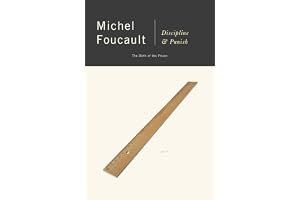
Discipline and Punish: The Birth of the Prison
Michel Foucault, Alan Sheridan
4.3
Librarian note: an alternate cover for this edition can be found here.
In this brilliant work, the most influential philosopher since Sartre suggests that such vaunted reforms as the abolition of torture and the emergence of the modern penitentiary have merely shifted the focus of punishment from the prisoner’s body to his soul.
Cover unavailable
20
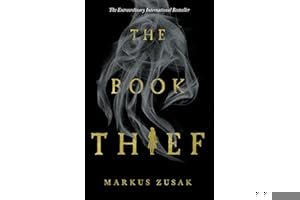
The Book Thief
Markus Zusak
4.2
It is 1939. Nazi Germany. The country is holding its breath. Death has never been busier, and will be busier still.
By her brother's graveside, Liesel's life is changed when she picks up a single object, partially hidden in the snow. It is The Gravedigger's Handbook, left behind there by accident, and it is her first act of book thievery. So begins a love affair with books and words, as Liesel, with the help of her accordian-playing foster father, learns to read. Soon she is stealing books from Nazi book-burnings, the mayor's wife's library, wherever there are books to be found.
But these are dangerous times. When Liesel's foster family hides a Jew in their basement, Liesel's world is both opened up, and closed down.
In superbly crafted writing that burns with intensity, award-winning author Markus Zusak has given us one of the most enduring stories of our time.
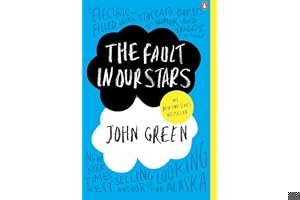
Despite the tumor-shrinking medical miracle that has bought her a few years, Hazel has never been anything but terminal, her final chapter inscribed upon diagnosis. But when a gorgeous plot twist named Augustus Waters suddenly appears at Cancer Kid Support Group, Hazel's story is about to be completely rewritten.
Insightful, bold, irreverent, and raw, The Fault in Our Stars is award-winning author John Green's most ambitious and heartbreaking work yet, brilliantly exploring the funny, thrilling, and tragic business of being alive and in love.
@johngreen You should not be. It is a great book. Was recently in Amsterdam and walked some of the scenes with your huge fan, my youngest daughter. Loved hearing from you and meeting you at Kenyon. [source]
Cover unavailable
22
Teaching to Transgress: Education as the Practice of Freedom
bell hooks
4.2
In Teaching to Transgress, bell hooks--writer, teacher, and insurgent black intellectual--writes about a new kind of education, educations as the practice of freedom. Teaching students to "transgress" against racial, sexual, and class boundaries in order to achieve the gift of freedom is, for hooks, the teacher's most important goal.
Bell hooks speaks to the heart of education today: how can we rethink teaching practices in the age of multiculturalism? What do we do about teachers who do not want to teach, and students who do not want to learn? How should we deal with racism and sexism in the classroom?
Full of passion and politics, Teaching to Transgress combines practical knowledge of the classroom with a deeply felt connection to the world of emotions and feelings. This is the rare book about teachers and students that dares to raise critical questions about eros and rage, grief and reconciliation, and the future o teaching its self.
"To educate as the practice of freedom," writes bell hooks, "is a way of teaching that any one can learn." Teaching to Transgress is the record of one gifted teacher's struggle to make classrooms work.
This book sat next to my bed the entire first year I taught at the University of Houston. Hooks' idea of "education as the practice of freedom" shaped who I am today. Whenever difficult conversations about race, class, or gender begin to surface, I remember what she taught me: If your students are comfortable, you're not doing your job. [source]
Les Back
It’s really a wonderful account of the possibility that education has to shape and transform lives. [source]
Cover unavailable
23
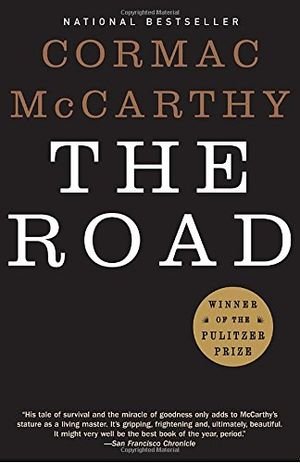
The Road
Cormac McCarthy
4.2
A searing, postapocalyptic novel destined to become Cormac McCarthy’s masterpiece.
A father and his son walk alone through burned America. Nothing moves in the ravaged landscape save the ash on the wind. It is cold enough to crack stones, and when the snow falls it is gray. The sky is dark. Their destination is the coast, although they don’t know what, if anything, awaits them there. They have nothing; just a pistol to defend themselves against the lawless bands that stalk the road, the clothes they are wearing, a cart of scavenged food—and each other.
The Road is the profoundly moving story of a journey. It boldly imagines a future in which no hope remains, but in which the father and his son, “each the other’s world entire,” are sustained by love. Awesome in the totality of its vision, it is an unflinching meditation on the worst and the best that we are capable of: ultimate destructiveness, desperate tenacity, and the tenderness that keeps two people alive in the face of total devastation. (front flap)
It's got everything that's grabbing the headlines in America right now. It's about race and class, the economy, culture, immigration and the danger of the us-versus-them mentality. And underneath it all, pumps the heart and soul of family love, the pursuit of happiness, and what home really means. [source]
This is possibly the most important environmental book ever written. It is a thought-experiment that imagines the world without a biosphere. That is the fundamental thought-experiment at the heart of environmentalism. All the horrors of that story arise from the disappearance of the biosphere, leaving people without any means of feeding themselves and without any means of survival. They are thrown into a brutal and fatal competition where the only thing left to eat is each other. [source]
Greg Garrett
There is no creature that has been transformed by leaking chemicals or radioactive satellites. But, on the other hand, there are human beings who consume other humans and that informs the major conflicts of the book. So, you’ve got a post-apocalyptic setting and you’ve got ethical quandaries for the main characters. There’s the sense of menace that permeates the zombie apocalypse. It’s not bad enough that they’re going to kill you, they’re also going to eat you. What I love about this story is its literary quality. We tend to think of the zombie apocalypse as a low-culture, pulp phenomenon. [source]
Cover unavailable
24
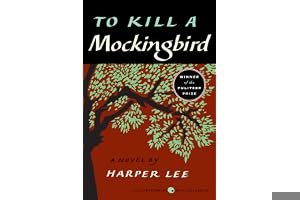
To Kill a Mockingbird
Harper Lee, Sissy Spacek, et al
4.2
The unforgettable novel of a childhood in a sleepy Southern town and the crisis of conscience that rocked it, To Kill A Mockingbird became both an instant bestseller and a critical success when it was first published in 1960. It went on to win the Pulitzer Prize in 1961 and was later made into an Academy Award-winning film, also a classic.
Compassionate, dramatic, and deeply moving, To Kill A Mockingbird takes readers to the roots of human behavior - to innocence and experience, kindness and cruelty, love and hatred, humor and pathos. Now with over 18 million copies in print and translated into forty languages, this regional story by a young Alabama woman claims universal appeal. Harper Lee always considered her book to be a simple love story. Today it is regarded as a masterpiece of American literature.
…
Recommended by Adam Lawrence, Antonio Villaraigosa, Clive Stafford Smith, and 6 others.
Even though I know we’ve made great strides in America, and have come from the reality of Maycomb, we still suffer today from the lingering effects of the bigotry of that era. At the same time, it’s a lesson in standing tall in the face of tremendously hostile circumstances. [source]
Clive Stafford Smith
The book touches on so many issues and deals with so many prejudices – prejudices towards the mentally ill, racial stuff. It’s a book that was way ahead of its time in many ways. It’s also a wonderfully written book – a joy to read. [source]
Cover unavailable
25
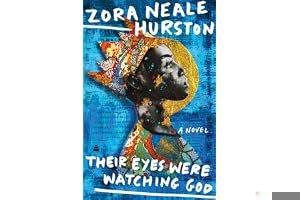
Their Eyes Were Watching God
Zora Neale Hurston
4.2
Fair and long-legged, independent and articulate, Janie Crawford sets out to be her own person -- no mean feat for a black woman in the '30s. Janie's quest for identity takes her through three marriages and into a journey back to her roots.
Recommended by Farah Jasmine Griffin.
Farah Jasmine Griffin
Hurston gives us one of the first true love stories in African American writing. [source]
Cover unavailable
26
The Graveyard Book
Neil Gaiman, Dave McKean, Margaret Atwood
4.2
IT TAKES A GRAVEYARD TO RAISE A CHILD.
Nobody Owens, known to his friends as Bod, is a normal boy. He would be completely normal if he didn't live in a sprawling graveyard, being raised and educated by ghosts, with a solitary guardian who belongs to neither the world of the living nor of the dead. There are dangers and adventures in the graveyard for a boy - an ancient indigo man, a gateway to abandoned city of ghouls, the strange and terrible fleer. But if Bod leaves the graveyard, then he will be in danger from the man Jack - who has already killed Bod's family . . .
…
Recommended by Meghan Camarena and Simon Smith.
Meghan Camarena
While I was walking to the gym I finished the last chapter of The Graveyard Book by @neilhimself. I must’ve looked like a mad woman because I was balling my eyes out in public. Damn, what an incredible story. [source]
Simon Smith
@carveresque ...but The Graveyard Book is one of the best books ever. [source]
Cover unavailable
27
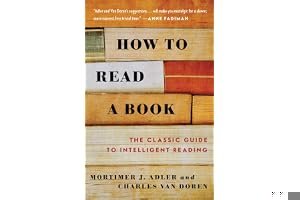
How to Read a Book: The Classic Guide to Intelligent Reading
With more than half a million paperback copies in print and now in this stunning hardcover keepsake edition, How to Read a Book is the classic and definitive guide to reading comprehension and retention for students of literature, scholars across disciplines, and anyone who just loves to read.
Originally written in 1940 and first published by Simon & Schuster in 1972, How to Read a Book introduces and elucidates the various levels of reading and how to achieve them in order to gain the most understanding and insight from any book. From elementary reading, through systematic skimming and inspectional reading, to speed reading and beyond, readers will learn when and how to “judge a book by its cover,” perceive structure no matter the prose, read critically, and extract the author’s message from the text.
Also included are specific reading techniques that work best for reading particular genres, whether they be practical books, imaginative literature, plays, poetry, history, science and mathematics, philosophy, or social science works. A recommended reading list and multiple comprehension tests are incorporated as well in order to measure progress in reading skills, speed, and understanding.
As poignant and applicable today as it was nearly seventy-five years ago, this beautiful hardcover edition is the perfect way for you to discover or rediscover How to Read a Book, a rare phenomenon and the best and most successful guide to reading comprehension.
…
Recommended by Sergey Brin, Ben Chestnut, Kevin Systrom, and 3 others.
had “How to Read a Book” by Mortimer J. Adler as one of his most recommended books. [source]
Ben Chestnut
Founder & CEO/MailChimp
I also love How to Read a Book by Mortimer Adler. I’m teaching its tips to my children while they’re young, so they can consume books much faster and have more fun reading. [source]
Kevin Systrom
The author's thesis is that the most important part of reading a book is to actually read the table of contents and familiarize yourself with the major structure of the book. [source]
Cover unavailable
28
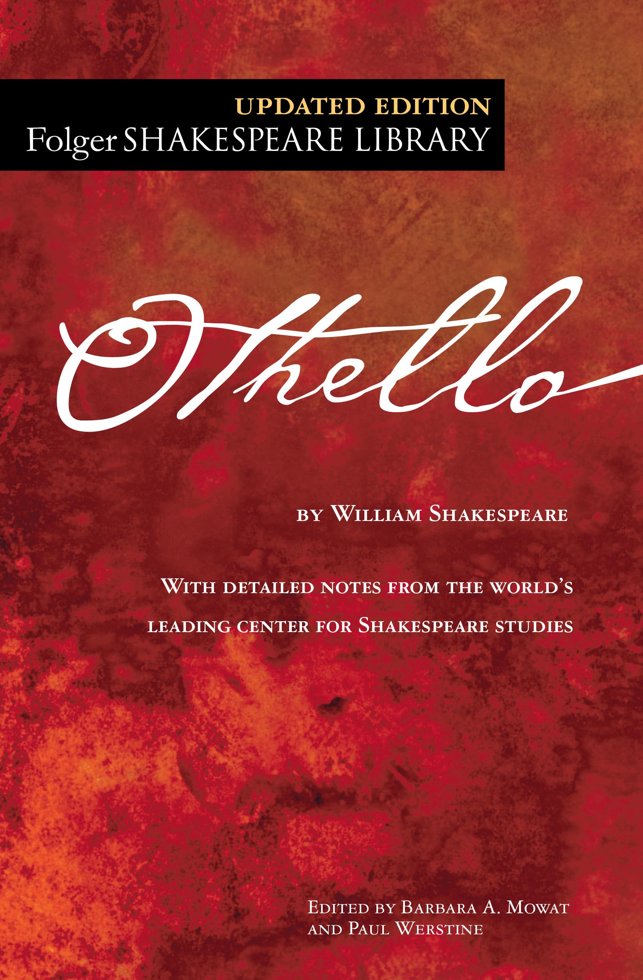
Othello
William Shakespeare
4.2
Othello by William Shakespeare. One of the greatest classics of literary fiction, now available in high quality.
Immensely helpful and illuminating to any aspiring writer, Stephen King’s critically lauded, classic bestseller shares the experiences, habits, and convictions that have shaped him and his work.
"Long live the King" hailed Entertainment Weekly upon publication of Stephen King’s On Writing. Part memoir, part master class by one of the bestselling authors of all time, this superb volume is a revealing and practical view of the writer’s craft, comprising the basic tools of the trade every writer must have. King’s advice is grounded in his vivid memories from childhood through his emergence as a writer, from his struggling early career to his widely reported, near-fatal accident in 1999—and how the inextricable link between writing and living spurred his recovery. Brilliantly structured, friendly and inspiring, On Writing will empower and entertain everyone who reads it—fans, writers, and anyone who loves a great story well told.
I read a bunch of books on writing before I wrote my first book and the two that stuck with me were Stephen King’s book and “On Writing Well” by Zinsser (which is a bit on the technical side). [source]
Alina Varlanuta
My professional path – copywriting – somehow intertwines with my unprofessional (hahaha) path – writing so I would recommend reading literature for both. Somehow reading and writing are two ways of doing the same thing: storytelling (even when you read you tell yourself a story in your own voice, bringing your personal emotion and empathy to the story you’re reading). The only difference is that when I’m reading, panic is far away from me, in a safe place. Nevertheless, the words below helped me rewrite and think twice before adding an exclamation point: On Writing by Stephen King. [source]
Andrew Cowan
Yes. It is a surprise to a lot of people that this book is so widely read on university campuses and so widely recommended by teachers of writing. Students love it. It’s bracing: there’s no nonsense. He says somewhere in the foreword or preface that it is a short book because most books are filled with bullshit and he is determined not to offer bullshit but to tell it like it is. [source]
Cover unavailable
30
The History of Sexuality, Volume 1: An Introduction
Michel Foucault
4.2
Michel Foucault offers an iconoclastic exploration of why we feel compelled to continually analyze and discuss sex, and of the social and mental mechanisms of power that cause us to direct the questions of what we are to what our sexuality is.
Drawing on cutting-edge neuroscience and psychology and displaying all of the brilliance that made The Tipping Point a classic, Blink changes the way you'll understand every decision you make. Never again will you think about thinking the same way.
Malcolm Gladwell redefined how we understand the world around us. Now, in Blink, he revolutionizes the way we understand the world within. Blink is a book about how we think without thinking, about choices that seem to be made in an instant - in the blink of an eye - that actually aren't as simple as they seem. Why are some people brilliant decision makers, while others are consistently inept? Why do some people follow their instincts and win, while others end up stumbling into error? How do our brains really work - in the office, in the classroom, in the kitchen, and in the bedroom? And why are the best decisions often those that are impossible to explain to others?
In Blink we meet the psychologist who has learned to predict whether a marriage will last, based on a few minutes of observing a couple; the tennis coach who knows when a player will double-fault before the racket even makes contact with the ball; the antiquities experts who recognize a fake at a glance. Here, too, are great failures of "blink": the election of Warren Harding; "New Coke"; and the shooting of Amadou Diallo by police. Blink reveals that great decision makers aren't those who process the most information or spend the most time deliberating, but those who have perfected the art of "thin-slicing" - filtering the very few factors that matter from an overwhelming number of variables.
…
Recommended by Ev Williams, Mike Shinoda, Marillyn Hewson, and 4 others.
Mike Shinoda
I know most of the guys in the band read this book. [source]
Marillyn Hewson
CEO/Lockheed Martin
CEO Marilyn Hewson recommends this book because it helped her to trust her instincts in business. [source]
Antonio Eram
When asked to name some books that had a big impact on him, Antonio mentioned Blink: The Power of Thinking Without Thinking by Malcolm Gladwell. [source]
Cover unavailable
32
The Perks of Being a Wallflower
Stephen Chbosky
4.2
Read the cult-favorite coming of age story that takes a sometimes heartbreaking, often hysterical, and always honest look at high school in all its glory. Now a major motion picture starring Logan Lerman and Emma Watson, The Perks of Being a Wallflower is a funny, touching, and haunting modern classic.
The critically acclaimed debut novel from Stephen Chbosky, Perks follows observant “wallflower” Charlie as he charts a course through the strange world between adolescence and adulthood. First dates, family drama, and new friends. Sex, drugs, and The Rocky Horror Picture Show. Devastating loss, young love, and life on the fringes. Caught between trying to live his life and trying to run from it, Charlie must learn to navigate those wild and poignant roller-coaster days known as growing up.
A #1 New York Times best seller for more than a year, an American Library Association Best Book for Young Adults (2000) and Best Book for Reluctant Readers (2000), and with millions of copies in print, this novel for teen readers (or “wallflowers” of more-advanced age) will make you laugh, cry, and perhaps feel nostalgic for those moments when you, too, tiptoed onto the dance floor of life.
…
Recommended by Emma Watson, Jamie Grayson, Rae Earl, and 1 others.
Jamie Grayson
Holy shit there’s no way this book is that old because that really ages me but I COMPLETELY agree. This book is a masterpiece and a must-read. Lessons about being human are in there and those are important right now. https://t.co/fF1spEFrUH [source]
Rae Earl
It is a tremendously powerful study of PTSD, a mental health issue that isn’t talked about enough [source]
Richard Speight Jr.
A pal for 30 years, @StephenChbosky ‘s first book #ThePerksofBeingaWallflower had a MASSIVE impact on me & countless others. Then came his great movies. Now..THE NEXT BOOK! Be like me & buy it THE DAY it comes out. (Then harass him until he agrees to put me in the movie! 🎥 🤠) https://t.co/02bMKPgF9A [source]
Cover unavailable
33
The Picture of Dorian Gray
Oscar Wilde
4.2
On its first publication The Picture of Dorian Gray was regarded as dangerously modern in its depiction of fin-de-siècle decadence. In this updated version of the Faust story, the tempter is Lord Henry Wotton, who lives selfishly for amoral pleasure; Dorian's good angel is the portrait painter Basil Hallward, whom Dorian murders. The book highlights the tension between the polished surface of high society and the life of secret vice. Although sin is punished in the end the book has a flavour of the elegantly perverse.
With an Afterword by Peter Harness.
Designed to appeal to the booklover, the Macmillan Collector's Library is a series of beautifully bound gift editions of much loved classic titles. Bound in real cloth, printed on high quality paper, and featuring ribbon markers and gilt edges, Macmillan Collector's Library are books to love and treasure.
…
Recommended by Andra Zaharia, Eric Berkowitz, Marc Montagne, and 1 others.
Andra Zaharia
A copy from 1903 of this book is my most prized possession. [source]
Eric Berkowitz
The Picture of Dorian Gray is now a part of the canon that no one would admit to not having read. Most of us have read it and delighted in its witticisms. It’s hard to imagine, but when Dorian Gray was first published, the book was not well received at all. It was totally panned. It was held against him as being an example of an effete character. It was being serialised by Lippincott’s Magazine, and the serialisation of the novel stopped when it became too inflammatory. [source]
Marc Montagne
My favorite fiction book is the The Picture of Dorian Gray by Oscar Wilde. I'm a huge Oscar Wilde fan, he has one of the brightest minds and the Picture is a masterpiece and his unique novel. I consider that you should only read books that you would consider reading again at some point while still enjoying the same pleasure. The Picture is definitely one of those. [source]
Cover unavailable
34
Night
Elie Wiesel
4.2
Night is Elie Wiesel's masterpiece, a candid, horrific, and deeply poignant autobiographical account of his survival as a teenager in the Nazi death camps. This new translation by Marion Wiesel, Elie's wife and frequent translator, presents this seminal memoir in the language and spirit truest to the author's original intent. And in a substantive new preface, Elie reflects on the enduring importance of Night and his lifelong, passionate dedication to ensuring that the world never forgets man's capacity for inhumanity to man.
Night offers much more than a litany of the daily terrors, everyday perversions, and rampant sadism at Auschwitz and Buchenwald; it also el
…
Recommended by Johanna Reiss and Steven Katz.
Johanna Reiss
Elie Wiesel wrote..that he was considering running into the barbed wire once, but he didn’t because his father needed him. [source]
Steven Katz
Probably the best known memoir that has been written about the experience of the death camps. [source]
Cover unavailable
35
Persepolis: The Story of a Childhood (Persepolis, #1)
Marjane Satrapi
4.2
A New York Times Notable Book A Time Magazine “Best Comix of the Year” A San Francisco Chronicle and Los Angeles Times Best-seller
Wise, funny, and heartbreaking, Persepolis is Marjane Satrapi’s memoir of growing up in Iran during the Islamic Revolution. In powerful black-and-white comic strip images, Satrapi tells the story of her life in Tehran from ages six to fourteen, years that saw the overthrow of the Shah’s regime, the triumph of the Islamic Revolution, and the devastating effects of war with Iraq. The intelligent and outspoken only child of committed Marxists and the great-granddaughter of one of Iran’s last emperors, Marjane bears witness to a childhood uniquely entwined with the history of her country.
Persepolis paints an unforgettable portrait of daily life in Iran and of the bewildering contradictions between home life and public life. Marjane’s child’s-eye view of dethroned emperors, state-sanctioned whippings, and heroes of the revolution allows us to learn as she does the history of this fascinating country and of her own extraordinary family. Intensely personal, profoundly political, and wholly original, Persepolis is at once a story of growing up and a reminder of the human cost of war and political repression. It shows how we carry on, with laughter and tears, in the face of absurdity. And, finally, it introduces us to an irresistible little girl with whom we cannot help but fall in love.
…
Recommended by Pooneh Ghoddoosi.
Pooneh Ghoddoosi
I read the book and it was great, but more people saw the film because it was nominated for an Academy Award. And after seeing the movie, so many people I knew came up to me and told me that they thought it was exactly the story of my life. And not just me, but most of my Iranian friends had the same feeling of “Oh God, that could have been me, I could have written that book – it could have been the story of my life and my family, and that’s exactly how I felt in high school.” [source]
Cover unavailable
36
American Born Chinese
Gene Luen Yang, Lark Pien
4.2
All Jin Wang wants is to fit in. When his family moves to a new neighborhood, he suddenly finds that he's the only Chinese American student at his school. Jocks and bullies pick on him constantly, and he has hardly any friends. Then, to make matters worse, he falls in love with an all-American girl...
Born to rule over all the monkeys in the world, the story of the Monkey King is one of the oldest and greatest Chinese fables. Adored by his subjects, master of the arts of kung-fu, he is the most powerful monkey on earth. But the Monkey King doesn't want to be a monkey. He wants to be hailed as a god...
Chin-Kee is the ultimate negative Chinese stereotype, and he's ruining his cousin Danny's life. Danny's a popular kid at school, but every year Chin-Kee comes to visit, and every year Danny has to transfer to a new school to escape the shame. This year, though, things quickly go from bad to worse...
These three apparently unrelated tales come together with an unexpected twist, in a modern fable that is hilarious, poignant and action-packed. American Born Chinese is an amazing rise, all the way up to the astonishing climax--and confirms what a growing number of readers already know: Gene Yang is a major talent.
…
Cover unavailable
37
The Five Dysfunctions of a Team: A Leadership Fable
In The Five Dysfunctions of a Team Patrick Lencioni once again offers a leadership fable that is as enthralling and instructive as his first two best-selling books, The Five Temptations of a CEO and The Four Obsessions of an Extraordinary Executive. This time, he turns his keen intellect and storytelling power to the fascinating, complex world of teams.
Kathryn Petersen, Decision Tech's CEO, faces the ultimate leadership crisis: Uniting a team in such disarray that it threatens to bring down the entire company. Will she succeed? Will she be fired? Will the company fail? Lencioni's utterly gripping tale serves as a timeless reminder that leadership requires as much courage as it does insight.
Throughout the story, Lencioni reveals the five dysfunctions which go to the very heart of why teams even the best ones-often struggle. He outlines a powerful model and actionable steps that can be used to overcome these common hurdles and build a cohesive, effective team. Just as with his other books, Lencioni has written a compelling fable with a powerful yet deceptively simple message for all those who strive to be exceptional team leaders.
…
Recommended by AnneMarie Schindler, Holger Seim, Jennifer Rock, and 3 others.
AnneMarie Schindler
I suggest these books because they really open up 'how' you think about life and in turn work, success/challenges/setbacks, and in general, yourself. I believe that the more you can understand yourself and broaden your approach to work, the easier it will be to find work that energizes you. Finally, I'm a team player at heart, and love working with others to achieve a huge goal so a portion of these deal with team composition and performance too. [source]
Holger Seim
Lencioni’s books helped me to shift my focus from individual performance to team performance, and what it takes to make a team perform well. It helped me to realize and take seriously the fact that great team performance doesn’t happen magically but needs conscious effort. When I discovered The Five Dysfunctions of a Team for the first time, we had a dysfunctional team at Blinkist and the book opened my eyes to see the problem clearly and showed clear steps for how they should be tackled. Beforehand I was aware that we had a problem, but I couldn’t pinpoint it specifically and hence, couldn’t solve it easily. This book helped a lot. [source]
Jennifer Rock
In Patrick Lencioni's book The Five Dysfunctions of a Team, the executive asks her senior leaders "Who is your first team?" And they each answer incorrectly that it's the team that reports to him or her. The point is that you need to shift your perspective to understanding your senior leadership peers are your first team. We read that book as a leadership team in a corporation where I worked -- and the environment was very competitive between us. When we agreed that our cross-functional leadership team was our first team, we became more cooperative, innovative and productive. And we vastly boosted our results. [source]
Cover unavailable
38
Bird By Bird: Some Instructions on Writing and Life
Anne Lamott
4.2
Thirty years ago my older brother, who was ten years old at the time, was trying to get a report on birds written that he'd had three months to write. It was due the next day. We were out at our family cabin in Bolinas, and he was at the kitchen table close to tears, surrounded by binder paper and pencils and unopened books on birds, immobilized by the hugeness of the task ahead. Then my father sat down beside him, put his arm around my brother's shoulder, and said, 'Bird by bird, buddy. Just take it bird by bird.'" "Superb writing advice... hilarious, helpful and provocative." -- "New York Times Book Review."
"A warm, generous and hilarious guide through the writer's world and its treacherous swamps." -- "Los Angeles Times."
"A gift to all of us mortals who write or ever wanted to write... sidesplittingly funny, patiently wise and alternately cranky and kind -- a reveille to get off our duffs and start writing "now," while we still can." -- "Seattle Times.
Bird by Bird is one of my absolute favorite books, and I gift it to everybody, which I should probably also give to startup founders, quite frankly. A lot of the lessons are the same. But you can get to your destination, even though you can only see 20 feet in front of you. [source]
It was wonderful to read these two provocative books of essays by two incredibly wise and compassionate women. … Anne Lamott’s book is ostensibly about the art of writing, but really it too is about life and how to tackle the problems, temptations and opportunities life throws at us. Both will make you think and both made me a better person this year. [source]
Cover unavailable
39
Incidents in the Life of a Slave Girl
Harriet Jacobs
4.2
The true story of an individual's struggle for self-identity, self-preservation, and freedom, Incidents in the Life of a Slave Girl remains among the few extant slave narratives written by a woman. This autobiographical account chronicles the remarkable odyssey of Harriet Jacobs (1813–1897) whose dauntless spirit and faith carried her from a life of servitude and degradation in North Carolina to liberty and reunion with her children in the North.
Written and published in 1861 after Jacobs' harrowing escape from a vile and predatory master, the memoir delivers a powerful and unflinching portrayal of the abuses and hypocrisy of the master-slave relationship. Jacobs writes frankly of the horrors she suffered as a slave, her eventual escape after several unsuccessful attempts, and her seven years in self-imposed exile, hiding in a coffin-like "garret" attached to her grandmother's porch.
A rare firsthand account of a courageous woman's determination and endurance, this inspirational story also represents a valuable historical record of the continuing battle for freedom and the preservation of family.
…
Cover unavailable
40
King Lear
William Shakespeare
4.2
In King Lear, one of Shakespeare's greatest and most enduring plays, an aging father's demand that his daughters publicly declare their love for him triggers a reaction that involves nations and brings suffering and death to his entire family. The play takes ordinary jealousies, demands for love, sibling rivalries, desires for money and power, and petty cruelties to the extreme. In this play, we see ourselves and our small vices magnified to gigantic proportions; also, through the character of Lear, we see the end of our lives, with old age portrayed in all its vulnerability, helplessness, pride, and finally, perhaps, wisdom. THE NEW FOLGER LIBRARY SHAKESPEARE Designed to make Shakespeare's great plays available to all readers, the New Folger Library edition of Shakespeare's plays provides accurate texts in modern spelling and punctuation, as well as scene-by-scene action summaries, full explanatory notes, many pictures clarifying Shakespeare's language, and notes recording all significant departures from the early printed versions. Each play is prefaced by a brief introduction, by a guide to reading Shakespeare's language, and by accounts of his life and theater. Each play is followed by an annotated list of further readings and by a Modern Perspective written by an expert on that particular play.
Jobs told Walter Isaacson, the author of his biography, that he “loved King Lear”, which isn’t surprising. [source]
Kathleen Taylor
Lear is about all sorts of things but one of the things it’s about is people getting old and not ceding what their kids think they should to them and the kids trying to bully them. [source]
Cover unavailable
41
Things Fall Apart (The African Trilogy, #1)
Chinua Achebe
4.2
THINGS FALL APART tells two overlapping, intertwining stories, both of which center around Okonkwo, a “strong man” of an Ibo village in Nigeria. The first of these stories traces Okonkwo's fall from grace with the tribal world in which he lives, and in its classical purity of line and economical beauty it provides us with a powerful fable about the immemorial conflict between the individual and society.
The second story, which is as modern as the first is ancient, and which elevates the book to a tragic plane, concerns the clash of cultures and the destruction of Okonkwo's world through the arrival of aggressive, proselytizing European missionaries. These twin dramas are perfectly harmonized, and they are modulated by an awareness capable of encompassing at once the life of nature, human history, and the mysterious compulsions of the soul. THINGS FALL APART is the most illuminating and permanent monument we have to the modern African experience as seen from within.
…
Recommended by Barack Obama, Helon Habila, Jacqueline Novogratz, and 2 others.
As 2018 draws to a close, I’m continuing a favorite tradition of mine and sharing my year-end lists. It gives me a moment to pause and reflect on the year through the books I found most thought-provoking, inspiring, or just plain loved. It also gives me a chance to highlight talented authors – some who are household names and others who you may not have heard of before. Here’s my best of 2018 list. [source]
Helon Habila
It almost feels like a cliché to say that this is one of my favourite books. But there is no way you can escape this book. It is such a part of African literature. It is an inescapable classic. It is a brilliant feat of storytelling, the economy of it, the brevity, the imagery, the ear he has for the traditional language. [source]
Jacqueline Novogratz
The first book I read by an African author. Achebe is unflinching in his portrayal of the challenges of change, the relationships of colonialism, and power/powerlessness. [source]
Cover unavailable
42
Charlotte's Web
E. B White and Kate DiCamillo
4.2
Don’t miss one of America’s top 100 most-loved novels, selected by PBS’s The Great American Read.
This beloved book by E. B. White, author of Stuart Little and The Trumpet of the Swan, is a classic of children's literature that is "just about perfect." This paper-over-board edition includes a foreword by two-time Newbery winning author Kate DiCamillo.
Some Pig. Humble. Radiant. These are the words in Charlotte's Web, high up in Zuckerman's barn. Charlotte's spiderweb tells of her feelings for a little pig named Wilbur, who simply wants a friend. They also express the love of a girl named Fern, who saved Wilbur's life when he was born the runt of his litter.
E. B. White's Newbery Honor Book is a tender novel of friendship, love, life, and death that will continue to be enjoyed by generations to come. It contains illustrations by Garth Williams, the acclaimed illustrator of E. B. White's Stuart Little and Laura Ingalls Wilder's Little House series, among many other books.
…
Recommended by Mary Burkey.
Mary Burkey
One thing that was also very nice was having a title that’s for younger children recognized as a truly stellar audiobook, because sometimes people think that audiobooks are to help kids learn to read and not for them to fall in love with literature. And that’s what the audiobook recording of Charlotte’s Web does. It lets young kids and their parents revisit a beautiful title and fall in love with the book. [source]
Cover unavailable
43
Publication Manual of the American Psychological Association(r)
American Psychological Association
4.2
With millions of copies sold, the Publication Manual of the American Psychological Association is the style manual of choice for writers, editors, students, educators, and professionals in psychology, sociology, business, economics, nursing, social work, and justice administration, and other disciplines in which effective communication with words and data is fundamental.
In addition to providing clear guidance on grammar, the mechanics of writing, and APA style, the Publication Manual offers an authoritative and easy-to-use reference and citation system and comprehensive coverage of the treatment of numbers, metrication, statistical and mathematical data, tables, and figures for use in writing, reports, or presentations.
The new edition has been revised and updated to include:
The latest guidelines and examples for referencing electronic and online sources New and revised guidelines for submitting papers electronically Improved guidelines for avoiding plagiarism Simplified formatting guidelines for writers using up-to-date word-processing software All new guidelines for presenting case studies Improved guidelines for the construction of tables Updates on copyright and permissions issues for writers New reference examples for audiovisual media and patents An expanded and improved index for quick and easy access
Writers, scholars, and professionals will also find:
New guidelines on how to choose text, tables, or figures to present data Guidelines for writing cover letters for submitting articles for publication, plus a sample letter Expanded guidelines on the retention of raw data New advice on establishing written agreements for the use of shared data New information on the responsibilities of co-authors
New and experienced readers alike will find the 5th Edition a complete resource for writing, presenting, or publishing with clarity and persuasiveness.
Approximately 400 pages
…
Cover unavailable
44
The Great Gatsby
F. Scott Fitzgerald
4.2
A young man, newly rich, tries to recapture the past and win back his former love, despite the fact that she has married.
When he got to high school, the president said, his tastes changed and he learned to enjoy classics like “Of Mice and Men” and “The Great Gatsby.” [source]
Melinda and I really like this book. When we were first dating, she had a green light that she would turn on when her office was empty and it made sense for me to come over. [source]
Marvin Liao
Partner/500 Startups
For Non-Business, I'd have to say Dune (Herbert), Emergency (Strauss), The Great Gatsby (Fitzgerald) or Flint (L'Amour). I re-read these books every year because they are just so well written & great stories that I get new perspective & details every time I read them. [source]
Cover unavailable
45
The Curious Incident of the Dog in the Night-Time
Mark Haddon
4.1
Christopher John Francis Boone knows all the countries of the world and their capitals and every prime number up to 7,057. He relates well to animals but has no understanding of human emotions. He cannot stand to be touched. And he detests the color yellow.
Although gifted with a superbly logical brain, for fifteen-year-old Christopher everyday interactions and admonishments have little meaning. He lives on patterns, rules, and a diagram kept in his pocket. Then one day, a neighbor's dog, Wellington, is killed and his carefully constructive universe is threatened. Christopher sets out to solve the murder in the style of his favourite (logical) detective, Sherlock Holmes. What follows makes for a novel that is funny, poignant and fascinating in its portrayal of a person whose curse and blessing are a mind that perceives the world entirely literally.
…
Recommended by Ev Williams, Robert Muchamore, Simon Baron-Cohen, and 1 others.
Robert Muchamore
Mark Haddon wrote a spy series for eight- or nine-year-olds and then he suddenly comes out with this rather brilliant novel. Is it an adult book? Is it a kids’ book? So many people can read it and approach it. [source]
Simon Baron-Cohen
In fiction the writer has some licence to deviate from what is real – it’s a work of art, ultimately, for people’s interest and enjoyment, but I think that the character is very recognisable of many people with Asperger syndrome. I think the author has done a very good job. [source]
Vanessa Keng
I've always loved fiction - mainly crime and legal thrillers, but there's something wonderful about reading a completely different style of writing from what I'm used to. I found myself absorbed in the narrative of guilt and love in The Kite Runner, and The Curious Incident told me a story from a completely different perspective. [source]
Cover unavailable
46
The Giver (The Giver, #1)
Lois Lowry
4.1
Twelve-year-old Jonas lives in a seemingly ideal world. Not until he is given his life assignment as the Receiver does he begin to understand the dark secrets behind this fragile community.
Cover unavailable
47
Imagined Communities: Reflections on the Origin and Spread of Nationalism (Revised Edition)
What makes people love and die for nations, as well as hate and kill in their name? While many studies have been written on nationalist political movements, the sense of nationality--the personal and cultural feeling of belonging to a nation--has not received proportionate attention. In this widely acclaimed work, Benedict Anderson examines the creation and global spread of the 'imagined communities' of nationality.
Anderson explores the processes that created these communities: the territorialization of religious faiths, the decline of antique kingship, the interaction between capitalism and print, the development of vernacular languages-of-state, and changing conceptions of time. He shows how an originary nationalism born in the Americas was modularly adopted by popular movements in Europe, by the imperialist powers, and by the anti-imperialist resistances in Asia and Africa.
This revised edition includes two new chapters, one of which discusses the complex role of the colonialist state's mindset in the develpment of Third World nationalism, while the other analyses the processes by which, all over the world, nations came to imagine themselves as old.
…
Recommended by Jon Calame.
Jon Calame
We looked into divided cities not because we had a morbid fascination with these traumatised cities, but because they seemed to be a keyhole through which you could glimpse this larger phenomenon relatively clearly. [source]
Cover unavailable
48
The Elements of Style
William Jr. Strunk
4.1
You know the authors' names. You recognize the title. You've probably used this book yourself. And now "The Elements of Style"-the most widely read and employed English style manual-is available in a specially bound 50th Anniversary Edition that offers the title's vast audience an opportunity to own a more durable and elegantly bound edition of this time-tested classic. Offering the same content as the Fourth Edition, revised in 1999, the new casebound 50th Anniversary Edition includes a brief overview of the book's illustrious history. Used extensively by individual writers as well as high school and college students of writing, it has conveyed the principles of English style to millions of readers. This new deluxe edition makes the perfect gift for writers of any age and ability level. Fifty Years of Acclaim for "The Elements of Style," by William Strunk Jr. and E.B. White "I first read "Elements of Style" during the summer before I went off to Exeter, and I still direct my students at Harvard to their definition about the difference between 'that' and 'which.' It is the Bible for good, clear writing." -- Henry Louis Gates Jr. "For writers of all kinds and sizes the world begins and ends with Strunk and White's "Elements of Style." Only something to actually write about trumps the list of what is required to put words together in some kind of coherent way. I treasure its presence in my life and salute its fifty years of glory and accomplishment." -- Jim Lehrer ""The Elements of Style" remains an unwavering beacon of light in these grammatically troubled times. I would be lost without it." -- Ann Patchett "To the extent I know how to write clearly at all, I probably taught myself while I was teaching others -- seventh graders, in Flint, Michigan, in 1967. I taught them with a copy of Strunk & White lying in full view on my desk, sort of in the way the Gideons leave Bibles in cheap hotel rooms, as a way of saying to the hapless inhabitant: 'In case your reckless ways should strand you here, there's help.' S&W doesn't really teach you how to write, it just tantalizingly reminds you that there's an orderly way to go about it, that clarity's ever your ideal, but -- really -- it's all going to be up to you." -- Richard Ford ""The Elements of Style" never seems to go out of date. Its counsel is sound and funny, wise and unpretentious. And while its precepts are a foundation of direct communication, Strunk and White do not insist on a way of writing beyond clear expression. The rest is up to the imagination, the intelligence within." -- David Remnick, editor of "The New Yorker" "It's the toughness-the irreverence and implicit laughter-that attracted me to the little book when I was seventeen. I fell in love with Strunk & White's loathing for cant and bloviation, the ruthless cutting of crap, jargon, and extra words. For me, that skeptical directness included a tacit permission by "The Elements of Style" to break its rules on occasion: an alloy of generosity in the blade, a grace I still admire and still learn from." -- Robert Pinsky "In the quest for clarity, one can have no better guides than Strunk and White. For me, their book has been invaluable and remains essential." -- Dan Rather "Eschew surplusage! A perfect book." --Jonathan Lethem "Not until I started teaching writing and I reread "The Elements of Style" did I realize that most everything I would be teaching young writers, and everything I would be learning myself as a writer, was contained between the covers of this slim, elegant, wise little book." -- Julia Alvarez "Strunk and White seared their way into my brain long ago, and I benefit from them daily." -- Steven J. Dubner, co-author of "Freakonomics" "Since high school, I have kept a copy of this book handy. That should be unnecessary. I should, by now, have fully internalized "The Elements of Style." But sometimes I get entangled in a paragraph that refuses to be 'clear, brief, bold.' I dip back into "The Elements of Style" and am refreshed. After Scott Simon interviewed me on NPR about whether the word 'e-mail' needs a hyphen (yes, it does), some listeners, including friends of mine, wondered why I had answered in the affirmative when asked, in passing, 'Are you a drunken white man?' Those listeners misheard. 'Strunk and White man' was what Scott said." -- Roy Blount Jr. "Strunk & White--writing's good-natured law firm--still contains enough sparkling good sense to clean up the whole bloviating blogosphere." -- Thomas Mallon "I used Strunk -- that's what we called it, Strunk -- as a student at Berkeley fifty years ago. I didn't know that it was new, and that we were the first generation to be educated in "The Elements of Style." I got a firm foundation in the English language, learned to write basically, and could depict the realistic world. Then I was able to become an impressionist and expressionist." -- Maxine Hong Kingston "Strunk and White's gigantic little book must be the most readable advice on writing ever written. Side by side with Roget, Shakespeare, the Bible, and a dictionary, it's an essential for every writer's shelf." -- X.J. Kennedy" ""With what joy I welcome the fiftieth anniversary of "The Elements of Style." I am greatly indebted to this book for the invaluable help it has given me all these years." -- Horton Foote "Elegant, droll, and perfectly proportioned, and like your favorite aunt, strict but affectionate. And, like your favorite aunt, full of optimism: You can, and will, be a better writer! There has never been a better, briefer, or more loved book about the art and craft of communicating." -- Susan Orlean "This book is an essential tool. It has been of great use to me and is probably responsible for my best writing. I owe my success to Strunk and White; only the mistakes are mine." -- Ben Affleck, in "O, the Oprah Magazine" "This book is a wonderful example of teaching by example. Not only does it recommend clear and concise writing, it demonstrates it. Written in the style of a friend offering help, it is a godsend to anyone wanting to put words on paper. Thank you, Messieurs Strunk and White. And Happy Anniversary, "Elements of Style."" -- S.E. Hinton "When I began to have ... I wouldn't say arguments but conversations in my mind with Strunk and White about a few of their rules and principles, I knew I was coming into my own. If only they were still here to talk things over! No doubt their side of the exchange would be kindly put, well-informed, and wise. They'd probably help me with my side of it. What more could one want from writers reaching out to help other writers?" -- Barbara Wallraff, language columnist for "The Atlantic" "I don't believe there is a serious writer alive who doesn't have a worn copy of 'Strunk & White'on his or her bookshelf." -- Mignon Fogarty, author of "Grammar Girl's Quick and Dirty Tips ""for Better Writing" "This little book has inspired hundreds of thousands of people to write better -- partly by precept and partly by example. It continues to influence more writers than any other. It's a force for good in the world." -- Bryan A. Garner, author of "Garner's Modern American Usage" "I can think of no better guide to good writing, and I always think of this little classic with a warm heart. More importantly, I revisit its pages often. It's the one essential book on writing." -- Jay Parini, author of "Why Poetry Matters" "Clarity and simplicity have always been the goals, and this book shows the way. It has always been a lighthouse in the dark and stormy night of student prose, of all of our prose." -- Ron Carlson "The only rules you are ever going to get from me are all in Strunk and White." --Ursula K. Le Guin, from "Steering the Craft " "["The Elements of Style "is] a book to which I return from time to time, the way I periodically reread Shakespeare. I always discover something new, settle a question that has been puzzling me, or learn a principle of usage that I have been pretending to know, a pretense that has resulted in inconsistency and in the sort of errors from which I can only pray some saintly copy editor will save me." -- Francine Prose, from "Reading"" Like A Writer" ..".still a little book, small enough and important enough to carry in your pocket, as I carry mine." -- Charles Osgood "Almost every writer has a Strunk and White story. One journalism professor spends the first two weeks of school forcing his students to memorize the book. A top editor at a major paper buys copies at yard sales to distribute to her writers and interns. It has even caused love affairs. . . . Could its greatness be any more clear?" -- Jesse Sheidlower, American Editor of the "Oxford"" English Dictionary," on NPR" ""If the English language is one of the finest homes ever devised for the human spirit, "Elements" is the best guided house tour we've got." --David Gelernter, "The Wall Street Journal" ..".Should be the daily companion of anyone who writes for a living and, for that matter, anyone who writes at all." "--"Jonathan Yardley, " Greensboro (N.C.) Daily News" "No book in shorter space, with fewer words, will help any writer more than this persistent little volume." -- Herbert A. Kenny, "The Boston Globe" "Buy it, study it, enjoy it. It's as timeless as a book can be in our age of volubility." -- Charles Poore, "The New York Times" "White is one of the best stylists and most lucid minds in this country. What he says and his way of saying it are equally rewarding." "-- "Edmund Fuller, "The Wall Street Journal ""If you have any young friends who aspire to become writers, the second greatest favor you can do them is to present them with copies of "The Elements of Style." The first greatest, of course, is to shoot them now, while they're happy." -- Dorothy Parker, "Esquire"
…
Recommended by Tobi Lütke, Alina Varlanuta, Ann Handley, and 3 others.
Tobi Lütke
Founder & CEO/Shopify
My most frequently gifted book is this book because I like good writing. [source]
Alina Varlanuta
My professional path – copywriting – somehow intertwines with my unprofessional (hahaha) path – writing so I would recommend reading literature for both. Somehow reading and writing are two ways of doing the same thing: storytelling (even when you read you tell yourself a story in your own voice, bringing your personal emotion and empathy to the story you’re reading). The only difference is that when I’m reading, panic is far away from me, in a safe place. Nevertheless, the words below helped me rewrite and think twice before adding an exclamation point: The Elements of Style. [source]
Bill Nye
This is my guide. I accept that I’ll never write anything as good as the introductory essay by the author. It’s brilliant. [source]
Cover unavailable
49
Invisible Man
Ralph Ellison
4.1
First published in 1952 and immediately hailed as a masterpiece, Invisible Man is one of those rare novels that have changed the shape of American literature. For not only does Ralph Ellison's nightmare journey across the racial divide tell unparalleled truths about the nature of bigotry and its effects on the minds of both victims and perpetrators, it gives us an entirely new model of what a novel can be.
As he journeys from the Deep South to the streets and basements of Harlem, from a horrifying "battle royal" where black men are reduced to fighting animals, to a Communist rally where they are elevated to the status of trophies, Ralph Ellison's nameless protagonist ushers readers into a parallel universe that throws our own into harsh and even hilarious relief. Suspenseful and sardonic, narrated in a voice that takes in the symphonic range of the American language, black and white, Invisible Man is one of the most audacious and dazzling novels of our century.
…
Recommended by Barack Obama, Daegan Miller, Dan Barreiro, and 3 others.
As a devoted reader, the president has been linked to a lengthy list of novels and poetry collections over the years — he admits he enjoys a thriller. [source]
Daegan Miller
The novel pinpoints relentlessly, and beautifully, the environment of exploitation. [source]
Dan Barreiro
Riveting time capsule material. Literary giant Ellison on the blues, on race, on his powerful book, Invisible Man. https://t.co/iS6xQ7ojE8 [source]
Cover unavailable
50
The Tempest
William Shakespeare
4.1
Performed variously as escapist fantasy, celebratory fiction, and political allegory, The Tempest is one of the plays in which Shakespeare's genius as a poetic dramatist found its fullest expression. Significantly, it was placed first when published in the First Folio of 1623, and is now generally seen as the playwright's most penetrating statement about his art.
Stephen Orgel's wide-ranging introduction examines changing attitudes to The Tempest, and reassesses the evidence behind the various readings. He focuses on key characters and their roles and relationships, as well as on the dramatic, historical, and political context, finding the play to be both more open and more historically determined than traditional views have allowed.
ABOUT THE SERIES: For over 100 years Oxford World's Classics has made available the widest range of literature from around the globe. Each affordable volume reflects Oxford's commitment to scholarship, providing the most accurate text plus a wealth of other valuable features, including expert introductions by leading authorities, helpful notes to clarify the text, up-to-date bibliographies for further study, and much more.
…
Recommended by Peter Atkins.
Peter Atkins
There is a kind of allegory about scientific endeavour in The Tempest which I enjoy. It’s magical, and it is an allegory of human knowledge. [source]
Cover unavailable
51
Where the Wild Things Are
Maurice Sendak
4.1
Max, a wild and naughty boy, is sent to bed without his supper by his exhausted mother. In his room, he imagines sailing far away to a land of Wild Things. Instead of eating him, the Wild Things make Max their king.
During a trip to a public library in Washington’s Anacostia neighborhood in 2015, Obama shared some of his childhood favorites with a group of young students. He also read (and acted out) Where the Wild Things Are by Maurice Sendak to kids at the White House in 2014. [source]
Today is World Book Day, a wonderful opportunity to address this #ChallengeRichard sent in by Mike Gonzalez of New Jersey: Make a list of your top 65 books to read in a lifetime. [source]
In this photo, Jimmy Fallon and I enjoy slurping Eggs of Newt together for Season-5 of “The Martha Stewart Show." I am dressed as "Queen of the Wild Things" inspired by the beloved Maurice Sendak children's book, "Where the Wild Things Are." https://t.co/1ZBqXEW7dC [source]
Cover unavailable
52
On Writing Well: The Classic Guide To Writing Nonfiction
On Writing Well has been praised for its sound advice, its clarity and the warmth of its style. It is a book for everybody who wants to learn how to write or who needs to do some writing to get through the day, as almost everybody does in the age of e-mail and the Internet. Whether you want to write about people or places, science and technology, business, sports, the arts or about yourself in the increasingly popular memoir genre, On Writing Well offers you fundamental priciples as well as the insights of a distinguished writer and teacher. With more than a million copies sold, this volume has stood the test of time and remains a valuable resource for writers and would-be writers.
I read a bunch of books on writing before I wrote my first book and the two that stuck with me were Stephen King’s book and “On Writing Well” by Zinsser (which is a bit on the technical side). [source]
Tim O'Reilly
Founder/O'Reilly Media
On Writing Well, by William Zinsser. I wouldn't say this book influenced me, since my principles of writing were established long before I read it. However, it does capture many things that I believe about effective writing. [source]
Great blunt advice about writing better non-fiction. So inspiring. [source]
Cover unavailable
53
To the Lighthouse
Virginia Woolf, Stella McNichol, Hermione Lee
4.1
For years now the Ramsays have spent every summer in their holiday home in Scotland, and they expect these summers will go on forever; but as the First World War looms, the integrity of family and society will be fatally challenged. To the Lighthouse is at once a vivid impressionist depiction of a family holiday, and a meditation on a marriage, on parenthood and childhood, on grief, tyranny and bitterness. Its use of stream of consciousness, reminiscence and shifting perspectives, gives the novel an intimate, poetic essence, and at the time of publication in 1927 it represented an utter rejection of Victorian and Edwardian literary values. Virginia Woolf saw the novel as an elegy to her own parents, and in her diary she wrote: 'I used to think of him (father) and mother daily; but writing The Lighthouse laid them in my mind'.
Aristotle tells us that all politics starts in the family, and you really do see that in To the Lighthouse. Woolf always said that there is no symbolism in the lighthouse at all, and I think we should believe her. All the same, I do think that the lighthouse, in a way, is Mrs Ramsay because the lighthouse is there to protect us from harm and from hazards, and Mrs Ramsay is a self-sacrificing, patient mother who attends to everyone’s needs and tends to protect them from hazards. Of course, that was an impossibility for Woolf, because her mother died when she was 13. So she is really trying to recreate her mother and also her father, Mr Ramsay. She’s brought them to life – I wonder what that must have been like for her to write. In Hot Milk, I refer to To the Lighthouse as well as Woolf’s earlier novel The Voyage Out. It seems to Sofia that her mother is a hazard, and she says, later, ‘I’ve been waiting for her to take the voyage out of her gloom, to buy a ticket to a vital life with an extra ticket for me. I’ve been waiting all my life for her to reserve a seat for me.’ [source]
Hermione Lee
When all is said and done, I think it is her greatest novel. [source]
Cover unavailable
54
Slaughterhouse-Five
Kurt Vonnegut and Kevin Power
4.1
Selected by the Modern Library as one of the 100 best novels of all time, Slaughterhouse-Five, an American classic, is one of the world's great antiwar books. Centering on the infamous firebombing of Dresden, Billy Pilgrim's odyssey through time reflects the mythic journey of our own fractured lives as we search for meaning in what we fear most.
Recommended by Bernard Tan, Carlos Eire, and Dan Christensen.
Bernard Tan
I’m also a Murakami and Vonnegut fan, Kafka on the Shore, The Wind-up Bird Chronicle, Norwegian Wood, Slaughterhouse-Five, etc. Now that I look at the books listed, they seem to carry an existential theme. I guess I like to understand humanity and human behaviour ultimately to better understand myself. I find reading a means to connect with people who may have lived before my time, or in a distant country, that I may never have had the chance to connect with in real life. As three-dimensional humans, we are all made up of so many faces and emotional layers that we find it hard to dissect them all, and when we find writers who can explain these thought processes in a way that’s tangible and digestible, there’s this incredibly comforting eureka moment of feeling understood. [source]
Carlos Eire
Even though he is no philosopher Vonnegut is still able to ask the questions that all of us think about – how time affects our lives. [source]
"Speak up for yourself—we want to know what you have to say."
From the first moment of her freshman year at Merryweather High, Melinda knows this is a big fat lie, part of the nonsense of high school. She is friendless, outcast, because she busted an end-of-summer party by calling the cops, so now nobody will talk to her, let alone listen to her. As time passes, she becomes increasingly isolated and practically stops talking altogether. Only her art class offers any solace, and it is through her work on an art project that she is finally able to face what really happened at that terrible party: she was raped by an upperclassman, a guy who still attends Merryweather and is still a threat to her. Her healing process has just begun when she has another violent encounter with him. But this time Melinda fights back, refuses to be silent, and thereby achieves a measure of vindication.
In Laurie Halse Anderson's powerful novel, an utterly believable heroine with a bitterly ironic voice delivers a blow to the hypocritical world of high school. She speaks for many a disenfranchised teenager while demonstrating the importance of speaking up for oneself.
Speak was a 1999 National Book Award Finalist for Young People's Literature.
…
Cover unavailable
56
A Wrinkle in Time (A Wrinkle in Time Quintet, #1)
Madeleine L'Engle
4.1
Fifty years ago, Madeleine L’Engle introduced the world to A Wrinkle in Time and the wonderful and unforgettable characters Meg and Charles Wallace Murry, and their friend Calvin O’Keefe. When the children learn that Mr. Murry has been captured by the Dark Thing, they time travel to Camazotz, where they must face the leader IT in the ultimate battle between good and evil—a journey that threatens their lives and our universe. A Newbery Award winner, A Wrinkle in Time is an iconic novel that continues to inspire millions of fans around the world. This special edition has been redesigned and includes an introduction by Katherine Paterson, an afterword by Madeleine L’Engle’s granddaughter Charlotte Jones Voiklis that includes photographs and memorabilia, the author’s Newbery Medal acceptance speech, and other bonus materials.
…
Recommended by Sheryl Sandberg.
Cover unavailable
57
Emma
Jane Austen, Fiona Stafford
4.1
Emma Woodhouse is one of Austen's most captivating and vivid characters. Beautiful, spoilt, vain and irrepressibly witty, Emma organizes the lives of the inhabitants of her sleepy little village and plays matchmaker with devastating effect.
Emma is the Regency novel in the sense that it was written and published during the Regency. I think the feel of much of Jane Austen is really in the late 1790s – the beginning of the French Wars. Jane Austen wasn’t writing about politics. She is famously someone who writes about what she knows. Her world is essentially a provincial world of manners. [source]
Cover unavailable
58
Catching Fire (The Hunger Games, #2)
Suzanne Collins
4.1
SPARKS ARE IGNITING. FLAMES ARE SPREADING. AND THE CAPITAL WANTS REVENGE.
Against all odds, Katniss Everdeen has survived the Hunger Games. She and fellow District 12 tribute Peeta Mellark are miraculously still alive. Katniss should be relieved, happy even. Yet nothing is the way Katniss wishes it to be. Gale holds her at an icy distance. Peeta has turned his back on her completely. And there are whispers of a rebellion against the Capitol - a rebellion that Katniss and Peeta may have helped create.
Much to her shock, Katniss has fueled an unrest that she's afraid she cannot stop. And what scares her even more is that she's not entirely convinced she should try. As time draws near for Katniss and Peeta to visit the districts on the Capitol's cruel Victory Tour, the stakes are higher than ever. If they can't prove, without a shadow of a doubt, that they are lost in their love for each other, the consequences will be horrifying. Katniss is about to be tested as never before.
…
Cover unavailable
59
A Room of One's Own
Virginia Woolf
4.1
A Room of One's Own is an extended essay by Virginia Woolf. First published on the 24th of October, 1929, the essay was based on a series of lectures she delivered at Newnham College and Girton College, two women's colleges at Cambridge University in October 1928. While this extended essay in fact employs a fictional narrator and narrative to explore women both as writers of and characters in fiction, the manuscript for the delivery of the series of lectures, titled Women and Fiction, and hence the essay, are considered nonfiction. The essay is seen as a feminist text, and is noted in its argument for both a literal and figural space for women writers within a literary tradition dominated by patriarchy.
…
Cover unavailable
60
Moby-Dick
Herman Melville
4.1
Journey to the heart of the sea with this larger-than-life classic.
Regarded as a Great American Novel, "Moby Dick" is the ultimate tale of seeking vengeance.
Narrated by the crew member Ishmael, this epic whaling adventure follows the crew of the "Pequod," as its captain, Ahab, descends deeper and deeper into madness on his quest to find and kill the white whale that maimed him. Beyond the surface--of ship life, whaling, and the hunt for the elusive Moby Dick--are allegorical references to life--and even the universe--in this masterpiece by Herman Melville.
Complete and unabridged, this elegantly designed clothbound edition features an elastic closure and a new introduction by Christopher McBride.
According to the president’s Facebook page and a 2008 interview with the New York Times, this title is among his most influential forever favorites. [source]
Jobs told me that "Moby-Dick" was among his favorite books and he reread it a lot when he was a teen. [source]
Adam Haslett
Evil derives from the violent avoidance of the realisation of our own mortality and there could be few better examples of this in literature than Melville’s portrait of Ahab in Moby-Dick. [source]
Cover unavailable
61
The Lion, the Witch and the Wardrobe (Chronicles of Narnia, #1)
C. S. Lewis, Kenneth Branagh, et al
4.1
Narnia...the land beyond the wardrobe door, a secret place frozen in eternal winter, a magical country waiting to be set free.
Lucy is the first to find the secret of the wardrobe in the professor's mysterious old house. At first her brothers and sister don't believe her when she tells of her visit to the land of Narnia. But soon Edmund, then Peter and Susan step through the wardrobe themselves. In Narnia they find a country buried under the evil enchantment of the White Witch. When they meet the Lion Aslan, they realize they've been called to a great adventure and bravely join the battle to free Narnia from the Witch's sinister spell.
…
Recommended by Chris Anderson, Chris Anderson, Chris Anderson, and 3 others.
Chris Anderson
As a child, they exploded my imagination. [source]
Chris Anderson
As a child, they exploded my imagination. [source]
Chris Anderson
As a child, they exploded my imagination. [source]
Cover unavailable
62
In Cold Blood
Truman Capote
4.1
On November 15, 1959, in the small town of Holcomb, Kansas, four members of the Clutter family were savagely murdered by blasts from a shotgun held a few inches from their faces. There was no apparent motive for the crime, and there were almost no clues.
As Truman Capote reconstructs the murder and the investigation that led to the capture, trial, and execution of the killers, he generates both mesmerizing suspense and astonishing empathy. At the center of his study are the amoral young killers Perry Smith and Dick Hickcock, who, vividly drawn by Capote, are shown to be reprehensible yet entirely and frighteningly human. In Cold Blood is a seminal work of modern prose, a remarkable synthesis of journalistic skill and powerfully evocative narrative.
One of the reasons I like this true crime novelisation is down to the fact it was so out of character for Capote and took everyone by surprise. It is also an excellent, almost biographical, insight into the two young killers’ minds. [source]
I think in all honesty it is one of the finest books ever written. It took him six years to finish it because he had to wait for the court case and the final verdict which was the two perpetrators being executed. [source]
Cover unavailable
63
The Wretched of the Earth
Frantz Fanon
4.1
A distinguished psychiatrist from Martinique who took part in the Algerian Nationalist Movement, Frantz Fanon was one of the most important theorists of revolutionary struggle, colonialism, and racial difference in history. Fanon's masterwork is a classic alongside Edward Said's Orientalism or The Autobiography of Malcolm X, and it is now available in a new translation that updates its language for a new generation of readers.
The Wretched of the Earth is a brilliant analysis of the psychology of the colonized and their path to liberation. Bearing singular insight into the rage and frustration of colonized peoples, and the role of violence in effecting historical change, the book incisively attacks the twin perils of post-independence colonial politics: the disenfranchisement of the masses by the elites on the one hand, and intertribal and interfaith animosities on the other.
Fanon's analysis, a veritable handbook of social reorganization for leaders of emerging nations, has been reflected all too clearly in the corruption and violence that has plagued present-day Africa. The Wretched of the Earth has had a major impact on civil rights, anticolonialism, and black consciousness movements around the world, and this bold new translation by Richard Philcox reaffirms it as a landmark.
…
Cover unavailable
64
The Hate U Give
Angie Thomas
4.1
Sixteen-year-old Starr Carter moves between two worlds: the poor neighborhood where she lives and the fancy suburban prep school she attends. The uneasy balance between these worlds is shattered when Starr witnesses the fatal shooting of her childhood best friend Khalil at the hands of a police officer. Khalil was unarmed.
Soon afterward, his death is a national headline. Some are calling him a thug, maybe even a drug dealer and a gangbanger. Protesters are taking to the streets in Khalil's name. Some cops and the local drug lord try to intimidate Starr and her family. What everyone wants to know is: what really went down that night? And the only person alive who can answer that is Starr.
But what Starr does--or does not--say could upend her community. It could also endanger her life.
…
Recommended by Bianca Belair.
Bianca Belair
For #BlackHistoryMonth I will be sharing some of my favorite books by Black Authors 7th Book: The Hate U Give By: Angie Thomas @angiecthomas The movie was really great, but it just hits different when you read the book! https://t.co/rxMH5Uu6JN [source]
Cover unavailable
65
Maus I: A Survivor's Tale: My Father Bleeds History (Maus, #1)
Art Spiegelman
4.1
A story of a Jewish survivor of Hitler's Europe and his son, a cartoonist who tries to come to terms with his father's story and history itself.
At Walden Pond, Henry David Thoreau reflected on simpler living in the natural world. By removing himself from the distractions of materialism, Thoreau hoped to not only improve his spiritual life but also gain a better understanding of society through solitary introspection.
In Walden, Thoreau condenses his two-year, two-month, two-day stay into a single year, using the four seasons to symbolize human development—a cycle of life shared by both nature and man. A celebration of personal renewal through self-reliance, independence, and simplicity, composed for all of us living in “quiet desperation,” Walden is eternal.
…
Recommended by Emma Watson, Donna Dickenson, Emily Thomas, and 5 others.
Donna Dickenson
He discusses how the original ideals that America was founded on were being compromised, and how massive industrial interests were starting to dominate. [source]
Emily Thomas
The beginning is hard going. Once you get past that, then suddenly you’re into these beautiful and inspiring descriptions of nature. [source]
Joan Boixados
In case you were deceived and expected me to name Walden by Henry David Thoreau, you should read it too if you haven’t, it obviously is the inspiration to Walden Two. :) [source]
Cover unavailable
67
Divergent (Divergent, #1)
Veronica Roth
4.1
In Beatrice Prior's dystopian Chicago world, society is divided into five factions, each dedicated to the cultivation of a particular virtue—Candor (the honest), Abnegation (the selfless), Dauntless (the brave), Amity (the peaceful), and Erudite (the intelligent). On an appointed day of every year, all sixteen-year-olds must select the faction to which they will devote the rest of their lives. For Beatrice, the decision is between staying with her family and being who she really is—she can't have both. So she makes a choice that surprises everyone, including herself.
During the highly competitive initiation that follows, Beatrice renames herself Tris and struggles alongside her fellow initiates to live out the choice they have made. Together they must undergo extreme physical tests of endurance and intense psychological simulations, some with devastating consequences. As initiation transforms them all, Tris must determine who her friends really are—and where, exactly, a romance with a sometimes fascinating, sometimes exasperating boy fits into the life she's chosen. But Tris also has a secret, one she's kept hidden from everyone because she's been warned it can mean death. And as she discovers unrest and growing conflict that threaten to unravel her seemingly perfect society, she also learns that her secret might help her save those she loves . . . or it might destroy her.
…
Cover unavailable
68
The Odyssey
Homer
4.1
After enduring the Trojan War, Odysseus begins the treacherous journey home to Ithaca. On the way, he faces ravenous monsters and vengeful gods. But the real battle awaits, as his kingdom is under siege by unruly suitors vying for his wife’s hand—and his son’s head. To reclaim his throne and save his family, Odysseus must rely on his wits…and help from the unpredictable gods.
Homer’s The Odyssey was composed around 700 BC. It is one of the earliest epics in existence and remains one of the most influential works of literature today.
Revised edition: Previously published as The Odyssey, this edition of The Odyssey (AmazonClassics Edition) includes editorial revisions.
…
Recommended by Caterina Fake, Ted Turner, Charlotte Higgins, and 3 others.
When I got to college, I was a classics major, and that was mainly the study of Greek - and to a lesser extent Roman - history and culture, and that fascinated me: the Iliad, the Odyssey, the Aeneid by Virgil. [source]
Charlotte Higgins
It’s a very easy read, and a completely different world from The Iliad. Whereas The Iliad depicts a militaristic and war-wrecked world, The Odyssey is like a fairytale and it’s fascinatingly complex. It’s told in flashbacks, it has time that’s extended and time that’s compressed, and it’s told from different viewpoints. [source]
Janine di Giovanni
The thing I loved about Ulysses was that he’s so in love with adventure and with love. [source]
Cover unavailable
69
The Invention of Hugo Cabret
Brian Selznick
4.1
Orphan, clock keeper, and thief, Hugo lives in the walls of a busy Paris train station, where his survival depends on secrets and anonymity. But when his world suddenly interlocks with an eccentric, bookish girl and a bitter old man who runs a toy booth in the station, Hugo's undercover life, and his most precious secret, are put in jeopardy. A cryptic drawing, a treasured notebook, a stolen key, a mechanical man, and a hidden message from Hugo's dead father form the backbone of this intricate, tender, and spellbinding mystery.
…
Cover unavailable
70
Macbeth
William Shakespeare, Dr. Barbara A. Mowat, Paul Werstine Ph.D.
4.1
One night on the heath, the brave and respected general Macbeth encounters three witches who foretell that he will become king of Scotland. At first sceptical, he’s urged on by the ruthless, single-minded ambitions of Lady Macbeth, who suffers none of her husband’s doubt. But seeing the prophecy through to the bloody end leads them both spiralling into paranoia, tyranny, madness, and murder.
This shocking tragedy - a violent caution to those seeking power for its own sake - is, to this day, one of Shakespeare’s most popular and influential masterpieces.
…
Cover unavailable
71
Understanding Comics: The Invisible Art
Scott McCloud
4.1
The bestselling international classic on storytelling and visual communication
"You must read this book." — Neil Gaiman
Praised throughout the cartoon industry by such luminaries as Art Spiegelman, Matt Groening, and Will Eisner, Scott McCloud's Understanding Comics is a seminal examination of comics art: its rich history, surprising technical components, and major cultural significance. Explore the secret world between the panels, through the lines, and within the hidden symbols of a powerful but misunderstood art form.
…
Recommended by Ev Williams, Austin Kleon, Bret Victor, and 1 others.
Unsolicited, but here’s my advice for visual thinkers (and others) who want to be better writers: … Cartoonists, because their work demands work from two disciplines (writing/art, poetry/design, words/pictures), are highly instructive when it comes to visual people learning to write, writers learning to make art, etc. (Check out Scott McCloud’s Understanding Comics for more.) [source]
Will Brooker
Understanding Comics is a book about how comics work, told in comic form. It’s very accessible, it’s for the general reader and is about comics in general, not just superhero comics. It explores areas like pacing and editing – how motion can be created through static panels on a page, and how arranging those panels in different ways, or drawing in different styles, or combining text and image, has different effects. It’s almost like a book on film study which explores the role of sound, lighting or editing. Scott McCloud is an artist himself, and he draws pastiches to show how different styles produce different effects. [source]
More than three decades after its first publication, Edward Said's groundbreaking critique of the West's historical, cultural, and political perceptions of the East has become a modern classic.
In this wide-ranging, intellectually vigorous study, Said traces the origins of "orientalism" to the centuries-long period during which Europe dominated the Middle and Near East and, from its position of power, defined "the orient" simply as "other than" the occident. This entrenched view continues to dominate western ideas and, because it does not allow the East to represent itself, prevents true understanding. Essential, and still eye-opening, Orientalism remains one of the most important books written about our divided world.
…
Cover unavailable
73
Monster
Walter Dean Myers
4.1
Sometimes I feel like I have walked into the middle of a movie. Maybe I can make my own movie. The film will be the story of my life. No, not my life, but of this experience. I'll call it what the lady who is the prosecutor called me. Monster.
Fade In: Interior Court. A guard sits at a desk behind Steve. Kathy O'Brien, Steve's lawyer, is all business as she talks to Steve.
O'Brien Let me make sure you understand what's going on. Both you and this king character are on trial for felony murder. Felony Murder is as serious as it gets. . . . When you're in court, you sit there and pay attetion. You let the jury know that you think the case is a serious as they do. . . .
Steve You think we're going to win ?
O'Brien (seriously) It probably depends on what you mean by "win."
Sixteen-year-old Steve Harmon is on trial for murder. A Harlem drugstore owner was shot and killed in his store, and the word is that Steve served as the lookout.
Guilty or innocent, Steve becomes a pawn in the hands of "the system," cluttered with cynical authority figures and unscrupulous inmates, who will turn in anyone to shorten their own sentences. For the first time, Steve is forced to think about who he is as he faces prison, where he may spend all the tomorrows of his life.
As a way of coping with the horrific events that entangle him, Steve, an amateur filmmaker, decides to transcribe his trial into a script, just like in the movies. He writes it all down, scene by scene, the story of how his whole life was turned around in an instant. But despite his efforts, reality is blurred and his vision obscured until he can no longer tell who he is or what is the truth. This compelling novel is Walter Dean Myers's writing at its best.
…
Cover unavailable
74
Borderlands/La Frontera: The New Mestiza
Gloria Anzaldúa, Sonia Saldívar-Hull
4.1
Anzaldua, a Chicana native of Texas, explores in prose and poetry the murky, precarious existence of those living on the frontier between cultures and languages. Writing in a lyrical mixture of Spanish and English that is her unique heritage, she meditates on the condition of Chicanos in Anglo culture, women in Hispanic culture, and lesbians in the straight world. Her essays and poems range over broad territory, moving from the plight of undocumented migrant workers to memories of her grandmother, from Aztec religion to the agony of writing. Anzaldua is a rebellious and willful talent who recognizes that life on the border, "life in the shadows," is vital territory for both literature and civilization. Venting her anger on all oppressors of people who are culturally or sexually different, the author has produced a powerful document that belongs in all collections with emphasis on Hispanic American or feminist issues.
…
Cover unavailable
75
Gender Trouble: Feminism and the Subversion of Identity
Judith Butler
4.1
Since its publication in 1990, Gender Trouble has become one of the key works of contemporary feminist theory, and an essential work for anyone interested in the study of gender, queer theory, or the politics of sexuality in culture. This is the text where Judith Butler began to advance the ideas that would go on to take life as "performativity theory," as well as some of the first articulations of the possibility for subversive gender practices, and she writes in her preface to the 10th anniversary edition released in 1999 that one point of Gender Trouble was "not to prescribe a new gendered way of life [...] but to open up the field of possibility for gender [...]" Widely taught, and widely debated, Gender Trouble continues to offer a powerful critique of heteronormativity and of the function of gender in the modern world.
…
Cover unavailable
76
The Outsiders
S. E. Hinton
4.1
Librarian note: See this edition record for the Laurel-Leaf Books/Dell edition that may have been published with ISBN 014240733X.
No one ever said life was easy. But Ponyboy is pretty sure that he's got things figured out. He knows that he can count on his brothers, Darry and Sodapop. And he knows that he can count on his friends - true friends who would do anything for him, like Johnny and Two-Bit. And when it comes to the beating up on "greasers" like him and his friends - he knows that he can count on them for trouble. But one night someone takes things too far, and Ponyboy's world is turned upside down...
~from inside flap
…
Cover unavailable
77
The Catcher in the Rye
J. D. Salinger
4.1
The hero-narrator of The Catcher in the Rye is an ancient child of sixteen, a native New Yorker named Holden Caulfield. Through circumstances that tend to preclude adult, secondhand description, he leaves his prep school in Pennsylvania and goes underground in New York City for three days. The boy himself is at once too simple and too complex for us to make any final comment about him or his story. Perhaps the safest thing we can say about Holden is that he was born in the world not just strongly attracted to beauty but, almost, hopelessly impaled on it. There are many voices in this novel: children's voices, adult voices, underground voices-but Holden's voice is the most eloquent of all. Transcending his own vernacular, yet remaining marvelously faithful to it, he issues a perfectly articulated cry of mixed pain and pleasure. However, like most lovers and clowns and poets of the higher orders, he keeps most of the pain to, and for, himself. The pleasure he gives away, or sets aside, with all his heart. It is there for the reader who can handle it to keep.
J.D. Salinger's classic novel of teenage angst and rebellion was first published in 1951. The novel was included on Time's 2005 list of the 100 best English-language novels written since 1923. It was named by Modern Library and its readers as one of the 100 best English-language novels of the 20th century. It has been frequently challenged in the court for its liberal use of profanity and portrayal of sexuality and in the 1950's and 60's it was the novel that every teenage boy wants to read.
It was such a relief from the other books I was reading at the time, which all had a quality of homework to them. [source]
Audrey Russo
So many novels; Lord of the Flies, Great Gatsby, Great Expectations; all the Nancy Drew books; Catcher in the Rye, Books written by Zora Neale Hurston; Pat Conroy – all because of the view about different people who endure despite adversity while kindling the hearts of the human spirit. [source]
Cover unavailable
78
Lolita
Vladimir Nabokov
4.0
When it was published in 1955, Lolita immediately became a cause célèbre because of the freedom and sophistication with which it handled the unusual erotic predilections of its protagonist. But Vladimir Nabokov's wise, ironic, elegant masterpiece owes its stature as one of the twentieth century's novels of record not to the controversy its material aroused but to its author's use of that material to tell a love story almost shocking in its beauty and tenderness.
Awe and exhilaration–along with heartbreak and mordant wit–abound in this account of the aging Humbert Humbert's obsessive, devouring, and doomed passion for the nymphet Dolores Haze. Lolita is also the story of a hypercivilized European colliding with the cheerful barbarism of postwar America, but most of all, it is a meditation on love–love as outrage and hallucination, madness and transformation. With an introduction by Martin Amis.
…
Recommended by Ev Williams, Bryan Callen, Ella Berthoud, and 3 others.
So here are my three must read books. I've been reading a lot of great books like: Outsmart Your Instincts, The Culture Code, and Antonio Damasio’s The Strange Order, and sometimes when you read a lot of nonfiction it’s very enriching, sometimes you need a novel. I really believe you should take a minute and read something beautiful. Listen, listen to Lolita by Nabokov. But also listen to Blood Meridian by Cormac McCarthy and listen to Richard Poe narrate that. Those are two of the greatest feats of the english language that I can think of. Then there’s Fortress of Solitude, an amazing book, Extremely Loud and Incredibly Close, these are great novels. Cold Mountain is a beautiful novel, Snow Falling On Cedars, I mean they’ve been around for a while. But goddamnit, get those under your belt. Those are the novels I think you should read. You know Love In The Time Of Cholera it just makes you ache. Kind of like a Hemingway thing, where Hemingway “ahh!”, it’s the same thing, you know. So I don’t know, I’m a fan of all those books. Those are my 3 slash 20 books. [source]
Ella Berthoud
Even though it’s wrong, you sympathise with him because he can’t help himself and writes about it in such a passionate and empathetic way. [source]
Richard Cohen
It’s more imbued with references to the sun and using the sun as symbol or metaphor – almost a kind of character in the novel – than any other work in literature. [source]
Cover unavailable
79
Citizen: An American Lyric
Claudia Rankine
4.0
A provocative meditation on race, Claudia Rankine's long-awaited follow up to her groundbreaking book Don't Let Me Be Lonely: An American Lyric.
Claudia Rankine's bold new book recounts mounting racial aggressions in ongoing encounters in twenty-first-century daily life and in the media. Some of these encounters are slights, seeming slips of the tongue, and some are intentional offensives in the classroom, at the supermarket, at home, on the tennis court with Serena Williams and the soccer field with Zinedine Zidane, online, on TV-everywhere, all the time. The accumulative stresses come to bear on a person's ability to speak, perform, and stay alive. Our addressability is tied to the state of our belonging, Rankine argues, as are our assumptions and expectations of citizenship. In essay, image, and poetry, Citizen is a powerful testament to the individual and collective effects of racism in our contemporary, often named "post-race" society.
A really important book for us to be reading right now. [source]
Jeremy Noel-Tod
Obviously, it’s been admired and acclaimed, but I do feel the general reception of it has underplayed its artfulness. Its technical subtlety and overall arrangement has been neglected, because it has been classified as a kind of documentary work. [source]
Cover unavailable
80
Holes (Holes, #1)
Louis Sachar
4.0
Stanley tries to dig up the truth in this inventive and darkly humorous tale of crime and punishment—and redemption.
Stanley Yelnats is under a curse. A curse that began with his no-good-dirty-rotten- pig-stealing-great-great-grandfather and has since followed generations of Yelnats. Now Stanley has been unjustly sent to a boys' detention center, Camp Green Lake, where the warden makes the boys "build character" by spending all day, every day, digging holes: five feet wide and five feet deep. It doesn't take long for Stanley to realize there's more than character improvement going on at Camp Green Lake. The boys are digging holes because the warden is looking for something. Stanley tries to dig up the truth in this inventive and darkly humorous tale of crime and punishment—and redemption.
…
Cover unavailable
81
Wuthering Heights
Emily Bronte
4.0
You can find the redesigned cover of this edition HERE.
This best-selling Norton Critical Edition is based on the 1847 first edition of the novel. For the Fourth Edition, the editor has collated the 1847 text with several modern editions and has corrected a number of variants, including accidentals. The text is accompanied by entirely new explanatory annotations.
New to the fourth Edition are twelve of Emily Bronte's letters regarding the publication of the 1847 edition of Wuthering Heights as well as the evolution of the 1850 edition, prose and poetry selections by the author, four reviews of the novel, and poetry selections by the author, four reviews of the novel, and Edward Chitham's insightful and informative chronology of the creative process behind the beloved work.
Five major critical interpretations of Wuthering Heights are included, three of them new to the Fourth Edition. A Stuart Daley considers the importance of chronology in the novel. J. Hillis Miller examines Wuthering Heights's problems of genre and critical reputation. Sandra M. Gilbert assesses the role of Victorian Christianity plays in the novel, while Martha Nussbaum traces the novel's romanticism. Finally, Lin Haire-Sargeant scrutinizes the role of Heathcliff in film adaptations of Wuthering Heights.
A Chronology and updated Selected Bibliography are also included.
…
Recommended by Claire Jarvis, John Sutherland, Rachel Hickman, and 2 others.
Claire Jarvis
Wuthering Heights is a strange novel in a lot of ways. It’s a standalone—there’s not really another book like it. [source]
John Sutherland
The Brontës had this idea of a Samson figure. Rochester, like Samson, has to be mutilated before he can be domesticated. What is interesting about Heathcliff, in Wuthering Heights, is that he isn’t. He remains this superman. He is greater than a human being. He is named after two elemental things, the heath and the cliff. We never know what his first name is. [source]
Rachel Hickman
In Wuthering Heights once again it’s the landscape that underlines the choices the characters must make. Cathy must choose between the grand house in the lush valley: protected, comfortable and tame; or the wild, exhilarating bleakness of Wuthering Heights. [source]
Cover unavailable
82
Dubliners
James Joyce, Terence Brown, Roman Muradov, Colum McCann
4.0
For the centennial of its original publication, an irresistible Graphic Deluxe Edition of one of the most beloved books of the 20th century
Perhaps the greatest short story collection in the English language, James Joyce’s Dubliners is a vivid and unflinching portrait of “dear dirty Dublin” at the turn of the twentieth century. These fifteen stories, including such unforgettable ones as “Araby,” “Grace,” and “The Dead,” delve into the heart of the city of Joyce’s birth, capturing the cadences of Dubliners’ speech and portraying with an almost brute realism their outer and inner lives. Dubliners is Joyce at his most accessible and most profound, and this edition is the definitive text, authorized by the Joyce estate and collated from all known proofs, manuscripts, and impressions to reflect the author’s original wishes.
It is the perfect story—you can almost touch the characters, and yet it is told from a remote point of view, from a distance but not without affection [source]
Cover unavailable
83
Coraline
Neil Gaiman, Dave McKean
4.0
Coraline lives with her preoccupied parents in part of a huge old house--a house so huge that other people live in it, too... round, old former actresses Miss Spink and Miss Forcible and their aging Highland terriers ("We trod the boards, luvvy") and the mustachioed old man under the roof ("'The reason you cannot see the mouse circus,' said the man upstairs, 'is that the mice are not yet ready and rehearsed.'") Coraline contents herself for weeks with exploring the vast garden and grounds. But with a little rain she becomes bored--so bored that she begins to count everything blue (153), the windows (21), and the doors (14). And it is the 14th door that--sometimes blocked with a wall of bricks--opens up for Coraline into an entirely alternate universe. Now, if you're thinking fondly of The Lion, the Witch, and the Wardrobe or Alice's Adventures in Wonderland, you're on the wrong track. Neil Gaiman's Coraline is far darker, far stranger, playing on our deepest fears. And, like Roald Dahl's work, it is delicious.
What's on the other side of the door? A distorted-mirror world, containing presumably everything Coraline has ever dreamed of... people who pronounce her name correctly (not "Caroline"), delicious meals (not like her father's overblown "recipes"), an unusually pink and green bedroom (not like her dull one), and plenty of horrible (very un-boring) marvels, like a man made out of live rats. The creepiest part, however, is her mirrored parents, her "other mother" and her "other father"--people who look just like her own parents, but with big, shiny, black button eyes, paper-white skin... and a keen desire to keep her on their side of the door. To make creepy creepier, Coraline has been illustrated masterfully in scritchy, terrifying ink drawings by British mixed-media artist and Sandman cover illustrator Dave McKean. This delightful, funny, haunting, scary as heck, fairy-tale novel is about as fine as they come. Highly recommended. (Ages 11 and older) --Karin Snelson
…
Recommended by Simon Smith.
Simon Smith
@lindsanderson @Misterbodd @PaulWat5 @f33lthesun Awesomely scary book full stop! Great though. [source]
Cover unavailable
84
They Say / I Say: The Moves That Matter in Academic Writing
Gerald Graff and Cathy Birkenstein
4.0
The book that has taught millions of students to present their arguments as a response to what "they say" has been expanded to define as broadly as possible who's included in "they."
Readings demonstrate the moves that matter in academic writing and represent a multitude of perspectives.
The Fourth Edition includes an anthology of 40 readings--half of which are NEW--that will prompt students to listen, think, and write about five important issues, including new "How Can We Bridge the Differences That Divide Us?"
…
Recommended by Raul Pachecovega.
Raul Pachecovega
They Say/I Say: The Moves that Matter in Academic Writing (my reading notes) https://t.co/wLOB6VMiSO Best book ever to write analytical and argumentative writing. [source]
Cover unavailable
85
A Portrait of the Artist as a Young Man / Dubliners
James Joyce, Kevin J.H. Dettmar
4.0
Widely regarded as the greatest stylist of twentieth-century English literature, James Joyce deserves the term “revolutionary.” His literary experiments in form and structure, language and content, signaled the modernist movement and continue to influence writers today. His two earliest, and perhaps most accessible, successes—A Portrait of the Artist as a Young Man and Dubliners—are here brought together in one volume. Both works reflect Joyce’s lifelong love-hate relationship with Dublin and the Irish culture that formed him.
In the semi-autobiographical Portrait, young Stephen Dedalus yearns to be an artist, but first must struggle against the forces of church, school, and society, which fetter his imagination and stifle his soul. The book’s inventive style is apparent from its opening pages, a record of an infant’s impressions of the world around him—and one of the first examples of the “stream of consciousness” technique.
Comprising fifteen stories, Dubliners presents a community of mesmerizing, humorous, and haunting characters—a group portrait. The interactions among them form one long meditation on the human condition, culminating with “The Dead,” one of Joyce’s most graceful compositions centering around a character’s epiphany. A carefully woven tapestry of Dublin life at the turn of the last century, Dubliners realizes Joyce’s ambition to give his countrymen “one good look at themselves.”
Kevin J. H. Dettmar is Professor of English and Cultural Studies at Southern Illinois University Carbondale. He is the author or editor of a half-dozen books on James Joyce, modernist literature, and rock music. He is currently finishing a term as President of the Modernist Studies Association. --back cover
…
Recommended by Richard Bourke.
Richard Bourke
Joyce’s depiction is one of Ireland in the aftermath of the fall of Charles Stewart Parnell. [source]
Cover unavailable
86
Before You Go: Following Jesus and Growing in Your Faith After High School
Gerald Fadayomi
4.0
Cover unavailable
87
Persuasion
Jane Austen
4.0
Twenty-seven-year old Anne Elliot is Austen's most adult heroine. Eight years before the story proper begins, she is happily betrothed to a naval officer, Frederick Wentworth, but she precipitously breaks off the engagement when persuaded by her friend Lady Russell that such a match is unworthy. The breakup produces in Anne a deep and long-lasting regret. When later Wentworth returns from sea a rich and successful captain, he finds Anne's family on the brink of financial ruin and his own sister a tenant in Kellynch Hall, the Elliot estate. All the tension of the novel revolves around one question: Will Anne and Wentworth be reunited in their love?
Jane Austen once compared her writing to painting on a little bit of ivory, 2 inches square. Readers of Persuasion will discover that neither her skill for delicate, ironic observations on social custom, love, and marriage nor her ability to apply a sharp focus lens to English manners and morals has deserted her in her final finished work.
…
Recommended by Jenny Davidson.
Jenny Davidson
Persuasion is an unusually brilliant novel, just in terms of its style of narration. Out of all of the novels Austen published in her short life, this one feels most to me like a real love story. [source]
Cover unavailable
88
Great Expectations
Charles Dickens, Margaret Cardwell, Kate Flint
4.0
Recommended by Richard Branson, Marvin Liao, Audrey Russo, and 5 others.
Today is World Book Day, a wonderful opportunity to address this #ChallengeRichard sent in by Mike Gonzalez of New Jersey: Make a list of your top 65 books to read in a lifetime. [source]
Marvin Liao
Partner/500 Startups
My list would be (besides the ones I mentioned in answer to the previous question) both business & Fiction/Sci-Fi and ones I personally found helpful to myself. The business books explain just exactly how business, work & investing are in reality & how to think properly & differentiate yourself. On the non-business side, a mix of History & classic fiction to understand people, philosophy to make sense of life and Science fiction to picture what the future could be like (not always utopian). [source]
Audrey Russo
So many novels; Lord of the Flies, Great Gatsby, Great Expectations; all the Nancy Drew books; Catcher in the Rye, Books written by Zora Neale Hurston; Pat Conroy – all because of the view about different people who endure despite adversity while kindling the hearts of the human spirit. [source]
Cover unavailable
89
The Gift of Therapy: An Open Letter to a New Generation of Therapists and Their Patients
Irvin Yalom
4.0
Cover unavailable
90
The Souls of Black Folk
W.E.B. Du Bois
4.0
This landmark book is a founding work in the literature of black protest. W. E. B. Du Bois (1868–1963) played a key role in developing the strategy and program that dominated early 20th-century black protest in America. In this collection of essays, first published together in 1903, he eloquently affirms that it is beneath the dignity of a human being to beg for those rights that belong inherently to all mankind. He also charges that the strategy of accommodation to white supremacy advanced by Booker T. Washington, then the most influential black leader in America, would only serve to perpetuate black oppression. Publication of The Souls of Black Folk was a dramatic event that helped to polarize black leaders into two groups: the more conservative followers of Washington and the more radical supporters of aggressive protest. Its influence cannot be overstated. It is essential reading for everyone interested in African-American history and the struggle for civil rights in America.
According to the president’s Facebook page and a 2008 interview with the New York Times, these titles are among his most influential forever favorites: Moby Dick, Herman Melville Self-Reliance, Ralph Waldo Emerson Song Of Solomon, Toni Morrison Parting The Waters, Taylor Branch Gilead, Marylinne Robinson Best and the Brightest, David Halberstam The Federalist, Alexander Hamilton Souls of Black Folk, W.E.B. Du Bois The Power and the Glory, Graham Greene The Quiet American, Graham Greene Cancer Ward, Aleksandr Solzhenitsyn Gandhi’s autobiography Working, Studs Terkel Wealth of Nations, Adam Smith Theory of Moral Sentiments, Adam Smith All the King’s Men, Robert Penn Warren [source]
Cover unavailable
91
Paradise Lost
John Milton
4.0
In Paradise, God’s favored new creations—Adam and Eve—live in bliss, untainted by sin. In another realm, Satan and his banished rebel angels collude to destroy God’s tranquil new design. Into this idyll called Earth, and the confidence of Adam and Eve, Satan will instigate the fall of man.
At the heart of this complex, audacious epic poem is a drama driven by the most recognizable human flaws. More than a story from Genesis, it is the extraordinary expression of Milton’s search for personal truth and the meaning of existence, written to “justify the ways of God to men.”
AmazonClassics brings you timeless works from the masters of storytelling. Ideal for anyone who wants to read a great work for the first time or rediscover an old favorite, these new editions open the door to literature’s most unforgettable characters and beloved worlds.
Paradise Lost is a homecoming story of marital breakup and martial reunion, just as the Odyssey is. They’re also both epics about redefining a community in the wake of a devastating war, and about whether there will ever be an end to war. [source]
Milton’s astonishing intervention in the Adam and Eve story includes thinking how it was possible—not for ignorant children, but knowing, thoughtful, complex human beings in a relationship with one another—to do what they did. [source]
In Evicted, Princeton sociologist and MacArthur "Genius" Matthew Desmond follows eight families in Milwaukee as they struggle to keep a roof over their heads. Evicted transforms our understanding of poverty and economic exploitation while providing fresh ideas for solving one of 21st-century America's most devastating problems. Its unforgettable scenes of hope and loss remind us of the centrality of home, without which nothing else is possible.
If you want a good understanding of how the issues that cause poverty are intertwined, you should read this book about the eviction crisis in Milwaukee. Desmond has written a brilliant portrait of Americans living in poverty. He gave me a better sense of what it is like to be poor in this country than anything else I have read. [source]
Nadella is using this season to learn more in a variety of subjects. By the looks of it, he is interested in, among other things, virtual reality, the refugee crisis, and housing for the urban poor. [source]
Surprising insights into the lives of people who were evicted. I make a lot of assumptions about these people. Turns out I was wrong WHY they get evicted. [source]
Cover unavailable
93
Mockingjay (The Hunger Games, #3)
Suzanne Collins
4.0
My name is Katniss Everdeen. Why am I not dead? I should be dead.
Katniss Everdeen, girl on fire, has survived, even though her home has been destroyed. Gale has escaped. Katniss's family is safe. Peeta has been captured by the Capitol. District 13 really does exist. There are rebels. There are new leaders. A revolution is unfolding.
It is by design that Katniss was rescued from the arena in the cruel and haunting Quarter Quell, and it is by design that she has long been part of the revolution without knowing it. District 13 has come out of the shadows and is plotting to overthrow the Capitol. Everyone, it seems, has had a hand in the carefully laid plans - except Katniss.
The success of the rebellion hinges on Katniss's willingness to be a pawn, to accept responsibility for countless lives, and to change the course of the future of Panem. To do this, she must put aside her feelings of anger and distrust. She must become the rebels' Mockingjay - no matter what the personal cost.
…
Cover unavailable
94
The Snowy Day (Peter, #1)
Ezra Jack Keats
4.0
Winner of the 1963 Caldecott Medal!
No book has captured the magic and sense of possibility of the first snowfall better than The Snowy Day. Universal in its appeal, the story has become a favorite of millions, as it reveals a child's wonder at a new world, and the hope of capturing and keeping that wonder forever.
The adventures of a little boy in the city on a very snowy day.
"Keats's sparse collage illustrations capture the wonder and beauty a snowy day can bring to a small child."—Barnes & Noble
"Ezra Jack Keats's classic The Snowy Day, winner of the 1963 Caldecott Medal, pays homage to the wonder and pure pleasure a child experiences when the world is blanketed in snow."—Publisher's Weekly
"The book is notable not only for its lovely artwork and tone, but also for its importance as a trailblazer. According to Horn Book magazine, The Snowy Day was "the very first full-color picture book to feature a small black hero"—yet another reason to add this classic to your shelves. It's as unique and special as a snowflake."—Amazon.com
…
Recommended by Don Cheadle and Piper Perabo.
Don Cheadle
love love love this book!! https://t.co/KfdkUohHp1 [source]
Piper Perabo
@nypl @young_lions @EJKeats I love this book!!! [source]
Cover unavailable
95
The House on Mango Street
Sandra Cisneros
4.0
Acclaimed by critics, beloved by readers of all ages, taught everywhere from inner-city grade schools to universities across the country, and translated all over the world, The House on Mango Street is the remarkable story of Esperanza Cordero.
Told in a series of vignettes – sometimes heartbreaking, sometimes deeply joyous–it is the story of a young Latina girl growing up in Chicago, inventing for herself who and what she will become. Few other books in our time have touched so many readers.
For those asking, I actually read two books in February. "The House on Mango Street" is one of the most interestingly written books I've ever digested--a beautiful work. And I loved the Shatner book because I love Shatner. #newyearsresolutionstillgoingstrong https://t.co/4TVPbjJAEJ [source]
Cover unavailable
96
Looking for Alaska
John Green
4.0
The award-winning, genre-defining debut from #1 bestselling author of The Fault in Our Stars
First drink First prank First friend First girl Last words
Miles “Pudge” Halter is abandoning his safe-okay, boring-life. Fascinated by the last words of famous people, Pudge leaves for boarding school to seek what a dying Rabelais called the “Great Perhaps.”
Pudge becomes encircled by friends whose lives are everything but safe and boring. Their nucleus is razor-sharp, sexy, and self-destructive Alaska, who has perfected the arts of pranking and evading school rules. Pudge falls impossibly in love. When tragedy strikes the close-knit group, it is only in coming face-to-face with death that Pudge discovers the value of living and loving unconditionally.
John Green’s stunning debut marks the arrival of a stand-out new voice in young adult fiction.
…
Recommended by Angel Dei.
Angel Dei
My favorite John Green book 😭😭 https://t.co/Aqkvmuu9Q5 [source]
A good book may have the power to change the way we see the world, but a great book actually becomes part of our daily consciousness, pervading our thinking to the point that we take it for granted, and we forget how provocative and challenging its ideas once were—and still are. The Structure of Scientific Revolutions is that kind of book. When it was first published in 1962, it was a landmark event in the history and philosophy of science. Fifty years later, it still has many lessons to teach.
With The Structure of Scientific Revolutions, Kuhn challenged long-standing linear notions of scientific progress, arguing that transformative ideas don’t arise from the day-to-day, gradual process of experimentation and data accumulation but that the revolutions in science, those breakthrough moments that disrupt accepted thinking and offer unanticipated ideas, occur outside of “normal science,” as he called it. Though Kuhn was writing when physics ruled the sciences, his ideas on how scientific revolutions bring order to the anomalies that amass over time in research experiments are still instructive in our biotech age.
This new edition of Kuhn’s essential work in the history of science includes an insightful introduction by Ian Hacking, which clarifies terms popularized by Kuhn, including paradigm and incommensurability, and applies Kuhn’s ideas to the science of today. Usefully keyed to the separate sections of the book, Hacking’s introduction provides important background information as well as a contemporary context. Newly designed, with an expanded index, this edition will be eagerly welcomed by the next generation of readers seeking to understand the history of our perspectives on science.
…
Recommended by Mark Zuckerberg, Tim O'Reilly, Danielle Morrill, and 3 others.
It's a history of science book that explores the question of whether science and technology make consistent forward progress or whether progress comes in bursts related to other social forces. I tend to think that science is a consistent force for good in the world. I think we'd all be better off if we invested more in science and acted on the results of research. I'm excited to explore this theme further. [source]
Tim O'Reilly
Founder/O'Reilly Media
The Structure of Scientific Revolutions, by Thomas Kuhn. Kuhn introduced the term "paradigm shift" to describe the changeover from Ptolemaic to Copernican astronomy. But the book is far more than a classic in the history of science. It's also a book that emphasizes how what we already believe shapes what we see, what we allow ourselves to think. I've always tried to separate seeing itself from the stories I tell myself about what I see. Pattern recognition is impeded if you are trying to overlay an existing pattern on the facts rather than letting the facts sit quietly until they tell their own story. That's General Semantics again. [source]
Andra Zaharia
I’ve gone through quite a few experiences brought on or shaped by what I’ve learned from books. A particularly unexpected one happened in college when our public relations teacher asked us to read a book called The Structure of Scientific Revolutions by Thomas Kuhn. As a humanities student, you can imagine that I wasn’t thrilled I’d have to read a book on science, but what followed blew my mind at the time. In the book, Kuhn argues that human knowledge does not accumulate incrementally, but increases in leaps, through paradigm shifts which are brought on by crises and scientific revolutions. This was one of the first books that prompted me to think about how I want to evolve in the context of all the fast-paced changes happening around me. [source]
Cover unavailable
98
Reframing Organizations: Artistry, Choice, and Leadership
Lee G. Bolman, Terrence E. Deal
4.0
In this third edition of their best-selling classic, authors Lee Bolman and Terrence Deal explain the powerful tool of "reframing." The authors have distilled the organizational literature into a comprehensive approach for looking at situations from more than one angle. Their four frames view organizations as factories, families, jungles, and theaters or temples:
The Structural Frame how to organize and structure groups and teams to get results The Human Resource Frame how to tailor organizations to satisfy human needs, improve human resource management, and build positive interpersonal and group dynamics The Political Frame: how to cope with power and conflict, build coalitions, hone political skills, and deal with internal and external politics The Symbolic Frame how to shape a culture that gives purpose and meaning to work, stage organizational drama for internal and external audiences, and build team spirit through ritual, ceremony, and story
…
Cover unavailable
99
The Cheese and the Worms: The Cosmos of a Sixteenth-Century Miller
Carlo Ginzburg, John Tedeschi, Anne C. Tedeschi
4.0
The Cheese and the Worms is a study of the popular culture in the sixteenth century as seen through the eyes of one man, a miller brought to trial during the Inquisition. Carlo Ginzburg uses the trial records of Domenico Scandella, a miller also known as Menocchio, to show how one person responded to the confusing political and religious conditions of his time.
For a common miller, Menocchio was surprisingly literate. In his trial testimony he made references to more than a dozen books, including the Bible, Boccaccio's Decameron, Mandeville's Travels, and a "mysterious" book that may have been the Koran. And what he read he recast in terms familiar to him, as in his own version of the creation: "All was chaos, that is earth, air, water, and fire were mixed together; and of that bulk a mass formed—just as cheese is made out of milk—and worms appeared in it, and these were the angels."
…
Cover unavailable
100
Heart of Darkness
Joseph Conrad
4.0
Heart of Darkness, a novel by Joseph Conrad, was originally a three-part series in Blackwood's Magazine in 1899. It is a story within a story, following a character named Charlie Marlow, who recounts his adventure to a group of men onboard an anchored ship. The story told is of his early life as a ferry boat captain. Although his job was to transport ivory downriver, Charlie develops an interest in investing an ivory procurement agent, Kurtz, who is employed by the government. Preceded by his reputation as a brilliant emissary of progress, Kurtz has now established himself as a god among the natives in “one of the darkest places on earth.” Marlow suspects something else of Kurtz: he has gone mad.
A reflection on corruptive European colonialism and a journey into the nightmare psyche of one of the corrupted, Heart of Darkness is considered one of the most influential works ever written.


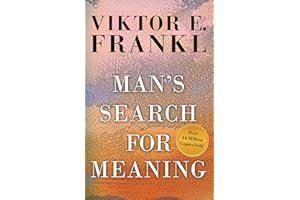 1
1