We've ranked the best education books using expert recommendations, sales data, and millions of reader ratings. At Shortform, we know books. Our book guides are the best in the world. Learn why.
Now updated with new research — the book that has changed millions of lives.
After decades of research, world-renowned Stanford University psychologist Carol S. Dweck, Ph.D., discovered a simple but groundbreaking idea: the power of mindset. In this brilliant book, she shows how success in school, work, sports, the arts, and almost every area of human endeavor can be dramatically influenced by how we think about our talents and abilities. People with a fixed mindset — those who believe that abilities are fixed — are less likely to flourish than those with a growth mindset — those who believe that abilities can be developed. Mindset reveals how great parents, teachers, managers, and athletes can put this idea to use to foster outstanding accomplishment.
In this edition, Dweck offers new insights into her now famous and broadly embraced concept. She introduces a phenomenon she calls false growth mindset and guides people toward adopting a deeper, truer growth mindset. She also expands the mindset concept beyond the individual, applying it to the cultures of groups and organizations. With the right mindset, you can motivate those you lead, teach, and love — to transform their lives and your own.
One of the reasons I loved Mindset is because it’s solutions-oriented. In the book’s final chapter, Dweck describes the workshop she and her colleagues have developed to shift students from a fixed to a growth mindset. These workshops demonstrate that ‘just learning about the growth mindset can cause a big shift in the way people think about themselves and their lives. [source]
Without exaggeration, I’ve never met a CEO who didn’t have Mindset on their bookshelf. It resonates with people who have become successful because the belief that your abilities can grow is foundational to their achievements. [source]
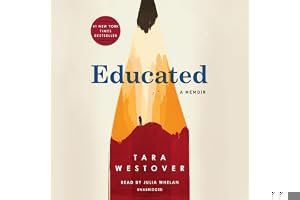
Tara Westover was 17 the first time she set foot in a classroom. Born to survivalists in the mountains of Idaho, she prepared for the end of the world by stockpiling home-canned peaches and sleeping with her "head-for-the-hills bag". In the summer she stewed herbs for her mother, a midwife and healer, and in the winter she salvaged in her father's junkyard.
Her father forbade hospitals, so Tara never saw a doctor or nurse. Gashes and concussions, even burns from explosions, were all treated at home with herbalism. The family was so isolated from mainstream society that there was no one to ensure the children received an education and no one to intervene when one of Tara's older brothers became violent.
Then, lacking any formal education, Tara began to educate herself. She taught herself enough mathematics and grammar to be admitted to Brigham Young University, where she studied history, learning for the first time about important world events like the Holocaust and the civil rights movement. Her quest for knowledge transformed her, taking her over oceans and across continents, to Harvard and to Cambridge. Only then would she wonder if she'd traveled too far, if there was still a way home.
Educated is an account of the struggle for self-invention. It is a tale of fierce family loyalty and of the grief that comes with severing the closest of ties. With the acute insight that distinguishes all great writers, Westover has crafted a universal coming-of-age story that gets to the heart of what an education is and what it offers: the perspective to see one's life through new eyes and the will to change it.
As 2018 draws to a close, I’m continuing a favorite tradition of mine and sharing my year-end lists. It gives me a moment to pause and reflect on the year through the books I found most thought-provoking, inspiring, or just plain loved. It also gives me a chance to highlight talented authors – some who are household names and others who you may not have heard of before. Here’s my best of 2018 list. [source]
Tara never went to school or visited a doctor until she left home at 17. I never thought I’d relate to a story about growing up in a Mormon survivalist household, but she’s such a good writer that she got me to reflect on my own life while reading about her extreme childhood. Melinda and I loved this memoir of a young woman whose thirst for learning was so strong that she ended up getting a Ph.D. from Cambridge University. [source]
If you read or listen to only one book this summer, this is it. Bloody brilliant! Every word, every sentence. Rarely do I go through a book with such a rollecoaster of emotion, from love to hate. Thank you for sharing @tarawestover #Educated https://t.co/GqLaqlcWMp [source]
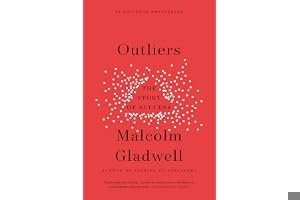
In this stunning new book, Malcolm Gladwell takes us on an intellectual journey through the world of "outliers"--the best and the brightest, the most famous and the most successful. He asks the question: what makes high-achievers different?
His answer is that we pay too much attention to what successful people are like, and too little attention to where they are from: that is, their culture, their family, their generation, and the idiosyncratic experiences of their upbringing. Along the way he explains the secrets of software billionaires, what it takes to be a great soccer player, why Asians are good at math, and what made the Beatles the greatest rock band.
Gladwell is not the first person to come up with the 10,000 hour rule. Nor is he the first person to document what it takes to become the best in the world at something. But his stories are so great as he explains these deep concepts. How did the Beatles become the best? Why are professional hockey players born in January, February and March? And so on. [source]
Alex Circei
Question: What five books would you recommend to young people interested in your career path & why? Answer: Screw It, Let's Do It: Lessons In Life by Richard Branson Outliers: The Story of Success by Malcolm Gladwell Start With Why: How Great Leaders Inspire Everyone To Take Action by Simon Sinek The Hard Thing About Hard Things: Building a Business When There Are No Easy Answers by Ben Horowitz Rich Dad Poor Dad: What the Rich Teach Their Kids About Money That the Poor and Middle Class Do Not! by Robert T. Kiyosaki [source]
Cover unavailable
4
How Children Succeed: Grit, Curiosity, and the Hidden Power of Character
Paul Tough
4.6
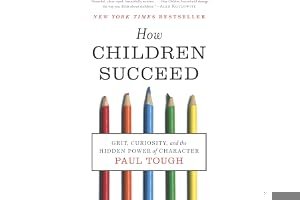
Why do some children succeed while others fail?
The story we usually tell about childhood and success is the one about intelligence: Success comes to those who score highest on tests, from preschool admissions to SATs.
But in "How Children Succeed," Paul Tough argues for a very different understanding of what makes a successful child. Drawing on groundbreaking research in neuroscience, economics, and psychology, Tough shows that the qualities that matter most have less to do with IQ and more to do with character: skills like grit, curiosity, conscientiousness, and optimism.
"How Children Succeed" introduces us to a new generation of scientists and educators who are radically changing our understanding of how children develop character, how they learn to think, and how they overcome adversity. It tells the personal stories of young people struggling to stay on the right side of the line between success and failure. And it argues for a new way of thinking about how best to steer an individual child – or a whole generation of children – toward a successful future.
This provocative and profoundly hopeful book will not only inspire and engage readers; it will also change our understanding of childhood itself.
…
Recommended by Chelsea Frank.
Chelsea Frank
I was reading a book, “How Children Succeed: Grit, Curiosity, and the Hidden Power of Character” by Paul Tough on a recommendation by my sister, a Middle School teacher. At that time I considered myself a great mother with natural intuition and did not go to the book as a means of “self-help” but of leisurely pleasure. However, I was perplexed when I discovered that even the most intelligent, diligent, and natural parents fail their children on multiple levels. Intuition was not enough. The day I finished the book I went to my son’s baseball game ready to apply my knowledge but found that the words out of my mouth were not necessarily those recommended in the book. Then it hit me: what if everything in life weren’t necessarily “intuitive”? I had learned so much about parenting even if I thought I was doing an excellent job already. What more could I learn about being content, happy, or successful in life? [source]
Cover unavailable
5
Make It Stick: The Science of Successful Learning
Peter C. Brown, Henry L. Roediger III, Mark A. McDaniel
To most of us, learning something "the hard way" implies wasted time and effort. Good teaching, we believe, should be creatively tailored to the different learning styles of students and should use strategies that make learning easier. Make It Stick turns fashionable ideas like these on their head. Drawing on recent discoveries in cognitive psychology and other disciplines, the authors offer concrete techniques for becoming more productive learners.
Memory plays a central role in our ability to carry out complex cognitive tasks, such as applying knowledge to problems never before encountered and drawing inferences from facts already known. New insights into how memory is encoded, consolidated, and later retrieved have led to a better understanding of how we learn. Grappling with the impediments that make learning challenging leads both to more complex mastery and better retention of what was learned.
Many common study habits and practice routines turn out to be counterproductive. Underlining and highlighting, rereading, cramming, and single-minded repetition of new skills create the illusion of mastery, but gains fade quickly. More complex and durable learning come from self-testing, introducing certain difficulties in practice, waiting to re-study new material until a little forgetting has set in, and interleaving the practice of one skill or topic with another. Speaking most urgently to students, teachers, trainers, and athletes, Make It Stick will appeal to all those interested in the challenge of lifelong learning and self-improvement.
If you’re trying to keep up your reading about learning, one of the best books about learning is Make It Stick: The Science of Successful Learning by Peter Brown, Henry Roediger III, and Mark McDaniel. This insightful book was co-authored by some of the most influential researchers around. The book jacket says it best: “Many common study habits and practice routines turn out to be counterproductive. Underlining and highlighting, rereading, cramming, and single-minded repetition of new skills create the illusion of mastery, but gains fade quickly. More complex and durable learning come from self-testing, introducing certain difficulties in practice, waiting to re-study new material until a little forgetting has set in, and interleaving the practice of one skill or topic with another. Speaking most urgently to students, teachers, trainers, and athletes, Make It Stick will appeal to all those interested in the challenge of lifelong learning and self-improvement. [source]
Cover unavailable
6
I Am Malala: The Story of the Girl Who Stood Up for Education and Was Shot by the Taliban
I come from a country that was created at midnight. When I almost died it was just after midday.
When the Taliban took control of the Swat Valley in Pakistan, one girl spoke out. Malala Yousafzai refused to be silenced and fought for her right to an education.
On Tuesday, October 9, 2012, when she was fifteen, she almost paid the ultimate price. She was shot in the head at point-blank range while riding the bus home from school, and few expected her to survive.
Instead, Malala's miraculous recovery has taken her on an extraordinary journey from a remote valley in northern Pakistan to the halls of the United Nations in New York. At sixteen, she has become a global symbol of peaceful protest and the youngest-ever Nobel Peace Prize laureate.
I Am Malala is the remarkable tale of a family uprooted by global terrorism, of the fight for girls' education, of a father who, himself a school owner, championed and encouraged his daughter to write and attend school, and of brave parents who have a fierce love for their daughter in a society that prizes sons.
…
Recommended by Adrienne Kisner.
Adrienne Kisner
Malala’s story of triumph is a battle cry for girls (and boys) everywhere. Education can set you free. [source]
Cover unavailable
7
How to Read a Book: The Classic Guide to Intelligent Reading
With more than half a million paperback copies in print and now in this stunning hardcover keepsake edition, How to Read a Book is the classic and definitive guide to reading comprehension and retention for students of literature, scholars across disciplines, and anyone who just loves to read.
Originally written in 1940 and first published by Simon & Schuster in 1972, How to Read a Book introduces and elucidates the various levels of reading and how to achieve them in order to gain the most understanding and insight from any book. From elementary reading, through systematic skimming and inspectional reading, to speed reading and beyond, readers will learn when and how to “judge a book by its cover,” perceive structure no matter the prose, read critically, and extract the author’s message from the text.
Also included are specific reading techniques that work best for reading particular genres, whether they be practical books, imaginative literature, plays, poetry, history, science and mathematics, philosophy, or social science works. A recommended reading list and multiple comprehension tests are incorporated as well in order to measure progress in reading skills, speed, and understanding.
As poignant and applicable today as it was nearly seventy-five years ago, this beautiful hardcover edition is the perfect way for you to discover or rediscover How to Read a Book, a rare phenomenon and the best and most successful guide to reading comprehension.
…
Recommended by Sergey Brin, Ben Chestnut, Kevin Systrom, and 3 others.
had “How to Read a Book” by Mortimer J. Adler as one of his most recommended books. [source]
Ben Chestnut
Founder & CEO/MailChimp
I also love How to Read a Book by Mortimer Adler. I’m teaching its tips to my children while they’re young, so they can consume books much faster and have more fun reading. [source]
Kevin Systrom
The author's thesis is that the most important part of reading a book is to actually read the table of contents and familiarize yourself with the major structure of the book. [source]
Cover unavailable
8
Pedagogy of the Oppressed
Paulo Freire
4.5
First published in Portuguese in 1968, Pedagogy of the Oppressed was translated and published in English in 1970. Paulo Freire's work has helped to empower countless people throughout the world and has taken on special urgency in the United States and Western Europe, where the creation of a permanent underclass among the underprivileged and minorities in cities and urban centers is ongoing.
This 50th anniversary edition includes an updated introduction by Donaldo Macedo, a new afterword by Ira Shor and interviews with Marina Aparicio Barberan, Noam Chomsky, Ramon Flecha, Gustavo Fischman, Ronald David Glass, Valerie Kinloch, Peter Mayo, Peter McLaren and Margo Okazawa-Rey to inspire a new generation of educators, students, and general readers for years to come.
…
Recommended by Alexis Isabel.
Alexis Isabel
@dontkauf i’ve read it! great book, def worth a re-read [source]
Major New York Times bestseller Winner of the National Academy of Sciences Best Book Award in 2012 Selected by the New York Times Book Review as one of the best books of 2011 A Globe and Mail Best Books of the Year 2011 Title One of The Economist's 2011 Books of the Year One of The Wall Street Journal's Best Nonfiction Books of the Year 2011 2013 Presidential Medal of Freedom Recipient
In the international bestseller, Thinking, Fast and Slow, Daniel Kahneman, the renowned psychologist and winner of the Nobel Prize in Economics, takes us on a groundbreaking tour of the mind and explains the two systems that drive the way we think. System 1 is fast, intuitive, and emotional; System 2 is slower, more deliberative, and more logical. The impact of overconfidence on corporate strategies, the difficulties of predicting what will make us happy in the future, the profound effect of cognitive biases on everything from playing the stock market to planning our next vacation—each of these can be understood only by knowing how the two systems shape our judgments and decisions. Engaging the reader in a lively conversation about how we think, Kahneman reveals where we can and cannot trust our intuitions and how we can tap into the benefits of slow thinking. He offers practical and enlightening insights into how choices are made in both our business and our personal lives—and how we can use different techniques to guard against the mental glitches that often get us into trouble. Winner of the National Academy of Sciences Best Book Award and the Los Angeles Times Book Prize and selected by The New York Times Book Review as one of the ten best books of 2011, Thinking, Fast and Slow is destined to be a classic.
A few months ago, Mr. Obama read “Thinking, Fast and Slow,” by Daniel Kahneman, about how people make decisions — quick, instinctive thinking versus slower, contemplative deliberation. For Mr. Obama, a deliberator in an instinctive business, this may be as instructive as any political science text. [source]
Captivating dive into human decision making, marred by inclusion of several/many? psychology studies that fail to replicate. Will stand as a cautionary tale? [source]
Cover unavailable
10
Savage Inequalities: Children in America's Schools
Jonathan Kozol
4.5
National Book Award-winning author Jonathan Kozol presents his shocking account of the American educational system in this stunning "New York Times" bestseller, which has sold more than 250,000 hardcover copies.
"An impassioned book, laced with anger and indignation, about how our public education system scorns so many of our children." -- New York Times Book Review
In this must-read book for anyone striving to succeed, pioneering psychologist Angela Duckworth shows parents, educators, students, and business people both seasoned and new that the secret to outstanding achievement is not talent but a focused persistence called grit.
Why do some people succeed and others fail? Sharing new insights from her landmark research on grit, Angela Duckworth explains why talent is hardly a guarantor of success. Rather, other factors can be even more crucial such as identifying our passions and following through on our commitments.
Drawing on her own powerful story as the daughter of a scientist who frequently bemoaned her lack of smarts, Duckworth describes her winding path through teaching, business consulting, and neuroscience, which led to the hypothesis that what really drives success is not genius, but a special blend of passion and long-term perseverance. As a professor at the University of Pennsylvania, Duckworth created her own character lab and set out to test her theory.
Here, she takes readers into the field to visit teachers working in some of the toughest schools, cadets struggling through their first days at West Point, and young finalists in the National Spelling Bee. She also mines fascinating insights from history and shows what can be gleaned from modern experiments in peak performance. Finally, she shares what she's learned from interviewing dozens of high achievers; from JP Morgan CEO Jamie Dimon to the cartoon editor of The New Yorker to Seattle Seahawks Coach Pete Carroll.
Winningly personal, insightful, and even life-changing, Grit is a book about what goes through your head when you fall down, and how that not talent or luck makes all the difference.
…
Recommended by Albert Wenger, Anu Hariharan, Benjamin Spall, and 11 others.
Benjamin Spall
Question: What five books would you recommend to youngsters interested in your professional path? … Grit by Angela Duckworth [source]
Bogdan Lucaciu
Grit: The Power of Passion and Perseverance - it was frustrating to read: “Where was this book 20 years ago!?” [source]
Stephen Lew
When asked what books he would recommend to youngsters interested in his professional path, Stephen mentioned Grit. [source]
Cover unavailable
12
Dumbing Us Down: The Hidden Curriculum of Compulsory Schooling
John Taylor Gatto
4.5
A highly praised best-seller for over a decade, this is a radical treatise on public education that concludes that compulsory government schooling does little but teach young people to follow orders like cogs in a machine. This Special Collector's Edition celebrates 100,000 copies or the book in print, and the book's on-going importance and popularity.
Cover unavailable
13
The Book Whisperer: Awakening the Inner Reader in Every Child
Donalyn Miller, Jeff Anderson
4.5
Cover unavailable
14
Quiet: The Power of Introverts in a World That Can't Stop Talking
At least one-third of the people we know are introverts. They are the ones who prefer listening to speaking; who innovate and create but dislike self-promotion; who favor working on their own over working in teams. It is to introverts—Rosa Parks, Chopin, Dr. Seuss, Steve Wozniak—that we owe many of the great contributions to society.
In Quiet, Susan Cain argues that we dramatically undervalue introverts and shows how much we lose in doing so. She charts the rise of the Extrovert Ideal throughout the twentieth century and explores how deeply it has come to permeate our culture. She also introduces us to successful introverts—from a witty, high-octane public speaker who recharges in solitude after his talks, to a record-breaking salesman who quietly taps into the power of questions. Passionately argued, superbly researched, and filled with indelible stories of real people, Quiet has the power to permanently change how we see introverts and, equally important, how they see themselves.
Now with Extra Libris material, including a reader’s guide and bonus content.
Leaders needn’t be the loudest. Leadership is not about theater. It’s not about dominance. It is about putting the lives of others before any other priority. In Quiet, Cain affirms to a good many of us who are introverts by nature that we needn’t try to be extroverts if we want to lead. Simply being ourselves is more important — and more effective. [source]
Danielle Morrill
Co-founder/Mattermark
Anyway, maybe you’re like me and figuring this out for yourself. It’s a good book for introverts and for those who love them [source]
Probably half the world is introverts. Maybe more. It’s not an easy life to live. I sometimes have that feeling in a room full of people, “uh-oh. I just shut down. I can’t talk anymore and there’s a lock on my mouth and this crowd threw away the key.” Do you ever get that feeling? Please? I hope you do. Let’s try to lock eyes at the party. “Quiet” shows the reader how to unlock the secret powers that probably half the world needs to unlock. [source]
Cover unavailable
15
The Well-Trained Mind: A Guide to Classical Education at Home
Susan Wise Bauer, Jessie Wise
4.5
This book will instruct you, step by step, on how to give your child an academically rigorous, comprehensive education from preschool through high school. Two veteran home educators outline the classical pattern of education—the trivium—which organizes learning around the maturing capacity of the child's mind: the elementary school "grammar stage," the middle school "logic stage," and the high school "rhetoric stage." Using the trivium as your model, you'll be able to instruct your child in all levels of reading, writing, history, geography, mathematics, science, foreign languages, rhetoric, logic, art, and music, regardless of your own aptitude in those subjects.
Newly revised and updated, The Well-Trained Mind includes detailed book lists with complete ordering information; up-to-date listings of resources, publications, and Internet links; and useful contacts.
An excellent resource for any family with a desire to incorporate a classical education in their home, whether as a curriculum or as a reference. (Educational Freedom Press)
…
Cover unavailable
16
The Smartest Kids in the World: And How They Got That Way
Amanda Ripley
4.5
Through the compelling stories of three American teenagers living abroad and attending the world’s top-notch public high schools, an investigative reporter explains how these systems cultivate the “smartest” kids on the planet.
America has long compared its students to top-performing kids of other nations, but how do the world’s education superpowers look through the eyes of an American high school student? Author Amanda Ripley follows three teenagers who chose to spend one school year living and learning in Finland, South Korea, and Poland. Through their adventures, Ripley discovers startling truths about how attitudes, parenting, and rigorous teaching have revolutionized these countries’ education results.
In The Smartest Kids in the World, Ripley’s astonishing new insights reveal that top-performing countries have achieved greatness only in the past several decades; that the kids who live there are learning to think for themselves, partly through failing early and often; and that persistence, hard work, and resilience matter more to our children’s life chances than self-esteem or sports.
Ripley’s investigative work seamlessly weaves narrative and research, providing in-depth analysis and gripping details that will keep you turning the pages. Written in a clear and engaging style, The Smartest Kids in the World will enliven public as well as dinner table debates over what makes for brighter and better students.
…
Cover unavailable
17
Teaching to Transgress: Education as the Practice of Freedom
bell hooks
4.4
In Teaching to Transgress, bell hooks--writer, teacher, and insurgent black intellectual--writes about a new kind of education, educations as the practice of freedom. Teaching students to "transgress" against racial, sexual, and class boundaries in order to achieve the gift of freedom is, for hooks, the teacher's most important goal.
Bell hooks speaks to the heart of education today: how can we rethink teaching practices in the age of multiculturalism? What do we do about teachers who do not want to teach, and students who do not want to learn? How should we deal with racism and sexism in the classroom?
Full of passion and politics, Teaching to Transgress combines practical knowledge of the classroom with a deeply felt connection to the world of emotions and feelings. This is the rare book about teachers and students that dares to raise critical questions about eros and rage, grief and reconciliation, and the future o teaching its self.
"To educate as the practice of freedom," writes bell hooks, "is a way of teaching that any one can learn." Teaching to Transgress is the record of one gifted teacher's struggle to make classrooms work.
This book sat next to my bed the entire first year I taught at the University of Houston. Hooks' idea of "education as the practice of freedom" shaped who I am today. Whenever difficult conversations about race, class, or gender begin to surface, I remember what she taught me: If your students are comfortable, you're not doing your job. [source]
Les Back
It’s really a wonderful account of the possibility that education has to shape and transform lives. [source]
Cover unavailable
18
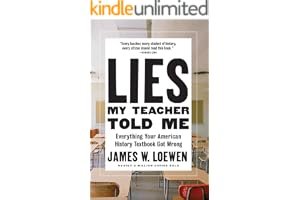
Lies My Teacher Told Me: Everything Your American History Textbook Got Wrong
James W. Loewen
4.4
Americans have lost touch with their history, and in Lies My Teacher Told Me Professor James Loewen shows why. After surveying eighteen leading high school American history texts, he has concluded that not one does a decent job of making history interesting or memorable. Marred by an embarrassing combination of blind patriotism, mindless optimism, sheer misinformation, and outright lies, these books omit almost all the ambiguity, passion, conflict, and drama from our past.
In this revised edition, packed with updated material, Loewen explores how historical myths continue to be perpetuated in today's climate and adds an eye-opening chapter on the lies surrounding 9/11 and the Iraq War. From the truth about Columbus's historic voyages to an honest evaluation of our national leaders, Loewen revives our history, restoring the vitality and relevance it truly possesses.
Thought provoking, nonpartisan, and often shocking, Loewen unveils the real America in this iconoclastic classic beloved by high school teachers, history buffs, and enlightened citizens across the country.
…
Cover unavailable
19
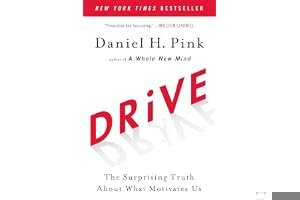
Drive: The Surprising Truth About What Motivates Us
The New York Times bestseller that gives readers a paradigm-shattering new way to think about motivation
Most people believe that the best way to motivate is with rewards like money—the carrot-and-stick approach. That's a mistake, says Daniel H. Pink (author of To Sell Is Human: The Surprising Truth About Motivating Others). In this provocative and persuasive new book, he asserts that the secret to high performance and satisfaction-at work, at school, and at home—is the deeply human need to direct our own lives, to learn and create new things, and to do better by ourselves and our world.
Drawing on four decades of scientific research on human motivation, Pink exposes the mismatch between what science knows and what business does—and how that affects every aspect of life. He examines the three elements of true motivation—autonomy, mastery, and purpose-and offers smart and surprising techniques for putting these into action in a unique book that will change how we think and transform how we live.
…
Recommended by Tobi Lütke, Bogdan Lucaciu, David Brudo, and 5 others.
Tobi Lütke
Founder & CEO/Shopify
Tobi Lütke recommended this book in an interview in "The Globe and Mail." [source]
Bogdan Lucaciu
Spoiler: it’s autonomy, mastery, and purpose. [source]
Why Don't Students Like School?: A Cognitive Scientist Answers Questions About How the Mind Works and What It Means for the Classroom
Daniel T. Willingham
4.4
Kids are naturally curious, but when it comes to school it seems like their minds are turned off. Why is it that they can remember the smallest details from their favorite television program, yet miss the most obvious questions on their history test?
Cognitive scientist Dan Willingham has focused his acclaimed research on the biological and cognitive basis of learning and has a deep understanding of the daily challenges faced by classroom teachers. this book will help teachers improve their practice by explaining how they and their students think and learn—revealing the importance of story, emotion, memory, context, and routine in building knowledge and creating lasting learning experiences.
In this breakthrough book, Willingham has distilled his knowledge of cognitive science into a set of nine principles that are easy to understand and have clear applications for the classroom. Some of examples of his surprising findings are:
“Learning styles” don't exist The processes by which different children think and learn are more similar than different.
Intelligence is malleable Intelligence contributes to school performance and children do differ, but intelligence can be increased through sustained hard work.
You cannot develop “thinking skills” in the absence of facts We encourage students to think critically, not just memorize facts. However thinking skills depend on factual knowledge for their operation.
Why Don't Students Like School is a basic primer for every teacher who wants to know how their brains and their students’ brains work and how that knowledge can help them hone their teaching skills.
The Death and Life of the Great American School System: How Testing and Choice Are Undermining Education
Diane Ravitch
4.4
A passionate plea to preserve and renew public education, The Death and Life of the Great American School System is a radical change of heart from one of America’s best-known education experts.
Diane Ravitch—former assistant secretary of education and a leader in the drive to create a national curriculum—examines her career in education reform and repudiates positions that she once staunchly advocated. Drawing on over forty years of research and experience, Ravitch critiques today’s most popular ideas for restructuring schools, including privatization, standardized testing, punitive accountability, and the feckless multiplication of charter schools. She shows conclusively why the business model is not an appropriate way to improve schools. Using examples from major cities like New York, Philadelphia, Chicago, Denver, and San Diego, Ravitch makes the case that public education today is in peril.
Ravitch includes clear prescriptions for improving America’s schools: *Leave decisions about schools to educators, not politicians or businessmen *Devise a truly national curriculum that sets out what children in every grade should be learning *Expect charter schools to educate the kids who need help the most, not to compete with public schools *Pay teachers a fair wage for their work, not “merit pay” based on deeply flawed and unreliable test scores *Encourage family involvement in education from an early age The Death and Life of the Great American School System is more than just an analysis of the state of play of the American education system. It is a must-read for any stakeholder in the future of American schooling.
…
Cover unavailable
22
Other People's Children: Cultural Conflict in the Classroom
Lisa Delpit
4.4
An updated edition of the classic revolutionary analysis of the role of race in the classroom.
Winner of an American Educational Studies Association Critics' Choice Award and Choice Magazine's Outstanding Academic book award, and voted one of Teacher Magazine's "great books," Other People's Children has sold over 150,000 copies since its original hardcover publication. This anniversary edition features a new introduction by Delpit as well as new framing essays by Herbert Kohl and Charles Payne.
In a radical analysis of contemporary classrooms, MacArthur Award-winning author Lisa Delpit develops ideas about ways teachers can be better "cultural transmitters" in the classroom, where prejudice, stereotypes, and cultural assumptions breed ineffective education. Delpit suggests that many academic problems attributed to children of color are actually the result of miscommunication, as primarily white teachers and "other people's children" struggle with the imbalance of power and the dynamics plaguing our system.
A new classic among educators, Other People's Children is a must-read for teachers, administrators, and parents striving to improve the quality of America's education system.
…
Recommended by Kelly Wickham Hurst and Michelle Rhee.
Kelly Wickham Hurst
@MJAntinarelli @KaitPopielarz It’s amazing. It’s THE book that changed everything for me early on in my career. It was such a swift kick to the head. [source]
Michelle Rhee
Other People’s Children is one of the books that all educators should read because it really gives a different perspective on teaching children who may not be of the same race or socioeconomic background. I think it’s always important for teachers to understand the cultural norms and expectations that prevail in the school environment where they work. Teachers need to be cognisant, not complacent, about teaching across difference. Other People’s Children helps educators ask themselves the right questions and gives them a lens through which they can view and think about how cultural dynamics play out in the classroom. [source]
Cover unavailable
23
The First Days of School: How to Be An Effective Teacher
Harry K. Wong, Rosemary T. Wong
4.4
The best-selling book ever on classroom management and teaching for student achievement with over 3.6 million copies sold. The book walks a teacher, either novice or veteran, through structuring and organizing a classroom for success that can be applied at any time of the year at any grade level, pre-K through college.The book is used in thousands of school districts, in over 116 countries, and in over 2,027 college classrooms. Its practical, yet inspiring. But most important, it works The new 4th edition includes updated research, photos, and more examples of "how-to" along with an implementation DVD, "Using The First Days of School" featuring Chelonnda Seroyer.This is the most requested book for what works in the classroom for teacher and student success.
…
Cover unavailable
24
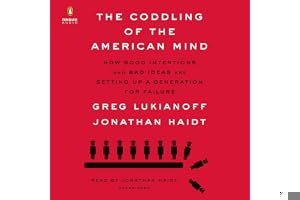
The Coddling of the American Mind: How Good Intentions and Bad Ideas Are Setting Up a Generation for Failure
A timely investigation into the campus assault on free speech and what it means for students, education, and our democracy.
The generation now coming of age has been taught three Great Untruths: their feelings are always right; they should avoid pain and discomfort; and they should look for faults in others and not themselves. These three Great Untruths are part of a larger philosophy that sees young people as fragile creatures who must be protected and supervised by adults. But despite the good intentions of the adults who impart them, the Great Untruths are harming kids by teaching them the opposite of ancient wisdom and the opposite of modern psychological findings on grit, growth, and antifragility. The result is rising rates of depression and anxiety, along with endless stories of college campuses torn apart by moralistic divisions and mutual recriminations.
This is a book about how we got here. First Amendment expert Greg Lukianoff and social psychologist Jonathan Haidt take us on a tour of the social trends stretching back to the 1980s that have produced the confusion and conflict on campus today, including the loss of unsupervised play time and the birth of social media, all during a time of rising political polarization.
This is a book about how to fix the mess. The culture of "safety" and its intolerance of opposing viewpoints has left many young people anxious and unprepared for adult life, with devastating consequences for them, for their parents, for the companies that will soon hire them, and for a democracy that is already pushed to the brink of violence over its growing political divisions. Lukianoff and Haidt offer a comprehensive set of reforms that will strengthen young people and institutions, allowing us all to reap the benefits of diversity, including viewpoint diversity.
This is a book for anyone who is confused by what's happening on college campuses today, or has children, or is concerned about the growing inability of Americans to live and work and cooperate across party lines.
The kids aren’t alright. No, really—I know every generation says that, but this time it’s true. Kids who grew up with smartphones (and have begun to enter the university system) are emotionally stunted, overly fragile, and exhibiting mental health issues at alarming rates. I expected this book to be another, “Let’s all shit on social media together,” party, but it’s not. Social media, of course, does get its own chapter. But most of the book is focused on cultural shifts that have happened over the past couple generations. [source]
Max Levchin
Co-founder/PayPal, CEO/Affirm, Investor
Highlights the need to continue to have such discussions about sensitive topics instead of ignoring them for the sake of comfort. [source]
Excited to read this new book by my friends. [source]
Cover unavailable
25
Three Cups of Tea: One Man's Mission to Promote Peace ... One School at a Time
Greg Mortenson, David Oliver Relin
4.4
The inspiring account of one man's campaign to build schools in the most dangerous, remote, and anti-American reaches of Asia.
In April 2011, the CBS documentary "60 Minutes" called into question Greg Mortenson's work. The program alleged several inaccuracies in Three Cups of Tea, and its sequel, Stones into Schools, as well as financial improprieties in the operation of Mortenson's Central Asia Institute. Questions were also raised about Mortenson's claim that he got lost near K2 and ended up in Korphe; that he was captured by the Taliban in 1996; the number of schools the CAI claimed to have built; and whether CAI funds had been used appropriately for Mortenson's book tours. Jon Krakauer, who had supported the CAI to the tune of $75,000, also questioned Mortenson's accounts, and released his allegations in a lengthy article titled Three Cups of Deceit.
…
Recommended by Gretchen Peters, Jennifer Steil, and Nicholas Kristof.
Gretchen Peters
I went to a refugee camp after 9/11 where people were living in tents and boiling grass to make tea and at least one family offered to let me sleep in their tent. [source]
Jennifer Steil
Greg Mortenson has changed literally thousands and thousands of lives. [source]
A groundbreaking manifesto for people searching for the kind of insight on leading, thinking, and living that elite schools should be—but aren’t—providing.
As a professor at Yale, Bill Deresiewicz saw something that troubled him deeply. His students, some of the nation’s brightest minds, were adrift when it came to the big questions: how to think critically and creatively, and how to find a sense of purpose.
Excellent Sheep takes a sharp look at the high-pressure conveyor belt that begins with parents and counselors who demand perfect grades and culminates in the skewed applications Deresiewicz saw firsthand as a member of Yale’s admissions committee. As schools shift focus from the humanities to "practical" subjects like economics and computer science, students are losing the ability to think in innovative ways. Deresiewicz explains how college should be a time for self-discovery, when students can establish their own values and measures of success, so they can forge their own path. He addresses parents, students, educators, and anyone who's interested in the direction of American society, featuring quotes from real students and graduates he has corresponded with over the years, candidly exposing where the system is broken and clearly presenting solutions.
There’s a guy who I just had on my podcast, Mark Deresiewicz, who wrote a book called Excellent Sheep. He was a Yale professor, and took a look at the essentially what was wrong with higher education, at these elite institutions, primarily places like Amherst and Yale and Harvard. And one of the things he said is that we’re breeding excellent sheep. You’ve got 31 flavors of vanilla. These kids are so obsessed with essentially achievement for its own sake, not fulfillment or meaning, but rather achievement for its own sake, so they can get into a great – become rich doctors or lawyers, or consultants or investment bankers. And even that becomes an extension of what they’ve been doing their whole life, which was hey, I want to please my boss, jump through these loopholes and be in an elite person. And it’s an interesting book. But one of the things he talked about was that these elite institutions are – there’s a feeder system of about 100 high schools in this country, about 100 high schools, and that’s it, that provide students to these universities. So something like QuestBridge is desperately needed, so that we can create an equality of opportunity. That’s always what it is, right? [source]
Cover unavailable
27
Creative Schools: The Grassroots Revolution That's Transforming Education
Sir Ken Robinson PhD and Lou Aronica
4.3
A revolutionary reappraisal of how to educate our children and young people by Ken Robinson, the New York Times bestselling author of The Element and Finding Your Element
Ken Robinson is one of the world’s most influential voices in education, and his 2006 TED Talk on the subject is the most viewed in the organization’s history. Now, the internationally recognized leader on creativity and human potential focuses on one of the most critical issues of our time: how to transform the nation’s troubled educational system. At a time when standardized testing businesses are raking in huge profits, when many schools are struggling, and students and educators everywhere are suffering under the strain, Robinson points the way forward. He argues for an end to our outmoded industrial educational system and proposes a highly personalized, organic approach that draws on today’s unprecedented technological and professional resources to engage all students, develop their love of learning, and enable them to face the real challenges of the twenty-first century. Filled with anecdotes, observations and recommendations from professionals on the front line of transformative education, case histories, and groundbreaking research—and written with Robinson’s trademark wit and engaging style—Creative Schools will inspire teachers, parents, and policy makers alike to rethink the real nature and purpose of education.
From the Hardcover edition.
…
Recommended by Ng Rong Xin.
Ng Rong Xin
Creative Schools: The Grassroots Revolution That's Transforming Education by Sir Ken Robinson - a book for educator or edu-preneur or anyone who wants to make a change in the education realm. [source]
Cover unavailable
28
How to Talk So Kids Will Listen & Listen So Kids Will Talk
The ultimate “parenting bible” (The Boston Globe) with a new Foreword—and available as an eBook for the first time—a timeless, beloved book on how to effectively communicate with your child from the #1 New York Times bestselling authors.
Internationally acclaimed experts on communication between parents and children, Adele Faber and Elaine Mazlish “are doing for parenting today what Dr. Spock did for our generation” (ParentMagazine). Now, this bestselling classic includes fresh insights and suggestions as well as the author’s time-tested methods to solve common problems and build foundations for lasting relationships, including innovative ways to: · Cope with your child's negative feelings, such as frustration, anger, and disappointment · Express your strong feelings without being hurtful · Engage your child’s willing cooperation · Set firm limits and maintain goodwill · Use alternatives to punishment that promote self-discipline · Understand the difference between helpful and unhelpful praise · Resolve family conflicts peacefully
Enthusiastically praised by parents and professionals around the world, the down-to-earth, respectful approach of Faber and Mazlish makes relationships with children of all ages less stressful and more rewarding.
…
Recommended by Brian Armstrong, Jeff Atwood, and Miguel De Icaza.
Jeff Atwood
"The best marriage advice book I’ve read is a paperback called How to Talk So Kids Will Listen & Listen So Kids Will Talk. As you might deduce from the title, it wasn’t meant as a marriage advice book." https://t.co/cy7JeKVsjV [source]
Miguel De Icaza
@codinghorror Yes - that is an awesome book too [source]
Cover unavailable
29
The 7 Habits of Highly Effective People: Powerful Lessons in Personal Change
When Stephen Covey first released The Seven Habits of Highly Effective People, the book became an instant rage because people suddenly got up and took notice that their lives were headed off in the wrong direction; and more than that, they realized that there were so many simple things they could do in order to navigate their life correctly. This book was wonderful education for people, education in how to live life effectively and get closer to the ideal of being a ‘success’ in life.
But not everyone understands Stephen Covey’s model fully well, or maybe there are some people who haven’t read it yet. This is definitely true because we still see so much failure all around us. Now, I am not saying that by using Covey’s model, or anyone else’s model for that matter, you can become a sure-shot success, but at least we should have seen many more successes around us already judging by the number of copies the book has sold! So, where is the shortcoming?
There are two main problems here, and we are talking only about the people who have read the book already. The first problem is that most people are too lazy to implement the ideals of Stephen Covey in their lives. They consider his masterpiece of a book as a mere coffee-table book or a book that you use for light reading when you are traveling and then forget all about it. They do not realize that this book contains life-changing information. Or, they take the information and do not make the effort to actually utilize it so that it becomes knowledge for them.
The second problem is that a lot of people have a myopic view of Covey’s ideals. These are people who are impressed by the book already. If you ask them what the seven habits are, they can rattle them off end to end, but then they miss the larger picture. They do not understand that Covey was trying to tell more than he wrote in words. There are hidden implications in this book, yes, and a lot of people have just failed to see through them.
That is what we are trying to do. We are trying to show you how Covey’s book, or rather, his model, was a complete model in itself. There was nothing amiss about it. If you implement it, there should be no aspect of your life that should go untouched. The only thing is that you have to understand these ideals and try to implement them in your life.
But, before we barge into that area, it is extremely important to understand what these ideals are. What was the model that was propounded by Stephen Covey in his mega-famous book? We shall begin by trying to understand his model first, and then interpret it in such a way that it pertains to every aspect of our life
Dave Ramsey recommended this book on his website. [source]
Dustin Moskovitz
Co-founder/Facebook and Asana
I was surprised at how familiar the topics felt. [source]
Joe Martin
@benmorris @audible_com @Gladwell I enjoy the quiet on the way home, but on the way to work I am listening to the 7 habits book by Stephen Coveru, a fave of mine [source]
Cover unavailable
30
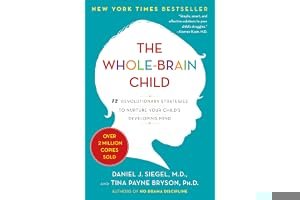
The Whole-Brain Child: 12 Revolutionary Strategies to Nurture Your Child's Developing Mind
“Simple, smart, and effective solutions to your child’s struggles.”—Harvey Karp, M.D.
“Daniel Siegel and Tina Payne Bryson have created a masterly, reader-friendly guide to helping children grow their emotional intelligence. This brilliant method transforms everyday interactions into valuable brain-shaping moments. Anyone who cares for children—or who loves a child—should read The Whole-Brain Child.”—Daniel Goleman, author of Emotional Intelligence
In this pioneering, practical book, Daniel J. Siegel, neuropsychiatrist and author of the bestselling Mindsight, and parenting expert Tina Payne Bryson offer a revolutionary approach to child rearing with twelve key strategies that foster healthy brain development, leading to calmer, happier children. The authors explain—and make accessible—the new science of how a child’s brain is wired and how it matures. The “upstairs brain,” which makes decisions and balances emotions, is under construction until the mid-twenties. And especially in young children, the right brain and its emotions tend to rule over the logic of the left brain. No wonder kids throw tantrums, fight, or sulk in silence. By applying these discoveries to everyday parenting, you can turn any outburst, argument, or fear into a chance to integrate your child’s brain and foster vital growth.
Complete with age-appropriate strategies for dealing with day-to-day struggles and illustrations that will help you explain these concepts to your child, The Whole-Brain Child shows you how to cultivate healthy emotional and intellectual development so that your children can lead balanced, meaningful, and connected lives. “[A] useful child-rearing resource for the entire family . . . The authors include a fair amount of brain science, but they present it for both adult and child audiences.”—Kirkus Reviews “Strategies for getting a youngster to chill out [with] compassion.”—The Washington Post “This erudite, tender, and funny book is filled with fresh ideas based on the latest neuroscience research. I urge all parents who want kind, happy, and emotionally healthy kids to read The Whole-Brain Child. This is my new baby gift.”—Mary Pipher, Ph.D., author of Reviving Ophelia and The Shelter of Each Other
“Gives parents and teachers ideas to get all parts of a healthy child’s brain working together.”—Parent to Parent
…
Recommended by Genevieve Von Lob and Graham Duncan.
Genevieve Von Lob
Siegel uses what neuroscience tells us about how a child’s brain develops to provide practical tips for parents. [source]
Graham Duncan
Graham Duncan recommended this book on the podcast "The Tim Ferriss Show". [source]
Cover unavailable
31
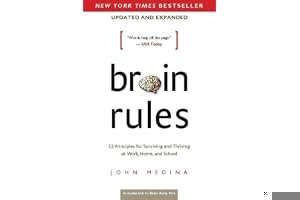
Brain Rules: 12 Principles for Surviving and Thriving at Work, Home, and School
Most of us have no idea what’s really going on inside our heads. Yet brain scientists have uncovered details every business leader, parent, and teacher should know—like the need for physical activity to get your brain working its best.
How do we learn? What exactly do sleep and stress do to our brains? Why is multi-tasking a myth? Why is it so easy to forget—and so important to repeat new knowledge? Is it true that men and women have different brains?
In Brain Rules, Dr. John Medina, a molecular biologist, shares his lifelong interest in how the brain sciences might influence the way we teach our children and the way we work. In each chapter, he describes a brain rule—what scientists know for sure about how our brains work—and then offers transformative ideas for our daily lives.
Medina’s fascinating stories and infectious sense of humor breathe life into brain science. You’ll learn why Michael Jordan was no good at baseball. You’ll peer over a surgeon’s shoulder as he proves that most of us have a Jennifer Aniston neuron. You’ll meet a boy who has an amazing memory for music but can’t tie his own shoes.
You will discover how:
Every brain is wired differently Exercise improves cognition We are designed to never stop learning and exploring Memories are volatile Sleep is powerfully linked with the ability to learn Vision trumps all of the other senses Stress changes the way we learn
In the end, you’ll understand how your brain really works—and how to get the most out of it.
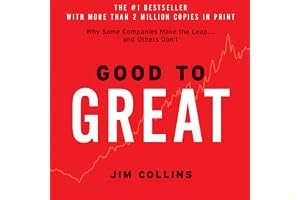
To find the keys to greatness, Collins's 21-person research team read and coded 6,000 articles, generated more than 2,000 pages of interview transcripts and created 384 megabytes of computer data in a five-year project. The findings will surprise many readers and, quite frankly, upset others.
The Challenge Built to Last, the defining management study of the nineties, showed how great companies triumph over time and how long-term sustained performance can be engineered into the DNA of an enterprise from the very beginning.
But what about the company that is not born with great DNA? How can good companies, mediocre companies, even bad companies achieve enduring greatness?
The Study For years, this question preyed on the mind of Jim Collins. Are there companies that defy gravity and convert long-term mediocrity or worse into long-term superiority? And if so, what are the universal distinguishing characteristics that cause a company to go from good to great?
The Standards Using tough benchmarks, Collins and his research team identified a set of elite companies that made the leap to great results and sustained those results for at least fifteen years. How great? After the leap, the good-to-great companies generated cumulative stock returns that beat the general stock market by an average of seven times in fifteen years, better than twice the results delivered by a composite index of the world's greatest companies, including Coca-Cola, Intel, General Electric, and Merck.
The Comparisons The research team contrasted the good-to-great companies with a carefully selected set of comparison companies that failed to make the leap from good to great. What was different? Why did one set of companies become truly great performers while the other set remained only good?
The Findings The findings of the Good to Great study will surprise many readers and shed light on virtually every area of management strategy and practice. The findings include: Level 5 Leaders: The research team was shocked to discover the type of leadership required to achieve greatness.
The Hedgehog Concept (Simplicity within the Three Circles): To go from good to great requires transcending the curse of competence.
A Culture of Discipline: When you combine a culture of discipline with an ethic of entrepreneurship, you get the magical alchemy of great results. Technology Accelerators: Good-to-great companies think differently about the role of technology.
The Flywheel and the Doom Loop: Those who launch radical change programs and wrenching restructurings will almost certainly fail to make the leap.
"Collins briefed Amazon executives on his seminal management book before its publication. Companies must confront the brutal facts of their business, find out what they are uniquely good at, and master their fly wheel, in which each part of the business reinforces and accelerates the other parts," Stone writes. [source]
Whether you are a student struggling to fulfill a math or science requirement, or you are embarking on a career change that requires a higher level of math competency, A Mind for Numbers offers the tools you need to get a better grasp of that intimidating but inescapable field. Engineering professor Barbara Oakley knows firsthand how it feels to struggle with math. She flunked her way through high school math and science courses, before enlisting in the army immediately after graduation. When she saw how her lack of mathematical and technical savvy severely limited her options—both to rise in the military and to explore other careers—she returned to school with a newfound determination to re-tool her brain to master the very subjects that had given her so much trouble throughout her entire life.
In A Mind for Numbers, Dr. Oakley lets us in on the secrets to effectively learning math and science—secrets that even dedicated and successful students wish they’d known earlier. Contrary to popular belief, math requires creative, as well as analytical, thinking. Most people think that there’s only one way to do a problem, when in actuality, there are often a number of different solutions—you just need the creativity to see them. For example, there are more than three hundred different known proofs of the Pythagorean Theorem. In short, studying a problem in a laser-focused way until you reach a solution is not an effective way to learn math. Rather, it involves taking the time to step away from a problem and allow the more relaxed and creative part of the brain to take over. A Mind for Numbers shows us that we all have what it takes to excel in math, and learning it is not as painful as some might think!
CEO/MikeRoweWorks Foundation, Former TV Host/Dirty Jobs
A good teacher will leave you educated. But a great teacher will leave you curious. Well, Barbara Oakley is a great teacher. Not only does she have a mind for numbers, she has a way with words, and she makes every one of them count [source]
Cover unavailable
34
Teach Like Your Hair's on Fire: The Methods and Madness Inside Room 56
Rafe Esquith
4.3
Read Rafe Esquith's posts on the Penguin Blog. From one of America s most celebrated educators, an inspiring guide to transforming every child s education In a Los Angeles neighborhood plagued by guns, gangs, and drugs, there is an exceptional classroom known as Room 56. The fifth graders inside are first-generation immigrants who live in poverty and speak English as a second language. They also play Vivaldi, perform Shakespeare, score in the top 1 percent on standardized tests, and go on to attend Ivy League universities. Rafe Esquith is the teacher responsible for these accomplishments. From the man whom The New York Times calls a genius and a saint comes a revelatory program for educating today s youth. In Teach Like Your Hair s on Fire!, Rafe Esquith reveals the techniques that have made him one of the most acclaimed educators of our time. The two mottoes in Esquith s classroom are Be Nice, Work Hard, and There Are No Shortcuts. His students voluntarily come to school at 6:30 in the morning and work until 5:00 in the afternoon. They learn to handle money responsibly, tackle algebra, and travel the country to study history. They pair Hamlet with rock and roll, and read the American classics. Teach Like Your Hair s on Fire! is a brilliant and inspiring road map for parents, teachers, and anyone who cares about the future success of our nation s children. "
…
Cover unavailable
35
For White Folks Who Teach in the Hood... and the Rest of Y'all Too: Reality Pedagogy and Urban Education
Christopher Emdin
4.3
A New York Times Best Seller
Merging real stories with theory, research, and practice, a prominent scholar offers a new approach to teaching and learning for every stakeholder in urban education.
Drawing on his own experience of feeling undervalued and invisible in classrooms as a young man of color and merging his experiences with more than a decade of teaching and researching in urban America, award-winning educator Christopher Emdin offers a new lens on an approach to teaching and learning in urban schools. For White Folks Who Teach in the Hood...and the Rest of Y’all Too is the much-needed antidote to traditional top-down pedagogy and promises to radically reframe the landscape of urban education for the better.
He begins by taking to task the perception of urban youth of color as unteachable, and he challenges educators to embrace and respect each student’s culture and to reimagine the classroom as a site where roles are reversed and students become the experts in their own learning.
Putting forth his theory of Reality Pedagogy, Emdin provides practical tools to unleash the brilliance and eagerness of youth and educators alike—both of whom have been typecast and stymied by outdated modes of thinking about urban education. With this fresh and engaging new pedagogical vision, Emdin demonstrates the importance of creating a family structure and building communities within the classroom, using culturally relevant strategies like hip-hop music and call-and-response, and connecting the experiences of urban youth to indigenous populations globally. Merging real stories with theory, research, and practice, Emdin demonstrates how by implementing the “Seven C’s” of reality pedagogy in their own classrooms, urban youth of color benefit from truly transformative education.
For White Folks Who Teach in the Hood...and the Rest of Y'all Too has been featured in MotherJones.com, Education Week, Weekend All Things Considered with Michel Martin, Diverse: Issues in Higher Education, PBS NewsHour.com, Slate, The Washington Post, Scholastic Administrator Magazine, Essence Magazine, Salon, ColorLines/, Ebony.com, Huffington Post Education
…
Cover unavailable
36
Teach Like a Champion: 49 Techniques that Put Students on the Path to College
Doug Lemov
4.3
49 techniques that Put students on the path to college.
Cover unavailable
37
Why Are All the Black Kids Sitting Together in the Cafeteria?: And Other Conversations About Race
Beverly Daniel Tatum
4.3
The classic, bestselling book on the psychology of racism-now fully revised and updated
Walk into any racially mixed high school and you will see Black, White, and Latino youth clustered in their own groups. Is this self-segregation a problem to address or a coping strategy? Beverly Daniel Tatum, a renowned authority on the psychology of racism, argues that straight talk about our racial identities is essential if we are serious about enabling communication across racial and ethnic divides. These topics have only become more urgent as the national conversation about race is increasingly acrimonious. This fully revised edition is essential reading for anyone seeking to understand the dynamics of race in America.
"An unusually sensitive work about the racial barriers that still divide us in so many areas of life."-Jonathan Kozol
…
Recommended by Denise Morris Kipnis.
Denise Morris Kipnis
I was serving on the board of a prestigious and exclusive school when I first read this. As part of the school’s commitment to inclusion, every group, including the board, went through diversity training. Our consultant, Glenn Singleton of Pacific Education Group, never let us forget why we were there: that improving outcomes for all our students was a business imperative. As a result of this experience, I blended organizational development and diversity and inclusion for my graduate thesis, and this is still the bedrock of my consulting practice. [source]
Cover unavailable
38
The One World Schoolhouse: Education Reimagined
Salman Khan
4.2
A free, world-class education for anyone, anywhere: this is the goal of the Khan Academy, a passion project that grew from an ex-engineer and hedge funder's online tutoring sessions with his niece, who was struggling with algebra, into a worldwide phenomenon. Today millions of students, parents, and teachers use the Khan Academy's free videos and software, which have expanded to encompass nearly every conceivable subject; and Academy techniques are being employed with exciting results in a growing number of classrooms around the globe.
Like many innovators, Khan rethinks existing assumptions and imagines what education could be if freed from them. And his core idea-liberating teachers from lecturing and state-mandated calendars and opening up class time for truly human interaction-has become his life's passion. Schools seek his advice about connecting to students in a digital age, and people of all ages and backgrounds flock to the site to utilize this fresh approach to learning.
In THE ONE WORLD SCHOOLHOUSE, Khan presents his radical vision for the future of education, as well as his own remarkable story, for the first time. In these pages, you will discover, among other things:
* How both students and teachers are being bound by a broken top-down model invented in Prussia two centuries ago * Why technology will make classrooms more human and teachers more important * How and why we can afford to pay educators the same as other professionals * How we can bring creativity and true human interactivity back to learning * Why we should be very optimistic about the future of learning.
Parents and politicians routinely bemoan the state of our education system. Statistics suggest we've fallen behind the rest of the world in literacy, math, and sciences. With a shrewd reading of history, Khan explains how this crisis presented itself, and why a return to "mastery learning," abandoned in the twentieth century and ingeniously revived by tools like the Khan Academy, could offer the best opportunity to level the playing field, and to give all of our children a world-class education now.
More than just a solution, THE ONE WORLD SCHOOLHOUSE serves as a call for free, universal, global education, and an explanation of how Khan's simple yet revolutionary thinking can help achieve this inspiring goal.
…
Cover unavailable
39
The Shame of the Nation: The Restoration of Apartheid Schooling in America
Jonathan Kozol
4.2
Since the early 1980s, when the federal courts began dismantling the landmark ruling in Brown v. Board of Education, segregation of black children has reverted to its highest level since 1968. In many inner-city schools, a stick-and-carrot method of behavioral control traditionally used in prisons is now used with students. Meanwhile, as high-stakes testing takes on pathological and punitive dimensions, liberal education has been increasingly replaced by culturally barren and robotic methods of instruction that would be rejected out of hand by schools that serve the mainstream of society.
Filled with the passionate voices of children, principals, and teachers, and some of the most revered leaders in the black community, The Shame of the Nation pays tribute to those undefeated educators who persist against the odds, but directly challenges the chilling practices now being forced upon our urban systems. In their place, Kozol offers a humane, dramatic challenge to our nation to fulfill at last the promise made some 50 years ago to all our youngest citizens.
…
Cover unavailable
40
How Children Fail
John Holt
4.2
First published in the mid 1960s, How Children Fail began an education reform movement that continues today. In his 1982 edition, John Holt added new insights into how children investigate the world, into the perennial problems of classroom learning, grading, testing, and into the role of the trust and authority in every learning situation. His understanding of children, the clarity of his thought, and his deep affection for children have made both How Children Fail and its companion volume, How Children Learn, enduring classics.
…
Recommended by Carol Dweck and Jacqueline Leighton.
This was a revolutionary book. In it John Holt talks about why students turn off their minds, why even students from privileged backgrounds and schools become intellectually numb. Why do they fail? [source]
Jacqueline Leighton
One of the things that John Holt talks about is how children can learn to game the system, because they begin to realise what it will take to do well in school. [source]
Cover unavailable
41
Readicide: How Schools Are Killing Reading and What You Can Do About It
Kelly Gallagher
4.2
Read-i-cide n: The systematic killing of the love of reading, often exacerbated by the inane, mind-numbing practices found in schools.
Reading is dying in our schools. Educators are familiar with many of the factors that have contributed to the decline—poverty, second-language issues, and the ever-expanding choices of electronic entertainment. In this provocative new book, Kelly Gallagher suggests, however, that it is time to recognize a new and significant contributor to the death of reading: our schools.
In Readicide, Kelly argues that American schools are actively (though unwittingly) furthering the decline of reading. Specifically, he contends that the standard instructional practices used in most schools are killing reading by: · valuing the development of test-takers over the development of lifelong readers; · mandating breadth over depth in instruction; · requiring students to read difficult texts without proper instructional support; · insisting that students focus solely on academic texts; · drowning great books with sticky notes, double-entry journals, and marginalia; · ignoring the importance of developing recreational reading; and · losing sight of authentic instruction in the shadow of political pressures.
Kelly doesn’t settle for only identifying the problems. Readicide provides teachers, literacy coaches, and administrators with specific steps to reverse the downward spiral in reading—steps that will help prevent the loss of another generation of readers.
…
Cover unavailable
42
The Four Agreements: A Practical Guide to Personal Freedom
In The Four Agreements, don Miguel Ruiz reveals the source of self-limiting beliefs that rob us of joy and create needless suffering. Based on ancient Toltec wisdom, the Four Agreements offer a powerful code of conduct that can rapidly transform our lives to a new experience of freedom, true happiness, and love. The Four Agreements are: Be Impeccable With Your Word, Don't Take Anything Personally, Don't Make Assumptions, Always Do Your Best.
Question: What are the books that had a major influence on you? Or simply the ones you like the most. : Tao te Ching, score takes care of itself, between the world and me, the four agreements, the old man and the sea...I love reading! [source]
Karlie Kloss
I just think it’s got a lot of great principles and ideas. [source]
Cover unavailable
43
How Children Learn
John Holt
4.2
This enduring classic of educational thought offers teachers and parents deep, original insight into the nature of early learning. John Holt was the first to make clear that, for small children, “learning is as natural as breathing.” In this delightful yet profound book, he looks at how we learn to talk, to read, to count, and to reason, and how we can nurture and encourage these natural abilities in our children.”
…
Cover unavailable
44
The Read-Aloud Handbook
Jim Trelease
4.2
The classic million-copy bestselling handbook on reading aloud to children—revised and updated
Recommended by "Dear Abby" upon its first publication in 1982, millions of parents and educators have turned to Jim Trelease’s beloved classic for more than three decades to help countless children become avid readers through awakening their imaginations and improving their language skills. It has also been a staple in schools of education for new teachers. This updated edition of The Read-Aloud Handbook discusses the benefits, the rewards, and the importance of reading aloud to children of a new generation. Supported by delightful anecdotes as well as the latest research (including the good and bad news on digital learning), The Read-Aloud Handbook offers proven techniques and strategies for helping children discover the pleasures of reading and setting them on the road to becoming lifelong readers.
…
Recommended by Bethany S. Mandel.
Bethany S. Mandel
Also: Read Aloud Revival (all parents should check it out), this is another great book for all parents: https://t.co/632afZ2yFC, and we like Beautiful Feet Books curriculum too (lots of literature based options on world cultures, history, character etc) [source]
Cover unavailable
45
The Element: How Finding Your Passion Changes Everything
Ken Robinson, Lou Aronica
4.2
From one of the world's leading thinkers and speakers on creativity and self-fulfillment, a breakthrough book about talent, passion, and achievement The element is the point at which natural talent meets personal passion. When people arrive at the element, they feel most themselves and most inspired and achieve at their highest levels. "The Element" draws on the stories of a wide range of people, from ex-Beatle Paul McCartney to Matt Groening, creator of "The Simpsons"; from Meg Ryan to Gillian Lynne, who choreographed the Broadway productions of "Cats" and "The Phantom of the Opera"; and from writer Arianna Huffington to renowned physicist Richard Feynman and others, including business leaders and athletes. It explores the components of this new paradigm: The diversity of intelligence, the power of imagination and creativity, and the importance of commitment to our own capabilities. With a wry sense of humor, Ken Robinson looks at the conditions that enable us to find ourselves in the element and those that stifle that possibility. He shows that age and occupation are no barrier, and that once we have found our path we can help others to do so as well. "The Element" shows the vital need to enhance creativity and innovation by thinking differently about human resources and imagination. It is also an essential strategy for transforming education, business, and communities to meet the challenges of living and succeeding in the twenty-first century.
…
Recommended by Ng Rong Xin.
Ng Rong Xin
I read this book the year I graduated from college and was in my first job. It was a game-changer because it was after I read the book that I decided to take a plunge to start Explorer Junior, my start-up. [source]
Cover unavailable
46
Amusing Ourselves to Death: Public Discourse in the Age of Show Business
Television has conditioned us to tolerate visually entertaining material measured out in spoonfuls of time, to the detriment of rational public discourse and reasoned public affairs. In this eloquent, persuasive book, Neil Postman alerts us to the real and present dangers of this state of affairs, and offers compelling suggestions as to how to withstand the media onslaught. Before we hand over politics, education, religion, and journalism to the show business demands of the television age, we must recognize the ways in which the media shape our lives and the ways we can, in turn, shape them to serve out highest goals.
…
Recommended by Austin Kleon, Kara Nortman, Stephen Kinsella, and 3 others.
Earlier this year Postman’s son Andrew wrote an op-ed with the title, “My dad predicted Trump in 1985 — it’s not Orwell, he warned, it’s Brave New World.” Postman wrote: “What Orwell feared were those who would ban books. What Huxley feared was that there would be no reason to ban a book, for there would be no one who wanted to read one.” [source]
Kara Nortman
@andrewchen Also a great book on the topic - Amusing Ourselves to Death https://t.co/yWLBxKumLQ [source]
Stephen Kinsella
@AlanReillyIRL @t0nyyates @WhelanKarl Yes! Fantastic book. So glad you're re-reading it. [source]
Cover unavailable
47
The Courage to Teach: Exploring the Inner Landscape of a Teacher's Life
Parker J. Palmer
4.2
"This book is for teachers who have good days and bad -- and whose bad days bring the suffering that comes only from something one loves. It is for teachers who refuse to harden their hearts, because they love learners, learning, and the teaching life." - Parker J. Palmer [from the Introduction] Teachers choose their vocation for reasons of the heart, because they care deeply about their students and about their subject. But the demands of teaching cause too many educators to lose heart. Is it possible to take heart in teaching once more so that we can continue to do what good teachers always do -- give heart to our students?
In The Courage to Teach, Parker Palmer takes teachers on an inner journey toward reconnecting with their vocation and their students -- and recovering their passion for one of the most difficult and important of human endeavors.
…
Cover unavailable
48
The Well-Educated Mind: A Guide to the Classical Education You Never Had
Susan Wise Bauer
4.2
Have you lost the art of reading for pleasure? Are there books you know you should read but haven't because they seem too daunting? In The Well-Educated Mind, Susan Wise Bauer provides a welcome and encouraging antidote to the distractions of our age, electronic and otherwise. In her previous book, The Well-Trained Mind, the author provided a road map of classical education for parents wishing to home-school their children, and that book is now the premier resource for home-schoolers. In this new book, Bauer takes the same elements and techniques and adapts them to the use of adult readers who want both enjoyment and self-improvement from the time they spend reading.
The Well-Educated Mind offers brief, entertaining histories of five literary genres—fiction, autobiography, history, drama, and poetry—accompanied by detailed instructions on how to read each type. The annotated lists at the end of each chapter—ranging from Cervantes to A. S. Byatt, Herodotus to Laurel Thatcher Ulrich—preview recommended reading and encourage readers to make vital connections between ancient traditions and contemporary writing.
The Well-Educated Mind reassures those readers who worry that they read too slowly or with below-average comprehension. If you can understand a daily newspaper, there's no reason you can't read and enjoy Shakespeare's Sonnets or Jane Eyre. But no one should attempt to read the "Great Books" without a guide and a plan. Susan Wise Bauer will show you how to allocate time to your reading on a regular basis; how to master a difficult argument; how to make personal and literary judgments about what you read; how to appreciate the resonant links among texts within a genre—what does Anna Karenina owe to Madame Bovary?—and also between genres. Followed carefully, the advice in The Well-Educated Mind will restore and expand the pleasure of the written word.
…
Cover unavailable
49
Moonwalking with Einstein: The Art and Science of Remembering Everything
The blockbuster phenomenon that charts an amazing journey of the mind while revolutionizing our concept of memory
An instant bestseller that is poised to become a classic, Moonwalking with Einstein recounts Joshua Foer's yearlong quest to improve his memory under the tutelage of top "mental athletes." He draws on cutting-edge research, a surprising cultural history of remembering, and venerable tricks of the mentalist's trade to transform our understanding of human memory. From the United States Memory Championship to deep within the author's own mind, this is an electrifying work of journalism that reminds us that, in every way that matters, we are the sum of our memories.
Of the five books I finished over vacation, the one that impressed me the most – and that is probably of broadest interest – is Moonwalking with Einstein: The Art and Science of Remembering Everything, by science writer Joshua Foer. This is an absolutely phenomenal book that looks at memory and techniques for dramatically improving memory. Foer actually mastered these techniques, which led him to the finals of the U.S. Memory Championship. His book gives fascinating insights into how the mind works. [source]
It has changed my life and made me embarrass myself much less when meeting someone twice. [source]
Deborah Blum
This book focuses not so much on the scientists but more on the consequence and meaning of memory for the rest of us. Within the framework of a memory championship, Foer looks at this almost obsessive interest in learning, how to remember everything. He asks the really interesting philosophical question, which is, are we defined by what we remember? [source]
Cover unavailable
50
Weapons of Mass Instruction: A Schoolteacher's Journey Through The Dark World of Compulsory Schooling
John Taylor Gatto
4.2
“Gatto draws on thirty years in the classroom and many years of research as a school reformer. He puts forth his thesis with a rhetorical style that is passionate, logical, and laden with examples and illustrations.” ForeWord Magazine
“Weapons of Mass Instruction is probably his best yet. Gatto’s storytelling skill shines as he relates tales of real people who fled the school system and succeeded in spite of the popular wisdom that insists on diplomas, degrees and credentials. If you are just beginning to suspect there may be a problem with schooling (as opposed to educating as Gatto would say), then you’ll not likely find a better expose of the problem than Weapons of Mass Instruction.” Cathy Duffy Reviews
"In this book, the noisy gadfly of U.S. education takes up the question of damage done in the name of schooling. Again he touches on many of the same questions and finds the same answers. Gatto is a bold and compelling critic in a field defined by politic statements, and from the first pages of this book he takes even unwilling readers along with him. In Weapons of Mass Instruction, he speaks movingly to readers' deepest desires for an education that taps their talents and frees frustrated ambitions. It is a challenging and extraordinary book that is a must read for anyone navigating their way through the school system." - Ria Julien - Winnipeg Free Press
John Taylor Gatto’s Weapons of Mass Instruction focuses on mechanisms of familiar schooling that cripple imagination, discourage critical thinking, and create a false view of learning as a by-product of rote-memorization drills. Gatto’s earlier book, Dumbing Us Down, put that now-famous expression of the title into common use worldwide. Weapons of Mass Instruction promises to add another chilling metaphor to the brief against schooling.
Here is a demonstration that the harm school inflicts is quite rational and deliberate, following high-level political theories constructed by Plato, Calvin, Spinoza, Fichte, Darwin, Wundt, and others, which contend the term “education” is meaningless because humanity is strictly limited by necessities of biology, psychology, and theology. The real function of pedagogy is to render the common population manageable.
Realizing that goal demands that the young be conditioned to rely upon experts, remain divided from natural alliances, and accept disconnections from the experiences that create self-reliance and independence.
Escaping this trap requires a different way of growing up, one Gatto calls “open source learning.” In chapters such as “A Letter to Kristina, my Granddaughter”; “Fat Stanley”; and “Walkabout:London,” this different reality is illustrated.
John Taylor Gatto taught for thirty years in public schools before resigning from school-teaching in the op-ed pages of The Wall Street Journal during the year he was named New York State’s official Teacher of the Year. Since then, he has traveled three million miles lecturing on school reform.
I end up recommending this book to parents again and again. It will transform the way you think of schooling. [source]
Cover unavailable
51
Punished by Rewards: The Trouble with Gold Stars, Incentive Plans, A's, Praise and Other Bribes
Alfie Kohn
4.2
The basic strategy we use for raising children, teaching students, and managing workers can be summarized in six words: Do this and you'll get that. We dangle goodies (from candy bars to sales commissions) in front of people in much the same way we train the family pet. Drawing on a wealth of psychological research, Alfie Kohn points the way to a more successful strategy based on working with people instead of doing things to them. "Do rewards motivate people?" asks Kohn. "Yes. They motivate people to get rewards." Seasoned with humor and familiar examples, Punished By Rewards presents an argument unsettling to hear but impossible to dismiss.
Outlines all the scientific research on why incentive systems don't work. [source]
Cover unavailable
52
The Teacher Wars: A History of America's Most Embattled Profession
Dana Goldstein
4.2
In her groundbreaking history of 175 years of American education, Dana Goldstein finds answers in the past to the controversies that plague our public schools today.
Teaching is a wildly contentious profession in America, one attacked and admired in equal measure. In The Teacher Wars, a rich, lively, and unprecedented history of public school teaching, Dana Goldstein reveals that teachers have been similarly embattled for nearly two centuries. From the genteel founding of the common schools movement in the nineteenth century to the violent inner-city teacher strikes of the 1960s and '70s, from the dispatching of Northeastern women to frontier schoolhouses to the founding of Teach for America on the Princeton University campus in 1989, Goldstein shows that the same issues have continued to bedevil us: Who should teach? What should be taught? Who should be held accountable for how our children learn? She uncovers the surprising roots of hot button issues, from teacher tenure to charter schools, and finds that recent popular ideas to improve schools—instituting merit pay, evaluating teachers by student test scores, ranking and firing veteran teachers, and recruiting “elite” graduates to teach—are all approaches that have been tried in the past without producing widespread change. And she also discovers an emerging effort that stands a real chance of transforming our schools for the better: drawing on the best practices of the three million public school teachers we already have in order to improve learning throughout our nation’s classrooms. The Teacher Wars upends the conversation about American education by bringing the lessons of history to bear on the dilemmas we confront today. By asking “How did we get here?” Dana Goldstein brilliantly illuminates the path forward.
…
Cover unavailable
53
Lost at School: Why Our Kids with Behavioral Challenges are Falling Through the Cracks and How We Can Help Them
Ross W. Greene Ph.D.
4.2
School discipline is broken. Too often, the kids who need our help the most are viewed as disrespectful, out of control, and beyond help, and are often the recipients of our most ineffective, most punitive interventions. These students—and their parents, teachers, and administrators—are frustrated and desperate for answers.
Dr. Ross W. Greene, author of the acclaimed book The Explosive Child, offers educators and parents a different framework for understanding challenging behavior. Dr. Greene’s Collaborative & Proactive Solutions (CPS) approach helps adults focus on the true factors contributing to challenging classroom behaviors, empowering educators to address these factors and create helping relationships with their most at-risk kids.
This revised and updated edition of Lost at School contains the latest refinements to Dr. Greene’s CPS model, including enhanced methods for solving problems collaboratively, improving communication, and building relationships with kids.
Dr. Greene’s lively, compelling narrative includes:
• Tools to identify the problems and lagging skills causing challenging behavior • Explicit guidance on how to radically improve interactions with challenging kids and reduce challenging episodes—along with many examples showing how it’s done • Practical guidance for successful planning and collaboration among educators, parents, and kids
Backed by years of experience and research and written with a powerful sense of hope and achievable change, Lost at School gives teachers and parents the realistic strategies and information to impact the classroom experience of every challenging kid (and their classmates).
…
Cover unavailable
54
Experience and Education
John Dewey
4.2
Experience and Education is the best concise statement on education ever published by John Dewey, the man acknowledged to be the pre-eminent educational theorist of the twentieth century. Written more than two decades after Democracy and Education (Dewey's most comprehensive statement of his position in educational philosophy), this book demonstrates how Dewey reformulated his ideas as a result of his intervening experience with the progressive schools and in the light of the criticisms his theories had received.
Analyzing both "traditional" and "progressive" education, Dr. Dewey here insists that neither the old nor the new education is adequate and that each is miseducative because neither of them applies the principles of a carefully developed philosophy of experience. Many pages of this volume illustrate Dr. Dewey's ideas for a philosophy of experience and its relation to education. He particularly urges that all teachers and educators looking for a new movement in education should think in terms of the deeper and larger issues of education rather than in terms of some divisive "ism" about education, even such an "ism" as "progressivism." His philosophy, here expressed in its most essential, most readable form, predicates an American educational system that respects all sources of experience, one that offers a true learning situation that is both historical and social, both orderly and dynamic.
…
Cover unavailable
55
Educating Esmé: Diary of a Teacher's First Year
Esme Raji Codell, Jim Trelease
4.1
A must-read for parents, new teachers, and classroom veterans, Educating Esmé is the exuberant diary of Esmé Raji Codell’s first year teaching in a Chicago public school. Fresh-mouthed and free-spirited, the irrepressible Madame Esmé—as she prefers to be called—does the cha-cha during multiplication tables, roller-skates down the hallways, and puts on rousing performances with at-risk students in the library. Her diary opens a window into a real-life classroom from a teacher’s perspective. While battling bureaucrats, gang members, abusive parents, and her own insecurities, this gifted young woman reveals what it takes to be an exceptional teacher.
Heroine to thousands of parents and educators, Esmé now shares more of her ingenious and yet down-to-earth approaches to the classroom in a supplementary guide to help new teachers hit the ground running. As relevant and iconoclastic as when it was first published, Educating Esmé is a classic, as is Madame Esmé herself.
…
Cover unavailable
56
Reign of Error: The Hoax of the Privatization Movement and the Danger to America's Public Schools
Diane Ravitch
4.1
From one of the foremost authorities on education in the United States, former U.S. assistant secretary of education, "whistle-blower extraordinaire" (The Wall Street Journal), author of the best-selling The Death and Life of the Great American School System ("Important and riveting"--Library Journal), The Language Police ("Impassioned . . . Fiercely argued . . . Every bit as alarming as it is illuminating"--The New York Times), and other notable books on education history and policy--an incisive, comprehensive look at today's American school system that argues against those who claim it is broken and beyond repair; an impassioned but reasoned call to stop the privatization movement that is draining students and funding from our public schools. In Reign of Error, Diane Ravitch argues that the crisis in American education is not a crisis of academic achievement but a concerted effort to destroy public schools in this country. She makes clear that, contrary to the claims being made, public school test scores and graduation rates are the highest they've ever been, and dropout rates are at their lowest point.
She argues that federal programs such as George W. Bush's No Child Left Behind and Barack Obama's Race to the Top set unreasonable targets for American students, punish schools, and result in teachers being fired if their students underperform, unfairly branding those educators as failures. She warns that major foundations, individual billionaires, and Wall Street hedge fund managers are encouraging the privatization of public education, some for idealistic reasons, others for profit. Many who work with equity funds are eyeing public education as an emerging market for investors. Reign of Error begins where The Death and Life of the Great American School System left off, providing a deeper argument against privatization and for public education, and in a chapter-by-chapter breakdown, putting forth a plan for what can be done to preserve and improve it. She makes clear what is right about U.S. education, how policy makers are failing to address the root causes of educational failure, and how we can fix it.
For Ravitch, public school education is about knowledge, about learning, about developing character, and about creating citizens for our society. It's about helping to inspire independent thinkers, not just honing job skills or preparing people for college. Public school education is essential to our democracy, and its aim, since the founding of this country, has been to educate citizens who will help carry democracy into the future.
What does it mean when a fictional hero takes a journey? Shares a meal? Gets drenched in a sudden rain shower? Often, there is much more going on in a novel or poem than is readily visible on the surface -- a symbol, maybe, that remains elusive, or an unexpected twist on a character -- and there's that sneaking suspicion that the deeper meaning of a literary text keeps escaping you.
In this practical and amusing guide to literature, Thomas C. Foster shows how easy and gratifying it is to unlock those hidden truths, and to discover a world where a road leads to a quest; a shared meal may signify a communion; and rain, whether cleansing or destructive, is never just rain. Ranging from major themes to literary models, narrative devices, and form, How to Read Literature Like a Professor is the perfect companion for making your reading experience more enriching, satisfying, and fun.
…
Cover unavailable
58
The Power of Habit: Why We Do What We Do in Life and Business
A young woman walks into a laboratory. Over the past two years, she has transformed almost every aspect of her life. She has quit smoking, run a marathon, and been promoted at work. The patterns inside her brain, neurologists discover, have fundamentally changed.
Marketers at Procter & Gamble study videos of people making their beds. They are desperately trying to figure out how to sell a new product called Febreze, on track to be one of the biggest flops in company history. Suddenly, one of them detects a nearly imperceptible pattern—and with a slight shift in advertising, Febreze goes on to earn a billion dollars a year.
An untested CEO takes over one of the largest companies in America. His first order of business is attacking a single pattern among his employees—how they approach worker safety—and soon the firm, Alcoa, becomes the top performer in the Dow Jones.
What do all these people have in common? They achieved success by focusing on the patterns that shape every aspect of our lives.
They succeeded by transforming habits.
In The Power of Habit, award-winning New York Times business reporter Charles Duhigg takes us to the thrilling edge of scientific discoveries that explain why habits exist and how they can be changed. With penetrating intelligence and an ability to distill vast amounts of information into engrossing narratives, Duhigg brings to life a whole new understanding of human nature and its potential for transformation.
Along the way we learn why some people and companies struggle to change, despite years of trying, while others seem to remake themselves overnight. We visit laboratories where neuroscientists explore how habits work and where, exactly, they reside in our brains. We discover how the right habits were crucial to the success of Olympic swimmer Michael Phelps, Starbucks CEO Howard Schultz, and civil-rights hero Martin Luther King, Jr. We go inside Procter & Gamble, Target superstores, Rick Warren’s Saddleback Church, NFL locker rooms, and the nation’s largest hospitals and see how implementing so-called keystone habits can earn billions and mean the difference between failure and success, life and death.
At its core, The Power of Habit contains an exhilarating argument: The key to exercising regularly, losing weight, raising exceptional children, becoming more productive, building revolutionary companies and social movements, and achieving success is understanding how habits work.
Habits aren’t destiny. As Charles Duhigg shows, by harnessing this new science, we can transform our businesses, our communities, and our lives.
…
Recommended by Naval Ravikant, Blake Irving, Alden Mills, and 15 others.
I also recently finished The Power of Habit, or close to finish as I get. That one was interesting, not because of its content necessarily, but because it’s good for me to always keep on top of mind how powerful my habits are. … I think learning how to break habits is a very important meta-skill that can serve you better in life than almost anything else. Although you can read tons of books on it, the reality is you’re never going to learn how to break bad habits until you just break them. [source]
Blake Irving
CEO/GoDaddy
You know, there's a book called The Power of Habit by Charles Duhigg. Simple read book about just how to build positive habits that can be I think I what I'd call you know whether in your personal life or whether in your business life to help you build you know, have a loop that can build your success and that's one I mean there are so many great books out there. [source]
Alden Mills
More recent books that have had a significant impact on me are The Power of Habit and The Diamond Cutter. Both represent different forces for me – the former helps me tactically with making incremental improvements in my life. [source]
Cover unavailable
59
Frames of Mind: The Theory of Multiple Intelligences
A revolutionary challenge to the widely held notion that intelligence is a single general capacity possessed by every individual to a greater or lesser extent. Gardner's trailblazing book revolutionized the worlds of education and psychology by positing that rather than a single type of intelligence, we have several--most of which are neglected by standard testing and educational methods.
More than 200,00 copies of earlier editions have been sold; this reissue includes a new introduction by the author to mark the twenty-first birthday of this remarkable book.
What is understanding and how does it differ from knowledge? How can we determine the big ideas worth understanding? Why is understanding an important teaching goal, and how do we know when students have attained it? How can we create a rigorous and engaging curriculum that focuses on understanding and leads to improved student performance in today s high-stakes, standards-based environment?
Authors Grant Wiggins and Jay McTighe answer these and many other questions in this second edition of Understanding by Design. Drawing on feedback from thousands of educators around the world who have used the UbD framework since its introduction in 1998, the authors have revised and expanded their original work to guide educators across the K16 spectrum in the design of curriculum, assessment, and instruction. With an improved UbD Template at its core, the book explains the rationale of backward design and explores in greater depth the meaning of such key ideas as essential questions and transfer tasks. Readers will learn why the familiar coverage- and activity-based approaches to curriculum design fall short, and how a focus on the six facets of understanding can enrich student learning. With an expanded array of practical strategies, tools, and examples from all subject areas, the book demonstrates how the research-based principles of Understanding by Design apply to district frameworks as well as to individual units of curriculum.
Combining provocative ideas, thoughtful analysis, and tested approaches, Understanding by Design, Expanded 2nd Edition, offers teacher-designers a clear path to the creation of curriculum that ensures better learning and a more stimulating experience for students and teachers alike.
…
Recommended by Michelle Rhee.
Michelle Rhee
Understanding by Design is an incredibly influential book. Its premise is that you have to start curriculum design with an end in mind. You figure out what your goal is first and plan backwards from there, building your curriculum around what you want to achieve. It sounds very simple but for a long time people weren’t doing that. They were covering units or textbooks without clear priorities or purposes in mind. Backwards design helps teachers to focus on the endgame and hold themselves to account for meeting their goals. [source]
Cover unavailable
61
Last Child in the Woods: Saving Our Children from Nature-Deficit Disorder
Richard Louv
4.1
"I like to play indoors better 'cause that's where all the electrical outlets are," reports a fourth-grader. Never before in history have children been so plugged in—and so out of touch with the natural world. In this groundbreaking new work, child advocacy expert Richard Louv directly links the lack of nature in the lives of today's wired generation—he calls it nature deficit—to some of the most disturbing childhood trends, such as rises in obesity, Attention Deficit Disorder (ADD), and depression.
Some startling facts: By the 1990s the radius around the home where children were allowed to roam on their own had shrunk to a ninth of what it had been in 1970. Today, average eight-year-olds are better able to identify cartoon characters than native species, such as beetles and oak trees, in their own community. The rate at which doctors prescribe antidepressants to children has doubled in the last five years, and recent studies show that too much computer use spells trouble for the developing mind.
Nature-deficit disorder is not a medical condition; it is a description of the human costs of alienation from nature. This alienation damages children and shapes adults, families, and communities. There are solutions, though, and they're right in our own backyards. Last child in the Woods is the first book to bring together cutting-edge research showing that direct exposure to nature is essential for healthy childhood development—physical, emotional, and spiritual. What's more, nature is a potent therapy for depression, obesity, and ADD. Environment-based education dramatically improves standardized test scores and grade point averages and develops skills in problem solving, critical thinking, and decision making. Even creativity is stimulated by childhood experiences in nature.
Yet sending kids outside to play is increasingly difficult. Computers, television, and video games compete for their time, of course, but it's also our fears of traffic, strangers, even virus-carrying mosquitoes—fears the media exploit—that keep children indoors. Meanwhile, schools assign more and more homework, and there is less and less access to natural areas.
Parents have the power to ensure that their daughter or son will not be the "last child in the woods," and this book is the first step toward that nature-child reunion.
…
Recommended by Genevieve Von Lob.
Genevieve Von Lob
Louv coined the term ‘Nature Deficit Disorder’ because he was so concerned about the alienation of young people from nature. [source]
Cover unavailable
62
The Total Money Makeover: A Proven Plan for Financial Fitness (Classic Edition)
If you will live like no one else, later you can "live" like no one else.
Build up your money muscles with America's favorite finance coach.
Okay, folks, do you want to turn those fat and flabby expenses into a well-toned budget? Do you want to transform your sad and skinny little bank account into a bulked-up cash machine? Then get with the program, people. There's one sure way to whip your finances into shape, and that's with "The Total Money Makeover: Classic Edition".
By now, you've heard all the nutty get-rich-quick schemes, the fiscal diet fads that leave you with a lot of kooky ideas but not a penny in your pocket. Hey, if you're tired of the lies and sick of the false promises, take a look at this--it's the simplest, most straightforward game plan for completely making over your money habits. And it's based on results, not pie-in-the-sky fantasies.
With "The Total Money Makeover: Classic Edition," you'll be able to: Design a sure-fire plan for paying off all debt--meaning cars, houses, everything Recognize the 10 most dangerous money myths (these will kill you) Secure a big, fat nest egg for emergencies and retirement!
…
Recommended by Eric 'Dids', Sean Si, and Vincent Pugliese.
Eric 'Dids'
Recently listened to the Audiobook "Total Money Makeover" and am amazed how much it has made a difference, arguably more so outside of finance. The motto posed in the book, "Live like nobody else so eventually you can live like nobody else." Is an amazing motto to have in life. [source]
Vincent Pugliese
Linchpin by Seth Godin, The Total Money Makeover by Dave Ramsey, and Rich Dad, Poor Dad had immediate effects on my life. [source]
Cover unavailable
63
The Daily Five
Gail Boushey, Joan Moser
4.1
Cover unavailable
64
The Elements of Style
William Jr. Strunk
4.1
You know the authors' names. You recognize the title. You've probably used this book yourself. And now "The Elements of Style"-the most widely read and employed English style manual-is available in a specially bound 50th Anniversary Edition that offers the title's vast audience an opportunity to own a more durable and elegantly bound edition of this time-tested classic. Offering the same content as the Fourth Edition, revised in 1999, the new casebound 50th Anniversary Edition includes a brief overview of the book's illustrious history. Used extensively by individual writers as well as high school and college students of writing, it has conveyed the principles of English style to millions of readers. This new deluxe edition makes the perfect gift for writers of any age and ability level. Fifty Years of Acclaim for "The Elements of Style," by William Strunk Jr. and E.B. White "I first read "Elements of Style" during the summer before I went off to Exeter, and I still direct my students at Harvard to their definition about the difference between 'that' and 'which.' It is the Bible for good, clear writing." -- Henry Louis Gates Jr. "For writers of all kinds and sizes the world begins and ends with Strunk and White's "Elements of Style." Only something to actually write about trumps the list of what is required to put words together in some kind of coherent way. I treasure its presence in my life and salute its fifty years of glory and accomplishment." -- Jim Lehrer ""The Elements of Style" remains an unwavering beacon of light in these grammatically troubled times. I would be lost without it." -- Ann Patchett "To the extent I know how to write clearly at all, I probably taught myself while I was teaching others -- seventh graders, in Flint, Michigan, in 1967. I taught them with a copy of Strunk & White lying in full view on my desk, sort of in the way the Gideons leave Bibles in cheap hotel rooms, as a way of saying to the hapless inhabitant: 'In case your reckless ways should strand you here, there's help.' S&W doesn't really teach you how to write, it just tantalizingly reminds you that there's an orderly way to go about it, that clarity's ever your ideal, but -- really -- it's all going to be up to you." -- Richard Ford ""The Elements of Style" never seems to go out of date. Its counsel is sound and funny, wise and unpretentious. And while its precepts are a foundation of direct communication, Strunk and White do not insist on a way of writing beyond clear expression. The rest is up to the imagination, the intelligence within." -- David Remnick, editor of "The New Yorker" "It's the toughness-the irreverence and implicit laughter-that attracted me to the little book when I was seventeen. I fell in love with Strunk & White's loathing for cant and bloviation, the ruthless cutting of crap, jargon, and extra words. For me, that skeptical directness included a tacit permission by "The Elements of Style" to break its rules on occasion: an alloy of generosity in the blade, a grace I still admire and still learn from." -- Robert Pinsky "In the quest for clarity, one can have no better guides than Strunk and White. For me, their book has been invaluable and remains essential." -- Dan Rather "Eschew surplusage! A perfect book." --Jonathan Lethem "Not until I started teaching writing and I reread "The Elements of Style" did I realize that most everything I would be teaching young writers, and everything I would be learning myself as a writer, was contained between the covers of this slim, elegant, wise little book." -- Julia Alvarez "Strunk and White seared their way into my brain long ago, and I benefit from them daily." -- Steven J. Dubner, co-author of "Freakonomics" "Since high school, I have kept a copy of this book handy. That should be unnecessary. I should, by now, have fully internalized "The Elements of Style." But sometimes I get entangled in a paragraph that refuses to be 'clear, brief, bold.' I dip back into "The Elements of Style" and am refreshed. After Scott Simon interviewed me on NPR about whether the word 'e-mail' needs a hyphen (yes, it does), some listeners, including friends of mine, wondered why I had answered in the affirmative when asked, in passing, 'Are you a drunken white man?' Those listeners misheard. 'Strunk and White man' was what Scott said." -- Roy Blount Jr. "Strunk & White--writing's good-natured law firm--still contains enough sparkling good sense to clean up the whole bloviating blogosphere." -- Thomas Mallon "I used Strunk -- that's what we called it, Strunk -- as a student at Berkeley fifty years ago. I didn't know that it was new, and that we were the first generation to be educated in "The Elements of Style." I got a firm foundation in the English language, learned to write basically, and could depict the realistic world. Then I was able to become an impressionist and expressionist." -- Maxine Hong Kingston "Strunk and White's gigantic little book must be the most readable advice on writing ever written. Side by side with Roget, Shakespeare, the Bible, and a dictionary, it's an essential for every writer's shelf." -- X.J. Kennedy" ""With what joy I welcome the fiftieth anniversary of "The Elements of Style." I am greatly indebted to this book for the invaluable help it has given me all these years." -- Horton Foote "Elegant, droll, and perfectly proportioned, and like your favorite aunt, strict but affectionate. And, like your favorite aunt, full of optimism: You can, and will, be a better writer! There has never been a better, briefer, or more loved book about the art and craft of communicating." -- Susan Orlean "This book is an essential tool. It has been of great use to me and is probably responsible for my best writing. I owe my success to Strunk and White; only the mistakes are mine." -- Ben Affleck, in "O, the Oprah Magazine" "This book is a wonderful example of teaching by example. Not only does it recommend clear and concise writing, it demonstrates it. Written in the style of a friend offering help, it is a godsend to anyone wanting to put words on paper. Thank you, Messieurs Strunk and White. And Happy Anniversary, "Elements of Style."" -- S.E. Hinton "When I began to have ... I wouldn't say arguments but conversations in my mind with Strunk and White about a few of their rules and principles, I knew I was coming into my own. If only they were still here to talk things over! No doubt their side of the exchange would be kindly put, well-informed, and wise. They'd probably help me with my side of it. What more could one want from writers reaching out to help other writers?" -- Barbara Wallraff, language columnist for "The Atlantic" "I don't believe there is a serious writer alive who doesn't have a worn copy of 'Strunk & White'on his or her bookshelf." -- Mignon Fogarty, author of "Grammar Girl's Quick and Dirty Tips ""for Better Writing" "This little book has inspired hundreds of thousands of people to write better -- partly by precept and partly by example. It continues to influence more writers than any other. It's a force for good in the world." -- Bryan A. Garner, author of "Garner's Modern American Usage" "I can think of no better guide to good writing, and I always think of this little classic with a warm heart. More importantly, I revisit its pages often. It's the one essential book on writing." -- Jay Parini, author of "Why Poetry Matters" "Clarity and simplicity have always been the goals, and this book shows the way. It has always been a lighthouse in the dark and stormy night of student prose, of all of our prose." -- Ron Carlson "The only rules you are ever going to get from me are all in Strunk and White." --Ursula K. Le Guin, from "Steering the Craft " "["The Elements of Style "is] a book to which I return from time to time, the way I periodically reread Shakespeare. I always discover something new, settle a question that has been puzzling me, or learn a principle of usage that I have been pretending to know, a pretense that has resulted in inconsistency and in the sort of errors from which I can only pray some saintly copy editor will save me." -- Francine Prose, from "Reading"" Like A Writer" ..".still a little book, small enough and important enough to carry in your pocket, as I carry mine." -- Charles Osgood "Almost every writer has a Strunk and White story. One journalism professor spends the first two weeks of school forcing his students to memorize the book. A top editor at a major paper buys copies at yard sales to distribute to her writers and interns. It has even caused love affairs. . . . Could its greatness be any more clear?" -- Jesse Sheidlower, American Editor of the "Oxford"" English Dictionary," on NPR" ""If the English language is one of the finest homes ever devised for the human spirit, "Elements" is the best guided house tour we've got." --David Gelernter, "The Wall Street Journal" ..".Should be the daily companion of anyone who writes for a living and, for that matter, anyone who writes at all." "--"Jonathan Yardley, " Greensboro (N.C.) Daily News" "No book in shorter space, with fewer words, will help any writer more than this persistent little volume." -- Herbert A. Kenny, "The Boston Globe" "Buy it, study it, enjoy it. It's as timeless as a book can be in our age of volubility." -- Charles Poore, "The New York Times" "White is one of the best stylists and most lucid minds in this country. What he says and his way of saying it are equally rewarding." "-- "Edmund Fuller, "The Wall Street Journal ""If you have any young friends who aspire to become writers, the second greatest favor you can do them is to present them with copies of "The Elements of Style." The first greatest, of course, is to shoot them now, while they're happy." -- Dorothy Parker, "Esquire"
…
Recommended by Tobi Lütke, Alina Varlanuta, Ann Handley, and 3 others.
Tobi Lütke
Founder & CEO/Shopify
My most frequently gifted book is this book because I like good writing. [source]
Alina Varlanuta
My professional path – copywriting – somehow intertwines with my unprofessional (hahaha) path – writing so I would recommend reading literature for both. Somehow reading and writing are two ways of doing the same thing: storytelling (even when you read you tell yourself a story in your own voice, bringing your personal emotion and empathy to the story you’re reading). The only difference is that when I’m reading, panic is far away from me, in a safe place. Nevertheless, the words below helped me rewrite and think twice before adding an exclamation point: The Elements of Style. [source]
Bill Nye
This is my guide. I accept that I’ll never write anything as good as the introductory essay by the author. It’s brilliant. [source]
Cover unavailable
65
Range: Why Generalists Triumph in a Specialized World
What's the most effective path to success in any domain? It's not what you think. Plenty of experts argue that anyone who wants to develop a skill, play an instrument, or lead their field should start early, focus intensely, and rack up as many hours of deliberate practice as possible. If you dabble or delay, you'll never catch up to the people who got a head start. But a closer look at research on the world's top performers, from professional athletes to Nobel laureates, shows that early specialization is the exception, not the rule.
David Epstein examined the world's most successful athletes, artists, musicians, inventors, forecasters and scientists. He discovered that in most fields--especially those that are complex and unpredictable--generalists, not specialists, are primed to excel. Generalists often find their path late, and they juggle many interests rather than focusing on one. They're also more creative, more agile, and able to make connections their more specialized peers can't see.
Provocative, rigorous, and engrossing, Range makes a compelling case for actively cultivating inefficiency. Failing a test is the best way to learn. Frequent quitters end up with the most fulfilling careers. The most impactful inventors cross domains rather than deepening their knowledge in a single area. As experts silo themselves further while computers master more of the skills once reserved for highly focused humans, people who think broadly and embrace diverse experiences and perspectives will increasingly thrive.
For reasons I cannot explain, David Epstein manages to make me thoroughly enjoy the experience of being told that everything I thought about something was wrong. I loved Range. [source]
This book looks at how an emphasis on specialization can actually hamper our ability to really excel at something. It aligns with what I try to do when I am coaching, in my stories, and what we’re doing with Mamba Sports Academy — create all-around athletes who can think critically and make assessments in real time to enhance their play rather than rely only on a narrow set of skills. [source]
Susan Cain
Author
It’s a joy to spend hours in the company of a writer as gifted as David Epstein. And the joy is all the greater when that writer shares so much crucial and revelatory information about performance, success, and education. [source]
Cover unavailable
66
Proust and the Squid: The Story and Science of the Reading Brain
The act of reading is a miracle. Every new reader's brain possesses the extraordinary capacity to rearrange itself beyond its original abilities in order to understand written symbols. But how does the brain learn to read? As world-renowned cognitive neuroscientist and scholar of reading Maryanne Wolf explains in this impassioned book, we taught our brain to read only a few thousand years ago, and in the process changed the intellectual evolution of our species.
Wolf tells us that the brain that examined tiny clay tablets in the cuneiform script of the Sumerians is configured differently from the brain that reads alphabets or of one literate in today's technology.
There are critical implications to such an evolving brain. Just as writing reduced the need for memory, the proliferation of information and the particular requirements of digital culture may short-circuit some of written language's unique contributions—with potentially profound consequences for our future.
Turning her attention to the development of the individual reading brain, Wolf draws on her expertise in dyslexia to investigate what happens when the brain finds it difficult to read. Interweaving her vast knowledge of neuroscience, psychology, literature, and linguistics, Wolf takes the reader from the brains of a pre-literate Homer to a literacy-ambivalent Plato, from an infant listening to Goodnight Moon to an expert reader of Proust, and finally to an often misunderstood child with dyslexia whose gifts may be as real as the challenges he or she faces.
As we come to appreciate how the evolution and development of reading have changed the very arrangement of our brain and our intellectual life, we begin to realize with ever greater comprehension that we truly are what we read. Ambitious, provocative, and rich with examples, Proust and the Squid celebrates reading, one of the single most remarkable inventions in history. Once embarked on this magnificent story of the reading brain, you will never again take for granted your ability to absorb the written word.
…
Recommended by Peg Tyre.
Peg Tyre
Read this and you will never again hand your iPhone to your child in the stroller. You will start talking to them and pointing out colours. [source]
"A wonderful, splendid book--a book that should be ready by every American, student or otherwise, who wants to understand his country, its true history, and its hope for the future." --Howard Fast
With a new introduction by Anthony Arnove, this edition of the classic national bestseller chronicles American history from the bottom up, throwing out the official narrative taught in schools—with its emphasis on great men in high places—to focus on the street, the home and the workplace.
Known for its lively, clear prose as well as its scholarly research, A People's Historyof the United States is the only volume to tell America's story from the point of view of—and in the words of—America's women, factory workers, African-Americans, Native Americans, the working poor, and immigrant laborers. As historian Howard Zinn shows, many of our country's greatest battles—the fights for a fair wage, an eight-hour workday, child-labor laws, health and safety standards, universal suffrage, women's rights, racial equality—were carried out at the grassroots level, against bloody resistance.
Covering Christopher Columbus's arrival through President Clinton's first term, A People's History of the United States features insightful analysis of the most important events in our history.
…
Recommended by Lisa Ling and Alex Honnold.
Lisa Ling
I credit this book with propelling me to dig deeper, and to not always believe the narrative. [source]
Alex Honnold
Totally changed the way I look at politics. [source]
Cover unavailable
68
Free to Learn: Why Unleashing the Instinct to Play Will Make Our Children Happier, More Self-Reliant, and Better Students for Life
Peter Gray
4.1
Our children spend their days being passively instructed, and made to sit still and take tests—often against their will. We call this imprisonment schooling, yet wonder why kids become bored and misbehave. Even outside of school children today seldom play and explore without adult supervision, and are afforded few opportunities to control their own lives. The result: anxious, unfocused children who see schooling—and life—as a series of hoops to struggle through.
In Free to Learn, developmental psychologist Peter Gray argues that our children, if free to pursue their own interests through play, will not only learn all they need to know, but will do so with energy and passion. Children come into this world burning to learn, equipped with the curiosity, playfulness, and sociability to direct their own education. Yet we have squelched such instincts in a school model originally developed to indoctrinate, not to promote intellectual growth.
To foster children who will thrive in today’s constantly changing world, we must entrust them to steer their own learning and development. Drawing on evidence from anthropology, psychology, and history, Gray demonstrates that free play is the primary means by which children learn to control their lives, solve problems, get along with peers, and become emotionally resilient. This capacity to learn through play evolved long ago, in hunter-gatherer bands where children acquired the skills of the culture through their own initiatives. And these instincts still operate remarkably well today, as studies at alternative, democratically administered schools show. When children are in charge of their own education, they learn better—and at lower cost than the traditional model of coercive schooling.
A brave, counterintuitive proposal for freeing our children from the shackles of the curiosity-killing institution we call school, Free to Learn suggests that it’s time to stop asking what’s wrong with our children, and start asking what’s wrong with the system. It shows how we can act—both as parents and as members of society—to improve children’s lives and promote their happiness and learning.
The mind guides our footsteps as we progress along the pathway of life.
Purity of mind leads inevitably to purity of life, to the precious love and understanding that should control our everyday acts and attitudes towards friends and foes.
But where must one look for guidance? How does one achieve purity of mind that alone brings happiness and confidence?
The author offers his clear answers in this book As A Man Thinketh. His words have helped millions for more than a century--and they continue to point the true way to a better life for a troubled humanity.
"Out of a clean heart comes a clean life and a clean body," James Allen writes. "Out of a defiled mind proceeds a defiled life and a corrupt body."
Too many mortals strive to improve only their wordly position--and too few seek spiritual betterment. Such is the problem James Allen faced in his own time. The ideas he found in his inner-most heart after great searching guided him as they will guide you.
I’ve read this book more than a dozen times and often give it as a gift. [source]
Shay Carl
One of my favorite books. I think that we so undervalue the power of thought. [source]
Cover unavailable
70
Democracy and Education
John Dewey
4.1
In this book, written in 1916, Dewey tries to criticize and expand on the educational philosophies of Rousseau and Plato. Dewey's ideas were seldom adopted in America's public schools, although a number of his prescriptions have been continually advocated by those who have had to teach in them.
Cover unavailable
71
How We Learn: The Surprising Truth About When, Where, and Why It Happens
Benedict Carey
4.1
In the tradition of The Power of Habit and Thinking, Fast and Slow comes a practical, playful, and endlessly fascinating guide to what we really know about learning and memory today—and how we can apply it to our own lives. From an early age, it is drilled into our heads: Restlessness, distraction, and ignorance are the enemies of success. We’re told that learning is all self-discipline, that we must confine ourselves to designated study areas, turn off the music, and maintain a strict ritual if we want to ace that test, memorize that presentation, or nail that piano recital.
But what if almost everything we were told about learning is wrong? And what if there was a way to achieve more with less effort?
In How We Learn, award-winning science reporter Benedict Carey sifts through decades of education research and landmark studies to uncover the truth about how our brains absorb and retain information. What he discovers is that, from the moment we are born, we are all learning quickly, efficiently, and automatically; but in our zeal to systematize the process we have ignored valuable, naturally enjoyable learning tools like forgetting, sleeping, and daydreaming. Is a dedicated desk in a quiet room really the best way to study? Can altering your routine improve your recall? Are there times when distraction is good? Is repetition necessary? Carey’s search for answers to these questions yields a wealth of strategies that make learning more a part of our everyday lives—and less of a chore.
By road testing many of the counterintuitive techniques described in this book, Carey shows how we can flex the neural muscles that make deep learning possible. Along the way he reveals why teachers should give final exams on the first day of class, why it’s wise to interleave subjects and concepts when learning any new skill, and when it’s smarter to stay up late prepping for that presentation than to rise early for one last cram session. And if this requires some suspension of disbelief, that’s because the research defies what we’ve been told, throughout our lives, about how best to learn.
The brain is not like a muscle, at least not in any straightforward sense. It is something else altogether, sensitive to mood, to timing, to circadian rhythms, as well as to location and environment. It doesn’t take orders well, to put it mildly. If the brain is a learning machine, then it is an eccentric one. In How We Learn, Benedict Carey shows us how to exploit its quirks to our advantage.
Praise for How We Learn
“This book is a revelation. I feel as if I’ve owned a brain for fifty-four years and only now discovered the operating manual.”—Mary Roach, bestselling author of Stiff and Gulp
“A welcome rejoinder to the faddish notion that learning is all about the hours put in.”—The New York Times Book Review “A valuable, entertaining tool for educators, students and parents.”—Shelf Awareness
“How We Learn is more than a new approach to learning; it is a guide to making the most out of life. Who wouldn’t be interested in that?”—Scientific American “I know of no other source that pulls together so much of what we know about the science of memory and couples it with practical, practicable advice.”—Daniel T. Willingham, professor of psychology at the University of Virginia
…
Recommended by Vladimir Oane.
Vladimir Oane
He does a brilliant job proving that our thinking about learning is rooted more in superstition than in science. And boy this book is filled with science. It is extremely evident that the author is a science nerd because this book is 95% filled with studies and experiments on lots and lots of topics related to the learning: memorization, forgetting, associations, perceptions etc. This could make the book boring for a reader hungry for the bite-size advice (who has the time for any of this?) but I found the research fascinating and I went the extra mile in a lot of cases by going through the source material. [source]
Cover unavailable
72
Freakonomics: A Rogue Economist Explores the Hidden Side of Everything
Which is more dangerous, a gun or a swimming pool? What do schoolteachers and sumo wrestlers have in common? Why do drug dealers still live with their moms? How much do parents really matter? What kind of impact did Roe v. Wade have on violent crime? Freakonomics will literally redefine the way we view the modern world.
These may not sound like typical questions for an economist to ask. But Steven D. Levitt is not a typical economist. He is a much heralded scholar who studies the stuff and riddles of everyday life -- from cheating and crime to sports and child rearing -- and whose conclusions regularly turn the conventional wisdom on its head. He usually begins with a mountain of data and a simple, unasked question. Some of these questions concern life-and-death issues; others have an admittedly freakish quality. Thus the new field of study contained in this book: freakonomics.
Through forceful storytelling and wry insight, Levitt and co-author Stephen J. Dubner show that economics is, at root, the study of incentives -- how people get what they want, or need, especially when other people want or need the same thing. In Freakonomics, they set out to explore the hidden side of ... well, everything. The inner workings of a crack gang. The truth about real-estate agents. The myths of campaign finance. The telltale marks of a cheating schoolteacher. The secrets of the Ku Klux Klan.
What unites all these stories is a belief that the modern world, despite a surfeit of obfuscation, complication, and downright deceit, is not impenetrable, is not unknowable, and -- if the right questions are asked -- is even more intriguing than we think. All it takes is a new way of looking. Steven Levitt, through devilishly clever and clear-eyed thinking, shows how to see through all the clutter.
Freakonomics establishes this unconventional premise: If morality represents how we would like the world to work, then economics represents how it actually does work. It is true that readers of this book will be armed with enough riddles and stories to last a thousand cocktail parties. But Freakonomics can provide more than that. It will literally redefine the way we view the modern world. (front flap)
…
Recommended by Malcolm Gladwell, Daymond John, Ev Williams, and 12 others.
James Altucher recommended this book on the podcast "The Tim Ferriss Show". [source]
Cover unavailable
73
Culturally Responsive Teaching and the Brain: Promoting Authentic Engagement and Rigor Among Culturally and Linguistically Diverse Students
Zaretta L. (Lynn) Hammond
4.1
A bold, brain-based teaching approach to culturally responsive instruction
The achievement gap remains a stubborn problem for educators of culturally and linguistically diverse students. With the introduction of the rigorous Common Core State Standards, diverse classrooms need a proven framework for optimizing student engagement and facilitating deeper learning
Culturally responsive pedagogy has shown great promise in meeting this need, but many educators still struggle with its implementation. In this book, Zaretta Hammond draws on cutting-edge neuroscience research to offer an innovative approach for designing and implementing brain-compatible culturally responsive instruction.
The book includes: *Information on how one’s culture programs the brain to process data and affects learning relationships *Ten “key moves” to build students’ learner operating systems and prepare them to become independent learners *Prompts for action and valuable self-reflection
With a firm understanding of these techniques and principles, teachers and instructional leaders will confidently reap the benefits of culturally responsive instruction.
…
Cover unavailable
74
The Essential 55: An Award-Winning Educator's Rules for Discovering the Successful Student in Every Child
Ron Clark
4.1
Now in paperback, Ron Clark's New York Times bestseller that's changing America one child at a time! The runaway bestseller that's a must-have for every parent and teacher. How many authors would travel coast to coast on a bus to get their book into as many hands as possible? Not many. But that's just what Ron Clark, author of The Essential 55, did to keep his book and message in the public eye. And it worked. After his Oprah appearance, sales skyrocketed: we've sold more than 850,000 copies in six months! The book sat tenaciously on the New York Times bestseller list for 11 weeks. Ron Clark was featured on the Today show, and in the Chicago Tribune, Good Housekeeping, and the New York Daily News--not to mention the calls we've received from teachers and parents who want to get their hands on Ron's guidelines for teaching children. Now in paperback, The Essential 55 will be the perfect book for parents and teachers to slip into their own backpacks, to read on the train or at lunch, and to highlight the sections that resonate for them. And with an author who is truly a partner in getting his message to the masses, we just can't lose.
…
Cover unavailable
75
For the Children's Sake: Foundations of Education for Home and School
Susan Schaeffer Macaulay
4.1
Shows parents and teachers how children's learning experiences can be extended to every aspect of life, giving them a new richness, stability, and joy for living.
Every parent and teacher wants to give his or her children the best education possible. We hope that the education we provide is a joyful adventure, a celebration of life, and preparation for living. But sadly, most education today falls short of this goal.
For the Children's Sake is a book about what education can be, based on a Christian understanding of what it means to be human-to be a child, a parent, a teacher-and on the Christian meaning of life. The central ideas have been proven over many years and in almost every kind of educational situation, including ideas that Susan and Ranald Macaulay have implemented in their own family and school experience.
For the Children's Sake will benefit parents and teachers in any educational setting-homeschooling, public school, or private school. This new edition features an updated cover design.
…
Recommended by Bethany S. Mandel.
Bethany S. Mandel
More: AmblesideOnline has lots of info and an amazing curriculum, Exploring Nature with Children is a great preschool curriculum and this book is a great place to start too: https://t.co/jETfCMdEnS [source]
Cover unavailable
76
Teaching with Poverty in Mind: What Being Poor Does to Kids' Brains and What Schools Can Do about It
Eric Jensen
4.1
In Teaching with Poverty in Mind: What Being Poor Does to Kids' Brains and What Schools Can Do About It, veteran educator and brain expert Eric Jensen takes an unflinching look at how poverty hurts children, families, and communities across the United States and demonstrates how schools can improve the academic achievement and life readiness of economically disadvantaged students.
Jensen argues that although chronic exposure to poverty can result in detrimental changes to the brain, the brain's very ability to adapt from experience means that poor children can also experience emotional, social, and academic success. A brain that is susceptible to adverse environmental effects is equally susceptible to the positive effects of rich, balanced learning environments and caring relationships that build students' resilience, self-esteem, and character.
Drawing from research, experience, and real school success stories, Teaching with Poverty in Mind reveals
* What poverty is and how it affects students in school; * What drives change both at the macro level (within schools and districts) and at the micro level (inside a student's brain); * Effective strategies from those who have succeeded and ways to replicate those best practices at your own school; and * How to engage the resources necessary to make change happen.
Too often, we talk about change while maintaining a culture of excuses. We can do better. Although no magic bullet can offset the grave challenges faced daily by disadvantaged children, this timely resource shines a spotlight on what matters most, providing an inspiring and practical guide for enriching the minds and lives of all your students.
Drawing on cutting-edge neuroscience and psychology and displaying all of the brilliance that made The Tipping Point a classic, Blink changes the way you'll understand every decision you make. Never again will you think about thinking the same way.
Malcolm Gladwell redefined how we understand the world around us. Now, in Blink, he revolutionizes the way we understand the world within. Blink is a book about how we think without thinking, about choices that seem to be made in an instant - in the blink of an eye - that actually aren't as simple as they seem. Why are some people brilliant decision makers, while others are consistently inept? Why do some people follow their instincts and win, while others end up stumbling into error? How do our brains really work - in the office, in the classroom, in the kitchen, and in the bedroom? And why are the best decisions often those that are impossible to explain to others?
In Blink we meet the psychologist who has learned to predict whether a marriage will last, based on a few minutes of observing a couple; the tennis coach who knows when a player will double-fault before the racket even makes contact with the ball; the antiquities experts who recognize a fake at a glance. Here, too, are great failures of "blink": the election of Warren Harding; "New Coke"; and the shooting of Amadou Diallo by police. Blink reveals that great decision makers aren't those who process the most information or spend the most time deliberating, but those who have perfected the art of "thin-slicing" - filtering the very few factors that matter from an overwhelming number of variables.
…
Recommended by Ev Williams, Mike Shinoda, Marillyn Hewson, and 4 others.
Mike Shinoda
I know most of the guys in the band read this book. [source]
Marillyn Hewson
CEO/Lockheed Martin
CEO Marilyn Hewson recommends this book because it helped her to trust her instincts in business. [source]
Antonio Eram
When asked to name some books that had a big impact on him, Antonio mentioned Blink: The Power of Thinking Without Thinking by Malcolm Gladwell. [source]
Cover unavailable
78
The Talent Code: Greatness Isn't Born. It's Grown. Here's How.
What is the secret of talent? How do we unlock it? In this groundbreaking work, journalist and New York Times bestselling author Daniel Coyle provides parents, teachers, coaches, businesspeople—and everyone else—with tools they can use to maximize potential in themselves and others.
Whether you're coaching soccer or teaching a child to play the piano, writing a novel or trying to improve your golf swing, this revolutionary book shows you how to grow talent by tapping into a newly discovered brain mechanism.
Drawing on cutting-edge neurology and firsthand research gathered on journeys to nine of the world's talent hotbeds—from the baseball fields of the Caribbean to a classical-music academy in upstate New York—Coyle identifies the three key elements that will allow you to develop your gifts and optimize your performance in sports, art, music, math, or just about anything.
• Deep Practice--Everyone knows that practice is a key to success. What everyone doesn't know is that specific kinds of practice can increase skill up to ten times faster than conventional practice.
• Ignition--We all need a little motivation to get started. But what separates truly high achievers from the rest of the pack? A higher level of commitment—call it passion—born out of our deepest unconscious desires and triggered by certain primal cues. Understanding how these signals work can help you ignite passion and catalyze skill development.
• Master Coaching--What are the secrets of the world's most effective teachers, trainers, and coaches? Discover the four virtues that enable these "talent whisperers" to fuel passion, inspire deep practice, and bring out the best in their students.
These three elements work together within your brain to form myelin, a microscopic neural substance that adds vast amounts of speed and accuracy to your movements and thoughts. Scientists have discovered that myelin might just be the holy grail: the foundation of all forms of greatness, from Michelangelo's to Michael Jordan's. The good news about myelin is that it isn't fixed at birth; to the contrary, it grows, and like anything that grows, it can be cultivated and nourished.
Combining revelatory analysis with illuminating examples of regular people who have achieved greatness, this book will not only change the way you think about talent, but equip you to reach your own highest potential.
Highly recommend reading The Talent Code. Wonderful book w/ great insights. [source]
Cover unavailable
79
Whatever It Takes: Geoffrey Canada's Quest to Change Harlem and America
Paul Tough
4.1
What would it take?
That was the question that Geoffrey Canada found himself asking. What would it take to change the lives of poor children—not one by one, through heroic interventions and occasional miracles, but in big numbers, and in a way that could be replicated nationwide? The question led him to create the Harlem Children’s Zone, a ninety-seven-block laboratory in central Harlem where he is testing new and sometimes controversial ideas about poverty in America. His conclusion: if you want poor kids to be able to compete with their middle-class peers, you need to change everything in their lives—their schools, their neighborhoods, even the child-rearing practices of their parents.
Whatever It Takes is a tour de force of reporting, an inspired portrait not only of Geoffrey Canada but of the parents and children in Harlem who are struggling to better their lives, often against great odds. Carefully researched and deeply affecting, this is a dispatch from inside the most daring and potentially transformative social experiment of our time.
…
Recommended by Julia Enthoven.
Julia Enthoven
As for non-fiction, Half the Sky (about crimes against women, especially in the developing world) and Whatever it Takes (about the Harlem Children’s Zone and the work of Geoffrey Canada) both changed my world-view enormously, and I thought they were both super compelling. [source]
Cover unavailable
80
The Underground History of American Education: An Intimate Investigation Into the Prison of Modern Schooling
John Taylor Gatto, Richard Grove, et al.
4.1
Cover unavailable
81
Reading in the Wild
Donalyn Miller
4.1
Teaching students to become lifelong readers A companion to the bestselling The Book Whisperer, Reading in the Wild explores whether or not we are truly instilling lifelong reading habits in our students and provides practical strategies for teaching "wild" reading. Based on survey responses from over 900 adult readers and classroom feedback, Reading in the Wild offers solid advice and strategies on how to develop, encourage and assess key lifelong reading habits, including dedicating time for reading, planning for future reading, and defining oneself as a reader.Includes advice for supporting the love of reading by explicitly teaching lifelong reading habits. Contains accessible strategies, ideas, tips, lesson plans and management tools along with lists of recommended books co-published with Editorial Projects in Education, publisher of "Education Week" and "Teacher Magazine"
Packed with ideas for helping students choose their own reading material, respond to text, and build capacity for lifelong reading.
…
Cover unavailable
82
Why Does He Do That?: Inside the Minds of Angry and Controlling Men
Lundy Bancroft - a counselor who specializes in working with abusive men - uses his knowledge about how abusers think to help women recognize when they are being controlled or devalued, and to find ways to get free of an abusive relationship.
He says he loves you. So...why does he do that? You've asked yourself this question again and again. Now you have the chance to see inside the minds of angry and controlling men--and change your life. In Why Does He Do That? you will learn about:
The early warning signs of abuse - The nature of abusive thinking - Myths about abusers - Ten abusive personality types - The role of drugs and alcohol - What you can fix, and what you can't - And how to get out of an abusive relationship safely Prevention Programs, Harvard School of Public Health
…
Cover unavailable
83
NurtureShock: New Thinking About Children
Po Bronson, Ashley Merryman
4.1
In a world of modern, involved, caring parents, why are so many kids aggressive and cruel? Where is intelligence hidden in the brain, and why does that matter? Why do cross-racial friendships decrease in schools that are more integrated? If 98% of kids think lying is morally wrong, then why do 98% of kids lie? What's the single most important thing that helps infants learn language?
NurtureShock is a groundbreaking collaboration between award-winning science journalists Po Bronson and Ashley Merryman. They argue that when it comes to children, we've mistaken good intentions for good ideas. With impeccable storytelling and razor-sharp analysis, they demonstrate that many of modern society's strategies for nurturing children are in fact backfiring--because key twists in the science have been overlooked.
Nothing like a parenting manual, the authors' work is an insightful exploration of themes and issues that transcend children's (and adults') lives.
…
Cover unavailable
84
Teach Like a Pirate: Increase Student Engagement, Boost Your Creativity, and Transform Your Life as an Educator
Dave Burgess
4.1
Based on Dave Burgess's popular "Outrageous Teaching" and "Teach Like a PIRATE" seminars, this book offers inspiration, practical techniques, and innovative ideas that will help you to increase student engagement, boost your creativity, and transform your life as an educator. You'll learn how to: -Tap into and dramatically increase your passion as a teacher -Develop outrageously engaging lessons that draw students in like a magnet -Establish rapport and a sense of camaraderie in your classroom -Transform your class into a life-changing experience for your students This groundbreaking inspirational manifesto contains over 30 hooks specially designed to captivate your class and 170 brainstorming questions that will skyrocket your creativity. Once you learn the Teach Like a PIRATE system, you'll never look at your role as an educator the same again.
Psychologist Mihaly Csikszentmihalyi's famous investigations of "optimal experience" have revealed that what makes an experience genuinely satisfying is a state of consciousness called flow. During flow, people typically experience deep enjoyment, creativity, and a total involvement with life. In this new edition of his groundbreaking classic work, Csikszentmihalyi demonstrates the ways this positive state can be controlled, not just left to chance. Flow: The Psychology of Optimal Experience teaches how, by ordering the information that enters our consciousness, we can discover true happiness and greatly improve the quality of our lives.
While re-reading Mihaly Csikszentmihalyi’s wonderful book Flow: The Psychology of Optimal Experience, I came across this passage on working crossword puzzles. I think he could just as well be talking about making blackout poems: "There is much to be said in favor of this popular pastime, which in its best form resembles the ancient riddle contests. It is inexpensive and portable, its challenges can be finely graduated so that both novices and experts can enjoy it, and its solution produces a sense of pleasing order that gives one a satisfying feeling of accomplishment. It provides opportunities to experience a mild state of flow to many people who are stranded in airport lounges, who travel on commuter trains, or who are simply whiling away Sunday mornings." [source]
Tom Chatfield
The notion of flow is the idea that there is a state that is characterised by complete immersion in an activity, by a constant response to stimuli, and a perfect match between your ability and the challenge in front of you. [source]
Cover unavailable
86
The Art of Learning: A Journey in the Pursuit of Excellence
Josh Waitzkin knows what it means to be at the top of his game. A public figure since winning his first National Chess Championship at the age of nine, Waitzkin was catapulted into a media whirlwind as a teenager when his father's book "Searching for Bobby Fischer" was made into a major motion picture. After dominating the scholastic chess world for ten years, Waitzkin expanded his horizons, taking on the martial art Tai Chi Chuan and ultimately earning the title of World Champion. How was he able to reach the pinnacle of two disciplines that on the surface seem so different? "I've come to realize that what I am best at is not Tai Chi, and it is not chess," he says. "What I am best at is the art of learning."In his riveting new book, "The Art of Learning," Waitzkin tells his remarkable story of personal achievement and shares the principles of learning and performance that have propelled him to the top -- twice.
With a narrative that combines heart-stopping martial arts wars and tense chess face-offs with life lessons that speak to all of us, "The Art of Learning" takes readers through Waitzkin's unique journey to excellence. He explains in clear detail how a well-thought-out, principled approach to learning is what separates success from failure. Waitzkin believes that achievement, even at the championship level, is a function of a lifestyle that fuels a creative, resilient growth process. Rather than focusing on climactic wins, Waitzkin reveals the inner workings of his everyday method, from systematically triggering intuitive breakthroughs, to honing techniques into states of remarkable potency, to mastering the art of performance psychology.
Through his own example, Waitzkin explains how to embrace defeat and make mistakes work for you. Does your opponent make you angry? Waitzkin describes how to channel emotions into creative fuel. As he explains it, obstacles are not obstacles but challenges to overcome, to spur the growth process by turning weaknesses into strengths. He illustrates the exact routines that he has used in all of his competitions, whether mental or physical, so that you too can achieve your peak performance zone in any competitive or professional circumstance.
In stories ranging from his early years taking on chess hustlers as a seven year old in New York City's Washington Square Park, to dealing with the pressures of having a film made about his life, to International Chess Championships in India, Hungary, and Brazil, to gripping battles against powerhouse fighters in Taiwan in the Push Hands World Championships, "The Art of Learning" encapsulates an extraordinary competitor's life lessons in a page-turning narrative.
…
Recommended by Bryan Callen, Chris Oliver, Dave Elitch, and 4 others.
I probably have recommended The Art of Learning and The 4-Hour Body, I'm not kidding, more than any other books. [source]
Chris Oliver
The Art of Learning as well is phenomenal. You're always learning new things in programming and startups so being good at learning is a crucial skill to have. [source]
Dave Elitch
I tell everyone I teach to get this book. [source]
Cover unavailable
87
Teaching from Rest: A Homeschooler's Guide to Unshakable Peace
Sarah Mackenzie
4.0
In the book of Philippians we are told to be anxious over nothing, and yet we are anxious over everything. We worry that our students will be "behind," that they won't score well on the SAT, get into a good college, or read enough of the Great Books. Our souls are restless, anxiously wondering if something else out there might be just a little bit better—if maybe there is another way or another curriculum that might prove to be superior to what we are doing now.
God doesn't call us to this work and then turn away to tend to other, more important matters. He promises to stay with us. He assures us that if we rely on Him alone, then He will provide all that we need.
What that means on a practical level is that we have to stop fretting over every little detail. We need to stop comparing. We've got to drop the self-inflated view that we are the be-all-end-all of whether the education we are offering our students is going to be as successful as we hope it is. After all, our job is not to be successful—success itself is entirely beside the point. It's faithfulness that He wants.
Teaching from Rest offers inspiration, insight, and practical help for the homeschooling mom. Take a deep breath homeschooling mama; He's got this.
…
Cover unavailable
88
A Thomas Jefferson Education: Teaching a Generation of Leaders for the Twenty-first Century
Oliver Van DeMille
4.0
Cover unavailable
89
Teaching with Love and Logic: Taking Control of the Classroom
Jim Fay, David Funk
4.0
"Love and Logic" is a method of working with students which was developed by educational expert Jim Fay, and child psychiatrist Foster W.Cline, M.D. The "Love and Logic" tecniques: Put teachers back in control of the classroomResult in students who are internalized in their discipline rather than dependent upon external controlsRaise the level of student responsibillityTeach students to think for themselvesPrepare students to function effectively in a world filled wiht temptations, decisions, and consequencesReturn a teacher's joy of teaching!
…
Cover unavailable
90
Teacher Man (Frank McCourt, #3)
Frank McCourt
4.0
McCourt's long-awaited book about how his thirty-year teaching career shaped his second act as a writer.
Nearly a decade ago Frank McCourt became an unlikely star when, at the age of sixty-six, he burst onto the literary scene with Angela's Ashes, the Pulitzer Prize-winning memoir of his childhood in Limerick, Ireland. Then came 'Tis, his glorious account of his early years in New York.
Now, here at last, is McCourt's long-awaited book about how his thirty-year teaching career shaped his second act as a writer. Teacher Man is also an urgent tribute to teachers everywhere. In bold and spirited prose featuring his irreverent wit and heartbreaking honesty, McCourt records the trials, triumphs and surprises he faces in public high schools around New York City. His methods anything but conventional, McCourt creates a lasting impact on his students through imaginative assignments (he instructs one class to write "An Excuse Note from Adam or Eve to God"), singalongs (featuring recipe ingredients as lyrics), and field trips (imagine taking twenty-nine rowdy girls to a movie in Times Square!).
McCourt struggles to find his way in the classroom and spends his evenings drinking with writers and dreaming of one day putting his own story to paper. Teacher Man shows McCourt developing his unparalleled ability to tell a great story as, five days a week, five periods per day, he works to gain the attention and respect of unruly, hormonally charged or indifferent adolescents. McCourt's rocky marriage, his failed attempt to get a Ph.D. at Trinity College, Dublin, and his repeated firings due to his propensity to talk back to his superiors ironically lead him to New York's most prestigious school, Stuyvesant High School, where he finally finds a place and a voice. "Doggedness," he says, is "not as glamorous as ambition or talent or intellect or charm, but still the one thing that got me through the days and nights."
For McCourt, storytelling itself is the source of salvation, and in Teacher Man the journey to redemption -- and literary fame -- is an exhilarating adventure.
…
Cover unavailable
91
What Great Teachers Do Differently: 17 Things That Matter Most
Todd Whitaker
4.0
In the second edition of this renowned book, you will find pearls of wisdom, heartfelt advice, and inspiration from one of the nation's leading authorities on staff motivation, teacher leadership, and principal effectiveness. With wit and understanding, Todd Whitaker describes the beliefs, behaviors, attitudes, and interactions of great teachers and explains what they do differently. New features include: o Meaning what you say o Focusing on students first o Putting yourself in their position
…
Cover unavailable
92
Out of Our Minds: Learning to Be Creative
Ken Robinson
4.0
'Ken Robinson writes brilliantly about the different ways in which creativity is undervalued and ignored in Western culture and especially in our educational systems.' JOHN CLEESE 'Out of Our Minds explains why being creative in today's world is a vital necessity. This is a book not to be missed. Read and rejoice.' KEN BLANCHARD
'If ever there was a time when creativity was necessary for the survival and growth of any organization, it is now. This book, more than any other I know, provides important insights on how leaders can evoke and sustain those creative juices.' WARREN BENNIS
…
Cover unavailable
93
Deschooling Society
Ivan Illich
4.0
Deschooling Society (1971) is a critical discourse on education as practised in modern economies. It is a book that brought Ivan Illich to public attention. Full of detail on programs and concerns, the book gives examples of the ineffectual nature of institutionalized education. Illich posited self-directed education, supported by intentional social relations in fluid informal arrangements.
Cover unavailable
94
The Five Dysfunctions of a Team: A Leadership Fable
In The Five Dysfunctions of a Team Patrick Lencioni once again offers a leadership fable that is as enthralling and instructive as his first two best-selling books, The Five Temptations of a CEO and The Four Obsessions of an Extraordinary Executive. This time, he turns his keen intellect and storytelling power to the fascinating, complex world of teams.
Kathryn Petersen, Decision Tech's CEO, faces the ultimate leadership crisis: Uniting a team in such disarray that it threatens to bring down the entire company. Will she succeed? Will she be fired? Will the company fail? Lencioni's utterly gripping tale serves as a timeless reminder that leadership requires as much courage as it does insight.
Throughout the story, Lencioni reveals the five dysfunctions which go to the very heart of why teams even the best ones-often struggle. He outlines a powerful model and actionable steps that can be used to overcome these common hurdles and build a cohesive, effective team. Just as with his other books, Lencioni has written a compelling fable with a powerful yet deceptively simple message for all those who strive to be exceptional team leaders.
…
Recommended by AnneMarie Schindler, Holger Seim, Jennifer Rock, and 3 others.
AnneMarie Schindler
I suggest these books because they really open up 'how' you think about life and in turn work, success/challenges/setbacks, and in general, yourself. I believe that the more you can understand yourself and broaden your approach to work, the easier it will be to find work that energizes you. Finally, I'm a team player at heart, and love working with others to achieve a huge goal so a portion of these deal with team composition and performance too. [source]
Holger Seim
Lencioni’s books helped me to shift my focus from individual performance to team performance, and what it takes to make a team perform well. It helped me to realize and take seriously the fact that great team performance doesn’t happen magically but needs conscious effort. When I discovered The Five Dysfunctions of a Team for the first time, we had a dysfunctional team at Blinkist and the book opened my eyes to see the problem clearly and showed clear steps for how they should be tackled. Beforehand I was aware that we had a problem, but I couldn’t pinpoint it specifically and hence, couldn’t solve it easily. This book helped a lot. [source]
Jennifer Rock
In Patrick Lencioni's book The Five Dysfunctions of a Team, the executive asks her senior leaders "Who is your first team?" And they each answer incorrectly that it's the team that reports to him or her. The point is that you need to shift your perspective to understanding your senior leadership peers are your first team. We read that book as a leadership team in a corporation where I worked -- and the environment was very competitive between us. When we agreed that our cross-functional leadership team was our first team, we became more cooperative, innovative and productive. And we vastly boosted our results. [source]
Cover unavailable
95
A Whole New Mind: Moving from the Information Age to the Conceptual Age
This is one of the books I recommend to people looking for a career in advertising. [source]
Cover unavailable
96
A Framework for Understanding Poverty
Ruby K. Payne
4.0
People in poverty face challenges virtually unknown to those in middle class or wealth--challenges from both obvious and hidden sources. The reality of being poor brings out a survival mentality, and turns attention away from opportunities taken for granted by everyone else. If you work with people from poverty, some understanding of how different their world is from yours will be invaluable. Whether you're an educator--or a social, health, or legal services professional--this breakthrough book gives you practical, real-world support and guidance to improve your effectiveness in working with people from all socioeconomic backgrounds. Since 1995 A Framework for Understanding Poverty has guided hundreds of thousands of educators and other professionals through the pitfalls and barriers faced by all classes, especially the poor. Carefully researched and packed with charts, tables, and questionnaires, Framework not only documents the facts of poverty, it provides practical yet compassionate strategies for addressing its impact on people's lives.
…
Cover unavailable
97
Limitless Mind: Learn, Lead, and Live Without Barriers
In this revolutionary book, a professor of education at Stanford University and acclaimed math educator who has spent decades studying the impact of beliefs and bias on education, reveals the six keys to unlocking learning potential, based on the latest scientific findings.
From the moment we enter school as children, we are made to feel as if our brains are fixed entities, capable of learning certain things and not others, influenced exclusively by genetics. This notion follows us into adulthood, where we tend to simply accept these established beliefs about our skillsets (i.e. that we don’t have “a math brain” or that we aren’t “the creative type”). These damaging—and as new science has revealed, false—assumptions have influenced all of us at some time, affecting our confidence and willingness to try new things and limiting our choices, and, ultimately, our futures.
Stanford University professor, bestselling author, and acclaimed educator Jo Boaler has spent decades studying the impact of beliefs and bias on education. In Limitless Mind, she explodes these myths and reveals the six keys to unlocking our boundless learning potential. Her research proves that those who achieve at the highest levels do not do so because of a genetic inclination toward any one skill but because of the keys that she reveals in the book. Our brains are not “fixed,” but entirely capable of change, growth, adaptability, and rewiring. Want to be fluent in mathematics? Learn a foreign language? Play the guitar? Write a book? The truth is not only that anyone at anyage can learn anything, but the act of learning itself fundamentally changes who we are, and as Boaler argues so elegantly in the pages of this book, what we go on to achieve.
Boaler is one of those rare and remarkable educators who not only know the secret of great teaching but also know how to give that gift to others. [source]
Jo Boaler is one of the most creative and innovative educators today. Limitless Mind marries cutting-edge brain science with her experience in the classroom, not only proving that each of us has limitless potential but offering strategies for how we can achieve it. [source]
Cover unavailable
98
Teaching as a Subversive Activity
Neil Postman, Charles Weingartner
4.0
A no-holds-barred assault on outdated teaching methods--with dramatic & practical proposals on how education can be made relevant to today's world. Introduction Crap detecting The medium is the message, of course The inquiry method Pursuing relevance What's worth knowing? Meaning making Languaging New teachers City schools New languages: the media- Two alternatives So what do you do now? Strategies for survival
…
Cover unavailable
99
The Global Achievement Gap: Why Our Kids Don't Have the Skills They Need for College, Careers, and Citizenship—and What We Can Do About It
Tony Wagner
4.0
Despite the best efforts of educators, our nation’s schools are dangerously obsolete. Instead of teaching students to be critical thinkers and problem-solvers, we are asking them to memorize facts for multiple choice tests. This problem isn’t limited to low-income school districts: even our top schools aren’t teaching or testing the skills that matter most in the global knowledge economy. Our teens leave school equipped to work only in the kinds of jobs that are fast disappearing from the American economy. Meanwhile, young adults in India and China are competing with our students for the most sought-after careers around the world.Education expert Tony Wagner has conducted scores of interviews with business leaders and observed hundreds of classes in some of the nation’s most highly regarded public schools. He discovered a profound disconnect between what potential employers are looking for in young people today (critical thinking skills, creativity, and effective communication) and what our schools are providing (passive learning environments and uninspired lesson plans that focus on test preparation and reward memorization).
He explains how every American can work to overhaul our education system, and he shows us examples of dramatically different schools that teach all students new skills. In addition, through interviews with college graduates and people who work with them, Wagner discovers how teachers, parents, and employers can motivate the “net” generation to excellence.
An education manifesto for the twenty-first century, The Global Achievement Gap is provocative and inspiring. It is essential reading for parents, educators, business leaders, policy-makers, and anyone interested in seeing our young people succeed as employees and citizens.
For additional information about the author and the book, please go to www.schoolchange.org
…
Cover unavailable
100
The Abolition of Man
C S Lewis
4.0
Alternative cover for ISBN: 978-0060652944
The Abolition of Man, Lewis uses his graceful prose, delightful humor, and keen understanding of the human mind to challenge our notions about how to best teach our children--and ourselves--not merely reading and writing, but also a sense of morality.


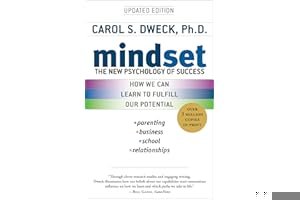 1
1