Want to know what books Emily Wilson recommends? We've researched interviews, social media posts, podcasts, and articles to build a comprehensive list of Emily Wilson's favorite book recommendations of all time. At Shortform, we know books. Our book guides are the best in the world. Learn why.
Cover unavailable
1
The Aeneid
Virgil, Robert Fitzgerald
4.1
The Aeneid is an epic poem written by Virgil in the 1st century BC. It's hero is Aeneas, a Trojan who travels from Troy to Italy to eventually found Rome. Some argue that The Aeneid is Virgil's answer to Homer's Odyssey and Iliad, combining two genres of the day - travel and war - into one poem. Take that, Homer!
No civilization is without a bit of revisionist history: so it was that Virgil picked up the story of Aeneas, which was already floating around at the time, and forged an epic founding myth for Rome. And The Aeneid fit the bill, as it linked Rome with the legends of ancient Troy, glorified stodgy Roman values, and legitimized its emperors as descendants of the heroes and gods of the past. George Washington probably didn't chop down a cherry tree, but it's a fun legend to tell the kids.
It combines the Iliadic epic of war with the homecoming epic of the Odyssey, but in a weird way. In the Odyssey, the home that Odysseus returns to is the same home that he left twenty years before, whereas in the Aeneid, the home that Aeneas is coming back to is a home that he’s never been to before. It’s a home that has to be invented. Moreover, it’s a home that lies in the future, rather than the sense you get from the Odyssey that going home means coming back to the past. [source]
Oh, it’s not a favorite book or anything like that, I just added it because I liked it. I don’t think there’s any real significance to the fact that it’s listed there and other books aren’t. But there are definitely books—like the Aeneid—that I enjoyed reading a lot more. [source]
I made an effort to read some classical poets and playwrights this year. The Aneiad was far and away the most quotable, readable and memorable of all of them. There’s no other way to put: the story is AMAZING. Better than the Odyssey, better than Juvenal’s Satires. Inspiring, beautiful, exciting, and eminently readable, I loved this. I took more notes on it that I have on anything I’ve read in a long time. [source]
Cover unavailable
2
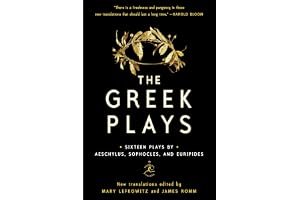
The Greek Plays: Sixteen Plays by Aeschylus, Sophocles, and Euripides
Sophocles, Aeschylus, Euripides, Mary Lefkowitz, James Romm
4.5
A landmark anthology of the masterpieces of Greek drama, featuring all-new, highly accessible translations of some of the world's most beloved plays, including Agamemnon, Prometheus Bound, Bacchae, Electra, Medea, Antigone, and Oedipus the King
The great plays of Ancient Greece are among the most enduring and important legacies of the Western world. Not only is the influence of Greek drama palpable in everything from Shakespeare to modern television, the insights contained in Greek tragedy have shaped our perceptions of the nature of human life. Poets, philosophers, and politicians have long borrowed and adapted the ideas and language of Greek drama to help them make sense of their own times.
This exciting curated anthology features a cross section of the most popular--and most widely taught--plays in the Greek canon. Fresh translations into contemporary English breathe new life into the texts while capturing, as faithfully as possible, their original meaning.
This outstanding collection also offers short biographies of the playwrights, enlightening and clarifying introductions to the plays, and helpful annotations at the bottom of each page. Appendices by prominent classicists on such topics as "Greek Drama and Politics," "The Theater of Dionysus," and "Plato and Aristotle on Tragedy" give the reader a rich contextual background. A detailed time line of the dramas, as well as a list of adaptations of Greek drama to literature, stage, and film from the time of Seneca to the present, helps chart the history of Greek tragedy and illustrate its influence on our culture from the Roman Empire to the present day.
With a veritable who's who of today's most renowned and distinguished classical translators, The Greek Plays is certain to be the definitive text for students, scholars, theatrical professionals, and general readers alike for years to come.
Praise for The Greek Plays
"Mary Lefkowitz and James Romm deftly have gathered strong new translations from Frank Nisetich, Sarah Ruden, Rachel Kitzinger, Emily Wilson, as well as from Mary Lefkowitz and James Romm themselves. There is a freshness and pungency in these new translations that should last a long time. I admire also the introductions to the plays and the biographies and annotations provided. Closing essays by five distinguished classicists: the brilliant Daniel Mendelsohn and the equally skilled David Rosenbloom, Joshua Billings, Mary-Kay Gamel, and Gregory Hays all enlightened me. This seems to me a helpful light into our gathering darkness."--Harold Bloom
"The reception of Ancient Greek theater is as lively as it's ever been in its 2,500-year history, both on the stage and on the page. Thanks to these sixteen brilliant new renditions by five leading scholar-translators, the three great Athenian masters of tragic drama, Aeschylus, Sophocles, and Euripides, speak to us once again in powerfully contemporary accents on such fundamental issues as gender, religion, and democratic politics."--Paul Cartledge, author Democracy: A Life
"The Greek Plays is destined to become a perennial collection, essential reading for students, scholars, and lovers of Greek tragedy alike. This engaging compilation imbues all the ancient plays within its pages with new life by offering rich, informative historical, literary, and cultural context and fresh, accessible translations by some of the most talented classicists working in the field today."--Bryan Doerries, author of The Theater of War: What Ancient Greek Tragedies Can Teach Us Today
Helen by Euripides is in many ways the most Odysseyean of the tragedies we have, not least because it features Helen as the central character. It’s a complete re-write, which turns Helen into a new version of the Homeric Penelope: she’s the miserable chaste wife, whose beauty brings her harassment from annoyingly, scarily persistent local guy(s), and whose marriage is defined by grief. [source]
Cover unavailable
3
Collected Ancient Greek Novels
B. P. Reardon, J. R. Morgan
4.5
Prose fiction, although not always associated with classical antiquity, did in fact flourish in the early Roman Empire, not only in realistic Latin novels but also and indeed principally in the Greek ideal romance of love and adventure to which they are related. Popular in the Renaissance, these stories have been less familiar in later centuries. Translations of the Greek stories were not readily available in English before B.P. Reardon’s excellent volume.
Nine complete stories are included here as well as ten others, encompassing the whole range of classical themes: ideal romance, travel adventure, historical fiction, and comic parody. A new foreword by J.R. Morgan examines the enormous impact this groundbreaking collection has had on our understanding of classical thought and our concept of the novel.
This is a really fun text. It’s in two books, and the narrator, who’s completely unreliable, ends by promising to give us lots more of the story, which he doesn’t. It’s a true story in the sense that it’s a complete lie. The narrator starts off by suggesting he’ll be just like other historians, or just like Odysseus in the Odyssey … I included it on the list not just because the whole thing is a playful re-write of the wandering books of the Odyssey, but also because in the second book, the narrator goes to the Elysian Fields and encounters both Homer and Odysseus. [source]
Cover unavailable
4
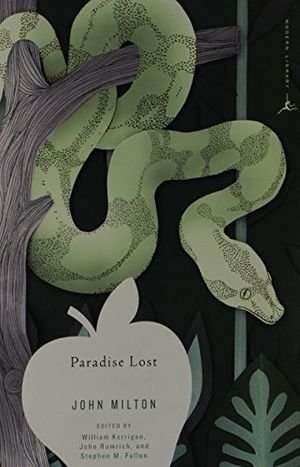
Paradise Lost
John Milton
4.0
In Paradise, God’s favored new creations—Adam and Eve—live in bliss, untainted by sin. In another realm, Satan and his banished rebel angels collude to destroy God’s tranquil new design. Into this idyll called Earth, and the confidence of Adam and Eve, Satan will instigate the fall of man.
At the heart of this complex, audacious epic poem is a drama driven by the most recognizable human flaws. More than a story from Genesis, it is the extraordinary expression of Milton’s search for personal truth and the meaning of existence, written to “justify the ways of God to men.”
AmazonClassics brings you timeless works from the masters of storytelling. Ideal for anyone who wants to read a great work for the first time or rediscover an old favorite, these new editions open the door to literature’s most unforgettable characters and beloved worlds.
Paradise Lost is a homecoming story of marital breakup and martial reunion, just as the Odyssey is. They’re also both epics about redefining a community in the wake of a devastating war, and about whether there will ever be an end to war. [source]
Milton’s astonishing intervention in the Adam and Eve story includes thinking how it was possible—not for ignorant children, but knowing, thoughtful, complex human beings in a relationship with one another—to do what they did. [source]
Cover unavailable
5
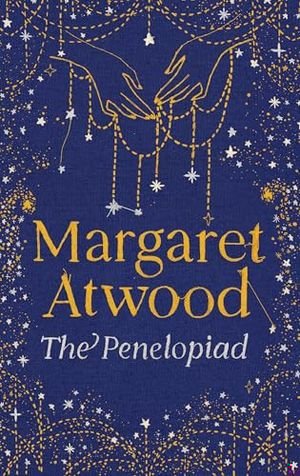
The Penelopiad
Margaret Atwood
4.0
Now that all the others have run out of air, it’s my turn to do a little story-making.
In Homer’s account in The Odyssey, Penelope—wife of Odysseus and cousin of the beautiful Helen of Troy—is portrayed as the quintessential faithful wife, her story a salutary lesson through the ages. Left alone for twenty years when Odysseus goes off to fight in the Trojan War after the abduction of Helen, Penelope manages, in the face of scandalous rumors, to maintain the kingdom of Ithaca, bring up her wayward son, and keep over a hundred suitors at bay, simultaneously. When Odysseus finally comes home after enduring hardships, overcoming monsters, and sleeping with goddesses, he kills her suitors and—curiously—twelve of her maids.
In a splendid contemporary twist to the ancient story, Margaret Atwood has chosen to give the telling of it to Penelope and to her twelve hanged maids, asking: “What led to the hanging of the maids, and what was Penelope really up to?” In Atwood’s dazzling, playful retelling, the story becomes as wise and compassionate as it is haunting, and as wildly entertaining as it is disturbing. With wit and verve, drawing on the story-telling and poetic talent for which she herself is renowned, she gives Penelope new life and reality—and sets out to provide an answer to an ancient mystery.
I really love the Penelopiad. It’s wonderful at bringing out some of what I already hinted was important in my work of a translator: teasing out the multiple perspectives, multiple voices, in this poem. I also love how it juxtaposes different styles and different voices. It has both ballad-like verse and prose intermixed, which is not what the Odyssey does, but I think it speaks to something which is in the Odyssey, about the mixture of different modes, different ways of seeing things. [source]