We've ranked the best creative books using expert recommendations, sales data, and millions of reader ratings. At Shortform, we know books. Our book guides are the best in the world. Learn why.
When a writer or an entrepreneur, or a manager, or an employee, or a…whatever…sits down to get to work, he or she is often met by “the resistance”. The excuses that come up: I can’t do this. I am too old. I don’t have enough money. I’m scared. “The War of Art” is the guide to getting through that block. The comfort zone is papered up and cemented shut by our excuses. Learn to blast through that wall. Because on the other side of the comfort zone are all the tools of success. [source]
Also hard to find on audio. I find Steve's voice to be fascinating, and even before I knew him, I was fascinated by listening to him speak his own work. The War of Art is one of those books, at least for me when I finally was exposed to it, I said, 'Why wasn't I informed? Why did it take this long for this book to land on my desk?'... You need to be clear with yourself about what you are afraid of, why you are afraid, and whether you care enough to dance with that fear because it will never go away. [source]
Adam Johnston
The last two pages of Steven Pressfield’s The War of Art gave me a swift kick in the ass. Do it or don’t do it. But if you don’t do it, you not only hurt yourself. You hurt your children. You hurt me. You hurt the planet. Pressfield wrote a beautiful book that you should read, but if nothing else, just read the last two pages of the book. I have them hanging on my wall in my office. [source]
Cover unavailable
2
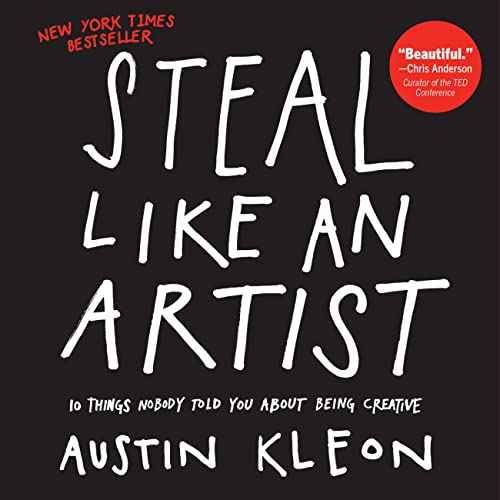
Steal Like an Artist: 10 Things Nobody Told You About Being Creative
You don’t need to be a genius, you just need to be yourself. That’s the message from Austin Kleon, a young writer and artist who knows that creativity is everywhere, creativity is for everyone. A manifesto for the digital age, Steal Like an Artist is a guide whose positive message, graphic look and illustrations, exercises, and examples will put readers directly in touch with their artistic side.
Part of ambition is modeling yourself after those you’d like to be like. Austin’s philosophy of ruthlessly stealing and remixing the greats might sound appalling at first but it is actually the essence of art. You learn by stealing, you become creative by stealing, you push yourself to be better by working with these materials. Austin is a fantastic artist, but most importantly he communicates the essence of writing and creating art better than anyone else I can think of. It is a manifesto for any young, creative person looking to make his mark. Pair up with Show Your Work which is also excellent. [source]
Breezy and fun and yes, scary. Scary because it calls your bluff. [source]
Andra Zaharia
While I was thinking of the best books to add to this short list, I realized that not even half of them are directly related to digital marketing. This is because I believe that the best marketers are people who understand human nature deeply and aim to bring out the best in it. Call me naive, but that’s how I see it. If I were to want to pursue a career in marketing, I’d read … Steal Like An Artist. [source]
Major New York Times bestseller Winner of the National Academy of Sciences Best Book Award in 2012 Selected by the New York Times Book Review as one of the best books of 2011 A Globe and Mail Best Books of the Year 2011 Title One of The Economist's 2011 Books of the Year One of The Wall Street Journal's Best Nonfiction Books of the Year 2011 2013 Presidential Medal of Freedom Recipient
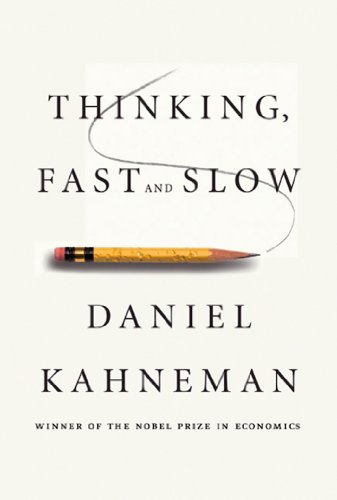
In the international bestseller, Thinking, Fast and Slow, Daniel Kahneman, the renowned psychologist and winner of the Nobel Prize in Economics, takes us on a groundbreaking tour of the mind and explains the two systems that drive the way we think. System 1 is fast, intuitive, and emotional; System 2 is slower, more deliberative, and more logical. The impact of overconfidence on corporate strategies, the difficulties of predicting what will make us happy in the future, the profound effect of cognitive biases on everything from playing the stock market to planning our next vacation—each of these can be understood only by knowing how the two systems shape our judgments and decisions. Engaging the reader in a lively conversation about how we think, Kahneman reveals where we can and cannot trust our intuitions and how we can tap into the benefits of slow thinking. He offers practical and enlightening insights into how choices are made in both our business and our personal lives—and how we can use different techniques to guard against the mental glitches that often get us into trouble. Winner of the National Academy of Sciences Best Book Award and the Los Angeles Times Book Prize and selected by The New York Times Book Review as one of the ten best books of 2011, Thinking, Fast and Slow is destined to be a classic.
A few months ago, Mr. Obama read “Thinking, Fast and Slow,” by Daniel Kahneman, about how people make decisions — quick, instinctive thinking versus slower, contemplative deliberation. For Mr. Obama, a deliberator in an instinctive business, this may be as instructive as any political science text. [source]
Captivating dive into human decision making, marred by inclusion of several/many? psychology studies that fail to replicate. Will stand as a cautionary tale? [source]
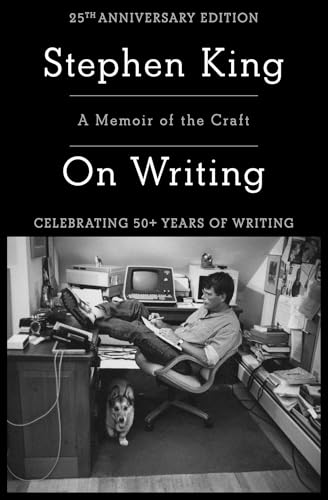
Immensely helpful and illuminating to any aspiring writer, Stephen King’s critically lauded, classic bestseller shares the experiences, habits, and convictions that have shaped him and his work.
"Long live the King" hailed Entertainment Weekly upon publication of Stephen King’s On Writing. Part memoir, part master class by one of the bestselling authors of all time, this superb volume is a revealing and practical view of the writer’s craft, comprising the basic tools of the trade every writer must have. King’s advice is grounded in his vivid memories from childhood through his emergence as a writer, from his struggling early career to his widely reported, near-fatal accident in 1999—and how the inextricable link between writing and living spurred his recovery. Brilliantly structured, friendly and inspiring, On Writing will empower and entertain everyone who reads it—fans, writers, and anyone who loves a great story well told.
I read a bunch of books on writing before I wrote my first book and the two that stuck with me were Stephen King’s book and “On Writing Well” by Zinsser (which is a bit on the technical side). [source]
Alina Varlanuta
My professional path – copywriting – somehow intertwines with my unprofessional (hahaha) path – writing so I would recommend reading literature for both. Somehow reading and writing are two ways of doing the same thing: storytelling (even when you read you tell yourself a story in your own voice, bringing your personal emotion and empathy to the story you’re reading). The only difference is that when I’m reading, panic is far away from me, in a safe place. Nevertheless, the words below helped me rewrite and think twice before adding an exclamation point: On Writing by Stephen King. [source]
Andrew Cowan
Yes. It is a surprise to a lot of people that this book is so widely read on university campuses and so widely recommended by teachers of writing. Students love it. It’s bracing: there’s no nonsense. He says somewhere in the foreword or preface that it is a short book because most books are filled with bullshit and he is determined not to offer bullshit but to tell it like it is. [source]
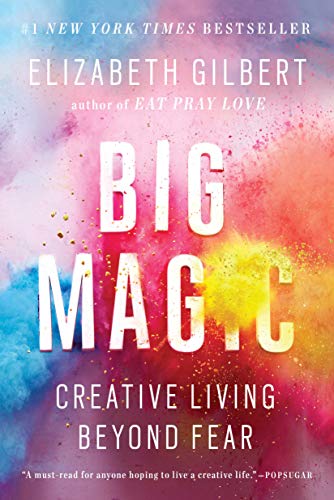
"A must read for anyone hoping to live a creative life... I dare you not to be inspired to be brave, to be free, and to be curious.” —PopSugar
From the worldwide bestselling author of Eat Pray Love and City of Girls: the path to the vibrant, fulfilling life you’ve dreamed of
Readers of all ages and walks of life have drawn inspiration and empowerment from Elizabeth Gilbert’s books for years. Now this beloved author digs deep into her own generative process to share her wisdom and unique perspective about creativity. With profound empathy and radiant generosity, she offers potent insights into the mysterious nature of inspiration. She asks us to embrace our curiosity and let go of needless suffering. She shows us how to tackle what we most love, and how to face down what we most fear. She discusses the attitudes, approaches, and habits we need in order to live our most creative lives. Balancing between soulful spirituality and cheerful pragmatism, Gilbert encourages us to uncover the “strange jewels” that are hidden within each of us. Whether we are looking to write a book, make art, find new ways to address challenges in our work, embark on a dream long deferred, or simply infuse our everyday lives with more mindfulness and passion, Big Magic cracks open a world of wonder and joy.
I read a bunch of books on writing before I wrote my first book and the two that stuck with me were Stephen King’s book and “On Writing Well” by Zinsser (which is a bit on the technical side). I was also surprised by how much I enjoyed Elizabeth Gilbert’s “Big Magic.” [source]
Chelsea Frank
I read everything with an open mind, often challenging myself by choosing books with an odd perspective or religious/spiritual views. These books do not reflect my personal feelings but are books that helped shape my perspective on life, love, and happiness. [source]
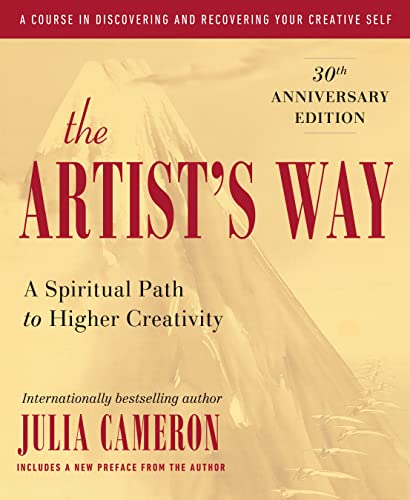
"Without The Artist's Way, there would have been no Eat, Pray, Love.” —Elizabeth Gilbert
A stunning gift edition of the powerful bestselling book on creativity.The Artist’s Way is one of the bestselling gift books of all time. Beautifully packaged with a slipcase and ribbon, this tenth anniversary gift edition is the ideal gift for loved ones engaged in creative lives.
Recommended by Anand C and Emma Gannon.
Anand C
STARTING FROM AUTHENTICITY: by observing, showing humility and being grateful - I started being open to what’s in the sub-conscious more (30+ sessions in). Speaking your truth is a powerful result of this. One great book to help explore this. https://t.co/sOAgAHhWsO [source]
Emma Gannon
Instead of all these fast paced books saying: ‘Here’s how to be amazing, here’s how to get a side hustle, here’s how to hustle, hustle, hustle.’ This is the total opposite. It’s about slowing right down and connecting with yourself again. [source]
Cover unavailable
7
Creativity, Inc.: Overcoming the Unseen Forces That Stand in the Way of True Inspiration
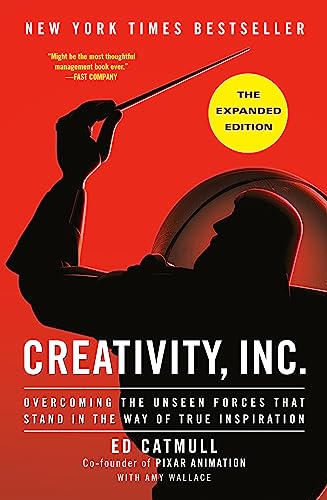
“What does it mean to manage well?” From Ed Catmull, co-founder (with Steve Jobs and John Lasseter) of Pixar Animation Studios, comes an incisive book about creativity in business—sure to appeal to readers of Daniel Pink, Tom Peters, and Chip and Dan Heath. Creativity, Inc. is a book for managers who want to lead their employees to new heights, a manual for anyone who strives for originality, and the first-ever, all-access trip into the nerve center of Pixar Animation—into the meetings, postmortems, and “Braintrust” sessions where some of the most successful films in history are made. It is, at heart, a book about how to build a creative culture—but it is also, as Pixar co-founder and president Ed Catmull writes, “an expression of the ideas that I believe make the best in us possible.” For nearly twenty years, Pixar has dominated the world of animation, producing such beloved films as the Toy Story trilogy, Monsters, Inc., Finding Nemo, The Incredibles, Up, and WALL-E, which have gone on to set box-office records and garner thirty Academy Awards. The joyousness of the storytelling, the inventive plots, the emotional authenticity: In some ways, Pixar movies are an object lesson in what creativity really is. Here, in this book, Catmull reveals the ideals and techniques that have made Pixar so widely admired—and so profitable.
As a young man, Ed Catmull had a dream: to make the first computer-animated movie. He nurtured that dream as a Ph.D. student at the University of Utah, where many computer science pioneers got their start, and then forged a partnership with George Lucas that led, indirectly, to his founding Pixar with Steve Jobs and John Lasseter in 1986. Nine years later, Toy Story was released, changing animation forever. The essential ingredient in that movie’s success—and in the thirteen movies that followed—was the unique environment that Catmull and his colleagues built at Pixar, based on philosophies that protect the creative process and defy convention, such as:
• Give a good idea to a mediocre team, and they will screw it up. But give a mediocre idea to a great team, and they will either fix it or come up with something better. • If you don’t strive to uncover what is unseen and understand its nature, you will be ill prepared to lead. • It’s not the manager’s job to prevent risks. It’s the manager’s job to make it safe for others to take them. • The cost of preventing errors is often far greater than the cost of fixing them. • A company’s communication structure should not mirror its organizational structure. Everybody should be able to talk to anybody. • Do not assume that general agreement will lead to change—it takes substantial energy to move a group, even when all are on board.
This book is written by the founder of Pixar and is about his experience building a culture that fosters creativity. His theory is that people are fundamentally creative, but many forces stand in the way of people being able to do their best work. I love reading first-hand accounts about how people build great companies like Pixar and nurture innovation and creativity. This should be inspiring to anyone looking to do the same, and hopefully there will be lessons we can apply to connecting the world! [source]
No matter your circumstances, storytelling and creativity are two 'meta-skills' that can take your business and life to the next level. Ed is a master. [source]
Bird By Bird: Some Instructions on Writing and Life
Anne Lamott
4.5
Thirty years ago my older brother, who was ten years old at the time, was trying to get a report on birds written that he'd had three months to write. It was due the next day. We were out at our family cabin in Bolinas, and he was at the kitchen table close to tears, surrounded by binder paper and pencils and unopened books on birds, immobilized by the hugeness of the task ahead. Then my father sat down beside him, put his arm around my brother's shoulder, and said, 'Bird by bird, buddy. Just take it bird by bird.'" "Superb writing advice... hilarious, helpful and provocative." -- "New York Times Book Review."
"A warm, generous and hilarious guide through the writer's world and its treacherous swamps." -- "Los Angeles Times."
"A gift to all of us mortals who write or ever wanted to write... sidesplittingly funny, patiently wise and alternately cranky and kind -- a reveille to get off our duffs and start writing "now," while we still can." -- "Seattle Times.
Bird by Bird is one of my absolute favorite books, and I gift it to everybody, which I should probably also give to startup founders, quite frankly. A lot of the lessons are the same. But you can get to your destination, even though you can only see 20 feet in front of you. [source]
It was wonderful to read these two provocative books of essays by two incredibly wise and compassionate women. … Anne Lamott’s book is ostensibly about the art of writing, but really it too is about life and how to tackle the problems, temptations and opportunities life throws at us. Both will make you think and both made me a better person this year. [source]
Cover unavailable
9
Quiet: The Power of Introverts in a World That Can't Stop Talking
At least one-third of the people we know are introverts. They are the ones who prefer listening to speaking; who innovate and create but dislike self-promotion; who favor working on their own over working in teams. It is to introverts—Rosa Parks, Chopin, Dr. Seuss, Steve Wozniak—that we owe many of the great contributions to society.
In Quiet, Susan Cain argues that we dramatically undervalue introverts and shows how much we lose in doing so. She charts the rise of the Extrovert Ideal throughout the twentieth century and explores how deeply it has come to permeate our culture. She also introduces us to successful introverts—from a witty, high-octane public speaker who recharges in solitude after his talks, to a record-breaking salesman who quietly taps into the power of questions. Passionately argued, superbly researched, and filled with indelible stories of real people, Quiet has the power to permanently change how we see introverts and, equally important, how they see themselves.
Now with Extra Libris material, including a reader’s guide and bonus content.
Leaders needn’t be the loudest. Leadership is not about theater. It’s not about dominance. It is about putting the lives of others before any other priority. In Quiet, Cain affirms to a good many of us who are introverts by nature that we needn’t try to be extroverts if we want to lead. Simply being ourselves is more important — and more effective. [source]
Danielle Morrill
Co-founder/Mattermark
Anyway, maybe you’re like me and figuring this out for yourself. It’s a good book for introverts and for those who love them [source]
Probably half the world is introverts. Maybe more. It’s not an easy life to live. I sometimes have that feeling in a room full of people, “uh-oh. I just shut down. I can’t talk anymore and there’s a lock on my mouth and this crowd threw away the key.” Do you ever get that feeling? Please? I hope you do. Let’s try to lock eyes at the party. “Quiet” shows the reader how to unlock the secret powers that probably half the world needs to unlock. [source]
Cover unavailable
10
Show Your Work! 10 Ways to Show Your Creativity and Get Discovered: 10 Ways to Share Your Creativity and Get Discovered
In his New York Times bestseller Steal Like an Artist, Austin Kleon showed readers how to unlock their creativity by stealing from the community of other movers and shakers. Now, in an even more forward-thinking and necessary book, he shows how to take that critical next step on a creative journey getting known. Show Your Work! is about why generosity trumps genius. It s about getting findable, about using the network instead of wasting time networking. It s not self-promotion, it s self-discovery let others into your process, then let them steal from you. Filled with illustrations, quotes, stories, and examples, Show Your Work! offers ten transformative rules for being open, generous, brave, productive. In chapters such as You Don t Have to Be a Genius; Share Something Small Every Day; and Stick Around, Kleon creates a user s manual for embracing the communal nature of creativity what he calls the ecology of talent. From broader life lessons about work (you can t find your voice if you don t use it) to the etiquette of sharing and the dangers of oversharing to the practicalities of Internet life (build a good domain name; give credit when credit is due), it s an inspiring manifesto for succeeding as any kind of artist or entrepreneur in the digital age."
…
Recommended by Ryan Holiday, Armina Sirbu, Benjamin Spall, and 5 others.
Part of ambition is modeling yourself after those you’d like to be like. Austin’s philosophy of ruthlessly stealing and remixing the greats might sound appalling at first but it is actually the essence of art. You learn by stealing, you become creative by stealing, you push yourself to be better by working with these materials. Austin is a fantastic artist, but most importantly he communicates the essence of writing and creating art better than anyone else I can think of. It is a manifesto for any young, creative person looking to make his mark. Pair up with Show Your Work which is also excellent. [source]
Armina Sirbu
Show your work - by Austin Kleon - is magical and I feel like reading it slowly, like enjoying a cappuccino. I need to let each "mini-chapter" sink in and take my time to also apply what I am reading there because it's "spot on" for my current projects. [source]
Benjamin Spall
Question: What five books would you recommend to youngsters interested in your professional path? Show Your Work! by Austin Kleon, … [source]
Cover unavailable
11
The Creative Habit: Learn It and Use It for Life
Twyla Tharp
4.5
Creativity is not a gift from the gods, says Twyla Tharp, bestowed by some divine and mystical spark. It is the product of preparation and effort, and it's within reach of everyone who wants to achieve it. All it takes is the willingness to make creativity a habit, an integral part of your life: In order to be creative, you have to know how to prepare to be creative. In The Creative Habit, Tharp takes the lessons she has learned in her remarkable thirty-five-year career and shares them with you, whatever creative impulses you follow -- whether you are a painter, composer, writer, director, choreographer, or, for that matter, a businessperson working on a deal, a chef developing a new dish, a mother wanting her child to see the world anew.
When Tharp is at a creative dead end, she relies on a lifetime of exercises to help her get out of the rut, and The Creative Habit contains more than thirty of them to ease the fears of anyone facing a blank beginning and to open the mind to new possibilities.
Tharp's exercises are practical and immediately doable -- for the novice or expert. In "Where's Your Pencil?" she reminds us to observe the world -- and get it down on paper. In "Coins and Chaos," she provides the simplest of mental games to restore order and peace. In "Do a Verb," she turns your mind and body into coworkers. In "Build a Bridge to the Next Day," she shows how to clean your cluttered mind overnight.
To Tharp, sustained creativity begins with rituals, self-knowledge, harnessing your memories, and organizing your materials (so no insight is ever lost). Along the way she leads you by the hand through the painful first steps of scratching for ideas, finding the spine of your work, and getting out of ruts into productive grooves. In her creative realm, optimism rules. An empty room, a bare desk, a blank canvas can be energizing, not demoralizing. And in this inventive, encouraging book, Twyla Tharp shows us how to take a deep breath and begin!
…
Cover unavailable
12
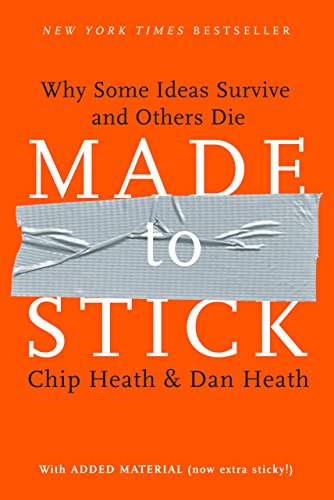
Made to Stick: Why Some Ideas Survive and Others Die
NEW YORK TIMES BESTSELLER - The instant classic about why some ideas thrive, why others die, and how to improve your idea's chances--essential reading in the "fake news" era.
Mark Twain once observed, "A lie can get halfway around the world before the truth can even get its boots on." His observation rings true: Urban legends, conspiracy theories, and bogus news stories circulate effortlessly. Meanwhile, people with important ideas--entrepreneurs, teachers, politicians, and journalists--struggle to make them "stick."
In Made to Stick, Chip and Dan Heath reveal the anatomy of ideas that stick and explain ways to make ideas stickier, such as applying the human scale principle, using the Velcro Theory of Memory, and creating curiosity gaps. Along the way, we discover that sticky messages of all kinds--from the infamous "kidney theft ring" hoax to a coach's lessons on sportsmanship to a vision for a new product at Sony--draw their power from the same six traits.
Made to Stick will transform the way you communicate. It's a fast-paced tour of success stories (and failures): the Nobel Prize-winning scientist who drank a glass of bacteria to prove a point about stomach ulcers; the charities who make use of the Mother Teresa Effect; the elementary-school teacher whose simulation actually prevented racial prejudice.
Provocative, eye-opening, and often surprisingly funny, Made to Stick shows us the vital principles of winning ideas--and tells us how we can apply these rules to making our own messages stick.
@conorgil My all-time favorite example of research communication is The Selfish Gene. Astonishingly effective at explaining deep research ideas/findings to a lay reader. A book with great advice: https://t.co/QD1sM2o0z6 (It isn't specific to research but still super valuable.) [source]
Bill Liao
The Book "Made to Stick" combined with "The Poetics" by Aristotle really helped me to see the power of telling great stories with surprises in them and every time I meet a start-up I can always make a contribution to their pitch. [source]
Cristian-Dragos Baciu
I highly recommend all the books written by the Heath brothers, especially Made to Stick: Why Some Ideas Survive And Others Die. This one's a must-read for marketers. The reason I enjoyed their work so much is because they offer real-life stories and insights that makes it so much easier for the reader to imprint that information in his mind [source]
Cover unavailable
13
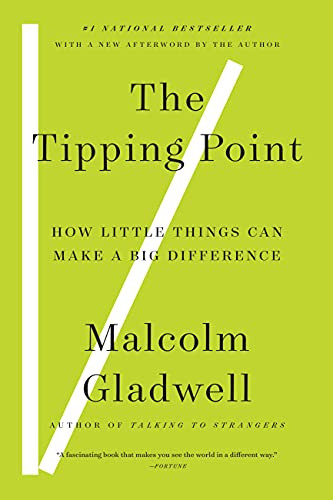
The Tipping Point: How Little Things Can Make a Big Difference
The tipping point is that magic moment when an idea, trend, or social behavior crosses a threshold, tips, and spreads like wildfire. Just as a single sick person can start an epidemic of the flu, so too can a small but precisely targeted push cause a fashion trend, the popularity of a new product, or a drop in the crime rate. This widely acclaimed bestseller, in which Malcolm Gladwell explores and brilliantly illuminates the tipping point phenomenon, is already changing the way people throughout the world think about selling products and disseminating ideas.
Gladwell introduces us to the particular personality types who are natural pollinators of new ideas and trends, the people who create the phenomenon of word of mouth. He analyzes fashion trends, smoking, children's television, direct mail, and the early days of the American Revolution for clues about making ideas infectious, and visits a religious commune, a successful high-tech company, and one of the world's greatest salesmen to show how to start and sustain social epidemics.
Bunch of really good information in here on how to make ideas go viral. This could be good to apply to any kind of products or ideas you may have. Definitely, check out The Tipping Point, which is one of my favorites. [source]
Malcolm Gladwell's breakthrough insight was to focus on the micro-relationships between individuals, which helped organizations realize that it's not about the big ads and the huge charity balls... it's about setting the stage for the buzz to start. [source]
Andy Stern
I think that when we talk about making change, it is much more about macro change, like in policy. This book reminds you that at times when you're building big movements, or trying to elect significant decision-makers in politics, sometimes it's the little things that make a difference. Ever since the book was written, we've become very used to the idea of things going viral unexpectedly and then having massive impact. The Tipping Point, to me, is really an appreciation that very small things can rearrange thinking in ways – like infectious diseases – that have huge implications. While we're always searching for the big policy changes – and we think we have to do that in very traditional ways of building coalitions against constituencies, movements and the media – sometimes it's the little things that actually tip the situation. Like the story of a person and their unique set of circumstances that really captures an issue about health care or housing. So it's trying to remember, while you're thinking about the grand and the glorious, that thinking about the small things can equally bring about change. [source]
Cover unavailable
14
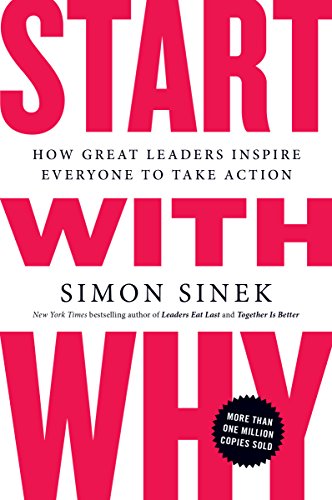
Start with Why: How Great Leaders Inspire Everyone to Take Action
Why are some people and organizations more innovative, more influential, and more profitable than others? Why do some command greater loyalty from customers and employees alike? Even among the successful, why are so few able to repeat their success over and over?
People like Martin Luther King Jr., Steve Jobs, and the Wright Brothers might have little in common, but they all started with why. It was their natural ability to start with why that enabled them to inspire those around them and to achieve remarkable things.
In studying the leaders who've had the greatest influence in the world, Simon Sinek discovered that they all think, act, and communicate in the exact same way—and it's the complete opposite of what everyone else does. Sinek calls this powerful idea The Golden Circle, and it provides a framework upon which organizations can be built, movements can be lead, and people can be inspired. And it all starts with WHY.
Any organization can explain what it does; some can explain how they do it; but very few can clearly articulate why. WHY is not money or profit—those are always results. WHY does your organization exist? WHY does it do the things it does? WHY do customers really buy from one company or another? WHY are people loyal to some leaders, but not others?
Starting with WHY works in big business and small business, in the nonprofit world and in politics. Those who start with WHY never manipulate, they inspire. And the people who follow them don't do so because they have to; they follow because they want to.
Drawing on a wide range of real-life stories, Sinek weaves together a clear vision of what it truly takes to lead and inspire. This book is for anyone who wants to inspire others or who wants to find someone to inspire them.
Today is World Book Day, a wonderful opportunity to address this #ChallengeRichard sent in by Mike Gonzalez of New Jersey: Make a list of your top 65 books to read in a lifetime. [source]
The basis of this book is so important to anyone looking to increase their influence, profits or impact. People won't truly buy into a product, service, movement, or idea until they understand the WHY behind it. When you start with the why, everything else falls into place. This book is so impactful, I consider it required reading. [source]
Tony Hsieh
CEO/Zappos.com
Over the years he’s recommended well over 20 business books — including his own, the 2010 bestseller Delivering Happiness and you can always find what he’s currently reading atop his cluttered desk. Start with Why is amogst those titles. [source]
Cover unavailable
15
The New Drawing on the Right Side of the Brain
Betty Edwards
4.4
When Drawing on the Right Side of the Brain was first published in 1979, it hit the New York Times bestseller list within two weeks and stayed there for more than a year. In 1989, when Dr. Betty Edwards revised the book, it went straight to the Times list again. Now Dr. Edwards celebrates the twentieth anniversary of her classic book with a second revised edition.Over the last decade, Dr. Edwards has refined her material through teaching hundreds of workshops and seminars. Truly The New Drawing on the Right Side of the Brain, this edition includes:
the very latest developments in brain research new material on using drawing techniques in the corporate world and in education instruction on self-expression through drawing an updated section on using color detailed information on using the five basic skills of drawing for problem solving
…
Recommended by Adam Robinson and Adam Robinson.
Adam Robinson
One of five books that confirm there is far, far more in our unconscious mind than is dreamt of in our philosophy. [source]
Adam Robinson
One of five books that confirm there is far, far more in our unconscious mind than is dreamt of in our philosophy. [source]
The first popular work to combine the spiritual and psychological insights of modern psychoanalysis with the archetypes of world mythology, the book creates a roadmap for navigating the frustrating path of contemporary life. Examining heroic myths in the light of modern psychology, it considers not only the patterns and stages of mythology but also its relevance to our lives today--and to the life of any person seeking a fully realized existence.
Myth, according to Campbell, is the projection of a culture's dreams onto a large screen; Campbell's book, like Star Wars, the film it helped inspire, is an exploration of the big-picture moments from the stage that is our world. It is a must-have resource for both experienced students of mythology and the explorer just beginning to approach myth as a source of knowledge.
The book I’d give every graduating senior in college or high school would be … Joseph Campbell’s 'Hero of a Thousand Faces'. It's little bit dense but it’s so rich, so it’s a good one. [source]
Joseph Campbell was the first person to really open my eyes to the compassionate side of life, or of thought... Campbell was the guy who really kind of put it all together for me, and not in a way I could put my finger on... It made you just glad to be alive, realizing how vast this world is, and how similar and how different we are. [source]
Catherine Plano
Was mind blowing, it really helped me put into perspective, that there are cycles and rhythms, and I now call them initiations, when you are faced with fear we are never too sure of our potential unless we know how to fail, what did we learn from it and what are we going to do differently the next time. There is a lesson in everything we experience, as long as we slow down enough to reflect. The other thing in the hero's journey is that even when you say 'yes' to a project, it really doesn't mean that you are going to succeed at it, but if you go into a project with an open mind and embrace that you are here to learn, the journey itself is rewarding, not always the outcome and when we really look at our failures, they weren't real failures after all, but a stepping stone onto something greater. [source]
Cover unavailable
17
Don't Make Me Think, Revisited: A Common Sense Approach to Web Usability
Steve Krug
4.3
Since Don’t Make Me Think was first published in 2000, over 400,000 Web designers and developers have relied on Steve Krug’s guide to help them understand the principles of intuitive navigation and information design.
In this 3rd edition, Steve returns with fresh perspective to reexamine the principles that made Don’t Make Me Think a classic-–with updated examples and a new chapter on mobile usability. And it’s still short, profusely illustrated…and best of all–fun to read.
If you’ve read it before, you’ll rediscover what made Don’t Make Me Think so essential to Web designers and developers around the world. If you’ve never read it, you’ll see why so many people have said it should be required reading for anyone working on Web sites.
…
Recommended by Brian Armstrong, Jeff Atwood, Ken Norton, and 13 others.
Anoop Anthony
Krug was teaching usability two decades ago when UX wasn't a buzzword, and the WWW was still in its nascent stages. (The first edition of this book was published in 2000!) I cut my teeth on Don't make me think back when I first started out in the industry. It is now in its third edition and still relevant — it offers compelling insights into building great user experiences into websites and applications. [source]
Auston Bunsen
I’m actually a self-taught programmer, so these books have really helped me with practical skills that I could put to use & yield results. The return on investment for these kinds of books is off the charts for me! [source]
Chris Goward
Here are some of the books that have been very impactful for me, or taught me a new way of thinking: … Don't Make Me Think. [source]
Cover unavailable
18
The Power of Habit: Why We Do What We Do in Life and Business
A young woman walks into a laboratory. Over the past two years, she has transformed almost every aspect of her life. She has quit smoking, run a marathon, and been promoted at work. The patterns inside her brain, neurologists discover, have fundamentally changed.
Marketers at Procter & Gamble study videos of people making their beds. They are desperately trying to figure out how to sell a new product called Febreze, on track to be one of the biggest flops in company history. Suddenly, one of them detects a nearly imperceptible pattern—and with a slight shift in advertising, Febreze goes on to earn a billion dollars a year.
An untested CEO takes over one of the largest companies in America. His first order of business is attacking a single pattern among his employees—how they approach worker safety—and soon the firm, Alcoa, becomes the top performer in the Dow Jones.
What do all these people have in common? They achieved success by focusing on the patterns that shape every aspect of our lives.
They succeeded by transforming habits.
In The Power of Habit, award-winning New York Times business reporter Charles Duhigg takes us to the thrilling edge of scientific discoveries that explain why habits exist and how they can be changed. With penetrating intelligence and an ability to distill vast amounts of information into engrossing narratives, Duhigg brings to life a whole new understanding of human nature and its potential for transformation.
Along the way we learn why some people and companies struggle to change, despite years of trying, while others seem to remake themselves overnight. We visit laboratories where neuroscientists explore how habits work and where, exactly, they reside in our brains. We discover how the right habits were crucial to the success of Olympic swimmer Michael Phelps, Starbucks CEO Howard Schultz, and civil-rights hero Martin Luther King, Jr. We go inside Procter & Gamble, Target superstores, Rick Warren’s Saddleback Church, NFL locker rooms, and the nation’s largest hospitals and see how implementing so-called keystone habits can earn billions and mean the difference between failure and success, life and death.
At its core, The Power of Habit contains an exhilarating argument: The key to exercising regularly, losing weight, raising exceptional children, becoming more productive, building revolutionary companies and social movements, and achieving success is understanding how habits work.
Habits aren’t destiny. As Charles Duhigg shows, by harnessing this new science, we can transform our businesses, our communities, and our lives.
…
Recommended by Naval Ravikant, Blake Irving, Alden Mills, and 15 others.
I also recently finished The Power of Habit, or close to finish as I get. That one was interesting, not because of its content necessarily, but because it’s good for me to always keep on top of mind how powerful my habits are. … I think learning how to break habits is a very important meta-skill that can serve you better in life than almost anything else. Although you can read tons of books on it, the reality is you’re never going to learn how to break bad habits until you just break them. [source]
Blake Irving
CEO/GoDaddy
You know, there's a book called The Power of Habit by Charles Duhigg. Simple read book about just how to build positive habits that can be I think I what I'd call you know whether in your personal life or whether in your business life to help you build you know, have a loop that can build your success and that's one I mean there are so many great books out there. [source]
Alden Mills
More recent books that have had a significant impact on me are The Power of Habit and The Diamond Cutter. Both represent different forces for me – the former helps me tactically with making incremental improvements in my life. [source]
Cover unavailable
19
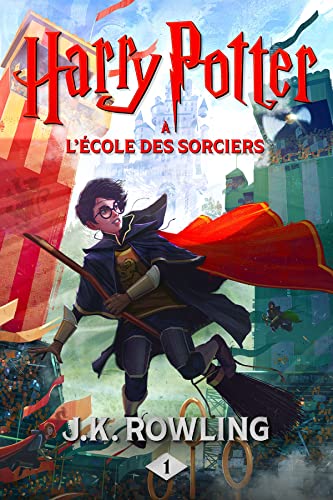
Harry Potter and the Sorcerer's Stone
J. K. Rowling
4.3
Harry Potter has never been the star of a Quidditch team, scoring points while riding a broom far above the ground. He knows no spells, has never helped to hatch a dragon, and has never worn a cloak of invisibility.
All he knows is a miserable life with the Dursleys, his horrible aunt and uncle, and their abominable son, Dudley - a great big swollen spoiled bully. Harry’s room is a tiny closet at the foot of the stairs, and he hasn’t had a birthday party in eleven years.
But all that is about to change when a mysterious letter arrives by owl messenger: a letter with an invitation to an incredible place that Harry - and anyone who reads about him - will find unforgettable.
For it’s there that he finds not only friends, aerial sports, and magic in everything from classes to meals, but a great destiny that’s been waiting for him…if Harry can survive the encounter. (front flap)
…
Recommended by Joe Lycett.
Joe Lycett
guys i just read this book called harry potter well worth checking out it’s about a really interesting magic lad [source]
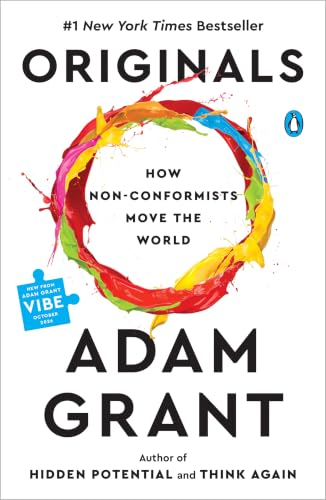
In Originals the author addresses the challenge of improving the world from the perspective of becoming original: choosing to champion novel ideas and values that go against the grain, battle conformity, and buck outdated traditions. How can we originate new ideas, policies, and practices without risking it all?
Using surprising studies and stories spanning business, politics, sports, and entertainment, Grant explores how to recognize a good idea, speak up without getting silenced, build a coalition of allies, choose the right time to act, and manage fear and doubt; how parents and teachers can nurture originality in children; and how leaders can build cultures that welcome dissent. Learn from an entrepreneur who pitches his start-ups by highlighting the reasons not to invest, a woman at Apple who challenged Steve Jobs from three levels below, an analyst who overturned the rule of secrecy at the CIA, a billionaire financial wizard who fires employees for failing to criticize him, and a TV executive who didn’t even work in comedy but saved Seinfeld from the cutting-room floor. The payoff is a set of groundbreaking insights about rejecting conformity and improving the status quo.
…
Recommended by Richard Branson, Arianna Huffington, Tony Hsieh, and 6 others.
Today is World Book Day, a wonderful opportunity to address this #ChallengeRichard sent in by Mike Gonzalez of New Jersey: Make a list of your top 65 books to read in a lifetime. [source]
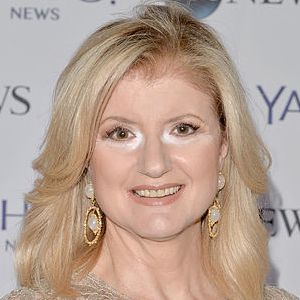
Arianna Huffington
Founder/The Huffington Post
A fascinating, eye-opening read that will help you not just recognize your own unique gifts, but find the strength to challenge conventional wisdom to bring them to life. [source]
Tony Hsieh
CEO/Zappos.com
It's always interesting just to learn different perspectives, but to be careful of not trying to just say, 'Oh this book is the Bible, and we should copy that,' … Instead, I want us t0 take the parts that make sense for Zappos and try to incorporate them." [source]
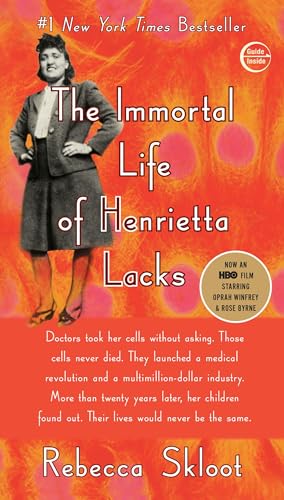
Her name was Henrietta Lacks, but scientists know her as HeLa. She was a poor Southern tobacco farmer who worked the same land as her slave ancestors, yet her cells—taken without her knowledge—became one of the most important tools in medicine. The first “immortal” human cells grown in culture, they are still alive today, though she has been dead for more than sixty years. If you could pile all HeLa cells ever grown onto a scale, they’d weigh more than 50 million metric tons—as much as a hundred Empire State Buildings. HeLa cells were vital for developing the polio vaccine; uncovered secrets of cancer, viruses, and the atom bomb’s effects; helped lead to important advances like in vitro fertilization, cloning, and gene mapping; and have been bought and sold by the billions.
Yet Henrietta Lacks remains virtually unknown, buried in an unmarked grave.
Now Rebecca Skloot takes us on an extraordinary journey, from the “colored” ward of Johns Hopkins Hospital in the 1950s to stark white laboratories with freezers full of HeLa cells; from Henrietta’s small, dying hometown of Clover, Virginia — a land of wooden slave quarters, faith healings, and voodoo — to East Baltimore today, where her children and grandchildren live and struggle with the legacy of her cells.
Henrietta’s family did not learn of her “immortality” until more than twenty years after her death, when scientists investigating HeLa began using her husband and children in research without informed consent. And though the cells had launched a multimillion-dollar industry that sells human biological materials, her family never saw any of the profits. As Rebecca Skloot so brilliantly shows, the story of the Lacks family — past and present — is inextricably connected to the dark history of experimentation on African Americans, the birth of bioethics, and the legal battles over whether we control the stuff we are made of.
Over the decade it took to uncover this story, Rebecca became enmeshed in the lives of the Lacks family—especially Henrietta’s daughter Deborah, who was devastated to learn about her mother’s cells. She was consumed with questions: Had scientists cloned her mother? Did it hurt her when researchers infected her cells with viruses and shot them into space? What happened to her sister, Elsie, who died in a mental institution at the age of fifteen? And if her mother was so important to medicine, why couldn’t her children afford health insurance?
Intimate in feeling, astonishing in scope, and impossible to put down, The Immortal Life of Henrietta Lacks captures the beauty and drama of scientific discovery, as well as its human consequences.
Yes. This is a fascinating book on so many different levels. It is really compelling as the story of the author trying to uncover the history of the woman from whom all these cells came. [source]
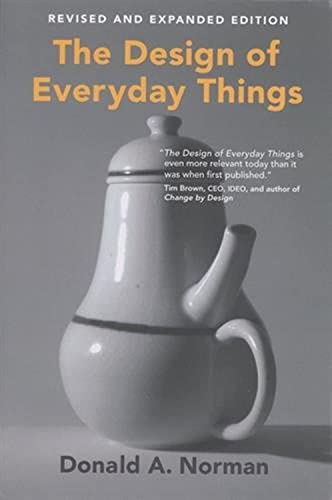
Even the smartest among us can feel inept as we fail to figure out which light switch or oven burner to turn on, or whether to push, pull, or slide a door. The fault, argues this ingenious—even liberating—book, lies not in ourselves, but in product design that ignores the needs of users and the principles of cognitive psychology. The problems range from ambiguous and hidden controls to arbitrary relationships between controls and functions, coupled with a lack of feedback or other assistance and unreasonable demands on memorization. The Design of Everyday Things shows that good, usable design is possible. The rules are simple: make things visible, exploit natural relationships that couple function and control, and make intelligent use of constraints. The goal: guide the user effortlessly to the right action on the right control at the right time.
In this entertaining and insightful analysis, cognitive scientist Don Norman hails excellence of design as the most important key to regaining the competitive edge in influencing consumer behavior. Now fully expanded and updated, with a new introduction by the author, The Design of Everyday Things is a powerful primer on how—and why—some products satisfy customers while others only frustrate them.
…
Recommended by Andrew Chen, Marissa Mayer, Nir Eyal, and 23 others.
Grey Baker
I mainly read to decompress and change my state of mind, so it’s hard to point to an insight I read that helped me. Reading fiction has pulled me out of a bad mood more times than I can count, though, and always reenergises me to attack problems that had stumped me again. That said, I read and loved Norman Norman’s “The Design of Everyday Things”, and it’s helped me think through design problems ever since. [source]
Julia Enthoven
For people interested in designing or building software products: The Design of Everyday Things by Don Norman and The Lean Product Playbook by Dan Olsen. Both books have informed my product sense and helped me make decisions about great UX. [source]
Kaci Lambe
These three books are about how people actually use design in their lives. They helped me understand this very basic idea: There are no dumb users, only bad designers. Take the time to create based on how your design will be interacted with. Test it. Iterate. That's how you become a good designer. [source]
Cover unavailable
23
Deep Work: Rules for Focused Success in a Distracted World
One of the most valuable skills in our economy is becoming increasingly rare. If you master this skill, you'll achieve extraordinary results.
Deep work is the ability to focus without distraction on a cognitively demanding task. It's a skill that allows you to quickly master complicated information and produce better results in less time. Deep work will make you better at what you do and provide the sense of true fulfillment that comes from craftsmanship. In short, deep work is like a super power in our increasingly competitive twenty-first century economy. And yet, most people have lost the ability to go deep-spending their days instead in a frantic blur of e-mail and social media, not even realizing there's a better way.
In Deep Work, author and professor Cal Newport flips the narrative on impact in a connected age. Instead of arguing distraction is bad, he instead celebrates the power of its opposite. Dividing this book into two parts, he first makes the case that in almost any profession, cultivating a deep work ethic will produce massive benefits. He then presents a rigorous training regimen, presented as a series of four "rules," for transforming your mind and habits to support this skill.
A mix of cultural criticism and actionable advice, Deep Work takes the reader on a journey through memorable stories-from Carl Jung building a stone tower in the woods to focus his mind, to a social media pioneer buying a round-trip business class ticket to Tokyo to write a book free from distraction in the air-and no-nonsense advice, such as the claim that most serious professionals should quit social media and that you should practice being bored. Deep Work is an indispensable guide to anyone seeking focused success in a distracted world.
As automation and outsourcing reshape the workplace, what new skill do we need? The ability to do deep work. Cal Newport's exciting new book is an introduction and guide to the kind of intense concentration in a distraction-free environment that results in fast, powerful learning and performance. Think of it as calisthenics for your mind-and start your exercise program today. [source]
Marvin Liao
Partner/500 Startups
The Joy of Not Working (Zelinkski), Flash Foresight (Burrus), The Art of Worldly Wisdom (Gracian), Sapiens (Yuval), The End of Jobs (Pearson), Deep Work (Newport), Sovereign Individual (Davidson), The Fourth Economy (Davison) & The Monk & the Riddle (Komisar). Every single one of these books completely changed how I looked at everything in the world & literally pushed my life in a new direction. They were Paradigm Shifting as they say. (hate that word but it really was a Paradigm Shift for me). [source]
I've been a fan of Cal for a long time. His book So Good They Can't Ignore You is one of my favorites, but it's his new book that's probably had the biggest and most immediate impact on me. For those of you who enjoyed Tyler Cowen's Average is Over, you already know how important the ability to focus, be creative, and think at a high level is going to be in the future. This is a book that explains how to cultivate and protect that skill--the ability to do deep work. One thing I've already started doing since reading this book is recording the number of hours of deep work I do each day in my morning journal. It's a way of keeping a running tally and monitoring if I begin to get distracted or slow my pace. Anyway, great book! [source]
Cover unavailable
24
Creative Confidence: Unleashing the Creative Potential Within Us All
Tom Kelley, David Kelley
4.3
IDEO founder and Stanford d.school creator David Kelley and his brother Tom Kelley, IDEO partner and the author of the bestselling The Art of Innovation, have written a powerful and compelling book on unleashing the creativity that lies within each and every one of us.
Too often, companies and individuals assume that creativity and innovation are the domain of the "creative types." But two of the leading experts in innovation, design, and creativity on the planet show us that each and every one of us is creative. In an incredibly entertaining and inspiring narrative that draws on countless stories from their work at IDEO, the Stanford d.school, and with many of the world's top companies, David and Tom Kelley identify the principles and strategies that will allow us to tap into our creative potential in our work lives, and in our personal lives, and allow us to innovate in terms of how we approach and solve problems. It is a book that will help each of us be more productive and successful in our lives and in our careers.
…
Recommended by Cristina Riesen, Kimberly Gloria Choi, and Robert Katai.
Cristina Riesen
First, a word on career paths. In time, I realised that career paths are like one-way streets. Magic happens in unexplored territories. Plus life is how you choose to live every moment, every day. So today, rather than building a career, I prefer to make lateral moves in life, working with great people and being part of ambitious projects impacting the world. There are a few books that got me here: … Tom and David Kelley "Creative Confidence". [source]
Kimberly Gloria Choi
I read about this during my first job in a startup (luxola) now Sephora SEA as a designer. This is before I started my small business - www.marchbabycollective.com. I have always wanted to do something on my own besides my full time job, it’s always a great way to express yourself with other designing task, you know, just to keep your creative juices flowing. The Stanford D. School and IDEO U have always interested me, and here I came across this book that was written by David Kelley. [source]
Robert Katai
Another book that has helped me in a specific moment was “Creative Confidence”. I don’t remember which part helped me, but I can remember that I had some mornings in which I woke up at 5 or 6 o'clock in the morning just to start my day reading something creative. [source]
Cover unavailable
25
The Hunger Games (The Hunger Games, #1)
Suzanne Collins
4.3
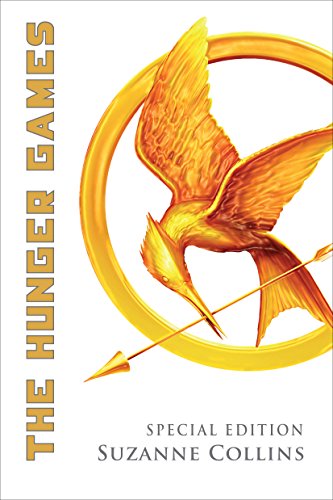
WINNING MEANS FAME AND FORTUNE. LOSING MEANS CERTAIN DEATH. THE HUNGER GAMES HAVE BEGUN. . . .
In the ruins of a place once known as North America lies the nation of Panem, a shining Capitol surrounded by twelve outlying districts. The Capitol is harsh and cruel and keeps the districts in line by forcing them all to send one boy and once girl between the ages of twelve and eighteen to participate in the annual Hunger Games, a fight to the death on live TV.
Sixteen-year-old Katniss Everdeen regards it as a death sentence when she steps forward to take her sister's place in the Games. But Katniss has been close to dead before—and survival, for her, is second nature. Without really meaning to, she becomes a contender. But if she is to win, she will have to start making choices that weight survival against humanity and life against love.
A brutal, exciting, action-based sci-fi novel. Hugely popular and excellent fun. [source]
Cover unavailable
26
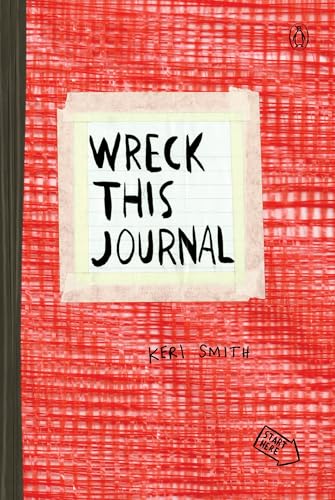
Wreck This Journal (Red) Expanded Ed.
Keri Smith
4.3
For anyone who's ever wished to, but had trouble starting, keeping, or finishing a journal or sketchbook comes Wreck This Journal, an illustrated book that features a subversive collection of prompts, asking readers to muster up their best mistake- and mess-making abilities to fill the pages of the book (and destroy them). Acclaimed illustrator Keri Smith encourages journalers to engage in "destructive" acts-poking holes through pages, adding photos and defacing them, painting with coffee, and more-in order to experience the true creative process. Readers discover a new way of art and journal making-and new ways to escape the fear of the blank page and fully engage in the creative process.
…
Cover unavailable
27
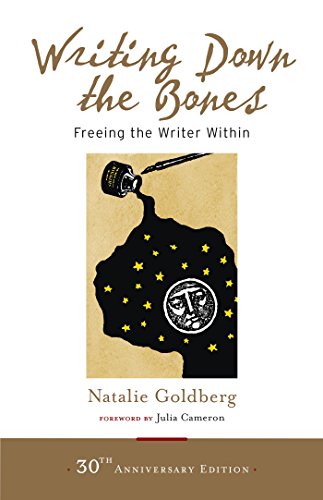
Writing Down the Bones: Freeing the Writer Within
Natalie Goldberg
4.3
With insight, humor, and practicality, Natalie Goldberg inspires writers and would-be writers to take the leap into writing skillfully and creatively. She offers suggestions, encouragement, and solid advice on many aspects of the writer’s craft: on writing from “first thoughts” (keep your hand moving, don’t cross out, just get it on paper), on listening (writing is ninety percent listening; the deeper you listen, the better you write), on using verbs (verbs provide the energy of the sentence), on overcoming doubts (doubt is torture; don’t listen to it)—even on choosing a restaurant in which to write. Goldberg sees writing as a practice that helps writers comprehend the value of their lives. The advice in her book, provided in short, easy-to-read chapters with titles that reflect the author’s witty approach (“Writing Is Not a McDonald’s Hamburger,” “Man Eats Car,” “Be an Animal”), will inspire anyone who writes—or who longs to.
…
Recommended by Brie Code.
Brie Code
@gamesandbowties Oh I love that book! And am intrigued by mystic poetry and would love to see it on Twitter 😇 [source]
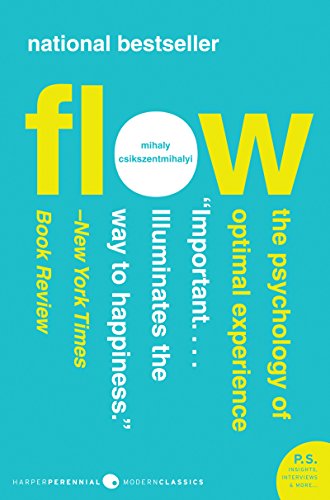
Psychologist Mihaly Csikszentmihalyi's famous investigations of "optimal experience" have revealed that what makes an experience genuinely satisfying is a state of consciousness called flow. During flow, people typically experience deep enjoyment, creativity, and a total involvement with life. In this new edition of his groundbreaking classic work, Csikszentmihalyi demonstrates the ways this positive state can be controlled, not just left to chance. Flow: The Psychology of Optimal Experience teaches how, by ordering the information that enters our consciousness, we can discover true happiness and greatly improve the quality of our lives.
While re-reading Mihaly Csikszentmihalyi’s wonderful book Flow: The Psychology of Optimal Experience, I came across this passage on working crossword puzzles. I think he could just as well be talking about making blackout poems: "There is much to be said in favor of this popular pastime, which in its best form resembles the ancient riddle contests. It is inexpensive and portable, its challenges can be finely graduated so that both novices and experts can enjoy it, and its solution produces a sense of pleasing order that gives one a satisfying feeling of accomplishment. It provides opportunities to experience a mild state of flow to many people who are stranded in airport lounges, who travel on commuter trains, or who are simply whiling away Sunday mornings." [source]
Tom Chatfield
The notion of flow is the idea that there is a state that is characterised by complete immersion in an activity, by a constant response to stimuli, and a perfect match between your ability and the challenge in front of you. [source]
Cover unavailable
29
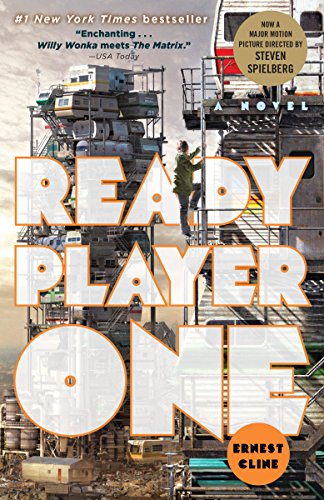
Ready Player One
Ernest Cline
4.3
The bestselling cult classic--soon to be a major motion picture directed by Steven Spielberg.
At once wildly original and stuffed with irresistible nostalgia, READY PLAYER ONE is a spectacularly genre-busting, ambitious, and charming debut--part quest novel, part love story, and part virtual space opera set in a universe where spell-slinging mages battle giant Japanese robots, entire planets are inspired by Blade Runner, and flying DeLoreans achieve light speed.
It's the year 2045, and the real world is an ugly place.
Like most of humanity, Wade Watts escapes his grim surroundings by spending his waking hours jacked into the OASIS, a sprawling virtual utopia that lets you be anything you want to be, a place where you can live and play and fall in love on any of ten thousand planets.
And like most of humanity, Wade dreams of being the one to discover the ultimate lottery ticket that lies concealed within this virtual world. For somewhere inside this giant networked playground, OASIS creator James Halliday has hidden a series of fiendish puzzles that will yield massive fortune--and remarkable power--to whoever can unlock them.
For years, millions have struggled fruitlessly to attain this prize, knowing only that Halliday's riddles are based in the pop culture he loved--that of the late twentieth century. And for years, millions have found in this quest another means of escape, retreating into happy, obsessive study of Halliday's icons. Like many of his contemporaries, Wade is as comfortable debating the finer points of John Hughes's oeuvre, playing Pac-Man, or reciting Devo lyrics as he is scrounging power to run his OASIS rig.
And then Wade stumbles upon the first puzzle.
Suddenly the whole world is watching, and thousands of competitors join the hunt--among them certain powerful players who are willing to commit very real murder to beat Wade to this prize. Now the only way for Wade to survive and preserve everything he knows is to win. But to do so, he may have to leave behind his oh-so-perfect virtual existence and face up to life--and love--in the real world he's always been so desperate to escape.
A world at stake. A quest for the ultimate prize. Are you ready?
…
Recommended by Steve Jurvetson, Brian Armstrong, Astro Teller, and 5 others.
Steve Jurvetson
A gift to all of my Apple II programming buddies from high school and Dungeons & Dragons comrades. [source]
The last novel I read was Ernest Cline’s “Ready Player One: A Novel,” because my buddy Mike Maddock said, “You gotta read this book!” And I tore it up. I read the whole book in less than two days. It’s something I wish everyone, including myself, did more of. [source]
Cover unavailable
30
The Elements of Style
William Jr. Strunk
4.3
You know the authors' names. You recognize the title. You've probably used this book yourself. And now "The Elements of Style"-the most widely read and employed English style manual-is available in a specially bound 50th Anniversary Edition that offers the title's vast audience an opportunity to own a more durable and elegantly bound edition of this time-tested classic. Offering the same content as the Fourth Edition, revised in 1999, the new casebound 50th Anniversary Edition includes a brief overview of the book's illustrious history. Used extensively by individual writers as well as high school and college students of writing, it has conveyed the principles of English style to millions of readers. This new deluxe edition makes the perfect gift for writers of any age and ability level. Fifty Years of Acclaim for "The Elements of Style," by William Strunk Jr. and E.B. White "I first read "Elements of Style" during the summer before I went off to Exeter, and I still direct my students at Harvard to their definition about the difference between 'that' and 'which.' It is the Bible for good, clear writing." -- Henry Louis Gates Jr. "For writers of all kinds and sizes the world begins and ends with Strunk and White's "Elements of Style." Only something to actually write about trumps the list of what is required to put words together in some kind of coherent way. I treasure its presence in my life and salute its fifty years of glory and accomplishment." -- Jim Lehrer ""The Elements of Style" remains an unwavering beacon of light in these grammatically troubled times. I would be lost without it." -- Ann Patchett "To the extent I know how to write clearly at all, I probably taught myself while I was teaching others -- seventh graders, in Flint, Michigan, in 1967. I taught them with a copy of Strunk & White lying in full view on my desk, sort of in the way the Gideons leave Bibles in cheap hotel rooms, as a way of saying to the hapless inhabitant: 'In case your reckless ways should strand you here, there's help.' S&W doesn't really teach you how to write, it just tantalizingly reminds you that there's an orderly way to go about it, that clarity's ever your ideal, but -- really -- it's all going to be up to you." -- Richard Ford ""The Elements of Style" never seems to go out of date. Its counsel is sound and funny, wise and unpretentious. And while its precepts are a foundation of direct communication, Strunk and White do not insist on a way of writing beyond clear expression. The rest is up to the imagination, the intelligence within." -- David Remnick, editor of "The New Yorker" "It's the toughness-the irreverence and implicit laughter-that attracted me to the little book when I was seventeen. I fell in love with Strunk & White's loathing for cant and bloviation, the ruthless cutting of crap, jargon, and extra words. For me, that skeptical directness included a tacit permission by "The Elements of Style" to break its rules on occasion: an alloy of generosity in the blade, a grace I still admire and still learn from." -- Robert Pinsky "In the quest for clarity, one can have no better guides than Strunk and White. For me, their book has been invaluable and remains essential." -- Dan Rather "Eschew surplusage! A perfect book." --Jonathan Lethem "Not until I started teaching writing and I reread "The Elements of Style" did I realize that most everything I would be teaching young writers, and everything I would be learning myself as a writer, was contained between the covers of this slim, elegant, wise little book." -- Julia Alvarez "Strunk and White seared their way into my brain long ago, and I benefit from them daily." -- Steven J. Dubner, co-author of "Freakonomics" "Since high school, I have kept a copy of this book handy. That should be unnecessary. I should, by now, have fully internalized "The Elements of Style." But sometimes I get entangled in a paragraph that refuses to be 'clear, brief, bold.' I dip back into "The Elements of Style" and am refreshed. After Scott Simon interviewed me on NPR about whether the word 'e-mail' needs a hyphen (yes, it does), some listeners, including friends of mine, wondered why I had answered in the affirmative when asked, in passing, 'Are you a drunken white man?' Those listeners misheard. 'Strunk and White man' was what Scott said." -- Roy Blount Jr. "Strunk & White--writing's good-natured law firm--still contains enough sparkling good sense to clean up the whole bloviating blogosphere." -- Thomas Mallon "I used Strunk -- that's what we called it, Strunk -- as a student at Berkeley fifty years ago. I didn't know that it was new, and that we were the first generation to be educated in "The Elements of Style." I got a firm foundation in the English language, learned to write basically, and could depict the realistic world. Then I was able to become an impressionist and expressionist." -- Maxine Hong Kingston "Strunk and White's gigantic little book must be the most readable advice on writing ever written. Side by side with Roget, Shakespeare, the Bible, and a dictionary, it's an essential for every writer's shelf." -- X.J. Kennedy" ""With what joy I welcome the fiftieth anniversary of "The Elements of Style." I am greatly indebted to this book for the invaluable help it has given me all these years." -- Horton Foote "Elegant, droll, and perfectly proportioned, and like your favorite aunt, strict but affectionate. And, like your favorite aunt, full of optimism: You can, and will, be a better writer! There has never been a better, briefer, or more loved book about the art and craft of communicating." -- Susan Orlean "This book is an essential tool. It has been of great use to me and is probably responsible for my best writing. I owe my success to Strunk and White; only the mistakes are mine." -- Ben Affleck, in "O, the Oprah Magazine" "This book is a wonderful example of teaching by example. Not only does it recommend clear and concise writing, it demonstrates it. Written in the style of a friend offering help, it is a godsend to anyone wanting to put words on paper. Thank you, Messieurs Strunk and White. And Happy Anniversary, "Elements of Style."" -- S.E. Hinton "When I began to have ... I wouldn't say arguments but conversations in my mind with Strunk and White about a few of their rules and principles, I knew I was coming into my own. If only they were still here to talk things over! No doubt their side of the exchange would be kindly put, well-informed, and wise. They'd probably help me with my side of it. What more could one want from writers reaching out to help other writers?" -- Barbara Wallraff, language columnist for "The Atlantic" "I don't believe there is a serious writer alive who doesn't have a worn copy of 'Strunk & White'on his or her bookshelf." -- Mignon Fogarty, author of "Grammar Girl's Quick and Dirty Tips ""for Better Writing" "This little book has inspired hundreds of thousands of people to write better -- partly by precept and partly by example. It continues to influence more writers than any other. It's a force for good in the world." -- Bryan A. Garner, author of "Garner's Modern American Usage" "I can think of no better guide to good writing, and I always think of this little classic with a warm heart. More importantly, I revisit its pages often. It's the one essential book on writing." -- Jay Parini, author of "Why Poetry Matters" "Clarity and simplicity have always been the goals, and this book shows the way. It has always been a lighthouse in the dark and stormy night of student prose, of all of our prose." -- Ron Carlson "The only rules you are ever going to get from me are all in Strunk and White." --Ursula K. Le Guin, from "Steering the Craft " "["The Elements of Style "is] a book to which I return from time to time, the way I periodically reread Shakespeare. I always discover something new, settle a question that has been puzzling me, or learn a principle of usage that I have been pretending to know, a pretense that has resulted in inconsistency and in the sort of errors from which I can only pray some saintly copy editor will save me." -- Francine Prose, from "Reading"" Like A Writer" ..".still a little book, small enough and important enough to carry in your pocket, as I carry mine." -- Charles Osgood "Almost every writer has a Strunk and White story. One journalism professor spends the first two weeks of school forcing his students to memorize the book. A top editor at a major paper buys copies at yard sales to distribute to her writers and interns. It has even caused love affairs. . . . Could its greatness be any more clear?" -- Jesse Sheidlower, American Editor of the "Oxford"" English Dictionary," on NPR" ""If the English language is one of the finest homes ever devised for the human spirit, "Elements" is the best guided house tour we've got." --David Gelernter, "The Wall Street Journal" ..".Should be the daily companion of anyone who writes for a living and, for that matter, anyone who writes at all." "--"Jonathan Yardley, " Greensboro (N.C.) Daily News" "No book in shorter space, with fewer words, will help any writer more than this persistent little volume." -- Herbert A. Kenny, "The Boston Globe" "Buy it, study it, enjoy it. It's as timeless as a book can be in our age of volubility." -- Charles Poore, "The New York Times" "White is one of the best stylists and most lucid minds in this country. What he says and his way of saying it are equally rewarding." "-- "Edmund Fuller, "The Wall Street Journal ""If you have any young friends who aspire to become writers, the second greatest favor you can do them is to present them with copies of "The Elements of Style." The first greatest, of course, is to shoot them now, while they're happy." -- Dorothy Parker, "Esquire"
…
Recommended by Tobi Lütke, Alina Varlanuta, Ann Handley, and 3 others.
Tobi Lütke
Founder & CEO/Shopify
My most frequently gifted book is this book because I like good writing. [source]
Alina Varlanuta
My professional path – copywriting – somehow intertwines with my unprofessional (hahaha) path – writing so I would recommend reading literature for both. Somehow reading and writing are two ways of doing the same thing: storytelling (even when you read you tell yourself a story in your own voice, bringing your personal emotion and empathy to the story you’re reading). The only difference is that when I’m reading, panic is far away from me, in a safe place. Nevertheless, the words below helped me rewrite and think twice before adding an exclamation point: The Elements of Style. [source]
Bill Nye
This is my guide. I accept that I’ll never write anything as good as the introductory essay by the author. It’s brilliant. [source]
Cosmos has 13 heavily illustrated chapters, corresponding to the 13 episodes of the Cosmos television series. In the book, Sagan explores 15 billion years of cosmic evolution and the development of science and civilization. Cosmos traces the origins of knowledge and the scientific method, mixing science and philosophy, and speculates to the future of science. The book also discusses the underlying premises of science by providing biographical anecdotes about many prominent scientists throughout history, placing their contributions into the broader context of the development of modern science.
The book covers a broad range of topics, comprising Sagan's reflections on anthropological, cosmological, biological, historical, and astronomical matters from antiquity to contemporary times. Sagan reiterates his position on extraterrestrial life—that the magnitude of the universe permits the existence of thousands of alien civilizations, but no credible evidence exists to demonstrate that such life has ever visited earth.
…
Recommended by Richard Branson, Ante Shoda, Anurag Ramdasan, and 1 others.
Today is World Book Day, a wonderful opportunity to address this #ChallengeRichard sent in by Mike Gonzalez of New Jersey: Make a list of your top 65 books to read in a lifetime. [source]
Ante Shoda
It explains 14 billion years of the evolution of the universe, a sort of engineering experiment on the largest possible scale. It spans all scales of space and time, describing everything from the largest scales of the universe to the smallest scales of molecules and atoms. It’s a good book for putting everything in perspective. [source]
Anurag Ramdasan
This book helped draft a great perspective on the world and the universe at large and made me a fan of the Cosmos!
Cover unavailable
32
Art and Fear: Observations on the Perils (and Rewards) of Artmaking
David Bayles, Ted Orland
4.2
"This is a book about making art. Ordinary art. Ordinary art means something like: all art not made by Mozart. After all, art is rarely made by Mozart-like people; essentially-statistically speaking-there aren't any people like that. Geniuses get made once-a-century or so, yet good art gets made all the time, so to equate the making of art with the workings of genius removes this intimately human activity to a strangely unreachable and unknowable place. For all practical purposes making art can be examined in great detail without ever getting entangled in the very remote problems of genius." --from the Introduction
The authors believe that art can be taught, and moreover learned, and the traps that waylay our efforts can be avoided or managed with some cheerful guidance. [source]
Cover unavailable
33
Understanding Comics: The Invisible Art
Scott McCloud
4.2
The bestselling international classic on storytelling and visual communication
"You must read this book." — Neil Gaiman
Praised throughout the cartoon industry by such luminaries as Art Spiegelman, Matt Groening, and Will Eisner, Scott McCloud's Understanding Comics is a seminal examination of comics art: its rich history, surprising technical components, and major cultural significance. Explore the secret world between the panels, through the lines, and within the hidden symbols of a powerful but misunderstood art form.
…
Recommended by Ev Williams, Austin Kleon, Bret Victor, and 1 others.
Unsolicited, but here’s my advice for visual thinkers (and others) who want to be better writers: … Cartoonists, because their work demands work from two disciplines (writing/art, poetry/design, words/pictures), are highly instructive when it comes to visual people learning to write, writers learning to make art, etc. (Check out Scott McCloud’s Understanding Comics for more.) [source]
Will Brooker
Understanding Comics is a book about how comics work, told in comic form. It’s very accessible, it’s for the general reader and is about comics in general, not just superhero comics. It explores areas like pacing and editing – how motion can be created through static panels on a page, and how arranging those panels in different ways, or drawing in different styles, or combining text and image, has different effects. It’s almost like a book on film study which explores the role of sound, lighting or editing. Scott McCloud is an artist himself, and he draws pastiches to show how different styles produce different effects. [source]
John Berger’s Classic Text on Art John Berger's Ways of Seeing is one of the most stimulating and the most influential books on art in any language. First published in 1972, it was based on the BBC television series about which the (London) Sunday Times critic commented: "This is an eye-opener in more ways than one: by concentrating on how we look at paintings . . . he will almost certainly change the way you look at pictures." By now he has.
"Berger has the ability to cut right through the mystification of the professional art critics . . . He is a liberator of images: and once we have allowed the paintings to work on us directly, we are in a much better position to make a meaningful evaluation" —Peter Fuller, Arts Review
"The influence of the series and the book . . . was enormous . . . It opened up for general attention to areas of cultural study that are now commonplace" —Geoff Dyer in Ways of Telling
Winner of the 1972 Booker Prize for his novel, G., John Peter Berger (born November 5th, 1926) is an art critic, painter and author of many novels including A Painter of Our Time, From A to X and Bento’s Sketchbook.
You have to understand the Marxist interpretation of art; it is absolutely fundamental to the way that art history departments now study the material. Then you have to critique it, because we’ve moved on from the 1970s and the collapse of Marxism in most of the world shows—amongst other things—that the model was flawed. But it’s still a very good book to read, for a teenager especially. [source]
Cover unavailable
35
Save the Cat: The Last Book on Screenwriting You'll Ever Need
Blake Snyder
4.2
This ultimate insider's guide reveals the secrets that none dare admit, told by a show biz veteran who's proven that you can sell your script if you can save the cat!
It takes you through 11 different 'archetypes' of screenplays you can write, and the exact elements each needs to be a great story. [source]
Cover unavailable
36
Harry Potter and the Goblet of Fire (Harry Potter, #4)
J.K. Rowling
4.2
It is the summer holidays, and one night Harry Potter wakes up with his scar burning. He has had a strange dream, one that he can't help worrying about...until a timely invitation from Ron Weasley arrives: to nothing less than the Quidditch World Cup!
Soon Harry is reunited with Ron and Hermione and gasping at the thrills of an international Quidditch match. But then something horrible happens which casts a shadow over everybody, and Harry in particular...
…
Recommended by Big Structural Change.
Big Structural Change
@siriusclaw Azkaban ftw! Goblet is the worst of the series. Great book though. [source]
Cover unavailable
37
Where Good Ideas Come from: The Natural History of Innovation
The printing press, the pencil, the flush toilet, the battery--these are all great ideas. But where do they come from? What kind of environment breeds them? What sparks the flash of brilliance? How do we generate the breakthrough technologies that push forward our lives, our society, our culture? Steven Johnson's answers are revelatory as he identifies the seven key patterns behind genuine innovation, and traces them across time and disciplines. From Darwin and Freud to the halls of Google and Apple, Johnson investigates the innovation hubs throughout modern time and pulls out the approaches and commonalities that seem to appear at moments of originality.
Quite good at giving examples of how you create environments that can encourage good ideas. [source]
Tony Hsieh
CEO/Zappos.com
Author Steven Johnson argues in his 2010 book that innovation comes from the collision of ideas. This can happen when an individual working in isolation builds off years of existing knowledge to fuel his insights, or it can happen much more quickly when several creative types bounce ideas off each other in a community like Silicon Valley. This theory is one of the reasons why Hsieh decided to invest $350 million of his own money in 2010 into the Downtown Project, which is building a community of entrepreneurs in Zappos' neighborhood. [source]
Also add to this: “How We Got to Now” by Steven Johnson. Basically: don’t believe the myth of the lonely genius. Ideas come from a confluence of history, “the adjacent possible” specific geographic locations, etc. The connections Johnson makes are brilliant. For instance, The Gutenberg Press (which, in itself, was invented because of improvements in sewing looms), made everyone realize they had bad vision. So the science of lenses was created. So microscopes were eventually created. So germs were eventually discovered. So modern medical science was discovered. And so on. Johnson is a thinker and a linker and tells a good story. [source]
Most business books give you the same old advice: Write a business plan, study the competition, seek investors, yadda yadda. If you're looking for a book like that, put this one back on the shelf.
Rework shows you a better, faster, easier way to succeed in business. Read it and you'll know why plans are actually harmful, why you don't need outside investors, and why you're better off ignoring the competition. The truth is, you need less than you think. You don't need to be a workaholic. You don't need to staff up. You don't need to waste time on paperwork or meetings. You don't even need an office. Those are all just excuses.
What you really need to do is stop talking and start working. This book shows you the way. You'll learn how to be more productive, how to get exposure without breaking the bank, and tons more counterintuitive ideas that will inspire and provoke you.
With its straightforward language and easy-is-better approach, Rework is the perfect playbook for anyone who’s ever dreamed of doing it on their own. Hardcore entrepreneurs, small-business owners, people stuck in day jobs they hate, victims of "downsizing," and artists who don’t want to starve anymore will all find valuable guidance in these pages.
Unperturbed by conventional wisdom, the authors start fresh and rewrite the rules of business. Their approach turns out to be as successful as it is counter-intuitive. [source]
If given a choice between investing in someone who has read Rework or has an MBA, I'm investing in Rework every time. This is a must read for every entrepreneur. [source]
Tony Hsieh
CEO/Zappos.com
The wisdom in these pages is edgy yet simple, straightforward, and proven. Read this book multiple times to help give you the courage you need to get out there and make something great. [source]
Cover unavailable
39
Where the Wild Things Are
Maurice Sendak
4.2
Max, a wild and naughty boy, is sent to bed without his supper by his exhausted mother. In his room, he imagines sailing far away to a land of Wild Things. Instead of eating him, the Wild Things make Max their king.
During a trip to a public library in Washington’s Anacostia neighborhood in 2015, Obama shared some of his childhood favorites with a group of young students. He also read (and acted out) Where the Wild Things Are by Maurice Sendak to kids at the White House in 2014. [source]
Today is World Book Day, a wonderful opportunity to address this #ChallengeRichard sent in by Mike Gonzalez of New Jersey: Make a list of your top 65 books to read in a lifetime. [source]
In this photo, Jimmy Fallon and I enjoy slurping Eggs of Newt together for Season-5 of “The Martha Stewart Show." I am dressed as "Queen of the Wild Things" inspired by the beloved Maurice Sendak children's book, "Where the Wild Things Are." https://t.co/1ZBqXEW7dC [source]
"This is what the future of work (and the world) looks like. Actually, it's already happening around you." — Tony Hsieh, CEO, Zappos.com
In bestsellers such as Purple Cow and Tribes, Seth Godin taught readers how to make remarkable products and spread powerful ideas. But this book is about you—your choices, your future, and your potential to make a huge difference in whatever field you choose.
There used to be two teams in every workplace: management and labor. Now there's a third team: the linchpins. These people figure out what to do when there's no rule book. They delight and challenge their customers and peers. They love their work, pour their best selves into it, and turn each day into a kind of art.
Linchpins are the essential building blocks of great organizations. They may not be famous but they're indispensable. And in today's world, they get the best jobs and the most freedom.
As Godin writes, "Every day I meet people who have so much to give but have been bullied enough or frightened enough to hold it back. It's time to stop complying with the system and draw your own map. You have brilliance in you, your contribution is essential, and the art you create is precious. Only you can do it, and you must."
…
Recommended by Andra Zaharia, Ann Handley, Armina Sirbu, and 6 others.
Andra Zaharia
While I was thinking of the best books to add to this short list, I realized that not even half of them are directly related to digital marketing. This is because I believe that the best marketers are people who understand human nature deeply and aim to bring out the best in it. Call me naive, but that’s how I see it. If I were to want to pursue a career in marketing, I’d read anything by Seth Godin (Linchpin in particular). [source]
Armina Sirbu
My favorite book is Linchpin by Seth Godin. I think it's business, but it can very well be non-business as well because it's so much about life. I re-read fragments from time to time to get a jump-start when I need it. [source]
Bernard Tan
Now that I look at the books listed, they seem to carry an existential theme. I guess I like to understand humanity and human behaviour ultimately to better understand myself. I find reading a means to connect with people who may have lived before my time, or in a distant country, that I may never have had the chance to connect with in real life. As three-dimensional humans, we are all made up of so many faces and emotional layers that we find it hard to dissect them all, and when we find writers who can explain these thought processes in a way that’s tangible and digestible, there’s this incredibly comforting eureka moment of feeling understood. [source]
Cover unavailable
41
The Creative License: Giving Yourself Permission to Be The Artist You Truly Are
Danny Gregory
4.2
The author of "Everyday Matters: A New York Diary" teaches readers to open their lives to creativity and fulfillment by relearning how to draw. Handwritten and illustrated in color throughout.
Cover unavailable
42
Ender's Game
Orson Scott Card
4.2
Once again, Earth is under attack. An alien species is poised for a final assault. The survival of humanity depends on a military genius who can defeat the aliens. But who?
Ender Wiggin. Brilliant. Ruthless. Cunning. A tactical and strategic master. And a child.
Recruited for military training by the world government, Ender's childhood ends the moment he enters his new home: Battle School. Among the elite recruits Ender proves himself to be a genius among geniuses. He excels in simulated war games. But is the pressure and loneliness taking its toll on Ender? Simulations are one thing. How will Ender perform in real combat conditions? After all, Battle School is just a game. Isn't it?
Oh, it’s not a favorite book or anything like that, I just added it because I liked it. I don’t think there’s any real significance to the fact that it’s listed there and other books aren’t. [source]
At one point, this was the only book listed on Mark Zuckerberg’s Facebook page. If it’s good enough to be the sole selection of the founder of Facebook, maybe there’s something to it. The plot: In anticipation of another attack from a hostile alien race, the search for a brilliant military strategist has led to Ender Wiggin. In space combat school, Ender stands out, demonstrating exceptional leadership and unconventional strategy. But it is lonely at the top for Ender, as he struggles with relentless pressure from his instructors. Through Ender’s journey, you’ll learn how to capitalize on your strengths and those of your teammates, as well as exploit your adversaries’ weaknesses. Ender is a futuristic Level 5 Leader we can all learn from. [source]
About a kid who is trained by the military to play video games … But he realizes at the end that the video games he was playing were an actual war. [source]
Cover unavailable
43
The Lightning Thief (Percy Jackson and the Olympians, #1)
Rick Riordan
4.2
Alternate cover for this ISBN can be found here
Percy Jackson is a good kid, but he can't seem to focus on his schoolwork or control his temper. And lately, being away at boarding school is only getting worse - Percy could have sworn his pre-algebra teacher turned into a monster and tried to kill him. When Percy's mom finds out, she knows it's time that he knew the truth about where he came from, and that he go to the one place he'll be safe. She sends Percy to Camp Half Blood, a summer camp for demigods (on Long Island), where he learns that the father he never knew is Poseidon, God of the Sea. Soon a mystery unfolds and together with his friends—one a satyr and the other the demigod daughter of Athena - Percy sets out on a quest across the United States to reach the gates of the Underworld (located in a recording studio in Hollywood) and prevent a catastrophic war between the gods.
…
Cover unavailable
44
Story: Substance, Structure, Style, and the Principles of Screenwriting
Robert McKee's screenwriting workshops have earned him an international reputation for inspiring novices, refining works in progress and putting major screenwriting careers back on track. Quincy Jones, Diane Keaton, Gloria Steinem, Julia Roberts, John Cleese and David Bowie are just a few of his celebrity alumni. Writers, producers, development executives and agents all flock to his lecture series, praising it as a mesmerizing and intense learning experience. In Story, McKee expands on the concepts he teaches in his $450 seminars (considered a must by industry insiders), providing readers with the most comprehensive, integrated explanation of the craft of writing for the screen. No one better understands how all the elements of a screenplay fit together, and no one is better qualified to explain the "magic" of story construction and the relationship between structure and character than Robert McKee.
…
Recommended by Bill Liao.
Bill Liao
The human world occurs in language so best get good at it! [source]
Cover unavailable
45
Harry Potter and the Prisoner of Azkaban (Harry Potter, #3)
J.K. Rowling
4.2
For Twelve long years, the dread fortress of Azkaban held an infamous prisoner named Sirius Black. Convicted of killing thirteen people with a single curse, he was said to be the heir apparent to the Dark Lord, Voldemort.
Now he has escaped, leaving only two clues as to where he might be headed: Harry Potter's defeat of You-Know-Who was Black's downfall as well. And the Azkaban guards heard Black muttering in his sleep, "He's at Hogwarts...he's at Hogwarts."
Harry Potter isn't safe, not even within the walls of his magical school, surrounded by his friends. because on top of it all, there may well be a traitor in their midst.
(front flap)
…
Recommended by Maude Garrett.
Maude Garrett
@GeekBomb Best use of time travel in a book or series to date [source]
Cover unavailable
46
Zen in the Art of Writing
Ray Bradbury
4.2
"Every morning I jump out of bed and step on a land mine. The land mine is me. After the explosion, I spend the rest of the day putting the pieces back together. Now, it's your turn. Jump!"
Zest. Gusto. Curiosity. These are the qualities every writer must have, as well as a spirit of adventure. In this exuberant book, the incomparable Ray Bradbury shares the wisdom, experience, and excitement of a lifetime of writing. Here are practical tips on the art of writing from a master of the craft—everything from finding original ideas to developing your own voice and style—as well as the inside story of Bradbury's own remarkable career as a prolific author of novels, stories, poems, films, and plays.
Zen in the Art of Writing is more than just a how-to manual for the would-be writer: it is a celebration of the act of writing itself that will delight, impassion, and inspire the writer in you. Bradbury encourages us to follow the unique path of our instincts and enthusiasms to the place where our inner genius dwells, and he shows that success as a writer depends on how well you know one subject: your own life.
In Zen in the Art of Writing: Releasing the Creative Genius Within You, Ray Bradbury — acclaimed author, dystopian novelist, hater of symbolism — shares not only his wisdom and experience in writing, but also his contagious excitement for the craft. Blending practical how-to’s on everything from finding your voice to negotiating with editors with snippets and glimpses of the author’s own career, the book is at once a manual and a manifesto, imbued with equal parts insight and enthusiasm. [source]
New York Times bestseller and named Best Marketing Book of 2014 by the American Marketing Association
What makes things popular? Why do people talk about certain products and ideas more than others? Why are some stories and rumors more infectious? And what makes online content go viral?
If you said advertising, think again. People don't listen to advertisements, they listen to their peers. But why do people talk about certain products and ideas more than others? Why are some stories and rumors more infectious? And what makes online content go viral?
Wharton marketing professor Jonah Berger has spent the last decade answering these questions. He's studied why New York Times articles make the paper's own Most E-mailed List, why products get word of mouth, and how social influence shapes everything from the cars we buy to the clothes we wear to the names we give our children. In this book, Berger reveals the secret science behind word-of-mouth and social transmission. Discover how six basic principles drive all sorts of things to become contagious, from consumer products and policy initiatives to workplace rumors and YouTube videos.
Contagious combines groundbreaking research with powerful stories. Learn how a luxury steakhouse found popularity through the lowly cheese-steak, why anti-drug commercials might have actually increased drug use, and why more than 200 million consumers shared a video about one of the seemingly most boring products there is: a blender. If you've wondered why certain stories get shared, e-mails get forwarded, or videos go viral, Contagious explains why, and shows how to leverage these concepts to craft contagious content. This book provides a set of specific, actionable techniques for helping information spread - for designing messages, advertisements, and information that people will share. Whether you're a manager at a big company, a small business owner trying to boost awareness, a politician running for office, or a health official trying to get the word out, Contagious will show you how to make your product or idea catch on.
…
Recommended by Vinod Khosla, Vinod Khosla, Andrew Medal, and 10 others.
Andrew Medal
The world is #CONTAGIOUS ☢️☢️☢️ • • My dog and I love this book. I read to him when he wants to learn about marketing techniques. The last time I read this book was in 2013. If you want a read that dissects how and… https://t.co/6v0ckSnSQe [source]
Ee Ling Lim
Contagious by Jonah Berger is another interesting one for those trying to figure out how to market their business. In Contagious, Jonah identifies what makes some things go viral, and narrowed it down to 6 principles STEPPS: Social currency (content that makes people look good when they talk about it), Triggers (top of mind topics), Emotion (content that we care about, especially high arousal ones like anger, awe, excitement and humor), Public, Practical and Stories. [source]
Erik Cheong
Explains why certain products and ideas become popular while others fail. It reveals the secret science behind word-of-mouth and social transmission. Discover how six basic principles drive all sorts of things to become contagious, from consumer products and policy initiatives to workplace rumors and YouTube videos. [source]
Cover unavailable
48
The Accidental Creative: How to Be Brilliant at a Moment's Notice
Todd Henry
4.1
Have better ideas, faster, without the stress and burnout.
It isn't enough to just do your job anymore. In order to thrive in today's marketplace, all of us-even the accountants-have to be ready to generate brilliant ideas on demand.
Business creativity expert Todd Henry explains how to establish effective practices that unleash your creative potential. Born out of his consultancy and his popular podcast, Henry has created a practical method for discovering your personal creative rhythm. He focuses on five key elements:
*Focus: Begin with your end goal in mind. *Relationships: Build stimulating relationships and ideas will follow. *Energy: Manage it as your most valuable resource. *Stimuli: Structure the right "inputs" to maximize creative output. *Hours: Focus on effectiveness, not efficiency. This is a guide for staying inspired and experiencing greater creative productivity than you ever imagined possible.
…
Cover unavailable
49
How to Be an Explorer of the World: Portable Life Museum
Keri Smith
4.1
From the author of Wreck This Journal, an interactive guide for exploring and documenting the art and science of everyday life.
Artists and scientists analyze the world around them in surprisingly similar ways, by observing, collecting, documenting, analyzing, and comparing. In this captivating guided journal, readers are encouraged to explore their world as both artists and scientists.
The mission Smith proposes? To document and observe the world around you. As if you've never seen it before. Take notes. Collect things you find on your travels. Document findings. Notice patterns. Copy. Trace. Focus on one thing at a time. Record what you are drawn to.
With a series of interactive prompts and a beautifully hand-illustrated two-color package, readers will enjoy exploring and discovering the world through this gorgeous book.
…
Cover unavailable
50
On Writing Well: The Classic Guide To Writing Nonfiction
On Writing Well has been praised for its sound advice, its clarity and the warmth of its style. It is a book for everybody who wants to learn how to write or who needs to do some writing to get through the day, as almost everybody does in the age of e-mail and the Internet. Whether you want to write about people or places, science and technology, business, sports, the arts or about yourself in the increasingly popular memoir genre, On Writing Well offers you fundamental priciples as well as the insights of a distinguished writer and teacher. With more than a million copies sold, this volume has stood the test of time and remains a valuable resource for writers and would-be writers.
I read a bunch of books on writing before I wrote my first book and the two that stuck with me were Stephen King’s book and “On Writing Well” by Zinsser (which is a bit on the technical side). [source]
Tim O'Reilly
Founder/O'Reilly Media
On Writing Well, by William Zinsser. I wouldn't say this book influenced me, since my principles of writing were established long before I read it. However, it does capture many things that I believe about effective writing. [source]
Great blunt advice about writing better non-fiction. So inspiring. [source]
Cover unavailable
51
The Anatomy of Story: 22 Steps to Becoming a Master Storyteller
John Truby
4.1
John Truby is one of the most respected and sought-after story consultants in the film industry, and his students have gone on to pen some of Hollywood's most successful films, including Sleepless in Seattle, Scream, and Shrek. The Anatomy of Story is his long-awaited first book, and it shares all of his secrets for writing a compelling script. Based on the lessons in his award-winning class, Great Screenwriting, The Anatomy of Story draws on a broad range of philosophy and mythology, offering fresh techniques and insightful anecdotes alongside Truby's own unique approach for how to build an effective, multifaceted narrative. Truby's method for constructing a story is at once insightful and practical, focusing on the hero's moral and emotional growth. As a result, writers will dig deep within and explore their own values and worldviews in order to create an effective story. Writers will come away with an extremely precise set of tools to work with--specific, useful techniques to make the audience care about their characters, and that make their characters grow in meaningful ways. They will construct a surprising plot that is unique to their particular concept, and they will learn how to express a moral vision that can genuinely move an audience.
The foundations of story that Truby lays out are so fundamental they are applicable--and essential--to all writers, from novelists and short-story writers to journalists, memoirists, and writers of narrative non-fiction.
…
Cover unavailable
52
Create This Book
Moriah Elizabeth
4.1
Create This Book is fresher than ever! This revised version has a new look with all the same inspiring prompts PLUS a bonus "Tips and Tricks" page add-on.This is the ultimate outlet for creativity. Includes 235 pages of unique and inspiring prompts to get you in the creative zone! Whether you are trying to get past an artist's block, wanting to become more creative, or just looking to have some fun, you will love this interactive journal!Want to learn more? Check out "Create This Book" on Youtube! You can watch Moriah Elizabeth's "Create This Book" Series! Great for inspiration and guidance on your creative journey!Go to MoriahElizabeth.com for more information.
…
Cover unavailable
53
Art Before Breakfast: A Zillion Ways to be More Creative No Matter How Busy You Are
Danny Gregory
4.1
Packed with the signature can-do attitude that makes beloved artist Danny Gregory a creativity guru to thousands across the globe, this unique guide serves up a hearty helping of inspiration. For aspiring artists who want to draw and paint but just can't seem to find time in the day, Gregory offers 5– to 10–minute exercises for every skill level that fit into any schedule—whether on a plane, in a meeting, or at the breakfast table—along with practical instruction on techniques and materials, plus strategies for making work that's exciting, unintimidating, and fulfilling. Filled with Gregory's encouraging words and motivating illustrations, Art Before Breakfast teaches readers how to develop a creative habit and lead a richer life through making art.
…
Cover unavailable
54
Thinking With Type
Ellen Lupton
4.1
Our all time best selling book is now available in a revised and expanded second edition. Thinking with Type is the definitive guide to using typography in visual communication, from the printed page to the computer screen. This revised edition includes forty-eight pages of new content, including the latest information on style sheets for print and the web, the use of ornaments and captions, lining and non-lining numerals, the use of small caps and enlarged capitals, as well as information on captions, font licensing, mixing typefaces, and hand lettering. Throughout the book, visual examples show how to be inventive within systems of typographic form—what the rules are and how to break them. Thinking with Type is a type book for everyone: designers, writers, editors, students, and anyone else who works with words. The popular online companion to Thinking with Type (www.thinkingwithtype.com) has been revised to reflect the new material in the second edition.
…
Recommended by David Kadavy, Kimberly Gloria Choi, Marius Ciuchete Paun, and 1 others.
Kimberly Gloria Choi
When asked what books she would recommend to youngsters interested in her professional path, Kimberly mentioned Thinking with Type. [source]
Marius Ciuchete Paun
Question: What books would you recommend to young people interested in your career path? Answer: “Just My Type” by Simon Garfield “Thinking with Type” by Ellen Lupton “Don't Make Me Think” by Steve Krug “Geometry of Design” by Kimberly Elam “Grid Systems in Graphic Design” by Josef Müller-Brockmann “ReWork” by Jason Fried These titles should be a good start, I think. [source]
Cover unavailable
55
It's Not How Good You Are, It's How Good You Want To Be
Paul Arden
4.1
It’s Not How Good You Are, It’s How Good You Want to Be is a handbook of how to succeed in the world: a pocket bible for the talented and timid alike to help make the unthinkable thinkable and the impossible possible.
The world’s top advertising guru, Paul Arden, offers up his wisdom on issues as diverse as problem solving, responding to a brief, communicating, playing your cards right, making mistakes, and creativity – all endeavors that can be applied to aspects of modern life.
This uplifting and humorous little book provides a unique insight into the world of advertising and is a quirky compilation of quotes, facts, pictures, wit and wisdom – all packed into easy-to-digest, bite-sized spreads. If you want to succeed in life or business, this book is a must.
The reason why I gift this book is because you can read it in 40 minutes. [source]
Cover unavailable
56
Making Ideas Happen: Overcoming the Obstacles Between Vision and Reality
Scott Belsky
4.1
How the world's leading innovators push their ideas to fruition again and again
Edison famously said that genius is 1 percent inspiration, 99 percent perspiration. Ideas for new businesses, solutions to the world's problems, and artistic breakthroughs are common, but great execution is rare.
According to Scott Belsky, the capacity to make ideas happen can be developed by anyone willing to develop their organizational habits and leadership capability. That's why he founded Behance, a company that helps creative people and teams across industries develop these skills.
Belsky has spent six years studying the habits of creative people and teams that are especially productive-the ones who make their ideas happen time and time again. After interviewing hundreds of successful creatives, he has compiled their most powerful-and often counterintuitive-practices, such as:
•Generate ideas in moderation and kill ideas liberally •Prioritize through nagging •Encourage fighting within your team
While many of us obsess about discovering great new ideas, Belsky shows why it's better to develop the capacity to make ideas happen-a capacity that endures over time.
…
Recommended by Andreas Zhou.
Andreas Zhou
I still use some of the methods this book teaches around productivity. It also teaches some very important lessons around how to break out of 'analysis paralysis' and actually execute on ideas. [source]
Cover unavailable
57
LOGO Design Love, Annotated and Expanded Edition
David Airey
4.1
Completely updated and expanded, the second edition of David Airey's "Logo Design Love" contains more of just about everything that made the first edition so great: more case studies, more sketches, more logos, more tips for working with clients, more insider stories, and more practical information for getting the job and getting it done right. In "Logo Design Love," David shows you how to develop an iconic brand identity from start to finish, using client case studies from renowned designers. In the process, he reveals how designers create effective briefs, generate ideas, charge for their work, and collaborate with clients. David not only shares his personal experiences working on identity projects-including sketches and final results of his own successful designs-he also uses the work of many well-known designers such as Paula Scher, who designed the logos for Citi and Microsoft Windows, and Lindon Leader, creator of the current FedEx identity, as well as work from leading design studios, including Moving Brands, Pentagram, MetaDesign, Sagmeister & Walsh, and many more. In "Logo Design Love," you'll learn: Best practices for extending a logo into a complete brand identity systemWhy one logo is more effective than anotherHow to create your own iconic designsWhat sets some designers above the rest31 practical design tips for creating logos that last
…
Cover unavailable
58
Sprint: How to Solve Big Problems and Test New Ideas in Just Five Days
A fantastic, proven formula for moving from idea to prototyping to decision making within five days, based on a process he developed while working at Google and later GV. [source]
Cat Williams-Treloar
Jake Knapp, John Zeratsky & Braden Kowitz "Sprint" - the go-to guide on how to sprint. You may not follow everything to the tee, but it's simple, clean and full of great examples of how to move fast with structure. [source]
Javed Khatri
This book details the "sprint" process used at Google Ventures. We follow a similar process at Kustard to validate business ideas and to solve problems without wasting much time, money and energy. If you want to quickly validate an idea, this is a proven model and a must read. [source]
Cover unavailable
59
The Hero of Ages (Mistborn, #3)
Brandon Sanderson
4.1
Tricked into releasing the evil spirit Ruin while attempting to close the Well of Ascension, new emperor Elend Venture and his wife, the assassin Vin, are now hard-pressed to save the world.
Cover unavailable
60
Everyday Matters
Danny Gregory
4.1
In the tradition of Persepolis, In the Shadow of No Towers, and Our Cancer Year, an illustrated memoir of remarkable depth, power, and beauty Danny Gregory and his wife, Patti, hadn't been married long. Their baby, Jack, was ten months old; life was pretty swell. And then Patti fell under a subway train and was paralyzed from the waist down. In a world where nothing seemed to have much meaning, Danny decided to teach himself to draw, and what he learned stunned him. Suddenly things had color again, and value. The result is Everyday Matters, his journal of discovery, recovery, and daily life in New York City. It is as funny, insightful, and surprising as life itself.
…
Cover unavailable
61
Green Eggs and Ham
Dr.Seuss
4.1
“Do you like green eggs and ham?” asks Sam-I-am in this Beginner Book by Dr. Seuss. In a house or with a mouse? In a boat or with a goat? On a train or in a tree? Sam keeps asking persistently. With unmistakable characters and signature rhymes, Dr. Seuss’s beloved favorite has cemented its place as a children’s classic. In this most famous of cumulative tales, the list of places to enjoy green eggs and ham, and friends to enjoy them with, gets longer and longer. Follow Sam-I-am as he insists that this unusual treat is indeed a delectable snack to be savored everywhere and in every way.
Originally created by Dr. Seuss, Beginner Books encourage children to read all by themselves, with simple words and illustrations that give clues to their meaning.
…
Cover unavailable
62
Daily Rituals: How Artists Work
Mason Currey
4.1
Franz Kafka, frustrated with his living quarters and day job, wrote in a letter to Felice Bauer in 1912, “time is short, my strength is limited, the office is a horror, the apartment is noisy, and if a pleasant, straightforward life is not possible then one must try to wriggle through by subtle maneuvers.”
Kafka is one of 161 inspired—and inspiring—minds, among them, novelists, poets, playwrights, painters, philosophers, scientists, and mathematicians, who describe how they subtly maneuver the many (self-inflicted) obstacles and (self-imposed) daily rituals to get done the work they love to do, whether by waking early or staying up late; whether by self-medicating with doughnuts or bathing, drinking vast quantities of coffee, or taking long daily walks. Thomas Wolfe wrote standing up in the kitchen, the top of the refrigerator as his desk, dreamily fondling his “male configurations”. . . Jean-Paul Sartre chewed on Corydrane tablets (a mix of amphetamine and aspirin), ingesting ten times the recommended dose each day . . . Descartes liked to linger in bed, his mind wandering in sleep through woods, gardens, and enchanted palaces where he experienced “every pleasure imaginable.”
Here are: Anthony Trollope, who demanded of himself that each morning he write three thousand words (250 words every fifteen minutes for three hours) before going off to his job at the postal service, which he kept for thirty-three years during the writing of more than two dozen books . . . Karl Marx . . . Woody Allen . . . Agatha Christie . . . George Balanchine, who did most of his work while ironing . . . Leo Tolstoy . . . Charles Dickens . . . Pablo Picasso . . . George Gershwin, who, said his brother Ira, worked for twelve hours a day from late morning to midnight, composing at the piano in pajamas, bathrobe, and slippers . . .
Here also are the daily rituals of Charles Darwin, Andy Warhol, John Updike, Twyla Tharp, Benjamin Franklin, William Faulkner, Jane Austen, Anne Rice, and Igor Stravinsky (he was never able to compose unless he was sure no one could hear him and, when blocked, stood on his head to “clear the brain”).
Brilliantly compiled and edited, and filled with detail and anecdote, Daily Rituals is irresistible, addictive, magically inspiring.
…
Recommended by Alok Kejriwal, B. J. Novak, Bobby Voicu, and 1 others.
Alok Kejriwal
Daily Rituals - Book Review "Sooner or later, Pritchett writes, "great men turn to be alike. They never stop working. They never lose a minute. It's very depressing". Daily Rituals is a remarkable book. It chronicles the daily habits of artists, writers, composers.. see note https://t.co/tMUhBKmzkI [source]
B. J. Novak
B. J. also recommended Daily Rituals by Mason Currey for anyone who would enjoy seeing the daily routines of legends like Steve Jobs, Charles Darwin, and Charles Dickens. "It is so reassuring to see that everyone has their own system, and how dysfunctional a lot of them are". [source]
Bobby Voicu
Mason Currey’s "Daily Rituals" will show you how 161 of the most creative and inspiring minds in the world work. This book’s great to demolish the myth that artists don’t have a routine and they’re just waiting for inspiration to hit them. As David Brook… https://t.co/4Owd29TQEm [source]
Cover unavailable
63
Keep Going: 10 Ways to Stay Creative in Good Times and Bad
In his previous books Steal Like an Artist and Show Your Work!, both New York Times bestsellers, Austin Kleon gave readers the keys to unlock their creativity and showed them how to become known. Now he offers his most inspiring work yet, with ten simple rules for how to stay creative, focused, and true to yourself—for life.
The creative life is not a linear journey to a finish line, it’s a loop—so find a daily routine, because today is the only day that matters. Disconnect from the world to connect with yourself—sometimes you just have to switch into airplane mode. Keep Going celebrates getting outdoors and taking a walk (as director Ingmar Bergman told his daughter, ”The demons hate fresh air”). Pay attention, and especially pay attention to what you pay attention to. Worry less about getting things done, and more about the worth of what you’re doing. Instead of focusing on making your mark, work to leave things better than you found them.
Keep Going and its timeless, practical, and ethical principles are for anyone trying to sustain a meaningful and productive life.
…
Recommended by Deborah Harkness and Todd Henry.
Deborah Harkness
For creative friends and family, I highly recommend @austinkleon's KEEP GOING: 10 WAYS TO STAY CREATIVE IN GOOD TIMES AND BAD. Love this book. It is inspirational and practical! https://t.co/hbxTcV3F7Q [source]
Todd Henry
Such a phenomenal guy and it's a great, great book. [source]
Cover unavailable
64
Damn Good Advice (For People with Talent!): How To Unleash Your Creative Potential by America's Master Communicator, George Lois
George Lois
4.1
Damn Good Advice (For People With Talent!) is a look into the mind of one of America's most legendary creative thinkers, George Lois. Offering indispensle lessons, practical advice, facts, anecdotes and inspiration, this book is a timeless creative bible for all those looking to succeed in life, business and creativity. These are key lessons derived from the incomparle life of 'Master Communicator' George Lois, the original Mad Man of Madison Avenue. Written and compiled by the man The Wall Street Journal called "prodigy, enfant terrible, founder of agencies, creator of legends," each step is borne from a passion to succeed and a disdain for the status quo.
Organised into inspirational, bite-sized pointers, each page offers fresh insight into the sources of success, from identifying your heroes to identifying yourself. The ideas, images and illustrations presented in this book are fresh, witty and in-your-face. Whether it's communicating your point in nanosecond, creating an explosive portfolio or making your presence felt, no one is better placed than George Lois to teach you the process of creativity.
Poignant, punchy and to-the-point, Damn Good Advice (For People With Talent!) is a must have for anyone on a quest for success.
…
Cover unavailable
65
Catching Fire (The Hunger Games, #2)
Suzanne Collins
4.1
SPARKS ARE IGNITING. FLAMES ARE SPREADING. AND THE CAPITAL WANTS REVENGE.
Against all odds, Katniss Everdeen has survived the Hunger Games. She and fellow District 12 tribute Peeta Mellark are miraculously still alive. Katniss should be relieved, happy even. Yet nothing is the way Katniss wishes it to be. Gale holds her at an icy distance. Peeta has turned his back on her completely. And there are whispers of a rebellion against the Capitol - a rebellion that Katniss and Peeta may have helped create.
Much to her shock, Katniss has fueled an unrest that she's afraid she cannot stop. And what scares her even more is that she's not entirely convinced she should try. As time draws near for Katniss and Peeta to visit the districts on the Capitol's cruel Victory Tour, the stakes are higher than ever. If they can't prove, without a shadow of a doubt, that they are lost in their love for each other, the consequences will be horrifying. Katniss is about to be tested as never before.
…
Cover unavailable
66
Just Kids
Patti Smith
4.1
In Just Kids, Patti Smith's first book of prose, the legendary American artist offers a never-before-seen glimpse of her remarkable relationship with photographer Robert Mapplethorpe in the epochal days of New York City and the Chelsea Hotel in the late sixties and seventies. An honest and moving story of youth and friendship, Smith brings the same unique, lyrical quality to Just Kids as she has to the rest of her formidable body of work--from her influential 1975 album Horses to her visual art and poetry.
This is the single best audiobook ever recorded by Patti Smith. It is not going to change the way you do business, but it might change the way you live. It's about love and loss and art. [source]
Academic Batgirl
This book helped me to see how my life as an academic is artful and creative, and gave me renewed faith in embracing risks, innovation, and taking on art with love and strength even when it’s frustrating or “success” is not assured. Recommend! 8/end https://t.co/tkWtSVY6b9 [source]
Cover unavailable
67
Living Out Loud: Activities to Fuel a Creative Life
Keri Smith
4.1
Remember those childhood days spent running in your bare feet, playing make-believe, and most of all, living life with wonderment? That youthful enthusiasm and playfulness are key to discovering who you are and what you love to do. Living Out Loud is the perfect prescription for a creative jump start to your life. Included are games, projects, activities, crafts, postcards, and playful ideas that will send you off on an exciting adventure, where you'll discover inspiration around and within you.
…
Cover unavailable
68
City of Bones (The Mortal Instruments, #1)
Cassandra Clare
4.1
When fifteen-year-old Clary Fray heads out to the Pandemonium Club in New York City, she hardly expects to witness a murder― much less a murder committed by three teenagers covered with strange tattoos and brandishing bizarre weapons. Then the body disappears into thin air. It's hard to call the police when the murderers are invisible to everyone else and when there is nothing―not even a smear of blood―to show that a boy has died. Or was he a boy?
This is Clary's first meeting with the Shadowhunters, warriors dedicated to ridding the earth of demons. It's also her first encounter with Jace, a Shadowhunter who looks a little like an angel and acts a lot like a jerk. Within twenty-four hours Clary is pulled into Jace's world with a vengeance when her mother disappears and Clary herself is attacked by a demon. But why would demons be interested in ordinary mundanes like Clary and her mother? And how did Clary suddenly get the Sight? The Shadowhunters would like to know...
…
Cover unavailable
69
The Writer's Journey: Mythic Structure for Writers
Christopher Vogler
4.1
Provides new insights and observations from Vogler's pioneering work in mythic structure for writers.
Recommended by Darren Aronofsky.
Darren Aronofsky
It’s the Bible for screenwriters. I think it’s the best book on how to write a screenplay ever written. It helped me get through so many roadblocks as a writer. [source]
Cover unavailable
70
Thinkertoys: A Handbook of Creative-Thinking Techniques
Michael Michalko
4.1
Rethink the Way You Think
In hindsight, every great idea seems obvious. But how can you be the person who comes up with those ideas? In this revised and expanded edition of his groundbreaking Thinkertoys, creativity expert Michael Michalko reveals life-changing tools that will help you think like a genius. From the linear to the intuitive, this comprehensive handbook details ingenious creative-thinking techniques for approaching problems in unconventional ways. Through fun and thought-provoking exercises, you’ll learn how to create original ideas that will improve your personal life and your business life. Michalko’s techniques show you how to look at the same information as everyone else and see something different.
With hundreds of hints, tricks, tips, tales, and puzzles, Thinkertoys will open your mind to a world of innovative solutions to everyday and not-so-everyday problems.
…
Cover unavailable
71
A Whole New Mind: Moving from the Information Age to the Conceptual Age
This is one of the books I recommend to people looking for a career in advertising. [source]
Cover unavailable
72
In Progress: See Inside a Lettering Artist's Sketchbook and Process, from Pencil to Vector (Hand Lettering Books, Learn to Draw Books, Calligraphy Workbook for Beginners)
Jessica Hische, Louise Fili
4.1
This show-all romp through design-world darling Jessica Hische's sketchbook reveals the creative and technical process behind making award-winning hand lettering. See everything, from Hische's rough sketches to her polished finals for major clients such as Wes Anderson, NPR, and Starbucks. The result is a well of inspiration and brass tacks information for designers who want to sketch distinctive letterforms and hone their skills. With more than 250 images and metallic silver ink printed throughout to represent her penciled sketches, this highly visual book is an essential—and entirely enjoyable—resource for those who practice or simply appreciate the art of hand lettering.
…
Recommended by Jason Santa Maria, Jessica Hische, and 2 others.
Cover unavailable
73
Pride and Prejudice
Jane Auste
4.1
Alternate cover edition of ISBN 9780679783268
Since its immediate success in 1813, Pride and Prejudice has remained one of the most popular novels in the English language. Jane Austen called this brilliant work "her own darling child" and its vivacious heroine, Elizabeth Bennet, "as delightful a creature as ever appeared in print." The romantic clash between the opinionated Elizabeth and her proud beau, Mr. Darcy, is a splendid performance of civilized sparring. And Jane Austen's radiant wit sparkles as her characters dance a delicate quadrille of flirtation and intrigue, making this book the most superb comedy of manners of Regency England.
…
Recommended by Meg Rosoff.
Meg Rosoff
It’s a coming-of-age story, because she throws aside her prejudices but also sees the house and realises that she could be quite comfortable and maybe realises how important that is. [source]
Cover unavailable
74
Draplin Design Co.: Pretty Much Everything
Aaron James Draplin
4.1
Esquire. Ford Motors. Burton Snowboards. The Obama Administration. While all of these brands are vastly different, they share at least one thing in common: a teeny, little bit of Aaron James Draplin. Draplin is one of the new school of influential graphic designers who combine the power of design, social media, entrepreneurship, and DIY aesthetic to create a successful business and way of life.
Pretty Much Everything is a mid-career survey of work, case studies, inspiration, road stories, lists, maps, how-tos, and advice. It includes examples of his work—posters, record covers, logos—and presents the process behind his design with projects like Field Notes and the “Things We Love” State Posters. Draplin also offers valuable advice and hilarious commentary that illustrates how much more goes into design than just what appears on the page. With Draplin’s humor and pointed observations on the contemporary design scene, Draplin Design Co. is the complete package for the new generation of designers.
…
Cover unavailable
75
Imagine: How Creativity Works
Jonah Lehrer
4.1
The profound mysteries of creative thought have long intimidated the world's finest brains. How do you measure the imagination? How do you quantify an epiphany? These daunting questions led researchers to neglect the subject for hundreds of years. In Jonah Lehrer's ambitious and enthralling new book, we go in search of the epiphany. Shattering the myth of creative 'types', Lehrer shows how new research is deepening our understanding of the human imagination. Creativity is not a 'gift' that only some possess. It's a term for a variety of distinct thought processes that we can all learn to use more effectively. Some acts of imagination are best done sipping espresso in a crowded cafe, while others require long walks in a quiet park. Lehrer helps us fit our creative strategies to the task at hand. The journey begins with the fluttering of neurons in the prefrontal cortex, before moving out to consider how this new science can also make neighbourhoods more vibrant, companies more productive and schools more effective. We'll learn about Bob Dylan's writing habits and the drug addiction of poets. We'll see why Elizabethan England experienced a creative explosion, and how Pixar designed its office space to get the most out of its talent. Collapsing the layers separating the neuron from the finished symphony, Imagine reveals the deep inventiveness of the human mind and its essential role in our increasingly complex world.
…
Cover unavailable
76
Making Comics: Storytelling Secrets of Comics, Manga and Graphic Novels
Scott McCloud
4.1
"Magnificent! The best how-to manual ever published." — Kevin Kelly, Cool Tools
Scott McCloud tore down the wall between high and low culture in 1993 with Understanding Comics, a massive comic book about comics, linking the medium to such diverse fields as media theory, movie criticism, and web design. In Reinventing Comics, McCloud took this to the next level, charting twelve different revolutions in how comics are generated, read, and perceived today. Now, in Making Comics, McCloud focuses his analysis on the art form itself, exploring the creation of comics, from the broadest principles to the sharpest details (like how to accentuate a character's facial muscles in order to form the emotion of disgust rather than the emotion of surprise.) And he does all of it in his inimitable voice and through his cartoon stand–in narrator, mixing dry humor and legitimate instruction. McCloud shows his reader how to master the human condition through word and image in a brilliantly minimalistic way. Both comic book devotees and the uninitiated will marvel at this journey into a once–underappreciated art form.
…
Recommended by Bret Victor.
Cover unavailable
77
Ish
Peter H. Reynolds
4.0
A creative spirit learns that thinking "ish-ly" is far more wonderful than "getting it right" in this gentle new fable from the creator of the award-winning picture book THE DOT.
Ramon loved to draw. Anytime. Anything. Anywhere.
Drawing is what Ramon does. It¹s what makes him happy. But in one split second, all that changes. A single reckless remark by Ramon's older brother, Leon, turns Ramon's carefree sketches into joyless struggles. Luckily for Ramon, though, his little sister, Marisol, sees the world differently. She opens his eyes to something a lot more valuable than getting things just "right." Combining the spareness of fable with the potency of parable, Peter Reynolds shines a bright beam of light on the need to kindle and tend our creative flames with care.
…
Cover unavailable
78
The Art of Asking; or, How I Learned to Stop Worrying and Let People Help
Amanda Palmer, Brené Brown
4.0
Rock star, crowdfunding pioneer, and TED speaker Amanda Palmer knows all about asking. Performing as a living statue in a wedding dress, she wordlessly asked thousands of passersby for their dollars. When she became a singer, songwriter, and musician, she was not afraid to ask her audience to support her as she surfed the crowd (and slept on their couches while touring). And when she left her record label to strike out on her own, she asked her fans to support her in making an album, leading to the world's most successful music Kickstarter.
Even while Amanda is both celebrated and attacked for her fearlessness in asking for help, she finds that there are important things she cannot ask for-as a musician, as a friend, and as a wife. She learns that she isn't alone in this, that so many people are afraid to ask for help, and it paralyzes their lives and relationships. In this groundbreaking book, she explores these barriers in her own life and in the lives of those around her, and discovers the emotional, philosophical, and practical aspects of The Art Of Asking.
Part manifesto, part revelation, this is the story of an artist struggling with the new rules of exchange in the twenty-first century, both on and off the Internet. The Art Of Asking will inspire readers to rethink their own ideas about asking, giving, art, and love.
…
Recommended by Timothy Ferriss, Aysha Teja, Eric Alper, and 2 others.
I tend to isolate myself, often at the worst times possible. Amanda helped me to learn to ask friends and family for help. It was a game changer. [source]
Aysha Teja
A book I read relatively recently but wished I read when I was younger is The Art of Asking: How I learned to Stop Worrying and Let People Help by Amanda Palmer. I am horrible at asking for help. I’m afraid of being a nuisance, of appearing weak and mostly afraid of being rejected. I realized just how afraid I was when my cousin’s husband and one of my dearest high school friend insisted they help me move instead of hiring movers and my instinct was to say "No". When I finally accepted their generous offers to help, I realized that, yes, asking for help makes me vulnerable, but also enables connection. Using her own life experiences as a human-statue, musician, wife and friend, Amanda Palmer explores the questions why we’re afraid to ask and receive help as well as makes the case for increasing our shared humanity when we finally are able to do so. Since completing this book, I have started to ask for help when I normally would have found a way to do it myself. [source]
Eric Alper
Rock star, crowdfunding pioneer, and TED speaker Amanda Palmer knows all about asking, giving, art, and love. Her book The Art Of Asking is so much a must-read, that I give it to all the artists I work with for the holidays. #InternationalWomensDay #WomenInMusic https://t.co/kf4b6F2YFV [source]
Cover unavailable
79
100 Things Every Designer Needs to Know about People
Susan Weinschenk
4.0
We design to elicit responses from people. We want them to buy something, read more, or take action of some kind. Designing without understanding what makes people act the way they do is like exploring a new city without a map: results will be haphazard, confusing, and inefficient. This book combines real science and research with practical examples to deliver a guide every designer needs. With it you'll be able to design more intuitive and engaging work for print, websites, applications, and products that matches the way people think, work, and play.
Learn to increase the effectiveness, conversion rates, and usability of your own design projects by finding the answers to questions such as:
What grabs and holds attention on a page or screen? What makes memories stick? What is more important, peripheral or central vision? How can you predict the types of errors that people will make? What is the limit to someone's social circle? How do you motivate people to continue on to (the next step? What line length for text is best? Are some fonts better than others? These are just a few of the questions that the book answers in its deep-dive exploration of what makes people tick.
…
Recommended by Jane Pyle.
Cover unavailable
80
The Melancholy Death of Oyster Boy and Other Stories
Tim Burton
4.0
From breathtaking stop-action animation to bittersweet modern fairy tales, filmmaker Tim Burton has become known for his unique visual brilliance – witty and macabre at once. Now he gives birth to a cast of gruesomely sympathetic children – misunderstood outcasts who struggle to find love and belonging in their cruel, cruel worlds. His lovingly lurid illustrations evoke both the sweetness and the tragedy of these dark yet simple beings – hopeful, hapless heroes who appeal to the ugly outsider in all of us, and let us laugh at a world we have long left behind (mostly anyway).
…
Recommended by Tom McLaughlin.
Tom McLaughlin
If I could have written any book, I would have written this. [source]
Cover unavailable
81
Ignore Everybody: and 39 Other Keys to Creativity
Hugh MacLeod
4.0
When Hugh MacLeod was a struggling young copywriter living in a YMCA, he started to doodle on the backs of business cards while sitting at a bar. Those cartoons eventually led to a popular blog-gapingvoid.com-and a reputation for pithy insight and humor, in both words and pictures.MacLeod has opinions on everything from marketing to the meaning of life, but one of his main subjects is creativity. How do new ideas emerge in a cynical, risk-averse world? Where does inspiration come from? What does it take to make a living as a creative person?Ignore Everybody expands on MacLeod's sharpest insights, wittiest cartoons, and most useful advice. For example:-Selling out is harder than it looks. Diluting your product to make it more commercial will just make people like it less.-If your plan depends on you suddenly being "discovered" by some big shot, your plan will probably fail. Nobody suddenly discovers anything. Things are made slowly and in pain.-Don't try to stand out from the crowd; avoid crowds altogether. There's no point trying to do the same thing as 250,000 other young hopefuls, waiting for a miracle. All existing business models are wrong. Find a new one.-The idea doesn't have to be big. It just has to be yours. The sovereignty you have over your work will inspire far more people than the actual content ever will.After learning MacLeod's forty keys to creativity, you will be ready to unlock your own brilliance and unleash it on the world.
I thought I might put my money where my mouth is. I keep whining that young people are not in touch with some essential books on advertising that have helped me shape the way I practise my trade today, but I never did anything about it. So I am starting here the ultimate books to read list. I will add to it as I get suggestions and as more good books get written. [source]
Brilliant succinct wisdom on creativity from an artist. Seth Godin says, [source]
Cover unavailable
82
A Bad Case of Stripes
David Shannon
4.0
"What we have here is a bad case of stripes. One of the worst I've ever seen!"
Camilla Cream loves lima beans, but she never eats them. Why? Because the other kids in her school don't like them. And Camilla Cream is very, very worried about what other people think of her. In fact, she's so worried that she's about to break out in...a bad case of stripes!
Cover unavailable
83
The Dot
Peter H Reynolds
4.0
With a simple, witty story and free-spirited illustrations, Peter H. Reynolds entices even the stubbornly uncreative among us to make a mark -- and follow where it takes us.
Her teacher smiled. "Just make a mark and see where it takes you."
Art class is over, but Vashti is sitting glued to her chair in front of a blank piece of paper. The words of her teacher are a gentle invitation to express herself. But Vashti can't draw - she's no artist. To prove her point, Vashti jabs at a blank sheet of paper to make an unremarkable and angry mark. "There!" she says.
That one little dot marks the beginning of Vashti's journey of surprise and self-discovery. That special moment is the core of Peter H. Reynolds's delicate fable about the creative spirit in all of us.
…
Cover unavailable
84
Find Your Artistic Voice: The Essential Guide to Working Your Creative Magic
Lisa Congdon
4.0
Bestselling author, artist, and illustrator Lisa Congdon brings her expertise to this guide to the process of artistic self-discovery.
Find Your Artistic Voice helps artists and creatives identify and nurture their own visual identity.
This one-of-a-kind book helps artists navigate the influence of creators they admire, while simultaneously appreciating the value of their personal journey. • Features down-to-earth and encouraging advice from Congdon herself • Filled with interviews with established artists, illustrators, and creatives • Answers the question "how do I develop a unique artistic style?"
An artist's voice is their calling card—it's what makes each of their works vital and particular, but developing such singular artistry requires effort and persistence.Find Your Artistic Voice offers everyday strategies, inspirational anecdotes, and practical advice to push through fear and insecurity in your artistic practice.
• Makes a perfect gift for aspiring artists and creatives, serious hobbyists, art students, makers, teachers, budding creative professionals, and fans of Lisa Congdon • A self-help creativity book for those looking for artistic guidance • Great for those who enjoyed reading The Artist's Way by Julia Cameron, Big Magic by Elizabeth Gilbert, and Art/Work: Everything You Need to Know (and Do) As You Pursue Your Art Career by Heather Darcy Bhandari and Jonathan Melber
…
Cover unavailable
85
What It Is
Lynda Barry
4.0
How do objects summon memories? What do real images feel like? For decades, these types of questions have permeated the pages of Lynda Barry’s compositions, with words attracting pictures and conjuring places through a pen that first and foremost keeps on moving. What It Is demonstrates a tried-and-true creative method that is playful, powerful, and accessible to anyone with an inquisitive wish to write or to remember. Composed of completely new material, each page of Barry’s first Drawn & Quarterly book is a full-color collage that is not only a gentle guide to this process but an invigorating example of exactly what it is: “The ordinary is extraordinary.”
Unsolicited, but here’s my advice for visual thinkers (and others) who want to be better writers: Get Lynda Barry’s What It Is and do the exercises every day in a private notebook. [source]
Cover unavailable
86
Reading Like a Writer: A Guide for People Who Love Books and for Those Who Want to Write Them
Francine Prose
4.0
In her entertaining and edifying New York Times bestseller, acclaimed author Francine Prose invites you to sit by her side and take a guided tour of the tools and the tricks of the masters to discover why their work has endured. Written with passion, humor, and wisdom, Reading Like a Writer will inspire readers to return to literature with a fresh eye and an eager heart - to take pleasure in the long and magnificent sentences of Philip Roth and the breathtaking paragraphs of Isaac Babel; she is deeply moved by the brilliant characterization in George Eliot's Middlemarch. She looks to John Le Carré for a lesson in how to advance plot through dialogue and to Flannery O'Connor for the cunning use of the telling detail. And, most important, Prose cautions readers to slow down and pay attention to words, the raw material out of which all literature is crafted.
…
Cover unavailable
87
Do the Work
Steven Pressfield
4.0
“There is an enemy. There is an intelligent, active, malign force working against us. Step one is to recognize this. This recognition alone is enormously powerful. It saved my life, and it will save yours.” —Steven Pressfield
Could you be getting in your way of producing great work? Have you started a project but never finished? Would you like to do work that matters, but don’t know where to start?
The answer is Do the Work, a manifesto by bestselling author Steven Pressfield, that will show you that it’s not about better ideas, it’s about actually doing the work.
Do the Work is a weapon against Resistance—a tool that will help you take action and successfully ship projects out the door. Picking up where The War of Art and Turning Pro left off, Do the Work takes the reader from the start to the finish of any long-form project—novel, screenplay, album, software piece, you name it. Do the Work identifies the predictable Resistance Points along the way and walks you through each of them.
No, you are not crazy. No, you are not alone. No, you are not the first person to “hit the wall” in Act Two. Do the Work charts the territory. It’s the stage-by-stage road map for taking your project from Page One to THE END.
…
Recommended by David Allen, David Cancel, Jeff Bullas, and 1 others.
Cover unavailable
88
Finish This Book
Keri Smith
4.0
From the author of Wreck This Journal, a collaborative creative journey where you complete the book
Dear Reader,One dark and stormy night, author Keri Smith found some strange scattered pages abandoned in a park. She collected and assembled them, trying to solve the mystery of this unexpected discovery, and now she's passing the task on to you, her readers.
Your mission is to become the new author of this work. You will continue the research and provide the content. In order to complete the task, you will have to undergo some secret intelligence training, which is included in this volume. Since no one knows what lies ahead, please proceed with caution, but know...this book does not exist without you.
Yours truly,
Keri Smith
…
Cover unavailable
89
Envisioning Information
Edward R. Tufte
4.0
The celebrated design professor here tackles the question of how best to communicate real-life experience in a two-degree format, whether on the printed page or the computer screen. The Whole Earth Review called Envisioning Information a "passionate, elegant revelation."
Recommended by Kevin Rose, Jeff Atwood, Bret Victor, and 1 others.
The master when it comes to taking complicated data and turning it into beautiful charts and graphs that are easy to understand. If you’re into graphic design, print design, web design, you name it, you’re going to get some really good information and how tos out of these books. He has a whole series of these books. [source]
Cover unavailable
90
Mess: The Manual of Accidents and Mistakes
Keri Smith
4.0
Your whole life you've been taught to avoid making a mess: Try to keep everything under control, color inside the lines, make it perfect, and at all costs, avoid contact with things that stain.
This book asks you to do the opposite of what you have been taught. Think of it as your own personal rumpus room. A place to let loose, to trash, to spew, to do the things you are not allowed to do in the "real world." It's time to make a mess.
The only three rules you'll find in this book: 1. Do not try to make something beautiful. 2. Do not think too much. (There is no "wrong.") 3. Continue under all circumstances.
…
Cover unavailable
91
Stand Tall, Molly Lou Melon
Patty Lovell, David Catrow
4.0
Molly Lou Melon is different, but this doesn't slow her down.
Cover unavailable
92
The Elements of Typographic Style: Version 4.0
Robert Bringhurst
4.0
Renowned typographer and poet Robert Bringhurst brings clarity to the art of typography with this masterful style guide. Combining the practical, theoretical, and historical, this edition is completely updated, with a thorough revision and updating of the longest chapter, "Prowling the Specimen Books," and many other small but important updates based on things that are continually changing in the field.
…
Recommended by David Kadavy.
Cover unavailable
93
Creative Haven Home Sweet Home Coloring Book
Teresa Goodridge
4.0
These 31 original illustrations of lovingly furnished rooms and welcoming outdoor spaces detail everything from immaculate interiors of bedrooms, studies, and kitchens to gorgeous flower-filled backyards and beautifully decorated front porches — plus dozing dogs and curious cats. Pages are perforated and printed on one side only for easy removal and display. Specially designed for experienced colorists, Home Sweet Home and other Creative Haven® adult coloring books offer an escape to a world of inspiration and artistic fulfillment. Each title is also an effective and fun-filled way to relax and reduce stress.
…
Cover unavailable
94
Dreams of Gods and Monsters (Daughter of Smoke and Bone, #3)
Laini Taylor
4.0
Two worlds are poised on the brink of a vicious war. By way of a staggering deception, Karou has taken control of the chimaera's rebellion and is intent on steering its course away from dead-end vengeance. The future rests on her.
When the brutal angel emperor brings his army to the human world, Karou and Akiva are finally reunited - not in love, but in a tentative alliance against their common enemy. It is a twisted version of their long-ago dream, and they begin to hope that it might forge a way forward for their people. And, perhaps, for themselves.
But with even bigger threats on the horizon, are Karou and Akiva strong enough to stand among the gods and monsters?
The New York Times bestselling Daughter of Smoke & Bone trilogy comes to a stunning conclusion as - from the streets of Rome to the caves of the Kirin and beyond - humans, chimaera, and seraphim strive, love, and die in an epic theater that transcends good and evil, right and wrong, friend and enemy.
…
Cover unavailable
95
642 Things to Write About
San Francisco Writers' Grotto
4.0
This collection of 642 outrageous and witty writing prompts will get the creative juices flowing in no time. From crafting your own obituary to penning an ode to an onion, each page of this playful journal invites inspiration and provides plenty of space to write. Brimming with entertaining exercises from the literary minds of the San Francisco Writers' Grotto, this is the ultimate gift for scribes of every stripe.
…
Cover unavailable
96
Mockingjay (The Hunger Games, #3)
Suzanne Collins
4.0
My name is Katniss Everdeen. Why am I not dead? I should be dead.
Katniss Everdeen, girl on fire, has survived, even though her home has been destroyed. Gale has escaped. Katniss's family is safe. Peeta has been captured by the Capitol. District 13 really does exist. There are rebels. There are new leaders. A revolution is unfolding.
It is by design that Katniss was rescued from the arena in the cruel and haunting Quarter Quell, and it is by design that she has long been part of the revolution without knowing it. District 13 has come out of the shadows and is plotting to overthrow the Capitol. Everyone, it seems, has had a hand in the carefully laid plans - except Katniss.
The success of the rebellion hinges on Katniss's willingness to be a pawn, to accept responsibility for countless lives, and to change the course of the future of Panem. To do this, she must put aside her feelings of anger and distrust. She must become the rebels' Mockingjay - no matter what the personal cost.
…
Cover unavailable
97
Creative Workshop: 80 Challenges to Sharpen Your Design Skills
David Sherwin
4.0
Have you ever struggled to complete a design project on time? Or felt that having a tight deadline stifled your capacity for maximum creativity? If so, then this book is for you.
Within these pages, you'll find 80 creative challenges that will help you achieve a breadth of stronger design solutions, in various media, within any set time period. Exercises range from creating a typeface in an hour to designing a paper robot in an afternoon to designing web pages and other interactive experiences. Each exercise includes compelling visual solutions from other designers and background stories to help you increase your capacity to innovate.
Creative Workshop also includes useful brainstorming techniques and wisdom from some of today's top designers. By road-testing these techniques as you attempt each challenge, you'll find new and more effective ways to solve tough design problems and bring your solutions to vibrant life.
…
Cover unavailable
98
Creative Haven Main Street Coloring Book
Teresa Goodridge
4.0
Take a stroll down Main Street and color your way through a lovely variety of attractive shops and storefronts. Overflowing with charm and nostalgia, these 31 illustrations include scenes reminiscent of quaint downtown areas and feature everything from a bakery and barber shop to a bookstore and ice cream parlor. Pages are perforated and printed on one side only for easy removal and display. Specially designed for experienced colorists, Main Street and other Creative Haven® adult coloring books offer an escape to a world of inspiration and artistic fulfillment. Each title is also an effective and fun-filled way to relax and reduce stress.
…
Cover unavailable
99
Writing Tools: 50 Essential Strategies for Every Writer
Roy Peter Clark
4.0
A special 10th anniversary edition of Roy Peter Clark's bestselling guide to writing, featuring five bonus tools.
Ten years ago, Roy Peter Clark, America's most influential writing teacher, whittled down almost thirty years of experience in journalism, writing, and teaching into a series of fifty short essays on different aspects of writing. In the past decade, Writing Tools has become a classic guidebook for novices and experts alike and remains one of the best loved books on writing available.
Organized into four sections, "Nuts and Bolts," "Special Effects," "Blueprints for Stories," and "Useful Habits," Writing Tools is infused with more than 200 examples from journalism and literature. This new edition includes five brand new, never-before-shared tools.
Accessible, entertaining, inspiring, and above all, useful for every type of writer, from high school student to novelist, Writing Tools is essential reading.
…
Cover unavailable
100
Art Matters
Neil Gaiman and Chris Riddel
4.0
Combining Neil Gaiman's extraordinary words with Chris Riddell's deft and striking illustrations, Art Matters will inspire its readers to seize the day in the name of art.
Neil Gaiman once said that 'the world always seems brighter when you've just made something that wasn't there before'. This little book is the embodiment of that vision.
Drawn together from speeches, poems and creative manifestos, Art Matters will explore how reading, imagining and creating can change the world. A creative call to arms, the book will champion freedom of ideas, making art in the face of adversity and choosing to be bold. It will be inspirational to young and old, and will encourage glorious, creative rebellion.


 1
1