How Your “Predictive Brain” Takes Care of You
How Your “Predictive Brain” Takes Care of You

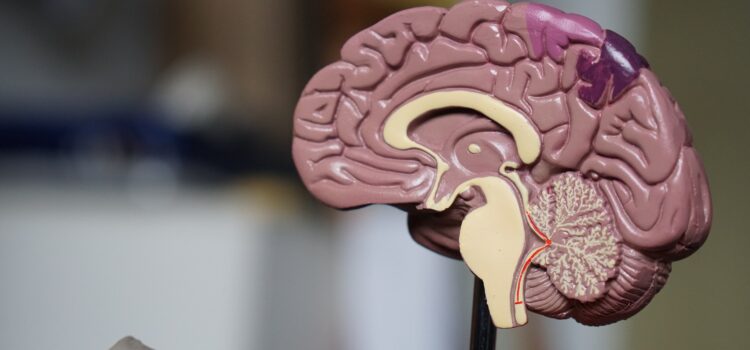
What is your “predictive brain,” according to psychology? How do humans use prediction to maintain well-being? Your predictive brain is in charge of monitoring all of your body’s needs, according to neuroscientist and psychologist Lisa Feldman Barrett. In her studies of the brain and emotions, Barrett found that the predictive brain plays a large role in regulating your mood, too. Read on to learn more about the function of your predictive brain, according to Barrett’s research.

The 4 Strategies for Overcoming Procrastination

The 4 Strategies for Overcoming Procrastination

What causes procrastination? Why do we put off things that matter to us the most? More importantly, how can you stop procrastinating once and for all? Contrary to a common misconception, procrastination doesn’t result from laziness or lack of motivation. Rather, procrastination stems from how you think about and approach work. Therefore, the key to overcoming procrastination is changing your relationship with work (and play). With this in mind, here are four strategies for overcoming procrastination.

What Creates a False Sense of Entitlement?

What Creates a False Sense of Entitlement?

How does a person create a false sense of entitlement? Why is it harmful to themselves and others? According to psychologist Martin Seligman, unearned self-esteem leads to a false sense of entitlement by making people believe it’s not necessary to work hard for success. Seligman says this is in part due to societal pressure to always maintain high self-esteem. Read on to learn the causes and dangers of a false sense of entitlement, according to Seligman.

Understanding Other People’s Feelings: The Myths & Truths

Understanding Other People’s Feelings: The Myths & Truths

How can you better understand other people’s feelings? What are the benefits of empathizing with others? If you want to understand other people’s feelings, you need to first understand your own emotions, according to Lisa Feldman Barrett. Barrett is a neuroscientist and psychologist who has devoted herself to deconstructing old theories of emotions to create a new, more accurate theory. Read on to learn the myths and truths Barrett has identified about understanding other people’s feelings.

The #1 Rule of Thumb for Making Hard Decisions

The #1 Rule of Thumb for Making Hard Decisions

Are you facing a difficult decision? How do you make a decision when neither option is appealing? When making hard decisions in life, first and foremost, consult your values. If you make a decision that contradicts your values, you’ll likely regret it down the road. Your core values are the guiding compass that will lead you in the right direction even when you don’t know your final destination. Keep reading to learn about the importance of values in decision-making.

Emotion and Facial Expression: Can You “Read” People?

Emotion and Facial Expression: Can You “Read” People?

Is there a relationship between emotions and facial expressions? How can you “read” someone’s emotions, according to psychology? According to Lisa Feldman Barrett’s research, the idea that facial expression reveals emotion is an outdated concept. Barrett claims that emotions are constructed rather than innate to humans, so a facial expression could have different meanings from one person to the next. Keep reading to learn why facial expression and emotion actually aren’t related, according to Barrett.

The 4 Tell-tale Signs of Procrastination

The 4 Tell-tale Signs of Procrastination

What are some common signs of procrastination? What does procrastination look like for you? Many people struggle with procrastination, but it manifests differently for everyone. Paradoxically, procrastination may even look like productivity: You may be busy doing tasks, yet putting off the one task that’s most important. Here are common signs of procrastination so that you can recognize it in your own life.

Why Letting Go of Your Anger Protects You From Illness

Why Letting Go of Your Anger Protects You From Illness

What are the benefits of letting go of your anger? How can letting go of anger protect your body from illness? In her book, How Emotions Are Made, neuroscientist and psychologist Lisa Feldman Barrett studied how humans create and experience emotions. Based on Barrett’s findings, letting go of your anger might be the healthiest thing you can do—physically and mentally. Read on to learn why Barrett says letting go of your anger protects you from illness.

Using Buddhism and Mindfulness to Manage Emotions

Using Buddhism and Mindfulness to Manage Emotions

What is mindfulness, according to Buddhism? How can using Buddhism and the concept of mindfulness help to manage your emotions? The Buddhist concept of mindfulness has gained popularity recently thanks to its healing effects on your body and mind. In her book, How Emotions Are Made, psychologist Lisa Feldman Barrett explains why learning to use mindfulness in your daily life helps to relieve stress and balance your mood. Keep reading to learn about Buddhism and mindfulness, according to Barrett’s findings.