Daniel Kahneman’s Prospect Theory: The Ultimate Guide

Daniel Kahneman’s Prospect Theory: The Ultimate Guide

Why do we fear losses more than we value gains, or obsess over unlikely disasters while downplaying probable success? Psychologist Daniel Kahneman’s prospect theory reveals that emotions—not pure logic—drive most of our choices. Prospect theory explains how we evaluate options based on reference points rather than absolutes, why proportional changes matter more than fixed amounts, and why loss aversion shapes our behavior more powerfully than any potential reward. Learn more about how understanding prospect theory can help you recognize emotional biases in your own decision-making and make more intentional choices.

Daniel Kahneman’s Happiness Theory: The Two Selves

A happy child running through a yard

What did Daniel Kahneman discover about happiness? The Nobel Prize-winning psychologist identified two distinct aspects of how we experience and evaluate happiness: the experiencing self, which lives moment-to-moment, and the remembering self, which reflects on past events. These two selves often conflict, leading us to make poor decisions about our well-being. Kahneman’s research in Thinking, Fast and Slow reveals that we tend to heavily favor the remembering self when making choices, often at the expense of moment-to-moment contentment. Read more to learn how both selves can help you make better decisions and achieve lasting happiness.

Remembering Self: How Memory Affects Happiness

A pile of photographs representing the remembering self

Why do we make decisions that cause us to suffer? The answer lies in the remembering self—the part of your mind that recalls past experiences and uses those memories to guide future choices. This mental system prioritizes memorable moments over actual lived experience, often distorting your judgment in ways you don’t realize. This concept, explored in depth through Daniel Kahneman’s research in Thinking, Fast and Slow, explains three critical flaws: how we endure needless suffering for memorable endings, how our current focus warps our evaluation of overall happiness, and how we consistently misjudge what will make us happy in the

Creating Great Choices: Book Overview, Takeaways, and FAQ

Two sheets of paper on a table that read OPTION 1 and OPTION 2

When faced with difficult decisions, most of us fall into the same trap: We choose the least bad option from whatever alternatives we’re given, then wonder why we’re still not satisfied with the outcome. But what if there were a way to create better options rather than simply choosing between existing ones? In their book Creating Great Choices, Jennifer Riel and Roger L. Martin explore what integrative thinking is and how it differs from conventional decision-making approaches. They also examine why our usual methods of making tough choices often fail us, creating the problems that integrative thinking is designed to

Richer, Wiser, Happier: Book Overview (William Green)

An investor looking at a giant stock graph

How do some investors consistently beat the markets, make billions, and manage to maintain a sense of calm? How can we emulate them to achieve wealth and keep our stress levels in check? In his book Richer, Wiser, Happier, journalist William Green draws on the wisdom of over 40 legendary investors—including Warren Buffett, John Templeton, and Charlie Munger—to provide insights about boosting your finances and your sense of well-being. This overview distills Green’s ideas into three strategies that will help you achieve both financial prosperity and inner peace: Expand your knowledge, master decision-making skills, and build and protect your wealth.

The Moral Animal by Robert Wright: Book Overview & Takeaways

A split screen with a prehistoric man on the left and a 21st-century man on the right

Why do we fall in love, feel jealous, compete for status, or sacrifice for family? Robert Wright’s The Moral Animal offers a theory: These behaviors are hardwired into us by evolution. Published in 1994, this book connects biology, anthropology, and psychology in an attempt to explain everything from romantic attraction to moral judgment. Keep reading to see how understanding our evolutionary programming might help us make sense of our own motivations and better understand the people around us.

The Intelligence Trap by David Robson: Book Overview

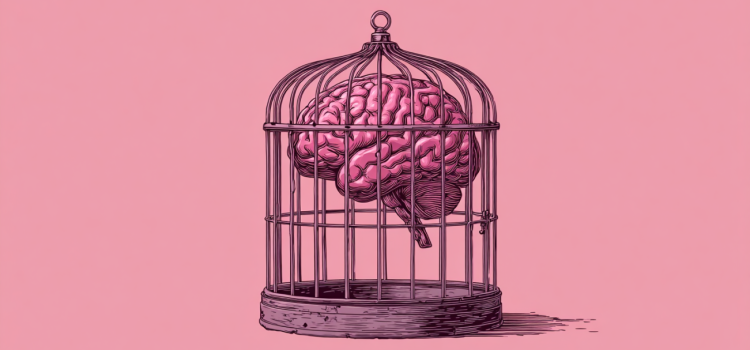
A cartoon image of a brain trapped in a bird cage

Why do brilliant people sometimes make the most foolish decisions? Despite their intellectual prowess, highly intelligent people often fall prey to conspiracy theories, financial ruin, and irrational beliefs—sometimes even more than those with average intelligence. In The Intelligence Trap, David Robson reveals how the very traits that make people smart can become their greatest weakness. Through research-backed insights, he exposes the hidden dangers of overconfidence, cognitive biases, and motivated reasoning that plague intelligent individuals, then offers practical strategies to think more wisely. Keep reading for a full overview of the book.

Ellen Langer’s The Mindful Body: Book Overview & Takeaways

A mind-body connection illustrated through a man being connected to his brain

If you’ve ever felt your stomach turn in a moment of anxiety or felt like jumping up and down with excitement, then you’ve experienced the mind-body connection firsthand. Ellen Langer’s The Mindful Body argues that you can use this connection to take control of your health. We’ll explore Langer’s assertion that the mind and body are inextricable and discuss how this link manifests in health outcomes. We’ll also examine three limiting beliefs that shape health, including the view that health is a finite resource. Finally, we’ll touch on two research-backed strategies for approaching your health mindfully. Continue reading for our

Deviate by Beau Lotto: Book Overview & Takeaways

A woman looking at a park

How do you know the world you see around you is real? It’s not, according to neuroscientist and entrepreneur Beau Lotto. In Deviate, Lotto explains that our brains don’t simply record the world as it is, but actively construct reality based on past experiences and evolutionary adaptations. Below, we’ll explain how our perceptual abilities don’t give us access to objective reality, as well as the evolutionary reasons why this is true. Then, we’ll outline how you can use this understanding of your brain’s abilities to change the way you think and foster innovation. Read more in our overview.

The Joy of Movement by Kelly McGonigal: Overview

A cartoon image of a man and woman jogging in a park

What if the secret to lasting fitness isn’t willpower or discipline, but rediscovering the natural joy your body was designed to feel during movement? In The Joy of Movement, Stanford psychologist Kelly McGonigal challenges everything we think we know about exercise by revealing how our brains are evolutionarily wired to find movement rewarding—not punishing. Whether you’re someone who dreads the gym or you’re seeking a deeper understanding of why some activities feel naturally energizing while others feel like punishment, this guide will help you discover how to harness movement’s built-in rewards to create sustainable, joyful fitness habits.