What’s Insider Trading? The Texas Gulf Sulphur Case
What’s Insider Trading? The Texas Gulf Sulphur Case
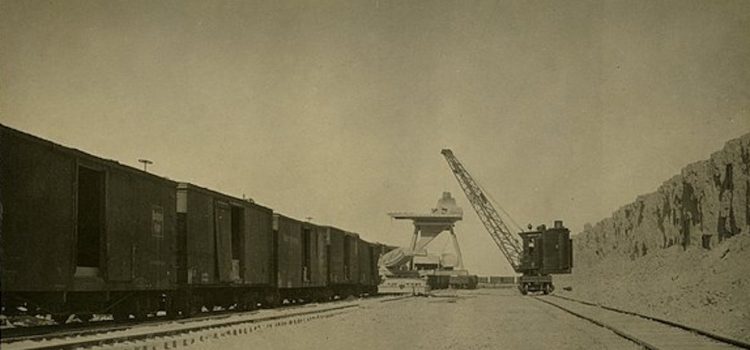
What’s insider trading? Is it wrong? What can you learn from the Texas Gulf Sulphur Company case? John Brooks writes about a landmark insider trading case against Texas Gulf Sulphur Company, in which the law’s ambiguous definitions of “material evidence” and “a reasonable amount of time” were put to the test. The SEC took the company to court for illegally using insider information and misleading the public. Read more to learn about this historic case of insider trading.

U.S. Income Tax History: Is It a Rich Man’s Tax?

U.S. Income Tax History: Is It a Rich Man’s Tax?

What’s the history of the federal income tax? Is income tax a “rich man’s tax”? In a survey of U.S. income tax history, John Brooks traces the roots of the federal income tax and discusses how the wealthiest people can get away with paying hardly anything at all. Much of this is due to the increasing complexity of tax laws over the years. Keep reading to understand Brooks’s perspective on the federal income tax.

Business Adventures by John Brooks: Book Overview

Business Adventures by John Brooks: Book Overview

What can you learn from Business Adventures by John Brooks? Is the book still relevant, after all these years? Business Adventures is a collection of essays about the unpredictability of corporations and Wall Street—and the people behind them. Through 12 in-depth essays, longtime New Yorker contributor John Brooks examines how businesses and economies can rise and fall based on people’s behavior, which is often driven by emotions, habits of thinking, and human tendencies. Read more for an overview of this business classic.

What’s a Short Squeeze? Piggly Wiggly & GameStop

What’s a Short Squeeze? Piggly Wiggly & GameStop

What’s a short squeeze? Who profits? Who loses? Making the case that people are the stock market’s most volatile component, John Brooks recaps how a man from Memphis named Clarence Saunders “cornered” his own company’s stock, meaning he obtained enough shares to give him the power to manipulate its price. It wasn’t a calculated move on his part; it was a reaction to Wall Street speculators who had planned an attack on his company, a chain of supermarkets called Piggly Wiggly. The affair serves as an interesting illustration of a short squeeze. Continue reading to learn about the Piggly Wiggly

The Benefits of a Free-Market Economy

The Benefits of a Free-Market Economy

What are the benefits of a free-market economy? What are the main arguments given in favor of the free market? In his book What Money Can’t Buy, philosopher Michael Sandel argues that free-market societies are immoral and create corruption. He starts his book by explaining the three arguments that defenders of the free market often make: the efficiency argument, the utilitarian argument, and the libertarian argument. We’ll go over each of the three arguments below.

The 6 Different Types of Home Loans

The 6 Different Types of Home Loans

Are you having trouble narrowing down a home loan that’s right for you? What are the six different types of home loans? Whether you plan on renting out a house or living in a home, you’ll need to decide which type of home loan (or mortgage) best suits you. It all depends on your financial situation, but real estate agent David M. Greene lists six different types of home loans in his book Buy, Rehab, Rent, Refinance, Repeat. Let’s look at the six different types of mortgages to find out which one you need.

The Rise of the Free-Market Economic System

The Rise of the Free-Market Economic System

What is the origin of the free market economy? Why do we place so much faith in markets? In his book What Money Can’t Buy, Michael Sandel traces the origins of the free-market economic system back to the 1980s. According to Sandel, we put so much faith in markets because we believe it’s the optimal way to distribute limited resources. Keep reading to learn about the rise of the free market.

The Disadvantages of a Free-Market Economy

The Disadvantages of a Free-Market Economy

What are the major disadvantages of a free-market economy? In what way is the price system unjust? In his book What Money Can’t Buy, philosopher Michael J. Sandel argues that market values have become society’s dominant moral framework, the lens through which we determine what is important or unimportant as well as right and wrong. He argues that the free market is unjust and restrictive because they create injustices and eliminate choice. Keep reading to learn about the disadvantages of the free-market economy, according to Sandel.

The Meaning of Mystification: Ways of Seeing Art

The Meaning of Mystification: Ways of Seeing Art

What is “mystification” in the context of art? How did the dominant class use art to mystify their privilege? According to John Berger, the author of Ways of Seeing, “mystification is the process of explaining away what might otherwise be evident.” He argues that the dominant class has used art as a medium to “mystify” the disparities in wealth and ensure that the rich get richer and the poor remain poor. Keep reading to learn about the wider meaning of mystification and how it was used in art.

The Flywheel Effect: A Guide to Unstoppable Growth

The Flywheel Effect: A Guide to Unstoppable Growth

What is the flywheel effect? How does it affect a business’s growth in success and revenue? Coined by Jim Collins in his book Good to Great, the term flywheel effect comes from an actual flywheel—a giant metal wheel that takes a lot of work to get moving, but once it does, very little work has to be put into keeping it spinning. The same explanation can be applied to businesses that are built through six essential steps. Continue reading to learn more about how to ensure your company’s success by using the flywheel effect.