Christian Cognitive Behavioral Therapy: Exercises to Try

Christian Cognitive Behavioral Therapy: Exercises to Try

How is Christian cognitive behavioral therapy different from other types of cognitive-behavioral therapy? What are some exercises you can try? Christian cognitive behavioral therapy integrates regular therapy techniques with religious affirmations and encouragement. Religious belief offers another layer of support that can be helpful for improving mood and mindset. Here are some Christian cognitive behavioral therapy exercises to try.

Confidence Development: Is It Nature or Nurture?

Confidence Development: Is It Nature or Nurture?

How does confidence develop? Is confidence primarily a matter of nature or nurture? Confidence isn’t a matter of nature versus nurture—both our biology and our environment affect us and neither will win out. While up to 50% of confidence might be determined by our genes, that doesn’t mean that any of us are doomed to be under-confident. In this article, we’ll take a look at the role of genetics and environment in confidence development.

How to Develop a Rational Decision-Making Process

How to Develop a Rational Decision-Making Process

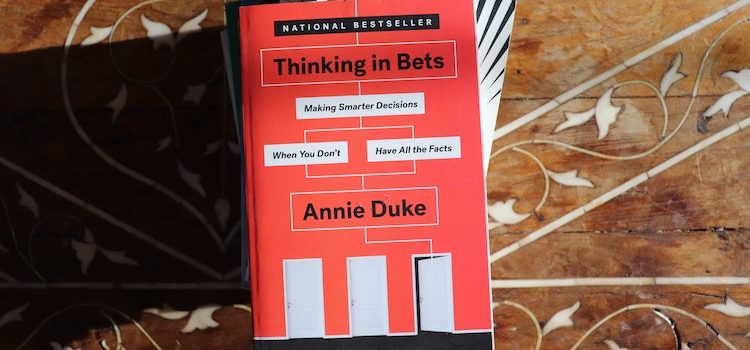
Do you rate your decisions based solely on the outcomes? Have you developed a rational decision-making process? Thinking in Bets author Annie Duke believes that we must judge the soundness of our decisions, not just by their results, but by the reasoning we use to make them. Ultimately, a rational decision-making process should be our goal. Read more to learn what constitutes a rational decision-making process.

Alternative Futures: What’s at Stake With Each Decision

Alternative Futures: What’s at Stake With Each Decision

What are alternative futures? Do you consider them when you make decisions? Whenever you make a decision, you’re choosing between alternative futures—outcomes that result from particular decisions. To make better decisions, you should adopt an “alternative futures” mindset. Keep reading to learn about thinking in terms of alternative futures.

Thinking in Bets: Annie Duke’s Decision Strategies

Thinking in Bets: Annie Duke’s Decision Strategies

Have you read Thinking in Bets, Annie Duke’s book about decision-making? What application does it have for your life? In Thinking in Bets, Annie Duke shares strategies that can help you become more consistently rational and intellectually flexible. When you think in bets, you start with a foundation of well-informed beliefs, you become adept at learning from the outcomes of your past decisions, and you find a group of people who can help stop you from slipping into ineffective habits. These three building blocks—beliefs, outcomes, and groups—are the core of Duke’s philosophy. Keep reading to learn how to think in

Why People Believe in Fake News: What Science Says

Why People Believe in Fake News: What Science Says

Can science explain why people believe in fake news? Are we wired to believe false information? False information is all around us. Not only is it being produced, but it’s also being spread by people who believe it’s true. Science provides some interesting answers to why people believe in fake news. Basically, we’re simply wired to believe. Keep reading to learn why people believe in fake news.

Women and Confidence: Why They Lack Self-Faith

Women and Confidence: Why They Lack Self-Faith

Do women tend to be less confident than men? What do you think the reason is behind women’s lack of self-confidence? According to Katty Kay and Claire Shipman, the authors of The Confidence Code, women have less confidence than men because women tend to underestimate their abilities—their self-perception is negatively skewed. Men, on the other hand, tend to overestimate their abilities.  In this article, we’ll discuss women and confidence. Specifically, we’ll take a look at the evidence of the confidence gap between genders, and the differences in how men and women express confidence.

Why Do We Need Community as Christians?

Why Do We Need Community as Christians?

Why do we need community as Christians? How can being part of a community dramatically improve your mental well-being? According to the Bible, humans were made for community. The fact that we’re made for community reaches back to the nature of God himself, and also human biology. Understanding why we need community can inspire you to reach out to others and reap the benefits. Keep reading to find out why we need community as humans.

The Environmental Factors of Self-Confidence

How to Build Faith in Yourself and Change Your Life

Is confidence a matter of nature or nurture? What role does the environment play in confidence development? Confidence isn’t a matter of nature versus nurture—both biology and environment are implicated. Scientists estimate that around 25-50% of confidence stems from our genes, and there is also a lot of evidence in favor of nurture. In this article, we’ll look at what role the environment plays in confidence development, focusing on the environmental factors of self-confidence that affect women, who often lack the self-belief men have.