The History of Domesticated Farm Animals in Eurasia
The History of Domesticated Farm Animals in Eurasia

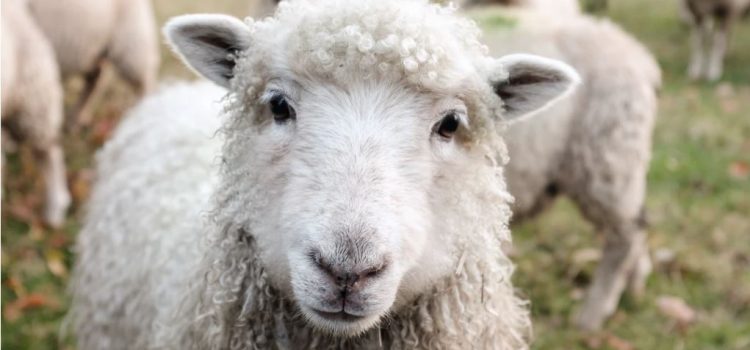
Why did Eurasian society thrive throughout history? What set Eurasian farming apart from other areas of the world? According to the author of Guns, Germs, and Steel, Jared Diamond, a large part of why Eurasia thrived was due to its history of domesticated animals. Diamond claimed that Eurasia had more domesticable farm animals than most parts of the world. Keep reading to learn about the history of domesticated animals on Eurasian farms.

Jared Diamond’s Theory on the Fertile Crescent

Jared Diamond’s Theory on the Fertile Crescent

What is Jared Diamond’s theory about food production and farming in Eurasia? What factors created the Fertile Crescent? According to historian, geographer, and ornithologist Jared Diamond, Eurasia developed and thrived thanks to its food production. One huge factor in that food production was the fact Eurasia was located in the Fertile Crescent, a geographical location perfectly suited for domesticable plants. Here’s a closer look at Jared Diamond’s theory on Eurasia and the Fertile Crescent.

Guns, Germs, & Steel by Jared Diamond: Overview

Guns, Germs, & Steel by Jared Diamond: Overview

What is Guns, Germs, and Steel by Jared Diamond about? What are the key takeaways from the book? Guns, Germs, and Steel is Jared Diamond’s attempt to determine why societies historically took different paths. It was named one of TIME’s best non-fiction books of all time, awarded the Pulitzer Prize in 1998, and turned into a PBS documentary released in 2005.  Keep reading for an overview of Diamond’s award-winning book.

How Did the “Calories in, Calories Out” Myth Come About?

How Did the “Calories in, Calories Out” Myth Come About?

When did calorie counting come about? Do calories matter when it comes to weight loss? Calorie-counting as a method for monitoring weight loss has been around since the early 1900s. In the 1950s, early studies concluded that weight gain was the result of excess calories. Given this, researchers believed that dietary fat—a high-calorie food—causes weight gain. Here’s how the “calories in, calories out” myth came about and why it’s wrong.

Humankind: A Hopeful History by Rutger Bregman

Humankind: A Hopeful History by Rutger Bregman

What lies at the core of human nature? If you stripped away civilization, would we be fundamentally compassionate creatures? Or would we cheat, lie, and steal, with only self-interest in mind? In Humankind: A Hopeful History, Rutger Bregman argues that our species evolved to be friendly and compassionate. When we do evil things, he maintains, it’s not because we’re evil by nature, but for a variety of other reasons, including our desire to conform and to act for the greater good. Below is a brief overview of Humankind: A Hopeful History by Rutger Bregman.

Human Violence Is the By-Product of Civilization

Human Violence Is the By-Product of Civilization

Is violence a part of human nature? Or was our good nature corrupted by civilization? In his book Humankind, Bregman argues that human violence is not a natural impulse. He maintains that humans’ transition from foraging to civilization created societies that were more violent, less equitable, and less healthy. However, human nature by itself is fundamentally good. Let’s take a closer look at the negative effects that began to arise when our ancestors made this transition.

Carl Sagan on Mars Colonization and Space Exploration

Carl Sagan on Mars Colonization and Space Exploration

Did Carl Sagan believe there’s life on Mars? Did he believe that humans should colonize the planet? At the time Sagan wrote Cosmos, no compelling evidence for life has been found on Mars. Sagan says that as long as life isn’t found, humans should create an atmosphere on Mars and attempt to colonize it. If life is found, that’s another story. Here’s what Carl Sagan wrote about space exploration and Mars.

Ernest Shackleton’s Elephant Island Rescue Mission

Ernest Shackleton’s Elephant Island Rescue Mission

What happened on Elephant Island while Ernest Shackleton fulfilled his rescue mission? Who was in charge on Elephant Island? After the Endurance ship sank, Ernest Shackleton and his crew headed to Elephant Island. There, Shackleton put Frank Wild in charge as they awaited rescue. Continue reading to find out what happened on Elephant Island, Ernest Shackleton’s plan for rescue, and how long the crew was on the Island.

Thomas Hobbes: Human Nature Is Cruel and Selfish

Thomas Hobbes: Human Nature Is Cruel and Selfish

What is Thomas Hobbes known for? How did Hobbes’ views influence modern-day moral philosophy? Thomas Hobbes was an English philosopher who lived during the 17th century and who exerted a significant influence on modern philosophy. According to Thomas Hobbes, human nature is essentially cruel and selfish, and the only way to subdue humanity’s evil impulses is through power. Here’s how Hobbes’ philosophy influenced modern-day societal order.

Cosmos by Carl Sagan: Book Overview

Cosmos by Carl Sagan: Book Overview

What is Carl Sagan’s book Cosmos about? What’s out there in the vast reaches of space? Are we alone in the universe? Renowned astronomer Carl Sagan offers some insight into these questions and many more in his widely acclaimed book, Cosmos. In this book, he provides a comprehensive description of the science, philosophy, and history of astronomical discovery, from ancient Ionia to the time of the book’s publication in 1980. Here’s a brief overview of Cosmos.