We've ranked the best product management books using expert recommendations, sales data, and millions of reader ratings. At Shortform, we know books. Our book guides are the best in the world. Learn why.
Cover unavailable
1
Inspired: How to Create Tech Products Customers Love
The basic premise of Inspired is that the best tech companies create products in a manner very different from how most companies create products. The goal of the book is to share the techniques of the best companies. This book is aimed primarily at Product Managers working on technology-powered products. That includes the hundreds of "tech companies" like Google, Facebook, Amazon, Twitter and the like, as well as the thousands of companies moving to leverage technology (financial companies, media companies, retailers, manufacturers, nearly every industry). Inspired covers companies from early stage start-ups to large, established companies. The products might be consumer products or devices, business services for small businesses to enterprises, internal tools, and developer platforms.
Inspired is secondarily aimed at the designers, engineers, user researchers and data scientists that work closely with the product managers on product teams at these same companies.
Most startups fail. But many of those failures are preventable. The Lean Startup is a new approach being adopted across the globe, changing the way companies are built and new products are launched.
Eric Ries defines a startup as an organization dedicated to creating something new under conditions of extreme uncertainty. This is just as true for one person in a garage or a group of seasoned professionals in a Fortune 500 boardroom. What they have in common is a mission to penetrate that fog of uncertainty to discover a successful path to a sustainable business.
The Lean Startup approach fosters companies that are both more capital efficient and that leverage human creativity more effectively. Inspired by lessons from lean manufacturing, it relies on "validated learning," rapid scientific experimentation, as well as a number of counter-intuitive practices that shorten product development cycles, measure actual progress without resorting to vanity metrics, and learn what customers really want. It enables a company to shift directions with agility, altering plans inch by inch, minute by minute.
Rather than wasting time creating elaborate business plans, The Lean Startup offers entrepreneurs - in companies of all sizes - a way to test their vision continuously, to adapt and adjust before it's too late. Ries provides a scientific approach to creating and managing successful startups in a age when companies need to innovate more than ever.
At Asana, we've been lucky to benefit from the author's advice firsthand; this book will enable him to help many more entrepreneurs answer the tough questions about their business. [source]
How do successful companies create products people can’t put down?
Why do some products capture widespread attention while others flop? What makes us engage with certain products out of sheer habit? Is there a pattern underlying how technologies hook us? Nir Eyal answers these questions (and many more) by explaining the Hook Model—a four-step process embedded into the products of many successful companies to subtly encourage customer behavior. Through consecutive “hook cycles,” these products reach their ultimate goal of bringing users back again and again without depending on costly advertising or aggressive messaging.
Hooked is based on Eyal’s years of research, consulting, and practical experience. He wrote the book he wished had been available to him as a start-up founder—not abstract theory, but a how-to guide for building better products. Hooked is written for product managers, designers, marketers, start-up founders, and anyone who seeks to understand how products influence our behavior.
Eyal provides readers with:
• Practical insights to create user habits that stick. • Actionable steps for building products people love.
• Fascinating examples from the iPhone to Twitter, Pinterest to the Bible App, and many other habit-forming products.
…
Recommended by Andrew Chen, Nir Eyal, Ken Norton, and 41 others.
Matt Mullenweg
Founder & CEO/Automattic
Hooked gives you the blueprint for the next generation of products. Read Hooked or the company that replaces you will. [source]
Boris Veldhuijzen van Zanten
The book everyone in Silicon Valley is talking about. [source]
Chandini Jain
One of the five books Chandini would you recommend to young people interested in her career path. [source]
Cover unavailable
4
The Hard Thing About Hard Things: Building a Business When There Are No Easy Answers
A lot of people talk about how great it is to start a business, but only Ben Horowitz is brutally honest about how hard it is to run one.
In The Hard Thing About Hard Things, Ben Horowitz, cofounder of Andreessen Horowitz and one of Silicon Valley's most respected and experienced entrepreneurs, draws on his own story of founding, running, selling, buying, managing, and investing in technology companies to offer essential advice and practical wisdom for navigating the toughest problems business schools don't cover. His blog has garnered a devoted following of millions of readers who have come to rely on him to help them run their businesses. A lifelong rap fan, Horowitz amplifies business lessons with lyrics from his favorite songs and tells it straight about everything from firing friends to poaching competitors, from cultivating and sustaining a CEO mentality to knowing the right time to cash in.
His advice is grounded in anecdotes from his own hard-earned rise—from cofounding the early cloud service provider Loudcloud to building the phenomenally successful Andreessen Horowitz venture capital firm, both with fellow tech superstar Marc Andreessen (inventor of Mosaic, the Internet's first popular Web browser). This is no polished victory lap; he analyzes issues with no easy answers through his trials, including
demoting (or firing) a loyal friend; whether you should incorporate titles and promotions, and how to handle them; if it's OK to hire people from your friend's company; how to manage your own psychology, while the whole company is relying on you; what to do when smart people are bad employees; why Andreessen Horowitz prefers founder CEOs, and how to become one; whether you should sell your company, and how to do it. Filled with Horowitz's trademark humor and straight talk, and drawing from his personal and often humbling experiences, The Hard Thing About Hard Things is invaluable for veteran entrepreneurs as well as those aspiring to their own new ventures.
Ben's book is a great read - with uncomfortable truths about entrepreneurship and how to lead to a company. It's also an inspiring story of a business rebirth through sheer willpower. [source]
Ben's experience and expertise make him one of the most important leaders not just in Silicon Valley but also in the global knowledge economy. For anyone interested in building, growing or leading a great company, this book is an incredibly valuable resource - and a funny and insightful read. [source]
Drew Houston
CEO/Dropbox
One of the great things that the author wrote in this book is the hardest part of being a CEO is managing your psychology. [source]
Cover unavailable
5
Crossing the Chasm: Marketing and Selling Disruptive Products to Mainstream Customers
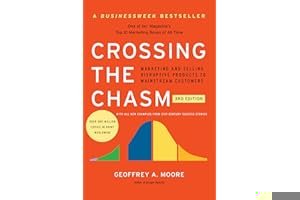
The bible for bringing cutting-edge products to larger markets--now revised and updated with new insights into the realities of high-tech marketing
In Crossing the Chasm, Geoffrey A. Moore shows that in the Technology Adoption Life Cycle--which begins with innovators and moves to early adopters, early majority, late majority, and laggards--there is a vast chasm between the early adopters and the early majority. While early adopters are willing to sacrifice for the advantage of being first, the early majority waits until they know that the technology actually offers improvements in productivity. The challenge for innovators and marketers is to narrow this chasm and ultimately accelerate adoption across every segment.
This third edition brings Moore's classic work up to date with dozens of new examples of successes and failures, new strategies for marketing in the digital world, and Moore's most current insights and findings. He also includes two new appendices, the first connecting the ideas in Crossing the Chasm to work subsequently published in his Inside the Tornado, and the second presenting his recent groundbreaking work for technology adoption models for high-tech consumer markets.
…
Recommended by Andrew Chen, Drew Houston, Ev Williams, and 28 others.
Drew Houston
CEO/Dropbox
It’s about how do technology products make their way from early adopters t the mainstream. [source]
Ron Conway
Bestselling guide that created a new game plan for marketing in high-tech industries. [source]
This is a key component in my Purple Cow thinking, but with a twist. I'm not as worried about the chasm as I am about the desire of marketers to go for the big middle. [source]
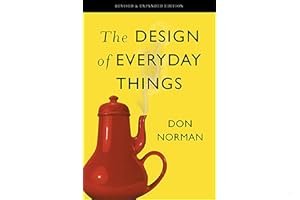
Even the smartest among us can feel inept as we fail to figure out which light switch or oven burner to turn on, or whether to push, pull, or slide a door. The fault, argues this ingenious—even liberating—book, lies not in ourselves, but in product design that ignores the needs of users and the principles of cognitive psychology. The problems range from ambiguous and hidden controls to arbitrary relationships between controls and functions, coupled with a lack of feedback or other assistance and unreasonable demands on memorization. The Design of Everyday Things shows that good, usable design is possible. The rules are simple: make things visible, exploit natural relationships that couple function and control, and make intelligent use of constraints. The goal: guide the user effortlessly to the right action on the right control at the right time.
In this entertaining and insightful analysis, cognitive scientist Don Norman hails excellence of design as the most important key to regaining the competitive edge in influencing consumer behavior. Now fully expanded and updated, with a new introduction by the author, The Design of Everyday Things is a powerful primer on how—and why—some products satisfy customers while others only frustrate them.
…
Recommended by Andrew Chen, Marissa Mayer, Nir Eyal, and 23 others.
Grey Baker
I mainly read to decompress and change my state of mind, so it’s hard to point to an insight I read that helped me. Reading fiction has pulled me out of a bad mood more times than I can count, though, and always reenergises me to attack problems that had stumped me again. That said, I read and loved Norman Norman’s “The Design of Everyday Things”, and it’s helped me think through design problems ever since. [source]
Julia Enthoven
For people interested in designing or building software products: The Design of Everyday Things by Don Norman and The Lean Product Playbook by Dan Olsen. Both books have informed my product sense and helped me make decisions about great UX. [source]
Kaci Lambe
These three books are about how people actually use design in their lives. They helped me understand this very basic idea: There are no dumb users, only bad designers. Take the time to create based on how your design will be interacted with. Test it. Iterate. That's how you become a good designer. [source]
Cover unavailable
7
Sprint: How to Solve Big Problems and Test New Ideas in Just Five Days
A fantastic, proven formula for moving from idea to prototyping to decision making within five days, based on a process he developed while working at Google and later GV. [source]
Cat Williams-Treloar
Jake Knapp, John Zeratsky & Braden Kowitz "Sprint" - the go-to guide on how to sprint. You may not follow everything to the tee, but it's simple, clean and full of great examples of how to move fast with structure. [source]
Javed Khatri
This book details the "sprint" process used at Google Ventures. We follow a similar process at Kustard to validate business ideas and to solve problems without wasting much time, money and energy. If you want to quickly validate an idea, this is a proven model and a must read. [source]
Cover unavailable
8
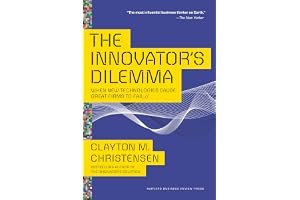
The Innovator's Dilemma: When New Technologies Cause Great Firms to Fail
The bestselling classic on disruptive innovation, renowned author Clayton M. Christensen.
His work is cited by the world’s best-known thought leaders, from Steve Jobs to Malcolm Gladwell. In this classic bestseller—now updated with a fresh new package—innovation expert Clayton Christensen shows how even the most outstanding companies can do everything right—yet still lose market leadership. Read this international bestseller to avoid a similar fate.
Clay Christensen—who authored the award-winning Harvard Business Review article “How Will You Measure Your Life?”—explains why most companies miss out on new waves of innovation. No matter the industry, he says a successful company with established products WILL get pushed aside unless managers know how and when to abandon traditional business practices. Offering both successes and failures from leading companies as a guide, The Innovator’s Dilemma gives you a set of rules for capitalizing on the phenomenon of disruptive innovation.
Sharp, cogent, provocative, and one of the most influential business books of all time—The Innovator’s Dilemma is the book no manager or entrepreneur should be without. Add this newly released edition to your library.
Brad Stone's new book, The Everything Store, describes how Bezos developed this strategy after reading another book called The Innovator's Dilemma by Harvard professor Clayton Christensen. [source]
It's important that we make this transformation, because of what Clayton Christensen calls "the innovator's dilemma," where people who invent something are usually the last ones to see past it, and we certainly don't want to be left behind. [source]
Drew Houston
CEO/Dropbox
About how businesses get disrupted, and a lot of those themes are why startups can succeed and thrive even when there are big competitors who you would think would just wipe ’em out. [source]
Major New York Times bestseller Winner of the National Academy of Sciences Best Book Award in 2012 Selected by the New York Times Book Review as one of the best books of 2011 A Globe and Mail Best Books of the Year 2011 Title One of The Economist's 2011 Books of the Year One of The Wall Street Journal's Best Nonfiction Books of the Year 2011 2013 Presidential Medal of Freedom Recipient
In the international bestseller, Thinking, Fast and Slow, Daniel Kahneman, the renowned psychologist and winner of the Nobel Prize in Economics, takes us on a groundbreaking tour of the mind and explains the two systems that drive the way we think. System 1 is fast, intuitive, and emotional; System 2 is slower, more deliberative, and more logical. The impact of overconfidence on corporate strategies, the difficulties of predicting what will make us happy in the future, the profound effect of cognitive biases on everything from playing the stock market to planning our next vacation—each of these can be understood only by knowing how the two systems shape our judgments and decisions. Engaging the reader in a lively conversation about how we think, Kahneman reveals where we can and cannot trust our intuitions and how we can tap into the benefits of slow thinking. He offers practical and enlightening insights into how choices are made in both our business and our personal lives—and how we can use different techniques to guard against the mental glitches that often get us into trouble. Winner of the National Academy of Sciences Best Book Award and the Los Angeles Times Book Prize and selected by The New York Times Book Review as one of the ten best books of 2011, Thinking, Fast and Slow is destined to be a classic.
A few months ago, Mr. Obama read “Thinking, Fast and Slow,” by Daniel Kahneman, about how people make decisions — quick, instinctive thinking versus slower, contemplative deliberation. For Mr. Obama, a deliberator in an instinctive business, this may be as instructive as any political science text. [source]
Captivating dive into human decision making, marred by inclusion of several/many? psychology studies that fail to replicate. Will stand as a cautionary tale? [source]
Cover unavailable
10
Zero to One: Notes on Startups, or How to Build the Future
If you want to build a better future, you must believe in secrets.
The great secret of our time is that there are still uncharted frontiers to explore and new inventions to create. In Zero to One, legendary entrepreneur and investor Peter Thiel shows how we can find singular ways to create those new things.
Thiel begins with the contrarian premise that we live in an age of technological stagnation, even if we’re too distracted by shiny mobile devices to notice. Information technology has improved rapidly, but there is no reason why progress should be limited to computers or Silicon Valley. Progress can be achieved in any industry or area of business. It comes from the most important skill that every leader must master: learning to think for yourself.
Doing what someone else already knows how to do takes the world from 1 to n, adding more of something familiar. But when you do something new, you go from 0 to 1. The next Bill Gates will not build an operating system. The next Larry Page or Sergey Brin won’t make a search engine. Tomorrow’s champions will not win by competing ruthlessly in today’s marketplace. They will escape competition altogether, because their businesses will be unique.
Zero to One presents at once an optimistic view of the future of progress in America and a new way of thinking about innovation: it starts by learning to ask the questions that lead you to find value in unexpected places.
The essential skill of creating and maintaining new businesses—the art of the entrepreneur—can be summed up in a single word: managing. In High Output Management, Andrew S. Grove, former chairman and CEO (and employee number three) of Intel, shares his perspective on how to build and run a company. Born of Grove’s experiences at one of America’s leading technology companies, this legendary management book is a Silicon Valley staple, equally appropriate for sales managers, accountants, consultants, and teachers, as well as CEOs and startup founders. Grove covers techniques for creating highly productive teams, demonstrating methods of motivation that lead to peak performance—throughout, High Output Management is a practical handbook for navigating real-life business scenarios and a powerful management manifesto with the ability to revolutionize the way we work.
Andy Grove, who built himself from nothing to run Intel, stopped what he was doing to teach us his magic. And not through some ghostwriter either — Andy wrote this book himself. What an incredible gift. [source]
For Chesky, a source may come in the form of a biography of a business hero such as Steve Jobs or Walt Disney. His primary book source on management technique is Andy Grove’s High Output Management. [source]
From the author of the bestselling biographies of Benjamin Franklin and Albert Einstein, this is the exclusive, New York Times bestselling biography of Apple co-founder Steve Jobs.
Based on more than forty interviews with Jobs conducted over two years—as well as interviews with more than a hundred family members, friends, adversaries, competitors, and colleagues—Walter Isaacson has written a riveting story of the roller-coaster life and searingly intense personality of a creative entrepreneur whose passion for perfection and ferocious drive revolutionized six industries: personal computers, animated movies, music, phones, tablet computing, and digital publishing.
At a time when America is seeking ways to sustain its innovative edge, and when societies around the world are trying to build digital-age economies, Jobs stands as the ultimate icon of inventiveness and applied imagination. He knew that the best way to create value in the twenty-first century was to connect creativity with technology. He built a company where leaps of the imagination were combined with remarkable feats of engineering.
Although Jobs cooperated with this book, he asked for no control over what was written nor even the right to read it before it was published. He put nothing off-limits. He encouraged the people he knew to speak honestly. And Jobs speaks candidly, sometimes brutally so, about the people he worked with and competed against. His friends, foes, and colleagues provide an unvarnished view of the passions, perfectionism, obsessions, artistry, devilry, and compulsion for control that shaped his approach to business and the innovative products that resulted.
Driven by demons, Jobs could drive those around him to fury and despair. But his personality and products were interrelated, just as Apple’s hardware and software tended to be, as if part of an integrated system. His tale is instructive and cautionary, filled with lessons about innovation, character, leadership, and values.
For Chesky, a source may come in the form of a biography of a business hero such as Steve Jobs or Walt Disney. His primary book source on management technique is Andy Grove’s High Output Management. [source]
Cover unavailable
13
Creativity, Inc.: Overcoming the Unseen Forces That Stand in the Way of True Inspiration
“What does it mean to manage well?” From Ed Catmull, co-founder (with Steve Jobs and John Lasseter) of Pixar Animation Studios, comes an incisive book about creativity in business—sure to appeal to readers of Daniel Pink, Tom Peters, and Chip and Dan Heath. Creativity, Inc. is a book for managers who want to lead their employees to new heights, a manual for anyone who strives for originality, and the first-ever, all-access trip into the nerve center of Pixar Animation—into the meetings, postmortems, and “Braintrust” sessions where some of the most successful films in history are made. It is, at heart, a book about how to build a creative culture—but it is also, as Pixar co-founder and president Ed Catmull writes, “an expression of the ideas that I believe make the best in us possible.” For nearly twenty years, Pixar has dominated the world of animation, producing such beloved films as the Toy Story trilogy, Monsters, Inc., Finding Nemo, The Incredibles, Up, and WALL-E, which have gone on to set box-office records and garner thirty Academy Awards. The joyousness of the storytelling, the inventive plots, the emotional authenticity: In some ways, Pixar movies are an object lesson in what creativity really is. Here, in this book, Catmull reveals the ideals and techniques that have made Pixar so widely admired—and so profitable.
As a young man, Ed Catmull had a dream: to make the first computer-animated movie. He nurtured that dream as a Ph.D. student at the University of Utah, where many computer science pioneers got their start, and then forged a partnership with George Lucas that led, indirectly, to his founding Pixar with Steve Jobs and John Lasseter in 1986. Nine years later, Toy Story was released, changing animation forever. The essential ingredient in that movie’s success—and in the thirteen movies that followed—was the unique environment that Catmull and his colleagues built at Pixar, based on philosophies that protect the creative process and defy convention, such as:
• Give a good idea to a mediocre team, and they will screw it up. But give a mediocre idea to a great team, and they will either fix it or come up with something better. • If you don’t strive to uncover what is unseen and understand its nature, you will be ill prepared to lead. • It’s not the manager’s job to prevent risks. It’s the manager’s job to make it safe for others to take them. • The cost of preventing errors is often far greater than the cost of fixing them. • A company’s communication structure should not mirror its organizational structure. Everybody should be able to talk to anybody. • Do not assume that general agreement will lead to change—it takes substantial energy to move a group, even when all are on board.
This book is written by the founder of Pixar and is about his experience building a culture that fosters creativity. His theory is that people are fundamentally creative, but many forces stand in the way of people being able to do their best work. I love reading first-hand accounts about how people build great companies like Pixar and nurture innovation and creativity. This should be inspiring to anyone looking to do the same, and hopefully there will be lessons we can apply to connecting the world! [source]
No matter your circumstances, storytelling and creativity are two 'meta-skills' that can take your business and life to the next level. Ed is a master. [source]
Cracking the PM Interview: How to Land a Product Manager Job in Technology
Gayle Laakmann McDowell and Jackie Bavaro
4.6
How many pizzas are delivered in Manhattan? How do you design an alarm clock for the blind? What is your favorite piece of software and why? How would you launch a video rental service in India? This book will teach you how to answer these questions and more. Cracking the PM Interview is a comprehensive book about landing a product management role in a startup or bigger tech company. Learn how the ambiguously-named "PM" (product manager / program manager) role varies across companies, what experience you need, how to make your existing experience translate, what a great PM resume and cover letter look like, and finally, how to master the interview: estimation questions, behavioral questions, case questions, product questions, technical questions, and the super important "pitch."
…
Cover unavailable
15
Predictably Irrational: The Hidden Forces That Shape Our Decisions
Why do our headaches persist after taking a one-cent aspirin but disappear when we take a 50-cent aspirin?
Why does recalling the Ten Commandments reduce our tendency to lie, even when we couldn't possibly be caught?
Why do we splurge on a lavish meal but cut coupons to save twenty-five cents on a can of soup?
Why do we go back for second helpings at the unlimited buffet, even when our stomachs are already full?
And how did we ever start spending $4.15 on a cup of coffee when, just a few years ago, we used to pay less than a dollar?
When it comes to making decisions in our lives, we think we're in control. We think we're making smart, rational choices. But are we?
In a series of illuminating, often surprising experiments, MIT behavioral economist Dan Ariely refutes the common assumption that we behave in fundamentally rational ways. Blending everyday experience with groundbreaking research, Ariely explains how expectations, emotions, social norms, and other invisible, seemingly illogical forces skew our reasoning abilities.
Not only do we make astonishingly simple mistakes every day, but we make the same "types" of mistakes, Ariely discovers. We consistently overpay, underestimate, and procrastinate. We fail to understand the profound effects of our emotions on what we want, and we overvalue what we already own. Yet these misguided behaviors are neither random nor senseless. They're systematic and predictable--making us "predictably" irrational.
From drinking coffee to losing weight, from buying a car to choosing a romantic partner, Ariely explains how to break through these systematic patterns of thought to make better decisions. "Predictably Irrational" will change the way we interact with the world--one small decision at a time.
…
Recommended by Max Levchin, Vinod Khosla, Vinod Khosla, and 22 others.
Max Levchin
Co-founder/PayPal, CEO/Affirm, Investor
Max Levchin recommended this book as an answer to "What business books would you advise young entrepreneurs read?" [source]
Andra Zaharia
'While I was thinking of the best books to add to this short list, I realized that not even half of them are directly related to digital marketing. This is because I believe that the best marketers are people who understand human nature deeply and aim to bring out the best in it. Call me naive, but that’s how I see it. If I were to want to pursue a career in marketing, I’d read … Predictably Irrational. [source]
Chris Goward
Here are some of the books that have been very impactful for me, or taught me a new way of thinking: … Predictably Irrational. [source]
Cover unavailable
16
Nudge: Improving Decisions About Health, Wealth, and Happiness
Every day, we make decisions on topics ranging from personal investments to schools for our children to the meals we eat to the causes we champion. Unfortunately, we often choose poorly. The reason, the authors explain, is that, being human, we all are susceptible to various biases that can lead us to blunder. Our mistakes make us poorer and less healthy; we often make bad decisions involving education, personal finance, health care, mortgages and credit cards, the family, and even the planet itself.
Thaler and Sunstein invite us to enter an alternative world, one that takes our humanness as a given. They show that by knowing how people think, we can design choice environments that make it easier for people to choose what is best for themselves, their families, and their society. Using colorful examples from the most important aspects of life, Thaler and Sunstein demonstrate how thoughtful “choice architecture” can be established to nudge us in beneficial directions without restricting freedom of choice. Nudge offers a unique new take—from neither the left nor the right—on many hot-button issues, for individuals and governments alike. This is one of the most engaging and provocative books to come along in many years.
Nudge is a very important book. One of the reasons Nudge is so important is because it’s taking these ideas and applying them to the policy domain. Here are the mistakes we make. Here are the ways marketers are trying to influence us. Here’s the way we might be able to fight back. If policymakers understood these principles, what could they do? The other important thing about the book is that it describes, in detail, small interventions. It’s basically a book about cheap persuasion. [source]
This might feel like a weird book to include, but I think it presents another side of strategy that is too often forgotten. It’s not always about bold actors and strategic thrusts. Sometimes strategy is about subtle influence. Sometimes it is framing and small tweaks that change behavior. We can have big aims, but get there with little moves. This book has excellent examples of that kind of thinking and how it is changing politics, government and business. My favorite example is about the bumblebee that they started putting on urinals–which drastically reduced the amount of spray and spillage because it changed where men aimed when they peed. It’s not exactly the coolest strategy but it solved a problem. So we can learn from it. [source]
Cover unavailable
17
Don't Make Me Think, Revisited: A Common Sense Approach to Web Usability
Steve Krug
4.5
Since Don’t Make Me Think was first published in 2000, over 400,000 Web designers and developers have relied on Steve Krug’s guide to help them understand the principles of intuitive navigation and information design.
In this 3rd edition, Steve returns with fresh perspective to reexamine the principles that made Don’t Make Me Think a classic-–with updated examples and a new chapter on mobile usability. And it’s still short, profusely illustrated…and best of all–fun to read.
If you’ve read it before, you’ll rediscover what made Don’t Make Me Think so essential to Web designers and developers around the world. If you’ve never read it, you’ll see why so many people have said it should be required reading for anyone working on Web sites.
…
Recommended by Brian Armstrong, Jeff Atwood, Ken Norton, and 13 others.
Anoop Anthony
Krug was teaching usability two decades ago when UX wasn't a buzzword, and the WWW was still in its nascent stages. (The first edition of this book was published in 2000!) I cut my teeth on Don't make me think back when I first started out in the industry. It is now in its third edition and still relevant — it offers compelling insights into building great user experiences into websites and applications. [source]
Auston Bunsen
I’m actually a self-taught programmer, so these books have really helped me with practical skills that I could put to use & yield results. The return on investment for these kinds of books is off the charts for me! [source]
Chris Goward
Here are some of the books that have been very impactful for me, or taught me a new way of thinking: … Don't Make Me Think. [source]
Cover unavailable
18
Good to Great: Why Some Companies Make the Leap... and Others Don't
To find the keys to greatness, Collins's 21-person research team read and coded 6,000 articles, generated more than 2,000 pages of interview transcripts and created 384 megabytes of computer data in a five-year project. The findings will surprise many readers and, quite frankly, upset others.
The Challenge Built to Last, the defining management study of the nineties, showed how great companies triumph over time and how long-term sustained performance can be engineered into the DNA of an enterprise from the very beginning.
But what about the company that is not born with great DNA? How can good companies, mediocre companies, even bad companies achieve enduring greatness?
The Study For years, this question preyed on the mind of Jim Collins. Are there companies that defy gravity and convert long-term mediocrity or worse into long-term superiority? And if so, what are the universal distinguishing characteristics that cause a company to go from good to great?
The Standards Using tough benchmarks, Collins and his research team identified a set of elite companies that made the leap to great results and sustained those results for at least fifteen years. How great? After the leap, the good-to-great companies generated cumulative stock returns that beat the general stock market by an average of seven times in fifteen years, better than twice the results delivered by a composite index of the world's greatest companies, including Coca-Cola, Intel, General Electric, and Merck.
The Comparisons The research team contrasted the good-to-great companies with a carefully selected set of comparison companies that failed to make the leap from good to great. What was different? Why did one set of companies become truly great performers while the other set remained only good?
The Findings The findings of the Good to Great study will surprise many readers and shed light on virtually every area of management strategy and practice. The findings include: Level 5 Leaders: The research team was shocked to discover the type of leadership required to achieve greatness.
The Hedgehog Concept (Simplicity within the Three Circles): To go from good to great requires transcending the curse of competence.
A Culture of Discipline: When you combine a culture of discipline with an ethic of entrepreneurship, you get the magical alchemy of great results. Technology Accelerators: Good-to-great companies think differently about the role of technology.
The Flywheel and the Doom Loop: Those who launch radical change programs and wrenching restructurings will almost certainly fail to make the leap.
"Collins briefed Amazon executives on his seminal management book before its publication. Companies must confront the brutal facts of their business, find out what they are uniquely good at, and master their fly wheel, in which each part of the business reinforces and accelerates the other parts," Stone writes. [source]
Dave Ramsey recommended this book on his website. [source]
Max Levchin
Co-founder/PayPal, CEO/Affirm, Investor
Max Levchin recommended this book as an answer to "What business books would you advise young entrepreneurs read?" [source]
Cover unavailable
19
The Lean Product Playbook: How to Innovate with Minimum Viable Products and Rapid Customer Feedback
Dan Olsen
4.5
The missing manual on how to apply Lean Startup to build products that customers love"The Lean Product Playbook" is a practical guide to building products that customers love. Whether you work at a startup or a large, established company, we all know that building great products is hard. Most new products fail. This book helps improve your chances of building successful products through clear, step-by-step guidance and advice.
The Lean Startup movement has contributed new and valuable ideas about product development and has generated lots of excitement. However, many companies have yet to successfully adopt Lean thinking. Despite their enthusiasm and familiarity with the high-level concepts, many teams run into challenges trying to adopt Lean because they feel like they lack specific guidance on what exactly they should be doing.
If you are interested in Lean Startup principles and want to apply them to develop winning products, this book is for you. This book describes the Lean Product Process: a repeatable, easy-to-follow methodology for iterating your way to product-market fit. It walks you through how to: - Determine your target customers - Identify underserved customer needs - Create a winning product strategy - Decide on your Minimally Viable Product (MVP) - Design your MVP prototypeTest your MVP with customers - Iterate rapidly to achieve product-market fit
This book was written by entrepreneur and Lean product expert Dan Olsen whose experience spans product management, UX design, coding, analytics, and marketing across a variety of products. As a hands-on consultant, he refined and applied the advice in this book as he helped many companies improve their product process and build great products. His clients include Facebook, Box, Hightail, Epocrates, and Medallia.
Executives, product managers, designers, developers, marketers, analysts and anyone who is passionate about building great products will find "The Lean Product Playbook" an indispensable, hands-on resource.
…
Recommended by Nir Eyal, Ken Norton, Dan Olsen, and 2 others.
Julia Enthoven
For people interested in designing or building software products: The Design of Everyday Things by Don Norman and The Lean Product Playbook by Dan Olsen. Both books have informed my product sense and helped me make decisions about great UX. [source]
Cover unavailable
20
Made to Stick: Why Some Ideas Survive and Others Die
NEW YORK TIMES BESTSELLER - The instant classic about why some ideas thrive, why others die, and how to improve your idea's chances--essential reading in the "fake news" era.
Mark Twain once observed, "A lie can get halfway around the world before the truth can even get its boots on." His observation rings true: Urban legends, conspiracy theories, and bogus news stories circulate effortlessly. Meanwhile, people with important ideas--entrepreneurs, teachers, politicians, and journalists--struggle to make them "stick."
In Made to Stick, Chip and Dan Heath reveal the anatomy of ideas that stick and explain ways to make ideas stickier, such as applying the human scale principle, using the Velcro Theory of Memory, and creating curiosity gaps. Along the way, we discover that sticky messages of all kinds--from the infamous "kidney theft ring" hoax to a coach's lessons on sportsmanship to a vision for a new product at Sony--draw their power from the same six traits.
Made to Stick will transform the way you communicate. It's a fast-paced tour of success stories (and failures): the Nobel Prize-winning scientist who drank a glass of bacteria to prove a point about stomach ulcers; the charities who make use of the Mother Teresa Effect; the elementary-school teacher whose simulation actually prevented racial prejudice.
Provocative, eye-opening, and often surprisingly funny, Made to Stick shows us the vital principles of winning ideas--and tells us how we can apply these rules to making our own messages stick.
@conorgil My all-time favorite example of research communication is The Selfish Gene. Astonishingly effective at explaining deep research ideas/findings to a lay reader. A book with great advice: https://t.co/QD1sM2o0z6 (It isn't specific to research but still super valuable.) [source]
Bill Liao
The Book "Made to Stick" combined with "The Poetics" by Aristotle really helped me to see the power of telling great stories with surprises in them and every time I meet a start-up I can always make a contribution to their pitch. [source]
Cristian-Dragos Baciu
I highly recommend all the books written by the Heath brothers, especially Made to Stick: Why Some Ideas Survive And Others Die. This one's a must-read for marketers. The reason I enjoyed their work so much is because they offer real-life stories and insights that makes it so much easier for the reader to imprint that information in his mind [source]
Influence, the classic book on persuasion, explains the psychology of why people say "yes"—and how to apply these understandings. Dr. Robert Cialdini is the seminal expert in the rapidly expanding field of influence and persuasion. His thirty-five years of rigorous, evidence-based research along with a three-year program of study on what moves people to change behavior has resulted in this highly acclaimed book.
You'll learn the six universal principles, how to use them to become a skilled persuader—and how to defend yourself against them. Perfect for people in all walks of life, the principles of Influence will move you toward profound personal change and act as a driving force for your success.
"The Bible of business and personal productivity" —Lifehack
"A completely revised and updated edition of the blockbuster bestseller from 'the personal productivity guru'"—Fast Company
Since it was first published almost fifteen years ago, David Allen’s Getting Things Done has become one of the most influential business books of its era, and the ultimate book on personal organization. “GTD” is now shorthand for an entire way of approaching professional and personal tasks, and has spawned an entire culture of websites, organizational tools, seminars, and offshoots.
Allen has rewritten the book from start to finish, tweaking his classic text with important perspectives on the new workplace, and adding material that will make the book fresh and relevant for years to come. This new edition of Getting Things Done will be welcomed not only by its hundreds of thousands of existing fans but also by a whole new generation eager to adopt its proven principles.
…
Recommended by David Allen, Dustin Moskovitz, Ev Williams, and 20 others.
Getting Things Done by David Allen. He recently spoke at our Zappos all-hands meeting and gave me a signed copy of his book. [source]
Eric Rose
Chairman/Columbia University Department of Surgery
When I'm flat-out stressed about the volume and complexity of my work, I open this book and find immediate ways to gain a sense of control. That's really a critical need for decision making. David made me what I am today: headstrong and proud of it. [source]
Immensely helpful and illuminating to any aspiring writer, Stephen King’s critically lauded, classic bestseller shares the experiences, habits, and convictions that have shaped him and his work.
"Long live the King" hailed Entertainment Weekly upon publication of Stephen King’s On Writing. Part memoir, part master class by one of the bestselling authors of all time, this superb volume is a revealing and practical view of the writer’s craft, comprising the basic tools of the trade every writer must have. King’s advice is grounded in his vivid memories from childhood through his emergence as a writer, from his struggling early career to his widely reported, near-fatal accident in 1999—and how the inextricable link between writing and living spurred his recovery. Brilliantly structured, friendly and inspiring, On Writing will empower and entertain everyone who reads it—fans, writers, and anyone who loves a great story well told.
I read a bunch of books on writing before I wrote my first book and the two that stuck with me were Stephen King’s book and “On Writing Well” by Zinsser (which is a bit on the technical side). [source]
Alina Varlanuta
My professional path – copywriting – somehow intertwines with my unprofessional (hahaha) path – writing so I would recommend reading literature for both. Somehow reading and writing are two ways of doing the same thing: storytelling (even when you read you tell yourself a story in your own voice, bringing your personal emotion and empathy to the story you’re reading). The only difference is that when I’m reading, panic is far away from me, in a safe place. Nevertheless, the words below helped me rewrite and think twice before adding an exclamation point: On Writing by Stephen King. [source]
Andrew Cowan
Yes. It is a surprise to a lot of people that this book is so widely read on university campuses and so widely recommended by teachers of writing. Students love it. It’s bracing: there’s no nonsense. He says somewhere in the foreword or preface that it is a short book because most books are filled with bullshit and he is determined not to offer bullshit but to tell it like it is. [source]
You can go after the job you want—and get it! You can take the job you have—and improve it! You can take any situation—and make it work for you!
Dale Carnegie’s rock-solid, time-tested advice has carried countless people up the ladder of success in their business and personal lives. One of the most groundbreaking and timeless bestsellers of all time, How to Win Friends & Influence People will teach you:
-Six ways to make people like you -Twelve ways to win people to your way of thinking -Nine ways to change people without arousing resentment
And much more! Achieve your maximum potential—a must-read for the twenty-first century with more than 15 million copies sold!
…
Recommended by Dave Ramsey, Daymond John, Dustin Moskovitz, and 58 others.
Few books on software project management have been as influential and timeless as The Mythical Man-Month. With a blend of software engineering facts and thought-provoking opinions, Fred Brooks offers insight for anyone managing complex projects. These essays draw from his experience as project manager for the IBM System/360 computer family and then for OS/360, its massive software system. Now, 20 years after the initial publication of his book, Brooks has revisited his original ideas and added new thoughts and advice, both for readers already familiar with his work and for readers discovering it for the first time.
The added chapters contain (1) a crisp condensation of all the propositions asserted in the original book, including Brooks' central argument in The Mythical Man-Month: that large programming projects suffer management problems different from small ones due to the division of labor; that the conceptual integrity of the product is therefore critical; and that it is difficult but possible to achieve this unity; (2) Brooks' view of these propositions a generation later; (3) a reprint of his classic 1986 paper "No Silver Bullet"; and (4) today's thoughts on the 1986 assertion, "There will be no silver bullet within ten years."
From "The Everything Store", written by Brad Stone “An influential computer scientist makes the counterintuitive argument that small groups of engineers are more effective than larger ones at handling complex software projects. The book lays out the theory behind Amazon’s two pizza teams,” Stone writes. [source]
Legendary venture capitalist John Doerr reveals how the goal-setting system of Objectives and Key Results (OKRs) has helped tech giants from Intel to Google achieve explosive growth--and how it can help any organization thrive.
In the fall of 1999, John Doerr met with the founders of a start-up whom he'd just given $12.5 million, the biggest investment of his career. Larry Page and Sergey Brin had amazing technology, entrepreneurial energy, and sky-high ambitions, but no real business plan. For Google to change the world (or even to survive), Page and Brin had to learn how to make tough choices on priorities while keeping their team on track. They'd have to know when to pull the plug on losing propositions, to fail fast. And they needed timely, relevant data to track their progress -- to measure what mattered.
Doerr taught them about a proven approach to operating excellence: Objectives and Key Results. He had first discovered OKRs in the 1970s as an engineer at Intel, where the legendary Andy Grove ("the greatest manager of his or any era") drove the best-run company Doerr had ever seen. Later, as a venture capitalist, Doerr shared Grove's brainchild with more than fifty companies. Wherever the process was faithfully practiced, it worked.
In this goal-setting system, objectives define what we seek to achieve; key results are how those top-priority goals will be attained with specific, measurable actions within a set time frame. Everyone's goals, from entry level to CEO, are transparent to the entire organization.
The benefits are profound. OKRs surface an organization's most important work. They focus effort and foster coordination. They keep employees on track. They link objectives across silos to unify and strengthen the entire company. Along the way, OKRs enhance workplace satisfaction and boost retention.
In Measure What Matters, Doerr shares a broad range of first-person, behind-the-scenes case studies, with narrators including Bono and Bill Gates, to demonstrate the focus, agility, and explosive growth that OKRs have spurred at so many great organizations. This book will help a new generation of leaders capture the same magic.
John explains how OKRs Objectives and Key Results work and shows how you can apply them in all sorts of situations. I’d recommend John’s book for anyone interested in becoming a better manager (and I’d say that even if I hadn’t been interviewed for a super-nice chapter about the Gates Foundation). [source]
Whether you're a seasoned CEO or a first-time entrepreneur, you'll find valuable lessons, tools, and inspiration in the pages of Measure What Matters. I'm glad John invested the time to share these ideas with the world. [source]
In this indispensable book, the most important venture capitalist of our era reveals a key to business innovation and success. This crisp and colorful book combines fascinating case studies with insightful personal stories to show how OKRs can add magic to organizations of any size. [source]
Cover unavailable
27
Business Model Generation: A Handbook for Visionaries, Game Changers, and Challengers
Business Model Generation is a handbook for visionaries, game changers, and challengers striving to defy outmoded business models and design tomorrow's enterprises. If your organization needs to adapt to harsh new realities, but you don't yet have a strategy that will get you out in front of your competitors, you need Business Model Generation. Co-created by 470 -Business Model Canvas- practitioners from 45 countries, the book features a beautiful, highly visual, 4-color design that takes powerful strategic ideas and tools, and makes them easy to implement in your organization. It explains the most common Business Model patterns, based on concepts from leading business thinkers, and helps you reinterpret them for your own context. You will learn how to systematically understand, design, and implement a game-changing business model--or analyze and renovate an old one. Along the way, you'll understand at a much deeper level your customers, distribution channels, partners, revenue streams, costs, and your core value proposition.
Business Model Generation features practical innovation techniques used today by leading consultants and companies worldwide, including 3M, Ericsson, Capgemini, Deloitte, and others. Designed for doers, it is for those ready to abandon outmoded thinking and embrace new models of value creation: for executives, consultants, entrepreneurs, and leaders of all organizations. If you're ready to change the rules, you belong to -the business model generation!-
…
Recommended by Nir Eyal, Steve Blank, Alexandra Stroe, and 3 others.
Alexandra Stroe
I'd recommend The Lean Startup by Eric Ries, Business Model Generation by Alexander Osterwalder and Yves Pigneur and Zero to One by Peter Thiel when they are in the starting phase of a business that needs to validate its business model. [source]
Ashley Hathaway
I could probably name a dozen books here, but I’ll point out The Business Model Generation and Value Prop Design from Strategyzer. I steal from these constantly and are engrained in my work process. These books put into practice really taught me how to think. As soon as I saw that everything should have a foundation of empathy, what good user-testing looks like, how to test and iterate it changed everything. After that any problem could be solved. It wasn’t solving one big monolithic problem. It was going through a process. [source]
Kaci Lambe Kai
This was a great book, because it opened up the idea of what a business model is supposed to be vs what it can be. It doesn't have to be a stuffy, boring document. [source]
Most business books give you the same old advice: Write a business plan, study the competition, seek investors, yadda yadda. If you're looking for a book like that, put this one back on the shelf.
Rework shows you a better, faster, easier way to succeed in business. Read it and you'll know why plans are actually harmful, why you don't need outside investors, and why you're better off ignoring the competition. The truth is, you need less than you think. You don't need to be a workaholic. You don't need to staff up. You don't need to waste time on paperwork or meetings. You don't even need an office. Those are all just excuses.
What you really need to do is stop talking and start working. This book shows you the way. You'll learn how to be more productive, how to get exposure without breaking the bank, and tons more counterintuitive ideas that will inspire and provoke you.
With its straightforward language and easy-is-better approach, Rework is the perfect playbook for anyone who’s ever dreamed of doing it on their own. Hardcore entrepreneurs, small-business owners, people stuck in day jobs they hate, victims of "downsizing," and artists who don’t want to starve anymore will all find valuable guidance in these pages.
Unperturbed by conventional wisdom, the authors start fresh and rewrite the rules of business. Their approach turns out to be as successful as it is counter-intuitive. [source]
If given a choice between investing in someone who has read Rework or has an MBA, I'm investing in Rework every time. This is a must read for every entrepreneur. [source]
Tony Hsieh
CEO/Zappos.com
The wisdom in these pages is edgy yet simple, straightforward, and proven. Read this book multiple times to help give you the courage you need to get out there and make something great. [source]
Cover unavailable
29
The Mom Test: How to talk to customers & learn if your business is a good idea when everyone is lying to you
The Mom Test is a quick, practical guide that will save you time, money, and heartbreak.
They say you shouldn't ask your mom whether your business is a good idea, because she loves you and will lie to you. This is technically true, but it misses the point. You shouldn't ask anyone if your business is a good idea. It's a bad question and everyone will lie to you at least a little . As a matter of fact, it's not their responsibility to tell you the truth. It's your responsibility to find it and it's worth doing right .
Talking to customers is one of the foundational skills of both Customer Development and Lean Startup. We all know we're supposed to do it, but nobody seems willing to admit that it's easy to screw up and hard to do right. This book is going to show you how customer conversations go wrong and how you can do better.
…
Recommended by Chandini Jain, Mikhail Dubov, and Roxana Bitoleanu.
Chandini Jain
Very recently, I read The Mom Test: How to talk to customers & learn if your business is a good idea when everyone is lying to you. The book talks about how to design user interviews to make sure you're not asking users/customers leading questions and get unbiased feedback. [source]
Mikhail Dubov
One of the five books recommends to young people interested in his career path. [source]
Roxana Bitoleanu
I would definitely start my list with The Mom Test because there is no resource on how to ask questions without being too eager or too revealing. I think this skill should be trained, be it an entrepreneur or not. [source]
Cover unavailable
30
Start with Why: How Great Leaders Inspire Everyone to Take Action
Why are some people and organizations more innovative, more influential, and more profitable than others? Why do some command greater loyalty from customers and employees alike? Even among the successful, why are so few able to repeat their success over and over?
People like Martin Luther King Jr., Steve Jobs, and the Wright Brothers might have little in common, but they all started with why. It was their natural ability to start with why that enabled them to inspire those around them and to achieve remarkable things.
In studying the leaders who've had the greatest influence in the world, Simon Sinek discovered that they all think, act, and communicate in the exact same way—and it's the complete opposite of what everyone else does. Sinek calls this powerful idea The Golden Circle, and it provides a framework upon which organizations can be built, movements can be lead, and people can be inspired. And it all starts with WHY.
Any organization can explain what it does; some can explain how they do it; but very few can clearly articulate why. WHY is not money or profit—those are always results. WHY does your organization exist? WHY does it do the things it does? WHY do customers really buy from one company or another? WHY are people loyal to some leaders, but not others?
Starting with WHY works in big business and small business, in the nonprofit world and in politics. Those who start with WHY never manipulate, they inspire. And the people who follow them don't do so because they have to; they follow because they want to.
Drawing on a wide range of real-life stories, Sinek weaves together a clear vision of what it truly takes to lead and inspire. This book is for anyone who wants to inspire others or who wants to find someone to inspire them.
Today is World Book Day, a wonderful opportunity to address this #ChallengeRichard sent in by Mike Gonzalez of New Jersey: Make a list of your top 65 books to read in a lifetime. [source]
The basis of this book is so important to anyone looking to increase their influence, profits or impact. People won't truly buy into a product, service, movement, or idea until they understand the WHY behind it. When you start with the why, everything else falls into place. This book is so impactful, I consider it required reading. [source]
Tony Hsieh
CEO/Zappos.com
Over the years he’s recommended well over 20 business books — including his own, the 2010 bestseller Delivering Happiness and you can always find what he’s currently reading atop his cluttered desk. Start with Why is amogst those titles. [source]
A dynamic new cover heralds the reissue of this bestselling business classic, which Spencer Johnson, M.D., co-author of The One Minute Manager praised as "One of the most important communication books I've ever read. I recommend it highly!"
Recommended by Ev Williams, Tim O'Reilly, Ken Norton, and 7 others.
Tim O'Reilly
Founder/O'Reilly Media
Positioning, and The 22 Immutable Laws of Marketing by Al Ries and Jack Trout. Anyone who wants to start a business with impact needs to read these books. [source]
Marvin Liao
Partner/500 Startups
My list would be (besides the ones I mentioned in answer to the previous question) both business & Fiction/Sci-Fi and ones I personally found helpful to myself. The business books explain just exactly how business, work & investing are in reality & how to think properly & differentiate yourself. On the non-business side, a mix of History & classic fiction to understand people, philosophy to make sense of life and Science fiction to picture what the future could be like (not always utopian). [source]
This book is built around the brilliant insight that your prospect doesn't care nearly as much about what you do as you do, and thus you must boil down your offering into a unique slot that repositions the competition. [source]
Cover unavailable
32
Escaping the Build Trap: How Effective Product Management Creates Real Value
Melissa Perri
4.4
Cover unavailable
33
Product Leadership: How Top Product Managers Launch Awesome Products and Build Successful Teams
Richard Banfield, Martin Eriksson, Nate Walkingshaw
4.4
In today's lightning-fast technology world, good product management is critical to maintaining a competitive advantage. Yet, managing human beings and navigating complex product roadmaps is no easy task, and it's rare to find a product leader who can steward a digital product from concept to launch without a couple of major hiccups. Why do some product leaders succeed while others don't?
This insightful book presents interviews with nearly 100 leading product managers from all over the world. Authors Richard Banfield, Martin Eriksson, and Nate Walkingshaw draw on decades of experience in product design and development to capture the approaches, styles, insights, and techniques of successful product managers. If you want to understand what drives good product leaders, this book is an irreplaceable resource.
In three parts, Product Leadership helps you explore:
Themes and patterns of successful teams and their leaders, and ways to attain those characteristics The best approaches for guiding your product team through the startup, emerging, and enterprise stages of a company's evolution Strategies and tactics for working with customers, agencies, partners, and external stakeholders
The tipping point is that magic moment when an idea, trend, or social behavior crosses a threshold, tips, and spreads like wildfire. Just as a single sick person can start an epidemic of the flu, so too can a small but precisely targeted push cause a fashion trend, the popularity of a new product, or a drop in the crime rate. This widely acclaimed bestseller, in which Malcolm Gladwell explores and brilliantly illuminates the tipping point phenomenon, is already changing the way people throughout the world think about selling products and disseminating ideas.
Gladwell introduces us to the particular personality types who are natural pollinators of new ideas and trends, the people who create the phenomenon of word of mouth. He analyzes fashion trends, smoking, children's television, direct mail, and the early days of the American Revolution for clues about making ideas infectious, and visits a religious commune, a successful high-tech company, and one of the world's greatest salesmen to show how to start and sustain social epidemics.
Bunch of really good information in here on how to make ideas go viral. This could be good to apply to any kind of products or ideas you may have. Definitely, check out The Tipping Point, which is one of my favorites. [source]
Malcolm Gladwell's breakthrough insight was to focus on the micro-relationships between individuals, which helped organizations realize that it's not about the big ads and the huge charity balls... it's about setting the stage for the buzz to start. [source]
Andy Stern
I think that when we talk about making change, it is much more about macro change, like in policy. This book reminds you that at times when you're building big movements, or trying to elect significant decision-makers in politics, sometimes it's the little things that make a difference. Ever since the book was written, we've become very used to the idea of things going viral unexpectedly and then having massive impact. The Tipping Point, to me, is really an appreciation that very small things can rearrange thinking in ways – like infectious diseases – that have huge implications. While we're always searching for the big policy changes – and we think we have to do that in very traditional ways of building coalitions against constituencies, movements and the media – sometimes it's the little things that actually tip the situation. Like the story of a person and their unique set of circumstances that really captures an issue about health care or housing. So it's trying to remember, while you're thinking about the grand and the glorious, that thinking about the small things can equally bring about change. [source]
Written in a fast-paced thriller style, 'The Goal' contains a serious message for all managers in industry and explains the ideas which underline the Theory of Constraints developed by the author.
Recommended by Jeff Bezos, Danielle Morrill, Kevin Systrom, and 4 others.
Encourages companies to identify the biggest constraints in their operations and then structure their organizations to get the most out of those constraints. [source]
Kevin Systrom
About basically manufacturing and supply chain management. It sounds really boring, but I promise you it’s really good. [source]
Chris Goward
Here are some of the books that have been very impactful for me, or taught me a new way of thinking: … The Goal. [source]
Cover unavailable
36
Value Proposition Design: How to Create Products and Services Customers Want
Alexander Osterwalder, Yves Pigneur, Gregory Bernarda, and Alan Smith
4.4
If you liked "Business Model Generation," you'll love "Value Proposition Design." The sequel builds on the same visual format and practical tools that made the first one so useful. It shows you how to use the Value Proposition Canvas, a practical business tool to design, test, create, and manage products and services customers want. It compliments and perfectly integrates with the Business Model Canvasfrom "Business Model Generation" so you can succeed with great value propositions embedded in scalable and profitable business models.
Practical exercises, process illustrations, and workshop suggestions help you immediately apply the tools in the book to your daily work. The book includes an online access to Strategyzer.com to complete and assess exercises interactively, learn from peers, and download pdfs, checklists, and more.
You'll love "Value Proposition Design" if you've been overwhelmed by the task of true customer value creation, frustrated by unproductive product meetings and misaligned teams, involved in bold shiny projects that blew up, or simply disappointed by the failure of a good idea."Value Proposition Design" will help you successfully understand the patterns of value creation, leverage the experience and skills of your team, avoid wasting time with ideas that won't work, and guide you through the design and test of products and services that customers want.
…
Recommended by Nir Eyal, Steve Blank, Ashley Hathaway, and 2 others.
Ashley Hathaway
I could probably name a dozen books here, but I’ll point out The Business Model Generation and Value Prop Design from Strategyzer. I steal from these constantly and are engrained in my work process. These books put into practice really taught me how to think. As soon as I saw that everything should have a foundation of empathy, what good user-testing looks like, how to test and iterate it changed everything. After that any problem could be solved. It wasn’t solving one big monolithic problem. It was going through a process. [source]
Chandini Jain
One of the five books Chandini would you recommend to young people interested in her career path. [source]
Cover unavailable
37
The Everything Store: Jeff Bezos and the Age of Amazon
The definitive story of Amazon.com, one of the most successful companies in the world, and of its driven, brilliant founder, Jeff Bezos.
Amazon.com started off delivering books through the mail. But its visionary founder, Jeff Bezos, wasn't content with being a bookseller. He wanted Amazon to become the everything store, offering limitless selection and seductive convenience at disruptively low prices. To do so, he developed a corporate culture of relentless ambition and secrecy that's never been cracked. Until now. Brad Stone enjoyed unprecedented access to current and former Amazon employees and Bezos family members, giving readers the first in-depth, fly-on-the-wall account of life at Amazon. Compared to tech's other elite innovators--Jobs, Gates, Zuckerberg--Bezos is a private man. But he stands out for his restless pursuit of new markets, leading Amazon into risky new ventures like the Kindle and cloud computing, and transforming retail in the same way Henry Ford revolutionized manufacturing.
The Everything Store will be the revealing, definitive biography of the company that placed one of the first and largest bets on the Internet and forever changed the way we shop and read.
…
Recommended by Doug McMillon, Aaron Watson, Alan Pierce, and 10 others.
I read and give this book because you need to understand what you’re up against. [source]
Aaron Watson
Amazon is going to rule the world unless governments decide to break them up. It just makes sense to understand the most powerful company on the planet. Also, there is a (small) chance that Amazon sets up HQ2 in my hometown (Pittsburgh). [source]
Alan Pierce
This was an amazing glimpse into one of the most disruptive companies in history as well as the past and future trajectory of e-commerce and retail. It is also a testament to unwavering self-belief. The thing that impressed me the most is that Jeff Bezos intentionally built an entire department dedicated to making his primary business obsolete which allowed him to take the lead in the next development, e-books. His foresight is extraordinary and he is an inspirational big thinker. [source]
Cover unavailable
38
Getting to Yes: Negotiating Agreement Without Giving in
The key text on problem-solving negotiation-updated and revised
Getting to Yes has helped millions of people learn a better way to negotiate. One of the primary business texts of the modern era, it is based on the work of the Harvard Negotiation Project, a group that deals with all levels of negotiation and conflict resolution.
Getting to Yes offers a proven, step-by-step strategy for coming to mutually acceptable agreements in every sort of conflict. Thoroughly updated and revised, it offers readers a straight- forward, universally applicable method for negotiating personal and professional disputes without getting angry-or getting taken.
…
Recommended by Charles T. Munger, Drew Houston, Dustin Moskovitz, and 8 others.
Now updated with new research — the book that has changed millions of lives.
After decades of research, world-renowned Stanford University psychologist Carol S. Dweck, Ph.D., discovered a simple but groundbreaking idea: the power of mindset. In this brilliant book, she shows how success in school, work, sports, the arts, and almost every area of human endeavor can be dramatically influenced by how we think about our talents and abilities. People with a fixed mindset — those who believe that abilities are fixed — are less likely to flourish than those with a growth mindset — those who believe that abilities can be developed. Mindset reveals how great parents, teachers, managers, and athletes can put this idea to use to foster outstanding accomplishment.
In this edition, Dweck offers new insights into her now famous and broadly embraced concept. She introduces a phenomenon she calls false growth mindset and guides people toward adopting a deeper, truer growth mindset. She also expands the mindset concept beyond the individual, applying it to the cultures of groups and organizations. With the right mindset, you can motivate those you lead, teach, and love — to transform their lives and your own.
One of the reasons I loved Mindset is because it’s solutions-oriented. In the book’s final chapter, Dweck describes the workshop she and her colleagues have developed to shift students from a fixed to a growth mindset. These workshops demonstrate that ‘just learning about the growth mindset can cause a big shift in the way people think about themselves and their lives. [source]
Without exaggeration, I’ve never met a CEO who didn’t have Mindset on their bookshelf. It resonates with people who have become successful because the belief that your abilities can grow is foundational to their achievements. [source]
Cover unavailable
40
Scrum: The Art of Doing Twice the Work in Half the Time
When Stephen Covey first released The Seven Habits of Highly Effective People, the book became an instant rage because people suddenly got up and took notice that their lives were headed off in the wrong direction; and more than that, they realized that there were so many simple things they could do in order to navigate their life correctly. This book was wonderful education for people, education in how to live life effectively and get closer to the ideal of being a ‘success’ in life.
But not everyone understands Stephen Covey’s model fully well, or maybe there are some people who haven’t read it yet. This is definitely true because we still see so much failure all around us. Now, I am not saying that by using Covey’s model, or anyone else’s model for that matter, you can become a sure-shot success, but at least we should have seen many more successes around us already judging by the number of copies the book has sold! So, where is the shortcoming?
There are two main problems here, and we are talking only about the people who have read the book already. The first problem is that most people are too lazy to implement the ideals of Stephen Covey in their lives. They consider his masterpiece of a book as a mere coffee-table book or a book that you use for light reading when you are traveling and then forget all about it. They do not realize that this book contains life-changing information. Or, they take the information and do not make the effort to actually utilize it so that it becomes knowledge for them.
The second problem is that a lot of people have a myopic view of Covey’s ideals. These are people who are impressed by the book already. If you ask them what the seven habits are, they can rattle them off end to end, but then they miss the larger picture. They do not understand that Covey was trying to tell more than he wrote in words. There are hidden implications in this book, yes, and a lot of people have just failed to see through them.
That is what we are trying to do. We are trying to show you how Covey’s book, or rather, his model, was a complete model in itself. There was nothing amiss about it. If you implement it, there should be no aspect of your life that should go untouched. The only thing is that you have to understand these ideals and try to implement them in your life.
But, before we barge into that area, it is extremely important to understand what these ideals are. What was the model that was propounded by Stephen Covey in his mega-famous book? We shall begin by trying to understand his model first, and then interpret it in such a way that it pertains to every aspect of our life
Dave Ramsey recommended this book on his website. [source]
Dustin Moskovitz
Co-founder/Facebook and Asana
I was surprised at how familiar the topics felt. [source]
Joe Martin
@benmorris @audible_com @Gladwell I enjoy the quiet on the way home, but on the way to work I am listening to the 7 habits book by Stephen Coveru, a fave of mine [source]
Cover unavailable
42
Quiet: The Power of Introverts in a World That Can't Stop Talking
At least one-third of the people we know are introverts. They are the ones who prefer listening to speaking; who innovate and create but dislike self-promotion; who favor working on their own over working in teams. It is to introverts—Rosa Parks, Chopin, Dr. Seuss, Steve Wozniak—that we owe many of the great contributions to society.
In Quiet, Susan Cain argues that we dramatically undervalue introverts and shows how much we lose in doing so. She charts the rise of the Extrovert Ideal throughout the twentieth century and explores how deeply it has come to permeate our culture. She also introduces us to successful introverts—from a witty, high-octane public speaker who recharges in solitude after his talks, to a record-breaking salesman who quietly taps into the power of questions. Passionately argued, superbly researched, and filled with indelible stories of real people, Quiet has the power to permanently change how we see introverts and, equally important, how they see themselves.
Now with Extra Libris material, including a reader’s guide and bonus content.
Leaders needn’t be the loudest. Leadership is not about theater. It’s not about dominance. It is about putting the lives of others before any other priority. In Quiet, Cain affirms to a good many of us who are introverts by nature that we needn’t try to be extroverts if we want to lead. Simply being ourselves is more important — and more effective. [source]
Danielle Morrill
Co-founder/Mattermark
Anyway, maybe you’re like me and figuring this out for yourself. It’s a good book for introverts and for those who love them [source]
Probably half the world is introverts. Maybe more. It’s not an easy life to live. I sometimes have that feeling in a room full of people, “uh-oh. I just shut down. I can’t talk anymore and there’s a lock on my mouth and this crowd threw away the key.” Do you ever get that feeling? Please? I hope you do. Let’s try to lock eyes at the party. “Quiet” shows the reader how to unlock the secret powers that probably half the world needs to unlock. [source]
Cover unavailable
43
Blue Ocean Strategy: How To Create Uncontested Market Space And Make The Competition Irrelevant
Winning by not competing! This international best seller upends traditional thinking with principles and tools to make the competition irrelevant. In an audiobook that challenges everything you thought you knew, W. Chan Kim and Renee Mauborgne assert that tomorrow's leading companies will succeed, not by battling their rivals for market share in the bloody "red ocean" of a shrinking profit pool, but by creating "blue oceans" of untapped new market spaces ripe for growth.
Based on a study of 150 strategic moves, spanning more than 100 years and 30 industries, they provide a systematic approach that every company can use to render rivals obsolete and unleash new demand:
Reconstruct market boundaries Focus on the big picture Reach beyond existing demand Get the strategic sequence right Overcome organizational hurdles Build execution into strategy
Recommended by Daymond John, Steve Blank, Danielle Morrill, and 13 others.
Daymond John
Founder/FUBU
There are the normal ones that everybody loves. There would be "Rich Dad Poor Dad," "Who Moved My Cheese?;" I love all the Dale Carnegie books; "The One Minute Manager." I love newer ones like "Blue Ocean Strategy" and all the "Freaknomics" books. [source]
I don’t remember who originally told me to read Blue Ocean Strategy but I’m glad they did because this simple recommendation would substantially shape the course of my life and my career. [source]
Ayush Kumar
One doesn't necessarily need to take from others to fill their glass & you can always build a successful business in any industry. [source]
A former international hostage negotiator for the FBI offers a new, field-tested approach to high-stakes negotiations—whether in the boardroom or at home.
After a stint policing the rough streets of Kansas City, Missouri, Chris Voss joined the FBI, where his career as a hostage negotiator brought him face-to-face with a range of criminals, including bank robbers and terrorists. Reaching the pinnacle of his profession, he became the FBI’s lead international kidnapping negotiator. Never Split the Difference takes you inside the world of high-stakes negotiations and into Voss’s head, revealing the skills that helped him and his colleagues to succeed where it mattered most: saving lives. In this practical guide, he shares the nine effective principles—counter-intuitive tactics and strategies—you too can use to become more persuasive in both your professional and personal life.
Life is a series of negotiations you should be prepared for: buying a car; negotiating a salary; buying a home; renegotiating rent; deliberating with your partner. Taking emotional intelligence and intuition to the next level, Never Split the Difference gives you the competitive edge in any discussion.
Emphasizes the importance of emotional intelligence without sacrificing deal-making power. From the pen of a former hostage negotiator—someone who couldn’t take no for an answer—which makes it fascinating reading. But it’s also eminently practical. In these pages, you will find the techniques for getting the deal you want. [source]
This book blew my mind. It’s a riveting read, full of instantly actionable advice—not just for high-stakes negotiations, but also for handling everyday conflicts at work and at home. [source]
Cover unavailable
45
User Story Mapping: Discover the Whole Story, Build the Right Product
Jeff Patton and Peter Economy
4.3
How do you build a product that delights users? You must first know who your users are and how they plan to use what you're building. With this practical book, you'll explore the often-misunderstood practice of user story mapping, and learn how it can help keep your team stay focused on users and their experience throughout the development process.
You and your team will learn that user stories aren't a way to write better specifications, but a way to organize and have better conversations. This book will help you understand what kinds of conversations you should be having, when to have them, and what to keep track of when you do.Learn the key concepts used to create a great story mapUnderstand how user stories really work, and how to make good use of them in agile and lean projectsExamine the nuts and bolts of managing stories through the development cycleUse strategies that help you continue to learn before and after the product's release to customers and users
"User Story Mapping" is ideal for agile and lean software development team members, product managers and UX practitioners in commercial product companies, and business analysts and project managers in IT organizations--whether you're new to this approach or want to understand more about it.
The Product Book: How to Become a Great Product Manager
Product School, Carlos Gonzalez de Villaumbrosia, et al.
4.3
"Nobody asked you to show up." Every experienced product manager has heard some version of those words at some point in their career. Think about a company. Engineers build the product. Designers make sure it has a great user experience and looks good. Marketing makes sure customers know about the product. Sales get potential customers to open their wallets to buy the product. What more does a company need? What does a product manager do? Based upon Product School's curriculum, which has helped thousands of students become great product managers, The Product Book answers that question. Filled with practical advice, best practices, and expert tips, this book is here to help you succeed!
…
Recommended by Chris Mobbs.
Chris Mobbs
The Product Book: How to Become a Great Product Manager https://t.co/c7ICAIcZZ0 via @chrisifg [source]
Cover unavailable
47
The Four Steps to the Epiphany: Successful Strategies for Products That Win
Steve Blank
4.3
The bestselling classic that launched 10,000 startups and new corporate ventures - The Four Steps to the Epiphany is one of the most influential and practical business books of all time. The Four Steps to the Epiphany launched the Lean Startup approach to new ventures. It was the first book to offer that startups are not smaller versions of large companies and that new ventures are different than existing ones.
Startups search for business models while existing companies execute them. The book offers the practical and proven four-step Customer Development process for search and offers insight into what makes some startups successful and leaves others selling off their furniture.
Rather than blindly execute a plan, The Four Steps helps uncover flaws in product and business plans and correct them before they become costly. Rapid iteration, customer feedback, testing your assumptions are all explained in this book.
Packed with concrete examples of what to do, how to do it and when
Too much (good) info but thankfully there's a summary in the Appendix. [source]
Antonio Eram
This book was recommended by Antonio when asked for titles he would recommend to young people interested in his career path. [source]
Craig Pearce
If you are reading to learn skills that can be implemented in your startup, I’d recommend The Lean Startup: How Today's Entrepreneurs Use Continuous Innovation to Create Radically Successful by Eric Reis and actually avoid its predecessor The Four Steps to the Epiphany: Successful Strategies for Products That Win by Steve Blank until later in your career. [source]
Cover unavailable
48
Decode and Conquer: Answers to Product Management Interviews
Lewis C. Lin
4.3
Decode and Conquer is the world's first book focused exclusively on product management (PM) interview preparation. The author gives an industry insider's perspective on how to conquer the most difficult PM interview questions. Decode and Conquer will reveal:
Frameworks for tackling product design and metrics questions, including the CIRCLES Method™, AARM Method™, and DIGS Method™ Biggest mistakes PM candidates make at the interview Decode what interviewers are looking for, why they're looking for it, and how to deliver it Answers to the most important PM interview questions
…
Cover unavailable
49
The Phoenix Project: A Novel About IT, DevOps, and Helping Your Business Win
Bill is an IT manager at Parts Unlimited. It's Tuesday morning and on his drive into the office, Bill gets a call from the CEO.
The company's new IT initiative, code named Phoenix Project, is critical to the future of Parts Unlimited, but the project is massively over budget and very late. The CEO wants Bill to report directly to him and fix the mess in ninety days or else Bill's entire department will be outsourced.
With the help of a prospective board member and his mysterious philosophy of The Three Ways, Bill starts to see that IT work has more in common with manufacturing plant work than he ever imagined. With the clock ticking, Bill must organize work flow streamline interdepartmental communications, and effectively serve the other business functions at Parts Unlimited.
In a fast-paced and entertaining style, three luminaries of the DevOps movement deliver a story that anyone who works in IT will recognize. Readers will not only learn how to improve their own IT organizations, they'll never view IT the same way again.
…
Recommended by Jeffrey Snover and Louis Nyffenegger.
Jeffrey Snover
Great thread. I know of a number of devops people that haven't read this book. Ya'll should fix that. https://t.co/Yri4JJ0jBZ [source]
Louis Nyffenegger
I don't think I have a specific book that I can call my favourite. Some books have had a big impact on my view of how to build a product/company ("Rework"), some were very enjoyable to read ("The Phoenix Project"), some helped me improve the way I think ("The Pleasure Of Finding Things Out") and some the way I live ("Essentialism") or work ("Deep Work"). [source]
Cover unavailable
50
Good Strategy Bad Strategy: The Difference and Why It Matters
Clears out the mumbo jumbo and muddled thinking underlying too many strategies and provides a clear way to create and implement a powerful action-oriented strategy for the real world
Developing and implementing a strategy is the central task of a leader, whether the CEO at a Fortune 100 company, an entrepreneur, a church pastor, the head of a school, or a government official. Richard Rumelt shows that there has been a growing and unfortunate tendency to equate Mom-and-apple-pie values, fluffy packages of buzzwords, motivational slogans, and financial goals with “strategy.” He debunks these elements of “bad strategy” and awakens an understanding of the power of a “good strategy.”
A good strategy is a specific and coherent response to—and approach for overcoming—the obstacles to progress. A good strategy works by harnessing and applying power where it will have the greatest effect in challenges as varied as putting a man on the moon, fighting a war, launching a new product, responding to changing market dynamics, starting a charter school, or setting up a government program. Rumelt’s nine sources of power—ranging from using leverage to effectively focusing on growth—are eye-opening yet pragmatic tools that can be put to work on Monday morning.
Surprisingly, a good strategy is often unexpected because most organizations don’t have one. Instead, they have “visions,” mistake financial goals for strategy, and pursue a “dog’s dinner” of conflicting policies and actions.
Rumelt argues that the heart of a good strategy is insight—into the true nature of the situation, into the hidden power in a situation, and into an appropriate response. He shows you how insight can be cultivated with a wide variety of tools for guiding your own thinking. Good Strategy/Bad Strategy uses fascinating examples from business, nonprofit, and military affairs to bring its original and pragmatic ideas to life. The detailed examples range from Apple to General Motors, from the two Iraq wars to Afghanistan, from a small local market to Wal-Mart, from Nvidia to Silicon Graphics, from the Getty Trust to the Los Angeles Unified School District, from Cisco Systems to Paccar, and from Global Crossing to the 2007–08 financial crisis.
Reflecting an astonishing grasp and integration of economics, finance, technology, history, and the brilliance and foibles of the human character, Good Strategy/Bad Strategy stems from Rumelt’s decades of digging beyond the superficial to address hard questions with honesty and integrity.
…
Recommended by Ann Handley, John Kay, Louis Grenier, and 3 others.
It’s very well written and I see I am quoted on the back cover saying, ‘This is the only book about business strategy which I didn’t want to put down.' [source]
Louis Grenier
If you want to think about strategy, the proper strategy, how to understand what to do, what not to do, read: “Good Strategy, Bad Strategy”, “Good to Great” and “Blue Ocean Strategy”. [source]
Patricia Reed
I loved Good Strategy/Bad Strategy, by Richard Rumelt. It had many stories and examples about how strategy is often misconstrued, and what leaders can do to ensure they have a proper strategy. [source]
Cover unavailable
51
Lean Analytics: Use Data to Build a Better Startup Faster
Alistair Croll and Benjamin Yoskovitz
4.3
Whether you’re a startup founder trying to disrupt an industry or an intrapreneur trying to provoke change from within, your biggest challenge is creating a product people actually want. Lean Analytics steers you in the right direction.
This book shows you how to validate your initial idea, find the right customers, decide what to build, how to monetize your business, and how to spread the word. Packed with more than thirty case studies and insights from over a hundred business experts, Lean Analytics provides you with hard-won, real-world information no entrepreneur can afford to go without.
Understand Lean Startup, analytics fundamentals, and the data-driven mindset Look at six sample business models and how they map to new ventures of all sizes Find the One Metric That Matters to you Learn how to draw a line in the sand, so you’ll know it’s time to move forward Apply Lean Analytics principles to large enterprises and established products
Like Charlie Munger once said: “I’ve long believed that a certain system - which almost any intelligent person can learn - works way better than the systems most people use to understand the world. What you need is a latticework of mental models in your head. And, with that system, things gradually fit together in a way that enhances cognition. Just as multiple factors shape every system, multiple mental models from a variety of disciplines are necessary to understand that system". You can read this book to start building a "latticework of mental models in your head". [source]
Cover unavailable
52
Swipe to Unlock: The Primer on Technology and Business Strategy
Neel Mehta
4.3
An alternative cover edition for this ISBN can be found here.
Authored by Product Managers at Google, Microsoft, and Facebook, Swipe to Unlock is a guide which enables anyone to understand the core concepts of tech and the business strategy behind it in order to succeed in the tech industry or even just be an informed digital citizen and consumer.
This #1 Amazon Business Bestseller has been featured in Business Insider and was touted as "our generation's Rosetta Stone for enabling non-engineers to peer into the technology changing everyday life" by Jeremy Schifeling.
You probably search on Google every day. But have you ever wondered how Google makes billions of dollars while providing search, email, and maps for free? How do they figure out which ads perfectly capture your interests? And how do they search the entire internet so quickly, anyway?
By answering real-world questions like this, Swipe to Unlock gives you a peek under the hood of the technology you use every day, decodes technologists' weirdest buzzwords, and shows you how technology is changing the society we live in for better or for worse. Unlock the answers you need to become a better-educated consumer, digital citizen, or technology professional.
The foremost authority on innovation and growth presents a path-breaking book every company needs to transform innovation from a game of chance to one in which they develop products and services customers not only want to buy, but are willing to pay premium prices for.
How do companies know how to grow? How can they create products that they are sure customers want to buy? Can innovation be more than a game of hit and miss? Harvard Business School professor Clayton Christensen has the answer. A generation ago, Christensen revolutionized business with his groundbreaking theory of disruptive innovation. Now, he goes further, offering powerful new insights.
After years of research, Christensen has come to one critical conclusion: our long held maxim—that understanding the customer is the crux of innovation—is wrong. Customers don’t buy products or services; they "hire" them to do a job. Understanding customers does not drive innovation success, he argues. Understanding customer jobs does. The "Jobs to Be Done" approach can be seen in some of the world’s most respected companies and fast-growing startups, including Amazon, Intuit, Uber, Airbnb, and Chobani yogurt, to name just a few. But this book is not about celebrating these successes—it’s about predicting new ones.
Christensen contends that by understanding what causes customers to "hire" a product or service, any business can improve its innovation track record, creating products that customers not only want to hire, but that they’ll pay premium prices to bring into their lives. Jobs theory offers new hope for growth to companies frustrated by their hit and miss efforts.
This book carefully lays down Christensen’s provocative framework, providing a comprehensive explanation of the theory and why it is predictive, how to use it in the real world—and, most importantly, how not to squander the insights it provides.
…
Recommended by Ken Norton, Amir Salihefendic, and Chris Oliver.
Chris Oliver
As for my favorite business book, I'd probably say Competing Against Luck. It talks about the "Jobs to be Done" mindset when you're thinking about why your customers buy your product. I found that it puts you in the right mindset to understand the perspective of your customers so you can serve them better. It's surprisingly hard to understand the reasons why people buy things and this book helps you look at it from a much better angle. [source]
Cover unavailable
54
Team of Rivals: The Political Genius of Abraham Lincoln
Doris Kearns Goodwin
4.2
Acclaimed historian Doris Kearns Goodwin illuminates Lincoln's political genius in this highly original work, as the one-term congressman and prairie lawyer rises from obscurity to prevail over three gifted rivals of national reputation to become president.
On May 18, 1860, William H. Seward, Salmon P. Chase, Edward Bates, and Abraham Lincoln waited in their hometowns for the results from the Republican National Convention in Chicago. When Lincoln emerged as the victor, his rivals were dismayed and angry.
Throughout the turbulent 1850s, each had energetically sought the presidency as the conflict over slavery was leading inexorably to secession and civil war. That Lincoln succeeded, Goodwin demonstrates, was the result of a character that had been forged by experiences that raised him above his more privileged and accomplished rivals. He won because he possessed an extraordinary ability to put himself in the place of other men, to experience what they were feeling, to understand their motives and desires.
It was this capacity that enabled Lincoln as president to bring his disgruntled opponents together, create the most unusual cabinet in history, and marshal their talents to the task of preserving the Union and winning the war.
We view the long, horrifying struggle from the vantage of the White House as Lincoln copes with incompetent generals, hostile congressmen, and his raucous cabinet. He overcomes these obstacles by winning the respect of his former competitors, and in the case of Seward, finds a loyal and crucial friend to see him through. --front flap
The Oval office can be a lonely place, so reading about your forefather’s experience could only help. “The biographies have been useful, because I do think that there’s a tendency, understandable, to think that whatever’s going on right now is uniquely disastrous or amazing or difficult,” said President Obama in an interview. [source]
I loved Team of Rivals, and Leadership really built on the things I had taken away from that book. Moving from basketball to building a company, I needed to learn new and different leadership skills, and Goodwin outlines the different skill-sets of Lincoln, both Roosevelts, and Lyndon Johnson, accessibly. [source]
Cover unavailable
55
Agile Product Management with Scrum: Creating Products That Customers Love
Roman Pichler
4.2
The First Guide to Scrum-Based Agile Product Management In Agile Product Management with Scrum, leading Scrum consultant Roman Pichler uses real-world examples to demonstrate how product owners can create successful products with Scrum. He describes a broad range of agile product management practices, including making agile product discovery work, taking advantage of emergent requirements, creating the minimal marketable product, leveraging early customer feedback, and working closely with the development team. Benefitting from Pichler's extensive experience, you'll learn how Scrum product ownership differs from traditional product management and how to avoid and overcome the common challenges that Scrum product owners face. Coverage includes Understanding the product owner's role: what product owners do, how they do it, and the surprising implications Envisioning the product: creating a compelling product vision to galvanize and guide the team and stakeholders Grooming the product backlog: managing the product backlog effectively even for the most complex products Planning the release: bringing clarity to scheduling, budgeting, and functionality decisions Collaborating in sprint meetings: understanding the product owner's role in sprint meetings, including the dos and don'ts Transitioning into product ownership: succeeding as a product owner and establishing the role in the enterprise This book is an indispensable resource for anyone who works as a product owner, or expects to do so, as well as executives and coaches interested in establishing agile product management.
…
Cover unavailable
56
Product Management in Practice: A Real-World Guide to the Key Connective Role of the 21st Century
Matt LeMay
4.2
Product management has become a critical connective role for modern organizations, from small technology startups to global corporate enterprises. And yet the day-to-day work of product management remains largely misunderstood. In theory, product management is about building products that people love. The real-world practice of product management is often about difficult conversations, practical compromises, and hard-won incremental gains.
In this book, author Matt LeMay focuses on the CORE connective skills-- communication, organization, research, execution--that can build a successful product management practice across industries, organizations, teams, andtoolsets.
For current and aspiring product managers, this book explores: ? On-the-ground tactics for facilitating collaboration and communication? How to talk to users and work with executives? The importance of setting clear and actionable goals? Using roadmaps to connect and align your team? A values-first approach to implementing Agile practices? Common behavioral traps that turn good product managers bad
…
Cover unavailable
57
Strategize: Product Strategy and Product Roadmap Practices for the Digital Age
Roman Pichler
4.2
Cover unavailable
58
Naked Statistics: Stripping the Dread from the Data
Once considered tedious, the field of statistics is rapidly evolving into a discipline Hal Varian, chief economist at Google, has actually called “sexy.” From batting averages and political polls to game shows and medical research, the real-world application of statistics continues to grow by leaps and bounds. How can we catch schools that cheat on standardized tests? How does Netflix know which movies you’ll like? What is causing the rising incidence of autism? As best-selling author Charles Wheelan shows us in Naked Statistics, the right data and a few well-chosen statistical tools can help us answer these questions and more. For those who slept through Stats 101, this book is a lifesaver. Wheelan strips away the arcane and technical details and focuses on the underlying intuition that drives statistical analysis. He clarifies key concepts such as inference, correlation, and regression analysis, reveals how biased or careless parties can manipulate or misrepresent data, and shows us how brilliant and creative researchers are exploiting the valuable data from natural experiments to tackle thorny questions.
And in Wheelan’s trademark style, there’s not a dull page in sight. You’ll encounter clever Schlitz Beer marketers leveraging basic probability, an International Sausage Festival illuminating the tenets of the central limit theorem, and a head-scratching choice from the famous game show Let’s Make a Deal—and you’ll come away with insights each time. With the wit, accessibility, and sheer fun that turned Naked Economics into a bestseller, Wheelan defies the odds yet again by bringing another essential, formerly unglamorous discipline to life.
…
Cover unavailable
59
Hacking Growth: How Today's Fastest-Growing Companies Drive Breakout Success
The definitive playbook by the pioneers of Growth Hacking, one of the hottest business methodologies in Silicon Valley and beyond.
It seems hard to believe today, but there was a time when Airbnb was the best-kept secret of travel hackers and couch surfers, Pinterest was a niche web site frequented only by bakers and crafters, LinkedIn was an exclusive network for C-suite executives and top-level recruiters, Facebook was MySpace's sorry step-brother, and Uber was a scrappy upstart that didn't stand a chance against the Goliath that was New York City Yellow Cabs.
So how did these companies grow from these humble beginnings into the powerhouses they are today? Contrary to popular belief, they didn't explode to massive worldwide popularity simply by building a great product then crossing their fingers and hoping it would catch on. There was a studied, carefully implemented methodology behind these companies' extraordinary rise. That methodology is called Growth Hacking, and it's practitioners include not just today's hottest start-ups, but also companies like IBM, Walmart, and Microsoft as well as the millions of entrepreneurs, marketers, managers and executives who make up the community of GrowthHackers.com.
Think of the Growth Hacking methodology as doing for market-share growth what Lean Start-Up did for product development, and Scrum did for productivity. It involves cross-functional teams and rapid-tempo testing and iteration that focuses customers attaining them, retaining them, engaging them, and motivating them to come back and buy more. An accessible and practical toolkit that teams and companies in all industries can use to increase their customer base and market share, this book walks readers through the process of creating and executing their own custom-made growth hacking strategy. It is a must read for any marketer, entrepreneur, innovator or manger looking to replace wasteful big bets and "spaghetti-on-the-wall" approaches with more consistent, replicable, cost-effective, and data-driven results.
…
Recommended by Nir Eyal, Eric Ries, Annabell Satterfield, and 6 others.
Nir Eyal
Author/Hooked
It used to be that designers and engineers were responsible for developing new products, data teams were responsible for number-crunching reports, and marketers were responsible for acquiring and monetizing as many customers as possible. But today’s companies can’t afford to be slowed down by organizational silos. Here, growth-hacking pioneers Ellis and Brown show how to break down those traditional barriers and marry powerful data analysis, technical know-how, and marketing savvy to quickly devise and test ways to fuel breakout growth. [source]
In an increasingly erratic business landscape where new competition can emerge overnight, customers’ loyalties can shift unexpectedly, and markets are constantly being disrupted, finding growth solutions fast is crucial for survival. Hacking Growth provides a compelling answer to this urgent need for speed, offering companies a methodology for finding and optimizing new strategies to increase their market share and quickly. [source]
Annabell Satterfield
Hacking Growth is the definitive guide to building authentic, sustainable, compounding growth for your company. If you want to know how proven growth practitioners at fast-growing companies do what they do-- pick up this book. [source]
Cover unavailable
60
Product Roadmaps Relaunched: How to Set Direction while Embracing Uncertainty
New York Times bestseller and named Best Marketing Book of 2014 by the American Marketing Association
What makes things popular? Why do people talk about certain products and ideas more than others? Why are some stories and rumors more infectious? And what makes online content go viral?
If you said advertising, think again. People don't listen to advertisements, they listen to their peers. But why do people talk about certain products and ideas more than others? Why are some stories and rumors more infectious? And what makes online content go viral?
Wharton marketing professor Jonah Berger has spent the last decade answering these questions. He's studied why New York Times articles make the paper's own Most E-mailed List, why products get word of mouth, and how social influence shapes everything from the cars we buy to the clothes we wear to the names we give our children. In this book, Berger reveals the secret science behind word-of-mouth and social transmission. Discover how six basic principles drive all sorts of things to become contagious, from consumer products and policy initiatives to workplace rumors and YouTube videos.
Contagious combines groundbreaking research with powerful stories. Learn how a luxury steakhouse found popularity through the lowly cheese-steak, why anti-drug commercials might have actually increased drug use, and why more than 200 million consumers shared a video about one of the seemingly most boring products there is: a blender. If you've wondered why certain stories get shared, e-mails get forwarded, or videos go viral, Contagious explains why, and shows how to leverage these concepts to craft contagious content. This book provides a set of specific, actionable techniques for helping information spread - for designing messages, advertisements, and information that people will share. Whether you're a manager at a big company, a small business owner trying to boost awareness, a politician running for office, or a health official trying to get the word out, Contagious will show you how to make your product or idea catch on.
…
Recommended by Vinod Khosla, Vinod Khosla, Andrew Medal, and 10 others.
Andrew Medal
The world is #CONTAGIOUS ☢️☢️☢️ • • My dog and I love this book. I read to him when he wants to learn about marketing techniques. The last time I read this book was in 2013. If you want a read that dissects how and… https://t.co/6v0ckSnSQe [source]
Ee Ling Lim
Contagious by Jonah Berger is another interesting one for those trying to figure out how to market their business. In Contagious, Jonah identifies what makes some things go viral, and narrowed it down to 6 principles STEPPS: Social currency (content that makes people look good when they talk about it), Triggers (top of mind topics), Emotion (content that we care about, especially high arousal ones like anger, awe, excitement and humor), Public, Practical and Stories. [source]
Erik Cheong
Explains why certain products and ideas become popular while others fail. It reveals the secret science behind word-of-mouth and social transmission. Discover how six basic principles drive all sorts of things to become contagious, from consumer products and policy initiatives to workplace rumors and YouTube videos. [source]
Cover unavailable
62
Radical Candor: Be a Kickass Boss Without Losing Your Humanity
Kim Scott
4.2
From the time we learn to speak, we’re told that if you don’t have anything nice to say, don’t say anything at all. While this advice may work for everyday life, it is, as Kim Scott has seen, a disaster when adopted by managers.
Scott earned her stripes as a highly successful manager at Google and then decamped to Apple, where she developed a class on optimal management. She has earned growing fame in recent years with her vital new approach to effective management, the “radical candor” method.
Radical candor is the sweet spot between managers who are obnoxiously aggressive on one side and ruinously empathetic on the other. It’s about providing guidance, which involves a mix of praise as well as criticism—delivered to produce better results and help employees achieve.
Great bosses have strong relationships with their employees, and Scott has identified three simple principles for building better relationships with your employees: make it personal, get (sh)it done, and understand why it matters.
Radical Candor offers a guide to those bewildered or exhausted by management, written for bosses and those who manage bosses. Taken from years of the author’s experience, and distilled clearly giving actionable lessons to the reader; it shows managers how to be successful while retaining their humanity, finding meaning in their job, and creating an environment where people both love their work and their colleagues.
"Kim Scott has a well-earned reputation as a kick-ass boss and a voice that CEOs take seriously. In this remarkable book, she draws on her extensive experience to provide clear and honest guidance on the fundamentals of leading others: how to give (and receive) feedback, how to make smart decisions, how to keep moving forward, and much more. If you manage people―whether it be 1 person or a 1,000--you need RADICAL CANDOR. Now." [source]
Question: What five books would you recommend to young people interested in your career path & why? Answer: I know this is sounds self-serving but I’d recommended both of my books, the soon to be released, “Niche Down: How to Become Legendary by Being Different” and Harper Collins’ “instant classic,” “Play Bigger: How Pirates, Dreamers and Innovators Create and Dominate Markets” In addition: The Effective Executive, by Peter Drucker The E-Myth, by Michael Gerber Radical Candor: Be a Kickass Boss Without Losing Your Humanity by Kim Scott Back from the Dead, by Bill Walton The 22 Immutable Laws of Marketing, by Al Ries and Jack Trout [source]
Dux Raymond Sy
@magrom I recommend you be radically candid by challenging directly and caring personally - if you haven't, checkout @kimballscott's book #RadicalCandor - tons of great insights https://t.co/TP58vhmi18 [source]
Cover unavailable
63
Extreme Ownership: How U.S. Navy Seals Lead and Win
An updated edition of the blockbuster bestselling leadership book that took America and the world by storm, two U.S. Navy SEAL officers who led the most highly decorated special operations unit of the Iraq War demonstrate how to apply powerful leadership principles from the battlefield to business and life.
Combat, the most intense and dynamic environment imaginable, teaches the toughest leadership lessons, with absolutely everything at stake. Jocko Willink and Leif Babin learned this reality first-hand on the most violent and dangerous battlefield in Iraq. As leaders of SEAL Team Three's Task Unit Bruiser, their mission was one many thought impossible: help U.S. forces secure Ramadi, a violent, insurgent-held city deemed "all but lost." In gripping, firsthand accounts of heroism, tragic loss, and hard-won victories, they learned that leadership--at every level--is the most important factor in whether a team succeeds or fails.
Willink and Babin returned home from deployment and instituted SEAL leadership training to pass on their harsh lessons learned in combat to help forge the next generation of SEAL leaders. After leaving the SEAL Teams, they launched a company, Echelon Front, to teach those same leadership principles to leaders in businesses, companies, and organizations across the civilian sector. Since that time, they have trained countless leaders and worked with hundreds of companies in virtually every industry across the U.S. and internationally, teaching them how to develop their own high-performance teams and most effectively lead those teams to dominate their battlefields.
Since it's release in October 2015, Extreme Ownership has revolutionized leadership development and set a new standard for literature on the subject. Required reading for many of the most successful organizations, it has become an integral part of the official leadership training programs for scores of business teams, military units, and first responders. Detailing the mindset and principles that enable SEAL units to accomplish the most difficult combat missions, Extreme Ownership demonstrates how to apply them to any team or organization, in any leadership environment. A compelling narrative with powerful instruction and direct application, Extreme Ownership challenges leaders everywhere to fulfill their ultimate purpose: lead and win.
Do you simultaneously feel overworked and underutilized?
Are you often busy but not productive?
Do you feel like your time is constantly being hijacked by other people’s agendas?
If you answered yes to any of these, the way out is the Way of the Essentialist.
The Way of the Essentialist isn’t about getting more done in less time. It’s about getting only the right things done. It is not a time management strategy, or a productivity technique. It is a systematic discipline for discerning what is absolutely essential, then eliminating everything that is not, so we can make the highest possible contribution towards the things that really matter.
By forcing us to apply a more selective criteria for what is Essential, the disciplined pursuit of less empowers us to reclaim control of our own choices about where to spend our precious time and energy – instead of giving others the implicit permission to choose for us.
Essentialism is not one more thing – it’s a whole new way of doing everything. A must-read for any leader, manager, or individual who wants to learn who to do less, but better, in every area of their lives, Essentialism is a movement whose time has come.
Noah Kagan recommended this book in the book "Tools of Titans". [source]
Andrew Youderian
Question: What five books would you recommend to young people interested in your career path & why? Answer: 7 Habits of Highly Effective People (Getting the right things done) Entreleadership (Great primer on management) Let My People Go Surfing (How to build a business on your terms, that embraces your values) Essentialism (The Importance of focus) Work the System (A primer on building systems in your business) [source]
Cover unavailable
65
Delivering Happiness: A Path to Profits, Passion, and Purpose
You want to learn about the path that we took at Zappos to get to over $1 billion in gross merchandise sales in less than ten years. You want to learn about the path I took that eventually led me to Zappos, and the lessons I learned along the way. You want to learn from all the mistakes we made at Zappos over the years so that your business can avoid making some of the same ones. You want to figure out the right balance of profits, passion, and purpose in business and in life. You want to build a long-term, enduring business and brand. You want to create a stronger company culture, which will make your employees and coworkers happier and create more employee engagement, leading to higher productivity. You want to deliver a better customer experience, which will make your customers happier and create more customer loyalty, leading to increased profits. You want to build something special. You want to find inspiration and happiness in work and in life. You ran out of firewood for your fireplace. This book makes an excellent fire-starter.
…
Recommended by Ev Williams, Chip Conley, Adam Johnston, and 15 others.
Chip Conley
The author is a wise guy. Sincerely. He’s one of the wisest and most thoughtful business leaders of the modern age. [source]
Adam Johnston
Inspiring case study into building brand and customer service. [source]
Chelsea Frank
I read everything with an open mind, often challenging myself by choosing books with an odd perspective or religious/spiritual views. These books do not reflect my personal feelings but are books that helped shape my perspective on life, love, and happiness. [source]
Meadows’ Thinking in Systems, is a concise and crucial book offering insight for problem solving on scales ranging from the personal to the global. Edited by the Sustainability Institute’s Diana Wright, this essential primer brings systems thinking out of the realm of computers and equations and into the tangible world, showing readers how to develop the systems-thinking skills that thought leaders across the globe consider critical for 21st-century life.
Some of the biggest problems facing the world—war, hunger, poverty, and environmental degradation—are essentially system failures. They cannot be solved by fixing one piece in isolation from the others, because even seemingly minor details have enormous power to undermine the best efforts of too-narrow thinking.
While readers will learn the conceptual tools and methods of systems thinking, the heart of the book is grander than methodology. Donella Meadows was known as much for nurturing positive outcomes as she was for delving into the science behind global dilemmas. She reminds readers to pay attention to what is important, not just what is quantifiable, to stay humble, and to stay a learner.
In a world growing ever more complicated, crowded, and interdependent, Thinking in Systems helps readers avoid confusion and helplessness, the first step toward finding proactive and effective solutions.
…
Recommended by Tobi Lütke, Kate Raworth, and Mira Kirshenbaum.
Tobi Lütke
Founder & CEO/Shopify
Tobi Lütke recommended this book on the podcast "The Knowledge Project". [source]
A young woman walks into a laboratory. Over the past two years, she has transformed almost every aspect of her life. She has quit smoking, run a marathon, and been promoted at work. The patterns inside her brain, neurologists discover, have fundamentally changed.
Marketers at Procter & Gamble study videos of people making their beds. They are desperately trying to figure out how to sell a new product called Febreze, on track to be one of the biggest flops in company history. Suddenly, one of them detects a nearly imperceptible pattern—and with a slight shift in advertising, Febreze goes on to earn a billion dollars a year.
An untested CEO takes over one of the largest companies in America. His first order of business is attacking a single pattern among his employees—how they approach worker safety—and soon the firm, Alcoa, becomes the top performer in the Dow Jones.
What do all these people have in common? They achieved success by focusing on the patterns that shape every aspect of our lives.
They succeeded by transforming habits.
In The Power of Habit, award-winning New York Times business reporter Charles Duhigg takes us to the thrilling edge of scientific discoveries that explain why habits exist and how they can be changed. With penetrating intelligence and an ability to distill vast amounts of information into engrossing narratives, Duhigg brings to life a whole new understanding of human nature and its potential for transformation.
Along the way we learn why some people and companies struggle to change, despite years of trying, while others seem to remake themselves overnight. We visit laboratories where neuroscientists explore how habits work and where, exactly, they reside in our brains. We discover how the right habits were crucial to the success of Olympic swimmer Michael Phelps, Starbucks CEO Howard Schultz, and civil-rights hero Martin Luther King, Jr. We go inside Procter & Gamble, Target superstores, Rick Warren’s Saddleback Church, NFL locker rooms, and the nation’s largest hospitals and see how implementing so-called keystone habits can earn billions and mean the difference between failure and success, life and death.
At its core, The Power of Habit contains an exhilarating argument: The key to exercising regularly, losing weight, raising exceptional children, becoming more productive, building revolutionary companies and social movements, and achieving success is understanding how habits work.
Habits aren’t destiny. As Charles Duhigg shows, by harnessing this new science, we can transform our businesses, our communities, and our lives.
…
Recommended by Naval Ravikant, Blake Irving, Alden Mills, and 15 others.
I also recently finished The Power of Habit, or close to finish as I get. That one was interesting, not because of its content necessarily, but because it’s good for me to always keep on top of mind how powerful my habits are. … I think learning how to break habits is a very important meta-skill that can serve you better in life than almost anything else. Although you can read tons of books on it, the reality is you’re never going to learn how to break bad habits until you just break them. [source]
Blake Irving
CEO/GoDaddy
You know, there's a book called The Power of Habit by Charles Duhigg. Simple read book about just how to build positive habits that can be I think I what I'd call you know whether in your personal life or whether in your business life to help you build you know, have a loop that can build your success and that's one I mean there are so many great books out there. [source]
Alden Mills
More recent books that have had a significant impact on me are The Power of Habit and The Diamond Cutter. Both represent different forces for me – the former helps me tactically with making incremental improvements in my life. [source]
Cover unavailable
68
How to Measure Anything: Finding the Value of "Intangibles" in Business
Praise for How to Measure Anything: Finding the Value of Intangibles in Business
"I love this book. Douglas Hubbard helps us create a path to know the answer to almost any question in business, in science, or in life . . . Hubbard helps us by showing us that when we seek metrics to solve problems, we are really trying to know something better than we know it now. How to Measure Anything provides just the tools most of us need to measure anything better, to gain that insight, to make progress, and to succeed." -Peter Tippett, PhD, M.D. Chief Technology Officer at CyberTrust and inventor of the first antivirus software
"Doug Hubbard has provided an easy-to-read, demystifying explanation of how managers can inform themselves to make less risky, more profitable business decisions. We encourage our clients to try his powerful, practical techniques." -Peter Schay EVP and COO of The Advisory Council
"As a reader you soon realize that actually everything can be measured while learning how to measure only what matters. This book cuts through conventional cliches and business rhetoric and offers practical steps to using measurements as a tool for better decision making. Hubbard bridges the gaps to make college statistics relevant and valuable for business decisions." -Ray Gilbert EVP Lucent
"This book is remarkable in its range of measurement applications and its clarity of style. A must-read for every professional who has ever exclaimed, 'Sure, that concept is important, but can we measure it?'" -Dr. Jack Stenner Cofounder and CEO of MetraMetrics, Inc.
…
Recommended by Julia Galef and Nick Ganju.
Julia Galef
Has some good advice on how to improve your ability to make accurate predictions. [source]
Nick Ganju
About being outcome-based and getting these measurable outcomes. [source]
Cover unavailable
69
Purple Cow, New Edition: Transform Your Business by Being Remarkable--Includes new bonus chapter
You're either a Purple Cow or you're not. You're either remarkable or invisible. Make your choice.
What do Starbucks and JetBlue and KrispyKreme and Apple and DutchBoy and Kensington and Zespri and Hard Candy have that you don't? How do they continue to confound critics and achieve spectacular growth, leaving behind former tried-and true brands to gasp their last?
Face it, the checklist of tired 'P's marketers have used for decades to get their product noticed -Pricing, Promotion, Publicity, to name a few-aren't working anymore. There's an exceptionally important 'P' that has to be added to the list. It's Purple Cow.
Cows, after you've seen one, or two, or ten, are boring. A Purple Cow, though...now that would be something. Purple Cow describes something phenomenal, something counterintuitive and exciting and flat out unbelievable. Every day, consumers come face to face with a lot of boring stuff-a lot of brown cows-but you can bet they won't forget a Purple Cow. And it's not a marketing function that you can slap on to your product or service. Purple Cow is inherent. It's built right in, or it's not there. Period.
In Purple Cow, Seth Godin urges you to put a Purple Cow into everything you build, and everything you do, to create something truly noticeable. It's a manifesto for marketers who want to help create products that are worth marketing in the first place.
…
Recommended by Joe Gebbia, Vinod Khosla, Vinod Khosla, and 21 others.
Joe Gebbia
Co-founder/Airbnb
Make something that’s distinct enough that people want to talk about it. [source]
Marvin Liao
Partner/500 Startups
My list would be (besides the ones I mentioned in answer to the previous question) both business & Fiction/Sci-Fi and ones I personally found helpful to myself. The business books explain just exactly how business, work & investing are in reality & how to think properly & differentiate yourself. On the non-business side, a mix of History & classic fiction to understand people, philosophy to make sense of life and Science fiction to picture what the future could be like (not always utopian). [source]
A few months ago, I was drinking a Noah’s Mill whiskey (cute) with my good buddy Brian Balfour and talking about life... During the conversation, we got on the topic of books that changed our lives. I want to share them with you. I judge a book's success if a year later I'm still using at least 1 thing from the book. [source]
Cover unavailable
70
The Inmates are Running the Asylum: Why High-tech Products Drive Us Crazy and How to Restore the Sanity
The Innovator's Solution: Creating and Sustaining Successful Growth
Clayton M. Christensen, Michael E. Raynor
4.2
A seminal work by bestselling author Clayton M. Christensen, now updated with fresh examples.
In the international bestseller The Innovator’s Dilemma, Clayton Christensen exposed the Achilles’ heel of many companies: by ignoring the disruptive technologies that evolve to displace them, they help initiate their own demise. In The Innovator’s Solution, Christensen and Michael Raynor take the idea of disruption one step further—explaining how companies can and should become disruptors themselves.
Now with several new chapters and updated cases, this revised and expanded edition shows how timely and relevant these ideas continue to be in today’s hyper-accelerated business environment. Christensen (author of the award-winning Harvard Business Review article, “How Will You Measure Your Life?”), Raynor, and new coauthor Derek van Bever give advice on the business decisions crucial to achieving truly disruptive growth and propose guidelines for developing your own disruptive growth engine.
Citing in-depth research and theories tested in hundreds of companies across many industries, The Innovator’s Solution is an important addition to any innovation library and an essential read for entrepreneurs and business builders.
Published by Harvard Business Review Press.
…
Recommended by Steve Blank, Ken Norton, Ashley Hathaway, and 2 others.
Ashley Hathaway
When it comes to work books I definitely like to ask my leaders what their favorite books are. There are lots of repeats (Crossing the Chasm, Innovator's Dilemma & Solution, Lean Startup, etc), but every now and then someone will have a really unique one that I’ll read. I always read those right away. I’ve also taken book recommendations & then not read the book for like a year. I’ll go back and say, “Hey I finally read that book you recommended forever ago.” It’s fun. [source]
Cover unavailable
72
Bad Blood: Secrets and Lies in a Silicon Valley Startup
The full inside story of the breathtaking rise and shocking collapse of a multibillion-dollar startup, by the prize-winning journalist who first broke the story and pursued it to the end in the face of pressure and threats from the CEO and her lawyers.
In 2014, Theranos founder and CEO Elizabeth Holmes was widely seen as the female Steve Jobs: a brilliant Stanford dropout whose startup "unicorn" promised to revolutionize the medical industry with a machine that would make blood tests significantly faster and easier. Backed by investors such as Larry Ellison and Tim Draper, Theranos sold shares in a fundraising round that valued the company at $9 billion, putting Holmes's worth at an estimated $4.7 billion. There was just one problem: The technology didn't work.
For years, Holmes had been misleading investors, FDA officials, and her own employees. When Carreyrou, working at The Wall Street Journal, got a tip from a former Theranos employee and started asking questions, both Carreyrou and the Journal were threatened with lawsuits. Undaunted, the newspaper ran the first of dozens of Theranos articles in late 2015. By early 2017, the company's value was zero and Holmes faced potential legal action from the government and her investors. Here is the riveting story of the biggest corporate fraud since Enron, a disturbing cautionary tale set amid the bold promises and gold-rush frenzy of Silicon Valley.
A bunch of my friends recommended this one to me. Carreyrou gives you the definitive insider’s look at the rise and fall of Theranos. The story is even crazier than I expected, and I found myself unable to put it down once I started. This book has everything: elaborate scams, corporate intrigue, magazine cover stories, ruined family relationships, and the demise of a company once valued at nearly $10 billion. [source]
Finished “bad blood” on the Theranos scandal. Wow. Just wow. It’s a must read for everyone in tech and startups. Just 1-click buy it :) Amazing how far charisma and social proof got them. Here’s the NYT review of the book https://t.co/PyMGxfoG2R [source]
Brad Feld
Co-Founder/Foundry Group
Every entrepreneur and VC should read this book. John Carreyrou has done something important here. Maybe this book will finally put a nail in the phrase “fake it till you make it”, but I doubt it. The amount of lying, disingenuousness, blatant and unjustified self-promotion, and downright deceit that exists in entrepreneurship right now is at a local maximum. This always happens when entrepreneurship gets trendy. Carreyrou just wrote a long warning for entrepreneurs and VCs. [source]
Just making a decision can be hard enough, but how do you begin to judge whether it's the right one? Chip and Dan Heath, authors of #1 New York Times best-seller Switch, show you how to overcome your brain's natural shortcomings.
In Decisive, Chip and Dan Heath draw on decades of psychological research to explain why we so often get it very badly wrong - why our supposedly rational brains are frequently tripped up by powerful biases and wishful thinking. At the same time they demonstrate how relatively easy it is to avoid the pitfalls and find the best answers, offering four simple principles that we can all learn and follow. In the process, they show why it is that experts frequently make mistakes. They demonstrate the perils of getting trapped in a narrow decision frame. And they explore people's tendency to be over-confident about how their choices will unfold.
Drawing on case studies as diverse as the downfall of Kodak and the inspiring account of a cancer survivor, they offer both a fascinating tour through the workings of our minds and an invaluable guide to making smarter decisions.
Winner in the Practical Manager category of the CMI Management Book of the Year awards 2014.
…
Recommended by Cristian-Dragos Baciu, Julia Galef, Richard H Thaler, and 1 others.
Cristian-Dragos Baciu
So for business related books, the one that I think had the most impact for me was Decisive: How to make better choices in life and work, by Chip & Dan Heath. … The reason I enjoyed their work so much is because they offer real-life stories and insights that makes it so much easier for the reader to imprint that information in his mind. [source]
Julia Galef
Explains four of the biggest judgment errors … and gives tips for combating them. [source]
Sean Mallon
It looks at what hinders great decision making, and how to improve any decisions you make. Any entrepreneur knows how crucial their decisions in business are (and how devastating indecision can be). Decisive helps the reader to understand how good decisions are made, what key elements to look for, and how to make your choices better and quicker. [source]
Why is change so difficult and frightening? How do you create change when you have few resources and no title or authority to back you up? Chip and Dan Heath, the best-selling authors of Made to Stick, are back with a ground-breaking book that addresses one of the greatest challenges of our personal and professional lives — how to change things when change is hard.
In their follow-up book to the critically acclaimed international bestseller Made to Stick, Chip and Dan Heath talk about how difficult change is in our companies, our careers, and our lives, why change is so hard, and how we can overcome our resistance and make change happen. The Heaths liken the human mind to two distinct entities — the animal mind, or what psychologist Jonathan Haidt calls the elephant, and the logical brain, which Haidt describes as the rider. The elephant is instinctive; it acts on emotion. It likes gorging on Oreos and sleeping in. And it loves routines — doing things the same old way, every day.
The rider is the planner and thinker. The rider obsesses about the future. He or she wants to stop eating junk food and stop hitting the snooze button. But it’s hard, because when the rider and elephant disagree on where to go, the rider usually loses. And that describes the essential tension between our primitive emotional brain and our high intellect, and helps to explain why changing how we behave is so difficult. The secret to making a switch is understanding this odd couple relationship. Direct the Rider. Motivate the Elephant. Shape the Path.
Throughout Switch, Chip and Dan Heath illustrate and explain situations in which sweeping change was adopted, from a university researcher who ended the cycle of child abuse in a group of families, to an entrepreneur who turned his skeptical employees into customer service zealots and saved his company.
In the tradition of Made to Stick, Blink, and Outliers, Switch is filled with engaging and entertaining stories of how companies and individuals have brought about and sustained significant change. An indispensable guide to making change happen, it is certain to become a classic.
…
Recommended by Africa Mentor, Richard H Thaler, Satya Patel, and 2 others.
Africa Mentor
6 fine summer reads | London Business School London Business School Review A good book is the best travel companion – wherever you are. By the pool or on your commute, be transported with these titles chos... https://t.co/Wo9NYOrwqG via @theafricamentor #entrepreneur #africabiz [source]
Tudor Mihailescu
First thing first, finance people need to be decent communicators, ideally awesome communicators. There is an art in building a case or in delivering a presentation and we need to treat this step as seriously as we have treated the other steps. I do believe this is a top priority for an aspiring or practicing CFO - There are plenty of books on this topic, I would recommend the works of Chip and Dan Health like Switch and Made to Stick [source]
Cover unavailable
75
Running Lean: Iterate from Plan A to a Plan That Works
Ash Maurya
4.1
We live in an age of unparalleled opportunity for innovation. We’re building more products than ever before, but most of them fail—not because we can’t complete what we set out to build, but because we waste time, money, and effort building the wrong product.
What we need is a systematic process for quickly vetting product ideas and raising our odds of success. That’s the promise of Running Lean.
In this inspiring book, Ash Maurya takes you through an exacting strategy for achieving a "product/market fit" for your fledgling venture, based on his own experience in building a wide array of products from high-tech to no-tech. Throughout, he builds on the ideas and concepts of several innovative methodologies, including the Lean Startup, Customer Development, and bootstrapping.
Running Lean is an ideal tool for business managers, CEOs, small business owners, developers and programmers, and anyone who’s interested in starting a business project.
Find a problem worth solving, then define a solution Engage your customers throughout the development cycle Continually test your product with smaller, faster iterations Build a feature, measure customer response, and verify/refute the idea Know when to "pivot" by changing your plan’s course Maximize your efforts for speed, learning, and focus Learn the ideal time to raise your "big round" of funding
Get on track with The Lean Series Presented by Eric Ries—bestselling author of The Lean Startup: How Today’s Entrepreneurs Use Continuous Innovation to Create Radically Successful Businesses—The Lean Series gives you solid footing in a proven methodology that will help your business succeed.
…
Recommended by Ash Maurya, Garrett Moon, and Ola Olusoga.
Garrett Moon
Running Lean by Ash Maurya: Learn to build products the lean way! [source]
Ola Olusoga
For business, I've read Influence by Robert Cialdini 3 times, and Traction by Gabriel Weinberg twice, so if number of times read indicates favor, then those are it. There are a whole bunch of others, like The Personal MBA by Josh Kaufman, Confession of an Advertising Man by David Ogilvy, The 4 Hour Work Week by Tim Ferriss, and Running Lean by Ash Maurya, that I've also enjoyed and recommend to people. [source]
Cover unavailable
76
The Principles of Product Development Flow: Second Generation Lean Product Development
Donald G. Reinertsen
4.1
In this book, Reinertsen provides an examination of product development practices. He explains why invisible and unmanaged queues are the underlying root cause of poor product development performance. He shows why these queues form and how they undermine the speed, quality, and efficiency in product development.
Cover unavailable
77
Blitzscaling: The Lightning-Fast Path to Building Massively Valuable Companies
LinkedIn co-founder, legendary investor and author of the NYT Bestseller The Start-up of You reveals the secret to starting and scaling massively valuable companies.
For most of the world, the terms "Silicon Valley" and "startup" are synonymous. Indeed, Silicon Valley is home to a disproportionate number of companies that have grown from garage startups into global giants. But what is the secret to these startups' extraordinary success? Contrary to the popular narrative, it's not their superhuman founders or savvy venture capitalists. Rather, it's that they have learned how to Blitzscale. Blitzscaling is a specific set of practices for igniting and managing dizzying growth; an accelerated path to the stage in a startup's life-cycle where the most value is created. It prioritizes speed over efficiency in an environment of uncertainty, and allows a company to go from "startup" to "scaleup" at a furious pace that captures the market. Drawing on their experiences scaling startups into billion-dollar businesses, Hoffman and Yeh offer a framework for blitzscaling that can be replicated in any region or industry. Readers will learn how to design business models that support lightning-fast growth, navigate necessary shifts in strategy at each level of scale, and weather the management challenges that arise as their company grows.
The case studies you’re about to explore and the tools you’re about to gain have never been more relevant. This is an ideal moment to be reading this book. [source]
The secret of Silicon Valley is that it keeps updating the playbook. Each new success - from Google to Facebook to Airbnb and Uber - develops new techniques for world-transforming products. Blitzscaling paints the picture, with key case studies, of what it really takes to build a market-leading company. If you want to learn how to manage growth amid the controlled chaos that has become the new normal for startups and legacy businesses alike, read this book. [source]
Sheryl Sandberg
COO/Facebook
Blitzscaling shows how companies can build value for customers and shareholders in the digital age. A compelling inside view of how the new economy is being built and is transforming global business. [source]
Cover unavailable
78
Drive: The Surprising Truth About What Motivates Us
The New York Times bestseller that gives readers a paradigm-shattering new way to think about motivation
Most people believe that the best way to motivate is with rewards like money—the carrot-and-stick approach. That's a mistake, says Daniel H. Pink (author of To Sell Is Human: The Surprising Truth About Motivating Others). In this provocative and persuasive new book, he asserts that the secret to high performance and satisfaction-at work, at school, and at home—is the deeply human need to direct our own lives, to learn and create new things, and to do better by ourselves and our world.
Drawing on four decades of scientific research on human motivation, Pink exposes the mismatch between what science knows and what business does—and how that affects every aspect of life. He examines the three elements of true motivation—autonomy, mastery, and purpose-and offers smart and surprising techniques for putting these into action in a unique book that will change how we think and transform how we live.
…
Recommended by Tobi Lütke, Bogdan Lucaciu, David Brudo, and 5 others.
Tobi Lütke
Founder & CEO/Shopify
Tobi Lütke recommended this book in an interview in "The Globe and Mail." [source]
Bogdan Lucaciu
Spoiler: it’s autonomy, mastery, and purpose. [source]
Explosive Growth: A Few Things I Learned While Growing to 100 Million Users - And Losing $78 Million
Cliff Lerner
4.1
*Awarded 'Best Startup Book Of All Time' by Benzinga.com *Awarded 'Top 5 Growth Hacking Book' by Entrepreneur Magazine
This compelling and inspiring narrative gives entrepreneurs a rare behind-the-scenes look inside a fast-growing startup that created the first online dating app and grew to 100 million users.
Explosive Growth combines lively and often hilarious storytelling, revealing genius growth tactics, numerous case-studies, and its step-by-step playbook to help your startup grow massively.
Due to its raw storytelling style, practical lessons, compelling content, and fast-paced read, Explosive Growth is a one-of-a-kind business book that transcends the narrow entrepreneurial audience to also appeal to readers and business students looking to learn about startup life and entrepreneurship. It holds nothing back while detailing the highest highs and lowest lows of what it's really like to run a startup.
Cliff Lerner's online dating startup, Snap Interactive, was running out of money when he bet the company's fortunes on a then-unknown platform called Facebook. The app suddenly began to acquire 100,000 new users daily for free, and soon after the stock price skyrocketed 2,000 percent, setting off an extraordinary chain of events filled with sudden success and painful lessons.
You will learn how to: • IGNITE EXPLOSIVE GROWTH by creating a remarkable product • Identify the ONLY 3 METRICS THAT MATTER • Explore valuable VIRAL GROWTH strategies to grow rapidly • Execute the GENIUS MEDIA HACKS that helped us acquire 100 million users • Create a thriving culture of PASSIONATE EMPLOYEES and CONSTANT INNOVATION
PRAISE: "A must read for founders and CEOs who want to achieve rapid growth while also building a great product and company." -Payal Kadakia, Founder & Executive Chairman of ClassPass
"Explosive Growth is without question one of the most useful and entertaining business books I have ever read. Cliff gives you a roadmap to massively grow your startup with specific tactical lessons made memorable through engaging stories. This book is a must-read." -David Perry, Digital Sales & Business Development Expert at Google, Adobe, Amazon, Startup Advisor
"Want to know how to grow your startup to 100 million users? Then this is the book for you. Explosive Growth gives step-by-step instructions, case studies and proven tactics on how to explode your growth." -Entrepreneur Magazineby Syed Balkhi
"Lessons for startups and CEOs on growth hacking, marketing, and innovation from one of the smartest founders I know." -Andrew Weinreich, Inventor of Social Networking
…
Cover unavailable
80
The Halo Effect: ... and the Eight Other Business Delusions That Deceive Managers
Phil Rosenzweig
4.1
Much of our business thinking is shaped by delusions -- errors of logic and flawed judgments that distort our understanding of the real reasons for a company's performance. In a brilliant and unconventional book, Phil Rosenzweig unmasks the delusions that are commonly found in the corporate world. These delusions affect the business press and academic research, as well as many bestselling books that promise to reveal the secrets of success or the path to greatness. Such books claim to be based on rigorous thinking, but operate mainly at the level of storytelling. They provide comfort and inspiration, but deceive managers about the true nature of business success.The most pervasive delusion is the Halo Effect. When a company's sales and profits are up, people often conclude that it has a brilliant strategy, a visionary leader, capable employees, and a superb corporate culture. When performance falters, they conclude that the strategy was wrong, the leader became arrogant, the people were complacent, and the culture was stagnant. In fact, little may have changed -- company performance creates a Halo that shapes the way we perceive strategy, leadership, people, culture, and more.
Drawing on examples from leading companies including Cisco Systems, IBM, Nokia, and ABB, Rosenzweig shows how the Halo Effect is widespread, undermining the usefulness of business bestsellers from "In Search of Excellence" to "Built to Last" and "Good to Great."
Rosenzweig identifies nine popular business delusions. Among them:
"The Delusion of Absolute Performance: " Company performance is relative to competition, not absolute, which is why following a formula can never guarantee results. Success comes from doing things better than rivals, which means that managers have to take risks.
"The Delusion of Rigorous Research: " Many bestselling authors praise themselves for the vast amount of data they have gathered, but forget that if the data aren't valid, it doesn't matter how much was gathered or how sophisticated the research methods appear to be. They trick the reader by substituting sizzle for substance.
"The Delusion of Single Explanations: " Many studies show that a particular factor, such as corporate culture or social responsibility or customer focus, leads to improved performance. But since many of these factors are highly correlated, the effect of each one is usually less than suggested.
In what promises to be a landmark book, "The Halo Effect" replaces mistaken thinking with a sharper understanding of what drives business success and failure. "The Halo Effect" is a guide for the thinking manager, a way to detect errors in business research and to reach a clearer understanding of what drives business success and failure.
Skeptical, brilliant, iconoclastic, and mercifully free of business jargon, Rosenzweig's book is nevertheless dead serious, making his arguments about important issues in an unsparing and direct way that will appeal to a broad business audience. For managers who want to separate fact from fiction in the world of business, "The Halo Effect" is essential reading -- witty, often funny, and sharply argued, it's an antidote to so much of the conventional thinking that clutters business bookshelves.
…
Recommended by Ev Williams, Ken Norton, and Steven Stokes.
Steven Stokes
It questioned the delusions of business books and the pseudoscience that some use. It reminded me that the advice given in business books may not necessarily be right for you, your team, your business or the current situation. [source]
Cover unavailable
81
The Making of a Manager: What to Do When Everyone Looks to You
Congratulations, you're a manager! After you pop the champagne, accept the shiny new title, and step into this thrilling next chapter of your career, the truth descends like a fog: you don't really know what you're doing.
That's exactly how Julie Zhuo felt when she became a rookie manager at the age of 25. She stared at a long list of logistics--from hiring to firing, from meeting to messaging, from planning to pitching--and faced a thousand questions and uncertainties. How was she supposed to spin teamwork into value? How could she be a good steward of her reports' careers? What was the secret to leading with confidence in new and unexpected situations?
Now, having managed dozens of teams spanning tens to hundreds of people, Julie knows the most important lesson of all: great managers are made, not born. If you care enough to be reading this, then you care enough to be a great manager.
The Making of a Manager is a modern field guide packed everyday examples and transformative insights, including:
* How to tell a great manager from an average manager (illustrations included) * When you should look past an awkward interview and hire someone anyway * How to build trust with your reports through not being a boss * Where to look when you lose faith and lack the answers
Whether you're new to the job, a veteran leader, or looking to be promoted, this is the handbook you need to be the kind of manager you wish you had.
I've seen so many people thrust into management in high-growth companies with so little guidance. From now on, I will hand them this book. Its practical wisdom is immediately useful for the newly minted manager — and us old ones. [source]
Julie Zhuo had to learn to be a manager fast, as her role kept expanding in the hyper-growth environment of a successful Silicon Valley start-up. In The Making of a Manager, she shares what she learned—often, the hard way. She combines cutting-edge analysis of how organizations work with engaging and accessible examples of how theory plays out in real life, with stories of what she did right and wrong. [source]
At startups, individuals asked to manage are rarely set-up for success. Julie Zhuo gives new managers the tools they need to help their people and company win. [source]
Cover unavailable
82
Lean UX: Designing Great Products with Agile Teams
Jeff Gothelf, Josh Seiden
4.1
Lean UX has become the preferred approach to interaction design, tailor-made for today's agile teams. In the second edition of this award winning book, leading advocates Jeff Gothelf and Josh Seiden expand on the valuable Lean UX principles, tactics, and techniques covered in the first edition to share how product teams can easily incorporate design, experimentation, iteration, and continuous learning from real users into their Agile process.
Inspired by Lean and Agile development theories, Lean UX lets you focus on the actual experience being designed, rather than deliverables. This book shows you how to collaborate closely with other members of your Agile product team, and gather feedback early and often. You'll learn how to drive the design in short, iterative cycles to assess what works best for the business and the user. Lean UX shows you how to make this change--for the better.
Frame a vision of the problem you're solving and focus your team on the right outcomes Bring the designers' toolkit to the rest of your product team Share your insights with your team much earlier in the process Create Minimum Viable Products to determine which ideas are valid Incorporate the voice of the customer throughout the project cycle Make your team more productive: combine Lean UX with Agile's Scrum framework Understand the organizational shifts necessary to integrate Lean UX
…
Recommended by Andy Budd and Laura Klein.
Cover unavailable
83
Work Rules!: Insights from Inside Google That Will Transform How You Live and Lead
Laszlo Bock
4.1
From the visionary head of Google's innovative People Operations comes a groundbreaking inquiry into the philosophy of work-and a blueprint for attracting the most spectacular talent to your business and ensuring that they succeed.
"We spend more time working than doing anything else in life. It's not right that the experience of work should be so demotivating and dehumanizing." So says Laszlo Bock, head of People Operations at the company that transformed how the world interacts with knowledge.
This insight is the heart of WORK RULES!, a compelling and surprisingly playful manifesto that offers lessons including:
Take away managers' power over employees Learn from your best employees-and your worst Hire only people who are smarter than you are, no matter how long it takes to find them Pay unfairly (it's more fair!) Don't trust your gut: Use data to predict and shape the future Default to open-be transparent and welcome feedback If you're comfortable with the amount of freedom you've given your employees, you haven't gone far enough.
Drawing on the latest research in behavioral economics and a profound grasp of human psychology, WORK RULES! also provides teaching examples from a range of industries-including lauded companies that happen to be hideous places to work and little-known companies that achieve spectacular results by valuing and listening to their employees. Bock takes us inside one of history's most explosively successful businesses to reveal why Google is consistently rated one of the best places to work in the world, distilling 15 years of intensive worker R&D into principles that are easy to put into action, whether you're a team of one or a team of thousands.
WORK RULES! shows how to strike a balance between creativity and structure, leading to success you can measure in quality of life as well as market share. Read it to build a better company from within rather than from above; read it to reawaken your joy in what you do.
…
Recommended by Ken Norton.
Cover unavailable
84
Badass: Making Users Awesome
Kathy Sierra
4.1
Imagine you’re in a game with one objective: a bestselling product or service. The rules? No marketing budget, no PR stunts, and it must be sustainably successful. No short-term fads.
This is not a game of chance. It is a game of skill and strategy.
And it begins with a single question: given competing products of equal pricing, promotion, and perceived quality, why does one outsell the others?
The answer doesn’t live in the sustainably successful products or services. The answer lives in those who use them.
Our goal is to craft a strategy for creating successful users. And that strategy is full of surprising, counter-intuitive, and astonishingly simple techniques that don’t depend on a massive marketing or development budget. Techniques typically overlooked by even the most well-funded, well-staffed product teams.
Every role is a key player in this game. Product development, engineering, marketing, user experience, support—everyone on the team. Even if that team is a start-up of one. Armed with a surprisingly overlooked science and a unique POV, we can can reduce the role of luck. We can build sustainably successful products and services that rely not on unethical persuasive marketing tricks but on helping our users have deeper, richer experiences. Not just in the moments while they’re using our product but, more importantly, in the moments when they aren’t.
…
Recommended by Irina Marinescu and Lewis Smith.
Irina Marinescu
My favorite business book has to be by far Badass: Making Users Awesome by Kathy Sierra. It talks about building sustainable products by placing the customers’ success and user experience first instead of leaving all the work to the Sales and Marketing departments. Badass puts the focus where it should when building products - on the customer. I’ve recently read a report talking about how the lifecycle of features has shortened significantly from 8-10 years to ~ 2 years after which users are not willing to pay anymore. It all comes back to the users, the real people, with real lives and how a certain product or service helps them feel better. [source]
Lewis Smith
How to make amazing products. Super fun to read too. [source]
Cover unavailable
85
The Power of Moments: Why Certain Experiences Have Extraordinary Impact
The New York Times bestselling authors of Switch and Made to Stick explore why certain brief experiences can jolt us and elevate us and change us—and how we can learn to create such extraordinary moments in our life and work.
While human lives are endlessly variable, our most memorable positive moments are dominated by four elements: elevation, insight, pride, and connection. If we embrace these elements, we can conjure more moments that matter. What if a teacher could design a lesson that he knew his students would remember twenty years later? What if a manager knew how to create an experience that would delight customers? What if you had a better sense of how to create memories that matter for your children?
This book delves into some fascinating mysteries of experience: Why we tend to remember the best or worst moment of an experience, as well as the last moment, and forget the rest. Why “we feel most comfortable when things are certain, but we feel most alive when they’re not.” And why our most cherished memories are clustered into a brief period during our youth.
Readers discover how brief experiences can change lives, such as the experiment in which two strangers meet in a room, and forty-five minutes later, they leave as best friends. (What happens in that time?) Or the tale of the world’s youngest female billionaire, who credits her resilience to something her father asked the family at the dinner table. (What was that simple question?)
Many of the defining moments in our lives are the result of accident or luck—but why would we leave our most meaningful, memorable moments to chance when we can create them? The Power of Moments shows us how to be the author of richer experiences.
I read this cover to cover and learned something new on each page. Beautifully written, brilliantly researched--I'm recommending it to everyone I know! [source]
What if we could design experiences that have real impact for our families, our customers and employees? Master storytellers Chip and Dan Heath show how. [source]
The most interesting, immediately actionable book I’ve read in quite a while. I walked away with new ideas for motivating employees, delighting customers, engaging students, and even planning family vacations. If life is a series of moments, the Heath brothers have transformed how I plan to spend mine. [source]
Cover unavailable
86
Building a StoryBrand: Clarify Your Message So Customers Will Listen
New York Times bestselling author Donald Miller uses the seven universal elements of powerful stories to teach readers how to dramatically improve how they connect with customers and grow their businesses.
Donald Miller’s StoryBrand process is a proven solution to the struggle business leaders face when talking about their businesses. This revolutionary method for connecting with customers provides readers with the ultimate competitive advantage, revealing the secret for helping their customers understand the compelling benefits of using their products, ideas, or services. Building a StoryBrand does this by teaching readers the seven universal story points all humans respond to; the real reason customers make purchases; how to simplify a brand message so people understand it; and how to create the most effective messaging for websites, brochures, and social media. Whether you are the marketing director of a multibillion dollar company, the owner of a small business, a politician running for office, or the lead singer of a rock band, Building a StoryBrand will forever transform the way you talk about who you are, what you do, and the unique value you bring to your customers.
…
Recommended by Dave Ramsey, Nick Loper, Sa El, and 1 others.
Dave Ramsey recommended this book on his website. [source]
Nick Loper
I just finished Building a StoryBrand, and need to fill in the worksheets and re-think my homepage as a result. That's the mark of a good business book — homework! [source]
Sa El
This book is all about telling the story of your business to your customers to that they know exactly what you offer and how to make them the hero in the journey. If you want to build a smart site, with a strong call to action, this book is essential. [source]
Cover unavailable
87
Crucial Conversations: Tools for Talking When Stakes Are High
Kerry Patterson, Joseph Grenny, Ron McMillan, and Al Switzler
Crucial Conversations: Tools For Talking When Stakes Are High is a guide to hone your conversation skills, and prepare you for the most important or trying times of your life and career. The book discusses how talking in the right way can help people achieve what they want. People are often tongue-tied when it comes to interacting with someone, especially when there is a lot of tension in the air. Strong emotions often give away the ability to rationalise one's thoughts, especially during conversations, and emotionally-driven conversations will not work on important occasions. This book teaches readers how to tackle such situations with ease. It provides tips on how to be persuasive, and turn a conversation to one's advantage. The book helps in dealing with confrontations at home, at work, and even with friends. These skills can positively impact the lives of the book's readers in all spheres, and direct their thoughts in a constructive manner. Some of the sections from the book are, How to Notice When Safety Is at Risk, How to Speak Persuasively Not Abrasively, How to Turn Crucial Conversations, and How to Stay Focused on What You Really Want.Kerry Patterson, the co-founder of VitalSmarts, has authored four bestsellers. Some of his other books are Change Anything: The New Science of Personal Success, and Crucial Confrontations: Tools for Resolving Broken Promises, Violated Expectations, and Bad Behavior. Joseph Grenny works as a consultant for many Fortune 500 companies and has impacted many lives throughout the globe through his corporate change initiatives. He is the co-founder of VitalSmarts, and a popular speaker too. Al Switzler is the author of four New York Times bestsellers and has designed and framed many programs for Fortune 500 companies. Ron McMillan has worked as a leadership consultant and trained many people, from first level managers to CEOs.
…
Recommended by Max Levchin and Deke Bridges.
Max Levchin
Co-founder/PayPal, CEO/Affirm, Investor
A now-venerable guide to having tough conversations in a way that engages the debaters. [source]
Deke Bridges
Picked up this great book @Powells to read. Better conversation and listening enables you to get deeper into subjects at hand. When talking with people, this makes your communication skills a very powerful tool. Always be learning. #growth #education #leadership https://t.co/r0ujX9IPqh [source]
Cover unavailable
88
The Five Dysfunctions of a Team: A Leadership Fable
In The Five Dysfunctions of a Team Patrick Lencioni once again offers a leadership fable that is as enthralling and instructive as his first two best-selling books, The Five Temptations of a CEO and The Four Obsessions of an Extraordinary Executive. This time, he turns his keen intellect and storytelling power to the fascinating, complex world of teams.
Kathryn Petersen, Decision Tech's CEO, faces the ultimate leadership crisis: Uniting a team in such disarray that it threatens to bring down the entire company. Will she succeed? Will she be fired? Will the company fail? Lencioni's utterly gripping tale serves as a timeless reminder that leadership requires as much courage as it does insight.
Throughout the story, Lencioni reveals the five dysfunctions which go to the very heart of why teams even the best ones-often struggle. He outlines a powerful model and actionable steps that can be used to overcome these common hurdles and build a cohesive, effective team. Just as with his other books, Lencioni has written a compelling fable with a powerful yet deceptively simple message for all those who strive to be exceptional team leaders.
…
Recommended by AnneMarie Schindler, Holger Seim, Jennifer Rock, and 3 others.
AnneMarie Schindler
I suggest these books because they really open up 'how' you think about life and in turn work, success/challenges/setbacks, and in general, yourself. I believe that the more you can understand yourself and broaden your approach to work, the easier it will be to find work that energizes you. Finally, I'm a team player at heart, and love working with others to achieve a huge goal so a portion of these deal with team composition and performance too. [source]
Holger Seim
Lencioni’s books helped me to shift my focus from individual performance to team performance, and what it takes to make a team perform well. It helped me to realize and take seriously the fact that great team performance doesn’t happen magically but needs conscious effort. When I discovered The Five Dysfunctions of a Team for the first time, we had a dysfunctional team at Blinkist and the book opened my eyes to see the problem clearly and showed clear steps for how they should be tackled. Beforehand I was aware that we had a problem, but I couldn’t pinpoint it specifically and hence, couldn’t solve it easily. This book helped a lot. [source]
Jennifer Rock
In Patrick Lencioni's book The Five Dysfunctions of a Team, the executive asks her senior leaders "Who is your first team?" And they each answer incorrectly that it's the team that reports to him or her. The point is that you need to shift your perspective to understanding your senior leadership peers are your first team. We read that book as a leadership team in a corporation where I worked -- and the environment was very competitive between us. When we agreed that our cross-functional leadership team was our first team, we became more cooperative, innovative and productive. And we vastly boosted our results. [source]
In Originals the author addresses the challenge of improving the world from the perspective of becoming original: choosing to champion novel ideas and values that go against the grain, battle conformity, and buck outdated traditions. How can we originate new ideas, policies, and practices without risking it all?
Using surprising studies and stories spanning business, politics, sports, and entertainment, Grant explores how to recognize a good idea, speak up without getting silenced, build a coalition of allies, choose the right time to act, and manage fear and doubt; how parents and teachers can nurture originality in children; and how leaders can build cultures that welcome dissent. Learn from an entrepreneur who pitches his start-ups by highlighting the reasons not to invest, a woman at Apple who challenged Steve Jobs from three levels below, an analyst who overturned the rule of secrecy at the CIA, a billionaire financial wizard who fires employees for failing to criticize him, and a TV executive who didn’t even work in comedy but saved Seinfeld from the cutting-room floor. The payoff is a set of groundbreaking insights about rejecting conformity and improving the status quo.
…
Recommended by Richard Branson, Arianna Huffington, Tony Hsieh, and 6 others.
Today is World Book Day, a wonderful opportunity to address this #ChallengeRichard sent in by Mike Gonzalez of New Jersey: Make a list of your top 65 books to read in a lifetime. [source]
Arianna Huffington
Founder/The Huffington Post
A fascinating, eye-opening read that will help you not just recognize your own unique gifts, but find the strength to challenge conventional wisdom to bring them to life. [source]
Tony Hsieh
CEO/Zappos.com
It's always interesting just to learn different perspectives, but to be careful of not trying to just say, 'Oh this book is the Bible, and we should copy that,' … Instead, I want us t0 take the parts that make sense for Zappos and try to incorporate them." [source]
Cover unavailable
90
The Product Manager's Survival Guide, Second Edition: Everything You Need to Know to Succeed as a Product Manager
Steven Haines
4.0
Advance in your product management career and create innovative products that customers love!
Regardless of industry or sector, to compete in today's business world, product managers must understand how their customer's preferences change, how technology evolves, and how anticipate what competitors might do. Regardless of industry, you need a reliable resource that provides timely guidance and practical tools to help you compete. With new content and expert advice, this updated edition of The Product Manager's Survival Guide brings you fully up to date on what you need to succeed as a product manager.
For your professional future, you'll learn it's not the development technique that will help you get ahead, it's how you think like a strategically minded business person. Your continuous learning starts with your product management acumen assessment, and takes root, when you develop your own professional development strategy.
The Product Manager's Survival Guide, Second Edition features brand new material, including:
- A product management acumen assessment - Action planning ideas at the end of each chapter - Techniques to earn empowerment - Tools to develop product strategies and roadmaps - Methods to deploy and release products - Metrics to assess product performance
Simple and easy to understand, this invaluable guide will help you bring your company into the digital age and continue to evolve with changing times.
…
Cover unavailable
91
In the Plex: How Google Thinks, Works, and Shapes Our Lives
Steven Levy
4.0
Written with full cooperation from top management, including cofounders Sergey Brin and Larry Page, this is the inside story behind Google, the most successful and most admired technology company of our time, told by one of our best technology writers.
Few companies in history have ever been as successful and as admired as Google, the company that has transformed the Internet and become an indispensable part of our lives. How has Google done it? Veteran technology reporter Steven Levy was granted unprecedented access to the company, and in this revelatory book he takes readers inside Google headquarters—the Googleplex—to show how Google works.
While they were still students at Stanford, Google cofounders Larry Page and Sergey Brin revolutionized Internet search. They followed this brilliant innovation with another, as two of Google’s earliest employees found a way to do what no one else had: make billions of dollars from Internet advertising. With this cash cow, Google was able to expand dramatically and take on other transformative projects: more efficient data centers, open-source cell phones, free Internet video (YouTube), cloud computing, digitizing books, and much more.
The key to Google’s success in all these businesses, Levy reveals, is its engineering mind-set and adoption of such Internet values as speed, openness, experimentation, and risk taking. After its unapologetically elitist approach to hiring, Google pampers its engineers—free food and dry cleaning, on-site doctors and masseuses—and gives them all the resources they need to succeed. Even today, with a workforce of more than 23,000, Larry Page signs off on every hire.
But has Google lost its innovative edge? With its newest initiative, social networking, Google is chasing a successful competitor for the first time. Some employees are leaving the company for smaller, nimbler start-ups. Can the company that famously decided not to be evil still compete?
No other book has ever turned Google inside out as Levy does with In the Plex.
I’m currently reading “In the Plex: How Google Thinks, Works and Shapes Our Life" and am excited on gaining more insight into how google is changing the world and hopefully to get some valuable understanding I can use to maximize business decisions and read future trends while assessing investment opportunities for my company, ABM Investments. [source]
Bill Slawski
In The Plex is a great introduction to Google, and the many who work there. I knew many by the patents they file, so it was good to learn more about them as people. Some good insights to some algorithms in the book, too. https://t.co/TVz7GsD8nX [source]
Cover unavailable
92
The 1-Page Marketing Plan: Get New Customers, Make More Money, And Stand out From The Crowd
To build a successful business, you need to stop doing random acts of marketing and start following a reliable plan for rapid business growth. Traditionally, creating a marketing plan has been a difficult and time-consuming process, which is why it often doesn't get done.
In The 1-Page Marketing Plan, serial entrepreneur and rebellious marketer Allan Dib reveals a marketing implementation breakthrough that makes creating a marketing plan simple and fast. It's literally a single page, divided up into nine squares. With it you'll be able to map out your own sophisticated marketing plan and go from zero to marketing hero.
Whether you're just starting out or are an experienced entrepreneur, The 1-Page Marketing Plan is the easiest and fastest way to create a marketing plan that will propel your business growth.
In this groundbreaking new book you'll discover: • How to get new customers, clients, or patients and how make more profit from existing ones. • Why “big business” style marketing could kill your business and strategies that actually work for small and medium-sized businesses. • How to close sales without being pushy, needy, or obnoxious while turning the tables and having prospects begging you to take their money. • A simple step-by-step process for creating your own personalized marketing plan that is literally one page. Simply follow along and fill in each of the nine squares that make up your own 1-Page Marketing Plan. • How to annihilate competitors and make yourself the only logical choice. • How to get amazing results on a small budget using the secrets of direct response marketing. • How to charge high prices for your products and services and have customers actually thank you for it.
…
Cover unavailable
93
The Startup Owner's Manual: The Step-By-Step Guide for Building a Great Company
Steve Blank, Bob Dorf
4.0
Now a decade after the Four Steps to the Epiphany sparked the Lean Startup revolution, comes its sequel… The Startup Owner's Manual
The Manual incorporates 10 years of learning and best practices that have swept the startup world. It:
Incorporates the "Business Model Canvas" as the organizing principle for startup hypotheses Provides separate paths and advice for web/mobile products versus physical products Offers a wealth of detailed instruction on how to get, keep, and grow customers recognizing the different techniques for web and physical channels And teaches a "new math" for startups: "metrics that matter for fueling growth"
The Startup Owner's Manual is a step-by-step, near-encyclopedic reference manual or "how to" for building a successful, scalable startup. Want to know what to do the first, week, month or year? What's the right distribution channel for your product? How to get traffic to your web site? …and how to activate customers or users on arrival? Who are the right "first customers," and why? …plus many more great tips in nearly 500 pages, complete with index, glossary, and Customer Development Checklists
It's the indispensible reference guide for any startup founder, entrepreneur, investor or educator.
…
Recommended by Steve Blank, Bill Earner, and Stephen Jeske.
Bill Earner
The Startup Owner's Manual by Steve Blank is a more full on version of the Lean Startup and is a real how to manual for customer development [source]
Inspiring #podcast on business development and #leadership. I, as an #entrepreneur, also enjoyed reading the book 'It Doesn't Have to Be Crazy at Work' by @basecamp @dhh. Book: https://t.co/77hsMSCAQc https://t.co/hTcFRdSxx8 [source]
Claire Lew
Just finished this on the train back to Kyoto. Felt like I took the deepest inhale of fresh air. @jasonfried @dhh grateful for your clarity and conviction, as always! [source]
Cover unavailable
95
Lean Customer Development: Building Products Your Customers Will Buy
Cindy Alvarez
4.0
How do you develop products that people will actually use and buy? This practical guide shows you how to validate product and company ideas through customer development research--before you waste months and millions on a product or service that no one needs or wants.
With a combination of open-ended interviewing and fast and flexible research techniques, you'll learn how your prospective customers behave, the problems they need to solve, and what frustrates and delights them. These insights may shake your assumptions, but they'll help you reach the "ah-ha!" moments that inspire truly great products.
Validate or invalidate your hypothesis by talking to the right people Learn how to conduct successful customer interviews play-by-play Detect a customer's behaviors, pain points, and constraints Turn interview insights into Minimum Viable Products to validate what customers will use and buy Adapt customer development strategies for large companies, conservative industries, and existing products
…
Recommended by Thomas Graziani.
Thomas Graziani
I am currently reading two business books: Radical Candor by Kim Scott which I expect can help me build better relationships with my colleagues, and Lean Customer Development by Cindy Alvarez which helps me have more open conversations with clients and better define our product roadmap. [source]
Cover unavailable
96
The Product Manager's Desk Reference
Steven Haines
4.0
Whatever your business sells, product management is one of the most important functions in the organization's pursuit of profits. With everexpanding globalization and increasingly fierce competition, the stakes are higher than ever--and the room for error narrower than ever.
Introducing a brand-new Product Management Life Cycle (PMLC) model, The Product Manager's Desk Reference, Second Edition, provides the knowledge, tools, and insight you need to establish yourself as a cutting-edge product manager who contributes measurably to your company's success.
In this fully revised edition of the definitive product management guide, veteran product management thought leader and practitioner Steven Haines clearly illustrates the entire product life cycle, from beginning to end. The Product Manager's Desk Reference is packed with an array of best practices and helpful hints that are critical to the efficient management of products.
Written for practitioners by a practitioner, The Product Manager's Desk Reference explains how to:
Choose and justify which products to build Plan for their profitable creation and deployment Develop and launch them Manage them once they enter the market Gracefully retire them and replace them with new products Efficiently allocate investments across all of the products in an organization The Product Manager's Desk Reference embodies everything "product management." It is a comprehensive, versatile, must-have resource for anyone who works in any company, in any industry, who seeks to successfully and profitably market and manage products and services.
PRAISE FOR The Product Manager's Desk Reference
"There are some books that are destined to become classics in their field. The Product Manager's Desk Reference by Steven Haines is one of those books. Anyone working not just in product management but also marketing and business development should take the time to read and absorb the comprehensive body of knowledge that Steven has organized around product management." -- AMANDA NOZ, Head of Positioning and Messaging, Alcatel-Lucent
"Steven has done an excellent job of bringing a standard definition of the roles and responsibilities of this 'accidental profession' to the industry, and has provided a path along with tools to improve your skills within the product management profession." -- BRIAN WEBER, Manager of Product Management, Thomson Reuters
"Steven Haines covers this multifaceted topic in a systematic manner that makes the book easy to navigate. His groundbreaking proposal that product management become a formal discipline is an accurate reflection of the acute need for these skills in the business community." -- DAN O'DAY, Senior Director, Product Management, Thomson Reuters
"From now on, this book will stand as an important reference point for all product management teams." -- MARK ELLIOTT, Vice President, Product Management, Smiths Detection
"The Product Manager's Desk Reference is a practicial guide to the activities fi rms need to engage in to build the discipline of product management. When actively utilized, the Desk Reference promotes consistency and standardization of methodology, which in turn leads to repeatable process, good decision making, and positive outcomes. This is an incredibly valuable resource." -- DEBORAH LORENZEN, Chief Operating Officer, BNY Mellon University
…
Cover unavailable
97
Algorithms to Live By: The Computer Science of Human Decisions
A fascinating exploration of how insights from computer algorithms can be applied to our everyday lives, helping to solve common decision-making problems and illuminate the workings of the human mind
All our lives are constrained by limited space and time, limits that give rise to a particular set of problems. What should we do, or leave undone, in a day or a lifetime? How much messiness should we accept? What balance of new activities and familiar favorites is the most fulfilling? These may seem like uniquely human quandaries, but they are not: computers, too, face the same constraints, so computer scientists have been grappling with their version of such issues for decades. And the solutions they've found have much to teach us.
In a dazzlingly interdisciplinary work, acclaimed author Brian Christian and cognitive scientist Tom Griffiths show how the algorithms used by computers can also untangle very human questions. They explain how to have better hunches and when to leave things to chance, how to deal with overwhelming choices and how best to connect with others. From finding a spouse to finding a parking spot, from organizing one's inbox to understanding the workings of memory, Algorithms to Live By transforms the wisdom of computer science into strategies for human living.
…
Recommended by Doug McMillon, Chris Oliver, Emi Gal, and 2 others.
Here are some of my favorite reads from 2017. Lots of friends and colleagues send me book suggestions and it's impossible to squeeze them all in. I continue to be super curious about how digital and tech are enabling people to transform our lives but I try to read a good mix of books that apply to a variety of areas and stretch my thinking more broadly. [source]
Chris Oliver
This is a great book talking about how you can use computer science to help you make decisions in life. How do you know when to make a decision on the perfect house? Car? etc? It helps you apply algorithms to making those decisions optimally without getting lost. [source]
Emi Gal
When asked what books he would recommend to young people interested in his career path, mentioned Algorithms to Live By. [source]
Cover unavailable
98
Team Topologies: Evolving Organization Design for Business and Technology
Successful teams are fundamental to create successful outcomes for any business, across all industries, to include building and running modern software systems, and successful organizations take care in designing and evolving their team structures. In TEAM TOPOLOGIES DevOps consultants Matthew Skelton and Manuel Pais share secrets of successful team patterns and interactions to help readers choose and evolve the right team patterns for their organization, making sure to keep the software healthy and optimize value streams. TEAM TOPOLOGIES will help readers discover: Team patterns used by successful organizations Common team patterns to avoid with modern software systems When and why to use different team patternsHow to evolve teams effectivelyHow to split software and align to teams
…
Recommended by Gene Kim.
Gene Kim
@notoriousMVK @CloudBees Congrats to @matthewpskelton and @manupaisable for their amazing book, “Team Topologies,” which they’ll be signing this week, too! [source]
Cover unavailable
99
How Google Works
Eric Schmidt
4.0
Both Eric Schmidt and Jonathan Rosenberg came to Google as seasoned Silicon Valley business executives, but over the course of a decade they came to see the wisdom in Coach John Wooden's observation that 'it's what you learn after you know it all that counts'. As they helped grow Google from a young start-up to a global icon, they relearned everything they knew about management. How Google Works is the sum of those experiences distilled into a fun, easy-to-read primer on corporate culture, strategy, talent, decision-making, communication, innovation, and dealing with disruption.
The authors explain how the confluence of three seismic changes - the internet, mobile, and cloud computing - has shifted the balance of power from companies to consumers. The companies that will thrive in this ever-changing landscape will be the ones that create superior products and attract a new breed of multifaceted employees whom the authors dub 'smart creatives'. The management maxims ('Consensus requires dissension', 'Exile knaves but fight for divas', 'Think 10X, not 10%') are illustrated with previously unreported anecdotes from Google's corporate history.
'Back in 2010, Eric and I created an internal class for Google managers,' says Rosenberg. 'The class slides all read 'Google confidential' until an employee suggested we uphold the spirit of openness and share them with the world. This book codifies the recipe for our secret sauce: how Google innovates and how it empowers employees to succeed.'
…
Recommended by Andreas Zhou, Cynthia Johnson, Gary Bury, and 4 others.
Andreas Zhou
After reading How Google Works I just became fascinated with Google culture and I hope to understand a bit more about what unique things they're doing right that we aren't. [source]
Cynthia Johnson
What happens is that we look at things Google, or Facebook, and we see these big corporate enterprises. We don’t see the fact that there are people inside running them, and there have been hurdles. [source]
Gary Bury
How Google Works is a good insight to a large corporate in the tech world. [source]
Master the fundamentals, hone your business instincts, and save a fortune in tuition.
The consensus is clear: MBA programs are a waste of time and money. Even the elite schools offer outdated assembly-line educations about profit-and-loss statements and PowerPoint presentations. After two years poring over sanitized case studies, students are shuffled off into middle management to find out how business really works.
Josh Kaufman has made a business out of distilling the core principles of business and delivering them quickly and concisely to people at all stages of their careers. His blog has introduced hundreds of thousands of readers to the best business books and most powerful business concepts of all time. In The Personal MBA, he shares the essentials of sales, marketing, negotiation, strategy, and much more.
True leaders aren't made by business schools-they make themselves, seeking out the knowledge, skills, and experiences they need to succeed. Read this book and in one week you will learn the principles it takes most people a lifetime to master.
…
Recommended by Brian Burkhart, Ola Olusoga, and 1 others.
Brian Burkhart
It’s jam-packed with little digestible bites of wisdom—from finance to marketing to organizational development. It’s the guru bible of business. [source]
Ola Olusoga
For business, I've read Influence by Robert Cialdini 3 times, and Traction by Gabriel Weinberg twice, so if number of times read indicates favor, then those are it. There are a whole bunch of others, like The Personal MBA by Josh Kaufman, Confession of an Advertising Man by David Ogilvy, The 4 Hour Work Week by Tim Ferriss, and Running Lean by Ash Maurya, that I've also enjoyed and recommend to people. [source]


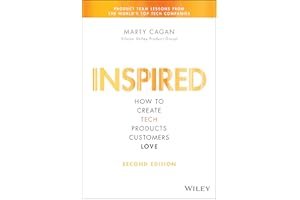 1