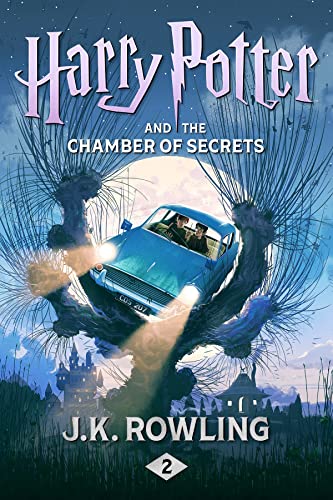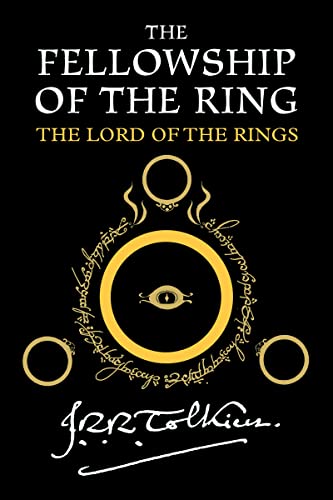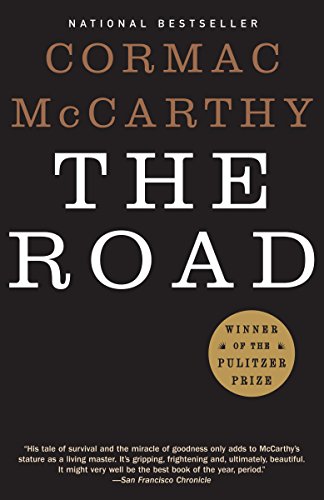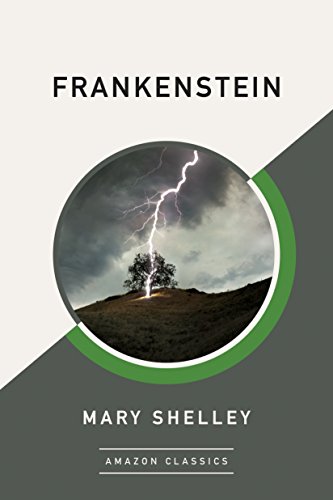
We've ranked the best most influential books using expert recommendations, sales data, and millions of reader ratings. At Shortform, we know books. Our book guides are the best in the world. Learn why.
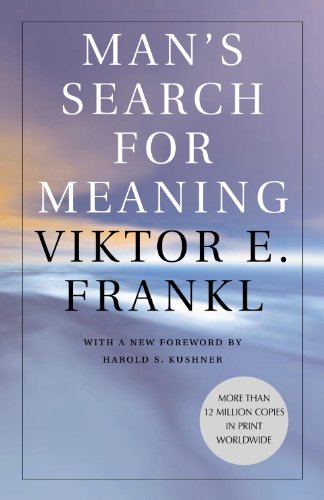
Man's Search for Meaning has riveted generations of readers with its descriptions of life in Nazi death camps and its lessons for spiritual survival. Between 1942 and 1945 psychiatrist Viktor Frankl labored in four different camps, including Auschwitz, while his parents, brother, and pregnant wife perished. Based on his own experience and the stories of his many patients, Frankl argues that we cannot avoid suffering but we can choose how to cope with it, find meaning in it, and move forward with renewed purpose. Frankl's theory—known as logotherapy, from the Greek word logos ("meaning")—holds that our primary drive in life is not pleasure, as Freud maintained, but the discovery and pursuit of what we personally find meaningful. In the decades since its first publication in 1959, Man's Search for Meaning has become a classic, with more than twelve million copies in print around the world. A 1991 Library of Congress survey that asked readers to name a "book that made a difference in your life" found Man's Search for Meaning among the ten most influential books in America. At once a memoir, a meditation, a treatise, and a history, it continues to inspire us all to find significance in the very act of living. (back cover)
…
Recommended by Tony Robbins, Dustin Moskovitz, Ev Williams, and 60 others.
Another book that I’ve read dozens of times. It taught me that if you change the meaning, you change everything. Meaning equals emotion, and emotion equals life. [source]
Dustin Moskovitz
Co-founder/Facebook and Asana
Dustin Moskovitz recommended this book on Twitter. [source]
I read it while spending ten days in the ICU of Bellevue hospital trying to reattach my finger from a ring avulsion accident in my kitchen. It talks about the meaning of life, and I believe you come out a better person from reading it. [source]
You can go after the job you want—and get it! You can take the job you have—and improve it! You can take any situation—and make it work for you!
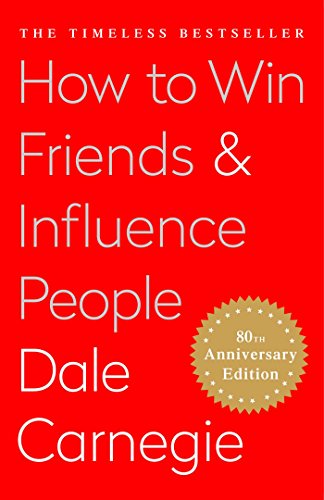
Dale Carnegie’s rock-solid, time-tested advice has carried countless people up the ladder of success in their business and personal lives. One of the most groundbreaking and timeless bestsellers of all time, How to Win Friends & Influence People will teach you:
-Six ways to make people like you -Twelve ways to win people to your way of thinking -Nine ways to change people without arousing resentment
And much more! Achieve your maximum potential—a must-read for the twenty-first century with more than 15 million copies sold!
…
Recommended by Dave Ramsey, Daymond John, Dustin Moskovitz, and 58 others.
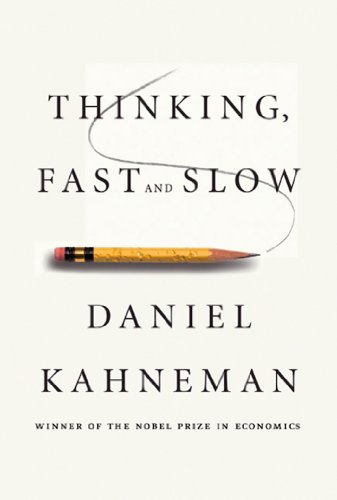
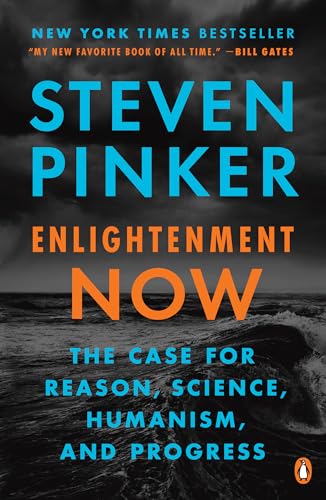
Major New York Times bestseller Winner of the National Academy of Sciences Best Book Award in 2012 Selected by the New York Times Book Review as one of the best books of 2011 A Globe and Mail Best Books of the Year 2011 Title One of The Economist's 2011 Books of the Year One of The Wall Street Journal's Best Nonfiction Books of the Year 2011 2013 Presidential Medal of Freedom Recipient
In the international bestseller, Thinking, Fast and Slow, Daniel Kahneman, the renowned psychologist and winner of the Nobel Prize in Economics, takes us on a groundbreaking tour of the mind and explains the two systems that drive the way we think. System 1 is fast, intuitive, and emotional; System 2 is slower, more deliberative, and more logical. The impact of overconfidence on corporate strategies, the difficulties of predicting what will make us happy in the future, the profound effect of cognitive biases on everything from playing the stock market to planning our next vacation—each of these can be understood only by knowing how the two systems shape our judgments and decisions. Engaging the reader in a lively conversation about how we think, Kahneman reveals where we can and cannot trust our intuitions and how we can tap into the benefits of slow thinking. He offers practical and enlightening insights into how choices are made in both our business and our personal lives—and how we can use different techniques to guard against the mental glitches that often get us into trouble. Winner of the National Academy of Sciences Best Book Award and the Los Angeles Times Book Prize and selected by The New York Times Book Review as one of the ten best books of 2011, Thinking, Fast and Slow is destined to be a classic.
A few months ago, Mr. Obama read “Thinking, Fast and Slow,” by Daniel Kahneman, about how people make decisions — quick, instinctive thinking versus slower, contemplative deliberation. For Mr. Obama, a deliberator in an instinctive business, this may be as instructive as any political science text. [source]
Captivating dive into human decision making, marred by inclusion of several/many? psychology studies that fail to replicate. Will stand as a cautionary tale? [source]
Cover unavailable
4
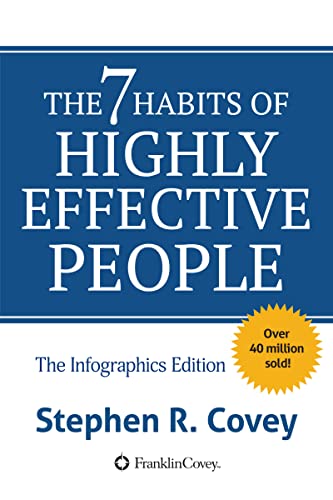
The 7 Habits of Highly Effective People: Powerful Lessons in Personal Change
When Stephen Covey first released The Seven Habits of Highly Effective People, the book became an instant rage because people suddenly got up and took notice that their lives were headed off in the wrong direction; and more than that, they realized that there were so many simple things they could do in order to navigate their life correctly. This book was wonderful education for people, education in how to live life effectively and get closer to the ideal of being a ‘success’ in life.
But not everyone understands Stephen Covey’s model fully well, or maybe there are some people who haven’t read it yet. This is definitely true because we still see so much failure all around us. Now, I am not saying that by using Covey’s model, or anyone else’s model for that matter, you can become a sure-shot success, but at least we should have seen many more successes around us already judging by the number of copies the book has sold! So, where is the shortcoming?
There are two main problems here, and we are talking only about the people who have read the book already. The first problem is that most people are too lazy to implement the ideals of Stephen Covey in their lives. They consider his masterpiece of a book as a mere coffee-table book or a book that you use for light reading when you are traveling and then forget all about it. They do not realize that this book contains life-changing information. Or, they take the information and do not make the effort to actually utilize it so that it becomes knowledge for them.
The second problem is that a lot of people have a myopic view of Covey’s ideals. These are people who are impressed by the book already. If you ask them what the seven habits are, they can rattle them off end to end, but then they miss the larger picture. They do not understand that Covey was trying to tell more than he wrote in words. There are hidden implications in this book, yes, and a lot of people have just failed to see through them.
That is what we are trying to do. We are trying to show you how Covey’s book, or rather, his model, was a complete model in itself. There was nothing amiss about it. If you implement it, there should be no aspect of your life that should go untouched. The only thing is that you have to understand these ideals and try to implement them in your life.
But, before we barge into that area, it is extremely important to understand what these ideals are. What was the model that was propounded by Stephen Covey in his mega-famous book? We shall begin by trying to understand his model first, and then interpret it in such a way that it pertains to every aspect of our life
Dave Ramsey recommended this book on his website. [source]
Dustin Moskovitz
Co-founder/Facebook and Asana
I was surprised at how familiar the topics felt. [source]
Joe Martin
@benmorris @audible_com @Gladwell I enjoy the quiet on the way home, but on the way to work I am listening to the 7 habits book by Stephen Coveru, a fave of mine [source]
Cover unavailable
5
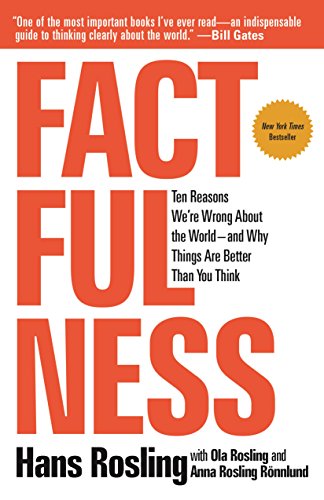
Factfulness: Ten Reasons We're Wrong About the World – and Why Things Are Better Than You Think
Factfulness: The stress-reducing habit of only carrying opinions for which you have strong supporting facts.
When asked simple questions about global trends—what percentage of the world’s population live in poverty; why the world’s population is increasing; how many girls finish school—we systematically get the answers wrong. So wrong that a chimpanzee choosing answers at random will consistently outguess teachers, journalists, Nobel laureates, and investment bankers.
In Factfulness, Professor of International Health and global TED phenomenon Hans Rosling, together with his two long-time collaborators, Anna and Ola, offers a radical new explanation of why this happens. They reveal the ten instincts that distort our perspective—from our tendency to divide the world into two camps (usually some version of us and them) to the way we consume media (where fear rules) to how we perceive progress (believing that most things are getting worse).
Our problem is that we don’t know what we don’t know, and even our guesses are informed by unconscious and predictable biases.
It turns out that the world, for all its imperfections, is in a much better state than we might think. That doesn’t mean there aren’t real concerns. But when we worry about everything all the time instead of embracing a worldview based on facts, we can lose our ability to focus on the things that threaten us most.
Inspiring and revelatory, filled with lively anecdotes and moving stories, Factfulness is an urgent and essential book that will change the way you see the world and empower you to respond to the crises and opportunities of the future.
As 2018 draws to a close, I’m continuing a favorite tradition of mine and sharing my year-end lists. It gives me a moment to pause and reflect on the year through the books I found most thought-provoking, inspiring, or just plain loved. It also gives me a chance to highlight talented authors – some who are household names and others who you may not have heard of before. Here’s my best of 2018 list. [source]
This was a breakthrough to me. The framework Hans enunciates is one that took me decades of working in global development to create for myself, and I could have never expressed it in such a clear way. I’m going to try to use this model moving forward. [source]
Aidan Connolly
I would suggest Hans Rosling’s Factfulness on the real world of statistics. [source]
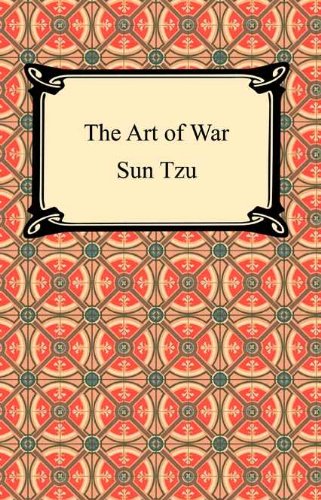
For more than two thousand years, The Art of War has stood as a cornerstone of Chinese culture-a lucid epigrammatic text that reveals as much about human psychology, politics, and economics as it does about battlefield strategy. The influence of Sun-tzu's text has grown tremendously in the West in recent years, with military leaders, politicians, and corporate executives alike finding valuable insight in these ancient words. In his crisp, accessible new translation, scholar John Minford brings this seminal work to life for modern readers.
Minford opens with a lively, learned introduction in which he explores the life and times of Sun-tzu, looks at The Art of War in the context of the turbulent Warring States period, and discusses how best to read and understand the work today. There follows Minford's translation of the core text itself in two different formats-first, the unadorned thirteen chapters of the original work and then the same text reprinted with extensive running commentary by classical Chinese scholars as well as Minford himself. The result is an opportunity for Western readers to experience Sun-tzu's work in all its intensity as it applies to many aspects of our lives.
Which books should be read by every single intelligent person on planet? … The Art of War (Sun Tsu) to learn that the act of killing fellow humans can be raised to an art. If you read all of the above works you will glean profound insight into most of what has driven the history of the western world. [source]
Cover unavailable
7
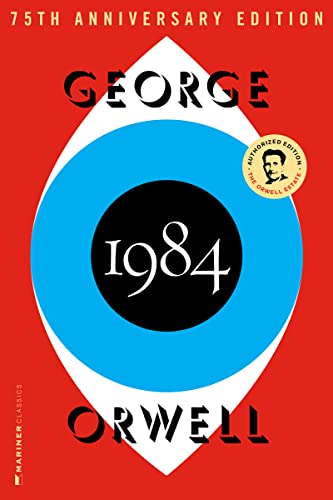
1984
George Orwell
4.5
A PBS Great American Read Top 100 Pick
With extraordinary relevance and renewed popularity, George Orwell’s 1984 takes on new life in this hardcover edition.
“Orwell saw, to his credit, that the act of falsifying reality is only secondarily a way of changing perceptions. It is, above all, a way of asserting power.”—The New Yorker
In 1984, London is a grim city in the totalitarian state of Oceania where Big Brother is always watching you and the Thought Police can practically read your mind. Winston Smith is a man in grave danger for the simple reason that his memory still functions. Drawn into a forbidden love affair, Winston finds the courage to join a secret revolutionary organization called The Brotherhood, dedicated to the destruction of the Party. Together with his beloved Julia, he hazards his life in a deadly match against the powers that be.
Lionel Trilling said of Orwell’s masterpiece “1984 is a profound, terrifying, and wholly fascinating book. It is a fantasy of the political future, and like any such fantasy, serves its author as a magnifying device for an examination of the present.” Though the year 1984 now exists in the past, Orwell’s novel remains an urgent call for the individual willing to speak truth to power.
Today is World Book Day, a wonderful opportunity to address this #ChallengeRichard sent in by Mike Gonzalez of New Jersey: Make a list of your top 65 books to read in a lifetime. [source]
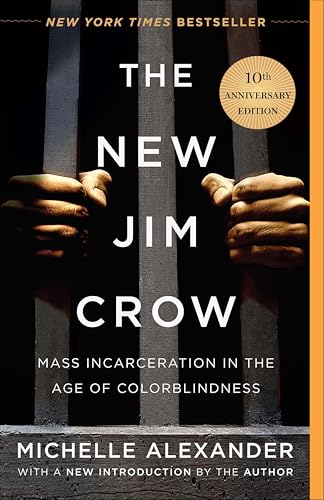
"Jarvious Cotton's great-great-grandfather could not vote as a slave. His great-grandfather was beaten to death by the Klu Klux Klan for attempting to vote. His grandfather was prevented from voting by Klan intimidation; his father was barred by poll taxes and literacy tests. Today, Cotton cannot vote because he, like many black men in the United States, has been labeled a felon and is currently on parole."
As the United States celebrates the nation's "triumph over race" with the election of Barack Obama, the majority of young black men in major American cities are locked behind bars or have been labeled felons for life. Although Jim Crow laws have been wiped off the books, an astounding percentage of the African American community remains trapped in a subordinate status--much like their grandparents before them.
In this incisive critique, former litigator-turned-legal-scholar Michelle Alexander provocatively argues that we have not ended racial caste in America: we have simply redesigned it. Alexander shows that, by targeting black men and decimating communities of color, the U.S. criminal justice system functions as a contemporary system of racial control, even as it formally adheres to the principle of color blindness. The New Jim Crow challenges the civil rights community--and all of us--to place mass incarceration at the forefront of a new movement for racial justice in America.
I read The New Jim Crow, a study of how the U.S. justice system disproportionately criminalizes and jails blacks and Latinos. Making our criminal justice system fairer and more effective is a huge challenge for our country. I’m going to keep learning about this topic, but some things are already clear: We can’t jail our way to a just society, and our current system isn’t working (adapted with permission from Facebook’s A Year of Books project). [source]
Peter Temin
The new Jim Crow that Michelle Alexander is talking about is mass incarceration. [source]
Cover unavailable
9
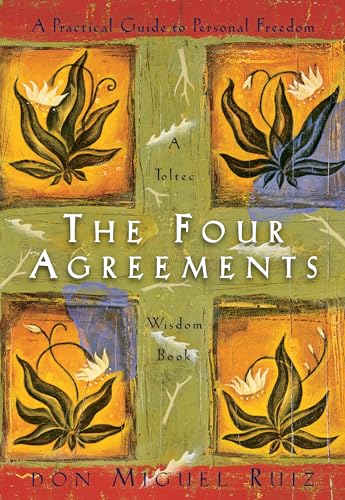
The Four Agreements: A Practical Guide to Personal Freedom
In The Four Agreements, don Miguel Ruiz reveals the source of self-limiting beliefs that rob us of joy and create needless suffering. Based on ancient Toltec wisdom, the Four Agreements offer a powerful code of conduct that can rapidly transform our lives to a new experience of freedom, true happiness, and love. The Four Agreements are: Be Impeccable With Your Word, Don't Take Anything Personally, Don't Make Assumptions, Always Do Your Best.
Question: What are the books that had a major influence on you? Or simply the ones you like the most. : Tao te Ching, score takes care of itself, between the world and me, the four agreements, the old man and the sea...I love reading! [source]
Karlie Kloss
I just think it’s got a lot of great principles and ideas. [source]
Cover unavailable
10
The 5 Love Languages: The Secret to Love that Lasts
Couples who understand each other's love language hold a priceless advantage in the quest for love that lasts a lifetime -- they know how to effectively and consistently make each other feel truly and deeply loved. That gift never fades away.
Recommended by Dustin Moskovitz, James Altucher, Kaci Lambe Kai, and 1 others.
Dustin Moskovitz
Co-founder/Facebook and Asana
Dustin Moskovitz recommended this book on Twitter. [source]
Kaci Lambe Kai
The Five Love Languages by Gary Chapman impacted how I interpret and receive love. Not just romantically, but in my friendships and business relationships. I had several personal and professional relationships that improved when I could appreciate that their "love language" was different than mine. I could at least see their efforts as an attempt at showing me love and kindness, even if it wasn't how I best receive or give love. This is pivotal. And if you can separate out the idea of it being for romantic partners only, I'd say this is critical reading for leaders. Not everyone is motivated and feels appreciation by a raise. Sometimes, public recognition of kind words or an act of kindness will feel better than anything else you can do. [source]
Pedro Cortés
The books that had the biggest impact are the ones that are controversial and challenge people's beliefs around work, relationships, life, and money most of them were things I already thought about (that's how I found them or decided to read them) but just by putting it in an actionable and structured way it made me think 100x more clearly about my goals and beliefs. Such examples could be the 4hww, Rich Dad Poor Dad, F.U. Money, The Five Love Languages, So good they can't ignore, Predictably Irrational and Ego is the Enemy are the ones who stand out the most. [source]
Cover unavailable
11
The Power of Now: A Guide to Spiritual Enlightenment
Eckhart Tolle is emerging as one of today's most inspiring teachers. In The Power of Now, a #1 national bestseller, the author describes his transition from despair to self-realization soon after his 29th birthday. Tolle took another ten years to understand this transformation, during which time he evolved a philosophy that has parallels in Buddhism, relaxation techniques, and meditation theory but is also eminently practical. In The Power of Now he shows readers how to recognize themselves as the creators of their own pain, and how to have a pain-free existence by living fully in the present. Accessing the deepest self, the true self, can be learned, he says, by freeing ourselves from the conflicting, unreasonable demands of the mind and living present, fully, and intensely, in the Now.
…
Recommended by Bill Liao, Catherine Plano, Darrah Brustein, and 7 others.
Bill Liao
The human world occurs in language so best get good at it! [source]
Catherine Plano
The one that really resonates with me and still to this day is The Power of NOW from Eckhart Tolle because as an entrepreneur we get so caught up in the future that we fail to be 'present'. The reality of it all when you really think about it - the present is all we have that is real, it requires no effort, nor time. I practice this daily, if I feel uncomfortable then I know I am trying too hard and not being present but when I am being present it is easier to think about what I have to do right now, because now is all that matters. [source]
Darrah Brustein
Others include The Power Of Now which is powerful reminder that all we have is the present and helps give you meaningful ways to live in it, not in the past or the future. [source]
Cover unavailable
12
To Kill a Mockingbird
Harper Lee, Sissy Spacek, et al
4.4
The unforgettable novel of a childhood in a sleepy Southern town and the crisis of conscience that rocked it, To Kill A Mockingbird became both an instant bestseller and a critical success when it was first published in 1960. It went on to win the Pulitzer Prize in 1961 and was later made into an Academy Award-winning film, also a classic.
Compassionate, dramatic, and deeply moving, To Kill A Mockingbird takes readers to the roots of human behavior - to innocence and experience, kindness and cruelty, love and hatred, humor and pathos. Now with over 18 million copies in print and translated into forty languages, this regional story by a young Alabama woman claims universal appeal. Harper Lee always considered her book to be a simple love story. Today it is regarded as a masterpiece of American literature.
…
Recommended by Adam Lawrence, Antonio Villaraigosa, Clive Stafford Smith, and 6 others.
Even though I know we’ve made great strides in America, and have come from the reality of Maycomb, we still suffer today from the lingering effects of the bigotry of that era. At the same time, it’s a lesson in standing tall in the face of tremendously hostile circumstances. [source]
Clive Stafford Smith
The book touches on so many issues and deals with so many prejudices – prejudices towards the mentally ill, racial stuff. It’s a book that was way ahead of its time in many ways. It’s also a wonderfully written book – a joy to read. [source]
Cover unavailable
13
The Lord of the Rings (The Lord of the Rings, #1-3)
J.R.R. Tolkien
4.4
One Ring to rule them all, One Ring to find them, One Ring to bring them all and in the darkness bind them
In ancient times the Rings of Power were crafted by the Elven-smiths, and Sauron, the Dark Lord, forged the One Ring, filling it with his own power so that he could rule all others. But the One Ring was taken from him, and though he sought it throughout Middle-earth, it remained lost to him. After many ages it fell by chance into the hands of the hobbit Bilbo Baggins.
From Sauron's fastness in the Dark Tower of Mordor, his power spread far and wide. Sauron gathered all the Great Rings to him, but always he searched for the One Ring that would complete his dominion.
When Bilbo reached his eleventy-first birthday he disappeared, bequeathing to his young cousin Frodo the Ruling Ring and a perilous quest: to journey across Middle-earth, deep into the shadow of the Dark Lord, and destroy the Ring by casting it into the Cracks of Doom.
The Lord of the Rings tells of the great quest undertaken by Frodo and the Fellowship of the Ring: Gandalf the Wizard; the hobbits Merry, Pippin, and Sam; Gimli the Dwarf; Legolas the Elf; Boromir of Gondor; and a tall, mysterious stranger called Strider.
This new edition includes the fiftieth-anniversary fully corrected text setting and, for the first time, an extensive new index.
J.R.R. Tolkien (1892-1973), beloved throughout the world as the creator of The Hobbit, The Lord of the Rings, and The Silmarillion, was a professor of Anglo-Saxon at Oxford, a fellow of Pembroke College, and a fellow of Merton College until his retirement in 1959. His chief interest was the linguistic aspects of the early English written tradition, but while he studied classic works of the past, he was creating a set of his own.
As a boy in Pretoria, Musk was un dersized and picked upon, a smart-aleck known as Muskrat. In his loneliness, he read a lot of fantasy and science fiction. “The heroes of the books I read, ‘The Lord of the Rings’ and the ‘Foundation’ series, always felt a duty to save the world,” he told me. [source]
In the ten years since its publication in 1988, Stephen Hawking's classic work has become a landmark volume in scientific writing, with more than nine million copies in forty languages sold worldwide. That edition was on the cutting edge of what was then known about the origins and nature of the universe. But the intervening years have seen extraordinary advances in the technology of observing both the micro- and the macrocosmic worlds. These observations have confirmed many of Professor Hawking's theoretical predictions in the first edition of his book, including the recent discoveries of the Cosmic Background Explorer satellite (COBE), which probed back in time to within 300,000 years of the universe's beginning and revealed wrinkles in the fabric of space-time that he had projected. Eager to bring to his original text the new knowledge revealed by these observations, as well as his own recent research, Professor Hawking has prepared a new introduction to the book, written an entirely new chapter on wormholes and time travel, and updated the chapters throughout.
…
Recommended by Richard Branson, Adam Hart-Davis, Anurag Ramdasan, and 2 others.
Today is World Book Day, a wonderful opportunity to address this #ChallengeRichard sent in by Mike Gonzalez of New Jersey: Make a list of your top 65 books to read in a lifetime. [source]
Adam Hart-Davis
When Stephen Hawking wrote A Brief History of Time..his publisher told him that every equation he left in would halve the number of readers [source]
Anurag Ramdasan
My first intro into the world of physics and this got me completely hooked!
Cover unavailable
15
Holy Bible: KJV Standard Size Thumb Index Edition: Burgundy (King James Bible)
Thomas Nelson
4.4
My Creative Bible is an exciting new concept in ways to experience the word of God in Scripture. This King James Version Journaling Bible is single-column printed, with two-inch-wide ruled margins for note-taking, scribing your reflections or creative expression. Nearly 400 hand-drawn, Scripture accompanying line-art illustrations are placed throughout the Bible to enhance embracement of The Word. There is an index of the Scripture artwork - line-art suitable for filling. Users will find this an invaluable visual tool for immersion and Bible study.
The Silky-Soft Flexcover Edition features a lovely floral design printed on a unique silky-textured material produced as an imitation leather, with the screen-printed design seemingly woven right in. There is an attached ribbon page marker and beautifully printed page-edges.
Printed on high-quality cream Bible paper with a standard black text size of 8.65 point. 1404 Pages.
…
Recommended by Walter Isaacson, Caterina Fake, A.J. Jacobs, and 7 others.
Everybody, of course, should be familiar with this book, which is a way of being taught through both parables and tales of people and their values. [source]
A.J. Jacobs
One thing that really has stuck with me is that this book talks about that you should be grateful all the time. [source]
Brett Wigdortz
I wanted to throw this in because I think a lot of leadership books believe the problems that leaders are dealing with are all new, and have never been dealt with before. But in an example that almost seems trite, because it is such a part of our cultural knowledge, if you read the book of Exodus from the point of view of leadership theory there were the same leadership lessons 3,000 years ago that people talk about today. For example, the leadership style of Moses in this book broadly has the combination of humility and will discussed by Jim Collins. He needed a great deal of convincing that he was the one who should be leading his people, but once he became that person he had the iron will to be the leader they needed. [source]
Cover unavailable
16
The Subtle Art of Not Giving a F*ck: A Counterintuitive Approach to Living a Good Life
In this generation-defining self-help guide, a superstar blogger cuts through the crap to show us how to stop trying to be "positive" all the time so that we can truly become better, happier people.
For decades, we’ve been told that positive thinking is the key to a happy, rich life. "Fk positivity," Mark Manson says. "Let’s be honest, shit is fked and we have to live with it." In his wildly popular Internet blog, Manson doesn’t sugarcoat or equivocate. He tells it like it is—a dose of raw, refreshing, honest truth that is sorely lacking today. The Subtle Art of Not Giving a Fk is his antidote to the coddling, let’s-all-feel-good mindset that has infected American society and spoiled a generation, rewarding them with gold medals just for showing up.
Manson makes the argument, backed both by academic research and well-timed poop jokes, that improving our lives hinges not on our ability to turn lemons into lemonade, but on learning to stomach lemons better. Human beings are flawed and limited—"not everybody can be extraordinary, there are winners and losers in society, and some of it is not fair or your fault." Manson advises us to get to know our limitations and accept them. Once we embrace our fears, faults, and uncertainties, once we stop running and avoiding and start confronting painful truths, we can begin to find the courage, perseverance, honesty, responsibility, curiosity, and forgiveness we seek.
There are only so many things we can give a fk about so we need to figure out which ones really matter, Manson makes clear. While money is nice, caring about what you do with your life is better, because true wealth is about experience. A much-needed grab-you-by-the-shoulders-and-look-you-in-the-eye moment of real-talk, filled with entertaining stories and profane, ruthless humor, The Subtle Art of Not Giving a F**k is a refreshing slap for a generation to help them lead contented, grounded lives.
…
Recommended by Ryan Holiday, Alex Blackwell, Aunty Ada, and 21 others.
One of the most valuable skills in our economy is becoming increasingly rare. If you master this skill, you'll achieve extraordinary results.
Deep work is the ability to focus without distraction on a cognitively demanding task. It's a skill that allows you to quickly master complicated information and produce better results in less time. Deep work will make you better at what you do and provide the sense of true fulfillment that comes from craftsmanship. In short, deep work is like a super power in our increasingly competitive twenty-first century economy. And yet, most people have lost the ability to go deep-spending their days instead in a frantic blur of e-mail and social media, not even realizing there's a better way.
In Deep Work, author and professor Cal Newport flips the narrative on impact in a connected age. Instead of arguing distraction is bad, he instead celebrates the power of its opposite. Dividing this book into two parts, he first makes the case that in almost any profession, cultivating a deep work ethic will produce massive benefits. He then presents a rigorous training regimen, presented as a series of four "rules," for transforming your mind and habits to support this skill.
A mix of cultural criticism and actionable advice, Deep Work takes the reader on a journey through memorable stories-from Carl Jung building a stone tower in the woods to focus his mind, to a social media pioneer buying a round-trip business class ticket to Tokyo to write a book free from distraction in the air-and no-nonsense advice, such as the claim that most serious professionals should quit social media and that you should practice being bored. Deep Work is an indispensable guide to anyone seeking focused success in a distracted world.
As automation and outsourcing reshape the workplace, what new skill do we need? The ability to do deep work. Cal Newport's exciting new book is an introduction and guide to the kind of intense concentration in a distraction-free environment that results in fast, powerful learning and performance. Think of it as calisthenics for your mind-and start your exercise program today. [source]
Marvin Liao
Partner/500 Startups
The Joy of Not Working (Zelinkski), Flash Foresight (Burrus), The Art of Worldly Wisdom (Gracian), Sapiens (Yuval), The End of Jobs (Pearson), Deep Work (Newport), Sovereign Individual (Davidson), The Fourth Economy (Davison) & The Monk & the Riddle (Komisar). Every single one of these books completely changed how I looked at everything in the world & literally pushed my life in a new direction. They were Paradigm Shifting as they say. (hate that word but it really was a Paradigm Shift for me). [source]
I've been a fan of Cal for a long time. His book So Good They Can't Ignore You is one of my favorites, but it's his new book that's probably had the biggest and most immediate impact on me. For those of you who enjoyed Tyler Cowen's Average is Over, you already know how important the ability to focus, be creative, and think at a high level is going to be in the future. This is a book that explains how to cultivate and protect that skill--the ability to do deep work. One thing I've already started doing since reading this book is recording the number of hours of deep work I do each day in my morning journal. It's a way of keeping a running tally and monitoring if I begin to get distracted or slow my pace. Anyway, great book! [source]
Cover unavailable
18
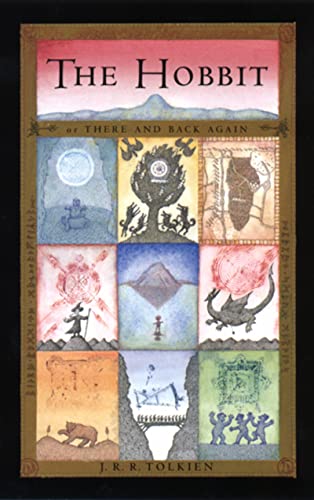
The Hobbit
J. R. R. Tolkien
4.3
Bilbo Baggins is a hobbit who enjoys a comfortable, unambitious life, rarely traveling any farther than his pantry or cellar. But his contentment is disturbed when the wizard Gandalf and a company of dwarves arrive on his doorstep one day to whisk him away on an adventure. They have launched a plot to raid the treasure hoard guarded by Smaug the Magnificent, a large and very dangerous dragon. Bilbo reluctantly joins their quest, unaware that on his journey to the Lonely Mountain he will encounter both a magic ring and a frightening creature known as Gollum. (back cover)
Today is World Book Day, a wonderful opportunity to address this #ChallengeRichard sent in by Mike Gonzalez of New Jersey: Make a list of your top 65 books to read in a lifetime. [source]
First up, The Hobbit, or There and Back Again, by JRR Tolkien. But you knew I was going to say that. This one book, which was published in 1937, defined so many variables for the fantasy tradition that are still in place today. Tolkien’s extraordinary achievement was to recover the epic landscapes of Anglo-Saxon myth, bring them back to life, and then to take us through them on foot, so we could see the details up close, at human scale. The Hobbit is both mythic and relatable at the same time – The New Yorker writer Adam Gopnik recently called it “an arranged marriage between the Elder Edda and The Wind in the Willows”, and I think that’s entirely fair. Though I would give more credit to the bass register of Tolkien’s imagination, its abyssal depths. Mole never delved as deep as the Mines of Moria. [source]
Cover unavailable
19
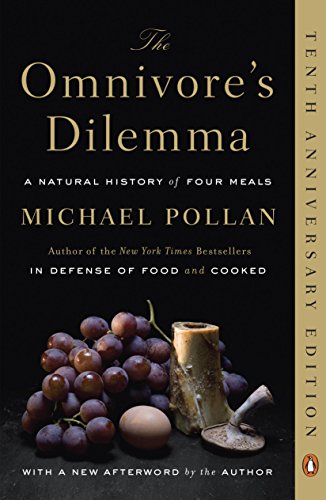
The Omnivore's Dilemma: A Natural History of Four Meals
What should we have for dinner? For omnivore's like ourselves, this simple question has always posed a dilemma: When you can eat just about anything nature (or the supermarket) has to offer, deciding what you should eat will inevitably stir anxiety, especially when some of the foods on offer might shorten your life. Today, buffeted by one food fad after another, America is suffering from what can only be described as a national eating disorder. The omnivore's dilemma has returned with a vengeance, as the cornucopia of the modern American supermarket and fast-food outlet confronts us with a bewildering and treacherous food landscape. What's at stake in our eating choices is not only our own and our children's health, but the health of the environment that sustains life on earth.
The Omnivore's Dilemma is a groundbreaking book in which one of America's most fascinating, original, and elegant writers turns his own omnivorous mind to the seemingly straightforward question of what we should have for dinner. The question has confronted us since man discovered fire, but, according to Michael Pollan, the bestselling author of The Botany of Desire, how we answer it today, ath the dawn of the twenty-first century, may well determine our very survival as a species. Should we eat a fast-food hamburger? Something organic> Or perhaps something we hunt, gather or grow ourselves?
To find out, Pollan follows each of the food chains that sustain us--industrial food, organic or alternative food, and food we forage ourselves--from the source to a final meal, and in the process develops a definitive account of the American way of eating. His absorbing narrative takes us from Iowa cornfields to food laboratories, from feedlots and fast-food restaurants to organic farms and hunting grounds, always emphasizing our dynamic coevolutionary relationship with the handful of plant and animal species we depend on. Each time Pollan sits down to a meal, he deploys his unique blend of personal and investigative journalism to trace the origins of everything consumed, revealing what we unwittingly ingest and explaining how our taste for particular foods and flavors reflects our evolutionary inheritance.
The surprising answers Pollan offers to the simple question posed by this book have profound political, economic, psychological, and even mortal implications for all of us. Ultimately, this is a book as much about visionary solutions as it is about problems, and Pollan contends that, when it comes to food, doing the right thing often turns out to be the tastiest thing an eater can do. Beautifully written and thrillingly argued, The Omnivore's Dilemma promises to change the way we think about the politics and pleasure of eating. For anyone who reads it, dinner will never again look, or taste, quite the same. --jacket
…
Recommended by Barry Estabrook, Gabriel Coarna, Paul Rozin, and 1 others.
Barry Estabrook
Michael Pollan looks at food production through four meals. One is a fast-food meal, the other is an industrial-scale organic meal, then there is a small-scale organic meal and finally he actually goes out and either grows or kills, in the case of the meat, the entire meal himself. That is the narrative. [source]
Gabriel Coarna
Michael Pollan's "The Omnivore's Dilemma" --more precisely, the first 3rd of it-- was what first made me realize how badly the Earth, as an ecosystem, is out of balance. [source]
Paul Rozin
Michael Pollan is an excellent journalist who specializes in the food domain.He proposes relying more on whole foods and less on processed foods, like Oreo Cookies. He argues that unprocessed foods are more nutritious, more wholistic and better for the environment. [source]
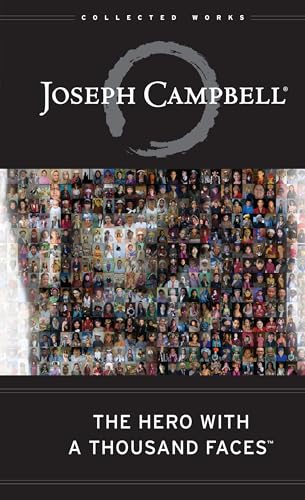
The first popular work to combine the spiritual and psychological insights of modern psychoanalysis with the archetypes of world mythology, the book creates a roadmap for navigating the frustrating path of contemporary life. Examining heroic myths in the light of modern psychology, it considers not only the patterns and stages of mythology but also its relevance to our lives today--and to the life of any person seeking a fully realized existence.
Myth, according to Campbell, is the projection of a culture's dreams onto a large screen; Campbell's book, like Star Wars, the film it helped inspire, is an exploration of the big-picture moments from the stage that is our world. It is a must-have resource for both experienced students of mythology and the explorer just beginning to approach myth as a source of knowledge.
The book I’d give every graduating senior in college or high school would be … Joseph Campbell’s 'Hero of a Thousand Faces'. It's little bit dense but it’s so rich, so it’s a good one. [source]
Joseph Campbell was the first person to really open my eyes to the compassionate side of life, or of thought... Campbell was the guy who really kind of put it all together for me, and not in a way I could put my finger on... It made you just glad to be alive, realizing how vast this world is, and how similar and how different we are. [source]
Catherine Plano
Was mind blowing, it really helped me put into perspective, that there are cycles and rhythms, and I now call them initiations, when you are faced with fear we are never too sure of our potential unless we know how to fail, what did we learn from it and what are we going to do differently the next time. There is a lesson in everything we experience, as long as we slow down enough to reflect. The other thing in the hero's journey is that even when you say 'yes' to a project, it really doesn't mean that you are going to succeed at it, but if you go into a project with an open mind and embrace that you are here to learn, the journey itself is rewarding, not always the outcome and when we really look at our failures, they weren't real failures after all, but a stepping stone onto something greater. [source]
Cover unavailable
21
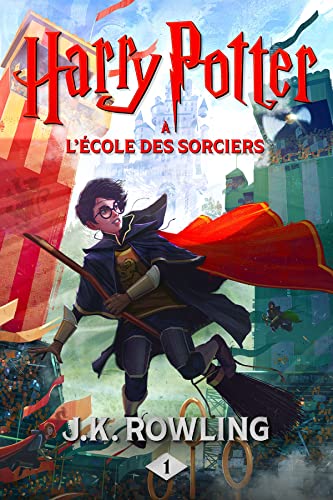
Harry Potter and the Sorcerer's Stone
J. K. Rowling
4.3
Harry Potter has never been the star of a Quidditch team, scoring points while riding a broom far above the ground. He knows no spells, has never helped to hatch a dragon, and has never worn a cloak of invisibility.
All he knows is a miserable life with the Dursleys, his horrible aunt and uncle, and their abominable son, Dudley - a great big swollen spoiled bully. Harry’s room is a tiny closet at the foot of the stairs, and he hasn’t had a birthday party in eleven years.
But all that is about to change when a mysterious letter arrives by owl messenger: a letter with an invitation to an incredible place that Harry - and anyone who reads about him - will find unforgettable.
For it’s there that he finds not only friends, aerial sports, and magic in everything from classes to meals, but a great destiny that’s been waiting for him…if Harry can survive the encounter. (front flap)
…
Recommended by Joe Lycett.
Joe Lycett
guys i just read this book called harry potter well worth checking out it’s about a really interesting magic lad [source]
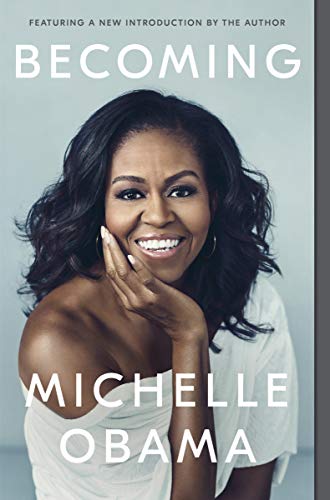
In a life filled with meaning and accomplishment, Michelle Obama has emerged as one of the most iconic and compelling women of our era. As First Lady of the United States of America—the first African American to serve in that role—she helped create the most welcoming and inclusive White House in history, while also establishing herself as a powerful advocate for women and girls in the U.S. and around the world, dramatically changing the ways that families pursue healthier and more active lives, and standing with her husband as he led America through some of its most harrowing moments. Along the way, she showed us a few dance moves, crushed Carpool Karaoke, and raised two down-to-earth daughters under an unforgiving media glare.
In her memoir, a work of deep reflection and mesmerizing storytelling, Michelle Obama invites readers into her world, chronicling the experiences that have shaped her—from her childhood on the South Side of Chicago to her years as an executive balancing the demands of motherhood and work, to her time spent at the world’s most famous address. With unerring honesty and lively wit, she describes her triumphs and her disappointments, both public and private, telling her full story as she has lived it—in her own words and on her own terms. Warm, wise, and revelatory, Becoming is the deeply personal reckoning of a woman of soul and substance who has steadily defied expectations—and whose story inspires us to do the same.
…
Recommended by Barack Obama, Piers Morgan, Mary Burkey, and 3 others.
Of course, @MichelleObama’s my wife, so I’m a little biased here. But she also happens to be brilliant, funny, wise – one of a kind. This book tells her quintessentially American story. I love it because it faithfully reflects the woman I have loved for so long. [source]
Piers Morgan
Congrats to @MichelleObama on sensational sales of her new book #Becoming. I always take people as I find them & when I met her at the White House, she was a delightfully warm, friendly & genuine lady. A great First Lady & now a best-selling author. https://t.co/nlSUHI01SM [source]
Mary Burkey
This is a case where you have to hear Michelle Obama read her story. It’s her story and she puts her whole emotional self into it. [source]
Cover unavailable
23
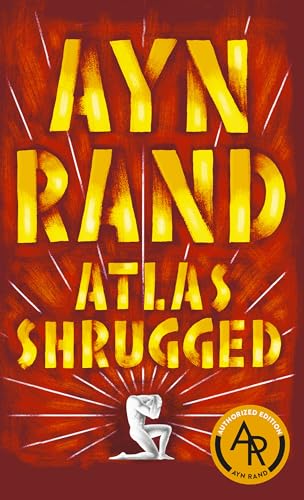
Atlas Shrugged
Ayn Rand
4.3
This is the story of a man who said that he would stop the motor of the world and did. Was he a destroyer or the greatest of liberators?
Why did he have to fight his battle, not against his enemies, but against those who needed him most, and his hardest battle against the woman he loved? What is the world’s motor — and the motive power of every man? You will know the answer to these questions when you discover the reason behind the baffling events that play havoc with the lives of the characters in this story.
Tremendous in its scope, this novel presents an astounding panorama of human life — from the productive genius who becomes a worthless playboy — to the great steel industrialist who does not know that he is working for his own destruction — to the philosopher who becomes a pirate — to the composer who gives up his career on the night of his triumph — to the woman who runs a transcontinental railroad — to the lowest track worker in her Terminal tunnels.
You must be prepared, when you read this novel, to check every premise at the root of your convictions.
This is a mystery story, not about the murder — and rebirth — of man’s spirit. It is a philosophical revolution, told in the form of an action thriller of violent events, a ruthlessly brilliant plot structure and an irresistible suspense. Do you say this is impossible? Well, that is the first of your premises to check.
Travis Kalanick mentioned this book in a Washington Post interview. [source]
Cover unavailable
24
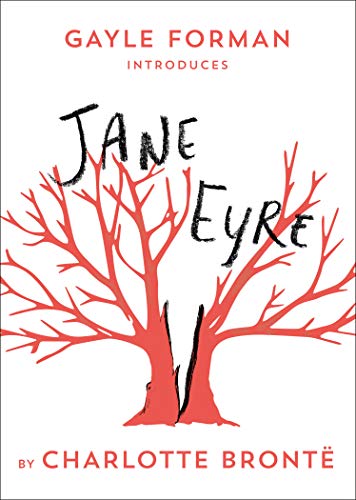
Jane Eyre
Charlotte Brontë
4.3
Orphaned as a child, Jane has felt an outcast her whole young life. Her courage is tested once again when she arrives at Thornfield Hall, where she has been hired by the brooding, proud Edward Rochester to care for his ward Adèle. Jane finds herself drawn to his troubled yet kind spirit. She falls in love. Hard.
But there is a terrifying secret inside the gloomy, forbidding Thornfield Hall. Is Rochester hiding from Jane? Will Jane be left heartbroken and exiled once again?
…
Recommended by Audrey Penn, John Sutherland, Lucy Atkins, and 2 others.
Audrey Penn
My next one is Jane Eyre. She was orphaned and sent to a very rich aunt, who had her own very selfish children. Jane Eyre was not the perfect child and she was sent to live in a girls’ school. She made one friend, but unfortunately the little girl died, so she had to toughen up. She grew up there and learned everything she needed to know about teaching. She was a very good artist, she played a little piano, she learned French. When she got older she became the governess for a little French girl who was the ward of a man who lived in a manor. They fell in love, but it turned out that he had a wife, who was insane and lived in the attic. So Jane Eyre ran away and found out she had an uncle who had left her a great deal of money. But she couldn’t get the man out of her mind, so she went back. She found out that after she left, the man’s wife had set the place on fire. The wife had died in the fire, and it had blinded him. They were still very much in love and they married. And they lived happily ever after. [source]
John Sutherland
There is an interesting debate … that the real heroine of Jane Eyre is not the plain little governess but the mad woman in the attic, Bertha Mason [source]
I think Charlotte Brontë’s most accomplished book is Villette. It’s probably a better book, it’s tighter and more sophisticated in some ways. But there’s something about Jane Eyre that is just deeply emotionally compelling for me. [source]
Cover unavailable
25
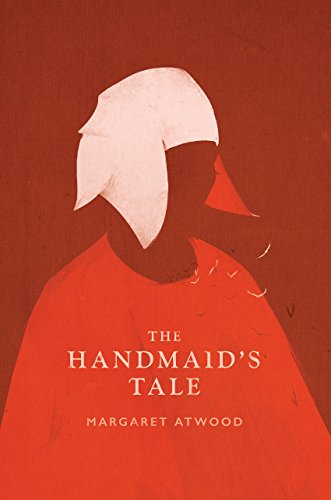
The Handmaid's Tale
Margaret Atwood
4.3
Before The Testaments, there was The Handmaid’s Tale: an instant classic and eerily prescient cultural phenomenon, from “the patron saint of feminist dystopian fiction” (New York Times).
The Handmaid’s Tale is a novel of such power that the reader will be unable to forget its images and its forecast. Set in the near future, it describes life in what was once the United States and is now called the Republic of Gilead, a monotheocracy that has reacted to social unrest and a sharply declining birthrate by reverting to, and going beyond, the repressive intolerance of the original Puritans. The regime takes the Book of Genesis absolutely at its word, with bizarre consequences for the women and men in its population.
The story is told through the eyes of Offred, one of the unfortunate Handmaids under the new social order. In condensed but eloquent prose, by turns cool-eyed, tender, despairing, passionate, and wry, she reveals to us the dark corners behind the establishment’s calm facade, as certain tendencies now in existence are carried to their logical conclusions. The Handmaid’s Tale is funny, unexpected, horrifying, and altogether convincing. It is at once scathing satire, dire warning, and a tour de force. It is Margaret Atwood at her best.
Paulo Coelho's enchanting novel has inspired a devoted following around the world. This story, dazzling in its powerful simplicity and inspiring wisdom, is about an Andalusian shepherd boy named Santiago who travels from his homeland in Spain to the Egyptian desert in search of a treasure buried in the Pyramids. What starts out as a journey to find worldly goods turns into a discovery of the treasure found within. Lush, evocative, and deeply humane, the story of Santiago is an eternal testament to the transforming power of our dreams and the importance of listening to our hearts.
There's a great quote in this book: When you're on the right path the universe conspires to help you! [source]
Daniel Ek
It was fascinating to talk to the author about how this book came to be such a hit—he never backed down, and he allowed people to read it for free in order to then boost sales—much like how Spotify’s freemium model was perceived in the early days. [source]
Eric Ripert
Speaks of everyone having an ultimate goal in life, but most of us are too afraid to pursue it. The encouragement to fulfill your dreams is very inspirational! [source]
Cover unavailable
27
Harry Potter Boxset (Harry Potter, #1-7)
J. K. Rowling and Mary GrandPré
4.3
Now for the first time ever, J.K. Rowling’s seven bestselling Harry Potter books are available in a stunning paperback boxed set! The Harry Potter series has been hailed as “one for the ages” by Stephen King and “a spellbinding saga’ by USA Today. And most recently, The New York Times called Harry Potter and the Deathly Hallows the “fastest selling book in history.” This is the ultimate Harry Potter collection for Harry Potter fans of all ages!
As a devoted reader, the president has been linked to a lengthy list of novels and poetry collections over the years — he admits he enjoys a thriller. [source]
Adam Lawrence
I hate reading. I always have. Except for Harry Potter and To Kill A Mockingbird, which I've read dozens of times. [source]
Benjamin Kwan
I used to read more fiction when I was a lot younger just like any young boy. And of course the favourite book that teens my generation love would be Harry Potter! It just gives us an avenue to be part of that fantasy world that we have always dreamt of. [source]
Cover unavailable
28
The Life-Changing Magic of Tidying Up: The Japanese Art of Decluttering and Organizing
Despite constant efforts to declutter your home, do papers still accumulate like snowdrifts and clothes pile up like a tangled mess of noodles?
Japanese cleaning consultant Marie Kondo takes tidying to a whole new level, promising that if you properly simplify and organize your home once, you'll never have to do it again. Most methods advocate a room-by-room or little-by-little approach, which doom you to pick away at your piles of stuff forever. The KonMari Method, with its revolutionary category-by-category system, leads to lasting results. In fact, none of Kondo's clients have lapsed (and she still has a three-month waiting list).
With detailed guidance for determining which items in your house "spark joy" (and which don't), this international best seller featuring Tokyo's newest lifestyle phenomenon will help you clear your clutter and enjoy the unique magic of a tidy home - and the calm, motivated mindset it can inspire.
…
Recommended by Andra Zaharia, Annie Loves Covfefe, Benjamin Spall, and 3 others.
Andra Zaharia
I’ve gone through quite a few experiences brought on or shaped by what I’ve learned from books. … a more frivolous example is The Life-Changing Magic of Tidying. I read this one when moving apartments a few years ago and it made me throw or give away ⅓ of my stuff. The result: freeing up space, both physical and mental, and acquiring some home organizing skills that have stuck with me ever since. My home is tidier and my mind is clearer because of this book. [source]
Annie Loves Covfefe
@Benny29143790 @Thereal_ssteele Oh how I love Kondo cleaning. Her first book is fantastic too!! [source]
Benjamin Spall
The Life-Changing Magic of Tidying Up by Marie Kondo … I started reading on vacation. I interviewed Marie for my own book and while the translation is somewhat quirky in places, her book is worth the hype. [source]
Cover unavailable
29
The Book Thief
Markus Zusak
4.2
It is 1939. Nazi Germany. The country is holding its breath. Death has never been busier, and will be busier still.
By her brother's graveside, Liesel's life is changed when she picks up a single object, partially hidden in the snow. It is The Gravedigger's Handbook, left behind there by accident, and it is her first act of book thievery. So begins a love affair with books and words, as Liesel, with the help of her accordian-playing foster father, learns to read. Soon she is stealing books from Nazi book-burnings, the mayor's wife's library, wherever there are books to be found.
But these are dangerous times. When Liesel's foster family hides a Jew in their basement, Liesel's world is both opened up, and closed down.
In superbly crafted writing that burns with intensity, award-winning author Markus Zusak has given us one of the most enduring stories of our time.
This work has been selected by scholars as being culturally important, and is part of the knowledge base of civilization as we know it. This work was reproduced from the original artifact, and remains as true to the original work as possible. Therefore, you will see the original copyright references, library stamps (as most of these works have been housed in our most important libraries around the world), and other notations in the work.This work is in the public domain in the United States of America, and possibly other nations. Within the United States, you may freely copy and distribute this work, as no entity (individual or corporate) has a copyright on the body of the work.As a reproduction of a historical artifact, this work may contain missing or blurred pages, poor pictures, errant marks, etc. Scholars believe, and we concur, that this work is important enough to be preserved, reproduced, and made generally available to the public. We appreciate your support of the preservation process, and thank you for being an important part of keeping this knowledge alive and relevant.
It is not a crime book in the way that we understand crime fiction today. Instead it is like an existential psychological thriller. [source]
Cover unavailable
31
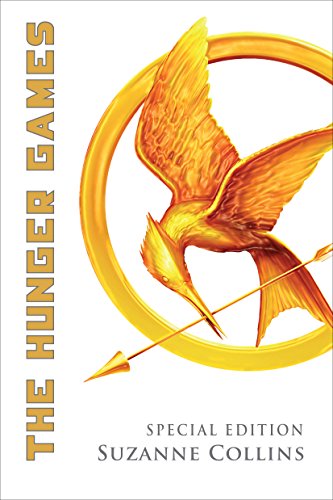
The Hunger Games (The Hunger Games, #1)
Suzanne Collins
4.2
WINNING MEANS FAME AND FORTUNE. LOSING MEANS CERTAIN DEATH. THE HUNGER GAMES HAVE BEGUN. . . .
In the ruins of a place once known as North America lies the nation of Panem, a shining Capitol surrounded by twelve outlying districts. The Capitol is harsh and cruel and keeps the districts in line by forcing them all to send one boy and once girl between the ages of twelve and eighteen to participate in the annual Hunger Games, a fight to the death on live TV.
Sixteen-year-old Katniss Everdeen regards it as a death sentence when she steps forward to take her sister's place in the Games. But Katniss has been close to dead before—and survival, for her, is second nature. Without really meaning to, she becomes a contender. But if she is to win, she will have to start making choices that weight survival against humanity and life against love.
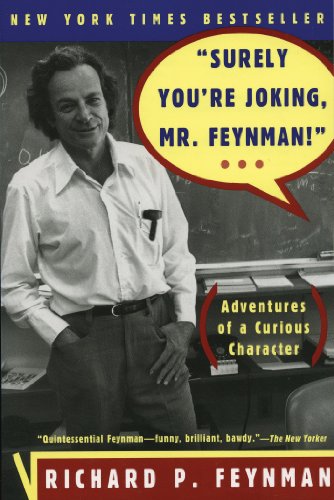
A series of anecdotes, such as are included in Surely You're Joking, Mr Feynman, shouldn't by rights add up to an autobiography, but that's just one of the many pieces of received wisdom that Nobel Prize-winning physicist Richard Feynman (1918-88) cheerfully ignores in this engagingly eccentric book. Fiercely independent (read the chapter entitled "Judging Books by Their Covers"), intolerant of stupidity even when it comes packaged as high intellectualism (check out "Is Electricity Fire?"), unafraid to offend (see "You Just Ask Them?"), Feynman informs by entertaining. It's possible to enjoy Surely You're Joking, Mr Feynman, a bestseller ever since its initial publication in 1985, simply as a bunch of hilarious yarns with the author as know-it-all hero. At some point, however, attentive readers realise that underneath all the merriment simmers a running commentary on what constitutes authentic knowledge: learning by understanding, not by rote; refusal to give up on seemingly insoluble problems, and total disrespect for fancy ideas that have no grounding in the real world. Feynman himself had all these qualities in spades, and they come through with vigour and verve in his no-bull prose. No wonder his students--and readers around the world--adored him. --Wendy Smith
Brin told the Academy of Achievement: "Aside from making really big contributions in his own field, he was pretty broad-minded. I remember he had an excerpt where he was explaining how he really wanted to be a Leonardo da Vinci, an artist and a scientist. I found that pretty inspiring. I think that leads to having a fulfilling life." [source]
Learn about the inner mindset and external state of someone who was absolutely brilliant. [source]
Cover unavailable
33
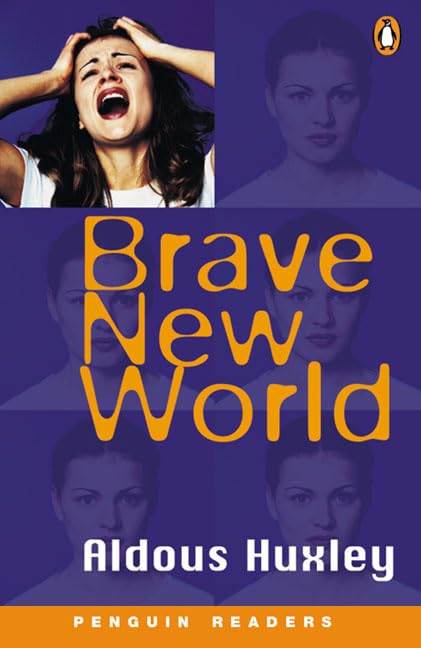
Brave New World
Aldous Huxley
4.2
Now reissued in a gorgeous hardcover edition: "one of the most prophetic dystopian works of the 20th century" (Wall Street Journal) must be read and understood by anyone concerned with preserving the human spirit in the face of our "brave new world." Huxley's masterpiece has become a bestseller once again after the American election.
Aldous Huxley's profoundly important classic of world literature,Brave New World is a searching vision of an unequal, technologically-advanced future where humans are genetically bred, socially indoctrinated, and pharmaceutically anesthetized to passively uphold an authoritarian ruling order whose motto is "Community, Identity, Stability."—all at the cost of our freedom, humanity, and perhaps our souls. "A genius [who] who spent his life decrying the onward march of the Machine" (The New Yorker), Huxley was a man of incomparable talents: equally an artist, a spiritual seeker, and one of history's keenest observers of human nature and civilization. Brave New World, his masterpiece, has enthralled and terrified millions of readers, and retains its urgent relevance to this day as both a warning as we head into tomorrow and as a thought-provoking, satisfying work of literature. Written in the shadow of the rise of fascism during the 1930s, Brave New World likewise speaks to a twenty-first-century world dominated by mass-entertainment, technology, medicine and pharmaceuticals, the arts of persuasion, and the hidden influence of elites.
The most prophetic book of the 20th century. Today many people would easily mistake it for a utopia. [source]
Andra Zaharia
These books and their core ideas have stuck with me the most and continue to guide me when I hit crossroads along the way. [source]
Catherine Mayer
It shows the ways in which technology, our need for certain creature comforts and consumer culture can be used to manipulate us. [source]
Cover unavailable
34
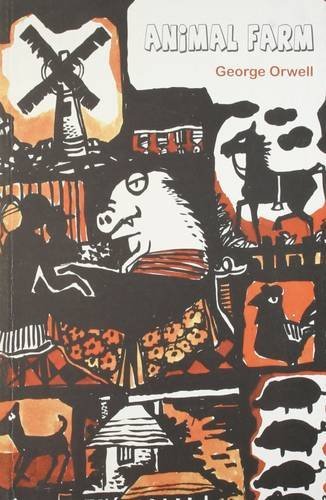
Animal Farm
George Orwell and Christopher Hitchens
4.2
Animal Farm is one of the most famous warnings ever written. Orwell's immortal satire - 'against Stalin' as he wrote to his French translator - can be read on many levels. With its piercing clarity and deceptively simple style it is no surprise that this novel is required reading for schoolchildren and politicians alike. This fable of the steadfast horses Boxer and Clover, the opportunistic pigs Snowball and Napoleon, and the deafening choir of sheep remains an unparalleled masterpiece.
One reviewer wrote 'In a hundred years' time perhaps Animal Farm ... may simply be a fairy story: today it is a fairy story with a good deal of point.' Over sixty years on in the age of spin, it is more relevant than ever.
Rejected by such eminent publishing figures as Victor Gollancz, Jonathan Cape and T.S. Eliot, Animal Farm was published to great acclaim by Martin Secker and Warburg on 17 August 1945 in an edition of 4500 copies. In the centenary year of Martin Secker, Ltd., Harvill Secker is proud to publish this special edition with a brand-new introduction by Christopher Hitchens.
Whitney Cummings recommended this book on the podcast "The Tim Ferriss Show". [source]
Vlad Tenev
When I was in sixth grade I remember being very upset by the ending of this book. [source]
Heather Brooke
I picked Animal Farm because it is an allegory about power and its seductive and corruptive influence on people regardless of their initial good intentions. [source]
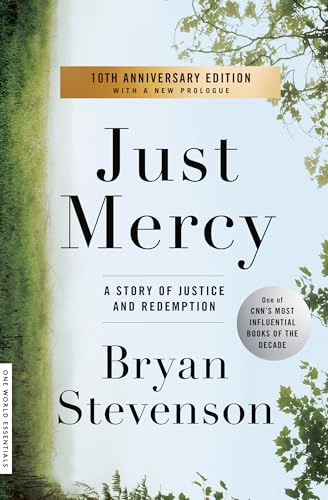
A powerful true story about the potential for mercy to redeem us, and a clarion call to fix our broken system of justice—from one of the most brilliant and influential lawyers of our time
Bryan Stevenson was a young lawyer when he founded the Equal Justice Initiative, a legal practice dedicated to defending those most desperate and in need: the poor, the wrongly condemned, and women and children trapped in the farthest reaches of our criminal justice system. One of his first cases was that of Walter McMillian, a young man who was sentenced to die for a notorious murder he insisted he didn’t commit. The case drew Bryan into a tangle of conspiracy, political machination, and legal brinksmanship—and transformed his understanding of mercy and justice forever.
Just Mercy is at once an unforgettable account of an idealistic, gifted young lawyer’s coming of age, a moving window into the lives of those he has defended, and an inspiring argument for compassion in the pursuit of true justice.
Today is World Book Day, a wonderful opportunity to address this #ChallengeRichard sent in by Mike Gonzalez of New Jersey: Make a list of your top 65 books to read in a lifetime. [source]
Chris Sacca
Proud that @crystale and I could help fund the making of a film about one of our heroes, Bryan Stevenson. If you’ve read the book, then you know how powerful this film is. #JustMercy https://t.co/vNfXK4Imwr [source]
Perhaps one of the most powerful and important stories of our time. [source]
Cover unavailable
36
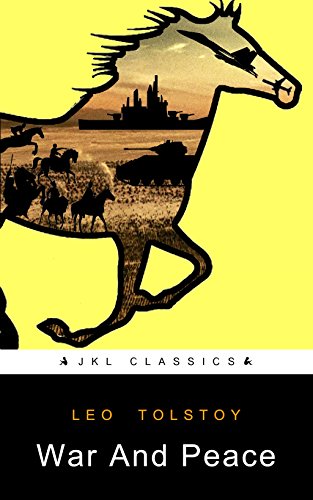
War And Peace
Leo Tolstoi, Louise Maude, Aylmer Maude
4.2
War and Peace broadly focuses on Napoleon's invasion of Russia in 1812 and follows three of the most well-known characters in literature: Pierre Bezukhov, the illegitimate son of a count who is fighting for his inheritance and yearning for spiritual fulfillment; Prince Andrei Bolkonsky, who leaves his family behind to fight in the war against Napoleon; and Natasha Rostov, the beautiful young daughter of a nobleman who intrigues both men.
As Napoleon's army invades, Tolstoy brilliantly follows characters from diverse backgrounds—peasants and nobility, civilians and soldiers—as they struggle with the problems unique to their era, their history, and their culture. And as the novel progresses, these characters transcend their specificity, becoming some of the most moving—and human—figures in world literature. Translated by Louise and Aylmer Maude.
Three-Volume Boxed Set
…
Recommended by Andrei Maylunas, Cécile Fabre, Kate McLoughlin, and 6 others.
One doesn’t have to invent the bicycle, there is one: it’s War and Peace. It’s about how Russia won the Napoleonic wars, and moved into the first row of nations who dealt with European history. It’s set during the peak of Russian culture, the age of Pushkin, who created the modern Russian language. It’s the peak…The only thing I would recommend to modern readers is to skip all those parts – which are completely separate from the other parts of the book – where Tolstoy is philosophising about the role of the individual in history. It’s maybe 15 per cent of the book, in separate chapters, and I would definitely recommend to skip those because they are not interesting today. [source]
Cécile Fabre
One of the key questions that Tolstoy asks in the appendix is the central question of War and Peace: how can we explain the fact that, on orders, millions of people go out and kill one another, when they know that killing another human being is morally wrong? [source]
Kate McLoughlin
Tolstoy didn’t fight in the Napoleonic wars, but he did fight in the Crimean war, so he drew on his experiences in that when he wrote War and Peace. [source]
Cover unavailable
37
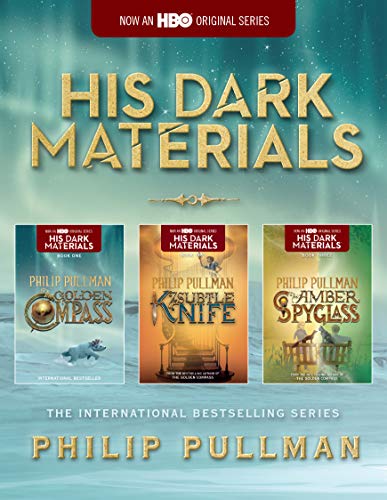
His Dark Materials Trilogy: The Golden Compass / The Subtle Knife / The Amber Spyglass
Philip Pullman
4.2
Box Set Edition of His Dark Materials. Includes: The Golden Compass, The Subtle Knife and The Amber Spyglass.
Other children’s books often have children behaving in terrible ways. Philip himself has acknowledged that his His Dark Materials is, to some extent, a response to the Chronicles of Narnia which has children behaving in all sorts of slavish ways, obeying authority because it is authority, and setting all sorts of poor moral examples. The children in Philip’s books are thoughtful, intelligent, and morally concerned. They are motivated by love and loyalty. And they are very complex. He doesn’t shy away from the moral complexity, the difficulties of choice, the lesser of two evils. That is also something that comes up in his books. There is no perfect solution, you struggle to truth. [source]
This is one of my favourite books. Lyra feels like a natural successor to Matilda. She is a character of action. She isn’t sitting in a corner reading. She is out there and she is having a real effect on her story. She isn’t being buffeted by forces and having to rebel against them, she is out there actively seeking an adventure. I read this when I was eleven and starting secondary school. I remember her really sticking with me not least because she lies so much. [source]
Lewis Smith
His Dark Materials Series by Philip Pullman is my favourite fictional book of all time. I just love this story so much, it's clever and thought provoking, whilst also being accessible and gripping to read. The audiobook version is fantastic too, and narrated by Pullman himself. It's also inspiring because the main characters are just children, but they are so strong and determined. There is always something new to take from it. I love that Lyra is quite a popular girls name now. [source]
Cover unavailable
38
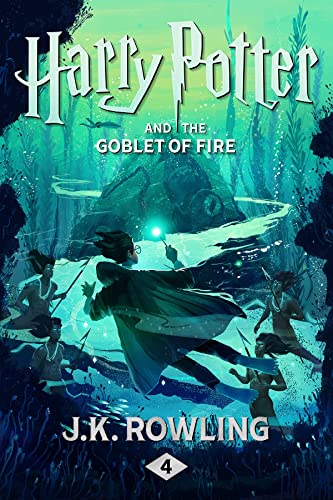
Harry Potter and the Goblet of Fire (Harry Potter, #4)
J.K. Rowling
4.2
It is the summer holidays, and one night Harry Potter wakes up with his scar burning. He has had a strange dream, one that he can't help worrying about...until a timely invitation from Ron Weasley arrives: to nothing less than the Quidditch World Cup!
Soon Harry is reunited with Ron and Hermione and gasping at the thrills of an international Quidditch match. But then something horrible happens which casts a shadow over everybody, and Harry in particular...
…
Recommended by Big Structural Change.
Big Structural Change
@siriusclaw Azkaban ftw! Goblet is the worst of the series. Great book though. [source]
Cover unavailable
39
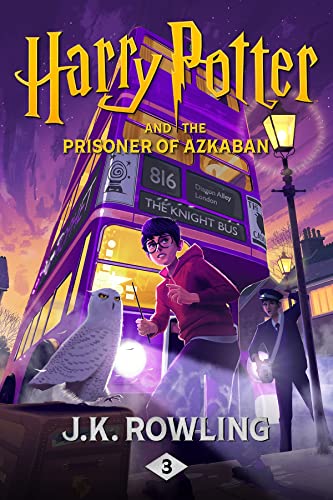
Harry Potter and the Prisoner of Azkaban (Harry Potter, #3)
J.K. Rowling
4.2
For Twelve long years, the dread fortress of Azkaban held an infamous prisoner named Sirius Black. Convicted of killing thirteen people with a single curse, he was said to be the heir apparent to the Dark Lord, Voldemort.
Now he has escaped, leaving only two clues as to where he might be headed: Harry Potter's defeat of You-Know-Who was Black's downfall as well. And the Azkaban guards heard Black muttering in his sleep, "He's at Hogwarts...he's at Hogwarts."
Harry Potter isn't safe, not even within the walls of his magical school, surrounded by his friends. because on top of it all, there may well be a traitor in their midst.
(front flap)
…
Recommended by Maude Garrett.
Maude Garrett
@GeekBomb Best use of time travel in a book or series to date [source]
Cover unavailable
40
The Little Prince Family Storybook: Unabridged Original Text
Antoine de Saint-Exupéry
4.2
Rediscover Antoine de Saint-Exupery's universal masterpiece with original text and magnificent new illustrations created by masters of film animation. This wise and enchanginting fable teaches the secret of what is really important in life.
Recommended by Ryan Holiday, Brandon Stanton, Evan Goldberg, and 1 others.
Equally allegorical, I read The Little Prince for the first time which for some reason I’d never been exposed to before. If you’re in the same boat, read it. It’s short but great. [source]
Brandon Stanton
Brandon Stanton recommended this book on the podcast "The Tim Ferriss Show". [source]
A lucid translation of the well-known Taoist classic by a leading scholar-now in a Shambhala Pocket Library edition. Written more than two thousand years ago, the Tao Teh Ching, or -The Classic of the Way and Its Virtue, - is one of the true classics of the world of spiritual literature. Traditionally attributed to the legendary -Old Master, - Lao Tzu, the Tao Teh Ching teaches that the qualities of the enlightened sage or ideal ruler are identical with those of the perfected individual. Today, Lao Tzu's words are as useful in mastering the arts of leadership in business and politics as they are in developing a sense of balance and harmony in everyday life. To follow the Tao or Way of all things and realize their true nature is to embody humility, spontaneity, and generosity. John C. H. Wu has done a remarkable job of rendering this subtle text into English while retaining the freshness and depth of the original. A jurist and scholar, Dr. Wu was a recognized authority on Taoism and the translator of several Taoist and Zen texts and of Chinese poetry. This book is part of the Shambhala Pocket Library series. The Shambhala Pocket Library is a collection of short, portable teachings from notable figures across religious traditions and classic texts. The covers in this series are rendered by Colorado artist Robert Spellman. The books in this collection distill the wisdom and heart of the work Shambhala Publications has published over 50 years into a compact format that is collectible, reader-friendly, and applicable to everyday life.
Q: What are the books that had a major influence on you? Or simply the ones you like the most. : Tao te Ching, score takes care of itself, between the world and me, the four agreements, the old man and the sea...I love reading! [source]
According to a Yibada interview with Chen Wei, who wrote Ma’s 2014 authorized biography, the Alibaba founder and executive chairman always carries the Tao Te Ching, the foundational text of Taoist philosophy, religion and ethics composed by Lao Tzu in the sixth century B.C. [source]
In the philosophy side, I’ve been rereading the Tao Te Ching. [source]
Cover unavailable
42
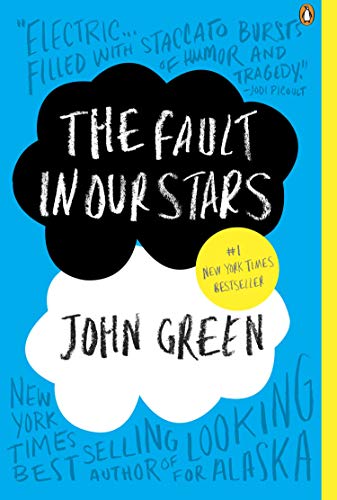
The Fault in Our Stars
John Green
4.2
Despite the tumor-shrinking medical miracle that has bought her a few years, Hazel has never been anything but terminal, her final chapter inscribed upon diagnosis. But when a gorgeous plot twist named Augustus Waters suddenly appears at Cancer Kid Support Group, Hazel's story is about to be completely rewritten.
Insightful, bold, irreverent, and raw, The Fault in Our Stars is award-winning author John Green's most ambitious and heartbreaking work yet, brilliantly exploring the funny, thrilling, and tragic business of being alive and in love.
@johngreen You should not be. It is a great book. Was recently in Amsterdam and walked some of the scenes with your huge fan, my youngest daughter. Loved hearing from you and meeting you at Kenyon. [source]
Cover unavailable
43
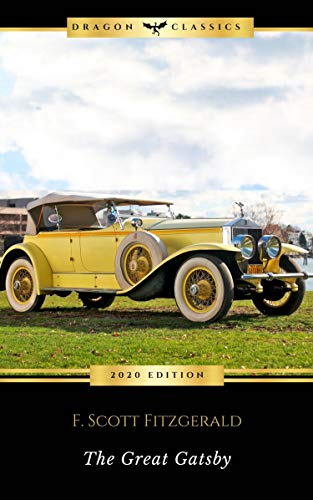
The Great Gatsby
F. Scott Fitzgerald
4.2
A young man, newly rich, tries to recapture the past and win back his former love, despite the fact that she has married.
When he got to high school, the president said, his tastes changed and he learned to enjoy classics like “Of Mice and Men” and “The Great Gatsby.” [source]
Melinda and I really like this book. When we were first dating, she had a green light that she would turn on when her office was empty and it made sense for me to come over. [source]
Marvin Liao
Partner/500 Startups
For Non-Business, I'd have to say Dune (Herbert), Emergency (Strauss), The Great Gatsby (Fitzgerald) or Flint (L'Amour). I re-read these books every year because they are just so well written & great stories that I get new perspective & details every time I read them. [source]
Cover unavailable
44
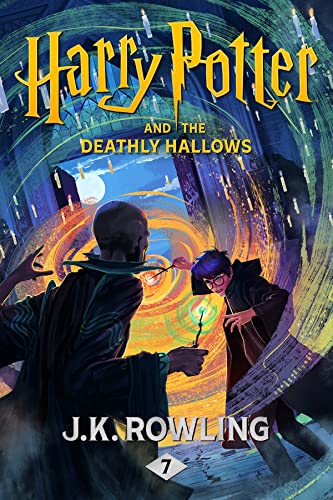
Harry Potter and the Deathly Hallows (Harry Potter, #7)
J. K. Rowling, Mary GrandPré
4.2
Harry Potter is leaving Privet Drive for the last time. But as he climbs into the sidecar of Hagrid’s motorbike and they take to the skies, he knows Lord Voldemort and the Death Eaters will not be far behind.
The protective charm that has kept him safe until now is broken. But the Dark Lord is breathing fear into everything he loves. And he knows he can’t keep hiding.
To stop Voldemort, Harry knows he must find the remaining Horcruxes and destroy them.
He will have to face his enemy in one final battle. --jkrowling.com
…
Cover unavailable
45
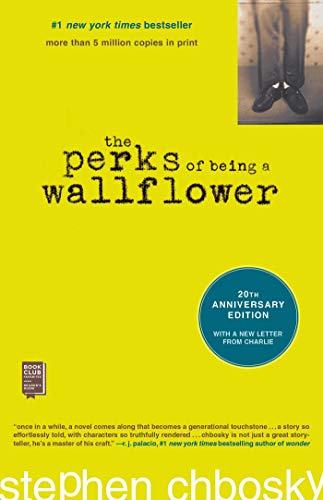
The Perks of Being a Wallflower
Stephen Chbosky
4.2
Read the cult-favorite coming of age story that takes a sometimes heartbreaking, often hysterical, and always honest look at high school in all its glory. Now a major motion picture starring Logan Lerman and Emma Watson, The Perks of Being a Wallflower is a funny, touching, and haunting modern classic.
The critically acclaimed debut novel from Stephen Chbosky, Perks follows observant “wallflower” Charlie as he charts a course through the strange world between adolescence and adulthood. First dates, family drama, and new friends. Sex, drugs, and The Rocky Horror Picture Show. Devastating loss, young love, and life on the fringes. Caught between trying to live his life and trying to run from it, Charlie must learn to navigate those wild and poignant roller-coaster days known as growing up.
A #1 New York Times best seller for more than a year, an American Library Association Best Book for Young Adults (2000) and Best Book for Reluctant Readers (2000), and with millions of copies in print, this novel for teen readers (or “wallflowers” of more-advanced age) will make you laugh, cry, and perhaps feel nostalgic for those moments when you, too, tiptoed onto the dance floor of life.
…
Recommended by Emma Watson, Jamie Grayson, Rae Earl, and 1 others.
Jamie Grayson
Holy shit there’s no way this book is that old because that really ages me but I COMPLETELY agree. This book is a masterpiece and a must-read. Lessons about being human are in there and those are important right now. https://t.co/fF1spEFrUH [source]
Rae Earl
It is a tremendously powerful study of PTSD, a mental health issue that isn’t talked about enough [source]
Richard Speight Jr.
A pal for 30 years, @StephenChbosky ‘s first book #ThePerksofBeingaWallflower had a MASSIVE impact on me & countless others. Then came his great movies. Now..THE NEXT BOOK! Be like me & buy it THE DAY it comes out. (Then harass him until he agrees to put me in the movie! 🎥 🤠) https://t.co/02bMKPgF9A [source]
Cover unavailable
46
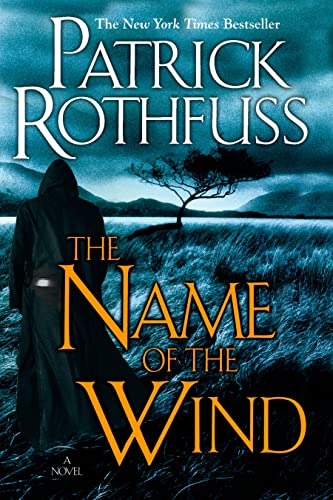
The Name of the Wind (The Kingkiller Chronicle, #1)
Patrick Rothfuss
4.2
Told in Kvothe's own voice, this is the tale of the magically gifted young man who grows to be the most notorious wizard his world has ever seen.
The intimate narrative of his childhood in a troupe of traveling players, his years spent as a near-feral orphan in a crime-ridden city, his daringly brazen yet successful bid to enter a legendary school of magic, and his life as a fugitive after the murder of a king form a gripping coming-of-age story unrivaled in recent literature.
A high-action story written with a poet's hand, The Name of the Wind is a masterpiece that will transport readers into the body and mind of a wizard.
…
Recommended by Aubrey Marcus, Chris Albon, and Matt Schlicht.
Chris Albon
@WaltHickey I don’t really read fiction and randomly found that book, amazing. [source]
Matt Schlicht
@teej_m Read it. Love it. So amazing. Waiting for the last book and fear it may never come. [source]
Cover unavailable
47
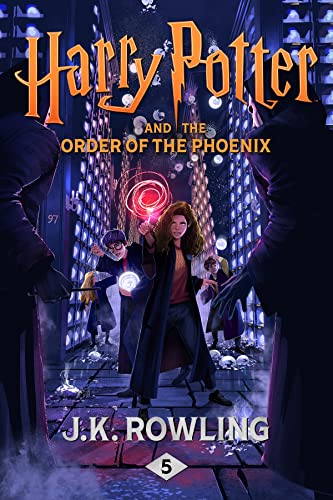
Harry Potter and the Order of the Phoenix (Harry Potter, #5)
J. K. Rowling
4.2
Dumbledore lowered his hands and surveyed Harry through his half-moon glasses. 'It is time,' he said, 'for me to tell you what I should have told you five years ago, Harry. Please sit down. I am going to tell you everything.'
Harry Potter is due to start his fifth year at Hogwarts School of Witchcraft and Wizadry. He is desperate to get back to school and find out why his friends Ron and Hermione have been so secretive all summer. However, what Harry is about to discover in his new year at Hogwarts will turn his world upside down... (back cover)
…
Recommended by Shami Chakrabarti.
Shami Chakrabarti
It’s all about the War on Terror as far as I’m concerned. [source]
Cover unavailable
48
Enlightenment Now: The Case for Reason, Science, Humanism, and Progress
If you think the world is coming to an end, think again: people are living longer, healthier, freer, and happier lives, and while our problems are formidable, the solutions lie in the Enlightenment ideal of using reason and science.
Is the world really falling apart? Is the ideal of progress obsolete? In this elegant assessment of the human condition in the third millennium, cognitive scientist and public intellectual Steven Pinker urges us to step back from the gory headlines and prophecies of doom, which play to our psychological biases. Instead, follow the data: In seventy-five jaw-dropping graphs, Pinker shows that life, health, prosperity, safety, peace, knowledge, and happiness are on the rise, not just in the West, but worldwide. This progress is not the result of some cosmic force. It is a gift of the Enlightenment: the conviction that reason and science can enhance human flourishing.
Far from being a naïve hope, the Enlightenment, we now know, has worked. But more than ever, it needs a vigorous defense. The Enlightenment project swims against currents of human nature–tribalism, authoritarianism, demonization, magical thinking–which demagogues are all too willing to exploit. Many commentators, committed to political, religious, or romantic ideologies, fight a rearguard action against it. The result is a corrosive fatalism and a willingness to wreck the precious institutions of liberal democracy and global cooperation.
With intellectual depth and literary flair, Enlightenment Now makes the case for reason, science, and humanism: the ideals we need to confront our problems and continue our progress.
Pinker is at his best when he analyzes historic trends and uses data to put the past into context. I was already familiar with a lot of the information he shares—especially about health and energy—but he understands each subject so deeply that he’s able to articulate his case in a way that feels fresh and new. I love how he’s willing to dive deep into primary data sources and pull out unexpected signs of progress. I tend to point to things like dramatic reductions in poverty and childhood deaths, because I think they’re such a good measure of how we’re doing as a society. Pinker covers those areas, but he also looks at more obscure topics. Here are five of my favorite facts from the book that show how the world is improving: 1. You’re 37 times less likely to be killed by a bolt of lightning than you were at the turn of the century—and that’s not because there are fewer thunderstorms today. It’s because we have better weather prediction capabilities, improved safety education, and more people living in cities. 2. Time spent doing laundry fell from 11.5 hours a week in 1920 to an hour and a half in 2014. This might sound trivial in the grand scheme of progress. But the rise of the washing machine has improved quality of life by freeing up time for people—mostly women—to enjoy other pursuits. That time represents nearly half a day every week that could be used for everything from binge-watching Ozark or reading a book to starting a new business. 3. You’re way less likely to die on the job. Every year, 5,000 people die from occupational accidents in the U.S. But in 1929—when our population was less than two-fifths the size it is today—20,000 people died on the job. People back then viewed deadly workplace accidents as part of the cost of doing business. Today, we know better, and we’ve engineered ways to build things without putting nearly as many lives at risk. 4. The global average IQ score is rising by about 3 IQ points every decade. Kids’ brains are developing more fully thanks to improved nutrition and a cleaner environment. Pinker also credits more analytical thinking in and out of the classroom. Think about how many symbols you interpret every time you check your phone’s home screen or look at a subway map. Our world today encourages abstract thought from a young age, and it’s making us smarter. 5. War is illegal. This idea seems obvious. But before the creation of the United Nations in 1945, no institution had the power to stop countries from going to war with each other. Although there have been some exceptions, the threat of international sanctions and intervention has proven to be an effective deterrent to wars between nations. [source]
There is of course much to argue about, but that’s what makes this book so interesting.
Cover unavailable
49
The Grapes of Wrath
John Steinbeck, Robert DeMott
4.2
The Pulitzer Prize-winning epic of the Great Depression, a book that galvanized—and sometimes outraged—millions of readers.
First published in 1939, Steinbeck’s Pulitzer Prize-winning epic of the Great Depression chronicles the Dust Bowl migration of the 1930s and tells the story of one Oklahoma farm family, the Joads—driven from their homestead and forced to travel west to the promised land of California. Out of their trials and their repeated collisions against the hard realities of an America divided into Haves and Have-Nots evolves a drama that is intensely human yet majestic in its scale and moral vision, elemental yet plainspoken, tragic but ultimately stirring in its human dignity. A portrait of the conflict between the powerful and the powerless, of one man’s fierce reaction to injustice, and of one woman’s stoical strength, the novel captures the horrors of the Great Depression and probes into the very nature of equality and justice in America. At once a naturalistic epic, captivity narrative, road novel, and transcendental gospel, Steinbeck’s powerful landmark novel is perhaps the most American of American Classics.
…
Recommended by Antonio Villaraigosa, Elizabeth Tsurkov, John Kerry, and 2 others.
Antonio Villaraigosa
It has been over 70 years since The Grapes of Wrath was published, yet the suffering that Steinbeck describes still hits close to home with families across our country still struggling to find work and put food on the table. It reminds us progressives that the day-to-day struggles of Americans should always remain close to our hearts. [source]
While there is a story that takes place between characters, the hardship and unfairness is a central element of the book. It shows how fiction can create progressive change as well. [source]
Cover unavailable
50
The Lion, the Witch and the Wardrobe (Chronicles of Narnia, #1)
C. S. Lewis, Kenneth Branagh, et al
4.2
Narnia...the land beyond the wardrobe door, a secret place frozen in eternal winter, a magical country waiting to be set free.
Lucy is the first to find the secret of the wardrobe in the professor's mysterious old house. At first her brothers and sister don't believe her when she tells of her visit to the land of Narnia. But soon Edmund, then Peter and Susan step through the wardrobe themselves. In Narnia they find a country buried under the evil enchantment of the White Witch. When they meet the Lion Aslan, they realize they've been called to a great adventure and bravely join the battle to free Narnia from the Witch's sinister spell.
…
Recommended by Chris Anderson, Chris Anderson, Chris Anderson, and 3 others.
Chris Anderson
As a child, they exploded my imagination. [source]
Chris Anderson
As a child, they exploded my imagination. [source]
Chris Anderson
As a child, they exploded my imagination. [source]
The harrowing tale of British explorer Ernest Shackleton's 1914 attempt to reach the South Pole, one of the greatest adventure stories of the modern age.
In August 1914, polar explorer Ernest Shackleton boarded the Endurance became locked in an island of ice. Thus began the legendary ordeal of Shackleton and his crew of twenty-seven men. When their ship was finally crushed between two ice floes, they attempted a near-impossible journey over 850 miles of the South Atlantic's heaviest seas to the closest outpost of civilization.
In Endurance, the definitive account of Ernest Shackleton's fateful trip, Alfred Lansing brilliantly narrates the harrowing and miraculous voyage that has defined heroism for the modern age.
50 plus years old, this is a story that more than stands the test of time. Sir Ernest Shackleton makes his daring attempt to cross Antarctic continent but his crew and boat are trapped in the ice flows. What follows are 600 days of harrowing survival, first from the elements, then from hunger, then from the sea as he makes a daring attempt in a small lifeboat to reach land 650 miles away, then again as he struggles over land and mountains to bring relief to his men. And when he finally arrives with it, Shackleton simply boards them on the boat and returns home as if nothing had happened. He was an immensely brave man in the midst of terrible adversity and we see this so clearly in a book based on the remarkable diaries of his men. He never quit, never seemed to despair. This book (and his life) were living proof of his family motto: “Fortitudine vincimus” (By endurance we conquer). [source]
Truly inspiring story of determination, grit and beating all odds. [source]
Cover unavailable
52
Harry Potter and the Half-Blood Prince (Harry Potter, #6)
J.K. Rowling
4.2
The war against Voldemort is not going well; even Muggle governments are noticing. Ron scans the obituary pages of the Daily Prophet, looking for familiar names. Dumbledore is absent from Hogwarts for long stretches of time, and the Order of the Phoenix has already suffered losses.
And yet . . .
As in all wars, life goes on. The Weasley twins expand their business. Sixth-year students learn to Apparate - and lose a few eyebrows in the process. Teenagers flirt and fight and fall in love. Classes are never straightforward, through Harry receives some extraordinary help from the mysterious Half-Blood Prince.
So it's the home front that takes center stage in the multilayered sixth installment of the story of Harry Potter. Here at Hogwarts, Harry will search for the full and complete story of the boy who became Lord Voldemort - and thereby find what may be his only vulnerability.
…
Cover unavailable
53
Little Women
Louisa May Alcott
4.2
A beautiful unabridged 150th Anniversary Edition with 200 original illustrations and a Foreword by Alice L. George entitled "Why Little Women Endures 150 Years Later."
Little Women was originally published in two volumes in 1868 and 1869. This edition contains both volumes. It follows the lives of the four March sisters--Meg, Jo, Beth and Amy-- from childhood to womanhood and is loosely based on the author and her three sisters. Although Little Women was a novel for girls, it differed notably from the current writings for children, especially girls. The book was an immediate commercial and critical success and has since been adapted for cinema, TV, Broadway and even the opera.
…
Recommended by Amy Chua, Anne Thériault, Jay Kleinberg, and 1 others.
Amy Chua
Marmee is a character that really resonates for me. She’s obviously not Chinese, but she believes that integrity and hard work are the most important things in life. She holds her daughters to very high standards. She doesn’t sugarcoat much. She also reveals to her rebellious daughter Jo, the star of the book and a character loosely modeled on Louisa May Alcott herself, that she had a bad temper too when she was younger. That’s exactly what I did with my own daughter Louisa…….The kinds of mistakes that Marmee allows her daughters to make are very similar to the kinds of mistakes that I allow my daughters to make. [source]
Anne Thériault
@mmarmoset I love that book so much, and then I got to see Patty Smith perform the year I read it, and she made a Little Women reference during the show, and my heart overflowed [source]
Jay Kleinberg
Nancy Drew is another series which follows in those footsteps. The book is all led by her. I think if one looks in the magazine literature it would be hard to find a similar character at that time. These were stories initially published in a magazine and then bound together as a book. [source]
One measure, perhaps, of a book's worth, is its intergenerational pliancy: do new readers acquire it and interpret it afresh down through the ages? The Meditations of Marcus Aurelius, translated and introduced by Gregory Hays, by that standard, is very worthwhile, indeed. Hays suggests that its most recent incarnation--as a self-help book--is not only valid, but may be close to the author's intent. The book, which Hays calls, fondly, a "haphazard set of notes," is indicative of the role of philosophy among the ancients in that it is "expected to provide a 'design for living.'" And it does, both aphoristically ("Think of yourself as dead. You have lived your life. Now take what's left and live it properly.") and rhetorically ("What is it in ourselves that we should prize?"). Whether these, and other entries ("Enough of this wretched, whining monkey life.") sound life-changing or like entries in a teenager's diary is up to the individual reader, as it should be. Hays's introduction, which sketches the life of Marcus Aurelius (emperor of Rome A.D. 161-180) as well as the basic tenets of stoicism, is accessible and jaunty. --H. O'Billovich
…
Recommended by Arianna Huffington, Naval Ravikant, Chip Conley, and 12 others.
Arianna Huffington
Founder/The Huffington Post
I find this book so inspirational and instructive, it lives on my nightstand. [source]
Chip Conley
I have given this book away to a number of people. [source]
Marvin Liao
Partner/500 Startups
My list would be (besides the ones I mentioned in answer to the previous question) both business & Fiction/Sci-Fi and ones I personally found helpful to myself. The business books explain just exactly how business, work & investing are in reality & how to think properly & differentiate yourself. On the non-business side, a mix of History & classic fiction to understand people, philosophy to make sense of life and Science fiction to picture what the future could be like (not always utopian). [source]
Cover unavailable
55
The Complete Sherlock Holmes (Collection of all his adventures, 9 Volumes in one Book)
Arthur Conan Doyle
4.1
All 4 Novels & 56 Short Stories of the Sherlock Holmes Canon (including "The Case-Book of Sherlock Holmes") with More Than 480 Illustrations by Sidney Paget & Others
The Complete Sherlock Holmes (Illustrated) from Top Five Classics is the only fully illustrated, single-volume edition of the entire Sherlock Holmes Canon available, and features:
• All 4 novels and 56 short stories, including Arthur Conan Doyle's final 1927 collection, "The Case-Book of Sherlock Holmes" • More than 480 captioned illustrations, including all 357 Holmes illustrations by Sidney Paget • An alphabetical index of titles & timeline of cases • A helpful introduction, author bio, and bibliography
Presenting all of the stories in the order they were first published with the illustrations that accompanied the original Strand Magazine monthly editions, The Complete Sherlock Holmes (Illustrated) brings the Sherlock Holmes adventures to you the way they were meant to be read.
…
Recommended by Andrew Lees, Douglas Starr, and Michael Dirda.
Andrew Lees
It is often claimed that Holmes is the epitome of the rational, cold-blooded scientist but, in fact, most of his crimes are solved by backing his hunches and a fair amount of guesswork. [source]
Douglas Starr
In a world beset by uncertainty and chaos and fear, it’s comforting to imagine there is someone out there who, with keen intelligence and a scientific method, can put things back in order, and make the world safe again. I think that’s part of Holmes’s enduring appeal. [source]
It really has a superbly eerie atmosphere. Most Sherlockians, if they had to pick just one story to represent the canon, would choose this one. [source]
Cover unavailable
56
Watchmen
Alan Moore, Dave Gibbons
4.1
This Hugo Award-winning graphic novel chronicles the fall from grace of a group of super-heroes plagued by all-too-human failings. Along the way, the concept of the super-hero is dissected as the heroes are stalked by an unknown assassin.
One of the most influential graphic novels of all time and a perennial bestseller, WATCHMEN has been studied on college campuses across the nation and is considered a gateway title, leading readers to other graphic novels such as V FOR VENDETTA, BATMAN: THE DARK KNIGHT RETURNS and THE SANDMAN series.
Watchmen was originally released in 12 parts, one a month, over a year from 1985 to 1986. There was a film made of it in 2009. And now a controversial prequel series is coming out, done by new writers and artists, which goes back to earlier in the characters’ stories and which has been disavowed by Alan Moore, who created the original. [source]
Cover unavailable
57
Gates of Fire: An Epic Novel of the Battle of Thermopylae
Steven Pressfield
4.1
In 480 B.C., two million Persian invaders come to the mountain pass of Thermopylae in eastern Greece, where they are met by 300 of Sparta's finest warriors. The Greek loyalists battle for six days in a prelude to their ultimate victory.
Recommended by Ron Conway, Chris Fussell, Xi-Wei Yeo, and 1 others.
Ron Conway
The story of the battle of 300 Spartan soldiers against the Persian army. [source]
Chris Fussell
A classic in the special operations community. [source]
Xi-Wei Yeo
I wasn’t the most confident of youths, I think. I was never bold enough to be a trend-setter, but always too concerned about what others thought of me to be comfortable in my own skin. Because of this I was lost, drifting from path to path. Then I read Gates of Fire, by Steven Pressfield, which was a historical fiction about the Battle of Thermopylae. I know it sounds a little silly now, but reading about the Spartan code changed me. It wasn’t about how brave you looked or seemed, but truly about knowing yourself and being proud of who you are. I learned to believe in myself more since then, and seize opportunities that I believed in, and not just what others wanted for me. [source]
Cover unavailable
58
One Hundred Years of Solitude
Gabriel Garcia Marquez
4.1
The brilliant, bestselling, landmark novel that tells the story of the Buendia family, and chronicles the irreconcilable conflict between the desire for solitude and the need for love—in rich, imaginative prose that has come to define an entire genre known as "magical realism."
When asked what books he recommended to his 18-year-old daughter Malia, Obama gave the Times a list that included The Naked and the Dead and One Hundred Years of Solitude. “I think some of them were sort of the usual suspects … I think she hadn’t read yet. Then there were some books that are not on everybody’s reading list these days, but I remembered as being interesting.” Here’s what he included: The Naked and the Dead, Norman Mailer One Hundred Years of Solitude, Gabriel García Márquez The Golden Notebook, Doris Lessing The Woman Warrior, Maxine Hong Kingston [source]
Brace yourselves—One Hundred Years of Solitude by Gabriel García Márquez is as steamy, dense and sensual as the jungle that surrounds the surreal town of Macondo! [source]
Today is World Book Day, a wonderful opportunity to address this #ChallengeRichard sent in by Mike Gonzalez of New Jersey: Make a list of your top 65 books to read in a lifetime. [source]
Cover unavailable
59
The Fountainhead
Ayn Rand
4.1
The revolutionary literary vision that sowed the seeds of Objectivism, Ayn Rand's groundbreaking philosophy, and brought her immediate worldwide acclaim.
This modern classic is the story of intransigent young architect Howard Roark, whose integrity was as unyielding as granite...of Dominique Francon, the exquisitely beautiful woman who loved Roark passionately, but married his worst enemy...and of the fanatic denunciation unleashed by an enraged society against a great creator. As fresh today as it was then, Rand's provocative novel presents one of the most challenging ideas in all of fiction--that man's ego is the fountainhead of human progress...
"A writer of great power. She has a subtle and ingenious mind and the capacity of writing brilliantly, beautifully, bitterly...This is the only novel of ideas written by an American woman that I can recall."--The New York Times
A few months ago, I was drinking a Noah’s Mill whiskey (cute) with my good buddy Brian Balfour and talking about life... During the conversation, we got on the topic of books that changed our lives. I want to share them with you. I judge a book's success if a year later I'm still using at least 1 thing from the book. [source]
Ashley Hathaway
Sometimes I want to nerd out and pick a heavy non-fiction book. I was reading The Fountainhead earlier this year which was pretty beefy. Got that checked off the list. [source]
In Everyman’s Library for the first time—one of the most moving and eloquent accounts of the Holocaust, read by tens of millions of people around the world since its publication in 1947. The Diary of a Young Girl is the record of two years in the life of a remarkable Jewish girl whose triumphant humanity in the face of unfathomable deprivation and fear has made the book one of the most enduring documents of our time.
The Everyman’s hardcover edition reprints the Definitive Edition authorized by the Frank estate, plus a new introduction, a bibliography, and a chronology of Anne Frank’s life and times.
…
Recommended by Alice Little, Catalina Penciu, and Tim Fargo.
Alice Little
I remember being a fourth grader and trying to check out this book and being told it was grossly inappropriate and going so far as to have my parents take it to the school board and petition for me to be allowed to read this book. [source]
Catalina Penciu
I'm a huge fan of personal stories and biographies like this one. [source]
Tim Fargo
@Quixoticnance Good point, Nancy. The museum is a powerful experience, esp. when you've read her book. [source]
Cover unavailable
61
The Better Angels of Our Nature: Why Violence Has Declined
Steven Pinker
4.1
Believe it or not, today we may be living in the most peaceful moment in our species' existence. In his gripping and controversial new work, New York Times bestselling author Steven Pinker shows that despite the ceaseless news about war, crime, and terrorism, violence has actually been in decline over long stretches of history. Exploding myths about humankind's inherent violence and the curse of modernity, this ambitious book continues Pinker's exploration of the essence of human nature, mixing psychology and history to provide a remarkable picture of an increasingly enlightened world.
Yong succeeds in his intention to give us a 'grander view of life' and does so without falling prey to grand, unifying explanations that are far too simplistic. He presents our inner ecosystems in all their wondrous messiness and complexity. And he offers realistic optimism that our growing knowledge of the human microbiome will lead to great new opportunities for enhancing our health. [source]
My second book of the year is The Better Angels of Our Nature by Steven Pinker. It's a timely book about how and why violence has steadily decreased throughout our history, and how we can continue this trend. Recent events might make it seem like violence and terrorism are more common than ever, so it's worth understanding that all violence -- even terrorism -- is actually decreasing over time. If we understand how we are achieving this, we can continue our path towards peace. A few people I trust have told me this is the best book they've ever read. It's a long book, so I plan on taking a month to read it rather than two weeks. I'll add a third book in two weeks that will be a shorter read to complement this. If you want to follow along with the books I'm reading and participate in conversations with the authors, you can like the page A Year of Books. [source]
Cover unavailable
62
The Brothers Karamazov
Fyodor Dostoevsky
4.1
The Brothers Karamasov is a murder mystery, a courtroom drama, and an exploration of erotic rivalry in a series of triangular love affairs involving the “wicked and sentimental” Fyodor Pavlovich Karamazov and his three sons―the impulsive and sensual Dmitri; the coldly rational Ivan; and the healthy, red-cheeked young novice Alyosha. Through the gripping events of their story, Dostoevsky portrays the whole of Russian life, is social and spiritual striving, in what was both the golden age and a tragic turning point in Russian culture.
This award-winning translation by Richard Pevear and Larissa Volokhonsky remains true to the verbal inventiveness of Dostoevsky’s prose, preserving the multiple voices, the humor, and the surprising modernity of the original. It is an achievement worthy of Dostoevsky’s last and greatest novel.
…
Recommended by Randall Stephenson, Adam Townsend, Christian B Miller, and 3 others.
@FinchmanWill @jposhaughnessy @Cernovich @mcclay_roman My son's favorite book of all time [source]
Christian B Miller
A host of deep philosophical questions are at work in the book: about, say, the existence of God, the nature of morality without God, and the role of free will. [source]
Cover unavailable
63
The Bell Jar
Sylvia Plath
4.1
Sylvia Plath's shocking, realistic, and intensely emotional novel about a woman falling into the grip of insanity.
Esther Greenwood is brilliant, beautiful, enormously talented, and successful, but slowly going under—maybe for the last time. In her acclaimed and enduring masterwork, Sylvia Plath brilliantly draws the reader into Esther's breakdown with such intensity that her insanity becomes palpably real, even rational—as accessible an experience as going to the movies. A deep penetration into the darkest and most harrowing corners of the human psyche, The Bell Jar is an extraordinary accomplishment and a haunting American classic.
…
Recommended by Bryony Gordon, The CEO Library Community (through anonymous form), and Tim Kendall.
As a teenage girl, you have to read The Bell Jar. It’s a rite of passage. [source]
The CEO Library Community (through anonymous form)
One of the best 3 books I've read in 2019 [source]
Tim Kendall
Despite its subject matter, The Bell Jar is often a very funny novel. Perhaps we miss it because the pall of Plath’s biography descends across the whole work and reputation. But The Bell Jar is viciously funny. There are people still alive today who won’t talk about it because they were so badly hurt by Plath’s portrayal of them. [source]
Cover unavailable
64
The Picture of Dorian Gray
Oscar Wilde
4.1
On its first publication The Picture of Dorian Gray was regarded as dangerously modern in its depiction of fin-de-siècle decadence. In this updated version of the Faust story, the tempter is Lord Henry Wotton, who lives selfishly for amoral pleasure; Dorian's good angel is the portrait painter Basil Hallward, whom Dorian murders. The book highlights the tension between the polished surface of high society and the life of secret vice. Although sin is punished in the end the book has a flavour of the elegantly perverse.
With an Afterword by Peter Harness.
Designed to appeal to the booklover, the Macmillan Collector's Library is a series of beautifully bound gift editions of much loved classic titles. Bound in real cloth, printed on high quality paper, and featuring ribbon markers and gilt edges, Macmillan Collector's Library are books to love and treasure.
…
Recommended by Andra Zaharia, Eric Berkowitz, Marc Montagne, and 1 others.
Andra Zaharia
A copy from 1903 of this book is my most prized possession. [source]
Eric Berkowitz
The Picture of Dorian Gray is now a part of the canon that no one would admit to not having read. Most of us have read it and delighted in its witticisms. It’s hard to imagine, but when Dorian Gray was first published, the book was not well received at all. It was totally panned. It was held against him as being an example of an effete character. It was being serialised by Lippincott’s Magazine, and the serialisation of the novel stopped when it became too inflammatory. [source]
Marc Montagne
My favorite fiction book is the The Picture of Dorian Gray by Oscar Wilde. I'm a huge Oscar Wilde fan, he has one of the brightest minds and the Picture is a masterpiece and his unique novel. I consider that you should only read books that you would consider reading again at some point while still enjoying the same pleasure. The Picture is definitely one of those. [source]
Cosmos has 13 heavily illustrated chapters, corresponding to the 13 episodes of the Cosmos television series. In the book, Sagan explores 15 billion years of cosmic evolution and the development of science and civilization. Cosmos traces the origins of knowledge and the scientific method, mixing science and philosophy, and speculates to the future of science. The book also discusses the underlying premises of science by providing biographical anecdotes about many prominent scientists throughout history, placing their contributions into the broader context of the development of modern science.
The book covers a broad range of topics, comprising Sagan's reflections on anthropological, cosmological, biological, historical, and astronomical matters from antiquity to contemporary times. Sagan reiterates his position on extraterrestrial life—that the magnitude of the universe permits the existence of thousands of alien civilizations, but no credible evidence exists to demonstrate that such life has ever visited earth.
…
Recommended by Richard Branson, Ante Shoda, Anurag Ramdasan, and 1 others.
Today is World Book Day, a wonderful opportunity to address this #ChallengeRichard sent in by Mike Gonzalez of New Jersey: Make a list of your top 65 books to read in a lifetime. [source]
Ante Shoda
It explains 14 billion years of the evolution of the universe, a sort of engineering experiment on the largest possible scale. It spans all scales of space and time, describing everything from the largest scales of the universe to the smallest scales of molecules and atoms. It’s a good book for putting everything in perspective. [source]
Anurag Ramdasan
This book helped draft a great perspective on the world and the universe at large and made me a fan of the Cosmos!
Cover unavailable
66
Anna Karenina
Leo Tolstoy
4.1
Tolstoy's epic novel of love, destiny and self-destruction, in a gorgeous new clothbound edition from Penguin Classics. Anna Karenina seems to have everything - beauty, wealth, popularity and an adored son. But she feels that her life is empty until the moment she encounters the impetuous officer Count Vronsky. Their subsequent affair scandalizes society and family alike and soon brings jealously and bitterness in its wake. Contrasting with this tale of love and self-destruction is the vividly observed story of Levin, a man striving to find contentment and a meaning to his life - and also a self-portrait of Tolstoy himself. This acclaimed modern translation by Richard Pevear and Larissa Volokhonsky won the PEN/ Book of the Month Club Translation Prize in 2001. Their translation is accompanied in this edition by an introduction by Richard Pevear and a preface by John Bayley. "The new and brilliantly witty translation by Richard Pevear and Larissa Volokhonsky is a must". (Lisa Appignanesi, Independent, Books of the Year). "Pevear and Volokhonsky are at once scrupulous translators and vivid stylists of English, and their superb rendering allows us, as perhaps never before, to grasp the palpability of Tolstoy's "characters, acts, situations"". (James Wood, New Yorker).
…
Recommended by Chelsea Handler, Marvin Liao, Audrey Russo, and 5 others.
I don't know if I have to expound on why I love this book, but everyone should read this author, and this was the first one of his works I read. So, it's like a first boyfriend. Or my first Cabbage Patch Kid. [source]
Marvin Liao
Partner/500 Startups
My list would be (besides the ones I mentioned in answer to the previous question) both business & Fiction/Sci-Fi and ones I personally found helpful to myself. The business books explain just exactly how business, work & investing are in reality & how to think properly & differentiate yourself. On the non-business side, a mix of History & classic fiction to understand people, philosophy to make sense of life and Science fiction to picture what the future could be like (not always utopian). [source]
Audrey Russo
Question: What books would you recommend to young people interested in your career path? Answer: Anything by Peter Senge. The Hard Thing About Hard Things – Ben Horowitz Once you are Lucky, Twice you are good – Sara Lacey Revolutionary Wealth – Alvin Toffler Black Swan – Taleb Reset: My Fight for Inclusion and Lasting Change, by Ellen Pao. Creative Class – Richard Florida Creativity Inc. by Ed Catmull & Amy Wallace Liar’s Poker by Michael Lewis American Government 101: From the Continental Congress to the Iowa Caucus, Everything You Need to Know About US Politics – Kathleen Spears The Tao of Pooh by Benjamin Hoff. Anna Karenina by Leo Tolstoy. Any book by Herman Hesse The Art of War by Sun Tzu. [source]
In his book, Smith fervently extolled the simple yet enlightened notion that individuals are fully capable of setting and regulating prices for their own goods and services. He argued passionately in favor of free trade, yet stood up for the little guy. The Wealth of Nations provided the first--and still the most eloquent--integrated description of the workings of a market economy.
Obama, unsurprisingly, appears to be more drawn to stories sympathetic to the working classes than is McCain. Obama cites John Steinbeck’s “In Dubious Battle,” about a labor dispute; Robert Caro’s “Power Broker,” about Robert Moses; and Studs Terkel’s “Working.” But he also includes Adam Smith’s “Wealth of Nations” and “Theory of Moral Sentiments” on his list. [source]
Which books should be read by every single intelligent person on planet? … The Wealth of Nations (Smith) to learn that capitalism is an economy of greed, a force of nature unto itself. If you read all of the above works you will glean profound insight into most of what has driven the history of the western world. [source]
Psychologist Mihaly Csikszentmihalyi's famous investigations of "optimal experience" have revealed that what makes an experience genuinely satisfying is a state of consciousness called flow. During flow, people typically experience deep enjoyment, creativity, and a total involvement with life. In this new edition of his groundbreaking classic work, Csikszentmihalyi demonstrates the ways this positive state can be controlled, not just left to chance. Flow: The Psychology of Optimal Experience teaches how, by ordering the information that enters our consciousness, we can discover true happiness and greatly improve the quality of our lives.
While re-reading Mihaly Csikszentmihalyi’s wonderful book Flow: The Psychology of Optimal Experience, I came across this passage on working crossword puzzles. I think he could just as well be talking about making blackout poems: "There is much to be said in favor of this popular pastime, which in its best form resembles the ancient riddle contests. It is inexpensive and portable, its challenges can be finely graduated so that both novices and experts can enjoy it, and its solution produces a sense of pleasing order that gives one a satisfying feeling of accomplishment. It provides opportunities to experience a mild state of flow to many people who are stranded in airport lounges, who travel on commuter trains, or who are simply whiling away Sunday mornings." [source]
Tom Chatfield
The notion of flow is the idea that there is a state that is characterised by complete immersion in an activity, by a constant response to stimuli, and a perfect match between your ability and the challenge in front of you. [source]
Cover unavailable
69
Gone with the Wind
Margaret Mitchell, Pat Conroy
4.1
An alternate cover for this ISBN can be found here.
Gone with the Wind is a novel written by Margaret Mitchell, first published in 1936. The story is set in Clayton County, Georgia, and Atlanta during the American Civil War and Reconstruction era. It depicts the struggles of young Scarlett O'Hara, the spoiled daughter of a well-to-do plantation owner, who must use every means at her disposal to claw her way out of the poverty she finds herself in after Sherman's March to the Sea. A historical novel, the story is a Bildungsroman or coming-of-age story, with the title taken from a poem written by Ernest Dowson.
Gone with the Wind was popular with American readers from the onset and was the top American fiction bestseller in the year it was published and in 1937. As of 2014, a Harris poll found it to be the second favorite book of American readers, just behind the Bible. More than 30 million copies have been printed worldwide.
…
Recommended by Ted Turner, Annie Parker, and Kris Reid.
I enjoyed "Gone with the Wind" and history books of all types. [source]
Annie Parker
@mariesornin @Twitter @goodreads @colinismyname @lonelyplanet @AmazonKindle @nytimestravel @TravelLeisure @Delta @BNBuzz Shantaram, The Beach, Round Ireland with a Fridge, and please read Gone with the Wind (not really a travel book but very awesome & needs a good chunk of time!) [source]
Kris Reid
I’m a hopeless romantic, Gone With the Wind is an epic love story based around a tale of an empowered woman struggling to success in a time of extreme adversity. There is a reason it’s a classic! [source]
Cover unavailable
70
Exodus
Leon Uris
4.1
Exodus is an international publishing phenomenon--the towering novel of the twentieth century's most dramatic geopolitical event. Leon Uris magnificently portrays the birth of a new nation in the midst of enemies--the beginning of an earthshaking struggle for power. Here is the tale that swept the world with its fury: the story of an American nurse, an Israeli freedom fighter caught up in a glorious, heartbreaking, triumphant era.
"Mere Christianity" is first and foremost a rational book — it is in many ways the opposite of a traditional religious tome. Lewis, who was once an atheist, has been on both sides of the table, and he approaches the notion of God with accessible, clear thinking. The book reveals that experiencing God doesn't have to be a mystical exercise; God can be a concrete and logical conclusion. Lewis was a man of formidable intellect, and he brought it all to bear in this phenomenal book on the rationality of faith. [source]
Cover unavailable
72
The Catcher in the Rye
J. D. Salinger
4.1
The hero-narrator of The Catcher in the Rye is an ancient child of sixteen, a native New Yorker named Holden Caulfield. Through circumstances that tend to preclude adult, secondhand description, he leaves his prep school in Pennsylvania and goes underground in New York City for three days. The boy himself is at once too simple and too complex for us to make any final comment about him or his story. Perhaps the safest thing we can say about Holden is that he was born in the world not just strongly attracted to beauty but, almost, hopelessly impaled on it. There are many voices in this novel: children's voices, adult voices, underground voices-but Holden's voice is the most eloquent of all. Transcending his own vernacular, yet remaining marvelously faithful to it, he issues a perfectly articulated cry of mixed pain and pleasure. However, like most lovers and clowns and poets of the higher orders, he keeps most of the pain to, and for, himself. The pleasure he gives away, or sets aside, with all his heart. It is there for the reader who can handle it to keep.
J.D. Salinger's classic novel of teenage angst and rebellion was first published in 1951. The novel was included on Time's 2005 list of the 100 best English-language novels written since 1923. It was named by Modern Library and its readers as one of the 100 best English-language novels of the 20th century. It has been frequently challenged in the court for its liberal use of profanity and portrayal of sexuality and in the 1950's and 60's it was the novel that every teenage boy wants to read.
It was such a relief from the other books I was reading at the time, which all had a quality of homework to them. [source]
Audrey Russo
So many novels; Lord of the Flies, Great Gatsby, Great Expectations; all the Nancy Drew books; Catcher in the Rye, Books written by Zora Neale Hurston; Pat Conroy – all because of the view about different people who endure despite adversity while kindling the hearts of the human spirit. [source]
Cover unavailable
73
Pride and Prejudice
Jane Auste
4.1
Alternate cover edition of ISBN 9780679783268
Since its immediate success in 1813, Pride and Prejudice has remained one of the most popular novels in the English language. Jane Austen called this brilliant work "her own darling child" and its vivacious heroine, Elizabeth Bennet, "as delightful a creature as ever appeared in print." The romantic clash between the opinionated Elizabeth and her proud beau, Mr. Darcy, is a splendid performance of civilized sparring. And Jane Austen's radiant wit sparkles as her characters dance a delicate quadrille of flirtation and intrigue, making this book the most superb comedy of manners of Regency England.
…
Recommended by Meg Rosoff.
Meg Rosoff
It’s a coming-of-age story, because she throws aside her prejudices but also sees the house and realises that she could be quite comfortable and maybe realises how important that is. [source]
Cover unavailable
74
The Return of the King (The Lord of the Rings, #3)
J. R. R. Tolkien, Rob Inglis, et al
4.1
Alternate cover edition here.
The Companions of the Ring have become involved in separate adventures as the quest continues. Aragorn, revealed as the hidden heir of the ancient Kings of the West, joined with the Riders of Rohan against the forces of Isengard, and took part in the desperate victory of the Hornburg. Merry and Pippin, captured by Orcs, escaped into Fangorn Forest and there encountered the Ents. Gandalf returned, miraculously, and defeated the evil wizard, Saruman. Meanwhile, Sam and Frodo progressed towards Mordor to destroy the Ring, accompanied by SmEagol--Gollum, still obsessed by his 'precious'. After a battle with the giant spider, Shelob, Sam left his master for dead; but Frodo is still alive--in the hands of the Orcs. And all the time the armies of the Dark Lord are massing. J.R.R. Tolkien's great work of imaginative fiction has been labeled both a heroic romance and a classic fantasy fiction. By turns comic and homely, epic and diabolic, the narrative moves through countless changes of scene and character in an imaginary world which is totally convincing in its detail.
…
Cover unavailable
75
Harry Potter and the Chamber of Secrets (Harry Potter, #2)
J.K. Rowling
4.1
The Dursleys were so mean and hideous that summer that all Harry Potter wanted was to get back to the Hogwarts School for Witchcraft and Wizardry. But just as he's packing his bags, Harry receives a warning from a strange, impish creature named Dobby who says that if Harry Potter returns to Hogwarts, disaster will strike
And strike it does. For in Harry's second year at Hogwarts, fresh torments and horrors arise, including an outrageously stuck-up new professor, Gilderoy Lockhart, a spirit named Moaning Myrtle who haunts the girls' bathroom, and the unwanted attentions of Ron Weasley's younger sister, Ginny.
But each of these seem minor annoyances when the real trouble begins, and someone -- or something -- starts turning Hogwarts students to stone. Could it be Draco Malfoy, a more poisonous rival than ever? Could it possibly be Hagrid, whose mysterious past is finally told? Or could it be the one everyone at Hogwarts most suspects . . . Harry Potter himself?
…
Cover unavailable
76
The Lord of the Rings
J.R.R. Tolkien, Dramatization, Ian Holm
4.1
A full-cast dramatization approx. 4 hours 4 cassettes J.R.R. Tolkien's The Fellowship of the Ring Order the audiobook today before the feature film release this holiday season. J. R. R. Tolkien's groundbreaking epic of good versus evil, extraordinary heroes, wondrous creatures and dark armies of terror will be presented in a trilogy of feature films. "The Fellowship of the Ring" - December 19, 2001 "The Two Towers" - Holiday 2002"The Return of the King" - Holiday 2003 This first book in the classic trilogy will be available for the first time as a stand alone audio program. The full cast BBC dramatization complete with music and sound effects features Ian Holm, who stars as Bilbo Baggins in the motion picture.
…
Cover unavailable
77
The Road
Cormac McCarthy
4.1
A searing, postapocalyptic novel destined to become Cormac McCarthy’s masterpiece.
A father and his son walk alone through burned America. Nothing moves in the ravaged landscape save the ash on the wind. It is cold enough to crack stones, and when the snow falls it is gray. The sky is dark. Their destination is the coast, although they don’t know what, if anything, awaits them there. They have nothing; just a pistol to defend themselves against the lawless bands that stalk the road, the clothes they are wearing, a cart of scavenged food—and each other.
The Road is the profoundly moving story of a journey. It boldly imagines a future in which no hope remains, but in which the father and his son, “each the other’s world entire,” are sustained by love. Awesome in the totality of its vision, it is an unflinching meditation on the worst and the best that we are capable of: ultimate destructiveness, desperate tenacity, and the tenderness that keeps two people alive in the face of total devastation. (front flap)
It's got everything that's grabbing the headlines in America right now. It's about race and class, the economy, culture, immigration and the danger of the us-versus-them mentality. And underneath it all, pumps the heart and soul of family love, the pursuit of happiness, and what home really means. [source]
This is possibly the most important environmental book ever written. It is a thought-experiment that imagines the world without a biosphere. That is the fundamental thought-experiment at the heart of environmentalism. All the horrors of that story arise from the disappearance of the biosphere, leaving people without any means of feeding themselves and without any means of survival. They are thrown into a brutal and fatal competition where the only thing left to eat is each other. [source]
Greg Garrett
There is no creature that has been transformed by leaking chemicals or radioactive satellites. But, on the other hand, there are human beings who consume other humans and that informs the major conflicts of the book. So, you’ve got a post-apocalyptic setting and you’ve got ethical quandaries for the main characters. There’s the sense of menace that permeates the zombie apocalypse. It’s not bad enough that they’re going to kill you, they’re also going to eat you. What I love about this story is its literary quality. We tend to think of the zombie apocalypse as a low-culture, pulp phenomenon. [source]
Cover unavailable
78
Frankenstein
Mary Shelley
4.1
Mary Shelley began writing Frankenstein when she was only eighteen. At once a Gothic thriller, a passionate romance, and a cautionary tale about the dangers of science, Frankenstein tells the story of committed science student Victor Frankenstein. Obsessed with discovering the cause of generation and life and bestowing animation upon lifeless matter, Frankenstein assembles a human being from stolen body parts but; upon bringing it to life, he recoils in horror at the creature's hideousness. Tormented by isolation and loneliness, the once-innocent creature turns to evil and unleashes a campaign of murderous revenge against his creator, Frankenstein.
Frankenstein, an instant bestseller and an important ancestor of both the horror and science fiction genres, not only tells a terrifying story, but also raises profound, disturbing questions about the very nature of life and the place of humankind within the cosmos: What does it mean to be human? What responsibilities do we have to each other? How far can we go in tampering with Nature? In our age, filled with news of organ donation genetic engineering, and bio-terrorism, these questions are more relevant than ever.
…
Recommended by Michael Arrington, Adam Roberts, Adam Roberts, and 5 others.
Michael Arrington
Founder/TechCrunch
Shelley wrote this book as a teenager, and most of us read it in high school. Often credited as the first science fiction novel. You can read just about any political viewpoint you want into the book, and there are strong undertones that technology isn’t all good. But what I get out of it is the creativeness that can come with solitude, and how new technology can be misunderstood, even perhaps by the creator (see Twitter). Key thing to remember: Frankenstein is the name of the scientist/creator, not the Monster. Everybody forgets that. [source]
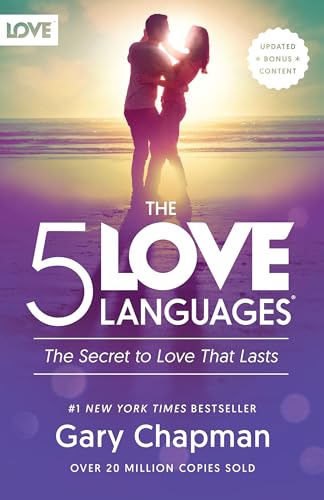
Adam Roberts
Brian Aldiss has famously argued that science fiction starts with Mary Shelley’s novel, and many people have agreed with him. [source]
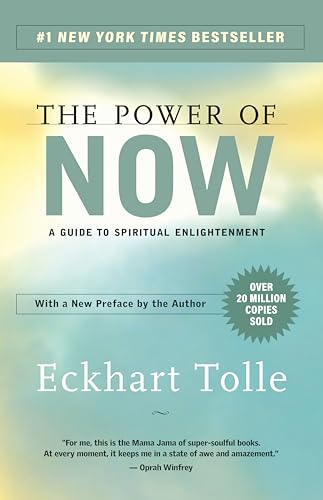
Cover unavailable
79
I Know Why the Caged Bird Sings
Maya Angelou
4.1
Here is a book as joyous and painful, as mysterious and memorable, as childhood itself. I Know Why the Caged Bird Sings captures the longing of lonely children, the brute insult of bigotry, and the wonder of words that can make the world right. Maya Angelou’s debut memoir is a modern American classic beloved worldwide.
Sent by their mother to live with their devout, self-sufficient grandmother in a small Southern town, Maya and her brother, Bailey, endure the ache of abandonment and the prejudice of the local “powhitetrash.” At eight years old and back at her mother’s side in St. Louis, Maya is attacked by a man many times her age—and has to live with the consequences for a lifetime. Years later, in San Francisco, Maya learns that love for herself, the kindness of others, her own strong spirit, and the ideas of great authors (“I met and fell in love with William Shakespeare”) will allow her to be free instead of imprisoned.
Poetic and powerful, I Know Why the Caged Bird Sings will touch hearts and change minds for as long as people read. “I Know Why the Caged Bird Sings liberates the reader into life simply because Maya Angelou confronts her own life with such a moving wonder, such a luminous dignity.”—James Baldwin
…
Recommended by Richard Branson, Bianca Belair, and Julia Enthoven.
Today is World Book Day, a wonderful opportunity to address this #ChallengeRichard sent in by Mike Gonzalez of New Jersey: Make a list of your top 65 books to read in a lifetime. [source]
Bianca Belair
For #BlackHistoryMonth I will be sharing some of my favorite books by Black Authors 5th Book: I Know Why the Caged Bird Sings By: Maya Angelou Another autobiography classic that will be hard to not find on any must- read book list! https://t.co/mGRG76lLRn [source]
Julia Enthoven
I Know Why the Caged Bird Sings is beautifully written, and I really enjoy the voice of the protagonist and think it’s sad and fascinating to read about her time in history. [source]
In Bryson's biggest book, he confronts his greatest challenge: to understand—and, if possible, answer—the oldest, biggest questions we have posed about the universe and ourselves. Taking as territory everything from the Big Bang to the rise of civilization, Bryson seeks to understand how we got from there being nothing at all to there being us. To that end, he has attached himself to a host of the world’s most advanced (and often obsessed) archaeologists, anthropologists, and mathematicians, travelling to their offices, laboratories, and field camps. He has read (or tried to read) their books, pestered them with questions, apprenticed himself to their powerful minds. A Short History of Nearly Everything is the record of this quest, and it is a sometimes profound, sometimes funny, and always supremely clear and entertaining adventure in the realms of human knowledge, as only Bill Bryson can render it. Science has never been more involving or entertaining.
…
Recommended by Amanda Palmer, David Goldberg, and Fabrice Grinda.
Amanda Palmer
Amanda Palmer recommended this book in the book "Tools of Titans". [source]
David Goldberg
What I really liked about A Short History of Nearly Everything is that it gives an excellent account of a lot of the personalities and the interconnectedness of important discoveries in cosmology and elsewhere. He does such a great job of bringing together our understanding of cosmology, evolution, paleontology, and geology in a very, very fluid way. [source]
Fabrice Grinda
I have lots of books to recommend, but they are not related to my career path. The only one that is remotely related is Peter Thiel’s Zero to One. That said here are books I would recommend. [source]
Cover unavailable
81
The Prince
Nicollo Machiavelli, Tim Parks
4.1
Niccolo Machiavelli's "The Prince" is intended to be a treatise on ruling and is considered by many to be a classic of political science. In the book Machiavelli offers many bits of practical advice on how to rule and even though the book was written in the early 16th century its ideas are still very relevant today. Where "The Prince" differs from other political literature before it is in its separation of the lofty idealism of morality and ethics from the practical demands of governing. It is this very aspect of Machiavelli's work that has made his name synonymous with an almost immoral opportunism and his book a timeless classic.
Which books should be read by every single intelligent person on planet? … The Prince (Machiavelli) to learn that people not in power will do all they can to acquire it, and people in power will do all they can to keep it. If you read all of the above works you will glean profound insight into most of what has driven the history of the western world. [source]
Of course, this is a must read. Machiavelli is one of those figures and writers who is tragically overrated and underrated at the same time. Unfortunately that means that many people who read him miss the point and other people avoid him and miss out altogether. Take Machiavelli slow, and really read him. Also understand the man behind the book–not just as a masterful writer but a man who withstood heinous torture and exile with barely a whimper. Machiavelli is a glimpse into a time when power was literal and out for public viewing–when he talks about making an example of someone, he doesn’t mean calling them out, he means putting their head on a pike. Don’t let that scare you because we’re not as far from that world as we’d like to think. Deny that at your own peril. [source]
Cover unavailable
82
Slaughterhouse-Five
Kurt Vonnegut and Kevin Power
4.1
Selected by the Modern Library as one of the 100 best novels of all time, Slaughterhouse-Five, an American classic, is one of the world's great antiwar books. Centering on the infamous firebombing of Dresden, Billy Pilgrim's odyssey through time reflects the mythic journey of our own fractured lives as we search for meaning in what we fear most.
Recommended by Bernard Tan, Carlos Eire, and Dan Christensen.
Bernard Tan
I’m also a Murakami and Vonnegut fan, Kafka on the Shore, The Wind-up Bird Chronicle, Norwegian Wood, Slaughterhouse-Five, etc. Now that I look at the books listed, they seem to carry an existential theme. I guess I like to understand humanity and human behaviour ultimately to better understand myself. I find reading a means to connect with people who may have lived before my time, or in a distant country, that I may never have had the chance to connect with in real life. As three-dimensional humans, we are all made up of so many faces and emotional layers that we find it hard to dissect them all, and when we find writers who can explain these thought processes in a way that’s tangible and digestible, there’s this incredibly comforting eureka moment of feeling understood. [source]
Carlos Eire
Even though he is no philosopher Vonnegut is still able to ask the questions that all of us think about – how time affects our lives. [source]
A grumpy yet loveable man finds his solitary world turned on its head when a boisterous young family moves in next door.
Meet Ove. He’s a curmudgeon—the kind of man who points at people he dislikes as if they were burglars caught outside his bedroom window. He has staunch principles, strict routines, and a short fuse. People call him “the bitter neighbor from hell.” But must Ove be bitter just because he doesn’t walk around with a smile plastered to his face all the time?
Behind the cranky exterior there is a story and a sadness. So when one November morning a chatty young couple with two chatty young daughters move in next door and accidentally flatten Ove’s mailbox, it is the lead-in to a comical and heartwarming tale of unkempt cats, unexpected friendship, and the ancient art of backing up a U-Haul. All of which will change one cranky old man and a local residents’ association to their very foundations.
…
Recommended by Abid Zaidi.
Abid Zaidi
Day 6 : #30Days of posting cover of books I love (1 book a day for 30 days). No expectations, no reviews, just the covers. Inspired by @rekha_bhardwaj #MyFavouriteBooks https://t.co/rl0foOp6hK [source]
Cover unavailable
84
Lord of the Flies
William Golding
4.1
At the dawn of the next world war, a plane crashes on an uncharted island, stranding a group of schoolboys. At first, with no adult supervision, their freedom is something to celebrate; this far from civilization the boys can do anything they want. Anything. They attempt to forge their own society, failing, however, in the face of terror, sin and evil. And as order collapses, as strange howls echo in the night, as terror begins its reign, the hope of adventure seems as far from reality as the hope of being rescued. Labeled a parable, an allegory, a myth, a morality tale, a parody, a political treatise, even a vision of the apocalypse, Lord of the Flies is perhaps our most memorable tale about “the end of innocence, the darkness of man’s heart.”
…
Recommended by Elon Musk, Ev Williams, Audrey Russo, and 5 others.
Audrey Russo
So many novels; Lord of the Flies, Great Gatsby, Great Expectations; all the Nancy Drew books; Catcher in the Rye, Books written by Zora Neale Hurston; Pat Conroy – all because of the view about different people who endure despite adversity while kindling the hearts of the human spirit. [source]
Chigozie Obioma
William Golding imbues some of these children with wisdom that would read, in the hands of a lesser author, as implausibly knowing [source]
Disco Donnie
@JoshRHernandez1 I love the book “Lord of the Flies” so just started watching The Society [source]
Cover unavailable
85
The Republic: The Influential Classic
Plato
4.0
The newest deluxe edition in the bestselling Capstone Classics Series This ancient classic has had a make-over. In recent years these Capstone Classic deluxe editions have caught the book buying public's imagination. The volumes of international bestsellers such as Think and Grow Rich and The Art of War have quickly become the market leaders. Now Plato's best known work, one of the most intellectually and historically influential works of philosophy and political theory, has been brought to life in this luxury, hardback, keep-sake edition.
This edition includes:
Plato's plans for a perfect society characterised by a blend of wisdom, courage, self-discipline and justice Lessons to learn about living according to eternal truths, instead of existing simply for survival and pleasure A new introduction by Tom Butler Bowdon, the classic personal development expert
It’s very readable even if you aren’t a professional philosopher. Take the story of ‘The Ring of Gyges,’ which raises the question of whether you would continue to act like a good person if you had a ring of invisibility that let you get away with doing whatever you wanted to do. That’s a fascinating thought experiment that anybody can appreciate. [source]
I’m about a third through this and still can’t tell whether Plato is making a mockery of Socrates ideas for the idyllic society or not. So many of the arguments presented as Socrates’ are so tortured and with so disconnected leaps of logic that it’s hard to take it at face value. Yet still, it’s good fun to follow the dialogue. It reads more like a play than a book, and again, immensely accessible. It’s fun to see the lines that continue from a book like this to the considerations of the Stoics all the way to Adam Smith and the Wealth of Nations and then onto a modern critique and history in that Debt: First 5,000 Years. A conversation spanning millennia. [source]
Jonathan Glover
It contains a tremendous amount of nonsense about what the ideal society would be like. But it is an unmissable book because of Socrates. He invented the method of doing and teaching philosophy that has never been improved on. [source]
Cover unavailable
86
The Righteous Mind: Why Good People Are Divided by Politics and Religion
Why can’t our political leaders work together as threats loom and problems mount? Why do people so readily assume the worst about the motives of their fellow citizens? In The Righteous Mind, social psychologist Jonathan Haidt explores the origins of our divisions and points the way forward to mutual understanding.
His starting point is moral intuition—the nearly instantaneous perceptions we all have about other people and the things they do. These intuitions feel like self-evident truths, making us righteously certain that those who see things differently are wrong. Haidt shows us how these intuitions differ across cultures, including the cultures of the political left and right. He blends his own research findings with those of anthropologists, historians, and other psychologists to draw a map of the moral domain. He then examines the origins of morality, overturning the view that evolution made us fundamentally selfish creatures. But rather than arguing that we are innately altruistic, he makes a more subtle claim—that we are fundamentally groupish. It is our groupishness, he explains, that leads to our greatest joys, our religious divisions, and our political affiliations. In a stunning final chapter on ideology and civility, Haidt shows what each side is right about, and why we need the insights of liberals, conservatives, and libertarians to flourish as a nation.
…
Recommended by A.J. Jacobs, Akin Oyebode, Andrew M. Mwenda, and 3 others.
A.J. Jacobs
All about trying to figure out the gap between the red and blue states – Republican and Democrat – and it’s really interesting. [source]
Akin Oyebode
@eggheader @OnemuVictor1 @JonHaidt Abeg order two. I read Righteous Mind which he also wrote, and that was a very fascinating book. [source]
Andrew M. Mwenda
The best work on this is a book by Jonathan Haidt “The Righteous Mind: Why good People are Divided by Religion and Politics.” He argues that human beings have deeply entrenched moral intuitions which guide their assessment of reality. Facts matter very little if at all. [source]
Cover unavailable
87
Fahrenheit 451
Ray Bradbury
4.0
Guy Montag is a fireman. In his world, where television rules and literature is on the brink of extinction, firemen start fires rather than put them out. His job is to destroy the most illegal of commodities, the printed book, along with the houses in which they are hidden.
Montag never questions the destruction and ruin his actions produce, returning each day to his bland life and wife, Mildred, who spends all day with her television 'family'. But then he meets an eccentric young neighbor, Clarisse, who introduces him to a past where people did not live in fear and to a present where one sees the world through the ideas in books instead of the mindless chatter of television.
When Mildred attempts suicide and Clarisse suddenly disappears, Montag begins to question everything he has ever known.
This classic work on state censorship remains as relevant in today’s world of digital delights as it was when published in the black-and-white world of 1953. In a futuristic American city, firefighter Guy Montag does not put out blazes; instead, he extinguishes knowledge and promotes ignorance by conducting state decreed book burnings. After an elderly woman chooses a fiery death with her books rather than a life without the written word, he begins questioning not only his profession, but also a society that allows itself to be lulled into complacency by constant exposure to state-controlled, mind-numbing television shows. If you wonder why some people take censorship so seriously, this book will give you the answer. It’s also a fantastically inspiring story of a one-versus-a-million fight that’s worth fighting. Who knows when your turn will come? [source]
I’m not sure what compelled me to pick Fahrenheit 451 back up but I’m so glad I did because I was able to see the book in a very different context. Bradbury’s message (made explicit in his 50th Anniversary Afterword) is much less a warning against government control and much more about a road to hell paved by people attempting to rid the world of offensive speech and conflicting ideas. In a world of microaggressions and outrage porn, this is an important idea to see in such a timeless work of fiction. [source]
Cover unavailable
88
Death's End (Remembrance of Earth’s Past, #3)
Cixin Liu
4.0
Half a century after the Doomsday Battle, the uneasy balance of Dark Forest Deterrence keeps the Trisolaran invaders at bay. Earth enjoys unprecedented prosperity due to the infusion of Trisolaran knowledge. With human science advancing daily and the Trisolarans adopting Earth culture, it seems that the two civilizations will soon be able to co-exist peacefully as equals without the terrible threat of mutually assured annihilation. But the peace has also made humanity complacent.
Cheng Xin, an aerospace engineer from the early twenty-first century, awakens from hibernation in this new age. She brings with her knowledge of a long-forgotten program dating from the beginning of the Trisolar Crisis, and her very presence may upset the delicate balance between two worlds. Will humanity reach for the stars or die in its cradle?
…
Recommended by Adam Savage and Ash "Ivivvi" Furrow.
I felt like I was getting a Chinese version of Chinese culture. And that frame felt unique. [source]
Ash "Ivivvi" Furrow
I’m finally reading Death’s End, the conclusion of The Three Body Problem trilogy. It’s amazing! But I’m only 1/3 through the book and all hope for humanity already seems lost? This happened much later in the first two books 🤔 [source]
Cover unavailable
89
The Adventures of Huckleberry Finn
Mark Twain
4.0
Adventures of Huckleberry Finn (or, in more recent editions, The Adventures of Huckleberry Finn) is a novel by Mark Twain, first published in the United Kingdom in December 1884 and in the United States in February 1885. Commonly named among the Great American Novels, the work is among the first in major American literature to be written throughout in vernacular English, characterized by local color regionalism. It is told in the first person by Huckleberry "Huck" Finn, the narrator of two other Twain novels (Tom Sawyer Abroad and Tom Sawyer, Detective) and a friend of Tom Sawyer. It is a direct sequel to The Adventures of Tom Sawyer.
Today is World Book Day, a wonderful opportunity to address this #ChallengeRichard sent in by Mike Gonzalez of New Jersey: Make a list of your top 65 books to read in a lifetime. [source]
I enjoy nearly everything Mark Twain ever wrote, but my favorite is The Adventures of Huckleberry Finn. This novel showcases Twain at the top of his game in terms of acerbic wit, sharp societal observations and the use of regional dialects - for which he initially garnered great criticism, before the passage of time enabled critics to understand and acknowledge its authenticity. [source]
Cover unavailable
90
The Origin of Species by Means of Natural Selection: Or, the Preservation of Favored Races in the Struggle for Life
Charles Darwin
4.0
Darwin's theory of natural selection issued a profound challenge to orthodox thought and belief: no being or species has been specifically created; all are locked into a pitiless struggle for existence, with extinction looming for those not fitted for the task.
Yet The Origin of Species (1859) is also a humane and inspirational vision of ecological interrelatedness, revealing the complex mutual interdependencies between animal and plant life, climate and physical environment, and—by implication—within the human world.
Written for the general reader, in a style which combines the rigour of science with the subtlety of literature, The Origin of Species remains one of the founding documents of the modern age.
Which books should be read by every single intelligent person on planet? … On the Origin of Species (Darwin) to learn of our kinship with all other life on Earth. If you read all of the above works you will glean profound insight into most of what has driven the history of the western world. [source]
It is one of the most important books written, and I always urge people to read it. [source]

Adam Maloof
For me (and many others) this book forms the foundation for modern biology. It is all about humans’ concept of themselves. [source]
Cover unavailable
91
The Fire Next Time
James Baldwin
4.0
A national bestseller when it first appeared in 1963, The Fire Next Time galvanized the nation and gave passionate voice to the emerging civil rights movement. At once a powerful evocation of James Baldwin’s early life in Harlem and a disturbing examination of the consequences of racial injustice, the book is an intensely personal and provocative document. It consists of two “letters,” written on the occasion of the centennial of the Emancipation Proclamation, that exhort Americans, both black and white, to attack the terrible legacy of racism. Described by The New York Times Book Review as “sermon, ultimatum, confession, deposition, testament, and chronicle…all presented in searing, brilliant prose,” The Fire Next Time stands as a classic of our literature.
Fact or fiction, the president knows that reading keeps the mind sharp. He also delved into these non-fiction reads: Age of Ambition: Chasing Fortune, Evan Osnos Thinking, Fast and Slow, Daniel Kahneman Moral Man And Immoral Society, Reinhold Niebuhr A Kind And Just Parent, William Ayers The Post-American World, Fareed Zakaria Lessons in Disaster, Gordon Goldstein Sapiens: A Brief History of Humankind, Yuval Noah Harari The Fire Next Time, James Baldwin Andy Grove: The Life and Times of an American, Richard S Tedlow Behind the Beautiful Forevers: Life, Death, and Hope in a Mumbai Undercity, Katherine Boo [source]
Cover unavailable
92
The Outsiders
S. E. Hinton
4.0
Librarian note: See this edition record for the Laurel-Leaf Books/Dell edition that may have been published with ISBN 014240733X.
No one ever said life was easy. But Ponyboy is pretty sure that he's got things figured out. He knows that he can count on his brothers, Darry and Sodapop. And he knows that he can count on his friends - true friends who would do anything for him, like Johnny and Two-Bit. And when it comes to the beating up on "greasers" like him and his friends - he knows that he can count on them for trouble. But one night someone takes things too far, and Ponyboy's world is turned upside down...
~from inside flap
…
Cover unavailable
93
The Two Towers (The Lord of the Rings, #2)
J. R. R. Tolkien
4.0
The Fellowship was scattered. Some were bracing hopelessly for war against the ancient evil of Sauron. Some were contending with the treachery of the wizard Saruman. Only Frodo and Sam were left to take the accursed Ring of Power to be destroyed in Mordor–the dark Kingdom where Sauron was supreme. Their guide was Gollum, deceitful and lust-filled, slave to the corruption of the Ring. Thus continues the magnificent, bestselling tale of adventure begun in The Fellowship of the Ring, which reaches its soul-stirring climax in The Return of the King.
…
Cover unavailable
94
The Final Empire (Mistborn, #1)
Brandon Sanderson
4.0
Where ash falls from the sky, and mist dominates the night, evil cloaks the land and stifles all life. Criminal mastermind Kelsier teaches Allomancy, the magic of metals, to another Mistborn, urchin Vin 16. The unlikely heroine is distracted by rich Venture heir Elend. Can Kelsier's thieving crew take on the tyrant Lord Ruler and bring back colour to their world?
Cover unavailable
95
The Unbearable Lightness of Being
Milan Kundera
4.0
In The Unbearable Lightness of Being, Milan Kundera tells the story of a young woman in love with a man torn between his love for her and his incorrigible womanizing and one of his mistresses and her humbly faithful lover. This magnificent novel juxtaposes geographically distant places; brilliant and playful reflections; and a variety of styles to take its place as perhaps the major achievement of one of the world’s truly great writers.
This book was recommended by on page 488 in "Tools of Titans". [source]
Bernard Tan
I wasn’t expecting anything going into it, but I am currently quite engrossed by Kundera’s understanding of humanity and his beautiful writing style. [source]
Cover unavailable
96
Divergent (Divergent, #1)
Veronica Roth
4.0
In Beatrice Prior's dystopian Chicago world, society is divided into five factions, each dedicated to the cultivation of a particular virtue—Candor (the honest), Abnegation (the selfless), Dauntless (the brave), Amity (the peaceful), and Erudite (the intelligent). On an appointed day of every year, all sixteen-year-olds must select the faction to which they will devote the rest of their lives. For Beatrice, the decision is between staying with her family and being who she really is—she can't have both. So she makes a choice that surprises everyone, including herself.
During the highly competitive initiation that follows, Beatrice renames herself Tris and struggles alongside her fellow initiates to live out the choice they have made. Together they must undergo extreme physical tests of endurance and intense psychological simulations, some with devastating consequences. As initiation transforms them all, Tris must determine who her friends really are—and where, exactly, a romance with a sometimes fascinating, sometimes exasperating boy fits into the life she's chosen. But Tris also has a secret, one she's kept hidden from everyone because she's been warned it can mean death. And as she discovers unrest and growing conflict that threaten to unravel her seemingly perfect society, she also learns that her secret might help her save those she loves . . . or it might destroy her.
…
Cover unavailable
97
The Stranger
Albert Camus, Jonathan Davis, et al
4.0
Through the story of an ordinary man unwittingly drawn into a senseless murder on an Algerian beach, Camus explored what he termed "the nakedness of man faced with the absurd." First published in English in 1946; now in a new translation by Matthew Ward.
Seminal novel on existentialism and the absurd by Albert Camus from 1946. Explores that feeling of disconnectedness from society, its norms, and the absurdity of every day life. Striking first-person account in a powerful, direct language. [source]
Kyle Maynard
Kyle Maynard said this is one of his most-recommended books. [source]
Cover unavailable
98
Gödel, Escher, Bach: An Eternal Golden Braid
Douglas R. Hofstadter
4.0
Douglas Hofstadter's book is concerned directly with the nature of “maps” or links between formal systems. However, according to Hofstadter, the formal system that underlies all mental activity transcends the system that supports it. If life can grow out of the formal chemical substrate of the cell, if consciousness can emerge out of a formal system of firing neurons, then so too will computers attain human intelligence. Gödel, Escher, Bach is a wonderful exploration of fascinating ideas at the heart of cognitive science: meaning, reduction, recursion, and much more.
…
Recommended by Steve Jurvetson, Seth Godin, Cory Zue, and 2 others.
Steve Jurvetson
Steve Jurvetson recommended this book on the podcast "The Tim Ferriss Show". [source]
In the last week, I discovered that at least two of my smart friends hadn't read Godel, Escher, Bach. They have now. You should too. [source]
Cory Zue
More recently books like Godel, Escher, Bach and Sapiens have influenced my thinking a lot. [source]
Cover unavailable
99
The Killer Angels (The Civil War Trilogy, #2)
Michael Shaara
4.0
In the four most bloody and courageous days of our nation's history, two armies fought for two dreams. One dreamed of freedom, the other of a way of life. Far more than rifles and bullets were carried into battle. There were memories. There were promises. There was love. And far more than men fell on those Pennsylvania fields. Shattered futures, forgotten innocence, and crippled beauty were also the casualties of war. The Killer Angels is unique, sweeping, unforgettable—a dramatic re-creation of the battleground for America's destiny.
…
Cover unavailable
100
Cat's Cradle
Kurt Vonnegut
4.0
Told with deadpan humour and bitter irony, Kurt Vonnegut's cult tale of global destruction preys on our deepest fears of witnessing Armageddon and, worse still, surviving it ...
Dr Felix Hoenikker, one of the founding 'fathers' of the atomic bomb, has left a deadly legacy to the world. For he's the inventor of 'ice-nine', a lethal chemical capable of freezing the entire planet. The search for its whereabouts leads to Hoenikker's three ecentric children, to a crazed dictator in the Caribbean, to madness. Felix Hoenikker's Death Wish comes true when his last, fatal gift to humankind brings about the end, that for all of us, is nigh...
…
Recommended by Ev Williams and Andy Stern.
Andy Stern
I think it's something that progressives need to think about, because the book talks a lot about two tendencies that people can adopt, to try to find meaning and purpose. One is kind of a sheer technological approach, and the other is more of a spiritual and religious approach. The book talks about the perils and challenges of each way. Sometimes we as progressives defend technology and science and fact, and other people – clearly both progressive and otherwise – appreciate the spiritual more. Then on either extreme, the book tries to say that blind adherence to either tendency also has huge problems. The book, for me, is about trying to seek meaning, not trying to find simple answers, and appreciating that in some ways following a belief to an extreme can be equally as dangerous as having no beliefs. [source]