 1
1The Road to Character
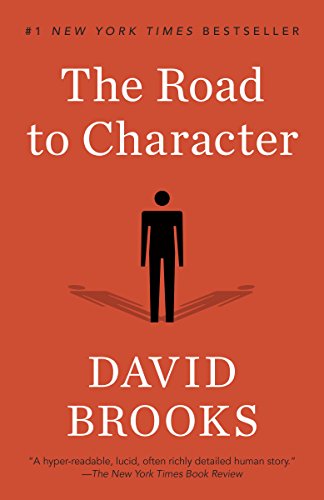
With the wisdom, humor, curiosity, and sharp insights that have brought millions of readers to his New York Times column and his previous bestsellers, David Brooks has consistently illuminated our daily lives in surprising and original ways. In The Social Animal, he explored the neuroscience of human connection and how we can flourish together. Now, in The Road to Character, he focuses on the deeper values that should inform our lives. Responding to what he calls the culture of the Big Me, which emphasizes external success, Brooks challenges us, and himself, to rebalance the scales between our “résumé virtues”—achieving wealth, fame, and status—and our “eulogy virtues,” those that exist at the core of our being: kindness, bravery, honesty, or faithfulness, focusing on what kind of relationships we have formed.
Looking to some of the world’s greatest thinkers and inspiring leaders, Brooks explores how, through internal struggle and a sense of their own limitations, they have built a strong inner character. Labor activist Frances Perkins understood the need to suppress parts of herself so that she could be an instrument in a larger cause. Dwight Eisenhower organized his life not around impulsive self-expression but considered self-restraint. Dorothy Day, a devout Catholic convert and champion of the poor, learned as a young woman the vocabulary of simplicity and surrender. Civil rights pioneers A. Philip Randolph and Bayard Rustin learned reticence and the logic of self-discipline, the need to distrust oneself even while waging a noble crusade.
Blending psychology, politics, spirituality, and confessional, The Road to Character provides an opportunity for us to rethink our priorities, and strive to build rich inner lives marked by humility and moral depth.
“Joy,” David Brooks writes, “is a byproduct experienced by people who are aiming for something else. But it comes.”
CEO/Starbucks
A fantastic journey of learning from the lives of some of the greatest leaders and thinkers of our time. [source]

CEO/Microsoft
The insightful New York Times columnist examines the contrasting values that motivate all of us. He argues that American society does a good job of cultivating the “résumé virtues” (the traits that lead to external success) but not our “eulogy virtues” (the traits that lead to internal peace of mind). Brooks profiles various historical figures who were paragons of character. I thought his portrait of World War II General George Marshall was especially enlightening. Even if the distinction between the two types of virtues is not always crystal clear, The Road to Character gave me a lot to think about. It is a thought-provoking look at what it means to live life well. [source]

Board of Directors/Amazon
Beyond provoking valuable self-reflection and introspection, it sparked a wonderful discussion with my two daughters about why building inner character is just as important as building a career. In fact, the two go hand in hand—the moral compass of our lives must also be the moral compass of our livelihoods. [source]