We've ranked the best interactions books using expert recommendations, sales data, and millions of reader ratings. At Shortform, we know books. Our book guides are the best in the world. Learn why.
In this stunning new book, Malcolm Gladwell takes us on an intellectual journey through the world of "outliers"--the best and the brightest, the most famous and the most successful. He asks the question: what makes high-achievers different?
His answer is that we pay too much attention to what successful people are like, and too little attention to where they are from: that is, their culture, their family, their generation, and the idiosyncratic experiences of their upbringing. Along the way he explains the secrets of software billionaires, what it takes to be a great soccer player, why Asians are good at math, and what made the Beatles the greatest rock band.
Gladwell is not the first person to come up with the 10,000 hour rule. Nor is he the first person to document what it takes to become the best in the world at something. But his stories are so great as he explains these deep concepts. How did the Beatles become the best? Why are professional hockey players born in January, February and March? And so on. [source]
Alex Circei
Question: What five books would you recommend to young people interested in your career path & why? Answer: Screw It, Let's Do It: Lessons In Life by Richard Branson Outliers: The Story of Success by Malcolm Gladwell Start With Why: How Great Leaders Inspire Everyone To Take Action by Simon Sinek The Hard Thing About Hard Things: Building a Business When There Are No Easy Answers by Ben Horowitz Rich Dad Poor Dad: What the Rich Teach Their Kids About Money That the Poor and Middle Class Do Not! by Robert T. Kiyosaki [source]
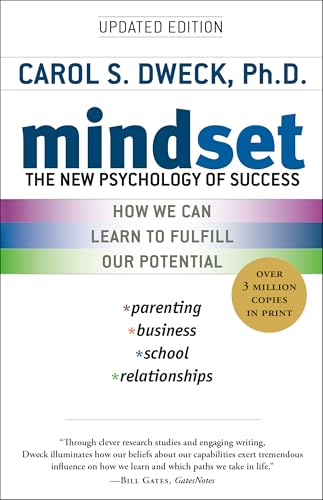
Now updated with new research — the book that has changed millions of lives.
After decades of research, world-renowned Stanford University psychologist Carol S. Dweck, Ph.D., discovered a simple but groundbreaking idea: the power of mindset. In this brilliant book, she shows how success in school, work, sports, the arts, and almost every area of human endeavor can be dramatically influenced by how we think about our talents and abilities. People with a fixed mindset — those who believe that abilities are fixed — are less likely to flourish than those with a growth mindset — those who believe that abilities can be developed. Mindset reveals how great parents, teachers, managers, and athletes can put this idea to use to foster outstanding accomplishment.
In this edition, Dweck offers new insights into her now famous and broadly embraced concept. She introduces a phenomenon she calls false growth mindset and guides people toward adopting a deeper, truer growth mindset. She also expands the mindset concept beyond the individual, applying it to the cultures of groups and organizations. With the right mindset, you can motivate those you lead, teach, and love — to transform their lives and your own.
One of the reasons I loved Mindset is because it’s solutions-oriented. In the book’s final chapter, Dweck describes the workshop she and her colleagues have developed to shift students from a fixed to a growth mindset. These workshops demonstrate that ‘just learning about the growth mindset can cause a big shift in the way people think about themselves and their lives. [source]
Without exaggeration, I’ve never met a CEO who didn’t have Mindset on their bookshelf. It resonates with people who have become successful because the belief that your abilities can grow is foundational to their achievements. [source]
Cover unavailable
3
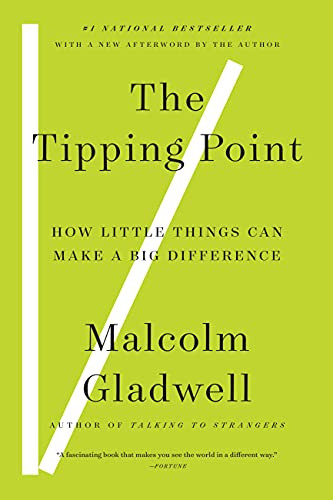
The Tipping Point: How Little Things Can Make a Big Difference
The tipping point is that magic moment when an idea, trend, or social behavior crosses a threshold, tips, and spreads like wildfire. Just as a single sick person can start an epidemic of the flu, so too can a small but precisely targeted push cause a fashion trend, the popularity of a new product, or a drop in the crime rate. This widely acclaimed bestseller, in which Malcolm Gladwell explores and brilliantly illuminates the tipping point phenomenon, is already changing the way people throughout the world think about selling products and disseminating ideas.
Gladwell introduces us to the particular personality types who are natural pollinators of new ideas and trends, the people who create the phenomenon of word of mouth. He analyzes fashion trends, smoking, children's television, direct mail, and the early days of the American Revolution for clues about making ideas infectious, and visits a religious commune, a successful high-tech company, and one of the world's greatest salesmen to show how to start and sustain social epidemics.
Bunch of really good information in here on how to make ideas go viral. This could be good to apply to any kind of products or ideas you may have. Definitely, check out The Tipping Point, which is one of my favorites. [source]
Malcolm Gladwell's breakthrough insight was to focus on the micro-relationships between individuals, which helped organizations realize that it's not about the big ads and the huge charity balls... it's about setting the stage for the buzz to start. [source]
Andy Stern
I think that when we talk about making change, it is much more about macro change, like in policy. This book reminds you that at times when you're building big movements, or trying to elect significant decision-makers in politics, sometimes it's the little things that make a difference. Ever since the book was written, we've become very used to the idea of things going viral unexpectedly and then having massive impact. The Tipping Point, to me, is really an appreciation that very small things can rearrange thinking in ways – like infectious diseases – that have huge implications. While we're always searching for the big policy changes – and we think we have to do that in very traditional ways of building coalitions against constituencies, movements and the media – sometimes it's the little things that actually tip the situation. Like the story of a person and their unique set of circumstances that really captures an issue about health care or housing. So it's trying to remember, while you're thinking about the grand and the glorious, that thinking about the small things can equally bring about change. [source]
Cover unavailable
4
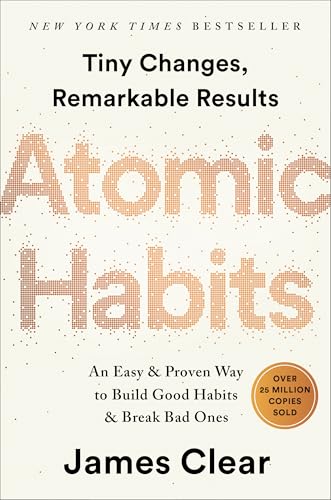
Atomic Habits: An Easy & Proven Way to Build Good Habits & Break Bad Ones
No matter your goals, Atomic Habits offers a proven framework for improving--every day. James Clear, one of the world's leading experts on habit formation, reveals practical strategies that will teach you exactly how to form good habits, break bad ones, and master the tiny behaviors that lead to remarkable results.
If you're having trouble changing your habits, the problem isn't you. The problem is your system. Bad habits repeat themselves again and again not because you don't want to change, but because you have the wrong system for change. You do not rise to the level of your goals. You fall to the level of your systems. Here, you'll get a proven system that can take you to new heights.
Clear is known for his ability to distill complex topics into simple behaviors that can be easily applied to daily life and work. Here, he draws on the most proven ideas from biology, psychology, and neuroscience to create an easy-to-understand guide for making good habits inevitable and bad habits impossible. Along the way, readers will be inspired and entertained with true stories from Olympic gold medalists, award-winning artists, business leaders, life-saving physicians, and star comedians who have used the science of small habits to master their craft and vault to the top of their field.
Learn how to: * make time for new habits (even when life gets crazy); * overcome a lack of motivation and willpower; * design your environment to make success easier; * get back on track when you fall off course; ...and much more.
Atomic Habits will reshape the way you think about progress and success, and give you the tools and strategies you need to transform your habits--whether you are a team looking to win a championship, an organization hoping to redefine an industry, or simply an individual who wishes to quit smoking, lose weight, reduce stress, or achieve any other goal.
I recently read an advance copy of James Clear’s new book, Atomic Habits. His thesis is that small but carefully selected habits can, over time, create massively positive results — not just in terms of what you accomplish, but also in terms of the type of person you become. James’s exposition rings true with what’ve I learned hanging around interesting people and high achievers. I recommend you give this book a closer look. [source]
A lot of people email me asking about habits - how to form good ones, how to break bad ones, how to stop doing the dumb shit we always do. I've got a friend named James Clear. He's an accomplished author and business owner and is kind of a "habit guru." He's probably forgotten more habits research than I've ever brought myself to look at. He just launched his first book. It's called Atomic Habits and it's probably the most practical and complete guide I've ever seen about habit formation and habit change. Do check it out. And then email him and tell him that I have luscious and beautiful hair and he doesn't. Then stick out your tongue and go, "Nyah, nyanya, nyah, nyah." [source]
This amoral, cunning, ruthless, and instructive book synthesizes the philosophies of Machiavelli, Sun Tzu, and Carl Von Clausewitz with the historical legacies of statesmen, warriors, seducers, and con men throughout the ages.
These are the books I recommend people to listen to on @applebooks. [source]
Marvin Liao
Partner/500 Startups
My list would be (besides the ones I mentioned in answer to the previous question) both business & Fiction/Sci-Fi and ones I personally found helpful to myself. The business books explain just exactly how business, work & investing are in reality & how to think properly & differentiate yourself. On the non-business side, a mix of History & classic fiction to understand people, philosophy to make sense of life and Science fiction to picture what the future could be like (not always utopian). [source]
There is no living writer (or person) who has been more influential to me than Robert Greene. I met him when I was 19 years old and he’s shaped me as a person, as a writer, as a thinker. You MUST read his books. His work on power and strategy are critical for anyone trying to accomplish anything. In life, power is force we are constantly bumping up against. People have power of over us, we seek power ourselves that we might be free enough and influential enough to accomplish our goals—so we must understand where power comes from, how it works and how to get it. But pure power is meaningless. It must be joined to mastery and purpose. So read his book Mastery so that you can figure your life’s task and how to dedicate yourself to it. [source]
Cover unavailable
6
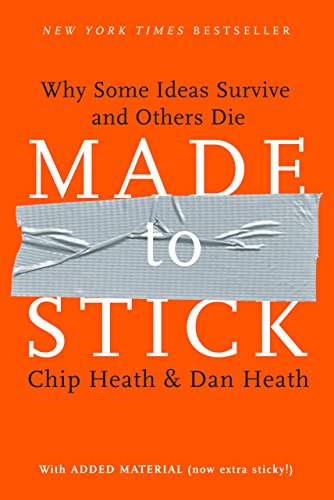
Made to Stick: Why Some Ideas Survive and Others Die
NEW YORK TIMES BESTSELLER - The instant classic about why some ideas thrive, why others die, and how to improve your idea's chances--essential reading in the "fake news" era.
Mark Twain once observed, "A lie can get halfway around the world before the truth can even get its boots on." His observation rings true: Urban legends, conspiracy theories, and bogus news stories circulate effortlessly. Meanwhile, people with important ideas--entrepreneurs, teachers, politicians, and journalists--struggle to make them "stick."
In Made to Stick, Chip and Dan Heath reveal the anatomy of ideas that stick and explain ways to make ideas stickier, such as applying the human scale principle, using the Velcro Theory of Memory, and creating curiosity gaps. Along the way, we discover that sticky messages of all kinds--from the infamous "kidney theft ring" hoax to a coach's lessons on sportsmanship to a vision for a new product at Sony--draw their power from the same six traits.
Made to Stick will transform the way you communicate. It's a fast-paced tour of success stories (and failures): the Nobel Prize-winning scientist who drank a glass of bacteria to prove a point about stomach ulcers; the charities who make use of the Mother Teresa Effect; the elementary-school teacher whose simulation actually prevented racial prejudice.
Provocative, eye-opening, and often surprisingly funny, Made to Stick shows us the vital principles of winning ideas--and tells us how we can apply these rules to making our own messages stick.
@conorgil My all-time favorite example of research communication is The Selfish Gene. Astonishingly effective at explaining deep research ideas/findings to a lay reader. A book with great advice: https://t.co/QD1sM2o0z6 (It isn't specific to research but still super valuable.) [source]
Bill Liao
The Book "Made to Stick" combined with "The Poetics" by Aristotle really helped me to see the power of telling great stories with surprises in them and every time I meet a start-up I can always make a contribution to their pitch. [source]
Cristian-Dragos Baciu
I highly recommend all the books written by the Heath brothers, especially Made to Stick: Why Some Ideas Survive And Others Die. This one's a must-read for marketers. The reason I enjoyed their work so much is because they offer real-life stories and insights that makes it so much easier for the reader to imprint that information in his mind [source]
Cover unavailable
7
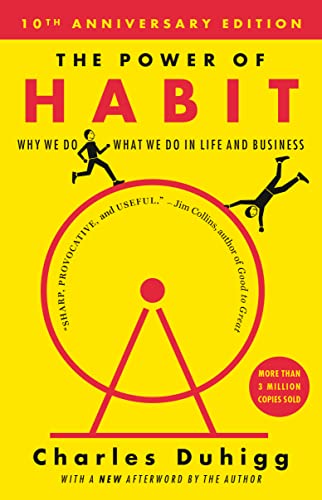
The Power of Habit: Why We Do What We Do in Life and Business
A young woman walks into a laboratory. Over the past two years, she has transformed almost every aspect of her life. She has quit smoking, run a marathon, and been promoted at work. The patterns inside her brain, neurologists discover, have fundamentally changed.
Marketers at Procter & Gamble study videos of people making their beds. They are desperately trying to figure out how to sell a new product called Febreze, on track to be one of the biggest flops in company history. Suddenly, one of them detects a nearly imperceptible pattern—and with a slight shift in advertising, Febreze goes on to earn a billion dollars a year.
An untested CEO takes over one of the largest companies in America. His first order of business is attacking a single pattern among his employees—how they approach worker safety—and soon the firm, Alcoa, becomes the top performer in the Dow Jones.
What do all these people have in common? They achieved success by focusing on the patterns that shape every aspect of our lives.
They succeeded by transforming habits.
In The Power of Habit, award-winning New York Times business reporter Charles Duhigg takes us to the thrilling edge of scientific discoveries that explain why habits exist and how they can be changed. With penetrating intelligence and an ability to distill vast amounts of information into engrossing narratives, Duhigg brings to life a whole new understanding of human nature and its potential for transformation.
Along the way we learn why some people and companies struggle to change, despite years of trying, while others seem to remake themselves overnight. We visit laboratories where neuroscientists explore how habits work and where, exactly, they reside in our brains. We discover how the right habits were crucial to the success of Olympic swimmer Michael Phelps, Starbucks CEO Howard Schultz, and civil-rights hero Martin Luther King, Jr. We go inside Procter & Gamble, Target superstores, Rick Warren’s Saddleback Church, NFL locker rooms, and the nation’s largest hospitals and see how implementing so-called keystone habits can earn billions and mean the difference between failure and success, life and death.
At its core, The Power of Habit contains an exhilarating argument: The key to exercising regularly, losing weight, raising exceptional children, becoming more productive, building revolutionary companies and social movements, and achieving success is understanding how habits work.
Habits aren’t destiny. As Charles Duhigg shows, by harnessing this new science, we can transform our businesses, our communities, and our lives.
…
Recommended by Naval Ravikant, Blake Irving, Alden Mills, and 15 others.
I also recently finished The Power of Habit, or close to finish as I get. That one was interesting, not because of its content necessarily, but because it’s good for me to always keep on top of mind how powerful my habits are. … I think learning how to break habits is a very important meta-skill that can serve you better in life than almost anything else. Although you can read tons of books on it, the reality is you’re never going to learn how to break bad habits until you just break them. [source]
Blake Irving
CEO/GoDaddy
You know, there's a book called The Power of Habit by Charles Duhigg. Simple read book about just how to build positive habits that can be I think I what I'd call you know whether in your personal life or whether in your business life to help you build you know, have a loop that can build your success and that's one I mean there are so many great books out there. [source]
Alden Mills
More recent books that have had a significant impact on me are The Power of Habit and The Diamond Cutter. Both represent different forces for me – the former helps me tactically with making incremental improvements in my life. [source]
Cover unavailable
8
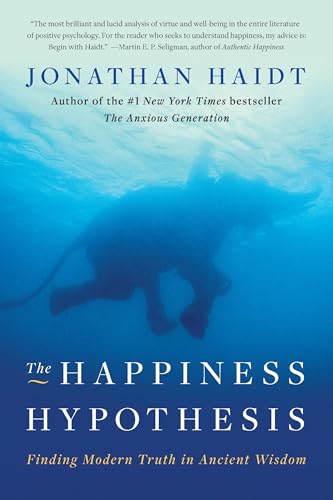
The Happiness Hypothesis: Finding Modern Truth in Ancient Wisdom
In his widely praised book, award-winning psychologist Jonathan Haidt examines the world’s philosophical wisdom through the lens of psychological science, showing how a deeper understanding of enduring maxims-like Do unto others as you would have others do unto you, or What doesn’t kill you makes you stronger-can enrich and even transform our lives.
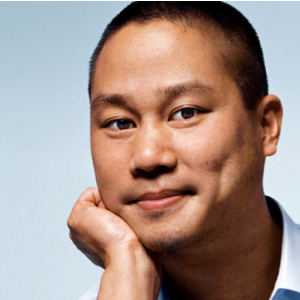
Recommended by Eric Schmidt, Tony Hsieh, Chelsea Frank, and 4 others.
Chelsea Frank
I read everything with an open mind, often challenging myself by choosing books with an odd perspective or religious/spiritual views. These books do not reflect my personal feelings but are books that helped shape my perspective on life, love, and happiness. [source]
He argues that most of our moral decisions are that kind of an instant reaction. It’s like aesthetics: when we see a scene we know instantly if it’s beautiful or not. [source]
Emrys Westacott
Haidt has a formula for happiness: Genetics + conditions + choices. This is a formula for a realistic approach to trying to achieve the good life. [source]
Cover unavailable
9
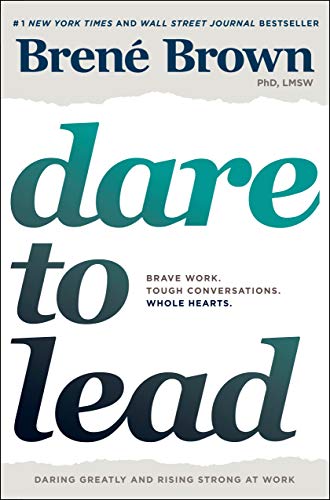
Dare to Lead: Brave Work. Tough Conversations. Whole Hearts.
In her #1 New York Times bestsellers, Brené Brown has taught us what it means to dare greatly, rise strong, and brave the wilderness. Now, based on new research conducted with leaders, change makers, and culture shifters, she's showing us how to put those ideas into practice so we can step up and lead.
Leadership is not about titles, status, and wielding power. A leader is anyone who takes responsibility for recognizing the potential in people and ideas, and has the courage to develop that potential.
When we dare to lead, we don't pretend to have the right answers; we stay curious and ask the right questions. We don't see power as finite and hoard it; we know that power becomes infinite when we share it with others. We don't avoid difficult conversations and situations; we lean into vulnerability when it's necessary to do good work.
But daring leadership in a culture defined by scarcity, fear, and uncertainty requires skill-building around traits that are deeply and uniquely human. The irony is that we're choosing not to invest in developing the hearts and minds of leaders at the exact same time as we're scrambling to figure out what we have to offer that machines and AI can't do better and faster. What can we do better? Empathy, connection, and courage, to start.
Four-time #1 New York Times bestselling author Brené Brown has spent the past two decades studying the emotions and experiences that give meaning to our lives, and the past seven years working with transformative leaders and teams spanning the globe. She found that leaders in organizations ranging from small entrepreneurial startups and family-owned businesses to nonprofits, civic organizations, and Fortune 50 companies all ask the same question:
How do you cultivate braver, more daring leaders, and how do you embed the value of courage in your culture?
In this new book, Brown uses research, stories, and examples to answer these questions in the no-BS style that millions of readers have come to expect and love.
Brown writes, "One of the most important findings of my career is that daring leadership is a collection of skills and practices that are 100 percent teachable. It's learning and unlearning that requires brave work, tough conversations, and showing up with your whole heart. Easy? No. Because choosing courage over comfort is not always our default. Worth it? Always. We want to be brave with our lives and our work. It's why we're here."
Whether you've read Daring Greatly and Rising Strong or you're new to Brené Brown's work, this book is for anyone who wants to step up and into brave leadership.
With Dare to Lead, Brené brings decades of research to bear in a practical and insightful guide to courageous leadership. This book is a road map for anyone who wants to lead mindfully, live bravely, and dare to lead. [source]
Co-Founder/Pixar, CEO Pixar and Walt Disney Animation Studios
Brene visited Pixar to talk with our filmmakers. Her message was important, as movies are best when they come from a place of vulnerability, when the people who make them encounter setbacks and are forced to overcome them, when they are willing to have their asses handed to them. It is easy to sit back and talk about the values of a safe and meaningful culture, but extraordinarily difficult to pull it off. You don’t achieve good culture without constant attention, without an environment of safety, courage, and vulnerability. These are hard skills, but they are teachable skills. Start with this book. [source]
Don’t miss one of my favorite human beings @BreneBrown, discuss her book #DareToLead on this #MarieTV: this is for every one of us that wants to show up, contribute, and lean into our purpose 💪🏼💗 https://t.co/QVgSpZe9e9 [source]
Cover unavailable
10
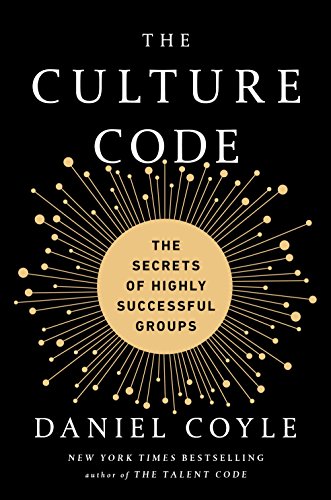
The Culture Code: The Secrets of Highly Successful Groups
An essential book that unlocks the secrets of highly successful groups and provides readers with a toolkit for building a cohesive, innovative culture, from the New York Times bestselling author of The Talent Code
If you want to understand how successful groups work—the signals they transmit, the language they speak, the cues that foster creativity—you won’t find a more essential guide than The Culture Code.
So here are my three must read books. I've been reading a lot of great books like: Outsmart Your Instincts, The Culture Code, and Antonio Damasio’s The Strange Order, and sometimes when you read a lot of nonfiction it’s very enriching, sometimes you need a novel. I really believe you should take a minute and read something beautiful. Listen, listen to Lolita by Nabokov. But also listen to Blood Meridian by Cormac McCarthy and listen to Richard Poe narrate that. Those are two of the greatest feats of the english language that I can think of. Then there’s Fortress of Solitude, an amazing book, Extremely Loud and Incredibly Close, these are great novels. Cold Mountain is a beautiful novel, Snow Falling On Cedars, I mean they’ve been around for a while. But goddamnit, get those under your belt. Those are the novels I think you should read. You know Love In The Time Of Cholera it just makes you ache. Kind of like a Hemingway thing, where Hemingway “ahh!”, it’s the same thing, you know. So I don’t know, I’m a fan of all those books. Those are my 3 slash 20 books. [source]
Graham Duncan
The author looks at a bunch of different cultures. Pixar, Navy SEALs, etc... And he’s looking for patterns among what makes people disproportionately effective as a culture. [source]
Cover unavailable
11
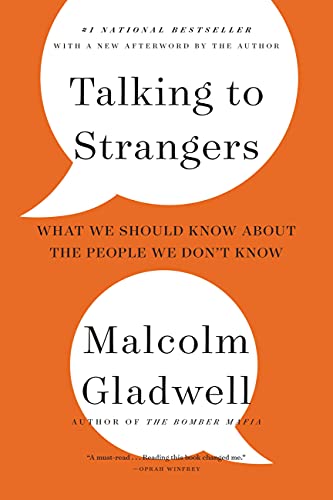
Talking to Strangers: What We Should Know about the People We Don't Know
Malcolm Gladwell, host of the podcast Revisionist History and author of the #1 New York Times bestseller Outliers, offers a powerful examination of our interactions with strangers -- and why they often go wrong.
How did Fidel Castro fool the CIA for a generation? Why did Neville Chamberlain think he could trust Adolf Hitler? Why are campus sexual assaults on the rise? Do television sitcoms teach us something about the way we relate to each other that isn't true?
While tackling these questions, Malcolm Gladwell was not solely writing a book for the page. He was also producing for the ear. In the audiobook version of Talking to Strangers, you'll hear the voices of people he interviewed--scientists, criminologists, military psychologists. Court transcripts are brought to life with re-enactments. You actually hear the contentious arrest of Sandra Bland by the side of the road in Texas. As Gladwell revisits the deceptions of Bernie Madoff, the trial of Amanda Knox, and the suicide of Sylvia Plath, you hear directly from many of the players in these real-life tragedies. There's even a theme song - Janelle Monae's "Hell You Talmbout."
Something is very wrong, Gladwell argues, with the tools and strategies we use to make sense of people we don't know. And because we don't know how to talk to strangers, we are inviting conflict and misunderstanding in ways that have a profound effect on our lives and our world.
I'll put here what I emailed Malcolm when I finished the book: "Just finished your new book in one sitting yesterday. So good. You are at the height of your powers and remain an inspiration to all of us trying to master an un-masterable profession." It's a little less practical or self-improvement oriented than his previous books, but far more thought provoking. [source]
Nilofer Merchant
An interesting analysis/ essay re Gladwell’s latest book —> https://t.co/5Ey1maNRyI [source]
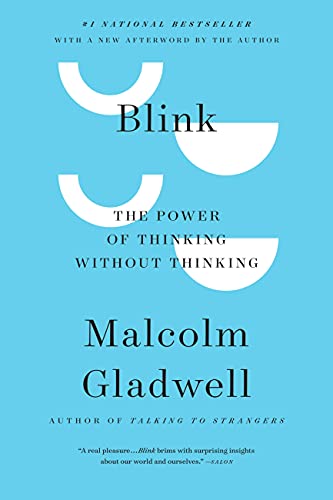
Drawing on cutting-edge neuroscience and psychology and displaying all of the brilliance that made The Tipping Point a classic, Blink changes the way you'll understand every decision you make. Never again will you think about thinking the same way.
Malcolm Gladwell redefined how we understand the world around us. Now, in Blink, he revolutionizes the way we understand the world within. Blink is a book about how we think without thinking, about choices that seem to be made in an instant - in the blink of an eye - that actually aren't as simple as they seem. Why are some people brilliant decision makers, while others are consistently inept? Why do some people follow their instincts and win, while others end up stumbling into error? How do our brains really work - in the office, in the classroom, in the kitchen, and in the bedroom? And why are the best decisions often those that are impossible to explain to others?
In Blink we meet the psychologist who has learned to predict whether a marriage will last, based on a few minutes of observing a couple; the tennis coach who knows when a player will double-fault before the racket even makes contact with the ball; the antiquities experts who recognize a fake at a glance. Here, too, are great failures of "blink": the election of Warren Harding; "New Coke"; and the shooting of Amadou Diallo by police. Blink reveals that great decision makers aren't those who process the most information or spend the most time deliberating, but those who have perfected the art of "thin-slicing" - filtering the very few factors that matter from an overwhelming number of variables.
…
Recommended by Ev Williams, Mike Shinoda, Marillyn Hewson, and 4 others.
Mike Shinoda
I know most of the guys in the band read this book. [source]
Marillyn Hewson
CEO/Lockheed Martin
CEO Marilyn Hewson recommends this book because it helped her to trust her instincts in business. [source]
Antonio Eram
When asked to name some books that had a big impact on him, Antonio mentioned Blink: The Power of Thinking Without Thinking by Malcolm Gladwell. [source]
Cover unavailable
13
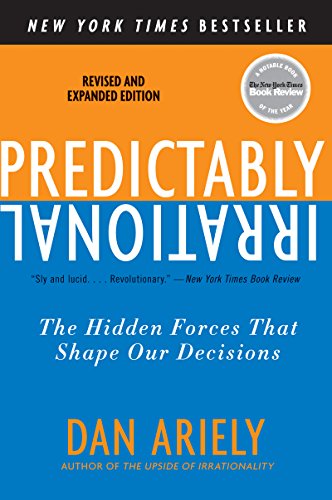
Predictably Irrational: The Hidden Forces That Shape Our Decisions
Why do our headaches persist after taking a one-cent aspirin but disappear when we take a 50-cent aspirin?
Why does recalling the Ten Commandments reduce our tendency to lie, even when we couldn't possibly be caught?
Why do we splurge on a lavish meal but cut coupons to save twenty-five cents on a can of soup?
Why do we go back for second helpings at the unlimited buffet, even when our stomachs are already full?
And how did we ever start spending $4.15 on a cup of coffee when, just a few years ago, we used to pay less than a dollar?
When it comes to making decisions in our lives, we think we're in control. We think we're making smart, rational choices. But are we?
In a series of illuminating, often surprising experiments, MIT behavioral economist Dan Ariely refutes the common assumption that we behave in fundamentally rational ways. Blending everyday experience with groundbreaking research, Ariely explains how expectations, emotions, social norms, and other invisible, seemingly illogical forces skew our reasoning abilities.
Not only do we make astonishingly simple mistakes every day, but we make the same "types" of mistakes, Ariely discovers. We consistently overpay, underestimate, and procrastinate. We fail to understand the profound effects of our emotions on what we want, and we overvalue what we already own. Yet these misguided behaviors are neither random nor senseless. They're systematic and predictable--making us "predictably" irrational.
From drinking coffee to losing weight, from buying a car to choosing a romantic partner, Ariely explains how to break through these systematic patterns of thought to make better decisions. "Predictably Irrational" will change the way we interact with the world--one small decision at a time.
…
Recommended by Max Levchin, Vinod Khosla, Vinod Khosla, and 22 others.
Max Levchin
Co-founder/PayPal, CEO/Affirm, Investor
Max Levchin recommended this book as an answer to "What business books would you advise young entrepreneurs read?" [source]
Andra Zaharia
'While I was thinking of the best books to add to this short list, I realized that not even half of them are directly related to digital marketing. This is because I believe that the best marketers are people who understand human nature deeply and aim to bring out the best in it. Call me naive, but that’s how I see it. If I were to want to pursue a career in marketing, I’d read … Predictably Irrational. [source]
Chris Goward
Here are some of the books that have been very impactful for me, or taught me a new way of thinking: … Predictably Irrational. [source]
Cover unavailable
14
2001: A Space Odyssey
Arthur C. Clarke, Neil Gaiman
4.5
A deluxe hardcover edition of the wondrous space adventure that is the basis for Stanley Kubrick's Oscar-winning film--now celebrating its 50th anniversary
Part of Penguin Galaxy, a collectible series of six sci-fi/fantasy classics, featuring a series introduction by Neil Gaiman
Winner of the AIGA + Design Observer 50 Books - 50 Covers competition
Written when landing on the moon was still a dream, 2001: A Space Odyssey is a science-fiction classic that has changed the way we look at the stars--and ourselves. On the moon, an enigma is uncovered. So great are the implications that, for the first time, men are sent deep into our solar system. But before they can reach their destination, things begin to go very wrong. From the savannas of Africa at the dawn of mankind to the rings of Saturn at the turn of the 21st century, Arthur C. Clarke takes us on a journey unlike any other. Brilliant, compulsive, and prophetic, and the basis for the immensely influential Stanley Kubrick film, 2001: A Space Odyssey tackles the enduring theme of man's--and technology's--place in the universe and lives on as a landmark achievement in storytelling.
Penguin Galaxy
Six of our greatest masterworks of science fiction and fantasy, in dazzling collector-worthy hardcover editions, and featuring a series introduction by #1 New York Times bestselling author Neil Gaiman, Penguin Galaxy represents a constellation of achievement in visionary fiction, lighting the way toward our knowledge of the universe, and of ourselves. From historical legends to mythic futures, monuments of world-building to mind-bending dystopias, these touchstones of human invention and storytelling ingenuity have transported millions of readers to distant realms, and will continue for generations to chart the frontiers of the imagination.
The Once and Future King by T. H. White Stranger in a Strange Land by Robert A. Heinlein Dune by Frank Herbert 2001: A Space Odyssey by Arthur C. Clarke The Left Hand of Darkness by Ursula K. Le Guin Neuromancer by William Gibson
For more than seventy years, Penguin has been the leading publisher of classic literature in the English-speaking world. With more than 1,700 titles, Penguin Classics represents a global bookshelf of the best works throughout history and across genres and disciplines. Readers trust the series to provide authoritative texts enhanced by introductions and notes by distinguished scholars and contemporary authors, as well as up-to-date translations by award-winning translators.
…
Recommended by Bertalan Meskó and Laurie Voss.
Bertalan Meskó
Preparing for my opening keynote, Science Fiction in Healthcare, at #futurelink18 this morning. Please get your tweets ready and challenge me about what the best sci-fi movie or book is. Ever. My vote is for 2001: A Space Odyssey. #digitalhealth [source]
Laurie Voss
2001 the *book* has a great plot and if you've read the book it's clear what's happening but if you haven't read the book the movie is impenetrable, and the movie should not get a pass just because an Explainer Guide was published at the same time. [source]
Cover unavailable
15
Enlightenment Now: The Case for Reason, Science, Humanism, and Progress
If you think the world is coming to an end, think again: people are living longer, healthier, freer, and happier lives, and while our problems are formidable, the solutions lie in the Enlightenment ideal of using reason and science.
Is the world really falling apart? Is the ideal of progress obsolete? In this elegant assessment of the human condition in the third millennium, cognitive scientist and public intellectual Steven Pinker urges us to step back from the gory headlines and prophecies of doom, which play to our psychological biases. Instead, follow the data: In seventy-five jaw-dropping graphs, Pinker shows that life, health, prosperity, safety, peace, knowledge, and happiness are on the rise, not just in the West, but worldwide. This progress is not the result of some cosmic force. It is a gift of the Enlightenment: the conviction that reason and science can enhance human flourishing.
Far from being a naïve hope, the Enlightenment, we now know, has worked. But more than ever, it needs a vigorous defense. The Enlightenment project swims against currents of human nature–tribalism, authoritarianism, demonization, magical thinking–which demagogues are all too willing to exploit. Many commentators, committed to political, religious, or romantic ideologies, fight a rearguard action against it. The result is a corrosive fatalism and a willingness to wreck the precious institutions of liberal democracy and global cooperation.
With intellectual depth and literary flair, Enlightenment Now makes the case for reason, science, and humanism: the ideals we need to confront our problems and continue our progress.
Pinker is at his best when he analyzes historic trends and uses data to put the past into context. I was already familiar with a lot of the information he shares—especially about health and energy—but he understands each subject so deeply that he’s able to articulate his case in a way that feels fresh and new. I love how he’s willing to dive deep into primary data sources and pull out unexpected signs of progress. I tend to point to things like dramatic reductions in poverty and childhood deaths, because I think they’re such a good measure of how we’re doing as a society. Pinker covers those areas, but he also looks at more obscure topics. Here are five of my favorite facts from the book that show how the world is improving: 1. You’re 37 times less likely to be killed by a bolt of lightning than you were at the turn of the century—and that’s not because there are fewer thunderstorms today. It’s because we have better weather prediction capabilities, improved safety education, and more people living in cities. 2. Time spent doing laundry fell from 11.5 hours a week in 1920 to an hour and a half in 2014. This might sound trivial in the grand scheme of progress. But the rise of the washing machine has improved quality of life by freeing up time for people—mostly women—to enjoy other pursuits. That time represents nearly half a day every week that could be used for everything from binge-watching Ozark or reading a book to starting a new business. 3. You’re way less likely to die on the job. Every year, 5,000 people die from occupational accidents in the U.S. But in 1929—when our population was less than two-fifths the size it is today—20,000 people died on the job. People back then viewed deadly workplace accidents as part of the cost of doing business. Today, we know better, and we’ve engineered ways to build things without putting nearly as many lives at risk. 4. The global average IQ score is rising by about 3 IQ points every decade. Kids’ brains are developing more fully thanks to improved nutrition and a cleaner environment. Pinker also credits more analytical thinking in and out of the classroom. Think about how many symbols you interpret every time you check your phone’s home screen or look at a subway map. Our world today encourages abstract thought from a young age, and it’s making us smarter. 5. War is illegal. This idea seems obvious. But before the creation of the United Nations in 1945, no institution had the power to stop countries from going to war with each other. Although there have been some exceptions, the threat of international sanctions and intervention has proven to be an effective deterrent to wars between nations. [source]
In his #1 bestselling books The Tipping Point, Blink, and Outliers, Malcolm Gladwell has explored the ways we understand and change our world. Now he looks at the complex and surprising ways the weak can defeat the strong, the small can match up against the giant, and how our goals (often culturally determined) can make a huge difference in our ultimate sense of success. Drawing upon examples from the world of business, sports, culture, cutting-edge psychology, and an array of unforgettable characters around the world, David and Goliath is in many ways the most practical and provocative book Malcolm Gladwell has ever written.
…
Recommended by Andrew Chen, Cat Williams-Treloar, Catalina Penciu, and 3 others.
Cat Williams-Treloar
The books that I've talked the most about with friends and colleagues over the years are the Malcolm Gladwell series of novels. Glorious stories that mix science, behaviours and insight. You can't go wrong with the "The Tipping Point", "Outliers", "Blink" or "David & Goliath". [source]
Catalina Penciu
Business-wise, my goal for this year is to improve my collection and my mindset, but my favorite so far has been David and Goliath by Malcolm Gladwell. [source]
Robert Katai
Buy Malcolm Gladwell’s book “David and Goliath” and read the interesting stories about how the Davids of that moments have defeated the Goliaths. [source]
Cover unavailable
17
Don't Make Me Think, Revisited: A Common Sense Approach to Web Usability
Steve Krug
4.5
Since Don’t Make Me Think was first published in 2000, over 400,000 Web designers and developers have relied on Steve Krug’s guide to help them understand the principles of intuitive navigation and information design.
In this 3rd edition, Steve returns with fresh perspective to reexamine the principles that made Don’t Make Me Think a classic-–with updated examples and a new chapter on mobile usability. And it’s still short, profusely illustrated…and best of all–fun to read.
If you’ve read it before, you’ll rediscover what made Don’t Make Me Think so essential to Web designers and developers around the world. If you’ve never read it, you’ll see why so many people have said it should be required reading for anyone working on Web sites.
…
Recommended by Brian Armstrong, Jeff Atwood, Ken Norton, and 13 others.
Anoop Anthony
Krug was teaching usability two decades ago when UX wasn't a buzzword, and the WWW was still in its nascent stages. (The first edition of this book was published in 2000!) I cut my teeth on Don't make me think back when I first started out in the industry. It is now in its third edition and still relevant — it offers compelling insights into building great user experiences into websites and applications. [source]
Auston Bunsen
I’m actually a self-taught programmer, so these books have really helped me with practical skills that I could put to use & yield results. The return on investment for these kinds of books is off the charts for me! [source]
Chris Goward
Here are some of the books that have been very impactful for me, or taught me a new way of thinking: … Don't Make Me Think. [source]
In this book, Robert Greene demonstrates that the ultimate form of power is mastery itself. By analyzing the lives of such past masters as Charles Darwin, Benjamin Franklin, Albert Einstein, and Leonard da Vinci, as well as by interviewing nine contemporary masters, including tech guru Paul Graham and animal rights advocate Temple Grandin, Greene debunks our culture’s many myths about genius and distills the wisdom of the ages to reveal the secret to greatness. With this seminal text as a guide, readers will learn how to unlock the passion within and become masters.
What better way to learn about success then the minute paths taken by 100s or 1000s of successful people.It feels like Robert takes everyone in history and dissects the exact moments and decisions that led to their great success. [source]
There is no living writer (or person) who has been more influential to me than Robert Greene. I met him when I was 19 years old and he’s shaped me as a person, as a writer, as a thinker. You MUST read his books. His work on power and strategy are critical for anyone trying to accomplish anything. In life, power is force we are constantly bumping up against. People have power of over us, we seek power ourselves that we might be free enough and influential enough to accomplish our goals—so we must understand where power comes from, how it works and how to get it. But pure power is meaningless. It must be joined to mastery and purpose. So read his book Mastery so that you can figure your life’s task and how to dedicate yourself to it. [source]
Boban Dedovic
Question: What books had the biggest impact on you? Perhaps changed the way you see things or dramatically changed your career path. Answer: Here are some others books that are important to me. Zero to One by Peter Thiel (on startups) Mastery by Robert Greene (life and career path study) Good to Great by Jim Collins (on growing a great company) Getting to Yes by Roger Fisher (negotiation) [source]
Cover unavailable
19
The True Believer: Thoughts on the Nature of Mass Movements
Eric Hoffer
4.4
A stevedore on the San Francisco docks in the 1940s, Eric Hoffer wrote philosophical treatises in his spare time while living in the railroad yards. The True Believer -- the first and most famous of his books -- was made into a bestseller when President Eisenhower cited it during one of the earliest television press conferences.Completely relevant and essential for understanding the world today, The True Believer is a visionary, highly provocative look into the mind of the fanatic and a penetrating study of how an individual becomes one.
This, to me, is one of the true classics of all time. [source]
Jessica Stern
This is a brilliant book. Hoffer points out that zealots can be attracted to zealotry itself. Leaders of revolutionary movements go after people who are so dissatisfied with the status quo, and with themselves, that they are willing to put everything at risk, to create a new, better, purer world. The trick is to provide them with an identity as part of something bigger than themselves. One of the fascinating things Hoffer does is to look at how the Nazi and Communist Parties were recruiting from the same pool. [source]
Cover unavailable
20
The Coddling of the American Mind: How Good Intentions and Bad Ideas Are Setting Up a Generation for Failure
A timely investigation into the campus assault on free speech and what it means for students, education, and our democracy.
The generation now coming of age has been taught three Great Untruths: their feelings are always right; they should avoid pain and discomfort; and they should look for faults in others and not themselves. These three Great Untruths are part of a larger philosophy that sees young people as fragile creatures who must be protected and supervised by adults. But despite the good intentions of the adults who impart them, the Great Untruths are harming kids by teaching them the opposite of ancient wisdom and the opposite of modern psychological findings on grit, growth, and antifragility. The result is rising rates of depression and anxiety, along with endless stories of college campuses torn apart by moralistic divisions and mutual recriminations.
This is a book about how we got here. First Amendment expert Greg Lukianoff and social psychologist Jonathan Haidt take us on a tour of the social trends stretching back to the 1980s that have produced the confusion and conflict on campus today, including the loss of unsupervised play time and the birth of social media, all during a time of rising political polarization.
This is a book about how to fix the mess. The culture of "safety" and its intolerance of opposing viewpoints has left many young people anxious and unprepared for adult life, with devastating consequences for them, for their parents, for the companies that will soon hire them, and for a democracy that is already pushed to the brink of violence over its growing political divisions. Lukianoff and Haidt offer a comprehensive set of reforms that will strengthen young people and institutions, allowing us all to reap the benefits of diversity, including viewpoint diversity.
This is a book for anyone who is confused by what's happening on college campuses today, or has children, or is concerned about the growing inability of Americans to live and work and cooperate across party lines.
The kids aren’t alright. No, really—I know every generation says that, but this time it’s true. Kids who grew up with smartphones (and have begun to enter the university system) are emotionally stunted, overly fragile, and exhibiting mental health issues at alarming rates. I expected this book to be another, “Let’s all shit on social media together,” party, but it’s not. Social media, of course, does get its own chapter. But most of the book is focused on cultural shifts that have happened over the past couple generations. [source]
Max Levchin
Co-founder/PayPal, CEO/Affirm, Investor
Highlights the need to continue to have such discussions about sensitive topics instead of ignoring them for the sake of comfort. [source]
Why can’t our political leaders work together as threats loom and problems mount? Why do people so readily assume the worst about the motives of their fellow citizens? In The Righteous Mind, social psychologist Jonathan Haidt explores the origins of our divisions and points the way forward to mutual understanding.
His starting point is moral intuition—the nearly instantaneous perceptions we all have about other people and the things they do. These intuitions feel like self-evident truths, making us righteously certain that those who see things differently are wrong. Haidt shows us how these intuitions differ across cultures, including the cultures of the political left and right. He blends his own research findings with those of anthropologists, historians, and other psychologists to draw a map of the moral domain. He then examines the origins of morality, overturning the view that evolution made us fundamentally selfish creatures. But rather than arguing that we are innately altruistic, he makes a more subtle claim—that we are fundamentally groupish. It is our groupishness, he explains, that leads to our greatest joys, our religious divisions, and our political affiliations. In a stunning final chapter on ideology and civility, Haidt shows what each side is right about, and why we need the insights of liberals, conservatives, and libertarians to flourish as a nation.
…
Recommended by A.J. Jacobs, Akin Oyebode, Andrew M. Mwenda, and 3 others.
A.J. Jacobs
All about trying to figure out the gap between the red and blue states – Republican and Democrat – and it’s really interesting. [source]
Akin Oyebode
@eggheader @OnemuVictor1 @JonHaidt Abeg order two. I read Righteous Mind which he also wrote, and that was a very fascinating book. [source]
Andrew M. Mwenda
The best work on this is a book by Jonathan Haidt “The Righteous Mind: Why good People are Divided by Religion and Politics.” He argues that human beings have deeply entrenched moral intuitions which guide their assessment of reality. Facts matter very little if at all. [source]
Cover unavailable
22
Tribe: On Homecoming and Belonging
Sebastian Junger
4.4
Sebastian Junger, the bestselling author of War and The Perfect Storm, takes a critical look at post-traumatic stress disorder and the many challenges today’s returning veterans face in modern society.
There are ancient tribal human behaviors-loyalty, inter-reliance, cooperation-that flare up in communities during times of turmoil and suffering. These are the very same behaviors that typify good soldiering and foster a sense of belonging among troops, whether they’re fighting on the front lines or engaged in non-combat activities away from the action. Drawing from history, psychology, and anthropology, bestselling author Sebastian Junger shows us just how at odds the structure of modern society is with our tribal instincts, arguing that the difficulties many veterans face upon returning home from war do not stem entirely from the trauma they’ve suffered, but also from the individualist societies they must reintegrate into.
A 2011 study by the Canadian Forces and Statistics Canada reveals that 78 percent of military suicides from 1972 to the end of 2006 involved veterans. Though these numbers present an implicit call to action, the government is only just taking steps now to address the problems veterans face when they return home. But can the government ever truly eliminate the challenges faced by returning veterans? Or is the problem deeper, woven into the very fabric of our modern existence? Perhaps our circumstances are not so bleak, and simply understanding that beneath our modern guises we all belong to one tribe or another would help us face not just the problems of our nation but of our individual lives as well.
Well-researched and compellingly written, this timely look at how veterans react to coming home will reconceive our approach to veteran’s affairs and help us to repair our current social dynamic.
To balance out that depressing book, I highly recommend David Brooks’ The Road To Character, Sebastian Junger’s Tribe and Chuck Klosterman’s What If We’re Wrong. [source]
Andrew Youderian
And finally, the book "Tribe" by Sebastian Junger reinforced in my the importance of relationships and in-person community, and made it something I'm trying to prioritize more in my life. [source]
Jason Kander
After years of people recommending it, I finally picked up Tribe by @SebastianJunger. I’m halfway done and it’s already the best non-fiction book I’ve read in years. [source]
Cover unavailable
23
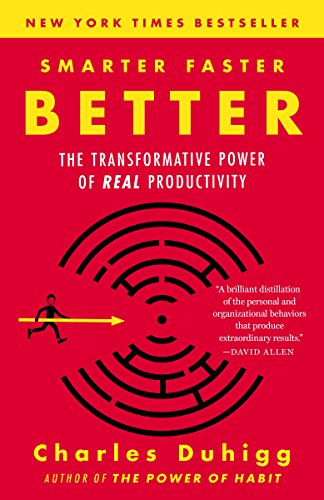
Smarter Faster Better: The Secrets of Being Productive in Life and Business
A new book that explores the science of productivity, and why, in today’s world, managing how you think—rather than what you think—can transform your life.
Recommended by Chelsea Frank, Mike Benkovich, and Pierrette Abeel.
Chelsea Frank
I read everything with an open mind, often challenging myself by choosing books with an odd perspective or religious/spiritual views. These books do not reflect my personal feelings but are books that helped shape my perspective on life, love, and happiness. [source]
Mike Benkovich
Last year I read the book 'Smarter Faster Better: The Secrets of Being Productive in Life and Business' by Charles Duhigg. Look passed the click-baity title and you'll find one of the best books on productivity I've ever read... And I've read a lot of them. [source]
Cover unavailable
24
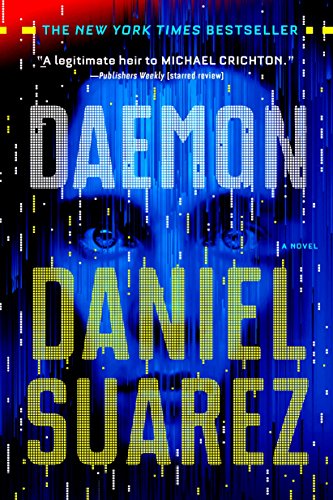
Daemon (Daemon, #1)
Daniel Suarez
4.4
A high-tech thriller for the wireless age that explores the unthinkable consequences of a computer program running without human control—a daemon—designed to dismantle society and bring about a new world order
Technology controls almost everything in our modern-day world, from remote entry on our cars to access to our homes, from the flight controls of our airplanes to the movements of the entire world economy. Thousands of autonomous computer programs, or daemons, make our networked world possible, running constantly in the background of our lives, trafficking e-mail, transferring money, and monitoring power grids. For the most part, daemons are benign, but the same can't always be said for the people who design them.
Matthew Sobol was a legendary computer game designer—the architect behind half-a-dozen popular online games. His premature death depressed both gamers and his company's stock price. But Sobol's fans aren't the only ones to note his passing. When his obituary is posted online, a previously dormant daemon activates, initiating a chain of events intended to unravel the fabric of our hyper-efficient, interconnected world. With Sobol's secrets buried along with him, and as new layers of his daemon are unleashed at every turn, it's up to an unlikely alliance to decipher his intricate plans and wrest the world from the grasp of a nameless, faceless enemy—or learn to live in a society in which we are no longer in control. . . .
Computer technology expert Daniel Suarez blends haunting high-tech realism with gripping suspense in an authentic, complex thriller in the tradition of Michael Crichton, Neal Stephenson, and William Gibson.
Eric Weinstein recommended this book on Twitter. [source]
Cover unavailable
25
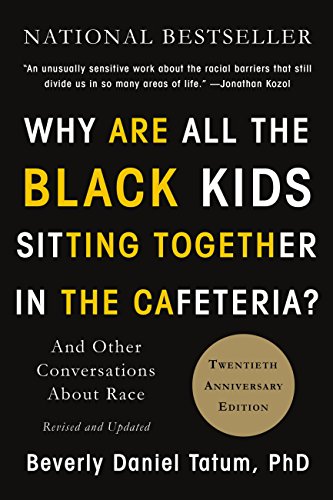
Why Are All the Black Kids Sitting Together in the Cafeteria?: And Other Conversations About Race
Beverly Daniel Tatum
4.4
The classic, bestselling book on the psychology of racism-now fully revised and updated
Walk into any racially mixed high school and you will see Black, White, and Latino youth clustered in their own groups. Is this self-segregation a problem to address or a coping strategy? Beverly Daniel Tatum, a renowned authority on the psychology of racism, argues that straight talk about our racial identities is essential if we are serious about enabling communication across racial and ethnic divides. These topics have only become more urgent as the national conversation about race is increasingly acrimonious. This fully revised edition is essential reading for anyone seeking to understand the dynamics of race in America.
"An unusually sensitive work about the racial barriers that still divide us in so many areas of life."-Jonathan Kozol
…
Recommended by Denise Morris Kipnis.
Denise Morris Kipnis
I was serving on the board of a prestigious and exclusive school when I first read this. As part of the school’s commitment to inclusion, every group, including the board, went through diversity training. Our consultant, Glenn Singleton of Pacific Education Group, never let us forget why we were there: that improving outcomes for all our students was a business imperative. As a result of this experience, I blended organizational development and diversity and inclusion for my graduate thesis, and this is still the bedrock of my consulting practice. [source]
Cover unavailable
26
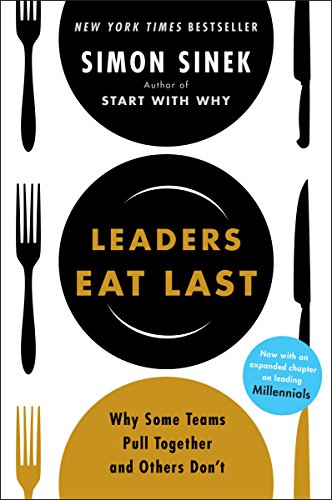
Leaders Eat Last
Simon Sinek
4.4
The highly anticipated follow-up to Simon Sinek’s global bestseller Start with Why Simon Sinek is an optimist, a visionary thinker, and a leader of the cultural revolution of WHY. His second book is the natural extension of Start with Why, expanding his ideas at the organizational level. Determining a company’s WHY is crucial, but only the beginning. The next step is how do you get people on board with your WHY? How do you inspire deep trust and commitment to the company and one another? He cites the Marine Corps for having found a way to build a culture in which men and women are willing to risk their lives, because they know others would do the same for them. It’s not brainwashing; it’s actually based on the biology of how and when people are naturally at their best. If businesses could adopt this supportive mentality, employees would be more motivated to take bigger risks, because they’d know their colleagues and company would back them up, no matter what. Drawing on powerful and inspiring stories, Sinek shows how to sustain an organization’s WHY while continually adding people to the mix.
…
Recommended by AnneMarie Schindler, Dan Rockwell, Intern John, and 1 others.
AnneMarie Schindler
I picked up Leaders Eat Last when I was going through a lot of transition at work. Our organization had experienced a significant scandal; the leadership team which I really respected was turning over; my direct boss and mentor was leaving; And I was still charged with managing one of the bigger teams in the organization. I would read this quote over and over again to guide my everyday,"the true price of leadership is the willingness to place the needs of others above your own. Great leaders truly care about those they are privileged to lead and understand that the true cost of the leadership privilege comes at the expense of self-interest." It grounded me in what was important and when I made it a core value for myself, I was easy to use that as a benchmark for myself and influence my team to operate at a higher standard. [source]
Intern John
My parents got me this book, love it, and suggest you read! #leadership #leader https://t.co/AI4Yr5Szqi [source]
Superintelligence asks the questions: what happens when machines surpass humans in general intelligence? Will artificial agents save or destroy us? Nick Bostrom lays the foundation for understanding the future of humanity and intelligent life.
The human brain has some capabilities that the brains of other animals lack. It is to these distinctive capabilities that our species owes its dominant position. If machine brains surpassed human brains in general intelligence, then this new superintelligence could become extremely powerful--possibly beyond our control. As the fate of the gorillas now depends more on humans than on the species itself, so would the fate of humankind depend on the actions of the machine superintelligence.
But we have one advantage: we get to make the first move. Will it be possible to construct a seed Artificial Intelligence, to engineer initial conditions so as to make an intelligence explosion survivable? How could one achieve a controlled detonation?
…
Recommended by Elon Musk, Maria Ramos, and Will MacAskill.
Worth reading Superintelligence by Bostrom. We need to be super careful with AI. Potentially more dangerous than nukes. [source]
Maria Ramos
CEO/Barclays Africa
Ramos will take the summer to examine some of the questions weighing more heavily on humankind as we contemplate our collective future: what happens when we can write our own genetic codes, and what happens when we create technology that is meaningfully more intelligent than us. The Gene: An Intimate History—Siddhartha Mukherjee Superintelligence: Paths, Dangers, Strategies—Nick Bostrom The Ministry of Utmost Happiness—Arundhati Roy [source]
Will MacAskill
I picked this book because the possibility of us developing human-level artificial intelligence, and from there superintelligence—an artificial agent that is considerably more intelligent than we are—is at least a contender for the most important issue in the next two centuries. Bostrom’s book has been very influential in effective altruism, lots of people work on artificial intelligence in order to ensure that it is developed safely. I don’t agree with the entire contents of the book, but there are many compelling arguments in it. It would be extremely overconfident to dismiss this book as too speculative. In fact, I think there should be a lot more work that tries to understand the biggest challenges for the next two hundred years, and what we could do to try to overcome them. [source]
Cover unavailable
28
About Face: The Essentials of Interaction Design
Alan Cooper, Robert Reimann, et al.
4.3
The three editions of "About Face" have shaped and evolved the landscape of interaction design, bringing it from the research labs into every day lexicon and development. The fourth edition of this groundbreaking book will be no less game changing.
The 4th edition of "About Face "is the most significant revision yet, with a new unique design and 4-color interior, dedicated web site, and classroom ancillaries. The revision takes into account the worldwide shift to smartphones and tablets on the consumer and enterprise level and how designing for these devices is not as easy as just downsizing a website.
The new edition includes: Dynamic 4-color interiorUpdates to reflect new thinking in interface, interaction and product design methodsNew content relevant to the popularization of mobile platforms and differing screen sizesEvolving design in platforms such as consumer electronics and other ubiquitous devicesUpdated examples to reflect current state-of-the-art interfaces and up to date case studiesUpdates to Cooper's immensely popular Goal-Directed Design methodologyFull training and classroom materials for corporate trainings or university textsDedicated website created by Cooper to complement the examples and instruction in the book
…
Recommended by Jeff Atwood, Bret Victor, and 1 others.
Robert Greene is a master guide for millions of readers, distilling ancient wisdom and philosophy into essential texts for seekers of power, understanding and mastery. Now he turns to the most important subject of all - understanding people's drives and motivations, even when they are unconscious of them themselves. We are social animals. Our very lives depend on our relationships with people. Knowing why people do what they do is the most important tool we can possess, without which our other talents can only take us so far. Drawing from the ideas and examples of Pericles, Queen Elizabeth I, Martin Luther King Jr, and many others, Greene teaches us how to detach ourselves from our own emotions and master self-control, how to develop the empathy that leads to insight, how to look behind people's masks, and how to resist conformity to develop your singular sense of purpose. Whether at work, in relationships, or in shaping the world around you, The Laws of Human Nature offers brilliant tactics for success, self-improvement, and self-defence.
Robert has been writing this book since Mastery came out in 2013 and it shows - it's a spectacular masterwork that builds atop all his other books. Robert's book have always been an unvarnished look at how the world really works, for better and for worse. What I like about this book is that it pushes us to question our own biases, our own assumptions, irrationalities and tendencies. It's almost as if we believe other people have a 'human nature' but we don't - we're logical, fair, motivated by higher purposes always. Of course this is silly. Lots of good stuff here for anyone in a position of leadership, who works with an audience or studies human behavior. [source]
Ayush Kumar
People are the ROI, people are the asset, everything is people and one needs to understand people. [source]
Cover unavailable
30
The Jolly Postman, or Other People's Letters
Janet Ahlberg, Allan Ahlberg
4.3
Join the Jolly Postman as he goes on his rounds via bicycle, delivering mail to Goldilocks, Cinderella, Jack's Giant, and other fairy-tale characters. Tucked into envelopes are actual letters for children to pluck out. Humorous and engaging, this is the perfect read over a spot of tea. Ahhh!
Cover unavailable
31
My Grandmother's Hands: Racialized Trauma and the Mending of Our Bodies and Hearts
Resmaa Menakem
4.3
The body is where our instincts reside and where we fight, flee, or freeze, and it endures the trauma inflicted by the ills that plague society. In this groundbreaking work, therapist Resmaa Menakem examines the damage caused by racism in America from the perspective of body-centered psychology. He argues this destruction will continue until Americans learn to heal the generational anguish of white supremacy, which is deeply embedded in all our bodies. Our collective agony doesn't just affect African Americans. White Americans suffer their own secondary trauma as well. So do blue Americans—our police.
My Grandmother's Hands is a call to action for all of us to recognize that racism is not about the head, but about the body, and introduces an alternative view of what we can do to grow beyond our entrenched racialized divide.
Paves the way for a new, body-centered understanding of white supremacy—how it is literally in our blood and our nervous system.
Offers a step-by-step solution—a healing process—in addition to incisive social commentary.
Resmaa Menakem, MSW, LICSW, is a therapist with decades of experience currently in private practice in Minneapolis, MN, specializing in trauma, body-centered psychotherapy, and violence prevention. He has appeared on the Oprah Winfrey Show and Dr. Phil as an expert on conflict and violence. Menakem has studied with bestselling authors Dr. David Schnarch (Passionate Marriage) and Dr. Bessel van der Kolk (The Body Keeps the Score). He also trained at Peter Levine's Somatic Experiencing Trauma Institute.
…
Cover unavailable
32
The Gift of Fear: Survival Signals That Protect Us from Violence
Gavin De Becker
4.3
True fear is a gift. Unwarranted fear is a curse. Learn how to tell the difference.
A date won't take "no" for an answer. The new nanny gives a mother an uneasy feeling. A stranger in a deserted parking lot offers unsolicited help. The threat of violence surrounds us every day. But we can protect ourselves, by learning to trust—and act on—our gut instincts.
In this empowering book, Gavin de Becker, the man Oprah Winfrey calls the nation's leading expert on violent behavior, shows you how to spot even subtle signs of danger—before it's too late. Shattering the myth that most violent acts are unpredictable, de Becker, whose clients include top Hollywood stars and government agencies, offers specific ways to protect yourself and those you love, including how to act when approached by a stranger, when you should fear someone close to you, what to do if you are being stalked, how to uncover the source of anonymous threats or phone calls, the biggest mistake you can make with a threatening person, and more. Learn to spot the danger signals others miss. It might just save your life.
The Gift of Fear by Gavin de Becker shares a bunch of anecdotes from violent attacks, how the victims often knew per instinct that something wasn’t right, but suppressed that instinct for fear of seeming rude or silly or whatever. He also presents a bunch of analytical frameworks for evaluating threats, stalkers, and other menaces. But it’s not a dry textbook. Gavin had a violent upbringing and brings a lot of personal anecdotes and perspectives to bear as well. [source]
Nicholas C. Zakas
If I had a daughter, girlfriend, or wife, I’d highly recommend this book to them. https://t.co/rwuAY7cIXw Less useful for men unless you have reason to fear assassination, but an interesting read nonetheless. [source]
Cover unavailable
33
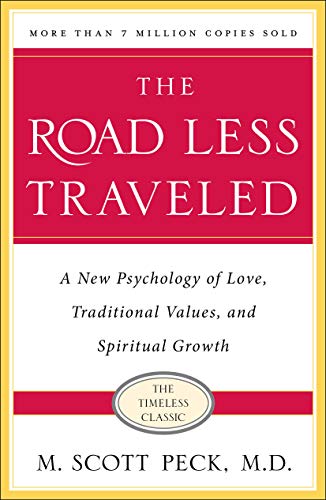
The Road Less Traveled: A New Psychology of Love, Traditional Values and Spiritual Growth
The Road Less Traveled: A New Psychology of Love, Traditional Values and Spiritual Growth 316 pp. "Psychotherapy is all things to all people in this mega-selling pop-psychology watershed, which features a new introduction by the author in this 25th anniversary edition. His agenda in this tome, which was first published in 1978 but didn't become a bestseller until 1983, is to reconcile the psychoanalytic tradition with the conflicting cultural currents roiling the 70s. In the spirit of Me-Decade individualism and libertinism, he celebrates self-actualization as life's highest purpose and flirts with the notions of open marriage and therapeutic sex between patient and analyst. But because he is attuned to the nascent conservative backlash against the therapeutic worldview, Peck also cites Gospel passages, recruits psychotherapy to the cause of traditional religion (he even convinces a patient to sign up for divinity school) and insists that problems must be overcome through suffering, discipline and hard work (with a therapist.) Often departing from the cerebral and rationalistic bent of Freudian discourse for a mystical, Jungian tone more compatible with New Age spirituality, Peck writes of psychotherapy as an exercise in "love" and "spiritual growth," asserts that "our unconscious is God" and affirms his belief in miracles, reincarnation and telepathy. Peck's synthesis of such clashing elements (he even throws in a little thermodynamics) is held together by a warm and lucid discussion of psychiatric principles and moving accounts of his own patients' struggles and breakthroughs. Harmonizing psychoanalysis and spirituality, Christ and Buddha, Calvinist work ethic and interminable talking cures, this book is a touchstone of our contemporary religio-therapeutic culture." -- Publishers WeeklyKeywords: MIND & BODY PSYCHOLOGY SOCIOLOGY RELIGION
…
Recommended by John C. Maxwell, Iulian Stanciu, and 1 others.
Iulian Stanciu
It helps you take a deeper look and understand why certain things happen in your life. It's an introduction to psychology. It helps you divide a person, just like you would do with a mathematical equation. [source]
Cover unavailable
34
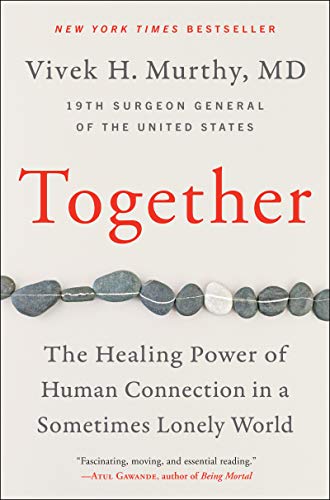
Together The Healing Power of Human Connection in a Sometimes Lonely World
Vivek H Murthy M.D.
4.3
Humans are social creatures: in this simple and obvious fact lies both the problem and the solution to the current crisis of loneliness. In his groundbreaking book, the 19th Surgeon General of the United States Dr. Vivek Murthy makes a case for loneliness as a public health concern: a root cause and contributor to many of the epidemics sweeping the world today from alcohol and drug addiction to violence to depression and anxiety. Loneliness, he argues, is affecting not only our health but also how our children experience school, how we perform in the workplace, and the sense of division and polarization in our society.
But, at the center of our loneliness is our innate desire to connect. We have evolved to participate in community, to forge lasting bonds with others, to help one another, and to share life experiences. We are, simply, better together.
And yet, in spite of our desire to connect, Dr. Murthy found loneliness in the stories of people everywhere and he wanted to know why. He traveled the country and abroad, meeting with doctors, scientists, children, parents, and community members, and looked to the latest science to better understand why people are feeling so disconnected. It’s no surprise, that in our increasingly complex world, Murthy found equally complex forces contributing to loneliness.
While technology promises to connect us, it can also isolate; while mobility means our loved ones are only a train ride or flight away, we also move away from the communities where we grew up; while we increasingly have the opportunity to pursue our individual destinies, we can put our own goals ahead of our relationships and community; and despite all of the progress we have made in how we talk about mental health, we are still ashamed of feeling lonely. Dr. Murthy further contextualizes the subject with explorations of the social and evolutionary implications of our need to connect and what happens when we find ourselves untethered.
The good news is that with awareness of the causes of our loneliness, comes creative solutions to help ourselves and those we love to create more connected lives. Together offers inspiring and encouraging stories of individuals and communities who are making great strides in helping us to understand that we are not alone.
Told with great compassion and hope, Dr. Murthy makes a powerful and convincing argument for why we can and must build a more connected world.
…
Recommended by Susan Cain, Ben Silbermann, and Daniel Pink.
Susan Cain
Author
Sometimes the most obvious thing is the hardest to see. Thank goodness we have this author to light the way toward understanding loneliness and its dark corners. This book is a gift for us all. [source]
Ben Silbermann
An extraordinary and essential book for our time. With powerful stories and sobering truths, the author does a masterful job of showing how, even in the digital age, there’s no substitute for authentic human connection. [source]
Made me rethink much of what I believe about physical health, public policy, and the human condition. By revealing America’s epidemic of loneliness—and then offering an array of remedies for the condition—The author has done a great service, and made this book the most important book you’ll read this year. [source]
Cover unavailable
35
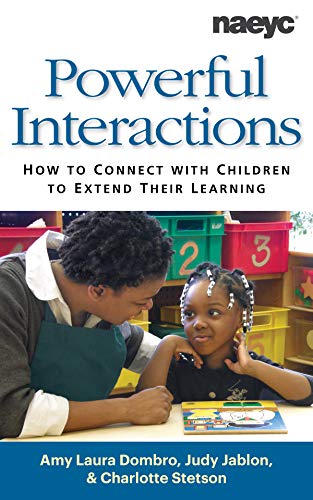
Powerful Interactions: How to Connect with Children to Extend Their Learning
Amy Laura Dombro
4.3
Cover unavailable
36
Interaction of Color
Josef Albers, Nicholas Fox Weber
4.3
Josef Albers’s Interaction of Color is a masterwork in twentieth-century art education. Conceived as a handbook and teaching aid for artists, instructors, and students, this timeless book presents Albers’s unique ideas of color experimentation in a way that is valuable to specialists as well as to a larger audience.
Originally published by Yale University Press in 1963 as a limited silkscreen edition with 150 color plates, Interaction of Color first appeared in paperback in 1971, featuring ten representative color studies chosen by Albers. The paperback has remained in print ever since and is one of the most influential resources on color for countless readers.
This new paperback edition presents a significantly expanded selection of more than thirty color studies alongside Albers’s original unabridged text, demonstrating such principles as color relativity, intensity, and temperature; vibrating and vanishing boundaries; and the illusions of transparency and reversed grounds. Now available in a larger format and with enhanced production values, this expanded edition celebrates the unique authority of Albers’s contribution to color theory and brings the artist’s iconic study to an eager new generation of readers.
…
Cover unavailable
37
"FRISPECT" - Turn Friction into Mutual Respect: The Transformative Power of Harmony in Personal and Professional Interactions
Sreedhar Kajeepeta and Lemuel Lasher
4.3
"FRISPECT" is a work of fiction based on real-life incidents. The backdrop is modern-day corporate America but the book is for anyone who loves to indulge in a bit of self-reflection, especially millennials in the workforce and their parents. The story underscores and celebrates the power of harmony - the power that transforms friction into mutual respect engendering the qualities of value-creation, introspection, compassion, and forgiveness to make us better and happier individuals.
Brilliant distillations of the strategies of war—and the subtle social game of everyday life—by the bestselling author of The 48 Laws of Power and Mastery
Robert Greene’s groundbreaking guides, The 48 Laws of Power, The Art of Seduction, and his latest book, Mastery, espouse profound, timeless lessons from the events of history to help readers vanquish an enemy, ensnare an unsuspecting victim, or become the greatest in your field. In The 33 Strategies of War, Greene has crafted an important addition to this ruthless and unique series.
Spanning world civilizations, synthesizing dozens of political, philosophical, and religious texts and thousands of years of violent conflict, The 33 Strategies of War is a comprehensive guide to the subtle social game of everyday life informed by the most ingenious and effective military principles in war. Structured in Greene’s trademark style, The 33 Strategies of War is the I-Ching of conflict, the contemporary companion to Sun Tzu’s The Art of War.
Abundantly illustrated with examples from history, including the folly and genius of everyone from Napoleon to Margaret Thatcher, Shaka the Zulu to Lord Nelson, Hannibal to Ulysses S. Grant, as well as movie moguls, Samurai swordsmen, and diplomats, each of the thirty-three chapters outlines a strategy that will help you win life’s wars. Learn the offensive strategies that require you to maintain the initiative and negotiate from a position of strength, or the defensive strategies designed to help you respond to dangerous situations and avoid unwinnable wars. The great warriors of battlefields and drawing rooms alike demonstrate prudence, agility, balance, and calm, and a keen understanding that the rational, resourceful, and intuitive always defeat the panicked, the uncreative, and the stupid. An indispensable book, The 33 Strategies of War provides all the psychological ammunition you need to overcome patterns of failure and forever gain the upper hand.
#1 NEW YORK TIMES BESTSELLER - A timely and important new book that challenges everything we think we know about cultivating true belonging in our communities, organizations, and culture, from the #1 bestselling author of Rising Strong, Daring Greatly, and The Gifts of Imperfection
"True belonging doesn't require us to change who we are. It requires us to be who we are." Social scientist Brene Brown, PhD, LMSW, has sparked a global conversation about the experiences that bring meaning to our lives--experiences of courage, vulnerability, love, belonging, shame, and empathy. In Braving the Wilderness, Brown redefines what it means to truly belong in an age of increased polarization. With her trademark mix of research, storytelling, and honesty, Brown will again change the cultural conversation while mapping a clear path to true belonging.
Brown argues that we're experiencing a spiritual crisis of disconnection, and introduces four practices of true belonging that challenge everything we believe about ourselves and each other. She writes, "True belonging requires us to believe in and belong to ourselves so fully that we can find sacredness both in being a part of something and in standing alone when necessary. But in a culture that's rife with perfectionism and pleasing, and with the erosion of civility, it's easy to stay quiet, hide in our ideological bunkers, or fit in rather than show up as our true selves and brave the wilderness of uncertainty and criticism. But true belonging is not something we negotiate or accomplish with others; it's a daily practice that demands integrity and authenticity. It's a personal commitment that we carry in our hearts." Brown offers us the clarity and courage we need to find our way back to ourselves and to each other. And that path cuts right through the wilderness. Brown writes, "The wilderness is an untamed, unpredictable place of solitude and searching. It is a place as dangerous as it is breathtaking, a place as sought after as it is feared. But it turns out to be the place of true belonging, and it's the bravest and most sacred place you will ever stand."
…
Recommended by Ashley Hathaway and Cat Williams-Treloar.
Ashley Hathaway
One thing I have learned is that some books don’t stick or I’m not ready for them at that time and that’s ok. Now if I get 50 or 100 pages in and lose interest I don’t struggle through the rest of it. I put it down and find another book. I try to just stick with books that I think about when I’m not reading. When I’m standing in line somewhere or walking and think “I wonder what’s next.” That’s a good book. I’m in the middle of Brene Brown’s new book right now. [source]
Cat Williams-Treloar
This year when I read "Braving the Wilderness" by Brene Brown it had a tremendous impact on how I behaved as an entrepreneur. Coming from a corporate world where it's about the brand to a startup world where it's a brand with your face was scary. Brene Brown helped with my confidence. [source]
Cover unavailable
40
2019 Lippincott Pocket Drug Guide for Nurses
Amy M. Karch RNMS
4.3
The 2019 Lippincott's Pocket Drug Guide for Nurses provides current, vital drug information “in a nutshell for the nurse on-the-go.” Written by Amy Karch, this handy pocket guide by the same author gives essential information on over 2,000 medications, including 25 generic drugs newly approved by the FDA, in an easy-access A-to-Z format. The “mini” drug monographs include generic and trade names, drug class, pregnancy risk category and controlled substance schedule, “black box” warnings, indications & dosages, dose adjustments, adverse effects, drug interactions, nursing considerations, and patient teaching. Detailed appendices cover topical and ophthalmic medications, laxatives, combination products, contraceptives, and biological agents (vaccines). The pocket-sized 2019 Lippincott's Pocket Drug Guide for Nurses will quickly become your go-to-guide for important drug facts and vital patient safety tips & alerts.
…
Cover unavailable
41
The Inmates are Running the Asylum: Why High-tech Products Drive Us Crazy and How to Restore the Sanity
"You'll not only break the ice, you'll melt it away with your new skills." -- Larry King
"The lost art of verbal communication may be revitalized by Leil Lowndes." -- Harvey McKay, author of "How to Swim with the Sharks Without Being Eaten Alive"
What is that magic quality makes some people instantly loved and respected? Everyone wants to be their friend (or, if single, their lover!) In business, they rise swiftly to the top of the corporate ladder. What is their "Midas touch?"
What it boils down to is a more skillful way of dealing with people.
The author has spent her career teaching people how to communicate for success. In her book How to Talk to Anyone (Contemporary Books, October 2003) Lowndes offers 92 easy and effective sure-fire success techniques-- she takes the reader from first meeting all the way up to sophisticated techniques used by the big winners in life. In this information-packed book you'll find:
9 ways to make a dynamite first impression 14 ways to master small talk, "big talk," and body language 14 ways to walk and talk like a VIP or celebrity 6 ways to sound like an insider in any crowd 7 ways to establish deep subliminal rapport with anyone 9 ways to feed someone's ego (and know when NOT to!) 11 ways to make your phone a powerful communications tool 15 ways to work a party like a politician works a room 7 ways to talk with tigers and not get eaten alive In her trademark entertaining and straight-shooting style, Leil gives the techniques catchy names so you'll remember them when you really need them, including: "Rubberneck the Room," "Be a Copyclass," "Come Hither Hands," "Bare Their Hot Button," "The Great Scorecard in the Sky," and "Play the Tombstone Game," for big success in your social life, romance, and business.
How to Talk to Anyone, which is an update of her popular book, Talking the Winner's Way (see the 5-star reviews of the latter) is based on solid research about techniques that work!
By the way, don't confuse How to Talk to Anyone with one of Leil's previous books, How to Talk to Anybody About Anything. This one is completely different!
…
Recommended by Derek Sivers, Nicolas Jouvenceau, and Sarissa Rodriguez-Schwartz.
Wonderful considerate book about conversational people skills. [source]
Nicolas Jouvenceau
In my career I spend a great chunk of time dealing with clients and people in general. Our environment today is different from what it was before, we spend a lot of time communicating via electronics that we actually lost some great deal of knowledge in human communication, things that we don’t really learn at school (we actually should), but which I believe are essential to communicating with our peers. Leil did a great job in that book to explain simply those tricks of communication, some of which I am sure lots of people will think trivial and already do, but many that we probably don’t realize we can use. [source]
Sarissa Rodriguez-Schwartz
That book is a great tool for networking and connecting with others. One of the most important tools I remember is to always speak to others about their jobs in the job "lingo" otherwise you come off as disrespectful and ignorant, immediately turning them off. … How to Talk to Anyone helped me change the way I see other people's careers, motives, and how to connect with that. I always say your net worth is your network. It's important to be able to connect with the people you meet, make them like you (if you like them, of course), and create meaningful relationships. [source]
The fiftieth Anniversary Edition of the groundbreaking international bestseller that has shown millions of readers how to achieve rich, productive lives by developing their hidden capacities for love
Most people are unable to love on the only level that truly matters: love that is compounded of maturity, self-knowledge, and courage. As with every art, love demands practice and concentration, as well as genuine insight and understanding.
In his classic work, The Art of Loving, renowned psychoanalyst and social philosopher Erich Fromm explores love in all its aspects—not only romantic love, steeped in false conceptions and lofty expectations, but also brotherly love, erotic love, self-love, the love of God, and the love of parents for their children.
The Person You Mean to Be: Confronting Bias to Build a Better Workplace and World
Dolly Chugh, Laszlo Bock
4.2
"Favorite Books of 2018" The Greater Good Magazine
Foreword by Laszlo Bock, the bestselling author of Work Rules! and former Senior Vice President of People Operations at Google
An inspiring guide from Dolly Chugh, an award-winning social psychologist at the New York University Stern School of Business, on how to confront difficult issues including sexism, racism, inequality, and injustice so that you can make the world (and yourself) better.
Many of us believe in equality, diversity, and inclusion. But how do we stand up for those values in our turbulent world? The Person You Mean to Be is the smart, "semi-bold" person’s guide to fighting for what you believe in.
Dolly reveals the surprising causes of inequality, grounded in the "psychology of good people". Using her research findings in unconscious bias as well as work across psychology, sociology, economics, political science, and other disciplines, she offers practical tools to respectfully and effectively talk politics with family, to be a better colleague to people who don’t look like you, and to avoid being a well-intentioned barrier to equality. Being the person we mean to be starts with a look at ourselves.
She argues that the only way to be on the right side of history is to be a good-ish— rather than good—person. Good-ish people are always growing. Second, she helps you find your "ordinary privilege"—the part of your everyday identity you take for granted, such as race for a white person, sexual orientation for a straight person, gender for a man, or education for a college graduate. This part of your identity may bring blind spots, but it is your best tool for influencing change. Third, Dolly introduces the psychological reasons that make it hard for us to see the bias in and around us. She leads you from willful ignorance to willful awareness. Finally, she guides you on how, when, and whom, to engage (and not engage) in your workplaces, homes, and communities. Her science-based approach is a method any of us can put to use in all parts of our life.
Whether you are a long-time activist or new to the fight, you can start from where you are. Through the compelling stories Dolly shares and the surprising science she reports, Dolly guides each of us closer to being the person we mean to be.
…
Recommended by Katherine Milkman.
Katherine Milkman
The highlight of my week was watching the amazing @DollyChugh discuss her book on holding ourselves to a higher ethical standard (by acknowledging we are biased and have room to grow) on the @TODAYshow! As always, I was so inspired by @DollyChugh’s message and grace. https://t.co/jzjP4ggbt5 [source]
A new edition of the #1 text in the human computer Interaction field!
Hugely popular with students and professionals alike, the Fifth Edition of Interaction Design is an ideal resource for learning the interdisciplinary skills needed for interaction design, human-computer interaction, information design, web design, and ubiquitous computing. New to the fifth edition: a chapter on data at scale, which covers developments in the emerging fields of 'human data interaction' and data analytics. The chapter demonstrates the many ways organizations manipulate, analyze, and act upon the masses of data being collected with regards to human digital and physical behaviors, the environment, and society at large.
Revised and updated throughout, this edition offers a cross-disciplinary, practical, and process-oriented, state-of-the-art introduction to the field, showing not just what principles ought to apply to interaction design, but crucially how they can be applied.
Explains how to use design and evaluation techniques for developing successful interactive technologies Demonstrates, through many examples, the cognitive, social and affective issues that underpin the design of these technologies Provides thought-provoking design dilemmas and interviews with expert designers and researchers Uses a strong pedagogical format to foster understanding and enjoyment An accompanying website contains extensive additional teaching and learning material including slides for each chapter, comments on chapter activities, and a number of in-depth case studies written by researchers and designers.
THE CONSUMER’S GUIDE TO PILLS—COMPLETELY REVISED 15TH EDITION FOR 2012 WITH MORE THAN 20 IMPORTANT NEW DRUGS AND DOZENS OF NEW BRAND NAMES
For more than three decades, millions of consumers have trusted The Pill Book to provide official, FDA-approved information on more than 1,800 of the most commonly prescribed drugs in the United States, with guidelines from leading pharmacists. Each drug is profiled in a concise, readable, easy-to-understand entry, making The Pill Book the perfect reference when you have questions about the medications your doctor prescribes. Inside you’ll discover
• generic and brand-name listings that can help you save money • what each drug is for, and how it works • usual dosages, and what to do if a dose is skipped • side effects and possible adverse reactions, highlighted for quick reference • interactions with other drugs and food • overdose and addiction potential • alcohol-free and sugar-free medications • the most popular self-injected medications and their safe handling • information for seniors, pregnant and breast-feeding women, children, and others with special needs • cautions and warnings, and when to call your doctor • 32 pages of actual-size color photographs of prescription pills
…
Cover unavailable
48
Tarot Interactions: Become More Intuitive, Psychic & Skilled at Reading Cards
Deborah Lipp
4.2
Designed for both beginners and advanced students, Tarot Interactions transcends the card-by-card approach and asks how the principle of interaction can bring reading the cards to a new and more intuitive place.
For the student of Tarot who knows the cards, but feels like there's further to go, Tarot Interactions offers lessons on: psychic ability, understanding patterns, how pairs of cards interact with each other, how a card interacts with its own position in a layout, understanding layouts as a whole, using language and storytelling to deepen a reading, and interacting with querents.
These lessons offer even the advanced student a sense that the cards can be more than the sum of their parts. Tarot Interactions is designed to take the student from good to great, from understanding to experiencing. It is a tool to stop reading the Tarot and start interacting with it, or to read it, not like a series of road signs, but like a story, or a poem, or the lyrics to a song.
…
Cover unavailable
49
Trauma and Recovery: The Aftermath of Violence--From Domestic Abuse to Political Terror
Judith L. Herman
4.2
When Trauma and Recovery was first published in 1992, it was hailed as a groundbreaking work. In the intervening years, Herman’s volume has changed the way we think about and treat traumatic events and trauma victims. In a new afterword, Herman chronicles the incredible response the book has elicited and explains how the issues surrounding the topic have shifted within the clinical community and the culture at large.Trauma and Recovery brings a new level of understanding to a set of problems usually considered individually. Herman draws on her own cutting-edge research in domestic violence as well as on the vast literature of combat veterans and victims of political terror, to show the parallels between private terrors such as rape and public traumas such as terrorism. The book puts individual experience in a broader political frame, arguing that psychological trauma can be understood only in a social context. Meticulously documented and frequently using the victims’ own words as well as those from classic literary works and prison diaries, Trauma and Recovery is a powerful work that will continue to profoundly impact our thinking.
…
Cover unavailable
50
Presence: Bringing Your Boldest Self to Your Biggest Challenges
Have you ever left a nerve-racking challenge and immediately wished for a do over? Maybe after a job interview, a performance, or a difficult conversation? The very moments that require us to be genuine and commanding can instead cause us to feel phony and powerless. Too often we approach our lives' biggest hurdles with dread, execute them with anxiety, and leave them with regret.
By accessing our personal power, we can achieve "presence," the state in which we stop worrying about the impression we're making on others and instead adjust the impression we've been making on ourselves. As Harvard professor Amy Cuddy's revolutionary book reveals, we don't need to embark on a grand spiritual quest or complete an inner transformation to harness the power of presence. Instead, we need to nudge ourselves, moment by moment, by tweaking our body language, behavior, and mind-set in our day-to-day lives.
Amy Cuddy has galvanized tens of millions of viewers around the world with her TED talk about "power poses." Now she presents the enthralling science underlying these and many other fascinating body-mind effects, and teaches us how to use simple techniques to liberate ourselves from fear in high-pressure moments, perform at our best, and connect with and empower others to do the same.
Brilliantly researched, impassioned, and accessible, Presence is filled with stories of individuals who learned how to flourish during the stressful moments that once terrified them. Every reader will learn how to approach their biggest challenges with confidence instead of dread, and to leave them with satisfaction instead of regret.
"Presence feels at once concrete and inspiring, simple but ambitious -- above all, truly powerful."-New York Times Book Review
…
Recommended by Ellen Lupton and Ryan Foland.
Ryan Foland
Finished listening to Presence: Bringing Your Boldest Self to Your Biggest ... by @amyjccuddy via #Audible. Great book 👍👍 Want it? Get it free: https://t.co/Q0kbPqqJuF [source]
Cover unavailable
51
Brainwashed: Challenging the Myth of Black Inferiority
Tom Burrell
4.2
“Black people are not dark-skinned white people,” says advertising visionary Tom Burrell. In fact, they are much more. They are survivors of the Middle Passage and centuries of humiliation and deprivation, who have excelled against the odds, constantly making a way out of “No way!” At this pivotal point in history, the idea of black inferiority should have had a “Going-Out-of-Business Sale.” After all, Barack Obama has reached America’s Promised Land.
Yet, as Brainwashed: Challenging the Myth of Black Inferiority testifies, too many in black America are still wandering in the wilderness. In this powerful examination of “the greatest propaganda campaign of all time”—the masterful marketing of black inferiority, aka the BI Complex—Burrell poses ten disturbing questions that will make black people look in the mirror and ask why, nearly 150 years after the Emancipation Proclamation, so many blacks still think and act like slaves. Burrell’s acute awareness of the power of words and images to shift, shape, and change the collective consciousness has led him to connect the contemporary and historical dots that have brought us to this crossroads.
Brainwashed is not a reprimand—it is a call to action. It demands that we question our self-defeating attitudes and behaviors. Racism is not the issue; how werespond to media distortions and programmed self-hatred is the issue. It’s time to reverse the BI campaign with a globally based initiative that harnesses the power of new media and the wisdom of intergenerational coalitions. Provocative and powerful, Brainwashed dares to expose the wounds so that we, at last, can heal.
…
Cover unavailable
52
On Killing: The Psychological Cost of Learning to Kill in War and Society
Dave Grossman
4.2
The good news is that most soldiers are loath to kill. But armies have developed sophisticated ways of overcoming this instinctive aversion. And contemporary civilian society, particularly the media, replicates the army's conditioning techniques, and, according to Lt. Col. Dave Grossman's thesis, is responsible for our rising rate of murder among the young.
Upon its initial publication, On Killingwas hailed as a landmark study of the techniques the military uses to overcome the powerful reluctance to kill, of how killing affects soldiers, and of the societal implications of escalating violence. Now, Grossman has updated this classic work to include information on 21st-century military conflicts, recent trends in crime, suicide bombings, school shootings, and more. The result is a work certain to be relevant and important for decades to come.
…
Cover unavailable
53
The Souls of Black Folk
W.E.B. Du Bois
4.2
This landmark book is a founding work in the literature of black protest. W. E. B. Du Bois (1868–1963) played a key role in developing the strategy and program that dominated early 20th-century black protest in America. In this collection of essays, first published together in 1903, he eloquently affirms that it is beneath the dignity of a human being to beg for those rights that belong inherently to all mankind. He also charges that the strategy of accommodation to white supremacy advanced by Booker T. Washington, then the most influential black leader in America, would only serve to perpetuate black oppression. Publication of The Souls of Black Folk was a dramatic event that helped to polarize black leaders into two groups: the more conservative followers of Washington and the more radical supporters of aggressive protest. Its influence cannot be overstated. It is essential reading for everyone interested in African-American history and the struggle for civil rights in America.
According to the president’s Facebook page and a 2008 interview with the New York Times, these titles are among his most influential forever favorites: Moby Dick, Herman Melville Self-Reliance, Ralph Waldo Emerson Song Of Solomon, Toni Morrison Parting The Waters, Taylor Branch Gilead, Marylinne Robinson Best and the Brightest, David Halberstam The Federalist, Alexander Hamilton Souls of Black Folk, W.E.B. Du Bois The Power and the Glory, Graham Greene The Quiet American, Graham Greene Cancer Ward, Aleksandr Solzhenitsyn Gandhi’s autobiography Working, Studs Terkel Wealth of Nations, Adam Smith Theory of Moral Sentiments, Adam Smith All the King’s Men, Robert Penn Warren [source]
Cover unavailable
54
Evil by Design: Interaction Design to Lead Us Into Temptation
Chris Nodder
4.2
How to make customers feel good about doing what you want
Learn how companies make us feel good about doing what they want. Approaching persuasive design from the dark side, this book melds psychology, marketing, and design concepts to show why we're susceptible to certain persuasive techniques. Packed with examples from every nook and cranny of the web, it provides easily digestible and applicable patterns for putting these design techniques to work. Organized by the seven deadly sins, it includes:
Pride -- use social proof to position your product in line with your visitors' values Sloth -- build a path of least resistance that leads users where you want them to go Gluttony -- escalate customers' commitment and use loss aversion to keep them there Anger -- understand the power of metaphysical arguments and anonymity Envy -- create a culture of status around your product and feed aspirational desires Lust -- turn desire into commitment by using emotion to defeat rational behavior Greed -- keep customers engaged by reinforcing the behaviors you desire Now you too can leverage human fallibility to create powerful persuasive interfaces that people will love to use -- but will you use your new knowledge for good or evil? Learn more on the companion website, evilbydesign.info.
…
Cover unavailable
55
Whistling Vivaldi: And Other Clues to How Stereotypes Affect Us
Claude M. Steele
4.2
Through dramatic personal stories, Claude Steele shares the experiments and studies that show, again and again, that exposing subjects to stereotypes—merely reminding a group of female math majors about to take a math test, for example, that women are considered naturally inferior to men at math—impairs their performance in the area affected by the stereotype. Steele’s conclusions shed new light on a host of American social phenomena, from the racial and gender gaps in standardized test scores to the belief in the superior athletic prowess of black men. Steele explicates the dilemmas that arise in every American’s life around issues of identity, from the white student whose grades drop steadily in his African American Studies class to the female engineering students deciding whether or not to attend predominantly male professional conferences. Whistling Vivaldi offers insight into how we form our senses of identity and ultimately lays out a plan for mitigating the negative effects of “stereotype threat” and reshaping American identities.
…
Recommended by Athene Donald.
Athene Donald
He demonstrated that a lot of people underperform because they expect to underperform. [source]
Cover unavailable
56
Incerto: Fooled by Randomness the Black Swan the Bed of Procrustes Antifragile
Nassim Nicholas Taleb
4.2
Nassim Nicholas Taleb s landmark Incerto series is an investigation of luck, uncertainty, probability, opacity, human error, risk, disorder, and decision-making in a world we don t understand, in nonoverlapping and standalone books. All four volumes "Antifragile, The Black Swan, Fooled by Randomness, "and the expanded edition of" The Bed of Procrustes, "updated with more than 50 percent new material are now together in one boxed set. ANTIFRAGILE Startling . . . richly crammed with insights, stories, fine phrases and intriguing asides. " The Wall Street Journal" Just as human bones get stronger when subjected to stress and tension, many things in life benefit from disorder, volatility, and turmoil. What Taleb has identified and calls antifragile is that category of things that not only gain from chaos but need it in order to survive and flourish. The resilient resists shocks and stays the same; the antifragile gets better and better. What is crucial is that the antifragile loves errors, as it incurs small harm and large benefits from them. Spanning politics, urban planning, war, personal finance, economic systems, and medicine in an interdisciplinary and erudite style, "Antifragile" is a blueprint for living in a Black Swan world. THE BLACK SWAN [A book] that altered modern thinking. "The Times" (London) A black swan is a highly improbable event with three principal characteristics: It is unpredictable; it carries a massive impact; and, after the fact, we concoct an explanation that makes it appear less random and more predictable. The astonishing success of Google was a black swan; so was 9/11. In this groundbreaking and prophetic book, Taleb shows that black swan events underlie almost everything about our world, from the rise of religions to events in our own personal lives, and yet we especially the experts are blind to them. FOOLED BY RANDOMNESS ["Fooled by Randomness"] is to conventional Wall Street wisdom approximately what Martin Luther s ninety-five theses were to the Catholic Church. Malcolm Gladwell, "The New Yorker" Are we capable of distinguishing the fortunate charlatan from the genuine visionary? Must we always try to uncover nonexistent messages in random events? "Fooled by Randomness" is about luck: more precisely, about how we perceive luck in our personal and professional experiences. Set against the backdrop of the most conspicuous forum in which luck is mistaken for skill the markets "Fooled by Randomness" is an irreverent, eye-opening, and endlessly entertaining exploration of one of the least understood forces in our lives. THE BED OF PROCRUSTES Taleb s crystalline nuggets of thought stand alone like esoteric poems. "Financial Times" This collection of aphorisms and meditations expresses Taleb s major ideas in ways you least expect. "The Bed of Procrustes" takes its title from Greek mythology: the story of a man who made his visitors fit his bed to perfection by either stretching them or cutting their limbs. With a rare combination of pointed wit and potent wisdom, Taleb plows through human illusions, contrasting the classical views of courage, elegance, and erudition against the modern diseases of nerdiness, philistinism, and phoniness."
…
Cover unavailable
57
I Hear You: The Surprisingly Simple Skill Behind Extraordinary Relationships
Michael S. Sorensen
4.2
What if making one tweak to your day-to-day conversations could immediately improve every relationship in your life?
In this 3-hour, conversational read, you'll discover the whats, whys, and hows of one of the most valuable (yet surprisingly little-known) communication skills available--validation.
Whether you're looking to improve your relationship with your spouse, navigate difficult conversations at work, or connect on a deeper level with friends and family, this book delivers simple, practical, proven techniques for improving any relationship in your life.
Mastery of this simple skill will enable you to:
Calm (and sometimes even eliminate) the concerns, fears, and uncertainties of othersIncrease feelings of love, respect, and appreciation in your romantic relationshipsQuickly resolve, or even prevent, argumentsHelp others become open to your point of viewGive advice and feedback that sticksProvide support and encouragement to others, even when you don't know how to "fix" the problemAnd much more In short: this skill is powerful. Give the principles and practices in this book a chance and you'll be amazed at the difference they can make.
…
Cover unavailable
58
Herbal Contraindications and Drug Interactions: Plus Herbal Adjuncts with Medicines
Francis Brinker
4.2
This book's first edition (1997) was the first of its kind in addressing herbal interactions with drugs. This 4th edition keeps current with research findings and scrupulously distinguishes between what is known through (1) empirical clinical observations such as case reports, (2) data obtained from modern clinical human studies, (3) different types of laboratory research on animals and with tissues and cells. Over 2700 medical and scientific sources are cited to document these findings. In addition, the type of preparation studied is described to emphasize differences between preparations from the same herb, along with dosage size and duration. Conflicting results are utilized to put these issues in context. This fourth edition further highlights those combinations of herbal preparations with drugs shown to beneficially enhance therapeutic activity or reduce adverse effects, identified for 98 of the 321 herbs listed in the main text. In addition, extensive appendices organize information on these 321 and additional herbal remedies into categories addressing specific cautions, interactions with particular types of drugs, precautions for mothers, infants and children, drug interactions with vitamins and minerals, and advantageous combinations with medicines usedfor inflammations, infections, cancer, and for addressing substance abuse.The appendix sections addressing herbal influences on drug absorption and metabolism involving transport proteins, cytochrome P450 isoenzymes, and conjugating enzymes are the most extensive compilations available anywhere.
…
Cover unavailable
59
Interactions 1 Listening/Speaking Student Book + e-Course Code: Silver Edition
Judith Tanka, Paul Most
4.2
Cover unavailable
60
What the Dog Saw and Other Adventures
Malcolm Gladwell
4.2
What is the difference between choking and panicking? Why are there dozens of varieties of mustard but only one variety of ketchup? What do football players teach us about how to hire teachers? What does hair dye tell us about the history of the 20th century?
In the past decade, Malcolm Gladwell has written three books that have radically changed how we understand our world and ourselves: The Tipping Point, Blink, and Outliers. Now, in What the Dog Saw, he brings together, for the first time, the best of his writing from The New Yorker over the same period.
Here you'll find the bittersweet tale of the inventor of the birth control pill, and the dazzling creations of pasta sauce pioneer Howard Moscowitz. Gladwell sits with Ron Popeil, the king of the American kitchen, as he sells rotisserie ovens, and divines the secrets of Cesar Millan, the "dog whisperer" who can calm savage animals with the touch of his hand. He explores intelligence tests and ethnic profiling and why it was that employers in Silicon Valley once tripped over themselves to hire the same college graduate.
@mrianleslie (Also I agree What the Dog Saw is his best book). [source]
Cover unavailable
61
Treatment of Autism Spectrum Disorders: Evidence-Based Intervention Strategies for Communication and Social Interactions
Dr. Patricia A. Prelock Ph.D.CCC-SLPBCS-CL, Rebecca J. McCauley Ph.D., et al.
4.2
With video clips that show the interventions in action! For SLPs preparing to work with children who have autism spectrum disorders, selecting effective interventions for communication and social challenges is critically important. This accessible textbook gives SLPs the in-depth knowledge they need to evaluate, choose, and apply today's best interventions for communication and social interactions.
With contributions from 25 top autism experts across multiple disciplines, this student-friendly text gives SLPs a thorough introduction to 12 widely used evidence-based interventions, including
augmentative and alternative communication strategies the Developmental Individual-Difference Relationship Based (DIR®) model Enhanced Milieu Teaching functional communication training joint action routines peer mediated support strategies Picture Exchange Communication System Pivotal Response Treatment Social Stories™ video modeling applications To help readers find the information they need and compare interventions easily, each chapter clearly lays out key details on each intervention's theoretical and empirical basis, practical requirements, components, applications for both children and adults, and considerations for children from diverse cultural and linguistic backgrounds. Brief, illustrative video clips and case studies show the interventions in action, and helpful learning activities prepare SLPs to make sound decisions in scenarios they're likely to encounter in the field. With this practical, expertly organized textbook, tomorrow's SLPs will expertly choose and apply interventions that improve the communication and social skills of people with autism spectrum disorders.
Treatment of Autism Spectrum Disorders is a part of the Communication and Language Intervention Series
…
Cover unavailable
62
The Digital Citizenship Handbook for School Leaders: Fostering Positive Interactions Online
Mike Ribble and Marty Park
4.2
In today's schools and districts, just saying "no" to bad technology practices is not enough. This leadership posture can take the form of extreme blocking and filtering of websites, providing little access to devices and declining to integrate digital tools and resources into learning out of fear of what else a student might do. Such a mindset can also lead to adults choosing not to engage -- or being unable to engage -- in conversations when students share stories about what a peer did online or through the latest app. Digital citizenship curriculum needs to be taught at two levels at once -- horizontal (the world immediately around students) and vertical (connecting to the rest of the world). This book provides education leaders a strategic road map that demonstrates how to incorporate these concepts into the curriculum so that digital citizenship isn't just "one more thing," but is threaded into the DNA of how educators teach and work. The book provides a five-year-plan for developing a digital citizenship program in your school; covers such topics as digital ethics and leveled approaches to digital citizenship; walks through the digital citizenship responsibilities and opportunities inherent in various roles, including library media specialists, classroom educators and special ed teachers; and offers strategies for spreading digital citizenship internationally and explores the future of digital citizenship.
…
Cover unavailable
63
Gender: Ideas, Interactions, Institutions
Lisa Wade and Myra Marx Ferree
4.2
The new gold standard for sociology of gender courses
Cover unavailable
64
I Hate You – Don't Leave Me: Understanding the Borderline Personality
Jerold J. Kreisman and Hal Straus
4.2
"Am I losing my mind?"
People with borderline personality disorder (BPD) experience such violent and frightening mood swings that they often fear for their sanity. They can be euphoric one moment, despairing and depressed the next. There are an estimated 18 million sufferers of BPD living in America today-each displaying remarkably similar symptoms:
• A shaky sense of identity • Sudden outbursts of anger • Oversensitivity to real or imagined rejection • Brief, turbulent love affairs • Intense feelings of emptiness • Eating disorders, drug abuse, and other self-destructive tendencies • An irrational fear of abandonment and an inability to be alone
For years BPD was difficult to describe, diagnose, and treat. But with this classic guide, Dr. Jerold J. Kreisman and health writer Hal Straus offer much- needed professional advice, helping victims and their families understand and cope with this troubling, shockingly widespread affliction. This completely revised and updated edition includes information on the most up-to-date research that has opened doors to the neurobiological, genetic, and developmental roots of the disorder, as well as the connections between BPD and substance abuse, sexual abuse, post-traumatic stress disorder, ADHD, and eating disorders, making it a vital reference for understanding and living with BPD.
…
Cover unavailable
65
Building Love Together in Blended Families: The 5 Love Languages and Becoming Stepfamily Smart
Gary Chapman
4.2
Learn how to create a loving and safe environment amidst the unique challenges of a blended family in this new book from Ron Deal and bestselling author of The 5 Love Languages®, Gary Chapman. Look for its release in 2020 or pre-order now.
Cover unavailable
66
Loneliness: Human Nature and the Need for Social Connection
John T. Cacioppo, William Patrick
4.1
“One of the most important books about the human condition to appear in a decade.”—Daniel Gilbert, author of Stumbling on Happiness
"Based on Jon T. Cacioppo's pioneering research, Loneliness explores the surprising effects of this all-too-human experience, providing a fundamentally new view of the importance of social connection and how it can rescue us from painful isolation. His studies relying on brain imaging, analysis of blood pressure, immune response, stress hormones, behavior, and even gene expression show that human beings are simply far more intertwined and interdependent - physiologically as well as psychologically - than our cultural assumptions have ever allowed us to acknowledge." Cacioppo's findings also show that prolonged loneliness can be as harmful to your health as smoking or obesity. On the flip side, they demonstrate the therapeutic power of social connection and point the way toward making that healing balm available to everyone.
…
Recommended by Margaret Morris.
Margaret Morris
One of the things I found really interesting in John Cacioppo’s work is that loneliness isn’t exclusively about receiving social support. It’s about participating in different kinds of relationships and communities. [source]
Cover unavailable
67
Is Everyone Ready for Fun?
Jan Thomas
4.1
Chicken has some unexpected and exuberant cow visitors who have exciting plans for jumping, dancing, and wiggling on his teeny-tiny couch, and Chicken is none too happy about it. That is until the fun concludes with a quiet, cozy and delicious nap for all!
Cover unavailable
68
Handbook of Food-Drug Interactions
Beverly McCabe-Sellers
4.1
Cover unavailable
69
I Spy With My Little Eye
Edward Gibbs
4.1
Look through this eye-catching book’s special spy hole to discover a world of animal colors!
Have you ever played the I-spy game? Debut artist Edward Gibbs takes the game to a whole new level in this picture book with spy holes. Peeking through the pages, children will be able to spot a different colored animal every time, and guess what it is using a simple, factual clue. Bold illustrations and die-cut holes will absorb young readers as they learn about colors and animal names.
Now in paperback, The Psychology Book explores more than 100 groundbreaking ideas in the field using highly visual graphics, clear text, a directory of scientists, and a vocabulary glossary.
The Psychology Book looks at the biggest names in psychology, including William James, Sigmund Freud, and Ivan Pavlov, and unpacks each psychologist's contribution to our understanding of how the mind works. From its philosophical roots through behaviorism, psychotherapy, and developmental psychology, The Psychology Book incorporates the latest thinkings of today's psychologists alongside the theories of ancient philosophers, as well as the key experiments and ideas of the scientists and practitioners of the 19th and 20th centuries.
Breaking down the most mysterious science of all, The Psychology Book is an essential, accessible, and comprehensive guide to psychology.
Series Overview: Big Ideas Simply Explained series uses creative design and innovative graphics, along with straightforward and engaging writing, to make complex subjects easier to understand. These award-winning books provide just the information needed for students, families, or anyone interested in concise, thought-provoking refreshers on a single subject.
…
Cover unavailable
71
Race Talk and the Conspiracy of Silence: Understanding and Facilitating Difficult Dialogues on Race
Derald Wing Sue
4.1
Turn Uncomfortable Conversations into Meaningful Dialogue
If you believe that talking about race is impolite, or that "colorblindness" is the preferred approach, you must read this book. Race Talk and the Conspiracy of Silence debunks the most pervasive myths using evidence, easy-to-understand examples, and practical tools.
This significant work answers all your questions about discussing race by covering:
Characteristics of typical, unproductive conversations on race Tacit and explicit social rules related to talking about racial issues Race-specific difficulties and misconceptions regarding race talk Concrete advice for educators and parents on approaching race in a new way "His insistence on the need to press through resistance to have difficult conversations about race is a helpful corrective for a society that prefers to remain silent about these issues." --Christopher Wells, Vice President for Student Life at DePauw University
"In a Canadian context, the work of Dr. Derald Wing Sue in Race Talk: and the Conspiracy of Silence is the type of material needed to engage a populace that is often described as 'Too Polite.' The accessible material lets individuals engage in difficult conversations about race and racism in ways that make the uncomfortable topics less threatening, resulting in a true 'dialogue' rather than a debate." --Darrell Bowden, M Ed. Education and Awareness Coordinator, Ryerson University
"He offers those of us who work in the Diversity and Inclusion space practical tools for generating productive dialogues that transcend the limiting constraints of assumptions about race and identity." --Rania Sanford, Ed.D. Associate Chancellor for Strategic Affairs and Diversity, Stanford University
"Sue's book is a must-read for any parent, teacher, professor, practioner, trainer, and facilitator who seeks to learn, understand, and advance difficult dialogues about issues of race in classrooms, workplaces, and boardrooms. It is a book of empowerment for activists, allies, or advocates who want to be instruments of change and to help move America from silence and inaction to discussion, engagement, and action on issues of difference and diversity. Integrating real life examples of difficult dialogues that incorporate the range of human emotions, Sue provides a masterful illustration of the complexities of dialogues about race in America. More importantly, he provides a toolkit for those who seek to undertake the courageous journey of understanding and facilitating difficult conversations about race." --Menah Pratt-Clarke, JD, PhD, Associate Provost for Diversity, University of Illinois Urbana-Champaign
…
Cover unavailable
72
Upstream: The Quest to Solve Problems Before They Happen
New York Times bestselling author Dan Heath examines how to prevent problems before they happen, drawing on insights from his innovative behavior research, as well as hundreds of new interviews with unconventional problem solvers.
Most of us spend our days handling a deluge of pressing issues. We’re so accustomed to managing emergencies as they strike that we often don’t stop to think about how we could prevent crises before they happen. Why stop at treating the symptoms when you could develop a cure? How many daily headaches do we tolerate because we’ve forgotten to fix them?
Whether it’s time management, supply chain logistics, or healthcare decisions, all over the world, persistent problems cost time, money, and lives. Upstream explains how to target the source of the problem rather than just reacting to it as it happens and introduces you to the thinkers who are chipping away at everyday frustrations and deep-rooted issues. One travel company saved 25 million customer phone calls every year by adding a simple step to its booking system. An insurance business, determined to help YMCAs across the country lower their number of accidental drownings to zero, has saved an untold number of lives. The LAPD track down more accurate addresses for suspects by buying access to the delivery data from local pizza shops. The CDC realized they could anticipate flu outbreaks by tracking thermometer sales in local pharmacies.
Drawing on hundreds of interviews, as well as his own innovative behavior research, New York Times bestselling author Dan Heath delivers practical solutions for preventing problems rather than simply reacting to them—revolutionizing how we approach professional and personal goals in our daily lives.
…
Cover unavailable
73
Coping Skills for Kids Workbook: Over 75 Coping Strategies to Help Kids Deal with Stress, Anxiety and Anger
Janine Halloran
4.1
Cover unavailable
74
Blindspot: Hidden Biases of Good People
Mahzarin R. Banaji
4.1
I know my own mind. I am able to assess others in a fair and accurate way.
These self-perceptions are challenged by leading psychologists Mahzarin R. Banaji and Anthony G. Greenwald as they explore the hidden biases we all carry from a lifetime of exposure to cultural attitudes about age, gender, race, ethnicity, religion, social class, sexuality, disability status, and nationality.
“Blindspot” is the authors’ metaphor for the portion of the mind that houses hidden biases. Writing with simplicity and verve, Banaji and Greenwald question the extent to which our perceptions of social groups—without our awareness or conscious control—shape our likes and dislikes and our judgments about people’s character, abilities, and potential.
In Blindspot, the authors reveal hidden biases based on their experience with the Implicit Association Test, a method that has revolutionized the way scientists learn about the human mind and that gives us a glimpse into what lies within the metaphoric blindspot.
The title’s “good people” are those of us who strive to align our behavior with our intentions. The aim of Blindspot is to explain the science in plain enough language to help well-intentioned people achieve that alignment. By gaining awareness, we can adapt beliefs and behavior and “outsmart the machine” in our heads so we can be fairer to those around us. Venturing into this book is an invitation to understand our own minds.
Brilliant, authoritative, and utterly accessible, Blindspot is a book that will challenge and change readers for years to come.
Praise for Blindspot
“Conversational . . . easy to read, and best of all, it has the potential, at least, to change the way you think about yourself.”—Leonard Mlodinow, The New York Review of Books “Accessible and authoritative . . . While we may not have much power to eradicate our own prejudices, we can counteract them. The first step is to turn a hidden bias into a visible one. . . . What if we’re not the magnanimous people we think we are?”—The Washington Post “Banaji and Greenwald deserve a major award for writing such a lively and engaging book that conveys an important message: Mental processes that we are not aware of can affect what we think and what we do. Blindspot is one of the most illuminating books ever written on this topic.”—Elizabeth F. Loftus, Ph.D., distinguished professor, University of California, Irvine; past president, Association for Psychological Science; author of Eyewitness Testimony
“A wonderfully cogent, socially relevant, and engaging book that helps us think smarter and more humanely. This is psychological science at its best, by two of its shining stars.”—David G. Myers, professor, Hope College, and author of Intuition: Its Powers and Perils
“[The authors’] work has revolutionized social psychology, proving that—unconsciously—people are affected by dangerous stereotypes.”—Psychology Today
“An accessible and persuasive account of the causes of stereotyping and discrimination . . . Banaji and Greenwald will keep even nonpsychology students engaged with plenty of self-examinations and compelling elucidations of case studies and experiments.”—Publishers Weekly
“A stimulating treatment that should help readers deal with irrational biases that they would otherwise consciously reject.”—Kirkus Reviews
From the Hardcover edition.
…
Cover unavailable
75
Demon Seed
Dean Koontz
4.1
Susan Harris lived in self-imposed seclusion, in a mansion featuring numerous automated systems controlled by a state-of-the-art computer. Every comfort was provided, and in this often unsafe world of ours, her security was absolute.
But now her security system has been breached, her sanctuary from the outside world violated by an insidious artificial intelligence, which has taken control of her house.In the privacy of her own home, and against her will, Susan will experience an inconceivable act of terror. She will become the object of the ultimate computer's consuming obsession: to learn everything there is to know about the flesh...
…
Cover unavailable
76
The Elements of User Experience: User-Centered Design for the Web and Beyond
Jesse James Garrett
4.1
From the moment it was published almost ten years ago, Elements of User Experience became a vital reference for web and interaction designers the world over, and has come to define the core principles of the practice. Now, in this updated, expanded, and full-color new edition, Jesse James Garrett has refined his thinking about the Web, going beyond the desktop to include information that also applies to the sudden proliferation of mobile devices and applications. Successful interaction design requires more than just creating clean code and sharp graphics. You must also fulfill your strategic objectives while meeting the needs of your users. Even the best content and the most sophisticated technology won't help you balance those goals without a cohesive, consistent user experience to support it. With so many issues involved--usability, brand identity, information architecture, interaction design-- creating the user experience can be overwhelmingly complex. This new edition of The Elements of User Experience cuts through that complexity with clear explanations and vivid illustrations that focus on ideas rather than tools or techniques. Garrett gives readers the big picture of user experience development, from strategy and requirements to information architecture and visual design.
…
Recommended by Kaci Lambe Kai.
Kaci Lambe Kai
These three books are about how people actually use design in their lives. They helped me understand this very basic idea: There are no dumb users, only bad designers. Take the time to create based on how your design will be interacted with. Test it. Iterate. That's how you become a good designer. [source]
Cover unavailable
77
The Sociopath Next Door
Martha Stout
4.1
Who is the devil you know?
Is it your lying, cheating ex-husband? Your sadistic high school gym teacher? Your boss who loves to humiliate people in meetings? The colleague who stole your idea and passed it off as her own?
In the pages of The Sociopath Next Door, you will realize that your ex was not just misunderstood. He’s a sociopath. And your boss, teacher, and colleague? They may be sociopaths too.
We are accustomed to think of sociopaths as violent criminals, but in The Sociopath Next Door, Harvard psychologist Martha Stout reveals that a shocking 4 percent of ordinary people—one in twenty-five—has an often undetected mental disorder, the chief symptom of which is that that person possesses no conscience. He or she has no ability whatsoever to feel shame, guilt, or remorse. One in twenty-five everyday Americans, therefore, is secretly a sociopath. They could be your colleague, your neighbor, even family. And they can do literally anything at all and feel absolutely no guilt.
How do we recognize the remorseless? One of their chief characteristics is a kind of glow or charisma that makes sociopaths more charming or interesting than the other people around them. They’re more spontaneous, more intense, more complex, or even sexier than everyone else, making them tricky to identify and leaving us easily seduced. Fundamentally, sociopaths are different because they cannot love. Sociopaths learn early on to show sham emotion, but underneath they are indifferent to others’ suffering. They live to dominate and thrill to win.
The fact is, we all almost certainly know at least one or more sociopaths already. Part of the urgency in reading The Sociopath Next Door is the moment when we suddenly recognize that someone we know—someone we worked for, or were involved with, or voted for—is a sociopath. But what do we do with that knowledge? To arm us against the sociopath, Dr. Stout teaches us to question authority, suspect flattery, and beware the pity play. Above all, she writes, when a sociopath is beckoning, do not join the game.
It is the ruthless versus the rest of us, and The Sociopath Next Door will show you how to recognize and defeat the devil you know.
…
Cover unavailable
78
Interactions in Ecology and Literature: Integrated Science and ELA Lessons for Gifted and Advanced Learners in Grades 2-3
Tamra Stambaugh Ph.D., Eric Fecht Ed.D, et al.
4.1
Interactions in Ecology and Literature integrates ecology with the concept of interactions and the reading of fictional and informational texts. This unit, developed by Vanderbilt University's Programs for Talented Youth, is aligned to the Common Core State Standards for English Language Arts and Next Generation Science Standards. Students will research questions such as "Should animals be kept in zoos?" and "Should humans intervene to control overpopulation of species?" They will examine relationships among living things and the environment as well as relationships between literary elements in texts through accelerated content, engaging activities, and differentiated tasks.
Grades 2–3
…
Cover unavailable
79
A-Z Guide to Drug-Herb-Vitamin Interactions Revised and Expanded 2nd Edition: Improve Your Health and Avoid Side Effects When Using Common Medications and Natural Supplements Together
Alan R. Gaby, Inc. Healthnotes
4.1
Know the Side Effects and Protect Your Health
If you’re among the millions of people taking prescription and over-the-counter drugs, as well as vitamins and natural medicines, you need to know which combinations are potentially helpful and which can be extremely dangerous. The A–Z Guide to Drug-Herb-Vitamin Interactions is an essential resource to understanding the interactions that may affect your health.
From the experts at Healthnotes, this revised and updated edition contains the newest information on thousands of drugs and supplements, based on studies published in the leading medical journals. Reliable and easy to use, this book is sure to become a trusted reference in your home.
MORE THAN 18,000 DRUG-HERB-VITAMIN INTERACTIONS
Find out about:
• Drugs that can deplete your body’s nutrients
• Supplements that can interfere with drug absorption
• Side effects of common drug-herb-vitamin combinations
• Supplements that can help your prescriptions work better
• Combinations that should never be taken together
• With a foreword by Dr. Bob Arnot
…
Cover unavailable
80
Designing Interfaces: Patterns for Effective Interaction Design
Jenifer Tidwell
4.1
Designing a good interface isn't easy. Users demand software that is well-behaved, good-looking, and easy to use. Your clients or managers demand originality and a short time to market. Your UI technology -- web applications, desktop software, even mobile devices -- may give you the tools you need, but little guidance on how to use them well.
UI designers over the years have refined the art of interface design, evolving many best practices and reusable ideas. If you learn these, and understand why the best user interfaces work so well, you too can design engaging and usable interfaces with less guesswork and more confidence.
Designing Interfaces captures those best practices as design patterns -- solutions to common design problems, tailored to the situation at hand. Each pattern contains practical advice that you can put to use immediately, plus a variety of examples illustrated in full color. You'll get recommendations, design alternatives, and warnings on when not to use them.
Each chapter's introduction describes key design concepts that are often misunderstood, such as affordances, visual hierarchy, navigational distance, and the use of color. These give you a deeper understanding of why the patterns work, and how to apply them with more insight.
A book can't design an interface for you -- no foolproof design process is given here -- but Designing Interfaces does give you concrete ideas that you can mix and recombine as you see fit. Experienced designers can use it as a sourcebook of ideas. Novice designers will find a roadmap to the world of interface and interaction design, with enough guidance to start using these patterns immediately.
“When this book was first published it received some attention from the critics but none at all from the public. Nazism was finished in the bunker in Berlin and its death warrant signed on the bench at Nuremberg.”
That’s Milton Mayer, writing in a foreword to the 1966 edition of They Thought They Were Free. He’s right about the critics: the book was a finalist for the National Book Award in 1956. General readers may have been slower to take notice, but over time they did—what we’ve seen over decades is that any time people, across the political spectrum, start to feel that freedom is threatened, the book experiences a ripple of word-of-mouth interest. And that interest has never been more prominent or potent than what we’ve seen in the past year.
They Thought They Were Free is an eloquent and provocative examination of the development of fascism in Germany. Mayer’s book is a study of ten Germans and their lives from 1933-45, based on interviews he conducted after the war when he lived in Germany. Mayer had a position as a research professor at the University of Frankfurt and lived in a nearby small Hessian town which he disguised with the name “Kronenberg.” “These ten men were not men of distinction,” Mayer noted, but they had been members of the Nazi Party; Mayer wanted to discover what had made them Nazis. His discussions with them of Nazism, the rise of the Reich, and mass complicity with evil became the backbone of this book, an indictment of the ordinary German that is all the more powerful for its refusal to let the rest of us pretend that our moment, our society, our country are fundamentally immune.
A new foreword to this edition by eminent historian of the Reich Richard J. Evans puts the book in historical and contemporary context. We live in an age of fervid politics and hyperbolic rhetoric. They Thought They Were Free cuts through that, revealing instead the slow, quiet accretions of change, complicity, and abdication of moral authority that quietly mark the rise of evil.
…
Cover unavailable
83
Prioritizing Web Usability
Jakob Nielsen and Hoa Loranger
4.1
In 2000, Jakob Nielsen, the world's leading expert on Web usability, published a book that changed how people think about the Web--"Designing Web Usability" (New Riders). Many applauded. A few jeered. But everyone listened. The best-selling usability guru is back and has revisited his classic guide, joined forces with Web usability consultant Hoa Loranger, and created an updated companion book that covers the essential changes to the Web and usability today. "Prioritizing Web Usability" is the guide for anyone who wants to take their Web site(s) to next level and make usability a priority! Through the authors' wisdom, experience, and hundreds of real-world user tests and contemporary Web site critiques, you'll learn about site design, user experience and usability testing, navigation and search capabilities, old guidelines and prioritizing usability issues, page design and layout, content design, and more!
Brag Better: Master the Art of Fearless Self-Promotion
Meredith Fineman
4.1
Talking about your accomplishments is scary and overwhelming, but it's vital to getting ahead in work and life. This new approach to self-promotion will erase your anxiety and empower you to champion yourself.
If you prefer to "just put your head down and do the work," or if you feel like bragging is icky, you are sabotaging yourself without knowing it. Doing good work is no guarantee anyone will notice it. You need a strategy for communicating your achievements and skill sets to others.
Meredith Fineman has built a thriving career training the Qualified Quiet: competent professionals who struggle to communicate their worth to others. Rather than pretending that you're more qualified or confident than you are, or inserting self-promotion into conversations at inappropriate times, Fineman advocates finding quiet confidence in your opinions, abilities, and background, and then turning up the volume.
In this book, Fineman shares the game-changing tools she's developed over the past decade that make bragging feel easy, including:
- Eliminate words that undermine your work and find better ones--like your bio saying you're "trying" or "attempting" to do something instead that you ARE doing it. - Get remembered by focusing your personal brand and voice on key adjectives (like "effective, subtle, and edgy") - Practice explaining what you do in simple, sticky terms to earn respect and recognition from the public and people at work
Our culture rewards loud voices over qualified ones. To create a thoughtful, diverse dialogue, we need you to tell the world who you are and what you want--with volume. If you're ready to unlock career opportunities and help others shine, this book is for you.
…
Cover unavailable
85
The War for Kindness: Building Empathy in a Fractured World
Jamil Zaki
4.1
"In this masterpiece, Jamil Zaki weaves together the very latest science with stories that will stay in your heart forever."--Angela Duckworth, author of Grit
Empathy is in short supply. We struggle to understand people who aren't like us, but find it easy to hate them. Studies show that we are less caring than we were even thirty years ago. In 2006, Barack Obama said that the United States was suffering from an "empathy deficit." Since then, things seem to have only gotten worse.
It doesn't have to be this way. In this groundbreaking book, Jamil Zaki shares cutting-edge research, including experiments from his own lab, showing that empathy is not a fixed trait--something we're born with or not--but rather a skill that can be strengthened through effort. He also tells the stories of people who embody this new perspective, fighting for kindness in the most difficult of circumstances. We meet a former neo-Nazi who is now helping to extract people from hate groups, ex-prisoners discussing novels with the judge who sentenced them, Washington police officers changing their culture to decrease violence among their ranks, and NICU nurses fine-tuning their empathy so that they don't succumb to burnout.
Written with clarity and passion, The War for Kindness is an inspiring call to action. The future may depend on whether we accept the challenge.
Praise for The War for Kindness
"A wide-ranging practical guide to making the world better."--NPR
"Relating anecdotes and test cases from his fellow researchers, news events and the imaginary world of literature and entertainment, Zaki makes a vital case for 'fighting for kindness.' . . . If he's right--and after reading The War for Kindness, you'll probably think so--Zaki's work is right on time." --San Francisco Chronicle
"In this landmark book, Jamil Zaki gives us a revolutionary perspective on empathy: Empathy can be developed, and, when it is, people, relationships, organizations, and cultures are changed."--Carol Dweck, author of Mindset
…
Recommended by Angela Duckworth, Arianna Huffington, Carol S. Dweck, and 3 others.
In this masterpiece, Jamil Zaki weaves together the very latest science with stories that will stay in your heart forever. If you'd like the world to be a kinder place, starting with your own capacity for empathy, read The War for Kindness. You'll never be the same. [source]
Arianna Huffington
Founder/The Huffington Post
Jamil Zaki's wonderful new book, The War for Kindness, shows that empathy isn't a fixed trait — it's something we can, and must, develop and nurture. https://t.co/LfRpjvhkY4 [source]
Carol S. Dweck
Author
In this landmark book, Jamil Zaki gives us a revolutionary perspective on empathy: Empathy can be developed, and, when it is, people, relationships, organizations, and cultures are changed. [source]
Cover unavailable
86
The Filter Bubble: What the Internet is Hiding From You
Eli Pariser
4.1
An eye-opening account of how the hidden rise of personalization on the Internet is controlling - and limiting - the information we consume.
In December 2009, Google began customizing its search results for each user. Instead of giving you the most broadly popular result, Google now tries to predict what you are most likely to click on. According to MoveOn.org board president Eli Pariser, Google's change in policy is symptomatic of the most significant shift to take place on the Web in recent years - the rise of personalization. In this groundbreaking investigation of the new hidden Web, Pariser uncovers how this growing trend threatens to control how we consume and share information as a society-and reveals what we can do about it.
Though the phenomenon has gone largely undetected until now, personalized filters are sweeping the Web, creating individual universes of information for each of us. Facebook - the primary news source for an increasing number of Americans - prioritizes the links it believes will appeal to you so that if you are a liberal, you can expect to see only progressive links. Even an old-media bastion like "The Washington Post" devotes the top of its home page to a news feed with the links your Facebook friends are sharing. Behind the scenes a burgeoning industry of data companies is tracking your personal information to sell to advertisers, from your political leanings to the color you painted your living room to the hiking boots you just browsed on Zappos.
In a personalized world, we will increasingly be typed and fed only news that is pleasant, familiar, and confirms our beliefs - and because these filters are invisible, we won't know what is being hidden from us. Our past interests will determine what we are exposed to in the future, leaving less room for the unexpected encounters that spark creativity, innovation, and the democratic exchange of ideas.
While we all worry that the Internet is eroding privacy or shrinking our attention spans, Pariser uncovers a more pernicious and far-reaching trend on the Internet and shows how we can - and must - change course. With vivid detail and remarkable scope, The Filter Bubble reveals how personalization undermines the Internet's original purpose as an open platform for the spread of ideas and could leave us all in an isolated, echoing world.
…
Cover unavailable
87
The Big Switch: Rewiring the World, from Edison to Google
Nicholas Carr
4.1
The definitive guide to the cloud computing revolution.
Hailed as "the most influential book so far on the cloud computing movement" (Christian Science Monitor), The Big Switch makes a simple and profound statement: Computing is turning into a utility, and the effects of this transition will ultimately change society as completely as the advent of cheap electricity did. In a new chapter for this edition that brings the story up-to-date, Nicholas Carr revisits the dramatic new world being conjured from the circuits of the "World Wide Computer."
…
Cover unavailable
88
Parent-Child Interaction Therapy
Cheryl Bodiford McNeil, Toni L. Hembree-Kigin, et al.
4.1
Parent-Child Interaction Therapy (PCIT) is used across the country and is rapidly gaining popularity elsewhere. This expanded book brings readers up to date on new practice developments, current treatment protocols, and the latest research findings.
Cover unavailable
89
Building Social Relationships: A Systematic Approach to Teaching Social Interaction Skills to Children and Adolescents with Autism Spectrum Disorders and Other Social Difficulties
Scott Bellini
4.1
Addresses the need for social programming for children and adolescents with ASD. This book provides a comprehensive five-step model that assess social functioning, distinguish between skill acquisition and performance deficits, select intervention strategies, implement intervention, and evaluate and monitor progress.
Cover unavailable
90
The Captain Class: The Hidden Force that Creates the World's Greatest Teams
Sam Walker
4.1
From the founding editor of The Wall Street Journal's sports section comes a bold new theory of leadership drawn from the elite captains who inspired their teams to achieve extraordinary success.
Named one of the best business books of the year by CNBC, strategy+business, Forbes, and SI.com
The secret to winning is not what you think it is. It's not the coach. It's not the star. It's not money. It's not a strategy. It's something else entirely.
Several years ago, Sam Walker set out to answer one of the most hotly debated questions in sports: What are the greatest teams of all time? He devised a formula, then applied it to thousands of teams from leagues all over the world, from the NBA to the English Premier League to Olympic field hockey. When he was done, he had a list of the sixteen most dominant teams in history. At that point, he became obsessed with another, more complicated question: What did these freak teams have in common?
As Walker dug into their stories, a pattern emerged: Each team had the same type of captain--a singular leader with an unconventional skill set who drove it to achieve sustained, historic greatness.
Fueled by a lifetime of sports spectating, twenty years of reporting, and a decade of painstaking research, The Captain Class tells the surprising story of what makes teams exceptional. Drawing on original interviews with athletes from two dozen countries, as well as general managers, coaches, executives, and others skilled at building teams, Walker identifies the seven core qualities of this Captain Class--from extreme doggedness and emotional control to a knack for nonverbal communication to tactical aggression and the courage to stand apart.
Told through riveting accounts of some of the most pressure-soaked moments in sports history--from Bill Russell's legendary "Coleman Play" in the 1957 NBA Finals to Barcelona's "Figo Game" against Real Madrid in 2000--The Captain Class doesn't just bring these events to life; it presents a fresh, counterintuitive take on leadership that can be applied to a wide spectrum of competitive disciplines.
The men and women who make up the Captain Class were never the most skilled athletes, nor were they gifted orators or paragons of sportsmanship. They were often role players who were allergic to the spotlight. In short, the seven attributes they shared challenge your assumptions of what inspired leadership looks like.
A fascinating book about the one thing that the greatest sports teams in history have in common and the critical aspects of leadership they share. [source]
This was definitely the best business/leadership book I read this year. It proves that we have really missed what makes great teams and organizations work. It’s not star players, it’s not even how much they can spend–it’s whether they have great captains. Walker’s chapter on “carrying the water” had some great insights re: Ego is the Enemy and I think this incredibly well-written book should be studied by anyone trying to build a great organization (or trying to find a role for themselves inside one). [source]
Cover unavailable
91
Ernie's Ark
Monica Wood
4.1
The paper mill looms up from the riverbank in Abbott Falls, Maine, a town once drenched with ordinary hopes and dreams, now praying for a small drop of good fortune. Ernie Whitten, a pipe fitter, was three weeks away from a pension-secured retirement when the union went on strike eight months ago. Now his wife Marie is ill. Struck with sudden inspiration, Ernie builds a giant ark in his backyard. It is a work of art for his wife; a vessel to carry them both away; or a plea for God to spare Marie, come hell or high water. As the ark takes shape, the rest of the town carries on. There’s Dan Little, a building-code enforcer who comes to fine Ernie for the ark and makes a significant discovery about himself; Francine Love, a precocious thirteen-year-old who longs to be a part of the family-like world of the union workers; and Atlantic Pulp & Paper CEO Henry John McCoy, an impatient man wearily determined to be a good father to his twenty-six-year-old daughter. The people of Abbott Falls will try their best to hold a community together, against the fiercest of odds. . . .
…
Cover unavailable
92
4 Essential Keys to Effective Communication in Love, Life, Work--Anywhere!: Including the "12-Day Communication Challenge!"
A How-To Guide for Practicing the Empathic Listening, Speaking, and Dialogue Skills to Achieve Relationship Success with the Important People in Your Life -- Including the "12-Day Communication Challenge!"
Cover unavailable
93
World Politics: Interests, Interactions, Institutions (Fourth Edition)
Jeffry A. Frieden, David A. Lake, et al.
4.0
Cover unavailable
94
Mental Models: Aligning Design Strategy with Human Behavior
Indi Young
4.0
There is no single methodology for creating the perfect product--but you can increase your odds. One of the best ways is to understand users' reasons for doing things. Mental Models gives you the tools to help you grasp, and design for, those reasons. Adaptive Path co-founder Indi Young has written a roll-up-your-sleeves book for designers, managers, and anyone else interested in making design strategic, and successful.
…
Recommended by David Kadavy.
Cover unavailable
95
Coaching with Powerful Interactions
Judy Jablon, Amy Laura Dombro, et al.
4.0
So much more than a book! Includes access to 30 coaching videos and bonus material. This essential guide for all coaches and professionals who support the work of teachers includes access to videos that describe how coaches have used the three steps of a Powerful Interaction to be more effective. Filled with information, guidance, reflections, and insight about coaching with Powerful Interactions.
Cover unavailable
96
Health Professional and Patient Interaction
Amy M. Haddad PhDRN, Regina F. Doherty OTDOTR/LFAOTA, et al.
4.0
Easily navigate through the complicated and challenging world of daily on-the-job human interactions, with Health Professional and Patient Interaction, 9th Edition. Covering strategies for effective communication, this time-tested guide offers the tools you need to establish positive patient and interprofessional relationships built on respect. It not only covers respectful actions and good decision-making, but also demonstrates how those decisions directly shape your on-the-job success. Practical examples and authentic scenarios highlight how to apply respect and professionalism to coworkers and patients of various ages and various backgrounds across a wide spectrum of healthcare environments. It's the foundation you need to effectively and successfully communicate on the job.
…
Cover unavailable
97
Simulation and Its Discontents
Sherry Turkle, William J. Clancey, et al.
4.0
How the simulation and visualization technologies so pervasive in science, engineering, and design have changed our way of seeing the world.
Over the past twenty years, the technologies of simulation and visualization have changed our ways of looking at the world. In Simulation and Its Discontents, Sherry Turkle examines the now dominant medium of our working lives and finds that simulation has become its own sensibility. We hear it in Turkle's description of architecture students who no longer design with a pencil, of science and engineering students who admit that computer models seem more "real" than experiments in physical laboratories.
Echoing architect Louis Kahn's famous question, "What does a brick want?", Turkle asks, "What does simulation want?" Simulations want, even demand, immersion, and the benefits are clear. Architects create buildings unimaginable before virtual design; scientists determine the structure of molecules by manipulating them in virtual space; physicians practice anatomy on digitized humans. But immersed in simulation, we are vulnerable. There are losses as well as gains. Older scientists describe a younger generation as "drunk with code." Young scientists, engineers, and designers, full citizens of the virtual, scramble to capture their mentors' tacit knowledge of buildings and bodies. From both sides of a generational divide, there is anxiety that in simulation, something important is slipping away. Turkle's examination of simulation over the past twenty years is followed by four in-depth investigations of contemporary simulation culture: space exploration, oceanography, architecture, and biology.
…
Recommended by Bret Victor.
Cover unavailable
98
Counseling the Culturally Diverse: Theory and Practice
Derald Wing Sue
4.0
A brand new, fully updated edition of the most widely-used, frequently-cited, and critically acclaimed multicultural text in the mental health field
This fully revised, 8th edition of the market-leading textbook on multicultural counseling comprehensively covers the most recent research and theoretical formulations that introduce and analyze emerging important multicultural topical developments. It examines the concept of "cultural humility" as part of the major characteristics of cultural competence in counselor education and practice; roles of white allies in multicultural counseling and in social justice counseling; and the concept of "minority stress" and its implications in work with marginalized populations. The book also reviews and introduces the most recent research on LGBTQ issues, and looks at major research developments in the manifestation, dynamics, and impact of microaggressions.
Chapters in Counseling the Culturally Diverse, 8th Edition have been rewritten so that instructors can use them sequentially or in any order that best suits their course goals. Each begins with an outline of objectives, followed by a real life counseling case vignette, narrative, or contemporary incident that introduces the major themes of the chapter. In-depth discussions of the theory, research, and practice in multicultural counseling follow.
Completely updated with all new research, critical incidents, and case examples Chapters feature an integrative section on "Implications for Clinical Practice," ending "Summary," and numerous "Reflection and Discussion Questions" Presented in a Vital Source Enhanced format that contains chapter-correlated counseling videos/analysis of cross-racial dyads to facilitate teaching and learning Supplemented with an instructor's website that offers a power point deck, exam questions, sample syllabi, and links to other learning resources Written with two new coauthors who bring fresh and first-hand innovative approaches to CCD Counseling the Culturally Diverse, 8th Edition is appropriate for scholars and practitioners who work in the mental health field related to race, ethnicity, culture, and other sociodemographic variables. It is also relevant to social workers and psychiatrists, and for graduate courses in counseling and clinical psychology related to working with culturally diverse populations.
…
Cover unavailable
99
It's the Little Things: Everyday Interactions That Anger, Annoy, and Divide the Races
Lena Williams
4.0
New York Times veteran Lena Williams candidly explores the everyday occurrences that strain racial relations, reaching a conclusion that "no one could disagree with" (The New York Times Book Review)
Although we no longer live in a legally segregated society, the division between blacks and whites never seems to go away. We work together, go to school together, and live near each other, but beneath it all there is a level of misunderstanding that breeds mistrust and a level of miscommunication that generates anger. Now in paperback, this is Lena Williams's honest look at the interactions between blacks and whites-the gestures, expressions, tones, and body language that keep us divided.
Frank, funny, and smart, It's the Little Things steps back from academia and takes a candid approach to race relations. Based on her own experiences as well as what she has learned from focus groups across the United States, Lena Williams does for race what Deborah Tannen did for gender. Finally, we have a book that traverses the color lines to help us understand, and eliminate, the alarmingly common interactions that get under the skin of both blacks and whites.
…
Cover unavailable
100
Human-Computer Interaction
Alan Dix, Janet E. Finlay, Gregory D. Abowd, Russell Beale
4.0
The second edition of Human-Computer Interaction established itself as one of the classic textbooks in the area, with its broad coverage and rigorous approach, this new edition builds on the existing strengths of the book, but giving the text a more student-friendly slant and improving the coverage in certain areas. The revised structure, separating out the introductory and more advanced material will make it easier to use the book on a variety of courses. This new edition now includes chapters on Interaction Design, Universal Access and Rich Interaction, as well as covering the latest developments in ubiquitous computing and Web technologies, making it the ideal text to provide a grounding in HCI theory and practice.


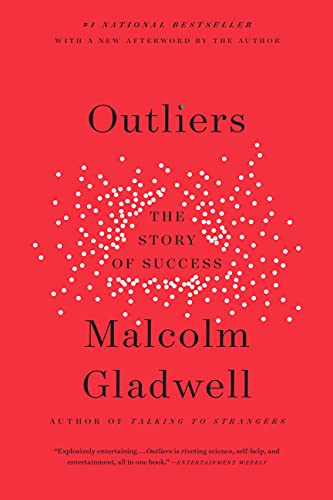 1
1