We've ranked the best educational psychology books using expert recommendations, sales data, and millions of reader ratings. At Shortform, we know books. Our book guides are the best in the world. Learn why.
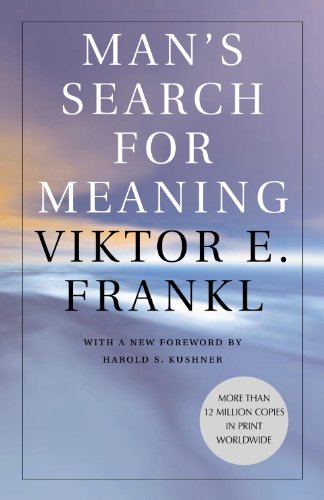
Man's Search for Meaning has riveted generations of readers with its descriptions of life in Nazi death camps and its lessons for spiritual survival. Between 1942 and 1945 psychiatrist Viktor Frankl labored in four different camps, including Auschwitz, while his parents, brother, and pregnant wife perished. Based on his own experience and the stories of his many patients, Frankl argues that we cannot avoid suffering but we can choose how to cope with it, find meaning in it, and move forward with renewed purpose. Frankl's theory—known as logotherapy, from the Greek word logos ("meaning")—holds that our primary drive in life is not pleasure, as Freud maintained, but the discovery and pursuit of what we personally find meaningful. In the decades since its first publication in 1959, Man's Search for Meaning has become a classic, with more than twelve million copies in print around the world. A 1991 Library of Congress survey that asked readers to name a "book that made a difference in your life" found Man's Search for Meaning among the ten most influential books in America. At once a memoir, a meditation, a treatise, and a history, it continues to inspire us all to find significance in the very act of living. (back cover)
…
Recommended by Tony Robbins, Dustin Moskovitz, Ev Williams, and 60 others.
Another book that I’ve read dozens of times. It taught me that if you change the meaning, you change everything. Meaning equals emotion, and emotion equals life. [source]
Dustin Moskovitz
Co-founder/Facebook and Asana
Dustin Moskovitz recommended this book on Twitter. [source]
I read it while spending ten days in the ICU of Bellevue hospital trying to reattach my finger from a ring avulsion accident in my kitchen. It talks about the meaning of life, and I believe you come out a better person from reading it. [source]
Now updated with new research — the book that has changed millions of lives.
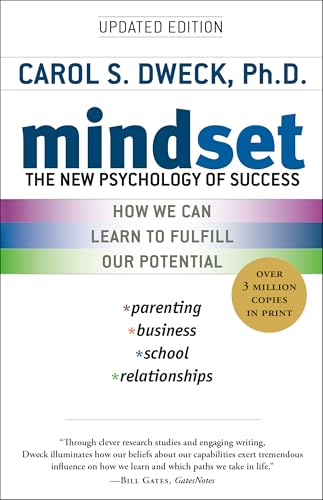
After decades of research, world-renowned Stanford University psychologist Carol S. Dweck, Ph.D., discovered a simple but groundbreaking idea: the power of mindset. In this brilliant book, she shows how success in school, work, sports, the arts, and almost every area of human endeavor can be dramatically influenced by how we think about our talents and abilities. People with a fixed mindset — those who believe that abilities are fixed — are less likely to flourish than those with a growth mindset — those who believe that abilities can be developed. Mindset reveals how great parents, teachers, managers, and athletes can put this idea to use to foster outstanding accomplishment.
In this edition, Dweck offers new insights into her now famous and broadly embraced concept. She introduces a phenomenon she calls false growth mindset and guides people toward adopting a deeper, truer growth mindset. She also expands the mindset concept beyond the individual, applying it to the cultures of groups and organizations. With the right mindset, you can motivate those you lead, teach, and love — to transform their lives and your own.
One of the reasons I loved Mindset is because it’s solutions-oriented. In the book’s final chapter, Dweck describes the workshop she and her colleagues have developed to shift students from a fixed to a growth mindset. These workshops demonstrate that ‘just learning about the growth mindset can cause a big shift in the way people think about themselves and their lives. [source]
Without exaggeration, I’ve never met a CEO who didn’t have Mindset on their bookshelf. It resonates with people who have become successful because the belief that your abilities can grow is foundational to their achievements. [source]
Major New York Times bestseller Winner of the National Academy of Sciences Best Book Award in 2012 Selected by the New York Times Book Review as one of the best books of 2011 A Globe and Mail Best Books of the Year 2011 Title One of The Economist's 2011 Books of the Year One of The Wall Street Journal's Best Nonfiction Books of the Year 2011 2013 Presidential Medal of Freedom Recipient
In the international bestseller, Thinking, Fast and Slow, Daniel Kahneman, the renowned psychologist and winner of the Nobel Prize in Economics, takes us on a groundbreaking tour of the mind and explains the two systems that drive the way we think. System 1 is fast, intuitive, and emotional; System 2 is slower, more deliberative, and more logical. The impact of overconfidence on corporate strategies, the difficulties of predicting what will make us happy in the future, the profound effect of cognitive biases on everything from playing the stock market to planning our next vacation—each of these can be understood only by knowing how the two systems shape our judgments and decisions. Engaging the reader in a lively conversation about how we think, Kahneman reveals where we can and cannot trust our intuitions and how we can tap into the benefits of slow thinking. He offers practical and enlightening insights into how choices are made in both our business and our personal lives—and how we can use different techniques to guard against the mental glitches that often get us into trouble. Winner of the National Academy of Sciences Best Book Award and the Los Angeles Times Book Prize and selected by The New York Times Book Review as one of the ten best books of 2011, Thinking, Fast and Slow is destined to be a classic.
A few months ago, Mr. Obama read “Thinking, Fast and Slow,” by Daniel Kahneman, about how people make decisions — quick, instinctive thinking versus slower, contemplative deliberation. For Mr. Obama, a deliberator in an instinctive business, this may be as instructive as any political science text. [source]
Captivating dive into human decision making, marred by inclusion of several/many? psychology studies that fail to replicate. Will stand as a cautionary tale? [source]
Cover unavailable
4
The Power of Habit: Why We Do What We Do in Life and Business
A young woman walks into a laboratory. Over the past two years, she has transformed almost every aspect of her life. She has quit smoking, run a marathon, and been promoted at work. The patterns inside her brain, neurologists discover, have fundamentally changed.
Marketers at Procter & Gamble study videos of people making their beds. They are desperately trying to figure out how to sell a new product called Febreze, on track to be one of the biggest flops in company history. Suddenly, one of them detects a nearly imperceptible pattern—and with a slight shift in advertising, Febreze goes on to earn a billion dollars a year.
An untested CEO takes over one of the largest companies in America. His first order of business is attacking a single pattern among his employees—how they approach worker safety—and soon the firm, Alcoa, becomes the top performer in the Dow Jones.
What do all these people have in common? They achieved success by focusing on the patterns that shape every aspect of our lives.
They succeeded by transforming habits.
In The Power of Habit, award-winning New York Times business reporter Charles Duhigg takes us to the thrilling edge of scientific discoveries that explain why habits exist and how they can be changed. With penetrating intelligence and an ability to distill vast amounts of information into engrossing narratives, Duhigg brings to life a whole new understanding of human nature and its potential for transformation.
Along the way we learn why some people and companies struggle to change, despite years of trying, while others seem to remake themselves overnight. We visit laboratories where neuroscientists explore how habits work and where, exactly, they reside in our brains. We discover how the right habits were crucial to the success of Olympic swimmer Michael Phelps, Starbucks CEO Howard Schultz, and civil-rights hero Martin Luther King, Jr. We go inside Procter & Gamble, Target superstores, Rick Warren’s Saddleback Church, NFL locker rooms, and the nation’s largest hospitals and see how implementing so-called keystone habits can earn billions and mean the difference between failure and success, life and death.
At its core, The Power of Habit contains an exhilarating argument: The key to exercising regularly, losing weight, raising exceptional children, becoming more productive, building revolutionary companies and social movements, and achieving success is understanding how habits work.
Habits aren’t destiny. As Charles Duhigg shows, by harnessing this new science, we can transform our businesses, our communities, and our lives.
…
Recommended by Naval Ravikant, Blake Irving, Alden Mills, and 15 others.
I also recently finished The Power of Habit, or close to finish as I get. That one was interesting, not because of its content necessarily, but because it’s good for me to always keep on top of mind how powerful my habits are. … I think learning how to break habits is a very important meta-skill that can serve you better in life than almost anything else. Although you can read tons of books on it, the reality is you’re never going to learn how to break bad habits until you just break them. [source]
Blake Irving
CEO/GoDaddy
You know, there's a book called The Power of Habit by Charles Duhigg. Simple read book about just how to build positive habits that can be I think I what I'd call you know whether in your personal life or whether in your business life to help you build you know, have a loop that can build your success and that's one I mean there are so many great books out there. [source]
Alden Mills
More recent books that have had a significant impact on me are The Power of Habit and The Diamond Cutter. Both represent different forces for me – the former helps me tactically with making incremental improvements in my life. [source]
Cover unavailable
5
Made to Stick: Why Some Ideas Survive and Others Die
NEW YORK TIMES BESTSELLER - The instant classic about why some ideas thrive, why others die, and how to improve your idea's chances--essential reading in the "fake news" era.
Mark Twain once observed, "A lie can get halfway around the world before the truth can even get its boots on." His observation rings true: Urban legends, conspiracy theories, and bogus news stories circulate effortlessly. Meanwhile, people with important ideas--entrepreneurs, teachers, politicians, and journalists--struggle to make them "stick."
In Made to Stick, Chip and Dan Heath reveal the anatomy of ideas that stick and explain ways to make ideas stickier, such as applying the human scale principle, using the Velcro Theory of Memory, and creating curiosity gaps. Along the way, we discover that sticky messages of all kinds--from the infamous "kidney theft ring" hoax to a coach's lessons on sportsmanship to a vision for a new product at Sony--draw their power from the same six traits.
Made to Stick will transform the way you communicate. It's a fast-paced tour of success stories (and failures): the Nobel Prize-winning scientist who drank a glass of bacteria to prove a point about stomach ulcers; the charities who make use of the Mother Teresa Effect; the elementary-school teacher whose simulation actually prevented racial prejudice.
Provocative, eye-opening, and often surprisingly funny, Made to Stick shows us the vital principles of winning ideas--and tells us how we can apply these rules to making our own messages stick.
@conorgil My all-time favorite example of research communication is The Selfish Gene. Astonishingly effective at explaining deep research ideas/findings to a lay reader. A book with great advice: https://t.co/QD1sM2o0z6 (It isn't specific to research but still super valuable.) [source]
Bill Liao
The Book "Made to Stick" combined with "The Poetics" by Aristotle really helped me to see the power of telling great stories with surprises in them and every time I meet a start-up I can always make a contribution to their pitch. [source]
Cristian-Dragos Baciu
I highly recommend all the books written by the Heath brothers, especially Made to Stick: Why Some Ideas Survive And Others Die. This one's a must-read for marketers. The reason I enjoyed their work so much is because they offer real-life stories and insights that makes it so much easier for the reader to imprint that information in his mind [source]
Drawing on cutting-edge neuroscience and psychology and displaying all of the brilliance that made The Tipping Point a classic, Blink changes the way you'll understand every decision you make. Never again will you think about thinking the same way.
Malcolm Gladwell redefined how we understand the world around us. Now, in Blink, he revolutionizes the way we understand the world within. Blink is a book about how we think without thinking, about choices that seem to be made in an instant - in the blink of an eye - that actually aren't as simple as they seem. Why are some people brilliant decision makers, while others are consistently inept? Why do some people follow their instincts and win, while others end up stumbling into error? How do our brains really work - in the office, in the classroom, in the kitchen, and in the bedroom? And why are the best decisions often those that are impossible to explain to others?
In Blink we meet the psychologist who has learned to predict whether a marriage will last, based on a few minutes of observing a couple; the tennis coach who knows when a player will double-fault before the racket even makes contact with the ball; the antiquities experts who recognize a fake at a glance. Here, too, are great failures of "blink": the election of Warren Harding; "New Coke"; and the shooting of Amadou Diallo by police. Blink reveals that great decision makers aren't those who process the most information or spend the most time deliberating, but those who have perfected the art of "thin-slicing" - filtering the very few factors that matter from an overwhelming number of variables.
…
Recommended by Ev Williams, Mike Shinoda, Marillyn Hewson, and 4 others.
Mike Shinoda
I know most of the guys in the band read this book. [source]
Marillyn Hewson
CEO/Lockheed Martin
CEO Marilyn Hewson recommends this book because it helped her to trust her instincts in business. [source]
Antonio Eram
When asked to name some books that had a big impact on him, Antonio mentioned Blink: The Power of Thinking Without Thinking by Malcolm Gladwell. [source]
Cover unavailable
7
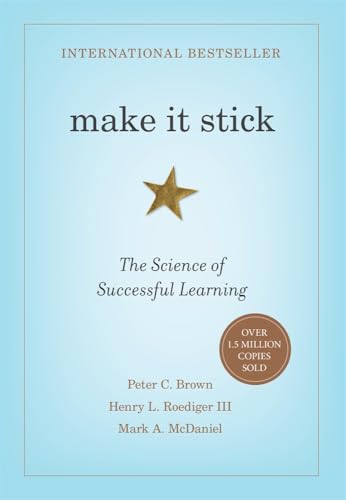
Make It Stick: The Science of Successful Learning
Peter C. Brown, Henry L. Roediger III, Mark A. McDaniel
To most of us, learning something "the hard way" implies wasted time and effort. Good teaching, we believe, should be creatively tailored to the different learning styles of students and should use strategies that make learning easier. Make It Stick turns fashionable ideas like these on their head. Drawing on recent discoveries in cognitive psychology and other disciplines, the authors offer concrete techniques for becoming more productive learners.
Memory plays a central role in our ability to carry out complex cognitive tasks, such as applying knowledge to problems never before encountered and drawing inferences from facts already known. New insights into how memory is encoded, consolidated, and later retrieved have led to a better understanding of how we learn. Grappling with the impediments that make learning challenging leads both to more complex mastery and better retention of what was learned.
Many common study habits and practice routines turn out to be counterproductive. Underlining and highlighting, rereading, cramming, and single-minded repetition of new skills create the illusion of mastery, but gains fade quickly. More complex and durable learning come from self-testing, introducing certain difficulties in practice, waiting to re-study new material until a little forgetting has set in, and interleaving the practice of one skill or topic with another. Speaking most urgently to students, teachers, trainers, and athletes, Make It Stick will appeal to all those interested in the challenge of lifelong learning and self-improvement.
If you’re trying to keep up your reading about learning, one of the best books about learning is Make It Stick: The Science of Successful Learning by Peter Brown, Henry Roediger III, and Mark McDaniel. This insightful book was co-authored by some of the most influential researchers around. The book jacket says it best: “Many common study habits and practice routines turn out to be counterproductive. Underlining and highlighting, rereading, cramming, and single-minded repetition of new skills create the illusion of mastery, but gains fade quickly. More complex and durable learning come from self-testing, introducing certain difficulties in practice, waiting to re-study new material until a little forgetting has set in, and interleaving the practice of one skill or topic with another. Speaking most urgently to students, teachers, trainers, and athletes, Make It Stick will appeal to all those interested in the challenge of lifelong learning and self-improvement. [source]
Cover unavailable
8
The Prince
Nicollo Machiavelli, Tim Parks
4.3
Niccolo Machiavelli's "The Prince" is intended to be a treatise on ruling and is considered by many to be a classic of political science. In the book Machiavelli offers many bits of practical advice on how to rule and even though the book was written in the early 16th century its ideas are still very relevant today. Where "The Prince" differs from other political literature before it is in its separation of the lofty idealism of morality and ethics from the practical demands of governing. It is this very aspect of Machiavelli's work that has made his name synonymous with an almost immoral opportunism and his book a timeless classic.
Which books should be read by every single intelligent person on planet? … The Prince (Machiavelli) to learn that people not in power will do all they can to acquire it, and people in power will do all they can to keep it. If you read all of the above works you will glean profound insight into most of what has driven the history of the western world. [source]
Of course, this is a must read. Machiavelli is one of those figures and writers who is tragically overrated and underrated at the same time. Unfortunately that means that many people who read him miss the point and other people avoid him and miss out altogether. Take Machiavelli slow, and really read him. Also understand the man behind the book–not just as a masterful writer but a man who withstood heinous torture and exile with barely a whimper. Machiavelli is a glimpse into a time when power was literal and out for public viewing–when he talks about making an example of someone, he doesn’t mean calling them out, he means putting their head on a pike. Don’t let that scare you because we’re not as far from that world as we’d like to think. Deny that at your own peril. [source]
Cover unavailable
9
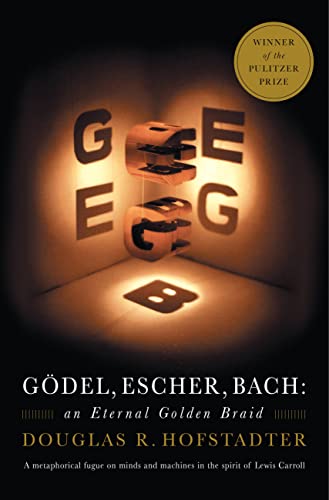
Gödel, Escher, Bach: An Eternal Golden Braid
Douglas R. Hofstadter
4.3
Douglas Hofstadter's book is concerned directly with the nature of “maps” or links between formal systems. However, according to Hofstadter, the formal system that underlies all mental activity transcends the system that supports it. If life can grow out of the formal chemical substrate of the cell, if consciousness can emerge out of a formal system of firing neurons, then so too will computers attain human intelligence. Gödel, Escher, Bach is a wonderful exploration of fascinating ideas at the heart of cognitive science: meaning, reduction, recursion, and much more.
…
Recommended by Steve Jurvetson, Seth Godin, Cory Zue, and 2 others.
Steve Jurvetson
Steve Jurvetson recommended this book on the podcast "The Tim Ferriss Show". [source]
In the last week, I discovered that at least two of my smart friends hadn't read Godel, Escher, Bach. They have now. You should too. [source]
Cory Zue
More recently books like Godel, Escher, Bach and Sapiens have influenced my thinking a lot. [source]
Cover unavailable
10
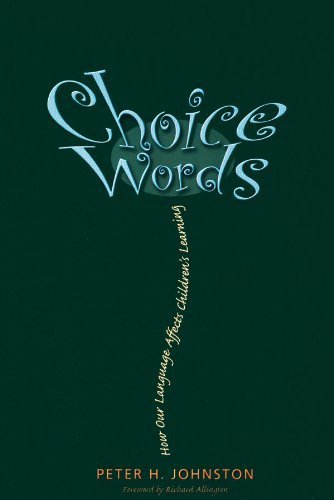
Choice Words: How Our Language Affects Children's Learning
Peter H. Johnston
4.3
In productive classrooms, teachers don't just teach children skills: they build emotionally and relationally healthy learning communities. Teachers create intellectual environments that produce not only technically competent students, but also caring, secure, actively literate human beings.
Choice Words shows how teachers accomplish this using their most powerful teaching tool: language. Throughout, Peter Johnston provides examples of apparently ordinary words, phrases, and uses of language that are pivotal in the orchestration of the classroom. Grounded in a study by accomplished literacy teachers, the book demonstrates how the things we say (and don't say) have surprising consequences for what children learn and for who they become as literate people. Through language, children learn how to become strategic thinkers, not merely learning the literacy strategies. In addition, Johnston examines the complex learning that teachers produce in classrooms that is hard to name and thus is not recognized by tests, by policy-makers, by the general public, and often by teachers themselves, yet is vitally important.
This book will be enlightening for any teacher who wishes to be more conscious of the many ways their language helps children acquire literacy skills and view the world, their peers, and themselves in new ways.
…
Cover unavailable
11
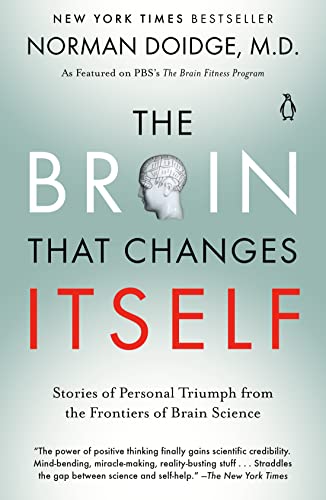
The Brain that Changes Itself: Stories of Personal Triumph from the Frontiers of Brain Science
An astonishing new science called neuroplasticity is overthrowing the centuries-old notion that the human brain is immutable. Psychiatrist and psychoanalyst, Norman Doidge, M.D., traveled the country to meet both the brilliant scientists championing neuroplasticity and the people whose lives they’ve transformed - people whose mental limitations or brain damage were seen as unalterable. We see a woman born with half a brain that rewired itself to work as a whole, blind people who learn to see, learning disorders cured, IQs raised, aging brains rejuvenated, stroke patients learning to speak, children with cerebral palsy learning to move with more grace, depression and anxiety disorders successfully treated, and lifelong character traits changed. Using these marvelous stories to probe mysteries of the body, emotion, love, sex, culture, and education, Dr. Doidge has written an immensely moving, inspiring book that will permanently alter the way we look at our brains, human nature, and human potential.
For me it was exciting to read this book because while my research shows a growth mindset is really good for you, this book shows that a growth mindset also has a strong basis in modern neuroscience. It illustrates, though fascinating case histories and descriptions of recent research, the amazing power of the brain to change and even to reorganise itself with practice and experience. [source]
Bogdana Butnar
I don't have favourite books. I equate a favourite something with wanting to do it over and over again and I've never wanted to read a book too many times. I have favourite authors and I have books that changed me in significant ways because they moved me or taught me something or changed my view of the world. So, here's some of those books... [source]
I think the book that I really, really enjoy was, "The Brain That Changes Itself." It's all about neuroplasticity, you'd really love that book. [source]
Cover unavailable
12
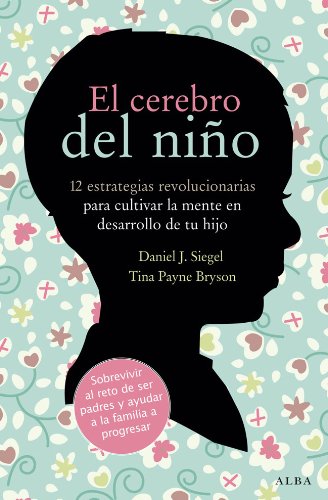
The Whole-Brain Child: 12 Revolutionary Strategies to Nurture Your Child's Developing Mind
“Simple, smart, and effective solutions to your child’s struggles.”—Harvey Karp, M.D.
“Daniel Siegel and Tina Payne Bryson have created a masterly, reader-friendly guide to helping children grow their emotional intelligence. This brilliant method transforms everyday interactions into valuable brain-shaping moments. Anyone who cares for children—or who loves a child—should read The Whole-Brain Child.”—Daniel Goleman, author of Emotional Intelligence
In this pioneering, practical book, Daniel J. Siegel, neuropsychiatrist and author of the bestselling Mindsight, and parenting expert Tina Payne Bryson offer a revolutionary approach to child rearing with twelve key strategies that foster healthy brain development, leading to calmer, happier children. The authors explain—and make accessible—the new science of how a child’s brain is wired and how it matures. The “upstairs brain,” which makes decisions and balances emotions, is under construction until the mid-twenties. And especially in young children, the right brain and its emotions tend to rule over the logic of the left brain. No wonder kids throw tantrums, fight, or sulk in silence. By applying these discoveries to everyday parenting, you can turn any outburst, argument, or fear into a chance to integrate your child’s brain and foster vital growth.
Complete with age-appropriate strategies for dealing with day-to-day struggles and illustrations that will help you explain these concepts to your child, The Whole-Brain Child shows you how to cultivate healthy emotional and intellectual development so that your children can lead balanced, meaningful, and connected lives. “[A] useful child-rearing resource for the entire family . . . The authors include a fair amount of brain science, but they present it for both adult and child audiences.”—Kirkus Reviews “Strategies for getting a youngster to chill out [with] compassion.”—The Washington Post “This erudite, tender, and funny book is filled with fresh ideas based on the latest neuroscience research. I urge all parents who want kind, happy, and emotionally healthy kids to read The Whole-Brain Child. This is my new baby gift.”—Mary Pipher, Ph.D., author of Reviving Ophelia and The Shelter of Each Other
“Gives parents and teachers ideas to get all parts of a healthy child’s brain working together.”—Parent to Parent
…
Recommended by Genevieve Von Lob and Graham Duncan.
Genevieve Von Lob
Siegel uses what neuroscience tells us about how a child’s brain develops to provide practical tips for parents. [source]
Graham Duncan
Graham Duncan recommended this book on the podcast "The Tim Ferriss Show". [source]
Cover unavailable
13
Phantoms in the Brain: Probing the Mysteries of the Human Mind
V. S. Ramachandran, Sandra Blakeslee, et al.
4.2
Neuroscientist V.S. Ramachandran is internationally renowned for uncovering answers to the deep and quirky questions of human nature that few scientists have dared to address. His bold insights about the brain are matched only by the stunning simplicity of his experiments -- using such low-tech tools as cotton swabs, glasses of water and dime-store mirrors. In Phantoms in the Brain, Dr. Ramachandran recounts how his work with patients who have bizarre neurological disorders has shed new light on the deep architecture of the brain, and what these findings tell us about who we are, how we construct our body image, why we laugh or become depressed, why we may believe in God, how we make decisions, deceive ourselves and dream, perhaps even why we're so clever at philosophy, music and art. Some of his most notable cases:
A woman paralyzed on the left side of her body who believes she is lifting a tray of drinks with both hands offers a unique opportunity to test Freud's theory of denial. A man who insists he is talking with God challenges us to ask: Could we be "wired" for religious experience? A woman who hallucinates cartoon characters illustrates how, in a sense, we are all hallucinating, all the time. Dr. Ramachandran's inspired medical detective work pushes the boundaries of medicine's last great frontier -- the human mind -- yielding new and provocative insights into the "big questions" about consciousness and the self.
…
Recommended by Lewis Wolpert.
Lewis Wolpert
It’s really about how people who have some physical injury to their brain can have fantasies that bear no relationship to reality whatsoever. [source]
Cover unavailable
14
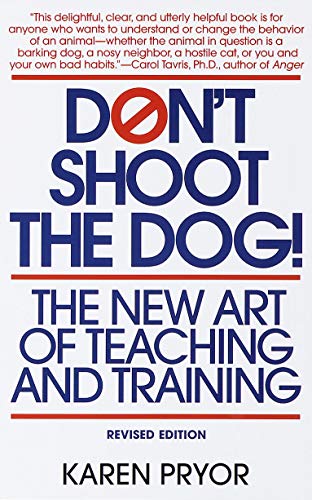
Don't Shoot the Dog!: The New Art of Teaching and Training
Karen Pryor
4.2
A Better Way to Better Behavior
Karen Pryor's clear and entertaining explanation of behavioral training methods made Don't Shoot the Dog! a bestselling classic. Now this revised edition presents more of her insights into animal—and human—behavior.
A groundbreaking behavioral scientist and dynamic animal trainer, Karen Pryor is a powerful proponent of the principles and practical uses of positive reinforcement in teaching new behaviors. Here are the secrets of changing behavior in pets, kids—even yourself—without yelling, threats, force, punishment, guilt trips...or shooting the dog:
•The principles of the revolutionary "clicker training" method, which owes its phenomenal success to its immediacy of response—so there is no question what action you are rewarding •8 methods of ending undesirable habits—from furniture-clawing cats to sloppy roommates •The 10 laws of "shaping" behavior–for results without strain or pain through "affection training" •Tips for house-training the dog, improving your tennis game, or dealing with an impossible teen •Explorations of exciting new uses for reinforcement training
Learn why pet owners rave, "This book changed our lives!" and how these pioneering techniques can work for you too.
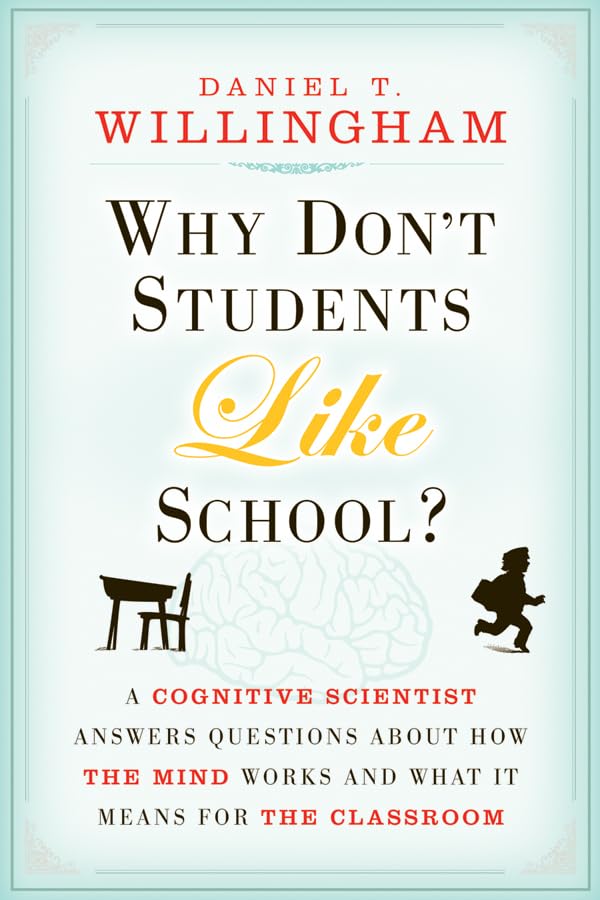
Why Don't Students Like School?: A Cognitive Scientist Answers Questions About How the Mind Works and What It Means for the Classroom
Daniel T. Willingham
4.2
Kids are naturally curious, but when it comes to school it seems like their minds are turned off. Why is it that they can remember the smallest details from their favorite television program, yet miss the most obvious questions on their history test?
Cognitive scientist Dan Willingham has focused his acclaimed research on the biological and cognitive basis of learning and has a deep understanding of the daily challenges faced by classroom teachers. this book will help teachers improve their practice by explaining how they and their students think and learn—revealing the importance of story, emotion, memory, context, and routine in building knowledge and creating lasting learning experiences.
In this breakthrough book, Willingham has distilled his knowledge of cognitive science into a set of nine principles that are easy to understand and have clear applications for the classroom. Some of examples of his surprising findings are:
“Learning styles” don't exist The processes by which different children think and learn are more similar than different.
Intelligence is malleable Intelligence contributes to school performance and children do differ, but intelligence can be increased through sustained hard work.
You cannot develop “thinking skills” in the absence of facts We encourage students to think critically, not just memorize facts. However thinking skills depend on factual knowledge for their operation.
Why Don't Students Like School is a basic primer for every teacher who wants to know how their brains and their students’ brains work and how that knowledge can help them hone their teaching skills.
The Self-Driven Child: The Science and Sense of Giving Your Kids More Control Over Their Lives
William Stixrud PhD and Ned Johnson
4.2
"Instead of trusting kids with choices . . . many parents insist on micromanaging everything from homework to friendships. For these parents, Stixrud and Johnson have a simple message: Stop." --NPR
"This humane, thoughtful book turns the latest brain science into valuable practical advice for parents." --Paul Tough, New York Times bestselling author of How Children Succeed
A few years ago, Bill Stixrud and Ned Johnson started noticing the same problem from different angles: Even high-performing kids were coming to them acutely stressed and lacking motivation. Many complained they had no control over their lives. Some stumbled in high school or hit college and unraveled. Bill is a clinical neuropsychologist who helps kids gripped by anxiety or struggling to learn. Ned is a motivational coach who runs an elite tutoring service. Together they discovered that the best antidote to stress is to give kids more of a sense of control over their lives. But this doesn't mean giving up your authority as a parent. In this groundbreaking book they reveal how you can actively help your child to sculpt a brain that is resilient, and ready to take on new challenges.
The Self-Driven Child offers a combination of cutting-edge brain science, the latest discoveries in behavioral therapy, and case studies drawn from the thousands of kids and teens Bill and Ned have helped over the years to teach you how to set your child on the real road to success. As parents, we can only drive our kids so far. At some point, they will have to take the wheel and map out their own path. But there is a lot you can do before then to help them tackle the road ahead with resilience and imagination.
A few years ago, Bill Stixrud and Ned Johnson started noticing the same problem from different angles: Even high-performing kids were coming to them acutely stressed and lacking motivation. Many complained they had no control over their lives. Some stumbled in high school or hit college and unraveled. Bill is a clinical neuropsychologist who helps kids gripped by anxiety or struggling to learn. Ned is a motivational coach who runs an elite tutoring service. Together they discovered that the best antidote to stress is to give kids more of a sense of control over their lives. But this doesn't mean giving up your authority as a parent. In this groundbreaking book they reveal how you can actively help your child to sculpt a brain that is resilient, and ready to take on new challenges. The Self-Driven Child offers a combination of cutting-edge brain science, the latest discoveries in behavioral therapy, and case studies drawn from the thousands of kids and teens Bill and Ned have helped over the years to teach you how to set your child on the real road to success. As parents, we can only drive our kids so far. At some point, they will have to take the wheel and map out their own path. But there is a lot you can do before then to help them tackle the road ahead with resilience and imagination. [source]
Cover unavailable
17
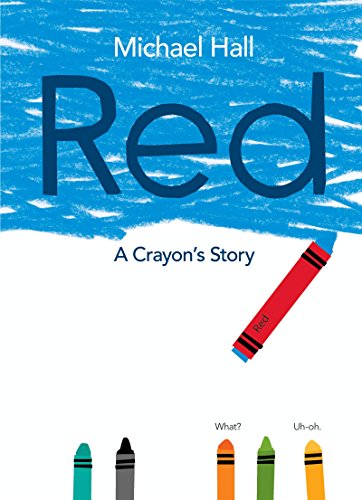
Red: A Crayon's Story
Michael Hall
4.2
A blue crayon mistakenly labeled as "red" suffers an identity crisis in the new picture book by the New York Times–bestselling creator of My Heart Is Like a Zoo and It's an Orange Aardvark! Funny, insightful, and colorful, Red: A Crayon's Story, by Michael Hall, is about being true to your inner self and following your own path despite obstacles that may come your way. Red will appeal to fans of Lois Ehlert, Eric Carle, and The Day the Crayons Quit, and makes a great gift for readers of any age!
Red has a bright red label, but he is, in fact, blue. His teacher tries to help him be red (let's draw strawberries!), his mother tries to help him be red by sending him out on a playdate with a yellow classmate (go draw a nice orange!), and the scissors try to help him be red by snipping his label so that he has room to breathe. But Red is miserable. He just can't be red, no matter how hard he tries! Finally, a brand-new friend offers a brand-new perspective, and Red discovers what readers have known all along. He's blue! This funny, heartwarming, colorful picture book about finding the courage to be true to your inner self can be read on multiple levels, and it offers something for everyone!
…
Cover unavailable
18
Educational Psychology: Developing Learners
Jeanne Ellis Ormrod, Eric M. Anderman, et al.
4.2
Help students understand their own learning and apply the core concepts and principles of educational psychology Educational Psychology: Developing Learnersis known for its exceptionally clear and engaging writing, its in-depth focus on learning, and its extensive concrete applications. The text's unique approach moves seamlessly between theory and application, helping students understand concepts by examining their own learning and then showing them how to apply these concepts as teachers. The 10th Edition reflects the most current research on learning, development, motivation, and assessment. It features extensive and integrated coverage of diversity, technology, contexts of learning, and neuropsychology. In addition, compelling application-based examples and authentic artifacts are included throughout the book to help readers connect educational psychology to real children and classrooms.
Also available with MyLab Education By combining trusted author content with digital tools and a flexible platform, MyLab personalizes the learning experience and improves results for each student.
Note: You are purchasing a standalone product; MyLab Education does not come packaged with this content. Students, if interested in purchasing this title with MyLab Education, ask your instructor to confirm the correct package ISBN and Course ID. Instructors, contact your Pearson representative for more information. If you would like to purchase both the physical text and MyLab Education, search for: 0135206006 / 9780135206003 Educational Psychology: Developing Learners plus MyLab Education with Pearson eText -- Access Card Package, 10/e Package consists of: 0135206472 / 9780135206478 Educational Psychology: Developing Learners, 10/e 0135208637 / 9780135208632 MyLab Education with Pearson eText -- Access Card -- for Educational Psychology: Developing Learners, 10/e
…
Cover unavailable
19
Design for How People Learn
Julie Dirksen
4.2
Products, technologies, and workplaces change so quickly today that everyone is continually learning. Many of us are also teaching, even when it's not in our job descriptions. Whether it's giving a presentation, writing documentation, or creating a website or blog, we need and want to share our knowledge with other people. But if you've ever fallen asleep over a boring textbook, or fast-forwarded through a tedious e-learning exercise, you know that creating a great learning experience is harder than it seems. In Design For How People Learn, Second Edition, you'll discover how to use the key principles behind learning, memory, and attention to create materials that enable your audience to both gain and retain the knowledge and skills you're sharing. Updated to cover new insights and research into how we learn and remember, this new edition includes new techniques for using social media for learning as well as two brand new chapters on designing for habit and best practices for evaluating learning, such as how and when to use tests. Using accessible visual metaphors and concrete methods and examples, Design For How People Learn, Second Edition will teach you how to leverage the fundamental concepts of instructional design both to improve your own learning and to engage your audience.
…
Recommended by Fabio Sasso.
Cover unavailable
20
Educational Psychology
Anita Woolfolk Hoy
4.2
The most current, comprehensive view of the field of educational psychology today Educational Psychology, 14th Edition emphasizes the educational implications and applications of research on child development, cognitive science, learning, motivation, teaching, and assessment. Theory and practice are considered together, showing how information and ideas drawn from educational psychology research can be applied to solve the everyday problems of teaching. Infused with real-world issues, lesson segments, case studies, and practical ideas from experienced teachers, Educational Psychology reflects the field and offers unique and crucial knowledge to any who dare to teach and to all who love to learn.
The 14th Edition provides cutting-edge coverage and intelligent examinations of emerging trends in the field and society that affect student learning, such as student diversity, inclusive classrooms, neuroscience, educational policy, and technology. Also available with MyLab Education MyLab(TM) is the teaching and learning platform that empowers you to reach every student. By combining trusted author content with digital tools and a flexible platform, MyLab personalizes the learning experience and improves results for each student. MyLab Education helps teacher candidates bridge the gap between theory and practice-better preparing them for success in their future classrooms.
Note: You are purchasing a standalone product; MyLab Education does not come packaged with this content. Students, if interested in purchasing this title with MyLab Education, ask your instructor to confirm the correct package ISBN and Course ID. Instructors, contact your Pearson representative for more information.
If you would like to purchase both the physical text and MyLab Education search for:
0134446801 / 9780134446806 Educational Psychology plus MyLab Education with Pearson eText -- Access Card Package Package consists of:
0134774329 / 9780134774329 Educational Psychology 0134800435 / 9780134800431 MyLab Education with Pearson eText -- Access Card -- for Educational Psychology
…
Cover unavailable
21
Educational Psychology Casework: A Practice Guide Second Edition
Rick Beaver
4.2
Educational Psychology Casework is a practical, accessible guide to working with children, outlining the basic skills needed and practical strategies to promote positive change and obtain the best results for children.
The book covers how to develop skills such as establishing rapport, gaining a child's trust and respect, interviewing skills and techniques, and interpreting children's responses. The author outlines the theoretical background and how this translates into practical work and includes case examples which demonstrate the theory in practice. This fully updated second edition includes new chapters on problem-solving versus solution-focused work and also on measures of impact.
This book is essential reading for all trainee and practising educational psychologists.
…
Cover unavailable
22
Musicophilia: Tales of Music and the Brain
Oliver Sacks
4.2
With the same trademark compassion and erudition he brought to The Man Who Mistook His Wife for a Hat, Oliver Sacks explores the place music occupies in the brain and how it affects the human condition. In Musicophilia, he shows us a variety of what he calls “musical misalignments.” Among them: a man struck by lightning who suddenly desires to become a pianist at the age of forty-two; an entire group of children with Williams syndrome, who are hypermusical from birth; people with “amusia,” to whom a symphony sounds like the clattering of pots and pans; and a man whose memory spans only seven seconds-for everything but music. Illuminating, inspiring, and utterly unforgettable, Musicophilia is Oliver Sacks’ latest masterpiece.
…
Recommended by Aniela Gregorek and Justin Boreta.
Aniela Gregorek
I gained a deeper understanding of how music affects our moods and our brains. [source]
Justin Boreta
Justin Boreta said this is one of his most-recommended books. [source]
Cover unavailable
23
Educational Psychology
John Santrock
4.2
Santrock's Educational Psychology emphasizes the application of theory to real classroom practice. With richly evocative classroom vignettes from practicing teachers and a wealth of case studies, Educational Psychology helps students think critically about the research basis for best practices. Santrock's hallmark Learning System organizes the content into manageable chunks under learning goals, supporting retention and mastery, so that students will have an engaging and successful course experience. The Connect course for this offering includes SmartBook, an adaptive reading and study experience which guides students to master, recall, and apply key concepts while providing automatically-graded assessments.
Digital -Connect(R)--The Connect Suite effectively engages students in the course so they are better prepared for class, more active in discussion, and achieve better results. Its innovative and adaptive technology addresses a wide variety of student and instructor needs with a rich database of assignable and assessable activities, each attached to learning objectives. Connect, part of the Connect suite, is a web-based assignment and assessment platform that features a number of powerful tools that make managing assignments easier for instructors and learning and studying more engaging and efficient for students.
- Connect InsightTM--As part of the Connect Suite, InsightTM puts real-time analytics in your hands so you can take action early and keep struggling students from falling behind. Designed for your tablet or desktop computer, Insight is a series of visual displays providing at-a-glance information regarding how your section, students, and assignments are doing.
- SmartBook--As part of the Connect Suite, SmartBook is the first and only adaptive reading and learning experience that changes the way students read. It creates a personalized, interactive reading environment like no other by highlighting important concepts, while helping students identify their strengths and weaknesses. This ensures that he or she is focused on the content needed to close specific knowledge gaps, while it simultaneously promotes long term learning.
- LearnSmart--As part of the Connect Suite, LearnSmart is an adaptive learning program designed to help students learn faster, study smarter, and retain more knowledge for greater success. Millions of students have answered billions of questions in LearnSmart, making it the most widely used tool that's proven to strengthen memory recall, retain student attendance, and boost grades.
…
Cover unavailable
24
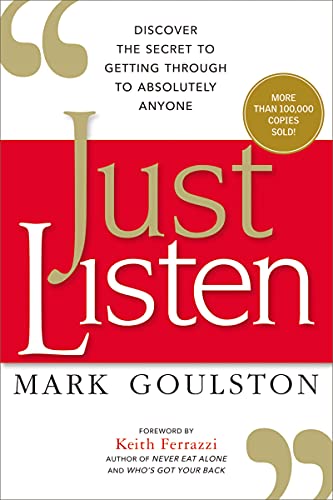
Just Listen: Discover the Secret to Getting Through to Absolutely Anyone
Drawing on his experience as a psychiatrist, business consultant, and coach, author Mark Goulston combines his background with the latest scientific research to help readers turn the “impossible” and “unreachable” people in their lives into allies, devoted customers, loyal colleagues, and lifetime friends. Just Listen does this by providing simple but powerful techniques readers can use to really get through to people. You’ll learn how to: make a powerful and positive first impression; listen effectively; make even a total stranger (potential client) feel understood; talk an angry or aggressive person away from an instinctual, unproductive reaction and toward a more rational mindset; and achieve buy-in--the linchpin of all persuasion, negotiation, and sales. Whether they're coworkers, friends, strangers, or enemies, the first make-or-break step in persuading anyone to do anything is getting them to hear you out. With this groundbreaking book, readers will be able to master the fine but critical art of effective communication.
…
Recommended by Bill Liao.
Bill Liao
The human world occurs in language so best get good at it! [source]
Cover unavailable
25
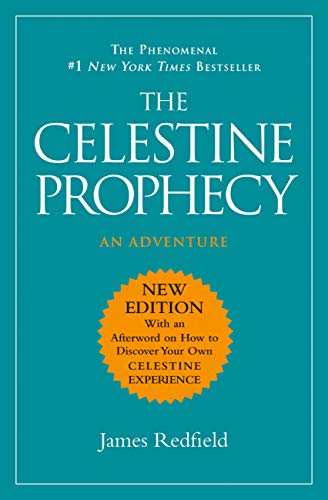
The Celestine Prophecy
James Redfield
4.2
The Celestine Prophecy contains secrets that are currently changing our world. Drawing on ancient wisdom, it tells you how to make connections among the events happening in your own life right now...and lets you see what is going to happen to you in the years to come!
A book that has been passed from hand to hand, from friend to friend, since it first appeared in small bookshops across America, The Celestine Prophecy is a work that has come to light at a time when the world deeply needs to read its words. The story it tells is a gripping one of adventure and discovery, but it is also a guidebook that has the power to crystallize your perceptions of why you are where you are in life...and to direct your steps with a new energy and optimism as you head into tomorrow.
A few months ago, I was drinking a Noah’s Mill whiskey (cute) with my good buddy Brian Balfour and talking about life... During the conversation, we got on the topic of books that changed our lives. I want to share them with you. I judge a book's success if a year later I'm still using at least 1 thing from the book. [source]
Stephen Lew
“The Celestine Prophecy” by James Redfield, that book pivoted my journey towards personal development and human excellence. At the point of time, nearly 2 decades ago, I started an inner quest of holistic wisdom, through the studies of metaphysics, meditation practices, philosophy, popular psychology, transpersonal psychology, dreams interpretations and comparative religions, I discovered an unconscious part or of the human selves, and its correlation to our psyche/spiritual developments. [source]
Cover unavailable
26
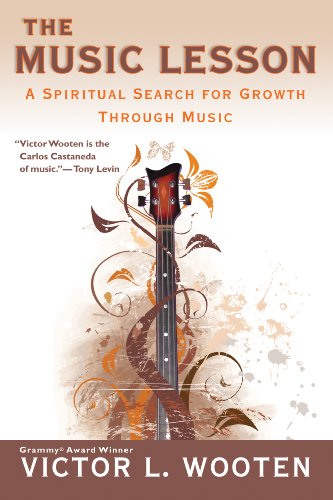
The Music Lesson: A Spiritual Search for Growth Through Music
Victor L. Wooten
4.2
From Grammy-winning musical icon and legendary bassist Victor L. Wooten comes The Music Lesson, the story of a struggling young musician who wanted music to be his life, and who wanted his life to be great. Then, from nowhere it seemed, a teacher arrived. Part musical genius, part philosopher, part eccentric wise man, the teacher would guide the young musician on a spiritual journey, and teach him that the gifts we get from music mirror those from life, and every movement, phrase, and chord has its own meaning...All you have to do is find the song inside.
…
Cover unavailable
27
Crazy: A Father's Search Through America's Mental Health Madness
Pete Earley
4.2
Former Washington Post reporter Pete Earley had written extensively about the criminal justice system. But it was only when his own son-in the throes of a manic episode-broke into a neighbor's house that he learned what happens to mentally ill people who break a law.
This is the Earley family's compelling story, a troubling look at bureaucratic apathy and the countless thousands who suffer confinement instead of care, brutal conditions instead of treatment, in the "revolving doors" between hospital and jail. With mass deinstitutionalization, large numbers of state mental patients are homeless or in jail-an experience little better than the horrors of a century ago. Earley takes us directly into that experience-and into that of a father and award-winning journalist trying to fight for a better way.
…
Cover unavailable
28
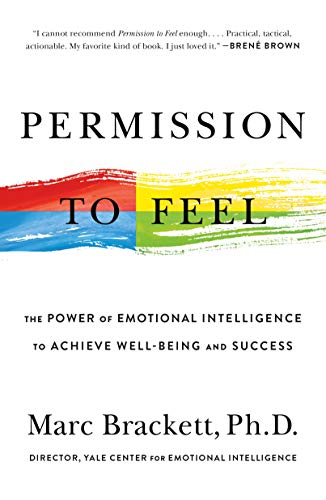
Permission to Feel: Unlocking the Power of Emotions to Help Our Kids, Ourselves, and Our Society Thrive
Marc Brackett
4.2
The mental well-being of children and adults is shockingly poor. Marc Brackett, author of Permission to Feel, knows why. And he knows what we can do. "We have a crisis on our hands, and its victims are our children."
Marc Brackett is a professor in Yale University's Child Study Center and founding director of the Yale Center for Emotional Intelligence. In his 25 years as an emotion scientist, he has developed a remarkably effective plan to improve the lives of children and adults - a blueprint for understanding our emotions and using them wisely so that they help, rather than hinder, our success and well-being. The core of his approach is a legacy from his childhood, from an astute uncle who gave him permission to feel. He was the first adult who managed to see Marc, listen to him, and recognize the suffering, bullying, and abuse he'd endured. And that was the beginning of Marc's awareness that what he was going through was temporary. He wasn't alone, he wasn't stuck on a timeline, and he wasn't "wrong" to feel scared, isolated, and angry. Now, best of all, he could do something about it.
In the decades since, Marc has led large research teams and raised tens of millions of dollars to investigate the roots of emotional well-being. His prescription for healthy children (and their parents, teachers, and schools) is a system called RULER, a high-impact and fast-effect approach to understanding and mastering emotions that has already transformed the thousands of schools that have adopted it. RULER has been proven to reduce stress and burnout, improve school climate, and enhance academic achievement. This book is the culmination of Marc's development of RULER and his way to share the strategies and skills with readers around the world. It is tested, and it works.
This book combines rigor, science, passion and inspiration in equal parts. Too many children and adults are suffering; they are ashamed of their feelings and emotionally unskilled, but they don't have to be. Marc Brackett's life mission is to reverse this course, and this book can show you how.
…
Recommended by Angela Duckworth, Carol S. Dweck, Peter Salovey, and 1 others.
A compelling and complete journey that delivers on its promise of giving us permission to feel. Marc Brackett shows us that emotional intelligence is not a gift but a skill―one that we can all learn, and benefit from immensely. [source]
Carol S. Dweck
Author
We often create a false dichotomy between thinking and feeling. In this dichotomy, thinking is important, strong, and adaptive, but feeling is not. Marc Brackett shows us how emotions and our ability to feel, understand, and use them are key to fulfilling our potential. [source]
Peter Salovey
More than any other book on human feelings, Permission to Feel integrates psychological research, educational practice, and compelling stories, including Marc Brackett’s own life experiences, to make emotional intelligence come alive. This is one book that leaders, educators, parents, students, and researchers will all find valuable . . . and fun to read. [source]
Cover unavailable
29
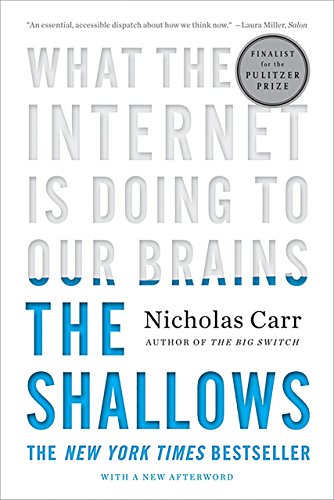
The Shallows: What the Internet Is Doing to Our Brains
Nicholas Carr
4.1
“Is Google making us stupid?” When Nicholas Carr posed that question, in a celebrated Atlantic Monthly cover story, he tapped into a well of anxiety about how the Internet is changing us. He also crystallized one of the most important debates of our time: As we enjoy the Net’s bounties, are we sacrificing our ability to read and think deeply?
Now, Carr expands his argument into the most compelling exploration of the Internet’s intellectual and cultural consequences yet published. As he describes how human thought has been shaped through the centuries by “tools of the mind”—from the alphabet to maps, to the printing press, the clock, and the computer—Carr interweaves a fascinating account of recent discoveries in neuroscience by such pioneers as Michael Merzenich and Eric Kandel. Our brains, the historical and scientific evidence reveals, change in response to our experiences. The technologies we use to find, store, and share information can literally reroute our neural pathways.
Building on the insights of thinkers from Plato to McLuhan, Carr makes a convincing case that every information technology carries an intellectual ethic—a set of assumptions about the nature of knowledge and intelligence. He explains how the printed book served to focus our attention, promoting deep and creative thought. In stark contrast, the Internet encourages the rapid, distracted sampling of small bits of information from many sources. Its ethic is that of the industrialist, an ethic of speed and efficiency, of optimized production and consumption—and now the Net is remaking us in its own image. We are becoming ever more adept at scanning and skimming, but what we are losing is our capacity for concentration, contemplation, and reflection.
Part intellectual history, part popular science, and part cultural criticism, The Shallows sparkles with memorable vignettes—Friedrich Nietzsche wrestling with a typewriter, Sigmund Freud dissecting the brains of sea creatures, Nathaniel Hawthorne contemplating the thunderous approach of a steam locomotive—even as it plumbs profound questions about the state of our modern psyche. This is a book that will forever alter the way we think about media and our minds.
While I was thinking of the best books to add to this short list, I realized that not even half of them are directly related to digital marketing. This is because I believe that the best marketers are people who understand human nature deeply and aim to bring out the best in it. Call me naive, but that’s how I see it. If I were to want to pursue a career in marketing, I’d read … The Shallows. [source]
Nicholas Carr talks at length about what is gained and lost by technological progress. Reading and writing enlarged people’s sympathetic response and enriched their lives even when the book was put aside. One could say the same thing about drawing. [source]
Cover unavailable
30
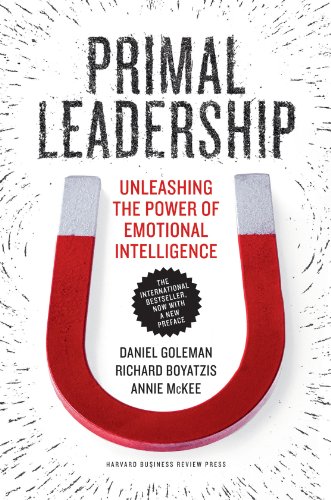
Primal Leadership: Realizing the Power of Emotional Intelligence
Looks at the role of emotional intelligence in leadership, discussing the characteristics of a good leader and leadership styles, and outlines the steps to becoming an effective leader.
Recommended by Skip Prichard.
Cover unavailable
31
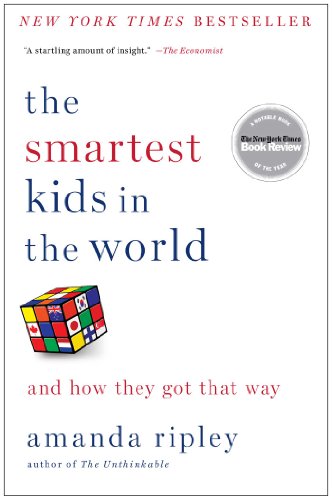
The Smartest Kids in the World: And How They Got That Way
Amanda Ripley
4.1
Through the compelling stories of three American teenagers living abroad and attending the world’s top-notch public high schools, an investigative reporter explains how these systems cultivate the “smartest” kids on the planet.
America has long compared its students to top-performing kids of other nations, but how do the world’s education superpowers look through the eyes of an American high school student? Author Amanda Ripley follows three teenagers who chose to spend one school year living and learning in Finland, South Korea, and Poland. Through their adventures, Ripley discovers startling truths about how attitudes, parenting, and rigorous teaching have revolutionized these countries’ education results.
In The Smartest Kids in the World, Ripley’s astonishing new insights reveal that top-performing countries have achieved greatness only in the past several decades; that the kids who live there are learning to think for themselves, partly through failing early and often; and that persistence, hard work, and resilience matter more to our children’s life chances than self-esteem or sports.
Ripley’s investigative work seamlessly weaves narrative and research, providing in-depth analysis and gripping details that will keep you turning the pages. Written in a clear and engaging style, The Smartest Kids in the World will enliven public as well as dinner table debates over what makes for brighter and better students.
…
Cover unavailable
32
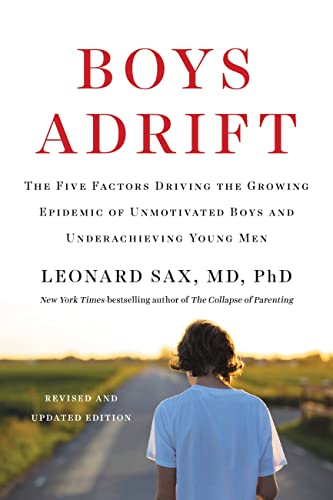
Boys Adrift: The Five Factors Driving the Growing Epidemic of Unmotivated Boys and Underachieving Young Men
Leonard Sax
4.1
Something scary is happening to boys today. From kindergarten to college, American boys are, on average, less resilient and less ambitious than they were a mere twenty years ago. The gender gap in college attendance and graduation rates has widened dramatically. While Emily is working hard at school and getting A’s, her brother Justin is goofing off. He’s more concerned about getting to the next level in his video game than about finishing his homework.
Now, Dr. Leonard Sax delves into the scientific literature and draws on more than twenty years of clinical experience to explain why boys and young men are failing in school and disengaged at home. He shows how social, cultural, and biological factors have created an environment that is literally toxic to boys. He also presents practical solutions, sharing strategies which educators have found effective in re-engaging these boys at school, as well as handy tips for parents about everything from homework, to video games, to medication.
…
Cover unavailable
33
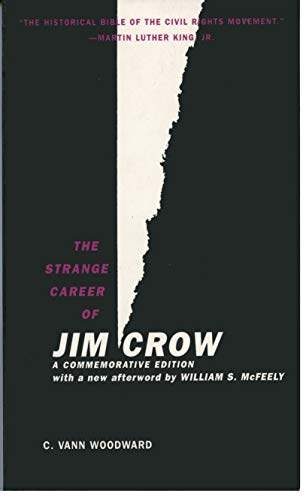
The Strange Career of Jim Crow
C. Vann Woodward, William S. McFeely
4.1
C. Vann Woodward, who died in 1999 at the age of 91, was America's most eminent Southern historian, the winner of a Pulitzer Prize for Mary Chestnut's Civil War and a Bancroft Prize for The Origins of the New South. Now, to honor his long and truly distinguished career, Oxford is pleased to publish this special commemorative edition of Woodward's most influential work, The Strange Career of Jim Crow. The Strange Career of Jim Crow is one of the great works of Southern history. Indeed, the book actually helped shape that history. Published in 1955, a year after the Supreme Court in Brown v. Board of Education ordered schools desegregated, Strange Career was cited so often to counter arguments for segregation that Martin Luther King, Jr. called it "the historical Bible of the civil rights movement." The book offers a clear and illuminating analysis of the history of Jim Crow laws, presenting evidence that segregation in the South dated only to the 1890s. Woodward convincingly shows that, even under slavery, the two races had not been divided as they were under the Jim Crow laws of the 1890s. In fact, during Reconstruction, there was considerable economic and political mixing of the races. The segregating of the races was a relative newcomer to the region. Hailed as one of the top 100 nonfiction works of the twentieth century, The Strange Career of Jim Crow has sold almost a million copies and remains, in the words of David Herbert Donald, "a landmark in the history of American race relations."
…
Recommended by Peter Temin.
Peter Temin
After Reconstruction, white southerners recreated a system of laws and social repression called Jim Crow laws. [source]
Cover unavailable
34
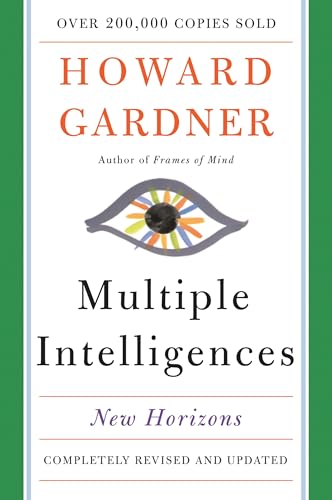
Multiple Intelligences: New Horizons in Theory and Practice
Howard E. Gardner
4.1
The most complete account of the theory and application of Multiple Intelligences available anywhere Howard Gardner's brilliant conception of individual competence, known as Multiple Intelligences theory, has changed the face of education. Tens of thousands of educators, parents, and researchers have explored the practical implications and applications of this powerful notion, that there is not one type of intelligence but several, ranging from musical intelligence to the intelligence involved in self-understanding.
Multiple Intelligences distills nearly three decades of research on Multiple Intelligences theory and practice, covering its central arguments and numerous developments since its introduction in 1983. Gardner includes discussions of global applications, Multiple Intelligences in the workplace, an assessment of Multiple Intelligences practice in the current conservative educational climate, new evidence about brain functioning, and much more.
…
Cover unavailable
35
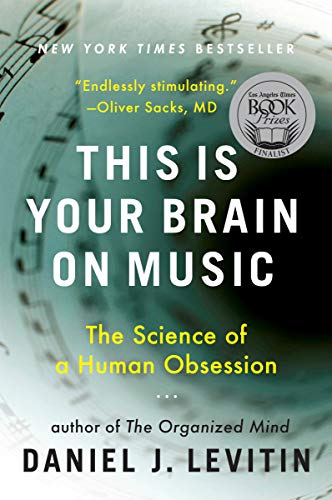
This Is Your Brain on Music: The Science of a Human Obsession
Daniel J. Levitin
4.1
Whether you load your iPod with Bach or Bono, music has a significant role in your life—even if you never realized it. Why does music evoke such powerful moods? The answers are at last be- coming clear, thanks to revolutionary neuroscience and the emerging field of evolutionary psychology. Both a cutting-edge study and a tribute to the beauty of music itself, This Is Your Brain on Music unravels a host of mysteries that affect everything from pop culture to our understanding of human nature, including: • Are our musical preferences shaped in utero? • Is there a cutoff point for acquiring new tastes in music? • What do PET scans and MRIs reveal about the brain’s response to music? • Is musical pleasure different from other kinds of pleasure?
This Is Your Brain on Music explores cultures in which singing is considered an essential human function, patients who have a rare disorder that prevents them from making sense of music, and scientists studying why two people may not have the same definition of pitch. At every turn, this provocative work unlocks deep secrets about how nature and nurture forge a uniquely human obsession.
Why do people dodge responsibility when things fall apart? Why the parade of public figures unable to own up when they screw up? Why the endless marital quarrels over who is right? Why can we see hypocrisy in others but not in ourselves? Are we all liars? Or do we really believe the stories we tell?
Renowned social psychologists Carol Tavris and Elliot Aronson take a compelling look into how the brain is wired for self-justification. When we make mistakes, we must calm the cognitive dissonance that jars our feelings of self-worth. And so we create fictions that absolve us of responsibility, restoring our belief that we are smart, moral, and right -- a belief that often keeps us on a course that is dumb, immoral, and wrong.
Backed by years of research and delivered in lively, energetic prose, Mistakes Were Made (But Not by Me) offers a fascinating explanation of self-deception -- how it works, the harm it can cause, and how we can overcome it.
A book about cognitive dissonance that looks at common weaknesses and biases in human thinking. Peter wants to ensure he goes through life without being too sure of himeself, and this book helps him to recalibrate. [source]
Cognitive Dissonance is one of the most powerful and delusionary forces in the world. [source]
David Kramaley
When asked what books he would recommend to youngsters interested in his professional path, David mentioned Mistakes Were Made (But Not by Me). [source]
Cover unavailable
37
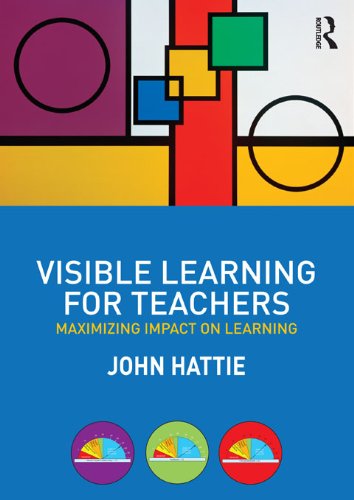
Visible Learning for Teachers: Maximizing Impact on Learning
John Hattie
4.1
In November 2008, John Hattie s ground-breaking book Visible Learning synthesised the results of more than fifteen years research involving millions of students and represented the biggest ever collection of evidence-based research into what actually works in schools to improve learning.
Visible Learning for Teachers takes the next step and brings those ground breaking concepts to a completely new audience. Written for students, pre-service and in-service teachers, it explains how to apply the principles of Visible Learning to any classroom anywhere in the world. The author offers concise and user-friendly summaries of the most successful interventions and offers practical step-by-step guidance to the successful implementation of visible learning and visible teaching in the classroom.
This book:
links the biggest ever research project on teaching strategies to practical classroom implementation
champions both teacher and student perspectives and contains step by step guidance including lesson preparation, interpreting learning and feedback during the lesson and post lesson follow up
offers checklists, exercises, case studies and best practice scenarios to assist in raising achievement
includes whole school checklists and advice for school leaders on facilitating visible learning in their institution
now includes additional meta-analyses bringing the total cited within the research to over 900
comprehensively covers numerous areas of learning activity including pupil motivation, curriculum, meta-cognitive strategies, behaviour, teaching strategies, and classroom management.
Visible Learning for Teachers is a must read for any student or teacher who wants an evidence based answer to the question; how do we maximise achievement in our schools
…
Cover unavailable
38
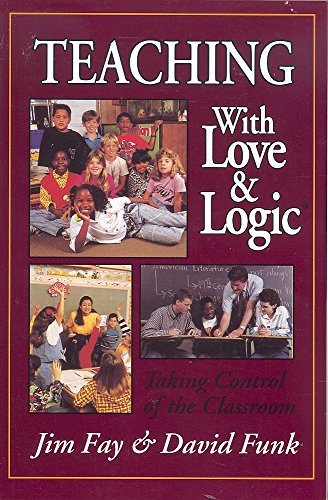
Teaching with Love and Logic: Taking Control of the Classroom
Jim Fay, David Funk
4.1
"Love and Logic" is a method of working with students which was developed by educational expert Jim Fay, and child psychiatrist Foster W.Cline, M.D. The "Love and Logic" tecniques: Put teachers back in control of the classroomResult in students who are internalized in their discipline rather than dependent upon external controlsRaise the level of student responsibillityTeach students to think for themselvesPrepare students to function effectively in a world filled wiht temptations, decisions, and consequencesReturn a teacher's joy of teaching!
…
Cover unavailable
39
Mapping the Mind
Rita Carter
4.1
Today a brain scan reveals our thoughts, moods, and memories as clearly as an X-ray reveals our bones. We can actually observe a person's brain registering a joke or experiencing a painful memory. Drawing on the latest imaging technology and the expertise of distinguished scientists, Rita Carter explores the geography of the human brain. Her writing is clear, accessible, witty, and the book's 150 illustrations—most in color—present an illustrated guide to that wondrous, coconut-sized, wrinkled gray mass we carry inside our heads.
Mapping the Mind charts the way human behavior and culture have been molded by the landscape of the brain. Carter shows how our personalities reflect the biological mechanisms underlying thought and emotion and how behavioral eccentricities may be traced to abnormalities in an individual brain. Obsessions and compulsions seem to be caused by a stuck neural switch in a region that monitors the environment for danger. Addictions stem from dysfunction in the brain's reward system. Even the sense of religious experience has been linked to activity in a certain brain region. The differences between men and women's brains, the question of a "gay brain," and conditions such as dyslexia, autism, and mania are also explored.
Looking inside the brain, writes Carter, we see that actions follow from our perceptions, which are due to brain activity dictated by a neuronal structure formed from the interplay between our genes and the environment. Without sidestepping the question of free will, Carter suggests that future generations will use our increasing knowledge of the brain to "enhance those mental qualities that give sweetness and meaning to our lives, and to eradicate those that are destructive."
I started my interest in neurobiology in December 1998 after reading a discussion by Rita Carter in the FT showing that rational behavior under uncertainty and rational decision making can come from a defect in the amygdala. Since then I've had five years of reading more technical material (Gazzaniga et al is perhaps the most complete reference on cognitive neuroscience) and thought that I transcended this book. But it was not so. I picked up this book again last weekend and was both astonished at a) the ease of reading , b) the clarity of the text and c) the breadth of the approach! I was looking for a refresher as I am trying to capture a general idea of the functioning of that black box and found exactly what I needed without the excess burden of prominent textbooks. Very pedagogical. I read here and there comments by neuroscientists dissing the book over small details perhaps invisible even to experts. I just realize that Carter should keep updating it, as it is invaluable in my suitcase when I travel! I do not conceal my suspicion of "science writers" and journalists more trained in communicating than understanding and usually shallow babblers but Carter is an exception. Perhaps the science of the mind requires breadth of knowledge that she has. She is a thinker in her own right not just a "medical journalist". [source]
Cover unavailable
40
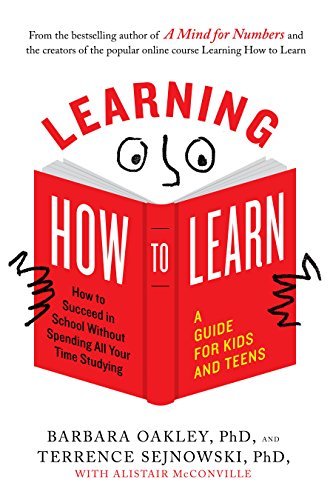
Learning How to Learn: How to Succeed in School Without Spending All Your Time Studying; A Guide for Kids and Teens
Most kids go through their entire student career without ever having read a book on how to learn effectively. This guide for kids and teens, from the bestselling author of A Mind for Numbers, meets that fundamental need.
Drs. Barbara Oakley and Terrence Sejnowski's popular online course, "Learning How to Learn," has enrolled more than 1.8 million students from more than 200 countries. The course was based on Dr. Oakley's bestselling book, A Mind for Numbers. In this much needed follow-up to A Mind for Numbers, the authors teach kids and teens how to learn effectively at a time when they most need these skills. Learning How to Learn teaches them about the importance of both focused concentration and letting their minds wander, how the brain makes connections between different pieces of information, the value of metaphors in developing understanding, why procrastination is the enemy of problem solving, and much more. Filled with illustrations, application questions, and exercises, this book makes learning engaging and accessible.
…
Cover unavailable
41
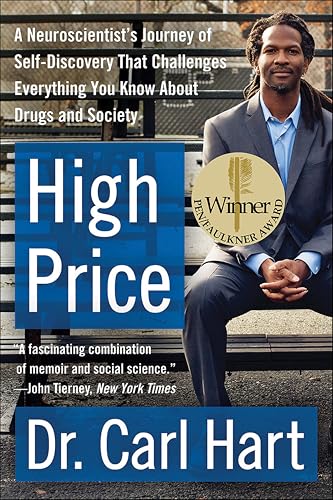
High Price: A Neuroscientist's Journey of Self-Discovery That Challenges Everything You Know About Drugs and Society
Carl Hart
4.1
A pioneering neuroscientist shares his story of growing up in one of Miami's toughest neighborhoods and how it led him to his groundbreaking work in drug addiction.
As a youth, Carl Hart didn't realize the value of school; he studied just enough to stay on the basketball team. At the same time, he was immersed in street life. Today he is a cutting-edge neuroscientist—Columbia University's first tenured African American professor in the sciences—whose landmark, controversial research is redefining our understanding of addiction.
In this provocative and eye-opening memoir, he recalls his journey of self-discovery and weaves his past and present. Hart goes beyond the hype of the antidrug movement as he examines the relationship among drugs, pleasure, choice, and motivation, both in the brain and in society. His findings shed new light on common ideas about race, poverty, and drugs, and explain why current policies are failing.
Though Hart escaped neighborhoods that were dominated by entrenched poverty and the knot of problems associated with it, he has not turned his back on his roots. Determined to make a difference, he tirelessly applies his scientific research to help save real lives. But balancing his former street life with his achievements today has not been easy—a struggle he reflects on publicly for the first time.
A powerful story of hope and change, of a scientist who has dedicated his life to helping others, High Price will alter the way we think about poverty, race, and addiction—and how we can effect change.
…
Cover unavailable
42
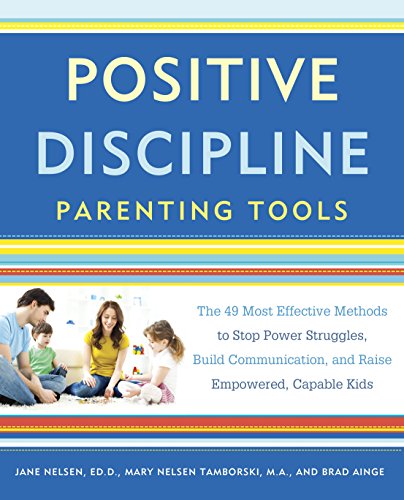
Positive Discipline Parenting Tools: The 49 Most Effective Methods to Stop Power Struggles, Build Communication, and Raise Empowered, Capable Kids
Jane Nelsen Ed.D., Mary Nelsen Tamborski, Brad Ainge
4.1
Do you wish there was a way to raise well-behaved children without punishment? Are you afraid the only alternative is being overly indulgent? With Positive Discipline, an encouragement model based on both kindness and firmness, you don’t have to choose between these two extremes. Using these 49 Positive Discipline tools, honed and perfected after years of real-world research and feedback, you’ll be able to work with your children instead of against them. The goal isn’t perfection but providing you with the techniques you need to help your children develop the life and social skills you hope for them, such as respect for self and others, problem-solving ability, and self-regulation. The tenets of Positive Discipline consistently foster mutual respect so that any child—from a three-year-old toddler to a rebellious teenager—can learn creative cooperation and self-discipline without losing his or her dignity. In this new parenting guidebook, you’ll find day-to-day exercises for parents to improve their parenting skills, along with success stories from parents worldwide who have benefited from the Positive Discipline philosophy. With training tools and personal examples from the authors, you will learn: · The “hidden belief” behind a child’s misbehavior, and how to respond accordingly · The best way to focus on solutions instead of dwelling on the negative · How to encourage your child without pampering or praising · How to teach your child to make mistakes and follow through on agreements · How to foster creative thinking
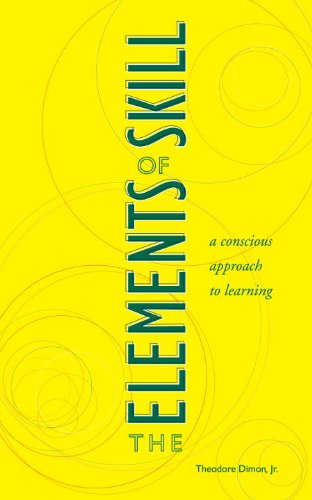
The Elements of Skill: A Conscious Approach to Learning
Theodore Dimon Jr, Larry A. Hickman
4.1
Why do so many beginners, both children and adults, fail to master chosen skills? The Elements of Skill was inspired by—and addresses—that question with a program based on proven techniques. The book, written by a renowned practitioner of the Alexander Technique, outlines an educational system that makes the process of learning a performance or athletic skill more conscious, and therefore more successful. Its principles include breaking down a skill into manageable parts, setting realistic goals, observing mind/body processes, overcoming blocks, controlling habits, and achieving heightened awareness and self-mastery. Included are inspiring examples of people who have benefited from the method.
…
Cover unavailable
44
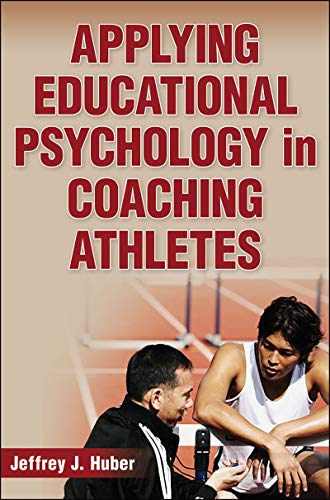
Applying Educational Psychology in Coaching Athletes
Jeffrey J. Huber
4.1
Applying Educational Psychology in Coaching Athletes discusses how to improve coaching success and athletic performance through the application of teaching principles and theories. Delving deeper than an explanation of what athletes learn and what coaches teach, Applying Educational Psychology in Coaching Athletes offers insight into the how of athletes' learning and coaching by considering
- principles of psychology that drive the emotions, motivation, expectations, self-worth, and relationships of athletes;
- application of principles of psychology to the motor learning process; and
- use of principles of educational psychology to improve sport expertise and coaching success.
A three-time U.S. Olympic coach and veteran collegiate coach, Huber infuses his own experience in applying theories of educational psychology in working with individual athletes, as well as world-class national and international teams. With an engaging presentation and strong practical applications, Huber assists coaching students and practicing coaches in utilizing educational psychology as a platform for improving coaching skills.
Applying Educational Psychology in Coaching Athletes introduces the idea of the developing coach as both teacher and learner, and how coaching principles and a strong coaching philosophy provide a foundation for effective management and decision-making. By considering the theories that drive successful coaching, developing coaches gain focus, motivation, and guidance as they learn how a thoughtful coach provides the structure and discipline to make athletes more successful on the field of play.
Throughout the text, Huber focuses on how athletes learn, considering theories of motivation, behaviorism, cognition, and humanism, and the interplay between emotions and motor learning and performance. Each chapter opens with a coaching related anecdote that readers can relate to in order to highlight the significance of the theory under consideration. After careful explanation of each theory, Huber details concrete examples, guidelines, and specific applications for coaching. In addition to summary information, each chapter concludes with 'Your Coaching Toolbox, ' which focuses readers on ways to incorporate their newly gained knowledge into their interactions with athletes.
Applying Educational Psychology in Coaching Athletes is unmatched in its depth of insight into the teaching and learning process in sport and how to put it into practice. By examining how athletes learn and coaches teach, the text helps coaches understand how to maximize athlete performance and increase their athletic success.
…
Cover unavailable
45
The Manual: What Women Want and How to Give It to Them
W. Anton
4.1
The Manual is the ultimate and only guide to getting girls and to understand women once and for all. This is why guys that read it don't read or recommend anything else. Because the few men who "get it" spend the rest of their lives enjoying sexy girls in abundance - and so can you.
You can learn to get ANY girl you want, the same way that all men who are naturally good with women have. The only difference is that you may learn it much FASTER, instead of wasting tons of time and money on fruitless dates or a new car/haircut/shirt that you BELIEVE will make you more attractive - but really doesn't.
You see; men LACK success with women because they either don't understand what women are attracted to, or because they THINK that they do know, but have the wrong ideas and hence waste a lot of time - sometimes their entire life - chasing things they don't need. You know you have to get this book if you believe women want men with money, cars, or anything else that is manmade, because that doesn't make any sense. If women really were attracted to something unnatural, how did men meet women before any of those things were invented?
The approach you'll learn in The Manual is very different from conventional dating and the advice you find in the mainstream media because it focuses on natural attraction - on what women REALLY want - not what they CLAIM they want or what males in general BELIEVE women want. It incorporate men's and women's socialization and explains phenomenas such as why men think women are attracted to things such as money (yet money is a man-made invention that has not even EXISTED very long) and why women "play hard to get" (a well-known phrase which amusingly reveals that women ARE easy but only pretend not to be).
This is why the beginning of the book addresses your basic beliefs and mindset, because if you learn to THINK correctly, you will automatically behave correctly around women. Even if they are so stunning they normally take your breath away, your mind goes blank, and you run out of words.
You already have what it takes to seduce women. Like, if you never run out of words around your close friends or family, you should be able to talk to a hot girl without making a fool out of yourself. The reason you seem to be a different person in such situations is because you ARE - you are NOT being yourself! You act differently because you were socialized to sabotage yourself. The Manual teaches you how to unlock your true potential and to bring out the real you - not change you into someone you are not.
The method presented to get girls works on all women, no matter what language they speak, how young they are, or what type of relationship you might be looking for. It's universal because it's based on natural attraction, what all women are hardwired to respond to, and attraction is an emotion, not a decision.
You can use it to get a sexy girlfriend, one night stands or even long-term relationships. You can use it to find true love, a soul mate, or just casual sex without commitment. And one of its best benefits is that it will make women want to be with you and appreciate you. The girls you get will REMAIN attractive even after you have formed a sexual relationship with them, because they are so happy to be with you. While most other guys who do get (average) girls, often find themselves with an average female who becomes even less attractive over time as she stops taking care of herself completely.
All other dating books simply repeat conventional wisdom that doesn't work very well in reality, and even the best ones are about ACTING like an attractive man, not on how to BECOME one. But the problem is if you go around acting like someone besides yourself, even if you do start getting girls, it's not really YOU who are getting them. The Manual will show you how to get laid like a rock star, without being one, and without pretending to be one e
…
Cover unavailable
46
The Absorbent Mind
Maria Montessori, John Chattin-McNichols Ph.D.
4.1
In response to the crisis in American education, more than five thousand public and private schools across the nation have adopted the timeless Montessori Method of teaching, of which this book is the cornerstone. Written by the women whose name is synonymous worldwide with child development theory, The Absorbent Mind takes its title from the phrase that the inspired Italian doctor coined to characterize the child's most crucial developmental stage: the first six years.
A new foreword by John Chattin-McNichols, Ph.D., President of the American Montessori Society, places this classic book in a contemporary context, offering an intelligent discussion of current thinking in child education.
…
Cover unavailable
47
Smart but Scattered: The Revolutionary "Executive Skills" Approach to Helping Kids Reach Their Potential
Peg Dawson
4.1
Scientists who study child development have recently found that kids who are "smart but scattered" lack or lag behind in crucial executive skills—the core, brain-based habits of mind required to “execute” tasks like getting organized, staying focused, and controlling emotions. Drawing on this revolutionary discovery, school psychologist Peg Dawson and neuropsychologist Richard Guare have developed an innovative program that parents and teachers can use to strengthen kids’ abilities to plan ahead, be efficient, follow through, and get things done. Smart but Scattered provides ways to assess children’s strengths and weaknesses and offers guidance on day-to-day issues like following instructions in the classroom, doing homework, completing chores, reducing performance anxiety, and staying cool under pressure. Small steps add up to big improvements, enabling these kids to build the skills they need to live up to their full potential. More than 40 reproducibles are included.
…
Cover unavailable
48
The Tell-Tale Brain: A Neuroscientist's Quest for What Makes Us Human
V. S. Ramachandran
4.1
V. S. Ramachandran is at the forefront of his field-so much so that Richard Dawkins dubbed him the "Marco Polo of neuroscience." Now, in a major new work, Ramachandran sets his sights on the mystery of human uniqueness. Taking us to the frontiers of neurology, he reveals what baffling and extreme case studies can teach us about normal brain function and how it evolved. Synesthesia becomes a window into the brain mechanisms that make some of us more creative than others. And autism--for which Ramachandran opens a new direction for treatment--gives us a glimpse of the aspect of being human that we understand least: self-awareness. Ramachandran tackles the most exciting and controversial topics in neurology with a storyteller's eye for compelling case studies and a researcher's flair for new approaches to age-old questions. Tracing the strange links between neurology and behavior, this book unveils a wealth of clues into the deepest mysteries of the human brain.
…
Cover unavailable
49
Street Soldier
Joseph Marshall
4.1
As a public school teacher, Joe Marshall grew sick and tired of watching his most promising students fall prey to the lure of gangs, drugs, and crime, and end up either dead or in prison. Finding that neither the justice nor school system seemed willing even to try to address the underlying problems--to give the kids the kind of information and assistance they really needed--he leapfrogged right over the system and co-founded the Omega Boys Club, based upon the belief that young people of the inner city want a way out of the life they're in, but just don't know how to get out. Since the club's inception in 1987, with a handful of kids in a community center basement, he and his small army of street soldiers have already helped 600 kids out of gang-banging and drug-dealing, and pushed, tutored, driven and even funded 140 inner-city kids into colleges around the country.
Four years ago, to direct kids at risk to the Boys Club, he started a weekly radio call-in program called "Street Soldiers" that is now broadcast throughout California to an audience of over 200,000. His callers ask tough questions about gangs, drugs, teen pregnancy, and the multiple pressures of life in the inner city today. "Street Soldiers" not only provides callers with a lifeline and listeners with a practical resource for hope, but has repeatedly averted gang warfare and stopped "payback" violence before they occurred.
Street Soldier is the story of Joe Marshall's success and, as virtually the only good news coming out of the inner city today, it is incumbent upon all of us--citizens, parents, legislators, and teachers--to listen. From Marshall's own college days in the turbulent sixties and his early years as an idealistic young teacher, the book moves to the heartbreaking lessons that compelled him to do something. Street Soldier then takes readers through the day-by-day trials and tribulations of his efforts in the `hood, searching for effective ways to convince gun-toting crack dealers and gang members to take pride in their race, take responsibility for their actions, and take charge of their lives. Along the way the book goes inside the minds and lives of a handful of the kids who transform themselves in the mast dramatic way possible--and a few who sadly cannot. In the end, Street Soldier is a call to each of us to help shape the future of this generation at risk, to help our children grow strong--to be street soldiers in our own communities.
Filled with tense confrontations and joyous celebrations, Street Soldier is an uplifting story by and about one man who makes a difference--and the cure his story may well provide for the cancer eating at our nation today.
…
Cover unavailable
50
The Joy of Music
Leonard Bernstein, Tim Page
4.1
This classic work is perhaps Bernstein's finest collection of conversations on the meaning and wonder of music. This book is a must for all music fans who wish to experience music more fully and deeply through one of the most inspired, and inspiring, music intellects of our time. Employing the creative device of "Imaginary Conversations" in the first section of his book, Bernstein illuminates the importance of the symphony in America, the greatness of Beethoven, and the art of composing. The book also includes a photo section and a third section with the transcripts from his televised Omnibus music series, including "Beethoven's Fifth Symphony," "The World of Jazz," "Introduction to Modern Music," and "What Makes Opera Grand."
…
Cover unavailable
51
Excellent Sheep: The Miseducation of the American Elite and the Way to a Meaningful Life
A groundbreaking manifesto for people searching for the kind of insight on leading, thinking, and living that elite schools should be—but aren’t—providing.
As a professor at Yale, Bill Deresiewicz saw something that troubled him deeply. His students, some of the nation’s brightest minds, were adrift when it came to the big questions: how to think critically and creatively, and how to find a sense of purpose.
Excellent Sheep takes a sharp look at the high-pressure conveyor belt that begins with parents and counselors who demand perfect grades and culminates in the skewed applications Deresiewicz saw firsthand as a member of Yale’s admissions committee. As schools shift focus from the humanities to "practical" subjects like economics and computer science, students are losing the ability to think in innovative ways. Deresiewicz explains how college should be a time for self-discovery, when students can establish their own values and measures of success, so they can forge their own path. He addresses parents, students, educators, and anyone who's interested in the direction of American society, featuring quotes from real students and graduates he has corresponded with over the years, candidly exposing where the system is broken and clearly presenting solutions.
There’s a guy who I just had on my podcast, Mark Deresiewicz, who wrote a book called Excellent Sheep. He was a Yale professor, and took a look at the essentially what was wrong with higher education, at these elite institutions, primarily places like Amherst and Yale and Harvard. And one of the things he said is that we’re breeding excellent sheep. You’ve got 31 flavors of vanilla. These kids are so obsessed with essentially achievement for its own sake, not fulfillment or meaning, but rather achievement for its own sake, so they can get into a great – become rich doctors or lawyers, or consultants or investment bankers. And even that becomes an extension of what they’ve been doing their whole life, which was hey, I want to please my boss, jump through these loopholes and be in an elite person. And it’s an interesting book. But one of the things he talked about was that these elite institutions are – there’s a feeder system of about 100 high schools in this country, about 100 high schools, and that’s it, that provide students to these universities. So something like QuestBridge is desperately needed, so that we can create an equality of opportunity. That’s always what it is, right? [source]
Cover unavailable
52
Visible Learning and the Science of How We Learn
John Hattie, Gregory C. R. Yates
4.1
On publication in 2009 John Hattie's Visible Learning presented the biggest ever collection of research into what actually work in schools to improve children's learning. Not what was fashionable, not what political and educational vested interests wanted to champion, but what actually produced the best results in terms of improving learning and educational outcomes. It became an instant bestseller and was described by the TES as revealing education's 'holy grail'.
Now in this latest book, John Hattie has joined forces with cognitive psychologist Greg Yates to build on the original data and legacy of the Visible Learning project, showing how it's underlying ideas and the cutting edge of cognitive science can form a powerful and complimentary framework for shaping learning in the classroom and beyond.
Visible Learning and the Science of How We Learn explains the major principles and strategies of learning, outlining why it can be so hard sometimes, and yet easy on other occasions. Aimed at teachers and students, it is written in an accessible and engaging style and can be read cover to cover, or used on a chapter-by-chapter basis for essay writing or staff development.
The bookis structured in three parts - 'learning within classrooms', 'learning foundations', which explains the cognitive building blocks of knowledge acquisition and 'know thyself' which explores, confidence and self-knowledge. It also features extensive interactive appendices containing study guide questions to encourage critical thinking, annotated bibliographic entries with recommendations for further reading, links to relevant websites and YouTube clips. Throughout, the authors draw upon the latest international research into how the learning process works and how to maximise impact on students, covering such topics as:
teacher personality;
expertise and teacher-student relationships;
how knowledge is stored and the impact of cognitive load;
thinking fast and thinking slow;
the psychology of self-control;
the role of conversation at school and at home;
invisible gorillas and the IKEA effect;
digital native theory;
myths and fallacies about how people learn.
This fascinating book is aimed at any student, teacher or parent requiring an up-to-date commentary on how research into human learning processes can inform our teaching and what goes on in our schools. It takes a broad sweep through findings stemming mainly from social and cognitive psychology and presents them in a useable format for students and teachers at all levels, from preschool to tertiary training institutes.
…
Cover unavailable
53
Thriving with ADHD Workbook for Kids: 60 Fun Activities to Help Children Self-Regulate, Focus, and Succeed
Kelli Miller LCSW MSW
4.1
Thriving with ADHD: Workbook for Kids offers boys and girls the tools they need to understand and manage their ADHD for a happy, healthy life.
For millions of kids who live with ADHD, feelings of loneliness, frustration, and helplessness are all too common. Thriving with ADHD is a workbook specially designed to helps kids with ADHD develop essential skills for managing their ADHD symptoms, while also providing a powerful message of hope and encouragement for their future.
In Thriving with ADHD family therapist Kelli Miller draws upon both her professional expertise, as well as her experience as the mother of two ADHD children, to help kids reframe the way they think about ADHD and discover that they have special talents that are unique to them. With fun activities that engage their busy minds, Thriving with ADHD offers kids a better understanding of themselves, their ADHD, and the simple things they can do to feel more confident and in control.
Thriving with ADHD includes:
An overview of ADHD that includes common symptoms, ADHD types, how ADHD can be an asset, and areas where kids could use additional support.
Exercises that build helpful skills for dealing with anger, staying focused, controlling impulses, and making mindful decisions.
Action-oriented lessons for daily life that teach practical tools such as creating a morning routine, making a homework chart, and expressing themselves when they're upset.
Techniques for self-regulation and organization that help kids handle any emotion or obstacle, so they can spend their energy having fun and just being kids! Though ADHD is very common, its symptoms can make life challenging for kids. Through the knowledgeable guidance and support in Thriving with ADHD kids will see that ADHD isn't in charge of their lives--they are.
…
Cover unavailable
54
Stories of the Courage to Teach: Honoring the Teacher's Heart
Sam M. Intrator, Parker J. Palmer
4.1
This book is a collection of essays, written by teachers at every level of practice, that honors the hearts of all teachers who struggle to reconnect with the source of their vocation. These teachers have found ways to serve their students, rekindle their passion for teaching, connect in life-sustaining ways with colleagues, and work towards creating educational institutions that seek to be places that, as Parker J. Palmer writes, "bring more light and life into the world." Their warm, practical, funny, and wise stories will provide inspiration, companionship, and hope to teachers who strive to reclaim the courage to teach.
…
Cover unavailable
55
Self-Therapy
Jay Earley
4.1
Understand your psyche in a clear and comprehensive way, and resolve deep-seated emotional issues. Self-Therapy makes the power of a cutting-edge psychotherapy approach accessible to everyone. Internal Family Systems Therapy (IFS) has been spreading rapidly across the country in the past decade. It is incredibly effective on a wide variety of life issues, such as self-esteem, procrastination, depression, and relationship issues. IFS is also user-friendly; it helps you to comprehend the complexity of your psyche. Dr. Earley shows how IFS is a complete method for psychological healing that you can use on your own. Self-Therapy is also helpful for therapists because it presents the IFS model in such detail that it is a manual for the method. This is the 2nd Edition of this book.
…
Cover unavailable
56
TA Today: A New Introduction to Transactional Analysis
Ian Stewart, Vann Joines
4.1
TA is a model for understanding human personality, relationships and communication. It was first developed by Eric Berne. Since then, TA has continued to grow. Theory has been expanded, reappraised and tested by observation. In the years since Berne's death in 1970 TA practioners have introduced new concepts and techniques that are now at the very heart of the discipline. TA today enjoys international recognition as a professional approach, aiding effectiveness in fields as diverse as psychotherapy, counselling, education, communications and management training.
…
Cover unavailable
57
Teaching Community: A Pedagogy of Hope
bell hooks
4.1
Ten years ago, bell hooks astonished readers with Teachingto Transgress: Education as the Practice of Freedom. Now comes Teaching Community: A Pedagogy of Hope - a powerful, visionary work that will enrich our teaching and our lives. Combining critical thinking about education with autobiographical narratives, hooks invites readers to extend the discourse of race, gender, class and nationality beyond the classroom into everyday situations of learning. bell hooks writes candidly about her own experiences. Teaching, she explains, can happen anywhere, any time - not just in college classrooms but in churches, in bookstores, in homes where people get together to share ideas that affect their daily lives.
In Teaching Community bell hooks seeks to theorize from the place of the positive, looking at what works. Writing about struggles to end racism and white supremacy, she makes the useful point that "No one is born a racist. Everyone makes a choice." Teaching Community tells us how we can choose to end racism and create a beloved community. hooks looks at many issues-among them, spirituality in the classroom, white people looking to end racism, and erotic relationships between professors and students. Spirit, struggle, service, love, the ideals of shared knowledge and shared learning - these values motivate progressive social change.
Teachers of vision know that democratic education can never be confined to a classroom. Teaching - so often undervalued in our society -- can be a joyous and inclusive activity. bell hooks shows the way. "When teachers teach with love, combining care, commitment, knowledge, responsibility, respect, and trust, we are often able to enter the classroom and go straight to the heart of the matter, which is knowing what to do on any given day to create the best climate for learning."
…
Cover unavailable
58
How Music Works: The Science and Psychology of Beautiful Sounds, from Beethoven to the Beatles and Beyond
John Powell
4.1
What makes a musical note different from any other sound? How can you tell if you have perfect pitch? Why do 10 violins sound only twice as loud as one? Do your Bob Dylan albums sound better on CD or vinyl? John Powell, a scientist and musician, answers these questions and many more in How Music Works, an intriguing and original guide to acoustics. In a clear, accessible, and engaging voice, Powell fascinates the reader with his delightful descriptions of the science and psychology lurking beneath the surface of music. With lively discussions of the secrets behind harmony, timbre, keys, chords, loudness, musical composition, and more, How Music Works will be treasured by music lovers everywhere.
The book also includes a CD of examples and exercises from the book.
…
Cover unavailable
59
Your Child's Growing Mind: A Guide to Learning and Brain Development from Birth to Adolescence
Jane M. Healy
4.1
Cover unavailable
60
How We Learn: The Surprising Truth About When, Where, and Why It Happens
Benedict Carey
4.1
In the tradition of The Power of Habit and Thinking, Fast and Slow comes a practical, playful, and endlessly fascinating guide to what we really know about learning and memory today—and how we can apply it to our own lives. From an early age, it is drilled into our heads: Restlessness, distraction, and ignorance are the enemies of success. We’re told that learning is all self-discipline, that we must confine ourselves to designated study areas, turn off the music, and maintain a strict ritual if we want to ace that test, memorize that presentation, or nail that piano recital.
But what if almost everything we were told about learning is wrong? And what if there was a way to achieve more with less effort?
In How We Learn, award-winning science reporter Benedict Carey sifts through decades of education research and landmark studies to uncover the truth about how our brains absorb and retain information. What he discovers is that, from the moment we are born, we are all learning quickly, efficiently, and automatically; but in our zeal to systematize the process we have ignored valuable, naturally enjoyable learning tools like forgetting, sleeping, and daydreaming. Is a dedicated desk in a quiet room really the best way to study? Can altering your routine improve your recall? Are there times when distraction is good? Is repetition necessary? Carey’s search for answers to these questions yields a wealth of strategies that make learning more a part of our everyday lives—and less of a chore.
By road testing many of the counterintuitive techniques described in this book, Carey shows how we can flex the neural muscles that make deep learning possible. Along the way he reveals why teachers should give final exams on the first day of class, why it’s wise to interleave subjects and concepts when learning any new skill, and when it’s smarter to stay up late prepping for that presentation than to rise early for one last cram session. And if this requires some suspension of disbelief, that’s because the research defies what we’ve been told, throughout our lives, about how best to learn.
The brain is not like a muscle, at least not in any straightforward sense. It is something else altogether, sensitive to mood, to timing, to circadian rhythms, as well as to location and environment. It doesn’t take orders well, to put it mildly. If the brain is a learning machine, then it is an eccentric one. In How We Learn, Benedict Carey shows us how to exploit its quirks to our advantage.
Praise for How We Learn
“This book is a revelation. I feel as if I’ve owned a brain for fifty-four years and only now discovered the operating manual.”—Mary Roach, bestselling author of Stiff and Gulp
“A welcome rejoinder to the faddish notion that learning is all about the hours put in.”—The New York Times Book Review “A valuable, entertaining tool for educators, students and parents.”—Shelf Awareness
“How We Learn is more than a new approach to learning; it is a guide to making the most out of life. Who wouldn’t be interested in that?”—Scientific American “I know of no other source that pulls together so much of what we know about the science of memory and couples it with practical, practicable advice.”—Daniel T. Willingham, professor of psychology at the University of Virginia
…
Recommended by Vladimir Oane.
Vladimir Oane
He does a brilliant job proving that our thinking about learning is rooted more in superstition than in science. And boy this book is filled with science. It is extremely evident that the author is a science nerd because this book is 95% filled with studies and experiments on lots and lots of topics related to the learning: memorization, forgetting, associations, perceptions etc. This could make the book boring for a reader hungry for the bite-size advice (who has the time for any of this?) but I found the research fascinating and I went the extra mile in a lot of cases by going through the source material. [source]
Cover unavailable
61
What to Listen for in Music
Aaron Copland, Alan Rich
4.1
In this fascinating analysis of how to listen to music intelligently, Aaron Copland raises two basic questions: Are you hearing everything that is going on? Are you really being sensitive to it? If you cannot answer yes to both questions, you owe it to yourself to read this book. Whether you listen to Mozart or Duke Ellington, Aaron Copland's provocative suggestions for listening to music from his point of view will bring you a deeper appreciation of the most rewarding of all art forms.
…
Cover unavailable
62
Reading in the Brain: The Science and Evolution of a Human Invention
Stanislas Dehaene
4.1
Cover unavailable
63
Handbook of Detecting Cheating on Tests
Gregory J. Cizek and James A. Wollack
4.1
Given the increased reliance on testing in education, the importance of identifying cheating is today more important than ever. The "Handbook of Detecting Cheating on Tests "is a comprehensive book that describes the variety of ways people cheat and the quantitative methods that have been developed to detect and combat them. It includes not only the spectrum of existing techniques, but presents new, innovative methodologies as well. By using two common data sets across chapters, it is able to collect all of this information in one place in a way that is rigorous and comparable. Edited by two of the foremost experts on the subject, it includes contributions from leading experts in the field.
…
Cover unavailable
64
The Shut-Down Learner: Helping Your Academically Discouraged Child
Richard Selznick
4.1
One of the worst feelings a child can have is being discouraged in school. The sense of hopelessness that pervades can become almost insurmountable. This is the emotional experience for the child called the shut-down learner. Also referred to as Lego kids or high-spatial children, such kids thrive with hands-on tasks that use their visual and spatial abilities. This book offers perspective and hope to parents who are struggling with these issues.
…
Cover unavailable
65
Music, the Brain, and Ecstasy: How Music Captures Our Imagination
Robert Jourdain
4.1
What makes a distant oboe's wail beautiful? Why do some kinds of music lift us to ecstasy, but not others? How can music make sense to an ear and brain evolved for detecting the approaching lion or tracking the unsuspecting gazelle? Lyrically interweaving discoveries from science, psychology, music theory, paleontology, and philosophy, Robert Jourdian brilliantly examines why music speaks to us in ways that words cannot, and why we form such powerful connections to it. In clear, understandable language, Jourdian expertly guides the reader through a continuum of musical experience: sound, tone, melody, harmony, rhythm, composition, performance, listening, understanding—and finally to ecstasy. Along the way, a fascinating cast of characters brings Jourdian's narrative to vivid life: "idiots savants" who absorb whole pieces on a single hearing, composers who hallucinate entire compositions, a psychic who claims to take dictation from long-dead composers, and victims of brain damage who can move only when they hear music. Here is a book that will entertain, inform, and stimulate everyone who loves music—and make them think about their favorite song in startling new ways.
…
Cover unavailable
66
Handbook of Motivation at School
Kathryn R. Wentzel and David B. Miele
4.1
The second edition of the Handbook of Motivation at School presents an integrated compilation of theory and research in the field. With chapters by leading experts, this book covers the major theoretical perspectives in the field as well as their application to instruction, learning, and social adjustment at school. Section I focuses on theoretical perspectives and major constructs, Section II on contextual and social influences on motivation, and Section III on new directions in the field.
This new edition will have the same popular organizational structure with theories at the beginning. It will also include new chapters that cover motivation as it relates to identity, culture, test anxiety, mindfulness, neuroscience, parenting, metacognition, and regulatory focus.
…
Cover unavailable
67
Limitless Mind: Learn, Lead, and Live Without Barriers
In this revolutionary book, a professor of education at Stanford University and acclaimed math educator who has spent decades studying the impact of beliefs and bias on education, reveals the six keys to unlocking learning potential, based on the latest scientific findings.
From the moment we enter school as children, we are made to feel as if our brains are fixed entities, capable of learning certain things and not others, influenced exclusively by genetics. This notion follows us into adulthood, where we tend to simply accept these established beliefs about our skillsets (i.e. that we don’t have “a math brain” or that we aren’t “the creative type”). These damaging—and as new science has revealed, false—assumptions have influenced all of us at some time, affecting our confidence and willingness to try new things and limiting our choices, and, ultimately, our futures.
Stanford University professor, bestselling author, and acclaimed educator Jo Boaler has spent decades studying the impact of beliefs and bias on education. In Limitless Mind, she explodes these myths and reveals the six keys to unlocking our boundless learning potential. Her research proves that those who achieve at the highest levels do not do so because of a genetic inclination toward any one skill but because of the keys that she reveals in the book. Our brains are not “fixed,” but entirely capable of change, growth, adaptability, and rewiring. Want to be fluent in mathematics? Learn a foreign language? Play the guitar? Write a book? The truth is not only that anyone at anyage can learn anything, but the act of learning itself fundamentally changes who we are, and as Boaler argues so elegantly in the pages of this book, what we go on to achieve.
Boaler is one of those rare and remarkable educators who not only know the secret of great teaching but also know how to give that gift to others. [source]
Jo Boaler is one of the most creative and innovative educators today. Limitless Mind marries cutting-edge brain science with her experience in the classroom, not only proving that each of us has limitless potential but offering strategies for how we can achieve it. [source]

Cover unavailable
68
The Inner Game of Music
Barry Green, W. Timothy Gallwey
4.1
By the best-selling co-author of "Inner Tennis," here's a book designed to help musicians overcome obstacles, help improve concentration, and reduce nervousness, allowing them to reach new levels of performing excellence and musical artistry.
Cover unavailable
69
From Prison to PhD: A Memoir of Hope, Resilience, and Second Chances
Jason Sole
4.0
Cover unavailable
70
Strangers to Ourselves: Discovering the Adaptive Unconscious
Timothy D. Wilson
4.0
"Know thyself," a precept as old as Socrates, is still good advice. But is introspection the best path to self-knowledge? What are we trying to discover, anyway? In an eye-opening tour of the unconscious, as contemporary psychological science has redefined it, Timothy D. Wilson introduces us to a hidden mental world of judgments, feelings, and motives that introspection may never show us.
This is not your psychoanalyst's unconscious. The adaptive unconscious that empirical psychology has revealed, and that Wilson describes, is much more than a repository of primitive drives and conflict-ridden memories. It is a set of pervasive, sophisticated mental processes that size up our worlds, set goals, and initiate action, all while we are consciously thinking about something else.
If we don't know ourselves--our potentials, feelings, or motives--it is most often, Wilson tells us, because we have developed a plausible story about ourselves that is out of touch with our adaptive unconscious. Citing evidence that too much introspection can actually do damage, Wilson makes the case for better ways of discovering our unconscious selves. If you want to know who you are or what you feel or what you're like, Wilson advises, pay attention to what you actually do and what other people think about you. Showing us an unconscious more powerful than Freud's, and even more pervasive in our daily life, Strangers to Ourselves marks a revolution in how we know ourselves.
One of the loveliest, most insightful books about social psychology that I ever read. [source]
Cover unavailable
71
The Tree of Knowledge: The Biological Roots of Human Understanding
Humberto R. Maturana, Francisco J. Varela
4.0
"Knowing how we know" is the subject of this book. Its authors present a new view of cognition that has important social and ethical implications, for, they assert, the only world we humans can have is the one we create together through the actions of our coexistence. Written for a general audience as well as for students, scholars, and scientists and abundantly illustrated with examples from biology, linguistics, and new social and cultural phenomena, this revised edition includes a new afterword by Dr. Varela, in which he discusses the effect the book has had in the years since its first publication.
…
Cover unavailable
72
Communities of Practice: Learning, Meaning, and Identity
Etienne Wenger
4.0
Learning is becoming an urgent topic. Nations worry about the learning of their citizens, companies about the learning of their workers, schools about the learning of their students. But it is not always easy to think about how to foster learning in innovative ways. This book presents a framework for doing that, with a social theory of learning that is ground-breaking yet accessible, with profound implications not only for research, but also for all those who have to foster learning as part of their responsibilites at work, at home, at school.
…
Cover unavailable
73
Positive Discipline Tools for Teachers: Effective Classroom Management for Social, Emotional, and Academic Success
Jane Nelsen Ed.D., Kelly Gfroerer Ph.D.
4.0
MORE THAN 2 MILLION POSITIVE DISCIPLINE BOOKS SOLD
The Positive Discipline method has proved to be an invaluable resource for teachers who want to foster creative problem-solving within their students, giving them the behavioral skills they need to understand and process what they learn. In Positive Discipline Tools for Teachers, you will learn how to successfully incorporate respectful, solution-oriented approaches to ensure a cooperative and productive classroom. Using tools like "Connection Before Correction," "Four Problem-Solving Steps," and "Focusing on Solutions," teachers will be able to focus on student-centered learning, rather than wasting time trying to control their students' behavior. Each tool is specifically tailored for the modern classroom, with examples and positive solutions to each and every roadblock that stands in the way of cooperative learning.
Complete with the most up-to-date research on classroom management and the effectiveness of the Positive Discipline method, this comprehensive guide also includes helpful teacher stories and testimonials from around the world. You will learn how to:
- Model kind and firm leadership in the classroom - Keep your students involved and intrinsically motivated - Improve students' self-regulation -And more!
…
Cover unavailable
74
Music, Language, and the Brain
Aniruddh D. Patel
4.0
In the first comprehensive study of the relationship between music and language from the standpoint of cognitive neuroscience, Aniruddh D. Patel challenges the widespread belief that music and language are processed independently. Since Plato's time, the relationship between music and language has attracted interest and debate from a wide range of thinkers. Recently, scientific research on this topic has been growing rapidly, as scholars from diverse disciplines, including linguistics, cognitive science, music cognition, and neuroscience are drawn to the music-language interface as one way to explore the extent to which different mental abilities are processed by separate brain mechanisms. Accordingly, the relevant data and theories have been spread across a range of disciplines. This volume provides the first synthesis, arguing that music and language share deep and critical connections, and that comparative research provides a powerful way to study the cognitive and neural mechanisms underlying these uniquely human abilities.
Winner of the 2008 ASCAP Deems Taylor Award.
…
Cover unavailable
75
Acceptance: A Legendary Guidance Counselor Helps Seven Kids Find the Right Colleges—and Find Themselves
David L. Marcus
4.0
Cover unavailable
76
Special Educational Needs, Inclusion And Diversity
Norah Frederickson and Tony Clin
4.0
Cover unavailable
77
Zorn und Zeit
Peter Sloterdijk
4.0
politisch-psychologischer Versuch
Unverwechselbares Kennzeichen des Denkens und Schreibens von Peter Sloterdijk ist die Einbettung aktuellster Fragen in ihre lange Geschichte. Dadurch gelangt er zu Neubestimmungen der gegenwärtigen condition humaine, kann sie durch eine bisher unbekannte Perspektive sichtbar machen und unerwartete oder ungewollte Zusammenhänge nachweisen. In seinem neuen Essay geht er auf den Zorn ein, dessen Folgen sich als Kampf, Gewalt, Aggression äußern. Am Anfang des ersten Satzes der europäischen Überlieferung, die mit der Ilias beginnt, steht das Wort »Zorn«. Er gilt dort als unheilbringend – und wird deshalb hoch geschätzt, auch weil er Helden hervorbringt. Wie kommt es, daß Zorn schon relativ bald danach in der Polis nur in eng umgrenzten Situationen zugelassen wird? Wie kommt es in späteren kulturellen Traditionen zur Herausbildung des »heiligen Zorns« und damit zugleich eines ersten Begriffs von Gerechtigkeit? Wie ist eine kommunistische Weltbank des Zorns denkbar? Wie kam es dazu, daß die Gesellschaften mit Gerechtigkeit als Grundwert den Zorn in allen Kontexten ausgeschlossen haben? Und wie ist seiner Wiederkehr zu Beginn des 21. Jahrhunderts zu begegnen? Peter Sloterdijk formuliert eine Antwort: »Große Politik geschieht allein im Modus von Balanceübungen. Die Balance üben heißt keinem notwendigen Kampf ausweichen, keinen überflüssigen provozieren. Es heißt auch, den Wettlauf mit der Umweltzerstörung und der allgemeinen Demoralisierung nicht verloren geben.«
…
Cover unavailable
78
Owning Your Own Shadow: Understanding the Dark Side of the Psyche
Robert A. Johnson
4.0
This powerful work from the acclaimed Jungian analyst and best-selling author of He, She, and We explores our need to "own" our own shadow—the term Carl Jung used to describe the dark, unlit part of the ego. In this rich work, Robert Johnson guides us through an exploration of the shadow: what it is, how it originates, and how it interacts and is made through the process of acculturation.
Johnson asserts that until we have undertaken the task of accepting and honoring the shadow within us, we cannot be balanced or whole, for what is hidden never goes away, but merely—and often painfully—turns up in unexpected places.
…
Cover unavailable
79
The Behavior Code Companion: Strategies, Tools, and Interventions for Supporting Students with Anxiety-Related or Oppositional Behaviors
Jessica Minahan
4.0
Since its publication in 2012, The Behavior Code: A Practical Guide to Understanding and Teaching the Most Challenging Students has helped countless classroom teachers, special educators, and others implement an effective, new approach to teaching focused on skill-building, practical interventions, and purposeful, positive interactions with students who have mental health disorders.
Based on the success of the previous book, author Jessica Minahan has written this companion guide for educators seeking additional guidance for creating and implementing successful behavior intervention plans (“FAIR Plans”) for the students teachers worry about the most: those with anxiety-related or oppositional behaviors.
Minahan takes readers step-by-step through the process of understanding and practicing the components of a FAIR behavior intervention plan so that they or a team can immediately customize it and put it to work in classrooms. Additional tips on creating interventions, as well as checklists to help with implementation and monitoring progress, are also included.
Packed with brainstorming and reflection exercises, planning activities, templates, case studies, recommended apps, and other technology resources, The Behavior Code Companion will help educators create optimal classroom environments for all students.
…
Cover unavailable
80
Mind Wide Open: Your Brain and the Neuroscience of Everyday Life
Steven Johnson
4.0
In this nationally bestselling, compulsively readable account of what makes brain science a vital component of people's quest to know themselves, acclaimed science writer Steven Johnson subjects his own brain to a battery of tests to find out what's really going on inside. He asks:
How do we "read" other people?
What is the neurochemistry behind love and sex?
What does it mean that the brain is teeming with powerful chemicals closely related to recreational drugs?
Why does music move us to tears?
Where do breakthrough ideas come from?
Johnson answers these and many more questions arising from the events of our everyday lives. You do not have to be a neuroscientist to wonder, for example, why do you smile? And why do you sometimes smile inappropriately, even if you don't want to? How do others read your inappropriate smile? How does such interplay occur neurochemically, and what, if anything, can you do about it? Fascinating and rewarding, Mind Wide Open speaks to brain buffs, self-obsessed neurotics, barstool psychologists, mystified parents, grumpy spouses, exasperated managers, and anyone who enjoys speculating and gossiping about the motivations and behaviors of other human beings. Steven Johnson shows us the transformative power of understanding brain science and offers new modes of introspection and tools for better parenting, better relationships, and better living.
…
Recommended by Ev Williams.
Cover unavailable
81
The Growth Mindset Coach: A Teacher's Month-by-Month Handbook for Empowering Students to Achieve
Annie Brock and Heather Hundley
4.0
Bring growth mindset strategies into the classroom with this easy-to-follow guide for teachers to empower learning through grit and resilience
Created by teachers for teachers, this is the ultimate guide for unleashing students’ potential through creative lessons, empowering messages and innovative teaching. The Growth Mindset Coach provides all you need to foster a growth mindset classroom, including: A Month-by-Month ProgramResearch-Based ActivitiesHands-On Lesson PlansReal-Life Educator StoriesConstructive FeedbackSample Parent Letters Studies show that growth mindsets result in higher test scores, improved grades and more in-class involvement. When your students understand that their intelligence is not limited, they succeed like never before. With the tools in this book, you can motivate your students to believe in themselves and achieve anything.
…
Cover unavailable
82
Einstein Never Used Flashcards: How Our Children Really Learn--and Why They Need to Play More and Memorize Less
Roberta Michnick Golinkoff
4.0
Now Available in Paperback!
In Einstein Never Used Flashcards highly credentialed child psychologists, Kathy Hirsh-Pasek, Ph.D., and Roberta Michnick Golinkoff, Ph.D., with Diane Eyer, Ph.D., offer a compelling indictment of the growing trend toward accelerated learning. It's a message that stressed-out parents are craving to hear: Letting tots learn through play is not only okay-it's better than drilling academics!
Drawing on overwhelming scientific evidence from their own studies and the collective research results of child development experts, and addressing the key areas of development-math, reading, verbal communication, science, self-awareness, and social skills-the authors explain the process of learning from a child's point of view. They then offer parents 40 age-appropriate games for creative play. These simple, fun--yet powerful exercises work as well or better than expensive high-tech gadgets to teach a child what his ever-active, playful mind is craving to learn.
…
Cover unavailable
83
Observing Preschool Children with Attachment Emotional Difficulties: A Tool for Assessment and Support
Kim S. Golding
4.0
For preschool children with emotional difficulties arising from difficulties in attachment, standard observations used in early years settings are not always helpful in identifying their problems and providing guidance on how they can be helped.
Cover unavailable
84
Educational Psychology for Learning and Teaching
Jack Snowman and Rick McCown
4.0
Cover unavailable
85
Pedagogy of Hope: Reliving Pedagogy of the Oppressed (Impacts)
Paulo Freire
4.0
With Pedagogy of the Oppressed, Paulo Freire established his place in the universal history of education. Pedagogy of Hope represents a chronicle and synthesis of the ongoing social struggles of Latin America and the Third World since the landmark publication of Pedagogy of the Oppressed. Here, Freire once again explores his best-known analytical themes--with even deeper understanding and a greater wisdom. Certainly, all of these themes have to be analyzed as elements of a body of critical, liberationist pedagogy. In this book, we come to understand the author's pedagogical thinking even better, through the critical seriousness, humanistic objectivity, and engaged subjectivity which, in all of Freire's books, are always wedded to a unique creative innovativeness. Pedagogy of Hope is a testimonial to the inner vitality of generations that have not prospered, and to the often silent, generous strength of millions who refuse to let hope be extinguished: people throughout the world who have been empowered by Pedagogy of the Oppressed and all of Paulo Freire's writings.
…
Cover unavailable
86
Mindsets in the Classroom: Building a Culture of Success and Student Achievement in Schools
Mary Cay Ricci
4.0
With this book's easy-to-follow advice, tasks, and strategies, teachers can grow a love of learning in their students.
When students believe that dedication and hard work can change their performance in school, they grow to become resilient, successful students. Inspired by the popular mindset idea that hard work and effort can lead to success, Mindsets in the Classroom provides educators with ideas for building a growth mindset school culture, wherein students are challenged to change their thinking about their abilities and potential. With the book's step-by-step guidance on adopting a differentiated, responsive instruction model, teachers can immediately use growth mindset culture in their classrooms. It also highlights the importance of critical thinking and teaching students to learn from failure. Includes a sample professional development plan and ideas for communicating the mindset concept to parents.
…
Cover unavailable
87
The Courage to Teach: Exploring the Inner Landscape of a Teacher's Life
Parker J. Palmer
4.0
"This book is for teachers who have good days and bad -- and whose bad days bring the suffering that comes only from something one loves. It is for teachers who refuse to harden their hearts, because they love learners, learning, and the teaching life." - Parker J. Palmer [from the Introduction] Teachers choose their vocation for reasons of the heart, because they care deeply about their students and about their subject. But the demands of teaching cause too many educators to lose heart. Is it possible to take heart in teaching once more so that we can continue to do what good teachers always do -- give heart to our students?
In The Courage to Teach, Parker Palmer takes teachers on an inner journey toward reconnecting with their vocation and their students -- and recovering their passion for one of the most difficult and important of human endeavors.
…
Cover unavailable
88
White: Essays on Race and Culture
Richard Dyer
4.0
White people are not literally or symbolically white; nor are they uniquely virtuous and pure. Racial imagery and racial representation are central to the organisation of the contemporary world but, while there are many studies of images of black and Asian people, whiteness is an invisible racial position. At the level of racial representation, whites are not of a certain race. They are just the human race, a 'colour' against which other ethnicities are always examined. In White, Richard Dyer looks beyond the apparent unremarkability of whiteness and argues for the importance of analysing images of white people. Dyer traces the representation of whiteness by whites in Western visual culture, focusing on the mass media of photography, advertising, fine art, cinema and television. Dyer examines the representation of whiteness and the white body in the contexts of Christianity, 'race' and colonialism. In a series of absorbing case studies, he discusses the representations of whiteness in muscle-man action cinema, from Italian 'peplum' movies to the Tarzan and Rambo series; shows the construction of whiteness in photography and cinema in the lighting of white and black faces, and analyses the representation of white women in end-of-empire fictions such as The Jewel in the Crown, and traces the disturbing association of whiteness with death, in vampire narratives and dystopian films such as Blade Runner and the Aliens trilogy.
…
Cover unavailable
89
Free to Learn: Why Unleashing the Instinct to Play Will Make Our Children Happier, More Self-Reliant, and Better Students for Life
Peter Gray
4.0
Our children spend their days being passively instructed, and made to sit still and take tests—often against their will. We call this imprisonment schooling, yet wonder why kids become bored and misbehave. Even outside of school children today seldom play and explore without adult supervision, and are afforded few opportunities to control their own lives. The result: anxious, unfocused children who see schooling—and life—as a series of hoops to struggle through.
In Free to Learn, developmental psychologist Peter Gray argues that our children, if free to pursue their own interests through play, will not only learn all they need to know, but will do so with energy and passion. Children come into this world burning to learn, equipped with the curiosity, playfulness, and sociability to direct their own education. Yet we have squelched such instincts in a school model originally developed to indoctrinate, not to promote intellectual growth.
To foster children who will thrive in today’s constantly changing world, we must entrust them to steer their own learning and development. Drawing on evidence from anthropology, psychology, and history, Gray demonstrates that free play is the primary means by which children learn to control their lives, solve problems, get along with peers, and become emotionally resilient. This capacity to learn through play evolved long ago, in hunter-gatherer bands where children acquired the skills of the culture through their own initiatives. And these instincts still operate remarkably well today, as studies at alternative, democratically administered schools show. When children are in charge of their own education, they learn better—and at lower cost than the traditional model of coercive schooling.
A brave, counterintuitive proposal for freeing our children from the shackles of the curiosity-killing institution we call school, Free to Learn suggests that it’s time to stop asking what’s wrong with our children, and start asking what’s wrong with the system. It shows how we can act—both as parents and as members of society—to improve children’s lives and promote their happiness and learning.
…
Cover unavailable
90
The Reflective Practitioner: How Professionals Think in Action
Donald A. Schön
4.0
A leading M.I.T. social scientist and consultant examines five professions - engineering, architecture, management, psychotherapy, and town planning - to show how professionals really go about solving problems. The best professionals, Donald Sch�n maintains, know more than they can put into words. To meet the challenges of their work, they rely less on formulas learned in graduate school than on the kind of improvisation learned in practice. This unarticulated, largely unexamined process is the subject of Sch�n's provocatively original book, an effort to show precisely how 'reflection-in-action' works and how this vital creativity might be fostered in future professionals.
…
Cover unavailable
91
Mind and Brain: A Critical Appraisal of Cognitive Neuroscience
William R. Uttal
4.0
The search for mind-brain relationships, with a particular emphasis on distinguishing hyperbole from solid empirical results in brain imaging studies.
Cognitive neuroscience explores the relationship between our minds and our brains, most recently by drawing on brain imaging techniques to align neural mechanisms with psychological processes. In Mind and Brain, William Uttal offers a critical review of cognitive neuroscience, examining both its history and modern developments in the field. He pays particular attention to the role of brain imaging--especially functional magnetic resonance imaging (fMRI)--in studying the mind-brain relationship. He argues that, despite the explosive growth of this new mode of research, there has been more hyperbole than critical analysis of what experimental outcomes really mean. With Mind and Brain, Uttal attempts a synoptic synthesis of this substantial body of scientific literature.
Uttal considers psychological and behavioral concerns that can help guide the neuroscientific discussion; work done before the advent of imaging systems; and what brain imaging has brought to recent research. Cognitive neuroscience, Uttal argues, is truly both cognitive and neuroscientific. Both approaches are necessary and neither is sufficient to make sense of the greatest scientific issue of all: how the brain makes the mind.
…
Cover unavailable
92
How Children Succeed: Grit, Curiosity, and the Hidden Power of Character
Paul Tough
4.0
Why do some children succeed while others fail?
The story we usually tell about childhood and success is the one about intelligence: Success comes to those who score highest on tests, from preschool admissions to SATs.
But in "How Children Succeed," Paul Tough argues for a very different understanding of what makes a successful child. Drawing on groundbreaking research in neuroscience, economics, and psychology, Tough shows that the qualities that matter most have less to do with IQ and more to do with character: skills like grit, curiosity, conscientiousness, and optimism.
"How Children Succeed" introduces us to a new generation of scientists and educators who are radically changing our understanding of how children develop character, how they learn to think, and how they overcome adversity. It tells the personal stories of young people struggling to stay on the right side of the line between success and failure. And it argues for a new way of thinking about how best to steer an individual child – or a whole generation of children – toward a successful future.
This provocative and profoundly hopeful book will not only inspire and engage readers; it will also change our understanding of childhood itself.
…
Recommended by Chelsea Frank.
Chelsea Frank
I was reading a book, “How Children Succeed: Grit, Curiosity, and the Hidden Power of Character” by Paul Tough on a recommendation by my sister, a Middle School teacher. At that time I considered myself a great mother with natural intuition and did not go to the book as a means of “self-help” but of leisurely pleasure. However, I was perplexed when I discovered that even the most intelligent, diligent, and natural parents fail their children on multiple levels. Intuition was not enough. The day I finished the book I went to my son’s baseball game ready to apply my knowledge but found that the words out of my mouth were not necessarily those recommended in the book. Then it hit me: what if everything in life weren’t necessarily “intuitive”? I had learned so much about parenting even if I thought I was doing an excellent job already. What more could I learn about being content, happy, or successful in life? [source]
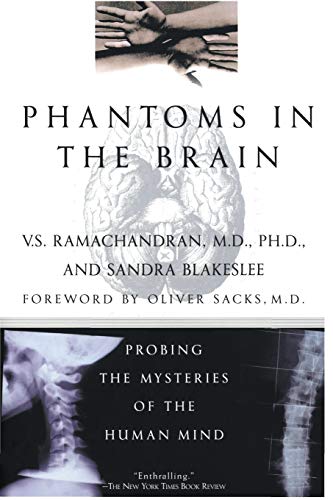
Cover unavailable
93
Raising Human Beings: Creating a Collaborative Partnership with Your Child
Ross W. Greene Ph.D.
4.0
In Raising Human Beings, the renowned child psychologist and New York Times bestselling author of Lost at School and The Explosive Child explains how to cultivate a better parent-child relationship while also nurturing empathy, honesty, resilience, and independence.
Parents have an important task: figure out who their child is—his or her skills, preferences, beliefs, values, personality traits, goals, and direction—get comfortable with it, and then help him or her pursue and live a life that is congruent with it. But parents also want to have influence. They want their kid to be independent, but not if he or she is going to make bad choices. They don’t want to be harsh and rigid, but nor do they want a noncompliant, disrespectful kid. They want to avoid being too pushy and overbearing, but not if an unmotivated, apathetic kid is what they have to show for it. They want to have a good relationship with their kids, but not if that means being a pushover. They don’t want to scream, but they do want to be heard. Good parenting is about striking the balance between a child’s characteristics and a parent’s desire to have influence.
Now Dr. Ross Greene offers a detailed and practical guide for raising kids in a way that enhances relationships, improves communication, and helps kids learn how to resolve disagreements without conflict. Through his well-known model of solving problems collaboratively, parents can forgo time-out and sticker charts, stop badgering, berating, threatening, and punishing, allow their kids to feel heard and validated, and have influence. From homework to hygiene, curfews, to screen time, Raising Human Beings arms parents with the tools they need to raise kids in ways that are non-punitive and non-adversarial and that brings out the best in both parent and child.
…
Cover unavailable
94
The Mind Map Book: Unlock Your Creativity, Boost Your Memory, Change Your Life
Tony Buzan, Barry Buzan, et al.
4.0
Your brain is a super bio-computer that dwarfs any machine on the market. If you understand how it works and how to work with it, you can employ and enjoy astonishing powers of learning, memory, concentration, and creativity in planning and structuring thought on all levels. Now, in The Mind Map Book, Tony and Barry Buzan have provided a comprehensive operating manual for all who want to use their brains to their fullest potential. Mind Mapping and Radiant Thinking, the revolutionary new method of accessing heretofore untapped intelligences, was developed by world-famous brain-power expert Tony Buzan by analyzing original breakthrough scientific insights into the workings of the brain. It is a process currently used with extraordinary success by multinational corporations, leading universities, champion athletes, and outstanding artists. The Mind Map Book is the only book that both explains the fundamental operation of the brain in terms of its thinking processes and explains how to unleash and harness its power. This remarkable book clearly and concisely describes how your brain actually stores and processes all the information that pours into it. Then, with the aid of vivid diagrams and exciting, easy-to-follow exercises, it shows you precisely how to mirror and magnify your brain's pattern of perception and association in the way you learn, think, and create...and have it serve as the tool you need to succeed in business as well as in school, in the studio, in sports, in your love life and other relationships; quickly master the right way to take notes, organize a speech, a writing assignment, a report; and join with others to pool thinking productively, memorize a mammoth amount ofdata, free your ideas to grow and expand constantly in depth and dimension. On another level, you will see how the great thinkers, scientists, and artists of the past and present have utilized the principles of Mind Mapping and Radiant Thinking. Included, too, are fascinating cas
…
Cover unavailable
95
Essentials of Educational Psychology: Big Ideas To Guide Effective Teaching
Jeanne Ellis Ormrod and Brett Jones
4.0
NOTE: Used books, rentals, and purchases made outside of Pearson If purchasing or renting from companies other than Pearson, the access codes for the Enhanced Pearson eText may not be included, may be incorrect, or may be previously redeemed. Check with the seller before completing your purchase. "This access code card provides access to the new Enhanced Pearson eText" Focused on the big ideas of educational psychology, "Essentials of Educational Psychology" presents the core concepts and research-based strategies that are most directly applicable to teaching and learning. Full of classroom applications and strategies for planning and carrying out instruction, assessment, and classroom management, this unique text helps readers understand how to facilitate learning as teachers. This title is offered as an Enhanced Pearson eText and provides a rich, interactive learning experience with embedded video, video analysis exercises, interactive learning modules, classroom simulations, licensure examination preparation exercises, and assessments. The Enhanced Pearson eText features embedded video, video analysis exercises, interactive learning modules, classroom simulations, licensure examination preparation exercises, and assessments. Improve mastery and retention with the Enhanced Pearson eText* This access code card provides access to the new Enhanced Pearson eText, a rich, interactive learning environment designed to improve student mastery of content. The Enhanced Pearson eText is: Engaging. The new interactive, multimedia learning features were developed by the authors and other subject-matter experts to deepen and enrich the learning experience. Convenient. Enjoy instant online access from your computer or download the Pearson eText App to read on or offline on your iPad(r) and Android(r) tablet.* Affordable. Experience the advantages of the Enhanced Pearson eText for 40% to 65% less than a print bound book. " "*The Enhanced" " eText features are only available in the Pearson eText format. They are not available in third-party eTexts or downloads." *The Pearson eText App is available on Google Play and in the App Store. It requires Android OS 3.1-4, a 7 or 10 tablet, or iPad iOS 5.0 or later." From reviews of the book: I do not think anyone can write to an undergraduate like Jeanne Ormrod can. Deborah Switzer, Clemson University Many similar textbooks suffer from the "everything, including the kitchen sink" problem. This is a mostly-lean and focused text. . . . The extensive examples help with clarity. . . . [And I] appreciate how a chapter starts with theory and research, and ends with lots and lots of useful strategies. This book really matches its subtitle [ Big Ideas to Guide Effective Teaching ]. I . . . greatly value the Cultural Considerations box in each chapter. . . [and] plan to make time to come back and study them again, to improve both how I teach and what I teach my students about learner differences. Kym Buchanan, University of Wisconsin, Stevens Point I see students in my class who are not able to do well in other courses . . . get high grades in this course partly due to the textbook. This text is written in a . . . way for students to get the main points of the material and connect them with real-life examples. In this way, they are able to quickly become successful at understanding the material in a practical and applicable way. This text . . . is [also]a good study tool to use when preparing for licensure exams. Kimberlee Taylor, Utah State University "
…
Cover unavailable
96
Small Teaching: Everyday Lessons from the Science of Learning
James M. Lang, Daniel Thomas May, et al
4.0
Employ cognitive theory in the classroom every day Research into how we learn has opened the door for utilizing cognitive theory to facilitate better student learning. But that's easier said than done. Many books about cognitive theory introduce radical but impractical theories, failing to make the connection to the classroom. In "Small Teaching, " James Lang presents a strategy for improving student learning with a series of modest but powerful changes that make a big difference-many of which can be put into practice in a single class period. These strategies are designed to bridge the chasm between primary research and the classroom environment in a way that can be implemented by any faculty in any discipline, and even integrated into pre-existing teaching techniques. Learn, for example: How does one become good at retrieving knowledge from memory? How does making predictions now help us learn in the future? How do instructors instill fixed or growth mindsets in their students?
Each chapter introduces a basic concept in cognitive theory, explains when and how it should be employed, and provides firm examples of how the intervention has been or could be used in a variety of disciplines. Small teaching techniques include brief classroom or online learning activities, one-time interventions, and small modifications in course design or communication with students.
No fictional character is more renowned for his powers of thought and observation than Sherlock Holmes. But is his extraordinary intellect merely a gift of fiction, or can we learn to cultivate these abilities ourselves, to improve our lives at work and at home?
We can, says psychologist and journalist Maria Konnikova, and in Mastermind she shows us how. Beginning with the "brain attic"--Holmes's metaphor for how we store information and organize knowledge--Konnikova unpacks the mental strategies that lead to clearer thinking and deeper insights. Drawing on twenty-first-century neuroscience and psychology, Mastermind explores Holmes's unique methods of ever-present mindfulness, astute observation, and logical deduction.
In doing so, it shows how each of us, with some self-awareness and a little practice, can employ these same methods to sharpen our perceptions, solve difficult problems, and enhance our creative powers. For Holmes aficionados and casual readers alike, Konnikova reveals how the world's most keen-eyed detective can serve as an unparalleled guide to upgrading the mind.
…
Recommended by Kirk Borne.
Kirk Borne
To Change the Way You Think, Change the Way You See: “To observe, you must learn to separate situation from interpretation, yourself from what you are seeing.” https://t.co/jYH02Yh8u1 Also see this book: https://t.co/uKXYEPDHOM #Cognitive https://t.co/43hHzNb55A [source]
Cover unavailable
98
Making Thinking Visible: How to Promote Engagement, Understanding, and Independence for All Learners
Ron Ritchhart, Mark Church, Karin Morrison
4.0
A proven program for enhancing students' thinking and comprehension abilities Visible Thinking is a research-based approach to teaching thinking, begun at Harvard's Project Zero, that develops students' thinking dispositions, while at the same time deepening their understanding of the topics they study. Rather than a set of fixed lessons, Visible Thinking is a varied collection of practices, including thinking routines, small sets of questions or a short sequence of steps as well as the documentation of student thinking. Using this process thinking becomes visible as the students' different viewpoints are expressed, documented, discussed and reflected upon.
Helps direct student thinking and structure classroom discussion. Can be applied with students at all grade levels and in all content areas. Includes easy-to-implement classroom strategies.
The book also comes with a DVD of video clips featuring Visible Thinking in practice in different classrooms.
…
Cover unavailable
99
Thought as a System
David Bohm
4.0
This study concerns the role of thought and knowledge. The author rejects the notion that our thinking processes neutrally report on what is out there in an objective world. He explores the manner in which thought actively participates in forming our perceptions, our sense of meaning and our daily actions. He suggests that collective thought and knowledge have become so automated that we are in large part controlled by them, with a subsequent loss of authenticity, freedom and order.
…
Cover unavailable
100
The School Psychologist's Survival Guide, Grades K-12
Rebecca Branstetter
4.0
A practical and accessible guide for helping school psychologists meet their everyday challenges In this newest addition to the Jossey-Bass "Survival Guide" series, popular blogger Rebecca Branstetter offers help for school psychologists who must often travel to multiple school sites, deal with students with severe disabilities, meet with concerned parents, and manage school crises. The book is filled with practical advice, proven strategies, and useful tools, complete with reproducible forms, letters, and checklists for busy professionals.
Filled with the tools, strategies, and ideas for school psychologists who must deal with the myriad challenges of working with a diverse group of students, often in multiple locations Another book in the popular Jossey-Bass "Survival Guide" Series Rebecca Branstetter is an experienced school psychologist and popular blogger ("Notes from the School Psychologist": studentsgrow.blogspot.com) This vital resource offers a down-to-earth guide for both novice and seasoned school psychologists.