We've ranked the best devops books using expert recommendations, sales data, and millions of reader ratings. At Shortform, we know books. Our book guides are the best in the world. Learn why.
Cover unavailable
1
The Phoenix Project: A Novel About IT, DevOps, and Helping Your Business Win
Bill is an IT manager at Parts Unlimited. It's Tuesday morning and on his drive into the office, Bill gets a call from the CEO.
The company's new IT initiative, code named Phoenix Project, is critical to the future of Parts Unlimited, but the project is massively over budget and very late. The CEO wants Bill to report directly to him and fix the mess in ninety days or else Bill's entire department will be outsourced.
With the help of a prospective board member and his mysterious philosophy of The Three Ways, Bill starts to see that IT work has more in common with manufacturing plant work than he ever imagined. With the clock ticking, Bill must organize work flow streamline interdepartmental communications, and effectively serve the other business functions at Parts Unlimited.
In a fast-paced and entertaining style, three luminaries of the DevOps movement deliver a story that anyone who works in IT will recognize. Readers will not only learn how to improve their own IT organizations, they'll never view IT the same way again.
…
Recommended by Jeffrey Snover and Louis Nyffenegger.
Jeffrey Snover
Great thread. I know of a number of devops people that haven't read this book. Ya'll should fix that. https://t.co/Yri4JJ0jBZ [source]
Louis Nyffenegger
I don't think I have a specific book that I can call my favourite. Some books have had a big impact on my view of how to build a product/company ("Rework"), some were very enjoyable to read ("The Phoenix Project"), some helped me improve the way I think ("The Pleasure Of Finding Things Out") and some the way I live ("Essentialism") or work ("Deep Work"). [source]
Written in a fast-paced thriller style, 'The Goal' contains a serious message for all managers in industry and explains the ideas which underline the Theory of Constraints developed by the author.
Recommended by Jeff Bezos, Danielle Morrill, Kevin Systrom, and 4 others.
Encourages companies to identify the biggest constraints in their operations and then structure their organizations to get the most out of those constraints. [source]
Kevin Systrom
About basically manufacturing and supply chain management. It sounds really boring, but I promise you it’s really good. [source]
Chris Goward
Here are some of the books that have been very impactful for me, or taught me a new way of thinking: … The Goal. [source]
Cover unavailable
3
The DevOps Handbook: How to Create World-Class Agility, Reliability, and Security in Technology Organizations
Gene Kim, Patrick Debois, John Willis, Jez Humble, John Allspaw
4.7
Increase profitability, elevate work culture, and exceed productivity goals through DevOps practices.
More than ever, the effective management of technology is critical for business competitiveness. For decades, technology leaders have struggled to balance agility, reliability, and security. The consequences of failure have never been greater whether it's the healthcare.gov debacle, cardholder data breaches, or missing the boat with Big Data in the cloud.
And yet, high performers using DevOps principles, such as Google, Amazon, Facebook, Etsy, and Netflix, are routinely and reliably deploying code into production hundreds, or even thousands, of times per day.
Following in the footsteps of The Phoenix Project, The DevOps Handbook shows leaders how to replicate these incredible outcomes, by showing how to integrate Product Management, Development, QA, IT Operations, and Information Security to elevate your company and win in the marketplace."
Table of contents
Preface Spreading the Aha! Moment Introduction
PART I: THE THREE WAYS 1. Agile, continuous delivery and the three ways 2. The First Way: The Principles of Flow 3. The Second Way: The Principle of Feedback 4. The Third Way: The Principles of Continual Learning
PART II: WHERE TO START 5. Selecting which value stream to start with 6. Understanding the work in our value stream… 7. How to design our organization and architecture 8. How to get great outcomes by integrating operations into the daily work for development
PART III: THE FIRST WAY: THE TECHNICAL PRACTICES OF FLOW 9. Create the foundations of our deployment pipeline 10. Enable fast and reliable automated testing 11. Enable and practice continuous integration 12. Automate and enable low-risk releases 13. Architect for low-risk releases
PART IV: THE SECOND WAY: THE TECHNICAL PRACTICES OF FEEDBACK 14*. Create telemetry to enable seeing abd solving problems 15. Analyze telemetry to better anticipate problems 16. Enable feedbackso development and operation can safely deploy code 17. Integrate hypothesis-driven development and A/B testing into our daily work 18. Create review and coordination processes to increase quality of our current work
PART V: THE THRID WAY: THE TECHNICAL PRACTICES OF CONTINUAL LEARNING 19. Enable and inject learning into daily work 20. Convert local discoveries into global improvements 21. Reserve time to create organizational learning 22. Information security as everyone’s job, every day 23. Protecting the deployment pipeline
PART VI: CONCLUSION A call to action Conclusion to the DevOps Handbook
APPENDICES 1. The convergence of Devops 2. The theory of constraints and core chronic conflicts 3. Tabular form of downward spiral 4. The dangers of handoffs and queues 5. Myths of industrial safety 6. The Toyota Andon Cord 7. COTS Software 8. Post-mortem meetings 9. The Simian Army 10. Transparent uptime
Additional Resources Endnotes
…
Cover unavailable
4
The Lean Startup: How Today's Entrepreneurs Use Continuous Innovation to Create Radically Successful Businesses
Most startups fail. But many of those failures are preventable. The Lean Startup is a new approach being adopted across the globe, changing the way companies are built and new products are launched.
Eric Ries defines a startup as an organization dedicated to creating something new under conditions of extreme uncertainty. This is just as true for one person in a garage or a group of seasoned professionals in a Fortune 500 boardroom. What they have in common is a mission to penetrate that fog of uncertainty to discover a successful path to a sustainable business.
The Lean Startup approach fosters companies that are both more capital efficient and that leverage human creativity more effectively. Inspired by lessons from lean manufacturing, it relies on "validated learning," rapid scientific experimentation, as well as a number of counter-intuitive practices that shorten product development cycles, measure actual progress without resorting to vanity metrics, and learn what customers really want. It enables a company to shift directions with agility, altering plans inch by inch, minute by minute.
Rather than wasting time creating elaborate business plans, The Lean Startup offers entrepreneurs - in companies of all sizes - a way to test their vision continuously, to adapt and adjust before it's too late. Ries provides a scientific approach to creating and managing successful startups in a age when companies need to innovate more than ever.
At Asana, we've been lucky to benefit from the author's advice firsthand; this book will enable him to help many more entrepreneurs answer the tough questions about their business. [source]
Cover unavailable
5
Accelerate: Building and Scaling High-Performing Technology Organizations
Nicole Forsgren PhD
4.6
Does technology actually matter? And how can we apply technology to drive business value? For years, we've been told that the performance of software delivery teams doesn't matter--that it can't provide a competitive advantage to our companies. Through four years of groundbreaking research, Dr. Nicole Forsgren, Jez Humble, and Gene Kim set out to find a way to measure software delivery performance--and what drives it--using rigorous statistical methods. This book presents both the findings and the science behind that research. Readers will discover how to measure the performance of their teams, and what capabilities they should invest in to drive higher performance.
…
Recommended by Kirk Borne.
Kirk Borne
Fantastic accomplishment! Congratulations @nicolefv on your outstanding #DevOps book ... I love that: “The Science of Lean” ... that works also for #DataOps and Lean Analytics. https://t.co/i9gPhKL0dt https://t.co/DNJpuJtER0 [source]
Cover unavailable
6
Site Reliability Engineering: How Google Runs Production Systems
Niall Richard Murphy, Betsy Beyer, et al.
4.5
The overwhelming majority of a software system's lifespan is spent in use, not in design or implementation. So, why does conventional wisdom insist that software engineers focus primarily on the design and development of large-scale computing systems?
In this collection of essays and articles, key members of Google's Site Reliability Team explain how and why their commitment to the entire lifecycle has enabled the company to successfully build, deploy, monitor, and maintain some of the largest software systems in the world. You'll learn the principles and practices that enable Google engineers to make systems more scalable, reliable, and efficient--lessons directly applicable to your organization.
This book is divided into four sections: Introduction--Learn what site reliability engineering is and why it differs from conventional IT industry practicesPrinciples--Examine the patterns, behaviors, and areas of concern that influence the work of a site reliability engineer (SRE)Practices--Understand the theory and practice of an SRE's day-to-day work: building and operating large distributed computing systemsManagement--Explore Google's best practices for training, communication, and meetings that your organization can use
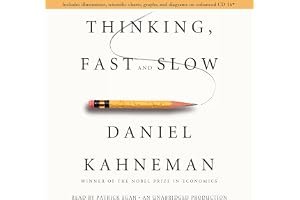
Major New York Times bestseller Winner of the National Academy of Sciences Best Book Award in 2012 Selected by the New York Times Book Review as one of the best books of 2011 A Globe and Mail Best Books of the Year 2011 Title One of The Economist's 2011 Books of the Year One of The Wall Street Journal's Best Nonfiction Books of the Year 2011 2013 Presidential Medal of Freedom Recipient
In the international bestseller, Thinking, Fast and Slow, Daniel Kahneman, the renowned psychologist and winner of the Nobel Prize in Economics, takes us on a groundbreaking tour of the mind and explains the two systems that drive the way we think. System 1 is fast, intuitive, and emotional; System 2 is slower, more deliberative, and more logical. The impact of overconfidence on corporate strategies, the difficulties of predicting what will make us happy in the future, the profound effect of cognitive biases on everything from playing the stock market to planning our next vacation—each of these can be understood only by knowing how the two systems shape our judgments and decisions. Engaging the reader in a lively conversation about how we think, Kahneman reveals where we can and cannot trust our intuitions and how we can tap into the benefits of slow thinking. He offers practical and enlightening insights into how choices are made in both our business and our personal lives—and how we can use different techniques to guard against the mental glitches that often get us into trouble. Winner of the National Academy of Sciences Best Book Award and the Los Angeles Times Book Prize and selected by The New York Times Book Review as one of the ten best books of 2011, Thinking, Fast and Slow is destined to be a classic.
A few months ago, Mr. Obama read “Thinking, Fast and Slow,” by Daniel Kahneman, about how people make decisions — quick, instinctive thinking versus slower, contemplative deliberation. For Mr. Obama, a deliberator in an instinctive business, this may be as instructive as any political science text. [source]
Captivating dive into human decision making, marred by inclusion of several/many? psychology studies that fail to replicate. Will stand as a cautionary tale? [source]
Cover unavailable
8
The Unicorn Project: A Novel About Developers, Digital Disruption, and Thriving in the Age of Data
This highly anticipated follow-up to the bestselling title The Phoenix Project takes another look at Parts Unlimited, this time from the perspective of software development. In The Phoenix Project, Bill, an IT manager at Parts Unlimited, is tasked with a project critical to the future of the business, code named Phoenix Project. But the project is massively over budget and behind schedule. The CEO demands Bill fix the mess in ninety days or else Bill's entire department will be outsourced. In The Unicorn Project, we follow Maxine, a senior lead developer and architect, as she is exiled to the Phoenix Project, to the horror of her friends and colleagues, as punishment for contributing to a payroll outage. She tries to survive in what feels like a heartless and uncaring bureaucracy and to work within a system where no one can get anything done without endless committees, paperwork, and approvals. One day, she is approached by a ragtag bunch of misfits who say they want to overthrow the existing order, to liberate developers, to bring joy back to technology work, and to enable the business to win in a time of digital disruption. To her surprise, she finds herself drawn ever further into this movement, eventually becoming one of the leaders of the Rebellion, which puts her in the crosshairs of some familiar and very dangerous enemies. The Age of Software is here, and another mass extinction event looms--this is a story about "red shirt" developers and business leaders working together, racing against time to innovate, survive, and thrive in a time of unprecedented uncertainty...and opportunity.
…
Cover unavailable
9
Continuous Delivery: Reliable Software Releases Through Build, Test, and Deployment Automation
Jez Humble and David Farley
4.5
Winner of the 2011 Jolt Excellence Award!
Getting software released to users is often a painful, risky, and time-consuming process. This groundbreaking new book sets out the principles and technical practices that enable rapid, incremental delivery of high quality, valuable new functionality to users. Through automation of the build, deployment, and testing process, and improved collaboration between developers, testers, and operations, delivery teams can get changes released in a matter of hours-- sometimes even minutes-no matter what the size of a project or the complexity of its code base. Jez Humble and David Farley begin by presenting the foundations of a rapid, reliable, low-risk delivery process. Next, they introduce the "deployment pipeline," an automated process for managing all changes, from check-in to release. Finally, they discuss the "ecosystem" needed to support continuous delivery, from infrastructure, data and configuration management to governance. The authors introduce state-of-the-art techniques, including automated infrastructure management and data migration, and the use of virtualization. For each, they review key issues, identify best practices, and demonstrate how to mitigate risks. Coverage includes - Automating all facets of building, integrating, testing, and deploying software - Implementing deployment pipelines at team and organizational levels - Improving collaboration between developers, testers, and operations - Developing features incrementally on large and distributed teams - Implementing an effective configuration management strategy - Automating acceptance testing, from analysis to implementation - Testing capacity and other non-functional requirements - Implementing continuous deployment and zero-downtime releases - Managing infrastructure, data, components and dependencies - Navigating risk management, compliance, and auditing Whether you're a developer, systems administrator, tester, or manager, this book will help your organization move from idea to release faster than ever--so you can deliver value to your business rapidly and reliably.
…
Cover unavailable
10
Team Topologies: Evolving Organization Design for Business and Technology
Successful teams are fundamental to create successful outcomes for any business, across all industries, to include building and running modern software systems, and successful organizations take care in designing and evolving their team structures. In TEAM TOPOLOGIES DevOps consultants Matthew Skelton and Manuel Pais share secrets of successful team patterns and interactions to help readers choose and evolve the right team patterns for their organization, making sure to keep the software healthy and optimize value streams. TEAM TOPOLOGIES will help readers discover: Team patterns used by successful organizations Common team patterns to avoid with modern software systems When and why to use different team patternsHow to evolve teams effectivelyHow to split software and align to teams
…
Recommended by Gene Kim.
Gene Kim
@notoriousMVK @CloudBees Congrats to @matthewpskelton and @manupaisable for their amazing book, “Team Topologies,” which they’ll be signing this week, too! [source]
Cover unavailable
11
Release It!: Design and Deploy Production-Ready Software (Pragmatic Programmers)
Michael T. Nygard
4.4
Whether it's in Java, .NET, or Ruby on Rails, getting your application ready to ship is only half the battle. Did you design your system to survivef a sudden rush of visitors from Digg or Slashdot? Or an influx of real world customers from 100 different countries? Are you ready for a world filled with flakey networks, tangled databases, and impatient users?
If you're a developer and don't want to be on call for 3AM for the rest of your life, this book will help.
In Release It!, Michael T. Nygard shows you how to design and architect your application for the harsh realities it will face. You'll learn how to design your application for maximum uptime, performance, and return on investment.
Mike explains that many problems with systems today start with the design.
Meadows’ Thinking in Systems, is a concise and crucial book offering insight for problem solving on scales ranging from the personal to the global. Edited by the Sustainability Institute’s Diana Wright, this essential primer brings systems thinking out of the realm of computers and equations and into the tangible world, showing readers how to develop the systems-thinking skills that thought leaders across the globe consider critical for 21st-century life.
Some of the biggest problems facing the world—war, hunger, poverty, and environmental degradation—are essentially system failures. They cannot be solved by fixing one piece in isolation from the others, because even seemingly minor details have enormous power to undermine the best efforts of too-narrow thinking.
While readers will learn the conceptual tools and methods of systems thinking, the heart of the book is grander than methodology. Donella Meadows was known as much for nurturing positive outcomes as she was for delving into the science behind global dilemmas. She reminds readers to pay attention to what is important, not just what is quantifiable, to stay humble, and to stay a learner.
In a world growing ever more complicated, crowded, and interdependent, Thinking in Systems helps readers avoid confusion and helplessness, the first step toward finding proactive and effective solutions.
…
Recommended by Tobi Lütke, Kate Raworth, and Mira Kirshenbaum.
Tobi Lütke
Founder & CEO/Shopify
Tobi Lütke recommended this book on the podcast "The Knowledge Project". [source]
From the bestselling author of The Black Swan and one of the foremost philosophers of our time, Nassim Nicholas Taleb, a book on how some systems actually benefit from disorder.
In The Black Swan Taleb outlined a problem; in Antifragile he offers a definitive solution: how to gain from disorder and chaos while being protected from fragilities and adverse events. For what he calls the "antifragile" is one step beyond robust, as it benefits from adversity, uncertainty and stressors, just as human bones get stronger when subjected to stress and tension.
Taleb stands uncertainty on its head, making it desirable, and proposing that things be built in an antifragile manner. Extremely ambitious and multidisciplinary, Antifragile provides a blueprint for how to behave-and thrive-in a world we don't understand and which is too uncertain for us to even try to understand. He who is not antifragile will perish. Why is the city state better than the nation state, why is debt bad for you, and why is almost everything modern bound to fail? The book covers innovation, health, biology, medicine, life decisions, politics, foreign policy, urban planning, war, personal finance, and economic systems. Throughout, the voice and recipes of the ancient wisdom from Phoenician, Roman, Greek, and Medieval sources are heard loud and clear.
You ask about success. To be successful you have to avoid being “fragile” – the idea that if something hurts you, you let collapse completely. You also have to avoid simply being resilient. Bouncing back is not enough. Antifragile is when something tries to hurt you and you come back stronger. That is real life business. That is real life success. Nassim focuses on the economy. But when I read the book I kept asking myself, “how can I apply this to the areas of my life where I feel most fragile?” [source]
Marvin Liao
Partner/500 Startups
My list would be (besides the ones I mentioned in answer to the previous question) both business & Fiction/Sci-Fi and ones I personally found helpful to myself. The business books explain just exactly how business, work & investing are in reality & how to think properly & differentiate yourself. On the non-business side, a mix of History & classic fiction to understand people, philosophy to make sense of life and Science fiction to picture what the future could be like (not always utopian). [source]
Vlad Tenev
The general concept is applicable to many fields beyond biology, for instance finance, economics and monetary policy. [source]
Cover unavailable
14
Kubernetes in Action
Marko Luksa
4.4
With Kubernetes, users don't have to worry about which specific machine in their data center their application is running on. Each layer in their application is decoupled from other layers so they can scale, update, and maintain them independently.
Kubernetes in Action teaches developers how to use Kubernetes to deploy self-healing scalable distributed applications. By the end, readers will be able to build and deploy applications in a proper way to take full advantage of the Kubernetes platform.
Purchase of the print book includes a free eBook in PDF, Kindle, and ePub formats from Manning Publications.
…
Cover unavailable
15
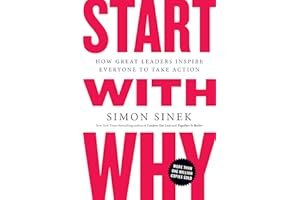
Start with Why: How Great Leaders Inspire Everyone to Take Action
Why are some people and organizations more innovative, more influential, and more profitable than others? Why do some command greater loyalty from customers and employees alike? Even among the successful, why are so few able to repeat their success over and over?
People like Martin Luther King Jr., Steve Jobs, and the Wright Brothers might have little in common, but they all started with why. It was their natural ability to start with why that enabled them to inspire those around them and to achieve remarkable things.
In studying the leaders who've had the greatest influence in the world, Simon Sinek discovered that they all think, act, and communicate in the exact same way—and it's the complete opposite of what everyone else does. Sinek calls this powerful idea The Golden Circle, and it provides a framework upon which organizations can be built, movements can be lead, and people can be inspired. And it all starts with WHY.
Any organization can explain what it does; some can explain how they do it; but very few can clearly articulate why. WHY is not money or profit—those are always results. WHY does your organization exist? WHY does it do the things it does? WHY do customers really buy from one company or another? WHY are people loyal to some leaders, but not others?
Starting with WHY works in big business and small business, in the nonprofit world and in politics. Those who start with WHY never manipulate, they inspire. And the people who follow them don't do so because they have to; they follow because they want to.
Drawing on a wide range of real-life stories, Sinek weaves together a clear vision of what it truly takes to lead and inspire. This book is for anyone who wants to inspire others or who wants to find someone to inspire them.
Today is World Book Day, a wonderful opportunity to address this #ChallengeRichard sent in by Mike Gonzalez of New Jersey: Make a list of your top 65 books to read in a lifetime. [source]
The basis of this book is so important to anyone looking to increase their influence, profits or impact. People won't truly buy into a product, service, movement, or idea until they understand the WHY behind it. When you start with the why, everything else falls into place. This book is so impactful, I consider it required reading. [source]
Tony Hsieh
CEO/Zappos.com
Over the years he’s recommended well over 20 business books — including his own, the 2010 bestseller Delivering Happiness and you can always find what he’s currently reading atop his cluttered desk. Start with Why is amogst those titles. [source]
Most business books give you the same old advice: Write a business plan, study the competition, seek investors, yadda yadda. If you're looking for a book like that, put this one back on the shelf.
Rework shows you a better, faster, easier way to succeed in business. Read it and you'll know why plans are actually harmful, why you don't need outside investors, and why you're better off ignoring the competition. The truth is, you need less than you think. You don't need to be a workaholic. You don't need to staff up. You don't need to waste time on paperwork or meetings. You don't even need an office. Those are all just excuses.
What you really need to do is stop talking and start working. This book shows you the way. You'll learn how to be more productive, how to get exposure without breaking the bank, and tons more counterintuitive ideas that will inspire and provoke you.
With its straightforward language and easy-is-better approach, Rework is the perfect playbook for anyone who’s ever dreamed of doing it on their own. Hardcore entrepreneurs, small-business owners, people stuck in day jobs they hate, victims of "downsizing," and artists who don’t want to starve anymore will all find valuable guidance in these pages.
Unperturbed by conventional wisdom, the authors start fresh and rewrite the rules of business. Their approach turns out to be as successful as it is counter-intuitive. [source]
If given a choice between investing in someone who has read Rework or has an MBA, I'm investing in Rework every time. This is a must read for every entrepreneur. [source]
Tony Hsieh
CEO/Zappos.com
The wisdom in these pages is edgy yet simple, straightforward, and proven. Read this book multiple times to help give you the courage you need to get out there and make something great. [source]
Cover unavailable
17
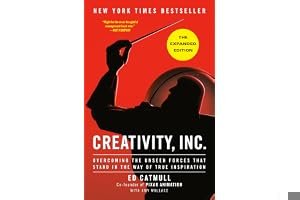
Creativity, Inc.: Overcoming the Unseen Forces That Stand in the Way of True Inspiration
“What does it mean to manage well?” From Ed Catmull, co-founder (with Steve Jobs and John Lasseter) of Pixar Animation Studios, comes an incisive book about creativity in business—sure to appeal to readers of Daniel Pink, Tom Peters, and Chip and Dan Heath. Creativity, Inc. is a book for managers who want to lead their employees to new heights, a manual for anyone who strives for originality, and the first-ever, all-access trip into the nerve center of Pixar Animation—into the meetings, postmortems, and “Braintrust” sessions where some of the most successful films in history are made. It is, at heart, a book about how to build a creative culture—but it is also, as Pixar co-founder and president Ed Catmull writes, “an expression of the ideas that I believe make the best in us possible.” For nearly twenty years, Pixar has dominated the world of animation, producing such beloved films as the Toy Story trilogy, Monsters, Inc., Finding Nemo, The Incredibles, Up, and WALL-E, which have gone on to set box-office records and garner thirty Academy Awards. The joyousness of the storytelling, the inventive plots, the emotional authenticity: In some ways, Pixar movies are an object lesson in what creativity really is. Here, in this book, Catmull reveals the ideals and techniques that have made Pixar so widely admired—and so profitable.
As a young man, Ed Catmull had a dream: to make the first computer-animated movie. He nurtured that dream as a Ph.D. student at the University of Utah, where many computer science pioneers got their start, and then forged a partnership with George Lucas that led, indirectly, to his founding Pixar with Steve Jobs and John Lasseter in 1986. Nine years later, Toy Story was released, changing animation forever. The essential ingredient in that movie’s success—and in the thirteen movies that followed—was the unique environment that Catmull and his colleagues built at Pixar, based on philosophies that protect the creative process and defy convention, such as:
• Give a good idea to a mediocre team, and they will screw it up. But give a mediocre idea to a great team, and they will either fix it or come up with something better. • If you don’t strive to uncover what is unseen and understand its nature, you will be ill prepared to lead. • It’s not the manager’s job to prevent risks. It’s the manager’s job to make it safe for others to take them. • The cost of preventing errors is often far greater than the cost of fixing them. • A company’s communication structure should not mirror its organizational structure. Everybody should be able to talk to anybody. • Do not assume that general agreement will lead to change—it takes substantial energy to move a group, even when all are on board.
This book is written by the founder of Pixar and is about his experience building a culture that fosters creativity. His theory is that people are fundamentally creative, but many forces stand in the way of people being able to do their best work. I love reading first-hand accounts about how people build great companies like Pixar and nurture innovation and creativity. This should be inspiring to anyone looking to do the same, and hopefully there will be lessons we can apply to connecting the world! [source]
No matter your circumstances, storytelling and creativity are two 'meta-skills' that can take your business and life to the next level. Ed is a master. [source]
Infrastructure as Code: Managing Servers in the Cloud
Kief Morris
4.3
Virtualization, cloud, containers, server automation, and software-defined networking are meant to simplify IT operations. But many organizations adopting these technologies have found that it only leads to a faster-growing sprawl of unmanageable systems. This is where infrastructure as code can help. With this practical guide, author Kief Morris of ThoughtWorks shows you how to effectively use principles, practices, and patterns pioneered through the DevOps movement to manage cloud age infrastructure.
Ideal for system administrators, infrastructure engineers, team leads, and architects, this book demonstrates various tools, techniques, and patterns you can use to implement infrastructure as code. In three parts, you'll learn about the platforms and tooling involved in creating and configuring infrastructure elements, patterns for using these tools, and practices for making infrastructure as code work in your environment.
Examine the pitfalls that organizations fall into when adopting the new generation of infrastructure technologies Understand the capabilities and service models of dynamic infrastructure platforms Learn about tools that provide, provision, and configure core infrastructure resources Explore services and tools for managing a dynamic infrastructure Learn specific patterns and practices for provisioning servers, building server templates, and updating running servers
…
Cover unavailable
19
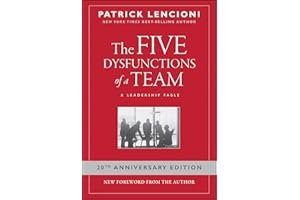
The Five Dysfunctions of a Team: A Leadership Fable
In The Five Dysfunctions of a Team Patrick Lencioni once again offers a leadership fable that is as enthralling and instructive as his first two best-selling books, The Five Temptations of a CEO and The Four Obsessions of an Extraordinary Executive. This time, he turns his keen intellect and storytelling power to the fascinating, complex world of teams.
Kathryn Petersen, Decision Tech's CEO, faces the ultimate leadership crisis: Uniting a team in such disarray that it threatens to bring down the entire company. Will she succeed? Will she be fired? Will the company fail? Lencioni's utterly gripping tale serves as a timeless reminder that leadership requires as much courage as it does insight.
Throughout the story, Lencioni reveals the five dysfunctions which go to the very heart of why teams even the best ones-often struggle. He outlines a powerful model and actionable steps that can be used to overcome these common hurdles and build a cohesive, effective team. Just as with his other books, Lencioni has written a compelling fable with a powerful yet deceptively simple message for all those who strive to be exceptional team leaders.
…
Recommended by AnneMarie Schindler, Holger Seim, Jennifer Rock, and 3 others.
AnneMarie Schindler
I suggest these books because they really open up 'how' you think about life and in turn work, success/challenges/setbacks, and in general, yourself. I believe that the more you can understand yourself and broaden your approach to work, the easier it will be to find work that energizes you. Finally, I'm a team player at heart, and love working with others to achieve a huge goal so a portion of these deal with team composition and performance too. [source]
Holger Seim
Lencioni’s books helped me to shift my focus from individual performance to team performance, and what it takes to make a team perform well. It helped me to realize and take seriously the fact that great team performance doesn’t happen magically but needs conscious effort. When I discovered The Five Dysfunctions of a Team for the first time, we had a dysfunctional team at Blinkist and the book opened my eyes to see the problem clearly and showed clear steps for how they should be tackled. Beforehand I was aware that we had a problem, but I couldn’t pinpoint it specifically and hence, couldn’t solve it easily. This book helped a lot. [source]
Jennifer Rock
In Patrick Lencioni's book The Five Dysfunctions of a Team, the executive asks her senior leaders "Who is your first team?" And they each answer incorrectly that it's the team that reports to him or her. The point is that you need to shift your perspective to understanding your senior leadership peers are your first team. We read that book as a leadership team in a corporation where I worked -- and the environment was very competitive between us. When we agreed that our cross-functional leadership team was our first team, we became more cooperative, innovative and productive. And we vastly boosted our results. [source]
Cover unavailable
20
The Power of Habit: Why We Do What We Do in Life and Business
A young woman walks into a laboratory. Over the past two years, she has transformed almost every aspect of her life. She has quit smoking, run a marathon, and been promoted at work. The patterns inside her brain, neurologists discover, have fundamentally changed.
Marketers at Procter & Gamble study videos of people making their beds. They are desperately trying to figure out how to sell a new product called Febreze, on track to be one of the biggest flops in company history. Suddenly, one of them detects a nearly imperceptible pattern—and with a slight shift in advertising, Febreze goes on to earn a billion dollars a year.
An untested CEO takes over one of the largest companies in America. His first order of business is attacking a single pattern among his employees—how they approach worker safety—and soon the firm, Alcoa, becomes the top performer in the Dow Jones.
What do all these people have in common? They achieved success by focusing on the patterns that shape every aspect of our lives.
They succeeded by transforming habits.
In The Power of Habit, award-winning New York Times business reporter Charles Duhigg takes us to the thrilling edge of scientific discoveries that explain why habits exist and how they can be changed. With penetrating intelligence and an ability to distill vast amounts of information into engrossing narratives, Duhigg brings to life a whole new understanding of human nature and its potential for transformation.
Along the way we learn why some people and companies struggle to change, despite years of trying, while others seem to remake themselves overnight. We visit laboratories where neuroscientists explore how habits work and where, exactly, they reside in our brains. We discover how the right habits were crucial to the success of Olympic swimmer Michael Phelps, Starbucks CEO Howard Schultz, and civil-rights hero Martin Luther King, Jr. We go inside Procter & Gamble, Target superstores, Rick Warren’s Saddleback Church, NFL locker rooms, and the nation’s largest hospitals and see how implementing so-called keystone habits can earn billions and mean the difference between failure and success, life and death.
At its core, The Power of Habit contains an exhilarating argument: The key to exercising regularly, losing weight, raising exceptional children, becoming more productive, building revolutionary companies and social movements, and achieving success is understanding how habits work.
Habits aren’t destiny. As Charles Duhigg shows, by harnessing this new science, we can transform our businesses, our communities, and our lives.
…
Recommended by Naval Ravikant, Blake Irving, Alden Mills, and 15 others.
I also recently finished The Power of Habit, or close to finish as I get. That one was interesting, not because of its content necessarily, but because it’s good for me to always keep on top of mind how powerful my habits are. … I think learning how to break habits is a very important meta-skill that can serve you better in life than almost anything else. Although you can read tons of books on it, the reality is you’re never going to learn how to break bad habits until you just break them. [source]
Blake Irving
CEO/GoDaddy
You know, there's a book called The Power of Habit by Charles Duhigg. Simple read book about just how to build positive habits that can be I think I what I'd call you know whether in your personal life or whether in your business life to help you build you know, have a loop that can build your success and that's one I mean there are so many great books out there. [source]
Alden Mills
More recent books that have had a significant impact on me are The Power of Habit and The Diamond Cutter. Both represent different forces for me – the former helps me tactically with making incremental improvements in my life. [source]
Cover unavailable
21
Lean Enterprise: How High Performance Organizations Innovate at Scale
Jez Humble, Joanne Molesky, Barry O'Reilly
4.3
How well does your organization respond to changing market conditions, customer needs, and emerging technologies when building software-based products? This practical guide presents Lean and Agile principles and patterns to help you move fast at scale—and demonstrates why and how to apply these methodologies throughout your organization, rather than with just one department or team.
Through case studies, you’ll learn how successful enterprises have rethought everything from governance and financial management to systems architecture and organizational culture in the pursuit of radically improved performance. Adopting Lean will take time and commitment, but it’s vital for harnessing the cultural and technical forces that are accelerating the rate of innovation.
* Discover how Lean focuses on people and teamwork at every level, in contrast to traditional management practices * Approach problem-solving experimentally, by exploring solutions, testing assumptions, and getting feedback from real users * Lead and manage large-scale programs in a way that empowers employees, increases the speed and quality of delivery, and lowers costs * Learn how to implement ideas from the DevOps and Lean Startup movements even in complex, regulated environments
…
Cover unavailable
22
Building Microservices: Designing Fine-Grained Systems
Sam Newman
4.3
Distributed systems have become more fine-grained in the past 10 years, shifting from code-heavy monolithic applications to smaller, self-contained microservices. But developing these systems brings its own set of headaches. With lots of examples and practical advice, this book takes a holistic view of the topics that system architects and administrators must consider when building, managing, and evolving microservice architectures.
Microservice technologies are moving quickly. Author Sam Newman provides you with a firm grounding in the concepts while diving into current solutions for modeling, integrating, testing, deploying, and monitoring your own autonomous services. You'll follow a fictional company throughout the book to learn how building a microservice architecture affects a single domain.
Discover how microservices allow you to align your system design with your organization's goals Learn options for integrating a service with the rest of your system Take an incremental approach when splitting monolithic codebases Deploy individual microservices through continuous integration Examine the complexities of testing and monitoring distributed services Manage security with user-to-service and service-to-service models Understand the challenges of scaling microservice architectures
…
Cover unavailable
23
The Mythical Man-Month: Essays on Software Engineering
Few books on software project management have been as influential and timeless as The Mythical Man-Month. With a blend of software engineering facts and thought-provoking opinions, Fred Brooks offers insight for anyone managing complex projects. These essays draw from his experience as project manager for the IBM System/360 computer family and then for OS/360, its massive software system. Now, 20 years after the initial publication of his book, Brooks has revisited his original ideas and added new thoughts and advice, both for readers already familiar with his work and for readers discovering it for the first time.
The added chapters contain (1) a crisp condensation of all the propositions asserted in the original book, including Brooks' central argument in The Mythical Man-Month: that large programming projects suffer management problems different from small ones due to the division of labor; that the conceptual integrity of the product is therefore critical; and that it is difficult but possible to achieve this unity; (2) Brooks' view of these propositions a generation later; (3) a reprint of his classic 1986 paper "No Silver Bullet"; and (4) today's thoughts on the 1986 assertion, "There will be no silver bullet within ten years."
From "The Everything Store", written by Brad Stone “An influential computer scientist makes the counterintuitive argument that small groups of engineers are more effective than larger ones at handling complex software projects. The book lays out the theory behind Amazon’s two pizza teams,” Stone writes. [source]
The retired four-star general and and bestselling author of My Share of the Task shares a powerful new leadership model
As commander of Joint Special Operations Command (JSOC), General Stanley McChrystal played a crucial role in the War on Terror. But when he took the helm in 2004, America was losing that war badly: despite vastly inferior resources and technology, Al Qaeda was outmaneuvering America’s most elite warriors.
McChrystal came to realize that today’s faster, more interdependent world had overwhelmed the conventional, top-down hierarchy of the US military. Al Qaeda had seen the future: a decentralized network that could move quickly and strike ruthlessly. To defeat such an enemy, JSOC would have to discard a century of management wisdom, and pivot from a pursuit of mechanical efficiency to organic adaptability. Under McChrystal’s leadership, JSOC remade itself, in the midst of a grueling war, into something entirely new: a network that combined robust centralized communication with decentralized managerial authority. As a result, they beat back Al Qaeda.
In this book, McChrystal shows not only how the military made that transition, but also how similar shifts are possible in all organizations, from large companies to startups to charities to governments. In a turbulent world, the best organizations think and act like a team of teams, embracing small groups that combine the freedom to experiment with a relentless drive to share what they’ve learned.
Drawing on a wealth of evidence from his military career, the private sector, and sources as diverse as hospital emergency rooms and NASA’s space program, McChrystal frames the existential challenge facing today’s organizations, and presents a compelling, effective solution.
…
Recommended by Doug McMillon, Gene Kim, and Josh Bersin.
Here's a list of the top books that taught and inspired me this year. I go back to Sam Walton's book frequently and was struck, this year, by some common principles between Sam and General McChrystal. It seems they learned some similar things about what works when it comes to leading teams. For example, fostering a shared consciousness and empowering execution delivers results. Greg Foran shared The Good Jobs Strategy with me and I see a connection to Tim Brown's Change by Design. We are making progress in designing a "system" for our associates that results in opportunities for them and an even better work environment. [source]
Gene Kim
I love this diagram from the amazing book "Team of Teams" by General Stanley McChrystal! RT @TechBeaconCom: RT @manupaisable: Great visualization of the problems relying on org charts by @j_elmqvist @DOES_EUR #DOES19 https://t.co/XTz8SAWhff [source]
Cover unavailable
25
The Site Reliability Workbook: Practical Ways to Implement SRE
Betsy Beyer, Niall Richard Murphy, et al.
4.3
In 2016, Google's Site Reliability Engineering book ignited an industry discussion on what it means to run production services today--and why reliability considerations are fundamental to service design. Now, Google engineers who worked on that bestseller introduce The Site Reliability Workbook, a hands-on companion that uses concrete examples to show you how to put SRE principles and practices to work in your environment.
This new workbook not only combines practical examples from Google's experiences, but also provides case studies from Google's Cloud Platform customers who underwent this journey. Evernote, The Home Depot, The New York Times, and other companies outline hard-won experiences of what worked for them and what didn't.
Dive into this workbook and learn how to flesh out your own SRE practice, no matter what size your company is.
You'll learn:
How to run reliable services in environments you don't completely control--like cloud Practical applications of how to create, monitor, and run your services via Service Level Objectives How to convert existing ops teams to SRE--including how to dig out of operational overload Methods for starting SRE from either greenfield or brownfield
…
Cover unavailable
26
Crucial Conversations: Tools for Talking When Stakes Are High
Kerry Patterson, Joseph Grenny, Ron McMillan, and Al Switzler
Crucial Conversations: Tools For Talking When Stakes Are High is a guide to hone your conversation skills, and prepare you for the most important or trying times of your life and career. The book discusses how talking in the right way can help people achieve what they want. People are often tongue-tied when it comes to interacting with someone, especially when there is a lot of tension in the air. Strong emotions often give away the ability to rationalise one's thoughts, especially during conversations, and emotionally-driven conversations will not work on important occasions. This book teaches readers how to tackle such situations with ease. It provides tips on how to be persuasive, and turn a conversation to one's advantage. The book helps in dealing with confrontations at home, at work, and even with friends. These skills can positively impact the lives of the book's readers in all spheres, and direct their thoughts in a constructive manner. Some of the sections from the book are, How to Notice When Safety Is at Risk, How to Speak Persuasively Not Abrasively, How to Turn Crucial Conversations, and How to Stay Focused on What You Really Want.Kerry Patterson, the co-founder of VitalSmarts, has authored four bestsellers. Some of his other books are Change Anything: The New Science of Personal Success, and Crucial Confrontations: Tools for Resolving Broken Promises, Violated Expectations, and Bad Behavior. Joseph Grenny works as a consultant for many Fortune 500 companies and has impacted many lives throughout the globe through his corporate change initiatives. He is the co-founder of VitalSmarts, and a popular speaker too. Al Switzler is the author of four New York Times bestsellers and has designed and framed many programs for Fortune 500 companies. Ron McMillan has worked as a leadership consultant and trained many people, from first level managers to CEOs.
…
Recommended by Max Levchin and Deke Bridges.
Max Levchin
Co-founder/PayPal, CEO/Affirm, Investor
A now-venerable guide to having tough conversations in a way that engages the debaters. [source]
Deke Bridges
Picked up this great book @Powells to read. Better conversation and listening enables you to get deeper into subjects at hand. When talking with people, this makes your communication skills a very powerful tool. Always be learning. #growth #education #leadership https://t.co/r0ujX9IPqh [source]
Cover unavailable
27
DevOps for the Modern Enterprise: Winning Practices to Transform Legacy IT Organizations
Mirco Hering and Bhaskar Ghosh
4.3
Cover unavailable
28
Ansible for DevOps: Server and configuration management for humans
Jeff Geerling
4.2
Ansible is a simple, but powerful, server and configuration management tool (with a few other tricks up its sleeve). This book will help those familiar with the command line and basic shell scripting start using Ansible to provision and manage anywhere from one to thousands of servers.
Cover unavailable
29
Measure What Matters: How Google, Bono, and the Gates Foundation Rock the World with OKRs
Legendary venture capitalist John Doerr reveals how the goal-setting system of Objectives and Key Results (OKRs) has helped tech giants from Intel to Google achieve explosive growth--and how it can help any organization thrive.
In the fall of 1999, John Doerr met with the founders of a start-up whom he'd just given $12.5 million, the biggest investment of his career. Larry Page and Sergey Brin had amazing technology, entrepreneurial energy, and sky-high ambitions, but no real business plan. For Google to change the world (or even to survive), Page and Brin had to learn how to make tough choices on priorities while keeping their team on track. They'd have to know when to pull the plug on losing propositions, to fail fast. And they needed timely, relevant data to track their progress -- to measure what mattered.
Doerr taught them about a proven approach to operating excellence: Objectives and Key Results. He had first discovered OKRs in the 1970s as an engineer at Intel, where the legendary Andy Grove ("the greatest manager of his or any era") drove the best-run company Doerr had ever seen. Later, as a venture capitalist, Doerr shared Grove's brainchild with more than fifty companies. Wherever the process was faithfully practiced, it worked.
In this goal-setting system, objectives define what we seek to achieve; key results are how those top-priority goals will be attained with specific, measurable actions within a set time frame. Everyone's goals, from entry level to CEO, are transparent to the entire organization.
The benefits are profound. OKRs surface an organization's most important work. They focus effort and foster coordination. They keep employees on track. They link objectives across silos to unify and strengthen the entire company. Along the way, OKRs enhance workplace satisfaction and boost retention.
In Measure What Matters, Doerr shares a broad range of first-person, behind-the-scenes case studies, with narrators including Bono and Bill Gates, to demonstrate the focus, agility, and explosive growth that OKRs have spurred at so many great organizations. This book will help a new generation of leaders capture the same magic.
John explains how OKRs Objectives and Key Results work and shows how you can apply them in all sorts of situations. I’d recommend John’s book for anyone interested in becoming a better manager (and I’d say that even if I hadn’t been interviewed for a super-nice chapter about the Gates Foundation). [source]
Whether you're a seasoned CEO or a first-time entrepreneur, you'll find valuable lessons, tools, and inspiration in the pages of Measure What Matters. I'm glad John invested the time to share these ideas with the world. [source]
In this indispensable book, the most important venture capitalist of our era reveals a key to business innovation and success. This crisp and colorful book combines fascinating case studies with insightful personal stories to show how OKRs can add magic to organizations of any size. [source]
Cover unavailable
30
The Fifth Discipline: The Art & Practice of the Learning Organization
This revised edition of Peter Senge’s bestselling classic, The Fifth Discipline, is based on fifteen years of experience in putting the book’s ideas into practice. As Senge makes clear, in the long run the only sustainable competitive advantage is your organization’s ability to learn faster than the competition. The leadership stories in the book demonstrate the many ways that the core ideas in The Fifth Discipline, many of which seemed radical when first published in 1990, have become deeply integrated into people’s ways of seeing the world and their managerial practices.
In The Fifth Discipline, Senge describes how companies can rid themselves of the learning “disabilities” that threaten their productivity and success by adopting the strategies of learning organizations—ones in which new and expansive patterns of thinking are nurtured, collective aspiration is set free, and people are continually learning how to create results they truly desire.
The updated and revised Currency edition of this business classic contains over one hundred pages of new material based on interviews with dozens of practitioners at companies like BP, Unilever, Intel, Ford, HP, Saudi Aramco, and organizations like Roca, Oxfam, and The World Bank. It features a new Foreword about the success Peter Senge has achieved with learning organizations since the book’s inception, as well as new chapters on Impetus (getting started), Strategies, Leaders’ New Work, Systems Citizens, and Frontiers for the Future.
Mastering the disciplines Senge outlines in the book will:
• Reignite the spark of genuine learning driven by people focused on what truly matters to them • Bridge teamwork into macro-creativity • Free you of confining assumptions and mindsets • Teach you to see the forest and the trees • End the struggle between work and personal time
…
Recommended by Brian Tracy, Jana Eggers, Josh Brewer, and 2 others.
Jana Eggers
My entrepreneurial and leadership inspiration came from a long line of amazing women in my family that always acted independently and gave me the fire and confidence to chose my path, and some fantastic and inspiring men who always expected me to do more. What I love about 5th Discipline is that it focuses on learning, specifically teaching and inspiring your organization to be a learning org. It is more critical than now than ever before that we be able to learn from customers and the current context of our business for adapting to new challenges. One of my favorite parts of the book is how it teaches teams to work across boundaries -- systems thinking. I've found this builds amazingly cohesive and respectful teams. So this is a business book, but it is really about organizations and how to get them learning and working together for a common purpose. [source]
Josh Brewer
After working at many startups and now running my own company, the one difference I have observed between good and great companies (and products) is how oriented the org is toward learning, The more people in an organization learn, the more value they create for the whole company. [source]
Cover unavailable
31
Beyond The Phoenix Project: The Origins and Evolution Of DevOps (Official Transcript of The Audio Series)
Gene Kim
4.2
Cover unavailable
32
How to Measure Anything: Finding the Value of "Intangibles" in Business
Praise for How to Measure Anything: Finding the Value of Intangibles in Business
"I love this book. Douglas Hubbard helps us create a path to know the answer to almost any question in business, in science, or in life . . . Hubbard helps us by showing us that when we seek metrics to solve problems, we are really trying to know something better than we know it now. How to Measure Anything provides just the tools most of us need to measure anything better, to gain that insight, to make progress, and to succeed." -Peter Tippett, PhD, M.D. Chief Technology Officer at CyberTrust and inventor of the first antivirus software
"Doug Hubbard has provided an easy-to-read, demystifying explanation of how managers can inform themselves to make less risky, more profitable business decisions. We encourage our clients to try his powerful, practical techniques." -Peter Schay EVP and COO of The Advisory Council
"As a reader you soon realize that actually everything can be measured while learning how to measure only what matters. This book cuts through conventional cliches and business rhetoric and offers practical steps to using measurements as a tool for better decision making. Hubbard bridges the gaps to make college statistics relevant and valuable for business decisions." -Ray Gilbert EVP Lucent
"This book is remarkable in its range of measurement applications and its clarity of style. A must-read for every professional who has ever exclaimed, 'Sure, that concept is important, but can we measure it?'" -Dr. Jack Stenner Cofounder and CEO of MetraMetrics, Inc.
…
Recommended by Julia Galef and Nick Ganju.
Julia Galef
Has some good advice on how to improve your ability to make accurate predictions. [source]
Nick Ganju
About being outcome-based and getting these measurable outcomes. [source]
Cover unavailable
33
The Practice of Cloud System Administration: Devops and Sre Practices for Web Services, Volume 2
Thomas Limoncelli
4.2
"There's an incredible amount of depth and thinking in the practicesdescribed here, and it's impressive to see it all in one place." " -Win Treese, coauthor of Designing Systems for Internet Commerce " " The Practice of Cloud System Administration, Volume 2, " focuses on "distributed" or "cloud" computing and brings a DevOps/SRE sensibility to the practice of system administration. Unsatisfied with books that cover either design or operations in isolation, the authors created this authoritative reference centered on a comprehensive approach. Case studies and examples from Google, Etsy, Twitter, Facebook, Netflix, Amazon, and other industry giants are explained in practical ways that are useful to all enterprises. The new companion to the best-selling first volume, "The Practice of System and Network Administration, Second Edition, " this guide offers expert coverage of the following and many other crucial topics: Designing and building modern web and distributed systems Fundamentals of large system design Understand the new software engineering implications of cloud administration Make systems that are resilient to failure and grow and scale dynamically Implement DevOps principles and cultural changes IaaS/PaaS/SaaS and virtual platform selection Operating and running systems using the latest DevOps/SRE strategies Upgrade production systems with zero down-time What and how to automate; how to decide what not to automate On-call best practices that improve uptime Why distributed systems require fundamentally different system administration techniques Identify and resolve resiliency problems before they surprise you Assessing and evaluating your team's operational effectiveness Manage the scientific process of continuous improvement A forty-page, pain-free assessment system you can start using today
…
Cover unavailable
34
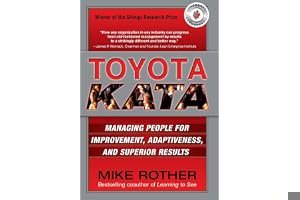
Toyota Kata: Managing People for Improvement, Adaptiveness and Superior Results
Mike Rother
4.2
"How any organization in any industry can progress from old-fashioned management by results to a strikingly different and better way."--James P. Womack, Chairman and Founder, Lean Enterprise Institute. This game-changing book puts you behind the curtain of Toyota, providing new insight into the legendary automaker's management practices and offering practical guidance for leading and developing people in a way that makes the best use of their brainpower. Drawing on six years of research into Toyota's employee-management routines, Toyota Kata examines and elucidates, for the first time, the company's organizational routines--called kata--that power its success with continuous improvement and adaptation. The book also reaches beyond Toyota to explain issues of human behavior in organizations and provide specific answers to questions such as: How can we make improvement and adaptation part of everyday work throughout the organization? How can we develop and utilize the capability of everyone in the organization to repeatedly work toward and achieve new levels of performance? How can we give an organization the power to handle dynamic, unpredictable situations and keep satisfying customers? Mike Rother explains how to improve our prevailing management approach through the use of two kata: Improvement Kata--a repeating routine of establishing challenging target conditions, working step-by-step through obstacles, and always learning from the problems we encounter; and Coaching Kata: a pattern of teaching the improvement kata to employees at every level to ensure it motivates their ways of thinking and acting. With clear detail, an abundance of practical examples, and a cohesive explanation from start to finish, Toyota Kata gives executives and managers at any level actionable routines of thought and behavior that produce superior results and sustained competitive advantage.
…
Cover unavailable
35
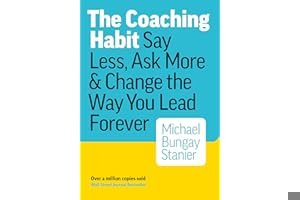
The Coaching Habit: Say Less, Ask More Change the Way You Lead Forever
Coaching is an essential skill for leaders. But for most busy, overworked managers, coaching employees is done badly, or not at all. They’re just too busy, and it’s too hard to change.
But what if managers could coach their people in 10 minutes or less?
In Michael Bungay Stanier’s The Coaching Habit, coaching becomes a regular, informal part of your day so managers and their teams can work less hard and have more impact.
Coaching is an art and it’s far easier said than done. It takes courage to ask a question rather than offer up advice, provide an answer, or unleash a solution. Giving another person the opportunity to find their own way, make their own mistakes, and create their own wisdom is both brave and vulnerable. It can also mean unlearning our “fix it” habits. In this practical and inspiring book, Michael shares seven transformative questions that can make a difference in how we lead and support. And, he guides us through the tricky part - how to take this new information and turn it into habits and a daily practice.
––Brené Brown, author of Rising Strong and Daring Greatly
Drawing on years of experience training more than 10,000 busy managers from around the globe in practical, everyday coaching skills, Bungay Stanier reveals how to unlock your peoples’ potential. He unpacks seven essential coaching questions to demonstrate how—by saying less and asking more—you can develop coaching methods that produce great results. • Get straight to the point in any conversation with The Kickstart Question • Stay on track during any interaction with The AWE Question • Save hours of time for yourself with The Lazy Question, and hours of time for others with The Strategic Question • Get to the heart of any interpersonal or external challenge with The Focus Question and The Foundation Question • Finally, ensure others find your coaching as beneficial as you do with The Learning Question
A fresh, innovative take on the traditional how-to manual, the book combines insider information with research based in neuroscience and behavioural economics, together with interactive training tools to turn practical advice into practiced habits. Dynamic question-and-answer sections help identify old habits and kick-start new behaviour, making sure you get the most out of all seven chapters. Witty and conversational, The Coaching Habit takes your work—and your workplace—from good to great.
…
Recommended by Armina Sirbu, Brene Brown, Dan Rockwell, and 3 others.
Armina Sirbu
The Coaching Habit by M. Stanier - for people who need to coach their teams. [source]
Coaching is an art and it's far easier said than done. It takes courage to ask a question rather than offer up advice, provide and answer, or unleash a solution. giving another person the opportunity to find their own way, make their own mistakes, and create their own wisdom is both brave and vulnerable. In this practical and inspiring book, Michael shares seven transformative questions that can make a difference in how we lead and support. And he guides us through the tricky part - how to take this new information and turn it into habits and a daily practice. [source]
Scott Perry
Michael Bungay-Stanier’s The Coaching Habit was the first book I read when I received the altMBA6 “care package.” It delivers a system for developing worthwhile habits and engagements that I found compelling and effective. I use the seven question system Michael teaches in my work as a guitar teacher, life coach, and musical collaborator. [source]
Cover unavailable
36
Terraform: Up & Running: Writing Infrastructure as Code
Yevgeniy Brikman
4.2
Terraform has become a key player in the DevOps world for defining, launching, and managing infrastructure as code (IaC) across a variety of cloud and virtualization platforms, including AWS, Google Cloud, Azure, and more. This hands-on second edition, expanded and thoroughly updated for Terraform version 0.12 and beyond, shows you the fastest way to get up and running.
Gruntwork cofounder Yevgeniy (Jim) Brikman walks you through code examples that demonstrate Terraform's simple, declarative programming language for deploying and managing infrastructure with a few commands. Veteran sysadmins, DevOps engineers, and novice developers will quickly go from Terraform basics to running a full stack that can support a massive amount of traffic and a large team of developers.
Explore changes from Terraform 0.9 through 0.12, including backends, workspaces, and first-class expressions Learn how to write production-grade Terraform modules Dive into manual and automated testing for Terraform code Compare Terraform to Chef, Puppet, Ansible, CloudFormation, and Salt Stack Deploy server clusters, load balancers, and databases Use Terraform to manage the state of your infrastructure Create reusable infrastructure with Terraform modules Use advanced Terraform syntax to achieve zero-downtime deployment
…
Cover unavailable
37
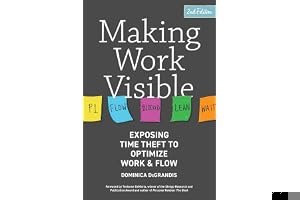
Making Work Visible: Exposing Time Theft to Optimize Work & flow
Dominica Degrandis
4.2
In this timely book by Information Technology time management expert Dominica DeGrandis, the real crime of the century is revealed--time theft, one of the most costly factors impacting enterprises in their day-to-day operations. In three parts, DeGrandis reveals the five primary causes (a.k.a. the five thieves of time) of value stream delays, the simple yet highly effective solutions that make work visible, and the metrics needed to track the flow of work to better apply time saving solutions. Throughout the book, readers will learn effective practices that create high-performing flow within an organization. Using full-color illustrations and other visual cues, this book isn't your normal stodgy or hard to understand IT book, it sets itself apart from the Lean, Kanban, and -make work visible- titles by 'showing' as well as telling how to utilize visual tools in the most effective way possible, increasing work flow in quantitative ways. Exercises, bulleted takeaways, and real-world examples from DeGrandis' own work experience all underpin the utility of the book's content. Additional vignettes throughout the book also show how other practices within an enterprise, such as marketing and financial departments, can use the same methods to solve and prevent time theft crimes within their own practices.
Do you have a grip on your business, or does your business have a grip on you?
All entrepreneurs and business leaders face similar frustrations—personnel conflict, profit woes, and inadequate growth. Decisions never seem to get made, or, once made, fail to be properly implemented. But there is a solution. It’s not complicated or theoretical.The Entrepreneurial Operating System® is a practical method for achieving the business success you have always envisioned. More than 2,000 companies have discovered what EOS can do.
In Traction, you’ll learn the secrets of strengthening the six key components of your business. You’ll discover simple yet powerful ways to run your company that will give you and your leadership team more focus, more growth, and more enjoyment. Successful companies are applying Traction every day to run profitable, frustration-free businesses—and you can too.
…
Cover unavailable
39
The Visible Ops Handbook: Starting ITIL in 4 Practical Steps
Kevin Behr, Gene Kim, George Spafford
4.2
Cover unavailable
40
Kubernetes: Up and Running: Dive Into the Future of Infrastructure
Brendan Burns
4.2
Kubernetes radically changes the way applications are built and deployed in the cloud. Since its introduction in 2014, this container orchestrator has become one of the largest and most popular open source projects in the world. The updated edition of this practical book shows developers and ops personnel how Kubernetes and container technology can help you achieve new levels of velocity, agility, reliability, and efficiency.
Kelsey Hightower, Brendan Burns, and Joe Beda--who've worked on Kubernetes at Google and beyond--explain how this system fits into the lifecycle of a distributed application. You'll learn how to use tools and APIs to automate scalable distributed systems, whether it's for online services, machine learning applications, or a cluster of Raspberry Pi computers.
Create a simple cluster to learn how Kubernetes works Dive into the details of deploying an application using Kubernetes Learn specialized objects in Kubernetes, such as DaemonSets, jobs, ConfigMaps, and secrets Explore deployments that tie together the lifecycle of a complete application Get practical examples of how to develop and deploy real-world applications in Kubernetes
The international bestseller—now with a new preface by author John Kotter.
Millions worldwide have read and embraced John Kotter’s ideas on change management and leadership. From the ill-fated dot-com bubble to unprecedented M&A activity to scandal, greed, and ultimately, recession—we’ve learned that widespread and difficult change is no longer the exception. It’s the rule. Now with a new preface, this refreshed edition of the global bestseller Leading Change is more relevant than ever.
John Kotter’s now-legendary eight-step process for managing change with positive results has become the foundation for leaders and organizations across the globe. By outlining the process every organization must go through to achieve its goals, and by identifying where and how even top performers derail during the change process, Kotter provides a practical resource for leaders and managers charged with making change initiatives work. Leading Change is widely recognized as his seminal work and is an important precursor to his newer ideas on acceleration published in Harvard Business Review.
Needed more today than at any time in the past, this bestselling business book serves as both visionary guide and practical toolkit on how to approach the difficult yet crucial work of leading change in any type of organization. Reading this highly personal book is like spending a day with the world’s foremost expert on business leadership. You’re sure to walk away inspired—and armed with the tools you need to inspire others.
Published by Harvard Business Review Press.
…
Recommended by Helen Bevan.
Helen Bevan
Kotter's book "Leading Change", published 23 years ago, introduced us to the 8 steps model, the best known/used model for planning change in the world. Kotter has updated the model, based on new research & you can get the eBook for free: https://t.co/4dqW7x2fvm Via @KotterInc https://t.co/33DKCcj8DZ [source]
Cover unavailable
42
Web Operations: Keeping the Data on Time
John Allspaw, Jesse Robbins
4.2
A web application involves many specialists, but it takes people in web ops to ensure that everything works together throughout an application's lifetime. It's the expertise you need when your start-up gets an unexpected spike in web traffic, or when a new feature causes your mature application to fail. In this collection of essays and interviews, web veterans such as Theo Schlossnagle, Baron Schwartz, and Alistair Croll offer insights into this evolving field. You'll learn stories from the trenches--from builders of some of the biggest sites on the Web--on what's necessary to help a site thrive.
Learn the skills needed in web operations, and why they're gained through experience rather than schooling Understand why it's important to gather metrics from both your application and infrastructure Consider common approaches to database architectures and the pitfalls that come with increasing scale Learn how to handle the human side of outages and degradations Find out how one company avoided disaster after a huge traffic deluge Discover what went wrong after a problem occurs, and how to prevent it from happening again Contributors include:
John Allspaw
Heather Champ
Michael Christian
Richard Cook
Alistair Croll
Patrick Debois
Eric Florenzano
Paul Hammond
Justin Huff
Adam Jacob
Jacob Loomis
Matt Massie
Brian Moon
Anoop Nagwani
Sean Power
Eric Ries
Theo Schlossnagle
Baron Schwartz Andrew Shafer
…
Cover unavailable
43
Leading the Transformation: Applying Agile and DevOps Principles at Scale
Gary Gruver and Tommy Mouser
4.2
Software is becoming more and more important across a broad range of industries, yet most technology executives struggle to deliver software improvements their businesses require.
Leading-edge companies like Amazon and Google are applying DevOps and Agile principles to deliver large software projects faster than anyone thought possible. But most executives don’t understand how to transform their current legacy systems and processes to scale these principles across their organizations.
Leading the Transformation is executive guide, providing a clear framework for improving development and delivery. Instead of the traditional Agile and DevOps approaches that focus on improving the effectiveness of teams, this book targets the coordination of work across teams in large organizations—an improvement that executives are uniquely positioned to lead.
…
Cover unavailable
44
Designing Data-Intensive Applications
Martin Kleppmann
4.2
Many forces affect software today: larger datasets, geographical disparities, complex company structures, and the growing need to be fast and nimble in the face of change.
Proven approaches such as service-oriented and event-driven architectures are joined by newer techniques such as microservices, reactive architectures, DevOps, and stream processing. Many of these patterns are successful by themselves, but as this practical ebook demonstrates, they provide a more holistic and compelling approach when applied together.
Author Ben Stopford explains how service-based architectures and stream processing tools such as Apache Kafka® can help you build business-critical systems.
* Learn why streaming beats request-response based architectures in complex, contemporary use cases * Understand why replayable logs such as Kafka provide a backbone for both service communication and shared datasets * Explore how event collaboration and event sourcing patterns increase safety and recoverability with functional, event-driven approaches * Apply patterns including Event Sourcing and CQRS, and how to build multi-team systems with microservices and SOA using patterns such as “inside out databases” and “event streams as a source of truth” * Build service ecosystems that blend event-driven and request-driven interfaces using a replayable log and Kafka's Streams API * Scale beyond individual teams into larger, department- and company-sized architectures, using event streams as a source of truth
Machines need to be productive. People need to be effective.Productivity books focus on doing more, Jim and Tonianne want you to focus on doing better. Personal Kanban is about choosing the right work at the right time. Recognizing why we do the things we do. Understanding the impact of our actions. Creating value - not just product. For ourselves, our families, our friends, our co-workers. For our legacy.Personal Kanban takes the same Lean principles from manufacturing that led the Japanese auto industry to become a global leader in quality, and applies them to individual and team work. Personal Kanban asks only that we visualize our work and limit our work-in-progress. Visualizing work allows us to transform our conceptual and threatening workload into an actionable, context-sensitive flow. Limiting our work-in-progress helps us complete what we start and understand the value of our choices. Combined, these two simple acts encourage us to improve the way we work and the way we make choices to balance our personal, professional, and social lives.Neither a prescription nor a plan, Personal Kanban provides a light, actionable, achievable framework for understanding our work and its context. This book describes why students, parents, business leaders, major corporations, and world governments all see immediate results with Personal Kanban.
…
Cover unavailable
46
The Pragmatic Programmer: From Journeyman to Master
Andrew Hunt and David Thomas
4.2
-- Ward Cunningham Straight from the programming trenches, The Pragmatic Programmer cuts through the increasing specialization and technicalities of modern software development to examine the core process--taking a requirement and producing working, maintainable code that delights its users. It covers topics ranging from personal responsibility and career development to architectural techniques for keeping your code flexible and easy to adapt and reuse. Read this book, and youll learn how to *Fight software rot; *Avoid the trap of duplicating knowledge; *Write flexible, dynamic, and adaptable code; *Avoid programming by coincidence; *Bullet-proof your code with contracts, assertions, and exceptions; *Capture real requirements; *Test ruthlessly and effectively; *Delight your users; *Build teams of pragmatic programmers; and *Make your developments more precise with automation. Written as a series of self-contained sections and filled with entertaining anecdotes, thoughtful examples, and interesting analogies, The Pragmatic Programmer illustrates the best practices and major pitfalls of many different aspects of software development. Whether youre a new coder, an experienced programm
…
Recommended by Jeff Atwood, Hadley Wickham, and 1 others.
This book is about the craft of software development, and thinking about how to produce good code. [source]
Cover unavailable
47
The Docker Book: Containerization is the new virtualization
James Turnbul
4.2
A new book designed for SysAdmins, Operations staff, Developers and DevOps who are interested in deploying the open source container service Docker.
In this book, we'll will walk you through installing, deploying, managing, and extending Docker. We're going to do that by first introducing you to the basics of Docker and its components. Then we'll start to use Docker to build containers and services to perform a variety of tasks.
We're going to take you through the development life cycle, from testing to production, and see where Docker fits in and how it can make your life easier. We'll make use of Docker to build test environments for new projects, demonstrate how to integrate Docker with continuous integration workflow, and then how to build application services and platforms. Finally, we'll show you how to use Docker's API and how to extend Docker yourself.
We'll teach you how to:
* Install Docker. * Take your first steps with a Docker container. * Build Docker images. * Manage and share Docker images. * Run and manage more complex Docker containers. * Deploy Docker containers as part of your testing pipeline. * Build multi-container applications and environments. * Explore the Docker API. * Getting Help and Extending Docker.
…
Cover unavailable
48
Effective Devops: Building a Culture of Collaboration, Affinity, and Tooling at Scale
Jennifer Davis and Ryn Daniels
4.1
This practical guide addresses technical, cultural, and managerial challenges of implementing and maintaining a DevOps culture by describing failures and successes. Authors Katherine Daniels and Jennifer Davis provide with actionable strategies you can use to engineer sustainable changes in your environment regardless of your level within your organization.
Cover unavailable
49
Cloud Native Devops with Kubernetes: Building, Deploying, and Scaling Modern Applications in the Cloud
John Arundel and Justin Domingus
4.1
Kubernetes is the operating system of the cloud native world, providing a reliable and scalable platform for running containerized workloads. In this friendly, pragmatic book, cloud experts John Arundel and Justin Domingus show you what Kubernetes can do--and what you can do with it.
You'll learn all about the Kubernetes ecosystem, and use battle-tested solutions to everyday problems. You'll build, step by step, an example cloud native application and its supporting infrastructure, along with a development environment and continuous deployment pipeline that you can use for your own applications.
Understand containers and Kubernetes from first principles; no experience necessary Run your own clusters or choose a managed Kubernetes service from Amazon, Google, and others Use Kubernetes to manage resource usage and the container lifecycle Optimize clusters for cost, performance, resilience, capacity, and scalability Learn the best tools for developing, testing, and deploying your applications Apply the latest industry practices for security, observability, and monitoring Adopt DevOps principles to help make your development teams lean, fast, and effective
…
Cover unavailable
50
Unix and Linux System Administration Handbook
Evi Nemeth, Garth Snyder, et al.
4.1
"As an author, editor, and publisher, I never paid much attention to the competition--except in a few cases. This is one of those cases. The UNIX System Administration Handbook is one of the few books we ever measured ourselves against." --Tim O'Reilly, founder of O'Reilly Media "This edition is for those whose systems live in the cloud or in virtualized data centers; those whose administrative work largely takes the form of automation and configuration source code; those who collaborate closely with developers, network engineers, compliance officers, and all the other worker bees who inhabit the modern hive." --Paul Vixie, Internet Hall of Fame-recognized innovator and founder of ISC and Farsight Security "This book is fun and functional as a desktop reference. If you use UNIX and Linux systems, you need this book in your short-reach library. It covers a bit of the systems' history but doesn't bloviate. It's just straight-forward information delivered in a colorful and memorable fashion." --Jason A. Nunnelley UNIX(R) and Linux(R) System Administration Handbook, Fifth Edition, is today's definitive guide to installing, configuring, and maintaining any UNIX or Linux system, including systems that supply core Internet and cloud infrastructure. Updated for new distributions and cloud environments, this comprehensive guide covers best practices for every facet of system administration, including storage management, network design and administration, security, web hosting, automation, configuration management, performance analysis, virtualization, DNS, security, and the management of IT service organizations. The authors--world-class, hands-on technologists--offer indispensable new coverage of cloud platforms, the DevOps philosophy, continuous deployment, containerization, monitoring, and many other essential topics. Whatever your role in running systems and networks built on UNIX or Linux, this conversational, well-written �guide will improve your efficiency and help solve your knottiest problems.
…
Cover unavailable
51
Kanban: Successful Evolutionary Change for Your Technology Business
David J. Anderson
4.1
Cover unavailable
52
Out of the Crisis
W. Edwards Deming
4.1
Deming offers a theory of management based on his famous 14 Points for Management.
"Long-term commitment to new learning and new philosophy is required of any management that seeks transformation. The timid and the fainthearted, and the people that expect quick results, are doomed to disappointment."
According to W. Edwards Deming, American companies require nothing less than a transformation of management style and of governmental relations with industry. In Out of the Crisis, originally published in 1982, Deming offers a theory of management based on his famous 14 Points for Management. Management's failure to plan for the future, he claims, brings about loss of market, which brings about loss of jobs. Management must be judged not only by the quarterly dividend, but by innovative plans to stay in business, protect investment, ensure future dividends, and provide more jobs through improved product and service. In simple, direct language, he explains the principles of management transformation and how to apply them.
Previously published by MIT-CAES
…
Cover unavailable
53
Seeking SRE: Conversations About Running Production Systems at Scale
David N. Blank-Edelman
4.1
Cover unavailable
54
Project to Product: How to Survive and Thrive in the Age of Digital Disruption with the Flow Framework
Mik Kersten
4.1
Cover unavailable
55
The Principles of Product Development Flow: Second Generation Lean Product Development
Donald G. Reinertsen
4.1
In this book, Reinertsen provides an examination of product development practices. He explains why invisible and unmanaged queues are the underlying root cause of poor product development performance. He shows why these queues form and how they undermine the speed, quality, and efficiency in product development.
"Execution may very well be the best business book of the year, and one of the most useful to have come around in a long time. This smart and pithy book focuses on a simple though vexing challenge: How can the leaders of an organization exhort their people to deliver on the most important goals?....It's rare to find a book like this that blends smart practice with intelligent articulation of how to get things done. Do yourself a favor. Buy it." --The Boston Globe
"Making all of the moving parts of an organization function smoothly together is just plain hard work. By describing how he has done it, Mr. Bossidy has come up with a valuable and practical management guide that is must-reading for everyone who cares about business." --The New York Times
"If you want to be a CEO--or if you are a CEO and want to keep your job--read Execution and put its principles to work." --Michael Dell, chairman and CEO, Dell Computer Corp.
"A how-to book for the can-do boss....If even half the corporations in America pondered their suggestions, the economy would be in much better shape. Moreover, Bossidy and Charan boast an impressive enough track record that anyone who wants to stay sharp at the helm will welcome their assistance." --BusinessWeek
"Sound, practical advice on how to make things happen." --Ralph S. Larsen, chairman and CEO, Johnson & Johnson
"Here's the real deal.... This is no-nonsense stuff.... The leaders who sweat the small stuff, hire the right people, make the tough decisions and stick around to see that they're carried out are the real winners.... Forget the swarmy memoirs, cheesy parables, advice for idiots, and leadership secrets of despots and barbarians. Getting it done is, according to Bossidy and Charan, the only way to grow." --The Miami Herald
"Captures a lifetime of building winning formulas and puts them in a simple, practical context for executives at any level." --Ivan Seidenberg, president and CEO, Verizon
…
Recommended by Faisal Amin.
Faisal Amin
‘Execution’ by Lawrence Bossidy and Ram Charan is a book that talks about decentralization and the fact that you are supposed to relinquish control to get things done. However, It’s one of the key learnings that most startups fail to understand. Luckily, the book has taught me great things about entrepreneurship. [source]
Cover unavailable
57
Value Stream Mapping: How to Visualize Work and Align Leadership for Organizational Transformation
Karen Martin
4.1
The first of its kind—a Value Stream Mapping book written for those in service and office environments who need to streamline operations
Value Stream Mapping is a practical, how-to guide that helps decision-makers improve value stream efficiency in virtually any setting, including construction, energy, financial service, government, healthcare, R&D, retail, and technology. It gives you the tools to address a wider range of important VSM issues than any other such book, including the psychology of change, leadership, creating teams, building consensus, and charter development.
Karen Martin is principal consultant for Karen Martin & Associates, LLC, instructor for the University of California, San Diego's Lean Enterprise program, and industry advisor to the University of San Diego's Industrial and Systems Engineering program. Mike Osterling provides support and leadership to manufacturing and non-manufacturing organizations on their Lean Transformation Journey. In a continuous improvement leadership role for six years, Mike played a key role in Square D Company's lean transformation in the 1990s.
…
Cover unavailable
58
Continuous Integration: Improving Software Quality and Reducing Risk
Paul M. Duvall, Steve Matyas, Andrew Glover
4.1
For any software developer who has spent days in "integration hell," cobbling together myriad software components, Continuous Integration: Improving Software Quality and Reducing Risk illustrates how to transform integration from a necessary evil into an everyday part of the development process. The key, as the authors show, is to integrate regularly and often using continuous integration (CI) practices and techniques. The authors first examine the concept of CI and its practices from the ground up and then move on to explore other effective processes performed by CI systems, such as database integration, testing, inspection, deployment, and feedback. Through more than forty CI-related practices using application examples in different languages, readers learn that CI leads to more rapid software development, produces deployable software at every step in the development lifecycle, and reduces the time between defect introduction and detection, saving time and lowering costs. With successful implementation of CI, developers reduce risks and repetitive manual processes, and teams receive better project visibility. The book covers How to make integration a "non-event" on your software development projects How to reduce the amount of repetitive processes you perform when building your software Practices and techniques for using CI effectively with your teams Reducing the risks of late defect discovery, low-quality software, lack of visibility, and lack of deployable software Assessments of different CI servers and related tools on the market The book's companion Web site, www.integratebutton.com, provides updates and code examples.
A tribe is any group of people, large or small, who are connected to one another, a leader, and an idea. For millions of years, humans have been seeking out tribes, be they religious, ethnic, economic, political, or even musical (think of the Deadheads). It's our nature.
Now the Internet has eliminated the barriers of geography, cost, and time. All those blogs and social networking sites are helping existing tribes get bigger. But more important, they're enabling countless new tribes to be born—groups of ten or ten thousand or ten million who care about their iPhones, or a political campaign, or a new way to fight global warming. And so the key question: Who is going to lead us?
The Web can do amazing things, but it can't provide leadership. That still has to come from individuals—people just like you who have passion about something. The explosion in tribes means that anyone who wants to make a difference now has the tools at her fingertips.
If you think leadership is for other people, think again—leaders come in surprising packages. Consider Joel Spolsky and his international tribe of scary-smart software engineers. Or Gary Vaynerhuck, a wine expert with a devoted following of enthusiasts. Chris Sharma leads a tribe of rock climbers up impossible cliff faces, while Mich Mathews, a VP at Microsoft, runs her internal tribe of marketers from her cube in Seattle. All they have in common is the desire to change things, the ability to connect a tribe, and the willingness to lead.
If you ignore this opportunity, you risk turning into a "sheepwalker"—someone who fights to protect the status quo at all costs, never asking if obedience is doing you (or your organization) any good. Sheepwalkers don't do very well these days.
Tribes will make you think (really think) about the opportunities in leading your fellow employees, customers, investors, believers, hobbyists, or readers. . . . It's not easy, but it's easier than you think.
…
Recommended by Andrew Youderian, Bogdana Butnar, Michael Herrmann, and 2 others.
Andrew Youderian
The book "Tribes" by Seth Godin has been helpful as I've learned and studied how to best lead a Community. [source]
Bogdana Butnar
I thought I might put my money where my mouth is. I keep whining that young people are not in touch with some essential books on advertising that have helped me shape the way I practise my trade today, but I never did anything about it. So I am starting here the ultimate books to read list. I will add to it as I get suggestions and as more good books get written. [source]
Michael Herrmann
Another good book for today. The author argues that every product/service appeals to a "Tribe" of like-minded people. As businesspeople it's important we understand their dynamics. [source]
Cover unavailable
60
Devops for Dummies
Emily Freeman
4.1
Develop faster with DevOps
DevOps embraces a culture of unifying the creation and distribution of technology in a way that allows for faster release cycles and more resource-efficient product updating. DevOps For Dummies provides a guidebook for those on the development or operations side in need of a primer on this way of working.
Inside, DevOps evangelist Emily Freeman provides a roadmap for adopting the management and technology tools, as well as the culture changes, needed to dive head-first into DevOps.
Identify your organization's needs Create a DevOps framework Change your organizational structure Manage projects in the DevOps world DevOps For Dummies is essential reading for developers and operations professionals in the early stages of DevOps adoption.
…
Cover unavailable
61
The Kubernetes Book: Version 2.2 - January 2018
Nigel Poulton
4.1
Cover unavailable
62
The Field Guide to Understanding 'human Error'
Sidney Dekker
4.1
Cover unavailable
63
Systems Performance: Enterprise and the Cloud
Brendan Gregg
4.1
The Complete Guide to Optimizing Systems PerformanceWritten by the winner of the 2013 LISA Award for Outstanding Achievement in System Administration Large-scale enterprise, cloud, and virtualized computing systems have introduced serious performance challenges. Now, internationally renowned performance expert Brendan Gregg has brought together proven methodologies, tools, and metrics for analyzing and tuning even the most complex environments. Systems Performance: Enterprise and the Cloud focuses on Linux(R) and Unix(R) performance, while illuminating performance issues that are relevant to all operating systems. You'll gain deep insight into how systems work and perform, and learn methodologies for analyzing and improving system and application performance. Gregg presents examples from bare-metal systems and virtualized cloud tenants running Linux-based Ubuntu(R), Fedora(R), CentOS, and the illumos-based Joyent(R) SmartOS(TM) and OmniTI OmniOS(R). He systematically covers modern systems performance, including the "traditional" analysis of CPUs, memory, disks, and networks, and new areas including cloud computing and dynamic tracing. This book also helps you identify and fix the "unknown unknowns" of complex performance: bottlenecks that emerge from elements and interactions you were not aware of. The text concludes with a detailed case study, showing how a real cloud customer issue was analyzed from start to finish. Coverage includes - Modern performance analysis and tuning: terminology, concepts, models, methods, and techniques - Dynamic tracing techniques and tools, including examples of DTrace, SystemTap, and perf - Kernel internals: uncovering what the OS is doing - Using system observability tools, interfaces, and frameworks - Understanding and monitoring application performance - Optimizing CPUs: processors, cores, hardware threads, caches, interconnects, and kernel scheduling - Memory optimization: virtual memory, paging, swapping, memory architectures, busses, address spaces, and allocators - File system I/O, including caching - Storage devices/controllers, disk I/O workloads, RAID, and kernel I/O - Network-related performance issues: protocols, sockets, interfaces, and physical connections - Performance implications of OS and hardware-based virtualization, and new issues encountered with cloud computing - Benchmarking: getting accurate results and avoiding common mistakes This guide is indispensable for anyone who operates enterprise or cloud environments: system, network, database, and web admins; developers; and other professionals. For students and others new to optimization, it also provides exercises reflecting Gregg's extensive instructional experience.
A few months ago, I was drinking a Noah’s Mill whiskey (cute) with my good buddy Brian Balfour and talking about life... During the conversation, we got on the topic of books that changed our lives. I want to share them with you. I judge a book's success if a year later I'm still using at least 1 thing from the book. [source]
Ola Olusoga
Like Charlie Munger once said: “I’ve long believed that a certain system - which almost any intelligent person can learn - works way better than the systems most people use to understand the world. What you need is a latticework of mental models in your head. And, with that system, things gradually fit together in a way that enhances cognition. Just as multiple factors shape every system, multiple mental models from a variety of disciplines are necessary to understand that system". You can read this book to start building a "latticework of mental models in your head". [source]
Yaro Starak
I’ve just been wrapping up a book by Chet Holmes “The Ultimate Sales Machine”. He was a really well known and very respected sales and marketing guy, especially for sales and sales is not my strong point so the book, on some levels, has been a reminder of what is important in sales. [source]
Cover unavailable
65
Working Backwards: Insights, Stories, and Secrets from Inside Amazon
The Linux Programming Interface: A Linux and Unix System Programming Handbook
Michael Kerrisk
4.1
The Linux Programming Interface is the definitive guide to the Linux and UNIX programming interface—the interface employed by nearly every application that runs on a Linux or UNIX system.
In this authoritative work, Linux programming expert Michael Kerrisk provides detailed descriptions of the system calls and library functions that you need in order to master the craft of system programming, and accompanies his explanations with clear, complete example programs.
You'll find descriptions of over 500 system calls and library functions, and more than 200 example programs, 88 tables, and 115 diagrams. You'll learn how to:
Read and write files efficiently Use signals, clocks, and timers Create processes and execute programs Write secure programs Write multithreaded programs using POSIX threads Build and use shared libraries Perform interprocess communication using pipes, message queues, shared memory, and semaphores Write network applications with the sockets API While The Linux Programming Interface covers a wealth of Linux-specific features, including epoll, inotify, and the /proc file system, its emphasis on UNIX standards (POSIX.1-2001/SUSv3 and POSIX.1-2008/SUSv4) makes it equally valuable to programmers working on other UNIX platforms.
The Linux Programming Interface is the most comprehensive single-volume work on the Linux and UNIX programming interface, and a book that's destined to become a new classic.
Praise for The Linux Programming Interface
"If I had to choose a single book to sit next to my machine when writing software for Linux, this would be it." —Martin Landers, Software Engineer, Google
"This book, with its detailed descriptions and examples, contains everything you need to understand the details and nuances of the low-level programming APIs in Linux . . . no matter what the level of reader, there will be something to be learnt from this book." —Mel Gorman, Author of Understanding the Linux Virtual Memory Manager
"Michael Kerrisk has not only written a great book about Linux programming and how it relates to various standards, but has also taken care that bugs he noticed got fixed and the man pages were (greatly) improved. In all three ways, he has made Linux programming easier. The in-depth treatment of topics in The Linux Programming Interface . . . makes it a must-have reference for both new and experienced Linux programmers." —Andreas Jaeger, Program Manager, openSUSE, Novell
"Michael's inexhaustible determination to get his information right, and to express it clearly and concisely, has resulted in a strong reference source for programmers. While this work is targeted at Linux programmers, it will be of value to any programmer working in the UNIX/POSIX ecosystem." —David Butenhof, Author of Programming with POSIX Threads and Contributor to the POSIX and UNIX Standards
". . . a very thorough—yet easy to read—explanation of UNIX system and network programming, with an emphasis on Linux systems. It's certainly a book I'd recommend to anybody wanting to get into UNIX programming (in general) or to experienced UNIX programmers wanting to know 'what's new' in the popular GNU/Linux system." —Fernando Gont, Network Security Researcher, IETF Participant, and RFC Author
". . . encyclopedic in the breadth and depth of its coverage, and textbook-like in its wealth of worked examples and exercises. Each topic is clearly and comprehensively covered, from theory to hands-on working code. Professionals, students, educators, this is the Linux/UNIX reference that you have been waiting for." —Anthony Robins, Associate Professor of Computer Science, The University of Otago
"I've been very impressed by the precision, the quality and the level of detail Michael Kerrisk put in his book. He is a great expert of Linux system calls and lets us share his knowledge and understanding of the Linux APIs." —Christophe Blaess, Author of Programmation systeme en C sous Linux
". . . an essential resource for the serious or professional Linux and UNIX systems programmer. Michael Kerrisk covers the use of all the key APIs across both the Linux and UNIX system interfaces with clear descriptions and tutorial examples and stresses the importance and benefits of following standards such as the Single UNIX Specification and POSIX 1003.1." —Andrew Josey, Director, Standards, The Open Group, and Chair of the POSIX 1003.1 Working Group
"What could be better than an encyclopedic reference to the Linux system, from the standpoint of the system programmer, written by none other than the maintainer of the man pages himself? The Linux Programming Interface is comprehensive and detailed. I firmly expect it to become an indispensable addition to my programming bookshelf." —Bill Gallmeister, Author of POSIX.4 Programmer's Guide: Programming for the Real World
". . . the most complete and up-to-date book about Linux and UNIX system programming. If you're new to Linux system programming, if you're a UNIX veteran focused on portability while interested in learning the Linux way, or if you're simply looking for an excellent reference about the Linux programming interface, then Michael Kerrisk's book is definitely the companion you want on your bookshelf." —Loic Domaigne, Chief Software Architect (Embedded), Corpuls.com
…
Recommended by Julia Evans.
Julia Evans
hanging out with my favourite Linux book this morning. I love that the chapters are so short (usually less than 20 pages) and I always learn something interesting by picking a chapter and reading it. https://t.co/fZBNu8rfU8 [source]
Cover unavailable
67
The First-Time Manager (First-Time Manager Series)
Securing DevOps explores how the techniques of DevOps and security should be applied together to make cloud services safer. This introductory book reviews the latest practices used in securing web applications and their infrastructure and teaches you techniques to integrate security directly into your product. You'll also learn the core concepts of DevOps, such as continuous integration, continuous delivery, and infrastructure as a service.
Purchase of the print book includes a free eBook in PDF, Kindle, and ePub formats from Manning Publications.
About the Technology
An application running in the cloud can benefit from incredible efficiencies, but they come with unique security threats too. A DevOps team's highest priority is understanding those risks and hardening the system against them.
About the Book
Securing DevOps teaches you the essential techniques to secure your cloud services. Using compelling case studies, it shows you how to build security into automated testing, continuous delivery, and other core DevOps processes. This experience-rich book is filled with mission-critical strategies to protect web applications against attacks, deter fraud attempts, and make your services safer when operating at scale. You'll also learn to identify, assess, and secure the unique vulnerabilities posed by cloud deployments and automation tools commonly used in modern infrastructures.
What's inside
An approach to continuous security Implementing test-driven security in DevOps Security techniques for cloud services Watching for fraud and responding to incidents Security testing and risk assessment
About the Reader
Readers should be comfortable with Linux and standard DevOps practices like CI, CD, and unit testing.
About the Author
Julien Vehent is a security architect and DevOps advocate. He leads the Firefox Operations Security team at Mozilla, and is responsible for the security of Firefox's high-traffic cloud services and public websites.
Table of Contents
Securing DevOps PART 1 - Case study: applying layers of security to a simple DevOps pipeline Building a barebones DevOps pipeline Security layer 1: protecting web applications Security layer 2: protecting cloud infrastructures Security layer 3: securing communications Security layer 4: securing the delivery pipeline PART 2 - Watching for anomalies and protecting services against attacks Collecting and storing logs Analyzing logs for fraud and attacks Detecting intrusions The Caribbean breach: a case study in incident response PART 3 - Maturing DevOps security Assessing risks Testing security Continuous security
…
Cover unavailable
69
Machine that Changed the World
James P. Womack
4.1
Today, the industrial world is experiencing the most revolutionary change since Henry Ford's assembly line -- which forever changed the way things are made. Japanese companies are sweeping the world, as Western companies and governments struggle to find ways to emulate them. The Machine That Changed the World points for the first time to a positive way out of this dilemma. It shows that being defeatist about the Japanese threat, and tougher protectionism, are not the answers. This book outlines the enormous tasks facing Western companies in the 1990s and has cogent messages for Japanese firms as well, as they move abroad. The Machine That Changed the World is based on the largest and most thorough study ever undertaken in any industry: the Massachusetts Institute of Technology five-million-dollar, five-year, fourteen-country International Motor Vehicle Program's study of the worldwide auto industry. Twice in this century the auto industry has changed our most fundamental ideas about how to make things. Now it is doing it again. Just as mass production swept away craft production, so a new way of making things, called lean production, is now rapidly making mass production obsolete. Lean production is the Japanese secret weapon in the industrial wars and is spreading throughout the world. If Western companies and their managers and workers are to survive in the 1990s, they must learn and adapt to lean production. Some of the smartest already have begun to do so. Lean production welds the activities of everyone from top management to line workers, to suppliers, into a tightly integrated whole that can respond almost instantly to marketing demands from consumers. It can also double production and quality, while keeping costs down. Its adoption, as it inevitably spreads beyond the auto industry, will change almost every industry and consequently how we work, how we live, and the fate of companies and nations as they respond to its impact. In clear and compelling terms, this book explains what lean production is, and its global implications for all of us.
…
Recommended by Robin Sloan and 1 others.
Robin Sloan
I got this book because I am lately into 1980s "business book" time capsules , but in fact it is beautifully written and dizzyingly interesting, even in 2019!! https://t.co/5R8o4MWhpk [source]
Cover unavailable
70
Domain-Driven Design: Tackling Complexity in the Heart of Software
Eric Evans
4.1
"Eric Evans has written a fantastic book on how you can make the design of your software match your mental model of the problem domain you are addressing. "His book is very compatible with XP. It is not about drawing pictures of a domain; it is about how you think of it, the language you use to talk about it, and how you organize your software to reflect your improving understanding of it. Eric thinks that learning about your problem domain is as likely to happen at the end of your project as at the beginning, and so refactoring is a big part of his technique. "The book is a fun read. Eric has lots of interesting stories, and he has a way with words. I see this book as essential reading for software developers--it is a future classic." --Ralph Johnson, author of Design Patterns "If you don't think you are getting value from your investment in object-oriented programming, this book will tell you what you've forgotten to do. "Eric Evans convincingly argues for the importance of domain modeling as the central focus of development and provides a solid framework and set of techniques for accomplishing it. This is timeless wisdom, and will hold up long after the methodologies du jour have gone out of fashion." --Dave Collins, author of Designing Object-Oriented User Interfaces "Eric weaves real-world experience modeling--and building--business applications into a practical, useful book. Written from the perspective of a trusted practitioner, Eric's descriptions of ubiquitous language, the benefits of sharing models with users, object life-cycle management, logical and physical application structuring, and the process and results of deep refactoring are major contributions to our field." --Luke Hohmann, author of Beyond Software Architecture "This book belongs on the shelf of every thoughtful software developer." --Kent Beck "What Eric has managed to capture is a part of the design process that experienced object designers have always used, but that we have been singularly unsuccessful as a group in conveying to the rest of the industry. We've given away bits and pieces of this knowledge...but we've never organized and systematized the principles of building domain logic. This book is important." --Kyle Brown, author of Enterprise Java(TM) Programming with IBM(R) WebSphere(R) The software development community widely acknowledges that domain modeling is central to software design. Through domain models, software developers are able to express rich functionality and translate it into a software implementation that truly serves the needs of its users. But despite its obvious importance, there are few practical resources that explain how to incorporate effective domain modeling into the software development process. Domain-Driven Design fills that need. This is not a book about specific technologies. It offers readers a systematic approach to domain-driven design, presenting an extensive set of design best practices, experience-based techniques, and fundamental principles that facilitate the development of software projects facing complex domains. Intertwining design and development practice, this book incorporates numerous examples based on actual projects to illustrate the application of domain-driven design to real-world software development. Readers learn how to use a domain model to make a complex development effort more focused and dynamic. A core of best practices and standard patterns provides a common language for the development team. A shift in emphasis--refactoring not just the code but the model underlying the code--in combination with the frequent iterations of Agile development leads to deeper insight into domains and enhanced communication between domain expert and programmer. Domain-Driven Design then builds on this foundation, and addresses modeling and design for complex systems and larger organizations.Specific topics covered include: Getting all team members to speak the same language Connecting model and implementation more deeply Sharpening key distinctions in a model Managing the lifecycle of a domain object Writing domain code that is safe to combine in elaborate ways Making complex code obvious and predictable Formulating a domain vision statement Distilling the core of a complex domain Digging out implicit concepts needed in the model Applying analysis patterns Relating design patterns to the model Maintaining model integrity in a large system Dealing with coexisting models on the same project Organizing systems with large-scale structures Recognizing and responding to modeling breakthroughs With this book in hand, object-oriented developers, system analysts, and designers will have the guidance they need to organize and focus their work, create rich and useful domain models, and leverage those models into quality, long-lasting software implementations.
There has been a shift of policy at board level. Cash is needed and Alex Rogo's companies are to be put on the block. Alex faces a cruel dilemma. If he successfully completes the turnaround of his companies they can be sold for the maximum return: if he fails they will be closed down. Either way Alex and his team will be out of work. It looks like lose-lose, both for Alex and for his team. And as if he doesn't have enough to deal with, his two children have become teenagers. As Alex grapples with problems at work and at home, we begin to understand the full scope of Eli Goldratt's powerful techniques. It's Not Luck reveals more of the Thinking Process-techniques that consistently produce win-win solutions to seemingly impossible problems.
…
Cover unavailable
72
The Practice of System and Network Administration: Volume 1: Devops and Other Best Practices for Enterprise It
Thomas A. Limoncelli
4.1
With 28 new chapters, the third edition of The Practice of System and Network Administration innovates yet again! Revised with thousands of updates and clarifications based on reader feedback, this new edition also incorporates DevOps strategies even for non-DevOps environments. Whether you use Linux, Unix, or Windows, this new edition describes the essential practices previously handed down only from mentor to protege. This wonderfully lucid, often funny cornucopia of information introduces beginners to advanced frameworks valuable for their entire career, yet is structured to help even experts through difficult projects. Other books tell you what commands to type. This book teaches you the cross-platform strategies that are timeless!
DevOps techniques: Apply DevOps principles to enterprise IT infrastructure, even in environments without developers Game-changing strategies: New ways to deliver results faster with less stress Fleet management: A comprehensive guide to managing your fleet of desktops, laptops, servers and mobile devices Service management: How to design, launch, upgrade and migrate services Measurable improvement: Assess your operational effectiveness; a forty-page, pain-free assessment system you can start using today to raise the quality of all services Design guides: Best practices for networks, data centers, email, storage, monitoring, backups and more Management skills: Organization design, communication, negotiation, ethics, hiring and firing, and more Have you ever had any of these problems? Have you been surprised to discover your backup tapes are blank? Ever spent a year launching a new service only to be told the users hate it? Do you have more incoming support requests than you can handle? Do you spend more time fixing problems than building the next awesome thing? Have you suffered from a botched migration of thousands of users to a new service? Does your company rely on a computer that, if it died, can't be rebuilt? Is your network a fragile mess that breaks any time you try to improve it? Is there a periodic "hell month" that happens twice a year? Twelve times a year? Do you find out about problems when your users call you to complain? Does your corporate "Change Review Board" terrify you? Does each division of your company have their own broken way of doing things? Do you fear that automation will replace you, or break more than it fixes? Are you underpaid and overworked? No vague "management speak" or empty platitudes. This comprehensive guide provides real solutions that prevent these problems and more! Normal 0 false false false EN-US X-NONE X-NONE
…
Cover unavailable
73
The DevOps Adoption Playbook: A Guide to Adopting Devops in a Multi-Speed IT Enterprise
Sanjeev Sharma
4.1
Achieve streamlined, rapid production with enterprise-level DevOps Awarded DevOps 2017 Book of the Year, The DevOps Adoption Playbook provides practical, actionable, real-world guidance on implementing DevOps at enterprise scale. Author Sanjeev Sharma heads the DevOps practice for IBM; in this book, he provides unique guidance and insight on implementing DevOps at large organizations. Most DevOps literature is aimed at startups, but enterprises have unique needs, capabilities, limitations, and challenges; "DevOps for startups" doesn't work at this scale, but the DevOps paradigm can revolutionize enterprise IT. Deliver high-value applications and systems with velocity and agility by adopting the necessary practices, automation tools, and organizational and cultural changes that lead to innovation through rapid experimentation. Speed is an advantage in the face of competition, but it must never come at the expense of quality; DevOps allows your organization to keep both by intersecting development, quality assurance, and operations.
Enterprise-level DevOps comes with its own set of challenges, but this book shows you just how easily they are overcome. With a slight shift in perspective, your organization can stay ahead of the competition while keeping costs, risks, and quality under control.
Grasp the full extent of the DevOps impact on IT organizations Achieve high-value innovation and optimization with low cost and risk Exceed traditional business goals with higher product release efficiency Implement DevOps in large-scale enterprise IT environments DevOps has been one of IT's hottest trends for the past decade, and plenty of success stories testify to its effectiveness in organizations of any size, industry, or level of IT maturity, all around the world. The DevOps Adoption Playbook shows you how to get your organization on board so you can slip production into the fast lane and innovate your way to the top.
…
Cover unavailable
74
Pro Git
Scott Chacon
4.1
Git is the version control system developed by Linus Torvalds for Linux kernel development. It took the open source world by storm since its inception in 2005, and is used by small development shops and giants like Google, Red Hat, and IBM, and of course many open source projects.
A book by Git experts to turn you into a Git expert. Introduces the world of distributed version control Shows how to build a Git development workflow.
…
Cover unavailable
75
Learning to See Version 1.3
Mike Rother, John Shook, Jim Womack, Dan Jones
4.1
Much more important, these simple maps - often drawn on scrap paper - showed where steps could be eliminated, flows smoothed, and pull systems introduced in order to create a truly lean value stream for each product family.In 1998 John teamed with Mike Rother of the University of Michigan to write down Toyota's mapping methodology for the first time in "Learning to See." This simple tool makes it possible for you to see through the clutter of a complex plant. You'll soon be able to identify all of the processing steps along the path from raw materials to finished goods for each product and all of the information flows going back from the customer through the plant and upstream to suppliers. With this knowledge in hand it is much easier to envision a "future state" for each product family in which wasteful actions are eliminated and production can be pulled smoothly ahead by the customer.
In plain language and with detailed drawings, this workbook explains everything you will need to know to create accurate current-state and future- state maps for each of your product families and then to turn the current state into the future state rapidly and sustainably.
In "Learning to See" you will find:
A foreword by Jim Womack and Dan Jones explaining the need for this tool. An introduction by Mike Rother and John Shook describing how they discovered the mapping tool in their study of Toyota. Guidance on identifying your product families. A detailed explanation of how to draw a current-state map. A practice case permitting you to draw a current-state map on your own, with feedback from Mike and John in the appendix on how you did. A detailed explanation of how to draw a future-state map. A second practice case permitting you to draw a future-state map, with "the answer" provided in the appendix. Guidance on how to designate a manager for each value stream. Advice on breaking implementation into easy steps. An explanation of how to use the yearly value stream plan to guide each product family through successive future states. More than 50,000 copies of "Learning to See" have been sold in the past two years. Readers from across the world report that value stream mapping has been an invaluable tool to start their lean transformation and to make the best use of kaizen events.
…
Cover unavailable
76
The Octopus Organization: A Guide to Thriving in a World of Continuous Transformation
Large-scale organizational transformations usually don't work. What originally starts as a way of improving an organization becomes an all-consuming distraction, a value-destroying set of activities that, even as it becomes clear they will fail, must be completed at any cost.But there is a better way: becoming an Octopus Organization.The octopus is everything you need your organization to be in these turbulent times: extremely smart, endlessly adaptable, and highly resilient. Its eight arms work beautifully in concert, but crucially, each arm can think for itself if it needs to work independently. Your organization can work as intelligently and as beautifully as these amazing creatures, if you change your operating model.Authors Phil Le-Brun and Jana Werner, veteran executives and leaders in Amazon Web Services who've worked with hundreds of large firms, show you how to become an Octopus Organization in this hyperpractical manual of best practices from organizations that have left behind the old, broken model of large-scale change and adopted this modern, nimbler model of small-scale, continuous change.
…
Cover unavailable
77
Visible Ops Security: Achieving Common Security and IT Operations Objectives in 4 Practical Steps
Gene Kim, Paul Love, George Spafford
4.1
Cover unavailable
78
The Toyota Way: 14 Management Principles from the World's Greatest Manufacturer
Jeffrey Liker
4.1
"This book will give you an understanding of what has made Toyota successful and some practical ideas that you can use to develop your own approach to business."--Gary Convis, Managing Office of Toyota
Fewer man-hours. Less inventory. The highest quality cars with the fewest defects of any competing manufacturer. In factories around the globe, Toyota consistently raises the bar for manufacturing, product development, and process excellence. The result is an amazing business success story: steadily taking market share from price-cutting competitors, earning far more profit than any other automaker, and winning the praise of business leaders worldwide.
The Toyota Way reveals the management principles behind Toyota's worldwide reputation for quality and reliability. Dr. Jeffrey Liker, a renowned authority on Toyota's Lean methods, explains how you can adopt these principles--known as the "Toyota Production System" or "Lean Production"--to improve the speed of your business processes, improve product and service quality, and cut costs, no matter what your industry.
Drawing on his extensive research on Toyota, Dr. Liker shares his insights into the foundational principles at work in the Toyota culture. He explains how the Toyota Production System evolved as a new paradigm of manufacturing excellence, transforming businesses across industries. You'll learn how Toyota fosters employee involvement at all levels, discover the difference between traditional process improvement and Toyota's Lean improvement, and learn why companies often think they are Lean--but aren't.
…
Cover unavailable
79
The Art of Capacity Planning: Scaling Web Resources
John Allspaw
4.1
Success on the web is measured by usage and growth. Web-based companies live or die by the ability to scale their infrastructure to accommodate increasing demand. This book is a hands-on and practical guide to planning for such growth, with many techniques and considerations to help you plan, deploy, and manage web application infrastructure.
The Art of Capacity Planning is written by the manager of data operations for the world-famous photo-sharing site Flickr.com, now owned by Yahoo! John Allspaw combines personal anecdotes from many phases of Flickr's growth with insights from his colleagues in many other industries to give you solid guidelines for measuring your growth, predicting trends, and making cost-effective preparations.
Topics include:
Evaluating tools for measurement and deployment Capacity analysis and prediction for storage, database, and application servers Designing architectures to easily add and measure capacity Handling sudden spikes Predicting exponential and explosive growth How cloud services such as EC2 can fit into a capacity strategy In this book, Allspaw draws on years of valuable experience, starting from the days when Flickr was relatively small and had to deal with the typical growth pains and cost/performance trade-offs of a typical company with a Web presence. The advice he offers in The Art of Capacity Planning will not only help you prepare for explosive growth, it will save you tons of grief.
…
Cover unavailable
80
Prometheus: Up & Running: Infrastructure and Application Performance Monitoring
Brian Brazil
4.1
Get up to speed with Prometheus, the metrics-based monitoring system used by tens of thousands of organizations in production. This practical guide provides application developers, sysadmins, and DevOps practitioners with a hands-on introduction to the most important aspects of Prometheus, including dashboarding and alerting, direct code instrumentation, and metric collection from third-party systems with exporters.
This open source system has gained popularity over the past few years for good reason. With its simple yet powerful data model and query language, Prometheus does one thing, and it does it well. Author and Prometheus developer Brian Brazil guides you through Prometheus setup, the Node exporter, and the Alertmanager, then demonstrates how to use them for application and infrastructure monitoring.
Know where and how much to apply instrumentation to your application code Identify metrics with labels using unique key-value pairs Get an introduction to Grafana, a popular tool for building dashboards Learn how to use the Node Exporter to monitor your infrastructure Use service discovery to provide different views of your machines and services Use Prometheus with Kubernetes and examine exporters you can use with containers Convert data from other monitoring systems into the Prometheus format
…
Cover unavailable
81
Docker: Up & Running: Shipping Reliable Containers in Production
Sean P. Kane and Karl Matthias
4.1
Docker is rapidly changing the way organizations deploy software at scale. However, understanding how Linux containers fit into your workflow--and getting the integration details right--is not a trivial task. With the updated edition of this practical guide, you'll learn how to use Docker to package your applications with all of their dependencies and then test, ship, scale, and support your containers in production.
This edition includes significant updates to the examples and explanations that reflect the substantial changes that have occurred over the past couple of years. Sean Kane and Karl Matthias have added a complete chapter on Docker Compose, deeper coverage of Docker Swarm mode, introductions to both Kubernetes and AWS Fargate, examples on how to optimize your Docker images, and much more.
Learn how Docker simplifies dependency management and deployment workflow for your applications Start working with Docker images, containers, and command line tools Use practical techniques to deploy and test Docker containers in production Debug containers by understanding their composition and internal processes Deploy production containers at scale inside your data center or cloud environment Explore advanced Docker topics, including deployment tools, networking, orchestration, security, and configuration
…
Cover unavailable
82
The Oz Principle: Getting Results Through Individual and Organizational Accountability
Drift into Failure: From Hunting Broken Components to Understanding Complex Systems
Sidney Dekker
4.1
What does the collapse of sub-prime lending have in common with a broken jackscrew in an airliner's tailplane? Or the oil spill disaster in the Gulf of Mexico with the burn-up of Space Shuttle Columbia? These were systems that drifted into failure. While pursuing success in a dynamic, complex environment with limited resources and multiple goal conflicts, a succession of small, everyday decisions eventually produced breakdowns on a massive scale. We have trouble grasping the complexity and normality that gives rise to such large events. We hunt for broken parts, fixable properties, people we can hold accountable. Our analyses of complex system breakdowns remain depressingly linear, depressingly componential - imprisoned in the space of ideas once defined by Newton and Descartes. The growth of complexity in society has outpaced our understanding of how complex systems work and fail. Our technologies have gotten ahead of our theories. We are able to build things - deep-sea oil rigs, jackscrews, collateralized debt obligations - whose properties we understand in isolation. But in competitive, regulated societies, their connections proliferate, their interactions and interdependencies multiply, their complexities mushroom. This book explores complexity theory and systems thinking to understand better how complex systems drift into failure. It studies sensitive dependence on initial conditions, unruly technology, tipping points, diversity - and finds that failure emerges opportunistically, non-randomly, from the very webs of relationships that breed success and that are supposed to protect organizations from disaster. It develops a vocabulary that allows us to harness complexity and find new ways of managing drift.
…
Cover unavailable
84
Time Management for System Administrators: Stop Working Late and Start Working Smart
Thomas Limoncelli
4.0
Time is a precious commodity, especially if you're a system administrator. No other job pulls people in so many directions at once. Users interrupt you constantly with requests, preventing you from getting anything done. Your managers want you to get long-term projects done but flood you with requests for quick-fixes that prevent you from ever getting to those long-term projects. But the pressure is on you to produce and it only increases with time. What do you do?
The answer is time management. And not just any time management theory--you want Time Management for System Administrators, to be exact. With keen insights into the challenges you face as a sys admin, bestselling author Thomas Limoncelli has put together a collection of tips and techniques that will help you cultivate the time management skills you need to flourish as a system administrator.
Time Management for System Administrators understands that an Sys Admin often has competing goals: the concurrent responsibilities of working on large projects and taking care of a user's needs. That's why it focuses on strategies that help you work through daily tasks, yet still allow you to handle critical situations that inevitably arise.
Among other skills, you'll learn how to:
- Manage interruptions - Eliminate timewasters - Keep an effective calendar - Develop routines for things that occur regularly - Use your brain only for what you're currently working on - Prioritize based on customer expectations - Document and automate processes for faster execution
What's more, the book doesn't confine itself to just the work environment, either. It also offers tips on how to apply these time management tools to your social life. It's the first step to a more productive, happier you.
…
Cover unavailable
85
Practical DevOps
Joakim Verona
4.0
Cover unavailable
86
Docker Deep Dive
Nigel Poulton
4.0
Cover unavailable
87
Database Reliability Engineering: Designing and Operating Resilient Database Systems
Laine Campbell and Charity Major
4.0
Cover unavailable
88
Implementing Lean Software Development: From Concept to Cash
Mary Poppendieck
4.0
Cover unavailable
89
The Art of Monitoring
James Turnbull and Sid Orland
4.0
Cover unavailable
90
Extreme Programming Explained: Embrace Change (The XP Series)
Kent Beck
4.0
"In this second edition of Extreme Programming Explained, Kent Beck organizes and presents five years' worth of experiences, growth, and change revolving around XP. If you are seriously interested in understanding how you and your team can start down the path of improvement with XP, you must read this book."
--Francesco Cirillo, Chief Executive Officer, XPLabs S.R.L. "The first edition of this book told us what XP was--it changed the way many of us think about software development. This second edition takes it farther and gives us a lot more of the 'why' of XP, the motivations and the principles behind the practices. This is great stuff. Armed with the 'what' and the 'why, ' we can now all set out to confidently work on the 'how' how to run our projects better, and how to get agile techniques adopted in our organizations."
--Dave Thomas, The Pragmatic Programmers LLC "This book is dynamite! It was revolutionary when it first appeared a few years ago, and this new edition is equally profound. For those who insist on cookbook checklists, there's an excellent chapter on 'primary practices, ' but I urge you to begin by truly contemplating the meaning of the opening sentence in the first chapter of Kent Beck's book: 'XP is about social change.' You should do whatever it takes to ensure that every IT professional and every IT manager--all the way up to the CIO--has a copy of Extreme Programming Explained on his or her desk."
--Ed Yourdon, author and consultant "XP is a powerful set of concepts for simplifying the process of software design, development, and testing. It is about minimalism and incrementalism, which are especially useful principles when tackling complex problems that require a balance of creativity and discipline."
--Michael A. Cusumano, Professor, MIT Sloan School of Management, and author of The Business of Software "Extreme Programming Explained is the work of a talented and passionate craftsman. Kent Beck has brought together a compelling collection of ideas about programming and management that deserves your full attention. My only beef is that our profession has gotten to a point where such common-sense ideas are labeled 'extreme.'..."
--Lou Mazzucchelli, Fellow, Cutter Business Technology Council "If your organization is ready for a change in the way it develops software, there's the slow incremental approach, fixing things one by one, or the fast track, jumping feet first into Extreme Programming. Do not be frightened by the name, it is not that extreme at all. It is mostly good old recipes and common sense, nicely integrated together, getting rid of all the fat that has accumulated over the years."
--Philippe Kruchten, UBC, Vancouver, British Columbia "Sometimes revolutionaries get left behind as the movement they started takes on a life of its own. In this book, Kent Beck shows that he remains ahead of the curve, leading XP to its next level. Incorporating five years of feedback, this book takes a fresh look at what it takes to develop better software in less time and for less money. There are no silver bullets here, just a set of practical principles that, when used wisely, can lead to dramatic improvements in software development productivity."
--Mary Poppendieck, author of Lean Software Development: An Agile Toolkit "Kent Beck has revised his classic book based on five more years of applying and teaching XP. He shows how the path to XP is both easy and hard: It can be started with fewer practices, and yet it challenges teams to go farther than ever."
--William Wake, independent consultant "With new insights, wisdom from experience, and clearer explanations of the art of Extreme Programming, this edition of Beck's classic will help many realize the dream of outstanding software development."
--Joshua Kerievsky, author of Refactoring to Patterns and Founder, Industrial Logic, Inc. "XP has changed the way our industry thinks about software development. Its brilliant simplicity, focused execution, and insistence on fact-based planning over speculation have set a new standard for software delivery."
--David Trowbridge, Architect, Microsoft Corporation Accountability. Transparency. Responsibility. These are not words that are often applied to software development.
In this completely revised introduction to Extreme Programming (XP), Kent Beck describes how to improve your software development by integrating these highly desirable concepts into your daily development process.
The first edition of Extreme Programming Explained is a classic. It won awards for its then-radical ideas for improving small-team development, such as having developers write automated tests for their own code and having the whole team plan weekly. Much has changed in five years. This completely rewritten second edition expands the scope of XP to teams of any size by suggesting a program of continuous improvement based on:
Five core values consistent with excellence in software development Eleven principles for putting those values into action Thirteen primary and eleven corollary practices to help you push development past its current business and technical limitations Whether you have a small team that is already closely aligned with your customers or a large team in a gigantic or multinational organization, you will find in these pages a wealth of ideas to challenge, inspire, and encourage you and your team members to substantially improve your software development.
You will discover how to:
Involve the whole team--XP style Increase technical collaboration through pair programming and continuous integration Reduce defects through developer testing Align business and technical decisions through weekly and quarterly planning Improve teamwork by setting up an informative, shared workspace You will also find many other concrete ideas for improvement, all based on a philosophy that emphasizes simultaneously increasing the humanity and effectiveness of software development.
Every team can improve. Every team can begin improving today. Improvement is possible--beyond what we can currently imagine. Extreme Programming Explained, Second Edition, offers ideas to fuel your improvement for years to come.
…
Recommended by Steve Blank.
Cover unavailable
91
War and Peace and It: Business Leadership, Technology, and Success in the Digital Age
Mark Schwartz
4.0
Today, the big obstacle to a successful business transformation within a company is neither culture, nor bureaucracy, nor even the ever-changing technology landscape. It is the relationship between the business and its IT organization, an uneasy and less than effective alliance born of misunderstandings, a hazy sense of shared mission, and nerds versus suits stereotypes. In War and Peace and IT: Business Leadership, Technology, and Success in the Digital Age, Mark Schwartz, author of A Seat at the Table: IT Leadership in the Age of Agility and The Art of Business Value, shows why and how executives and business leaders must create a shared strategy with their IT organizations to drive innovation, enhance their competitive positioning, increase revenue, and delight customers.
…
Cover unavailable
92
Stroke It: Your Guide to Enhancing Every Relationship, Especially with Yourself
Jenny Townsend
4.0
Cover unavailable
93
The High-Velocity Edge: How Market Leaders Leverage Operational Excellence to Beat the Competition
Steven J. Spear
4.0
Generate Better, Faster Results-- Using Less Capital and Fewer Resources!
"[The High-Velocity Edge] contains ideas that form the basis for structured continuous learning and improvement in every aspect of our lives. While this book is tailored to business leaders, it should be read by high school seniors, college students, and those already in the workforce. With the broad societal application of these ideas, we can achieve levels of accomplishment not even imagined by most people." The Honorable Paul H. O'Neill, former CEO and Chairman, Alcoa, and Former Secretary of the Treasury
"Some firms outperform competitors in many ways at once--cost, speed, innovation, service. How? Steve Spear opened my eyes to the secret of systemizing innovation: taking it from the occasional, unpredictable 'stroke of genius' to something you and your people do month-in, month-out to outdistance rivals." Scott D. Cook, founder and Chairman of the Executive Committee, Intuit, Inc.
"Steven Spear connects a deep study of systems with practical management insights and does it better than any organizational scholar I know. [This] is a profoundly important book that will challenge and inspire executives in all industries to think more clearly about the technical and social foundations of organizational excellence." Donald M. Berwick, M.D., M.P.P., President and CEO, Institute for Healthcare Improvement
About the Book
How can some companies perform so well that their industry counterparts are competitors in name only? Although they operate in the same industry, serve the same market, and even use the same suppliers, these extraordinary, high-velocity organizations consistently outperform all the competition--and, more importantly, continually widen their leads.
In The High-Velocity Edge, the reissued edition of five-time Shingo Prize winner Steven J. Spear's critically acclaimed book Chasing the Rabbit, Spear describes what sets market-dominating companies apart and provides a detailed framework you can leverage to surge to the lead in your own industry. Spear examines the internal operations of dominant organizations across a wide spectrum of industries, from technology to design and from manufacturing to health care.
While he investigates several great operational triumphs, like top-tier teaching hospitals' fantastic improvements in quality of care, Pratt & Whitney's competitive gains in jet engine design, and the U.S. Navy's breakthroughs in inventing and applying nuclear propulsion, The High-Velocity Edge is not just about the adoration of success. It also takes a critical look at some of the operational missteps that have humbled even the most reputable and respected of companies and organizations. The decades-long prominence of Toyota, for example, is contrasted with the many factors leading to the automaker's sweeping 2010 product recalls. Taken together, these multiple perspectives and in-depth case studies show how to:
Build a system of "dynamic discovery" designed to reveal operational problems and weaknesses as they arise Attack and solve problems when and where they occur, converting weaknesses into strengths Disseminate knowledge gained from solving local problems throughout the company as a whole Create managers invested in developing everyone's capacity to continually innovate and improve Whatever kind of company you operate-- from technology to fi nance to healthcare-- mastery of these four key capabilities will put you on the fast track to operational excellence, where you will generate faster, better results--using less capital and fewer resources.
Apply the lessons of Steven J. Spear and gain a high-velocity edge over every competitor in your industry.
…
Cover unavailable
94
Peopleware: Productive Projects and Teams
Tom DeMarco and Tim Lister
4.0
Recommended by Jeff Atwood and 1 others.
Cover unavailable
95
Lean Thinking
"Daniel T. Jones;James P. Womack"
4.0
In the revised and updated edition of Lean Thinking: Banish Waste and Create Wealth in Your Corporation, authors James P. Womack and Daniel T. Jones provide a thoughtful expansion upon their value-based business system based on the Toyota model. Along the way they update their action plan in light of new research and the increasing globalization of manufacturing, and they revisit some of their key case studies (most of which still derive, however, from the automotive, aerospace, and other manufacturing industries).
The core of the lean model remains the same in the new edition. All businesses must define the "value" that they produce as the product that best suits customer needs. The leaders must then identify and clarify the "value stream," the nexus of actions to bring the product through problems solving, information management, and physical transformation tasks. Next, "lean enterprise" lines up suppliers with this value stream. "Flow" traces the product across departments. "Pull" then activates the flow as the business re-orients towards the pull of the customer's needs. Finally, with the company reengineered towards its core value in a flow process, the business re-orients towards "perfection," rooting out all the remaining muda (Japanese for "waste") in the system.
Despite the authors' claims to "actionable principles for creating lasting value in any business during any business conditions," the lean model is not demonstrated with broad applications in the service or retail industries. But those manager's whose needs resonate with those described in the Lean Thinking case studies will find a host of practical guidelines for streamlining their processes and achieving manufacturing efficiencies. --Patrick O'Kelley
is known as an authoritarian leader. He has established rules, processes and methods that are strictly followed. Jeff’s Reading List is a list of 12 books Bezos expects Amazon employees to read. Many are related to business, but there are other themes as well. Author Brad Stone who wrote the Bezos biography The Everything Store lists those 12 books. The author says the books have shaped Bezos’ leadership style and way of thinking. Lean Thinking is one of those 12 books. [source]
Cover unavailable
96
The DevOps 2.0 Toolkit: Automating the Continuous Deployment Pipeline with Containerized Microservices
Viktor Farcic
4.0
An introduction to developing microservices-based applications and managing them using containers. It discusses architectural design and implementation approaches using .NET Core and Docker containers. To make it easier to get started with containers and microservices, the guide focuses on a reference containerized and microservice-based application that you can explore. The sample application is available at the eShopOnContainers GitHub repo.
…
Cover unavailable
97
Test Driven Development: By Example
Kent Beck
4.0
Follows two TDD projects from start to finish, illustrating techniques programmers can use to increase the quality of their work. The examples are followed by references to the featured TDD patterns and refactorings. This book emphasises on agile methods and fast development strategies.
Cover unavailable
98
The Logical Thinking Process: A Systems Approach to Complex Problem Solving
H. William Dettmer
4.0
Cover unavailable
99
Lean Software Development: An Agile Toolkit
Mary Poppendieck / Tom Poppendieck Poppendieck / Poppendieck
4.0
Lean Software Development: An Agile Toolkit
Adapting agile practices to your development organization Uncovering and eradicating waste throughout the software development lifecycle Practical techniques for every development manager, project manager, and technical leader Lean software development: applying agile principles to your organization
In Lean Software Development, Mary and Tom Poppendieck identify seven fundamental "lean" principles, adapt them for the world of software development, and show how they can serve as the foundation for agile development approaches that work. Along the way, they introduce 22 "thinking tools" that can help you customize the right agile practices for any environment.
Better, cheaper, faster software development. You can have all three-if you adopt the same lean principles that have already revolutionized manufacturing, logistics and product development.
Iterating towards excellence: software development as an exercise in discovery Managing uncertainty: "decide as late as possible" by building change into the system. Compressing the value stream: rapid development, feedback, and improvement Empowering teams and individuals without compromising coordination Software with integrity promoting coherence, usability, fitness, maintainability, and adaptability How to "see the whole"-even when your developers are scattered across multiple locations and contractors Simply put, Lean Software Development helps you refocus development on value, flow, and people-so you can achieve breakthrough quality, savings, speed, and business alignment.
…
Cover unavailable
100
Critical Chain
Eliyahu M. Goldratt
4.0
"Critical Chain," a gripping fast-paced business novel, does for Project Management what Eli Goldratt's other novels have done for Production and Marketing. Dr. Goldratt's books have transformed the thinking and actions of management throughout the world.


 1
1
 Recommended by Jeffrey Snover and Louis Nyffenegger.