Barbell Strategy: The Safest Way for Maximum Profits

Barbell Strategy: The Safest Way for Maximum Profits

What is the barbell strategy? What is a barbell investing approach? How can you adopt the barbell strategy to mitigate risk in investing and in life? The “barbell strategy” is an approach designed to minimize the pain of a negative event while, potentially, reaping the benefits of a positive event. The barbell strategy is commonly used in investing, but it’s also applicable to life more generally. We’ll cover the nature of the barbell strategy and other strategies for mitigating risks.

What Is a Fractal? How They Work in the Real World

What Is a Fractal? How They Work in the Real World

What is a fractal? How are fractals useful in representing and predicting relatively unpredictable events? A fractal is a geometric pattern that repeats at different scales. Fractals, unlike pure geometric shapes like triangles or circles, are seen quite frequently in nature. We’ll cover what a fractal is and how it can help us make predictions in a world full of uncertainty.

Social Epidemic: How to Make Your Ideas Spread Like Viruses

Social Epidemic: How to Make Your Ideas Spread Like Viruses

What is a social epidemic? How does it start? Can social epidemics be useful? A social epidemic is the spread of ideas, messages, behaviors, and products through a population in the same way that viruses spread. The idea was popularized in the book The Tipping Point, by Malcolm Gladwell. We’ll cover the requirements of social epidemics and how to create social epidemics to spread your ideas and sell your products.

Epistemic Arrogance: If You’re an “Expert,” You’re Guilty

Epistemic Arrogance: If You’re an “Expert,” You’re Guilty

What is epistemic arrogance? Who’s guilty of epistemic arrogance, and how does thinking we know what we actually don’t get us into trouble? Epistemic arrogance is the tendency to overestimate our ability to predict when we’re overconfident in our knowledge. We’re all guilty of epistemic arrogance, but it hits “experts” the hardest. We’ll cover how epistemic arrogance leads to bad predictions and why more information isn’t always better.

Origins of Nassim Nicholas Taleb’s Black Swan Obsession

Origins of Nassim Nicholas Taleb’s Black Swan Obsession

Who is Nassim Nicholas Taleb? How did he develop his popular “black swan” theory? The Black Swan is the second book in former options trader Nassim Nicholas Taleb’s five-volume series on uncertainty. This book analyzes so-called “Black Swans”—extremely unpredictable events that have massive impacts on human society. We’ll explore how Nassim Nicholas Taleb became obsessed with probability (or, more accurately, improbability) and how he developed his theory of black swans.

Milgram’s Small-World Experiment: Connected by 6 Degrees

Milgram’s Small-World Experiment: Connected by 6 Degrees

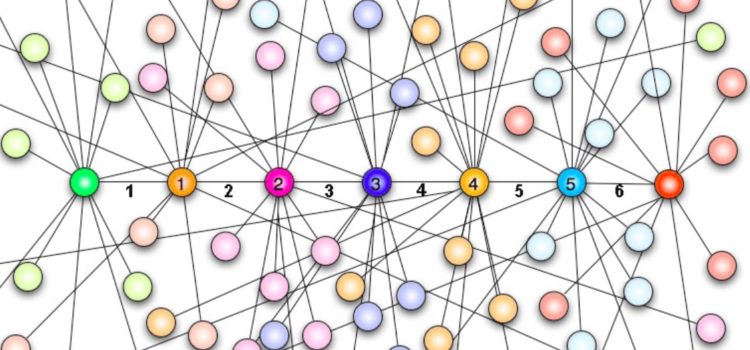
What was Milgram’s “small-world experiment”? How did it research the way people are connected with one another? What does it say about our world? The small-world experiment was a study in the 1960s by psychologist Stanely Milgram. During the experiment, he sent chain letters and counted how many letters were sent before they reached their final destination. We’ll cover Milgram’s small-world experiment and look at how it spawned the six degrees of separation theory.

Grey Swans Explained: Why Prepare for Unlikely Events?

Grey Swans Explained: Why Prepare for Unlikely Events?

What’s a grey swan? How does it serve as a metaphor for events that aren’t predictable, exactly, but imaginable? A grey swan (alternately, gray swan) is a term for events that can’t be predicted but can be imagined. It can also refer to an event that’s unlikely but possible. The term was popularized by Nassim Nicholas Taleb in the book Black Swan. We’ll cover what a grey swan is, how it fits in with black and white swans, and how to turn black swans grey.