The Benefit of Religion: 3 Ways It Makes Us Better
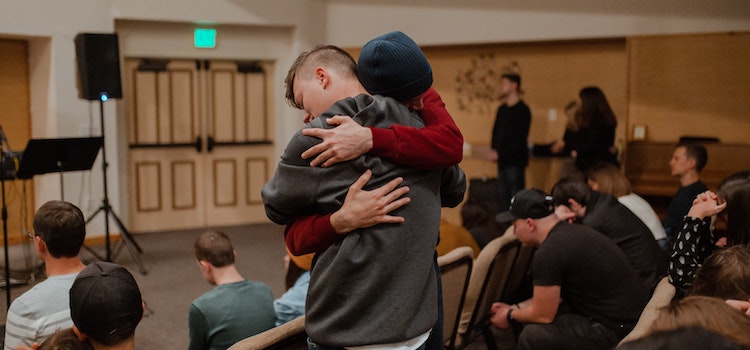
The Benefit of Religion: 3 Ways It Makes Us Better

What are the benefits of religion in society? How does religion help make us better as individuals and communities? Social psychologist Jonathan Haidt argues that we must understand religion primarily as a social driver that brings people into a community around a belief. Ultimately, this helps us find our moral foundation. Read more to understand the benefits of religion, according to Jonathan Haidt.

Untruth #3: The Untruth of Us Versus Them

Untruth #3: The Untruth of Us Versus Them

Why is the “us versus them” mindset so destructive? How has intersectionality contributed to the problem? In what ways have these problems contributed to call-out culture? Jonathan Haidt and Greg Lukianoff, co-authors of The Coddling of the American Mind, discuss the three “Great Untruths” in modern society. The first of those untruths is the untruth of “us versus them.” In their book, they discuss where this mindset originated from and what the implications are. Keep reading to learn what Haidt and Lukianoff have to say about the dangers of the “us versus them” mindset.

Cultural Views on Sex & Their Implications for Desire

Cultural Views on Sex & Their Implications for Desire

Why is sex such a contentious topic? How do the mixed views on sex influence sexual desire? American culture has mixed feelings about sex, and when this culture pervades our relationships, it can impair our desire. American culture tends to look at sex from two extreme points of view, hedonism and Puritanism⁠—sometimes even at the same time. In this article, we’ll consider the clash between the two and its implications for the way we approach our own sex lives.

Untruth #1: The Untruth of Fragility

A Guide to Overcoming Childhood Trauma

What is the untruth of fragility from The Coddling of the American Mind? Why do the authors think that stress is important for emotional development? Is the modern definition of trauma being watered down? In The Coddling of the American Mind, authors Jonathan Haidt and Greg Lukianoff assert that young people today are too fragile. The authors think that people be antifragle and need stress and discomfort in their lives in order to grow and that these days, emotional discomfort is being wrongly labeled as trauma—leading to an overly-sensitive generation. Here’s what Jonathan Haidt and Greg Lukianoff have to say

Children and Technology: How to Limit Screen Time

Children and Technology: How to Limit Screen Time

Do you find it difficult to limit your children’s screen time? Why is it better to allow your child to set their own limits? Children and technology are a bad mix because oftentimes, children don’t understand why too much screen time is bad for them. That’s why Indistractable author Nir Eyal suggests educating your child on the importance of limiting screen time then allowing them to set their own limits. Learn why educating your children is better than setting arbitrary rules.

Moral Development in Children: 2 Theories to Consider

Moral Development in Children: 2 Theories to Consider

What factors contribute to moral development in children? How do kids learn what’s right and what’s wrong? Two schools of thought exist. One view asserts that moral development in children is self-driven—that kids figure it out on their own, through reason. Another perspective is that children learn morality through their society, which accounts for different moral codes in different parts of the world. Read on to learn more about these two theories regarding moral development in children.

The Difference Between Left and Right: Yin/Yang Politics

The Difference Between Left and Right: Yin/Yang Politics

What’s the difference between left and right politics in America? How are the perspectives and values different? Jonathan Haidt answers these questions in his book The Righteous Mind. He discusses the difference between left and right ideologies from the perspective of moral psychology. He argues that liberals and conservatives have different narratives about the country, and he explains why liberals have a hard time understanding conservatives. Read more to learn about the difference between left and right.

Debunking the New Atheists: Religion Is Not a Virus

Debunking the New Atheists: Religion Is Not a Virus

What do the New Atheists believe about religion? Are they right? In The Righteous Mind, social psychologist Jonathan Haidt argues that the New Atheists get it wrong when it comes to religion. Their claim that religion is a virus is at odds with the benefits that religion provides to society. Read on to learn how Haidt believes the New Atheists are wrong about religion.

What Is America’s Role in the World?

What Is America’s Role in the World?

Why is the United States considered a superpower? What role does America play in the world? The United States is a superpower, which means the country is a major player in the maintenance of global stability and disaster assistance. Organizations such as the United Nations are important, but the U.S. is the lynchpin of global stability, particularly since the EU has been weakening in recent years. The entire world’s stability relies on the stability of the US’s economy, military, and democracy. In this article, we’ll discuss America’s role in the world and its implications for its foreign policy.

The Harm Principle: Does It Apply Outside of the West?

The Harm Principle: Does It Apply Outside of the West?

Does the harm principle of ethics have universal merit? What is the principle’s counterargument? The harm principle, introduced by John Stuart Mill in 1859, states that the only way that anyone should exercise power in a civilized society is to prevent harm. This is the basis for ethics in the secular West. However, taking the rest of the world into consideration opens up a different perspective. This is put forth by Jonathan Haidt in his book The Righteous Mind. Read more to learn about differing views regarding the harm principle.