The State of Mindfulness Goes Beyond Thought
The State of Mindfulness Goes Beyond Thought
What does it feel like to be in the state of mindfulness? And how is mindfulness different from concentration? The state of mindfulness is by nature challenging to describe with words. Contrary to what some people think, mindfulness and concentration are very different states of mind. Concentration is achieved through willpower. Mindfulness, on the other hand, cannot be cultivated through struggle. Keep reading the learn about the characteristics of the state of mindfulness and how it differs from concentration.

A Mindfulness Meditation Guide for Beginners

A Mindfulness Meditation Guide for Beginners

Looking for a mindfulness meditation starter guide? What are some things you need to know to start practicing meditation? According to Henepola Gunaratana, a Buddhist monk from Sri Lanka and the author of a mindfulness meditation guide Mindfulness in Plain English, meditation is learned by doing, not by following dogmatic prescriptions. However, there are certain meditation practices that have been optimized over millennia, and they’re worth trying out. The following guidelines are taken from Mindfulness in Plain English, a practical mindfulness meditation guide that is specifically written for beginners.

The 9 Taoist Virtues and How to Become a Master

The 9 Taoist Virtues and How to Become a Master

What are the nine Taoist virtues? What are the four levels of faith? How does one become a Taoist master? According to Stephen Mitchell’s translation of the Tao Te Ching, there are nine Taoist virtues that make up the “Supreme Virtue.” By embodying those Taoist virtues, a master is able to embody the four levels of faith. Keep reading to learn more about the Taoist virtues and masters.

The Three Marks of Existence: Buddhism 101

The Three Marks of Existence: Buddhism 101

What are the three marks of existence in Buddhism? How do you Buddhists see the world? Buddhists believe that there are three fundamental features that characterize worldly existence. Collectively, they are referred to as the “three marks of existence” or “three universal truths.” They are anicca (impermanence), dukkha (unsatisfactoriness), and anatta (selflessness). Keep reading to learn about the three marks of existence.

The Tao Te Ching: Translated and Explained

The Tao Te Ching: Translated and Explained

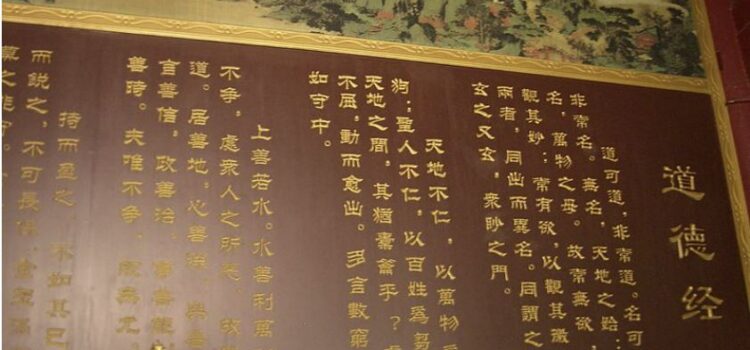
What does the Tao Te Ching teach? What are the beliefs and virtues of Taoism? The Tao Te Ching is the foundational text of Taoism. The spiritual text was written as a poem and has been translated and interpreted by many over the years. The book discusses the nature of the Tao, objectivity and balance, non-action, and harmonious living. Continue on for more information about the Tao Te Ching.

How to Have a Harmonious Life Through Taoism

How to Have a Harmonious Life Through Taoism

How can you live a harmonious life? Why can’t humanity live in harmony with the world? To live a harmonious life means to do what the universe requires of you and nothing more. Unfortunately, humanity has fallen out of harmony with nature because of its need to industrialize and consume. But you can still live a harmonious life within a corrupt world. Keep reading to learn how to live in harmony with the Tao.

Yuval Noah Harari: Religion as an Organizational Tool

Yuval Noah Harari: Religion as an Organizational Tool

What is Yuval Noah Harari’s take on religion? How is his definition different from the conventional understanding of religion? According to Yuval Noah Harari, religion doesn’t have to revolve around theology or the divine. Rather, religion is defined as an all-encompassing story that creates ethics and laws within a human structure. Keep reading to learn about religion, as conceptualized by Yuval Noah Harari.

The Supreme Good of Taoism: Explained

The Supreme Good of Taoism: Explained

What is the “Supreme Good” in Taoism? How is the Supreme Good like water? How does living by the principles of the Supreme Good allow you to have objective wisdom? In Taoism, the Supreme Good is like water in that it provides nourishment to all living beings without bias. If you live by its principles, you will be respected by others and will be able to stay centered despite the chaos in the world. Continue reading to learn more about the Supreme Good.