How to Judge a Personality Based on Little Information
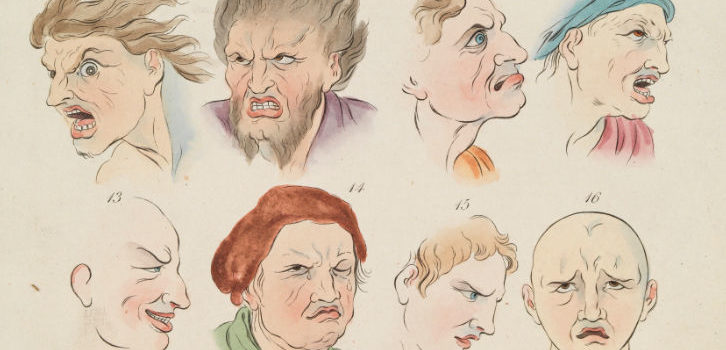
How to Judge a Personality Based on Little Information

What’s the most effective way to size up someone’s personality? How much information do we really need to accurately size up a person’s qualities? When it comes to reading personalities, we really don’t need much information. In fact, too much information can obscure the bigger picture with irrelevant details. Taking a “thin slice”—an extremely small segment of information about a person’s life—can lead to very accurate judgments about their personality. Here’s why “thin-slicing” is the best way to judge a personality.

The Role of the Unconscious in Insight Problem-Solving

The Role of the Unconscious in Insight Problem-Solving

What’s an “insight problem”? How do you solve such a problem? An insight problem is a problem that requires a fundamental shift in perspective in order to arrive at the solution. Oftentimes, the solution to an insight problem comes out seemingly out of nowhere in an “Aha! moment” fashion. In 1931, psychologist Norman Maier investigated how we arrive at solutions to insight problems in his famous Two-String Problem experiment. Here’s what he found.

What’s a Short Squeeze? Piggly Wiggly & GameStop

What’s a Short Squeeze? Piggly Wiggly & GameStop

What’s a short squeeze? Who profits? Who loses? Making the case that people are the stock market’s most volatile component, John Brooks recaps how a man from Memphis named Clarence Saunders “cornered” his own company’s stock, meaning he obtained enough shares to give him the power to manipulate its price. It wasn’t a calculated move on his part; it was a reaction to Wall Street speculators who had planned an attack on his company, a chain of supermarkets called Piggly Wiggly. The affair serves as an interesting illustration of a short squeeze. Continue reading to learn about the Piggly Wiggly

Why Your Vision for the Future Is Wrong

Why Your Vision for the Future Is Wrong

Do you have a vision for the future? Do you make present-day decisions based on how you think you’ll feel later? Social psychologist Daniel Gilbert explains in his book Stumbling on Happiness that, when you make life choices based on how you assume you’ll feel in the future, you tend to make poor choices. Your first mistake is assuming that you’ll feel the same in the future as you do now. Here’s why people tend to make choices they regret in the future.

Personal Preferences: Why Do We Like What We Like?

Personal Preferences: Why Do We Like What We Like?

Why do we like what we like? How do we determine our own preferences? Are our judgments about our own likes and dislikes always accurate? We’re good at making fast judgments about what we do and don’t like. But, surprisingly, sometimes these snap judgments about our own preferences can be inaccurate.  Here’s why your judgments about what you do and don’t like may not reflect your actual preferences.

The Benefits of Unconscious Decision-Making

The Benefits of Unconscious Decision-Making

Do you ever make decisions on the fly, without taking the time to consider their potential consequences? Can snap decisions—decisions made by the unconscious mind—be better than decisions made with deliberation? Throughout our lives, we’ve been taught that our decisions are sounder if a lot of time and effort has gone into making them. But unconscious decisions can actually be just as good as—or even better than—the decisions that we make by analyzing a situation carefully. Learn about the benefits of unconscious decision-making and how snap decisions work in the brain.

Variety in Life: You Need Less Than You Think

Variety in Life: You Need Less Than You Think

When you think about your future, do you assume that you’ll want lots of variety in life? Does variety make you happier? According to social psychologist Daniel Gilbert, variety is actually the opposite of what most people want. But many people fail to recognize that fact and end up forcing variety into their lives, ultimately making themselves unhappy. Here’s why you need less variety in life than you think.

The Social Impact of the Market Society

The Social Impact of the Market Society

What are the main issues with market societies? How can a market society affect the happiness of its citizens? A market society is one in which market values deeply intertwine with the daily lives of the people who live in it. The intrusion of markets into every aspect of life comes with a handful of issues, including a strong social impact. Let’s explore the social impact of living in a market society.

Gut Decisions: 4 Tips for Making Better Choices

Gut Decisions: 4 Tips for Making Better Choices

Why do they say “trust your gut”? How do you know when your gut is right? Gut decisions can be advantageous in some circumstances, but they can lead you astray in others. Malcolm Gladwell suggests that you can make better instinctive decisions by providing the unconscious mind with structure. This involves rehearsing your desired spontaneous responses and developing rules that you can fall back on in times of stress. Here’s how you can “train your gut” to make better decisions, according to Gladwell.

The Mere Exposure Effect: Why We Like Familiarity

The Mere Exposure Effect: Why We Like Familiarity

What is the mere exposure effect? Why do we like things that are familiar and dislike what’s unfamiliar? The mere exposure effect occurs when we start to like things just because we’ve been exposed to them before. It applies to everything from the people we interact with to that song that keeps playing on the radio. Here’s why we like the familiar and try to stay from the unfamiliar.