We've ranked the best teaching books using expert recommendations, sales data, and millions of reader ratings. At Shortform, we know books. Our book guides are the best in the world. Learn why.
Now updated with new research — the book that has changed millions of lives.
After decades of research, world-renowned Stanford University psychologist Carol S. Dweck, Ph.D., discovered a simple but groundbreaking idea: the power of mindset. In this brilliant book, she shows how success in school, work, sports, the arts, and almost every area of human endeavor can be dramatically influenced by how we think about our talents and abilities. People with a fixed mindset — those who believe that abilities are fixed — are less likely to flourish than those with a growth mindset — those who believe that abilities can be developed. Mindset reveals how great parents, teachers, managers, and athletes can put this idea to use to foster outstanding accomplishment.
In this edition, Dweck offers new insights into her now famous and broadly embraced concept. She introduces a phenomenon she calls false growth mindset and guides people toward adopting a deeper, truer growth mindset. She also expands the mindset concept beyond the individual, applying it to the cultures of groups and organizations. With the right mindset, you can motivate those you lead, teach, and love — to transform their lives and your own.
One of the reasons I loved Mindset is because it’s solutions-oriented. In the book’s final chapter, Dweck describes the workshop she and her colleagues have developed to shift students from a fixed to a growth mindset. These workshops demonstrate that ‘just learning about the growth mindset can cause a big shift in the way people think about themselves and their lives. [source]
Without exaggeration, I’ve never met a CEO who didn’t have Mindset on their bookshelf. It resonates with people who have become successful because the belief that your abilities can grow is foundational to their achievements. [source]
Cover unavailable
2
The Book Whisperer: Awakening the Inner Reader in Every Child
Donalyn Miller, Jeff Anderson
4.7
Cover unavailable
3
The First Days of School: How to Be An Effective Teacher
Harry K. Wong, Rosemary T. Wong
4.6
The best-selling book ever on classroom management and teaching for student achievement with over 3.6 million copies sold. The book walks a teacher, either novice or veteran, through structuring and organizing a classroom for success that can be applied at any time of the year at any grade level, pre-K through college.The book is used in thousands of school districts, in over 116 countries, and in over 2,027 college classrooms. Its practical, yet inspiring. But most important, it works The new 4th edition includes updated research, photos, and more examples of "how-to" along with an implementation DVD, "Using The First Days of School" featuring Chelonnda Seroyer.This is the most requested book for what works in the classroom for teacher and student success.
…
Cover unavailable
4
Teach Like a Pirate: Increase Student Engagement, Boost Your Creativity, and Transform Your Life as an Educator
Dave Burgess
4.5
Based on Dave Burgess's popular "Outrageous Teaching" and "Teach Like a PIRATE" seminars, this book offers inspiration, practical techniques, and innovative ideas that will help you to increase student engagement, boost your creativity, and transform your life as an educator. You'll learn how to: -Tap into and dramatically increase your passion as a teacher -Develop outrageously engaging lessons that draw students in like a magnet -Establish rapport and a sense of camaraderie in your classroom -Transform your class into a life-changing experience for your students This groundbreaking inspirational manifesto contains over 30 hooks specially designed to captivate your class and 170 brainstorming questions that will skyrocket your creativity. Once you learn the Teach Like a PIRATE system, you'll never look at your role as an educator the same again.
…
Cover unavailable
5
Teach Like a Champion: 49 Techniques that Put Students on the Path to College
Doug Lemov
4.5
49 techniques that Put students on the path to college.
Cover unavailable
6
Make It Stick: The Science of Successful Learning
Peter C. Brown, Henry L. Roediger III, Mark A. McDaniel
To most of us, learning something "the hard way" implies wasted time and effort. Good teaching, we believe, should be creatively tailored to the different learning styles of students and should use strategies that make learning easier. Make It Stick turns fashionable ideas like these on their head. Drawing on recent discoveries in cognitive psychology and other disciplines, the authors offer concrete techniques for becoming more productive learners.
Memory plays a central role in our ability to carry out complex cognitive tasks, such as applying knowledge to problems never before encountered and drawing inferences from facts already known. New insights into how memory is encoded, consolidated, and later retrieved have led to a better understanding of how we learn. Grappling with the impediments that make learning challenging leads both to more complex mastery and better retention of what was learned.
Many common study habits and practice routines turn out to be counterproductive. Underlining and highlighting, rereading, cramming, and single-minded repetition of new skills create the illusion of mastery, but gains fade quickly. More complex and durable learning come from self-testing, introducing certain difficulties in practice, waiting to re-study new material until a little forgetting has set in, and interleaving the practice of one skill or topic with another. Speaking most urgently to students, teachers, trainers, and athletes, Make It Stick will appeal to all those interested in the challenge of lifelong learning and self-improvement.
If you’re trying to keep up your reading about learning, one of the best books about learning is Make It Stick: The Science of Successful Learning by Peter Brown, Henry Roediger III, and Mark McDaniel. This insightful book was co-authored by some of the most influential researchers around. The book jacket says it best: “Many common study habits and practice routines turn out to be counterproductive. Underlining and highlighting, rereading, cramming, and single-minded repetition of new skills create the illusion of mastery, but gains fade quickly. More complex and durable learning come from self-testing, introducing certain difficulties in practice, waiting to re-study new material until a little forgetting has set in, and interleaving the practice of one skill or topic with another. Speaking most urgently to students, teachers, trainers, and athletes, Make It Stick will appeal to all those interested in the challenge of lifelong learning and self-improvement. [source]
Cover unavailable
7
Drive: The Surprising Truth About What Motivates Us
The New York Times bestseller that gives readers a paradigm-shattering new way to think about motivation
Most people believe that the best way to motivate is with rewards like money—the carrot-and-stick approach. That's a mistake, says Daniel H. Pink (author of To Sell Is Human: The Surprising Truth About Motivating Others). In this provocative and persuasive new book, he asserts that the secret to high performance and satisfaction-at work, at school, and at home—is the deeply human need to direct our own lives, to learn and create new things, and to do better by ourselves and our world.
Drawing on four decades of scientific research on human motivation, Pink exposes the mismatch between what science knows and what business does—and how that affects every aspect of life. He examines the three elements of true motivation—autonomy, mastery, and purpose-and offers smart and surprising techniques for putting these into action in a unique book that will change how we think and transform how we live.
…
Recommended by Tobi Lütke, Bogdan Lucaciu, David Brudo, and 5 others.
Tobi Lütke
Founder & CEO/Shopify
Tobi Lütke recommended this book in an interview in "The Globe and Mail." [source]
Bogdan Lucaciu
Spoiler: it’s autonomy, mastery, and purpose. [source]
Tara Westover was 17 the first time she set foot in a classroom. Born to survivalists in the mountains of Idaho, she prepared for the end of the world by stockpiling home-canned peaches and sleeping with her "head-for-the-hills bag". In the summer she stewed herbs for her mother, a midwife and healer, and in the winter she salvaged in her father's junkyard.
Her father forbade hospitals, so Tara never saw a doctor or nurse. Gashes and concussions, even burns from explosions, were all treated at home with herbalism. The family was so isolated from mainstream society that there was no one to ensure the children received an education and no one to intervene when one of Tara's older brothers became violent.
Then, lacking any formal education, Tara began to educate herself. She taught herself enough mathematics and grammar to be admitted to Brigham Young University, where she studied history, learning for the first time about important world events like the Holocaust and the civil rights movement. Her quest for knowledge transformed her, taking her over oceans and across continents, to Harvard and to Cambridge. Only then would she wonder if she'd traveled too far, if there was still a way home.
Educated is an account of the struggle for self-invention. It is a tale of fierce family loyalty and of the grief that comes with severing the closest of ties. With the acute insight that distinguishes all great writers, Westover has crafted a universal coming-of-age story that gets to the heart of what an education is and what it offers: the perspective to see one's life through new eyes and the will to change it.
As 2018 draws to a close, I’m continuing a favorite tradition of mine and sharing my year-end lists. It gives me a moment to pause and reflect on the year through the books I found most thought-provoking, inspiring, or just plain loved. It also gives me a chance to highlight talented authors – some who are household names and others who you may not have heard of before. Here’s my best of 2018 list. [source]
Tara never went to school or visited a doctor until she left home at 17. I never thought I’d relate to a story about growing up in a Mormon survivalist household, but she’s such a good writer that she got me to reflect on my own life while reading about her extreme childhood. Melinda and I loved this memoir of a young woman whose thirst for learning was so strong that she ended up getting a Ph.D. from Cambridge University. [source]
If you read or listen to only one book this summer, this is it. Bloody brilliant! Every word, every sentence. Rarely do I go through a book with such a rollecoaster of emotion, from love to hate. Thank you for sharing @tarawestover #Educated https://t.co/GqLaqlcWMp [source]
Cover unavailable
9
Readicide: How Schools Are Killing Reading and What You Can Do About It
Kelly Gallagher
4.4
Read-i-cide n: The systematic killing of the love of reading, often exacerbated by the inane, mind-numbing practices found in schools.
Reading is dying in our schools. Educators are familiar with many of the factors that have contributed to the decline—poverty, second-language issues, and the ever-expanding choices of electronic entertainment. In this provocative new book, Kelly Gallagher suggests, however, that it is time to recognize a new and significant contributor to the death of reading: our schools.
In Readicide, Kelly argues that American schools are actively (though unwittingly) furthering the decline of reading. Specifically, he contends that the standard instructional practices used in most schools are killing reading by: · valuing the development of test-takers over the development of lifelong readers; · mandating breadth over depth in instruction; · requiring students to read difficult texts without proper instructional support; · insisting that students focus solely on academic texts; · drowning great books with sticky notes, double-entry journals, and marginalia; · ignoring the importance of developing recreational reading; and · losing sight of authentic instruction in the shadow of political pressures.
Kelly doesn’t settle for only identifying the problems. Readicide provides teachers, literacy coaches, and administrators with specific steps to reverse the downward spiral in reading—steps that will help prevent the loss of another generation of readers.
…
Cover unavailable
10
To Kill a Mockingbird
Harper Lee, Sissy Spacek, et al
4.4
The unforgettable novel of a childhood in a sleepy Southern town and the crisis of conscience that rocked it, To Kill A Mockingbird became both an instant bestseller and a critical success when it was first published in 1960. It went on to win the Pulitzer Prize in 1961 and was later made into an Academy Award-winning film, also a classic.
Compassionate, dramatic, and deeply moving, To Kill A Mockingbird takes readers to the roots of human behavior - to innocence and experience, kindness and cruelty, love and hatred, humor and pathos. Now with over 18 million copies in print and translated into forty languages, this regional story by a young Alabama woman claims universal appeal. Harper Lee always considered her book to be a simple love story. Today it is regarded as a masterpiece of American literature.
…
Recommended by Adam Lawrence, Antonio Villaraigosa, Clive Stafford Smith, and 6 others.
Even though I know we’ve made great strides in America, and have come from the reality of Maycomb, we still suffer today from the lingering effects of the bigotry of that era. At the same time, it’s a lesson in standing tall in the face of tremendously hostile circumstances. [source]
Clive Stafford Smith
The book touches on so many issues and deals with so many prejudices – prejudices towards the mentally ill, racial stuff. It’s a book that was way ahead of its time in many ways. It’s also a wonderfully written book – a joy to read. [source]
Cover unavailable
11
Teach Like Your Hair's on Fire: The Methods and Madness Inside Room 56
Rafe Esquith
4.4
Read Rafe Esquith's posts on the Penguin Blog. From one of America s most celebrated educators, an inspiring guide to transforming every child s education In a Los Angeles neighborhood plagued by guns, gangs, and drugs, there is an exceptional classroom known as Room 56. The fifth graders inside are first-generation immigrants who live in poverty and speak English as a second language. They also play Vivaldi, perform Shakespeare, score in the top 1 percent on standardized tests, and go on to attend Ivy League universities. Rafe Esquith is the teacher responsible for these accomplishments. From the man whom The New York Times calls a genius and a saint comes a revelatory program for educating today s youth. In Teach Like Your Hair s on Fire!, Rafe Esquith reveals the techniques that have made him one of the most acclaimed educators of our time. The two mottoes in Esquith s classroom are Be Nice, Work Hard, and There Are No Shortcuts. His students voluntarily come to school at 6:30 in the morning and work until 5:00 in the afternoon. They learn to handle money responsibly, tackle algebra, and travel the country to study history. They pair Hamlet with rock and roll, and read the American classics. Teach Like Your Hair s on Fire! is a brilliant and inspiring road map for parents, teachers, and anyone who cares about the future success of our nation s children. "
…
Cover unavailable
12
Why Don't Students Like School?: A Cognitive Scientist Answers Questions About How the Mind Works and What It Means for the Classroom
Daniel T. Willingham
4.4
Kids are naturally curious, but when it comes to school it seems like their minds are turned off. Why is it that they can remember the smallest details from their favorite television program, yet miss the most obvious questions on their history test?
Cognitive scientist Dan Willingham has focused his acclaimed research on the biological and cognitive basis of learning and has a deep understanding of the daily challenges faced by classroom teachers. this book will help teachers improve their practice by explaining how they and their students think and learn—revealing the importance of story, emotion, memory, context, and routine in building knowledge and creating lasting learning experiences.
In this breakthrough book, Willingham has distilled his knowledge of cognitive science into a set of nine principles that are easy to understand and have clear applications for the classroom. Some of examples of his surprising findings are:
“Learning styles” don't exist The processes by which different children think and learn are more similar than different.
Intelligence is malleable Intelligence contributes to school performance and children do differ, but intelligence can be increased through sustained hard work.
You cannot develop “thinking skills” in the absence of facts We encourage students to think critically, not just memorize facts. However thinking skills depend on factual knowledge for their operation.
Why Don't Students Like School is a basic primer for every teacher who wants to know how their brains and their students’ brains work and how that knowledge can help them hone their teaching skills.
In this stunning new book, Malcolm Gladwell takes us on an intellectual journey through the world of "outliers"--the best and the brightest, the most famous and the most successful. He asks the question: what makes high-achievers different?
His answer is that we pay too much attention to what successful people are like, and too little attention to where they are from: that is, their culture, their family, their generation, and the idiosyncratic experiences of their upbringing. Along the way he explains the secrets of software billionaires, what it takes to be a great soccer player, why Asians are good at math, and what made the Beatles the greatest rock band.
Gladwell is not the first person to come up with the 10,000 hour rule. Nor is he the first person to document what it takes to become the best in the world at something. But his stories are so great as he explains these deep concepts. How did the Beatles become the best? Why are professional hockey players born in January, February and March? And so on. [source]
Alex Circei
Question: What five books would you recommend to young people interested in your career path & why? Answer: Screw It, Let's Do It: Lessons In Life by Richard Branson Outliers: The Story of Success by Malcolm Gladwell Start With Why: How Great Leaders Inspire Everyone To Take Action by Simon Sinek The Hard Thing About Hard Things: Building a Business When There Are No Easy Answers by Ben Horowitz Rich Dad Poor Dad: What the Rich Teach Their Kids About Money That the Poor and Middle Class Do Not! by Robert T. Kiyosaki [source]
Cover unavailable
14
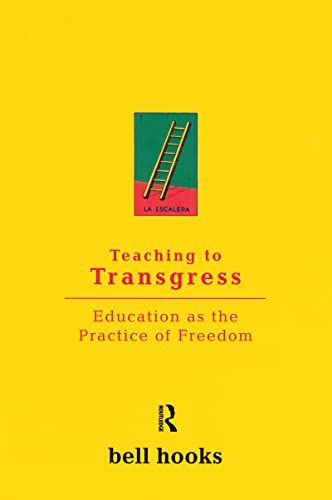
Teaching to Transgress: Education as the Practice of Freedom
bell hooks
4.4
In Teaching to Transgress, bell hooks--writer, teacher, and insurgent black intellectual--writes about a new kind of education, educations as the practice of freedom. Teaching students to "transgress" against racial, sexual, and class boundaries in order to achieve the gift of freedom is, for hooks, the teacher's most important goal.
Bell hooks speaks to the heart of education today: how can we rethink teaching practices in the age of multiculturalism? What do we do about teachers who do not want to teach, and students who do not want to learn? How should we deal with racism and sexism in the classroom?
Full of passion and politics, Teaching to Transgress combines practical knowledge of the classroom with a deeply felt connection to the world of emotions and feelings. This is the rare book about teachers and students that dares to raise critical questions about eros and rage, grief and reconciliation, and the future o teaching its self.
"To educate as the practice of freedom," writes bell hooks, "is a way of teaching that any one can learn." Teaching to Transgress is the record of one gifted teacher's struggle to make classrooms work.
This book sat next to my bed the entire first year I taught at the University of Houston. Hooks' idea of "education as the practice of freedom" shaped who I am today. Whenever difficult conversations about race, class, or gender begin to surface, I remember what she taught me: If your students are comfortable, you're not doing your job. [source]
Les Back
It’s really a wonderful account of the possibility that education has to shape and transform lives. [source]
Cover unavailable
15
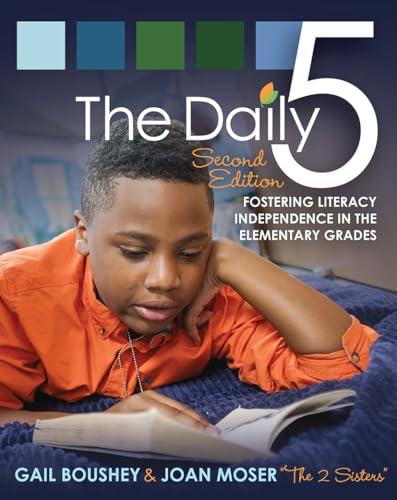
The Daily Five
Gail Boushey, Joan Moser
4.3
Cover unavailable
16
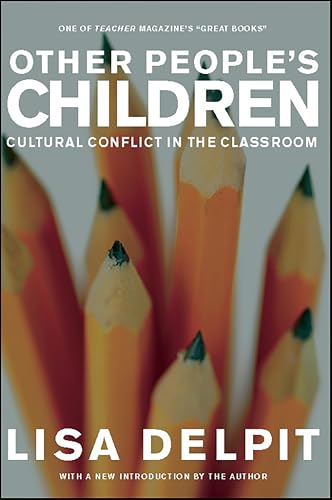
Other People's Children: Cultural Conflict in the Classroom
Lisa Delpit
4.3
An updated edition of the classic revolutionary analysis of the role of race in the classroom.
Winner of an American Educational Studies Association Critics' Choice Award and Choice Magazine's Outstanding Academic book award, and voted one of Teacher Magazine's "great books," Other People's Children has sold over 150,000 copies since its original hardcover publication. This anniversary edition features a new introduction by Delpit as well as new framing essays by Herbert Kohl and Charles Payne.
In a radical analysis of contemporary classrooms, MacArthur Award-winning author Lisa Delpit develops ideas about ways teachers can be better "cultural transmitters" in the classroom, where prejudice, stereotypes, and cultural assumptions breed ineffective education. Delpit suggests that many academic problems attributed to children of color are actually the result of miscommunication, as primarily white teachers and "other people's children" struggle with the imbalance of power and the dynamics plaguing our system.
A new classic among educators, Other People's Children is a must-read for teachers, administrators, and parents striving to improve the quality of America's education system.
…
Recommended by Kelly Wickham Hurst and Michelle Rhee.
Kelly Wickham Hurst
@MJAntinarelli @KaitPopielarz It’s amazing. It’s THE book that changed everything for me early on in my career. It was such a swift kick to the head. [source]
Michelle Rhee
Other People’s Children is one of the books that all educators should read because it really gives a different perspective on teaching children who may not be of the same race or socioeconomic background. I think it’s always important for teachers to understand the cultural norms and expectations that prevail in the school environment where they work. Teachers need to be cognisant, not complacent, about teaching across difference. Other People’s Children helps educators ask themselves the right questions and gives them a lens through which they can view and think about how cultural dynamics play out in the classroom. [source]
Cover unavailable
17
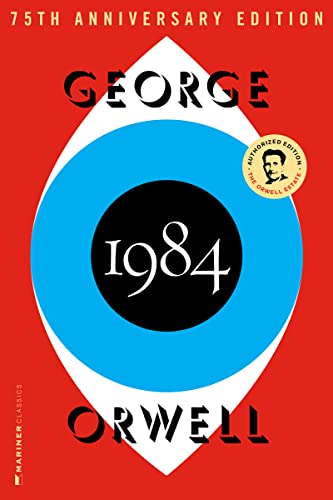
1984
George Orwell
4.3
A PBS Great American Read Top 100 Pick
With extraordinary relevance and renewed popularity, George Orwell’s 1984 takes on new life in this hardcover edition.
“Orwell saw, to his credit, that the act of falsifying reality is only secondarily a way of changing perceptions. It is, above all, a way of asserting power.”—The New Yorker
In 1984, London is a grim city in the totalitarian state of Oceania where Big Brother is always watching you and the Thought Police can practically read your mind. Winston Smith is a man in grave danger for the simple reason that his memory still functions. Drawn into a forbidden love affair, Winston finds the courage to join a secret revolutionary organization called The Brotherhood, dedicated to the destruction of the Party. Together with his beloved Julia, he hazards his life in a deadly match against the powers that be.
Lionel Trilling said of Orwell’s masterpiece “1984 is a profound, terrifying, and wholly fascinating book. It is a fantasy of the political future, and like any such fantasy, serves its author as a magnifying device for an examination of the present.” Though the year 1984 now exists in the past, Orwell’s novel remains an urgent call for the individual willing to speak truth to power.
Today is World Book Day, a wonderful opportunity to address this #ChallengeRichard sent in by Mike Gonzalez of New Jersey: Make a list of your top 65 books to read in a lifetime. [source]
called this book "one of his favorite" and recommended it to the hires. The book also inspired one the greatest TV ad (made by Jobs) [source]
Andra Zaharia
These books and their core ideas have stuck with me the most and continue to guide me when I hit crossroads along the way. [source]
Cover unavailable
18
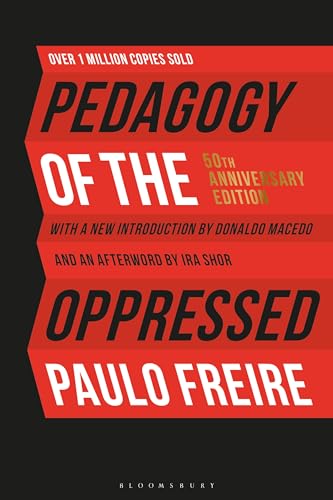
Pedagogy of the Oppressed
Paulo Freire
4.3
First published in Portuguese in 1968, Pedagogy of the Oppressed was translated and published in English in 1970. Paulo Freire's work has helped to empower countless people throughout the world and has taken on special urgency in the United States and Western Europe, where the creation of a permanent underclass among the underprivileged and minorities in cities and urban centers is ongoing.
This 50th anniversary edition includes an updated introduction by Donaldo Macedo, a new afterword by Ira Shor and interviews with Marina Aparicio Barberan, Noam Chomsky, Ramon Flecha, Gustavo Fischman, Ronald David Glass, Valerie Kinloch, Peter Mayo, Peter McLaren and Margo Okazawa-Rey to inspire a new generation of educators, students, and general readers for years to come.
…
Recommended by Alexis Isabel.
Alexis Isabel
@dontkauf i’ve read it! great book, def worth a re-read [source]
Cover unavailable
19
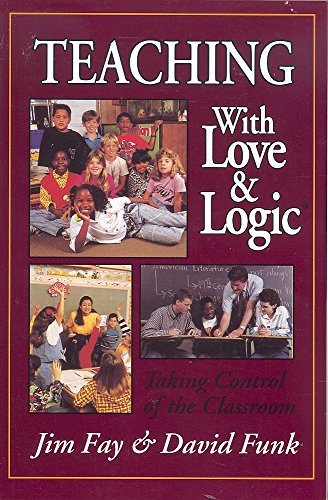
Teaching with Love and Logic: Taking Control of the Classroom
Jim Fay, David Funk
4.3
"Love and Logic" is a method of working with students which was developed by educational expert Jim Fay, and child psychiatrist Foster W.Cline, M.D. The "Love and Logic" tecniques: Put teachers back in control of the classroomResult in students who are internalized in their discipline rather than dependent upon external controlsRaise the level of student responsibillityTeach students to think for themselvesPrepare students to function effectively in a world filled wiht temptations, decisions, and consequencesReturn a teacher's joy of teaching!
…
Cover unavailable
20
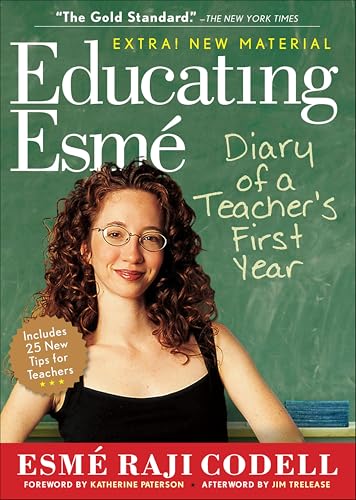
Educating Esmé: Diary of a Teacher's First Year
Esme Raji Codell, Jim Trelease
4.3
A must-read for parents, new teachers, and classroom veterans, Educating Esmé is the exuberant diary of Esmé Raji Codell’s first year teaching in a Chicago public school. Fresh-mouthed and free-spirited, the irrepressible Madame Esmé—as she prefers to be called—does the cha-cha during multiplication tables, roller-skates down the hallways, and puts on rousing performances with at-risk students in the library. Her diary opens a window into a real-life classroom from a teacher’s perspective. While battling bureaucrats, gang members, abusive parents, and her own insecurities, this gifted young woman reveals what it takes to be an exceptional teacher.
Heroine to thousands of parents and educators, Esmé now shares more of her ingenious and yet down-to-earth approaches to the classroom in a supplementary guide to help new teachers hit the ground running. As relevant and iconoclastic as when it was first published, Educating Esmé is a classic, as is Madame Esmé herself.
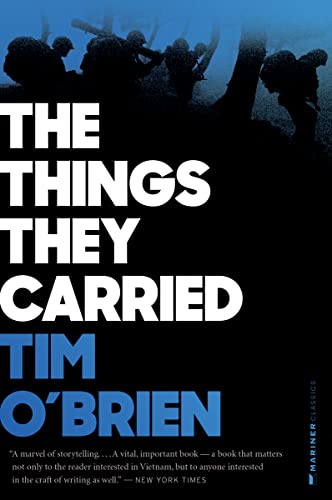
A classic, life-changing meditation on war, memory, imagination, and the redemptive power of storytelling, with more than two-million copies in print
Depicting the men of Alpha Company—Jimmy Cross, Henry Dobbins, Rat Kiley, Mitchell Sanders, Norman Bowker, Kiowa, and the character Tim O’Brien, who survived his tour in Vietnam to become a father and writer at the age of forty-three—the stories in The Things They Carried opened our eyes to the nature of war in a way we will never forget. It is taught everywhere, from high school classrooms to graduate seminars in creative writing, and in the decades since its publication it has never failed to challenge our perceptions of fact and fiction, war and peace, and courage, longing, and fear.
…
Recommended by Caroline Paul, Eugene Gu, Karl Marlantes, and 2 others.
Caroline Paul
A beautiful book by a writer who fought in Vietnam. [source]
Eugene Gu
@realDonaldTrump Tim O’Brien is the author of the book The Things They Carried, which was about the Vietnam War. Must be very triggering for Trump since he dodged the draft multiple times with fraudulent doctors’ notes for fake bone spurs like a coward. [source]
Karl Marlantes
But when O’Brien wrote The Things They Carried he came down to absolute real brass tacks. It was no longer surreal, it was like here’s a list of what a grunt carries, an infantry soldier… [source]
Cover unavailable
22
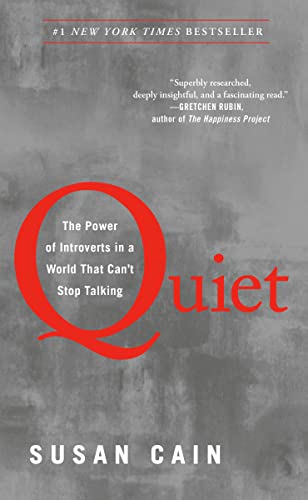
Quiet: The Power of Introverts in a World That Can't Stop Talking
At least one-third of the people we know are introverts. They are the ones who prefer listening to speaking; who innovate and create but dislike self-promotion; who favor working on their own over working in teams. It is to introverts—Rosa Parks, Chopin, Dr. Seuss, Steve Wozniak—that we owe many of the great contributions to society.
In Quiet, Susan Cain argues that we dramatically undervalue introverts and shows how much we lose in doing so. She charts the rise of the Extrovert Ideal throughout the twentieth century and explores how deeply it has come to permeate our culture. She also introduces us to successful introverts—from a witty, high-octane public speaker who recharges in solitude after his talks, to a record-breaking salesman who quietly taps into the power of questions. Passionately argued, superbly researched, and filled with indelible stories of real people, Quiet has the power to permanently change how we see introverts and, equally important, how they see themselves.
Now with Extra Libris material, including a reader’s guide and bonus content.
Leaders needn’t be the loudest. Leadership is not about theater. It’s not about dominance. It is about putting the lives of others before any other priority. In Quiet, Cain affirms to a good many of us who are introverts by nature that we needn’t try to be extroverts if we want to lead. Simply being ourselves is more important — and more effective. [source]
Danielle Morrill
Co-founder/Mattermark
Anyway, maybe you’re like me and figuring this out for yourself. It’s a good book for introverts and for those who love them [source]
Probably half the world is introverts. Maybe more. It’s not an easy life to live. I sometimes have that feeling in a room full of people, “uh-oh. I just shut down. I can’t talk anymore and there’s a lock on my mouth and this crowd threw away the key.” Do you ever get that feeling? Please? I hope you do. Let’s try to lock eyes at the party. “Quiet” shows the reader how to unlock the secret powers that probably half the world needs to unlock. [source]
Cover unavailable
23
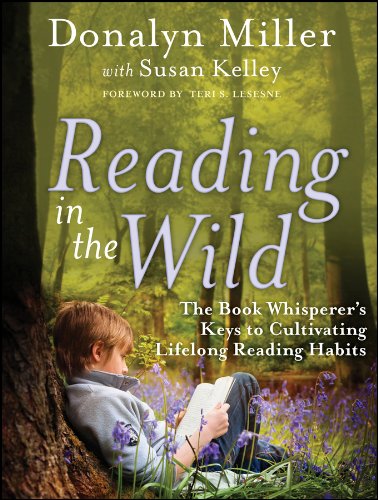
Reading in the Wild
Donalyn Miller
4.3
Teaching students to become lifelong readers A companion to the bestselling The Book Whisperer, Reading in the Wild explores whether or not we are truly instilling lifelong reading habits in our students and provides practical strategies for teaching "wild" reading. Based on survey responses from over 900 adult readers and classroom feedback, Reading in the Wild offers solid advice and strategies on how to develop, encourage and assess key lifelong reading habits, including dedicating time for reading, planning for future reading, and defining oneself as a reader.Includes advice for supporting the love of reading by explicitly teaching lifelong reading habits. Contains accessible strategies, ideas, tips, lesson plans and management tools along with lists of recommended books co-published with Editorial Projects in Education, publisher of "Education Week" and "Teacher Magazine"
Packed with ideas for helping students choose their own reading material, respond to text, and build capacity for lifelong reading.
…
Cover unavailable
24
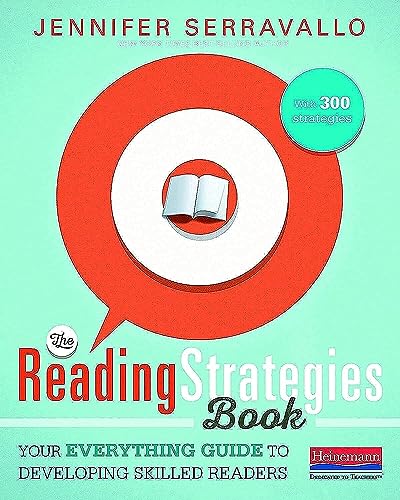
The Reading Strategies Book: Your Everything Guide to Developing Skilled Readers
Jennifer Serravallo
4.3
With hit books that support strategic reading through conferring, small groups, and assessment, Jen Serravallo gets emails almost daily asking, "Isn't there a book of the strategies themselves?" Now there is.
"Strategies make the often invisible work of reading actionable and visible," Jen writes. In The Reading Strategies Book, she collects 300 strategies to share with readers in support of thirteen goals-everything from fluency to literary analysis. Each strategy is cross-linked to skills, genres, and Fountas & Pinnell reading levels to give you just-right teaching, just in time. With Jen's help you'll:
develop goals for every reader give students step-by-step strategies for skilled reading guide readers with prompts aligned to the strategies adjust instruction to meet individual needs with Jen's Teaching Tips craft demonstrations and explanations with her Lesson Language learn more with Hat Tips to the work of influential teacher-authors. Whether you use readers workshop, Daily 5/CAFE, guided reading, balanced reading, a core reading program, whole-class novels, or any other approach, The Reading Strategies Book will complement and extend your teaching. Rely on it to plan and implement goal-directed, differentiated instruction for individuals, small groups, and whole classes.
"We offer strategies to readers to put the work in doable terms for those who are still practicing," writes Jen Serravallo. "The goal is not that they can do the steps of the strategy but that they become more comfortable and competent with a new skill." With The Reading Strategies Book, you'll have ways to help your readers make progress every day.
…
Cover unavailable
25
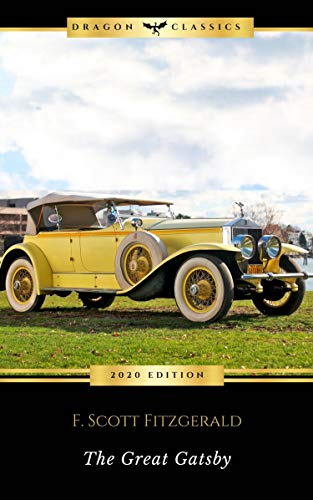
The Great Gatsby
F. Scott Fitzgerald
4.3
A young man, newly rich, tries to recapture the past and win back his former love, despite the fact that she has married.
When he got to high school, the president said, his tastes changed and he learned to enjoy classics like “Of Mice and Men” and “The Great Gatsby.” [source]
Melinda and I really like this book. When we were first dating, she had a green light that she would turn on when her office was empty and it made sense for me to come over. [source]
Marvin Liao
Partner/500 Startups
For Non-Business, I'd have to say Dune (Herbert), Emergency (Strauss), The Great Gatsby (Fitzgerald) or Flint (L'Amour). I re-read these books every year because they are just so well written & great stories that I get new perspective & details every time I read them. [source]
Cover unavailable
26
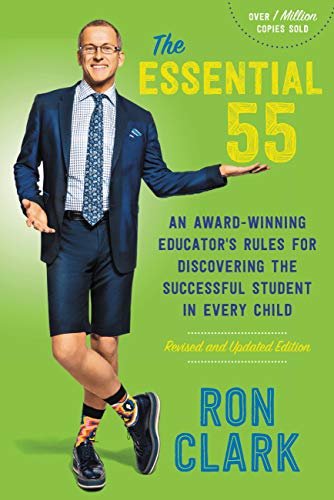
The Essential 55: An Award-Winning Educator's Rules for Discovering the Successful Student in Every Child
Ron Clark
4.3
Now in paperback, Ron Clark's New York Times bestseller that's changing America one child at a time! The runaway bestseller that's a must-have for every parent and teacher. How many authors would travel coast to coast on a bus to get their book into as many hands as possible? Not many. But that's just what Ron Clark, author of The Essential 55, did to keep his book and message in the public eye. And it worked. After his Oprah appearance, sales skyrocketed: we've sold more than 850,000 copies in six months! The book sat tenaciously on the New York Times bestseller list for 11 weeks. Ron Clark was featured on the Today show, and in the Chicago Tribune, Good Housekeeping, and the New York Daily News--not to mention the calls we've received from teachers and parents who want to get their hands on Ron's guidelines for teaching children. Now in paperback, The Essential 55 will be the perfect book for parents and teachers to slip into their own backpacks, to read on the train or at lunch, and to highlight the sections that resonate for them. And with an author who is truly a partner in getting his message to the masses, we just can't lose.
…
Cover unavailable
27
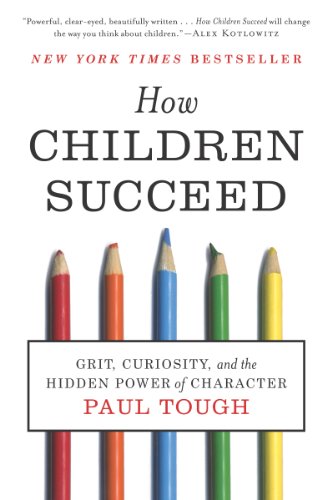
How Children Succeed: Grit, Curiosity, and the Hidden Power of Character
Paul Tough
4.3
Why do some children succeed while others fail?
The story we usually tell about childhood and success is the one about intelligence: Success comes to those who score highest on tests, from preschool admissions to SATs.
But in "How Children Succeed," Paul Tough argues for a very different understanding of what makes a successful child. Drawing on groundbreaking research in neuroscience, economics, and psychology, Tough shows that the qualities that matter most have less to do with IQ and more to do with character: skills like grit, curiosity, conscientiousness, and optimism.
"How Children Succeed" introduces us to a new generation of scientists and educators who are radically changing our understanding of how children develop character, how they learn to think, and how they overcome adversity. It tells the personal stories of young people struggling to stay on the right side of the line between success and failure. And it argues for a new way of thinking about how best to steer an individual child – or a whole generation of children – toward a successful future.
This provocative and profoundly hopeful book will not only inspire and engage readers; it will also change our understanding of childhood itself.
…
Recommended by Chelsea Frank.
Chelsea Frank
I was reading a book, “How Children Succeed: Grit, Curiosity, and the Hidden Power of Character” by Paul Tough on a recommendation by my sister, a Middle School teacher. At that time I considered myself a great mother with natural intuition and did not go to the book as a means of “self-help” but of leisurely pleasure. However, I was perplexed when I discovered that even the most intelligent, diligent, and natural parents fail their children on multiple levels. Intuition was not enough. The day I finished the book I went to my son’s baseball game ready to apply my knowledge but found that the words out of my mouth were not necessarily those recommended in the book. Then it hit me: what if everything in life weren’t necessarily “intuitive”? I had learned so much about parenting even if I thought I was doing an excellent job already. What more could I learn about being content, happy, or successful in life? [source]
Cover unavailable
28
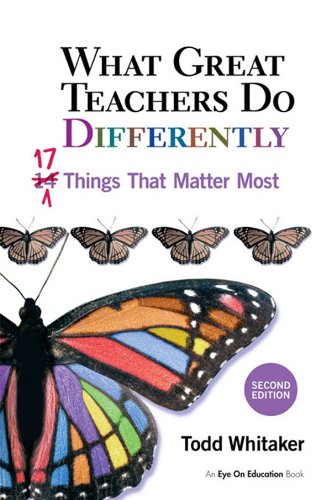
What Great Teachers Do Differently: 17 Things That Matter Most
Todd Whitaker
4.3
In the second edition of this renowned book, you will find pearls of wisdom, heartfelt advice, and inspiration from one of the nation's leading authorities on staff motivation, teacher leadership, and principal effectiveness. With wit and understanding, Todd Whitaker describes the beliefs, behaviors, attitudes, and interactions of great teachers and explains what they do differently. New features include: o Meaning what you say o Focusing on students first o Putting yourself in their position
…
Cover unavailable
29
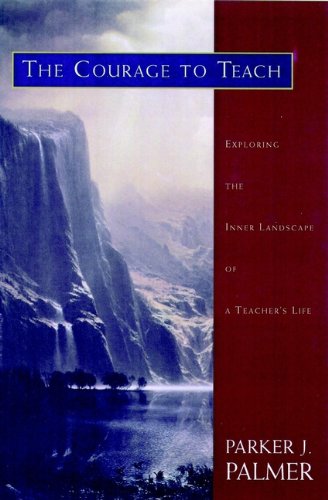
The Courage to Teach: Exploring the Inner Landscape of a Teacher's Life
Parker J. Palmer
4.3
"This book is for teachers who have good days and bad -- and whose bad days bring the suffering that comes only from something one loves. It is for teachers who refuse to harden their hearts, because they love learners, learning, and the teaching life." - Parker J. Palmer [from the Introduction] Teachers choose their vocation for reasons of the heart, because they care deeply about their students and about their subject. But the demands of teaching cause too many educators to lose heart. Is it possible to take heart in teaching once more so that we can continue to do what good teachers always do -- give heart to our students?
In The Courage to Teach, Parker Palmer takes teachers on an inner journey toward reconnecting with their vocation and their students -- and recovering their passion for one of the most difficult and important of human endeavors.
…
Cover unavailable
30
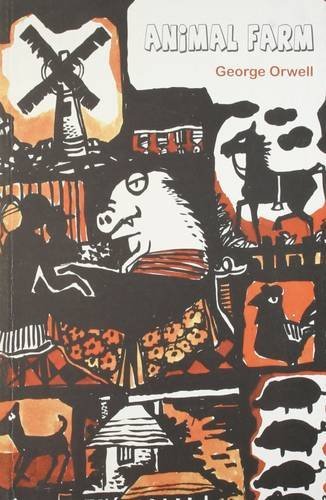
Animal Farm
George Orwell and Christopher Hitchens
4.3
Animal Farm is one of the most famous warnings ever written. Orwell's immortal satire - 'against Stalin' as he wrote to his French translator - can be read on many levels. With its piercing clarity and deceptively simple style it is no surprise that this novel is required reading for schoolchildren and politicians alike. This fable of the steadfast horses Boxer and Clover, the opportunistic pigs Snowball and Napoleon, and the deafening choir of sheep remains an unparalleled masterpiece.
One reviewer wrote 'In a hundred years' time perhaps Animal Farm ... may simply be a fairy story: today it is a fairy story with a good deal of point.' Over sixty years on in the age of spin, it is more relevant than ever.
Rejected by such eminent publishing figures as Victor Gollancz, Jonathan Cape and T.S. Eliot, Animal Farm was published to great acclaim by Martin Secker and Warburg on 17 August 1945 in an edition of 4500 copies. In the centenary year of Martin Secker, Ltd., Harvill Secker is proud to publish this special edition with a brand-new introduction by Christopher Hitchens.
Whitney Cummings recommended this book on the podcast "The Tim Ferriss Show". [source]
Vlad Tenev
When I was in sixth grade I remember being very upset by the ending of this book. [source]
Heather Brooke
I picked Animal Farm because it is an allegory about power and its seductive and corruptive influence on people regardless of their initial good intentions. [source]
Cover unavailable
31
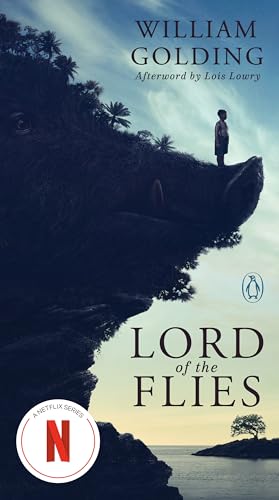
Lord of the Flies
William Golding
4.3
At the dawn of the next world war, a plane crashes on an uncharted island, stranding a group of schoolboys. At first, with no adult supervision, their freedom is something to celebrate; this far from civilization the boys can do anything they want. Anything. They attempt to forge their own society, failing, however, in the face of terror, sin and evil. And as order collapses, as strange howls echo in the night, as terror begins its reign, the hope of adventure seems as far from reality as the hope of being rescued. Labeled a parable, an allegory, a myth, a morality tale, a parody, a political treatise, even a vision of the apocalypse, Lord of the Flies is perhaps our most memorable tale about “the end of innocence, the darkness of man’s heart.”
…
Recommended by Elon Musk, Ev Williams, Audrey Russo, and 5 others.
Audrey Russo
So many novels; Lord of the Flies, Great Gatsby, Great Expectations; all the Nancy Drew books; Catcher in the Rye, Books written by Zora Neale Hurston; Pat Conroy – all because of the view about different people who endure despite adversity while kindling the hearts of the human spirit. [source]
Chigozie Obioma
William Golding imbues some of these children with wisdom that would read, in the hands of a lesser author, as implausibly knowing [source]
Disco Donnie
@JoshRHernandez1 I love the book “Lord of the Flies” so just started watching The Society [source]
Cover unavailable
32
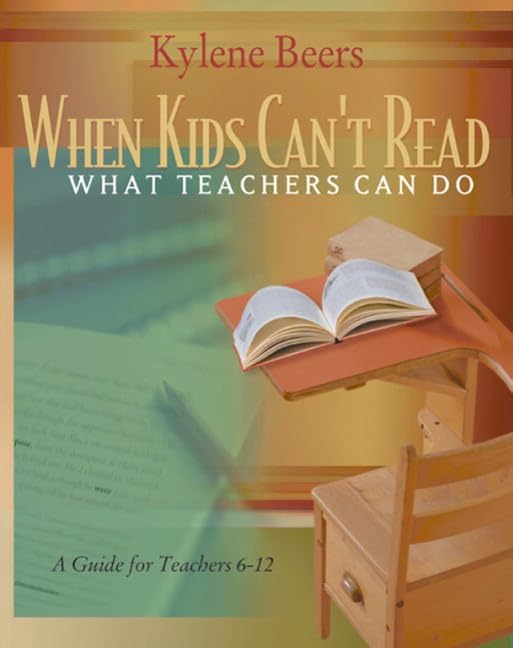
When Kids Can't Read-What Teachers Can Do: A Guide for Teachers 6-12
Kylene Beers
4.2
For Kylene Beers, the question of what to do when kids can't read surfaced abruptly in 1979 when she began teaching. That year, she discovered that some of the students in her seventh-grade language arts classes could pronounce all the words, but couldn't make any sense of the text. Others couldn't even pronounce the words. And that was the year she met a boy named George.
George couldn't read. When George's parents asked her to explain what their son's reading difficulties were and what she was going to do to help, Kylene, a secondary certified English teacher with no background in reading, realized she had little to offer the parents, even less to offer their son. That defining moment sent her on a twenty-three-year search for answers to that original question: how do we help middle and high schoolers who can't read?
Now in her critical and practical text "When Kids Can't Read - What Teachers Can Do: A Guide for Teachers 6-12," Kylene shares what she has learned and shows teachers how to help struggling readers with comprehension vocabulary fluency word recognition motivation Here, Kylene offers teachers the comprehensive handbook they've needed to help readers improve their skills, their attitudes, and their confidence. Filled with student transcripts, detailed strategies, reproducible material, and extensive booklists, this much-anticipated guide to teaching reading both instructs and inspires.
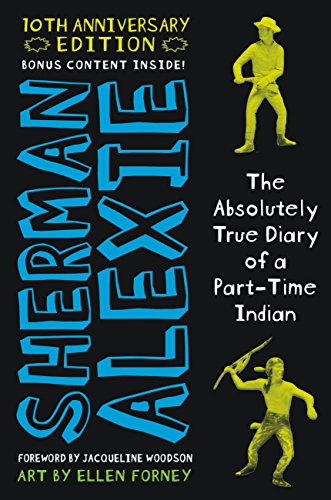
Bestselling author Sherman Alexie tells the story of Junior, a budding cartoonist growing up on the Spokane Indian Reservation, with a foreword from Jaqueline Woodson. Determined to take his future into his own hands, Junior leaves his troubled school on the rez to attend an all-white farm town high school where the only other Indian is the school mascot.
Heartbreaking, funny, and beautifully written, The Absolutely True Diary of a Part-Time Indian, which is based on the author's own experiences, coupled with poignant drawings by Ellen Forney that reflect the character's art, chronicles the contemporary adolescence of one Native American boy as he attempts to break away from the life he was destined to live.
With a forward by Markus Zusak, interviews with Sherman Alexie and Ellen Forney, and four-color interior art throughout, this edition is perfect for fans and collectors alike.
Empathy is at the core of my beliefs, and this is one of the best books I’ve ever read that fosters empathetic thinking. It’s also a great reminder of how hard it is to accomplish anything when your life circumstances and surroundings negatively contribute to progress and a great reminder to stay humble. [source]
In this must-read book for anyone striving to succeed, pioneering psychologist Angela Duckworth shows parents, educators, students, and business people both seasoned and new that the secret to outstanding achievement is not talent but a focused persistence called grit.
Why do some people succeed and others fail? Sharing new insights from her landmark research on grit, Angela Duckworth explains why talent is hardly a guarantor of success. Rather, other factors can be even more crucial such as identifying our passions and following through on our commitments.
Drawing on her own powerful story as the daughter of a scientist who frequently bemoaned her lack of smarts, Duckworth describes her winding path through teaching, business consulting, and neuroscience, which led to the hypothesis that what really drives success is not genius, but a special blend of passion and long-term perseverance. As a professor at the University of Pennsylvania, Duckworth created her own character lab and set out to test her theory.
Here, she takes readers into the field to visit teachers working in some of the toughest schools, cadets struggling through their first days at West Point, and young finalists in the National Spelling Bee. She also mines fascinating insights from history and shows what can be gleaned from modern experiments in peak performance. Finally, she shares what she's learned from interviewing dozens of high achievers; from JP Morgan CEO Jamie Dimon to the cartoon editor of The New Yorker to Seattle Seahawks Coach Pete Carroll.
Winningly personal, insightful, and even life-changing, Grit is a book about what goes through your head when you fall down, and how that not talent or luck makes all the difference.
…
Recommended by Albert Wenger, Anu Hariharan, Benjamin Spall, and 11 others.
Benjamin Spall
Question: What five books would you recommend to youngsters interested in your professional path? … Grit by Angela Duckworth [source]
Bogdan Lucaciu
Grit: The Power of Passion and Perseverance - it was frustrating to read: “Where was this book 20 years ago!?” [source]
Stephen Lew
When asked what books he would recommend to youngsters interested in his professional path, Stephen mentioned Grit. [source]
Cover unavailable
35
What the Best College Teachers Do
Ken Bain
4.2
What makes a great teacher great? Who are the professors students remember long after graduation? This book, the conclusion of a fifteen-year study of nearly one hundred college teachers in a wide variety of fields and universities, offers valuable answers for all educators.
The short answer is--it's not what teachers do, it's what they understand. Lesson plans and lecture notes matter less than the special way teachers comprehend the subject and value human learning. Whether historians or physicists, in El Paso or St. Paul, the best teachers know their subjects inside and out--but they also know how to engage and challenge students and to provoke impassioned responses. Most of all, they believe two things fervently: that teaching matters and that students can learn.
In stories both humorous and touching, Bain describes examples of ingenuity and compassion, of students' discoveries of new ideas and the depth of their own potential. What the Best College Teachers Do is a treasure trove of insight and inspiration for first-year teachers and seasoned educators.
…
Cover unavailable
36
The Freedom Writers Diary
The Freedom Writers
4.2
#1 NEW YORK TIMES BESTSELLER & NOW A MAJOR MOTION PICTURE
Straight from the front line of urban America, the inspiring story of one fiercely determined teacher and her remarkable students.
As an idealistic twenty-three-year-old English teacher at Wilson High School in Long beach, California, Erin Gruwell confronted a room of “unteachable, at-risk” students. One day she intercepted a note with an ugly racial caricature, and angrily declared that this was precisely the sort of thing that led to the Holocaust—only to be met by uncomprehending looks. So she and her students, using the treasured books Anne Frank: The Diary of a Young Girl and Zlata’s Diary: A Child’s Life in Sarajevo as their guides, undertook a life-changing, eye-opening, spirit-raising odyssey against intolerance and misunderstanding. They learned to see the parallels in these books to their own lives, recording their thoughts and feelings in diaries and dubbing themselves the “Freedom Writers” in homage to the civil rights activists “The Freedom Riders.”
With funds raised by a “Read-a-thon for Tolerance,” they arranged for Miep Gies, the courageous Dutch woman who sheltered the Frank family, to visit them in California, where she declared that Erin Gruwell’s students were “the real heroes.” Their efforts have paid off spectacularly, both in terms of recognition—appearances on “Prime Time Live” and “All Things Considered,” coverage in People magazine, a meeting with U.S. Secretary of Education Richard Riley—and educationally. All 150 Freedom Writers have graduated from high school and are now attending college.
With powerful entries from the students’ own diaries and a narrative text by Erin Gruwell, The Freedom Writers Diary is an uplifting, unforgettable example of how hard work, courage, and the spirit of determination changed the lives of a teacher and her students.
The authors’ proceeds from this book will be donated to The Tolerance Education Foundation, an organization set up to pay for the Freedom Writers’ college tuition. Erin Gruwell is now a visiting professor at California State University, Long Beach, where some of her students are Freedom Writers.
…
Cover unavailable
37
Write Like This
Mr. Kelly Gallagher
4.2
If you want to learn how to shoot a basketball, you begin by carefully observing someone who knows how to shoot a basketball. If you want to be a writer, you begin by carefully observing the work of accomplished writers. Recognizing the importance that modeling plays in the learning process, high school English teacher Kelly Gallagher shares how he gets his students to stand next to and pay close attention to model writers, and how doing so elevates his students' writing abilities. Write Like This is built around a central premise: if students are to grow as writers, they need to read good writing, they need to study good writing, and, most important, they need to emulate good writers.
In Write Like This, Kelly emphasizes real-world writing purposes, the kind of writing he wants his students to be doing twenty years from now. Each chapter focuses on a specific discourse: express and reflect, inform and explain, evaluate and judge, inquire and explore, analyze and interpret, and take a stand/propose a solution. In teaching these lessons, Kelly provides mentor texts (professional samples as well as models he has written in front of his students), student writing samples, and numerous assignments and strategies proven to elevate student writing.
By helping teachers bring effective modeling practices into their classrooms, Write Like This enables students to become better adolescent writers. More important, the practices found in this book will help our students develop the writing skills they will need to become adult writers in the real world.
…
Cover unavailable
38
Lies My Teacher Told Me: Everything Your American History Textbook Got Wrong
James W. Loewen
4.2
Americans have lost touch with their history, and in Lies My Teacher Told Me Professor James Loewen shows why. After surveying eighteen leading high school American history texts, he has concluded that not one does a decent job of making history interesting or memorable. Marred by an embarrassing combination of blind patriotism, mindless optimism, sheer misinformation, and outright lies, these books omit almost all the ambiguity, passion, conflict, and drama from our past.
In this revised edition, packed with updated material, Loewen explores how historical myths continue to be perpetuated in today's climate and adds an eye-opening chapter on the lies surrounding 9/11 and the Iraq War. From the truth about Columbus's historic voyages to an honest evaluation of our national leaders, Loewen revives our history, restoring the vitality and relevance it truly possesses.
Thought provoking, nonpartisan, and often shocking, Loewen unveils the real America in this iconoclastic classic beloved by high school teachers, history buffs, and enlightened citizens across the country.
…
Cover unavailable
39
Savage Inequalities: Children in America's Schools
Jonathan Kozol
4.2
National Book Award-winning author Jonathan Kozol presents his shocking account of the American educational system in this stunning "New York Times" bestseller, which has sold more than 250,000 hardcover copies.
"An impassioned book, laced with anger and indignation, about how our public education system scorns so many of our children." -- New York Times Book Review
Cover unavailable
40
Teacher Man (Frank McCourt, #3)
Frank McCourt
4.2
McCourt's long-awaited book about how his thirty-year teaching career shaped his second act as a writer.
Nearly a decade ago Frank McCourt became an unlikely star when, at the age of sixty-six, he burst onto the literary scene with Angela's Ashes, the Pulitzer Prize-winning memoir of his childhood in Limerick, Ireland. Then came 'Tis, his glorious account of his early years in New York.
Now, here at last, is McCourt's long-awaited book about how his thirty-year teaching career shaped his second act as a writer. Teacher Man is also an urgent tribute to teachers everywhere. In bold and spirited prose featuring his irreverent wit and heartbreaking honesty, McCourt records the trials, triumphs and surprises he faces in public high schools around New York City. His methods anything but conventional, McCourt creates a lasting impact on his students through imaginative assignments (he instructs one class to write "An Excuse Note from Adam or Eve to God"), singalongs (featuring recipe ingredients as lyrics), and field trips (imagine taking twenty-nine rowdy girls to a movie in Times Square!).
McCourt struggles to find his way in the classroom and spends his evenings drinking with writers and dreaming of one day putting his own story to paper. Teacher Man shows McCourt developing his unparalleled ability to tell a great story as, five days a week, five periods per day, he works to gain the attention and respect of unruly, hormonally charged or indifferent adolescents. McCourt's rocky marriage, his failed attempt to get a Ph.D. at Trinity College, Dublin, and his repeated firings due to his propensity to talk back to his superiors ironically lead him to New York's most prestigious school, Stuyvesant High School, where he finally finds a place and a voice. "Doggedness," he says, is "not as glamorous as ambition or talent or intellect or charm, but still the one thing that got me through the days and nights."
For McCourt, storytelling itself is the source of salvation, and in Teacher Man the journey to redemption -- and literary fame -- is an exhilarating adventure.
…
Cover unavailable
41
How to Talk So Kids Will Listen & Listen So Kids Will Talk
The ultimate “parenting bible” (The Boston Globe) with a new Foreword—and available as an eBook for the first time—a timeless, beloved book on how to effectively communicate with your child from the #1 New York Times bestselling authors.
Internationally acclaimed experts on communication between parents and children, Adele Faber and Elaine Mazlish “are doing for parenting today what Dr. Spock did for our generation” (ParentMagazine). Now, this bestselling classic includes fresh insights and suggestions as well as the author’s time-tested methods to solve common problems and build foundations for lasting relationships, including innovative ways to: · Cope with your child's negative feelings, such as frustration, anger, and disappointment · Express your strong feelings without being hurtful · Engage your child’s willing cooperation · Set firm limits and maintain goodwill · Use alternatives to punishment that promote self-discipline · Understand the difference between helpful and unhelpful praise · Resolve family conflicts peacefully
Enthusiastically praised by parents and professionals around the world, the down-to-earth, respectful approach of Faber and Mazlish makes relationships with children of all ages less stressful and more rewarding.
…
Recommended by Brian Armstrong, Jeff Atwood, and Miguel De Icaza.
Jeff Atwood
"The best marriage advice book I’ve read is a paperback called How to Talk So Kids Will Listen & Listen So Kids Will Talk. As you might deduce from the title, it wasn’t meant as a marriage advice book." https://t.co/cy7JeKVsjV [source]
Miguel De Icaza
@codinghorror Yes - that is an awesome book too [source]
Cover unavailable
42
Book Love: Developing Depth, Stamina, and Passion in Adolescent Readers
Penny Kittle
4.2
"I believe each of my students must craft an individual reading life of challenge, whim, curiosity, and hunger, andI've discovered that it is not too late in high school to lead a non-reader to reading. It's never too late."-Penny Kittle
Penny Kittle wants us to face the hard truths every English teacher fears: too many kids don't read the assigned texts, and some even manage to slip by without having ever read a single book by the time they graduate. As middle and high school reading declines, college professors lament students' inability to comprehend and analyze complex texts, while the rest of us wonder: what do we lose as a society when so many of our high school graduates have no interest in reading anything? In Book Love Penny takes student apathy head on, first by recognizing why students don't read and then showing us that when we give kids books that are right for them, along with time to read and regular response to their thinking, we can create a pathway to satisfying reading that leads to more challenging literature and ultimately, a love of reading. With a clear eye on the reality of today's classrooms, Penny provides practical strategies and advice on:
increasing volume, capacity, and complexity over time creating a balance of independent reading, text study, and novel study helping students deepen their thinking through writing about reading building a classroom library with themes that matter to 21st century kids. Book Love is a call to arms for putting every single kid, no exceptions allowed, on a personal reading journey. But much more than that, it's a powerful reminder of why we became English teachers in the first place: our passion for books. Books matter. Stories heal. The right book in the hands of a kid can change a life forever. We can't wait for anyone else to teach our students a love of books-it's up to us and the time is now. If not you, who? For information about the Book Love Foundation, which provides classroom libraries to deserving teachers and schools, visit booklovefoundation.org.
…
Cover unavailable
43
In the Middle: New Understandings about Writing, Reading, and Learning
Nancie Atwell, Donald H. Graves
4.2
The best way to teach is to learn together with the students. One of the rare breed of teachers who do know this is Nancie Atwell. - The New York TimesReading this book can be revolutionary. . . . Atwell leads us to new understandings of teaching and learning in a workshop classroom. - Voices from the Middle When first published in 1987, this seminal work was widely hailed for its honest examination of how teachers teach, how students learn, and the gap that lies in between. In depicting her own classroom struggles, Nancie Atwell shook our orthodox assumptions about skill-and-drill-based curriculums and became a pioneer of responsive teaching. Now, in the long awaited second edition, Atwell reflects on the next ten years of her experience, rethinks and clarifies old methods, and demonstrates new, more effective approaches.
The second edition still urges educators to "come out from behind their own big desks" to turn classrooms into workshops where students and teachers create curriculums together. But it also advocates a more activist role for teachers. Atwell writes, "I'm no longer willing to withhold suggestions and directions from my kids when I can help them solve a problem, do something they've never done before, produce stunning writing, and ultimately become more independent of me."
More than 70 percent of the material is new, with six brand-new chapters on genres, evaluation, and the teacher as writer. There are also lists of several hundred minilessons, and scripts and examples for teaching them; new expectations and rules for writing and reading workshops; ideas for teaching conventions; new systems for record keeping; lists of essential books for students and teachers; and forms for keeping track of individual spelling, skills, proofreading, homework, writing, and reading.
The second edition of In the Middle is written in the same engaging style as its predecessor. It reads like a story - one that readers will be pleased to learn has no end. As Atwell muses, "I know my students and I will continue to learn and be changed. I am resigned - happily - to be always beginning for the rest of my life as a teacher."
…
Cover unavailable
44
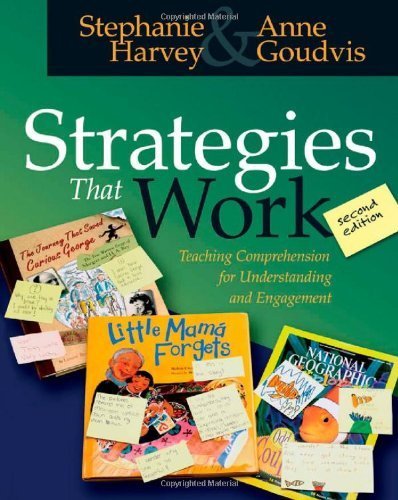
Strategies That Work: Teaching Comprehension for Understanding and Engagement
Stephanie Harvey and Anne Goudvis
4.2
Since its publication in 2000, Strategies That Work has become an indispensable resource for teachers who want to explicitly teach thinking strategies so that students become engaged, thoughtful, independent readers. In this revised and expanded edition, Stephanie and Anne have added twenty completely new comprehension lessons, extending the scope of the book and exploring the central role that activating background knowledge plays in understanding. Another major addition is the inclusion of a section on content literacy which describes how to apply comprehension strategies flexibly across the curriculum. The new edition is organized around four sections:
Part I highlights what comprehension is and how to teach it, including the principles that guide practice, a review of recent research, and a new section on assessment. A new chapter, Tools for Active Literacy: The Nuts and Bolts of Comprehension Instruction, describes ways to engage students in purposeful talk through interactive read alouds, guided discussion and written response. Part II contains lessons and practices for teaching comprehension. A new first chapter emphasizes the importance of teaching students to monitor their understanding before focusing on specific strategies. Five lessons on monitoring provide a sound basis for launching comprehension instruction. At the end of each strategy chapter, the authors outline learning goals and ways to assess students' thinking, sharing examples of student work, and offering suggestions for differentiating instruction. Part III, Comprehension Across the Curriculum is new. Comprehension strategies are essential for content-area reading, where information can be challenging, and presented in unfamiliar formats. This section includes chapters on social studies and science reading, topic study research, textbook reading and the genre of test reading. Part IV shows that kids need books they can sink their teeth into and the updated appendix section recommends a rich diet of fiction and nonfiction, short text, kid's magazines, websites and journals that will assist teachers as they plan and design comprehension instructionThrough its focus on instruction that is responsive to kids' interests and learning needs, the first edition of Strategies That Work helped transform comprehension instruction for teachers across the country. For them, this new edition will be a welcome extension of that work. Those coming to it for the first time will find a current and essential resource. When readers use these strategies, they enjoy a more complete, thoughtful reading experience. Engagement is the goal. When kids are engaged in their reading they enhance their understanding, acquire knowledge, and learn from and remember what they read. And best yet, they will want to read more!
…
Cover unavailable
45
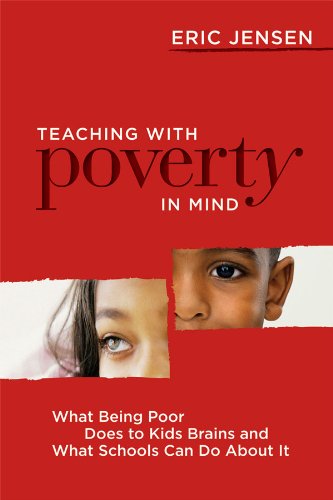
Teaching with Poverty in Mind: What Being Poor Does to Kids' Brains and What Schools Can Do about It
Eric Jensen
4.2
In Teaching with Poverty in Mind: What Being Poor Does to Kids' Brains and What Schools Can Do About It, veteran educator and brain expert Eric Jensen takes an unflinching look at how poverty hurts children, families, and communities across the United States and demonstrates how schools can improve the academic achievement and life readiness of economically disadvantaged students.
Jensen argues that although chronic exposure to poverty can result in detrimental changes to the brain, the brain's very ability to adapt from experience means that poor children can also experience emotional, social, and academic success. A brain that is susceptible to adverse environmental effects is equally susceptible to the positive effects of rich, balanced learning environments and caring relationships that build students' resilience, self-esteem, and character.
Drawing from research, experience, and real school success stories, Teaching with Poverty in Mind reveals
* What poverty is and how it affects students in school; * What drives change both at the macro level (within schools and districts) and at the micro level (inside a student's brain); * Effective strategies from those who have succeeded and ways to replicate those best practices at your own school; and * How to engage the resources necessary to make change happen.
Too often, we talk about change while maintaining a culture of excuses. We can do better. Although no magic bullet can offset the grave challenges faced daily by disadvantaged children, this timely resource shines a spotlight on what matters most, providing an inspiring and practical guide for enriching the minds and lives of all your students.
For more than two thousand years, The Art of War has stood as a cornerstone of Chinese culture-a lucid epigrammatic text that reveals as much about human psychology, politics, and economics as it does about battlefield strategy. The influence of Sun-tzu's text has grown tremendously in the West in recent years, with military leaders, politicians, and corporate executives alike finding valuable insight in these ancient words. In his crisp, accessible new translation, scholar John Minford brings this seminal work to life for modern readers.
Minford opens with a lively, learned introduction in which he explores the life and times of Sun-tzu, looks at The Art of War in the context of the turbulent Warring States period, and discusses how best to read and understand the work today. There follows Minford's translation of the core text itself in two different formats-first, the unadorned thirteen chapters of the original work and then the same text reprinted with extensive running commentary by classical Chinese scholars as well as Minford himself. The result is an opportunity for Western readers to experience Sun-tzu's work in all its intensity as it applies to many aspects of our lives.
Which books should be read by every single intelligent person on planet? … The Art of War (Sun Tsu) to learn that the act of killing fellow humans can be raised to an art. If you read all of the above works you will glean profound insight into most of what has driven the history of the western world. [source]
Cover unavailable
47
For White Folks Who Teach in the Hood... and the Rest of Y'all Too: Reality Pedagogy and Urban Education
Christopher Emdin
4.2
A New York Times Best Seller
Merging real stories with theory, research, and practice, a prominent scholar offers a new approach to teaching and learning for every stakeholder in urban education.
Drawing on his own experience of feeling undervalued and invisible in classrooms as a young man of color and merging his experiences with more than a decade of teaching and researching in urban America, award-winning educator Christopher Emdin offers a new lens on an approach to teaching and learning in urban schools. For White Folks Who Teach in the Hood...and the Rest of Y’all Too is the much-needed antidote to traditional top-down pedagogy and promises to radically reframe the landscape of urban education for the better.
He begins by taking to task the perception of urban youth of color as unteachable, and he challenges educators to embrace and respect each student’s culture and to reimagine the classroom as a site where roles are reversed and students become the experts in their own learning.
Putting forth his theory of Reality Pedagogy, Emdin provides practical tools to unleash the brilliance and eagerness of youth and educators alike—both of whom have been typecast and stymied by outdated modes of thinking about urban education. With this fresh and engaging new pedagogical vision, Emdin demonstrates the importance of creating a family structure and building communities within the classroom, using culturally relevant strategies like hip-hop music and call-and-response, and connecting the experiences of urban youth to indigenous populations globally. Merging real stories with theory, research, and practice, Emdin demonstrates how by implementing the “Seven C’s” of reality pedagogy in their own classrooms, urban youth of color benefit from truly transformative education.
For White Folks Who Teach in the Hood...and the Rest of Y'all Too has been featured in MotherJones.com, Education Week, Weekend All Things Considered with Michel Martin, Diverse: Issues in Higher Education, PBS NewsHour.com, Slate, The Washington Post, Scholastic Administrator Magazine, Essence Magazine, Salon, ColorLines/, Ebony.com, Huffington Post Education
…
Cover unavailable
48
Night
Elie Wiesel
4.2
Night is Elie Wiesel's masterpiece, a candid, horrific, and deeply poignant autobiographical account of his survival as a teenager in the Nazi death camps. This new translation by Marion Wiesel, Elie's wife and frequent translator, presents this seminal memoir in the language and spirit truest to the author's original intent. And in a substantive new preface, Elie reflects on the enduring importance of Night and his lifelong, passionate dedication to ensuring that the world never forgets man's capacity for inhumanity to man.
Night offers much more than a litany of the daily terrors, everyday perversions, and rampant sadism at Auschwitz and Buchenwald; it also el
…
Recommended by Johanna Reiss and Steven Katz.
Johanna Reiss
Elie Wiesel wrote..that he was considering running into the barbed wire once, but he didn’t because his father needed him. [source]
Steven Katz
Probably the best known memoir that has been written about the experience of the death camps. [source]
Cover unavailable
49
The Catcher in the Rye
J. D. Salinger
4.2
The hero-narrator of The Catcher in the Rye is an ancient child of sixteen, a native New Yorker named Holden Caulfield. Through circumstances that tend to preclude adult, secondhand description, he leaves his prep school in Pennsylvania and goes underground in New York City for three days. The boy himself is at once too simple and too complex for us to make any final comment about him or his story. Perhaps the safest thing we can say about Holden is that he was born in the world not just strongly attracted to beauty but, almost, hopelessly impaled on it. There are many voices in this novel: children's voices, adult voices, underground voices-but Holden's voice is the most eloquent of all. Transcending his own vernacular, yet remaining marvelously faithful to it, he issues a perfectly articulated cry of mixed pain and pleasure. However, like most lovers and clowns and poets of the higher orders, he keeps most of the pain to, and for, himself. The pleasure he gives away, or sets aside, with all his heart. It is there for the reader who can handle it to keep.
J.D. Salinger's classic novel of teenage angst and rebellion was first published in 1951. The novel was included on Time's 2005 list of the 100 best English-language novels written since 1923. It was named by Modern Library and its readers as one of the 100 best English-language novels of the 20th century. It has been frequently challenged in the court for its liberal use of profanity and portrayal of sexuality and in the 1950's and 60's it was the novel that every teenage boy wants to read.
It was such a relief from the other books I was reading at the time, which all had a quality of homework to them. [source]
Audrey Russo
So many novels; Lord of the Flies, Great Gatsby, Great Expectations; all the Nancy Drew books; Catcher in the Rye, Books written by Zora Neale Hurston; Pat Conroy – all because of the view about different people who endure despite adversity while kindling the hearts of the human spirit. [source]
Cover unavailable
50
The Reading Zone: How to Help Kids Become Skilled, Passionate, Habitual, Critical Readers
Nancie Atwell
4.2
Cover unavailable
51
The Elements of Style
William Jr. Strunk
4.2
You know the authors' names. You recognize the title. You've probably used this book yourself. And now "The Elements of Style"-the most widely read and employed English style manual-is available in a specially bound 50th Anniversary Edition that offers the title's vast audience an opportunity to own a more durable and elegantly bound edition of this time-tested classic. Offering the same content as the Fourth Edition, revised in 1999, the new casebound 50th Anniversary Edition includes a brief overview of the book's illustrious history. Used extensively by individual writers as well as high school and college students of writing, it has conveyed the principles of English style to millions of readers. This new deluxe edition makes the perfect gift for writers of any age and ability level. Fifty Years of Acclaim for "The Elements of Style," by William Strunk Jr. and E.B. White "I first read "Elements of Style" during the summer before I went off to Exeter, and I still direct my students at Harvard to their definition about the difference between 'that' and 'which.' It is the Bible for good, clear writing." -- Henry Louis Gates Jr. "For writers of all kinds and sizes the world begins and ends with Strunk and White's "Elements of Style." Only something to actually write about trumps the list of what is required to put words together in some kind of coherent way. I treasure its presence in my life and salute its fifty years of glory and accomplishment." -- Jim Lehrer ""The Elements of Style" remains an unwavering beacon of light in these grammatically troubled times. I would be lost without it." -- Ann Patchett "To the extent I know how to write clearly at all, I probably taught myself while I was teaching others -- seventh graders, in Flint, Michigan, in 1967. I taught them with a copy of Strunk & White lying in full view on my desk, sort of in the way the Gideons leave Bibles in cheap hotel rooms, as a way of saying to the hapless inhabitant: 'In case your reckless ways should strand you here, there's help.' S&W doesn't really teach you how to write, it just tantalizingly reminds you that there's an orderly way to go about it, that clarity's ever your ideal, but -- really -- it's all going to be up to you." -- Richard Ford ""The Elements of Style" never seems to go out of date. Its counsel is sound and funny, wise and unpretentious. And while its precepts are a foundation of direct communication, Strunk and White do not insist on a way of writing beyond clear expression. The rest is up to the imagination, the intelligence within." -- David Remnick, editor of "The New Yorker" "It's the toughness-the irreverence and implicit laughter-that attracted me to the little book when I was seventeen. I fell in love with Strunk & White's loathing for cant and bloviation, the ruthless cutting of crap, jargon, and extra words. For me, that skeptical directness included a tacit permission by "The Elements of Style" to break its rules on occasion: an alloy of generosity in the blade, a grace I still admire and still learn from." -- Robert Pinsky "In the quest for clarity, one can have no better guides than Strunk and White. For me, their book has been invaluable and remains essential." -- Dan Rather "Eschew surplusage! A perfect book." --Jonathan Lethem "Not until I started teaching writing and I reread "The Elements of Style" did I realize that most everything I would be teaching young writers, and everything I would be learning myself as a writer, was contained between the covers of this slim, elegant, wise little book." -- Julia Alvarez "Strunk and White seared their way into my brain long ago, and I benefit from them daily." -- Steven J. Dubner, co-author of "Freakonomics" "Since high school, I have kept a copy of this book handy. That should be unnecessary. I should, by now, have fully internalized "The Elements of Style." But sometimes I get entangled in a paragraph that refuses to be 'clear, brief, bold.' I dip back into "The Elements of Style" and am refreshed. After Scott Simon interviewed me on NPR about whether the word 'e-mail' needs a hyphen (yes, it does), some listeners, including friends of mine, wondered why I had answered in the affirmative when asked, in passing, 'Are you a drunken white man?' Those listeners misheard. 'Strunk and White man' was what Scott said." -- Roy Blount Jr. "Strunk & White--writing's good-natured law firm--still contains enough sparkling good sense to clean up the whole bloviating blogosphere." -- Thomas Mallon "I used Strunk -- that's what we called it, Strunk -- as a student at Berkeley fifty years ago. I didn't know that it was new, and that we were the first generation to be educated in "The Elements of Style." I got a firm foundation in the English language, learned to write basically, and could depict the realistic world. Then I was able to become an impressionist and expressionist." -- Maxine Hong Kingston "Strunk and White's gigantic little book must be the most readable advice on writing ever written. Side by side with Roget, Shakespeare, the Bible, and a dictionary, it's an essential for every writer's shelf." -- X.J. Kennedy" ""With what joy I welcome the fiftieth anniversary of "The Elements of Style." I am greatly indebted to this book for the invaluable help it has given me all these years." -- Horton Foote "Elegant, droll, and perfectly proportioned, and like your favorite aunt, strict but affectionate. And, like your favorite aunt, full of optimism: You can, and will, be a better writer! There has never been a better, briefer, or more loved book about the art and craft of communicating." -- Susan Orlean "This book is an essential tool. It has been of great use to me and is probably responsible for my best writing. I owe my success to Strunk and White; only the mistakes are mine." -- Ben Affleck, in "O, the Oprah Magazine" "This book is a wonderful example of teaching by example. Not only does it recommend clear and concise writing, it demonstrates it. Written in the style of a friend offering help, it is a godsend to anyone wanting to put words on paper. Thank you, Messieurs Strunk and White. And Happy Anniversary, "Elements of Style."" -- S.E. Hinton "When I began to have ... I wouldn't say arguments but conversations in my mind with Strunk and White about a few of their rules and principles, I knew I was coming into my own. If only they were still here to talk things over! No doubt their side of the exchange would be kindly put, well-informed, and wise. They'd probably help me with my side of it. What more could one want from writers reaching out to help other writers?" -- Barbara Wallraff, language columnist for "The Atlantic" "I don't believe there is a serious writer alive who doesn't have a worn copy of 'Strunk & White'on his or her bookshelf." -- Mignon Fogarty, author of "Grammar Girl's Quick and Dirty Tips ""for Better Writing" "This little book has inspired hundreds of thousands of people to write better -- partly by precept and partly by example. It continues to influence more writers than any other. It's a force for good in the world." -- Bryan A. Garner, author of "Garner's Modern American Usage" "I can think of no better guide to good writing, and I always think of this little classic with a warm heart. More importantly, I revisit its pages often. It's the one essential book on writing." -- Jay Parini, author of "Why Poetry Matters" "Clarity and simplicity have always been the goals, and this book shows the way. It has always been a lighthouse in the dark and stormy night of student prose, of all of our prose." -- Ron Carlson "The only rules you are ever going to get from me are all in Strunk and White." --Ursula K. Le Guin, from "Steering the Craft " "["The Elements of Style "is] a book to which I return from time to time, the way I periodically reread Shakespeare. I always discover something new, settle a question that has been puzzling me, or learn a principle of usage that I have been pretending to know, a pretense that has resulted in inconsistency and in the sort of errors from which I can only pray some saintly copy editor will save me." -- Francine Prose, from "Reading"" Like A Writer" ..".still a little book, small enough and important enough to carry in your pocket, as I carry mine." -- Charles Osgood "Almost every writer has a Strunk and White story. One journalism professor spends the first two weeks of school forcing his students to memorize the book. A top editor at a major paper buys copies at yard sales to distribute to her writers and interns. It has even caused love affairs. . . . Could its greatness be any more clear?" -- Jesse Sheidlower, American Editor of the "Oxford"" English Dictionary," on NPR" ""If the English language is one of the finest homes ever devised for the human spirit, "Elements" is the best guided house tour we've got." --David Gelernter, "The Wall Street Journal" ..".Should be the daily companion of anyone who writes for a living and, for that matter, anyone who writes at all." "--"Jonathan Yardley, " Greensboro (N.C.) Daily News" "No book in shorter space, with fewer words, will help any writer more than this persistent little volume." -- Herbert A. Kenny, "The Boston Globe" "Buy it, study it, enjoy it. It's as timeless as a book can be in our age of volubility." -- Charles Poore, "The New York Times" "White is one of the best stylists and most lucid minds in this country. What he says and his way of saying it are equally rewarding." "-- "Edmund Fuller, "The Wall Street Journal ""If you have any young friends who aspire to become writers, the second greatest favor you can do them is to present them with copies of "The Elements of Style." The first greatest, of course, is to shoot them now, while they're happy." -- Dorothy Parker, "Esquire"
…
Recommended by Tobi Lütke, Alina Varlanuta, Ann Handley, and 3 others.
Tobi Lütke
Founder & CEO/Shopify
My most frequently gifted book is this book because I like good writing. [source]
Alina Varlanuta
My professional path – copywriting – somehow intertwines with my unprofessional (hahaha) path – writing so I would recommend reading literature for both. Somehow reading and writing are two ways of doing the same thing: storytelling (even when you read you tell yourself a story in your own voice, bringing your personal emotion and empathy to the story you’re reading). The only difference is that when I’m reading, panic is far away from me, in a safe place. Nevertheless, the words below helped me rewrite and think twice before adding an exclamation point: The Elements of Style. [source]
Bill Nye
This is my guide. I accept that I’ll never write anything as good as the introductory essay by the author. It’s brilliant. [source]
Cover unavailable
52
Notice and Note: Strategies for Close Reading
Kylene Beers and Robert E Probst
4.2
Beers and Probst offer insights into how to create text dependent questioning in assisting students to develop greater reading comprehension skills.
Cover unavailable
53
The First Six Weeks of School
Responsive Classroom
4.2
Watch children's learning blossom all year long when you lay the groundwork with the help of this classic, comprehensive guidebook for K6 teachers. Day by day and week by week, The First Six Weeks of School shows you how to set students up for a year of engaged and productive learning by: using positive teacher language to establish high academic and behavioral expectations; getting students excited about schoolwork by offering engaging academics; and teaching the classroom and academic routines that enable a collaborative learning community to thrive.
…
Cover unavailable
54
I Read It, but I Don't Get It: Comprehension Strategies for Adolescent Readers
Cris Tovani
4.1
I Read It, but I Don't Get It is a practical, engaging account of how teachers can help adolescents develop new reading comprehension skills. Cris Tovani is an accomplished teacher and staff developer who writes with verve and humor about the challenges of working with students at all levels of achievement—from those who have mastered the art of "fake reading" to college-bound juniors and seniors who struggle with the different demands of content-area textbooks and novels.
Enter Cris' classroom, a place where students are continually learning new strategies for tackling difficult text. You will be taken step-by-step through practical, theory-based reading instruction that can be adapted for use in any subject area. The book features:
anecdotes in each chapter about real kids with real universal problems. You will identify with these adolescents and will see how these problems can be solved; a thoughtful explanation of current theories of comprehension instruction and how they might be adapted for use with adolescents; a What Works section in each of the last seven chapters that offers simple ideas you can immediately employ in your classroom. The suggestions can be used in a variety of content areas and grade levels(6-12); teaching tips and ideas that benefit struggling readers as well as proficient and advanced readers; appendixes with reproducible materials that you can use in your classroom, including coding sheets, double entry diaries, and comprehension constructors. In a time when students need increasingly sophisticated reading skills, this book will provide support for teachers who want to incorporate comprehension instruction into their daily lesson plans without sacrificing content knowledge.
…
Cover unavailable
55
Culturally Responsive Teaching and the Brain: Promoting Authentic Engagement and Rigor Among Culturally and Linguistically Diverse Students
Zaretta L. (Lynn) Hammond
4.1
A bold, brain-based teaching approach to culturally responsive instruction
The achievement gap remains a stubborn problem for educators of culturally and linguistically diverse students. With the introduction of the rigorous Common Core State Standards, diverse classrooms need a proven framework for optimizing student engagement and facilitating deeper learning
Culturally responsive pedagogy has shown great promise in meeting this need, but many educators still struggle with its implementation. In this book, Zaretta Hammond draws on cutting-edge neuroscience research to offer an innovative approach for designing and implementing brain-compatible culturally responsive instruction.
The book includes: *Information on how one’s culture programs the brain to process data and affects learning relationships *Ten “key moves” to build students’ learner operating systems and prepare them to become independent learners *Prompts for action and valuable self-reflection
With a firm understanding of these techniques and principles, teachers and instructional leaders will confidently reap the benefits of culturally responsive instruction.
…
Cover unavailable
56
Mechanically Inclined: Building Grammar, Usage, and Style into Writer's Workshop
Jeff Anderson, Vicki Spandel
4.1
Cover unavailable
57
The CAFE Book: Engaging All Students in Daily Literacy Assessment and Instruction
Gail Boushey, Joan Moser
4.1
All readers of any age need instruction and support that helps them become more independent and self-reflective in their work. – Gail Boushey and Joan Moser
In The CAFE Book, Gail Boushey and Joan Moser present a practical, simple way to integrate assessment into daily reading and classroom discussion. The CAFE system, based on research into the habits of proficient readers, is an acronym for Comprehension, Accuracy, Fluency, and Expanding vocabulary. The system includes goal-setting with students in individual conferences, posting of goals on a whole-class board, developing small-group instruction based on clusters of students with similar goals, and targeting whole-class instruction based on emerging student needs.
Gail and Joan developed the CAFE system to support teachers as they: · organize assessment data so it truly informs instruction; · track each child's strengths and goals, thereby maximizing time with him or her; · create flexible groups of students, all focused on a specific reading strategy; and · help students remember and retrieve the reading strategies they learned.
The CAFE system does not require expensive materials, complicated training, or complete changes to current classroom literacy approaches. Rather, it provides a structure for conferring with students, a language for talking about reading development, and a system for tracking growth and fostering student independence. The CAFE system’s built-in flexibility allows teachers to tailor the system to reflect the needs of their students and their state’s standards. And it’s a perfect complement to The Daily Five, “The Sisters” influential first book, which lays out a structure for keeping all students engaged in productive literacy work for every hour of every classroom day.
…
Cover unavailable
58
The Giver (The Giver, #1)
Lois Lowry
4.1
Twelve-year-old Jonas lives in a seemingly ideal world. Not until he is given his life assignment as the Receiver does he begin to understand the dark secrets behind this fragile community.
Cover unavailable
59
Why Are All the Black Kids Sitting Together in the Cafeteria?: And Other Conversations About Race
Beverly Daniel Tatum
4.1
The classic, bestselling book on the psychology of racism-now fully revised and updated
Walk into any racially mixed high school and you will see Black, White, and Latino youth clustered in their own groups. Is this self-segregation a problem to address or a coping strategy? Beverly Daniel Tatum, a renowned authority on the psychology of racism, argues that straight talk about our racial identities is essential if we are serious about enabling communication across racial and ethnic divides. These topics have only become more urgent as the national conversation about race is increasingly acrimonious. This fully revised edition is essential reading for anyone seeking to understand the dynamics of race in America.
"An unusually sensitive work about the racial barriers that still divide us in so many areas of life."-Jonathan Kozol
…
Recommended by Denise Morris Kipnis.
Denise Morris Kipnis
I was serving on the board of a prestigious and exclusive school when I first read this. As part of the school’s commitment to inclusion, every group, including the board, went through diversity training. Our consultant, Glenn Singleton of Pacific Education Group, never let us forget why we were there: that improving outcomes for all our students was a business imperative. As a result of this experience, I blended organizational development and diversity and inclusion for my graduate thesis, and this is still the bedrock of my consulting practice. [source]
Cover unavailable
60
Understanding by Design
Grant Wiggins, Jay McTighe
4.1
What is understanding and how does it differ from knowledge? How can we determine the big ideas worth understanding? Why is understanding an important teaching goal, and how do we know when students have attained it? How can we create a rigorous and engaging curriculum that focuses on understanding and leads to improved student performance in today s high-stakes, standards-based environment?
Authors Grant Wiggins and Jay McTighe answer these and many other questions in this second edition of Understanding by Design. Drawing on feedback from thousands of educators around the world who have used the UbD framework since its introduction in 1998, the authors have revised and expanded their original work to guide educators across the K16 spectrum in the design of curriculum, assessment, and instruction. With an improved UbD Template at its core, the book explains the rationale of backward design and explores in greater depth the meaning of such key ideas as essential questions and transfer tasks. Readers will learn why the familiar coverage- and activity-based approaches to curriculum design fall short, and how a focus on the six facets of understanding can enrich student learning. With an expanded array of practical strategies, tools, and examples from all subject areas, the book demonstrates how the research-based principles of Understanding by Design apply to district frameworks as well as to individual units of curriculum.
Combining provocative ideas, thoughtful analysis, and tested approaches, Understanding by Design, Expanded 2nd Edition, offers teacher-designers a clear path to the creation of curriculum that ensures better learning and a more stimulating experience for students and teachers alike.
…
Recommended by Michelle Rhee.
Michelle Rhee
Understanding by Design is an incredibly influential book. Its premise is that you have to start curriculum design with an end in mind. You figure out what your goal is first and plan backwards from there, building your curriculum around what you want to achieve. It sounds very simple but for a long time people weren’t doing that. They were covering units or textbooks without clear priorities or purposes in mind. Backwards design helps teachers to focus on the endgame and hold themselves to account for meeting their goals. [source]
Cover unavailable
61
Bird By Bird: Some Instructions on Writing and Life
Anne Lamott
4.1
Thirty years ago my older brother, who was ten years old at the time, was trying to get a report on birds written that he'd had three months to write. It was due the next day. We were out at our family cabin in Bolinas, and he was at the kitchen table close to tears, surrounded by binder paper and pencils and unopened books on birds, immobilized by the hugeness of the task ahead. Then my father sat down beside him, put his arm around my brother's shoulder, and said, 'Bird by bird, buddy. Just take it bird by bird.'" "Superb writing advice... hilarious, helpful and provocative." -- "New York Times Book Review."
"A warm, generous and hilarious guide through the writer's world and its treacherous swamps." -- "Los Angeles Times."
"A gift to all of us mortals who write or ever wanted to write... sidesplittingly funny, patiently wise and alternately cranky and kind -- a reveille to get off our duffs and start writing "now," while we still can." -- "Seattle Times.
Bird by Bird is one of my absolute favorite books, and I gift it to everybody, which I should probably also give to startup founders, quite frankly. A lot of the lessons are the same. But you can get to your destination, even though you can only see 20 feet in front of you. [source]
It was wonderful to read these two provocative books of essays by two incredibly wise and compassionate women. … Anne Lamott’s book is ostensibly about the art of writing, but really it too is about life and how to tackle the problems, temptations and opportunities life throws at us. Both will make you think and both made me a better person this year. [source]
Cover unavailable
62
Teaching Adolescent Writers
Kelly Gallagher
4.1
In an increasingly demanding world of literacy, it has become critical that students know how to write effectively. From the requirements of standardized tests to those of the wired workplace, the ability to write well, once a luxury, has become a necessity. Many students are leaving school without the necessary writing practice and skills needed to compete in a complex and fast-moving Information Age. Unless we teach them how to run with it, they are in danger of being run over by a stampede—a literacy stampede.
In Teaching Adolescent Writers, Kelly Gallagher, author of Reading Reasons and Deeper Reading, shows how students can be taught to write effectively. Kelly shares a number of classroom-tested strategies that enable teachers to:understand the importance of teaching writing;motivate young writers;see the importance modeling plays in building young writers (modeling from both the teacher and from real-world text);understand how providing choice elevates adolescent writing (and how to allow for choice within a rigorous curriculum);help students recognize the importance of purpose and audience;assess essays in ways that drive better writing performance.
Infused with humor and illuminating anecdotes, Kelly draws on his classroom experiences and work as co-director of a regional writing project to offer teachers both practical ways to incorporate writing instruction into their day and compelling reasons to do so.
What does it mean when a fictional hero takes a journey? Shares a meal? Gets drenched in a sudden rain shower? Often, there is much more going on in a novel or poem than is readily visible on the surface -- a symbol, maybe, that remains elusive, or an unexpected twist on a character -- and there's that sneaking suspicion that the deeper meaning of a literary text keeps escaping you.
In this practical and amusing guide to literature, Thomas C. Foster shows how easy and gratifying it is to unlock those hidden truths, and to discover a world where a road leads to a quest; a shared meal may signify a communion; and rain, whether cleansing or destructive, is never just rain. Ranging from major themes to literary models, narrative devices, and form, How to Read Literature Like a Professor is the perfect companion for making your reading experience more enriching, satisfying, and fun.
Do your students often struggle with difficult novels and other challenging texts? Do they think one reading of a work is more than enough? Do they primarily comprehend at a surface-level, and are they frequently unwilling or unable to discover the deeper meaning found in multi-layered works? Do you feel that you are doing more work teaching the novel than they are reading it?
Building on twenty years of teaching language arts, Kelly Gallagher, author of Reading Reasons, shows how students can be taught to successfully read a broad range of challenging and difficult texts with deeper levels of comprehension. In Deeper Reading, Kelly shares effective, classroom-tested strategies that enable your students to:accept the challenge of reading difficult books;move beyond a "first draft" understanding of the text into deeper levels of reading; consciously monitor their comprehension as they read;employ effective fix-it strategies when their comprehension begins to falter;use meaningful collaboration to achieve deeper understanding of texts;think metaphorically to deepen their reading comprehension;reach deeper levels of reflection by understanding the relevance the book holds for themselves and their peers;use critical thinking skills to analyze real-world issues.
Kelly also provides guidance on effective lesson planning that incorporates strategies for deeper reading.
Funny, poignant, and packed with practical ideas that work in real classrooms, Deeper Reading is a valuable resource for any teacher whose students need new tools to uncover the riches found in complex texts.
…
Cover unavailable
65
See Me After Class: Advice for Teachers by Teachers
Roxanna Elden
4.1
The Most Dog-Eared "Teacher's Edition" You'll Have in Your Classroom
Teaching is tough. And teachers, like the rest of the population, aren't perfect. Yet good teaching happens, and great teachers continue to inspire and educate generations of students. See Me After Class helps those great teachers of the future to survive the classroom long enough to become great.
Fueled by hundreds of hilarious--and sometimes shocking--tales from the teachers who lived them, Elden provides tips and strategies that deal head-on with the challenges that aren't covered in new-teacher training. Lessons can go wrong. Parents may yell at you. Sunday evenings will sometimes be accompanied by the dreaded countdown to Monday morning. As a veteran teacher, Elden offers funny, practical, and honest advice, to help teachers walk through the doors of their classrooms day after day with clarity, confidence...and sanity!
"You know how you've always thought that if you were a teacher you'd go insane? Well, this very funny book proves that you definitely would. But in a good way."--Dave Barry, Pulitzer Prize winning humor writer
"A useful, empathetic guide to weathering the first-year lumps...a frothy, satisfying Guinness for the teacher's soul."--Dan Brown, NBCT, Director of the Future Educators Association, and author of The Great Expectations School
"See Me After Class is a must-have book for any teacher's bookshelf. On second thought, you'll probably want to keep it on your classroom desk since you'll use it so much!"--Larry Ferlazzo, teacher and author of Helping Students Motivate Themselves
"This is the kind of no-nonsense straight talk that teachers are starved for, but too rarely get...Roxanna Elden tells it like it is, with a heavy dose of practicality, a dash of cynicism, a raft of constructive suggestions, and plenty of wry humor."--Rick Hess, Director of Education Policy Studies at AEI, author of Education Week blog, "Rich Hess Straight Up"
Immensely helpful and illuminating to any aspiring writer, Stephen King’s critically lauded, classic bestseller shares the experiences, habits, and convictions that have shaped him and his work.
"Long live the King" hailed Entertainment Weekly upon publication of Stephen King’s On Writing. Part memoir, part master class by one of the bestselling authors of all time, this superb volume is a revealing and practical view of the writer’s craft, comprising the basic tools of the trade every writer must have. King’s advice is grounded in his vivid memories from childhood through his emergence as a writer, from his struggling early career to his widely reported, near-fatal accident in 1999—and how the inextricable link between writing and living spurred his recovery. Brilliantly structured, friendly and inspiring, On Writing will empower and entertain everyone who reads it—fans, writers, and anyone who loves a great story well told.
I read a bunch of books on writing before I wrote my first book and the two that stuck with me were Stephen King’s book and “On Writing Well” by Zinsser (which is a bit on the technical side). [source]
Alina Varlanuta
My professional path – copywriting – somehow intertwines with my unprofessional (hahaha) path – writing so I would recommend reading literature for both. Somehow reading and writing are two ways of doing the same thing: storytelling (even when you read you tell yourself a story in your own voice, bringing your personal emotion and empathy to the story you’re reading). The only difference is that when I’m reading, panic is far away from me, in a safe place. Nevertheless, the words below helped me rewrite and think twice before adding an exclamation point: On Writing by Stephen King. [source]
Andrew Cowan
Yes. It is a surprise to a lot of people that this book is so widely read on university campuses and so widely recommended by teachers of writing. Students love it. It’s bracing: there’s no nonsense. He says somewhere in the foreword or preface that it is a short book because most books are filled with bullshit and he is determined not to offer bullshit but to tell it like it is. [source]
Cover unavailable
67
The Outsiders
S. E. Hinton
4.1
Librarian note: See this edition record for the Laurel-Leaf Books/Dell edition that may have been published with ISBN 014240733X.
No one ever said life was easy. But Ponyboy is pretty sure that he's got things figured out. He knows that he can count on his brothers, Darry and Sodapop. And he knows that he can count on his friends - true friends who would do anything for him, like Johnny and Two-Bit. And when it comes to the beating up on "greasers" like him and his friends - he knows that he can count on them for trouble. But one night someone takes things too far, and Ponyboy's world is turned upside down...
~from inside flap
…
Cover unavailable
68
Reading with Meaning: Teaching Comprehension in the Primary Grades
Debbie Miller
4.1
If you have ever wondered how to teach comprehension strategies to primary-age children, read on.
First, imagine a primary-grade classroom where all the children are engaged and motivated; where the buzz of excited, emerging readers fills the air; where simultaneously words are sounded out and connections are made between the books of their choice and the experiences of their lives. Then, open these pages.
Welcome to Debbie Miller's real classroom where real students are learning to love to read, to write, and are together creating a collaborative and caring environment. In this book, Debbie focuses on how best to teach children strategies for comprehending text. She leads the reader through the course of a year showing how her students learn to become thoughtful, independent, and strategic readers. Through explicit instruction, modeling, classroom discussion, and, most important, by gradually releasing responsibility to her students, Debbie provides a model for creating a climate and culture of thinking and learning.
Here you will learn:
techniques for modeling thinking; specific examples of modeled strategy lessons for inferring, asking questions, making connections, determining importance in text, creating mental images, and synthesizing information; how to help children make their thinking visible through oral, written, artistic, and dramatic responses to literature; how to successfully develop book clubs as a way for children to share their thinking.
Reading with Meaning shows you how to bring your imagined classroom to life. You will emerge with new tools for teaching comprehension strategies and a firm appreciation that a rigorous classroom can also be nurturing and joyful.
…
Cover unavailable
69
Choice Words: How Our Language Affects Children's Learning
Peter H. Johnston
4.1
In productive classrooms, teachers don't just teach children skills: they build emotionally and relationally healthy learning communities. Teachers create intellectual environments that produce not only technically competent students, but also caring, secure, actively literate human beings.
Choice Words shows how teachers accomplish this using their most powerful teaching tool: language. Throughout, Peter Johnston provides examples of apparently ordinary words, phrases, and uses of language that are pivotal in the orchestration of the classroom. Grounded in a study by accomplished literacy teachers, the book demonstrates how the things we say (and don't say) have surprising consequences for what children learn and for who they become as literate people. Through language, children learn how to become strategic thinkers, not merely learning the literacy strategies. In addition, Johnston examines the complex learning that teachers produce in classrooms that is hard to name and thus is not recognized by tests, by policy-makers, by the general public, and often by teachers themselves, yet is vitally important.
This book will be enlightening for any teacher who wishes to be more conscious of the many ways their language helps children acquire literacy skills and view the world, their peers, and themselves in new ways.
…
Cover unavailable
70
Of Mice and Men
John Steinbeck
4.1
The compelling story of two outsiders striving to find their place in an unforgiving world.
Drifters in search of work, George and his simple-minded friend Lennie have nothing in the world except each other and a dream -- a dream that one day they will have some land of their own. Eventually they find work on a ranch in California’s Salinas Valley, but their hopes are doomed as Lennie, struggling against extreme cruelty, misunderstanding and feelings of jealousy, becomes a victim of his own strength.
Tackling universal themes such as the friendship of a shared vision, and giving voice to America’s lonely and dispossessed, Of Mice and Men has proved one of Steinbeck’s most popular works, achieving success as a novel, a Broadway play and three acclaimed films.
When he got to high school, the president said, his tastes changed and he learned to enjoy classics like “Of Mice and Men” and “The Great Gatsby.” [source]
Steve Benjamins
I think all of John Steinbeck’s books are uplifting. He sees the best in humanity and it leaves me feeling warm and generous. I always love this paragraph in Of Mice and Men that hints at the tension between business and humanity: "It has always seemed strange to me that the things we admire in men, kindness and generosity, openness, honestly, understanding, and feeling are the concomitants of failure in our system. And those traits we detest, sharpness, greed, acquisitiveness, meanness, egotism, and self-interest are the traits of success. And while men admire the quality of the first they love the produce of the second." [source]
Cover unavailable
71
The English Teacher's Companion: A Complete Guide to Classroom, Curriculum, and the Profession
Jim Burke
4.1
In the four short years since publication, the first edition of "The English Teacher's Companion" quickly became the instructional bible for English teachers. Covering the entire English curriculum, from basic reading and writing to digital literacy, media literacy, and integrated instruction, it proved to be a revolutionary guide for preservice and inservice teachers alike. And with it author Jim Burke became one of the most trusted names in secondary English.
Now, in this new edition, "ETC"2, Jim incorporates his current thinking. He also shows how teachers can address standards and assessment issues while maintaining their commitment to meaningful, engaging curriculum. With all this, plus updated revisions and 40 percent completely new material, his "ETC2" is a must-have addition to every English teacher's bookshelf.
Written for the way most teachers read-on the run, in search of a particular solution-the second edition retains the original's highly structured format with a new more open design for ease of use. Chapters are clearly subdivided; lessons are presented step-by-step; and assessment is integrated throughout. Outstanding new features include: increased emphasis on theoretical foundations completely revised major curriculum areas, especially reading and writing changes that reflect the latest use of technology in the classroom updated recommendations for the latest resources improved alignment with the latest standards and assessments sample instructional sequences to show how a complete unit looks new instructional design and planning tools expanded strategies for helping English Language Learners. Discover-or rediscover-a valued colleague who challenges you to reexamine your own classroom practice. Read "ETC2," reference it, share it, but most of all USE it-as your primary source of information about classroom management, curriculum content, professional development, and more.
…
Cover unavailable
72
Making Thinking Visible: How to Promote Engagement, Understanding, and Independence for All Learners
Ron Ritchhart, Mark Church, Karin Morrison
4.1
A proven program for enhancing students' thinking and comprehension abilities Visible Thinking is a research-based approach to teaching thinking, begun at Harvard's Project Zero, that develops students' thinking dispositions, while at the same time deepening their understanding of the topics they study. Rather than a set of fixed lessons, Visible Thinking is a varied collection of practices, including thinking routines, small sets of questions or a short sequence of steps as well as the documentation of student thinking. Using this process thinking becomes visible as the students' different viewpoints are expressed, documented, discussed and reflected upon.
Helps direct student thinking and structure classroom discussion. Can be applied with students at all grade levels and in all content areas. Includes easy-to-implement classroom strategies.
The book also comes with a DVD of video clips featuring Visible Thinking in practice in different classrooms.
…
Cover unavailable
73
The Death and Life of the Great American School System: How Testing and Choice Are Undermining Education
Diane Ravitch
4.1
A passionate plea to preserve and renew public education, The Death and Life of the Great American School System is a radical change of heart from one of America’s best-known education experts.
Diane Ravitch—former assistant secretary of education and a leader in the drive to create a national curriculum—examines her career in education reform and repudiates positions that she once staunchly advocated. Drawing on over forty years of research and experience, Ravitch critiques today’s most popular ideas for restructuring schools, including privatization, standardized testing, punitive accountability, and the feckless multiplication of charter schools. She shows conclusively why the business model is not an appropriate way to improve schools. Using examples from major cities like New York, Philadelphia, Chicago, Denver, and San Diego, Ravitch makes the case that public education today is in peril.
Ravitch includes clear prescriptions for improving America’s schools: *Leave decisions about schools to educators, not politicians or businessmen *Devise a truly national curriculum that sets out what children in every grade should be learning *Expect charter schools to educate the kids who need help the most, not to compete with public schools *Pay teachers a fair wage for their work, not “merit pay” based on deeply flawed and unreliable test scores *Encourage family involvement in education from an early age The Death and Life of the Great American School System is more than just an analysis of the state of play of the American education system. It is a must-read for any stakeholder in the future of American schooling.
…
Cover unavailable
74
Teach Like a Champion 2.0: 62 Techniques That Put Students on the Path to College
Doug Lemov, Norman Atkins
4.1
One of the most influential teaching guides ever--updated!Teach Like a Champion 2.0 is a complete update to the international bestseller. This teaching guide is a must-have for new and experienced teachers alike. Over 1.3 million teachers around the world already know how the techniques in this book turn educators into classroom champions. With ideas for everything from boosting academic rigor, to improving classroom management, and inspiring student engagement, you will be able to strengthen your teaching practice right away.
The first edition of Teach Like a Champion influenced thousands of educators because author Doug Lemov's teaching strategies are simple and powerful. Now, updated techniques and tools make it even easier to put students on the path to college readiness. Here are just a few of the brand new resources available in the 2.0 edition:
Over 70 new video clips of real teachers modeling the techniques in the classroom (note: for online access of this content, please visit my.teachlikeachampion.com) A selection of never before seen techniques inspired by top teachers around the world Brand new structure emphasizing the most important techniques and step by step teaching guidelines Updated content reflecting the latest best practices from outstanding educators Organized by category and technique, the book's structure enables you to read start to finish, or dip in anywhere for the specific challenge you're seeking to address. With examples from outstanding teachers, videos, and additional, continuously updated resources at teachlikeachampion.com, you will soon be teaching like a champion. The classroom techniques you'll learn in this book can be adapted to suit any context. Find out why Teach Like a Champion is a "teaching Bible" for so many educators worldwide.
…
Cover unavailable
75
The Smartest Kids in the World: And How They Got That Way
Amanda Ripley
4.1
Through the compelling stories of three American teenagers living abroad and attending the world’s top-notch public high schools, an investigative reporter explains how these systems cultivate the “smartest” kids on the planet.
America has long compared its students to top-performing kids of other nations, but how do the world’s education superpowers look through the eyes of an American high school student? Author Amanda Ripley follows three teenagers who chose to spend one school year living and learning in Finland, South Korea, and Poland. Through their adventures, Ripley discovers startling truths about how attitudes, parenting, and rigorous teaching have revolutionized these countries’ education results.
In The Smartest Kids in the World, Ripley’s astonishing new insights reveal that top-performing countries have achieved greatness only in the past several decades; that the kids who live there are learning to think for themselves, partly through failing early and often; and that persistence, hard work, and resilience matter more to our children’s life chances than self-esteem or sports.
Ripley’s investigative work seamlessly weaves narrative and research, providing in-depth analysis and gripping details that will keep you turning the pages. Written in a clear and engaging style, The Smartest Kids in the World will enliven public as well as dinner table debates over what makes for brighter and better students.
…
Cover unavailable
76
Frankenstein
Mary Shelley
4.1
Mary Shelley began writing Frankenstein when she was only eighteen. At once a Gothic thriller, a passionate romance, and a cautionary tale about the dangers of science, Frankenstein tells the story of committed science student Victor Frankenstein. Obsessed with discovering the cause of generation and life and bestowing animation upon lifeless matter, Frankenstein assembles a human being from stolen body parts but; upon bringing it to life, he recoils in horror at the creature's hideousness. Tormented by isolation and loneliness, the once-innocent creature turns to evil and unleashes a campaign of murderous revenge against his creator, Frankenstein.
Frankenstein, an instant bestseller and an important ancestor of both the horror and science fiction genres, not only tells a terrifying story, but also raises profound, disturbing questions about the very nature of life and the place of humankind within the cosmos: What does it mean to be human? What responsibilities do we have to each other? How far can we go in tampering with Nature? In our age, filled with news of organ donation genetic engineering, and bio-terrorism, these questions are more relevant than ever.
…
Recommended by Michael Arrington, Adam Roberts, Adam Roberts, and 5 others.
Michael Arrington
Founder/TechCrunch
Shelley wrote this book as a teenager, and most of us read it in high school. Often credited as the first science fiction novel. You can read just about any political viewpoint you want into the book, and there are strong undertones that technology isn’t all good. But what I get out of it is the creativeness that can come with solitude, and how new technology can be misunderstood, even perhaps by the creator (see Twitter). Key thing to remember: Frankenstein is the name of the scientist/creator, not the Monster. Everybody forgets that. [source]
Adam Roberts
Brian Aldiss has famously argued that science fiction starts with Mary Shelley’s novel, and many people have agreed with him. [source]
Brian Aldiss has famously argued that science fiction starts with Mary Shelley’s novel, and many people have agreed with him. [source]
Cover unavailable
77
The Book Thief
Markus Zusak
4.1
It is 1939. Nazi Germany. The country is holding its breath. Death has never been busier, and will be busier still.
By her brother's graveside, Liesel's life is changed when she picks up a single object, partially hidden in the snow. It is The Gravedigger's Handbook, left behind there by accident, and it is her first act of book thievery. So begins a love affair with books and words, as Liesel, with the help of her accordian-playing foster father, learns to read. Soon she is stealing books from Nazi book-burnings, the mayor's wife's library, wherever there are books to be found.
But these are dangerous times. When Liesel's foster family hides a Jew in their basement, Liesel's world is both opened up, and closed down.
In superbly crafted writing that burns with intensity, award-winning author Markus Zusak has given us one of the most enduring stories of our time.
Most of us have no idea what’s really going on inside our heads. Yet brain scientists have uncovered details every business leader, parent, and teacher should know—like the need for physical activity to get your brain working its best.
How do we learn? What exactly do sleep and stress do to our brains? Why is multi-tasking a myth? Why is it so easy to forget—and so important to repeat new knowledge? Is it true that men and women have different brains?
In Brain Rules, Dr. John Medina, a molecular biologist, shares his lifelong interest in how the brain sciences might influence the way we teach our children and the way we work. In each chapter, he describes a brain rule—what scientists know for sure about how our brains work—and then offers transformative ideas for our daily lives.
Medina’s fascinating stories and infectious sense of humor breathe life into brain science. You’ll learn why Michael Jordan was no good at baseball. You’ll peer over a surgeon’s shoulder as he proves that most of us have a Jennifer Aniston neuron. You’ll meet a boy who has an amazing memory for music but can’t tie his own shoes.
You will discover how:
Every brain is wired differently Exercise improves cognition We are designed to never stop learning and exploring Memories are volatile Sleep is powerfully linked with the ability to learn Vision trumps all of the other senses Stress changes the way we learn
In the end, you’ll understand how your brain really works—and how to get the most out of it.
Discusses how to keep your brain healthy. [source]
Dmitry Dragilev
There’s a book called Brain Rules, also a great book, by John Medina, sort of like how your brain works. [source]
Cover unavailable
80
Write Beside Them: Risk, Voice, and Clarity in High School Writing
Penny Kittle
4.0
Please join us in congratulating Penny Kittle for her 2009 NCTE Britton Award for Write Beside Them
"This book is about teaching writing and the gritty particulars of teaching adolescents. But it is also the planning, the thinking, the writing, the journey: all I've been putting into my teaching for the last two decades. This is the book I wanted when I was first given ninth graders and a list of novels to teach. This is a book of vision and hope and joy, but it is also a book of genre units and minilessons and actual conferences with students." -Penny Kittle What makes the single biggest difference to student writers? When the invisible machinery of your writing processes is made visible to them. "Write Beside Them "shows you how to do it. It's the comprehensive book and DVD that English/language arts teachers need to ensure that teens improve their writing. Across genres, Penny Kittle presents a flexible framework for instruction, the theory and experience to back it up, and detailed teaching information to help you implement it right away. Each section of "Write Beside Them "describes a specific element of Kittle's workshop:
Daily writing practice: writer's notebooks and quick writes Instructional frameworks: minilessons, organization, conferring, and sharing drafts Genre work: narrative, persuasion, and writing in multiple genres Skills work: grammar, punctuation, and style Assessment: evaluation, feedback, portfolios, and grading. All along the way, Kittle demonstrates minilessons that respond to students' immediate needs, and her Student Focus sections profile and spotlight how individual writers grew and changed over the course of her workshop. In addition, "Write Beside Them" provides a study guide, reproducibles, writing samples from Penny and her students, suggestions for nurturing your own writing life, and a helpful FAQ. Best of all, the accompanying DVD takes you right inside Penny's classroom. Its video clips explicitly model how to make the process of writing accessible to all kids. Penny Kittle's active coaching and can-do attitude alone will energize your teaching and inspire you to write with your students. But her strategies, expert advice, and compelling in-class video footage will help you turn inspiration into great teaching. Read "Write Beside Them "and discover that the most important influence for all young writers is their teacher. Write Beside Them debuts as the field's most comprehensive, contemporary, and practical book on high school writing. Kittle not only tells how a skillful writing teacher operates, she shows you on the accompanying DVD, with clips of kids at work in every stage of a writing workshop. And all this glorious teaching happens with real, sometimes struggling kids who remind us of our own classrooms and students. Write Beside Them "is the whole package." -Harvey Daniels Author of "Content-Area Writing" and "Subjects Matter" Click here to view a sample video from the DVD.
…
Cover unavailable
81
Fahrenheit 451
Ray Bradbury
4.0
Guy Montag is a fireman. In his world, where television rules and literature is on the brink of extinction, firemen start fires rather than put them out. His job is to destroy the most illegal of commodities, the printed book, along with the houses in which they are hidden.
Montag never questions the destruction and ruin his actions produce, returning each day to his bland life and wife, Mildred, who spends all day with her television 'family'. But then he meets an eccentric young neighbor, Clarisse, who introduces him to a past where people did not live in fear and to a present where one sees the world through the ideas in books instead of the mindless chatter of television.
When Mildred attempts suicide and Clarisse suddenly disappears, Montag begins to question everything he has ever known.
This classic work on state censorship remains as relevant in today’s world of digital delights as it was when published in the black-and-white world of 1953. In a futuristic American city, firefighter Guy Montag does not put out blazes; instead, he extinguishes knowledge and promotes ignorance by conducting state decreed book burnings. After an elderly woman chooses a fiery death with her books rather than a life without the written word, he begins questioning not only his profession, but also a society that allows itself to be lulled into complacency by constant exposure to state-controlled, mind-numbing television shows. If you wonder why some people take censorship so seriously, this book will give you the answer. It’s also a fantastically inspiring story of a one-versus-a-million fight that’s worth fighting. Who knows when your turn will come? [source]
I’m not sure what compelled me to pick Fahrenheit 451 back up but I’m so glad I did because I was able to see the book in a very different context. Bradbury’s message (made explicit in his 50th Anniversary Afterword) is much less a warning against government control and much more about a road to hell paved by people attempting to rid the world of offensive speech and conflicting ideas. In a world of microaggressions and outrage porn, this is an important idea to see in such a timeless work of fiction. [source]
Cover unavailable
82
32 Third Graders and One Class Bunny: Life Lessons from Teaching
Phillip Done
4.0
Phillip Done fixes staplers that won't staple, zippers that won't zip, and pokes pins in the caps of glue bottles that will not pour. He has sung "Happy Birthday" 657 times. A witness to the joys of discovery, Done inspires readers with the everyday adventures and milestones of his 32 third graders in this irresistible collection of bite-sized essays. From the nervous first day of school to the hectic Halloween parade to the disastrous spring musical, Done connects what happens in his classroom to the universal truths that touch us all. He reminds us of the delight of learning something for the first time and of the value of making a difference. 32 Third Graders and One Class Bunny is for anyone who has ever taught children -- or been to third grade. It is a testament to the kids who uplift us -- and the teachers we will never forget. With just the right mix of humor and wisdom, Done reveals the enduring promise of elementary school as a powerful antidote to the cynicism of our times.
…
Cover unavailable
83
The Hunger Games (The Hunger Games, #1)
Suzanne Collins
4.0
WINNING MEANS FAME AND FORTUNE. LOSING MEANS CERTAIN DEATH. THE HUNGER GAMES HAVE BEGUN. . . .
In the ruins of a place once known as North America lies the nation of Panem, a shining Capitol surrounded by twelve outlying districts. The Capitol is harsh and cruel and keeps the districts in line by forcing them all to send one boy and once girl between the ages of twelve and eighteen to participate in the annual Hunger Games, a fight to the death on live TV.
Sixteen-year-old Katniss Everdeen regards it as a death sentence when she steps forward to take her sister's place in the Games. But Katniss has been close to dead before—and survival, for her, is second nature. Without really meaning to, she becomes a contender. But if she is to win, she will have to start making choices that weight survival against humanity and life against love.
A brutal, exciting, action-based sci-fi novel. Hugely popular and excellent fun. [source]
Cover unavailable
84
How Learning Works: Seven Research-Based Principles for Smart Teaching
Susan A. Ambrose, Michael W. Bridges, et al.
4.0
Praise for How Learning Works "How Learning Works is the perfect title for this excellent book. Drawing upon new research in psychology, education, and cognitive science, the authors have demystified a complex topic into clear explanations of seven powerful learning principles. Full of great ideas and practical suggestions, all based on solid research evidence, this book is essential reading for instructors at all levels who wish to improve their students' learning." --Barbara Gross Davis, assistant vice chancellor for educational development, University of California, Berkeley, and author, Tools for Teaching
"This book is a must-read for every instructor, new or experienced. Although I have been teaching for almost thirty years, as I read this book I found myself resonating with many of its ideas, and I discovered new ways of thinking about teaching." --Eugenia T. Paulus, professor of chemistry, North Hennepin Community College, and 2008 U.S. Community Colleges Professor of the Year from The Carnegie Foundation for the Advancement of Teaching and the Council for Advancement and Support of Education
"Thank you Carnegie Mellon for making accessible what has previously been inaccessible to those of us who are not learning scientists. Your focus on the essence of learning combined with concrete examples of the daily challenges of teaching and clear tactical strategies for faculty to consider is a welcome work. I will recommend this book to all my colleagues." --Catherine M. Casserly, senior partner, The Carnegie Foundation for the Advancement of Teaching
"As you read about each of the seven basic learning principles in this book, you will find advice that is grounded in learning theory, based on research evidence, relevant to college teaching, and easy to understand. The authors have extensive knowledge and experience in applying the science of learning to college teaching, and they graciously share it with you in this organized and readable book." --From the Foreword by Richard E. Mayer, professor of psychology, University of California, Santa Barbara; coauthor, e-Learning and the Science of Instruction; and author, Multimedia Learning
…
Cover unavailable
85
Romeo and Juliet
William Shakespeare, Dr. Barbara A. Mowat, Paul Werstine Ph.D.
4.0
In Romeo and Juliet, Shakespeare creates a violent world, in which two young people fall in love. It is not simply that their families disapprove; the Montagues and the Capulets are engaged in a blood feud.
In this death-filled setting, the movement from love at first sight to the lovers’ final union in death seems almost inevitable. And yet, this play set in an extraordinary world has become the quintessential story of young love. In part because of its exquisite language, it is easy to respond as if it were about all young lovers.
…
Cover unavailable
86
Teaching to Change Lives: Seven Proven Ways to Make Your Teaching Come Alive
Howard Hendricks
4.0
One of the most effective and influential Christian teachers of this century reveals how all teachers -- from parents to Sunday school leaders, from pastors to professors -- can make the most of their priceless opportunity to inspire, to instruct, and to permanently impact lives for the kingdom of God. Based on seven proven, easy-to-grasp laws any teacher can apply, Howard Hendricks's classic teaching manual is a must-read for anyone who wants to teach with power and passion, excitement and excellence.
…
Cover unavailable
87
The Odyssey
Homer
4.0
After enduring the Trojan War, Odysseus begins the treacherous journey home to Ithaca. On the way, he faces ravenous monsters and vengeful gods. But the real battle awaits, as his kingdom is under siege by unruly suitors vying for his wife’s hand—and his son’s head. To reclaim his throne and save his family, Odysseus must rely on his wits…and help from the unpredictable gods.
Homer’s The Odyssey was composed around 700 BC. It is one of the earliest epics in existence and remains one of the most influential works of literature today.
Revised edition: Previously published as The Odyssey, this edition of The Odyssey (AmazonClassics Edition) includes editorial revisions.
…
Recommended by Caterina Fake, Ted Turner, Charlotte Higgins, and 3 others.
When I got to college, I was a classics major, and that was mainly the study of Greek - and to a lesser extent Roman - history and culture, and that fascinated me: the Iliad, the Odyssey, the Aeneid by Virgil. [source]
Charlotte Higgins
It’s a very easy read, and a completely different world from The Iliad. Whereas The Iliad depicts a militaristic and war-wrecked world, The Odyssey is like a fairytale and it’s fascinatingly complex. It’s told in flashbacks, it has time that’s extended and time that’s compressed, and it’s told from different viewpoints. [source]
Janine di Giovanni
The thing I loved about Ulysses was that he’s so in love with adventure and with love. [source]
Cover unavailable
88
The Read-Aloud Handbook
Jim Trelease
4.0
The classic million-copy bestselling handbook on reading aloud to children—revised and updated
Recommended by "Dear Abby" upon its first publication in 1982, millions of parents and educators have turned to Jim Trelease’s beloved classic for more than three decades to help countless children become avid readers through awakening their imaginations and improving their language skills. It has also been a staple in schools of education for new teachers. This updated edition of The Read-Aloud Handbook discusses the benefits, the rewards, and the importance of reading aloud to children of a new generation. Supported by delightful anecdotes as well as the latest research (including the good and bad news on digital learning), The Read-Aloud Handbook offers proven techniques and strategies for helping children discover the pleasures of reading and setting them on the road to becoming lifelong readers.
…
Recommended by Bethany S. Mandel.
Bethany S. Mandel
Also: Read Aloud Revival (all parents should check it out), this is another great book for all parents: https://t.co/632afZ2yFC, and we like Beautiful Feet Books curriculum too (lots of literature based options on world cultures, history, character etc) [source]
Cover unavailable
89
180 Days: Two Teachers and the Quest to Engage and Empower Adolescents
Kelly Gallagher
4.0
"Teaching is art-creation-and a curriculum map is only as good as the teacher who considers it, who questions it, and who revises it to meet the needs of each year's students." -Kelly Gallagher and Penny Kittle
Two teachers. Two classrooms. One school year.
180 Days represents the collaboration of two master teachers-Kelly Gallagher and Penny Kittle-over an entire school year: planning, teaching, and reflecting within their own and each other's classrooms in California and New Hampshire. Inspired by a teacher's question, "How do you fit it all in?" they identified and prioritized the daily, essential, belief-based practices that are worth spending time on. They asked, "Who will these students be as readers and writers after a year under our care?"
What we make time for matters: what we plan, how we revise our plans while teaching, and how we reflect and decide what's next. The decision-making in the moment is the most essential work of teaching, and it's the ongoing study of the adolescents in front of us that has the greatest impact on our thinking. With both the demands of time and the complexity of diverse students in mind, Kelly and Penny mapped out a year of engaging literacy practices aligned to their core beliefs about what matters most. They share their insights on managing time and tasks and offer teaching strategies for engaging students in both whole class and independent work. Video clips of Kelly and Penny teaching in each other's classrooms bring this year to life and show you what a steadfast commitment to belief-based instruction looks like in action. 180 Days. Make every moment matter. Teach fearlessly. Empower all students to live literate lives.
…
Cover unavailable
90
Things Fall Apart (The African Trilogy, #1)
Chinua Achebe
4.0
THINGS FALL APART tells two overlapping, intertwining stories, both of which center around Okonkwo, a “strong man” of an Ibo village in Nigeria. The first of these stories traces Okonkwo's fall from grace with the tribal world in which he lives, and in its classical purity of line and economical beauty it provides us with a powerful fable about the immemorial conflict between the individual and society.
The second story, which is as modern as the first is ancient, and which elevates the book to a tragic plane, concerns the clash of cultures and the destruction of Okonkwo's world through the arrival of aggressive, proselytizing European missionaries. These twin dramas are perfectly harmonized, and they are modulated by an awareness capable of encompassing at once the life of nature, human history, and the mysterious compulsions of the soul. THINGS FALL APART is the most illuminating and permanent monument we have to the modern African experience as seen from within.
…
Recommended by Barack Obama, Helon Habila, Jacqueline Novogratz, and 2 others.
As 2018 draws to a close, I’m continuing a favorite tradition of mine and sharing my year-end lists. It gives me a moment to pause and reflect on the year through the books I found most thought-provoking, inspiring, or just plain loved. It also gives me a chance to highlight talented authors – some who are household names and others who you may not have heard of before. Here’s my best of 2018 list. [source]
Helon Habila
It almost feels like a cliché to say that this is one of my favourite books. But there is no way you can escape this book. It is such a part of African literature. It is an inescapable classic. It is a brilliant feat of storytelling, the economy of it, the brevity, the imagery, the ear he has for the traditional language. [source]
Jacqueline Novogratz
The first book I read by an African author. Achebe is unflinching in his portrayal of the challenges of change, the relationships of colonialism, and power/powerlessness. [source]
Cover unavailable
91
Igniting a Passion for Reading: Successful Strategies for Building Lifetime Readers
Steven Layne
4.0
When teaching reading, American classrooms often focus exclusively on skills instruction. But how can you teach the "how" without the "why?" In his new book, Igniting a Passion for Reading, Steve Layne shows teachers how to develop readers who are not only motivated to read great books, but also love reading in its own right. Packed with practical ways to engage and inspire readers from kindergarten through high school, this book is a "must have" on every teacher's professional book shelf.
Well known for his children's books, young adult novels, and keynote speeches across the nation and around the world, Steve, aka Dr. Read, offers teachers everywhere a plan for engaging even the most reluctant reader. From read-alouds to creating reading lounges to author visits and so much more, this book will help schools create a vibrant reading culture. The book also includes reminiscences from many of today's well-known children's and young adult authors—Mem Fox, Sharon Draper, Steven Kellogg, Candace Fleming, Eric Rohman, Neal Shusterman, and Joan Bauer—about the teacher who ignited their passion for reading.
Written with humor, grace, and poignancy, Igniting a Passion for Reading will have a profound effect on the teaching of reading in our nation's schools.
…
Cover unavailable
92
Whole Brain Teaching for Challenging Kids
Chris Biffle
4.0
Join the teaching revolution that's sweeping the U.S. ... and the world! 80,000 registered members worldwide, 3,000,000 YouTube views, 10,000,000 pages of free ebooks downloaded from WholeBrainTeaching.com, one of the world's largest, free, education websites! If your rambunctious kids are driving you batty, read this book. Guffaw with delight as your class, guided by the Guff Counter, halts back talking students in their tracks! Weep with joy at the power of the Independents that turns rebel cliques against each other. Gasp in awe as you discover Mirror, the simple technique that makes every lesson magnetically engaging. Chortle with merriment as the magical Scoreboard transforms classroom management into a living video game. Whole Brain Teaching, a grass roots, education reform movement, begun in 1999 by three Southern California teachers, has attracted an astonishing following among educators across the U.S. and in 30 foreign countries. Based on cutting edge scientific research, Whole Brain Teaching recognizes that students learn the most when they are engaged in lessons that involve seeing, hearing, doing, speaking and feeling. Join the revolution! Transform your students from passive receivers of information to dynamic creators of high energy lessons. "In my 38 years in education, I have never seen a more successful classroom management system than Whole Brain Teaching. It's simple, effective and powerful. Chris Biffle and his colleagues have developed a strategy that works for all students." Dominic F. Mucci, Superintendent of Schools, Englewood Cliffs, New Jersey
…
Cover unavailable
93
Letters to a Young Teacher
Jonathan Kozol
4.0
In these affectionate letters to Francesca, a first grade teacher at an inner-city school in Boston, Jonathan Kozol vividly describes his repeated visits to her classroom while, under Francesca's likably irreverent questioning, he also reveals his own most personal stories of the years that he has spent in public schools. "Letters to a Young Teacher" reignites a numberof the controversial issues Jonathan has powerfully addressed in recent years: the mania of high-stakes testing that turns many classrooms into test-prep factories where spontaneity and critical intelligence are no longer valued, the invasion of our public schools by predatory private corporations, and the inequalities of urban schools that are once again almost as segregated as they were a century ago. But most of all, these letters are rich with the happiness of teaching children, the curiosity and jubilant excitement children bring into the classroom at an early age, and their ability to overcome their insecurities when they are in the hands of an adoring and hard-working teacher.
…
Cover unavailable
94
The Teacher Wars: A History of America's Most Embattled Profession
Dana Goldstein
4.0
In her groundbreaking history of 175 years of American education, Dana Goldstein finds answers in the past to the controversies that plague our public schools today.
Teaching is a wildly contentious profession in America, one attacked and admired in equal measure. In The Teacher Wars, a rich, lively, and unprecedented history of public school teaching, Dana Goldstein reveals that teachers have been similarly embattled for nearly two centuries. From the genteel founding of the common schools movement in the nineteenth century to the violent inner-city teacher strikes of the 1960s and '70s, from the dispatching of Northeastern women to frontier schoolhouses to the founding of Teach for America on the Princeton University campus in 1989, Goldstein shows that the same issues have continued to bedevil us: Who should teach? What should be taught? Who should be held accountable for how our children learn? She uncovers the surprising roots of hot button issues, from teacher tenure to charter schools, and finds that recent popular ideas to improve schools—instituting merit pay, evaluating teachers by student test scores, ranking and firing veteran teachers, and recruiting “elite” graduates to teach—are all approaches that have been tried in the past without producing widespread change. And she also discovers an emerging effort that stands a real chance of transforming our schools for the better: drawing on the best practices of the three million public school teachers we already have in order to improve learning throughout our nation’s classrooms. The Teacher Wars upends the conversation about American education by bringing the lessons of history to bear on the dilemmas we confront today. By asking “How did we get here?” Dana Goldstein brilliantly illuminates the path forward.
…
Cover unavailable
95
The Adventures of Huckleberry Finn
Mark Twain
4.0
Adventures of Huckleberry Finn (or, in more recent editions, The Adventures of Huckleberry Finn) is a novel by Mark Twain, first published in the United Kingdom in December 1884 and in the United States in February 1885. Commonly named among the Great American Novels, the work is among the first in major American literature to be written throughout in vernacular English, characterized by local color regionalism. It is told in the first person by Huckleberry "Huck" Finn, the narrator of two other Twain novels (Tom Sawyer Abroad and Tom Sawyer, Detective) and a friend of Tom Sawyer. It is a direct sequel to The Adventures of Tom Sawyer.
Today is World Book Day, a wonderful opportunity to address this #ChallengeRichard sent in by Mike Gonzalez of New Jersey: Make a list of your top 65 books to read in a lifetime. [source]
I enjoy nearly everything Mark Twain ever wrote, but my favorite is The Adventures of Huckleberry Finn. This novel showcases Twain at the top of his game in terms of acerbic wit, sharp societal observations and the use of regional dialects - for which he initially garnered great criticism, before the passage of time enabled critics to understand and acknowledge its authenticity. [source]
Cover unavailable
96
Mosaic of Thought: Teaching Comprehension in a Reader's Workshop
Ellin Oliver Keene, Susan Zimmermann, Donald H. Graves
4.0
How do students become thoughtful, independent readers who comprehend text at a deep level?
To find the answers, authors Keene and Zimmermann embarked on a journey into the thought processes of proficient readers - a journey through poems and essays, classrooms and workshops, humor and reflection. "Mosaic of Thought "chronicles that journey, which ultimately led the authors to elaborate on eight cognitive processes identified in comprehension research and used by successful readers. These serve as models for the strategies offered in this book - strategies intended to help children become more flexible, adaptive, independent, and engaged readers.
"Mosaic" proposes a new instructional paradigm focused on in-depth, explicit instruction in the strategies used by proficient readers. The authors take us beyond the traditional classroom into the literature based, workshop-oriented classrooms. Through vivid portraits of these remarkable environments (all participants in the Denver-based Reading Project of the Public Education & Business Coalition), we see how explicit instruction looks in dynamic, literature-rich readers' workshops. As the students connect to background knowledge, create sensory images, ask questions, draw inferences, determine what's important, synthesize ideas, and solve problems at the word and text level, they are able to construct a rich mosaic of meaning.
Straightforward and jargon-free, "Mosaic of Thought" has relevance to all literature-based classrooms, regardless of level. It offers practical tools for inservice teachers, as well as essential methods instruction for preservice teachers at both the undergraduate and graduate level. Indeed, anyone interested in literacy will benefit from the authors' challenge to rediscover the thought processes that inform our own comprehension.
…
Cover unavailable
97
The Curious Incident of the Dog in the Night-Time
Mark Haddon
4.0
Christopher John Francis Boone knows all the countries of the world and their capitals and every prime number up to 7,057. He relates well to animals but has no understanding of human emotions. He cannot stand to be touched. And he detests the color yellow.
Although gifted with a superbly logical brain, for fifteen-year-old Christopher everyday interactions and admonishments have little meaning. He lives on patterns, rules, and a diagram kept in his pocket. Then one day, a neighbor's dog, Wellington, is killed and his carefully constructive universe is threatened. Christopher sets out to solve the murder in the style of his favourite (logical) detective, Sherlock Holmes. What follows makes for a novel that is funny, poignant and fascinating in its portrayal of a person whose curse and blessing are a mind that perceives the world entirely literally.
…
Recommended by Ev Williams, Robert Muchamore, Simon Baron-Cohen, and 1 others.
Robert Muchamore
Mark Haddon wrote a spy series for eight- or nine-year-olds and then he suddenly comes out with this rather brilliant novel. Is it an adult book? Is it a kids’ book? So many people can read it and approach it. [source]
Simon Baron-Cohen
In fiction the writer has some licence to deviate from what is real – it’s a work of art, ultimately, for people’s interest and enjoyment, but I think that the character is very recognisable of many people with Asperger syndrome. I think the author has done a very good job. [source]
Vanessa Keng
I've always loved fiction - mainly crime and legal thrillers, but there's something wonderful about reading a completely different style of writing from what I'm used to. I found myself absorbed in the narrative of guilt and love in The Kite Runner, and The Curious Incident told me a story from a completely different perspective. [source]
Cover unavailable
98
The Total Money Makeover: A Proven Plan for Financial Fitness (Classic Edition)
If you will live like no one else, later you can "live" like no one else.
Build up your money muscles with America's favorite finance coach.
Okay, folks, do you want to turn those fat and flabby expenses into a well-toned budget? Do you want to transform your sad and skinny little bank account into a bulked-up cash machine? Then get with the program, people. There's one sure way to whip your finances into shape, and that's with "The Total Money Makeover: Classic Edition".
By now, you've heard all the nutty get-rich-quick schemes, the fiscal diet fads that leave you with a lot of kooky ideas but not a penny in your pocket. Hey, if you're tired of the lies and sick of the false promises, take a look at this--it's the simplest, most straightforward game plan for completely making over your money habits. And it's based on results, not pie-in-the-sky fantasies.
With "The Total Money Makeover: Classic Edition," you'll be able to: Design a sure-fire plan for paying off all debt--meaning cars, houses, everything Recognize the 10 most dangerous money myths (these will kill you) Secure a big, fat nest egg for emergencies and retirement!
…
Recommended by Eric 'Dids', Sean Si, and Vincent Pugliese.
Eric 'Dids'
Recently listened to the Audiobook "Total Money Makeover" and am amazed how much it has made a difference, arguably more so outside of finance. The motto posed in the book, "Live like nobody else so eventually you can live like nobody else." Is an amazing motto to have in life. [source]
Vincent Pugliese
Linchpin by Seth Godin, The Total Money Makeover by Dave Ramsey, and Rich Dad, Poor Dad had immediate effects on my life. [source]
Cover unavailable
99
Lost at School: Why Our Kids with Behavioral Challenges are Falling Through the Cracks and How We Can Help Them
Ross W. Greene Ph.D.
4.0
School discipline is broken. Too often, the kids who need our help the most are viewed as disrespectful, out of control, and beyond help, and are often the recipients of our most ineffective, most punitive interventions. These students—and their parents, teachers, and administrators—are frustrated and desperate for answers.
Dr. Ross W. Greene, author of the acclaimed book The Explosive Child, offers educators and parents a different framework for understanding challenging behavior. Dr. Greene’s Collaborative & Proactive Solutions (CPS) approach helps adults focus on the true factors contributing to challenging classroom behaviors, empowering educators to address these factors and create helping relationships with their most at-risk kids.
This revised and updated edition of Lost at School contains the latest refinements to Dr. Greene’s CPS model, including enhanced methods for solving problems collaboratively, improving communication, and building relationships with kids.
Dr. Greene’s lively, compelling narrative includes:
• Tools to identify the problems and lagging skills causing challenging behavior • Explicit guidance on how to radically improve interactions with challenging kids and reduce challenging episodes—along with many examples showing how it’s done • Practical guidance for successful planning and collaboration among educators, parents, and kids
Backed by years of experience and research and written with a powerful sense of hope and achievable change, Lost at School gives teachers and parents the realistic strategies and information to impact the classroom experience of every challenging kid (and their classmates).
…
Cover unavailable
100
Punished by Rewards: The Trouble with Gold Stars, Incentive Plans, A's, Praise and Other Bribes
Alfie Kohn
4.0
The basic strategy we use for raising children, teaching students, and managing workers can be summarized in six words: Do this and you'll get that. We dangle goodies (from candy bars to sales commissions) in front of people in much the same way we train the family pet. Drawing on a wealth of psychological research, Alfie Kohn points the way to a more successful strategy based on working with people instead of doing things to them. "Do rewards motivate people?" asks Kohn. "Yes. They motivate people to get rewards." Seasoned with humor and familiar examples, Punished By Rewards presents an argument unsettling to hear but impossible to dismiss.


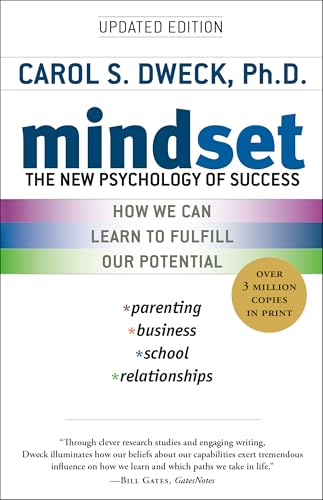 1
1