We've ranked the best studying books using expert recommendations, sales data, and millions of reader ratings. At Shortform, we know books. Our book guides are the best in the world. Learn why.
Major New York Times bestseller Winner of the National Academy of Sciences Best Book Award in 2012 Selected by the New York Times Book Review as one of the best books of 2011 A Globe and Mail Best Books of the Year 2011 Title One of The Economist's 2011 Books of the Year One of The Wall Street Journal's Best Nonfiction Books of the Year 2011 2013 Presidential Medal of Freedom Recipient
In the international bestseller, Thinking, Fast and Slow, Daniel Kahneman, the renowned psychologist and winner of the Nobel Prize in Economics, takes us on a groundbreaking tour of the mind and explains the two systems that drive the way we think. System 1 is fast, intuitive, and emotional; System 2 is slower, more deliberative, and more logical. The impact of overconfidence on corporate strategies, the difficulties of predicting what will make us happy in the future, the profound effect of cognitive biases on everything from playing the stock market to planning our next vacation—each of these can be understood only by knowing how the two systems shape our judgments and decisions. Engaging the reader in a lively conversation about how we think, Kahneman reveals where we can and cannot trust our intuitions and how we can tap into the benefits of slow thinking. He offers practical and enlightening insights into how choices are made in both our business and our personal lives—and how we can use different techniques to guard against the mental glitches that often get us into trouble. Winner of the National Academy of Sciences Best Book Award and the Los Angeles Times Book Prize and selected by The New York Times Book Review as one of the ten best books of 2011, Thinking, Fast and Slow is destined to be a classic.
A few months ago, Mr. Obama read “Thinking, Fast and Slow,” by Daniel Kahneman, about how people make decisions — quick, instinctive thinking versus slower, contemplative deliberation. For Mr. Obama, a deliberator in an instinctive business, this may be as instructive as any political science text. [source]
Captivating dive into human decision making, marred by inclusion of several/many? psychology studies that fail to replicate. Will stand as a cautionary tale? [source]
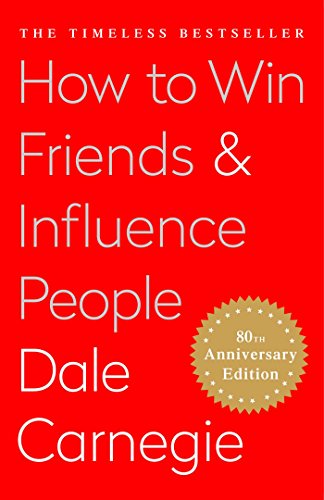
You can go after the job you want—and get it! You can take the job you have—and improve it! You can take any situation—and make it work for you!
Dale Carnegie’s rock-solid, time-tested advice has carried countless people up the ladder of success in their business and personal lives. One of the most groundbreaking and timeless bestsellers of all time, How to Win Friends & Influence People will teach you:
-Six ways to make people like you -Twelve ways to win people to your way of thinking -Nine ways to change people without arousing resentment
And much more! Achieve your maximum potential—a must-read for the twenty-first century with more than 15 million copies sold!
…
Recommended by Dave Ramsey, Daymond John, Dustin Moskovitz, and 58 others.
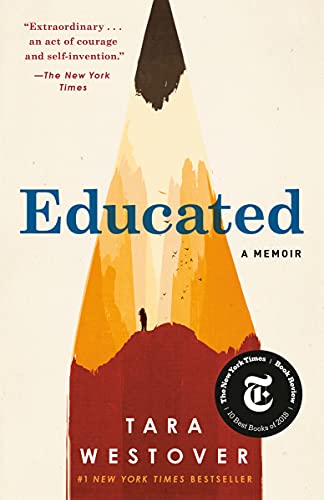
Tara Westover was 17 the first time she set foot in a classroom. Born to survivalists in the mountains of Idaho, she prepared for the end of the world by stockpiling home-canned peaches and sleeping with her "head-for-the-hills bag". In the summer she stewed herbs for her mother, a midwife and healer, and in the winter she salvaged in her father's junkyard.
Her father forbade hospitals, so Tara never saw a doctor or nurse. Gashes and concussions, even burns from explosions, were all treated at home with herbalism. The family was so isolated from mainstream society that there was no one to ensure the children received an education and no one to intervene when one of Tara's older brothers became violent.
Then, lacking any formal education, Tara began to educate herself. She taught herself enough mathematics and grammar to be admitted to Brigham Young University, where she studied history, learning for the first time about important world events like the Holocaust and the civil rights movement. Her quest for knowledge transformed her, taking her over oceans and across continents, to Harvard and to Cambridge. Only then would she wonder if she'd traveled too far, if there was still a way home.
Educated is an account of the struggle for self-invention. It is a tale of fierce family loyalty and of the grief that comes with severing the closest of ties. With the acute insight that distinguishes all great writers, Westover has crafted a universal coming-of-age story that gets to the heart of what an education is and what it offers: the perspective to see one's life through new eyes and the will to change it.
As 2018 draws to a close, I’m continuing a favorite tradition of mine and sharing my year-end lists. It gives me a moment to pause and reflect on the year through the books I found most thought-provoking, inspiring, or just plain loved. It also gives me a chance to highlight talented authors – some who are household names and others who you may not have heard of before. Here’s my best of 2018 list. [source]
Tara never went to school or visited a doctor until she left home at 17. I never thought I’d relate to a story about growing up in a Mormon survivalist household, but she’s such a good writer that she got me to reflect on my own life while reading about her extreme childhood. Melinda and I loved this memoir of a young woman whose thirst for learning was so strong that she ended up getting a Ph.D. from Cambridge University. [source]
If you read or listen to only one book this summer, this is it. Bloody brilliant! Every word, every sentence. Rarely do I go through a book with such a rollecoaster of emotion, from love to hate. Thank you for sharing @tarawestover #Educated https://t.co/GqLaqlcWMp [source]
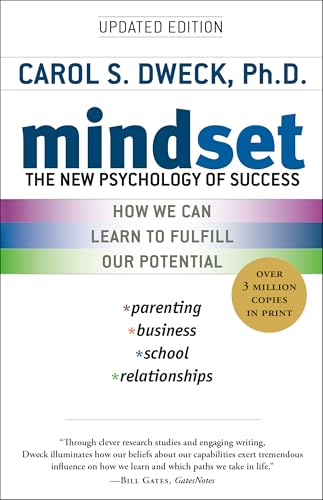
Now updated with new research — the book that has changed millions of lives.
After decades of research, world-renowned Stanford University psychologist Carol S. Dweck, Ph.D., discovered a simple but groundbreaking idea: the power of mindset. In this brilliant book, she shows how success in school, work, sports, the arts, and almost every area of human endeavor can be dramatically influenced by how we think about our talents and abilities. People with a fixed mindset — those who believe that abilities are fixed — are less likely to flourish than those with a growth mindset — those who believe that abilities can be developed. Mindset reveals how great parents, teachers, managers, and athletes can put this idea to use to foster outstanding accomplishment.
In this edition, Dweck offers new insights into her now famous and broadly embraced concept. She introduces a phenomenon she calls false growth mindset and guides people toward adopting a deeper, truer growth mindset. She also expands the mindset concept beyond the individual, applying it to the cultures of groups and organizations. With the right mindset, you can motivate those you lead, teach, and love — to transform their lives and your own.
One of the reasons I loved Mindset is because it’s solutions-oriented. In the book’s final chapter, Dweck describes the workshop she and her colleagues have developed to shift students from a fixed to a growth mindset. These workshops demonstrate that ‘just learning about the growth mindset can cause a big shift in the way people think about themselves and their lives. [source]
Without exaggeration, I’ve never met a CEO who didn’t have Mindset on their bookshelf. It resonates with people who have become successful because the belief that your abilities can grow is foundational to their achievements. [source]
Cover unavailable
5
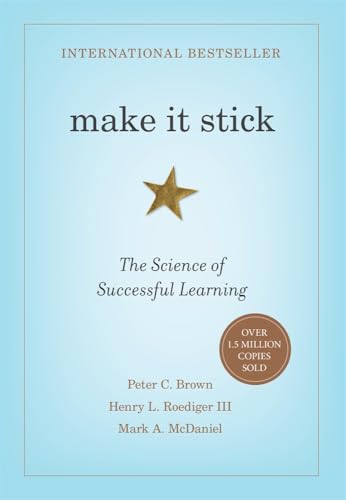
Make It Stick: The Science of Successful Learning
Peter C. Brown, Henry L. Roediger III, Mark A. McDaniel
To most of us, learning something "the hard way" implies wasted time and effort. Good teaching, we believe, should be creatively tailored to the different learning styles of students and should use strategies that make learning easier. Make It Stick turns fashionable ideas like these on their head. Drawing on recent discoveries in cognitive psychology and other disciplines, the authors offer concrete techniques for becoming more productive learners.
Memory plays a central role in our ability to carry out complex cognitive tasks, such as applying knowledge to problems never before encountered and drawing inferences from facts already known. New insights into how memory is encoded, consolidated, and later retrieved have led to a better understanding of how we learn. Grappling with the impediments that make learning challenging leads both to more complex mastery and better retention of what was learned.
Many common study habits and practice routines turn out to be counterproductive. Underlining and highlighting, rereading, cramming, and single-minded repetition of new skills create the illusion of mastery, but gains fade quickly. More complex and durable learning come from self-testing, introducing certain difficulties in practice, waiting to re-study new material until a little forgetting has set in, and interleaving the practice of one skill or topic with another. Speaking most urgently to students, teachers, trainers, and athletes, Make It Stick will appeal to all those interested in the challenge of lifelong learning and self-improvement.
If you’re trying to keep up your reading about learning, one of the best books about learning is Make It Stick: The Science of Successful Learning by Peter Brown, Henry Roediger III, and Mark McDaniel. This insightful book was co-authored by some of the most influential researchers around. The book jacket says it best: “Many common study habits and practice routines turn out to be counterproductive. Underlining and highlighting, rereading, cramming, and single-minded repetition of new skills create the illusion of mastery, but gains fade quickly. More complex and durable learning come from self-testing, introducing certain difficulties in practice, waiting to re-study new material until a little forgetting has set in, and interleaving the practice of one skill or topic with another. Speaking most urgently to students, teachers, trainers, and athletes, Make It Stick will appeal to all those interested in the challenge of lifelong learning and self-improvement. [source]
Cover unavailable
6
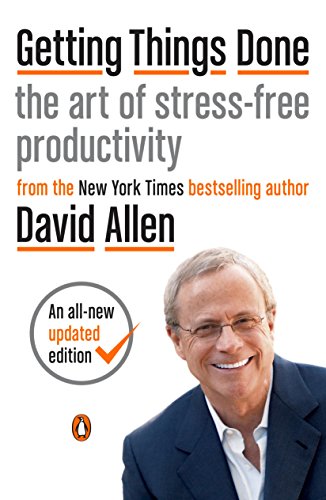
Getting Things Done: The Art of Stress-Free Productivity
"The Bible of business and personal productivity" —Lifehack
"A completely revised and updated edition of the blockbuster bestseller from 'the personal productivity guru'"—Fast Company
Since it was first published almost fifteen years ago, David Allen’s Getting Things Done has become one of the most influential business books of its era, and the ultimate book on personal organization. “GTD” is now shorthand for an entire way of approaching professional and personal tasks, and has spawned an entire culture of websites, organizational tools, seminars, and offshoots.
Allen has rewritten the book from start to finish, tweaking his classic text with important perspectives on the new workplace, and adding material that will make the book fresh and relevant for years to come. This new edition of Getting Things Done will be welcomed not only by its hundreds of thousands of existing fans but also by a whole new generation eager to adopt its proven principles.
…
Recommended by David Allen, Dustin Moskovitz, Ev Williams, and 19 others.
Getting Things Done by David Allen. He recently spoke at our Zappos all-hands meeting and gave me a signed copy of his book. [source]
Eric Rose
Chairman/Columbia University Department of Surgery
When I'm flat-out stressed about the volume and complexity of my work, I open this book and find immediate ways to gain a sense of control. That's really a critical need for decision making. David made me what I am today: headstrong and proud of it. [source]
Cover unavailable
7
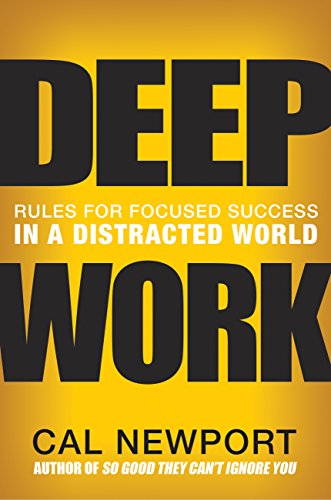
Deep Work: Rules for Focused Success in a Distracted World
One of the most valuable skills in our economy is becoming increasingly rare. If you master this skill, you'll achieve extraordinary results.
Deep work is the ability to focus without distraction on a cognitively demanding task. It's a skill that allows you to quickly master complicated information and produce better results in less time. Deep work will make you better at what you do and provide the sense of true fulfillment that comes from craftsmanship. In short, deep work is like a super power in our increasingly competitive twenty-first century economy. And yet, most people have lost the ability to go deep-spending their days instead in a frantic blur of e-mail and social media, not even realizing there's a better way.
In Deep Work, author and professor Cal Newport flips the narrative on impact in a connected age. Instead of arguing distraction is bad, he instead celebrates the power of its opposite. Dividing this book into two parts, he first makes the case that in almost any profession, cultivating a deep work ethic will produce massive benefits. He then presents a rigorous training regimen, presented as a series of four "rules," for transforming your mind and habits to support this skill.
A mix of cultural criticism and actionable advice, Deep Work takes the reader on a journey through memorable stories-from Carl Jung building a stone tower in the woods to focus his mind, to a social media pioneer buying a round-trip business class ticket to Tokyo to write a book free from distraction in the air-and no-nonsense advice, such as the claim that most serious professionals should quit social media and that you should practice being bored. Deep Work is an indispensable guide to anyone seeking focused success in a distracted world.
As automation and outsourcing reshape the workplace, what new skill do we need? The ability to do deep work. Cal Newport's exciting new book is an introduction and guide to the kind of intense concentration in a distraction-free environment that results in fast, powerful learning and performance. Think of it as calisthenics for your mind-and start your exercise program today. [source]
Marvin Liao
Partner/500 Startups
The Joy of Not Working (Zelinkski), Flash Foresight (Burrus), The Art of Worldly Wisdom (Gracian), Sapiens (Yuval), The End of Jobs (Pearson), Deep Work (Newport), Sovereign Individual (Davidson), The Fourth Economy (Davison) & The Monk & the Riddle (Komisar). Every single one of these books completely changed how I looked at everything in the world & literally pushed my life in a new direction. They were Paradigm Shifting as they say. (hate that word but it really was a Paradigm Shift for me). [source]
I've been a fan of Cal for a long time. His book So Good They Can't Ignore You is one of my favorites, but it's his new book that's probably had the biggest and most immediate impact on me. For those of you who enjoyed Tyler Cowen's Average is Over, you already know how important the ability to focus, be creative, and think at a high level is going to be in the future. This is a book that explains how to cultivate and protect that skill--the ability to do deep work. One thing I've already started doing since reading this book is recording the number of hours of deep work I do each day in my morning journal. It's a way of keeping a running tally and monitoring if I begin to get distracted or slow my pace. Anyway, great book! [source]
Cover unavailable
8
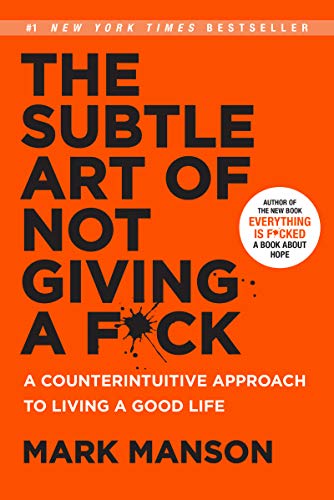
The Subtle Art of Not Giving a F*ck: A Counterintuitive Approach to Living a Good Life
In this generation-defining self-help guide, a superstar blogger cuts through the crap to show us how to stop trying to be "positive" all the time so that we can truly become better, happier people.
For decades, we’ve been told that positive thinking is the key to a happy, rich life. "Fk positivity," Mark Manson says. "Let’s be honest, shit is fked and we have to live with it." In his wildly popular Internet blog, Manson doesn’t sugarcoat or equivocate. He tells it like it is—a dose of raw, refreshing, honest truth that is sorely lacking today. The Subtle Art of Not Giving a Fk is his antidote to the coddling, let’s-all-feel-good mindset that has infected American society and spoiled a generation, rewarding them with gold medals just for showing up.
Manson makes the argument, backed both by academic research and well-timed poop jokes, that improving our lives hinges not on our ability to turn lemons into lemonade, but on learning to stomach lemons better. Human beings are flawed and limited—"not everybody can be extraordinary, there are winners and losers in society, and some of it is not fair or your fault." Manson advises us to get to know our limitations and accept them. Once we embrace our fears, faults, and uncertainties, once we stop running and avoiding and start confronting painful truths, we can begin to find the courage, perseverance, honesty, responsibility, curiosity, and forgiveness we seek.
There are only so many things we can give a fk about so we need to figure out which ones really matter, Manson makes clear. While money is nice, caring about what you do with your life is better, because true wealth is about experience. A much-needed grab-you-by-the-shoulders-and-look-you-in-the-eye moment of real-talk, filled with entertaining stories and profane, ruthless humor, The Subtle Art of Not Giving a F**k is a refreshing slap for a generation to help them lead contented, grounded lives.
…
Recommended by Ryan Holiday, Alex Blackwell, Aunty Ada, and 21 others.
Finally done! Amazing book, I recommend😊 https://t.co/IDTawuWn8f [source]
Cover unavailable
9
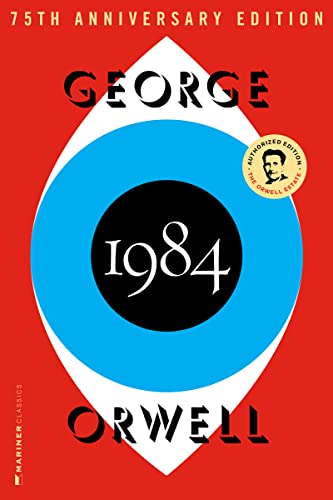
1984
George Orwell
4.7
A PBS Great American Read Top 100 Pick
With extraordinary relevance and renewed popularity, George Orwell’s 1984 takes on new life in this hardcover edition.
“Orwell saw, to his credit, that the act of falsifying reality is only secondarily a way of changing perceptions. It is, above all, a way of asserting power.”—The New Yorker
In 1984, London is a grim city in the totalitarian state of Oceania where Big Brother is always watching you and the Thought Police can practically read your mind. Winston Smith is a man in grave danger for the simple reason that his memory still functions. Drawn into a forbidden love affair, Winston finds the courage to join a secret revolutionary organization called The Brotherhood, dedicated to the destruction of the Party. Together with his beloved Julia, he hazards his life in a deadly match against the powers that be.
Lionel Trilling said of Orwell’s masterpiece “1984 is a profound, terrifying, and wholly fascinating book. It is a fantasy of the political future, and like any such fantasy, serves its author as a magnifying device for an examination of the present.” Though the year 1984 now exists in the past, Orwell’s novel remains an urgent call for the individual willing to speak truth to power.
Today is World Book Day, a wonderful opportunity to address this #ChallengeRichard sent in by Mike Gonzalez of New Jersey: Make a list of your top 65 books to read in a lifetime. [source]
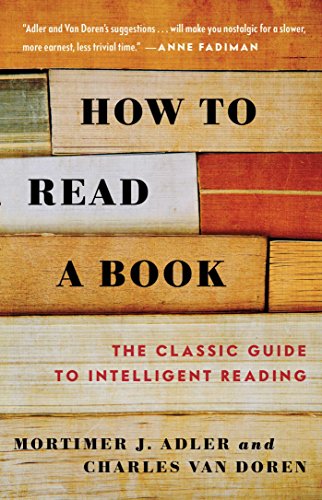
With more than half a million paperback copies in print and now in this stunning hardcover keepsake edition, How to Read a Book is the classic and definitive guide to reading comprehension and retention for students of literature, scholars across disciplines, and anyone who just loves to read.
Originally written in 1940 and first published by Simon & Schuster in 1972, How to Read a Book introduces and elucidates the various levels of reading and how to achieve them in order to gain the most understanding and insight from any book. From elementary reading, through systematic skimming and inspectional reading, to speed reading and beyond, readers will learn when and how to “judge a book by its cover,” perceive structure no matter the prose, read critically, and extract the author’s message from the text.
Also included are specific reading techniques that work best for reading particular genres, whether they be practical books, imaginative literature, plays, poetry, history, science and mathematics, philosophy, or social science works. A recommended reading list and multiple comprehension tests are incorporated as well in order to measure progress in reading skills, speed, and understanding.
As poignant and applicable today as it was nearly seventy-five years ago, this beautiful hardcover edition is the perfect way for you to discover or rediscover How to Read a Book, a rare phenomenon and the best and most successful guide to reading comprehension.
…
Recommended by Sergey Brin, Ben Chestnut, Kevin Systrom, and 3 others.
had “How to Read a Book” by Mortimer J. Adler as one of his most recommended books. [source]
Ben Chestnut
Founder & CEO/MailChimp
I also love How to Read a Book by Mortimer Adler. I’m teaching its tips to my children while they’re young, so they can consume books much faster and have more fun reading. [source]
Kevin Systrom
The author's thesis is that the most important part of reading a book is to actually read the table of contents and familiarize yourself with the major structure of the book. [source]
Cover unavailable
11
Holy Bible: KJV Standard Size Thumb Index Edition: Burgundy (King James Bible)
Thomas Nelson
4.6
My Creative Bible is an exciting new concept in ways to experience the word of God in Scripture. This King James Version Journaling Bible is single-column printed, with two-inch-wide ruled margins for note-taking, scribing your reflections or creative expression. Nearly 400 hand-drawn, Scripture accompanying line-art illustrations are placed throughout the Bible to enhance embracement of The Word. There is an index of the Scripture artwork - line-art suitable for filling. Users will find this an invaluable visual tool for immersion and Bible study.
The Silky-Soft Flexcover Edition features a lovely floral design printed on a unique silky-textured material produced as an imitation leather, with the screen-printed design seemingly woven right in. There is an attached ribbon page marker and beautifully printed page-edges.
Printed on high-quality cream Bible paper with a standard black text size of 8.65 point. 1404 Pages.
…
Recommended by Walter Isaacson, Caterina Fake, A.J. Jacobs, and 7 others.
Everybody, of course, should be familiar with this book, which is a way of being taught through both parables and tales of people and their values. [source]
A.J. Jacobs
One thing that really has stuck with me is that this book talks about that you should be grateful all the time. [source]
Brett Wigdortz
I wanted to throw this in because I think a lot of leadership books believe the problems that leaders are dealing with are all new, and have never been dealt with before. But in an example that almost seems trite, because it is such a part of our cultural knowledge, if you read the book of Exodus from the point of view of leadership theory there were the same leadership lessons 3,000 years ago that people talk about today. For example, the leadership style of Moses in this book broadly has the combination of humility and will discussed by Jim Collins. He needed a great deal of convincing that he was the one who should be leading his people, but once he became that person he had the iron will to be the leader they needed. [source]
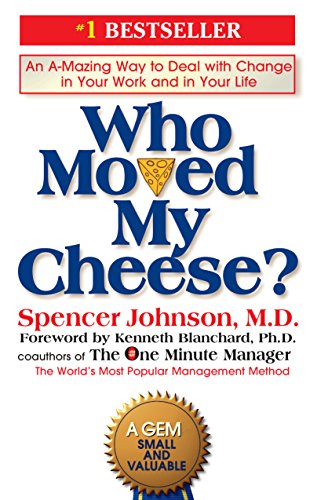
Who Moved My Cheese? is a simple parable that reveals profound truths. It is an amusing and enlightening story of four characters who live in a "Maze" and look for "Cheese" to nourish them and make them happy.
Two are mice named Sniff and Scurry. And two are "Littlepeople"—beings the size of mice who look and act a lot like people. Their names are Hem and Haw.
"Cheese" is a metaphor for what you want to have in life—whether it is a good job, a loving relationship, money, a possession, health, or spiritual peace of mind.
And the "Maze" is where you look for what you want—the organization you work in, or the family or community you live in.
In the story, the characters are faced with unexpected change. Eventually, one of them deals with it successfully, and writes what he has learned from his experience on the Maze walls.
When you come to see "The Handwriting on the Wall," you can discover for yourself how to deal with change, so that you can enjoy less stress and more success (however you define it) in your work and in your life.
Written for all ages, the story takes less than an hour to read, but its unique insights can last a lifetime.
…
Recommended by Dave Ramsey, Daymond John, Darren Chua, and 5 others.
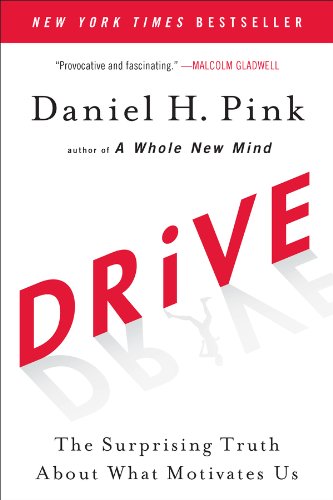
The New York Times bestseller that gives readers a paradigm-shattering new way to think about motivation
Most people believe that the best way to motivate is with rewards like money—the carrot-and-stick approach. That's a mistake, says Daniel H. Pink (author of To Sell Is Human: The Surprising Truth About Motivating Others). In this provocative and persuasive new book, he asserts that the secret to high performance and satisfaction-at work, at school, and at home—is the deeply human need to direct our own lives, to learn and create new things, and to do better by ourselves and our world.
Drawing on four decades of scientific research on human motivation, Pink exposes the mismatch between what science knows and what business does—and how that affects every aspect of life. He examines the three elements of true motivation—autonomy, mastery, and purpose-and offers smart and surprising techniques for putting these into action in a unique book that will change how we think and transform how we live.
…
Recommended by Tobi Lütke, Bogdan Lucaciu, David Brudo, and 5 others.
Tobi Lütke
Founder & CEO/Shopify
Tobi Lütke recommended this book in an interview in "The Globe and Mail." [source]
Bogdan Lucaciu
Spoiler: it’s autonomy, mastery, and purpose. [source]
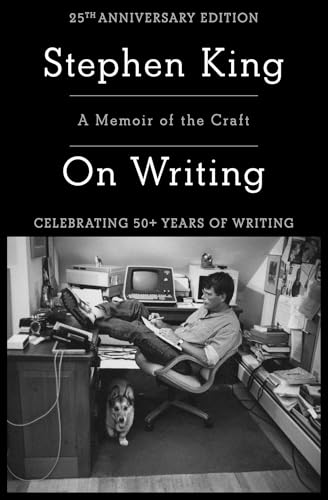
Immensely helpful and illuminating to any aspiring writer, Stephen King’s critically lauded, classic bestseller shares the experiences, habits, and convictions that have shaped him and his work.
"Long live the King" hailed Entertainment Weekly upon publication of Stephen King’s On Writing. Part memoir, part master class by one of the bestselling authors of all time, this superb volume is a revealing and practical view of the writer’s craft, comprising the basic tools of the trade every writer must have. King’s advice is grounded in his vivid memories from childhood through his emergence as a writer, from his struggling early career to his widely reported, near-fatal accident in 1999—and how the inextricable link between writing and living spurred his recovery. Brilliantly structured, friendly and inspiring, On Writing will empower and entertain everyone who reads it—fans, writers, and anyone who loves a great story well told.
I read a bunch of books on writing before I wrote my first book and the two that stuck with me were Stephen King’s book and “On Writing Well” by Zinsser (which is a bit on the technical side). [source]
Alina Varlanuta
My professional path – copywriting – somehow intertwines with my unprofessional (hahaha) path – writing so I would recommend reading literature for both. Somehow reading and writing are two ways of doing the same thing: storytelling (even when you read you tell yourself a story in your own voice, bringing your personal emotion and empathy to the story you’re reading). The only difference is that when I’m reading, panic is far away from me, in a safe place. Nevertheless, the words below helped me rewrite and think twice before adding an exclamation point: On Writing by Stephen King. [source]
Andrew Cowan
Yes. It is a surprise to a lot of people that this book is so widely read on university campuses and so widely recommended by teachers of writing. Students love it. It’s bracing: there’s no nonsense. He says somewhere in the foreword or preface that it is a short book because most books are filled with bullshit and he is determined not to offer bullshit but to tell it like it is. [source]
Cover unavailable
15
Guns, Germs and Steel: The Fates of Human Societies
Explaining what William McNeill called The Rise of the West has become the central problem in the study of global history. In Guns, Germs, and Steel Jared Diamond presents the biologist's answer: geography, demography, and ecological happenstance. Diamond evenhandedly reviews human history on every continent since the Ice Age at a rate that emphasizes only the broadest movements of peoples and ideas. Yet his survey is binocular: one eye has the rather distant vision of the evolutionary biologist, while the other eye--and his heart--belongs to the people of New Guinea, where he has done field work for more than 30 years.
Fascinating.... Lays a foundation for understanding human history. [source]
Daniel Ek
A brilliant Pulitzer Prize-winning book about how the modern world was formed, analyzing how societies developed differently on different continents. [source]
I’m a fan of books that challenge our assumptions, and Diamond offers us a new and remarkably simple way of looking at our world. Learning to challenge existing assumptions is core to effective leadership for it trains us to keep an open mind. [source]
Looking to jumpstart your GPA? Most college students believe that straight A's can be achieved only through cramming and painful all-nighters at the library. But Cal Newport knows that real straight-A students don't study harder--they study smarter. A breakthrough approach to acing academic assignments, from quizzes and exams to essays and papers, "How to Become a Straight-A Student" reveals for the first time the proven study secrets of real straight-A students across the country and weaves them into a simple, practical system that anyone can master. You will learn how to: Streamline and maximize your study time Conquer procrastination Absorb the material quickly and effectively Know which reading assignments are critical--and which are not Target the paper topics that wow professors Provide A+ answers on exams Write stellar prose without the agony A strategic blueprint for success that promises more free time, more fun, and top-tier results, "How to Become a Straight-A Student" is the only study guide written by students for students--with the insider knowledge and real-world methods to help you master the college system and rise to the top of the class.
…
Cover unavailable
17
A New Approach to Studying the Book of Mormon: Another Testament of Jesus Christ
Lynn A. Rosenvall and David L. Rosenvall
4.4
The Prophet Joseph Smith declared a person would get nearer to God by abiding by the precepts of the Book of Mormon than by any other book. While considering ways of making the precepts of this divine book more readily available to the reader, a distinguishing format was devised to isolate the doctrinal precepts and at the same time render this rather complex volume of scripture more comprehensible for reading and pondering. Not one word, letter or even a punctuation mark of the actual text has been deleted or altered in the process. Only the formatting has been enhanced by adding wider margins for notes, two type sizes, and spaces between textual subdivisions. These contextual enhancements are designed to help the reader more readily visualize the context, speaker and doctrine of the Book of Mormon narrative. This edition of the Book of Mormon divides the text into 214 events or episodes. An event-based approach provides an alternate way to read the scripture text without the obvious
…
Cover unavailable
18
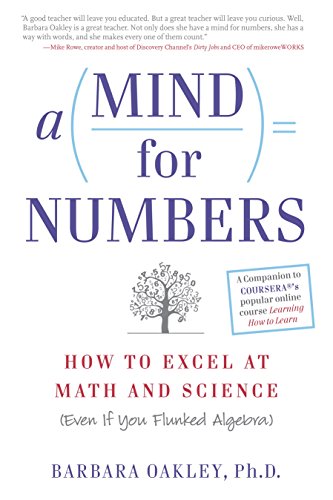
A Mind for Numbers: How to Excel at Math and Science (Even If You Flunked Algebra)
Whether you are a student struggling to fulfill a math or science requirement, or you are embarking on a career change that requires a higher level of math competency, A Mind for Numbers offers the tools you need to get a better grasp of that intimidating but inescapable field. Engineering professor Barbara Oakley knows firsthand how it feels to struggle with math. She flunked her way through high school math and science courses, before enlisting in the army immediately after graduation. When she saw how her lack of mathematical and technical savvy severely limited her options—both to rise in the military and to explore other careers—she returned to school with a newfound determination to re-tool her brain to master the very subjects that had given her so much trouble throughout her entire life.
In A Mind for Numbers, Dr. Oakley lets us in on the secrets to effectively learning math and science—secrets that even dedicated and successful students wish they’d known earlier. Contrary to popular belief, math requires creative, as well as analytical, thinking. Most people think that there’s only one way to do a problem, when in actuality, there are often a number of different solutions—you just need the creativity to see them. For example, there are more than three hundred different known proofs of the Pythagorean Theorem. In short, studying a problem in a laser-focused way until you reach a solution is not an effective way to learn math. Rather, it involves taking the time to step away from a problem and allow the more relaxed and creative part of the brain to take over. A Mind for Numbers shows us that we all have what it takes to excel in math, and learning it is not as painful as some might think!
CEO/MikeRoweWorks Foundation, Former TV Host/Dirty Jobs
A good teacher will leave you educated. But a great teacher will leave you curious. Well, Barbara Oakley is a great teacher. Not only does she have a mind for numbers, she has a way with words, and she makes every one of them count [source]
Cover unavailable
19
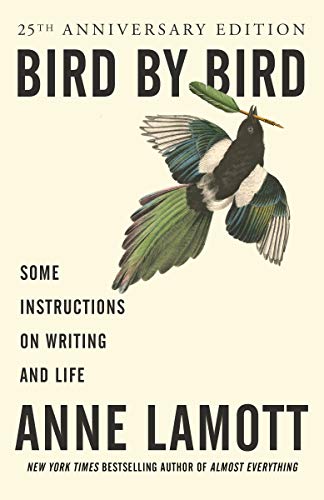
Bird By Bird: Some Instructions on Writing and Life
Anne Lamott
4.4
Thirty years ago my older brother, who was ten years old at the time, was trying to get a report on birds written that he'd had three months to write. It was due the next day. We were out at our family cabin in Bolinas, and he was at the kitchen table close to tears, surrounded by binder paper and pencils and unopened books on birds, immobilized by the hugeness of the task ahead. Then my father sat down beside him, put his arm around my brother's shoulder, and said, 'Bird by bird, buddy. Just take it bird by bird.'" "Superb writing advice... hilarious, helpful and provocative." -- "New York Times Book Review."
"A warm, generous and hilarious guide through the writer's world and its treacherous swamps." -- "Los Angeles Times."
"A gift to all of us mortals who write or ever wanted to write... sidesplittingly funny, patiently wise and alternately cranky and kind -- a reveille to get off our duffs and start writing "now," while we still can." -- "Seattle Times.
Bird by Bird is one of my absolute favorite books, and I gift it to everybody, which I should probably also give to startup founders, quite frankly. A lot of the lessons are the same. But you can get to your destination, even though you can only see 20 feet in front of you. [source]
It was wonderful to read these two provocative books of essays by two incredibly wise and compassionate women. … Anne Lamott’s book is ostensibly about the art of writing, but really it too is about life and how to tackle the problems, temptations and opportunities life throws at us. Both will make you think and both made me a better person this year. [source]
Cover unavailable
20
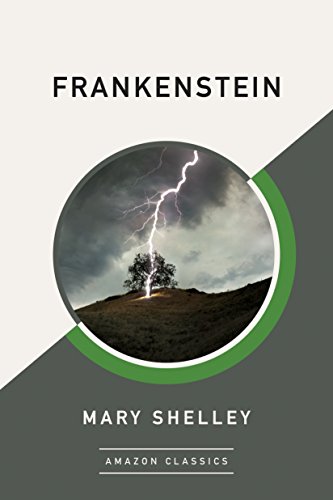
Frankenstein
Mary Shelley
4.4
Mary Shelley began writing Frankenstein when she was only eighteen. At once a Gothic thriller, a passionate romance, and a cautionary tale about the dangers of science, Frankenstein tells the story of committed science student Victor Frankenstein. Obsessed with discovering the cause of generation and life and bestowing animation upon lifeless matter, Frankenstein assembles a human being from stolen body parts but; upon bringing it to life, he recoils in horror at the creature's hideousness. Tormented by isolation and loneliness, the once-innocent creature turns to evil and unleashes a campaign of murderous revenge against his creator, Frankenstein.
Frankenstein, an instant bestseller and an important ancestor of both the horror and science fiction genres, not only tells a terrifying story, but also raises profound, disturbing questions about the very nature of life and the place of humankind within the cosmos: What does it mean to be human? What responsibilities do we have to each other? How far can we go in tampering with Nature? In our age, filled with news of organ donation genetic engineering, and bio-terrorism, these questions are more relevant than ever.
…
Recommended by Michael Arrington, Adam Roberts, Adam Roberts, and 5 others.
Michael Arrington
Founder/TechCrunch
Shelley wrote this book as a teenager, and most of us read it in high school. Often credited as the first science fiction novel. You can read just about any political viewpoint you want into the book, and there are strong undertones that technology isn’t all good. But what I get out of it is the creativeness that can come with solitude, and how new technology can be misunderstood, even perhaps by the creator (see Twitter). Key thing to remember: Frankenstein is the name of the scientist/creator, not the Monster. Everybody forgets that. [source]
Adam Roberts
Brian Aldiss has famously argued that science fiction starts with Mary Shelley’s novel, and many people have agreed with him. [source]
Brian Aldiss has famously argued that science fiction starts with Mary Shelley’s novel, and many people have agreed with him. [source]
Cover unavailable
21
Jesus Calling: Enjoying Peace in His Presence
Sarah Young
4.4
After many years of writing her own words in her prayer journal, missionary Sarah Young decided to be more attentive to the Savior's voice and begin listening for what He was saying. So with pen in hand, she embarked on a journey that forever changed her—and many others around the world.
In these powerful pages are the words and Scriptures Jesus lovingly laid on her heart. Words of reassurance, comfort, and hope. Words that have made her increasingly aware of His presence and allowed her to enjoy His peace.
Jesus is calling out to you in the same way. Maybe you share the author’s need for a great sense of “God with you”. Or perhaps Jesus seems distant without you knowing why. Or maybe you have wandered farther from Him that you ever imagined you would. Here is a year’s worth of daily readings from Young’s journals to bring you closer to Christ and move your time with Him from monologue to a dialogue.
Each day is written as if Jesus Himself were speaking to you. Because He is. Do you hear Him calling?
What does it mean when a fictional hero takes a journey? Shares a meal? Gets drenched in a sudden rain shower? Often, there is much more going on in a novel or poem than is readily visible on the surface -- a symbol, maybe, that remains elusive, or an unexpected twist on a character -- and there's that sneaking suspicion that the deeper meaning of a literary text keeps escaping you.
In this practical and amusing guide to literature, Thomas C. Foster shows how easy and gratifying it is to unlock those hidden truths, and to discover a world where a road leads to a quest; a shared meal may signify a communion; and rain, whether cleansing or destructive, is never just rain. Ranging from major themes to literary models, narrative devices, and form, How to Read Literature Like a Professor is the perfect companion for making your reading experience more enriching, satisfying, and fun.
…
Cover unavailable
23
The Republic: The Influential Classic
Plato
4.3
The newest deluxe edition in the bestselling Capstone Classics Series This ancient classic has had a make-over. In recent years these Capstone Classic deluxe editions have caught the book buying public's imagination. The volumes of international bestsellers such as Think and Grow Rich and The Art of War have quickly become the market leaders. Now Plato's best known work, one of the most intellectually and historically influential works of philosophy and political theory, has been brought to life in this luxury, hardback, keep-sake edition.
This edition includes:
Plato's plans for a perfect society characterised by a blend of wisdom, courage, self-discipline and justice Lessons to learn about living according to eternal truths, instead of existing simply for survival and pleasure A new introduction by Tom Butler Bowdon, the classic personal development expert
It’s very readable even if you aren’t a professional philosopher. Take the story of ‘The Ring of Gyges,’ which raises the question of whether you would continue to act like a good person if you had a ring of invisibility that let you get away with doing whatever you wanted to do. That’s a fascinating thought experiment that anybody can appreciate. [source]
I’m about a third through this and still can’t tell whether Plato is making a mockery of Socrates ideas for the idyllic society or not. So many of the arguments presented as Socrates’ are so tortured and with so disconnected leaps of logic that it’s hard to take it at face value. Yet still, it’s good fun to follow the dialogue. It reads more like a play than a book, and again, immensely accessible. It’s fun to see the lines that continue from a book like this to the considerations of the Stoics all the way to Adam Smith and the Wealth of Nations and then onto a modern critique and history in that Debt: First 5,000 Years. A conversation spanning millennia. [source]
Jonathan Glover
It contains a tremendous amount of nonsense about what the ideal society would be like. But it is an unmissable book because of Socrates. He invented the method of doing and teaching philosophy that has never been improved on. [source]
Cover unavailable
24
The Elements of Style
William Jr. Strunk
4.3
You know the authors' names. You recognize the title. You've probably used this book yourself. And now "The Elements of Style"-the most widely read and employed English style manual-is available in a specially bound 50th Anniversary Edition that offers the title's vast audience an opportunity to own a more durable and elegantly bound edition of this time-tested classic. Offering the same content as the Fourth Edition, revised in 1999, the new casebound 50th Anniversary Edition includes a brief overview of the book's illustrious history. Used extensively by individual writers as well as high school and college students of writing, it has conveyed the principles of English style to millions of readers. This new deluxe edition makes the perfect gift for writers of any age and ability level. Fifty Years of Acclaim for "The Elements of Style," by William Strunk Jr. and E.B. White "I first read "Elements of Style" during the summer before I went off to Exeter, and I still direct my students at Harvard to their definition about the difference between 'that' and 'which.' It is the Bible for good, clear writing." -- Henry Louis Gates Jr. "For writers of all kinds and sizes the world begins and ends with Strunk and White's "Elements of Style." Only something to actually write about trumps the list of what is required to put words together in some kind of coherent way. I treasure its presence in my life and salute its fifty years of glory and accomplishment." -- Jim Lehrer ""The Elements of Style" remains an unwavering beacon of light in these grammatically troubled times. I would be lost without it." -- Ann Patchett "To the extent I know how to write clearly at all, I probably taught myself while I was teaching others -- seventh graders, in Flint, Michigan, in 1967. I taught them with a copy of Strunk & White lying in full view on my desk, sort of in the way the Gideons leave Bibles in cheap hotel rooms, as a way of saying to the hapless inhabitant: 'In case your reckless ways should strand you here, there's help.' S&W doesn't really teach you how to write, it just tantalizingly reminds you that there's an orderly way to go about it, that clarity's ever your ideal, but -- really -- it's all going to be up to you." -- Richard Ford ""The Elements of Style" never seems to go out of date. Its counsel is sound and funny, wise and unpretentious. And while its precepts are a foundation of direct communication, Strunk and White do not insist on a way of writing beyond clear expression. The rest is up to the imagination, the intelligence within." -- David Remnick, editor of "The New Yorker" "It's the toughness-the irreverence and implicit laughter-that attracted me to the little book when I was seventeen. I fell in love with Strunk & White's loathing for cant and bloviation, the ruthless cutting of crap, jargon, and extra words. For me, that skeptical directness included a tacit permission by "The Elements of Style" to break its rules on occasion: an alloy of generosity in the blade, a grace I still admire and still learn from." -- Robert Pinsky "In the quest for clarity, one can have no better guides than Strunk and White. For me, their book has been invaluable and remains essential." -- Dan Rather "Eschew surplusage! A perfect book." --Jonathan Lethem "Not until I started teaching writing and I reread "The Elements of Style" did I realize that most everything I would be teaching young writers, and everything I would be learning myself as a writer, was contained between the covers of this slim, elegant, wise little book." -- Julia Alvarez "Strunk and White seared their way into my brain long ago, and I benefit from them daily." -- Steven J. Dubner, co-author of "Freakonomics" "Since high school, I have kept a copy of this book handy. That should be unnecessary. I should, by now, have fully internalized "The Elements of Style." But sometimes I get entangled in a paragraph that refuses to be 'clear, brief, bold.' I dip back into "The Elements of Style" and am refreshed. After Scott Simon interviewed me on NPR about whether the word 'e-mail' needs a hyphen (yes, it does), some listeners, including friends of mine, wondered why I had answered in the affirmative when asked, in passing, 'Are you a drunken white man?' Those listeners misheard. 'Strunk and White man' was what Scott said." -- Roy Blount Jr. "Strunk & White--writing's good-natured law firm--still contains enough sparkling good sense to clean up the whole bloviating blogosphere." -- Thomas Mallon "I used Strunk -- that's what we called it, Strunk -- as a student at Berkeley fifty years ago. I didn't know that it was new, and that we were the first generation to be educated in "The Elements of Style." I got a firm foundation in the English language, learned to write basically, and could depict the realistic world. Then I was able to become an impressionist and expressionist." -- Maxine Hong Kingston "Strunk and White's gigantic little book must be the most readable advice on writing ever written. Side by side with Roget, Shakespeare, the Bible, and a dictionary, it's an essential for every writer's shelf." -- X.J. Kennedy" ""With what joy I welcome the fiftieth anniversary of "The Elements of Style." I am greatly indebted to this book for the invaluable help it has given me all these years." -- Horton Foote "Elegant, droll, and perfectly proportioned, and like your favorite aunt, strict but affectionate. And, like your favorite aunt, full of optimism: You can, and will, be a better writer! There has never been a better, briefer, or more loved book about the art and craft of communicating." -- Susan Orlean "This book is an essential tool. It has been of great use to me and is probably responsible for my best writing. I owe my success to Strunk and White; only the mistakes are mine." -- Ben Affleck, in "O, the Oprah Magazine" "This book is a wonderful example of teaching by example. Not only does it recommend clear and concise writing, it demonstrates it. Written in the style of a friend offering help, it is a godsend to anyone wanting to put words on paper. Thank you, Messieurs Strunk and White. And Happy Anniversary, "Elements of Style."" -- S.E. Hinton "When I began to have ... I wouldn't say arguments but conversations in my mind with Strunk and White about a few of their rules and principles, I knew I was coming into my own. If only they were still here to talk things over! No doubt their side of the exchange would be kindly put, well-informed, and wise. They'd probably help me with my side of it. What more could one want from writers reaching out to help other writers?" -- Barbara Wallraff, language columnist for "The Atlantic" "I don't believe there is a serious writer alive who doesn't have a worn copy of 'Strunk & White'on his or her bookshelf." -- Mignon Fogarty, author of "Grammar Girl's Quick and Dirty Tips ""for Better Writing" "This little book has inspired hundreds of thousands of people to write better -- partly by precept and partly by example. It continues to influence more writers than any other. It's a force for good in the world." -- Bryan A. Garner, author of "Garner's Modern American Usage" "I can think of no better guide to good writing, and I always think of this little classic with a warm heart. More importantly, I revisit its pages often. It's the one essential book on writing." -- Jay Parini, author of "Why Poetry Matters" "Clarity and simplicity have always been the goals, and this book shows the way. It has always been a lighthouse in the dark and stormy night of student prose, of all of our prose." -- Ron Carlson "The only rules you are ever going to get from me are all in Strunk and White." --Ursula K. Le Guin, from "Steering the Craft " "["The Elements of Style "is] a book to which I return from time to time, the way I periodically reread Shakespeare. I always discover something new, settle a question that has been puzzling me, or learn a principle of usage that I have been pretending to know, a pretense that has resulted in inconsistency and in the sort of errors from which I can only pray some saintly copy editor will save me." -- Francine Prose, from "Reading"" Like A Writer" ..".still a little book, small enough and important enough to carry in your pocket, as I carry mine." -- Charles Osgood "Almost every writer has a Strunk and White story. One journalism professor spends the first two weeks of school forcing his students to memorize the book. A top editor at a major paper buys copies at yard sales to distribute to her writers and interns. It has even caused love affairs. . . . Could its greatness be any more clear?" -- Jesse Sheidlower, American Editor of the "Oxford"" English Dictionary," on NPR" ""If the English language is one of the finest homes ever devised for the human spirit, "Elements" is the best guided house tour we've got." --David Gelernter, "The Wall Street Journal" ..".Should be the daily companion of anyone who writes for a living and, for that matter, anyone who writes at all." "--"Jonathan Yardley, " Greensboro (N.C.) Daily News" "No book in shorter space, with fewer words, will help any writer more than this persistent little volume." -- Herbert A. Kenny, "The Boston Globe" "Buy it, study it, enjoy it. It's as timeless as a book can be in our age of volubility." -- Charles Poore, "The New York Times" "White is one of the best stylists and most lucid minds in this country. What he says and his way of saying it are equally rewarding." "-- "Edmund Fuller, "The Wall Street Journal ""If you have any young friends who aspire to become writers, the second greatest favor you can do them is to present them with copies of "The Elements of Style." The first greatest, of course, is to shoot them now, while they're happy." -- Dorothy Parker, "Esquire"
…
Recommended by Tobi Lütke, Alina Varlanuta, Ann Handley, and 3 others.
Tobi Lütke
Founder & CEO/Shopify
My most frequently gifted book is this book because I like good writing. [source]
Alina Varlanuta
My professional path – copywriting – somehow intertwines with my unprofessional (hahaha) path – writing so I would recommend reading literature for both. Somehow reading and writing are two ways of doing the same thing: storytelling (even when you read you tell yourself a story in your own voice, bringing your personal emotion and empathy to the story you’re reading). The only difference is that when I’m reading, panic is far away from me, in a safe place. Nevertheless, the words below helped me rewrite and think twice before adding an exclamation point: The Elements of Style. [source]
Bill Nye
This is my guide. I accept that I’ll never write anything as good as the introductory essay by the author. It’s brilliant. [source]
Cover unavailable
25
Save the Cat: The Last Book on Screenwriting You'll Ever Need
Blake Snyder
4.3
This ultimate insider's guide reveals the secrets that none dare admit, told by a show biz veteran who's proven that you can sell your script if you can save the cat!
It takes you through 11 different 'archetypes' of screenplays you can write, and the exact elements each needs to be a great story. [source]
Cover unavailable
26
Nonfiction Sight Word Readers: Guided Reading Level A (Parent Pack): Teaches 25 key Sight Words to Help Your Child Soar as a Reader!
Liza Charlesworth
4.3
Set the stage for your child to soar with these just-right books that teach the first 25 sight words! This cheery red box includes 25 titles, each focused on a key sight word: the, of, and, a, to, etc. The books’ real-world topics with predicable text are super-engaging to make mastering these must-know words easy and fun. Includes motivating stickers PLUS a mini-activity book to ensure learning sticks. Books correlate with Guided Reading Level A.
First 25 Sight Words (Fry List): the, of, and, a, to, in, is, you, that, it, he, was, for, on, are, as, with, his, they, I, at, be, this, have, from Includes • 25 full-color, 8-page books • 32-page activity book • sticker sheet • sturdy storage box
…
Cover unavailable
27
10 Steps to Earning Awesome Grades (While Studying Less)
Thomas Frank
4.3
Becoming a more effective learner and boosting your productivity will help you earn better grades - but it’ll also cut down on your study time. This is a short, meaty book that will guide you through ten steps to achieving those goals: •Pay better attention in class •Take more effective notes •Get more out of your textbooks •Plan like a general •Build a better study environment •Fight entropy and stay organized •Defeat Procrastination •Study smarter •Write better papers •Make group projects suck less
Whether you’re in college or high school, this book will probably help you. But not if you’re a raccoon. I want to be very clear about that; if you’re a raccoon, please buy a different book. This one will do absolutely nothing for you. How did you even learn to read, anyway?
…
Cover unavailable
28
We Should All Be Feminists
Chimamanda Ngozi Adichie
4.3
What does “feminism” mean today? That is the question at the heart of We Should All Be Feminists, a personal, eloquently-argued essay—adapted from her much-viewed TEDx talk of the same name—by Chimamanda Ngozi Adichie, the award-winning author of Americanah and Half of a Yellow Sun.
With humor and levity, here Adichie offers readers a unique definition of feminism for the twenty-first century—one rooted in inclusion and awareness. She shines a light not only on blatant discrimination, but also the more insidious, institutional behaviors that marginalize women around the world, in order to help readers of all walks of life better understand the often masked realities of sexual politics. Throughout, she draws extensively on her own experiences—in the U.S., in her native Nigeria, and abroad—offering an artfully nuanced explanation of why the gender divide is harmful for women and men, alike.
Argued in the same observant, witty and clever prose that has made Adichie a bestselling novelist, here is one remarkable author’s exploration of what it means to be a woman today—and an of-the-moment rallying cry for why we should all be feminists.
…
Cover unavailable
29
The Study Skills Handbook
Jay Amberg
4.3
Cover unavailable
30
Genome: The Autobiography of a Species In 23 Chapters
Matt Ridley
4.3
The human genome, the complete set of genes housed in twenty-three pairs of chromosomes, is nothing less than an autobiography of our species. Spelled out in a billion three-letter words using the four-letter alphabet of DNA, the genome has been edited, abridged, altered and added to as it has been handed down, generation to generation, over more than three billion years. With the first draft of the human genome due to be published in 2000, we, this lucky generation, are the first beings who are able to read this extraordinary book and to gain hitherto unimaginable insights into what it means to be alive, to be human, to be conscious or to be ill.
By picking one newly discovered gene from each of the twenty-three human chromosomes and telling its story, Matt Ridley recounts the history of our species and its ancestors from the dawn of life to the brink of future medicine. He finds genes that we share with bacteria, genes that distinguish us from chimpanzees, genes that can condemn us to cruel diseases, genes that may influence our intelligence, genes that enable us to use grammatical language, genes that guide the development of our bodies and our brains, genes that allow us to remember, genes that exhibit the strange alchemy of nature and nurture, genes that parasitise us for their own selfish ends, genes that battle with one another and genes that record the history of human migrations. From Huntington's disease to cancer, he explores the applications of genetics: the search for understanding and therapy, the horrors of eugenics and the philosophical implications for understanding the paradox of free will.
This book aims to tell a history of humanity from the perspective of genetics rather than sociology. This should complement the other broad histories I've read this year, as well as follow "Energy" well in focusing on science. I've wanted to read Matt Ridley's books for a while. His recent book "The Rational Optimist" about how progress and the economy evolve is also near the top of my ever-growing pile of books to read. [source]
Getting into the more evolution, science kind of books, I really highly, highly recommend picking up Genome … . [source]
Cover unavailable
31
Japanese From Zero! 1: Proven Methods to Learn Japanese with integrated Workbook and Online Support
George Trombley and Yukari Takenaka
4.3
Japanese From Zero is an innovative and integrated approach to learning Japanese developed by professional Japanese interpreter George Trombley and co-writer Yukari Takenaka. The lessons and techniques used in this series have been taught successfully for over ten years in classrooms throughout the world.Using up-to-date and easy-to-grasp grammar, Japanese From Zero is the perfect course for current students of Japanese as well as absolute beginners.In Book 1 of the Japanese From Zero series, readers are taught new grammar concepts, over 800 new words and expressions, and also learn the hiragana writing system.Features of Book 1: • Integrated Workbook with Answer Key* Over 800 New Words and Expressions* Learn to Read and Write Hiragana* Easy-to-Understand Example Dialogues* Culture Points about Japan* Bilingual Glossaries with Kana and Romaji...and much more
…
Cover unavailable
32
The Anatomy Coloring Book
Wynn Kapit and Lawrence M. Elson
4.2
Why use this coloring book? For more than 35 years, The Anatomy Coloring Book has been the #1 best-selling human anatomy coloring book! A useful tool for anyone with an interest in learning anatomical structures, this concisely written text features precise, extraordinary hand-drawn figures that were crafted especially for easy coloring and interactive study. Organized according to body systems, each of the 162 two-page spreads featured in this book includes an ingenious color-key system where anatomical terminology is linked to detailed illustrations of the structures of the body. When you color to learn with The Anatomy Coloring Book, you make visual associations with key terminology, and assimilate information while engaging in kinesthetic learning. Studying anatomy is made easy and fun! The Fourth Edition features user-friendly two-page spreads with enlarged art, clearer, more concise text descriptions, and new boldface headings that make this classic coloring book accessible to a wider range of learners.
…
Cover unavailable
33
Wuthering Heights
Emily Bronte
4.2
You can find the redesigned cover of this edition HERE.
This best-selling Norton Critical Edition is based on the 1847 first edition of the novel. For the Fourth Edition, the editor has collated the 1847 text with several modern editions and has corrected a number of variants, including accidentals. The text is accompanied by entirely new explanatory annotations.
New to the fourth Edition are twelve of Emily Bronte's letters regarding the publication of the 1847 edition of Wuthering Heights as well as the evolution of the 1850 edition, prose and poetry selections by the author, four reviews of the novel, and poetry selections by the author, four reviews of the novel, and Edward Chitham's insightful and informative chronology of the creative process behind the beloved work.
Five major critical interpretations of Wuthering Heights are included, three of them new to the Fourth Edition. A Stuart Daley considers the importance of chronology in the novel. J. Hillis Miller examines Wuthering Heights's problems of genre and critical reputation. Sandra M. Gilbert assesses the role of Victorian Christianity plays in the novel, while Martha Nussbaum traces the novel's romanticism. Finally, Lin Haire-Sargeant scrutinizes the role of Heathcliff in film adaptations of Wuthering Heights.
A Chronology and updated Selected Bibliography are also included.
…
Recommended by Claire Jarvis, John Sutherland, Rachel Hickman, and 2 others.
Claire Jarvis
Wuthering Heights is a strange novel in a lot of ways. It’s a standalone—there’s not really another book like it. [source]
John Sutherland
The Brontës had this idea of a Samson figure. Rochester, like Samson, has to be mutilated before he can be domesticated. What is interesting about Heathcliff, in Wuthering Heights, is that he isn’t. He remains this superman. He is greater than a human being. He is named after two elemental things, the heath and the cliff. We never know what his first name is. [source]
Rachel Hickman
In Wuthering Heights once again it’s the landscape that underlines the choices the characters must make. Cathy must choose between the grand house in the lush valley: protected, comfortable and tame; or the wild, exhilarating bleakness of Wuthering Heights. [source]
Cover unavailable
34
So Good They Can't Ignore You: Why Skills Trump Passion in the Quest for Work You Love
In an unorthodox approach, Georgetown University professor Cal Newport debunks the long-held belief that "follow your passion" is good advice, and sets out on a quest to discover the reality of how people end up loving their careers.
Not only are pre-existing passions rare and have little to do with how most people end up loving their work, but a focus on passion over skill can be dangerous, leading to anxiety and chronic job hopping. Spending time with organic farmers, venture capitalists, screenwriters, freelance computer programmers, and others who admitted to deriving great satisfaction from their work, Newport uncovers the strategies they used and the pitfalls they avoided in developing their compelling careers.
Cal reveals that matching your job to a pre-existing passion does not matter. Passion comes after you put in the hard work to become excellent at something valuable, not before. In other words, what you do for a living is much less important than how you do it.
With a title taken from the comedian Steve Martin, who once said his advice for aspiring entertainers was to "be so good they can't ignore you," Cal Newport's clearly written manifesto is mandatory reading for anyone fretting about what to do with their life, or frustrated by their current job situation and eager to find a fresh new way to take control of their livelihood. He provides an evidence-based blueprint for creating work you love, and will change the way you think about careers, happiness, and the crafting of a remarkable life.
Entrepreneurial professionals must develop a competitive advantage by building valuable skills. This book offers advice based on research and reality--not meaningless platitudes-- on how to invest in yourself in order to stand out from the crowd. An important guide to starting up a remarkable career. [source]
Do what you love and the money will follow' sounds like great advice -- until it's time to get a job and disillusionment quickly sets in. Cal Newport ably demonstrates how the quest for 'passion' can corrode job satisfaction. If all he accomplished with this book was to turn conventional wisdom on its head, that would be interesting enough. But he goes further -- offering advice and examples that will help you bypass the disillusionment and get right to work building skills that matter. [source]
Stop worrying about what you feel like doing (and what the world owes you) and instead, start creating something meaningful and then give it to the world. Cal really delivers with this one. [source]
Cover unavailable
35
How to Win at College: Surprising Secrets for Success from the Country's Top Students
Cal Newport
4.2
The only guide to getting ahead once you’ve gotten in—proven strategies for making the most of your college years, based on winning secrets from the country's most successful students
What does it take to be a standout student? How can you make the most of your college years—graduate with honors, choose exciting activities, build a head-turning resume, and gain access to the best post-college opportunities? Based on interviews with star students at universities nationwide, from Harvard to the University of Arizona, How to Win at College presents seventy-five simple rules that will rocket you to the top of the class. These college-tested—and often surprising—strategies include:
• Don’t do all your reading • Drop classes every term • Become a club president • Care about your grades, Ignore your GPA • Never pull an all-nighter • Take three days to write a paper • Always be working on a “grand project” • Do one thing better than anyone else you know
Proving that success has little to do with being a genius workaholic, and everything to do with playing the game, How to Win at College is the must-have guide for making the most of these four important years—and getting an edge on life after graduation.
…
Cover unavailable
36
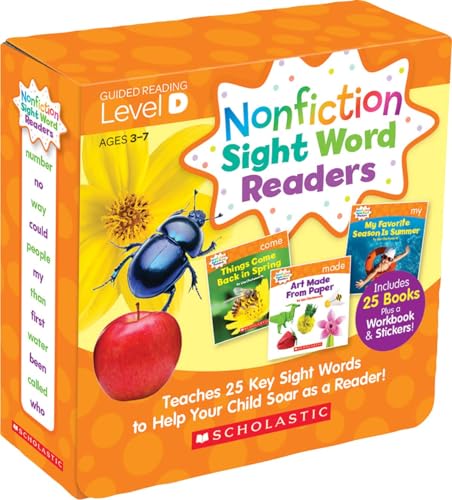
Nonfiction Sight Word Readers: Guided Reading Level D (Parent Pack): Teaches 25 key Sight Words to Help Your Child Soar as a Reader!
Liza Charlesworth
4.2
Set the stage for your child to soar with these just-right books that teach the fourth 25 sight words! This cheery orange box includes 25 titles, each focused on a key sight word: number, no, way, could, people, etc. The books’ real-world topics with predicable text are super-engaging to make mastering these must-know words easy and fun. Includes motivating stickers PLUS a mini-activity book to ensure learning sticks. Books correlate with Guided Reading Level D.
Fourth 25 Sight Words (Fry List): number, no, way, could, people, my, than, first, water, been, called, who, am, its, now, find, long, down, day, did, get, come, made, may, part Includes • 25 full-color, 8-page books • 32-page activity book • sticker sheet • sturdy storage box
…
Cover unavailable
37
Common Core Practice - Grade 3 Math: Workbooks to Prepare for the PARCC or Smarter Balanced Test: CCSS Aligned
Scholastic Teaching Resources
4.2
Cover unavailable
38
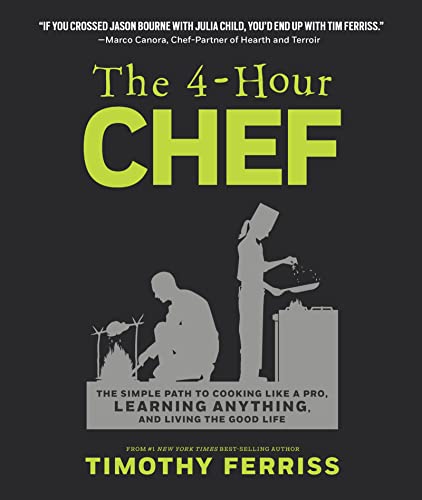
The 4-Hour Chef: The Simple Path to Cooking Like a Pro, Learning Anything, and Living the Good Life
Timothy Ferriss
4.2
WHAT IF YOU COULD BECOME WORLD-CLASS IN ANYTHING IN 6 MONTHS OR LESS?
The 4-Hour Chef isn’t just a cookbook. It’s a choose-your-own-adventure guide to the world of rapid learning.
#1 New York Times bestselling author (and lifelong non-cook) Tim Ferriss takes you from Manhattan to Okinawa, and from Silicon Valley to Calcutta, unearthing the secrets of the world’s fastest learners and greatest chefs. Ferriss uses cooking to explain “meta-learning,” a step-by-step process that can be used to master anything, whether searing steak or shooting 3-pointers in basketball. That is the real “recipe” of The 4-Hour Chef.
You'll train inside the kitchen for everything outside the kitchen. Featuring tips and tricks from chess prodigies, world-renowned chefs, pro athletes, master sommeliers, super models, and everyone in between, this “cookbook for people who don’t buy cookbooks” is a guide to mastering cooking and life.
The 4-Hour Chef is a five-stop journey through the art and science of learning:
1. META-LEARNING. Before you learn to cook, you must learn to learn. META charts the path to doubling your learning potential. 2. THE DOMESTIC. DOM is where you learn the building blocks of cooking. These are the ABCs (techniques) that can take you from Dr, Seuss to Shakespeare. 3. THE WILD. Becoming a master student requires self-sufficiency in all things. WILD teaches you to hunt, forage, and survive. 4. THE SCIENTIST. SCI is the mad scientist and modernist painter wrapped into one. This is where you rediscover whimsy and wonder. 5. THE PROFESSIONAL. Swaraj, a term usually associated with Mahatma Gandhi, can be translated as “self-rule.” In PRO, we’ll look at how the best in the world become the best in the world, and how you can chart your own path far beyond this book.
…
Recommended by Bryan Callen, Cristina Riesen, and Marin Gerov.
Bryan Callen recommended this book on the podcast "The Tim Ferriss Show". [source]
Cristina Riesen
First, a word on career paths. In time, I realised that career paths are like one-way streets. Magic happens in unexplored territories. Plus life is how you choose to live every moment, every day. So today, rather than building a career, I prefer to make lateral moves in life, working with great people and being part of ambitious projects impacting the world. There are a few books that got me here: … Tim Ferriss " The 4-Hour Workweek", "The 4-Hour Chef", "Tools of Titans". [source]
Marin Gerov
Talking of Tim Ferriss, his series (The 4-Hour Workweek, The 4-Hour Body, The 4-Hour Chef) have been extremely good resources for improving work, health, and learning. [source]
Cover unavailable
39
Riyad as Salihin: The Gardens of the Righteous
Imam Nawawi
4.2
Riyad As Salihin: The Gardens of the Righteous, is one of the most famous works of Imam Nawawi. This collection of authentic hadiths can be briefly defined as a book of enhancing morals, mannerliness, encouraging goodness, and warning against the evil. This work consists of the wisdom of the noble Prophet, peace and blessings be upon him, setting the criteria about the manners to be observed by individuals. Since the time it was published, Riyad As Salihin has been a must read on the way to deepening in Islamic teaching. This work we present to you with pride is an abridged version of the full compilation.
…
Cover unavailable
40
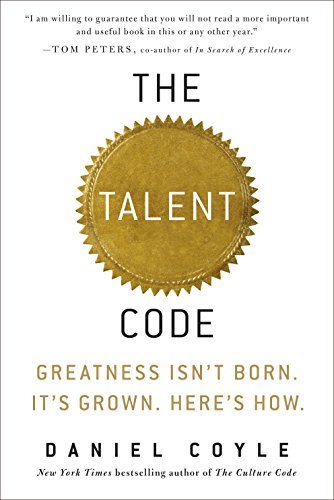
The Talent Code: Greatness Isn't Born. It's Grown. Here's How.
What is the secret of talent? How do we unlock it? In this groundbreaking work, journalist and New York Times bestselling author Daniel Coyle provides parents, teachers, coaches, businesspeople—and everyone else—with tools they can use to maximize potential in themselves and others.
Whether you're coaching soccer or teaching a child to play the piano, writing a novel or trying to improve your golf swing, this revolutionary book shows you how to grow talent by tapping into a newly discovered brain mechanism.
Drawing on cutting-edge neurology and firsthand research gathered on journeys to nine of the world's talent hotbeds—from the baseball fields of the Caribbean to a classical-music academy in upstate New York—Coyle identifies the three key elements that will allow you to develop your gifts and optimize your performance in sports, art, music, math, or just about anything.
• Deep Practice--Everyone knows that practice is a key to success. What everyone doesn't know is that specific kinds of practice can increase skill up to ten times faster than conventional practice.
• Ignition--We all need a little motivation to get started. But what separates truly high achievers from the rest of the pack? A higher level of commitment—call it passion—born out of our deepest unconscious desires and triggered by certain primal cues. Understanding how these signals work can help you ignite passion and catalyze skill development.
• Master Coaching--What are the secrets of the world's most effective teachers, trainers, and coaches? Discover the four virtues that enable these "talent whisperers" to fuel passion, inspire deep practice, and bring out the best in their students.
These three elements work together within your brain to form myelin, a microscopic neural substance that adds vast amounts of speed and accuracy to your movements and thoughts. Scientists have discovered that myelin might just be the holy grail: the foundation of all forms of greatness, from Michelangelo's to Michael Jordan's. The good news about myelin is that it isn't fixed at birth; to the contrary, it grows, and like anything that grows, it can be cultivated and nourished.
Combining revelatory analysis with illuminating examples of regular people who have achieved greatness, this book will not only change the way you think about talent, but equip you to reach your own highest potential.
Highly recommend reading The Talent Code. Wonderful book w/ great insights. [source]
Cover unavailable
41
The New American Bible
World Bible Publishing St
4.2
Uniquely American, this popular translation is the easiest to understand Catholic edition of the Bible. This modern translation was prepared by over 50 scholars to capture the thought and individual style of the inspired writers while still making this translation easy to use for all ages.The New American Bible is the perfect Bible for your Catholic family and friends, and these editions from Catholic World Press will make perfect gifts. It's the official Catholic Bible -- as authorized by the Bishop's Committee of Christian Doctrine. Special versions of the official Catholic translation with features for students and gift giving. Concise, authoritative notes Revised New Testament and Psalms Family register and full-color maps (2405 and 2406 editions only) Chronological listing of Christ's miracles and discourses List of the Popes Book introductions Cross references Footnotes Maps Presentation page Red letter (except 2401)
…
Cover unavailable
42
SAT Prep Black Book: The Most Effective SAT Strategies Ever Published
Mike Barrett
4.2
Click the "look inside" feature above to browse the SAT Black Book and get a feel for how it approaches the SAT! The fully up-to-date SAT Prep Black Book, Second Edition gives you unique, effective SAT strategies from Mike Barrett, an SAT tutor with clients all over the globe who pay him hundreds of dollars an hour for phone tutoring. In addition to extensive and effective training on every aspect of the SAT, the SAT Black Book gives you detailed, systematic, easy-to-follow walkthroughs for every question in 4 of the College Board's official SAT Practice Tests.The Black Book is a must-have in your SAT preparation, whether you need to make a perfect 1600 to be competitive at an Ivy, score a 450 in each section to claim a sports scholarship, or anything in between. You can find the first 4 Practice SAT tests from the College Board for free on the College Board's website, or in the "Blue Book," which is the College Board's Official SAT Study Guide, 2016 Edition or 2018 Edition---both editions contain the first 4 official SAT practice tests. (The SAT Prep Black Book has no affiliation with the College Board.)The Black Book and the real practice SAT tests from the College Board are all you need to get your best possible SAT score.The Black Book is the ideal SAT book for 3 major reasons: It covers every aspect of the test with advice that actually works, making it unique in the SAT prep field. It doesn't just review material from your high school classes! Instead, you'll learn to exploit design flaws in the SAT, using its own "SAT tricks" against it. The Black Book contains 600+ detailed, systematic, easy-to-follow walkthroughs for real SAT questions from the College Board, so you know that what you're learning actually works. You'll see every question from the first 4 official SAT Practice Tests attacked in a way that clearly demonstrates the ideal thought process on the SAT. (You'll need your own copies of those real SAT practice tests, which you can get for free from the College Board's website. You can also find them in the College Board's 2016 or 2018 "Blue Book.") The Black Book is a clear, concise roadmap to the SAT. (See the selected highlights below). It explains exactly how every SAT question works, and how to beat it in the least time possible. Selected Highlights from the SAT Prep Black Book: Why the SAT isn't designed like a high school test, and how this fact influences every aspect of the proper approach to SAT preparation... Why every SAT question can only have one valid answer, no matter how much it might seem otherwise sometimes... How to look at SAT questions the same way the College Board does when it writes them... Why it's so important to work with real SAT questions from the College Board...and why you shouldn't pay much attention to the College Board's written explanations for those questions! What you're actually supposed to do when the SAT asks you about an author's attitude... Why you shouldn't put your faith in diagnostic tests, even if they come from the College Board... The important implications of viewing time as an investment on test day... The simple formula that allows you to crank out a top-scoring essay (that is, if you even need to take the SAT Essay in the first place)... The special grammatical rules that are followed by the SAT Writing and Language section...and how they sometimes differ from common usage in school... The unwritten rules for every kind of SAT question... The many ways to approach an SAT Math question, and which ones are likely to work best for you... Why the "order of difficulty" doesn't really exist... Why every real SAT question can potentially be answered in under 30 seconds... And much more than we can fit in this space...
…
Cover unavailable
43
Story: Substance, Structure, Style, and the Principles of Screenwriting
Robert McKee's screenwriting workshops have earned him an international reputation for inspiring novices, refining works in progress and putting major screenwriting careers back on track. Quincy Jones, Diane Keaton, Gloria Steinem, Julia Roberts, John Cleese and David Bowie are just a few of his celebrity alumni. Writers, producers, development executives and agents all flock to his lecture series, praising it as a mesmerizing and intense learning experience. In Story, McKee expands on the concepts he teaches in his $450 seminars (considered a must by industry insiders), providing readers with the most comprehensive, integrated explanation of the craft of writing for the screen. No one better understands how all the elements of a screenplay fit together, and no one is better qualified to explain the "magic" of story construction and the relationship between structure and character than Robert McKee.
…
Recommended by Bill Liao.
Bill Liao
The human world occurs in language so best get good at it! [source]
Cover unavailable
44
Studying English Literature and Language: An Introduction and Companion
Rob Pope
4.2
Studying English Literature and Language is unique in offering both an introduction and a companion for students taking English Literature and Language degrees. Combining the functions of study guide, critical dictionary and text anthology, this is a freshly recast version of the highly acclaimed The English Studies Book.
This third edition features:
-fresh sections on the essential skills and study strategies needed to complete a degree in English--from close reading, research and referencing to full guidelines and tips on essay-writing, participating in seminars, presentations and revision
-an authoritative guide to the life skills, further study options and career pathways open to graduates of the subject
-updated introductions to the major theoretical positions and approaches taken by scholars in the field, from earlier twentieth century practical criticism to the latest global and ecological perspectives
-extensive entries on key terms such as 'author, 'genre', 'narrative' and 'translation' widely current in debates across language, literature and culture
-coverage of both local and global varieties of the English language in a range of media and discourses, including news, advertising, text messaging, rap, pop and street art
-an expansive anthology representing genres and discourses from early elegy and novel to contemporary performance, flash fiction, including writers as diverse as Aphra Behn, Emily Dickinson, J.M. Coetzee, Angela Carter, Russell Hoban, Adrienne Rich and Arundhati Roy
-a comprehensive, regularly updated companion website supplying further information and activities, sample analyses and a wealth of stimulating and reliable links to further online resources.
Studying English Literature and Language is a wide-ranging and invaluable reference for anyone interested in the study of English language, literature and culture.
…
Cover unavailable
45
Systematic Theology
Louis Berkhof
4.2
This landmark edition combines Berkhof's standard, systematic treatment of the doctrines of the Reformed faith--his magnum opus--with his Introduction to the Study of Systemtic Theology. Written in a scholarly yet simple style, the work includes a thorough bibliography and study questions at the end of each chapter.
Cover unavailable
46
Poems Are Teachers: How Studying Poetry Strengthens Writing in All Genres
Amy Ludwig VanDerwater
4.2
"Poems wake us up, keep us company, and remind us that our world is big and small, And too, poems teach us how to write. Anything." Amy Ludwig VanDerwater explains in Poems Are Teachers. This is a practical book designed for every classroom teacher. Each lesson exploration includes three poems, one by a contemporary adult poet and two by students in grades 2 through 8, which serve as models to illustrate how poetry teaches writers to:
find ideas choose perspective and point of view structure texts play with language craft beginnings and endings choose titles. Students will learn how to replicate the craft techniques found in poetry to strengthen all writing, from fiction to opinion, from personal narrative to information. "Poets arrange words and phrases just as prose writers do, simply in tighter spaces," Amy argues. "In the tight space of poetry, readers can identify writing techniques after reading one page, not thirty pages."
…
Cover unavailable
47
The Bloody Chamber and Other Stories
Angela Carter
4.2
Angela Carter was a storytelling sorceress, the literary godmother of such contemporary masters of supernatural fiction as Neil Gaiman, David Mitchell, Audrey Niffenegger, J. K. Rowling, and Kelly Link, who introduces this edition of Carter's most celebrated book, published for the seventy-fifth anniversary of her birth.
In The Bloody Chamber - which includes the story that is the basis of Neil Jordan's 1984 movie The Company of Wolves - Carter spins subversively dark and sensual versions of familiar fairy tales and legends like "Little Red Riding Hood," "Bluebeard," "Puss in Boots," and "Beauty and the Beast," giving them exhilarating new life in a style steeped in the romantic trappings of the gothic tradition.
Yes. Angela Carter played a very important role in my life because I was born in 1937, a few years before she was born, and although we didn’t grow up together, we both grew up in a world where sexism was out in the open. There was no critique of the type of sexism that I experienced when I grew up, and I think the same is true for her. And we both experienced what a lot of people called the second wave of feminism in the 20th century. [source]
Cover unavailable
48
Studying Early Printed Books, 1450-1800: A Practical Guide
Sarah Werner
4.2
A comprehensive resource to understanding the hand-press printing of early books
Studying Early Printed Books, 1450 - 1800 offers a guide to the fascinating process of how books were printed in the first centuries of the press and shows how the mechanics of making books shapes how we read and understand them. The author offers an insightful overview of how books were made in the hand-press period and then includes an in-depth review of the specific aspects of the printing process. She addresses questions such as: How was paper made? What were different book formats? How did the press work? In addition, the text is filled with illustrative examples that demonstrate how understanding the early processes can be helpful to today's researchers.
Studying Early Printed Books shows the connections between the material form of a book (what it looks like and how it was made), how a book conveys its meaning and how it is used by readers. The author helps readers navigate books by explaining how to tell which parts of a book are the result of early printing practices and which are a result of later changes. The text also offers guidance on: how to approach a book; how to read a catalog record; the difference between using digital facsimiles and books in-hand. This important guide:
Reveals how books were made with the advent of the printing press and how they are understood today Offers information on how to use digital reproductions of early printed books as well as how to work in a rare books library Contains a useful glossary and a detailed list of recommended readings Includes a companion website for further research Written for students of book history, materiality of text and history of information, Studying Early Printed Books explores the many aspects of the early printing process of books and explains how their form is understood today.
…
Cover unavailable
49
Studying Literature: The Essential Companion
Paul Goring, Jeremy Hawthorn, et al.
4.2
Studying Literature: The Essential Companion is a unique guide for English undergraduates. It combines practical advice on study skills with key information on literary theories and theorists, offering invaluable support throughout any English degree.
Key Features:
A study skills guide combined with an overview of literary theories makes for a one-stop reference that can be used throughout your English degree. The study skills section prepares you for your course with advice on using the library for essay writing, and for your exams with tips on revision and preparation. The digital resource section provides information on how to use Google Books and sites such as Facebook, as well as the pros and cons of using Wikipedia. Understanding literary theory is essential to all English degrees and this section outlines the main theories in a clear and comprehensive way. Literary theorists are profiled to ensure that you have a comprehensive grounding in the subject.
…
Cover unavailable
50
The New Drawing on the Right Side of the Brain
Betty Edwards
4.2
When Drawing on the Right Side of the Brain was first published in 1979, it hit the New York Times bestseller list within two weeks and stayed there for more than a year. In 1989, when Dr. Betty Edwards revised the book, it went straight to the Times list again. Now Dr. Edwards celebrates the twentieth anniversary of her classic book with a second revised edition.Over the last decade, Dr. Edwards has refined her material through teaching hundreds of workshops and seminars. Truly The New Drawing on the Right Side of the Brain, this edition includes:
the very latest developments in brain research new material on using drawing techniques in the corporate world and in education instruction on self-expression through drawing an updated section on using color detailed information on using the five basic skills of drawing for problem solving
…
Recommended by Adam Robinson and Adam Robinson.
Adam Robinson
One of five books that confirm there is far, far more in our unconscious mind than is dreamt of in our philosophy. [source]
Adam Robinson
One of five books that confirm there is far, far more in our unconscious mind than is dreamt of in our philosophy. [source]
Cover unavailable
51
Delighting in God's Wisdom: A Study on the Book of Proverbs
Stacy Davis and Brenda Harris
4.2
Wisdom. We need it. We want it - but often look for it in all the wrong places.Every day our life circumstances dictate the need for wisdom. From the simple, everyday choices to the more complex and life changing - we need wisdom for successful decision-making. Challenging situations and relationships regularly come in life, often leaving us confused and needing guidance. We read self-help books and ask people for advice. We get educated in different ways or look online for help, yet often come up empty-handed. We need wisdom that isn't subjective or unproven. We need wisdom that leaves us hopeful and confident; alleviating fears and giving us peace. And yet, as we search for it in the world, we often find it lacking and confusing.Where do we find solid wisdom for navigating life's paths?Solomon will tell us in the book of Proverbs that wisdom begins with the fear of God. Setting our heart on God and trusting in Him is where wisdom begins. Out of that relationship comes a commitment to seek God, obey Him, and trust Him with all of life's choices. In God is found wisdom because He, alone, knows the beginning from the end. His wisdom goes beyond the seen to the unseen. He alone speaks wisdom into all of life's circumstances. The search is over for finding wisdom! Proverbs is the "how to" for life and it will lead you to the heart of God and His wisdom. It isn't a book of formulas. It is a life-giving book of Godly principles and priorities written by a king, under the inspiration of the Holy Spirit, who was the wisest man in the world. Solomon shares what he learned when he followed wisdom's path, and also what happened when he wandered off of it.As King Solomon will say in Proverbs 2:4-6, "If you seek her [wisdom] as silver, and search for her as for hidden treasures; then you will understand the fear of the LORD, and find the knowledge of God. For the LORD gives wisdom; from His mouth come knowledge and understanding."Join us for this thirteen week study from the book of Proverbs as we gain God's wisdom to navigate all of life's challenges and honor Him with our decision-making. Throughout the study we will also be highlighting women of the Bible so that we may learn from both their wise and unwise decisions.
…
Cover unavailable
52
Nonfiction Sight Word Readers: Guided Reading Level C (Parent Pack): Teaches 25 key Sight Words to Help Your Child Soar as a Reader!
Liza Charlesworth
4.2
Set the stage for your child to soar with these just-right books that teach the third 25 sight words! This cheery green box includes 25 titles, each focused on a key sight word: will, up, other, about, out, etc. The books’ real-world topics with predicable text are super-engaging to make mastering these must-know words easy and fun. Includes motivating stickers PLUS a mini-activity book. Books correlate with Guided Reading Level C.
Third 25 Sight Words (Fry List): will, up, other, about, out, many, then, them, these, so, some, her, would, make, like, him, into, time. has, look. two, more, write, go, see Includes • 25 full-color, 8-page books • 32-page activity book • sticker sheet • sturdy storage box
…
Cover unavailable
53
100% Student Success
Amy Solomon, Lori Tyler, Terry Taylor
4.2
The new 100% Success Series is directed at the development of professional skills and characteristics that begin in college and extend through the job search and into the lifelong learning environment of the workplace. The Success Series includes three books: 100% Student Success, 100% Job Success, and 100% Career Success, as well as a variety of interactive support materials in both print and electronic formats. Supplements for this series include a Portfolio Workbook that starts as a Learning Portfolio during the first section (100% Student Success), is expanded to a Professional Portfolio to assist in the job search (100% Job Success). Finally, the Portfolio Workbook can be used as a launching point for an ongoing Professional Portfolio (100% Career Success) that can be continuously revised as readers enter into and continue in their careers. All materials are developed to work seamlessly as an extended learning tool or can be used in part to support more short-term learning objectives. Content applies to developing general professional traits or can be applied to specific fields. The program is built on the premise that development of learning skills and professional skills takes time and feedback beyond one or two college courses. It is a complete program that will take readers through their education into their successful, professional lives.
…
Cover unavailable
54
10 Principles for Studying Your Bible
Charles F. Stanley
4.2
What would you give to have true contentment, joy without end, and lasting peace? Most of us would say, “Anything!” especially when we are dealing with the stormy pressures of life. In 10 Principles for Studying Your Bible, Dr. Charles Stanley provides practical insight into God’s word by walking you through the highlights of his own personal Bible study. He explains, “You don’t have to go through life wondering if the next storm will be the one that washes your life out to sea. God has an answer for your greatest need, but it is only found in the study of His Word.”
“God tells us that if we seek Him, we will find Him,” writes Dr. Stanley. “And when we uncover His truth, we gain clear direction for our lives and circumstances.” Those who begin this journey into understanding the Bible quickly realize His Word is a doorway to divine principles and life’s greatest blessings.
…
Cover unavailable
55
Genki I: An Integrated Course in Elementary Japanese
Yutaka Ohno (Author) Eri Banno (Author), Yoko Ikeda (Author
4.2
Genki outlines in 23 structured lessons all the fundamentals of the Japanese language. Abundantly illustrated and containing a wide variety of exercises, Genki is sure to bring vigor to your classroom! Though primarily meant for use in college-level classes, it is also a good guide for independent learners and is a nice resource book for teachers of Japanese. Genki's authors teach at Kansai Gaidai University, which hosts the largest number of North American students spending their junior year in Japan.
…
Cover unavailable
56
Discipline and Punish: The Birth of the Prison
Michel Foucault, Alan Sheridan
4.2
Librarian note: an alternate cover for this edition can be found here.
In this brilliant work, the most influential philosopher since Sartre suggests that such vaunted reforms as the abolition of torture and the emergence of the modern penitentiary have merely shifted the focus of punishment from the prisoner’s body to his soul.
Cover unavailable
57
Essential Grammar in Use with Answers: A Self-Study Reference and Practice Book for Elementary Learners of English
Raymond Murphy
4.2
The world's best-selling grammar series for learners of English. Essential Grammar in Use is a self-study reference and practice book for elementary-level learners (A1-B1), used by millions of people around the world. With clear examples, easy-to-follow exercises and answer key, the Fourth edition is perfect for independent study, covering all the areas of grammar that you will need at this level. The book has an easy-to-use format of two-page units with clear explanations of grammar points on the left-hand page, and practice exercises on the right. It also includes plenty of additional exercises and a Study Guide to help you find the grammar units you need to study.
…
Cover unavailable
58
The Secrets of Top Students: Tips, Tools, and Techniques for Acing High School and College
Stefanie Weisman
4.2
Stefanie Weisman was a top student all her life, graduating number one in her class from both Stuyvesant High School and Columbia University. But it wasn't because she was a "natural" or smarter than everyone else -- in fact, she succeeded as a student in spite of an undiagnosed learning disability. What she gradually realized was that her classmates were making mistakes, and lots of them.
The Secrets of Top Students is a conversational, down-to-earth guide for high school and college students on how to maximize their learning and get the grades they want. It is full of innovative tips from Stefanie and 45 other top students -- including Rhodes scholars, Goldwater scholars, Fulbright award winners, college valedictorians, Intel Science Fair finalists, a National Spelling Bee champion, and more -- that not only work but have received little or no attention in other books. The Secrets of Top Students will appeal to students of all levels, providing them with the advice they need from a voice they can trust.
The Secrets of Top Students includes tips and techniques that every student should know. For example:
What is the first thing you should do when taking a math test? What is an often overlooked place for coming up with a thesis? How can you use mantras to get better grades? What music should you listen to while studying? Should you bring your laptop to class? Why is it bad to be a perfectionist? What motivates top students to achieve academic success? What foods should you eat to boost your brainpower? How can sleep, diet, and exercise affect your GPA? How much do top students really study? What are the Top 50 Tips for acing exams? How can you take killer notes? What are three game-changing learning techniques? And much, much more.
…
Cover unavailable
59
Macbeth
William Shakespeare, Dr. Barbara A. Mowat, Paul Werstine Ph.D.
4.2
One night on the heath, the brave and respected general Macbeth encounters three witches who foretell that he will become king of Scotland. At first sceptical, he’s urged on by the ruthless, single-minded ambitions of Lady Macbeth, who suffers none of her husband’s doubt. But seeing the prophecy through to the bloody end leads them both spiralling into paranoia, tyranny, madness, and murder.
This shocking tragedy - a violent caution to those seeking power for its own sake - is, to this day, one of Shakespeare’s most popular and influential masterpieces.
…
Cover unavailable
60
Studying Together: A Ready-reference Bible Handbook
Mark Finley
4.2
Cover unavailable
61
A New Approach to Studying the Gospel of Jesus Christ: A Unified Harmony of the Testimonies of Matthew, Mark, Luke, and John
Lynn A. Rosenvall and David L. Rosenvall
4.2
A unified harmony of the testimonies of Matthew, Mark, Luke, and John. Organized by events emphasizing narrators, speakers, locations, quoted passages, dates and Joseph Smith translations.
Cover unavailable
62
Anatomy Student's Self-Test Coloring Book
Ken Ashwell Ph.D.
4.1
Learn human anatomy while you color! The Anatomy Student’s Self-Test Coloring Book includes hundreds of anatomically accurate line illustrations to help you learn the human body.
Coloring the anatomy systems helps you learn the shape and location of each body part, making it easier to visualize, retain the information. In addition to clear explanations and instructive content, it features 144 two-color pages that lie flat for easy coloring.
New to this edition: Clinical points text boxes to illustrate the medical significance of the structure under study 16 new pages of text Extra-heavy paper that minimizes show-through Includes every body system and part All parts labeled with correct anatomical names
The Anatomy Student's Self-Test Coloring Book is a must-have learning tool for all students and practitioners who require detailed anatomical knowledge.
For more than two decades, legendary trainer Tim Grover has taken the greats—Michael Jordan, Kobe Bryant, Dwyane Wade, and dozens more—and made them greater. Now, for the first time in paperback, he reveals what it takes to get those results, showing you how to be relentless and achieve whatever you desire.
Fore more than two decades, legendary trainer Tim Grover has taken the greats—Michael Jordan, Kobe Bryant, Dwayne Wade, and dozens more—and made them greater. Now, for the first time ever, he reveals what it takes to get those results, showing you how to be relentless and achieve whatever you desire.
Direct, blunt, and brutally honest,Grover breaks down what it takes to be unstoppable: you keep going when everyone else is giving up, you thrive under pressure, you never let your emotions make you weak. In “The Relentless 13,” he details the essential traits shared by the most intense competitors and achievers in sports, business, and all walks of life. Relentless shows you how to trust your instincts and get in the Zone; how to control and adapt to any situation; how to find your opponent’s weakness and attack. Grover gives you the same advice he gives his world-class clients—“don’t think”—and shows you that anything is possible. Packed with previously untold stories and unparalleled insight into the psyches of the most successful and accomplished athletes of our time, Relentless shows you how even the best get better . . . and how you can too.
…
Recommended by Ryan Switzer.
Ryan Switzer
Never forget my FR year at Carolina, @CoachFedora handed me the book “Relentless” by Tim Grover. Inside look on the mindset that drove Dwade, MJ, KOBE. Gave me an idea of what it was going to take to live my dream. Relentless became my favorite word. My passion. My everything. [source]
Cover unavailable
64
Self-Study Bible Course, Updated Expanded Edition
Derek Prince
4.1
If you have questions about God and the Bible, here is a help for you. In this Bible study course, you will find answers to questions such as, "How can I have victory over sin?" and "How can I receive answers to my prayers?" Even if you have never read the Bible before, you will find this systematic study guide easy to use and helpful. Or, if you have been a believer for many years, you will find a new ease in conversing with God, fellowshipping with Christians, receiving guidance, and witnessing and winning souls. Through this study, you will experience important changes in your life and discover an intimacy with God that you may have never known before.
…
Cover unavailable
65
Handbook of Research Methods for Studying Daily Life
Matthias R. Mehl, Tamlin S. Conner, et al.
4.1
Bringing together leading authorities, this unique handbook reviews the breadth of current approaches for studying how people think, feel, and behave in everyday environments, rather than in the laboratory. The volume thoroughly describes experience sampling methods, diary methods, physiological measures, and other self-report and non-self-report tools that allow for repeated, real-time measurement in natural settings. Practical guidance is provided to help the reader design a high-quality study, select and implement appropriate methods, and analyze the resulting data using cutting-edge statistical techniques. Applications across a wide range of psychological subfields and research areas are discussed in detail.
…
Cover unavailable
66
Netter's Anatomy Coloring Book Updated Edition
John T. Hansen PhD
4.1
Learn and master anatomy with ease, while having fun, through the unique approach of Netter's Anatomy Coloring Book, 2nd Edition. You can trace arteries, veins, and nerves through their courses and bifurcations...reinforce your understanding of muscle origins and insertions from multiple views and dissection layers...and develop a better understanding of the integration of individual organs in the workings of each body system throughout the human form. Whether you are taking an anatomy course or just curious about how the body works, let the art of Netter guide you!
Key Features
Netter's Anatomy Coloring Book is a perfect companion to the Atlas of Human Anatomy by Frank H. Netter, MD as well as Netter's Anatomy Flash Cards and Netter's Clinical Anatomy textbook.
Understand the correlation between structures. Outlines of Netter anatomical illustrations in multiple views, magnifications, and dissection layers, accompanied by high-yield information reinforce visual recognition and provide context.
Master challenging structures through illustrations small enough for quick coloring, but large enough to provide you with important details.
Facilitate learning by following tips for coloring key structures and quizzing yourself with end-of-section review questions.
Quickly review key concepts with accompanying tables that review muscle attachments, innervation, and actions.
Understand the role of anatomy in medicine through Clinical Notes which highlight examples.
…
Cover unavailable
67
GED Test Flash Cards: 450 Flash Cards to Help You Achieve a Higher Score
Kelly A. Battles
4.1
Test takers preparing for the GED High School Equivalency exam can brush up on their academic skills with this brand-new set of flash cards. The 450 cards are divided into categories that reflect the GED’s four test areas: Reading through Language Arts (RLA), Social Studies, Math, and Science.
Approximately 125 English flash cards cover grammar, correct sentence usage, and reading comprehension. Approximately 100 Social Studies cards cover history, geography, civics and government, and economics. Approximately 125 Math cards present questions with answers covering numbers and operations, geometry, measurement and data analysis, and algebra; and approximately 100 Science cards cover fundamentals of biology, Earth science, chemistry, and physics.
The cards present questions and answers, as well as terms and definitions. All cards have a punch hole in one corner to accommodate a metal key-ring-style card holder enclosed in the card box. Test takers can use the ring to arrange their flash cards in any sequence that suits their study needs.
…
Cover unavailable
68
5 lb. Book of GRE Practice Problems: 1,800+ Practice Problems in Book and Online
Manhattan Prep
4.1
Publisher's Note: Products purchased from third-party sellers are not guaranteed by the publisher for quality, authenticity, or access to any online assets included with the product.
Manhattan Prep's best-selling 5 lb. Book of GRE Practice Problems has been updated to include an online companion of lessons from Interact® for GRE, our revolutionary interactive, on-demand learning platform. In addition, the book now includes new mixed timed sets, a cheat sheet of key math rules, and micro drills to test individual skills. The heart of the book is over 1,800 practice problems covering every topic tested on the GRE, making it an essential resource for students at any level.
Developed by our expert instructors, the problems in this book are sensibly grouped into practice sets and mirror those found on the GRE in content, form, and style. Students can build fundamental skills in math and verbal through targeted practice while easy-to-follow explanations and step-by-step applications help cement their understanding of the concepts tested on the GRE. In addition, students can take their practice to the next level with learning modules from Interact® for GRE, our revolutionary interactive, on-demand learning platform.
…
Cover unavailable
69
Japanese Sentence Patterns for Effective Communication: A Self-Study Course and Reference
Taeko Kamiya
4.1
An indispensable tool for acquiring basic communication skills in a limited amount of time.
With Japanese Sentence Patterns for Effective Communication, even absolute beginners can learn to communicate in Japanese in a matter of days. Designed specifically for native-English speakers approaching Japanese as a second language, this book presents 142 essential Japanese sentence patterns, first by giving equivalents in English, then following with Japanese translations. Each pattern is accompanied by a concise, easy-to-follow explanation and several Japanese example sentences that demonstrate its usage. In addition, practice sections for each pattern allow the student to test his or her understanding of the material presented.
Japanese Sentence Patterns for Effective Communication is organized into twelve chapters according to communicative function, including such tasks as making simple, declarative statements about people and things in the world; making comparisons; talking about events in the past, present and future; expressing desire, conjecture and intention; stating causes or reasons; making requests; asking and giving permission; and using the passive and causative-passive voices. Extensive charts at the back of the book outline the rules for inflecting and conjugating adjectives and verbs-essential to fluent communication.
…
Cover unavailable
70
Teaching with Love and Logic: Taking Control of the Classroom
Jim Fay, David Funk
4.1
"Love and Logic" is a method of working with students which was developed by educational expert Jim Fay, and child psychiatrist Foster W.Cline, M.D. The "Love and Logic" tecniques: Put teachers back in control of the classroomResult in students who are internalized in their discipline rather than dependent upon external controlsRaise the level of student responsibillityTeach students to think for themselvesPrepare students to function effectively in a world filled wiht temptations, decisions, and consequencesReturn a teacher's joy of teaching!
…
Cover unavailable
71
GENKI: An Integrated Course in Elementary Japanese, Vol. II
Eri Banno, Yutaka Ohno, Yoko Sakane, Chikako Shinagawa, Kyoko Tokashiki
4.1
Supplementary learning material for the text Genki II Beginner's Japanese, including grammar practices and the Chinese characters (Kanji).
More than three decades after its first publication, Edward Said's groundbreaking critique of the West's historical, cultural, and political perceptions of the East has become a modern classic.
In this wide-ranging, intellectually vigorous study, Said traces the origins of "orientalism" to the centuries-long period during which Europe dominated the Middle and Near East and, from its position of power, defined "the orient" simply as "other than" the occident. This entrenched view continues to dominate western ideas and, because it does not allow the East to represent itself, prevents true understanding. Essential, and still eye-opening, Orientalism remains one of the most important books written about our divided world.
…
Cover unavailable
73
The Powerscore 2020 LSAT Logic Games Bible: 2020 Digital LSAT Edition
David M. Killoran
4.1
Cover unavailable
74
The Study Skills Handbook
Stella Cottrell
4.1
This is a no-nonsense, practical guide to help students maximise their potential during their time at university. It is packed with sensible suggestions, self-check tables and illustrations, and is printed in blue ink to aid dyslexics.
Cover unavailable
75
All about Particles: A Handbook of Japanese Function Words
Naoko Chino
4.1
Students of Japanese are familiar with the term "particle," and realize that they, like English prepositions, require a special effort to master. This handbook provides all the information one would need on these tricky units of grammar. All About Particles covers more than 70 particles those that are used regularly as well as those used less frequently in more than 200 uses. The book can be approached as a guiding textbook and studied from beginning to end. It is as a reference book, however, that All About Particles shines. It is light and easy to carry, slim enough to fit into the corner of a shoulder bag, and concise enough to quickly clarify particle-related questions. It is a priceless tool for any serious student of Japanese.
…
Cover unavailable
76
Secrets of Mental Math: The Mathemagician's Guide to Lightning Calculation and Amazing Math Tricks
Arthur Benjamin, Michael Shermer, et al.
4.1
These simple math secrets and tricks will forever change how you look at the world of numbers.
Secrets of Mental Math will have you thinking like a math genius in no time. Get ready to amaze your friends—and yourself—with incredible calculations you never thought you could master, as renowned “mathemagician” Arthur Benjamin shares his techniques for lightning-quick calculations and amazing number tricks. This book will teach you to do math in your head faster than you ever thought possible, dramatically improve your memory for numbers, and—maybe for the first time—make mathematics fun.
Yes, even you can learn to do seemingly complex equations in your head; all you need to learn are a few tricks. You’ll be able to quickly multiply and divide triple digits, compute with fractions, and determine squares, cubes, and roots without blinking an eye. No matter what your age or current math ability, Secrets of Mental Math will allow you to perform fantastic feats of the mind effortlessly. This is the math they never taught you in school.
Also available as an eBook
…
Cover unavailable
77
Book of Isaiah - Analytical Translation with Comprehensive Concordance
Avraham Gileadi
4.1
Cover unavailable
78
NCE Secrets: NCE Exam Review for the National Counselor Examination
NCE Exam Secrets Test Prep Team
4.1
*Includes Practice Test Questions* NCE Secrets helps you ace the National Counselor Examination, without weeks and months of endless studying. Our comprehensive NCE Secrets study guide is written by our exam experts, who painstakingly researched every topic and concept that you need to know to ace your test. Our original research reveals specific weaknesses that you can exploit to increase your exam score more than you've ever imagined. NCE Secrets includes: The 5 Secret Keys to NCE Success: Time is Your Greatest Enemy, Guessing is Not Guesswork, Practice Smarter, Not Harder, Prepare, Don't Procrastinate, Test Yourself; A comprehensive General Strategy review including: Make Predictions, Answer the Question, Benchmark, Valid Information, Avoid Fact Traps, Milk the Question, The Trap of Familiarity, Eliminate Answers, Tough Questions, Brainstorm, Read Carefully, Face Value, Prefixes, Hedge Phrases, Switchback Words, New Information, Time Management, Contextual Clues, Don't Panic, Pace Yourself, Answer Selection, Check Your Work, Beware of Directly Quoted Answers, Slang, Extreme Statements, Answer Choice Families; Comprehensive sections including: Erickson's Stages of Development, Jean Piaget's Theory of Development, Oedipus and Electra Complexes, Nature vs. Nurture, Maslow's Hierarchy of Needs, Spirituality and Personality Development, Neuropsychological Assessment, Anxiety and Mood Disorders, Substance-Related Disorders, Treatment Options for Cognitive Disorders, Generativity vs. Stagnation, Cultural Norms, Worldview, Acculturation, and Assimilation, Americans with Disabilities Act, Basic Facts about Suicide, Co-dependency, Active-Directive and Person-Centered Counseling Models, Basic Tenants of the Psychoanalytic Counseling Theory, Counselor/Client Relationship, Object Relations Theory, Rogerian and Gestalt Theories, Existential Therapy, Eric Berne's Transactional Therapy, Cognitive and Behavioral Counseling, and much more...
"A spectre is haunting Europe," Karl Marx and Frederic Engels wrote in 1848, "the spectre of Communism." This new edition of The Communist Manifesto, commemorating the 150th anniversary of its publication, includes an introduction by renowned historian Eric Hobsbawm which reminds us of the document's continued relevance. Marx and Engels's critique of capitalism and its deleterious effect on all aspects of life, from the increasing rift between the classes to the destruction of the nuclear family, has proven remarkably prescient. Their spectre, manifested in the Manifesto's vivid prose, continues to haunt the capitalist world, lingering as a ghostly apparition even after the collapse of those governments which claimed to be enacting its principles.
…
Recommended by Felipe Fernández-Armesto and Peter Singer.
Felipe Fernández-Armesto
Marx and Engels’s historical analysis is breathtakingly, brilliantly simple. I think it’s wrong but, again, you’ve just got to admire its genius. Obviously, without understanding the historical basis of Marx’s thought you can’t understand anything else in Marxism. [source]
Yes, it is. I chose The Communist Manifesto, rather than, say, Capital because it shows in a much easier-to-read, shorter work something that is central to Marx’s vision. Capital is much drier, and a lot of it is focused on economics, although there are some remarkable passages of Capital describing the conditions of industrial workers in England at the time. [source]
Cover unavailable
80
Solomon Academy's IAAT Practice Tests: Practice Tests for IOWA Algebra Aptitude Test
Yeon Rhee
4.1
This book is designed towards mastering the Iowa Algebra Aptitude Test (IAAT), a placement test which allows students to demonstrate their readiness and ability to succeed in Algebra 1. The book contains a review of essential theorems specific to the IAAT: Pre-Algebraic Number Skills and Concepts, Mathematical Data Interpretation and Analysis, Representing Relationships, and Symbols. There are 7 full-length math tests with detailed solutions and explanations for all questions.
…
Cover unavailable
81
Quantum Computing Since Democritus
Scott Aaronson
4.1
Written by noted quantum computing theorist Scott Aaronson, this book takes readers on a tour through some of the deepest ideas of maths, computer science and physics. Full of insights, arguments and philosophical perspectives, the book covers an amazing array of topics. Beginning in antiquity with Democritus, it progresses through logic and set theory, computability and complexity theory, quantum computing, cryptography, the information content of quantum states and the interpretation of quantum mechanics. There are also extended discussions about time travel, Newcomb's Paradox, the anthropic principle and the views of Roger Penrose. Aaronson's informal style makes this fascinating book accessible to readers with scientific backgrounds, as well as students and researchers working in physics, computer science, mathematics and philosophy.
…
Recommended by Chris Bernhardt.
Chris Bernhardt
This is not a beginner’s quantum computing book, but if you already have some experience with some of the ideas of quantum computing then this could be the book for you. [source]
Cover unavailable
82
Official SAT Study Guide 2020 Edition
The College Board
4.1
Review every skill and question type needed for SAT success - now with eight total practice tests.
The 2018 edition of The Official SAT Study Guide doubles the number of official SAT(R) practice tests to eight - all of them created by the test maker. As part of the College Board's commitment to transparency, all practice tests are available on the College Board's website, but The Official SAT Study Guide is the only place to find them in print along with over 250 pages of additional instruction, guidance, and test information.
With updated guidance and practice problems that reflect the most recent information, this new edition takes the best-selling SAT guide and makes it even more relevant and useful. Be ready for the SAT with strategies and up-to-date information straight from the exam writers.
The Official SAT Study Guide will help students get ready for the SAT with: - 8 official SAT practice tests, written in the exact same process and by the same team of authors as the actual exam - detailed descriptions of the math and evidenced based reading and writing sections - targeted practice questions for each SAT question type - guidance on the new optional essay, including practice essay questions with sample responses - seamless integration with Official SAT Practice on Khan Academy
…
Cover unavailable
83
Encyclopedia of Counseling: Master Review and Tutorial for the National Counselor Examination, State Counseling Exams, and the Counselor Preparation Comprehensive Examination
Howard Rosenthal
4.1
With more questions and answers than any other edition, the Encyclopedia of Counseling, Fourth Edition, is stillthe only book you need to pass the NCE, CPCE, and other counseling exams. Every chapter has new and updated material and is still written in Dr. Rosenthal's lively, user-friendly style counselors know and love. The book's new and improved coverage incorporates a range of vital topics, including social media, group work in career counseling, private practice and nonprofit work, addictions, neurocounseling, research trends, the DSM-5, the new ACA and NBCC codes of ethics, and much, much more.
The coauthors are mathematics professors. Burger teaches at Wiliams College; Starbird at The University of Texas at Austin. Here, they “reveal the hidden powers of deep understanding (earth), failure (fire), questions (air), the flow of ideas (water), and the quintessential element of change that brings all four elements together. By mastering and applying these practical and proven strategies, readers develop better thinking habits and learn how to create their own successes.”
Brilliant people aren't a special breed--they just use their minds differently. By using the straightforward and thought-provoking techniques in "The 5 Elements of Effective Thinking," you will regularly find imaginative solutions to difficult challenges, and you will discover new ways of looking at your world and yourself--revealing previously hidden opportunities.
The book offers real-life stories, explicit action items, and concrete methods that allow you to attain a deeper understanding of any issue, exploit the power of failure as a step toward success, develop a habit of creating probing questions, see the world of ideas as an ever-flowing stream of thought, and embrace the uplifting reality that we are all capable of change. No matter who you are, the practical mind-sets introduced in the book will empower you to realize any goal in a more creative, intelligent, and effective manner. Filled with engaging examples that unlock truths about thinking in every walk of life, "The 5 Elements of Effective Thinking" is written for all who want to reach their fullest potential--including students, parents, teachers, businesspeople, professionals, athletes, artists, leaders, and lifelong learners.
Whenever you are stuck, need a new idea, or want to learn and grow, "The 5 Elements of Effective Thinking" will inspire and guide you on your way.
…
Cover unavailable
85
The Three R's
Ruth Beechick
4.1
The Three R's Now all in one book! A Home Start in Reading A Strong Start in Language An Easy Start in Arithmetic Three resources in one READING, WRITING, and ARITHMETIC! Learn how to take the mystery out of teaching the early grades with this practical, down-to-earth guidebook from Ruth Beechick. The book is divided into three sections that are tabbed for easy reference. The READING section tells how and when to begin phonics, and how to develop comprehension skills. The LANGUAGE section shows how to develop written language skills naturally, in the same way children learn oral language. The ARITHMETIC section explains how to teach understanding of math concepts, and not just memorization of facts. Bonus: A removable 2-sided wall chart for phonics and arithmetic."
…
Cover unavailable
86
Med School Confidential: A Complete Guide to the Medical School Experience: By Students, for Students
Robert Miller
4.1
Med School Confidential from Robert H. Miller and Daniel M. Bissell uses the same chronological format and mentor-based system that have made Law School Confidential and Business School Confidential such treasured and popular guides. It takes the reader step-by-step through the entire med school process--from thinking about, applying to, and choosing a medical school and program, through the four-year curriculum, internships, residencies, and fellowships, to choosing a specialty and finding the perfect job. With a foreword by Chair of the Admissions Committee at Dartmouth Medical School Harold M. Friedman, M.D., Med School Confidential provides what no other book currently does: a comprehensive, chronological account of the full medical school experience.
…
Cover unavailable
87
Medical School 2.0: An Unconventional Guide to Learn Faster, Ace the USMLE, and Get Into Your Top Choice Residency
David Larson MD
4.1
Forget the old concept of medical school taking over your life. It is possible to do great in school while still having a rich and well-rounded life. Whether your dream is having time for international volunteer work, having time to do cutting edge research, having time to be the parent and spouse you want to be, having time to exercise relax and unwind, or just HAVING TIME to live more and work less, Medical School 2.0 is your blue print to thrive as a medical student. This step-by-step guide to medical school teaches: How Dave, a medical student with below-average SAT and MCAT scores used these techniques to go from spending 16 hours a day on medical school and getting a "C" average to spending 1-3 hours a day on medical school and getting the top academic honors, 99.7th percentile on USMLE Steps 1 and 2, induction into the AOA honor society, and getting into his top choice residency in his top choice location, all the while enjoying the process of learning and having plenty of free time to enjoy life outside of medical school. How to clarify your personal goals for your life in medicine and in medical school and use those to reverse-engineer a personalized and customized curriculum for yourself. How to sift through seemingly infinite study sources and choose the highest yield information for your own unique goals. How to apply the latest research findings in the neuroscience of learning and memory to supercharge your brain's learning potential, maximizing your per-hour learning output. How to structure and schedule your study sessions and your "work days" to maximize your learning potential. What to eat and drink to fuel your brain to form and maintain sold long term memories of what you're learning. This book is the result of hundreds of hours of research interviewing top-performing medical students across the USA to deconstruct the strategies behind their success, researching and integrating the latest science of how our brain's learn, and then distilling the final product into a group of practical, simple, and extremely high yield tools and tricks to both maximize your mind's learning output, to enjoy the process of learning, and to have the time to follow your dreams in medical school and beyond. These are the same strategies that the author used in medical school, continues to use now, and has taught to hundreds of other students who have achieved even better results."
…
Cover unavailable
88
Lehninger Principles of Biochemistry
David L. Nelson
4.0
Clear writing and illustrations…Clear explanations of difficult concepts…Clear communication of the ways in biochemistry is currently understood and practiced. For over 35 years, in edition after bestselling edition, Principles of Biochemistry has put those defining principles into practice, guiding students through a coherent introduction to the essentials of biochemistry without overwhelming them.
The new edition brings this remarkable text into a new era. Like its predecessors, Lehninger Principles of Biochemistry, Sixth Edition strikes a careful balance of current science and enduring concepts, incorporating a tremendous amount of new findings, but only those that help illustrate biochemistry’s foundational principles. With this edition, students will encounter new information emerging from high throughput DNA sequencing, x-ray crystallography, and the manipulation of genes and gene expression, and other techniques. In addition, students will see how contemporary biochemistry has shifted away from exploring metabolic pathways in isolation to focusing on interactions among pathways. They will also get an updated understanding of the relevance of biochemistry to the study of human disease (especially diabetes) as well as the important role of evolutionary theory in biochemical research.
These extensive content changes, as well as new art and powerful new learning technologies make this edition of Lehninger Principles of Biochemistry the most impressive yet.
See what's in the LaunchPad
…
Cover unavailable
89
The Bourgeois: Between History and Literature
Franco Moretti
4.0
"I am a member of the bourgeois class, feel myself to be such, and have been brought up on its opinions and ideals," wrote Max Weber, in 1895. Who could repeat these words today?
Thus begins Franco Moretti’s study of the bourgeois in modern European literature, where a gallery of individual portraits is entwined around the analysis of specific keywords – such as ‘useful’ and ‘earnest’, ‘efficiency’, ‘influence’, ‘comfort’, ‘roba’ – and of the formal mutations of the medium of prose. The book charts the rise and fall of bourgeois culture, exploring the causes for its historical weakness, and searches for the seeds of its failures.
…
Cover unavailable
90
Reading Comprehension Grade 6 (Practice Makes Perfect (Teacher Created Materials))
. Teacher Created Resources Staff
4.0
Cover unavailable
91
How to Be a High School Superstar: A Revolutionary Plan to Get into College by Standing Out (Without Burning Out)
Cal Newport
4.0
Do Less, Live More, Get Accepted
What if getting into your reach schools didn’t require four years of excessive A.P.-taking, overwhelming activity schedules, and constant stress? In How to Be a High School Superstar, Cal Newport explores the world of relaxed superstars—students who scored spots at the nation’s top colleges by leading uncluttered, low stress, and authentic lives. Drawing from extensive interviews and cutting-edge science, Newport explains the surprising truths behind these superstars’ mixture of happiness and admissions success, including:
· Why doing less is the foundation for becoming more impressive. · Why demonstrating passion is meaningless, but being interesting is crucial. · Why accomplishments that are hard to explain are better than accomplishments that are hard to do.
These insights are accompanied by step-by-step instructions to help any student adopt the relaxed superstar lifestyle—proving that getting into college doesn’t have to be a chore to survive, but instead can be the reward for living a genuinely interesting life.
…
Cover unavailable
92
Writing Academic English, Level 4
Alice Oshima, Ann Hogue
4.0
Now in its fourth edition, "Writing Academic English," by Alice Oshima and Ann Hogue, is the essential writing text to prepare high-intermediate and advanced college or college-bound English language learners for academic success.
Features A step-by-step approach guides students through the process of writing paragraphs and essays. Clear models and varied practice help students to develop confidence and a mature writing style.
Examples with academic content prime students for college work. Appendices offer easy reference for key writing, grammar, and research information.
New to the Fourth Edition - A chapter dedicated to each pattern of essay organization - A chapter on argumentation and using material from outside sources - Thought-provoking readings from authentic sources - An expanded chapter on summary and paraphrase Instruction in the basics of research and documentation.
The Longman Academic Writing Series also includes: Level 1 "Fundamentals of Academic Writing" Level 2 "First Steps in Academic Writing, " Second Edition Level 3 "Introduction to Academic Writing, " Third Edition
…
Cover unavailable
93
How We Learn: The Surprising Truth About When, Where, and Why It Happens
Benedict Carey
4.0
In the tradition of The Power of Habit and Thinking, Fast and Slow comes a practical, playful, and endlessly fascinating guide to what we really know about learning and memory today—and how we can apply it to our own lives. From an early age, it is drilled into our heads: Restlessness, distraction, and ignorance are the enemies of success. We’re told that learning is all self-discipline, that we must confine ourselves to designated study areas, turn off the music, and maintain a strict ritual if we want to ace that test, memorize that presentation, or nail that piano recital.
But what if almost everything we were told about learning is wrong? And what if there was a way to achieve more with less effort?
In How We Learn, award-winning science reporter Benedict Carey sifts through decades of education research and landmark studies to uncover the truth about how our brains absorb and retain information. What he discovers is that, from the moment we are born, we are all learning quickly, efficiently, and automatically; but in our zeal to systematize the process we have ignored valuable, naturally enjoyable learning tools like forgetting, sleeping, and daydreaming. Is a dedicated desk in a quiet room really the best way to study? Can altering your routine improve your recall? Are there times when distraction is good? Is repetition necessary? Carey’s search for answers to these questions yields a wealth of strategies that make learning more a part of our everyday lives—and less of a chore.
By road testing many of the counterintuitive techniques described in this book, Carey shows how we can flex the neural muscles that make deep learning possible. Along the way he reveals why teachers should give final exams on the first day of class, why it’s wise to interleave subjects and concepts when learning any new skill, and when it’s smarter to stay up late prepping for that presentation than to rise early for one last cram session. And if this requires some suspension of disbelief, that’s because the research defies what we’ve been told, throughout our lives, about how best to learn.
The brain is not like a muscle, at least not in any straightforward sense. It is something else altogether, sensitive to mood, to timing, to circadian rhythms, as well as to location and environment. It doesn’t take orders well, to put it mildly. If the brain is a learning machine, then it is an eccentric one. In How We Learn, Benedict Carey shows us how to exploit its quirks to our advantage.
Praise for How We Learn
“This book is a revelation. I feel as if I’ve owned a brain for fifty-four years and only now discovered the operating manual.”—Mary Roach, bestselling author of Stiff and Gulp
“A welcome rejoinder to the faddish notion that learning is all about the hours put in.”—The New York Times Book Review “A valuable, entertaining tool for educators, students and parents.”—Shelf Awareness
“How We Learn is more than a new approach to learning; it is a guide to making the most out of life. Who wouldn’t be interested in that?”—Scientific American “I know of no other source that pulls together so much of what we know about the science of memory and couples it with practical, practicable advice.”—Daniel T. Willingham, professor of psychology at the University of Virginia
…
Recommended by Vladimir Oane.
Vladimir Oane
He does a brilliant job proving that our thinking about learning is rooted more in superstition than in science. And boy this book is filled with science. It is extremely evident that the author is a science nerd because this book is 95% filled with studies and experiments on lots and lots of topics related to the learning: memorization, forgetting, associations, perceptions etc. This could make the book boring for a reader hungry for the bite-size advice (who has the time for any of this?) but I found the research fascinating and I went the extra mile in a lot of cases by going through the source material. [source]
Cover unavailable
94
What Smart Students Know: Maximum Grades. Optimum Learning. Minimum Time.
Adam Robinson
4.0
Starting from the premise that successful students are not necessarily any more brilliant than their less successful peers, but have simply mastered the art of efficient learning, Adam Robinson introduces high school and college students to an innovative approach that can help them achieve top grades while discovering the joy of true learning. Line drawings.
Cover unavailable
95
A Disability History of the United States
Kim E. Nielsen
4.0
The first book to cover the entirety of disability history, from pre-1492 to the present Disability is not just the story of someone we love or the story of whom we may become; rather it is undoubtedly the story of our nation. Covering the entirety of US history from pre-1492 to the present, A Disability History of the United States is the first book to place the experiences of people with disabilities at the center of the American narrative. In many ways, it’s a familiar telling. In other ways, however, it is a radical repositioning of US history. By doing so, the book casts new light on familiar stories, such as slavery and immigration, while breaking ground about the ties between nativism and oralism in the late nineteenth century and the role of ableism in the development of democracy.
A Disability History of the United States pulls from primary-source documents and social histories to retell American history through the eyes, words, and impressions of the people who lived it. As historian and disability scholar Nielsen argues, to understand disability history isn’t to narrowly focus on a series of individual triumphs but rather to examine mass movements and pivotal daily events through the lens of varied experiences. Throughout the book, Nielsen deftly illustrates how concepts of disability have deeply shaped the American experience—from deciding who was allowed to immigrate to establishing labor laws and justifying slavery and gender discrimination. Included are absorbing—at times horrific—narratives of blinded slaves being thrown overboard and women being involuntarily sterilized, as well as triumphant accounts of disabled miners organizing strikes and disability rights activists picketing Washington.
Engrossing and profound, A Disability History of the United States fundamentally reinterprets how we view our nation’s past: from a stifling master narrative to a shared history that encompasses us all.
…
Cover unavailable
96
Practical English Usage
Michael Swan
4.0
Practical English Usage is a major new reference guide for intermediate and advanced students of English (of all nationalities) and their teachers. It contains short clear articles on all the grammatical problems which regularly cause difficulty to foreign learners. In addition, it deals with selected points of vocabulary, idiom, style, pronunciation and spelling. The main differences between British and American usage are also dealt with. Each entry contains an explanation of a problem, examples of correct usage, and - when this is useful - examples of typical mistakes.
Special features of this book include: - simple and practical presentation - alphabetical arrangement of numbered entries - detailed index and cross-reference system - distinction between formal and informal usage
A hardback edition is also available.
…
Cover unavailable
97
College Rules!: How to Study, Survive, and Succeed in College
Sherrie Nist-Olejnik, Jodi Patrick Holschuh
4.0
And You Thought Getting into College Was Hard . . .
Students who assume they can figure out college on the fly often learn things the hard way—they look back and think, “If only I’d known this from the start!” College Rules! will save you the time and trouble, setting you up for academic success from the get-go. Lesson #1: College is different from high school, and even those who were at the top of their class will need practical advice on how to successfully transition to college life. This updated and expanded third edition of College Rules! reveals strategies that aren’t taught in lectures, including how to:
Study smarter—not harder Plan a manageable course schedule Master e-learning technologies Interact effectively with profs Become a research pro—at the library and online Organize killer study groups Feel engaged—even in “yawn” courses Survive the stresses of exam week Succeed even as an alternative or adult student Set yourself up for stellar recommendations
Saving time, energy, and aggravation by doing everything right the first time will free you up for that pizza break, ultimate frisbee game, or ski trip even quicker. Why? Because College Rules!
…
Cover unavailable
98
The Well-Educated Mind: A Guide to the Classical Education You Never Had
Susan Wise Bauer
4.0
Have you lost the art of reading for pleasure? Are there books you know you should read but haven't because they seem too daunting? In The Well-Educated Mind, Susan Wise Bauer provides a welcome and encouraging antidote to the distractions of our age, electronic and otherwise. In her previous book, The Well-Trained Mind, the author provided a road map of classical education for parents wishing to home-school their children, and that book is now the premier resource for home-schoolers. In this new book, Bauer takes the same elements and techniques and adapts them to the use of adult readers who want both enjoyment and self-improvement from the time they spend reading.
The Well-Educated Mind offers brief, entertaining histories of five literary genres—fiction, autobiography, history, drama, and poetry—accompanied by detailed instructions on how to read each type. The annotated lists at the end of each chapter—ranging from Cervantes to A. S. Byatt, Herodotus to Laurel Thatcher Ulrich—preview recommended reading and encourage readers to make vital connections between ancient traditions and contemporary writing.
The Well-Educated Mind reassures those readers who worry that they read too slowly or with below-average comprehension. If you can understand a daily newspaper, there's no reason you can't read and enjoy Shakespeare's Sonnets or Jane Eyre. But no one should attempt to read the "Great Books" without a guide and a plan. Susan Wise Bauer will show you how to allocate time to your reading on a regular basis; how to master a difficult argument; how to make personal and literary judgments about what you read; how to appreciate the resonant links among texts within a genre—what does Anna Karenina owe to Madame Bovary?—and also between genres. Followed carefully, the advice in The Well-Educated Mind will restore and expand the pleasure of the written word.
…
Cover unavailable
99
Women, Fire, and Dangerous Things: What Categories Reveal About the Mind
George Lakoff
4.0
"Its publication should be a major event for cognitive linguistics and should pose a major challenge for cognitive science. In addition, it should have repercussions in a variety of disciplines, ranging from anthropology and psychology to epistemology and the philosophy of science. . . . Lakoff asks: What do categories of language and thought reveal about the human mind? Offering both general theory and minute details, Lakoff shows that categories reveal a great deal."—David E. Leary, American Scientist
…
Cover unavailable
100
Literature and Feminism
Pam Morris
4.0
Literature and Feminism is an exemplary new introduction to feminist literary criticism and theory which assumes no previous knowledge of the field. Clear, informative and carefully structured, it provides a thorough guide to, and path through, one of the most important, but also most difficult, areas of contemporary literary studies.


 1
1