We've ranked the best screenwriting books using expert recommendations, sales data, and millions of reader ratings. At Shortform, we know books. Our book guides are the best in the world. Learn why.
Cover unavailable
1
Save the Cat: The Last Book on Screenwriting You'll Ever Need
Blake Snyder
5.0
This ultimate insider's guide reveals the secrets that none dare admit, told by a show biz veteran who's proven that you can sell your script if you can save the cat!
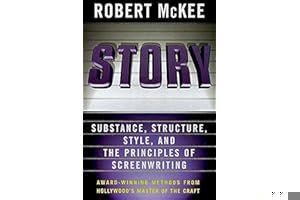
Robert McKee's screenwriting workshops have earned him an international reputation for inspiring novices, refining works in progress and putting major screenwriting careers back on track. Quincy Jones, Diane Keaton, Gloria Steinem, Julia Roberts, John Cleese and David Bowie are just a few of his celebrity alumni. Writers, producers, development executives and agents all flock to his lecture series, praising it as a mesmerizing and intense learning experience. In Story, McKee expands on the concepts he teaches in his $450 seminars (considered a must by industry insiders), providing readers with the most comprehensive, integrated explanation of the craft of writing for the screen. No one better understands how all the elements of a screenplay fit together, and no one is better qualified to explain the "magic" of story construction and the relationship between structure and character than Robert McKee.
…
Recommended by Bill Liao.
Bill Liao
The human world occurs in language so best get good at it! [source]
Cover unavailable
3
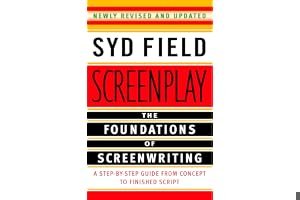
Screenplay: The Foundations of Screenwriting
Syd Field
4.7
A generation of screenwriters has used Syd Field’s bestselling books to ignite successful careers in film. Now the celebrated producer, lecturer, teacher, and bestselling author has updated his classic guide for a new generation of filmmakers, offering a fresh insider’s perspective on the film industry today. From concept to character, from opening scene to finished script, here are easily understood guidelines to help aspiring screenwriters—from novices to practiced writers—hone their craft. Filled with updated material—including all-new personal anecdotes and insights, guidelines on marketing and collaboration, plus analyses of recent films, from American Beauty to Lord of the Rings—Screenplay presents a step-by-step, comprehensive technique for writing the screenplay that will succeed in Hollywood. Discover:
•Why the first ten pages of your script are crucially important •How to visually “grab” the reader from page one, word one •Why structure and character are the essential foundation of your screenplay •How to adapt a novel, a play, or an article into a screenplay •Tips on protecting your work—three legal ways to claim ownership of your screenplay •The essentials of writing great dialogue, creating character, building a story line, overcoming writer’s block, getting an agent, and much more.
With this newly updated edition of his bestselling classic, Syd Field proves yet again why he is revered as the master of the screenplay—and why his celebrated guide has become the industry’s gold standard for successful screenwriting.
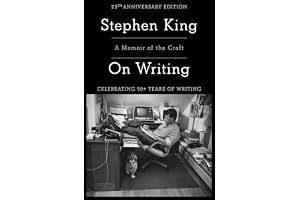
Immensely helpful and illuminating to any aspiring writer, Stephen King’s critically lauded, classic bestseller shares the experiences, habits, and convictions that have shaped him and his work.
"Long live the King" hailed Entertainment Weekly upon publication of Stephen King’s On Writing. Part memoir, part master class by one of the bestselling authors of all time, this superb volume is a revealing and practical view of the writer’s craft, comprising the basic tools of the trade every writer must have. King’s advice is grounded in his vivid memories from childhood through his emergence as a writer, from his struggling early career to his widely reported, near-fatal accident in 1999—and how the inextricable link between writing and living spurred his recovery. Brilliantly structured, friendly and inspiring, On Writing will empower and entertain everyone who reads it—fans, writers, and anyone who loves a great story well told.
I read a bunch of books on writing before I wrote my first book and the two that stuck with me were Stephen King’s book and “On Writing Well” by Zinsser (which is a bit on the technical side). [source]
Alina Varlanuta
My professional path – copywriting – somehow intertwines with my unprofessional (hahaha) path – writing so I would recommend reading literature for both. Somehow reading and writing are two ways of doing the same thing: storytelling (even when you read you tell yourself a story in your own voice, bringing your personal emotion and empathy to the story you’re reading). The only difference is that when I’m reading, panic is far away from me, in a safe place. Nevertheless, the words below helped me rewrite and think twice before adding an exclamation point: On Writing by Stephen King. [source]
Andrew Cowan
Yes. It is a surprise to a lot of people that this book is so widely read on university campuses and so widely recommended by teachers of writing. Students love it. It’s bracing: there’s no nonsense. He says somewhere in the foreword or preface that it is a short book because most books are filled with bullshit and he is determined not to offer bullshit but to tell it like it is. [source]
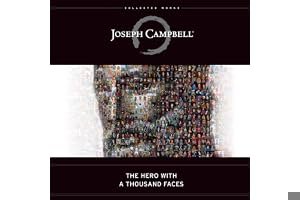
The first popular work to combine the spiritual and psychological insights of modern psychoanalysis with the archetypes of world mythology, the book creates a roadmap for navigating the frustrating path of contemporary life. Examining heroic myths in the light of modern psychology, it considers not only the patterns and stages of mythology but also its relevance to our lives today--and to the life of any person seeking a fully realized existence.
Myth, according to Campbell, is the projection of a culture's dreams onto a large screen; Campbell's book, like Star Wars, the film it helped inspire, is an exploration of the big-picture moments from the stage that is our world. It is a must-have resource for both experienced students of mythology and the explorer just beginning to approach myth as a source of knowledge.
The book I’d give every graduating senior in college or high school would be … Joseph Campbell’s 'Hero of a Thousand Faces'. It's little bit dense but it’s so rich, so it’s a good one. [source]
Joseph Campbell was the first person to really open my eyes to the compassionate side of life, or of thought... Campbell was the guy who really kind of put it all together for me, and not in a way I could put my finger on... It made you just glad to be alive, realizing how vast this world is, and how similar and how different we are. [source]
Catherine Plano
Was mind blowing, it really helped me put into perspective, that there are cycles and rhythms, and I now call them initiations, when you are faced with fear we are never too sure of our potential unless we know how to fail, what did we learn from it and what are we going to do differently the next time. There is a lesson in everything we experience, as long as we slow down enough to reflect. The other thing in the hero's journey is that even when you say 'yes' to a project, it really doesn't mean that you are going to succeed at it, but if you go into a project with an open mind and embrace that you are here to learn, the journey itself is rewarding, not always the outcome and when we really look at our failures, they weren't real failures after all, but a stepping stone onto something greater. [source]
Cover unavailable
6
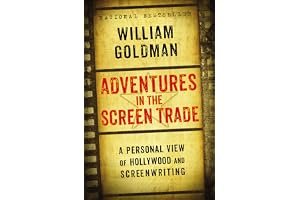
Adventures in the Screen Trade
William Goldman
4.6
Now available as an ebook for the first time!
No one knows the writer's Hollywood more intimately than William Goldman. Two-time Academy Award-winning screenwriter and the bestselling author of Marathon Man, Tinsel, Boys and Girls Together, and other novels, Goldman now takes you into Hollywood's inner sanctums...on and behind the scenes for Butch Cassidy and the Sundance Kid, All the President's Men, and other films...into the plush offices of Hollywood producers...into the working lives of acting greats such as Redford, Olivier, Newman, and Hoffman...and into his own professional experiences and creative thought processes in the crafting of screenplays. You get a firsthand look at why and how films get made and what elements make a good screenplay. Says columnist Liz Smith, "You'll be fascinated.
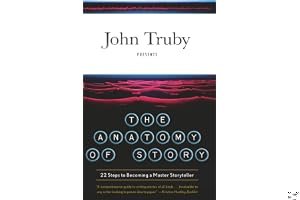
The Anatomy of Story: 22 Steps to Becoming a Master Storyteller
John Truby
4.6
John Truby is one of the most respected and sought-after story consultants in the film industry, and his students have gone on to pen some of Hollywood's most successful films, including Sleepless in Seattle, Scream, and Shrek. The Anatomy of Story is his long-awaited first book, and it shares all of his secrets for writing a compelling script. Based on the lessons in his award-winning class, Great Screenwriting, The Anatomy of Story draws on a broad range of philosophy and mythology, offering fresh techniques and insightful anecdotes alongside Truby's own unique approach for how to build an effective, multifaceted narrative. Truby's method for constructing a story is at once insightful and practical, focusing on the hero's moral and emotional growth. As a result, writers will dig deep within and explore their own values and worldviews in order to create an effective story. Writers will come away with an extremely precise set of tools to work with--specific, useful techniques to make the audience care about their characters, and that make their characters grow in meaningful ways. They will construct a surprising plot that is unique to their particular concept, and they will learn how to express a moral vision that can genuinely move an audience.
The foundations of story that Truby lays out are so fundamental they are applicable--and essential--to all writers, from novelists and short-story writers to journalists, memoirists, and writers of narrative non-fiction.
…
Cover unavailable
8
The Writer's Journey: Mythic Structure for Writers
Christopher Vogler
4.5
Provides new insights and observations from Vogler's pioneering work in mythic structure for writers.
Recommended by Darren Aronofsky.
Darren Aronofsky
It’s the Bible for screenwriters. I think it’s the best book on how to write a screenplay ever written. It helped me get through so many roadblocks as a writer. [source]
Cover unavailable
9
The Screenwriter's Bible: A Complete Guide to Writing, Formatting, and Selling Your Script
David Trottier
4.5
This book provides a concise presentation of screenwriting basics. The author shows the correct formats for both screenplays and teleplays, and takes the writer through the writing and marketing process.
Cover unavailable
10
The Art of Dramatic Writing: Its Basis in the Creative Interpretation of Human Motives
Lajos Egri
4.5
Among the many "how-to" playwriting books that have appeared over the years, there have been few that attempt to analyze the mysteries of play construction. Lajos Egri's classic, The Art of Dramatic Writing, does just that, with instruction that can be applied equally well to a short story, novel, or screenplay. Examining a play from the inside out, Egri starts with the heart of any drama: its characters. All good dramatic writing hinges on people and their relationships, which serve to move the story forward and give it life, as well as an understanding of human motives - why people act the way that they do. Using examples from everything from William Shakespeare's Romeo and Juliet to Henrik Ibsen's A Doll's House, Egri shows how it is essential for the author to have a basic premise - a thesis, demonstrated in terms of human behavior - and to develop the dramatic conflict on the basis of that behavior. Using Egri's ABCs of premise, character, and conflict, The Art of Dramatic Writing is a direct, jargon-free approach to the problem of achieving truth in writing.
When a writer or an entrepreneur, or a manager, or an employee, or a…whatever…sits down to get to work, he or she is often met by “the resistance”. The excuses that come up: I can’t do this. I am too old. I don’t have enough money. I’m scared. “The War of Art” is the guide to getting through that block. The comfort zone is papered up and cemented shut by our excuses. Learn to blast through that wall. Because on the other side of the comfort zone are all the tools of success. [source]
Also hard to find on audio. I find Steve's voice to be fascinating, and even before I knew him, I was fascinated by listening to him speak his own work. The War of Art is one of those books, at least for me when I finally was exposed to it, I said, 'Why wasn't I informed? Why did it take this long for this book to land on my desk?'... You need to be clear with yourself about what you are afraid of, why you are afraid, and whether you care enough to dance with that fear because it will never go away. [source]
Adam Johnston
The last two pages of Steven Pressfield’s The War of Art gave me a swift kick in the ass. Do it or don’t do it. But if you don’t do it, you not only hurt yourself. You hurt your children. You hurt me. You hurt the planet. Pressfield wrote a beautiful book that you should read, but if nothing else, just read the last two pages of the book. I have them hanging on my wall in my office. [source]
Cover unavailable
12
Save the Cat! Goes to the Movies: The Screenwriter's Guide to Every Story Ever Told
Blake Snyder
4.4
In the long-awaited sequel to his surprise bestseller, Save the Cat!, author and screenwriter Blake Snyder returns to form in a fast-paced follow-up that proves why his is the most talked-about approach to screenwriting in years. In the perfect companion piece to his first book, Snyder delivers even more insider's information gleaned from a 20-year track record as ?one of Hollywood's most successful spec screenwriters, ? giving you the clues to write your movie. Designed for screenwriters, novelists, and movie fans, this book gives readers the key breakdowns of the 50 most instructional movies from the past 30 years. From M*A*S*H to Crash, from Alien to Saw, from 10 to Eternal Sunshine of the Spotless Mind, Snyder reveals how screenwriters who came before you tackled the same challenges you are facing with the film you want to write ? or the one you are currently working on.
…
Cover unavailable
13
Save the Cat! Strikes Back: More Trouble for Screenwriters to Get Into... and Out of
Blake Snyder
4.4
Inspired by questions from the author's workshops, lectures, and emails, this book listened and provides tips, tactics, and techniques to solve your writing problems and create stories that resonate: The 7 warning signs you might have a great idea or not; 2 sure-fire templates for can t-miss loglines; and, more.
Cover unavailable
14
The Screenwriter's Workbook (Revised Edition)
Syd Field
4.4
At last! The classic screenwriting workbook—now completely revised and updated—from the celebrated lecturer, teacher, and bestselling author, Syd Field: “the most sought-after screenwriting teacher in the world”*
No one knows more about screenwriting than Syd Field—and now the ultimate Hollywood insider shares his secrets and expertise, completely updating his bestselling workbook for a new generation of screenwriters. Filled with new material—including fresh insights and anecdotes from the author and analyses of films from Pulp Fiction to Brokeback Mountain—The Screenwriter’s Workbook is your very own hands-on workshop, the book that allows you to participate in the processes that have made Syd Field’s workshops invaluable to beginners and working professionals alike. Follow this workbook through to the finish, and you’ll end up with a complete and salable script!
Learn how to: • Define the idea on which your script will be built • Create the model—the paradigm—that professionals use • Bring your characters to life • Write dialogue like a pro • Structure your screenplay for success from the crucial first pages to the final act
Here are systematic instructions, easy-to-follow exercises, a clear explanation of screenwriting basics, and expert advice at every turn—all the moment-to-moment, line-by-line help you need to transform your initial idea into a professional screenplay that’s earmarked for success.
The Perfect Companion Volume to Syd Field’s Revised and Updated Edition of Screenplay: The Foundations of Screenwriting
*Hollywood Reporter
…
Cover unavailable
15
Into the Woods: A Five Act Journey Into Story
John Yorke
4.3
Into The Woods is a revelation of the fundamental structure and meaning of all stories, from the man responsible for more hours of drama on British television than anyone else, John Yorke. We all love stories. Many of us love to tell them, and even dream of making a living from it too. But what is a story? Hundreds of books about screenwriting and storytelling have been written, but none of them ask 'Why?' Why do we tell stories? And why do all stories function in an eerily similar way? John Yorke has been telling stories almost his entire adult life, and the more he has done it, the more he has asked himself why? Every great thinker or writer has their theories: Aristotle, David Hare, Lajos Egri, Robert McKee, Gustav Freytag, David Mamet, Christopher Booker, Charlie Kaufman, William Goldman and Aaron Sorkin - all have offered insightful and illuminating answers. Here, John Yorke draws on these figures and more as he takes us on a historical, philosophical, scientific and psychological journey to the heart of all storytelling. What he reveals is that there truly is a unifying shape to narrative - one that echoes the great fairytale journey into the woods, and one, like any great art, that comes from deep within. Much more than a 'how to write' book, Into the Woods is an exploration of this fundamental structure underneath all narrative forms, from film and television to theatre and novel-writing. With astonishing detail and wisdom, John Yorke explains to us a phenomenon that, whether it is as a simple fable, or a big-budget 3D blockbuster, most of us experience almost every day of our lives.
…
Cover unavailable
16
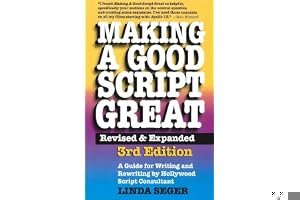
Making a Good Script Great
Linda Seger
4.3
Making a good script great is not just a matter of having a good idea. Nor is it a matter of just putting that good idea down on paper. In scriptwriting, it's not just the writing but also the rewriting that counts. Making a Good Script Great focuses on the rewriting process and offers specific methods to help you craft tighter, stronger, and more workable scripts.
While retaining all the valuable insights that have made the first edition one of the all-time most popular screenwriting books, this expanded, second edition adds new chapters that take you through the complete screenwriting process, from the first draft through the shooting draft.
If you're writing your first script, this book will help develop your skills for telling a compelling and dramatic story. If you're a veteran screenwriter, this book will articulate the skills you know intuitively And if you're currently stuck on a rewrite, this book will help you analyze and solve the problems and get your script back “on track.”
…
Cover unavailable
17
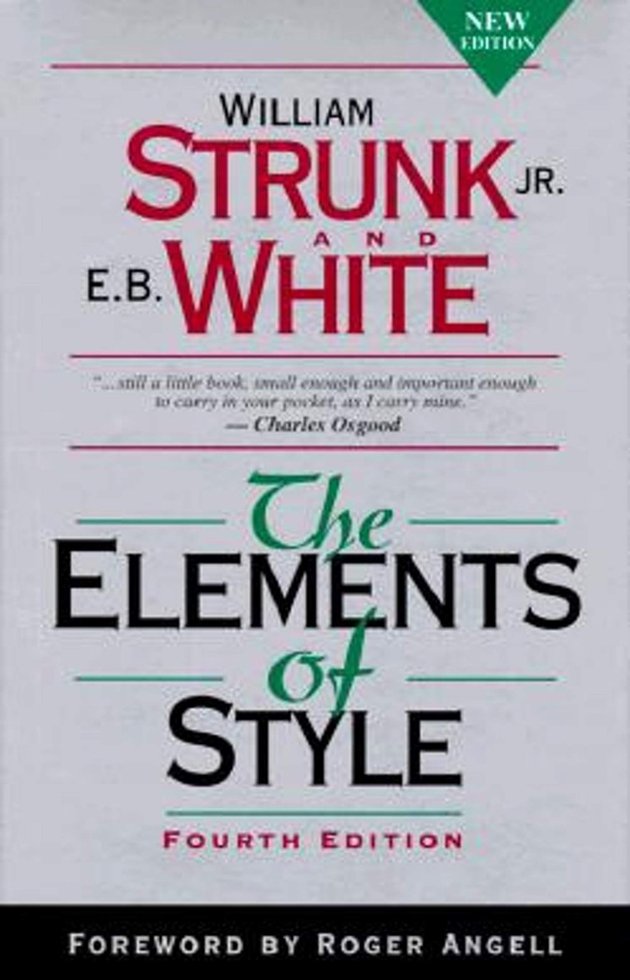
The Elements of Style
William Jr. Strunk
4.3
You know the authors' names. You recognize the title. You've probably used this book yourself. And now "The Elements of Style"-the most widely read and employed English style manual-is available in a specially bound 50th Anniversary Edition that offers the title's vast audience an opportunity to own a more durable and elegantly bound edition of this time-tested classic. Offering the same content as the Fourth Edition, revised in 1999, the new casebound 50th Anniversary Edition includes a brief overview of the book's illustrious history. Used extensively by individual writers as well as high school and college students of writing, it has conveyed the principles of English style to millions of readers. This new deluxe edition makes the perfect gift for writers of any age and ability level. Fifty Years of Acclaim for "The Elements of Style," by William Strunk Jr. and E.B. White "I first read "Elements of Style" during the summer before I went off to Exeter, and I still direct my students at Harvard to their definition about the difference between 'that' and 'which.' It is the Bible for good, clear writing." -- Henry Louis Gates Jr. "For writers of all kinds and sizes the world begins and ends with Strunk and White's "Elements of Style." Only something to actually write about trumps the list of what is required to put words together in some kind of coherent way. I treasure its presence in my life and salute its fifty years of glory and accomplishment." -- Jim Lehrer ""The Elements of Style" remains an unwavering beacon of light in these grammatically troubled times. I would be lost without it." -- Ann Patchett "To the extent I know how to write clearly at all, I probably taught myself while I was teaching others -- seventh graders, in Flint, Michigan, in 1967. I taught them with a copy of Strunk & White lying in full view on my desk, sort of in the way the Gideons leave Bibles in cheap hotel rooms, as a way of saying to the hapless inhabitant: 'In case your reckless ways should strand you here, there's help.' S&W doesn't really teach you how to write, it just tantalizingly reminds you that there's an orderly way to go about it, that clarity's ever your ideal, but -- really -- it's all going to be up to you." -- Richard Ford ""The Elements of Style" never seems to go out of date. Its counsel is sound and funny, wise and unpretentious. And while its precepts are a foundation of direct communication, Strunk and White do not insist on a way of writing beyond clear expression. The rest is up to the imagination, the intelligence within." -- David Remnick, editor of "The New Yorker" "It's the toughness-the irreverence and implicit laughter-that attracted me to the little book when I was seventeen. I fell in love with Strunk & White's loathing for cant and bloviation, the ruthless cutting of crap, jargon, and extra words. For me, that skeptical directness included a tacit permission by "The Elements of Style" to break its rules on occasion: an alloy of generosity in the blade, a grace I still admire and still learn from." -- Robert Pinsky "In the quest for clarity, one can have no better guides than Strunk and White. For me, their book has been invaluable and remains essential." -- Dan Rather "Eschew surplusage! A perfect book." --Jonathan Lethem "Not until I started teaching writing and I reread "The Elements of Style" did I realize that most everything I would be teaching young writers, and everything I would be learning myself as a writer, was contained between the covers of this slim, elegant, wise little book." -- Julia Alvarez "Strunk and White seared their way into my brain long ago, and I benefit from them daily." -- Steven J. Dubner, co-author of "Freakonomics" "Since high school, I have kept a copy of this book handy. That should be unnecessary. I should, by now, have fully internalized "The Elements of Style." But sometimes I get entangled in a paragraph that refuses to be 'clear, brief, bold.' I dip back into "The Elements of Style" and am refreshed. After Scott Simon interviewed me on NPR about whether the word 'e-mail' needs a hyphen (yes, it does), some listeners, including friends of mine, wondered why I had answered in the affirmative when asked, in passing, 'Are you a drunken white man?' Those listeners misheard. 'Strunk and White man' was what Scott said." -- Roy Blount Jr. "Strunk & White--writing's good-natured law firm--still contains enough sparkling good sense to clean up the whole bloviating blogosphere." -- Thomas Mallon "I used Strunk -- that's what we called it, Strunk -- as a student at Berkeley fifty years ago. I didn't know that it was new, and that we were the first generation to be educated in "The Elements of Style." I got a firm foundation in the English language, learned to write basically, and could depict the realistic world. Then I was able to become an impressionist and expressionist." -- Maxine Hong Kingston "Strunk and White's gigantic little book must be the most readable advice on writing ever written. Side by side with Roget, Shakespeare, the Bible, and a dictionary, it's an essential for every writer's shelf." -- X.J. Kennedy" ""With what joy I welcome the fiftieth anniversary of "The Elements of Style." I am greatly indebted to this book for the invaluable help it has given me all these years." -- Horton Foote "Elegant, droll, and perfectly proportioned, and like your favorite aunt, strict but affectionate. And, like your favorite aunt, full of optimism: You can, and will, be a better writer! There has never been a better, briefer, or more loved book about the art and craft of communicating." -- Susan Orlean "This book is an essential tool. It has been of great use to me and is probably responsible for my best writing. I owe my success to Strunk and White; only the mistakes are mine." -- Ben Affleck, in "O, the Oprah Magazine" "This book is a wonderful example of teaching by example. Not only does it recommend clear and concise writing, it demonstrates it. Written in the style of a friend offering help, it is a godsend to anyone wanting to put words on paper. Thank you, Messieurs Strunk and White. And Happy Anniversary, "Elements of Style."" -- S.E. Hinton "When I began to have ... I wouldn't say arguments but conversations in my mind with Strunk and White about a few of their rules and principles, I knew I was coming into my own. If only they were still here to talk things over! No doubt their side of the exchange would be kindly put, well-informed, and wise. They'd probably help me with my side of it. What more could one want from writers reaching out to help other writers?" -- Barbara Wallraff, language columnist for "The Atlantic" "I don't believe there is a serious writer alive who doesn't have a worn copy of 'Strunk & White'on his or her bookshelf." -- Mignon Fogarty, author of "Grammar Girl's Quick and Dirty Tips ""for Better Writing" "This little book has inspired hundreds of thousands of people to write better -- partly by precept and partly by example. It continues to influence more writers than any other. It's a force for good in the world." -- Bryan A. Garner, author of "Garner's Modern American Usage" "I can think of no better guide to good writing, and I always think of this little classic with a warm heart. More importantly, I revisit its pages often. It's the one essential book on writing." -- Jay Parini, author of "Why Poetry Matters" "Clarity and simplicity have always been the goals, and this book shows the way. It has always been a lighthouse in the dark and stormy night of student prose, of all of our prose." -- Ron Carlson "The only rules you are ever going to get from me are all in Strunk and White." --Ursula K. Le Guin, from "Steering the Craft " "["The Elements of Style "is] a book to which I return from time to time, the way I periodically reread Shakespeare. I always discover something new, settle a question that has been puzzling me, or learn a principle of usage that I have been pretending to know, a pretense that has resulted in inconsistency and in the sort of errors from which I can only pray some saintly copy editor will save me." -- Francine Prose, from "Reading"" Like A Writer" ..".still a little book, small enough and important enough to carry in your pocket, as I carry mine." -- Charles Osgood "Almost every writer has a Strunk and White story. One journalism professor spends the first two weeks of school forcing his students to memorize the book. A top editor at a major paper buys copies at yard sales to distribute to her writers and interns. It has even caused love affairs. . . . Could its greatness be any more clear?" -- Jesse Sheidlower, American Editor of the "Oxford"" English Dictionary," on NPR" ""If the English language is one of the finest homes ever devised for the human spirit, "Elements" is the best guided house tour we've got." --David Gelernter, "The Wall Street Journal" ..".Should be the daily companion of anyone who writes for a living and, for that matter, anyone who writes at all." "--"Jonathan Yardley, " Greensboro (N.C.) Daily News" "No book in shorter space, with fewer words, will help any writer more than this persistent little volume." -- Herbert A. Kenny, "The Boston Globe" "Buy it, study it, enjoy it. It's as timeless as a book can be in our age of volubility." -- Charles Poore, "The New York Times" "White is one of the best stylists and most lucid minds in this country. What he says and his way of saying it are equally rewarding." "-- "Edmund Fuller, "The Wall Street Journal ""If you have any young friends who aspire to become writers, the second greatest favor you can do them is to present them with copies of "The Elements of Style." The first greatest, of course, is to shoot them now, while they're happy." -- Dorothy Parker, "Esquire"
…
Recommended by Tobi Lütke, Alina Varlanuta, Ann Handley, and 3 others.
Tobi Lütke
Founder & CEO/Shopify
My most frequently gifted book is this book because I like good writing. [source]
Alina Varlanuta
My professional path – copywriting – somehow intertwines with my unprofessional (hahaha) path – writing so I would recommend reading literature for both. Somehow reading and writing are two ways of doing the same thing: storytelling (even when you read you tell yourself a story in your own voice, bringing your personal emotion and empathy to the story you’re reading). The only difference is that when I’m reading, panic is far away from me, in a safe place. Nevertheless, the words below helped me rewrite and think twice before adding an exclamation point: The Elements of Style. [source]
Bill Nye
This is my guide. I accept that I’ll never write anything as good as the introductory essay by the author. It’s brilliant. [source]
Cover unavailable
18
The Hollywood Standard: The Complete and Authoritative Guide to Script Format and Style
Christopher Riley
4.3
The Hollywood Standard describes in clear, vivid prose and hundreds of examples how to format every element of a screenplay or television script. A reference for everyone who writes for the screen, from the novice to the veteran, this is the dictionary of script format, with instructions for formatting everything from the simplest master scene heading to the most complex and challenging musical underwater dream sequence. This new edition includes a quick start guide, plus new chapters on avoiding a dozen deadly formatting mistakes, clarifying the difference between a spec script and production script, and mastering the vital art of proofreading. For the first time, readers will find instructions for formatting instant messages, text messages, email exchanges and caller ID.
…
Cover unavailable
19
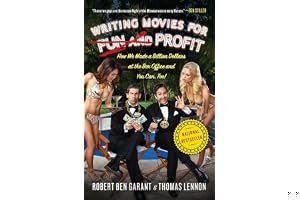
Writing Movies for Fun and Profit: How We Made a Billion Dollars at the Box Office and You Can, Too!
Thomas Lennon
4.3
This isthe only screenwriting guide by two guys who have actually done it (instead of some schmuck who just gives lectures about screenwriting at the airport Marriott); “These guys are proof that with no training and little education, ANYONE can make it as a screenwriter” (Paul Rudd).
Robert Ben Garant and Thomas Lennon’s movies have made over a billion dollars at the box office—and now they show you how to do it yourself! This book is full of secret insider information about how to conquer the Hollywood studio system: how to write, pitch, structure, and get drunk with the best of them. Well…maybe not the best of them, but certainly the most successful. (If you’re aiming to win an Oscar, this is not the book for you!) But if you can type a little, and can read and speak English—then you too can start turning your words into stacks of money!
This is the only screenwriting book you will ever need (because all other ones pretty much suck). In these pages, Garant and Lennon provide the kind of priceless tips you won’t find anywhere else, including:
-The art of pitching -Getting your foot in the door -Taking notes from movie stars -How to get fired and rehired -How to get credit and royalties!
And most important: what to buy with the huge piles of money you’re going to make!
Writing Movies for Fun and Profit will take you through the highs and lows of life as a professional screenwriter. From the highs of hugging Gisele Bündchen and getting kung fu punched by Jackie Chan to the soul-crushing lows of Herbie: Fully Loaded.
Read this book and you’ll have everything you need to make your first billion the old-fashioned way—by “selling out” in show business!
A portion of the authors’ proceeds from this book are being contributed to the USO of Metropolitan Washington, a private, nonprofit organization dedicated to serving active duty military members and their families in the greater Washington, DC, region.
…
Cover unavailable
20
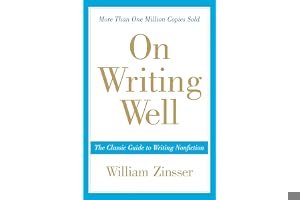
On Writing Well: The Classic Guide To Writing Nonfiction
On Writing Well has been praised for its sound advice, its clarity and the warmth of its style. It is a book for everybody who wants to learn how to write or who needs to do some writing to get through the day, as almost everybody does in the age of e-mail and the Internet. Whether you want to write about people or places, science and technology, business, sports, the arts or about yourself in the increasingly popular memoir genre, On Writing Well offers you fundamental priciples as well as the insights of a distinguished writer and teacher. With more than a million copies sold, this volume has stood the test of time and remains a valuable resource for writers and would-be writers.
I read a bunch of books on writing before I wrote my first book and the two that stuck with me were Stephen King’s book and “On Writing Well” by Zinsser (which is a bit on the technical side). [source]
Tim O'Reilly
Founder/O'Reilly Media
On Writing Well, by William Zinsser. I wouldn't say this book influenced me, since my principles of writing were established long before I read it. However, it does capture many things that I believe about effective writing. [source]
Great blunt advice about writing better non-fiction. So inspiring. [source]
Cover unavailable
21
Your Screenplay Sucks!: 100 Ways to Make It Great
William M Akers
4.3
A lifetime member of the Writer's Guild of America who has had three feature films produced from his screenplays, Akers offers beginning writers the tools they need to get their screenplay noticed.
Cover unavailable
22
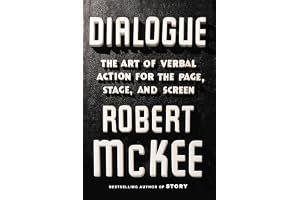
Dialogue: The Art of Verbal Action for Page, Stage, and Screen
Robert Mckee
4.3
The long-awaited follow-up to the perennially bestselling writers' guide Story, from the most sought-after expert in the art of storytelling.
Robert McKee's popular writing workshops have earned him an international reputation. The list of alumni with Oscars runs off the page. The cornerstone of his program is his singular book, Story, which has defined how we talk about the art of story creation.
Now, in DIALOGUE, McKee offers the same in-depth analysis for how characters speak on the screen, on the stage, and on the page in believable and engaging ways. From Macbeth to Breaking Bad, McKee deconstructs key scenes to illustrate the strategies and techniques of dialogue. DIALOGUE applies a framework of incisive thinking to instruct the prospective writer on how to craft artful, impactful speech. Famous McKee alumni include Peter Jackson, Jane Campion, Geoffrey Rush, Paul Haggis, the writing team for Pixar, and many others.
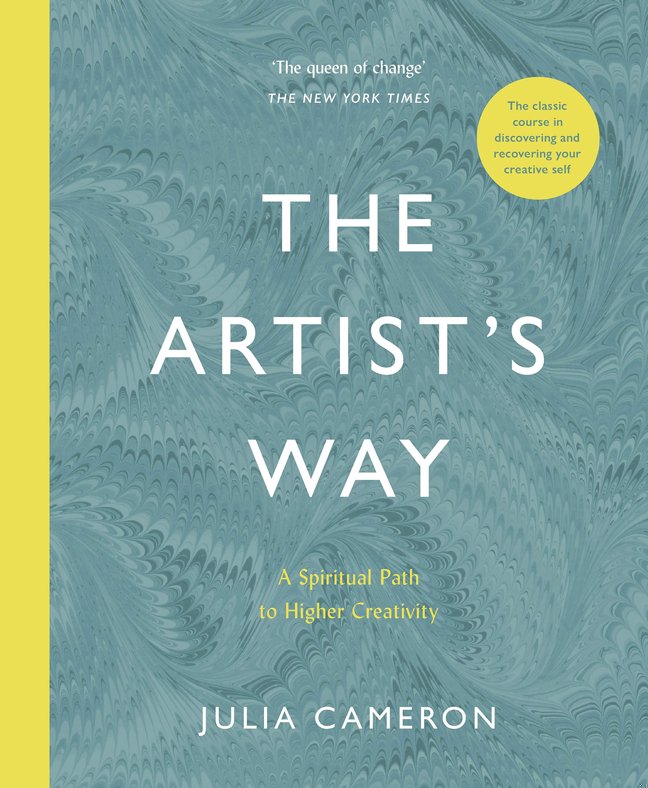
"Without The Artist's Way, there would have been no Eat, Pray, Love.” —Elizabeth Gilbert
A stunning gift edition of the powerful bestselling book on creativity.The Artist’s Way is one of the bestselling gift books of all time. Beautifully packaged with a slipcase and ribbon, this tenth anniversary gift edition is the ideal gift for loved ones engaged in creative lives.
Recommended by Anand C and Emma Gannon.
Anand C
STARTING FROM AUTHENTICITY: by observing, showing humility and being grateful - I started being open to what’s in the sub-conscious more (30+ sessions in). Speaking your truth is a powerful result of this. One great book to help explore this. https://t.co/sOAgAHhWsO [source]
Emma Gannon
Instead of all these fast paced books saying: ‘Here’s how to be amazing, here’s how to get a side hustle, here’s how to hustle, hustle, hustle.’ This is the total opposite. It’s about slowing right down and connecting with yourself again. [source]
Cover unavailable
24
The Coffee Break Screenwriter: Writing Your Script Ten Minutes at a Time
Pilar Alessandra
4.2
A leading Hollywood screenwriting instructor shows anyone who's ever wanted to write a screenplay how to do it 10 minutes at a time.
Cover unavailable
25
Writing Screenplays That Sell: The Complete, Step-By-Step Guide for Writing and Selling to the Movies and TV, from Story Concept to Development Deal
Michael Hauge
4.2
The up-to-date, acclaimed guide to writing and selling screenplays to today′s film and TV markets. This is the new screenwriter′s bible.
Cover unavailable
26
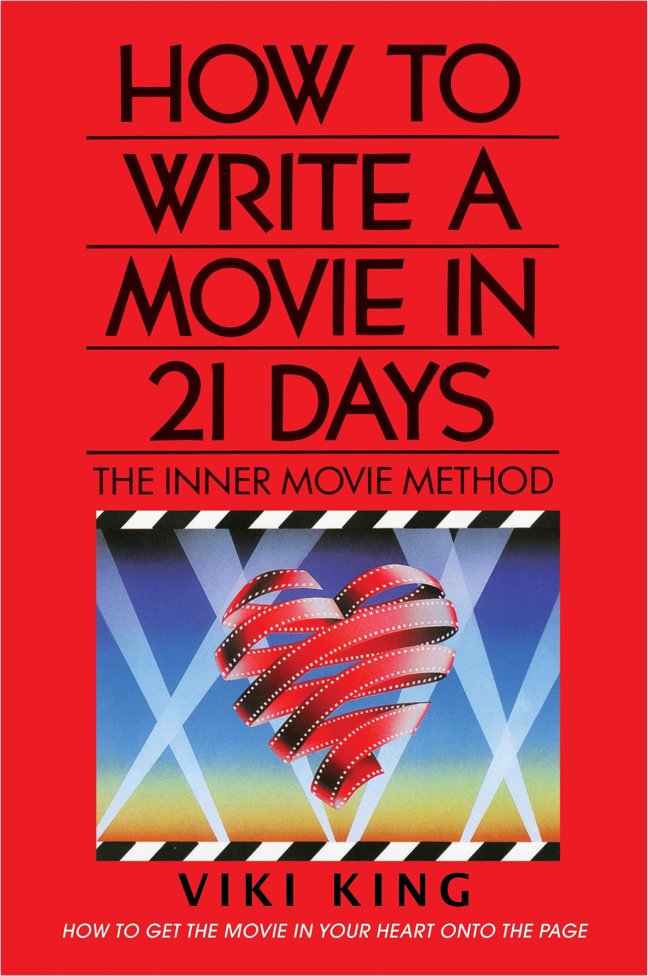
How to Write a Movie in 21 Days
Viki King
4.2
The ultimate survival guide, How to Write a Movie in 21 Days takes the aspiring screenwriter the shortest distance from blank page to complete script. Viki King's Inner Movie Method is a specific step-by-step process designed to get the story in the writer's onto the page. This method guides the would-be screenwriter through the writing of a movie. It answers such questions as:
How to clarify the idea you don't quite have yet
How to tell if your idea is really a movie
How to move from what you want to say saying it
How to stop getting ready and start Once you know what to write, the Inner Movie Method will show you how to write it. It also addresses such issues as:
How to pay the rent while paying your dues
What to say to your spouse when you can't come to bed
How to keep going when you think you can't For accomplished screenwriters honing their craft, as well as those who never before brought their ideas to paper, How to Write a Movie in 21 Days is an indispensable guide. And Viki King's upbeat, friendly style is like having a first-rate writing partner every step of the way.
…
Cover unavailable
27
Rebel Without a Crew: Or, How a 23-year-old Film Maker with $7,000 Became a Hollywood Player
Robert Rodriguez
4.2
The film-maker Robert Rodriguez describes how he made El Mariachi for $7000, demonstrating many ways in which a film-maker can do for nothing what professionals spend thousands of dollars doing without a second thought.
Recommended by Mat Whitecross.
Mat Whitecross
Yes, I remember growing up and really wanting to be a film-maker. I didn’t understand how films were made. There wasn’t a huge amount of information at the time. It seemed like an impossible dream to go off and become a director – there was no sure-fire route. There still isn’t. I remember going to the careers adviser at school and saying I want to be a director and he pretty much laughed at me and said, ‘Well you can’t!’ [source]
Cover unavailable
28
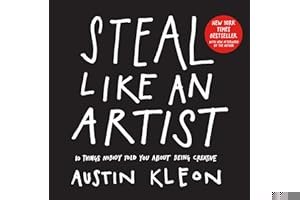
Steal Like an Artist: 10 Things Nobody Told You About Being Creative
You don’t need to be a genius, you just need to be yourself. That’s the message from Austin Kleon, a young writer and artist who knows that creativity is everywhere, creativity is for everyone. A manifesto for the digital age, Steal Like an Artist is a guide whose positive message, graphic look and illustrations, exercises, and examples will put readers directly in touch with their artistic side.
Part of ambition is modeling yourself after those you’d like to be like. Austin’s philosophy of ruthlessly stealing and remixing the greats might sound appalling at first but it is actually the essence of art. You learn by stealing, you become creative by stealing, you push yourself to be better by working with these materials. Austin is a fantastic artist, but most importantly he communicates the essence of writing and creating art better than anyone else I can think of. It is a manifesto for any young, creative person looking to make his mark. Pair up with Show Your Work which is also excellent. [source]
Breezy and fun and yes, scary. Scary because it calls your bluff. [source]
Andra Zaharia
While I was thinking of the best books to add to this short list, I realized that not even half of them are directly related to digital marketing. This is because I believe that the best marketers are people who understand human nature deeply and aim to bring out the best in it. Call me naive, but that’s how I see it. If I were to want to pursue a career in marketing, I’d read … Steal Like An Artist. [source]
Cover unavailable
29
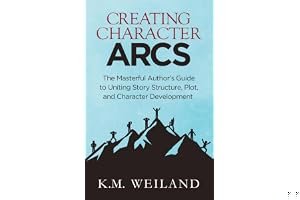
Creating Character Arcs: The Masterful Author's Guide to Uniting Story Structure, Plot, and Character Development (Helping Writers Become Authors Book 7)
K.M. Weiland
4.2
About the Book
Powerful Character Arcs Create Powerful Stories
Have you written a story with an exciting concept and interesting characters—but it just isn’t grabbing the attention of readers or agents? It’s time to look deeper into the story beats that create realistic and compelling character arcs. Internationally published, award-winning novelist K.M. Weiland shares her acclaimed method for achieving memorable and moving character arcs in every book you write.
By applying the foundation of the Three-Act Story Structure and then delving even deeper into the psychology of realistic and dynamic human change, Weiland offers a beat-by-beat checklist of character arc guidelines that flexes to fit any type of story.
This comprehensive book will teach you:
How to determine which arc—positive, negative, or flat—is right for your character. Why you should NEVER pit plot against character. Instead, learn how to blend story structure and character development. How to recognize and avoid the worst pitfalls of writing novels without character arcs. How to hack the secret to using overarching character arcs to create amazing trilogies and series. And much more!
Gaining an understanding of how to write character arcs is a game-changing moment in any author’s pursuit of the craft.
Bring your characters to unforgettable and realistic life—and take your stories from good to great!
…
Cover unavailable
30
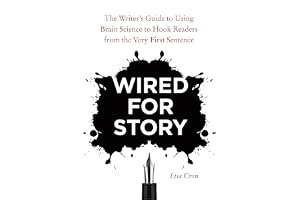
Wired for Story: The Writer's Guide to Using Brain Science to Hook Readers from the Very First Sentence
This guide reveals how writers can utilize cognitive storytelling strategies to craft stories that ignite readers’ brains and captivate them through each plot element.
Imagine knowing what the brain craves from every tale it encounters, what fuels the success of any great story, and what keeps readers transfixed. Wired for Story reveals these cognitive secrets—and it’s a game-changer for anyone who has ever set pen to paper. The vast majority of writing advice focuses on “writing well” as if it were the same as telling a great story. This is exactly where many aspiring writers fail—they strive for beautiful metaphors, authentic dialogue, and interesting characters, losing sight of the one thing that every engaging story must do: ignite the brain’s hardwired desire to learn what happens next. When writers tap into the evolutionary purpose of story and electrify our curiosity, it triggers a delicious dopamine rush that tells us to pay attention. Without it, even the most perfect prose won’t hold anyone’s interest. Backed by recent breakthroughs in neuroscience as well as examples from novels, screenplays, and short stories, Wired for Story offers a revolutionary look at story as the brain experiences it. Each chapter zeroes in on an aspect of the brain, its corresponding revelation about story, and the way to apply it to your storytelling right now.
…
Cover unavailable
31
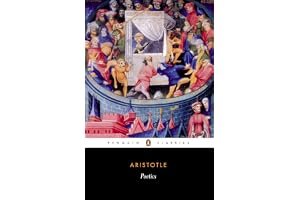
Poetics
Aristotle and Malcolm Heath
4.2
‘The plot is the source and the soul of tragedy’
In his near-contemporary account of Greek tragedy, Aristotle examines the dramatic elements of plot, character, language and spectacle that combine to produce pity and fear in the audience, and asks why we derive pleasure from this apparently painful process. Taking examples from the plays of Aeschylus, Sophocles and Euripides, The Poetics introduces into literary criticism such central concepts as mimesis (‘imitation’), hamartia (‘error’), and katharsis (‘purification’). Aristotle explains how the most effective tragedies rely on complication and resolution, recognition and reversals, centring on characters of heroic stature, idealized yet true to life. One of the most powerful, perceptive and influential works of criticism in Western literary history, the Poetics has informed serious thinking about drama ever since.
Malcolm Heath’s lucid English translation makes the Poetics fully accessible to the modern reader. It is accompanied by an extended introduction, which discusses the key concepts in detail and includes suggestions for further reading.
…
Recommended by Bill Liao and Richard Walter.
Bill Liao
The Book "Made to Stick" combined with "The Poetics" by Aristotle really helped me to see the power of telling great stories with surprises in them and every time I meet a start-up I can always make a contribution to their pitch. [source]
Richard Walter
Aristotle’s Poetics is the user’s guide to dramatic narrative and dramatic structure. It’s just a ragged little pamphlet really. [source]
Cover unavailable
32
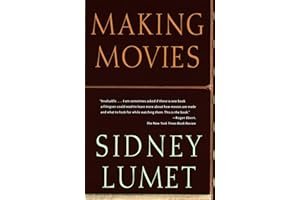
Making Movies
Sidney Lumet
4.2
From one of America's most acclaimed directors comes a book that is both a professional memoir and a definitive guide to the art, craft, and business of the motion picture. Drawing on 40 years of experience on movies ranging from Long Day's Journey Into Night to The Verdict, Lumet explains the painstaking labor that results in two hours of screen magic.
Recommended by Darren Aronofsky.
Darren Aronofsky
It’s an incredibly clear, honest, and precise discussion of the films Lumet made over the course of his career. There are many pearls of wisdom about directing and filmmaking in the book. [source]
Cover unavailable
33
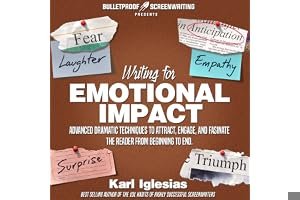
Writing for Emotional Impact: Advanced Dramatic Techniques to Attract, Engage, and Fascinate the Reader from Beginning to End
Karl Iglesias
4.2
Karl Iglesias breaks new ground by focusing on the psychology of the reader. Based on his acclaimed classes at UCLA Extension, Writing for Emotional Impact goes beyond the basics and argues that Hollywood is in the emotion-delivery business, selling emotional experiences packaged in movies and TV shows. Iglesias not only encourages you to deliver emtional impact on as many pages as possible, he shows you how, offering hundreds of dramatic techniques to take your writing to the professional level.
…
Cover unavailable
34
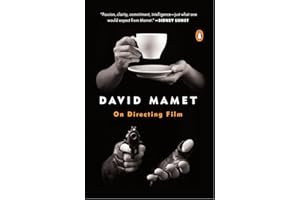
On Directing Film
David Mamet
4.2
According to David Mamet, a film director must, above all things, think visually. Most of this instructive and funny book is written in dialogue form and based on film classes Mamet taught at Columbia University. He encourages his students to tell their stories not with words, but through the juxtaposition of uninflected images. The best films, Mamet argues, are composed of simple shots. The great filmmaker understands that the burden of cinematic storytelling lies less in the individual shot than in the collective meaning that shots convey when they are edited together. Mamet borrows many of his ideas about directing, writing, and acting from Russian masters such as Konstantin Stanislavsky, Sergei M. Eisenstein, and Vsevelod Pudovkin, but he presents his material in so delightful and lively a fashion that he revitalizes it for the contemporary reader.
…
Cover unavailable
35
Screenwriting: The Sequence Approach
Paul Joseph Gulino
4.2
The great challenge in writing a feature-length screenplay is sustaining audience involvement from page one through 120. Screenwriting: The Sequence Approach expounds on an often-overlooked tool that can be key in solving this problem. A screenplay can be understood as being built of sequences of about fifteen pages each, and by focusing on solving the dramatic aspects of each of these sequences in detail, a writer can more easily conquer the challenges posed by the script as a whole.
The sequence approach has its foundation in early Hollywood cinema (until the 1950s, most screenplays were formatted with sequences explicitly identified), and has been rediscovered and used effectively at such film schools as the University of Southern California, Columbia University and Chapman University. This book exposes a wide audience to the approach for the first time, introducing the concept then providing a sequence analysis of eleven significant feature films made between 1940 and 2000:
The Shop Around The Corner / Double Indemnity / Nights of Cabiria / North By Northwest / Lawrence of Arabia / The Graduate / One Flew Over the Cuckoo's Nest / Toy Story / Air Force One / Being John Malkovich / The Fellowship of the Ring
…
Cover unavailable
36
The 21st-Century Screenplay: A Comprehensive Guide to Writing Tomorrow's Films
Linda Aronson
4.2
The 21st-Century Screenplay is a comprehensive and highly practical screenwriting manual. An eagerly anticipated successor to the author's internationally acclaimed book Scriptwriting Updated, it covers classic to avant-garde scripts, from The African Queen and Tootsie to 21 Grams, Pulp Fiction, Memento, and Eternal Sunshine of the Spotless Mind. Whether you want to write features, shorts, adaptations, genre films, ensemble films, blockbusters, or art house movies, this book is your road map, it takes you all the way from choosing a brilliant idea to plotting, writing, and rewriting a successful script. Featuring a range of insider survival tips on creativity under pressure, time-effective writing, and rising to the challenge of international competitions, The 21st-Century Screenplay is essential reading for newcomers and veterans alike.
…
Cover unavailable
37
Aristotle's Poetics for Screenwriters: Storytelling Secrets from the Greatest Mind in Western Civilization
Michael Tierno
4.2
An insightful how-to guide for writing screenplays that uses Aristotle's great work as a guide.
Long considered the bible for storytellers, Aristotle's Poetics is a fixture of college courses on everything from fiction writing to dramatic theory. Now Michael Tierno shows how this great work can be an invaluable resource to screenwriters or anyone interested in studying plot structure. In carefully organized chapters, Tierno breaks down the fundamentals of screenwriting, highlighting particular aspects of Aristotle's work. Then, using examples from some of the best movies ever made, he demonstrates how to apply these ancient insights to modern-day screenwriting. This user-friendly guide covers a multitude of topics, from plotting and subplotting to dialogue and dramatic unity. Writing in a highly readable, informal tone, Tierno makes Aristotle's monumental work accessible to beginners and pros alike in areas such as screenwriting, film theory, fiction, and playwriting.
…
Recommended by Richard Walter.
Richard Walter
I’m surprised that I’m recommending this because it has affectations that I find off-putting. It has lots of exclamation points!! Oh gosh!! Oh golly!! It’s self-conscious and he’s trying to be droll and wry. [source]
Cover unavailable
38
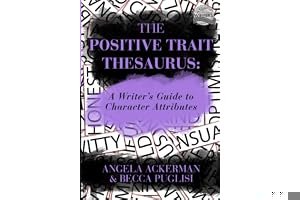
The Positive Trait Thesaurus: A Writer's Guide to Character Attributes
Angela Ackerman, Becca Puglisi
4.2
Character creation can be hard, but it’s about to get a lot easier. Inside The Positive Trait Thesaurus, you’ll find:
* A large selection of attributes to choose from when building a personality profile. Each entry lists possible causes for why a trait might emerge, along with associated attitudes, behaviors, thoughts, and emotions * Real character examples from literature, film, or television to show how an attribute drives actions and decisions, influences goals, and steers relationships * Advice on using positive traits to immediately hook readers while avoiding common personality pitfalls * Insight on human needs and morality, and how each determines the strengths that emerge in heroes and villains alike * Information on the key role positive attributes play within the character arc, and how they’re vital to overcoming fatal flaws and achieving success * Downloadable tools for organizing a character’s attributes and providing a deeper understanding of his past, his needs, and the emotional wounds he must overcome
If you find character creation difficult or worry that your cast members all seem the same, The Positive Trait Thesaurus is brimming with ideas to help you develop one-of-a-kind, dynamic characters that readers will love. Extensively indexed, with entries written in a user-friendly list format, this brainstorming resource is perfect for any character creation project.
“In these brilliantly conceived, superbly organized and astonishingly thorough volumes, Angela Ackerman and Becca Puglisi have created an invaluable resource for writers and storytellers. Whether you are searching for new and unique ways to add and define characters, or brainstorming methods for revealing those characters without resorting to clichés, it is hard to imagine two more powerful tools for adding depth and dimension to your screenplays, novels or plays.”
- Michael Hauge, Hollywood script consultant and story expert, author of Writing Screenplays That Sell and Selling Your Story in 60 Seconds: The Guaranteed Way to Get Your Screenplay or Novel Read
…
Cover unavailable
39
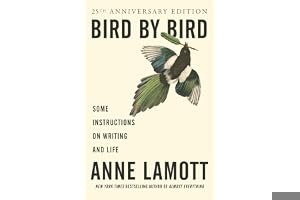
Bird By Bird: Some Instructions on Writing and Life
Anne Lamott
4.2
Thirty years ago my older brother, who was ten years old at the time, was trying to get a report on birds written that he'd had three months to write. It was due the next day. We were out at our family cabin in Bolinas, and he was at the kitchen table close to tears, surrounded by binder paper and pencils and unopened books on birds, immobilized by the hugeness of the task ahead. Then my father sat down beside him, put his arm around my brother's shoulder, and said, 'Bird by bird, buddy. Just take it bird by bird.'" "Superb writing advice... hilarious, helpful and provocative." -- "New York Times Book Review."
"A warm, generous and hilarious guide through the writer's world and its treacherous swamps." -- "Los Angeles Times."
"A gift to all of us mortals who write or ever wanted to write... sidesplittingly funny, patiently wise and alternately cranky and kind -- a reveille to get off our duffs and start writing "now," while we still can." -- "Seattle Times.
Bird by Bird is one of my absolute favorite books, and I gift it to everybody, which I should probably also give to startup founders, quite frankly. A lot of the lessons are the same. But you can get to your destination, even though you can only see 20 feet in front of you. [source]
It was wonderful to read these two provocative books of essays by two incredibly wise and compassionate women. … Anne Lamott’s book is ostensibly about the art of writing, but really it too is about life and how to tackle the problems, temptations and opportunities life throws at us. Both will make you think and both made me a better person this year. [source]
Cover unavailable
40
The Idea: The Seven Elements of a Viable Story for Screen, Stage or Fiction
Erik Bork
4.2
Cover unavailable
41
Four Screenplays: Studies in the American Screenplay
Syd Field
4.2
In a field being transformed by technology, Syd Field shows you what works and why and how to find new ways to create a truly outstanding film using four extraordinary examples: Thelma & Louise, Terminator 2: Judgement Day, The Silence Of The Lambs, and Dances With Wolves.
Cover unavailable
42
The Screenwriter's Problem Solver: How to Recognize, Identify, and Define Screenwriting Problems
Syd Field
4.2
All writing is rewriting. But what do you change, and how do you change it? All screenplays have problems. They happened to Die Hard: With a Vengeance and Broken Arrow-and didn't get fixed, leaving the films flawed. They nearly shelved Platoon-until Oliver Stone rewrote the first ten pages and created a classic. They happen to every screenwriter. But good writers see their problems as a springboard to creativity. Now bestselling author Syd Field, who works on over 1,000 screenplays a year, tells you step-by-step how to identify and fix common screenwriting problems, providing the professional secrets that make movies brilliant-secrets that can make your screenplay one headed for success...or even Cannes. Learn how to:
•Understand what makes great stories work •Make your screenplay work in the first ten pages, using Thelma & Louise and Dances With Wolves as models •Use a "dream assignment" to let your creative self break free overnight •Make action build character, the way Quentin Tarantino does •Recover when you hit the "wall"-and overcome writer's block forever
…
Cover unavailable
43
How Not to Write a Screenplay: 101 Common Mistakes Most Screenwriters Make
Denny Martin Flinn
4.2
All good screenplays are unique, but all bad screenplays are the same. Flinn's book will teach the reader how to avoid the pitfalls of bad screenwriting and arrive at one's own destination intact.
Cover unavailable
44
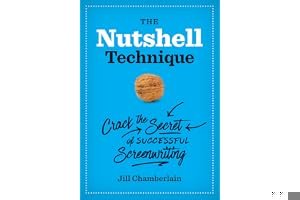
The Nutshell Technique: Crack the Secret of Successful Screenwriting
Jill Chamberlain
4.2
Veteran script consultant Jill Chamberlain discovered in her work that an astounding 99 percent of first-time screenwriters don't know how to tell a story. These writers may know how to format a script, write snappy dialogue, and set a scene. They may have interesting characters and perhaps some clever plot devices. But, invariably, while they may have the kernel of a good idea for a screenplay, they fail to tell a story. What the 99 percent do instead is present a situation. In order to explain the difference, Chamberlain created the Nutshell Technique, a method whereby writers identify eight dynamic, interconnected elements that are required to successfully tell a story.
Now, for the first time, Chamberlain presents her unique method in book form with The Nutshell Technique: Crack the Secret of Successful Screenwriting. Using easy-to-follow diagrams ("nutshells"), she thoroughly explains how the Nutshell Technique can make or break a film script. Chamberlain takes readers step-by-step through thirty classic and contemporary movies, showing how such dissimilar screenplays as Casablanca, Chinatown, Pulp Fiction, The Usual Suspects, Little Miss Sunshine, Juno, Silver Linings Playbook, and Argo all have the same system working behind the scenes, and she teaches readers exactly how to apply these principles to their own screenwriting. Learn the Nutshell Technique, and you'll discover how to turn a mere situation into a truly compelling screenplay story.
…
Cover unavailable
45
Essentials of Screenwriting: The Art, Craft, and Business of Film and Television Writing
Richard Walter
4.1
Hollywood's premier teacher of screenwriting shares the secrets of writing and selling successful screenplays in this perfect gift for aspiring screenwriters.
Anyone fortunate enough to win a seat in Professor Richard Walter's legendary class at UCLA film school can be confident their career has just taken a quantum leap forward. His students have written more than ten projects for Steven Spielberg alone, plus hundreds of other Hollywood blockbusters and prestigious indie productions, including two Oscar winners for best original screenplay--Milk (2008) and Sideways (2006).
In this updated edition, Walter integrates his highly coveted lessons and principles from Screenwriting with material from his companion text, The Whole Picture, and includes new advice on how to turn a raw idea into a great movie or TV script-and sell it. There is never a shortage of aspiring screenwriters, and this book is their bible.
…
Cover unavailable
46
Writing the TV Drama Series: How to Succeed as a Professional Writer in TV
Pam Douglas
4.1
This new edition builds on the book’s reputation by bringing the very latest information, insights, and advice from major writers and producers. It is a complete resource for anyone who wants to write and produce for a television drama series or create an original series, as well as for teachers in screenwriting classes and workshops. Offering practical industry information and artistic encouragement, the book is both nuts-and-bolts and inspiration. The Third Edition leads readers into the future and engages provocative issues about the interface between traditional TV and emerging technologies and endless possibilities.
…
Cover unavailable
47
Psychology for Screenwriters
William Indick
4.1
Screenwriters must understand human behavior to make their stories come alive. This book clearly describes theories of personality and psychoanalysis with simple guidelines, thought provoking exercises, vivid film images and hundreds of examples from classic movies.
Cover unavailable
48
The 101 Habits Of Highly Successful Screenwriters: Insider's Secrets from Hollywood's Top Writers
Karl Iglesias
4.1
Insider Secrets from Hollywood’s Top Writers
This book not only shows how to be a screenwriter, but what it's actually like to be one. An inspiration to all would-be screenwriters, this book is about living the screenwriter's life -- the habits, writing environments, creative processes, daily passions, and obsessions.
In The 101 Habits of Highly Successful Screenwriters, author Karl Iglesias has interviewed 14 top contemporary Hollywood screenwriters who offer their experience, insight, and advice to aspiring screenwriters everywhere.
…
Cover unavailable
49
Screenwriting for Dummies
Laura Schellhardt and John Logan
4.1
Write a great script and get it into the hands of the Hollywood players! So you want to be a screenwriter? Whether you want to write a feature film or a TV script or adapt your favorite book, this friendly guide gives you expert advice in everything from creating your story and developing memorable characters to formatting your script and selling it to the studios. You get savvy industry tips and strategies for getting your screenplay noticed!
The screenwriting process from A to Z -- from developing a concept and thinking visually to plotline, conflicts, pacing, and the conclusion Craft living, breathing characters -- from creating the backstory to letting your characters speak to balancing dialogue with action Turn your story into a script -- from developing an outline and getting over writer's block to formatting your screenplay and handling rewrites Prepare for Hollywood -- from understanding the players and setting your expectations to polishing your copy and protecting your work Sell your script to the industry -- from preparing your pitch and finding an agent to meeting with executives and making a deal Open the book and find:
The latest on the biz, from entertainment blogs to top agents to box office jargon New story examples from recently released films Tips on character development, a story's time clock, dramatic structure, and dialogue New details on developing the nontraditional screenplay -- from musicals to animation to high dramatic style Expanded information on adaptation and collaboration, with examples from successful screenwriting duos
…
Cover unavailable
50
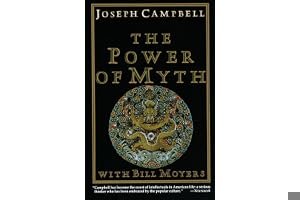
The Power of Myth
Joseph Campbell
4.1
The Power Of Myth launched an extraordinary resurgence of interest in Joseph Campbell and his work. A preeminent scholar, writer, and teacher, he has had a profound influence on millions of people. To him, mythology was the "song of the universe, the music of the spheres." With Bill Moyers, one of America's most prominent journalists, as his thoughtful and engaging interviewer, The Power Of Myth touches on subjects from modern marriage to virgin births, from Jesus to John Lennon, offering a brilliant combination of intelligence and wit.
I’m rereading The Power of Myth by Joseph Campbell. Sometimes I think it’s better to just to reread the greats than it is to read something that’s not as great. [source]
Ashley Hathaway
The Power of Myth by Joseph Campbell has got to be at least one of my all-time favorites. I reference it constantly. If you’re not familiar the book is just a conversation between the journalist Bill Moyers and Joseph Campbell, who worked in comparative mythology and religious studies. It so beautifully brings every human experience together from the beginning of time. The world is basically explained through archetypes of people and the stories we tell. I highly recommend it and re-read parts regularly. [source]
Joseph Campbell was the first person to really open my eyes to the compassionate side of life, or of thought... Campbell was the guy who really kind of put it all together for me, and not in a way I could put my finger on... It made you just glad to be alive, realizing how vast this world is, and how similar and how different we are. [source]
Cover unavailable
51
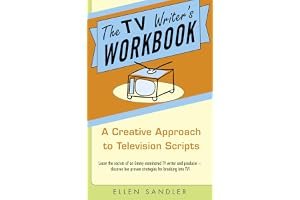
The TV Writer's Workbook: A Creative Approach To Television Scripts
Ellen Sandler
4.1
Why is TV writing different from any other kind of writing? How will writing a spec script open doors? What do I have to do to get a job writing for TV? Writing for television is a business. And, like any business, there are proven strategies for success. In this unique hands-on guide, television writer and producer Ellen Sandler shares the trade secrets she learned while writing for hit shows like Everybody Loves Raymond and Coach. She offers concrete advice on everything from finding a story to getting hired on a current series.
Filled with easy-to-implement exercises and practical wisdom, this ingenious how-to handbook outlines the steps for becoming a professional TV writer, starting with a winning script. Sandler explains the difference between “selling” and “telling,” form and formula, theme and plot. Discover:
• A technique for breaking down a show style so you’re as close to being in the writing room as you can get without actually having a job there • The 3 elements for that essential Concept Line that you must have in order to create a story with passion and consequence • Mining the 7 Deadly Sins for fresh and original story lines • Sample scripts from hit shows • In-depth graphs, script breakdown charts, vital checkpoints along the way, and much, much more!
…
Cover unavailable
52
Lew Hunter's Screenwriting 434: The Industry's Premier Teacher Reveals the Secrets of the Successful Screenplay
Lew Hunter
4.1
For decades, Lew Hunter's Screenwriting 434 class at UCLA has been the premier screenwriting course, launching a generation of the industry's most frequently produced writers. Here, he shares the secrets of his course on the screenwriting process by actually writing an original script, step by step, that appears in the book.
Recommended by Richard Walter.
Richard Walter
I love Lew, but that shouldn’t be held against him. You know, most people can’t take his class because you have to be a matriculated UCLA student, but you don’t need to take the class! You can read the book! [source]
Cover unavailable
53
Invisible Ink: A Practical Guide to Building Stories That Resonate
Brian McDonald
4.1
Acclaimed by successful screenwriters and authors, Invisible Ink is a helpful, accessible guide to the essential elements of the best storytelling. Brian McDonald, an award winning screenwriter who has taught his craft at several major studios, supplies writers with tools to make their work more effective and provides readers and audiences a deeper understanding of the storyteller's art. When people think of a screenplay, they usually think about dialogue-the "visible ink" that is readily accessible to the listener, reader, or viewer. But a successful screenplay needs Invisible Ink as well, the craft below the surface of words. Invisible Ink lays out the essential elements of screenplay structure, using vivid examples from famous moments in popular movies as well as from one of his own popular scripts. You will learn techniques for building a compelling story around a theme, making your writing engage audiences, creating appealing characters, and much more. Praise for Invisible Ink: ..".If I manage to reach the summit of my next story it will be in no small part due to having read Invisible Ink." -Andrew Stanton (cowriter Toy Story, Toy Story 2, A Bug's Life, Monsters, Inc., and cowriter/director Finding Nemo and WALL-E) ..".Brian McDonald uses his deep understanding of story and character to pass on essential truths about dramatic writing. Ignore him at your peril." -Jim Taylor (Academy Award-winning screenwriter of Sideways and Election) ..". I recommend this fine handbook on craft to any writer, apprentice or professional, working in any genre or form." -Dr. Charles Johnson (National Book Award-winning author of Middle Passage) "If you want to write scripts, listen to Brian. The guy knows what he's talking about." -Paul Feig (creator of NBC's Freaks and Geeks, co-executive producer The Office) "With Invisible Ink Brian McDonald has written us a book to keep and heed forever because through the simple, graceful, graspable, original wisdom of it, we might just save our screenwriting lives." -Stewart Stern (Screenwriter of Rebel Without a Cause)
…
Cover unavailable
54
The Emotion Thesaurus: A Writer's Guide to Character Expression
Becca Puglisi
4.1
The bestselling Emotion Thesaurus, often hailed as “the gold standard for writers” and credited with transforming how writers craft emotion, has now been expanded to include 55 new entries!
One of the biggest struggles for writers is how to convey emotion to readers in a unique and compelling way. When showing our characters’ feelings, we often use the first idea that comes to mind, and they end up smiling, nodding, and frowning too much.
If you need inspiration for creating characters’ emotional responses that are personalized and evocative, this ultimate show-don’t-tell guide for emotion can help. It includes:
Body language cues, thoughts, and visceral responses for 130 emotions that cover a range of intensity from mild to severe, providing innumerable options for individualizing a character’s reactions A breakdown of the biggest emotion-related writing problems and how to overcome them Advice on what should be done before drafting to make sure your characters’ emotions will be realistic and consistent Instruction for how to show hidden feelings and emotional subtext through dialogue and nonverbal cues And much more!
The Emotion Thesaurus, in its easy-to-navigate list format, will inspire you to create stronger, fresher character expressions and engage readers from your first page to your last.
…
Cover unavailable
55
The Tools of Screenwriting: A Writer's Guide to the Craft and Elements of a Screenplay
David Howard
4.1
In The Tools of Screenwriting, David Howard and Edward Mabley illuminate the essential elements of cinematic storytelling, and reveal the central principles that all good screenplays share. The authors address questions of dramatic structure, plot, dialogue, character development, setting, imagery, and other crucial topics as they apply to the special art of filmmaking.
Howard and Mabley also demonstrate how, on a practical level, the tools of screenwriting work in sixteen notable films, including Citizen Cane, E.T., One Flew Over the Cuckoo's Nest, Rashomon, The Godfather, North by Northwest, Chinatown, and sex, lies,and videotape.
…
Cover unavailable
56
War And Peace
Leo Tolstoi, Louise Maude, Aylmer Maude
4.1
War and Peace broadly focuses on Napoleon's invasion of Russia in 1812 and follows three of the most well-known characters in literature: Pierre Bezukhov, the illegitimate son of a count who is fighting for his inheritance and yearning for spiritual fulfillment; Prince Andrei Bolkonsky, who leaves his family behind to fight in the war against Napoleon; and Natasha Rostov, the beautiful young daughter of a nobleman who intrigues both men.
As Napoleon's army invades, Tolstoy brilliantly follows characters from diverse backgrounds—peasants and nobility, civilians and soldiers—as they struggle with the problems unique to their era, their history, and their culture. And as the novel progresses, these characters transcend their specificity, becoming some of the most moving—and human—figures in world literature. Translated by Louise and Aylmer Maude.
Three-Volume Boxed Set
…
Recommended by Andrei Maylunas, Cécile Fabre, Kate McLoughlin, and 6 others.
One doesn’t have to invent the bicycle, there is one: it’s War and Peace. It’s about how Russia won the Napoleonic wars, and moved into the first row of nations who dealt with European history. It’s set during the peak of Russian culture, the age of Pushkin, who created the modern Russian language. It’s the peak…The only thing I would recommend to modern readers is to skip all those parts – which are completely separate from the other parts of the book – where Tolstoy is philosophising about the role of the individual in history. It’s maybe 15 per cent of the book, in separate chapters, and I would definitely recommend to skip those because they are not interesting today. [source]
Cécile Fabre
One of the key questions that Tolstoy asks in the appendix is the central question of War and Peace: how can we explain the fact that, on orders, millions of people go out and kill one another, when they know that killing another human being is morally wrong? [source]
Kate McLoughlin
Tolstoy didn’t fight in the Napoleonic wars, but he did fight in the Crimean war, so he drew on his experiences in that when he wrote War and Peace. [source]
Cover unavailable
57
The Screenwriter's Bible, 7th Edition: A Complete Guide to Writing, Formatting, and Selling Your Script
David Trottier
4.1
The Screenwriter's Bible's 7th edition marks the 20th anniversary of one of the most popular, authoritative, and useful books on screenwriting. A standard by which other screenwriting books are measured, it has sold over 300,000 copies in its twenty-year life. Always up-to-date and reliable, it contains everything that both the budding and working screenwriter needs under one cover five books in one! A Screenwriting Primer that provides a concise course in screenwriting basics;
• A Screenwriting Workbook that walks you through the complete writing process, from nascent ideas through final revisions;
• A Formatting Guide that thoroughly covers today's correct formats for screenplays and TV scripts;
• A Spec Writing Guide that demonstrates today's spec style through sample scenes and analysis, with an emphasis on grabbing the reader's interest in the first ten pages;
• A Sales and Marketing Guide that presents proven strategies to help you create a laser-sharp marketing plan.
…
Cover unavailable
58
Inside Story: The Power of the Transformational Arc
Dara Marks
4.1
What is the secret to writing a great screenplay?
Whether youre a beginning screenwriter or an A-list Academy Award winner, all writers struggle with the same thing: to get to the great script inside.
Step by step, Inside Story: The Power of the Transformational Arc guides you through an extraordinary new process that helps identify your thematic intentionwhat your story is really aboutand teaches you how to turn that intention into the driving force behind all your creative choices. The result is a profound relationship between the movement of the plot and the internal development of character, which is the foundation for the transformational arc. The transformational arc is the deeper line of structure found inside the story. Knowing how to work with the arc enhances your ability to:
Express your unique point of view Give meaning and urgency to the line of action Infuse your characters with richness, subtlety, and surprise Develop a powerful emotional undercurrent Make your stories stand out and get attention
A strong transformational arc is the single most important element that makes the difference between a good screenplay and a great one.
Inside Story delivers what the name implies: its the real inside scoop on how to write a great screenplay with depth, dimension, and substance. It is a must-have for any serious screenwriter, playwright, or novelist.
…
Cover unavailable
59
My Story Can Beat Up Your Story: Ten Ways to Toughen Up Your Screenplay from Opening Hook to Knockout Punch
Jeffrey Schechter
4.1
My Story Can Beat Up Your Story! is the same powerful, easy-to-learn system that industry insiders have used to generate millions of dollars in script sales and ?assignments. In a clear, step-by-step fashion, this book is a fun, eye-opening, ?brain-expanding, and often irreverent guide to writing stories that sell. Covering everything from Heroes to Villains, from Theme to Plot Points, from cooking up good ideas to a business plan for smart writers, this book forever eliminates that horrible feeling every writer goes through — staring at the blank page and wondering “what comes next?”
…
Cover unavailable
60
The Hidden Tools of Comedy: The Serious Business of Being Funny
Steve Kaplan
4.1
While other books give you tips on how to “write funny,” this book offers a paradigm shift in understanding the mechanics and art of comedy, and the proven, practical tools that help writers translate that understanding into successful, commercial scripts. The Hidden Tools of Comedy unlocks the unique secrets and techniques of writing comedy. Kaplan deconstructs sequences in popular films and TV that work and don’t work, and explains what tools were used (or should have been used).
…
Cover unavailable
61
Stealing Hollywood: Story Structure Secrets for Writing Your Best Book
Alexandra Sokoloff
4.1
The highly anticipated textbook of the internationally acclaimed SCREENWRITING TRICKS FOR AUTHORS workshops.
Are you finally committed to writing that novel or screenplay, but have no idea how to get started? Or are you a published author, but know you need some plotting help to move your books and career up to that next level?
You CAN write better books and scripts—by learning from the movies. Screenwriting is based on a simple (and powerful) structure that you already know from watching so many movies and television shows in your lifetime. And it's a structure that your reader or audience unconsciously expects, and that is crucial for you to deliver.
In this workbook, award-winning author/screenwriter Alexandra Sokoloff shows you how to jump-start your plot and bring your characters and scenes vibrantly alive on the page by watching your favorite movies and learning from the storytelling structure and tricks of great filmmakers:
• The High Concept Premise • The Three-Act, Eight-Sequence Structure • The Storyboard Grid • The Index Card Method of Plotting • The Setpiece Scene • Techniques of film pacing and suspense, character arc and drive, visual storytelling, and building image systems.
Based on the internationally acclaimed Screenwriting Tricks for Authors workshops and blog, this new e book edition uses an enhanced format and layout, incorporates all the basic information from the first Screenwriting Tricks for Authors workbook and doubles the material, including ten full story breakdowns.
Also available in PRINT --- the textbook-quality edition is 8 x 10 inches and lies open flat for easy highlighting and note-taking.
…
Cover unavailable
62
Plot & Structure: Techniques and Exercises for Crafting a Plot That Grips Readers from Start to Finish
James Scott Bell
4.1
Craft an Engaging Plot
How does plot influence story structure? What's the difference between plotting for commercial and literary fiction? How do you revise a plot or structure that's gone off course?
With "Write Great Fiction: Plot & Structure," you'll discover the answers to these questions and more. Award-winning author James Scott Bell offers clear, concise information that will help you create a believable and memorable plot, including: Techniques for crafting strong beginnings, middles, and endsEasy-to-understand plotting diagrams and chartsBrainstorming techniques for original plot ideasThought-provoking exercises at the end of each chapterStory structure models and methods for all genresTips and tools for correcting common plot problems
Filled with plot examples from popular novels, comprehensive checklists, and practical hands-on guidance, "Write Great Fiction: Plot & Structure" gives you the skills you need to approach plot and structure like an experienced pro.
…
Cover unavailable
63
The Negative Trait Thesaurus: A Writer's Guide to Character Flaws
Angela Ackerman, Becca Puglisi
4.1
Crafting likable, interesting characters is a balancing act, and finding that perfect mix of strengths and weaknesses can be difficult. But the task has become easier thanks to The Negative Trait Thesaurus.
Through its flaw-centric exploration of character arc, motivation, emotional wounds, and basic needs, writers will learn which flaws make the most sense for their heroes, villains, and other members of the story’s cast. This book’s vast collection of flaws will help writers to explore the possible causes, attitudes, behaviors, thoughts, and related emotions behind their characters’ weaknesses so they can be written effectively and realistically. Common characterization pitfalls and methods to avoid them are also included, along with invaluable downloadable tools to aid in character creation.
Written in list format and fully indexed, this brainstorming resource is perfect for creating deep, flawed characters that readers will relate to.
“In these brilliantly conceived, superbly organized and astonishingly thorough volumes, Angela Ackerman and Becca Puglisi have created an invaluable resource for writers and storytellers. Whether you are searching for new and unique ways to add and define characters, or brainstorming methods for revealing those characters without resorting to clichés, it is hard to imagine two more powerful tools for adding depth and dimension to your screenplays, novels or plays.”
- Michael Hauge, Hollywood script consultant and story expert, author of Writing Screenplays That Sell and Selling Your Story in 60 Seconds: The Guaranteed Way to Get Your Screenplay or Novel Read
…
Cover unavailable
64
Hitchcock. Edition définitive
François Truffaut
4.1
En 1955, François Truffaut rencontre Alfred Hitchcock pour les Cahiers du cinéma. En 1962, Jules et Jim vient consacrer son talent de cinéaste et il prépare La peau douce (1964), de son aveu même le plus hitchcockien de ses films. Aux États-Unis, Hitchcock, avec Frenzy (1962), est au faîte de sa créativité et de son succès. Mais les critiques restent réticents. Naît alors l'idée du «Hitchbook» : un livre dont Truffaut serait l'initiateur, le «provocateur» même, et qui révèlerait la vraie nature de l'homme, vulnérable, sensible, et aussi les secrets perdus que détiennent les grands cinéastes qui ont commencé à l'époque du muet. Hitchcock accepte le principe de répondre à 500 questions portant exclusivement sur sa carrière. Pendant cet entretien qui va durer 4 ans, Truffaut va l'interroger à la façon dont Œdipe allait consulter l'Oracle. Il tentera d'élucider à travers toute l'œuvre de Hitchcock les mécanismes de ce «langage d'émotion» qui est le ressort de son style inimitable et le classe dans la catégorie des «artistes inquiets comme Kafka, Dostoïevski ou Poe».
…
Recommended by Darren Aronofsky and Mat Whitecross.
Darren Aronofsky
This book is an amazing guide to Hitchcock’s thought process…Truffaut got Hitchcock to reveal a lot of the different techniques that he used to put together his monumental body of work. [source]
Mat Whitecross
One of the best books on film ever written. [source]
Cover unavailable
65
A Million Miles in a Thousand Years: What I Learned While Editing My Life
Donald Miller
4.1
Full of beautiful, heart-wrenching, and hilarious stories, A Million Miles in a Thousand Years details one man's opportunity to edit his life as if he were a character in a movie.
Years after writing his best-selling memoir, Donald Miller went into a funk and spent months sleeping in and avoiding his publisher. One story had ended, and Don was unsure how to start another.
But he gets rescued by two movie producers who want to make a movie based on his memoir. When they start fictionalizing Don's life for film--changing a meandering memoir into a structured narrative--the real-life Don starts a journey to edit his actual life into a better story. A Million Miles in a Thousand Years details that journey and challenges readers to reconsider what they strive for in life. It shows how to get a second chance at life the first time around.
…
Cover unavailable
66
On Filmmaking: An Introduction to the Craft of the Director
Alexander Mackendrick, Paul Cronin, Martin Scorsese
4.1
An invaluable analysis of the director's art and craft, from one of the most revered of all film school directors. Alexander 'Sandy' Mackendrick directed classic Ealing comedies plus a Hollywood masterpiece, Sweet Smell of Success. But after retiring from film-making in 1969, he then spent nearly 25 years teaching his craft at the California Institute of the Arts in Los Angeles.
Mackendrick produced hundreds of pages of masterly handouts and sketches, designed to guide his students to a finer understanding of how to write a story, and then use those devices peculiar to cinema in order to tell that story as effectively as possible. Gathered and edited in this collection, Mackendrick's teachings reveal that he had the talent not only to make great films, but also to articulate the process with a clarity and insight that will still inspire any aspirant film-maker.
…
Cover unavailable
67
Creating Unforgettable Characters
Linda Seger
4.1
In this book, Linda Seger shows how to create strong, multidimensional characters in fiction, covering everything from research to character block. Interviews with today's top writers complete this essential volume.
Cover unavailable
68
Pride and Prejudice
Jane Auste
4.1
Alternate cover edition of ISBN 9780679783268
Since its immediate success in 1813, Pride and Prejudice has remained one of the most popular novels in the English language. Jane Austen called this brilliant work "her own darling child" and its vivacious heroine, Elizabeth Bennet, "as delightful a creature as ever appeared in print." The romantic clash between the opinionated Elizabeth and her proud beau, Mr. Darcy, is a splendid performance of civilized sparring. And Jane Austen's radiant wit sparkles as her characters dance a delicate quadrille of flirtation and intrigue, making this book the most superb comedy of manners of Regency England.
…
Recommended by Meg Rosoff.
Meg Rosoff
It’s a coming-of-age story, because she throws aside her prejudices but also sees the house and realises that she could be quite comfortable and maybe realises how important that is. [source]
Cover unavailable
69
Crafty TV Writing: Thinking Inside the Box
Alex Epstein
4.1
A professional TV writer's real-world guide to getting paid to write great television
Everyone watches television, and everyone has an opinion on what makes good TV. But, as Alex Epstein shows in this invaluable guide, writing for television is a highly specific craft that requires knowledge, skill, and more than a few insider's tricks.
Epstein, a veteran TV writer and show creator himself, provides essential knowledge about the entire process of television writing, both for beginners and for professionals who want to go to the next level. Crafty TV Writing explains how to decode the hidden structure of a TV series. It describes the best ways to generate a hook, write an episode, create characters the audience will never tire of, construct entertaining dialogue, and use humor. It shows how to navigate the tough but rewarding television industry, from writing your first "spec" script, to getting hired to work on a show, to surviving—even thriving—if you get fired. And it illuminates how television writers think about the shows they're writing, whether they're working in comedy, drama, or "reality."
Fresh, funny, and informed, Crafty TV Writing is the essential guide to writing for and flourishing in the world of television.
…
Cover unavailable
70
Which Lie Did I Tell?: More Adventures in the Screen Trade
William Goldman
4.1
Cover unavailable
71
The Definitive Guide To Screenwriting
Syd Field
4.1
Published for the first time in the UK, Syd Field, acclaimed writer and director, tells you step-by-step how to identify and fix common screenwriting problems, providing the professional secrets that make films brilliant - secrets that can make your screenplay a success. He provides easily understood guidelines for writing a screenplay, from concept to finished product. The art of film-writing is made accessible to novices and helps practiced writers improve their scripts, as the author pinpoints stylistic and structural elements such as characterisation and plot. Tips and techniques on what to do after your screenplay has been completed and much more are all here. There are also practical examples from films which Syd Field has collaborated on such as Lord of the Rings, American Beauty and The Pianist. Written for all levels of screenwriters, this is an indispensable reference book for anyone who wants to make money as a great screenwriter.
…
Cover unavailable
72
Cinematic Storytelling
Jennifer Van Sijll
4.1
What the industry's most succcessful writers and directors have in common is that they have mastered the cinematic conventions specific to the medium.
Recommended by Andi Dumitrescu.
Andi Dumitrescu
My career path is made of several components, all of them main ones: sound engineering, film montage, movie directing, composition and vocal singing. That’s what I want to do in life and this is what makes me happy. For each of these, I’ve had book to help me along the way: The Eye is Quicker, by Richard D. Pepperman, Cut by Cut by Gael Chandler, The Technique of Film and Video Editing by Ken Dancyger, Directing by Mike Goodridge, Cinematic Storytelling by Jennifer Van Sijll, Sound for Picture by Tom Kenny and The Rock'n'Roll Singer's Survival Manual by Mark Baxter. [source]
Cover unavailable
73
Story Engineering: Character Development, Story Concept, Scene Construction
Larry Brooks
4.1
Cover unavailable
74
Save the Cat! Writes a Novel: The Last Book on Novel Writing You'll Ever Need
Jessica Brody
4.1
The first novel-writing guide from the best-selling Save the Cat! story-structure series, which reveals the 15 essential plot points needed to make any novel a success.
Novelist Jessica Brody presents a comprehensive story-structure guide for novelists that applies the famed Save the Cat! screenwriting methodology to the world of novel writing. Revealing the 15 "beats" (plot points) that comprise a successful story--from the opening image to the finale--this book lays out the Ten Story Genres (Monster in the House; Whydunit; Dude with a Problem) alongside quirky, original insights (Save the Cat; Shard of Glass) to help novelists craft a plot that will captivate--and a novel that will sell.
…
Cover unavailable
75
Scriptshadow Secrets (500 Screenwriting Secrets Hidden Inside 50 Great Movies)
Carson Reeves
4.1
Scriptshadow Secrets is the first book from popular screenwriting blogger, Carson Reeves. The book was written as an answer to the glut of tired A-Z screenwriting books that have flooded the market over the years. Instead of another extensive How-To guide, Scriptshadow Secrets looks at 50 popular movies from the past six decades and offers 10 (give or take) screenwriting tips from each. The idea is to not only teach screenwriters valuable lessons, but show how those lessons have been incorporated into successful films. This way, writers learn by example, instead of having to take the author's word for it. From Aliens to Pirates Of The Caribbean to The Hangover to The Empire Strikes Back, Secrets teaches you screenwriting lessons from the greatest films of all time.
Author Carson Reeves began as a screenwriter himself, yet struggled to figure out the elusive formula for writing a successful screenplay. Then, about seven years ago, he started getting his hands on spec sale scripts and reading them. Within weeks, he'd learned more about screenwriting than he had in the past seven years combined. He then turned his attention from writing to helping others write. This was the genesis behind the Scriptshadow website - a way to teach screenwriting through reading professional screenplays.
The site blew up but quickly became controversial, due to Reeves breaking down material that Hollywood considered private. As such, the site's become a "love it or hate it" fixture in both Hollywood and the screenwriting community. Still, the site has tens of thousands of aspiring screenwriters who visit daily and make it the most popular screenwriting site on the web. The site's most popular feature, the "What I learned" section at the end of each review, was the main inspiration behind Scriptshadow Secrets, as Reeves saw how positively writers responded to quick context-relevant tips.
…
Cover unavailable
76
Three Uses of the Knife: On the Nature and Purpose of Drama
David Mamet
4.1
The purpose of theater, like magic like religion… is to inspire cleansing awe. With bracing directness and aphoristic authority, one of our greatest living playwrights addresses the questions: What makes good drama? And why does drama matter in an age that is awash in information and entertainment? David Mamet believes that the tendency to dramatize is essential to human nature, that we create drama out of everything from today’s weather to next year’s elections. But the highest expression of this drive remains the theater. With a cultural range that encompasses Shakespeare, Bretcht, and Ibsen, Death of a Salesman and Bad Day at Black Rock, Mamet shows us how to distinguish true drama from its false variants. He considers the impossibly difficult progression between one act and the next and the mysterious function of the soliloquy. The result, in Three Uses of the Knife, is an electrifying treatise on the playwright’s art that is also a strikingly original work of moral and aesthetic philosophy.
…
Cover unavailable
77
The Secrets of Action Screenwriting: From "Popeye Points" to "Rug Pulls"
William C. Martell
4.0
Cover unavailable
78
In the Blink of an Eye
Walter Murch
4.0
In the Blink of an Eye is celebrated film editor Walter Murch's vivid, multifaceted, thought-provoking essay on film editing. Starting with what might be the most basic editing question - Why do cuts work? - Murch treats the reader to a wonderful ride through the aesthetics and practical concerns of cutting film. Along the way, he offers his unique insights on such subjects as continuity and discontinuity in editing, dreaming, and reality; criteria for a good cut; the blink of the eye as an emotional cue; digital editing; and much more. In this second edition, Murch reconsiders and completely revises his popular first edition's lengthy meditation on digital editing (which accounts for a third of the book's pages) in light of the technological changes that have taken place in the six years since its publication.
A short, brilliant book about film editing that has quite a few lessons for writers, too. (It would make an excellent companion to Sidney Lumet’s Making Movies.) I first read about Murch in Lawrence Weschler’s book about his adventures in astrophysics, Waves Passing In The Night, which I picked randomly off my local library’s New Arrivals shelf. [source]
Cover unavailable
79
The Science of Storytelling
Will Storr
4.0
‘One of my absolute favourite writers’ Decca Aitkenhead
Who would we be without stories?
Stories mould who we are, from our character to our cultural identity. They drive us to act out our dreams and ambitions, and shape our politics and beliefs. We use them to construct our relationships, to keep order in our law courts, to interpret events in our newspapers and social media. Storytelling is an essential part of what makes us human.
There have been many attempts to understand what makes a good story – from Joseph Campbell’s well-worn theories about myth and archetype to recent attempts to crack the ‘Bestseller Code’. But few have used a scientific approach. This is curious, for if we are to truly understand storytelling in its grandest sense, we must first come to understand the ultimate storyteller – the human brain.
In this scalpel-sharp, thought-provoking book, Will Storr demonstrates how master storytellers manipulate and compel us, leading us on a journey from the Hebrew scriptures to Mr Men, from Booker Prize-winning literature to box set TV. Applying dazzling psychological research and cutting-edge neuroscience to the foundations of our myths and archetypes, he shows how we can use these tools to tell better stories – and make sense of our chaotic modern world.
Tomorrow night at @WaterstonesTCR I’ll be in conversation with @wstorr about his brilliant book The Science of Storytelling - a book that has made me change how I write. Come. https://t.co/mbQpHfwysV [source]
Hannah Fry
This is the intro to The Science of Storytelling by @wstorr. Easily the best book I've read this year. https://t.co/WzpSWlzVGi https://t.co/RX9kdQANeB [source]
Cover unavailable
80
Selling a Screenplay: The Screenwriter's Guide to Hollywood
Syd Field
4.0
- Breaks Down the Business of Screenwriting - Explains What the Buyer Looks For - Shows You What to Do to Get in the Door - Tackles the Pitching Process - Provides Personal Insights from Famous Screenwriters
Everybody has a story to tell. Everybody wants to write the great American screenplay. But what do you do after it’s written? How do you sell it? Studio honchos. Development Executives. Independent Producers. What do they want? Do you need an agent or manager to get it into production? Selling a screenplay can mean earning $250,000 or more, so competition is fierce.
Syd Field gives you an insider’s look at the movie and TV industry, packed with essential tips from the pros. Selling a Screenplay is a must-have guide for every screenwriter, filled with frank real-life advice from Hollywood’s most powerful deal makers and most celebrated screenwriters.
They all started somewhere.
…
Cover unavailable
81
The Rural Setting Thesaurus: A Writer's Guide to Personal and Natural Places
Angela Ackerman, Becca Puglisi
4.0
Within the pages of a book exists a world drawn from a writer’s deepest imaginings, one that has the ability to pull readers in on a visceral level—but only if the realm and its inhabitants can be described well. This can be achieved by providing readers with a unique sensory experience via the setting. So much more than stage dressing, the setting can build mood, convey meaning through symbolism, drive the plot by creating challenges that force the hero to fight for what he wants, and trigger emotions which will reveal his most intimate feelings, fears, and desires.
Inside The Rural Setting Thesaurus, you’ll find:
• A list of the sights, smells, tastes, textures, and sounds for over 100 settings revolving around school, home, and nature • Possible sources of conflict for each location to help you brainstorm ways to naturally complicate matters for your characters • Advice on the many effective ways to build mood, helping you steer both the character’s and readers’ emotions in every scene • Information on how the setting directly influences the plot by acting as a tuning fork for what a character needs most and by testing his dedication to his goals • A tutorial on figurative language and how different descriptive techniques can bring settings alive for readers while conveying a symbolic message or deeper meaning • A review of the challenges that arise when writing description, as well as special considerations that apply specifically to rural and personal settings • Downloadable tools that encourage a deeper sensory and emotional exploration of each setting
The Rural Setting Thesaurus takes “show-don’t-tell” to new heights. It offers writers a roadmap to creating fresh setting imagery that impacts the story on multiple levels while keeping readers engaged from the first page to the last.
…
Cover unavailable
82
Getting It Write: An Insider's Guide to a Screenwriting Career
Lee Zahavi Jessup
4.0
There are plenty of books about the craft of screenwriting, and a handful about pitching your screenplay. However, little can be found on how to go from writing to pitching in the professional space. There is no formula, no three-step plan. Getting It Write: An Insider’s Guide to a Screenwriting Career unlocks pragmatic guidance for constructing a screenwriting career, delivered by a sought-after industry authority who works with writers both novice and professional. Never pulling any punches, the book aims to decode Hollywood, prepare the writer for the road ahead, and offer tangible avenues for screenwriting success.
…
Cover unavailable
83
The Urban Setting Thesaurus: A Writer's Guide to City Spaces
Angela Ackerman, Becca Puglisi
4.0
Making readers care and feel like they’re part of the story should be the number one goal for all writers. Ironically, many storytellers fail to maximize one of fiction’s most powerful elements to achieve this: the setting. Not only can the right location become a conduit for emotion, it can also provide conflict, characterize the story’s cast, reveal significant backstory, and trigger the reader’s own emotional memories through sensory details and deep point of view.
Inside The Urban Thesaurus, you’ll find:
• A list of the sights, smells, tastes, textures, and sounds for over 120 urban settings • Possible sources of conflict for each location to help you brainstorm ways to naturally complicate matters for your characters • Advice on how to make every piece of description count so you can maintain the right pace and keep readers engaged • Tips on utilizing the five senses to encourage readers to more fully experience each moment by triggering their own emotional memories • Information on how to use the setting to characterize a story’s cast through personalization and emotional values while using emotional triggers to steer their decisions • A review of specific challenges that arise when writing urban locations, along with common descriptive pitfalls that should be avoided
The Urban Setting Thesaurus helps you tailor each setting to your characters while creating a realistic, textured world readers will long to return to, even after the book closes.
…
Cover unavailable
84
GMC: Goal, Motivation and Conflict: The Building Blocks of Good Fiction
Debra Dixon
4.0
Goal, motivation, and conflict are the foundation of everything that happens in the story world. Using charts, examples, and movies, the author breaks these key elements down into understandable components and walks the reader through the process of laying this foundation in his or her own work.
Learn what causes sagging middles and how to fix them, which goals are important, which aren’t and why, how to get your characters to do what they need for your plot in a believable manner, and how to use conflict to create a good story. GMC can be used not only in plotting, but in character development, sharpening scenes, pitching ideas to an editor, and evaluating whether an idea will work.
Be confident your ideas will work before you write 200 pages.
Plan a road map to keep your story on track.
Discovery why your scenes aren’t working and what to do about it.
Create characters that editors and readers will care about.
…
Cover unavailable
85
The Dramatic Writer's Companion: Tools to Develop Characters, Cause Scenes, and Build Stories
Will Dunne
4.0
Moss Hart once said that you never really learn how to write a play; you only learn how to write this play. Crafted with that adage in mind, The Dramatic Writer’s Companion is designed to help writers explore their own ideas in order to develop the script in front of them. No ordinary guide to plotting, this handbook starts with the principle that character is key. “The character is not something added to the scene or to the story,” writes author Will Dunne. “Rather, the character is the scene. The character is the story.”
Having spent decades working with dramatists to refine and expand their existing plays and screenplays, Dunne effortlessly blends condensed dramatic theory with specific action steps—over sixty workshop-tested exercises that can be adapted to virtually any individual writing process and dramatic script. Dunne’s in-depth method is both instinctual and intellectual, allowing writers to discover new actions for their characters and new directions for their stories.
Dunne’s own experience is a crucial element of this guide. His plays have been selected by the Eugene O’Neill Theatre Center for three U.S. National Playwrights Conferences and have earned numerous honors, including a Charles MacArthur Fellowship, four Bay Area Theatre Critics Circle Awards, and two Drama-Logue Playwriting Awards. Thousands of individuals have already benefited from his workshops, and The Dramatic Writer’s Companion promises to bring his remarkable creative method to an even wider audience.
…
Cover unavailable
86
Coraline
Neil Gaiman, Dave McKean
4.0
Coraline lives with her preoccupied parents in part of a huge old house--a house so huge that other people live in it, too... round, old former actresses Miss Spink and Miss Forcible and their aging Highland terriers ("We trod the boards, luvvy") and the mustachioed old man under the roof ("'The reason you cannot see the mouse circus,' said the man upstairs, 'is that the mice are not yet ready and rehearsed.'") Coraline contents herself for weeks with exploring the vast garden and grounds. But with a little rain she becomes bored--so bored that she begins to count everything blue (153), the windows (21), and the doors (14). And it is the 14th door that--sometimes blocked with a wall of bricks--opens up for Coraline into an entirely alternate universe. Now, if you're thinking fondly of The Lion, the Witch, and the Wardrobe or Alice's Adventures in Wonderland, you're on the wrong track. Neil Gaiman's Coraline is far darker, far stranger, playing on our deepest fears. And, like Roald Dahl's work, it is delicious.
What's on the other side of the door? A distorted-mirror world, containing presumably everything Coraline has ever dreamed of... people who pronounce her name correctly (not "Caroline"), delicious meals (not like her father's overblown "recipes"), an unusually pink and green bedroom (not like her dull one), and plenty of horrible (very un-boring) marvels, like a man made out of live rats. The creepiest part, however, is her mirrored parents, her "other mother" and her "other father"--people who look just like her own parents, but with big, shiny, black button eyes, paper-white skin... and a keen desire to keep her on their side of the door. To make creepy creepier, Coraline has been illustrated masterfully in scritchy, terrifying ink drawings by British mixed-media artist and Sandman cover illustrator Dave McKean. This delightful, funny, haunting, scary as heck, fairy-tale novel is about as fine as they come. Highly recommended. (Ages 11 and older) --Karin Snelson
…
Recommended by Simon Smith.
Simon Smith
@lindsanderson @Misterbodd @PaulWat5 @f33lthesun Awesomely scary book full stop! Great though. [source]
Cover unavailable
87
Story Maps: TV Drama: The Structure of the One-Hour Television Pilot
Daniel P. Calvisi
4.0
Daniel Calvisi brings his Story Maps screenwriting method to television as he breaks down the structure of the TV drama pilot, citing case studies from the most popular, ground-breaking series of recent years, including THE WALKING DEAD, GAME OF THRONES, HOUSE OF CARDS, TRUE DETECTIVE, BREAKING BAD, MR. ROBOT, SCANDAL and MAD MEN.
Story Maps: TV Drama offers the first beat sheet for television screenwriters ("Save the Cat" for TV). This is the structural template that aspiring and professional TV writers have been looking for. A clear, practical, step-by-step method to write a pilot that adheres to Hollywood standards.
How to write a TV pilot has never been easier. Writing a pilot begins here.
This book first introduces you to the key formats, genres and terminology of modern TV shows, then details the major signpost beats of a teleplay and the crucial characteristics that must be present in each act, using specific examples from our new "Golden Age of Television."
Story Maps: TV Drama has been endorsed by many industry professionals in Hollywood, including:
"Story Maps: TV Drama is a handy, practical guide that walks writers through the process of creating a compelling TV drama. Using examples from some of the most respected shows on television, writers will learn to master the form from outline to Fade Out. I wish I'd had this book when I was first starting out!" - Hilary Weisman Graham, Writer, Bones (Fox), Orange is the New Black (Netflix)
"I plan to use Calvisi's process on our upcoming show in development at Starz." - Kirkland Morris, Producer (Tomorrow, Today (STARZ))
"An excellent resource." - M-L Erlbach, Writer, Masters of Sex (Showtime)
"This book blows all others out of the water! There's no other TV writing book that offers this level of detail when it comes to how to structure a one-hour television drama pilot." - Larry Reitzer, Writer, Melissa & Joey, Just Shoot Me!, Ugly Betty
"I've worked in film and television for years and I can say for certain that there is nothing else like Calvisi's book anywhere out there. His system is truly unique and breaks TV pilot structure down step-by-step, using very specific examples from some of the great pilots of recent years." - Fritz Manger, Producer, A Deadly Adoption with Will Ferrell and Kristen Wiig
"I've turned to Calvisi for notes on several scripts in the past, and this new book is well-timed as the industry makes a huge shift toward television. This is a fantastic primer in developing a rock-solid one-hour TV pilot. I recommend this book to writers as the foundation in creating excellent story structure." - Richard J. Bosner, Producer, Fruitvale Station, The Wannabe, Other People
"Calvisi has a firm grasp on the nature of the one-hour drama for television. I have little doubt that by following his guidelines and doing your homework, he can lead you to create a great pilot of your own!" - Jenny Frankfurt, Literary Manager, High Street Management
"I'm thrilled for you that Calvisi has written this fantastic new book that will undoubtedly help you structure your original TV pilot. The bottom line is, don't learn the hard way like I did. Use Dan's book instead." - Joe Nimziki, Creator of upcoming Sony TV series Kreskin; Director, The Howling, Outer Limits; Senior Executive, New Line Cinema, Sony Pictures
"Daniel Calvisi does an expert job of breaking down the structure of television pilots in a way that's not only easy to understand, but can be easily applied to one's own work. If you're thinking of writing a TV pilot, read this book first!" - Christine Conradt, Writer/Producer/Director of 50 Lifetime network movies, The Bride He Bought Online, Stalked at 17
…
Cover unavailable
88
Selling Your Story in 60 Seconds: The Guaranteed Way to Get Your Screenplay or Novel Read
Michael Hauge
4.0
Your career can be made in 60 seconds - if you make the right pitch! Master the Elevator Pitch, even when you've got less than 60 seconds. Get your screenplay or Novel read by the major power of Hollywood - guaranteed!
Cover unavailable
89
Stealing Fire from the Gods: The Complete Guide to Story for Writers and Filmmakers
James Bonnet
4.0
A revised and expanded sequel to Stealing Fire from the Gods, this 2nd edition includes important new revelations concerning the ultimate source of unity, the structures of the whole story passage, the anti-hero's journey, the high-concept great idea, the secrets of charismatic characters, and the analyses of many important new stories and successful films.
Cover unavailable
90
The Hero's Journey: Joseph Campbell on His Life & Work (Works)
Joseph Campbell
4.0
The author of Hero With a Thousand Faces, The Masks of God series, and The Power of Myth here turns his powers of observation and analysis on his own life's journey and conveys the excitement of his life-long exploration of mythic traditions, which he called "the one great story of mankind." In conversations with poets, anthropologists, and philosophers, Campbell reflects on subjects ranging from the origins and functions of myth, the role of the artist and the need for ritual, to the ordeals of love and romance. Illustrated throughout with photographs from Joseph Campbell's family archive and with a new, revised introduction, The Hero's Journey introduces the reader first-hand to Joseph Campbell the man, his discoveries, his terminology, and his thinking.
…
Cover unavailable
91
Crafty Screenwriting: Writing Movies That Get Made
Alex Epstein
4.0
The most innovative and creative screenwriting book yet, from an author who knows first-hand what it takes to get a movie made.
Based on an award-winning website hailed as "smart enough for professional screenwriters and accessible enough for aspiring screenwriters", Crafty Screenwriting is the first book not only to offer a successful screenwriter's tricks of the trade, but to explain what development executives really mean when they complain that the "dialogue is flat," or "the hero isn't likeable." Fresh, provocative, and funny, Alex Epstein diagnoses problem that other screenwriting books barely address, and answers questions they rarely ask, like "Why is it sometimes dangerous to know your characters too well before you start writing," or "Why does your script have to be so much better than the awful pictures that get made every day?" As a development executive who has accepted and rejected countless screenplays, and a produced screenwriter himself, Epstein can take you into the heart of the most important question of all: "Is this a movie?" A crucial book for anyone who has ever wondered what it takes to get their movie made.
…
Cover unavailable
92
Pulp Fiction: A Quentin Tarantino Screenplay
Quentin Tarantino
4.0
Quentin Tarantino - director of "Reservoir Dogs" and writer of "True Romance" - won the Palme d'Or for best film at the 1994 Cannes Film Festival for "Pulp Fiction, " his unique vision of the underworld, starring John Travolta, Uma Thurman, Bruce Willis, Samuel Jackson, and Harvey Keitel. Taking his inspiration from the popular, and often lurid, "pulp" crime stories of the thirties and forties, Tarantino intertwines three narratives and introduces a variety of fascinating characters; thick-witted hit men, a double-crossing prizefighter on the run, his absent-minded French girlfriend, the hit men-hiring mob boss, his exotic but drug-addled wife, and two young lovers contemplating a career change - namely whether to start sticking up restaurants instead of liquor stores. Full of wicked humor, dazzling dialogue, and riveting action, "Pulp Fiction" is a master screenwriter's look at today's Hollywood and its dark criminal culture.
…
Cover unavailable
93
Don Quixote
Miguel de Cervantes, Edith Grossman
4.0
Edith Grossman's definitive English translation of the Spanish masterpiece, in an expanded P.S. edition
Widely regarded as one of the funniest and most tragic books ever written, Don Quixote chronicles the adventures of the self-created knight-errant Don Quixote of La Mancha and his faithful squire, Sancho Panza, as they travel through sixteenth-century Spain. You haven't experienced Don Quixote in English until you've read this masterful translation.
This P.S. edition features an extra 16 pages of insights into the book, including author interviews, recommended reading, and more.
I read this book as a child and then, reread many times as an adult. And he’s my favorite character. [source]
Cover unavailable
94
The Emotional Wound Thesaurus: A Writer's Guide to Psychological Trauma
Becca Puglisi
4.0
Readers connect to characters with depth, ones who have experienced life’s ups and downs. To deliver key players that are both realistic and compelling, writers must know them intimately—not only who they are in the present story, but also what made them that way. Of all the formative experiences in a character’s past, none are more destructive than emotional wounds. The aftershocks of trauma can change who they are, alter what they believe, and sabotage their ability to achieve meaningful goals, all of which will affect the trajectory of your story.
Identifying the backstory wound is crucial to understanding how it will shape your character’s behavior, and The Emotional Wound Thesaurus can help. Inside, you’ll find:
• A database of traumatic situations common to the human experience • An in-depth study on a wound’s impact, including the fears, lies, personality shifts, and dysfunctional behaviors that can arise from different painful events • An extensive analysis of character arc and how the wound and any resulting unmet needs fit into it • Techniques on how to show the past experience to readers in a way that is both engaging and revelatory while avoiding the pitfalls of info dumps and telling • A showcase of popular characters and how their traumatic experiences reshaped them, leading to very specific story goals • A Backstory Wound Profile tool that will enable you to document your characters’ negative past experiences and the aftereffects
Root your characters in reality by giving them an authentic wound that causes difficulties and prompts them to strive for inner growth to overcome it. With its easy-to-read format and over 100 entries packed with information, The Emotional Wound Thesaurus is a crash course in psychology for creating characters that feel incredibly real to readers.
…
Cover unavailable
95
Writing Tools: 50 Essential Strategies for Every Writer
Roy Peter Clark
4.0
A special 10th anniversary edition of Roy Peter Clark's bestselling guide to writing, featuring five bonus tools.
Ten years ago, Roy Peter Clark, America's most influential writing teacher, whittled down almost thirty years of experience in journalism, writing, and teaching into a series of fifty short essays on different aspects of writing. In the past decade, Writing Tools has become a classic guidebook for novices and experts alike and remains one of the best loved books on writing available.
Organized into four sections, "Nuts and Bolts," "Special Effects," "Blueprints for Stories," and "Useful Habits," Writing Tools is infused with more than 200 examples from journalism and literature. This new edition includes five brand new, never-before-shared tools.
Accessible, entertaining, inspiring, and above all, useful for every type of writer, from high school student to novelist, Writing Tools is essential reading.
…
Cover unavailable
96
How to Write Dazzling Dialogue: The Fastest Way to Improve Any Manuscript
James Scott Bell
4.0
Cover unavailable
97
William Goldman: Four Screenplays
William Goldman
4.0
Cover unavailable
98
Writing the Romantic Comedy: From "Cute Meet" to "Joyous Defeat": How To Write Screenplays That Sell
Billy Mernit
4.0
“Writing the Romantic Comedy is so much fun to read it could pop a champagne cork.”—Alexa Junge, writer and producer of Friends
Revised and expanded to celebrate a new generation of romantic comedies, Billy Mernit’s insightful look into the mechanics of writing Hollywood’s most enduring genre features case studies that reveal the screenwriting secrets behind classics new and old.
Whether you’re a first-time screenwriter, an intermediate marooned in the rewriting process, or a professional wanting to explore the latest genre trends, this thoroughly charming and insightful guide to the basics of crafting a winning and innovative script will take you step by step from “meet cute” all the way to “joyous defeat.” You’ll learn the screenwriting secrets behind some of the funniest scenes ever written; how to create characters and dialogue that getsparks flying; why some bedroom scenes sizzle and others fall flat; and much more.
Written in a refreshingly accessible style and updated and expanded to recognize the contributions of a fresh generation of romantic comedies, this newly revised 20th Anniversary edition of Writing the Romantic Comedy features case studies drawn from beloved romantic classics such as When Harry Met Sally, Annie Hall, Tootsie, and The Lady Eve to modern-day favorites including Hitch, (500) Days of Summer, Bridesmaids, and Silver Linings Playbook. Field-tested writing exercises are also included, guaranteed to short-circuit potential mistakes and ensure inspiration.
…
Cover unavailable
99
Cut to the Chase: Writing Feature Films with the Pros at UCLA Extension Writers' Program
Linda Venis
4.0
Millions of people dream of writing a screenplay but don't know how to begin, or are already working on a script but are stuck and need some targeted advice. Or maybe they have a great script, but no clue about how to navigate the choppy waters of show business. Enter Cut To The Chase, written by professional writers who teach in UCLA Extension Writers' Programme, whose alumni's many credits include Pirates of the Caribbean: Curse of the Black Pearl; Twilight; and the Academy Award nominated Letters from Iwo Juima. From learning how to identify story ideas that make a good movie to opening career doors and keeping them open, this authoritative, comprehensive, and entertaining book, edited by Writers' Program Director Linda Venis, will be the film-writing bible for decades to come.
"A well-organized soup-to-nuts manual for aspiring Nora Ephrons and Charlie Kaufmans, from the faculty of a notable screenwriting program. . . . A readable writer's how-to that goes down smoothly." - Kirkus Reviews
…
Cover unavailable
100
Writing Short Films: Structure and Content for Screenwriters
Linda J. Cowgill
4.0
Writing Short Films is one of the bestselling university text books on writing short film screenplays. This updated and revised edition includes several new chapters.


 1
1