We've ranked the best persuasion books using expert recommendations, sales data, and millions of reader ratings. At Shortform, we know books. Our book guides are the best in the world. Learn why.
Influence, the classic book on persuasion, explains the psychology of why people say "yes"—and how to apply these understandings. Dr. Robert Cialdini is the seminal expert in the rapidly expanding field of influence and persuasion. His thirty-five years of rigorous, evidence-based research along with a three-year program of study on what moves people to change behavior has resulted in this highly acclaimed book.
You'll learn the six universal principles, how to use them to become a skilled persuader—and how to defend yourself against them. Perfect for people in all walks of life, the principles of Influence will move you toward profound personal change and act as a driving force for your success.
You can go after the job you want—and get it! You can take the job you have—and improve it! You can take any situation—and make it work for you!
Dale Carnegie’s rock-solid, time-tested advice has carried countless people up the ladder of success in their business and personal lives. One of the most groundbreaking and timeless bestsellers of all time, How to Win Friends & Influence People will teach you:
-Six ways to make people like you -Twelve ways to win people to your way of thinking -Nine ways to change people without arousing resentment
And much more! Achieve your maximum potential—a must-read for the twenty-first century with more than 15 million copies sold!
…
Recommended by Dave Ramsey, Daymond John, Dustin Moskovitz, and 58 others.
Major New York Times bestseller Winner of the National Academy of Sciences Best Book Award in 2012 Selected by the New York Times Book Review as one of the best books of 2011 A Globe and Mail Best Books of the Year 2011 Title One of The Economist's 2011 Books of the Year One of The Wall Street Journal's Best Nonfiction Books of the Year 2011 2013 Presidential Medal of Freedom Recipient
In the international bestseller, Thinking, Fast and Slow, Daniel Kahneman, the renowned psychologist and winner of the Nobel Prize in Economics, takes us on a groundbreaking tour of the mind and explains the two systems that drive the way we think. System 1 is fast, intuitive, and emotional; System 2 is slower, more deliberative, and more logical. The impact of overconfidence on corporate strategies, the difficulties of predicting what will make us happy in the future, the profound effect of cognitive biases on everything from playing the stock market to planning our next vacation—each of these can be understood only by knowing how the two systems shape our judgments and decisions. Engaging the reader in a lively conversation about how we think, Kahneman reveals where we can and cannot trust our intuitions and how we can tap into the benefits of slow thinking. He offers practical and enlightening insights into how choices are made in both our business and our personal lives—and how we can use different techniques to guard against the mental glitches that often get us into trouble. Winner of the National Academy of Sciences Best Book Award and the Los Angeles Times Book Prize and selected by The New York Times Book Review as one of the ten best books of 2011, Thinking, Fast and Slow is destined to be a classic.
A few months ago, Mr. Obama read “Thinking, Fast and Slow,” by Daniel Kahneman, about how people make decisions — quick, instinctive thinking versus slower, contemplative deliberation. For Mr. Obama, a deliberator in an instinctive business, this may be as instructive as any political science text. [source]
Captivating dive into human decision making, marred by inclusion of several/many? psychology studies that fail to replicate. Will stand as a cautionary tale? [source]
Cover unavailable
4
Getting to Yes: Negotiating Agreement Without Giving in
The key text on problem-solving negotiation-updated and revised
Getting to Yes has helped millions of people learn a better way to negotiate. One of the primary business texts of the modern era, it is based on the work of the Harvard Negotiation Project, a group that deals with all levels of negotiation and conflict resolution.
Getting to Yes offers a proven, step-by-step strategy for coming to mutually acceptable agreements in every sort of conflict. Thoroughly updated and revised, it offers readers a straight- forward, universally applicable method for negotiating personal and professional disputes without getting angry-or getting taken.
…
Recommended by Charles T. Munger, Drew Houston, Dustin Moskovitz, and 8 others.
A former international hostage negotiator for the FBI offers a new, field-tested approach to high-stakes negotiations—whether in the boardroom or at home.
After a stint policing the rough streets of Kansas City, Missouri, Chris Voss joined the FBI, where his career as a hostage negotiator brought him face-to-face with a range of criminals, including bank robbers and terrorists. Reaching the pinnacle of his profession, he became the FBI’s lead international kidnapping negotiator. Never Split the Difference takes you inside the world of high-stakes negotiations and into Voss’s head, revealing the skills that helped him and his colleagues to succeed where it mattered most: saving lives. In this practical guide, he shares the nine effective principles—counter-intuitive tactics and strategies—you too can use to become more persuasive in both your professional and personal life.
Life is a series of negotiations you should be prepared for: buying a car; negotiating a salary; buying a home; renegotiating rent; deliberating with your partner. Taking emotional intelligence and intuition to the next level, Never Split the Difference gives you the competitive edge in any discussion.
Emphasizes the importance of emotional intelligence without sacrificing deal-making power. From the pen of a former hostage negotiator—someone who couldn’t take no for an answer—which makes it fascinating reading. But it’s also eminently practical. In these pages, you will find the techniques for getting the deal you want. [source]
This book blew my mind. It’s a riveting read, full of instantly actionable advice—not just for high-stakes negotiations, but also for handling everyday conflicts at work and at home. [source]
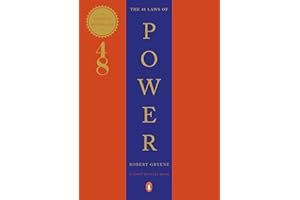
This amoral, cunning, ruthless, and instructive book synthesizes the philosophies of Machiavelli, Sun Tzu, and Carl Von Clausewitz with the historical legacies of statesmen, warriors, seducers, and con men throughout the ages.
These are the books I recommend people to listen to on @applebooks. [source]
Marvin Liao
Partner/500 Startups
My list would be (besides the ones I mentioned in answer to the previous question) both business & Fiction/Sci-Fi and ones I personally found helpful to myself. The business books explain just exactly how business, work & investing are in reality & how to think properly & differentiate yourself. On the non-business side, a mix of History & classic fiction to understand people, philosophy to make sense of life and Science fiction to picture what the future could be like (not always utopian). [source]
There is no living writer (or person) who has been more influential to me than Robert Greene. I met him when I was 19 years old and he’s shaped me as a person, as a writer, as a thinker. You MUST read his books. His work on power and strategy are critical for anyone trying to accomplish anything. In life, power is force we are constantly bumping up against. People have power of over us, we seek power ourselves that we might be free enough and influential enough to accomplish our goals—so we must understand where power comes from, how it works and how to get it. But pure power is meaningless. It must be joined to mastery and purpose. So read his book Mastery so that you can figure your life’s task and how to dedicate yourself to it. [source]
Cover unavailable
7
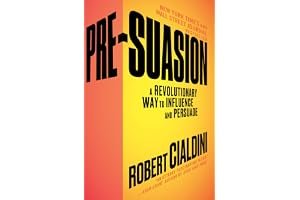
Pre-Suasion: A Revolutionary Way to Influence and Persuade
The author of the legendary bestseller Influence, social psychologist Robert Cialdini shines a light on effective persuasion and reveals that the secret doesn’t lie in the message itself, but in the key moment before that message is delivered.
What separates effective communicators from truly successful persuaders? Using the same combination of rigorous scientific research and accessibility that made his Influence an iconic bestseller, Robert Cialdini explains how to capitalize on the essential window of time before you deliver an important message. This “privileged moment for change” prepares people to be receptive to a message before they experience it. Optimal persuasion is achieved only through optimal pre-suasion. In other words, to change “minds” a pre-suader must also change “states of mind.”
His first solo work in over thirty years, Cialdini’s Pre-Suasion draws on his extensive experience as the most cited social psychologist of our time and explains the techniques a person should implement to become a master persuader. Altering a listener’s attitudes, beliefs, or experiences isn’t necessary, says Cialdini—all that’s required is for a communicator to redirect the audience’s focus of attention before a relevant action.
From studies on advertising imagery to treating opiate addiction, from the annual letters of Berkshire Hathaway to the annals of history, Cialdini draws on an array of studies and narratives to outline the specific techniques you can use on online marketing campaigns and even effective wartime propaganda. He illustrates how the artful diversion of attention leads to successful pre-suasion and gets your targeted audience primed and ready to say, “Yes.”
I just finished reading Pre-Suasion, or I should say I just finished skimming Pre-Suasion by Robert Cialdini. I don’t think I needed to read the entire book to get the point, but it was still good to read what I did. [source]
Cover unavailable
8
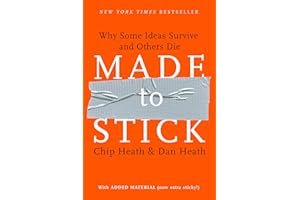
Made to Stick: Why Some Ideas Survive and Others Die
NEW YORK TIMES BESTSELLER - The instant classic about why some ideas thrive, why others die, and how to improve your idea's chances--essential reading in the "fake news" era.
Mark Twain once observed, "A lie can get halfway around the world before the truth can even get its boots on." His observation rings true: Urban legends, conspiracy theories, and bogus news stories circulate effortlessly. Meanwhile, people with important ideas--entrepreneurs, teachers, politicians, and journalists--struggle to make them "stick."
In Made to Stick, Chip and Dan Heath reveal the anatomy of ideas that stick and explain ways to make ideas stickier, such as applying the human scale principle, using the Velcro Theory of Memory, and creating curiosity gaps. Along the way, we discover that sticky messages of all kinds--from the infamous "kidney theft ring" hoax to a coach's lessons on sportsmanship to a vision for a new product at Sony--draw their power from the same six traits.
Made to Stick will transform the way you communicate. It's a fast-paced tour of success stories (and failures): the Nobel Prize-winning scientist who drank a glass of bacteria to prove a point about stomach ulcers; the charities who make use of the Mother Teresa Effect; the elementary-school teacher whose simulation actually prevented racial prejudice.
Provocative, eye-opening, and often surprisingly funny, Made to Stick shows us the vital principles of winning ideas--and tells us how we can apply these rules to making our own messages stick.
@conorgil My all-time favorite example of research communication is The Selfish Gene. Astonishingly effective at explaining deep research ideas/findings to a lay reader. A book with great advice: https://t.co/QD1sM2o0z6 (It isn't specific to research but still super valuable.) [source]
Bill Liao
The Book "Made to Stick" combined with "The Poetics" by Aristotle really helped me to see the power of telling great stories with surprises in them and every time I meet a start-up I can always make a contribution to their pitch. [source]
Cristian-Dragos Baciu
I highly recommend all the books written by the Heath brothers, especially Made to Stick: Why Some Ideas Survive And Others Die. This one's a must-read for marketers. The reason I enjoyed their work so much is because they offer real-life stories and insights that makes it so much easier for the reader to imprint that information in his mind [source]
Cover unavailable
9
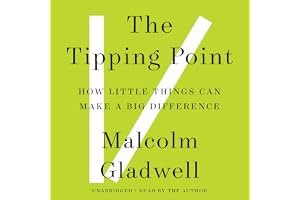
The Tipping Point: How Little Things Can Make a Big Difference
The tipping point is that magic moment when an idea, trend, or social behavior crosses a threshold, tips, and spreads like wildfire. Just as a single sick person can start an epidemic of the flu, so too can a small but precisely targeted push cause a fashion trend, the popularity of a new product, or a drop in the crime rate. This widely acclaimed bestseller, in which Malcolm Gladwell explores and brilliantly illuminates the tipping point phenomenon, is already changing the way people throughout the world think about selling products and disseminating ideas.
Gladwell introduces us to the particular personality types who are natural pollinators of new ideas and trends, the people who create the phenomenon of word of mouth. He analyzes fashion trends, smoking, children's television, direct mail, and the early days of the American Revolution for clues about making ideas infectious, and visits a religious commune, a successful high-tech company, and one of the world's greatest salesmen to show how to start and sustain social epidemics.
Bunch of really good information in here on how to make ideas go viral. This could be good to apply to any kind of products or ideas you may have. Definitely, check out The Tipping Point, which is one of my favorites. [source]
Malcolm Gladwell's breakthrough insight was to focus on the micro-relationships between individuals, which helped organizations realize that it's not about the big ads and the huge charity balls... it's about setting the stage for the buzz to start. [source]
Andy Stern
I think that when we talk about making change, it is much more about macro change, like in policy. This book reminds you that at times when you're building big movements, or trying to elect significant decision-makers in politics, sometimes it's the little things that make a difference. Ever since the book was written, we've become very used to the idea of things going viral unexpectedly and then having massive impact. The Tipping Point, to me, is really an appreciation that very small things can rearrange thinking in ways – like infectious diseases – that have huge implications. While we're always searching for the big policy changes – and we think we have to do that in very traditional ways of building coalitions against constituencies, movements and the media – sometimes it's the little things that actually tip the situation. Like the story of a person and their unique set of circumstances that really captures an issue about health care or housing. So it's trying to remember, while you're thinking about the grand and the glorious, that thinking about the small things can equally bring about change. [source]
Cover unavailable
10
The Power of Habit: Why We Do What We Do in Life and Business
A young woman walks into a laboratory. Over the past two years, she has transformed almost every aspect of her life. She has quit smoking, run a marathon, and been promoted at work. The patterns inside her brain, neurologists discover, have fundamentally changed.
Marketers at Procter & Gamble study videos of people making their beds. They are desperately trying to figure out how to sell a new product called Febreze, on track to be one of the biggest flops in company history. Suddenly, one of them detects a nearly imperceptible pattern—and with a slight shift in advertising, Febreze goes on to earn a billion dollars a year.
An untested CEO takes over one of the largest companies in America. His first order of business is attacking a single pattern among his employees—how they approach worker safety—and soon the firm, Alcoa, becomes the top performer in the Dow Jones.
What do all these people have in common? They achieved success by focusing on the patterns that shape every aspect of our lives.
They succeeded by transforming habits.
In The Power of Habit, award-winning New York Times business reporter Charles Duhigg takes us to the thrilling edge of scientific discoveries that explain why habits exist and how they can be changed. With penetrating intelligence and an ability to distill vast amounts of information into engrossing narratives, Duhigg brings to life a whole new understanding of human nature and its potential for transformation.
Along the way we learn why some people and companies struggle to change, despite years of trying, while others seem to remake themselves overnight. We visit laboratories where neuroscientists explore how habits work and where, exactly, they reside in our brains. We discover how the right habits were crucial to the success of Olympic swimmer Michael Phelps, Starbucks CEO Howard Schultz, and civil-rights hero Martin Luther King, Jr. We go inside Procter & Gamble, Target superstores, Rick Warren’s Saddleback Church, NFL locker rooms, and the nation’s largest hospitals and see how implementing so-called keystone habits can earn billions and mean the difference between failure and success, life and death.
At its core, The Power of Habit contains an exhilarating argument: The key to exercising regularly, losing weight, raising exceptional children, becoming more productive, building revolutionary companies and social movements, and achieving success is understanding how habits work.
Habits aren’t destiny. As Charles Duhigg shows, by harnessing this new science, we can transform our businesses, our communities, and our lives.
…
Recommended by Naval Ravikant, Blake Irving, Alden Mills, and 15 others.
I also recently finished The Power of Habit, or close to finish as I get. That one was interesting, not because of its content necessarily, but because it’s good for me to always keep on top of mind how powerful my habits are. … I think learning how to break habits is a very important meta-skill that can serve you better in life than almost anything else. Although you can read tons of books on it, the reality is you’re never going to learn how to break bad habits until you just break them. [source]
Blake Irving
CEO/GoDaddy
You know, there's a book called The Power of Habit by Charles Duhigg. Simple read book about just how to build positive habits that can be I think I what I'd call you know whether in your personal life or whether in your business life to help you build you know, have a loop that can build your success and that's one I mean there are so many great books out there. [source]
Alden Mills
More recent books that have had a significant impact on me are The Power of Habit and The Diamond Cutter. Both represent different forces for me – the former helps me tactically with making incremental improvements in my life. [source]
Cover unavailable
11
Nudge: Improving Decisions About Health, Wealth, and Happiness
Every day, we make decisions on topics ranging from personal investments to schools for our children to the meals we eat to the causes we champion. Unfortunately, we often choose poorly. The reason, the authors explain, is that, being human, we all are susceptible to various biases that can lead us to blunder. Our mistakes make us poorer and less healthy; we often make bad decisions involving education, personal finance, health care, mortgages and credit cards, the family, and even the planet itself.
Thaler and Sunstein invite us to enter an alternative world, one that takes our humanness as a given. They show that by knowing how people think, we can design choice environments that make it easier for people to choose what is best for themselves, their families, and their society. Using colorful examples from the most important aspects of life, Thaler and Sunstein demonstrate how thoughtful “choice architecture” can be established to nudge us in beneficial directions without restricting freedom of choice. Nudge offers a unique new take—from neither the left nor the right—on many hot-button issues, for individuals and governments alike. This is one of the most engaging and provocative books to come along in many years.
Nudge is a very important book. One of the reasons Nudge is so important is because it’s taking these ideas and applying them to the policy domain. Here are the mistakes we make. Here are the ways marketers are trying to influence us. Here’s the way we might be able to fight back. If policymakers understood these principles, what could they do? The other important thing about the book is that it describes, in detail, small interventions. It’s basically a book about cheap persuasion. [source]
This might feel like a weird book to include, but I think it presents another side of strategy that is too often forgotten. It’s not always about bold actors and strategic thrusts. Sometimes strategy is about subtle influence. Sometimes it is framing and small tweaks that change behavior. We can have big aims, but get there with little moves. This book has excellent examples of that kind of thinking and how it is changing politics, government and business. My favorite example is about the bumblebee that they started putting on urinals–which drastically reduced the amount of spray and spillage because it changed where men aimed when they peed. It’s not exactly the coolest strategy but it solved a problem. So we can learn from it. [source]
Cover unavailable
12
Win Bigly: Persuasion in a World Where Facts Don't Matter
The New York Times bestseller that explains one of the most important perceptual shifts in the history of humankind
Scott Adams was one of the earliest public figures to predict Donald Trump's election. The mainstream media regarded Trump as a lucky clown, but Adams - best known as "the guy who created Dilbert" -- recognized a level of persuasion you only see once in a generation. We're hardwired to respond to emotion, not reason, and Trump knew exactly which emotional buttons to push.
The point isn't whether Trump was right or wrong, good or bad. Adams goes beyond politics to look at persuasion tools that can work in any setting--the same ones Adams saw in Steve Jobs when he invested in Apple decades ago. Win Bigly is a field guide for persuading others in any situation--or resisting the tactics of emotional persuasion when they're used on you.
This revised edition features a bonus chapter that assesses just how well Adams foresaw the outcomes of Trump's tactics with North Korea, the NFL protesters, Congress, and more.
@_KevinAGC Best book on writing persuasively: @ScottAdamsSays "Win Bigly" and @RobertCialdini "Influence". [source]
Aaron Watson
This one’s going to be controversial. Adams, the creator of Dilbert, was one of the first commentators to come out and predict that Trump would win the 2016 presidential election. How’d he do that? By viewing the world through his Persuasion Filter. This reframing of how humans interact, the world works, and why Trump won was fascinating. It’s already starting to influence the way that I write. Check it out. [source]
Cover unavailable
13
Persuasion
Jane Austen
4.4
Twenty-seven-year old Anne Elliot is Austen's most adult heroine. Eight years before the story proper begins, she is happily betrothed to a naval officer, Frederick Wentworth, but she precipitously breaks off the engagement when persuaded by her friend Lady Russell that such a match is unworthy. The breakup produces in Anne a deep and long-lasting regret. When later Wentworth returns from sea a rich and successful captain, he finds Anne's family on the brink of financial ruin and his own sister a tenant in Kellynch Hall, the Elliot estate. All the tension of the novel revolves around one question: Will Anne and Wentworth be reunited in their love?
Jane Austen once compared her writing to painting on a little bit of ivory, 2 inches square. Readers of Persuasion will discover that neither her skill for delicate, ironic observations on social custom, love, and marriage nor her ability to apply a sharp focus lens to English manners and morals has deserted her in her final finished work.
…
Recommended by Jenny Davidson.
Jenny Davidson
Persuasion is an unusually brilliant novel, just in terms of its style of narration. Out of all of the novels Austen published in her short life, this one feels most to me like a real love story. [source]
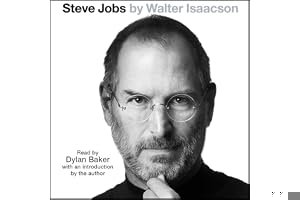
From the author of the bestselling biographies of Benjamin Franklin and Albert Einstein, this is the exclusive, New York Times bestselling biography of Apple co-founder Steve Jobs.
Based on more than forty interviews with Jobs conducted over two years—as well as interviews with more than a hundred family members, friends, adversaries, competitors, and colleagues—Walter Isaacson has written a riveting story of the roller-coaster life and searingly intense personality of a creative entrepreneur whose passion for perfection and ferocious drive revolutionized six industries: personal computers, animated movies, music, phones, tablet computing, and digital publishing.
At a time when America is seeking ways to sustain its innovative edge, and when societies around the world are trying to build digital-age economies, Jobs stands as the ultimate icon of inventiveness and applied imagination. He knew that the best way to create value in the twenty-first century was to connect creativity with technology. He built a company where leaps of the imagination were combined with remarkable feats of engineering.
Although Jobs cooperated with this book, he asked for no control over what was written nor even the right to read it before it was published. He put nothing off-limits. He encouraged the people he knew to speak honestly. And Jobs speaks candidly, sometimes brutally so, about the people he worked with and competed against. His friends, foes, and colleagues provide an unvarnished view of the passions, perfectionism, obsessions, artistry, devilry, and compulsion for control that shaped his approach to business and the innovative products that resulted.
Driven by demons, Jobs could drive those around him to fury and despair. But his personality and products were interrelated, just as Apple’s hardware and software tended to be, as if part of an integrated system. His tale is instructive and cautionary, filled with lessons about innovation, character, leadership, and values.
For Chesky, a source may come in the form of a biography of a business hero such as Steve Jobs or Walt Disney. His primary book source on management technique is Andy Grove’s High Output Management. [source]
Cover unavailable
15
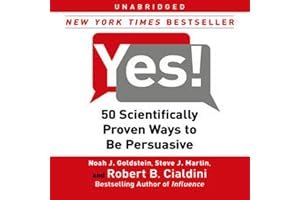
Yes!: 50 Scientifically Proven Ways to Be Persuasive
Noah J. Goldstein Ph.D., Steve J. Martin, Robert Cialdini Ph.D.
4.4
Small changes can make a big difference in your powers of persuasion.
What one word can you start using today to increase your persuasiveness by more than fifty percent? Which item of stationery can dramatically increase people's responses to your requests? How can you win over your rivals by inconveniencing them? Why does knowing that so many dentists are named Dennis improve your persuasive prowess?
Every day we face the challenge of persuading others to do what we want. But what makes people say yes to our requests? Persuasion is not only an art, it is also a science, and researchers who study it have uncovered a series of hidden rules for moving people in your direction. Based on more than sixty years of research into the psychology of persuasion, Yes! reveals fifty simple but remarkably effective strategies that will make you much more persuasive at work and in your personal life, too.
Cowritten by the world's most quoted expert on influence, Professor Robert Cialdini, Yes! presents dozens of surprising discoveries from the science of persuasion in short, enjoyable, and insightful chapters that you can apply immediately to become a more effective persuader. Why did a sign pointing out the problem of vandalism in the Petrified Forest National Park actually increase the theft of pieces of petrified wood? Why did sales of jam multiply tenfold when consumers were offered many fewer flavors? Why did people prefer a Mercedes immediately after giving reasons why they prefer a BMW? What simple message on cards left in hotel rooms greatly increased the number of people who behaved in environmentally friendly ways?
Often counterintuitive, the findings presented in Yes! will steer you away from common pitfalls while empowering you with little-known but proven wisdom.
Whether you are in advertising, marketing, management, or sales, or just curious about how to be more influential in everyday life, Yes! shows how making small, scientifically proven changes to your approach can have a dramatic effect on your persuasive powers.
From the Impresario of NBC’s hit show The Apprentice
TRUMP ON TRUMP: “I like thinking big. I always have. To me it’s very simple: if you’re going to be thinking anyway, you might as well think big.”
And here’s how he does it: the art of the deal.
Beginning with a week in Trump’s high-stakes life, Trump: The Art of the Deal gives us Trump in action. We see just how he operates day to day—how he runs his business and how he runs his life—as he chats with friends and family, clashes with enemies, efficiently buys up Atlantic City’s top casinos, changes the face of the New York City skyline . . . and plans the tallest building in the world.
TRUMP ON TRUMP: “I play it very loose. I don’t carry a briefcase. I try not to schedule too many meetings. I leave my door open. . . . I prefer to come to work each day and just see what develops.”
Even a maverick plays by rules, and here Trump formulates his own eleven guidelines for success. He isolates the common elements in his greatest deals; he shatters myths (“You don’t necessarily need the best location. What you need is the best deal”); he names names, spells out the zeros, and fully reveals the deal-maker’s art: from the abandoned property that became the Jacob K. Javits Convention Center to the seedy hotel that became the Grand Hyatt; from the race to rebuild Central Park’s Wollman Skating Rink to the byzantine saga of the property that became Trump Tower. And throughout, Trump talks—really talks—about how he does it.
TRUMP ON TRUMP: “I always go into a deal anticipating the worst. If you plan for the worst—if you can live with the worst—the good will always take care of itself.”
Donald Trump is blunt, brash, surprisingly old-fashioned in spots—and always, always an original. Trump: The Art of the Deal is an unguarded look at the mind of a brilliant entrepreneur and an unprecedented education in the art of the deal. It’s the most streetwise business book there is—and a sizzling read for anyone interested in money and success.
…
Recommended by Jim Hanson, Marc M. Lalonde, Secret Agent Number Six, and 2 others.
Jim Hanson
You already had Trump officials testifythey disagreed w/ @realDonaldTrump Interesting thing about executive power The executive has the power Not the advisers Here's a good book on it https://t.co/KGlUpucCNI Time for the acquittal https://t.co/xICCPPuvM5 [source]
Marc M. Lalonde
The easiest way to Clean Up my Friends List is to post this... I love this book! | Let's get to know each other a little. I'll start... Here's MY Story: https://t.co/o8gIl1TxR7 #AskLalonde #marcmlalonde #wealthy #inspiration https://t.co/6ULSKHiIj3 [source]
Secret Agent Number Six
The failing George W. Washington and his dad George H.W. Washington were fake Presidents. They did not think of The Constitution before I did.They stole all of my ideas for it from "The Art of the Deal" which you should read right now because its the best book ever. No collution! [source]
Cover unavailable
17
Predictably Irrational: The Hidden Forces That Shape Our Decisions
Why do our headaches persist after taking a one-cent aspirin but disappear when we take a 50-cent aspirin?
Why does recalling the Ten Commandments reduce our tendency to lie, even when we couldn't possibly be caught?
Why do we splurge on a lavish meal but cut coupons to save twenty-five cents on a can of soup?
Why do we go back for second helpings at the unlimited buffet, even when our stomachs are already full?
And how did we ever start spending $4.15 on a cup of coffee when, just a few years ago, we used to pay less than a dollar?
When it comes to making decisions in our lives, we think we're in control. We think we're making smart, rational choices. But are we?
In a series of illuminating, often surprising experiments, MIT behavioral economist Dan Ariely refutes the common assumption that we behave in fundamentally rational ways. Blending everyday experience with groundbreaking research, Ariely explains how expectations, emotions, social norms, and other invisible, seemingly illogical forces skew our reasoning abilities.
Not only do we make astonishingly simple mistakes every day, but we make the same "types" of mistakes, Ariely discovers. We consistently overpay, underestimate, and procrastinate. We fail to understand the profound effects of our emotions on what we want, and we overvalue what we already own. Yet these misguided behaviors are neither random nor senseless. They're systematic and predictable--making us "predictably" irrational.
From drinking coffee to losing weight, from buying a car to choosing a romantic partner, Ariely explains how to break through these systematic patterns of thought to make better decisions. "Predictably Irrational" will change the way we interact with the world--one small decision at a time.
…
Recommended by Max Levchin, Vinod Khosla, Vinod Khosla, and 22 others.
Max Levchin
Co-founder/PayPal, CEO/Affirm, Investor
Max Levchin recommended this book as an answer to "What business books would you advise young entrepreneurs read?" [source]
Andra Zaharia
'While I was thinking of the best books to add to this short list, I realized that not even half of them are directly related to digital marketing. This is because I believe that the best marketers are people who understand human nature deeply and aim to bring out the best in it. Call me naive, but that’s how I see it. If I were to want to pursue a career in marketing, I’d read … Predictably Irrational. [source]
Chris Goward
Here are some of the books that have been very impactful for me, or taught me a new way of thinking: … Predictably Irrational. [source]
Even the smartest among us can feel inept as we fail to figure out which light switch or oven burner to turn on, or whether to push, pull, or slide a door. The fault, argues this ingenious—even liberating—book, lies not in ourselves, but in product design that ignores the needs of users and the principles of cognitive psychology. The problems range from ambiguous and hidden controls to arbitrary relationships between controls and functions, coupled with a lack of feedback or other assistance and unreasonable demands on memorization. The Design of Everyday Things shows that good, usable design is possible. The rules are simple: make things visible, exploit natural relationships that couple function and control, and make intelligent use of constraints. The goal: guide the user effortlessly to the right action on the right control at the right time.
In this entertaining and insightful analysis, cognitive scientist Don Norman hails excellence of design as the most important key to regaining the competitive edge in influencing consumer behavior. Now fully expanded and updated, with a new introduction by the author, The Design of Everyday Things is a powerful primer on how—and why—some products satisfy customers while others only frustrate them.
…
Recommended by Andrew Chen, Marissa Mayer, Nir Eyal, and 23 others.
Grey Baker
I mainly read to decompress and change my state of mind, so it’s hard to point to an insight I read that helped me. Reading fiction has pulled me out of a bad mood more times than I can count, though, and always reenergises me to attack problems that had stumped me again. That said, I read and loved Norman Norman’s “The Design of Everyday Things”, and it’s helped me think through design problems ever since. [source]
Julia Enthoven
For people interested in designing or building software products: The Design of Everyday Things by Don Norman and The Lean Product Playbook by Dan Olsen. Both books have informed my product sense and helped me make decisions about great UX. [source]
Kaci Lambe
These three books are about how people actually use design in their lives. They helped me understand this very basic idea: There are no dumb users, only bad designers. Take the time to create based on how your design will be interacted with. Test it. Iterate. That's how you become a good designer. [source]
Cover unavailable
19
The One Sentence Persuasion Course - 27 Words to Make the World Do Your Bidding
Blair Warre
4.3
The Forbidden Keys To Persuasion
Chapter Overview
Lesson 1: The Basis Of Forbidden Persuasion And The Achilles Heel Of The Human Mind Lesson 2: The Mechanics Of Cult Mind Control - Part 1 Lesson 3: The Mechanics Of Cult Mind Control - Part 2 Lesson 4: Psychological Ventriloquism Lesson 5: Persuasion And The God Complex: An Excerpt From Joe Vitale's Seven Lost Secrets Of Success Lesson 6: Context And Persuasion
For more than two thousand years, The Art of War has stood as a cornerstone of Chinese culture-a lucid epigrammatic text that reveals as much about human psychology, politics, and economics as it does about battlefield strategy. The influence of Sun-tzu's text has grown tremendously in the West in recent years, with military leaders, politicians, and corporate executives alike finding valuable insight in these ancient words. In his crisp, accessible new translation, scholar John Minford brings this seminal work to life for modern readers.
Minford opens with a lively, learned introduction in which he explores the life and times of Sun-tzu, looks at The Art of War in the context of the turbulent Warring States period, and discusses how best to read and understand the work today. There follows Minford's translation of the core text itself in two different formats-first, the unadorned thirteen chapters of the original work and then the same text reprinted with extensive running commentary by classical Chinese scholars as well as Minford himself. The result is an opportunity for Western readers to experience Sun-tzu's work in all its intensity as it applies to many aspects of our lives.
Which books should be read by every single intelligent person on planet? … The Art of War (Sun Tsu) to learn that the act of killing fellow humans can be raised to an art. If you read all of the above works you will glean profound insight into most of what has driven the history of the western world. [source]
Cover unavailable
21
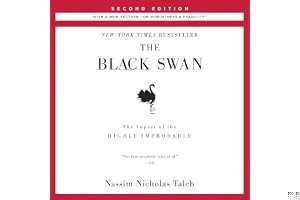
The Black Swan: The Impact of the Highly Improbable
A black swan is a highly improbable event with three principal characteristics: It is unpredictable; it carries a massive impact; and, after the fact, we concoct an explanation that makes it appear less random, and more predictable, than it was.
The astonishing success of Google was a black swan; so was 9/11. For Nassim Nicholas Taleb, black swans underlie almost everything about our world, from the rise of religions to events in our own personal lives.
Why do we not acknowledge the phenomenon of black swans until after they occur? Part of the answer, according to Taleb, is that humans are hardwired to learn specifics when they should be focused on generalities.
We concentrate on things we already know and time and time again fail to take into consideration what we don’t know. We are, therefore, unable to truly estimate opportunities, too vulnerable to the impulse to simplify, narrate, and categorize, and not open enough to rewarding those who can imagine the “impossible.”
For years, Taleb has studied how we fool ourselves into thinking we know more than we actually do. We restrict our thinking to the irrelevant and inconsequential, while large events continue to surprise us and shape our world. Now, in this revelatory book, Taleb explains everything we know about what we don’t know. He offers surprisingly simple tricks for dealing with black swans and benefiting from them.
Elegant, startling, and universal in its applications The Black Swan will change the way you look at the world. Taleb is a vastly entertaining writer, with wit, irreverence, and unusual stories to tell. He has a polymathic command of subjects ranging from cognitive science to business to probability theory.
The Black Swan is a landmark book – itself a black swan.
The book also contains a 4-page glossary; 19 pages of notes; and, a 28-page bibliography in addition to an index.
From the book "The Everything Store: and the Age of Amazon" “The scholar argues that people are wired to see patterns in chaos while remaining blind to unpredictable events, with massive consequences. Experimentation and empiricism trumps the easy and obvious narrative,” Stone writes. [source]
And throw in “The Black Swan” and “Fooled by Randomness”. “Fragile” means if you hit something might break. “Resilient” means if you hit something, it will stay the same. On my podcast Nassim discusses “Antifragility” – building a system, even on that works for you on a personal level, where you if you harm your self in some way it becomes stronger. That podcast changed my life He discusses Antifragility throughout history, up to our current economic situation, and even in our personal situations. [source]
Cover unavailable
22
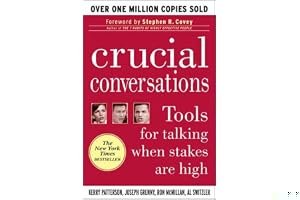
Crucial Conversations: Tools for Talking When Stakes Are High
Kerry Patterson, Joseph Grenny, Ron McMillan, and Al Switzler
Crucial Conversations: Tools For Talking When Stakes Are High is a guide to hone your conversation skills, and prepare you for the most important or trying times of your life and career. The book discusses how talking in the right way can help people achieve what they want. People are often tongue-tied when it comes to interacting with someone, especially when there is a lot of tension in the air. Strong emotions often give away the ability to rationalise one's thoughts, especially during conversations, and emotionally-driven conversations will not work on important occasions. This book teaches readers how to tackle such situations with ease. It provides tips on how to be persuasive, and turn a conversation to one's advantage. The book helps in dealing with confrontations at home, at work, and even with friends. These skills can positively impact the lives of the book's readers in all spheres, and direct their thoughts in a constructive manner. Some of the sections from the book are, How to Notice When Safety Is at Risk, How to Speak Persuasively Not Abrasively, How to Turn Crucial Conversations, and How to Stay Focused on What You Really Want.Kerry Patterson, the co-founder of VitalSmarts, has authored four bestsellers. Some of his other books are Change Anything: The New Science of Personal Success, and Crucial Confrontations: Tools for Resolving Broken Promises, Violated Expectations, and Bad Behavior. Joseph Grenny works as a consultant for many Fortune 500 companies and has impacted many lives throughout the globe through his corporate change initiatives. He is the co-founder of VitalSmarts, and a popular speaker too. Al Switzler is the author of four New York Times bestsellers and has designed and framed many programs for Fortune 500 companies. Ron McMillan has worked as a leadership consultant and trained many people, from first level managers to CEOs.
…
Recommended by Max Levchin and Deke Bridges.
Max Levchin
Co-founder/PayPal, CEO/Affirm, Investor
A now-venerable guide to having tough conversations in a way that engages the debaters. [source]
Deke Bridges
Picked up this great book @Powells to read. Better conversation and listening enables you to get deeper into subjects at hand. When talking with people, this makes your communication skills a very powerful tool. Always be learning. #growth #education #leadership https://t.co/r0ujX9IPqh [source]
Cover unavailable
23
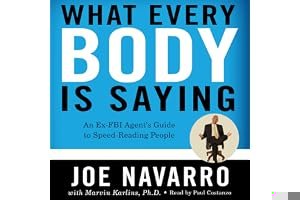
What Every Body is Saying: An Ex-FBI Agent's Guide to Speed-Reading People
Read this book and send your nonverbal intelligence soaring. Joe Navarro, a former FBI counterintelligence officer and a recognized expert on nonverbal behavior, explains how to "speed-read" people: decode sentiments and behaviors, avoid hidden pitfalls, and look for deceptive behaviors. You'll also learn how your body language can influence what your boss, family, friends, and strangers think of you. You will discover:
The ancient survival instincts that drive body language Why the face is the least likely place to gauge a person's true feelings What thumbs, feet, and eyelids reveal about moods and motives The most powerful behaviors that reveal our confidence and true sentiments Simple nonverbals that instantly establish trust Simple nonverbals that instantly communicate authority Filled with examples from Navarro's professional experience, this definitive book offers a powerful new way to navigate your world.
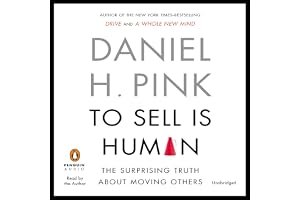
From the bestselling author of Drive and A Whole New Mind comes a surprising--and surprisingly useful--new book that explores the power of selling in our lives.
According to the U.S. Bureau of Labor Statistics, one in nine Americans works in sales. Every day more than fifteen million people earn their keep by persuading someone else to make a purchase.
But dig deeper and a startling truth emerges:
Yes, one in nine Americans works in sales. But sodo the other eight.
Whether we’re employees pitching colleagues on a new idea, entrepreneurs enticing funders to invest, or parents and teachers cajoling children to study, we spend our days trying to move others. Like it or not, we’re all in sales now.
To Sell Is Human offers a fresh look at the art and science of selling. As he did in Drive and A Whole New Mind, Daniel H. Pink draws on a rich trove of social science for his counterintuitive insights. He reveals the new ABCs of moving others (it's no longer "Always Be Closing"), explains why extraverts don't make the best salespeople, and shows how giving people an "off-ramp" for their actions can matter more than actually changing their minds.
Along the way, Pink describes the six successors to the elevator pitch, the three rules for understanding another's perspective, the five frames that can make your message clearer and more persuasive, and much more. The result is a perceptive and practical book--one that will change how you see the world and transform what you do at work, at school, and at home.
…
Recommended by Cat Williams-Treloar, Jeffrey Shaw, and Ola Olusoga.
Cat Williams-Treloar
Daniel Pink "To Sell is Human" - describes selling as a way to move and serve people along the journey. It's packed full of examples, science and experiments in an easily digestible form. [source]
Jeffrey Shaw
I’m asked all the time what books I suggest. These are the best of the best. Links to each book are here https://t.co/pJXWOeZtBu #marketing #entrepreneur https://t.co/1wCkqQw8GX [source]
Ola Olusoga
Like Charlie Munger once said: “I’ve long believed that a certain system - which almost any intelligent person can learn - works way better than the systems most people use to understand the world. What you need is a latticework of mental models in your head. And, with that system, things gradually fit together in a way that enhances cognition. Just as multiple factors shape every system, multiple mental models from a variety of disciplines are necessary to understand that system". You can read this book to start building a "latticework of mental models in your head". [source]
Cover unavailable
25
Drive: The Surprising Truth About What Motivates Us
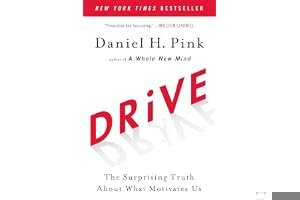
The New York Times bestseller that gives readers a paradigm-shattering new way to think about motivation
Most people believe that the best way to motivate is with rewards like money—the carrot-and-stick approach. That's a mistake, says Daniel H. Pink (author of To Sell Is Human: The Surprising Truth About Motivating Others). In this provocative and persuasive new book, he asserts that the secret to high performance and satisfaction-at work, at school, and at home—is the deeply human need to direct our own lives, to learn and create new things, and to do better by ourselves and our world.
Drawing on four decades of scientific research on human motivation, Pink exposes the mismatch between what science knows and what business does—and how that affects every aspect of life. He examines the three elements of true motivation—autonomy, mastery, and purpose-and offers smart and surprising techniques for putting these into action in a unique book that will change how we think and transform how we live.
…
Recommended by Tobi Lütke, Bogdan Lucaciu, David Brudo, and 5 others.
Tobi Lütke
Founder & CEO/Shopify
Tobi Lütke recommended this book in an interview in "The Globe and Mail." [source]
Bogdan Lucaciu
Spoiler: it’s autonomy, mastery, and purpose. [source]
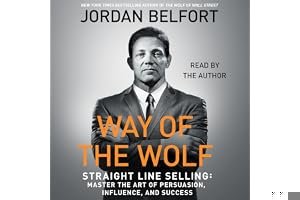
Jordan Belfort—immortalized by Leonardo DiCaprio in the hit movie The Wolf of Wall Street—reveals the step-by-step sales and persuasion system proven to turn anyone into a sales-closing, money-earning rock star.
For the first time ever, Jordan Belfort opens his playbook and gives you access to his exclusive step-by-step system—the same system he used to create massive wealth for himself, his clients, and his sales teams. Until now this revolutionary program was only available through Jordan’s $1,997 online training. Now, in Way of the Wolf, Belfort is ready to unleash the power of persuasion to a whole new generation, revealing how anyone can bounce back from devastating setbacks, master the art of persuasion, and build wealth. Every technique, every strategy, and every tip has been tested and proven to work in real-life situations.
Written in his own inimitable voice, Way of the Wolf cracks the code on how to persuade anyone to do anything, and coaches readers—regardless of age, education, or skill level—to be a master sales person, negotiator, closer, entrepreneur, or speaker.
…
Recommended by Kimberly Gloria Choi and 1 others.
Kimberly Gloria Choi
I actually have read the Wolf of Wall Street before. But this time I want to understands this man without any Hollywood beautifying filter. Try to get into his head. Simply want to know how he used charisma and Psychology to manipulate people. And I’m certain, all dictators, leaders in history, they all have their very own charisma, unique tonality that attracts people's’ attention. To be continued…. [source]
Cover unavailable
27
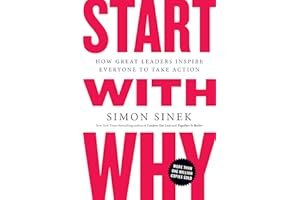
Start with Why: How Great Leaders Inspire Everyone to Take Action
Why are some people and organizations more innovative, more influential, and more profitable than others? Why do some command greater loyalty from customers and employees alike? Even among the successful, why are so few able to repeat their success over and over?
People like Martin Luther King Jr., Steve Jobs, and the Wright Brothers might have little in common, but they all started with why. It was their natural ability to start with why that enabled them to inspire those around them and to achieve remarkable things.
In studying the leaders who've had the greatest influence in the world, Simon Sinek discovered that they all think, act, and communicate in the exact same way—and it's the complete opposite of what everyone else does. Sinek calls this powerful idea The Golden Circle, and it provides a framework upon which organizations can be built, movements can be lead, and people can be inspired. And it all starts with WHY.
Any organization can explain what it does; some can explain how they do it; but very few can clearly articulate why. WHY is not money or profit—those are always results. WHY does your organization exist? WHY does it do the things it does? WHY do customers really buy from one company or another? WHY are people loyal to some leaders, but not others?
Starting with WHY works in big business and small business, in the nonprofit world and in politics. Those who start with WHY never manipulate, they inspire. And the people who follow them don't do so because they have to; they follow because they want to.
Drawing on a wide range of real-life stories, Sinek weaves together a clear vision of what it truly takes to lead and inspire. This book is for anyone who wants to inspire others or who wants to find someone to inspire them.
Today is World Book Day, a wonderful opportunity to address this #ChallengeRichard sent in by Mike Gonzalez of New Jersey: Make a list of your top 65 books to read in a lifetime. [source]
The basis of this book is so important to anyone looking to increase their influence, profits or impact. People won't truly buy into a product, service, movement, or idea until they understand the WHY behind it. When you start with the why, everything else falls into place. This book is so impactful, I consider it required reading. [source]
Tony Hsieh
CEO/Zappos.com
Over the years he’s recommended well over 20 business books — including his own, the 2010 bestseller Delivering Happiness and you can always find what he’s currently reading atop his cluttered desk. Start with Why is amogst those titles. [source]
Cover unavailable
28
Salt Sugar Fat: How the Food Giants Hooked Us
Michael Moss
4.2
Every year, the average American eats 33 pounds of cheese and 70 pounds of sugar. They ingest 8,500 milligrams of salt a day, double the recommended amount, almost none of which comes from salt shakers. It comes from processed food, an industry that hauls in $1 trillion in annual sales.
In Salt Sugar Fat, Pulitzer Prize-winning investigative reporter Michael Moss shows how this happened. Featuring examples from some of the most recognizable (and profitable) companies and brands of the last half century--including Kraft, Coca-Cola, Lunchables, Kellogg, Nestlé, Oreos, Cargill, Capri Sun, and many more--
Moss’s explosive, empowering narrative is grounded in meticulous, often eye-opening research. He goes inside the labs where food scientists use cutting-edge technology to calculate the "bliss point" of sugary beverages or enhance the "mouth feel" of fat by manipulating its chemical structure. He unearths marketing techniques taken straight from tobacco company playbooks to redirect concerns about the health risks of products. He talks to concerned executives who explain that they could never produce truly healthy alternatives to their products even if serious regulation became a reality.
Simply put: the industry itself would cease to exist without salt, sugar, and fat.
…
Recommended by Sharon Hayes.
Sharon Hayes
@novenator @andrewmarsh6 @williamorr2110 @EmmaKinery Fat alone doesn't cause obesity. Excess calories do. This is science. There's a fantastic book called "Salt Sugar Fat" that looks at what the food industry does to get consumers hooked. [source]
Based on his exclusive "Date with Destiny" seminars, the bestselling author of Unlimited Powerional anecdotes, case studies, personalized self-help tests and a program anyone can follow teach readers the lessons in destiny that lead to self-mastery.
This book was the first of Tony Robbins books I read, and it asked me crucial questions about the stories I was telling myself that were limiting my growth. [source]
When I was 18, this book changed my life. [source]
Gennady Batrakov
In the business category, my #1 book is Awaken the Giant Within by Anthony Robbins. It has been over 20 years since I read the book for the first time. I reread it a few times since. I even keep extra copies of this book on my bookshelf to give away to my friends. Awaken the Giant Within has helped me in many ways. It aided me to deal with the habits I wanted to stay away from. It was easy to quit smoking after reading that book, even though I had many unsuccessful attempts to quit smoking in the previous 20 years; however, after reading that book - it was just natural. I stopped “cold turkey” and I never looked back since (21 years of non-smoking life… Yay!). I gained some understanding of how to run the brain to achieve results. It helped me to focus on the goals through some rough time and the tragic losses throughout my life. [source]
Cover unavailable
30
Jonathan Livingston Seagull
Richard Bach, Russell Munson
4.2
This is a story for people who follow their hearts and make their own rules...people who get special pleasure out of doing something well, even if only for themselves...people who know there's more to this living than meets the eye: they’ll be right there with Jonathan, flying higher and faster than ever they dreamed.
Jonathan Livingston Seagull is no ordinary bird. He believes it is every gull's right to fly, to reach the ultimate freedom of challenge and discovery, finding his greatest reward in teaching younger gulls the joy of flight and the power of dreams. The special 20th anniversary release of this spiritual classic!
Honorable mentions: Jonathan Livingston Seagull, Zen and the Art of Motorcycle Maintenance, and The Joy of Sex, all given to me by my mother. I believe they helped inculcate some of the 1960s-70s ethos of individual freedom into my thinking. [source]
Benjamin Spall
Jonathan Livingston Seagull by Richard Bach taught me that it's okay to fly against conventional wisdom. [source]
Cover unavailable
31
Pitch Anything: An Innovative Method for Presenting, Persuading, and Winning the Deal
When it comes to delivering a pitch, Oren Klaff has unparalleled credentials. Over the past 13 years, he has used his one-of-a- kind method to raise more than $400 million--and now, for the first time, he describes his formula to help you deliver a winning pitch in any business situation.
Whether you're selling ideas to investors, pitching a client for new business, or even negotiating for a higher salary, "Pitch Anything "will transform the way you position your ideas.
According to Klaff, creating and presenting a great pitch isn't an art--it's a simple science. Applying the latest findings in the field of neuroeconomics, while sharing eye-opening stories of his method in action, Klaff describes how the brain makes decisions and responds to pitches. With this information, you'll remain in complete control of every stage of the pitch process.
"Pitch Anything" introduces the exclusive STRONG method of pitching, which can be put to use immediately:
Setting the Frame
Telling the Story
Revealing the Intrigue
Offering the Prize
Nailing the Hookpoint
Getting a Decision
One truly great pitch can improve your career, make you a lot of money--and even change your life. Success is dependent on the method you use, not how hard you try. "Better method, more money," Klaff says. "Much better method, much more money." Klaff is the best in the business because his method is much better than anyone else's. And now it's yours.
Apply the tactics and strategies outlined in "Pitch Anything" to engage and persuade your audience--and you'll have more funding and support than you ever thought possible.
…
Recommended by Alice Kemper, Jeff Gibbard, Michael Herrmann, and 1 others.
Jeff Gibbard
This book single-handedly changed my life. BY learning the principles of "Frame Control" I have had much greater success in sales, public speaking, and in managing my team. [source]
Michael Herrmann
Great book on pitching, and more generally, sales. Funny too. Has some ideas very reminiscent of Thinking Fast and Slow. [source]
Cover unavailable
32
How to Fail at Almost Everything and Still Win Big: Kind of the Story of My Life
Scott Adams
4.2
Scott Adams has likely failed at more things than anyone you’ve ever met or anyone you’ve even heard of. So how did he go from hapless office worker and serial failure to the creator of Dilbert, one of the world’s most famous syndicated comic strips, in just a few years? In How to Fail at Almost Everything and Still Win Big, Adams shares the strategy he has used since he was a teen to invite failure in, to embrace it, then pick its pocket.
No career guide can offer advice for success that works for everyone. As Adams explains, your best bet is to study the ways of others who made it big and try to glean some tricks and strategies that make sense for you. Adams pulls back the covers on his own unusual life and shares what he learned for turning one failure after another into something good and lasting. Adams reveals that he failed at just about everything he’s tried, including his corporate career, his inventions, his investments, and his two restaurants. But there’s a lot to learn from his personal story, and a lot of humor along the way. While it’s hard for anyone to recover from a personal or professional failure, Adams discovered some unlikely truths that helped to propel him forward. For instance:
• Goals are for losers. Systems are for winners. • "Passion" is bull. What you need is personal energy. • A combination of mediocre skills can make you surprisingly valuable. • You can manage your odds in a way that makes you look lucky to others.
Scott has an incredible approach to 'career planning' that's as effective as it is unusual. He’s beaten all the odds and can help you do the same. [source]
Gennady Batrakov
One of the few books that made a great deal of impact on my life. [source]
Cover unavailable
33
How to Write a Good Advertisement
Victor O. Schwab
4.2
UPDATE>This is the Recommended definitive and complete edition: Paperback (ISBN: 9781626549623) and Hardcover (ISBN: 9781626549630)
Call it advertising, call it promotion, call it marketing, but whatever you call it, every business and organization depends on words with impact. You need to grab the attention of potential customers, clients, or supporters and call them to action. Few among us are born talented copywriters, that rare combination of both facile wordsmiths and natural salespeople. Most of us need some help, and even naturals can improve by studying the best. Victor O. Schwab was one of the greats. Considered a marketing master during his 44-year career, he was the copywriter who propelled Dale Carnegie's How to Win Friends and Influence People into a mega-seller.
How to Write a Good Advertisement, Schwab's classic guide, has stood the test of time. In just over 200 pages, this book clearly explains the core elements of an effective advertisement. Schwab shows us how to
Get attention Build credibility Create winning layouts and choose the best ad size Test ad effectiveness Convert inquiries to sales Make special offers that dramatically increase response and sales How to Write a Good Advertisement gets you quickly up to speed with examples of powerful profitable headlines (with explanations of why those headlines work so well), and quick lesson reviews that help you turn what you've read into skills you own. Schwab provides us shortcuts without sacrificing long-term understanding. Fifty years after publication this book is still the standard bearer, sought after by a new generation of copy-writers and businesspeople. Read it, apply it, and watch your sales soar.
Everyone knows that high IQ is no guarantee of success, happiness, or virtue, but until Emotional Intelligence, we could only guess why. Daniel Goleman's brilliant report from the frontiers of psychology and neuroscience offers startling new insight into our "two minds"—the rational and the emotional—and how they together shape our destiny.
Through vivid examples, Goleman delineates the five crucial skills of emotional intelligence, and shows how they determine our success in relationships, work, and even our physical well-being. What emerges is an entirely new way to talk about being smart.
The best news is that "emotional literacy" is not fixed early in life. Every parent, every teacher, every business leader, and everyone interested in a more civil society, has a stake in this compelling vision of human possibility.
From the Trade Paperback edition.
…
Recommended by Drew Houston, Drew Huston, Magda Marcu, and 4 others.
Drew Houston
CEO/Dropbox
It’s nonfiction, but it spelled out something that I just didn’t know you could kind of break down in a logical way. And, suddenly, I had this understanding about the world that I didn’t have before. [source]
Magda Marcu
One of the most eye opening for me was “Emotional Intelligence: Why It Can Matter More Than IQ” as it offered a different perspective on leadership, and how empathy can make you a more successful leader. Every person has some degree of empathy and through this book you understand how to apply it more intently. [source]
Robert Kelsey
Yes, that’s the key revelation. But another key element, which was quite revelatory for me when I read it, is about the impact of fear on your brain. The impact of fear as a physiological response was well known when he wrote the book, but what was less well known was the idea of fear as a neurological response. He pointed to research showing what happens to the brain when fear is triggered, and it’s very damaging. There’s a part of the brain called the amygdala, which is part of the limbic system, and deals with emotions such as fear and distress. Its main purpose is to alert you to danger and it sends an emergency signal. All those physiological responses you have are basically the body’s response to that emergency signal. That’s what people experience when they experience fear, but it’s not just the fear of a dog barking at you or someone attacking you, it’s fear based on a fear conditioning. These are moments when something happens to you that induces fear or distress, and can include fear of failure or fear of being upset, and the same response occurs. [source]
Cover unavailable
35
The Secret of Selling Anything
Harry Brown
4.2
If you've read other selling books, you're probably tired of the false promises that never quite work out. You're probably tired of being told "you can do it if you just believe you can."
You're probably tired of reading about tricks that made a particular sale ~ tricks that may have been appropriate to a particular situation, but not yours ~ and even if they were appropriate, how would you have thought of them at the right time?
If you've read books on selling before or listened to "sales experts," you're probably tired of being pumped with hot air ~ told how you must "come alive," be full of enthusiasm, dominate the world around ~ all the things that don't happen to be a part of your basic nature.
Well, this book isn't anything like that. In fact, this book was written to refute many cliches of selling that have been accepted without question for years.
This book will prove to you, I hope, that the stereotyped image of the "born salesman" is a mistake. You don't have to remake your personality and become super-enthusiastic, super-aggressive, domineering. Not only are those traits not necessary, they are actually a hindrance to making sales.
And you won't have to develop that uncanny ability to come up with the right answer at the right time ~ that super-human knack of having the brilliant flash of insight that is so prevalent in books on selling. Sure, given several days to think about it, the writer of a sales book can always come up with a solution to a sales problem. But how does that help you when confronted face-to-face with a question that must be answered now? This book will show you that you don't need such skills.
This book can truly revolutionize your selling career ~ but only because it will show you that you no longer need to waste your time developing skills that are of no value to a salesman. For example, here are some of the points that will be made in the course of this book:
-- Contrary to the accepted mythology, enthusiasm is not a virtue; it destroys more sales than it creates. -- "Positive thinking" is an unrealistic fallacy. The salesman who thinks negatively has a far greater chance for success than the so-called "positive thinker." -- Sales success does not come from convincing people to buy things they don't want. -- The salesman who always has an answer for every objection is also probably plugging along with a very low income. -- Extroverts don't make the best salesmen; they are invariably outsold by introverts. -- To be a good salesman, you don't have to be a "smooth talker". -- Another all-time sales fallacy is the statement "When the going gets tough, the tough get going". When the going gets tough, I usually take a vacation. -- The desire to be able to motivate others is unrealistic and foolish. A really-great salesman will never try to motivate anyone.
Perhaps all of this sounds so far removed from what you've heard about selling through the years that you wonder how it could possibly be true. I intend to demonstrate the validity of these statements in two ways.
First, my own experience verifies their worth. Almost invariably, in any selling experience where I've found myself, I have outsold everyone else around me ~ usually while working far fewer hours.
In addition, I've seen these principles work for a few others, too ~ a very few, for they are unknown to most people.
But there is nothing mysterious about them ~ and that brings us to second way in which I will demonstrate their validity. I will prove them to you. We will deal with life logically and carefully in this book. Everything will be proven in terms of the real world as it is ~ in ways we can both understand.
…
Cover unavailable
36
SPIN Selling: Situation Problem Implication Need-payoff
The international bestseller that revolutionized high-end selling!
Written by Neil Rackham, former president and founder of Huthwaite corporation, SPIN Selling is essential reading for anyone involved in selling or managing a sales force. Unquestionably the best-documented account of sales success ever collected and the result of the Huthwaite corporation's massive 12-year, $1-million dollar research into effective sales performance, this groundbreaking resource details the revolutionary SPIN (Situation, Problem, Implication, Need-payoff) strategy.
In SPIN Selling, Rackham, who has advised leading companies such as IBM and Honeywell delivers the first book to specifically examine selling high-value product and services. By following the simple, practical, and easy-to-apply techniques of SPIN, readers will be able to dramatically increase their sales volume from major accounts. Rackham answers key questions such as "What makes success in major sales" and "Why do techniques like closing work in small sales but fail in larger ones?"
You will learn why traditional sales methods which were developed for small consumer sales, just won't work for large sales and why conventional selling methods are doomed to fail in major sales. Packed with real-world examples, illuminating graphics, and informative case studies - and backed by hard research data - SPIN Selling is the million-dollar key to understanding and producing record-breaking high-end sales performance.
…
Recommended by Mark Roberge, Geoffrey James, Michael Herrmann, and 3 others.
Mark Roberge
CRO/HubSpot
The other book on selling is an oldie but goldie, never goes away: SPIN Selling, by Neil Rackham. It's the one when a founder is trying to learn how to sell, belly to belly, I tell them to check out Spin Selling. [source]
Yes, it was sometime earlier this year. I read a book SPIN Selling by Neil Rackham. Chapter four has invaluable insights and instructions how to do sales calls and improve the probability that you make a sale. This year, I had to change my role at ProteusThemes, as I have thoroughly explained in my other interview. I learned in the SPIN Selling book how to structure both the user interviews and the sales calls in a way that people like to participate and eventually buy from you because you show that you care about them and their business. Everything became easier since. [source]
Cover unavailable
37
Methods of Persuasion: How to Use Psychology to Influence Human Behavior
Nick Kolenda
4.2
Best known for his viral video, "Chat Roulette Mind Reading," Nick Kolenda is finally revealing some of the psychological secrets behind his so-called "mind reading" feats.
Using principles from cognitive psychology, Nick has developed ways to subconsciously influence people's thoughts, and his "mind reading" demonstrations have been seen by over a million people across the globe.
Methods of Persuasion reveals that fascinating secret for the first time, and it explains how you can use those principles to subconsciously influence people's thoughts in your own life. Drawing on cutting-edge research in psychology and neuroscience, the entire book culminates a powerful 7-step persuasion process that follows the acronym, METHODS: Step 1: Mold Their Perception Step 2: Elicit Congruent Attitudes Step 3: Trigger Social Pressure Step 4: Habituate Your Message Step 5: Optimize Your Message Step 6: Drive Their Momentum Step 7: Sustain Their Compliance This book teaches you the psychology behind each step, and it explains how you can use METHODS to influence people's thoughts, emotions, and behavior in nearly any situation.
…
Cover unavailable
38
I Wanna Iguana
Karen Kaufman Orloff, David Catrow
4.2
Alex just has to convince his mom to let him have an iguana, so he puts his arguments in writing. He promises that she won't have to feed it or clean its cage or even see it if she doesn't want to. Of course Mom imagines life with a six-foot-long iguana eating them out of house and home. Alex's reassurances: It takes fifteen years for an iguana to get that big. I'll be married by then and probably living in my own house. and his mom's replies: How are you going to get a girl to marry you when you own a giant reptile? will have kids in hysterics as the negotiations go back and forth through notes. And the lively, imaginative illustrations show their polar opposite dreams of life with an iguana.
…
Cover unavailable
39
The Charisma Myth: How Anyone Can Master the Art and Science of Personal Magnetism
What if charisma could be taught? For the first time, science and technology have taken charisma apart, figured it out and turned it into an applied science: In controlled laboratory experiments, researchers could raise or lower people's level of charisma as if they were turning a dial. What you'll find here is practical magic: unique knowledge, drawn from a variety of sciences, revealing what charisma really is and how it works. You'll get both the insights and the techniques you need to apply this knowledge. The world will become your lab, and every person you meet, a chance to experiment. The Charisma Myth is a mix of fun stories, sound science, and practical tools. Cabane takes a hard scientific approach to a heretofore mystical topic, covering what charisma actually is, how it is learned, what its side effects are, and how to handle them.
…
Recommended by Marissa Mayer, Laura Lang, Dr. Monali Y. Desai, and 2 others.
Marissa Mayer
Former CEO/Yahoo!
Proud of our friend and neighbor Olivia Fox Cabane - her book 'The Charisma Myth' launched today and is already #122 of all books on Amazon. It went into its second printing even before launch! [source]
Laura Lang
CEO/Time Inc.
Olivia Fox Cabane offers hands-on advice and a practical guide to humanizing leaders without comprising integrity or authority. She focused on the ‘it’ factors that can make a real difference. [source]
Dr. Monali Y. Desai
Currently, my favorite business book is The Charisma Myth (Olivia Fox Cabane) because I feel it has so many small but impactful takeaways about improving how you communicate with others, I try to reread it once a year. [source]
Drawing on cutting-edge neuroscience and psychology and displaying all of the brilliance that made The Tipping Point a classic, Blink changes the way you'll understand every decision you make. Never again will you think about thinking the same way.
Malcolm Gladwell redefined how we understand the world around us. Now, in Blink, he revolutionizes the way we understand the world within. Blink is a book about how we think without thinking, about choices that seem to be made in an instant - in the blink of an eye - that actually aren't as simple as they seem. Why are some people brilliant decision makers, while others are consistently inept? Why do some people follow their instincts and win, while others end up stumbling into error? How do our brains really work - in the office, in the classroom, in the kitchen, and in the bedroom? And why are the best decisions often those that are impossible to explain to others?
In Blink we meet the psychologist who has learned to predict whether a marriage will last, based on a few minutes of observing a couple; the tennis coach who knows when a player will double-fault before the racket even makes contact with the ball; the antiquities experts who recognize a fake at a glance. Here, too, are great failures of "blink": the election of Warren Harding; "New Coke"; and the shooting of Amadou Diallo by police. Blink reveals that great decision makers aren't those who process the most information or spend the most time deliberating, but those who have perfected the art of "thin-slicing" - filtering the very few factors that matter from an overwhelming number of variables.
…
Recommended by Ev Williams, Mike Shinoda, Marillyn Hewson, and 4 others.
Mike Shinoda
I know most of the guys in the band read this book. [source]
Marillyn Hewson
CEO/Lockheed Martin
CEO Marilyn Hewson recommends this book because it helped her to trust her instincts in business. [source]
Antonio Eram
When asked to name some books that had a big impact on him, Antonio mentioned Blink: The Power of Thinking Without Thinking by Malcolm Gladwell. [source]
Improve communication, resolve conflicts, and avoid the most common conversational disasters through simple, easily remembered strategies that deflect and redirect negative behaviour.
Verbal Judo is the martial art of the mind and mouth that can show you how to be better prepared in every verbal encounter. Listen and speak more effectively, engage people through empathy (the most powerful word in the English language), avoid the most common conversational disasters, and use proven strategies that allow you to successfully communicate your point of view and take the upper hand in most disputes.
…
Cover unavailable
42
Propaganda
Edward Bernays
4.2
“Bernays’ honest and practical manual provides much insight into some of the most powerful and influential institutions of contemporary industrial state capitalist democracies.”—Noam Chomsky
“The conscious and intelligent manipulation of the organized habits and opinions of the masses is an important element in democratic society. Those who manipulate this unseen mechanism of society constitute an invisible government which is the true ruling power of our country.”—Edward Bernays, Propaganda
A seminal and controversial figure in the history of political thought and public relations, Edward Bernays (1891–1995), pioneered the scientific technique of shaping and manipulating public opinion, which he famously dubbed “engineering of consent.” During World War I, he was an integral part of the U.S. Committee on Public Information (CPI), a powerful propaganda apparatus that was mobilized to package, advertise and sell the war to the American people as one that would “Make the World Safe for Democracy.” The CPI would become the blueprint in which marketing strategies for future wars would be based upon.
Bernays applied the techniques he had learned in the CPI and, incorporating some of the ideas of Walter Lipmann, became an outspoken proponent of propaganda as a tool for democratic and corporate manipulation of the population. His 1928 bombshell Propaganda lays out his eerily prescient vision for using propaganda to regiment the collective mind in a variety of areas, including government, politics, art, science and education. To read this book today is to frightfully comprehend what our contemporary institutions of government and business have become in regards to organized manipulation of the masses.
This is the first reprint of Propaganda in over 30 years and features an introduction by Mark Crispin Miller, author of The Bush Dyslexicon: Observations on a National Disorder.
…
Recommended by Cynthia Johnson, Dave Elitch, and Jérôme Jarre.
Cynthia Johnson
What people don’t realise is that PR was originally called ‘propaganda.’ After World War II, that word had such negative connotations that they changed it to public relations, but PR and propaganda are one and the same. This book offers a really interesting breakdown of how little has changed in, almost, 100 years. [source]
Dave Elitch
The author was Sigmund Freud’s nephew. He took all of Freud’s theories on the subconscious and came to the conclusion that human beings are either savage animals that are going to rip each other apart, or they can be controlled and made docile via consumerism. [source]
Jérôme Jarre
This book opened my eyes to the marketing industry in a time when I was blindly playing my role in it. [source]
Cover unavailable
43
Impossible to Ignore: Creating Memorable Content to Influence Decisions
Carmen Simon
4.2
A groundbreaking approach to creating memorable messages that are easy to process, hard to forget, and impossible to ignore using the latest in brain science
Audiences forget up to 90 percent of what you communicate. But people make decisions and act based on what they remember, so a pragmatic approach for the effective communicator is to be deliberate about the 10 percent that audiences do retain. Otherwise, content recall is random and inconsistent.
Many experts have offered techniques on how to improve your own memory, but not how to influence other people s memory. Drawing on the latest research in neuroscience and cognitive psychology, Impossible to Ignore is a practical step-by-step guide that will show you how to control the 10 percent that your audiences doremember by creating content that attracts attention, sharpens recall, and guides behavior toward a desired action."
…
Recommended by Guy Kawasaki, Robert B. Cialdini, and Scott Adams.
Guy Kawasaki
Author & Entrepreneur
If you want to evangelize and enchant people, you must influence their memories. This book shows you how to do it. [source]
Robert B. Cialdini
Author
Carmen Simon has broken the mold by showing how to enhance memory for our good ideas―not just in ourselves but in others. [source]
For more science on the topic of how intentional "mistakes" can aid in memory retention, I recommend the book Impossible to Ignore by Dr. Carmen Simon. The gist of it is that you need to surprise the brain or to make it work a little extra to form memories. Our brains automatically delete our routine memories fairly quickly. Most of us don't know what we were doing on this day a year ago. But we easily remember things that violate our expectations. [source]
The season's most talked-about all-purpose personal strategy guide and philosophical compendium," said Newsweek of Robert Greene's bold, elegant, and ingenious manual of modern manipulation, The 48 Laws of Power. Now Greene has once again mined history and literature to distill the essence of seduction, the most highly refined mode of influence, the ultimate power trip.
The Art of Seduction is a masterful synthesis of the work of thinkers such as Freud, Ovid, Kierkegaard, and Einstein, as well as the achievements of the greatest seducers throughout history. From Cleopatra to John F. Kennedy, from Andy Warhol to Josephine Bonaparte, The Art of Seduction gets to the heart of the character of the seducer and his or her tactics, triumphs and failures. The seducer's many faces include: the Siren, the Rake, the Ideal Lover, the Dandy, the Natural, the Coquette, the Charmer, and the Charismatic. Twenty-four maneuvers will guide readers through the seduction process, providing cunning, amoral instructions for and analysis of this fascinating, all-pervasive form of power. Just as beautifully packaged and every bit as essential as The 48 Laws of Power, The Art of Seduction is an indispensable primer of persuasion and offers the best lessons on how to take what you want from whomever you want or how to prevent yourself from being taken.
…
Cover unavailable
45
Just Listen: Discover the Secret to Getting Through to Absolutely Anyone
Drawing on his experience as a psychiatrist, business consultant, and coach, author Mark Goulston combines his background with the latest scientific research to help readers turn the “impossible” and “unreachable” people in their lives into allies, devoted customers, loyal colleagues, and lifetime friends. Just Listen does this by providing simple but powerful techniques readers can use to really get through to people. You’ll learn how to: make a powerful and positive first impression; listen effectively; make even a total stranger (potential client) feel understood; talk an angry or aggressive person away from an instinctual, unproductive reaction and toward a more rational mindset; and achieve buy-in--the linchpin of all persuasion, negotiation, and sales. Whether they're coworkers, friends, strangers, or enemies, the first make-or-break step in persuading anyone to do anything is getting them to hear you out. With this groundbreaking book, readers will be able to master the fine but critical art of effective communication.
…
Recommended by Bill Liao.
Bill Liao
The human world occurs in language so best get good at it! [source]
Belief in free will touches nearly everything that human beings value. It is difficult to think about law, politics, religion, public policy, intimate relationships, morality—as well as feelings of remorse or personal achievement—without first imagining that every person is the true source of his or her thoughts and actions. And yet the facts tell us that free will is an illusion.
In this enlightening book, Sam Harris argues that this truth about the human mind does not undermine morality or diminish the importance of social and political freedom, but it can and should change the way we think about some of the most important questions in life.
…
Recommended by A.J. Jacobs.
A.J. Jacobs
I don’t believe in free will … Some people see that as depressing but I actually find it liberating because it’s so much easier to forgive yourself for doing stupid things. [source]
Cover unavailable
47
Win Your Case: How to Present, Persuade, and Prevail--Every Place, Every Time
Gerry Spence
4.2
Gerry Spence is perhaps America's most renowned and successful trial lawyer, a man known for his deep convictions and his powerful courtroom presentations when he argues on behalf of ordinary people. Frequently pitted against teams of lawyers thrown against him by major corporate or government interests, he has never lost a criminal case and has not lost a civil jury trial since l969. In Win Your Case, Spence shares a lifetime of experience teaching you how to win in any arena-the courtroom, the boardroom, the sales call, the salary review, the town council meeting-every venue where a case is to be made against adversaries who oppose the justice you seek. Relying on the successful courtroom methods he has developed over more than half a century, Spence shows both lawyers and laypersons how you can win your cases as he takes you step by step through the elements of a trial-from jury selection, the opening statement, the presentation of witnesses, their cross-examinations, and finally to the closing argument itself. Spence teaches you how to prepare yourselves for these wars. Then he leads you through the new, cutting-edge methods he uses in discovering the story in which you form the evidence into a compelling narrative, discover the point of view of the decision maker, anticipate and answer the counterarguments, and finally conclude the case with a winning final argument. To make a winning presentation, you are taught to prepare the power-person (the jury, the judge, the boss, the customer, the board) to hear your case. You are shown that your emotions, and theirs, are the source of your winning. You learn the power of your own fear, of honesty and caring and, yes, of love. You are instructed on how to role-play through the use of the psychodramatic technique, to both discover and tell the story of the case, and, at last, to pull it all together into the winning final argument. Whether you are presenting your case to a judge, a jury, a boss, a committee, or a customer, Win Your Case is an indispensable guide to success in every walk of life, in and out of the courtroom.
…
Cover unavailable
48
Illusions: The Adventures of a Reluctant Messiah
Richard Bach
4.2
In the cloud-washed airspace between the cornfields of Illinois and blue infinity, a man puts his faith in the propeller of his biplane. For disillusioned writer and itinerant barnstormer Richard Bach, belief is as real as a full tank of gas and sparks firing in the cylinders...until he meets Donald Shimoda — former mechanic and self-described messiah who can make wrenches fly and Richard's imagination soar....
In Illusions, Richard Bach takes to the air to discover the ageless truths that give our souls wings: that people don't need airplanes to soar...that even the darkest clouds have meaning once we lift ourselves above them... and that messiahs can be found in the unlikeliest places — like hay fields, one-traffic-light midwestern towns, and most of all, deep within ourselves.
What would a messiah be like if he lived now. Would he care about politics? Would he care about the constant things people scream about on social media? Or would he care about peace in the heart. And peace in our every day activities. And beauty. And being calm. And trusting the universe around us. I go with the latter and so does this book. [source]
Richard Bach is an American Treasure who dishes out powerful life-changing lessons in the most endearing way. [source]
Cover unavailable
49
Don't Let the Pigeon Drive the Bus!
Mo Willems
4.1
When the driver leaves the bus temporarily, he gives the reader just one instruction: Don't let the pigeon drive the bus! But, boy, that pigeon tries every trick in the book to get in that driving seat: he whines, wheedles, fibs and flatters. Will you let him drive? Told entirely in speech bubbles, this is a brilliantly original book.
Recommended by Elys Dolan.
Elys Dolan
Funny enough to keep even the most jaded parent entertained. [source]
Cover unavailable
50
The Prince
Nicollo Machiavelli, Tim Parks
4.1
Niccolo Machiavelli's "The Prince" is intended to be a treatise on ruling and is considered by many to be a classic of political science. In the book Machiavelli offers many bits of practical advice on how to rule and even though the book was written in the early 16th century its ideas are still very relevant today. Where "The Prince" differs from other political literature before it is in its separation of the lofty idealism of morality and ethics from the practical demands of governing. It is this very aspect of Machiavelli's work that has made his name synonymous with an almost immoral opportunism and his book a timeless classic.
Which books should be read by every single intelligent person on planet? … The Prince (Machiavelli) to learn that people not in power will do all they can to acquire it, and people in power will do all they can to keep it. If you read all of the above works you will glean profound insight into most of what has driven the history of the western world. [source]
Of course, this is a must read. Machiavelli is one of those figures and writers who is tragically overrated and underrated at the same time. Unfortunately that means that many people who read him miss the point and other people avoid him and miss out altogether. Take Machiavelli slow, and really read him. Also understand the man behind the book–not just as a masterful writer but a man who withstood heinous torture and exile with barely a whimper. Machiavelli is a glimpse into a time when power was literal and out for public viewing–when he talks about making an example of someone, he doesn’t mean calling them out, he means putting their head on a pike. Don’t let that scare you because we’re not as far from that world as we’d like to think. Deny that at your own peril. [source]
Cover unavailable
51
Thank You for Arguing: What Aristotle, Lincoln, and Homer Simpson Can Teach Us About the Art of Persuasion
Thank You for Arguing is your master class in the art of persuasion, taught by professors ranging from Bart Simpson to Winston Churchill.
The time-tested secrets this book discloses include Cicero’s three-step strategy for moving an audience to action—as well as Honest Abe’s Shameless Trick of lowering an audience’s expectations by pretending to be unpolished. But it’s also replete with contemporary techniques such as politicians’ use of “code” language to appeal to specific groups and an eye-opening assortment of popular-culture dodges—including The Yoda Technique, The Belushi Paradigm, and The Eddie Haskell Ploy.
Whether you’re an inveterate lover of language books or just want to win a lot more anger-free arguments on the page, at the podium, or over a beer, Thank You for Arguing is for you. Written by one of today’s most popular language mavens, it’s warm, witty, erudite, and truly enlightening. It not only teaches you how to recognize a paralipsis and a chiasmus when you hear them, but also how to wield such handy and persuasive weapons the next time you really, really want to get your own way.
…
Recommended by Angela Pham.
Angela Pham
The attendees in the altMBA program actually influenced me the most in my book purchases: Robin Flaherty persuaded me to buy Thank You For Arguing. [source]
Cover unavailable
52
Speak Ericksonian: Mastering the Hypnotic Methods of Milton Erickson
Richard Nongard and James Hazleri
4.1
This book holds the keys to Ericksonian approaches to hypnotherapy, and they unlock how to apply the solution oriented strategies of Milton Erickson, M.D. to a modern application of his ideas. This book will teach you how to tap into the treasure trove of resources Milton Erickson left us through his writings, case studies, and books.
Milton Erickson, M.D. pioneered medical hypnotherapy and the use of clinical hypnosis to produce rapid change. By understanding the theory and practical techniques of his approach you can produce the same rapid results with your clients.
The book provides scripts, resources, and a clear understanding of what Ericksonian hypnotherapy is all about. You will learn the language patterns that create the foundation for conversational hypnosis, indirect suggestion, and the creation of sensorial experiences. After you read this book and complete the exercises, you will be able to "speak Ericksonian" fluently. This book is a practical guide and an instructional manual that will lead you into success.
…
Cover unavailable
53
Influencer: The Power to Change Anything
Kerry Patterson, Joseph Grenny, David Maxfield, Ron McMillan, Al Switzler
From the bestselling authors who taught the world how to have Crucial Conversations comes Influencer, a thought-provoking book that combines the remarkable insights of behavioral scientists and business leaders with the astonishing stories of high-powered influencers from all walks of life. You'll be taught each and every step of the influence process-including robust strategies for making change inevitable in your personal life, your business, and your world. You'll learn how to:
- Identify a handful of high-leverage behaviors that lead to rapid and profound change. - Apply strategies for changing both thoughts and actions. - Marshall six sources of influence to make change inevitable.
Influencer takes you on a fascinating journey from San Francisco to Thailand where you'll see how seemingly “insignificant” people are making incredibly significant improvements in solving problems others would think impossible. You'll learn how savvy folks make change not only achievable and sustainable, but inevitable. You'll discover why some managers have increased productivity repeatedly and significantly-while others have failed miserably.
…
Cover unavailable
54
God’s Debris: A Thought Experiment
Scott Adams
4.1
God's Debris is the first non-humor book by best-selling author Scott Adams. Adams describes God's Debris as a thought experiment wrapped in a story. It's designed to make your brain spin around inside your skull. Imagine that you meet a very old man who you eventually realize knows literally everything. Imagine that he explains for you the great mysteries of life: quantum physics, evolution, God, gravity, light psychic phenomenon, and probability in a way so simple, so novel, and so compelling that it all fits together and makes perfect sense. What does it feel like to suddenly understand everything? You may not find the final answer to the big question, but God's Debris might provide the most compelling vision of reality you will ever read. The thought experiment is this: Try to figure out what's wrong with the old man's explanation of reality. Share the book with your smart friends, then discuss it later while enjoying a beverage.
God’s Debris by Scott Adams, very interesting. [source]
Cover unavailable
55
Brainfluence: 100 Ways to Persuade and Convince Consumers with Neuromarketing
Roger Dooley
4.1
Practical techniques for applying neuroscience and behavior research to attract new customersBrainfluence explains how to practically apply neuroscience and behavior research to better market to consumers by understanding their decision patterns. This application, called neuromarketing, studies the way the brain responds to various cognitive and sensory marketing stimuli. Analysts use this to measure a consumer's preference, what a customer reacts to, and why consumers make certain decisions. With quick and easy takeaways offered in 60 short chapters, this book contains key strategies for targeting consumers through in-person sales, online and print ads, and other marketing mediums.
This scientific approach to marketing has helped many well-known brands and companies determine how to best market their products to different demographics and consumer groups. Brainfluence offers short, easy-to-digest ideas that can be accessed in any order.
Discover ways for brands and products to form emotional bonds with customers Includes ideas for small businesses and non-profits Roger Dooley is the creator and publisher of Neuromarketing, the most popular blog on using brain and behavior research in marketing, advertising, and sales Brainfluence delivers the latest insights and research, giving you an edge in your marketing, advertising, and sales efforts.
…
Cover unavailable
56
Age Of Propaganda: The Everyday Use And Abuse Of Persuasion
If you understand principles, you can create tactics. If you are dependent on perishable tactics, you are always at a disadvantage. This is why Ramit studies behavioral psychology and the elements of persuasion that appear hardwired. One of his most gifted books is Age of Propaganda by Anthony Pratkanis and Elliot Aronson, and his favorite copywriting book is an oldie: The Robert Collier Letter Book, originally published in 1931. [source]
A candid and indispensable primer on all aspects of advertising from the man Time has called "the most sought after wizard in the business". 223 photos.
I thought I might put my money where my mouth is. I keep whining that young people are not in touch with some essential books on advertising that have helped me shape the way I practise my trade today, but I never did anything about it. So I am starting here the ultimate books to read list. I will add to it as I get suggestions and as more good books get written. [source]
This is a business classic. Ogilvy lays down principles that are timeless and his no-BS style made a big impact on me as a young man. [source]
Garrett Moon
Ogilvy On Advertising by David Ogilvy and My Life In Advertising by Claude Hopkins for old-school marketing smarts. [source]
Cover unavailable
58
The Art of Persuasion: Winning Without Intimidation
Bob Burg
4.1
The Art of Persuasion teaches you how to get what you want when you want it. You would love to have that ability, right?
After studying some of the most successful men and women in modern history, author Bob Burg noticed how many common characteristics these people have—and shares them all with you.
One trait that stands above all the rest is their ability to win people over to their way of thinking—they were all persuasive. Each of these life winners had a burning desire, coupled with great creativity, and a total, unshakable belief in their mission or cause.
The Winning principles you will learn include:
Making People Feel Important Everything is Negotiable Dealing with Difficult People Persuasion in Action What Sets You Apart from the Rest Nuggets of Wisdom
Presented in everyday, clear, and often humorous language, The Art of Persuasion leaves an impression on you that will last a lifetime—filled with one success after another!
…
Cover unavailable
59
Reframing: Neurolinguistic Programming and the Transformation of Meaning
Richard Bandler, John Grinder
4.1
Richard Bandler's books have sold more than a half a million copies worldwide. Tens of thousands of people, many of them therapists, have studied his blend of hypnosis, linguistics and precise thinking in the United States, Europe, and Australia. Bandler is the author of Trance-formation, "Using Your Brain-for a Change, Time for a Change", "Magic in Action, "and" the Structure of Magic". He coauthored "Frogs into Princes, " "Persuasion Engineering", "The Structure of Magic II", and "Magic in Practice". Grinder is a communication specialist whose background includes a degree in linguistics and development of a communication model for psychotherapy which has revolutionized the field. He has studied the best communicators in many fields, including management, and developed techniques to make their effectiveness learnable. A highly entertaining speaker, he has given workshops around the world to executives, lawyers, salespeople and therapists.
New York Times bestseller and named Best Marketing Book of 2014 by the American Marketing Association
What makes things popular? Why do people talk about certain products and ideas more than others? Why are some stories and rumors more infectious? And what makes online content go viral?
If you said advertising, think again. People don't listen to advertisements, they listen to their peers. But why do people talk about certain products and ideas more than others? Why are some stories and rumors more infectious? And what makes online content go viral?
Wharton marketing professor Jonah Berger has spent the last decade answering these questions. He's studied why New York Times articles make the paper's own Most E-mailed List, why products get word of mouth, and how social influence shapes everything from the cars we buy to the clothes we wear to the names we give our children. In this book, Berger reveals the secret science behind word-of-mouth and social transmission. Discover how six basic principles drive all sorts of things to become contagious, from consumer products and policy initiatives to workplace rumors and YouTube videos.
Contagious combines groundbreaking research with powerful stories. Learn how a luxury steakhouse found popularity through the lowly cheese-steak, why anti-drug commercials might have actually increased drug use, and why more than 200 million consumers shared a video about one of the seemingly most boring products there is: a blender. If you've wondered why certain stories get shared, e-mails get forwarded, or videos go viral, Contagious explains why, and shows how to leverage these concepts to craft contagious content. This book provides a set of specific, actionable techniques for helping information spread - for designing messages, advertisements, and information that people will share. Whether you're a manager at a big company, a small business owner trying to boost awareness, a politician running for office, or a health official trying to get the word out, Contagious will show you how to make your product or idea catch on.
…
Recommended by Vinod Khosla, Vinod Khosla, Andrew Medal, and 10 others.
Andrew Medal
The world is #CONTAGIOUS ☢️☢️☢️ • • My dog and I love this book. I read to him when he wants to learn about marketing techniques. The last time I read this book was in 2013. If you want a read that dissects how and… https://t.co/6v0ckSnSQe [source]
Ee Ling Lim
Contagious by Jonah Berger is another interesting one for those trying to figure out how to market their business. In Contagious, Jonah identifies what makes some things go viral, and narrowed it down to 6 principles STEPPS: Social currency (content that makes people look good when they talk about it), Triggers (top of mind topics), Emotion (content that we care about, especially high arousal ones like anger, awe, excitement and humor), Public, Practical and Stories. [source]
Erik Cheong
Explains why certain products and ideas become popular while others fail. It reveals the secret science behind word-of-mouth and social transmission. Discover how six basic principles drive all sorts of things to become contagious, from consumer products and policy initiatives to workplace rumors and YouTube videos. [source]
Cover unavailable
61
Exactly What to Say: The Magic Words for Influence and Impact
Often the decision between a customer choosing you over someone like you is your ability to know exactly what to say, when to say it, and how to make it count. Phil M. Jones has trained more than two million people across five continents and over fifty countries in the lost art of spoken communication. In Exactly What to Say, he delivers the tactics you need to get more of what you want.
Best-selling author and multiple award-winner Phil M. Jones is highly regarded as one of the world's leading sales trainers. He has trained more than two million people across five continents and fifty-six countries and coached some of the biggest global brands in the lost art of spoken communication. In 2013 he won the British Excellence in Sales and Marketing Award for Sales Trainer of the Year, the youngest-ever recipient of that honor. He has also written a series of best-selling books and developed a number of online training courses that have enrolled tens of thousands of members around the world. Phil divides his time between London and New York.
…
Cover unavailable
62
Fascinate: Unlocking the Secret Triggers of Influence, Persuasion, and Captivation
Sally Hogshead
4.1
What triggers fascination, and how do companies, people, and ideas put those triggers to use?
Why are you captivated by some people but not by others? Why do you recall some brands yet forget the rest? In a distracted, overcrowded world, how do certain leaders, friends, and family members convince you to change your behavior? Fascination: the most powerful way to influence decision making. It's more persuasive than marketing, advertising, or any other form of communication. And it all starts with seven universal triggers: lust, mystique, alarm, prestige, power, vice, and trust.
Fascination plays a role in every type of decision making, from the brands you choose to the songs you remember, from the person you marry to the employees you hire. And by activating the right triggers, you can make anything become fascinating.
To explore and explain fascination's irresistible influence, Sally Hogshead looks beyond marketing, delving into behavioral and social studies, historical precedents, neurobiology and evolutionary anthropology, as well as conducting in-depth interviews and a national study of a thousand consumers, to emerge with deeply rooted patterns for why, and how, we become captivated.
Hogshead reveals why the Salem witch trials began with the same fixations as those in "Sex and the City." How Olympic athletes are subject to obsessions similar to those of fetishists. How a 1636 frenzy over Dutch tulip bulbs perfectly mirrors the 2006 real estate bubble. And why a billion-dollar "Just Say No" program actually increased drug use among teens, by activating the same "forbidden fruit" syndrome as a Victoria's Secret catalog.
Whether you realize it or not, you're already using the seven triggers. The question is, are you using the right triggers, in the right way, to get your desired result? This book will show you.
Trust Me, I'm Lying: Confessions of a Media Manipulator
Ryan Holiday
4.1
You've seen it all before. A malicious online rumor costs a company millions. A political sideshow derails the national news cycle and destroys a candidate. Some product or celebrity zooms from total obscurity to viral sensation. What you don't know is that someone is responsible for all this. Usually, someone like me.
I'm a media manipulator. In a world where blogs control and distort the news, my job is to control blogs--as much as any one person can. In today's culture...
1) Blogs like "Gawker," "Buzzfeed" and the "Huffington Post" drive the media agenda.
2) Bloggers are slaves to money, technology, and deadlines.
3) Manipulators wield these levers to shape everything you read, see and watch--online and off.
Why am I giving away these secrets? Because I'm tired of a world where blogs take indirect bribes, marketers help write the news, reckless journalists spread lies, and no one is accountable for any of it. I'm pulling back the curtain because I don't want anyone else to get blindsided.
I'm going to explain exactly how the media "really" works. What you choose to do with this information is up to you.
…
Recommended by Timothy Ferriss, Dov Charney, Tucker Max, and 12 others.
Ryan is part Machiavelli, part Ogilvy, and all results. From American Apparel to the quiet campaigns he's run but not taken credit for, this whiz kid is the secret weapon you've never heard of. [source]
Dov Charney
Founder/American Apparel
Behind my reputation as a marketing genius there is Ryan Holiday, whom I consult often and who has done more for my business than just about anyone. [source]
Tucker Max
Author/I Hope They Serve Beer in Hell
The strategies Ryan created to exploit blogs drove sales of millions of my books and made me an internationally known name. The reason I am standing here while other celebrities were destroyed or became parodies of themselves is because of his insider knowledge. [source]
Cover unavailable
64
Loserthink: How Untrained Brains Are Ruining America
Scott Adams
4.1
From the creator of Dilbert and author of Win Bigly, a guide to spotting and avoiding loserthink: sneaky mental habits trapping victims in their own bubbles of reality.
If you've been on social media lately, or turned on your TV, you may have noticed a lot of dumb ideas floating around.
"We know when history will repeat and when it won't." "We can tell the difference between evidence and coincidences." "The simplest explanation is usually true."
Wrong, wrong, and dangerous!
If we're not careful, loserthink would have us believe that every Trump supporter is a bigoted racist, addicts should be responsible for fixing the opioid epidemic, and that your relationship fell apart simply because you chewed with your mouth open.
Even the smartest people can slip into loserthink's seductive grasp. This book will teach you how to spot and avoid it--and will give you scripts to respond when hollow arguments are being brandished against you, whether by well-intentioned friends, strangers on the internet, or political pundits. You'll also learn how to spot the underlying causes of loserthink, like the inability to get ego out of your decisions, thinking with words instead of reasons, failing to imagine alternative explanations, and making too much of coincidences.
Your bubble of reality doesn't have to be a prison. This book will show you how to break free--and, what's more, to be among the most perceptive and respected thinkers in every conversation.
…
Recommended by Andrew Price and Tobias S.
Andrew Price
Anyone interested in learning how to think more rationally about complex issues, I can highly recommend the new 'Loserthink' book by @ScottAdamsSays. Love it. Amazon link: https://t.co/nVqR3zUduL [source]
Tobias S
It appears the last book I’m finishing in 2019 will be “Loserthink” by @ScottAdamsSays So far a great book to remind oneself to think more clearly, more critical & not as irrational as it comes natural to us. [source]
Cover unavailable
65
The True Believer: Thoughts on the Nature of Mass Movements
Eric Hoffer
4.1
A stevedore on the San Francisco docks in the 1940s, Eric Hoffer wrote philosophical treatises in his spare time while living in the railroad yards. The True Believer -- the first and most famous of his books -- was made into a bestseller when President Eisenhower cited it during one of the earliest television press conferences.Completely relevant and essential for understanding the world today, The True Believer is a visionary, highly provocative look into the mind of the fanatic and a penetrating study of how an individual becomes one.
This, to me, is one of the true classics of all time. [source]
Jessica Stern
This is a brilliant book. Hoffer points out that zealots can be attracted to zealotry itself. Leaders of revolutionary movements go after people who are so dissatisfied with the status quo, and with themselves, that they are willing to put everything at risk, to create a new, better, purer world. The trick is to provide them with an identity as part of something bigger than themselves. One of the fascinating things Hoffer does is to look at how the Nazi and Communist Parties were recruiting from the same pool. [source]
Cover unavailable
66
A Random Walk Down Wall Street: The Time-Tested Strategy for Successful Investing
Today’s stock market is not for the faint of heart. At a time of frightening volatility, what is the average investor to do?
The answer: turn to Burton G. Malkiel’s advice in his reassuring, authoritative, gimmick-free, and perennially best-selling guide to investing. Long established as the first book to purchase before starting a portfolio or 401(k), A Random Walk Down Wall Street now features new material on “tax-loss harvesting,” the crown jewel of tax management; the current bitcoin bubble; and automated investment advisers; as well as a brand-new chapter on factor investing and risk parity. And as always, Malkiel’s core insights—on stocks and bonds, as well as real estate investment trusts, home ownership, and tangible assets like gold and collectibles— along with the book’s classic life-cycle guide to investing, will help restore confidence and composure to anyone seeking a calm route through today’s financial markets.
It’s a wonderful read because it doesn’t presuppose any background knowledge of economics or finance…It’s had so much staying power. It was written in the 1970s, a bestseller when it came out, and it’s still a bestseller now. I recommend it to my MBA students today because it’s just a wonderful introduction to the field of finance. At the same time, it provides some very sensible advice for investors about how to manage their own money. [source]
Essentially, the theme of Malkiel’s book was that you could, in effect, do investing yourself. [source]
Michael Hebenstreit
If you want to get into stock trading or in case you want to become an investor, then I definitely would recommend to read the book I already mentioned and in addition: A Random Walk Down Wall Street by Burton Malkiel. [source]
Cover unavailable
67
Unlimited Power: The New Science of Personal Achievement
Tony Robbins
4.1
Recommended by Tony Robbins, Bryan Choo, Cristina Riesen, and 3 others.
Bryan Choo
I read Anthony Robbins' Unlimited Power when I was a teenager. My favourite section was the meta-programs which people use to perceive the world. It helped me understand myself and people better. For example, some people are matchers, others are mismatchers. It's not good to be an extreme of either and I was an extreme mismatcher disagreeing with people all the time just because my brain was wired to spot differences first rather than sameness. So I fixed that aspect and stopped unnecessarily breaking rapport with people. [source]
Cristina Riesen
First, a word on career paths. In time, I realised that career paths are like one-way streets. Magic happens in unexplored territories. Plus life is how you choose to live every moment, every day. So today, rather than building a career, I prefer to make lateral moves in life, working with great people and being part of ambitious projects impacting the world. There are a few books that got me here: … Tony Robbins "Unlimited Power: The New Science of Personal Achievement". [source]
Dominic D'Agostino
I liked it so much, I bought it and I gave it to all my lifting buddies. [source]
Cover unavailable
68
How to Hypnotise Anyone - Confessions of a Rogue Hypnotist
The Rogue Hypnotist
4.1
The number 1 Amazon kindle bestseller on hypnosis is now available in paperback! Finally the hidden secrets of hypnosis unveiled! Did you know that the likelihood is at some point today you have been hypnotised!? Did you ever watch those magician's secrets shows? At last a book that gives away all the secrets of hypnosis! And most hypnotists don't know them! You will learn how to hypnotise like a professional! This is a book that will give you THE hypnosis scripts copyright free to keep and use for fun, stage hypnosis or therapy! If you have a voice you can hypnotise someone with words alone! A 100% fail proof method! Who is the Rogue Hypnotist? The Rogue Hypnotist is a top UK hypnotherapist and NLP Master Practitioner working in London, England. He has helped multimillionaires, heads of advertising agencies, top chefs, top racing car drivers, psychotherapists and councillors, law firm associates, film studio owners, Sky TV presenters, journalists, nurses, commodity traders, stock brokers, architects, teachers, sports organisation presidents, waiters, painters and decorators, 16-90 years olds from all over the world. He has an amazing success rate and can help clients in just 1, 1 hour session 99.9% of the time. He wants you to be able to do the same! Novice and expert will benefit from the 'hypno-tricks' within! He remains anonymous for his own reasons... 'How to hypnotise anyone' is a practical 'how to' book that will reveal to you: 1. What hypnosis really is. 2. What trance really is. 3. What the subconscious really is and how to speak to it. 4. What the basic principles of successful hypnotic inductions really are. 5. 2 quick and fun deepeners that will send people through the floor! 6. How to really get genuine rapport so people trust you. 7. Learn the true language of hypnosis. 8. How to have a great hypnotic voice. 9. How to be authoritative without being arrogant. 10. What the 'moment of hypnotic surrender' is. 11. What embedded commands to use and how to deliver them. 12. Learn how to spot the signs of hypnosis that others hypnosis 'experts' don't teach. 13. Learn the 'Pleasure Deepener' - the best hypnotic convincer there is. 14. Learn how the media, TV and politicians use hypnotic principles on YOU! 15. NLP and hypnosis myths will be trashed! Why you need this book. The facts that the so-called 'elite' self-help gurus don't want you to know are in this book! Knowledge is power! This engaging book will teach you exactly how to hypnotise anyone even if you've never done it before! Guaranteed! Unlike the self-help establishment the Rogue Hypnotist is not asking you to pay thousands of pounds or attend boring 4 week lectures to learn the essential skills of hypnosis. He is virtually giving away his secrets for free! It's time the truth was known! Your hypnosis confidence is just a click away!
…
Cover unavailable
69
I Wanna New Room
Karen Kaufman Orloff, David Catrow
4.1
A hilarious companion to I Wanna Iguana.
Ever since their baby sister came along, Alex has been forced to share a room with his little brother, Ethan, and it's a nightmare. Ethan always breaks stuff, snores like a walrus, and sticks crayons up his nose. No hardworking, well-behaved, practically grown-up boy like Alex should have to put up with that!Writing letters to his mom convinced her to let him get his pet iguana, so Alex puts pencil to paper again, this time determined to get his own room. Though all of his powers of persuasion can't get his dad to expand the house, he does come through with a fun alternative to give Alex some space of his own.
Why is change so difficult and frightening? How do you create change when you have few resources and no title or authority to back you up? Chip and Dan Heath, the best-selling authors of Made to Stick, are back with a ground-breaking book that addresses one of the greatest challenges of our personal and professional lives — how to change things when change is hard.
In their follow-up book to the critically acclaimed international bestseller Made to Stick, Chip and Dan Heath talk about how difficult change is in our companies, our careers, and our lives, why change is so hard, and how we can overcome our resistance and make change happen. The Heaths liken the human mind to two distinct entities — the animal mind, or what psychologist Jonathan Haidt calls the elephant, and the logical brain, which Haidt describes as the rider. The elephant is instinctive; it acts on emotion. It likes gorging on Oreos and sleeping in. And it loves routines — doing things the same old way, every day.
The rider is the planner and thinker. The rider obsesses about the future. He or she wants to stop eating junk food and stop hitting the snooze button. But it’s hard, because when the rider and elephant disagree on where to go, the rider usually loses. And that describes the essential tension between our primitive emotional brain and our high intellect, and helps to explain why changing how we behave is so difficult. The secret to making a switch is understanding this odd couple relationship. Direct the Rider. Motivate the Elephant. Shape the Path.
Throughout Switch, Chip and Dan Heath illustrate and explain situations in which sweeping change was adopted, from a university researcher who ended the cycle of child abuse in a group of families, to an entrepreneur who turned his skeptical employees into customer service zealots and saved his company.
In the tradition of Made to Stick, Blink, and Outliers, Switch is filled with engaging and entertaining stories of how companies and individuals have brought about and sustained significant change. An indispensable guide to making change happen, it is certain to become a classic.
…
Recommended by Africa Mentor, Richard H Thaler, Satya Patel, and 2 others.
Africa Mentor
6 fine summer reads | London Business School London Business School Review A good book is the best travel companion – wherever you are. By the pool or on your commute, be transported with these titles chos... https://t.co/Wo9NYOrwqG via @theafricamentor #entrepreneur #africabiz [source]
Tudor Mihailescu
First thing first, finance people need to be decent communicators, ideally awesome communicators. There is an art in building a case or in delivering a presentation and we need to treat this step as seriously as we have treated the other steps. I do believe this is a top priority for an aspiring or practicing CFO - There are plenty of books on this topic, I would recommend the works of Chip and Dan Health like Switch and Made to Stick [source]
Don't Shoot the Dog!: The New Art of Teaching and Training
Karen Pryor
4.0
A Better Way to Better Behavior
Karen Pryor's clear and entertaining explanation of behavioral training methods made Don't Shoot the Dog! a bestselling classic. Now this revised edition presents more of her insights into animal—and human—behavior.
A groundbreaking behavioral scientist and dynamic animal trainer, Karen Pryor is a powerful proponent of the principles and practical uses of positive reinforcement in teaching new behaviors. Here are the secrets of changing behavior in pets, kids—even yourself—without yelling, threats, force, punishment, guilt trips...or shooting the dog:
•The principles of the revolutionary "clicker training" method, which owes its phenomenal success to its immediacy of response—so there is no question what action you are rewarding •8 methods of ending undesirable habits—from furniture-clawing cats to sloppy roommates •The 10 laws of "shaping" behavior–for results without strain or pain through "affection training" •Tips for house-training the dog, improving your tennis game, or dealing with an impossible teen •Explorations of exciting new uses for reinforcement training
Learn why pet owners rave, "This book changed our lives!" and how these pioneering techniques can work for you too.
He really, really, REALLY wants one. He'll take really good care of it! What's the matter--don't you want him to be happy? The latest book in the best-selling Pigeon series is the funniest one yet.
Brilliant distillations of the strategies of war—and the subtle social game of everyday life—by the bestselling author of The 48 Laws of Power and Mastery
Robert Greene’s groundbreaking guides, The 48 Laws of Power, The Art of Seduction, and his latest book, Mastery, espouse profound, timeless lessons from the events of history to help readers vanquish an enemy, ensnare an unsuspecting victim, or become the greatest in your field. In The 33 Strategies of War, Greene has crafted an important addition to this ruthless and unique series.
Spanning world civilizations, synthesizing dozens of political, philosophical, and religious texts and thousands of years of violent conflict, The 33 Strategies of War is a comprehensive guide to the subtle social game of everyday life informed by the most ingenious and effective military principles in war. Structured in Greene’s trademark style, The 33 Strategies of War is the I-Ching of conflict, the contemporary companion to Sun Tzu’s The Art of War.
Abundantly illustrated with examples from history, including the folly and genius of everyone from Napoleon to Margaret Thatcher, Shaka the Zulu to Lord Nelson, Hannibal to Ulysses S. Grant, as well as movie moguls, Samurai swordsmen, and diplomats, each of the thirty-three chapters outlines a strategy that will help you win life’s wars. Learn the offensive strategies that require you to maintain the initiative and negotiate from a position of strength, or the defensive strategies designed to help you respond to dangerous situations and avoid unwinnable wars. The great warriors of battlefields and drawing rooms alike demonstrate prudence, agility, balance, and calm, and a keen understanding that the rational, resourceful, and intuitive always defeat the panicked, the uncreative, and the stupid. An indispensable book, The 33 Strategies of War provides all the psychological ammunition you need to overcome patterns of failure and forever gain the upper hand.
Enchantment: The Art of Changing Hearts, Minds, and Actions
Guy Kawasaki
4.0
Enchantment, as defined by bestselling business guru Guy Kawasaki, is not about manipulating people. It transforms situations and relationships. It converts hostility into civility and civility into affinity. It changes the skeptics and cynics into the believers and the undecided into the loyal. Enchantment can happen during a retail transaction, a high-level corporate negotiation, or a Facebook update. And when done right, it's more powerful than traditional persuasion, influence, or marketing techniques.
Kawasaki argues that in business and personal interactions, your goal is not merely to get what you want but to bring about a voluntary, enduring, and delightful change in other people. By enlisting their own goals and desires, by being likable and trustworthy, and by framing a cause that others can embrace, you can change hearts, minds, and actions. For instance, enchantment is what enabled . . . A Peace Corps volunteer to finesse a potentially violent confrontation with armed guerrillas. A small cable channel (E!) to win the TV broadcast rights to radio superstar Howard Stern.?? A seemingly crazy new running shoe (Vibram Five Fingers) to methodically build a passionate customer base.?? A Canadian crystal maker (Nova Scotian Crystal) to turn observers into buyers.
This book explains all the tactics you need to prepare and launch an enchantment campaign; to get the most from both push and pull technologies; and to enchant your customers, your employees, and even your boss. It shows how enchantment can turn difficult decisions your way, at times when intangibles mean more than hard facts. It will help you overcome other people's entrenched habits and defy the not-always-wise "wisdom of the crowd."
Kawasaki's lessons are drawn from his tenure at one of the most enchanting organizations of all time, Apple, as well as his decades of experience as an entrepreneur and venture capitalist. There are few people in the world more qualified to teach you how to enchant people.
As Kawasaki writes, "Want to change the world? Change caterpillars into butterflies? This takes more than run-of-the-mill relationships. You need to convince people to dream the same dream that you do." That's a big goal, but one that's possible for all of us.
…
Recommended by Jack Wong and Leah Lizarondo.
Jack Wong
Guy Kawasaki's Enchantment's approach to relationships with clients / customers / partners is definitely something practicable - on building likability and trustworthiness. I have always been a Business Development kinda guy so this was actually very helpful. [source]
Leah Lizarondo
I read a lot of nonfiction and business books - but this is the one I keep on going back to. Enchantment is a mindset--and if you approach your work, each interaction, with this in mind, it will change everything. My copy of this book has dog-ears everywhere. If I could keep it in my bag everyday, I would. [source]
Cover unavailable
76
Maximum Influence: The 12 Universal Laws of Power Persuasion
Kurt W. Mortensen, Robert G. Allen
4.0
"Foreword by Robert G. Allen
Do you realize how much your success, relationships, leadership potential, and income depend on your ability to persuade, motivate, and influence others? Whatever you want to achieve, Maximum Influence can help make it real. Renowned expert Kurt Mortensen combines scientific research with real-world studies to provide the most authoritative and effective arsenal of proven techniques for persuading, influencing, and motivating others. You'll learn the 12 Laws of Persuasion, plus how to:
* Read people instantly
* Make people trust and like you instinctively
* Discover persuasion techniques that 99% of people don't even know exist
* And persuade anyone to give you almost anything -- anywhere, anytime!
You'll also learn why prospects aren't buying from you -- and how to change their minds. A refreshing departure from the same old worn-out techniques, Maximum Influence presents the life-changing skills and techniques that will help you fulfill all your hopes and dreams!"
…
Cover unavailable
77
Get Anyone to Do Anything: Never Feel Powerless Again--With Psychological Secrets to Control and Influence Every Situation
David J. Lieberman
4.0
Get Anyone to Do Anything
The legendary leader in the field of human behavior delivers the national bestselling, must-read phenomenon that changed the rules. Utilizing the latest advancements in human behavior, Dr. Lieberman's critically acclaimed techniques show you step-by-step how to gain the clear advantage in every situation.
Get anyone to find you attractive Get the instant advantage in any relationship Get anyone to take your advice Get a stubborn person to change his mind about anything Get anyone to do a favor for you Get anyone to return your phone call Stop verbal abuse instantly Get anyone to confide in you and confess anything
…
Cover unavailable
78
How to Argue & Win Every Time: At Home, At Work, In Court, Everywhere, Everyday
Gerry Spence
4.0
The Laws of Arguing According to Gerry Spence
1. Everyone is capable of making the winning argument. 2. Winning is getting what we want, which also means helping "others" get what they want. 3. Learn that words are a weapon, and can be used hostilely in combat. 4. Know that there is always a "biological advantage" of delivering the TRUTH. 5. Assault is not argument. 6. Use fear as an ally in pubic speaking or in argument. Learn to convert its energy. 7. Let emotions show and don't discourage passion. 8. Don't be blinded by brilliance. 9. Learn to speak with the body. The body sometimes speaks more powerfully than words. 10. Know that the enemy is not the person with whom we are engaged in a failing argument, but the vision within ourselves.
…
Cover unavailable
79
Words That Change Minds: The 14 Patterns for Mastering the Language of Influence
How to master Influencing Language and get what you want, without manipulating.
Do you work and live with people who are hard to convince? Who dismiss ideas before even thinking about them?
Do you want to know how to influence people, without being manipulative?
Want to find out how people get motivated, make decisions, to be more persuasive with everyone?
Learn how to use the right words with the right people, and get through the “Communication Wall”
Have you ever felt like you were talking to a wall? Well, that’s a very accurate description of what’s happening when 2 people are communicating! Everyone has a metaphorical “Communication Wall” around them to protect them from “bad people”. But in all of our walls, we have left some bricks out, to let the “good people” communicate with us.
The problem in communication is not the wall, because the wall is standard equipment that everyone has. The problem comes from the holes where the bricks have been left out. The holes come in specific shapes, unique to each person.
And if you want to communicate with that person, you need to use words, and behavior that fit exactly with the holes in the other person’s wall.
Shelle Rose Charvet, best-selling author of Words That Change Minds shows you how to match your language to people around you (in your work, with your colleagues, your boss and your clients, and at home, with your partner, family and other relationships).
Learn the persuasion psychology, spark interest and enthusiasm and get what you want.
In Words That Change Minds you will:
- Learn the influence science and practice. - Discover the ways people unconsciously get motivated, process information and make decisions. - Decode any communication problem and solve it. - Find out how to pry open mental space in even the most closed of minds. - Create rapport and credibility with anyone. - Avoid inadvertently saying or doing the wrong thing. - Get practical applications for sales, marketing, recruiting, negotiation, teaching, training, communication at work, conflict resolution. - Increase your impact in interpersonal communication, teamwork, and in mass communication.
Words That Change Minds is based on the Language and Behavior Profile, (LAB Profile® for short) – a powerful tool that enables you to understand, predict and influence behavior by de-coding the language people use.
You can directly influence people one-on-one, in groups and even in mass communication by customizing your language to match their subconscious Motivation Patterns.
Increase your impact, improve relationships and reduce conflicts, by using the Words That Change Minds.
The NEW 3rd edition of Words That Change Minds has more than 50% new material; examples, research, advanced applications, with 7 completely new chapters, including: 1. How to Complete a LAB Profile® 2. Conversational Coaching with the LAB Profile® 3. Understanding and Working with Combination Patterns 4. Solving Communication Problems 5. Influencing Strategies and Techniques 6. The LAB Profile® of Conflict 7. LAB Profile® Inventions and Tools, and more.
Interested? Just scroll up and get your copy today!
About the author:
Shelle Rose Charvet is a bestselling author and the international expert on Influencing Language.
…
Cover unavailable
80
The Like Switch: An Ex-FBI Agent's Guide to Influencing, Attracting, and Winning People Over
From a former FBI Special Agent specializing in behavior analysis and recruiting spies comes a handbook filled with his proven strategies on how to instantly read people and influence how they perceive you, so you can easily turn on thelike switch.
The Like Switch is packed with all the tools you need for turning strangers into friends, whether you are on a sales call, a first date, or a job interview. As a Special Agent for the FBI’s National Security Division’s Behavioral Analysis Program, Dr. Jack Schafer developed dynamic and breakthrough strategies for profiling terrorists and detecting deception. Now, Dr. Schafer has evolved his proven-on-the-battlefield tactics for the day-to-day, but no less critical battle of getting people to like you.
In The Like Switch, he presents these techniques for how you can influence, attract, and win people over. Learn how to think and react like your favorite TV investigators from Criminal Minds or CSI as Dr. Schafer shows you how toimprove your LQ (Likeability Quotient), “spot the lie” both in person and online, master nonverbal cues that influence how people perceive you, and turn up or turn down the intensity of a relationship.
Dr. Schafer cracks the code on making great first impressions, building lasting relationships, and understanding others’ behavior to learn what they really think about you. With tips and techniques that hold the key to taking control of your communications, interactions, and relationships, The Like Switch shows you how to read others and get people to like you for a moment or a lifetime.
…
Cover unavailable
81
The Game: Penetrating the Secret Society of Pickup Artists
Hidden somewhere, in nearly every major city in the world, is an underground seduction lair. And in these lairs, men trade the most devastatingly effective techniques ever invented to charm women. This is not fiction. These men really exist. They live together in houses known as Projects. And Neil Strauss, the bestselling author, spent two years living among them, using the pseudonym Style to protect his real-life identity. The result is one of the most explosive and controversial books of the year -- guaranteed to change the lives of men and transform the way women understand the opposite sex forever.
On his journey from AFC (average frustrated chump) to PUA (pick-up artist) to PUG (pick-up guru), Strauss not only shares scores of original seduction techniques but also has unforgettable encounters with the likes of Tom Cruise, Britney Spears, Paris Hilton, Heidi Fleiss, and Courtney Love. And then things really start to get strange -- and passions lead to betrayals lead to violence. The Game is the story of one man's transformation from frog to prince -- to prisoner in the most unforgettable book of the year.
It probably seems weird to recommend books on pickup artists, pick pockets and con men (nor am I necessarily equating the three groups) but it fits. Though I would accept that most of what these guys do is tactical rather than strategic–they are still quite excellent at identifying opportunities and weaving such flawless, enveloping plans that the marks often have no idea that anything is actually occurring. A favorite con example is the one where the con man sets up a fake boxing match that he agrees to “fix” with his mark. Taking the marks money, he then fakes the fake boxing match so that it appears that one boxers kills the other in the ring. He and the mark then flee the scene in opposite direction to avoid the police–the mark thinking he got away with murder, when really he was robbed. The Game is about seduction, literally, but the other two books are about seduction in their own way as well. These books are all classics and will help you, no matter what you do. [source]
Cover unavailable
82
One Word from Sophia
Jim Averbeck, Yasmeen Ismail
4.0
Sophia tries varied techniques to get the giraffe she wants more than anything in this playfully illustrated story about the nuances of negotiation.
Sophia has one true desire for her birthday. But she has Four Big Problems in the way: Mom, Dad, Uncle Conrad...and Grand-mama.
Will her presentations, proposals, and pie charts convince them otherwise?
Turns out, all it takes is one word.
Cover unavailable
83
An Encyclopedia of Claims, Frauds, and Hoaxes of the Occult and Supernatural
Do you feel awkward at networking events? Do you wonder what your date really thinks of you? Do you wish you could decode people? You need to learn the science of people.
As a human behavior hacker, Vanessa Van Edwards created a research lab to study the hidden forces that drive us. And she’s cracked the code. In Captivate, she shares shortcuts, systems, and secrets for taking charge of your interactions at work, at home, and in any social situation. These aren’t the people skills you learned in school. This is the first comprehensive, science backed, real life manual on how to captivate anyone—and a completely new approach to building connections.
Just like knowing the formulas to use in a chemistry lab, or the right programming language to build an app, Captivate provides simple ways to solve people problems. You’ll learn, for example…
· How to work a room: Every party, networking event, and social situation has a predictable map. Discover the sweet spot for making the most connections. · How to read faces: It’s easier than you think to speed-read facial expressions and use them to predict people’s emotions. · How to talk to anyone: Every conversation can be memorable—once you learn how certain words generate the pleasure hormone dopamine in listeners.
When you understand the laws of human behavior, your influence, impact, and income will increase significantly. What’s more, you will improve your interpersonal intelligence, make a killer first impression, and build rapport quickly and authentically in any situation—negotiations, interviews, parties, and pitches. You’ll never interact the same way again.
…
Cover unavailable
85
The Power of Persuasion: How We're Bought and Sold
Robert V. Levine
4.0
"An engaging, highly readable survey of the sophisticated methods of persuasion we encounter in various situations. From television to telemarketing and from self-deception to suicide cults, Levine takes a hard look at all the ways we attempt to persuade each other--and how and why they work (or don't). . . . The next time you wonder what possessed you to pay $50 for a medallion commemorating the series finale of Friends, you'll know where to turn." --Slashdot.org
"If you're like most people, you think advertising and marketing work--just not on you. Robert Levine's The Power of Persuasion demonstrates how even the best-educated cynics among us can be victimized by sales pitches." --The Globe and Mail
"Levine puts [his] analysis in the service of his real mission--to arm the reader against manipulation." --The Wall Street Journal
"This wonderful book will change the way you think and act in many realms of your life." --Philip Zimbardo former president, American Psychological Association
…
Recommended by Will MacAskill.
Will MacAskill
The ability to be convincing, sell ideas, and persuade other people is a meta-skill that transfers to many areas of your life. This book didn't become that popular, but it's the best book on persuasion that Will has found. It's much more in-depth than other options in the genre. [source]
Cover unavailable
86
Ca$hvertising: How to Use More Than 100 Secrets of Ad-Agency Psychology to Make BIG MONEY Selling Anything to Anyone
Barely one in a hundred businesspeople knows these facts about creating powerful advertising. Do You?
FACT! Sixty percent of people read only headlines. Your headline must stop them or your advertising will likely fail. FACT! Captions under photos get 200 percent greater readership than non-headline copy. FACT! Ads with sale prices draw 20 percent more attention. FACT! Half-page ads pull about 70 percent of full-page ads; quarter-page ads pull about 50 percent of full-page ads. FACT! Four-color ads are up to 45 percent more effective than black and white.
New York's biggest ad agencies use dozens of these little-known secrets every day to influence people to buy. And now--thanks to Cashvertising--you can, too. And it won't matter one bit whether you're a corporate giant or a mom-and-pop pizza shop. These techniques are based on human psychology. They work no matter where you're located, no matter what kind of product or service you sell, and no matter where you advertise. In fact, most don't cost a penny to use.
Like a wild roller-coaster ride through the streets of Madison Avenue, Cashvertising teaches you the tips, tricks, and strategies that New York's top gun copywriters and designers use to persuade people to buy like crazy. No matter what you sell--or how you sell it, this practical, fast-paced book will teach you:
How to create powerful ads, brochures, sales letters, Websites, and more
How to make people believe what you say
"Sneaky" ways to persuade people to respond
Effective tricks for writing "magnetic" headlines
What mistakes to avoid...at all costs!
What you should always/never do in your ads
Expert formulas, guidance, tips and strategies
…
Recommended by Roger Dawson.
Roger Dawson
Cashvertising is a virtual blueprint for persuading the consumer mind. It's fast, fun, and a must-read for businesses in all industries. [source]
Cover unavailable
87
Sway: The Irresistible Pull of Irrational Behavior
Ori Brafman, Rom Brafman
4.0
A fascinating journey into the hidden psychological influences that derail our decision-making, Sway will change the way you think about the way you think.
Why is it so difficult to sell a plummeting stock or end a doomed relationship? Why do we listen to advice just because it came from someone “important”? Why are we more likely to fall in love when there’s danger involved? In Sway, renowned organizational thinker Ori Brafman and his brother, psychologist Rom Brafman, answer all these questions and more.
Drawing on cutting-edge research from the fields of social psychology, behavioral economics, and organizational behavior, Sway reveals dynamic forces that influence every aspect of our personal and business lives, including loss aversion (our tendency to go to great lengths to avoid perceived losses), the diagnosis bias (our inability to reevaluate our initial diagnosis of a person or situation), and the “chameleon effect” (our tendency to take on characteristics that have been arbitrarily assigned to us).
Sway introduces us to the Harvard Business School professor who got his students to pay $204 for a $20 bill, the head of airline safety whose disregard for his years of training led to the transformation of an entire industry, and the football coach who turned conventional strategy on its head to lead his team to victory. We also learn the curse of the NBA draft, discover why interviews are a terrible way to gauge future job performance, and go inside a session with the Supreme Court to see how the world’s most powerful justices avoid the dangers of group dynamics.
Every once in a while, a book comes along that not only challenges our views of the world but changes the way we think. In Sway, Ori and Rom Brafman not only uncover rational explanations for a wide variety of irrational behaviors but also point readers toward ways to avoid succumbing to their pull.
…
Cover unavailable
88
Words That Work: It's Not What You Say, It's What People Hear
Frank I. Luntz
4.0
The nation's premier communications expert shares his wisdom on how the words we choose can change the course of business, of politics, and of life in this country In Words That Work, Luntz offers a behind-the-scenes look at how the tactical use of words and phrases affects what we buy, who we vote for, and even what we believe in. With chapters like "The Ten Rules of Successful Communication" and "The 21 Words and Phrases for the 21st Century," he examines how choosing the right words is essential. Nobody is in a better position to explain than Frank Luntz: He has used his knowledge of words to help more than two dozen Fortune 500 companies grow. Hell tell us why Rupert Murdoch's six-billion-dollar decision to buy DirectTV was smart because satellite was more cutting edge than "digital cable," and why pharmaceutical companies transitioned their message from "treatment" to "prevention" and "wellness." If you ever wanted to learn how to talk your way out of a traffic ticket or talk your way into a raise, this book's for you.
These two books are the two best books of political thinking and theater from both the left and the right. Regardless of ideologies, both are experts in influencing and leading public perception through image and words. It actually matters whether we’re talking about illegal immigrants or undocumented workers, or whether we describe the problem as climate change or global warming. Strategists need to understand the power of language and framing–it doesn’t matter how right you are, if you lose this battle it can be impossible to rally people to your cause. Read both these books. [source]
Brian Burkhart
He’s the one who said the two most powerful words are “imagine” and “believe.” That’s huge, and I absolutely agree. [source]
Cover unavailable
89
Getting More: How You Can Negotiate to Achieve Your Goals in the Real World
Stuart Diamond
4.0
This new model of human interaction has been chosen by Google to train the entire company worldwide (30,000 employees), is the #1 book for your career chosen by The Wall Street Journal’s website, and is labeled “phenomenal” by Lawyers’ Weekly and “brilliant” by Liza Oz of the Oprah network.
Based on more than 20 years of research and practice among 30,000 people in 45 countries, Getting More concludes that finding and valuing the other party’s emotions and perceptions creates far more value than the conventional wisdom of power and logic. It is intended to provide better agreements for everyone no matter what they negotiate – from jobs to kids to billion dollar deals to shopping.
The book, a New York Times bestseller and #1 Wall Street Journal business best seller, is based on Professor Stuart Diamond’s award-winning course at the Wharton Business School, where the course has been the most popular over 13 years. It challenges the conventional wisdom on every page, from “win-win” to BATNA to rationality to the use of power. Companies have made billions of dollars so far using his new model and parents have gotten their 4-year-olds to willingly brush their teeth and go to bed.
Prof. Diamond draws from his experience as a Pulitzer Prize winning journalist at The New York Times, Harvard-trained attorney, Wharton MBA, U.N. Consultant in many countries and manager and executive in many sectors, including technology, agriculture, medical services, finance, energy and aviation. “The ROI from reading Getting More will make it the best investment you make this year,” says Rhys Dekle, the business development head of the Microsoft Games division, which produces X-Box. He added that the book was his team’s best investment of the year too. The model was also used to quickly solve the 2008 Hollywood Writer’s Strike.
The advice is addressed through the insightful stories of more than 400 people who have used Prof. Diamond’s tools with great success: A 20% savings on an item already on sale. An extra $300 million profit in a business. A woman from India getting out of her own arranged marriage. Better relationships with the family, including teenagers. Raises at work. Better jobs. Dealing with emotional situations. Meeting one’s goals. Finding better things to trade. Solving cultural and political problems, sports conflicts, and ordinary arguments.
The book is intended to be used in any situation. The most common response is “life changing”, beginning on page one. “The most inspirational book I have read this year” said David Simon, an attorney in San Francisco, CA. “This book can change the world,” says Craig Silverman, Investment Advisor, Long Island, NY
From the Hardcover edition.
…
Cover unavailable
90
Flip the Script: Getting People to Think Your Idea Is Their Idea
Oren Klaff
4.0
THE BESTSELLING AUTHOR OF PITCH ANYTHING IS BACK TO FLIP YOUR ENTIRE APPROACH TO PERSUASION.
Is there anything worse than a high-pressure salesperson pushing you to say "yes" (then sign on the dotted line) before you're ready?
If there's one lesson Oren Klaff has learned over decades of pitching, presenting, and closing long-shot, high-stakes deals, it's that people are sick of being marketed and sold to. Most of all, they hate being told what to think. The more you push them, the more they resist.
What people love, however, is coming up with a great idea on their own, even if it's the idea you were guiding them to have all along. Often, the only way to get someone to sign is to make them feel like they're smarter than you.
That's why Oren is throwing out the old playbook on persuasion. Instead, he'll show you a new approach that works on this simple insight: Everyone trusts their own ideas. If, rather than pushing your idea on your buyer, you can guide them to discover it on their own, they'll believe it, trust it, and get excited about it. Then they'll buy in and feel good about the chance to work with you.
That might sound easier said than done, but Oren has taught thousands of people how to do it with a series of simple steps that anyone can follow in any situation.
And as you'll see in this book, Oren has been in a lot of different situations.
He'll show you how he got a billionaire to take him seriously, how he got a venture capital firm to cough up capital, and how he made a skeptical Swiss banker see him as an expert in banking. He'll even show you how to become so compelling that buyers are even more attracted to you than to your product.
These days, it's not enough to make a great pitch.
To get attention, create trust, and close the deal, you need to flip the script.
In Flip the Script, Oren Klaff gives readers powerful tools that will help them get what they want. Instead of trying to convince people to buy what you’re selling, his techniques will show you how to create an entirely different dynamic. A game changing read [source]
Flip the Script is the rare book that shows you how to increase your influence, at work and at home. Oren Klaff's methods are both intuitive and completely actionable. This book is loaded with real-world examples, some radical, some surprising, but all incredibly useful. [source]
Cover unavailable
91
All Marketers Are Liars: The Underground Classic That Explains How Marketing Really Works - and Why Authenticity Is the Best Marketing of All
Seth Godin’s three essential questions for every marketer: “What’s your story?” “Will the people who need to hear this story believe it?” “Is it true?” All marketers tell stories. And if they do it right, we believe them. We believe that wine tastes better in a $20 glass than a $1 glass. We believe that an $80,000 Porsche is vastly superior to a $36,000 Volkswagen that’s virtually the same car. We believe that $125 sneakers make our feet feel better—and look cooler—than a $25 brand. And believing it makes it true.
As Seth Godin showed in this controversial book, great marketers don’t talk about features or even benefits. Instead, they tell a story—a story we want to believe, whether it’s factual or not. In a world where most people have an infinite number of choices and no time to make them, every organization is a marketer, and all marketing is about telling stories.
Marketers succeed when they tell us a story that fits our worldview, a story that we intuitively embrace and then share with our friends. Think of the Dyson vacuum cleaner, or Fiji water, or the iPod.
But beware: If your stories are inauthentic, you cross the line from fib to fraud. Marketers fail when they are selfish and scurrilous, when they abuse the tools of their trade and make the world worse. That’s a lesson learned the hard way by telemarketers, cigarette companies, and sleazy politicians.
But for the rest of us, it’s time to embrace the power of the story. As Godin writes, “Stories make it easier to understand the world. Stories are the only way we know to spread an idea. Marketers didn’t invent storytelling. They just perfected it.”
…
Recommended by Joe Gebbia, Steve Blank, Alan Webber, and 1 others.
Joe Gebbia
Co-founder/Airbnb
I remember something that the author says in there which I never forgot, which is to make something people want to talk about. [source]
Alan Webber
Founder/Fast Company
If Seth Godin didn't exist we'd need to invent him. [source]
Cover unavailable
92
The Psychology of Selling: Increase Your Sales Faster and Easier Than You Ever Thought Possible
Brian Tracy, one of the top professional speakers and sales trainers in the world today, found that his most important breakthrough in selling was the discovery that it is the "Psychology of Selling" that is more important than the techniques and methods of selling.
Tracy's classic audio program, The Psychology of Selling, is the best-selling sales training program in history and is now available in expanded and updated book format for the first time. Salespeople will learn: "the inner game of selling" how to eliminate the fear of rejection how to build unshakeable self-confidence
Salespeople, says Tracy, must learn to control their thoughts, feelings, and actions to make themselves more effective.
…
Recommended by Geoffrey James.
Cover unavailable
93
For Darkness Shows the Stars (For Darkness Shows the Stars, #1)
Diana Peterfreund
4.0
It's been several generations since a genetic experiment gone wrong caused the Reduction, decimating humanity and giving rise to a Luddite nobility who outlawed most technology.
Elliot North has always known her place in this world. Four years ago Elliot refused to run away with her childhood sweetheart, the servant Kai, choosing duty to her family's estate over love. Since then the world has changed: a new class of Post-Reductionists is jumpstarting the wheel of progress, and Elliot's estate is foundering, forcing her to rent land to the mysterious Cloud Fleet, a group of shipbuilders that includes renowned explorer Captain Malakai Wentforth--an almost unrecognizable Kai. And while Elliot wonders if this could be their second chance, Kai seems determined to show Elliot exactly what she gave up when she let him go.
But Elliot soon discovers her old friend carries a secret--one that could change their society . . . or bring it to its knees. And again, she's faced with a choice: cling to what she's been raised to believe, or cast her lot with the only boy she's ever loved, even if she's lost him forever.
Inspired by Jane Austen's Persuasion, For Darkness Shows the Stars is a breathtaking romance about opening your mind to the future and your heart to the one person you know can break it.
Available for the first time in the United States, this international bestseller reveals the secrets of nonverbal communication to give you confidence and control in any face-to-face encounter–from making a great first impression and acing a job interview to finding the right partner.
It is a scientific fact that people’s gestures give away their true intentions. Yet most of us don’t know how to read body language–and don’t realize how our own physical movements speak to others. Now the world’s foremost experts on the subject share their techniques for reading body language signals to achieve success in every area of life.
Drawing upon more than thirty years in the field, as well as cutting-edge research from evolutionary biology, psychology, and medical technologies that demonstrate what happens in the brain, the authors examine each component of body language and give you the basic vocabulary to read attitudes and emotions through behavior.
Discover: • How palms and handshakes are used to gain control • The most common gestures of liars • How the legs reveal what the mind wants to do • The most common male and female courtship gestures and signals • The secret signals of cigarettes, glasses, and makeup • The magic of smiles–including smiling advice for women • How to use nonverbal cues and signals to communicate more effectively and get the reactions you want
Filled with fascinating insights, humorous observations, and simple strategies that you can apply to any situation, this intriguing book will enrich your communication with and understanding of others–as well as yourself.
…
Cover unavailable
95
Hypnosis and Accelerated Learning
Pierre Clement
4.0
Cover unavailable
96
Getting Past No: Negotiating in Difficult Situations
William Ury
4.0
We all want to get to yes, but what happens when the other person keeps saying no?
How can you negotiate successfully with a stubborn boss, an irate customer, or a deceitful coworker?
In Getting Past No, William Ury of Harvard Law School’s Program on Negotiation offers a proven breakthrough strategy for turning adversaries into negotiating partners. You’ll learn how to:
• Stay in control under pressure • Defuse anger and hostility • Find out what the other side really wants • Counter dirty tricks • Use power to bring the other side back to the table • Reach agreements that satisfies both sides' needs
Getting Past No is the state-of-the-art book on negotiation for the twenty-first century. It will help you deal with tough times, tough people, and tough negotiations. You don’t have to get mad or get even. Instead, you can get what you want!
About the Book: The Paradox of Choice. In the spirit of Alvin Tofflers Future Shock, a social critique of our obsession with choice, and how it contributes to anxiety, dissatisfaction and regret. Whether we're buying a pair of jeans, ordering a cup of coffee, selecting a long-distance carrier, applying to college, choosing a doctor, or setting up a 401K, everyday decisions have become increasingly complex due to the overwhelming abundance of choice with which we are presented. In The Paradox of Choice, Barry Schwartz explains why too much of a good thing has proven detrimental to our psychological and emotional well-being. In accessible, engaging, and anecdotal prose, Schwartz explains how a culture that thrives on the availability of constantly evolving options can also foster profound dissatisfaction and self-blame in individuals, which can lead to a paralysis in decision making and, in some cases, depression. With the latest studies on how we make choices in our personal and professional lives, Schwartz offers practical advice on how to focus on the right choices, and how to derive greater satisfaction from choices that we do make. About the Author: Barry Schwartz Barry Schwartz is the Dorwin Cartwright Professor of Social Theory and Social Action at Swarthmore College. He is the author of several books, including The Battle for Human Nature: Science, Morality and Modern Life and The Costs of Living: How Market Freedom Erodes the Best Things in Life. His articles have appeared in many of the leading journals in his field, including the American Psychologist. He lives in Philadelphia, PA.
A few months ago, I was drinking a Noah’s Mill whiskey (cute) with my good buddy Brian Balfour and talking about life... During the conversation, we got on the topic of books that changed our lives. I want to share them with you. I judge a book's success if a year later I'm still using at least 1 thing from the book. [source]
Cover unavailable
98
The Sales Bible, New Edition: The Ultimate Sales Resource
The Sales Bible softbound - NEW EDITION WITH SOCIAL MEDIA ANSWERS Global sales authority Jeffrey Gitomer's bestselling classic, The Sales Bible, has been updated and appended in this new edition, offering you the ultimate sales methods and strategies that really work -- every day, in real-world selling situations.
With over 200,000 copies of the previous editions sold, The Sales Bible was listed as one of "The Ten Books Every Salesperson Should Own and Read" by the Dale Carnegie Sales Advantage Program.
Jeffrey Gitomer's column, "Sales Moves," and blog, "SalesBlog.com" are read by more than four million people every week. His customers include Coca-Cola, BMW, Kimpton Hotels, Hilton, Wells Fargo Bank, IBM, Enterprise Rent-A-Car, Hewlett Packard, and hundreds of others.
The Sales Bible is your personal, trusted, authoritative resource to reach your sales potential and shine like a star. Accept no substitutes. Here are a few highlights:
The 10.5 Commandments of Selling Generate leads and close sales in any market environment Find 25 proven ways to set hard-to-get appointments Use top-down selling to fill your sales pipeline with prospects who are ready to buy now Ask the right questions to make more sales in half the time How to use the top social media platforms to create inbound leads and prove value The Sales Bible has helped tens of thousands of salespeople all over the world reach their potential and close the deal -- and it can help you. So what are you waiting for?
…
Recommended by Faisal Amin and Nicolae Andronic.
Faisal Amin
The book has a lot of commandments that have stood the test of the time and fortunately have always worked for me. Every single page in that book has given me the wisdom that has helped me become a true entrepreneur. [source]
Nicolae Andronic
I’m a technical guy. I studied the IT field and did software development for a long time until I discovered the business world. So the path for me is to slowly adapt from the clear, technical world, to the fuzzy, way more complex, business world. All the books that I recommend help this transition. “How Google Works” - Eric Schmidt & Jonathan Rosenberg: for understanding a product, a team and a company and their interactions. [source]
Cover unavailable
99
Flipnosis: The Art of Split-Second Persuasion
dutton-kevin
4.0
'What if I were to tell you that a psychopathic arsonist might also be the person most likely to save you from a burning building?'
*This book is about a special kind of persuasion: 'flipnosis'. It has an incubation period of just seconds, and can instantly disarm even the most discerning mind. This is the kind of high-wire psychological espionage which, in the right hands, can dismantle any conflict- but which in the wrong hands can kill. Flipnosis is black-belt mind control. It doesn't just turn the tables, it kicks them over.
*From the malign but fascinating powers of psychopaths, serial killers and con men to the political genius of Winston Churchill - via the grandmasters of martial arts, Buddhist monks, magicians, advertisers, salesmen, CEOs and frogs that mug each other - Kevin Dutton's brilliantly original and revelatory book explores what cutting-edge science can teach us about the techniques of persuasion.
*Fascinating, provocative, and ultimately inspiring, Flipnosis reveals, for the first time, the psychological DNA of instant influence - and how each of us can learn to be that little bit more persuasive.
…
Cover unavailable
100
The Art of Woo: Using Strategic Persuasion to Sell Your Ideas


 1
1