We've ranked the best penguin classics books using expert recommendations, sales data, and millions of reader ratings. At Shortform, we know books. Our book guides are the best in the world. Learn why.
Cover unavailable
1
Jane Eyre
Charlotte Brontë
5.0
Orphaned as a child, Jane has felt an outcast her whole young life. Her courage is tested once again when she arrives at Thornfield Hall, where she has been hired by the brooding, proud Edward Rochester to care for his ward Adèle. Jane finds herself drawn to his troubled yet kind spirit. She falls in love. Hard.
But there is a terrifying secret inside the gloomy, forbidding Thornfield Hall. Is Rochester hiding from Jane? Will Jane be left heartbroken and exiled once again?
…
Recommended by Audrey Penn, John Sutherland, Lucy Atkins, and 2 others.
Audrey Penn
My next one is Jane Eyre. She was orphaned and sent to a very rich aunt, who had her own very selfish children. Jane Eyre was not the perfect child and she was sent to live in a girls’ school. She made one friend, but unfortunately the little girl died, so she had to toughen up. She grew up there and learned everything she needed to know about teaching. She was a very good artist, she played a little piano, she learned French. When she got older she became the governess for a little French girl who was the ward of a man who lived in a manor. They fell in love, but it turned out that he had a wife, who was insane and lived in the attic. So Jane Eyre ran away and found out she had an uncle who had left her a great deal of money. But she couldn’t get the man out of her mind, so she went back. She found out that after she left, the man’s wife had set the place on fire. The wife had died in the fire, and it had blinded him. They were still very much in love and they married. And they lived happily ever after. [source]
John Sutherland
There is an interesting debate … that the real heroine of Jane Eyre is not the plain little governess but the mad woman in the attic, Bertha Mason [source]
I think Charlotte Brontë’s most accomplished book is Villette. It’s probably a better book, it’s tighter and more sophisticated in some ways. But there’s something about Jane Eyre that is just deeply emotionally compelling for me. [source]
Cover unavailable
2
Pride and Prejudice
Jane Auste
4.8
Alternate cover edition of ISBN 9780679783268
Since its immediate success in 1813, Pride and Prejudice has remained one of the most popular novels in the English language. Jane Austen called this brilliant work "her own darling child" and its vivacious heroine, Elizabeth Bennet, "as delightful a creature as ever appeared in print." The romantic clash between the opinionated Elizabeth and her proud beau, Mr. Darcy, is a splendid performance of civilized sparring. And Jane Austen's radiant wit sparkles as her characters dance a delicate quadrille of flirtation and intrigue, making this book the most superb comedy of manners of Regency England.
…
Recommended by Meg Rosoff.
Meg Rosoff
It’s a coming-of-age story, because she throws aside her prejudices but also sees the house and realises that she could be quite comfortable and maybe realises how important that is. [source]
Cover unavailable
3
Frankenstein
Mary Shelley
4.8
Mary Shelley began writing Frankenstein when she was only eighteen. At once a Gothic thriller, a passionate romance, and a cautionary tale about the dangers of science, Frankenstein tells the story of committed science student Victor Frankenstein. Obsessed with discovering the cause of generation and life and bestowing animation upon lifeless matter, Frankenstein assembles a human being from stolen body parts but; upon bringing it to life, he recoils in horror at the creature's hideousness. Tormented by isolation and loneliness, the once-innocent creature turns to evil and unleashes a campaign of murderous revenge against his creator, Frankenstein.
Frankenstein, an instant bestseller and an important ancestor of both the horror and science fiction genres, not only tells a terrifying story, but also raises profound, disturbing questions about the very nature of life and the place of humankind within the cosmos: What does it mean to be human? What responsibilities do we have to each other? How far can we go in tampering with Nature? In our age, filled with news of organ donation genetic engineering, and bio-terrorism, these questions are more relevant than ever.
…
Recommended by Michael Arrington, Adam Roberts, Adam Roberts, and 5 others.
Michael Arrington
Founder/TechCrunch
Shelley wrote this book as a teenager, and most of us read it in high school. Often credited as the first science fiction novel. You can read just about any political viewpoint you want into the book, and there are strong undertones that technology isn’t all good. But what I get out of it is the creativeness that can come with solitude, and how new technology can be misunderstood, even perhaps by the creator (see Twitter). Key thing to remember: Frankenstein is the name of the scientist/creator, not the Monster. Everybody forgets that. [source]
Adam Roberts
Brian Aldiss has famously argued that science fiction starts with Mary Shelley’s novel, and many people have agreed with him. [source]
Brian Aldiss has famously argued that science fiction starts with Mary Shelley’s novel, and many people have agreed with him. [source]
Cover unavailable
4
The Count of Monte Cristo
Alexandre Dumas père, Robin Buss
4.8
Thrown in prison for a crime he has not committed, Edmond Dantes is confined to the grim fortress of If. There he learns of a great hoard of treasure hidden on the Isle of Monte Cristo and he becomes determined not only to escape, but also to unearth the treasure and use it to plot the destruction of the three men responsible for his incarceration. Dumas’ epic tale of suffering and retribution, inspired by a real-life case of wrongful imprisonment, was a huge popular success when it was first serialized in the 1840s.
Robin Buss’s lively English translation is complete and unabridged, and remains faithful to the style of Dumas’s original. This edition includes an introduction, explanatory notes and suggestions for further reading.
…
Recommended by Ryan Holiday, Chris Kutarna, and Sol Orwell.
I thought I’d read this book before but clearly they gave me some sort of children’s version. Because the one I’d read as a kid wasn’t a 1,200 page epic of some of the most brilliant, beautiful and complicated storytelling ever put to paper. What a book! When I typed out my notes (and quotes) after finishing this book, it ran some 3,000 words. I was riveted from cover to cover. I enjoyed all the stuff I missed as a kid: the Counts struggle with his faith in light of what was done to him, the Hundred Days of Napoleon’s return, his rants against technology, the criticism of newspapers, the influence of ancient philosophy, ultimately, a warning against being consumed by revenge. Please—if you’re going on a long trip or looking to check out of modern events for a while—get this book. I recommend the Penguin Classics edition. [source]
Chris Kutarna
The Count of Monte Cristo it is about revenge and the cost of revenge. Being careful what you wish for. The other theme is about riches and wealth and what is truly valuable. [source]
Sol Orwell
I have to go with Count of Monte Cristo. An unparalleled revenge story. [source]
Cover unavailable
5
Wuthering Heights
Emily Bronte
4.8
You can find the redesigned cover of this edition HERE.
This best-selling Norton Critical Edition is based on the 1847 first edition of the novel. For the Fourth Edition, the editor has collated the 1847 text with several modern editions and has corrected a number of variants, including accidentals. The text is accompanied by entirely new explanatory annotations.
New to the fourth Edition are twelve of Emily Bronte's letters regarding the publication of the 1847 edition of Wuthering Heights as well as the evolution of the 1850 edition, prose and poetry selections by the author, four reviews of the novel, and poetry selections by the author, four reviews of the novel, and Edward Chitham's insightful and informative chronology of the creative process behind the beloved work.
Five major critical interpretations of Wuthering Heights are included, three of them new to the Fourth Edition. A Stuart Daley considers the importance of chronology in the novel. J. Hillis Miller examines Wuthering Heights's problems of genre and critical reputation. Sandra M. Gilbert assesses the role of Victorian Christianity plays in the novel, while Martha Nussbaum traces the novel's romanticism. Finally, Lin Haire-Sargeant scrutinizes the role of Heathcliff in film adaptations of Wuthering Heights.
A Chronology and updated Selected Bibliography are also included.
…
Recommended by Claire Jarvis, John Sutherland, Rachel Hickman, and 2 others.
Claire Jarvis
Wuthering Heights is a strange novel in a lot of ways. It’s a standalone—there’s not really another book like it. [source]
John Sutherland
The Brontës had this idea of a Samson figure. Rochester, like Samson, has to be mutilated before he can be domesticated. What is interesting about Heathcliff, in Wuthering Heights, is that he isn’t. He remains this superman. He is greater than a human being. He is named after two elemental things, the heath and the cliff. We never know what his first name is. [source]
Rachel Hickman
In Wuthering Heights once again it’s the landscape that underlines the choices the characters must make. Cathy must choose between the grand house in the lush valley: protected, comfortable and tame; or the wild, exhilarating bleakness of Wuthering Heights. [source]
Cover unavailable
6
Emma
Jane Austen, Fiona Stafford
4.7
Emma Woodhouse is one of Austen's most captivating and vivid characters. Beautiful, spoilt, vain and irrepressibly witty, Emma organizes the lives of the inhabitants of her sleepy little village and plays matchmaker with devastating effect.
Emma is the Regency novel in the sense that it was written and published during the Regency. I think the feel of much of Jane Austen is really in the late 1790s – the beginning of the French Wars. Jane Austen wasn’t writing about politics. She is famously someone who writes about what she knows. Her world is essentially a provincial world of manners. [source]
Cover unavailable
7
Dracula
Bram Stoker
4.7
“Welcome to my house. Come freely. Go safely; and leave something of the happiness you bring.”
Recommended by Andrei Codrescu, Becky Cloonan, Claire Jarvis, and 1 others.
Andrei Codrescu
Vampirism is a growth industry. Dracula is bigger than Jesus now. [source]
Becky Cloonan
@Noise_Raptor Oh, thank you so much! This book was such a delight, and such a challenge! Dracula is one of my favorites- funny enough I'd jump at the chance to do this again XD [source]
Claire Jarvis
Dracula is very explicit. That’s what’s so surprising about it. [source]
Cover unavailable
8
A Tale of Two Cities
Charles Dickens
4.7
This work has been selected by scholars as being culturally important and is part of the knowledge base of civilization as we know it.
This work is in the public domain in the United States of America, and possibly other nations. Within the United States, you may freely copy and distribute this work, as no entity (individual or corporate) has a copyright on the body of the work.
Scholars believe, and we concur, that this work is important enough to be preserved, reproduced, and made generally available to the public. To ensure a quality reading experience, this work has been proofread and republished using a format that seamlessly blends the original graphical elements with text in an easy-to-read typeface.
We appreciate your support of the preservation process, and thank you for being an important part of keeping this knowledge alive and relevant.
…
Recommended by Amelia Boone, Antonio Villaraigosa, and May Witwit.
As mayor of a large metropolis, the living conditions of our residents are always present in my mind. Every decision I make, I try to evaluate if it will help improve the quality of life of every Angeleno. But Dickens really dissects both the aristocrats and the revolutionaries, to show that change is never easy. As progressives, we value government’s role and power to improve our cities and communities, but at the same time we must never forget that the ends never justify the means. And that the majority cannot deprive the minority of their inalienable rights that come with a democracy. [source]
May Witwit
I started a paper about the historical reality in this book. And as I studied it more deeply I got depressed because the things that were happening were similar to Iraq. How the mob could be turned against people by devious minds. They just killed people without even knowing them. The people who were killed were probably very good people, you never know. You just can’t kill haphazardly, heads rolling everywhere for nothing. There must be a way to check these things [source]
Cover unavailable
9
Sense and Sensibility
Jane Austen
4.7
Alternate cover edition of ISBN 9780141439662
'The more I know of the world, the more am I convinced that I shall never see a man whom I can really love. I require so much!'
Marianne Dashwood wears her heart on her sleeve, and when she falls in love with the dashing but unsuitable John Willoughby she ignores her sister Elinor's warning that her impulsive behaviour leaves her open to gossip and innuendo. Meanwhile Elinor, always sensitive to social convention, is struggling to conceal her own romantic disappointment, even from those closest to her. Through their parallel experience of love—and its threatened loss—the sisters learn that sense must mix with sensibility if they are to find personal happiness in a society where status and money govern the rules of love.
This edition includes explanatory notes, textual variants between the first and second editions, and Tony Tanner's introduction to the original Penguin Classic edition.
…
Recommended by Edward Skidelsky.
Edward Skidelsky
Jane Austen’s purpose is to illustrate this very Aristotelian virtue of prudence: that you’ve got to look out for your interests, you mustn’t just give in to passion. [source]
Cover unavailable
10
The Picture of Dorian Gray
Oscar Wilde
4.7
On its first publication The Picture of Dorian Gray was regarded as dangerously modern in its depiction of fin-de-siècle decadence. In this updated version of the Faust story, the tempter is Lord Henry Wotton, who lives selfishly for amoral pleasure; Dorian's good angel is the portrait painter Basil Hallward, whom Dorian murders. The book highlights the tension between the polished surface of high society and the life of secret vice. Although sin is punished in the end the book has a flavour of the elegantly perverse.
With an Afterword by Peter Harness.
Designed to appeal to the booklover, the Macmillan Collector's Library is a series of beautifully bound gift editions of much loved classic titles. Bound in real cloth, printed on high quality paper, and featuring ribbon markers and gilt edges, Macmillan Collector's Library are books to love and treasure.
…
Recommended by Andra Zaharia, Eric Berkowitz, Marc Montagne, and 1 others.
Andra Zaharia
A copy from 1903 of this book is my most prized possession. [source]
Eric Berkowitz
The Picture of Dorian Gray is now a part of the canon that no one would admit to not having read. Most of us have read it and delighted in its witticisms. It’s hard to imagine, but when Dorian Gray was first published, the book was not well received at all. It was totally panned. It was held against him as being an example of an effete character. It was being serialised by Lippincott’s Magazine, and the serialisation of the novel stopped when it became too inflammatory. [source]
Marc Montagne
My favorite fiction book is the The Picture of Dorian Gray by Oscar Wilde. I'm a huge Oscar Wilde fan, he has one of the brightest minds and the Picture is a masterpiece and his unique novel. I consider that you should only read books that you would consider reading again at some point while still enjoying the same pleasure. The Picture is definitely one of those. [source]
Cover unavailable
11
Moby-Dick
Herman Melville
4.7
Journey to the heart of the sea with this larger-than-life classic.
Regarded as a Great American Novel, "Moby Dick" is the ultimate tale of seeking vengeance.
Narrated by the crew member Ishmael, this epic whaling adventure follows the crew of the "Pequod," as its captain, Ahab, descends deeper and deeper into madness on his quest to find and kill the white whale that maimed him. Beyond the surface--of ship life, whaling, and the hunt for the elusive Moby Dick--are allegorical references to life--and even the universe--in this masterpiece by Herman Melville.
Complete and unabridged, this elegantly designed clothbound edition features an elastic closure and a new introduction by Christopher McBride.
According to the president’s Facebook page and a 2008 interview with the New York Times, this title is among his most influential forever favorites. [source]
Jobs told me that "Moby-Dick" was among his favorite books and he reread it a lot when he was a teen. [source]
Adam Haslett
Evil derives from the violent avoidance of the realisation of our own mortality and there could be few better examples of this in literature than Melville’s portrait of Ahab in Moby-Dick. [source]
Cover unavailable
12
Crime and Punishment: A Russian Realistic Novel
Fyodor Dostoyevsky
4.7
This work has been selected by scholars as being culturally important, and is part of the knowledge base of civilization as we know it. This work was reproduced from the original artifact, and remains as true to the original work as possible. Therefore, you will see the original copyright references, library stamps (as most of these works have been housed in our most important libraries around the world), and other notations in the work.This work is in the public domain in the United States of America, and possibly other nations. Within the United States, you may freely copy and distribute this work, as no entity (individual or corporate) has a copyright on the body of the work.As a reproduction of a historical artifact, this work may contain missing or blurred pages, poor pictures, errant marks, etc. Scholars believe, and we concur, that this work is important enough to be preserved, reproduced, and made generally available to the public. We appreciate your support of the preservation process, and thank you for being an important part of keeping this knowledge alive and relevant.
Today is World Book Day, a wonderful opportunity to address this #ChallengeRichard sent in by Mike Gonzalez of New Jersey: Make a list of your top 65 books to read in a lifetime. [source]
Marvin Liao
Partner/500 Startups
My list would be (besides the ones I mentioned in answer to the previous question) both business & Fiction/Sci-Fi and ones I personally found helpful to myself. The business books explain just exactly how business, work & investing are in reality & how to think properly & differentiate yourself. On the non-business side, a mix of History & classic fiction to understand people, philosophy to make sense of life and Science fiction to picture what the future could be like (not always utopian). [source]
Audrey Russo
So many novels; Lord of the Flies, Great Gatsby, Great Expectations; all the Nancy Drew books; Catcher in the Rye, Books written by Zora Neale Hurston; Pat Conroy – all because of the view about different people who endure despite adversity while kindling the hearts of the human spirit. [source]
Cover unavailable
14
Anna Karenina
Leo Tolstoy
4.6
Tolstoy's epic novel of love, destiny and self-destruction, in a gorgeous new clothbound edition from Penguin Classics. Anna Karenina seems to have everything - beauty, wealth, popularity and an adored son. But she feels that her life is empty until the moment she encounters the impetuous officer Count Vronsky. Their subsequent affair scandalizes society and family alike and soon brings jealously and bitterness in its wake. Contrasting with this tale of love and self-destruction is the vividly observed story of Levin, a man striving to find contentment and a meaning to his life - and also a self-portrait of Tolstoy himself. This acclaimed modern translation by Richard Pevear and Larissa Volokhonsky won the PEN/ Book of the Month Club Translation Prize in 2001. Their translation is accompanied in this edition by an introduction by Richard Pevear and a preface by John Bayley. "The new and brilliantly witty translation by Richard Pevear and Larissa Volokhonsky is a must". (Lisa Appignanesi, Independent, Books of the Year). "Pevear and Volokhonsky are at once scrupulous translators and vivid stylists of English, and their superb rendering allows us, as perhaps never before, to grasp the palpability of Tolstoy's "characters, acts, situations"". (James Wood, New Yorker).
…
Recommended by Chelsea Handler, Marvin Liao, Audrey Russo, and 5 others.
I don't know if I have to expound on why I love this book, but everyone should read this author, and this was the first one of his works I read. So, it's like a first boyfriend. Or my first Cabbage Patch Kid. [source]
Marvin Liao
Partner/500 Startups
My list would be (besides the ones I mentioned in answer to the previous question) both business & Fiction/Sci-Fi and ones I personally found helpful to myself. The business books explain just exactly how business, work & investing are in reality & how to think properly & differentiate yourself. On the non-business side, a mix of History & classic fiction to understand people, philosophy to make sense of life and Science fiction to picture what the future could be like (not always utopian). [source]
Audrey Russo
Question: What books would you recommend to young people interested in your career path? Answer: Anything by Peter Senge. The Hard Thing About Hard Things – Ben Horowitz Once you are Lucky, Twice you are good – Sara Lacey Revolutionary Wealth – Alvin Toffler Black Swan – Taleb Reset: My Fight for Inclusion and Lasting Change, by Ellen Pao. Creative Class – Richard Florida Creativity Inc. by Ed Catmull & Amy Wallace Liar’s Poker by Michael Lewis American Government 101: From the Continental Congress to the Iowa Caucus, Everything You Need to Know About US Politics – Kathleen Spears The Tao of Pooh by Benjamin Hoff. Anna Karenina by Leo Tolstoy. Any book by Herman Hesse The Art of War by Sun Tzu. [source]
Cover unavailable
15
The Odyssey
Homer
4.6
After enduring the Trojan War, Odysseus begins the treacherous journey home to Ithaca. On the way, he faces ravenous monsters and vengeful gods. But the real battle awaits, as his kingdom is under siege by unruly suitors vying for his wife’s hand—and his son’s head. To reclaim his throne and save his family, Odysseus must rely on his wits…and help from the unpredictable gods.
Homer’s The Odyssey was composed around 700 BC. It is one of the earliest epics in existence and remains one of the most influential works of literature today.
Revised edition: Previously published as The Odyssey, this edition of The Odyssey (AmazonClassics Edition) includes editorial revisions.
…
Recommended by Caterina Fake, Ted Turner, Charlotte Higgins, and 3 others.
When I got to college, I was a classics major, and that was mainly the study of Greek - and to a lesser extent Roman - history and culture, and that fascinated me: the Iliad, the Odyssey, the Aeneid by Virgil. [source]
Charlotte Higgins
It’s a very easy read, and a completely different world from The Iliad. Whereas The Iliad depicts a militaristic and war-wrecked world, The Odyssey is like a fairytale and it’s fascinatingly complex. It’s told in flashbacks, it has time that’s extended and time that’s compressed, and it’s told from different viewpoints. [source]
Janine di Giovanni
The thing I loved about Ulysses was that he’s so in love with adventure and with love. [source]
For more than two thousand years, The Art of War has stood as a cornerstone of Chinese culture-a lucid epigrammatic text that reveals as much about human psychology, politics, and economics as it does about battlefield strategy. The influence of Sun-tzu's text has grown tremendously in the West in recent years, with military leaders, politicians, and corporate executives alike finding valuable insight in these ancient words. In his crisp, accessible new translation, scholar John Minford brings this seminal work to life for modern readers.
Minford opens with a lively, learned introduction in which he explores the life and times of Sun-tzu, looks at The Art of War in the context of the turbulent Warring States period, and discusses how best to read and understand the work today. There follows Minford's translation of the core text itself in two different formats-first, the unadorned thirteen chapters of the original work and then the same text reprinted with extensive running commentary by classical Chinese scholars as well as Minford himself. The result is an opportunity for Western readers to experience Sun-tzu's work in all its intensity as it applies to many aspects of our lives.
Which books should be read by every single intelligent person on planet? … The Art of War (Sun Tsu) to learn that the act of killing fellow humans can be raised to an art. If you read all of the above works you will glean profound insight into most of what has driven the history of the western world. [source]
Cover unavailable
17
The Adventures of Huckleberry Finn
Mark Twain
4.5
Adventures of Huckleberry Finn (or, in more recent editions, The Adventures of Huckleberry Finn) is a novel by Mark Twain, first published in the United Kingdom in December 1884 and in the United States in February 1885. Commonly named among the Great American Novels, the work is among the first in major American literature to be written throughout in vernacular English, characterized by local color regionalism. It is told in the first person by Huckleberry "Huck" Finn, the narrator of two other Twain novels (Tom Sawyer Abroad and Tom Sawyer, Detective) and a friend of Tom Sawyer. It is a direct sequel to The Adventures of Tom Sawyer.
Today is World Book Day, a wonderful opportunity to address this #ChallengeRichard sent in by Mike Gonzalez of New Jersey: Make a list of your top 65 books to read in a lifetime. [source]
I enjoy nearly everything Mark Twain ever wrote, but my favorite is The Adventures of Huckleberry Finn. This novel showcases Twain at the top of his game in terms of acerbic wit, sharp societal observations and the use of regional dialects - for which he initially garnered great criticism, before the passage of time enabled critics to understand and acknowledge its authenticity. [source]
Cover unavailable
18
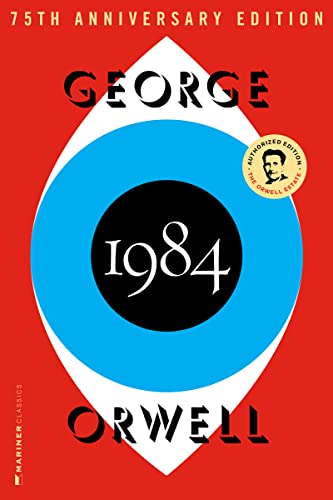
1984
George Orwell
4.5
A PBS Great American Read Top 100 Pick
With extraordinary relevance and renewed popularity, George Orwell’s 1984 takes on new life in this hardcover edition.
“Orwell saw, to his credit, that the act of falsifying reality is only secondarily a way of changing perceptions. It is, above all, a way of asserting power.”—The New Yorker
In 1984, London is a grim city in the totalitarian state of Oceania where Big Brother is always watching you and the Thought Police can practically read your mind. Winston Smith is a man in grave danger for the simple reason that his memory still functions. Drawn into a forbidden love affair, Winston finds the courage to join a secret revolutionary organization called The Brotherhood, dedicated to the destruction of the Party. Together with his beloved Julia, he hazards his life in a deadly match against the powers that be.
Lionel Trilling said of Orwell’s masterpiece “1984 is a profound, terrifying, and wholly fascinating book. It is a fantasy of the political future, and like any such fantasy, serves its author as a magnifying device for an examination of the present.” Though the year 1984 now exists in the past, Orwell’s novel remains an urgent call for the individual willing to speak truth to power.
Today is World Book Day, a wonderful opportunity to address this #ChallengeRichard sent in by Mike Gonzalez of New Jersey: Make a list of your top 65 books to read in a lifetime. [source]
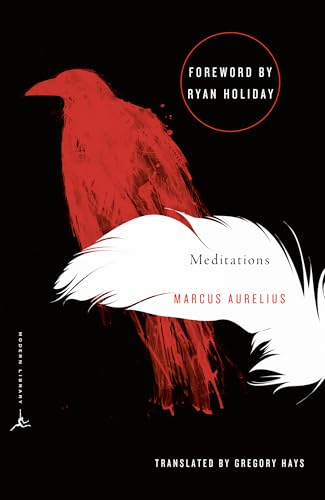
One measure, perhaps, of a book's worth, is its intergenerational pliancy: do new readers acquire it and interpret it afresh down through the ages? The Meditations of Marcus Aurelius, translated and introduced by Gregory Hays, by that standard, is very worthwhile, indeed. Hays suggests that its most recent incarnation--as a self-help book--is not only valid, but may be close to the author's intent. The book, which Hays calls, fondly, a "haphazard set of notes," is indicative of the role of philosophy among the ancients in that it is "expected to provide a 'design for living.'" And it does, both aphoristically ("Think of yourself as dead. You have lived your life. Now take what's left and live it properly.") and rhetorically ("What is it in ourselves that we should prize?"). Whether these, and other entries ("Enough of this wretched, whining monkey life.") sound life-changing or like entries in a teenager's diary is up to the individual reader, as it should be. Hays's introduction, which sketches the life of Marcus Aurelius (emperor of Rome A.D. 161-180) as well as the basic tenets of stoicism, is accessible and jaunty. --H. O'Billovich
…
Recommended by Arianna Huffington, Naval Ravikant, Chip Conley, and 12 others.
Arianna Huffington
Founder/The Huffington Post
I find this book so inspirational and instructive, it lives on my nightstand. [source]
Chip Conley
I have given this book away to a number of people. [source]
Marvin Liao
Partner/500 Startups
My list would be (besides the ones I mentioned in answer to the previous question) both business & Fiction/Sci-Fi and ones I personally found helpful to myself. The business books explain just exactly how business, work & investing are in reality & how to think properly & differentiate yourself. On the non-business side, a mix of History & classic fiction to understand people, philosophy to make sense of life and Science fiction to picture what the future could be like (not always utopian). [source]
Cover unavailable
20
Persuasion
Jane Austen
4.5
Twenty-seven-year old Anne Elliot is Austen's most adult heroine. Eight years before the story proper begins, she is happily betrothed to a naval officer, Frederick Wentworth, but she precipitously breaks off the engagement when persuaded by her friend Lady Russell that such a match is unworthy. The breakup produces in Anne a deep and long-lasting regret. When later Wentworth returns from sea a rich and successful captain, he finds Anne's family on the brink of financial ruin and his own sister a tenant in Kellynch Hall, the Elliot estate. All the tension of the novel revolves around one question: Will Anne and Wentworth be reunited in their love?
Jane Austen once compared her writing to painting on a little bit of ivory, 2 inches square. Readers of Persuasion will discover that neither her skill for delicate, ironic observations on social custom, love, and marriage nor her ability to apply a sharp focus lens to English manners and morals has deserted her in her final finished work.
…
Recommended by Jenny Davidson.
Jenny Davidson
Persuasion is an unusually brilliant novel, just in terms of its style of narration. Out of all of the novels Austen published in her short life, this one feels most to me like a real love story. [source]
Cover unavailable
21
Oliver Twist
Charles Dickens
4.5
Oliver is an orphan living on the dangerous London streets with no one but himself to rely on. Fleeing from poverty and hardship, he falls in with a criminal street gang who will not let him go, however hard he tries to escape.
One of the most swiftly moving and unified of Charles Dickens’s great novels, Oliver Twist is also famous for its re-creation–through the splendidly realized figures of Fagin, Nancy, the Artful Dodger, and the evil Bill Sikes–of the vast London underworld of pickpockets, thieves, prostitutes, and abandoned children. Victorian critics took Dickens to task for rendering this world in such a compelling, believable way, but readers over the last 150 years have delivered an alternative judgment by making this story of the orphaned Oliver Twist one of its author’s most loved works.
…
Recommended by Ann Widdecombe, Audrey Penn, and Chigozie Obioma.
Ann Widdecombe
Oliver is a boy who has escaped the workhouse and is adopted by a family of pickpockets. He’s the exception – because he’s being manipulated by the grownups… [source]
Audrey Penn
I’m going to go with Oliver Twist. I was raised on all of these books, but I loved Oliver Twist. I have always believed that people, no matter how bad they are, when they see a really good kid in trouble, they’re going to help. [source]
Chigozie Obioma
One day he had this radical idea that, if you want something, you can actually make a demand on life. [source]
Cover unavailable
22
Don Quixote
Miguel de Cervantes, Edith Grossman
4.5
Edith Grossman's definitive English translation of the Spanish masterpiece, in an expanded P.S. edition
Widely regarded as one of the funniest and most tragic books ever written, Don Quixote chronicles the adventures of the self-created knight-errant Don Quixote of La Mancha and his faithful squire, Sancho Panza, as they travel through sixteenth-century Spain. You haven't experienced Don Quixote in English until you've read this masterful translation.
This P.S. edition features an extra 16 pages of insights into the book, including author interviews, recommended reading, and more.
I read this book as a child and then, reread many times as an adult. And he’s my favorite character. [source]
Cover unavailable
23
Les Misérables
Victor Hugo, Isabel F. Hapgood, et al.
4.5
Introducing one of the most famous characters in literature, Jean Valjean—the noble peasant imprisoned for stealing a loaf of bread—Les Misérables ranks among the greatest novels of all time. In it, Victor Hugo takes readers deep into the Parisian underworld, immerses them in a battle between good and evil, and carries them to the barricades during the uprising of 1832 with a breathtaking realism that is unsurpassed in modern prose. Within his dramatic story are themes that capture the intellect and the emotions: crime and punishment, the relentless persecution of Valjean by Inspector Javert, the desperation of the prostitute Fantine, the amorality of the rogue Thénardier, and the universal desire to escape the prisons of our own minds. Les Misérables gave Victor Hugo a canvas upon which he portrayed his criticism of the French political and judicial systems, but the portrait that resulted is larger than life, epic in scope—an extravagant spectacle that dazzles the senses even as it touches the heart.
…
Recommended by Christian B Miller and David Bellos.
Christian B Miller
Vividly illustrates two ideas about character. The first is that our characters can change over time, the second is that role models can be powerful sources of character change. [source]
David Bellos
Because it’s so huge and so capacious and contains so many different stories and takes on the world, you can make anything out of Les Misérables. [source]
Cover unavailable
24
Little Women
Louisa May Alcott
4.5
A beautiful unabridged 150th Anniversary Edition with 200 original illustrations and a Foreword by Alice L. George entitled "Why Little Women Endures 150 Years Later."
Little Women was originally published in two volumes in 1868 and 1869. This edition contains both volumes. It follows the lives of the four March sisters--Meg, Jo, Beth and Amy-- from childhood to womanhood and is loosely based on the author and her three sisters. Although Little Women was a novel for girls, it differed notably from the current writings for children, especially girls. The book was an immediate commercial and critical success and has since been adapted for cinema, TV, Broadway and even the opera.
…
Recommended by Amy Chua, Anne Thériault, Jay Kleinberg, and 1 others.
Amy Chua
Marmee is a character that really resonates for me. She’s obviously not Chinese, but she believes that integrity and hard work are the most important things in life. She holds her daughters to very high standards. She doesn’t sugarcoat much. She also reveals to her rebellious daughter Jo, the star of the book and a character loosely modeled on Louisa May Alcott herself, that she had a bad temper too when she was younger. That’s exactly what I did with my own daughter Louisa…….The kinds of mistakes that Marmee allows her daughters to make are very similar to the kinds of mistakes that I allow my daughters to make. [source]
Anne Thériault
@mmarmoset I love that book so much, and then I got to see Patty Smith perform the year I read it, and she made a Little Women reference during the show, and my heart overflowed [source]
Jay Kleinberg
Nancy Drew is another series which follows in those footsteps. The book is all led by her. I think if one looks in the magazine literature it would be hard to find a similar character at that time. These were stories initially published in a magazine and then bound together as a book. [source]
Cover unavailable
25
War And Peace
Leo Tolstoi, Louise Maude, Aylmer Maude
4.5
War and Peace broadly focuses on Napoleon's invasion of Russia in 1812 and follows three of the most well-known characters in literature: Pierre Bezukhov, the illegitimate son of a count who is fighting for his inheritance and yearning for spiritual fulfillment; Prince Andrei Bolkonsky, who leaves his family behind to fight in the war against Napoleon; and Natasha Rostov, the beautiful young daughter of a nobleman who intrigues both men.
As Napoleon's army invades, Tolstoy brilliantly follows characters from diverse backgrounds—peasants and nobility, civilians and soldiers—as they struggle with the problems unique to their era, their history, and their culture. And as the novel progresses, these characters transcend their specificity, becoming some of the most moving—and human—figures in world literature. Translated by Louise and Aylmer Maude.
Three-Volume Boxed Set
…
Recommended by Andrei Maylunas, Cécile Fabre, Kate McLoughlin, and 6 others.
One doesn’t have to invent the bicycle, there is one: it’s War and Peace. It’s about how Russia won the Napoleonic wars, and moved into the first row of nations who dealt with European history. It’s set during the peak of Russian culture, the age of Pushkin, who created the modern Russian language. It’s the peak…The only thing I would recommend to modern readers is to skip all those parts – which are completely separate from the other parts of the book – where Tolstoy is philosophising about the role of the individual in history. It’s maybe 15 per cent of the book, in separate chapters, and I would definitely recommend to skip those because they are not interesting today. [source]
Cécile Fabre
One of the key questions that Tolstoy asks in the appendix is the central question of War and Peace: how can we explain the fact that, on orders, millions of people go out and kill one another, when they know that killing another human being is morally wrong? [source]
Kate McLoughlin
Tolstoy didn’t fight in the Napoleonic wars, but he did fight in the Crimean war, so he drew on his experiences in that when he wrote War and Peace. [source]
Cover unavailable
26
The Woman in White
Wilkie Collins and Matthew Sweet
4.4
'In one moment, every drop of blood in my body was brought to a stop... There, as if it had that moment sprung out of the earth, stood the figure of a solitary Woman, dressed from head to foot in white'
The Woman in White famously opens with Walter Hartright's eerie encounter on a moonlit London road. Engaged as a drawing master to the beautiful Laura Fairlie, Walter becomes embroiled in the sinister intrigues of Sir Percival Glyde and his 'charming' friend Count Fosco, who has a taste for white mice, vanilla bonbons, and poison. Pursuing questions of identity and insanity along the paths and corridors of English country houses and the madhouse, The Woman in White is the first and most influential of the Victorian genre that combined Gothic horror with psychological realism.
Matthew Sweet's introduction explores the phenomenon of Victorian 'sensation' fiction, and discusses Wilkie Collins's biographical and societal influences. Included in this edition are appendices on theatrical adaptations of the novel and its serialisation history.
I’ve only read it twice, but it’s lingered in my consciousness: the images and the feel of it. [source]
Cover unavailable
27
David Copperfield
Charles Dickens
4.4
David Copperfield is the story of a young man's adventures on his journey from an unhappy and impoverished childhood to the discovery of his vocation as a successful novelist. Among the gloriously vivid cast of characters he encounters are his tyrannical stepfather, Mr Murdstone; his brilliant, but ultimately unworthy school-friend James Steerforth; his formidable aunt, Betsey Trotwood; the eternally humble, yet treacherous Uriah Heep; frivolous, enchanting Dora Spenlow; and the magnificently impecunious Wilkins Micawber, one of literature's great comic creations. In David Copperfield - the novel he described as his 'favourite child' - Dickens drew revealingly on his own experiences to create one of the most exuberant and enduringly popular works, filled with tragedy and comedy in equal measure. This edition uses the text of the first volume publication of 1850, and includes updated suggestions for further reading, original illustrations by 'Phiz', a revised chronology and expanded notes. In his new introduction, Jeremy Tambling discusses the novel's autobiographical elements, and its central themes of memory and identity.
…
Recommended by Jenny Hartley.
Jenny Hartley
That famous Victorian imperative: Make ’em laugh; make ’em cry; make ’em wait. It does all that in that spades. [source]
Cover unavailable
28
Alice's Adventures in Wonderland & Through the Looking-Glass
Lewis Carroll
4.4
In 1862 Charles Lutwidge Dodgson, a shy Oxford mathematician with a stammer, created a story about a little girl tumbling down a rabbit hole. Thus began the immortal adventures of Alice, perhaps the most popular heroine in English literature.
Countless scholars have tried to define the charm of the Alice books--with those wonderfully eccentric characters the Queen of Hearts, Tweedledum, and Tweedledee, the Cheshire Cat, Mock Turtle, the Mad Hatter et al.--by proclaiming that they really comprise a satire on language, a political allegory, a parody of Victorian children's literature, even a reflection of contemporary ecclesiastical history.
Perhaps, as Dodgson might have said, Alice is no more than a dream, a fairy tale about the trials and tribulations of growing up--or down, or all turned round--as seen through the expert eyes of a child.
…
Recommended by Eric Weinstein, Jean Webb, Larry Doyle, and 1 others.
Mikhail Bulgakov's devastating satire of Soviet life was written during the darkest period of Stalin's regime. Combining two distinct yet interwoven parts—one set in ancient Jerusalem, one in contemporary Moscow—the novel veers from moods of wild theatricality with violent storms, vampire attacks, and a Satanic ball; to such somber scenes as the meeting of Pilate and Yeshua, and the murder of Judas in the moonlit garden of Gethsemane; to the substanceless, circus-like reality of Moscow. Its central characters, Woland (Satan) and his retinue—including the vodka-drinking black cat, Behemoth; the poet, Ivan Homeless; Pontius Pilate; and a writer known only as The Master, and his passionate companion, Margarita—exist in a world that blends fantasy and chilling realism, an artful collage of grotesqueries, dark comedy, and timeless ethical questions.
Though completed in 1940, "The Master and Margarita" wasn't published in Moscow until 1966, when the first part appeared in the magazine "Moskva." It was an immediate and enduring success: audiences responded with great enthusiasm to its expression of artistic and spiritual freedom.
…
Recommended by Max Levchin, Neil Gaiman, Andi Dumitrescu, and 5 others.
Max Levchin
Co-founder/PayPal, CEO/Affirm, Investor
One of the finest works of fiction of the last century. [source]
If I had to make a more rational choice, I’d go with Ulises or The Master and Margareta, but I think that choice is a bit snobbish. [source]
Cover unavailable
30
East of Eden
John Steinbeck
4.4
In his journal, Nobel Prize winner John Steinbeck called East of Eden "the first book," and indeed it has the primordial power and simplicity of myth. Set in the rich farmland of California's Salinas Valley, this sprawling and often brutal novel follows the intertwined destinies of two families—the Trasks and the Hamiltons—whose generations helplessly reenact the fall of Adam and Eve and the poisonous rivalry of Cain and Abel. The masterpiece of Steinbeck’s later years, East of Eden is a work in which Steinbeck created his most mesmerizing characters and explored his most enduring themes: the mystery of identity, the inexplicability of love, and the murderous consequences of love's absence.
This edition features an introduction by David Wyatt.
It's the perfect summer read...a novel so rich and full of drama you won't be able to turn the pages fast enough! [source]
John Lilly
@ben_mathes @kevinakwok @samhinkie @aweissman Amazing book. Ive always liked it better than Grapes of Wrath. [source]
Steve Benjamins
My favorite non-business book is East of Eden by John Steinbeck. I think all of John Steinbeck’s books are uplifting. He sees the best in humanity and it leaves me feeling warm and generous. [source]
Cover unavailable
31
The Iliad
Homer, Robert Fagles, Bernard Knox
4.4
Dating to the ninth century B.C., Homer’s timeless poem still vividly conveys the horror and heroism of men and gods wrestling with towering emotions and battling amidst devastation and destruction, as it moves inexorably to the wrenching, tragic conclusion of the Trojan War. Renowned classicist Bernard Knox observes in his superb introduction that although the violence of the Iliad is grim and relentless, it coexists with both images of civilized life and a poignant yearning for peace.
Combining the skills of a poet and scholar, Robert Fagles, winner of the PEN/Ralph Manheim Medal for Translation and a 1996 Academy Award in Literature from the American Academy of Arts and Letters, brings the energy of contemporary language to this enduring heroic epic. He maintains the drive and metric music of Homer’s poetry, and evokes the impact and nuance of the Iliad’s mesmerizing repeated phrases in what Peter Levi calls “an astonishing performance.”
When I got to college, I was a classics major, and that was mainly the study of Greek - and to a lesser extent Roman - history and culture, and that fascinated me: the Iliad, the Odyssey, the Aeneid by Virgil. [source]
Charlotte Higgins
I think The Iliad has much to say to politicians now – it’s completely clear-eyed about collateral damage, about problems of post-conflict and about the ghastly things that happen to women and children in war. [source]
There are always new translations of The Iliad coming out, but this one has a very specific approach, both in terms of its philosophy of translation and its approach to the text. [source]
Cover unavailable
32
The Grapes of Wrath
John Steinbeck, Robert DeMott
4.4
The Pulitzer Prize-winning epic of the Great Depression, a book that galvanized—and sometimes outraged—millions of readers.
First published in 1939, Steinbeck’s Pulitzer Prize-winning epic of the Great Depression chronicles the Dust Bowl migration of the 1930s and tells the story of one Oklahoma farm family, the Joads—driven from their homestead and forced to travel west to the promised land of California. Out of their trials and their repeated collisions against the hard realities of an America divided into Haves and Have-Nots evolves a drama that is intensely human yet majestic in its scale and moral vision, elemental yet plainspoken, tragic but ultimately stirring in its human dignity. A portrait of the conflict between the powerful and the powerless, of one man’s fierce reaction to injustice, and of one woman’s stoical strength, the novel captures the horrors of the Great Depression and probes into the very nature of equality and justice in America. At once a naturalistic epic, captivity narrative, road novel, and transcendental gospel, Steinbeck’s powerful landmark novel is perhaps the most American of American Classics.
…
Recommended by Antonio Villaraigosa, Elizabeth Tsurkov, John Kerry, and 2 others.
Antonio Villaraigosa
It has been over 70 years since The Grapes of Wrath was published, yet the suffering that Steinbeck describes still hits close to home with families across our country still struggling to find work and put food on the table. It reminds us progressives that the day-to-day struggles of Americans should always remain close to our hearts. [source]
While there is a story that takes place between characters, the hardship and unfairness is a central element of the book. It shows how fiction can create progressive change as well. [source]
Cover unavailable
33
The Brothers Karamazov
Fyodor Dostoevsky
4.4
The Brothers Karamasov is a murder mystery, a courtroom drama, and an exploration of erotic rivalry in a series of triangular love affairs involving the “wicked and sentimental” Fyodor Pavlovich Karamazov and his three sons―the impulsive and sensual Dmitri; the coldly rational Ivan; and the healthy, red-cheeked young novice Alyosha. Through the gripping events of their story, Dostoevsky portrays the whole of Russian life, is social and spiritual striving, in what was both the golden age and a tragic turning point in Russian culture.
This award-winning translation by Richard Pevear and Larissa Volokhonsky remains true to the verbal inventiveness of Dostoevsky’s prose, preserving the multiple voices, the humor, and the surprising modernity of the original. It is an achievement worthy of Dostoevsky’s last and greatest novel.
…
Recommended by Randall Stephenson, Adam Townsend, Christian B Miller, and 3 others.
@FinchmanWill @jposhaughnessy @Cernovich @mcclay_roman My son's favorite book of all time [source]
Christian B Miller
A host of deep philosophical questions are at work in the book: about, say, the existence of God, the nature of morality without God, and the role of free will. [source]
Cover unavailable
34
Mansfield Park
Jane Austen, Margaret Drabble
4.4
Adopted into the household of her uncle, Sir Thomas Bertram, Fanny Price grows up a meek outsider among her cousins in the unaccustomed elegance of Mansfield Park. Soon after Sir Thomas absents himself on estate business in Antigua (the family's investment in slavery and sugar is considered in the Introduction in a new, post-colonial light), Mary Crawford and her brother Henry arrive at Mansfield, bringing with them London glamour, and the seductive taste for flirtation and theatre that precipitates a crisis. While Mansfield Park appears in some ways to continue where Pride and Prejudice left off, it is, as Kathryn Sutherland shows in her illuminating Introduction, a much darker work, which challenges 'the very values (of tradition, stability, retirement and faithfulness) it appears to endorse'. This new edition provides an accurate text based, for the first time since its original publication, on the first edition of 1814.
…
Recommended by Mary Warnock.
Mary Warnock
This is an oddity but it is a highly moralistic novel. Fanny Price, the heroine, whom many people find rather tiresome, is a highly moral and articulate character and one of the things that intrigues me so much is that Jane Austen at the beginning of the 19th century had the correct view that you can’t be morally involved unless you feel strongly that some things are good and some things are bad. [source]
Cover unavailable
35
Treasure Island
Robert Louis Stevenson
4.4
The most popular pirate story ever written in English, featuring one of literature's most beloved villains, Treasure Island has been happily devoured by several generations of boys-and girls-and grownups.
During a trip to a public library in Washington’s Anacostia neighborhood in 2015, Obama shared some of his childhood favorites with a group of young students. He also read (and acted out) Where the Wild Things Are by Maurice Sendak to kids at the White House in 2014. Treasure Island, Robert Louis Stevenson Of Mice and Men, John Steinbeck The Great Gatsby, F. Scott Fitzgerald Where the Wild Things Are, Maurice Sendak [source]
Today is World Book Day, a wonderful opportunity to address this #ChallengeRichard sent in by Mike Gonzalez of New Jersey: Make a list of your top 65 books to read in a lifetime. [source]
This is the first book that I ever read on my own and I take great pleasure and pride in that. It was the first book where I really identified strongly with the boy Jim in it. He was about the same age as I was when I began reading it. [source]
Cover unavailable
36
Letters from a Stoic
Seneca
4.4
I feel, my dear Lucilius, that I am being not only reformed, but transformed. I do not yet, however, assure myself, or indulge the hope, that there are no elements left in me which need to be changed. Of course there are many that should be made more compact, or made thinner, or be brought into greater prominence. And indeed this very fact is proof that my spirit is altered into something better, - that it can see its own faults, of which it was previously ignorant. In certain cases sick men are congratulated because they themselves have perceived that they are sick.
This is a letter from Stoic heavyweight Seneca the Younger — who lived a mere 2,000 years or so ago — to his friend Lucilius. It’s from a collection of letters that comprise, effectively, my favorite book of all time. I’ve read it dozens of times, and I loved it so much that I turned it into The Tao of Seneca, a three-volume set of audiobooks. [source]
After Marcus Aurelius, this is one of my favorite books. While Marcus wrote mainly for himself, Seneca had no trouble advising and aiding others. In fact, that was his job—he was Nero’s tutor, tasked with reducing the terrible impulses of a terrible man. His advice on grief, on wealth, on power, on religion, and on life are always there when you need them. [source]
Jerzy Gregorek
From this book, I learned self-mastery: to constantly improve myself so I would be ready for any possible disaster. I also learned that when disaster happens, it means that something is being asked of me. I need to improve. [source]
Cover unavailable
37
The Hound of the Baskervilles
Sir Arthur Conan Doyle and Anne Perry
4.4
We owe The Hound of the Baskervilles (1902) to Arthur Conan Doyle's good friend Fletcher "Bobbles" Robinson, who took him to visit some scary English moors and prehistoric ruins, and told him marvelous local legends about escaped prisoners and a 17th-century aristocrat who fell afoul of the family dog. Doyle transmogrified the legend: generations ago, a hound of hell tore out the throat of devilish Hugo Baskerville on the moonlit moor. Poor, accursed Baskerville Hall now has another mysterious death: that of Sir Charles Baskerville. Could the culprit somehow be mixed up with secretive servant Barrymore, history-obsessed Dr. Frankland, butterfly-chasing Stapleton, or Selden, the Notting Hill murderer at large? Someone's been signaling with candles from the mansion's windows. Nor can supernatural forces be ruled out. Can Dr. Watson--left alone by Sherlock Holmes to sleuth in fear for much of the novel--save the next Baskerville, Sir Henry, from the hound's fangs?
Many Holmes fans prefer Doyle's complete short stories, but their clockwork logic doesn't match the author's boast about this novel: it's "a real Creeper!" What distinguishes this particular Hound is its fulfillment of Doyle's great debt to Edgar Allan Poe--it's full of ancient woe, low moans, a Grimpen Mire that sucks ponies to Dostoyevskian deaths, and locals digging up Neolithic skulls without next-of-kins' consent. "The longer one stays here the more does the spirit of the moor sink into one's soul," Watson realizes. "Rank reeds and lush, slimy water-plants sent an odour of decay ... while a false step plunged us more than once thigh-deep into the dark, quivering mire, which shook for yards in soft undulations around our feet ... it was as if some malignant hand was tugging us down into those obscene depths." Read on--but, reader, watch your step! --Tim Appelo
Holmes turns to Mortimer and says, A man’s or a woman’s? and Mortimer delivers the greatest reply in 20th century literature, Mr Holmes, they were the footprints of a gigantic hound! I shivered with pleasure and realised that life didn’t get much better than that. [source]
It actually scared me the first time I read it as a kid. And I have always liked it. It is my favourite of all his books and it has a very clever ending. [source]
Cover unavailable
38
The Republic: The Influential Classic
Plato
4.3
The newest deluxe edition in the bestselling Capstone Classics Series This ancient classic has had a make-over. In recent years these Capstone Classic deluxe editions have caught the book buying public's imagination. The volumes of international bestsellers such as Think and Grow Rich and The Art of War have quickly become the market leaders. Now Plato's best known work, one of the most intellectually and historically influential works of philosophy and political theory, has been brought to life in this luxury, hardback, keep-sake edition.
This edition includes:
Plato's plans for a perfect society characterised by a blend of wisdom, courage, self-discipline and justice Lessons to learn about living according to eternal truths, instead of existing simply for survival and pleasure A new introduction by Tom Butler Bowdon, the classic personal development expert
It’s very readable even if you aren’t a professional philosopher. Take the story of ‘The Ring of Gyges,’ which raises the question of whether you would continue to act like a good person if you had a ring of invisibility that let you get away with doing whatever you wanted to do. That’s a fascinating thought experiment that anybody can appreciate. [source]
I’m about a third through this and still can’t tell whether Plato is making a mockery of Socrates ideas for the idyllic society or not. So many of the arguments presented as Socrates’ are so tortured and with so disconnected leaps of logic that it’s hard to take it at face value. Yet still, it’s good fun to follow the dialogue. It reads more like a play than a book, and again, immensely accessible. It’s fun to see the lines that continue from a book like this to the considerations of the Stoics all the way to Adam Smith and the Wealth of Nations and then onto a modern critique and history in that Debt: First 5,000 Years. A conversation spanning millennia. [source]
Jonathan Glover
It contains a tremendous amount of nonsense about what the ideal society would be like. But it is an unmissable book because of Socrates. He invented the method of doing and teaching philosophy that has never been improved on. [source]
Cover unavailable
39
Tess of the D'Urbervilles
Thomas Hardy, Tim Dolin, Margaret Randolph Higonnet
4.3
An alternate cover edition for this ISBN can be found here.
'How could I be expected to know? I was a child when I left this house four months ago. Why didn't you tell me there was danger in men-folk? Why didn't you warn me? '
When Tess Durbeyfield is driven by family poverty to claim kinship with the wealthy D'Urbervilles and seek a portion of their family fortune, meeting her 'cousin' Alec proves to be her downfall. A very different man, Angel Clare, seems to offer her love and salvation, but Tess must choose whether to reveal her past or remain silent in the hope of a peaceful future. With its sensitive depiction of the wronged Tess and powerful criticism of social convention, Tess of the D'Urbervilles, subtitled "A Pure Woman," is one of the most moving and poetic of Hardy's novels.
…
Recommended by Meg Rosoff.
Meg Rosoff
It’s very much about trying to find a place of happiness for yourself in a world full of obstacles, in a terrible maze of social change and convention at the end of the industrial revolution. [source]
Cover unavailable
40
Animal Farm
George Orwell and Christopher Hitchens
4.3
Animal Farm is one of the most famous warnings ever written. Orwell's immortal satire - 'against Stalin' as he wrote to his French translator - can be read on many levels. With its piercing clarity and deceptively simple style it is no surprise that this novel is required reading for schoolchildren and politicians alike. This fable of the steadfast horses Boxer and Clover, the opportunistic pigs Snowball and Napoleon, and the deafening choir of sheep remains an unparalleled masterpiece.
One reviewer wrote 'In a hundred years' time perhaps Animal Farm ... may simply be a fairy story: today it is a fairy story with a good deal of point.' Over sixty years on in the age of spin, it is more relevant than ever.
Rejected by such eminent publishing figures as Victor Gollancz, Jonathan Cape and T.S. Eliot, Animal Farm was published to great acclaim by Martin Secker and Warburg on 17 August 1945 in an edition of 4500 copies. In the centenary year of Martin Secker, Ltd., Harvill Secker is proud to publish this special edition with a brand-new introduction by Christopher Hitchens.
Whitney Cummings recommended this book on the podcast "The Tim Ferriss Show". [source]
Vlad Tenev
When I was in sixth grade I remember being very upset by the ending of this book. [source]
Heather Brooke
I picked Animal Farm because it is an allegory about power and its seductive and corruptive influence on people regardless of their initial good intentions. [source]
Cover unavailable
41
Of Mice and Men
John Steinbeck
4.3
The compelling story of two outsiders striving to find their place in an unforgiving world.
Drifters in search of work, George and his simple-minded friend Lennie have nothing in the world except each other and a dream -- a dream that one day they will have some land of their own. Eventually they find work on a ranch in California’s Salinas Valley, but their hopes are doomed as Lennie, struggling against extreme cruelty, misunderstanding and feelings of jealousy, becomes a victim of his own strength.
Tackling universal themes such as the friendship of a shared vision, and giving voice to America’s lonely and dispossessed, Of Mice and Men has proved one of Steinbeck’s most popular works, achieving success as a novel, a Broadway play and three acclaimed films.
When he got to high school, the president said, his tastes changed and he learned to enjoy classics like “Of Mice and Men” and “The Great Gatsby.” [source]
Steve Benjamins
I think all of John Steinbeck’s books are uplifting. He sees the best in humanity and it leaves me feeling warm and generous. I always love this paragraph in Of Mice and Men that hints at the tension between business and humanity: "It has always seemed strange to me that the things we admire in men, kindness and generosity, openness, honestly, understanding, and feeling are the concomitants of failure in our system. And those traits we detest, sharpness, greed, acquisitiveness, meanness, egotism, and self-interest are the traits of success. And while men admire the quality of the first they love the produce of the second." [source]
Cover unavailable
42
The Prince
Nicollo Machiavelli, Tim Parks
4.3
Niccolo Machiavelli's "The Prince" is intended to be a treatise on ruling and is considered by many to be a classic of political science. In the book Machiavelli offers many bits of practical advice on how to rule and even though the book was written in the early 16th century its ideas are still very relevant today. Where "The Prince" differs from other political literature before it is in its separation of the lofty idealism of morality and ethics from the practical demands of governing. It is this very aspect of Machiavelli's work that has made his name synonymous with an almost immoral opportunism and his book a timeless classic.
Which books should be read by every single intelligent person on planet? … The Prince (Machiavelli) to learn that people not in power will do all they can to acquire it, and people in power will do all they can to keep it. If you read all of the above works you will glean profound insight into most of what has driven the history of the western world. [source]
Of course, this is a must read. Machiavelli is one of those figures and writers who is tragically overrated and underrated at the same time. Unfortunately that means that many people who read him miss the point and other people avoid him and miss out altogether. Take Machiavelli slow, and really read him. Also understand the man behind the book–not just as a masterful writer but a man who withstood heinous torture and exile with barely a whimper. Machiavelli is a glimpse into a time when power was literal and out for public viewing–when he talks about making an example of someone, he doesn’t mean calling them out, he means putting their head on a pike. Don’t let that scare you because we’re not as far from that world as we’d like to think. Deny that at your own peril. [source]
Cover unavailable
43
The Haunting of Hill House
Shirley Jackson
4.3
In celebration of the Shirley Jackson centennial, a Penguin Classics Deluxe Edition of the greatest haunted house story ever written
First published in 1959, Shirley Jackson’s The Haunting of Hill House has been hailed as a perfect work of unnerving terror. It is the story of four seekers who arrive at a notoriously unfriendly pile called Hill House: Dr. Montague, an occult scholar looking for solid evidence of a “haunting”; Theodora, his lighthearted assistant; Eleanor, a friendless, fragile young woman well acquainted with poltergeists; and Luke, the future heir of Hill House. At first, their stay seems destined to be merely a spooky encounter with inexplicable phenomena. But Hill House is gathering its powers—and soon it will choose one of them to make its own.
This book is one of several novels in which a group of ghost hunters or psychic investigators move into a house with a reputation of being haunted, and see what they find. But what makes this the greatest single ghost novel, in my view, is that it’s at least as much about the psychological interaction of the characters as it is about the overtly spectral. There’s a superb characterisation of the spinster character, who ultimately becomes one of the ghosts of Hill House, if you like. The scenes from her viewpoint are both moving and disturbing. [source]
So begins the Time Traveller’s astonishing firsthand account of his journey 800,000 years beyond his own era—and the story that launched H.G. Wells’s successful career and earned him his reputation as the father of science fiction. With a speculative leap that still fires the imagination, Wells sends his brave explorer to face a future burdened with our greatest hopes...and our darkest fears. A pull of the Time Machine’s lever propels him to the age of a slowly dying Earth. There he discovers two bizarre races—the ethereal Eloi and the subterranean Morlocks—who not only symbolize the duality of human nature, but offer a terrifying portrait of the men of tomorrow as well. Published in 1895, this masterpiece of invention captivated readers on the threshold of a new century. Thanks to Wells’s expert storytelling and provocative insight, The Time Machine will continue to enthrall readers for generations to come.
…
Recommended by Adam Roberts, Adam Roberts, and Roger Luckhurst.
Adam Roberts
It is a short novel, almost a novella, but it is smoothly and evocatively written, and it manages to open a chink in the reader’s mind that gives a her dizzying, thrilling glimpse down the vertiginous perspectives of long time. My favourite moment comes near the end, after the time traveller has left the Eloi and Morlocks behind him (as it were) and travelled more than 30 million years into the far distant future. He finds himself on a desolate beach, seemingly lifeless but for green slime on the rocks, the sun grown to massive proportions, and witnesses an eclipse [source]
It is a short novel, almost a novella, but it is smoothly and evocatively written, and it manages to open a chink in the reader’s mind that gives a her dizzying, thrilling glimpse down the vertiginous perspectives of long time. My favourite moment comes near the end, after the time traveller has left the Eloi and Morlocks behind him (as it were) and travelled more than 30 million years into the far distant future. He finds himself on a desolate beach, seemingly lifeless but for green slime on the rocks, the sun grown to massive proportions, and witnesses an eclipse [source]
Roger Luckhurst
It invents the idea of far-future visions that science fiction writers such as Isaac Asimov and Arthur C. Clarke have constantly tried to achieve. [source]
Cover unavailable
45
Bleak House
Charles Dickens, Nicola Bradbury, Hablot K. Brown
4.3
Bleak House opens in the twilight of foggy London, where fog grips the city most densely in the Court of Chancery. The obscure case of Jarndyce and Jarndyce, in which an inheritance is gradually devoured by legal costs, the romance of Esther Summerson and the secrets of her origin, the sleuthing of Detective Inspector Bucket and the fate of Jo the crossing-sweeper, these are some of the lives Dickens invokes to portray London society, rich and poor, as no other novelist has done. Bleak House, in its atmosphere, symbolism and magnificent bleak comedy, is often regarded as the best of Dickens. A 'great Victorian novel', it is so inventive in its competing plots and styles that it eludes interpretation.
Bleak House is the work which most powerfully suggests the darkness of London. It conveys a haunted city, half pantomime-half graveyard. [source]
Trevor Phillips
Bleak House tells us not to rely on the courts for justice. In the end, a just society can’t be delivered by people in a courtroom. [source]
Cover unavailable
46
Vanity Fair
William Makepeace Thackeray, John Carey
4.2
A novel that chronicles the lives of two women who could not be more different: Becky Sharp, an orphan whose only resources are her vast ambitions, her native wit, and her loose morals; and her schoolmate Amelia Sedley, a typically naive Victorian heroine, the pampered daughter of a wealthy family.
Recommended by John Sutherland and Stella Tillyard.
John Sutherland
This was Thackeray’s first major novel … It is panoramic – a wonderful conspectus of the 19th century. [source]
Stella Tillyard
Vanity Fair is another historical novel and a tremendous saga. I would call it the Whig version of the Regency. It is the tale of an adventuress abroad in a land where quick fortunes and metropolitan vices are very much in evidence. It is fantastically good humoured. I suppose it is the way that a liberal Victorian would look back on that time. [source]
Cover unavailable
47
The Qur'an
Maulana Muhammad Ali
4.2
One of the most influential books in the history of literature, recognized as the greatest literary masterpiece in Arabic, the Qur'an is the supreme authority and living source of all Islamic teaching, the sacred text that sets out the creed, rituals, ethics, and laws of Islam. Yet despite the growing interest in Islamic teachings and culture, there has never been a truly satisfactory English translation of the Qur'an, until now. This superb new translation of the Qur'an is written in contemporary language that remains faithful to the meaning and spirit of the original, making the text crystal clear while retaining all of this great work's eloquence. The translation is accurate and completely free from the archaisms, incoherence, and alien structures that mar existing translations. Thus, for the first time, English-speaking readers will have a text of the Qur'an which is easy to use and comprehensible. Furthermore, Haleem includes notes that explain geographical, historical, and personal allusions as well as an index in which Qur'anic material is arranged into topics for easy reference. His introduction traces the history of the Qur'an, examines its structure and stylistic features, and considers issues related to militancy, intolerance, and the subjection of women. Clearly written and filled with helpful information and guidance, this brilliant translation of the Qur'an is the best available introduction to the faith of Moslems around the world.
…
Recommended by Ahmad Thomson, Ayaan Hirsi Ali, and Naeem Ul Haque.
Ahmad Thomson
When I accepted Islam I’d done it on the basis of meeting Shaykh Abdalqadir and the people around him, and I realised that I knew nothing about it really. So obviously one of the first things was to learn the basics – and I thought I’d better read the Qur’an because that’s the book of the Muslims! At the time I had the Arberry translation which is accurate, and which in some measure conveys the poetry of the very pure Arabic of the original. In fact, at the time of the Prophet, blessings and peace be on him, some people accepted Islam on the basis of the purity of the Arabic in which the Qur’an is written: they said, ‘This couldn’t have been written by a human being!’ As the years passed I had access to the Muhammad Pickthall and Yusuf Ali translations, which are written in a rather Biblical English. Their use of vocabulary was not always appropriate, because sometimes it included words that have taken on certain connotations through the way they are used in the European Christian tradition. For example, the word ‘sin’ is used to translate the word dhanb in Arabic – but dhanb really means a wrong action which holds you back from the mercy of your Lord. So this is a completely different way of looking at a wrong action, and there’s no guilt attached to it. The Bewley translation is a beautiful translation, where some of the key terms are not translated but transliterated, with a small glossary at the back defining what each term means. This helps you to keep to the original meaning of the Qur’an – it’s a clear, crisp rendering of its meaning in English. I often read a translation of an ayat and I think I never remember reading that before, and I compare it with how Pickthall or Yusuf Ali translated it – and I see that they didn’t quite hit the mark. Read 4 Al-Muwatta of Imam Malik by Translated by Aisha Bewley and Ya'qub Johnson Read [source]
The Koran is supposed to be the words of God and the Hadith are the sayings and deeds of the prophet. The Koran has the basic commands; the Hadith or the Sunna, is a sort of manual. It is supposed to be a guideline of how to understand the Koran, because people say that it’s not explicit enough. The Hadith is a compilation of six volumes and they are called the Sahith Sitta – Sitta just means six and Sahith means authentic. [source]
Naeem Ul Haque
The judiciary must not forget that far far above our constitution is the ultimate book of principles and that is the wholly Quran. Every judge in the country must keep a copy of Quran with translation on his/ her desk so that the judge can realise that the Law of God is Supreme. [source]
Cover unavailable
48
Madame Bovary
Gustave Flaubert, Margaret Mauldon, Malcolm Bowie, Mark Overstall
4.2
Clicca qui per l'edizione "Storie senza tempo".
'Oh, why, dear God, did I marry him?'
Emma Bovary is beautiful and bored, trapped in her marriage to a mediocre doctor and stifled by the banality of provincial life. An ardent devourer of sentimental novels, she longs for passion and seeks escape in fantasies of high romance, in voracious spending and, eventually, in adultery. But even her affairs bring her disappointment, and when real life continues to fail to live up to her romantic expectations, the consequences are devastating. Flaubert's erotically charged and psychologically acute portrayal of Emma Bovary caused a moral outcry on its publication in 1857. It was deemed so lifelike that many women claimed they were the model for his heroine; but Flaubert insisted: 'Madame Bovary, c'est moi.'
This modern translation by Flaubert's biographer, Geoffrey Wall, retains all the delicacy and precision of the French original. The edition also contains a preface by the novelist Michèle Roberts.
…
Cover unavailable
49
The Scarlet Letter
Nathaniel Hawthorne, Thomas E. Connolly, Nina Baym
4.2
Nathaniel Hawthorne's THE SCARLET LETTER reaches to our nation's historical and moral roots for the material of great tragedy. Set in an early New England colony, the novel shows the terrible impact a single, passionate act has on the lives of three members of the community: the defiant Hester Prynne; the fiery, tortured Reverend Dimmesdale; and the obsessed, vengeful Chillingworth.
With THE SCARLET LETTER, Hawthorne became the first American novelist to forge from our Puritan heritage a universal classic, a masterful exploration of humanity's unending struggle with sin, guilt and pride.
…
Recommended by Carol Gilligan.
Carol Gilligan
The Scarlet Letter is a tragic love story, but it’s also a story about resistance and transformation. [source]
"A spectre is haunting Europe," Karl Marx and Frederic Engels wrote in 1848, "the spectre of Communism." This new edition of The Communist Manifesto, commemorating the 150th anniversary of its publication, includes an introduction by renowned historian Eric Hobsbawm which reminds us of the document's continued relevance. Marx and Engels's critique of capitalism and its deleterious effect on all aspects of life, from the increasing rift between the classes to the destruction of the nuclear family, has proven remarkably prescient. Their spectre, manifested in the Manifesto's vivid prose, continues to haunt the capitalist world, lingering as a ghostly apparition even after the collapse of those governments which claimed to be enacting its principles.
…
Recommended by Felipe Fernández-Armesto and Peter Singer.
Felipe Fernández-Armesto
Marx and Engels’s historical analysis is breathtakingly, brilliantly simple. I think it’s wrong but, again, you’ve just got to admire its genius. Obviously, without understanding the historical basis of Marx’s thought you can’t understand anything else in Marxism. [source]
Yes, it is. I chose The Communist Manifesto, rather than, say, Capital because it shows in a much easier-to-read, shorter work something that is central to Marx’s vision. Capital is much drier, and a lot of it is focused on economics, although there are some remarkable passages of Capital describing the conditions of industrial workers in England at the time. [source]
Cover unavailable
51
Paradise Lost
John Milton
4.2
In Paradise, God’s favored new creations—Adam and Eve—live in bliss, untainted by sin. In another realm, Satan and his banished rebel angels collude to destroy God’s tranquil new design. Into this idyll called Earth, and the confidence of Adam and Eve, Satan will instigate the fall of man.
At the heart of this complex, audacious epic poem is a drama driven by the most recognizable human flaws. More than a story from Genesis, it is the extraordinary expression of Milton’s search for personal truth and the meaning of existence, written to “justify the ways of God to men.”
AmazonClassics brings you timeless works from the masters of storytelling. Ideal for anyone who wants to read a great work for the first time or rediscover an old favorite, these new editions open the door to literature’s most unforgettable characters and beloved worlds.
Paradise Lost is a homecoming story of marital breakup and martial reunion, just as the Odyssey is. They’re also both epics about redefining a community in the wake of a devastating war, and about whether there will ever be an end to war. [source]
Milton’s astonishing intervention in the Adam and Eve story includes thinking how it was possible—not for ignorant children, but knowing, thoughtful, complex human beings in a relationship with one another—to do what they did. [source]
Cover unavailable
52
Lord of the Flies
William Golding
4.2
At the dawn of the next world war, a plane crashes on an uncharted island, stranding a group of schoolboys. At first, with no adult supervision, their freedom is something to celebrate; this far from civilization the boys can do anything they want. Anything. They attempt to forge their own society, failing, however, in the face of terror, sin and evil. And as order collapses, as strange howls echo in the night, as terror begins its reign, the hope of adventure seems as far from reality as the hope of being rescued. Labeled a parable, an allegory, a myth, a morality tale, a parody, a political treatise, even a vision of the apocalypse, Lord of the Flies is perhaps our most memorable tale about “the end of innocence, the darkness of man’s heart.”
…
Recommended by Elon Musk, Ev Williams, Audrey Russo, and 5 others.
Audrey Russo
So many novels; Lord of the Flies, Great Gatsby, Great Expectations; all the Nancy Drew books; Catcher in the Rye, Books written by Zora Neale Hurston; Pat Conroy – all because of the view about different people who endure despite adversity while kindling the hearts of the human spirit. [source]
Chigozie Obioma
William Golding imbues some of these children with wisdom that would read, in the hands of a lesser author, as implausibly knowing [source]
Disco Donnie
@JoshRHernandez1 I love the book “Lord of the Flies” so just started watching The Society [source]
Cover unavailable
53
A Study in Scarlet
Arthur Conan Doyle
4.2
"A Study in Scarlet" is the first published story of one of the most famous literary detectives of all time, Sherlock Holmes. Here Dr. Watson, who has just returned from a war in Afghanistan, meets Sherlock Holmes for the first time when they become flat-mates at the famous 221 B Baker Street. In "A Study in Scarlet" Sherlock Holmes investigates a murder at Lauriston Gardens as Dr. Watson tags along with Holmes while narratively detailing his amazing deductive abilities.
If you’ve never read any Sherlock Holmes books you really need to start with that one because it introduces this rather mysterious and romantic character. At the beginning, Doctor Watson tries to puzzle out the profession of his strange roommate at 221b Baker Street. He makes lists of what Holmes seems to know a lot about and what he doesn’t seem to know about at all – including the Copernican theory. In short, this is an introduction to a partnership and friendship that will be chronicled over 56 short stories and four novels. [source]
Cover unavailable
54
Northanger Abbey
Jane Austen and Alfred Mac Adam
4.2
Jane Austen's first novel—published posthumously in 1818—tells the story of Catherine Morland and her dangerously sweet nature, innocence, and sometime self-delusion. Though Austen's fallible heroine is repeatedly drawn into scrapes while vacationing at Bath and during her subsequent visit to Northanger Abbey, Catherine eventually triumphs, blossoming into a discerning woman who learns truths about love, life, and the heady power of literature. The satirical novel pokes fun at the gothic novel while earnestly emphasizing caution to the female sex.
…
Cover unavailable
55
The Strange Case of Dr. Jekyll and Mr. Hyde
Robert Louis Stevenson
4.2
Strange Case of Dr Jekyll and Mr Hyde is the original title of a novella written by the famous Scottish author Robert Louis Stevenson that was first published in 1886. The work is commonly known today as The Strange Case of Dr Jekyll and Mr Hyde, Dr Jekyll and Mr Hyde, or simply Jekyll & Hyde. It is about a London lawyer named John Gabriel Utterson who investigates strange occurrences between his old friend, Dr Henry Jekyll, and the evil Edward Hyde.
…
Cover unavailable
56
Middlemarch
George Eliot, Michel Faber
4.2
Taking place in the years leading up to the First Reform Bill of 1832, Middlemarch explores nearly every subject of concern to modern life: art, religion, science, politics, self, society, human relationships. Among her characters are some of the most remarkable portraits in English literature: Dorothea Brooke, the heroine, idealistic but naive; Rosamond Vincy, beautiful and egoistic: Edward Casaubon, the dry-as-dust scholar: Tertius Lydgate, the brilliant but morally-flawed physician: the passionate artist Will Ladislaw: and Fred Vincey and Mary Garth, childhood sweethearts whose charming courtship is one of the many humorous elements in the novel's rich comic vein.
…
Cover unavailable
57
A Christmas Carol: And Other Stories
Charles Dickens, Robert Douglas-Fairhurst
4.2
'What was merry Christmas to Scrooge? Out upon merry Christmas! What good had it ever done to him?'
Ebenezer Scrooge is a bad-tempered skinflint who hates Christmas and all it stands for, but a ghostly visitor foretells three apparitions who will thaw Scrooge's frozen heart. A Christmas Carol has gripped the public imagination since it was first published in 1843, and it is now as much a part of Christmas as mistletoe or plum pudding. This edition reprints the story alongside Dickens's four other Christmas Books: The Chimes, The Cricket on the Hearth, The Battle of Life, and The Haunted Man. All five stories show Dickens at his unpredictable best, jumbling together comedy and melodrama, genial romance and urgent social satire, in pursuit of his aim 'to awaken some loving and forbearing thoughts, never out of season in a Christian land'.
…
Recommended by Robert Douglas-Fairhurst.
Robert Douglas-Fairhurst
It’s something like a modern myth: like most myths, you can dress it up in lots of different clothes and populate it with different characters. You can do almost anything with it—the basic story will still remain the same. It’s ancient and it’s modern; it’s foreign and it’s familiar. [source]
Cover unavailable
58
One Flew Over the Cuckoo's Nest
Ken Kesey, John C. Reilly, et al
4.2
Tyrannical Nurse Ratched rules her ward in an Oregon State mental hospital with a strict and unbending routine, unopposed by her patients, who remain cowed by mind-numbing medication and the threat of electric shock therapy. But her regime is disrupted by the arrival of McMurphy – the swaggering, fun-loving trickster with a devilish grin who resolves to oppose her rules on behalf of his fellow inmates. His struggle is seen through the eyes of Chief Bromden, a seemingly mute half-Indian patient who understands McMurphy's heroic attempt to do battle with the powers that keep them imprisoned. Ken Kesey's extraordinary first novel is an exuberant, ribald and devastatingly honest portrayal of the boundaries between sanity and madness.
I read The Bhagavad Gita, which is something I wasn’t ready for before, but glad to finally understand. [source]
Bernard Tan
The “Tao Te King” by Lao Tzu probably resonated with me the strongest, but others like the “Art of War” by Sun Tzu, “Bhagavad Gita” or Zen Buddhist scriptures were also real eye-openers, even for a non-religious person like myself. [source]
Bill Liao
The human world occurs in language so best get good at it! [source]
Cover unavailable
60
The Canterbury Tales
Geoffrey Chaucer, Nevill Coghill
4.2
The procession that crosses Chaucer's pages is as full of life and as richly textured as a medieval tapestry. The Knight, the Miller, the Friar, the Squire, the Prioress, the Wife of Bath, and others who make up the cast of characters -- including Chaucer himself -- are real people, with human emotions and weaknesses. When it is remembered that Chaucer wrote in English at a time when Latin was the standard literary language across western Europe, the magnitude of his achievement is even more remarkable. But Chaucer's genius needs no historical introduction; it bursts forth from every page of The Canterbury Tales.
If we trust the General Prologue, Chaucer intended that each pilgrim should tell two tales on the way to Canterbury and two tales on the way back. He never finished his enormous project and even the completed tales were not finally revised. Scholars are uncertain about the order of the tales. As the printing press had yet to be invented when Chaucer wrote his works, The Canterbury Tales has been passed down in several handwritten manuscripts.
…
Recommended by Marion Turner.
Marion Turner
Each individual tale can be interpreted in so many ways—Chaucer really opens up possibilities of multiple interpretations. Even when he seems to give you a clear moral, that moral is never effective or convincing. He’s always saying: ‘Find your own moral; find your own meaning.’ [source]
Cover unavailable
61
The Secret Garden
Frances Hodgson Burnett
4.2
"One of the most delightful and enduring classics of children's literature, The Secret Garden by Victorian author Frances Hodgson Burnett has remained a firm favorite with children the world over ever since it made its first appearance. Initially published as a serial story in 1910 in The American Magazine, it was brought out in novel form in 1911.
The plot centers round Mary Lennox, a young English girl who returns to England from India, having suffered the immense trauma by losing both her parents in a cholera epidemic. However, her memories of her parents are not pleasant, as they were a selfish, neglectful and pleasure-seeking couple. Mary is given to the care of her uncle Archibald Craven, whom she has never met. She travels to his home, Misselthwaite Manor located in the gloomy Yorkshire, a vast change from the sunny and warm climate she was used to. When she arrives, she is a rude, stubborn and given to stormy temper tantrums. However, her nature undergoes a gradual transformation when she learns of the tragedies that have befallen her strict and disciplinarian uncle whom she earlier feared and despised. Once when he's away from home, Mary discovers a charming walled garden which is always kept locked. The mystery deepens when she hears sounds of sobbing from somewhere within her uncle's vast mansion. The kindly servants ignore her queries or pretend they haven't heard, spiking Mary's curiosity.
The Secret Garden appeals to both young and old alike. It has wonderful elements of mystery, spirituality, charming characters and an authentic rendering of childhood emotions and experiences. Commonsense, truth and kindness, compassion and a belief in the essential goodness of human beings lie at the heart of this unforgettable story. It is the best known of Frances Hodgson Burnett's works, though most of us have definitely heard of, if not read, her other novel Little Lord Fauntleroy.
The book has been adapted extensively on stage, film and television and translated into all the world's major languages. In 1991, a Japanese anime version was launched for television in Japan. It remains a popular and beloved story of a child's journey into maturity, and a must-read for every child, parent, teacher and anyone who would enjoy this fascinating glimpse of childhood. One of the most delightful and enduring classics of children's literature, The Secret Garden by Victorian author Frances Hodgson Burnett has remained a firm favorite with children the world over ever since it made its first appearance. Initially published as a serial story in 1910 in The American Magazine, it was brought out in novel form in 1911."
…
Recommended by Clare Morpurgo and M G Leonard.
Clare Morpurgo
The book is about a girl coming to live in England from India. She is a sickly child who had a pretty awful early childhood in India. [source]
M G Leonard
The redemptive power of the natural world and gardening was something that struck a chord with me. [source]
Cover unavailable
62
The Adventures of Tom Sawyer
Mark Twain and Scott McKowen
4.2
Who could forget the pranks, the adventures, the sheer fun of Tom Sawyer? It’s something every child should experience and every child will love. From Tom’s sly trickery with the whitewashed fence—when he cleverly manipulates everyone so they happily do his work for him—to his and Becky Thatcher’s calamities in Bat Cave, the enjoyment just never ends. The illustrations for this series were created by Scott McKowen, who, with his wife Christina Poddubiuk, operates Punch & Judy Inc., a company specializing in design and illustration for theater and performing arts. Their projects often involve research into the visual aspects of historical settings and characters. Christina is a theater set and costume designer and contributed advice on the period clothing for the illustrations.
Scott created these drawings in scratchboard an engraving medium which evokes the look of popular art from the period of these stories. Scratchboard is an illustration board with a specifically prepared surface of hard white chalk. A thin layer of black ink is rolled over the surface, and lines are drawn by hand with a sharp knife by scraping through the ink layer to expose the white surface underneath. The finished drawings are then scanned and the color is added digitally.
Today is World Book Day, a wonderful opportunity to address this #ChallengeRichard sent in by Mike Gonzalez of New Jersey: Make a list of your top 65 books to read in a lifetime. [source]
Ovidiu Drugan
Question:What books had the biggest impact on you? (perhaps changed the way you see things, dramatically changed your career path) Answer: Dune – Frank Herbert Write It Down, Make It Happen – Henriette Anne Klauser Two years vacations – Jules Verne (and all the well known books) – navigation & cast away story The Seven Habits of Highly Effective People – Stephen Covey Huckleberry Finn – Mark Twain (and Tom Sawyer) – river expedition The Foundation Cycle – Isaac Asimov War books – Sven Hassel – changed the way I see the army, conflicts, war Crime and Punishment – Fyodor Dostoyevsky – any crime comes with inner suffering so better not do it Nansen, Kon-Tiki, Expedition Ra – all expedition books form north pole to across the oceans with ships or rafts [source]
Cover unavailable
63
Metamorphoses
Ovid, David Raeburn, Denis Feeney
4.2
Prized through the ages for its splendor and its savage, sophisticated wit, The Metamorphoses is a masterpiece of Western culture--the first attempt to link all the Greek myths, before and after Homer, in a cohesive whole, to the Roman myths of Ovid's day. Horace Gregory, in this modern translation, turns his poetic gifts toward a deft reconstruction of Ovid's ancient themes, using contemporary idiom to bring today's reader all the ageless drama and psychological truths vividly intact.
--From the book jacket
…
Cover unavailable
64
North and South
Elizabeth Cleghorn Gaskell
4.2
Exclusively from Audible
Written at the request of Charles Dickens, North and South is a book about rebellion; it poses fundamental questions about the nature of social authority and obedience. Gaskell expertly blends individual feeling with social concern, and her heroine, Margaret Hale, is one of the most original creations of Victorian literature.
When Margaret Hale's father leaves the Church in a crisis of conscience she is forced to leave her comfortable home in the tranquil countryside of Hampshire and move with her family to the fictional industrial town of Milton in the north of England. Though at first disgusted by her new surroundings, she witnesses the brutality wrought by the Industrial Revolution and becomes aware of the poverty and suffering of the local mill workers. Sympathetic to the poor she makes friends among them and develops a fervent sense of social justice. She clashes with the mill-owner and self-made man, John Thornton, who is contemptuous of his workers. However, their fierce opposition masks a deeper attraction.
Gaskell based her depiction of Milton on Manchester, where she lived as the wife of a Unitarian minister. She was an accomplished writer, much of her work published in Charles Dickens' magazine Household Words including North and South which was originally published as a serial. She was also friends with Charlotte Brontë and after her death, her father, Patrick Brontë, chose Gaskell to write The Life of Charlotte Brontë.
…
Cover unavailable
65
Candide, ou l'Optimisme
Voltaire, Tobias Smollett
4.1
Candide, ou l'Optimisme is a French satire first published in 1759 by Voltaire, a philosopher of the Age of Enlightenment. The novella has been widely translated, with English versions titled Candide: or, All for the Best (1759); Candide: or, The Optimist (1762); and Candide: or, Optimism (1947). It begins with a young man, Candide, who is living a sheltered life in an Edenic paradise and being indoctrinated with Leibnizian optimism (or simply Optimism) by his mentor, Pangloss. The work describes the abrupt cessation of this lifestyle, followed by Candide's slow, painful disillusionment as he witnesses and experiences great hardships in the world. Voltaire concludes with Candide, if not rejecting optimism outright, advocating a deeply practical precept, "we must cultivate our garden," in lieu of the Leibnizian mantra of Pangloss, "all is for the best" in the "best of all possible worlds." Candide is characterised by its sarcastic tone, as well as by its erratic, fantastical and fast-moving plot. A picaresque novel with a story similar to that of a more serious bildungsroman, it parodies many adventure and romance cliches, the struggles of which are caricatured in a tone that is mordantly matter-of-fact. Still, the events discussed are often based on historical happenings, such as the Seven Years' War and the 1755 Lisbon earthquake. As philosophers of Voltaire's day contended with the problem of evil, so too does Candide in this short novel, albeit more directly and humorously. Voltaire ridicules religion, theologians, governments, armies, philosophies, and philosophers through allegory; most conspicuously, he assaults Leibniz and his optimism. As expected by Voltaire, Candide has enjoyed both great success and great scandal. Immediately after its secretive publication, the book was widely banned because it contained religious blasphemy, political sedition and intellectual hostility hidden under a thin veil of naivete. However, with its sharp wit and insightful portrayal of the human condition, the novel has since inspired many later authors and artists to mimic and adapt it. Today, Candide is recognized as Voltaire's magnum opus and is often listed as part of the Western canon; it is arguably taught more than any other work of French literature. In his book of intellectual history Martin Seymour-Smith listed Candide as one of The 100 Most Influential Books Ever Written. Candide contains thirty episodic chapters, which may be grouped into two main schemes: one consists of two divisions, separated by the protagonist's hiatus in El Dorado; the other consists of three parts, each defined by its geographical setting. By the former scheme, the first half of Candide constitutes the rising action and the last part the resolution. This view is supported by the strong theme of travel and quest, reminiscent of adventure and picaresque novels, which tend to employ such a dramatic structure. By the latter scheme, the thirty chapters may be grouped into three parts each comprising ten chapters and defined by locale: I-X are set in Europe, XI-XX are set in the Americas, and XXI-XXX are set in Europe and the Ottoman Empire. The plot summary that follows uses this second format and includes Voltaire's additions of 1761. Chapters I-X The tale of Candide begins in the castle of the Baron Thunder-ten-Tronckh in Westphalia, home to the Baron's daughter, Lady Cunegonde; his bastard nephew, Candide; a tutor, Pangloss; a chambermaid, Paquette; and the rest of the Baron's family. The protagonist, Candide, is romantically attracted to Cunegonde. He is a child of "the most unaffected simplicity," whose face is "the index of his mind." Dr. Pangloss, professor of "metaphysico-theologo-cosmolonigologie" (English translation: "metaphysico-theologo-cosmonigology") and self-proclaimed optimist, teaches his pupils that they live in the "best of all possible worlds" and that "all is for the best."
…
Cover unavailable
66
The War of the Worlds
H. G. Wells, Arthur C. Clarke
4.1
When an army of invading Martians lands in England, panic and terror seize the population. As the aliens traverse the country in huge three-legged machines, incinerating all in their path with a heat ray and spreading noxious toxic gases, the people of the Earth must come to terms with the prospect of the end of human civilization and the beginning of Martian rule.
Inspiring films, radio dramas, comic-book adaptations, television series and sequels,The War of the Worlds is a prototypical work of science fiction which has influenced every alien story that has come since, and is unsurpassed in its ability to thrill, well over a century since it was first published.
…
Recommended by Roger Luckhurst.
Roger Luckhurst
Wells’ brilliant satirical stroke of turning colonialism on its head. [source]
Cover unavailable
67
The Great Gatsby
F. Scott Fitzgerald
4.1
A young man, newly rich, tries to recapture the past and win back his former love, despite the fact that she has married.
When he got to high school, the president said, his tastes changed and he learned to enjoy classics like “Of Mice and Men” and “The Great Gatsby.” [source]
Melinda and I really like this book. When we were first dating, she had a green light that she would turn on when her office was empty and it made sense for me to come over. [source]
Marvin Liao
Partner/500 Startups
For Non-Business, I'd have to say Dune (Herbert), Emergency (Strauss), The Great Gatsby (Fitzgerald) or Flint (L'Amour). I re-read these books every year because they are just so well written & great stories that I get new perspective & details every time I read them. [source]
Cover unavailable
68
The Crucible
Arthur Miller, Christopher W. E. Bigsby
4.1
"I believe that the reader will discover here the essential nature of one of the strangest and most awful chapters in human history," Arthur Miller wrote of his classic play about the witch-hunts and trials in seventeenth-century Salem, Massachusetts. Based on historical people and real events, Miller's drama is a searing portrait of a community engulfed by hysteria. In the rigid theocracy of Salem, rumors that women are practicing witchcraft galvanize the town's most basic fears and suspicions; and when a young girl accuses Elizabeth Proctor of being a witch, self-righteous church leaders and townspeople insist that Elizabeth be brought to trial. The ruthlessness of the prosecutors and the eagerness of neighbor to testify against neighbor brilliantly illuminates the destructive power of socially sanctioned violence.
Written in 1953, The Crucible is a mirror Miller uses to reflect the anti-communist hysteria inspired by Senator Joseph McCarthy's "witch-hunts" in the United States. Within the text itself, Miller contemplates the parallels, writing, "Political opposition... is given an inhumane overlay, which then justifies the abrogation of all normally applied customs of civilized behavior. A political policy is equated with moral right, and opposition to it with diabolical malevolence."
WIth an introduction by Christopher Bigsby. (back cover)
…
Recommended by Claire Fox.
Claire Fox
This is the Salem witch hunt in the context of the McCarthy era. The reason I chose it is because I feel that we ourselves, in the contemporary period, are in danger of having our own heresy-calling and witch hunts. It is very popular to say this book proves what it is like when hysterical religions name people as witches, and how intolerant religion is. But I think we can see it in a much more contemporary light as just what happens in an atmosphere where people’s fear is exploited. [source]
Cover unavailable
69
The Portrait of a Lady
Henry James
4.1
An alternate cover edition for this ISBN can be found here and here and here.
Introduction and Notes by Lionel Kelly, Senior Lecturer in English, University of Reading Transplanted to Europe from her native America, Isabel Archer has candour, beauty, intelligence, an independent spirit and a marked enthusiasm for life. An unexpected inheritance apparently gives her freedom, but despite all her natural advantages she makes one disastrous error of judgement and the result is genuinely tragic.
…
Recommended by Katie Kitamura and Salley Vickers.
Katie Kitamura
Marriage as a social institution, marriage as a form of power—these are at the heart of the story here. [source]
Salley Vickers
The lesson here is that however much freedom you think you have, you haven’t really got it if your instincts are not free. [source]
Cover unavailable
70
The Moonstone
Wilkie Collins, Carolyn G. Heilbrun
4.1
"The Moonstone is a page-turner", writes Carolyn Heilbrun. "It catches one up and unfolds its amazing story through the recountings of its several narrators, all of them enticing and singular." Wilkie Collins’s spellbinding tale of romance, theft, and murder inspired a hugely popular genre–the detective mystery. Hinging on the theft of an enormous diamond originally stolen from an Indian shrine, this riveting novel features the innovative Sergeant Cuff, the hilarious house steward Gabriel Betteridge, a lovesick housemaid, and a mysterious band of Indian jugglers.
This Modern Library Paperback Classic is set from the definitive 1871 edition.
…
Recommended by Jason Hall.
Jason Hall
Like The Woman in White, it’s one of the more famous novels by Collins. It’s another with several characters, lots of perspectives, a great mystery at the middle of it [source]
Cover unavailable
71
A Room with a View
E.M. Forster
4.1
"But you do," he went on, not waiting for contradiction. "You love the boy body and soul, plainly, directly, as he loves you, and no other word expresses it ..."
Lucy has her rigid, middle-class life mapped out for her until she visits Florence with her uptight cousin Charlotte, and finds her neatly ordered existence thrown off balance. Her eyes are opened by the unconventional characters she meets at the Pension Bertolini: flamboyant romantic novelist Eleanor Lavish, the Cockney Signora, curious Mr Emerson and, most of all, his passionate son George.
Lucy finds herself torn between the intensity of life in Italy and the repressed morals of Edwardian England, personified in her terminally dull fiancé Cecil Vyse. Will she ever learn to follow her own heart?
…
Recommended by Hind Makki.
Hind Makki
A Room With a View. The book is great. The movie is better. https://t.co/Q8E0KXD4kj [source]
Cover unavailable
72
Gulliver's Travels
Jonathan Swift
4.1
For the last 250 years people everywhere have enjoyed reading about Lemuel Gulliver's travels in the strange countries of Lilliput and Brobdingnag. The people of these countries, with all their curiously human failings, come to life in Martin Aitchison's vivid illustrations. Here is a story to make you laugh - but to make you think, too.
Which books should be read by every single intelligent person on planet? … Gulliver's Travels (Swift) to learn, among other satirical lessons, that most of the time humans are Yahoos. If you read all of the above works you will glean profound insight into most of what has driven the history of the western world. [source]
In the first place, it is very funny. We read it first as an adventure story, when we were kids, without understanding the political context in Europe or the philosophical context. Then when we read it again as adults we realise that Swift is having a good deal of fun here. Just the religious allegory with the Big-enders and the Little-enders and the idea of people who live for ever. And don’t they just turn out to be the kind of people who live for ever today? They show every sign of Alzheimer’s. [source]
Cover unavailable
73
Heart of Darkness
Joseph Conrad
4.1
Heart of Darkness, a novel by Joseph Conrad, was originally a three-part series in Blackwood's Magazine in 1899. It is a story within a story, following a character named Charlie Marlow, who recounts his adventure to a group of men onboard an anchored ship. The story told is of his early life as a ferry boat captain. Although his job was to transport ivory downriver, Charlie develops an interest in investing an ivory procurement agent, Kurtz, who is employed by the government. Preceded by his reputation as a brilliant emissary of progress, Kurtz has now established himself as a god among the natives in “one of the darkest places on earth.” Marlow suspects something else of Kurtz: he has gone mad.
A reflection on corruptive European colonialism and a journey into the nightmare psyche of one of the corrupted, Heart of Darkness is considered one of the most influential works ever written.
…
Cover unavailable
74
The Aeneid
Virgil, Robert Fitzgerald
4.1
The Aeneid is an epic poem written by Virgil in the 1st century BC. It's hero is Aeneas, a Trojan who travels from Troy to Italy to eventually found Rome. Some argue that The Aeneid is Virgil's answer to Homer's Odyssey and Iliad, combining two genres of the day - travel and war - into one poem. Take that, Homer!
No civilization is without a bit of revisionist history: so it was that Virgil picked up the story of Aeneas, which was already floating around at the time, and forged an epic founding myth for Rome. And The Aeneid fit the bill, as it linked Rome with the legends of ancient Troy, glorified stodgy Roman values, and legitimized its emperors as descendants of the heroes and gods of the past. George Washington probably didn't chop down a cherry tree, but it's a fun legend to tell the kids.
Oh, it’s not a favorite book or anything like that, I just added it because I liked it. I don’t think there’s any real significance to the fact that it’s listed there and other books aren’t. But there are definitely books—like the Aeneid—that I enjoyed reading a lot more. [source]
I made an effort to read some classical poets and playwrights this year. The Aneiad was far and away the most quotable, readable and memorable of all of them. There’s no other way to put: the story is AMAZING. Better than the Odyssey, better than Juvenal’s Satires. Inspiring, beautiful, exciting, and eminently readable, I loved this. I took more notes on it that I have on anything I’ve read in a long time. [source]
When I got to college, I was a classics major, and that was mainly the study of Greek - and to a lesser extent Roman - history and culture, and that fascinated me: the Iliad, the Odyssey, the Aeneid by Virgil. [source]
Cover unavailable
75
The Oedipus Cycle: Oedipus Rex, Oedipus at Colonus, Antigone
. Sophocles
4.1
English versions of Sophocles’ three great tragedies based on the myth of Oedipus, translated for a modern audience by two gifted poets.
Cover unavailable
76
Eichmann in Jerusalem: A Report on the Banality of Evil
Originally appearing as a series of articles in The New Yorker, Hannah Arendt’s authoritative and stunning report on the trial of Nazi leader Adolf Eichmann sparked a flurry of debate upon its publication. This revised edition includes material that came to light after the trial, as well as Arendt’s postscript directly addressing the controversy that arose over her account. A major journalistic triumph by an intellectual of singular influence, Eichmann in Jerusalem is as shocking as it is informative—an unflinching look at one of the most unsettling and unsettled issues of the twentieth century that remains hotly debated to this day.
…
Recommended by Dr. Phil Zimbardo, Daniel Pick, David Bell, and 1 others.
Dr. Phil Zimbardo
Talks about Eichmann as illustrating the banality of evil. [source]
Daniel Pick
The trial focused public attention on the individual high bureaucrat who had such personal responsibility in the Final Solution. There was, in a way, this enigma of what went on in Eichmann’s mind. [source]
David Bell
Political philosopher Arendt sees the work of the Nazis as the inevitable result of colonialism and industrialisation. [source]
Cover unavailable
77
Around the World in Eighty Days (Extraordinary Voyages, #11)
Jules Verne, Michael Glencross, Brian Aldiss
4.1
One night in the reform club, Phileas Fogg bets his companions that he can travel across the globe in just eighty days. Breaking the well-established routine of his daily life, he immediately sets off for Dover with his astonished valet Passepartout. Passing through exotic lands and dangerous locations, they seize whatever transportation is at hand—whether train or elephant—overcoming set-backs and always racing against the clock.
…
Recommended by Cristina Riesen.
Cristina Riesen
Chronologically, my first favourite book probably was Jules Verne’s Around the World in Eighty Days. [source]
Cover unavailable
78
The Three Musketeers (The D'Artagnan Romances, #1)
Alexandre Dumas and William Robso
4.1
Alexandre Dumas’s most famous tale— and possibly the most famous historical novel of all time— in a handsome hardcover volume.
This swashbuckling epic of chivalry, honor, and derring-do, set in France during the 1620s, is richly populated with romantic heroes, unattainable heroines, kings, queens, cavaliers, and criminals in a whirl of adventure, espionage, conspiracy, murder, vengeance, love, scandal, and suspense. Dumas transforms minor historical figures into larger- than-life characters: the Comte d’Artagnan, an impetuous young man in pursuit of glory; the beguilingly evil seductress “Milady”; the powerful and devious Cardinal Richelieu; the weak King Louis XIII and his unhappy queen—and, of course, the three musketeers themselves, Athos, Porthos, and Aramis, whose motto “all for one, one for all” has come to epitomize devoted friendship. With a plot that delivers stolen diamonds, masked balls, purloined letters, and, of course, great bouts of swordplay, The Three Musketeers is eternally entertaining.
…
Cover unavailable
79
The Tenant of Wildfell Hall
Anne Bronte, Stevie Davies
4.1
Note: Editions of The Tenant that start with: "You must go back with me..." are incomplete. Actual opening line of the novel is: "To J. Halford, Esq. Dear Halford, when we were together last..."
This is the story of a woman's struggle for independence. Helen "Graham" has returned to Wildfell Hall in flight from a disastrous marriage. Exiled to the desolate moorland mansion, she adopts an assumed name and earns her living as a painter.
…
Cover unavailable
80
Inferno
Dante Alighieri
4.1
This work is designed as an introduction to Dante's Inferno. With this in mind, Longfellow's poetic translation has been juxtaposed side by side with a prose version -- the poem for enjoying the poetry without the interruption of footnotes; the prose for delving more deeply into various aspects of the work.
Most of the footnotes are taken from various translations and commentaries (listed below), some of which utilize many of the older commentators such as Boccacio, Benvenuto, Scartazzini, etc. I have avoided material thats get overly involved in language issues or meter, since these are interpretative aspects more interesting to the Dante scholar than a lay reader.
In the prose version I have tried to give a reading that is more easily understood than the poetry by itself, while trying to maintain something of the nature of the text, and have attempted to clarify remaining vagaries with footnotes. Other footnotes are either informational, giving historical or biographical background, or try to give an idea of some of the interpretations available for various passages.
…
Recommended by Chris Walsh and Nick Havely.
Chris Walsh
The Inferno is the classic moment of people not wanting to talk about cowardice. [source]
Nick Havely
It is a close and reliable translation, with the original text on the facing page, and it also has excellent notes. [source]
Cover unavailable
81
History of the Peloponnesian War
R. Warner Thucydides,M. I. Finley
4.1
Written four hundred years before the birth of Christ, this detailed contemporary account of the long life-and-death struggle between Athens and Sparta stands an excellent chance of fulfilling its author's ambitious claim. Thucydides himself (c.460-400 BC) was an Athenian and achieved the rank of general in the earlier stages of the war. He applied thereafter a passion for accuracy and a contempt for myth and romance in compiling this factual record of a disastrous conflict.
This book – of a long forgotten war – really functions as a biography and strategic analysis of some of the greatest minds in the history of war. We have Pericles, Brasidas, Alcibiades and many others. The anecdotes and the stories in this book are timeless. If you make your way all the way through it, I promise you will not forget it. Because the war was so long, involved so many different countries and was so varied (sea, land, siege, politics), it basically covers every type of situation you can think of. Think of this book as a textbook. Read it. [source]
It is loaded with hardcore, timeless truths and the story it tells ought to be required reading for every citizen in a democracy. [source]
Cover unavailable
82
Hard Times
Charles Dickens, Jeff Nunokawa, et al.
4.1
"My satire is against those who see figures and averages, and nothing else," proclaimed Charles Dickens in explaining the theme of this classic novel. Published in 1854, the story concerns one Thomas Gradgrind, a "fanatic of the demonstrable fact," who raises his children, Tom and Louisa, in a stifling and arid atmosphere of grim practicality.
Without a moral compass to guide them, the children sink into lives of desperation and despair, played out against the grim background of Coketown, a wretched community shadowed by an industrial behemoth. Louisa falls into a loveless marriage with Josiah Bouderby, a vulgar banker, while the unscrupulous Tom, totally lacking in principle, becomes a thief who frames an innocent man for his crime. Witnessing the degradation and downfall of his children, Gradgrind realizes that his own misguided principles have ruined their lives.
Considered Dickens' harshest indictment of mid-19th-century industrial practices and their dehumanizing effects, this novel offers a fascinating tapestry of Victorian life, filled with the richness of detail, brilliant characterization, and passionate social concern that typify the novelist's finest creations.
Of Dickens' work, the eminent Victorian critic John Ruskin had this to say: "He is entirely right in his main drift and purpose in every book he has written; and all of them, but especially Hard Times, should be studied with close and earnest care by persons interested in social questions."
…
Cover unavailable
83
Far From the Madding Crowd
Thomas Hardy, Shannon Russell, Rosemarie Morgan
4.1
Far from the Madding Crowd was Thomas Hardy's first major literary success, and it edited with an introduction and notes by Rosemarie Morgan and Shannon Russell in Penguin Classics.
Independent and spirited Bathsheba Everdene has come to Weatherbury to take up her position as a farmer on the largest estate in the area. Her bold presence draws three very different suitors: the gentleman-farmer Boldwood, soldier-seducer Sergeant Troy and the devoted shepherd Gabriel Oak. Each, in contrasting ways, unsettles her decisions and complicates her life, and tragedy ensues, threatening the stability of the whole community. The first of his works set in the fictional county of Wessex, Hardy's novel of swift passion and slow courtship is imbued with his evocative descriptions of rural life and landscapes, and with unflinching honesty about sexual relationships.
…
Recommended by Denise Morris Kipnis.
Denise Morris Kipnis
My undergraduate studies focused was on English literature and Communication. I developed an affinity for 18th Century literature, can’t really say why…This book struck me because of the strong female lead. In an era where there were few options for women, the lead character puts her independence above all else, uncompromisingly. I reread it when I need reminding that feminism means being able to make choices, especially unconventional ones. [source]
Cover unavailable
84
A Portrait of the Artist as a Young Man / Dubliners
James Joyce, Kevin J.H. Dettmar
4.1
Widely regarded as the greatest stylist of twentieth-century English literature, James Joyce deserves the term “revolutionary.” His literary experiments in form and structure, language and content, signaled the modernist movement and continue to influence writers today. His two earliest, and perhaps most accessible, successes—A Portrait of the Artist as a Young Man and Dubliners—are here brought together in one volume. Both works reflect Joyce’s lifelong love-hate relationship with Dublin and the Irish culture that formed him.
In the semi-autobiographical Portrait, young Stephen Dedalus yearns to be an artist, but first must struggle against the forces of church, school, and society, which fetter his imagination and stifle his soul. The book’s inventive style is apparent from its opening pages, a record of an infant’s impressions of the world around him—and one of the first examples of the “stream of consciousness” technique.
Comprising fifteen stories, Dubliners presents a community of mesmerizing, humorous, and haunting characters—a group portrait. The interactions among them form one long meditation on the human condition, culminating with “The Dead,” one of Joyce’s most graceful compositions centering around a character’s epiphany. A carefully woven tapestry of Dublin life at the turn of the last century, Dubliners realizes Joyce’s ambition to give his countrymen “one good look at themselves.”
Kevin J. H. Dettmar is Professor of English and Cultural Studies at Southern Illinois University Carbondale. He is the author or editor of a half-dozen books on James Joyce, modernist literature, and rock music. He is currently finishing a term as President of the Modernist Studies Association. --back cover
…
Recommended by Richard Bourke.
Richard Bourke
Joyce’s depiction is one of Ireland in the aftermath of the fall of Charles Stewart Parnell. [source]
Cover unavailable
85
On the Road
Jack Kerouac
4.1
When Jack Kerouac’s On the Road first appeared in 1957, readers instantly felt the beat of a new literary rhythm. A fictionalised account of his own journeys across America with his friend Neal Cassady, Kerouac’s beatnik odyssey captured the soul of a generation and changed the landscape of American fiction for ever.
Influenced by Jack London and Thomas Wolfe, Kerouac always wanted to be a writer, but his true voice only emerged when he wrote about his own experiences in On the Road. Leaving a broken marriage behind him, Sal Paradise (Kerouac) joins Dean Moriarty (Cassady), a tearaway and former reform school boy, on a series of journeys that takes them from New York to San Francisco, then south to Mexico. Hitching rides and boarding buses, they enter a world of hobos and drifters, fruit-pickers and migrant families, small towns and wide horizons. Adrift from conventional society, they experience America in the raw: a place where living is hard, but ‘life is holy and every moment is precious’.
With its smoky, jazz-filled atmosphere and its restless, yearning spirit of adventure, On the Road left its mark on the culture of the late 20th century, influencing countless books, films and songs. Kerouac’s prose is remarkable both for its colloquial swing and for the pure lyricism inspired by the American landscape – ‘the backroads, the black-tar roads that curve among the mournful rivers like Susquehanna, Monongahela, old Potomac and Monocacy’. This Folio Society edition is illustrated with evocative photographs of Kerouac and the landscapes of 1950s America. Now acknowledged as a modern classic, On the Road remains a thrilling and poignant story of the road less travelled.
…
Recommended by Ev Williams and Bogdan Iordache.
Bogdan Iordache
My favourite book is "On the road" by Jack Kerouac. Apart from being probably one of the best well written books in the world, I appreciate Kerouac's philosophy to dedicate himself entirely to what was important to him, something that I have applied in my life as much as possible. I've simplified my life in many ways, and stay focused on what I think it's really important. For Jack it was the experimentation of life with friends, drinks and jazz, and the dedication he put into it is simply transformative. For me it is a very different mix, though, but doing things your way will make your life meaningful and unique. Obviously, first of all you have to decide what is important for you, that's a process in itself. Also, I loved the "own less, live more" approach he took at life. I don't plan to be a bum, but even if someday I will own billions of dollars I don't want to worry about a yacht in some harbour, I find it meaningless. But I know that's also a trait of our generation, to pay for experience and not for ownership. [source]
Cover unavailable
86
The Epic of Gilgamesh
Anonymous
4.1
Andrew George's "masterly new translation" (The Times) of the world's first truly great work of literature
Miraculously preserved on clay tablets dating back as much as four thousand years, the poem of Gilgamesh, king of Uruk, is the world’s oldest epic, predating Homer by many centuries. The story tells of Gilgamesh’s adventures with the wild man Enkidu, and of his arduous journey to the ends of the earth in quest of the Babylonian Noah and the secret of immortality. Alongside its themes of family, friendship and the duties of kings, the Epic of Gilgamesh is, above all, about mankind’s eternal struggle with the fear of death.
The Babylonian version has been known for over a century, but linguists are still deciphering new fragments in Akkadian and Sumerian. Andrew George’s gripping translation brilliantly combines these into a fluent narrative and will long rank as the definitive English Gilgamesh.
For more than seventy years, Penguin has been the leading publisher of classic literature in the English-speaking world. With more than 1,700 titles, Penguin Classics represents a global bookshelf of the best works throughout history and across genres and disciplines. Readers trust the series to provide authoritative texts enhanced by introductions and notes by distinguished scholars and contemporary authors, as well as up-to-date translations by award-winning translators.
I read this on my honeymoon (probably the only person on the beach reading it, if I had to guess). Especially when I learned after that a new introduction paragraph had been discovered only recently. His tomb may have been found recently too. Imagine if Homer’s works had only been discovered in the mid 1800’s after being lost to history for thousands of years. How crazy would that be? Reading the classic epics can feel like work but there is value in it. These works are timeless and universal. Such a great line [source]
Stephen Cave
Gilgamesh is a hero in the ancient mould. He’s half-god, enormously strong, a bit randy, a bit dim, and he goes through adventures which embody the human experience writ large. He starts off as the king of a small kingdom, making a nuisance of himself – enforcing droit du seigneur, sleeping with women on their marriage night, pushing other men around, being a bit of an arse. So the gods make a rival to him in strength, a wild man. They fight, realise neither can win, then become best friends and go off on all sorts of adventures. They kill all sorts of ogres and beasts, until the gods think this is getting a bit much and decide Gilgamesh’s friend has to die. [source]
Cover unavailable
87
Lady Chatterley's Lover
D.H. Lawrence
4.0
Lawrence's frank portrayal of an extramarital affair and the explicit sexual explorations of it's central characters caused this controversial book, now considered a masterpiece, to be banned as pornography until 1960.
Recommended by Anthony Julius.
Anthony Julius
Of course, this book was also the object of censoring attention, culminating in a couple of trials (one in the States and one in Britain). But it’s also itself about the violation of norms – in this case, the violation of the marriage contract and the norm of monogamous living. [source]
Cover unavailable
88
Devils
Fyodor Dostoyevsky
4.0
Devils, also known in English as The Possessed and The Demons, was first published in 1871-2. The third of Dostoevsky's five major novels, it is at once a powerful political tract and a profound study of atheism, depicting the disarray which follows the appearance of a band of modish radicals in a small provincial town. Dostoevsky compares infectious radicalism to the devils that drove the Gadarene swine over the precipice in his vision of a society possessed by demonic creatures that produce devastating delusions of rationality. Dostoevsky weaves suicide, rape, and a multiplicity of scandals into a compelling story of political evil, yet he is at his most humorous in Devils: the novel is full of buffoonery and a grotesque comedy.
This new translation also includes the chapter `Stavrogin's Confession', which was initially considered to be too shocking to print. In this edition it appears where the author originally intended it.
You can’t retell the book, but it’s about Russia and what’s coming out of it. It’s the chaos of politics and morals and religion at the end of the imperial period, reflected in this mystical Russian national character. It sounds silly to speak of, but there is a certain mystical quality to the Russian soul. [source]
Ari Iaccarino
I’m currently reading The Devils by Dostoevsky, and I expect to glean absolutely nothing from it but the pleasure of disconnecting from any other literature that requires me to learn a skill for the company. The overburdening characters and plethora of words for something that could otherwise be said in an instant is a type of therapeutic brain massage in an environment where saying as little as possible with maximum effect is the plow that tills the soil in startup atmosphere. [source]
The irresistibly collectible box set of all 80 Little Black Classics
In celebration of Penguin's 80th birthday, this box set of the 80 books in the Little Black Classics series showcases the many wonderful and varied writers in Penguin Black Classics. From India to Greece, Denmark to Iran, and not forgetting Britain, this assortment of books will transport readers back in time to the furthest corners of the globe. With a choice of fiction, poetry, essays and maxims, by the likes of Chekhov, Balzac, Ovid, Austen, Sappho and Dante, it won't be difficult to find a book to suit your mood. Little Black Classics celebrate the huge range and diversity of the Penguin Classics list - from drama to poetry, from fiction to history, with books taken from around the world and across numerous centuries.
The Little Black Classics Box Set includes: Gooseberries (Anton Chekhov), The Terrors of the Night (Thomas Nashe), The Atheist's Mass (Honoré de Balzac), A Simple Heart (Gustave Flaubert), The Nose (Nikolay Gogol), The Figure in the Carpet (Henry James), The Dolphins, the Whales and the Gudgeon (Aesop), The Maldive Shark (Herman Melville), How Much Land Does A Man Need? (Leo Tolstoy), Traffic (John Ruskin), The Yellow Wall-paper (Charlotte Perkins Gilman), Socrates' Defence (Plato), The Gate of the Hundred Sorrows (Rudyard Kipling), The Steel Flea (Nikolai Leskov), The Meek One (Fyodor Dostoyevsky), Lord Arthur Savile’s Crime (Oscar Wilde), The Tinder Box (Hans Christian Andersen), To-morrow (Joseph Conrad), Of Street Piemen (Henry Mayhew), The Great Winglebury Duel (Charles Dickens), The Great Fire of London (Samuel Pepys), The Old Man in the Moon (Shen Fu), Miss Brill (Katherine Mansfield), The Communist Manifesto (Fredrich Engels and Karl Marx), How To Use Your Enemies (Baltasar Gracián), It was snowing butterflies (Charles Darwin), Il Duro (D. H. Lawrence), The Fall of Icarus (Ovid), My Dearest Father (Wolfgang Mozart), Kasyan from the Beautiful Mountains (Ivan Turgenev), Goblin Market (Christina Rossetti), Sindbad the Sailor, Leonardo da Vinci (Giorgio Vasari), As kingfishers catch fire (Gerard Manley Hopkins), Caligula (Suetonius), The Woman Much Missed (Thomas Hardy), Femme Fatale (Guy De Maupassant), The Night is Darkening Round Me (Emily Brontë), O Cruel Alexis (Virgil), Sketchy, Doubtful, Incomplete Jottings (Johann Wolfgang von Goethe), Remember, Body… (C. P. Cavafy), Anthem For Doomed Youth (Wilfred Owen), The Saga of Gunnlaug Serpent-tongue (Anon), Olalla (Robert Louis Stevenson), A Modest Proposal (Jonathan Swift), On the Beach at Night Alone (Walt Whitman), The Robber Bridegroom (Brothers Grimm), Aphorisms on Love and Death (Friedrich Nietzsche), The Wife of Bath (Geoffrey Chaucer), The Tell-Tale Heart (Edgar Allan Poe), How a Ghastly Story Was Brought to Light by a Common or Garden Butcher's Dog (Johann Peter Hebel), The Eve of St Agnes (John Keats), Circe and the Cyclops (Homer), Come Close (Sappho), Jason and Medea (Apollonius of Rhodes), A Slip Under the Microscope (H. G. Wells), The Dhammapada (Anon), I Hate and I Love (Catullus), Circles of Hell (Dante), The Life of a Stupid Man (Ryunosuke Akutagawa), Trimalchio's Feast (Petronius), Wailing Ghosts (Pu Songling), The Madness of Cambyses (Herodotus), Lips Too Chilled (Matsuo Basho), How We Weep and Laugh at the Same Thing (Michel de Montaigne), Well, they are gone, and here must I remain (Samuel Taylor Coleridge), Speaking of Siva (Anon), The Beautifull Cassandra (Jane Austen), A Hippo Banquet (Mary Kingsley), Antigone (Sophocles), On Murder Considered as One of the Fine Arts (Thomas De Quincey), Three Tang Dynasty Poets (Wang Wei), A Cup of Sake Beneath the Cherry Trees (Kenko), Mrs Rosie and the Priest (Giovanni Boccaccio), The Voyage of Sir Francis Drake Around the Whole Globe (Richard Hakluyt, The nightingales are drunk (Hafez), Travels in the Land of Serpents and Pearls (Marco Polo), The Old Nure's Story (Elizabeth Gaskell), A Pair of Silk Stockings (Kate Chopin), and The Reckoning (Edith Wharton).
…
Cover unavailable
90
The Call of Cthulhu and Other Weird Stories
H.P. Lovecraft
4.0
This collection spans Lovecraft’s literary career, and charts the development of his ‘cosmicist’ philosophy; the belief that behind the veil of our blinkered everyday lives lies another reality, too terrible for the human mind to comprehend. In stories written in the gothic tradition, narrators recount their descent into madness and despair. Through their investigations into the unexplained, they tug at the thin threads that separate our world from another of indescribable horror. ‘“ Great God! I never dreamed of THIS!”’ screams occultist Harley Warren in ‘The Statement of Randolph Carter’, as he begs his companion to bury him alive. Another early piece, ‘The Outsider’ – a tragic and emotive evocation of loneliness and desolation – follows a man’s escape from his castle in a desperate search for human contact, but the loathsome truth he discovers destroys his mind.
In later tales, such as the iconic ‘The Call of Cthulhu’ and ‘The Whisperer in Darkness’, Lovecraft reaches into the cosmos, bridging the divide between horror and science fiction. The extra-terrestrial ‘gods’ and cursed histories that would emerge from these stories now form the cornerstones of Lovecraft’s unique mythology: the Cthulhu Mythos. This fictional universe, built in large part by his friend and most ardent supporter August Derleth, has in the years since been reimagined in myriad forms, and continues to act as a haunted playground for countless illustrators, fans and authors.
This edition, based on its sister limited edition, marries Lovecraft’s best-known fiction with two modern masters of the macabre, the acclaimed artist Dan Hillier and author Alan Moore. In his beautifully crafted new preface, Moore finds Lovecraft at once at odds with and integral to the time in which he lived: ‘the improbable embodiment of an estranged world in transition’. Yet, despite his prejudices and parochialisms, he ‘possessed a voice and a perspective both unique in modern literature’.
Hillier’s six mesmerising, portal-like illustrations embrace the alien realities that lurk among the gambrel roofs of Lovecraft’s landscapes. By splicing Victorian portraits and lithographs with cosmic and Lovecraftian symbolism, each piece – like the stories themselves – pulls apart the familiar to reveal what lies beneath.
The edition itself shimmers with Lovecraft’s ‘unknown colours’, bound in purple and greens akin to both the ocean depths and mysteries from outer space. The cover is embossed with a mystical design by Hillier, while a monstrous eye stares blankly from the slipcase.
This lively new translation with clear explanatory notes by one of the foremost scholars of classical Chinese provides the ideal introduction to the Analects for readers who have no previous knowledge of the Chinese language and philosophical traditions.
"How dare I claim to be a sage or a benevolent man?"
By constructing the philosophy expressed through The Analects, Confucius might well dare to make such a claim. The Analects are a collection of Confucius' sayings, compiled by his pupils shortly after his death in 497 B.C., and they reflect the extent to which Confucius held up a moral ideal for all men. The aim is the perfection of one's moral character, the method one of arduous pursuit of such moral attributes as benevolence, wisdom, courage; the result is no recompense either in this life or the next – to follow the Way must be its own reward. A harsh philosophy perhaps, but shining through it is the splendid intellect and spirit of one of the most reasonable and humane thinkers of all time.
…
Recommended by Andrew Hui, Daniel A. Bell, and Michael Puett.
Andrew Hui
This edition is really good at showing both the constructed-ness of the original Analects and the vast exegetical machine that has driven the Chinese philosophical tradition through the centuries. [source]
Daniel A. Bell
It’s not written by Confucius himself. It is more a collection of anecdotes of how he engaged his students. [source]
Michael Puett
He believed one of our dangers is that we fall into ruts that are defined by the world around us. [source]
Cover unavailable
92
The Monk
Matthew Lewis, Christopher MacLachlan
4.0
'He now saw himself stained with the most loathed and monstrous sins, the object of universal execration ... doomed to perish in tortures the most severe'
Shocking, erotic and violent, The Monk is the story of Ambrosio, torn between his spiritual vows and the temptations of physical pleasure. His internal battle leads to sexual obsession, rape and murder, yet this book also contains knowing parody of its own excesses as well as social comedy. Written by Matthew Lewis when he was only nineteen, it was a ground-breaking novel in the Gothic Horror genre and spawned hundreds of imitators, drawn in by its mixture of bloodshed, sex and scandal.
…
Cover unavailable
93
The Oresteia: Agamemnon, The Libation Bearers, The Eumenides
Aeschylus, W. B. Stanford, Robert Fagles
4.0
Alternate cover edition can be found here, here, here, here
In the Oresteia—the only trilogy in Greek drama which survives from antiquity—Aeschylus took as his subject the bloody chain of murder and revenge within the royal family of Argos.
Moving from darkness to light, from rage to self-governance, from primitive ritual to civilized institution, their spirit of struggle and regeneration becomes an everlasting song of celebration.
…
Cover unavailable
94
Silas Marner
George Eliot
4.0
Falsely accused of theft, Silas Marner is cut off from his community but finds refuge in the village of Raveloe, where he is eyed with distant suspicion. Like a spider from a fairy-tale, Silas fills fifteen monotonous years with weaving and accumulating gold. The son of the wealthy local Squire, Godfrey Cass also seeks an escape from his past. One snowy winter, two events change the course of their lives: Silas's gold is stolen and, a child crawls across his threshold.
About the Series For over 100 years Oxford World's Classics has made available the broadest spectrum of literature from around the globe. Each affordable volume reflects Oxford's commitment to scholarship, providing the most accurate text plus a wealth of other valuable features, including expert introductions by leading authorities, voluminous notes to clarify the text, up-to-date bibliographies for further study, and much more.
Combining the qualities of a fable with a rich evocation of rural life in the early years of the nineteenth century, Silas Marner (1861) is a masterpiece of construction and a powerful meditation on the value of communal bonds in a mysterious world.
…
Recommended by Kyle Pruett.
Kyle Pruett
George Eliot is a hell of a writer and I’m a big fan of the way liberal arts help us sharpen our philosophies. [source]
‘One swallow does not make a summer; neither does one day. Similarly neither can one day, or a brief space of time, make a man blessed and happy’
In the Nicomachean Ethics, Aristotle sets out to examine the nature of happiness. He argues that happiness consists in ‘activity of the soul in accordance with virtue’, for example with moral virtues, such as courage, generosity and justice, and intellectual virtues, such as knowledge, wisdom and insight. The Ethics also discusses the nature of practical reasoning, the value and the objects of pleasure, the different forms of friendship, and the relationship between individual virtue, society and the State. Aristotle’s work has had a profound and lasting influence on all subsequent Western thought about ethical matters.
J. A. K. Thomson’s translation has been revised by Hugh Tredennick, and is accompanied by a new introduction by Jonathan Barnes. This edition also includes an updated list for further reading and a new chronology of Aristotle’s life and works.
He said the great question is how we should live well, so that we live a good life, and he came up with a very positive response – what distinguishes us from the rest of the world is our possession of reason [source]
Christian B Miller
According to Aristotle, it is hard to become virtuous, and hard to become vicious too. The character of most people is somewhere in the middle. [source]
Cover unavailable
96
Cranford
Elizabeth Gaskell, Patricia Ingham
4.0
'It is very pleasant dining with a bachelor...I only hope it is not improper; so many pleasant things are!'
A portrait of the residents of an English country town in the mid nineteenth century, Cranford relates the adventures of Miss Matty and Miss Deborah, two middle-aged spinster sisters striving to live with dignity in reduced circumstances. Through a series of vignettes, Elizabeth Gaskell portrays a community governed by old-fashioned habits and dominated by friendships between women. Her wry account of rural life is undercut, however, by tragedy in its depiction of such troubling events as Matty's bankruptcy, the violent death of Captain Brown or the unwitting cruelty of Peter Jenkyns. Written with acute observation, Cranford is by turns affectionate, moving and darkly satirical.
In her introduction, Patricia Ingham discusses Cranford in relation to Gaskell's own past and as a work of irony in the manner of Jane Austen. She also considers the implications of the novel in terms of class and empire. This edition also includes further reading, notes, and an appendix on the significance of 'Fashion at Cranford'.
…
Cover unavailable
97
A Christmas Carol
Charles Dickens
4.0
'If I had my way, every idiot who goes around with Merry Christmas on his lips, would be boiled with his own pudding, and buried with a stake of holly through his heart. Merry Christmas? Bah humbug!'
Introduction and Afterword by Joe Wheeler To bitter, miserly Ebenezer Scrooge, Christmas is just another day. But all that changes when the ghost of his long-dead business partner appears, warning Scrooge to change his ways before it's too late.
Part of the Focus on the Family Great Stories collection, this edition features an in-depth introduction and discussion questions by Joe Wheeler to provide greater understanding for today's reader. "A Christmas Carol" captures the heart of the holidays like no other novel.
…
Cover unavailable
98
The Arabian Nights: Tales of 1001 Nights, Volume 1
Anonymous, Robert Irwin, Malcolm C. Lyons, Ursula Lyons
4.0
'The bride then came surrounded by her slave girls like the moon among stars or a matchless pearl set among others on a string.'
When the beautiful Shahrazad gives herself to the bloody-handed King Shahriyar, she is not expected to survive beyond dawn. But using her wit and guile, she begins a sequence of stories that will last 1001 nights: stories of 'ifrits and money-changers, prices and slave girls, fishermen and queens, and magical gardens of paradise. This volume also includes the well-known tale of 'Ali Baba and the Forty Thieves'.
Along with this landmark new translation, Robert Irwin's introduction discusses the many cultures The Arabian Nights has drawn on and the elaborate structure of the story-within-a-story that defines the collection, as well as the importance to the Nights of locked doors, sex, and the recurring themes of money, merchants and debts. This edition also contains suggestions for further reading, a glossary, maps and a chronology.
…
Recommended by Andrei Codrescu, Issandr El Amrani, Marina Warner, and 2 others.
Andrei Codrescu
Burton’s extraordinary footnotes are a book on their own, and his translation, hard-going at first, takes English to amazing heights. [source]
Issandr El Amrani
This translation is really significant. It is a beautiful edition of one of my favourite books. [source]
The Arabian Nights was a collection of popular, vernacular tales that was actually rather despised by scholars – the Arabic apparently is quite rough, compared to the elegance of the Farsi used in the much better known, more established and highly valued Persian romances of the time. The Nights tales were considered trifles and not looked after – the same has happened with a lot of early children’s literature. We don’t have a lot of it because no one saw fit to preserve it. [source]
Cover unavailable
99
Siddhartha
Hermann Hesse
4.0
Herman Hesse's classic novel has delighted, inspired, and influenced generations of readers, writers, and thinkers. In this story of a wealthy Indian Brahmin who casts off a life of privilege to seek spiritual fulfillment. Hesse synthesizes disparate philosophies--Eastern religions, Jungian archetypes, Western individualism--into a unique vision of life as expressed through one man's search for meaning.
He says, 'Love is stronger than hate. Soft is stronger than hard. Water is stronger than stone.' [source]
Cover unavailable
100
The Invisible Man (AmazonClassics Edition)
H. G. Wells
4.0
This masterpiece of science fiction is the fascinating story of Griffin, a scientist who creates a serum to render himself invisible, and his descent into madness that follows.


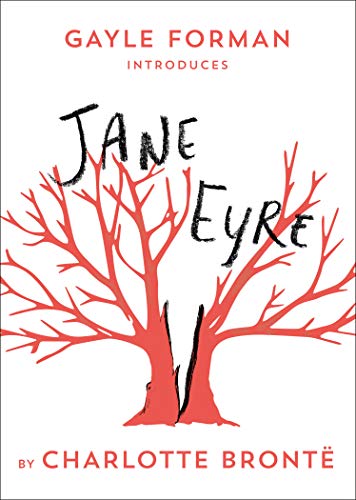 1
1